Twitter will have to obey the Indian government's law, Government encourages people to switch to Koo

Clash between Twitter and the central government is increasing due to the order to close 1178 accounts related to Khalistan-Pakistan . The central government has clearly told the American company that it has to follow Indian law. Also, many politicians and others are switching to Koo app against Twitter.

In a virtual meeting with Twitter Vice President Monique Meshe and Jim Baker, the secretary of Ministry of Electronics and Information Technology said,”despite government instructions, fake accounts related to the peasant movement were not closed. This is very unfortunate”. Earlier, Twitter replied it cannot fully oblige to the center’s order citing violation of the right to freedom of expression and said the Indian government’s demand was not in line with the country’s laws. Twitter believes in protecting the Freedom of Expression of its users and hence it did not take an action against the accounts of media companies, journalists, social workers and politicians.

25+ lakhs downloads of the KOO app in last 48 hours-

Amidst the trending #ban_twitter and #Koo_app on twitter in India, many politicians and spokespersons are switching to Koo to express their anger and requesting their followers to do the same. Koo app
was launched only last year under self-sufficient India. About 3 million people downloaded it in 48 hours.

To Constitute AIJS Would Be The Greatest Step Since Independence

Coming straight to the nub of the matter, let me begin penning down my forthright views by first and foremost expressing my utmost happiness to note that Centre has finally decided to get its act together and constitute the All India Judicial Service (AIJS) about which we have been hearing since ages! AIJS is the crying need of the hour and must be debated, discussed and deliberated fully so that all best features are included in it and all possible drawbacks are deleted before it is finally created. There can be no two opinions on it.

It delights me to no end to see that Prime Minister Narendra Modi while addressing a function to celebrate the completion of 50 years of the Delhi High Court on October 31, 2016 set the cat among the pigeons when he sought a debate on creating AIJS which has been hanging fire right since independence. It is most tragic to see that AIJS has always been mocked at by the ruling party in Centre. Even now if AIJS is constituted, it will be the greatest step since independence.
It needs no rocket scientist to figure out that how much our judicial system which is currently on the verge of collapsing due to a whooping number of pending cases will benefit if AIJS is created soon. While I fully support the creation of AIJS, I don’t support reservation in judiciary at all. I certainly would welcome the inclusion of people from the lower strata of society into the judicial system but only when they enter by their own merit and I know that they can do it on their own. They are no less than others in anyway.
Did Dr BR Ambedkar make a name for himself by coming up through reservation? Selection should only and only be on merit alone. There should be no other criteria for selection. No compromise should be made on merit under any circumstances, come what may!
While craving for the exclusive indulgence of my esteemed readers, let me inform you all that I am not at all against Dalits, oppressed, poor and people coming from lower strata of society entering AIJS. But that should not be at the cost of merit under any circumstances as most unfortunately we have been seeing in other services since last 70 years even though Dr Ambedkar had proposed reservations only for 10 years! In fact, I treat them just like others and very strongly feel that they too can do whatever they want just like others! Why should they be treated worse than disabled?
Who is stopping Centre from imparting free coaching to Dalits and all those coming from lower strata of society? Why can’t more scholarship be given to them? Why can’t they be coached by top successful persons of the field for which they are trying? Why can’t they be allowed free expense for giving as many exams as they like? They can be helped in thousands of ways other than reservations. Why politicians favour only reservation as the best possible way? Did Tina Dabi who topped IAS thus becoming the first Dalit to become a topper did by availing reservation benefit? No, by her merit she made it to the top!
How long will this cancer of reservation be allowed to fester and harm the unity and integrity of our nation endlessly? What precedent are politicians and PM setting by always talking about reservations only and never talking about finishing them as Dr Ambedkar wanted them to finish after 10 years only?
Reservation is the worst form of tool and only spreads hatred in society. Also, once it is inserted in the system, it is never thrown out as we can see in our own country where Dr BR Ambedkar who is the founding father of our Constitution wanted reservation only for 10 years but what an unbeatable irony that 70 years later we still see no end of reservations rather many States have increased it beyond 50% which only draws the ire of Supreme Court. This should never happen in AIJS.
For my esteemed readers exclusive benefit, let me tell them that it has been widely reported in the media that the Centre is getting ready to set up All-India Judicial Service (AIJS) by March 2022, according to a proposal submitted by the law ministry to the Union Council of Ministers. This was reported in ‘The Economic Times’ newspaper dated 2 March 2020 with heading “All-India Judicial Service Likely by March 2022”. So it is not that this cannot be worked out in the near future! It was also pointed out in this newspaper that, “The ministry in its recent presentation to the sectoral group of secretaries informed that AIJS was one of its top priority matters. The reports of the 10 sectoral group of secretaries were reviewed by PM Modi and the Council of Ministers. The biggest challenge is to get all states and high courts on board.” 
Needless to say, we must applaud PM Modi’s courage and conviction to do what no PM has ever dared to do even though they too supported it – creation of AIJS. PM Modi has called for debate and discussion on creating AIJS but I very strongly feel that Law Commission has time and again recommended the creation of AIJS, former CJI too have recommended, Parliamentary Standing Committee also has recommended and National Judicial Pay Commission too has recommended then why so much of inordinate delay over it? It must be cleared soon now. After the Modi’s Cabinet clears the landmark proposal, the Union Public Service Commission (UPSC) will be entrusted with the AIJS examinations. The Delhi High Court asked the government in an earlier petition by Ashwini Kumar Upadhyay to decide on creating the IJS. It will again hear another petition by him for creating an IJS. 
Be it noted, the move for an AIJS didn’t curry much favour with the higher judiciary in the past. The Chief Justices Conferences in 1961, 1963 and 1965 favoured the creation of an AIJS, but the proposal had to be shelved after some states and high courts opposed it. What should have happened way back in 1960s that we don’t see happening even in 2016 and it is only now after PM Narendra Modi has spoken on its dire need from a public platform and that too while addressing a function of lawyers and judges to celebrate the completion of 50 years of the Delhi High Court that some bright ray of hope has finally emerged.
To put things in perspective, subsequently, the Constitution was amended in 1977 to provide for an AIJS. The proposal was again floated by the UPA government in 2012 when it got it vetted by a committee of secretaries and prepared a cabinet note. But the draft bill was shelved after fierce opposition from high court chief justices. In 1972, the then Chief Justice of India had again endorsed the creation of AIJS.
Enough is enough! Now not any more! No more endless wait for AIJS! If Centre is really serious to combat the more than three and a half crore cases pending in lower courts all across the country, it has just no other viable option left before it but to start the AIJS. Ad hoc measures like re-employing retired judicial officers won’t serve much in the longer turn even though it may provide some relief. It cannot be a permanent cure. Centre must realize this which it has failed to realize in last 70 years.
In the absence of AIJS, it is becoming increasingly difficult to maintain the required judge strength in district courts and high courts. The available judges are unable to clear the huge backlog of over 30 million cases. Inspite of all this, IJS not started till date and mere opposition by few States/High Courts gave a lame excuse to successive Union Governments to just sleep over the matter.
Let me reveal here that in his PIL, Ashwini Upadhyay, who is also a BJP spokesperson contends fiercely that the establishment of IJS under the Article 312 of the Constitution of India, is not only necessary to provide equal opportunity to all prospective Advocates in spirit of Article 16 but also essential to secure fundamental right of fair trial and speedy justice to the citizens in spirit of Article 21. IJS has not been established in spite of constitutional provision and despite the Apex Court strongly endorsing it, he states in his petition. He further states that, while most government department has ‘All India Service’ recruits, the Judiciary is the only setup that does not have a national level selection process to attract the best prospective Advocates. “When IAS officers can be allotted State cadres and adjust to local requirements, why can’t IJS officers? Every organ of the State including the judiciary needs to be accountable to the public. People need to know how judges are appointed, what criteria they have been evaluated on. Many judges appointed by the collegiums or by political intervention may have been brilliant, yet their recruitment process is questionable. Judiciary should reflect social reality and the country’s diversity,” the petition reads.
Significantly, the Delhi High Court asked the government on July 11, 2016 to consider a lawyer’s representation seeking setting up of a All India Judicial Service on the lines of the Indian Administrative and Police Services. A Bench of Delhi High Court comprising of the then Chief Justice G Rohini and Justice Sangita Dhingra Sehgal asked the Ministry of Law and Justice to take a decision on the petitioner’s representation and inform him. In his plea, Ashwini Upadhyay said the step to set up the AIJS was “long overdue and has been hanging fire for ever five decades”. He also pointed out that, “Most government departments now had ‘All India Service’ recruits, the Judiciary does not have a national level selection process to attract the best possible talent”.
Before proceeding ahead, it would be imperative to quickly recapitulate the important events associated with AIJS. It will help us broadly in understanding this subject better. The list of important events are as follows: –
03-01-1977: AIJS inserted into Article 312 by the Constitution (Forty-second Amendment) Act 1976. The purpose of the constitutional amendment was to ensure uniformity in standard of selection and to attract the bright and young talent in judiciary so that fair trial and speedy justice made available to every citizen throughout the country.
27-11-1986: Law Commission submitted in its 116th report titled “Formation of All India Judicial Service” to the Union Law Minister and explained in details the importance and urgent need of All India Judicial Service.
10-4-1995: The Hon’ble Supreme Court in WP(C) 1022 of 1989, All India Judges Association v Union of India, directed the Union Government to take immediate measures for setting up the All India Judicial Service. The Union Government sought the views of the State Governments and High Courts on constituting the All-India Judicial Service before moving a resolution in Rajya Sabha.
10-2-1997: Union Government submitted a status report n constituting the All India Judicial Service in the Apex Court. Out of 25 states, 08 states endorsed AIJS, 08 states conditionally agreed upon AIJS, 07 states disagreed on AIJS and 02 states not responded. Out of 18 High Courts, 04 High Courts endorsed AIJS, 04 High Courts conditionally endorsed the AIJS, 03 High Courts disagreed with AIJS and 07 High Courts not responded on AIJS.
24-10-2009: Hon’ble Chief Justice of India endorsed the All India Judicial Service in his inaugural address in a conference titled “National Consultation for Strengthening the Judiciary towards Reducing Pendency and Delays” in Delhi. 
25-10-2009: Conference titled “National Consultation for Strengthening the Judiciary towards Reducing Pendency and Delays” unanimously adopted the resolutions presented by Union Law Minister for establishment of All India Judicial Service and increase in the strength of judges by 25% to reduce the pendency of cases from 15 years to 3 years.
19-05-2014: Hon’ble 41st Chief Justice of India Sh. R.M. Lodha on the eve of assuming charge reiterated the need of the All India Judicial Service. He said: “Setting up of All India Judicial Service, being planned by the government on the lines of the IAS and IPS for recruiting judges for subordinate courts, should be given serious thought. A national consensus is lacking as some states have raised reservations on the framework of the Indian Judicial Service. Those states should also be brought on board.”
It must be emphasized here that the Law Commission of India has four times – in its 1st, 8th, 77th and 116th reports called for Indian Judicial Service. The Apex Court has twice – first in 1991, then in All India Judges Case (1992) endorsed the creation of AIJS. It is imperative to ensure fair selection of incumbents and to attract bright and best law graduates to judiciary.
Be it noted, Centre too strongly felt that to prevent the fresh law graduates from rushing to the all enticing private and corporate sector, it is imperative that All India Judicial Service be started immediately and they too are made eligible just like we see in case of Civil Services. Presently, what we are seeing is that the best talent is wasting no time in jumping on the bandwagon of corporate and private sector who is ever ready to hire them at attractive prices. To stop this to a great extent, it is all the more imperative that AIJS be started immediately without any more delay!
Most significantly, it cannot fbe lightly dismissed that three most eminent Judges in the annals of the Apex Court – Justice VR Krishna Iyer, Justice JS Verma and Justice MN Venkatachaliah gave their joint views on the constitution of All India Judicial Service as follows: “We agree with the urgent need to constitute the All India Judicial Service envisaged by Article 312 of the Constitution of India; at par with the other All India Services like the IAS, to attract the best available talent at the threshold for the subordinate judiciary; which is at the cutting edge of the justice delivery system to improve its quality. Moreover, the subordinate judiciary is important feeder-line for appointments to the High Courts. The general reluctance of competent lawyers to join the Bench even at the higher level adds an additional urgency to the problem. AIJS will in due course of time, also help to improve the quality of the High Courts and the Supreme Court. The modalities for creating the AIJS to achieve its avowed purpose, and the necessary constitutional changes and the legal framework can be worked out after acceptance of the proposal in principle.” 
No less significant is the irrefutable fact that the First Law Commission of India, headed by learned MC Setalwad, with the benefit of the opinion of the then Chief Justices of India KN Wanchoo and Justice MC Chagla and eminent jurist Nani Palkhiwala among others, had made a strong recommendation for the constitution of an All-India Judicial Service, like the IAS and IPS. The felt need for such a service increased several fold in the last 57 years since that recommendation was made. 
It is worth noting that in its 77th Report presented by the Law Commission of India to the then Law Minister Shanti Bhushan, it was noted in Para 9.6: “At the same time, we are of the view that the suggestion to have an All India Judicial Service of the same rank and same pay-scales as the Indian Administrative Service should receive serious consideration. According to article 312, as now amended, Parliament may by law provide for the creation of one or more all-India services (including an all-India Judicial Service) common to the Union and the States. We are conscious of the fact that a school of thought and many States are strongly opposed to the creation of All India Judicial Service. The objection is mostly based upon the consideration that since the proceedings before the subordinate courts would be conducted in regional languages, members of the higher judicial service hailing from other States would not be in a position to efficiently discharge their functions. This difficulty can be obviated if, like recruits to the Indian Administrative Service, the recruits to the All India Judicial Service also undergo a training period of two years. During that period, they can acquire also familiarity with and mastery of the regional language of the State to which they are to be allocated after the completion of their training period. The requirement about practice at the bar may perhaps have to be waived for recruitment to All India Judicial Service, as they will be recruited at a comparatively younger age. It should, however, be essential that the competitors are graduates in law.” 
Para 9.6A of this very 77th Report further notes: “Another reason which should weigh in favour of the creation of the All India Judicial Service is the attraction that an All India Service holds for bright young graduates, including law graduates. The result is that many of them compete for and are selected for the Indian Administrative Service. If the All India Judicial Service is created with the same rank and pay scale as Indian Administrative Service, the Judicial Service would hold perhaps greater attraction for bright law graduates. The Judicial Service in such an event would not be denuded of talented young persons. The Law Commission presided over by Shri Setalvad also felt this difficulty and observed that an important factor which detracts from the attractiveness of the judicial service is the inferiority of the status of a judicial officer compared with that of the executive officer. The Law Commission in this connection referred to the following observations of an experienced Chief Justice: –
“One reason why meritorious young men or young practitioners of some standing keep away from the judicial service is the comparative inferiority of the status of district judicial officers vis-a vis officers of the district executive. Formerly, the district judge, like the district magistrate, used to be a member of the Indian Civil Service and its position in the District was superior to that of the District Magistrate. Under the present system, the district magistrate is a member of the Indian Administrative Service which is a service of an all-India character, while the district judge is a member of the higher judicial service which is a State service. The difference in the category of the cadres to which they belong is reflected in the status they occupy in relation to each other and in the estimation of the public vis-à-vis the district judge feels small and is treated as a person of little consequence. Nor can the district judge attain the sense of independence which he might have acquired, if he had not been under the administrative control of the State Government in regard to his service.”
It must also be brought out here that Parliament Standing Committee endorsed the AIJS in its 64th Report (Para – 50). The Report says: “All India Judicial Service has been envisaged under Article 312 of the Constitution of India. The Committee expresses its concern over the delay in its creation. The Committee insists that All India Judicial Service may be created without further delay to attract best talent to the subordinate judiciary from where 33% of the judicial officers are elevated to the Bench of High Courts. Reservation as per existing policy of the Government may be made applicable in All India Judicial Service.” 
It is also worth pointing out that the first-ever National Judicial Pay Commission (NJPC), headed by Justice K Jagannatha Shetty who is a former Judge of the Supreme Court and who submitted its report in November, 1999 too recommended constitution of All India Judicial Service in the cadre of District Judges as per provision of Article 312(3) of the Constitution of India. The NJPC mooted that the District Judges, directly recruited and promoted, should constitute the AIJS. Seniority of All India Judicial Service will be on All India basis and as per the ranking in the select list. The inter-se seniority between direct recruits and promoters will be determined according to the date of allotment of promotion. Such direct recruit must thus be annexed to the respective State Judicial Service within the three-tier system. At present, there are only three All India Services i.e. The Indian Administrative Service (IAS), Indian Police Service (IPS) and Indian Forest Service (IFS). While the first two were inherited from British Raj, the IFS is the only All-India Service which was created after independence. It was constituted in 1966 under the All India Service Act, 1951 by the Government of India.
It is high time and now as PM Modi has himself said that the setting up of AIJS must be debated, discussed and deliberated upon before finally transforming it into reality. But it must be done soon. It should have happened right at the time of independence but 74 years later we see it still has not materialized! No delay any longer!
It must be underscored that uniformity in standards for selection will definitely improve the quality of different High Courts and will minimize the scope of partiality, arbitrariness and aberrations in judicial selection and simultaneously the quality of dispensation of justice will improve considerably right from the top to the bottom, as it essentially hinges upon the quality of judges recruited. It is the larger public interest that will be served if AIJS is created and also the interest of fair trial and speedy justice. The recruitment of Judges right from the entry level should be handled by an independent agency just like UPSC and can be named National Judicial Service Commission (NJSC).
It would be the job of NJSC to ensure that only and only the best talent selected through open competition is selected into AIJS thereby ensuring fair and transparent selection process just like IAS, IPS and others are selected into Civil Services by UPSC. Also, there should be comprehensive training of 2-3 years after selection in AIJS to be undergone in National Judicial Academy as we see in Bhopal.
We see court cases not ending even after more than 50 years. This completely erodes and tears apart the otherwise irrevocable faith of people in getting justice from courts. In foreign countries like USA, UK and Canada cases are decided very soon. But in India it is exactly the opposite. This must change if we want to project the image of India as a global destination centre for investment. That can happen only when cases are decided in time. Fair, fast and uniform justice keeps the people’s faith ingrained in the system which is so important for the successful functioning of any democratic country. Access to fair, fast and uniform justice is deeply rooted in the concept of democracy and regarded as a basic human right. 
For cases to be decided in time, we need to have adequate number of judges which in turn is possible only if AIJS is started at the earliest. There is just no other viable option available and Centre must grab it with both hands and do the needful so that people at large benefit the most from it for whom justice is really meant. Only such a meritocratic service with open competitive examination and 2-3 years of comprehensive training to all the trainee judges and assured standards of probity and efficiency would be able to ensure “Fair Trial and Speedy Justice’ to citizens in spirit of the Article 21. Unnecessary delay gradually declines the citizenry faith in judicial system which is most dangerous. Fragmentation of faith has the effect potentiality to bring in a state of cataclysm where justice may become casualty. This will only usher in lawlessness which we can allow only at the cost of our own peril!
Needless to say, Opposition too must play its role well by cooperating in ensuring that the Bill for AIJS is passed with thumping majority in both Houses of Parliament. It must be noted that the Union Government cannot do anything unless the Council of States in this behalf passes a resolution to this effect, which is a mandatory requirement for creation of the same as also specified in Article 312. Centre must move a resolution in this regard without further delay. Delay of 70 years is quite a long delay by itself. Now no more alibis of any kind.
It is well accepted by thinkers, philosophers, academicians and jurists that if fair, fast and uniform justice is to be secured to all the citizens, and equality before the law and equal protection of the law has to be ensured, India needs the best talent in the judiciary. Needless to say, the quality of justice dispensation will ameliorate considerably right from subordinate courts to the Apex Court by initiating the AIJS and by establishing a NJSC like UPSC which is of seminal and pivotal concern. 
To sum it up: It is in the interest of all concerned that the guilt or innocence of the accused is determined as quickly as possible. This in turn is possible only if there are adequate Judges. Adequate judges can be made available only if they are recruited in large strength through AIJS just like we see in case of IAS, IPS, IFS and other Civil Services. This alone explains why I mince no words to state emphatically that, “To constitute AIJS would be the greatest step since independence”. It brooks no more delay anymore now! I am sure that PM Narendra Modi would take further necessary steps to ensure that AIJS is given the green signal and after getting it passed in Rajya Sabha with the cooperation of Opposition as we saw recently in case of GST is soon brought into action! It is the young generation especially those who have just graduated or are about to graduate in Law in any part of India that will benefit remarkably by leaps and bounds if PM Narendra Modi takes this landmark and momentous decision anytime soon! I only hope that it does not again turn out to be an endless wait for them also as we saw most unfortunately in the past! Let’s hope fervently that history will not repeat itself again!
Sanjeev Sirohi, Advocate,
s/o Col BPS Sirohi,
A 82, Defence Enclave,
Sardhana Road, Kankerkhera,
Meerut – 250001, Uttar Pradesh


Rape Victim Also Suffers Discrimination From Society

It is quite refreshing, rejuvenating and reasonable to learn that the Supreme Court most recently on January 20, 2021 in a latest, landmark, learned and laudable judgment titled Ms. X vs The State of Jharkhand & Ors in Writ Petition (Civil) No. 1352 of 2019 asserted quite unambiguously that a rape victim suffers not only a mental trauma but also discrimination from the society. This was held so by a three Judge Bench of the Apex Court comprising of Justice Ashok Bhushan, Justice R Subhash Reddy and Justice MR Shah while disposing a writ petition filed by a rape victim belonging to a Scheduled Tribe in Jharkhand. The victim had approached the Apex Court in 2019 by filing a writ petition stating the purpose therein.

To start with, the ball is set rolling of this notable judgment authored by Justice Ashok Bhushan for himself, Justice R Subhash Reddy and Justice MR Shah by first and foremost pointing out in para 1 that, “This writ petition has been filed by a rape victim invoking the jurisdiction of this Court under Article 32 of the Constitution.”
To put things in perspective, the Bench then quite remarkably puts forth in para 2 that, “This Court entertained the writ petition and while issuing notice on 29.11.2020 passed the following order: “Issue notice. Mr. Tapesh Kumar Singh, learned standing counsel for the State of Jharkhand, accepts notice on behalf of respondent/State. Let the respondent/State file an affidavit giving details of all proceedings initiated by the petitioner or against her and the status of those proceedings. We, however, observe that the respondent no.3/Home Secretary shall also ensure that the concerned police authorities are instructed to ensure protection of the petitioner. List after four weeks.” 
To be sure, it is then stated in para 3 that, “A counter-affidavit has been filed on behalf of the State of Jharkhand to which rejoinder has also been filed by the petitioner. The petitioner has also filed certain additional documents.”
While elaborating on the facts of the case, the Bench then elucidates in para 4 that, “From the pleadings of the parties following facts emerged: 
The petitioner claims to be a Scheduled Tribe in the State of Jharkhand. The petitioner was born on 24.12.1984. On 31.03.1998, petitioner was taken away by one Basant Yadav. Petitioner’s father, Rajender Badaik, lodged a complaint. Basant Yadav was apprehended on 02.04.1998. Father of the petitioner and Police of the concerned Police Station got the marriage of the petitioner solemnised with Basant Yadav. After one year of the marriage, one son was born, named Manish Yadav. Petitioner filed a complaint as well as case for maintenance against her husband, Basant Yadav.”
While continuing in the same vein, the Bench then points out in para 5 that, “The petitioner obtained divorce from Basant Yadav and the custody of son was given to Basant Yadav. On 08.06.2002, petitioner went to Dultonganj on asking of Basant Yadav to meet her son on which date she was raped by one Mohd. Ali and three other accused. Case No.162 of 2002 under Section 376/34 read with Section 3(xi) of the Scheduled Castes and Scheduled Tribes (Prevention of Atrocities) Act, 1989was registered in which accused, Mohd. Ali was apprehended and put on trial.”
Furthermore, the Bench then also points out in para 6 that, “The petitioner lodged an FIR against the DY. Inspector General of Police on 02.08.2005 under Section 376,376(2)(a)IPC and Section 3(1)(xii) of the Scheduled Castes and Scheduled Tribes (Prevention of Atrocities) Act,1989 on which on 03.08.2005 Case No.304 of 2005 was registered. The petitioner also lodged an FIR against an Inspector General of Police on which Sessions Trial No.257/2006 was registered. Certain other criminal cases got registered by the petitioner against different persons, some of which were filed under Section 376 IPC. In the Sessions Trial 11 of 2006, the accused Mohd Ali was convicted on 15.02.2014 with 10 years RI.” 
Now as regarding the FIR, the Bench then states in para 7 that, “In the FIR lodged against Dy. Inspector General of Police final report was submitted which was accepted by the Court on 06.08.2007 insofar as FIR lodged against Inspector General of Police, Sessions Judge acquitted the Inspector General of Police by judgment and order dated 23.12.2017 against which criminal appeal has been filed in the High Court of Jharkhand. A criminal case was also lodged against the petitioner.”
While elaborating on the petitioner’s case in the writ petition, the Bench then enunciates in para 8 that, “The petitioner’s case in the writ petition is that she being the rape victim, whose identity was disclosed by the media and after knowing that the petitioner is a rape victim, no one is ready to give her accommodation even on rent. The petitioner in the writ petition invoked jurisdiction of this Court in the matter of rehabilitation of the petitioner. The petitioner also prays for direction to the respondent to protect the petitioner and her children’s life. The petitioner after divorce from her first husband got married to one Rajesh Kujur with whom a son was also born. The petitioner has also lodged criminal case being No.56/2004 against her husband Rajesh Kujur which resulted in acquittal.” 
Needless to say, it is then stated in para 9 that, “The petitioner has also filed a copy of the legal notice dated 09.08.2019 which was sent by the landlord of the petitioner asking the petitioner to vacate the premises on the ground of non-payment of rent. The petitioner sent a letter dated 05.12.2019 stating that the landlord had sealed the house on 04.12.2019.”
While elaborating on counter affidavit by the State, the Bench then lays down in para 10 that, “In the counter-affidavit by the State, the State has given a tabular chart containing status of 7 criminal cases which were initiated by the petitioner. In paragraph 7 one of the cases mentioned in the chart is the case filed against Mohd. Ali, Mohd. Ali was convicted on 15.02.2014 under Section 376(2)(g) IPC and Section 3(1)(xii) of the Scheduled Castes and Scheduled Tribes (Prevention of Atrocities) Act, 1989. In other criminal cases either the accused were acquitted or trial is pending in some cases. In two FIRs lodged by the petitioner, in the year 2018 under Section 354 A(ii) as well as under Section 376, 448 and 506 IPC respectively the investigation is said to be going on.”
Interestingly enough, the Bench then quite significantly concedes in para 16 that, “There can be no denial that the petitioner is a rape victim. Even if we do not take into consideration other criminal cases filed by the petitioner under Section 376 IPC, in Case No.162/2002 where allegation of rape was made on 08.06.2002 the accused, Mohd. Ali has been convicted under Section 376(2)(g) IPC for 10 years RI. The petitioner being a rape victim deserves treatment as rape victim by all the authorities.”
What’s more, the Bench then most significantly acknowledges in para 17 that, “A rape victim suffers not only a mental trauma but also discrimination from the society. We may refer to the judgment of this Court in Nipun Saxena and another vs. Union of India and others, (2019) 2 SCC 703, wherein following observations were made by this Court:
“12. A victim of rape will face hostile discrimination and social ostracisation in society. Such victim will find it difficult to get a job, will find it difficult to get married and will also find it difficult to get integrated in society like a normal human being. ………””
Of course, it is then brought out in para 18 that, “The petitioner herself has brought on record few orders passed in Writ Petition (Cr.)No.229 of 2014 (Padma @ Shushma Badaik vs. The State of Jharkhand and others)filed by the petitioner before the High Court of Jharkhand where in the order dated 12/11.09.2015 statement on behalf of the Counsel for the State was recorded by the High Court that State is ready to provide free education to the children of the writ petitioner. Following is the statement recorded by the High court on 12/11.09.2015: 
“Counsel for the State has submitted that State is ready to provide free education to the children of the writ petitioner. If she will give her consent, her children shall be admitted in the Govt. Boarding School at Gumla and the expenses shall be borne by the Government.””
Quite significantly, the Bench then makes it clear in para 20 that, “On an inquiry by the Court as to which authority is to ensure that the minor children of the petitioner are provided free education, learned counsel submitted that it is Deputy Commissioner, Ranchi who can take the appropriate measures to ensure that the minor children of the petitioner are provided free education. Learned counsel for the State has submitted that education upto the age of 14 years in the State of Jharkhand is free which is provided by the State. We, thus, are of the view that Deputy Commissioner shall take appropriate steps to ensure that minor children of the petitioner are provided free education in any Government Institution at Ranchi.”
No less significant is what is then stated in para 21 that, “The petitioner has also raised grievance regarding her identity which has been disclosed by the media. The petitioner has annexed certain materials along with writ petition and the additional documents. Section 228-A of the Indian Penal Code which has been inserted in the Indian Penal Code by Amendment Act 43 of 1983 with effect from 25.12.1983 makes disclosure of the identity of the victim is an offence. Section 228-A is as follows:
“Section 228A. Disclosure of identity of the victim of certain offences etc.—(1) Whoever prints or publishes the name or any matter which may make known the identity of any person against whom an offence under section 376, section 376A, section 376B, section 376C or section 376D is alleged or found to have been committed (hereafter in this section referred to as the victim) shall be punished with imprisonment of either description for a term which may extend to two years and shall also be liable to fine.
(2) Nothing in sub-section (1) extends to any printing or publication of the name or any matter which may make known the identity of the victim if such printing or publication is— 
(a) by or under the order in writing of the officer-in-charge of the police station or the police officer making the investigation into such offence acting in good faith for the purposes of such investigation; or 
(b) by, or with the authorisation in writing of, the victim; or 
(c) where the victim is dead or minor or of unsound mind, by, or with the authorisation in writing of, the next of kin of the victim:
Provided that no such authorisation shall be given by the next of kin to anybody other than the chairman or the secretary, by whatever name called, of any recognised welfare institution or organisation. 
Explanation.—For the purposes of this subsection, “recognised welfare institution or organisation” means a social welfare institution or organisation recognised in this behalf by the Central or State Government. 
(3) Whoever prints or publishes any matter in relation to any proceeding before a court with respect to an offence referred to in subsection (1) without the previous permission of such Court shall be punished with imprisonment of either description for a term which may extend to two years and shall also be liable to fine. Explanation.—The printing or publication of the judgment of any High Court or the Supreme Court does not amount to an offence within the meaning of this section.””
It is worth noting that it is then specified in para 22 that, “This Court in Nipun Saxena and another (supra) has occasion to consider Section 228-A wherein this Court in para 50.1 has issued following directions:
“50.1. No person can print or publish in print, electronic, social media, etc. the name of the victim or even in a remote manner disclose any facts which can lead to the victim being identified and which should make her identity known to the public at large.”” It cannot be just glossed over and has to be taken most seriously!
Simply put, the Bench then further elaborates in para 24 stating that, “With regard to the payment of compensation to the petitioner as a rape victim, along with additional documents the petitioner has brought on record materials to indicate that the decision was taken by the District Legal Services Authority, Ranchi to pay compensation of Rs.1,00,000/- by letter dated 06.03.2017. The letter of the Secretary, District Legal Services Authority, Ranchi has been brought on record by the petitioner herself. The grant of compensation has been considered under the Jharkhand Victim Compensation Scheme, 2012 as amended in 2016.” 
As it turned out, the Bench then more significantly makes it clear in para 26 that, “The next grievance which has been highlighted by the petitioner is the petitioner’s inability to get any rented accommodation in Ranchi due to she being a rape victim. In the counter-affidavit filed by the State, it is clear that the petitioner has lived at several/different places but due to the dispute with the landlord she has to leave the premises. There are various Central as well as State Schemes for providing residential accommodation to persons living below poverty line and other deserving cases, the Deputy Commissioner, Ranchi may consider the case of the petitioner for allotment of any housing accommodation under Prime Minister Awas Yojna or any other Scheme of the Centre or the State.”
Finally, the Bench then concludes by holding in para 27 that, “In view of the foregoing discussion, we dispose of this writ petition with the following directions:
(1) The Deputy Commissioner, Ranchi is directed to take measure to ensure that minor children of the petitioner are provided free education in any of the Government Institutions in District Ranchi where the petitioner is residing till they attain the age of 14 years.
(2) The Deputy Commissioner, Ranchi may also consider the case of the petitioner for providing house under Prime Minister Awas Yojna or any other Central or State Scheme in which petitioner could be provided accommodation.
(3) The Senior Superintendent of Police, Ranchi and other competent authority shall review the Police security provided to the petitioner from time to time and take such measures as deem fit and proper.
(4) The District Legal Services Authority, Ranchi on representation made by the petitioner shall render legal services to the petitioner as may be deemed fit to safeguard the interest of the petitioner.”
On the whole, the Bench very rightly made it clear that the petitioner deserves treatment as rape victim by all the authorities. It was also conceded by the Bench that this was also more so due to the irrefutable fact that she suffered not just mental trauma but also endless discrimination that she suffered from society. The directives that the Bench issued as discussed above thus stands fully justified!
Sanjeev Sirohi, Advocate,
s/o Col BPS Sirohi,
A 82, Defence Enclave,
Sardhana Road, Kankerkhera,
Meerut – 250001, Uttar Pradesh

Medical science Latest News: Some Interesting Researches.

  1. Do you know how your cell phone’s sensor can calculate the alcohol percentage present in your body? It calculates the percentage by monitoring the way you are walking.
    Researchers from Stanford University and the University of Pittsburgh completed this study on 18th August. In a sample of 17 participants, they could calculate the intoxication amount with 92% accuracy. The study focuses on blood alcohol concentration (BAC) and breath alcohol concentration (BrAC). They published the study in Journal of Studies on Alcohol and Drugs.
  2. Can we treat dementia and Alzheimer’s with sound waves? A team of Doctors led by Cardiologist Hiroaki Shimokawa recently experimented and discovered that applying low-intensity pulsed ultrasound (LIPUS) to the entire brain of a mouse improved blood vessel formation and nerve cell regeneration without having apparent side effects. “The LIPUS therapy is non-invasive physiotherapy which could apply to high-risk elderly patients with no surgery or anesthesia, and could be used repeatedly,” says Shimokawa. See the study here.
  3. Scientists solve mystery behind body odour! This is not our fault. Researchers at the University of York found out that there is a special microbe which lives in the human armpits. This odour is called thioalcohol, which gets released when these microbes feed on other compounds on our skin. The study is published in Nature journal.
  4. Coronavirus: Filter “paper” made from titanium oxide nanowires can trap pathogens and destroy them with light. This is a discovery by an EPFL laboratory which can be put to use in personal protection equipment, in ventilation and air conditioners. Although experiments are still under process, they say that it be equally successful on a wide range of viruses, including SARS-CoV-2 or coronavirus.

All About World Oceans Day and Coral Reefs

When we think about environment and public health risks, we may skip oceans. However, the health of ocean is intertwined with our health. It is environment that has all the solutions to humankind. Ocean gives us food, help in the regulation of climate, and give rise to most of the oxygen that we breathe. But in spite of their importance, oceans are facing unparalleled threats because of various human activity.

This is one of the various reasons why we should celebrate World Oceans Day. It is an international day that is celebrated on the 8th of June. It was first presented in by Canada’s International Centre for Ocean Development (ICOD) and the Ocean Institute of Canada (OIC) at the Earth Summit in Rio de Janeiro, Brazil in 1992. Later on, World Oceans Day was officially recognised by the United Nations in 2008.

It is celebrated to remind everyone of the vital role the oceans play in our everyday life. They act like the lungs of our planet as they generate most of the oxygen that we breathe. The intend behind celebrating this day is to aware the public about the impact of human actions on the ocean, Evolve a worldwide movement of people for the ocean, and unite the world’s population in order to bring out sustainable management of the world’s oceans.

What are Coral Reefs ?

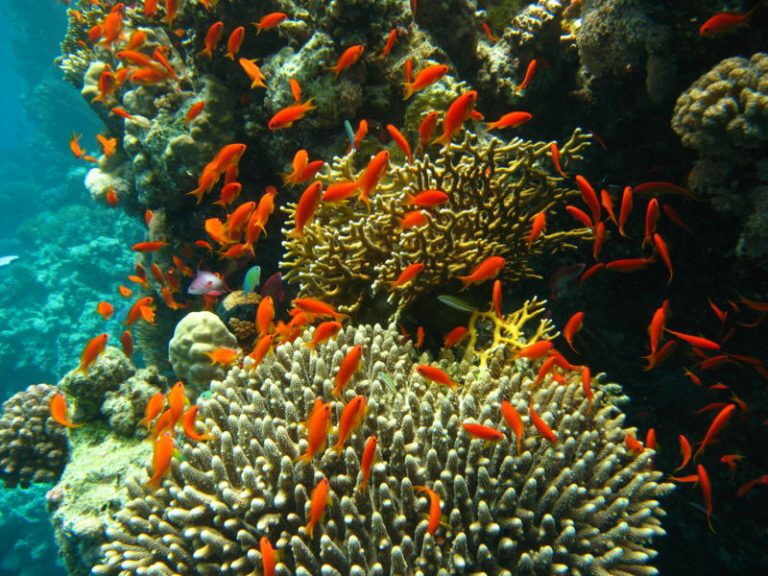
Coral reef in India, Lakshadweep

Oceans consist of coral reefs ecosystems which are diverse and intricate creatures that interact with each other and the physical environment. It is a class of w animal related to jellyfish, hydroids and sea anemones. They play a major role in maintaining the health of our oceans and our economy. But due to the impact of human actions on oceans and its ecosystem, coral reefs faced a huge decline and thus marine ecosystem has been tampered leading to loss of habitat and food for many species.

What can we do to protect Coral Reefs ?

Even if we live far from coral reefs, we can have an impact on reef health and conservation. Here’s some things we can do in order to ensure conservation of reefs:

conserve water: The first and foremost thing we can do is conserve water. The less water we use, the less wastewater and runoff finds it way back to the ocean.

choose sustainable seafood: Fish populations are increasingly being depleted due to loss of habitat, demand, and unsustainable fishing practices. Choose seafood that is both healthy and sustainable.

volunteer: volunteer in government projects if you can such a beach cleanups drive.

Dispose off your trash properly: do not litter places which are near the beach. Don’t leave unwanted fishing nets in the water or on the beach.

plant a tree: trees reduce runoff into the oceans. By planting a tree, we can contribute in reversing the warming of our planet and rising temperature of our water bodies.

use organic fertiliser: even if we live far way from water bodies, these products flow into the oceans and rivers, pollute them and can harm the marine life.

reduce pollution: reduce your carbon foot print and use bicycles, walk or ride the bus. Because emissions from vehicle could lead to ocean warming.

• And finally, stay informed and Spread the Word! Educate yourself about healthy coral reefs and its importance to fish, plants, animals and humankind. Your excitement would help in getting others involved.

All you need to know about Cyberbullying ( and how to prevent it)

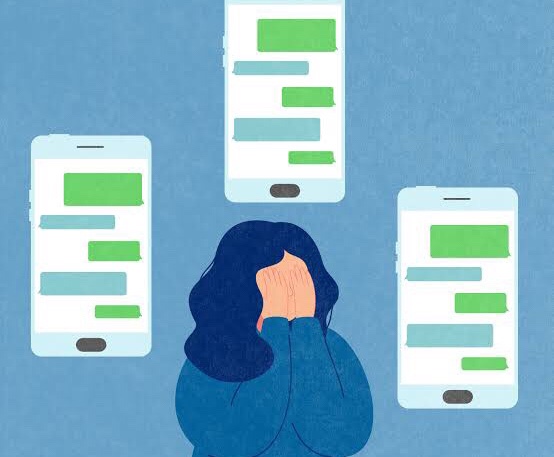
Cyberbullying, also known as cyberharassment, which happens using electronic means. It is also known as online bullying. It has become increasingly prevalent nowadays, especially among adolescents, as technology had advanced and the digital sphere has broadened. Cyber bullying occur on platforms like social media, chat rooms, and gaming sites where people can see and participate in sharing of content.

Cyber bullying is said to be happen, when someone bullies or harasses others on the internet and other digital spaces, usually on social media sites.

Cyber bullying behaviour involves posting threats, rumors, hateful comments on online platforms/apps, or via SMS or messaging in order to cause humiliation to other users. It includes posting, sending or sharing negative, Unpleasant or false information about an individual for causing humiliation and character assassination. It also involves posting threats, a victim’s personal information, hate speech or sexual remarks to someone on the internet.

Types of Cyber Bullying

An awareness of the different types of Cyberbullying is important. This helps parents and young adults to report cyber bullying and adopt various measures for the same. Following are some of the common types of cyber harassment:

• Trolling has become increasingly prevalent in these days and is the most common form of bullying that happens in an online community. This is done to evoke a reaction or disruption, or sometimes, even for personal amusement.

Cyberstalking is another type of bullying or harassment which involves electronic communications to stalk a victim; this may tend to be threatening to the victim.

• posting an embarrassing or unpleasant photo/video.

• faking identity online

• issuing online threats to hurt or provoke someone.

• posting hate comments or content triggering religious, racial, ethnic or political malice.

• Also Doxing, it is a practice common on the internet where personal information about an individual is reasearched and published. One finds out information from the person’s social media and other online platforms. It is then used for online defamation, harassment or other forms of cyber bullying.

Cyber Bullying in India 

Cyber bullying in India had increased prominently since availability of affordable data services and social media presence has increased. According to a research by Symantec, almost 8 out of 10 individuals are exposed to different types of internet bullying in India. Most of the victims are generally women and teenagers.

The same study categorises India as the country facing the highest cyber bullying in the Asia Pacific region, more than Australia and Japan.

Special Concerns

with the widespread presence of digital forums, social media websites, posts, comments, content shared by individual can be seen by strangers as well as acquaintances. Whatever content the individual shares online, be it personal or public, creates a kind of public record of their activities, views and behaviour. this can basically represents their personality, which may be accessible to schools, employers, college, clubs, and other institutions who may be researching an individual now or in the future. Cyberbullying can tamper the reputation of everyone involved, not just the the person being bullied but also those who are participating in the bullying. 

What can you do?

Ask for help: if you are experiencing any distress related to online bullying, reach out to someone for help. It maybe your friend, relative, colleague or someone you trust.

Use the technology to cut off the Bully: almost every social media site allows you to report or block someone. They also enable you to report inappropriate content or behaviour. 

Protect your Accounts: passwords are your private information. never share your passwords with anyone no matter who the person might be. Password protect your phone so that no one can use it for impersonation. 

Report Cyber Bullying: The Ministry of Women and Child Development launched a helpline to report cyber bullying/harassment, cyber defamation, especially for women and children as they are subject to cyberbullying the most. most institutions also have special faculty of development whom you may report to, about the bullying.

Helpline – complaint-mwcd@gov.in

Speaker, Lok Sabha Visits “Aadi Mahotsav” at Dilli Haat

The Speaker, Lok Sabha Shri Om Birla visited the National Tribal Festival “Aadi Mahotsav”at Dilli Haat, INA, today. The 15 days’ festival (16th to 30th November, 2019) is the celebration of the spirit of Tribal Craft, Culture, Cuisine and Commerce. Union Tribal Affairs Minister Shri Arjun Munda, Chairman, TRIFED, Shri R.C. Meenaand MD, TRIFED, Shri Pravir Krishna were present on the occasion.
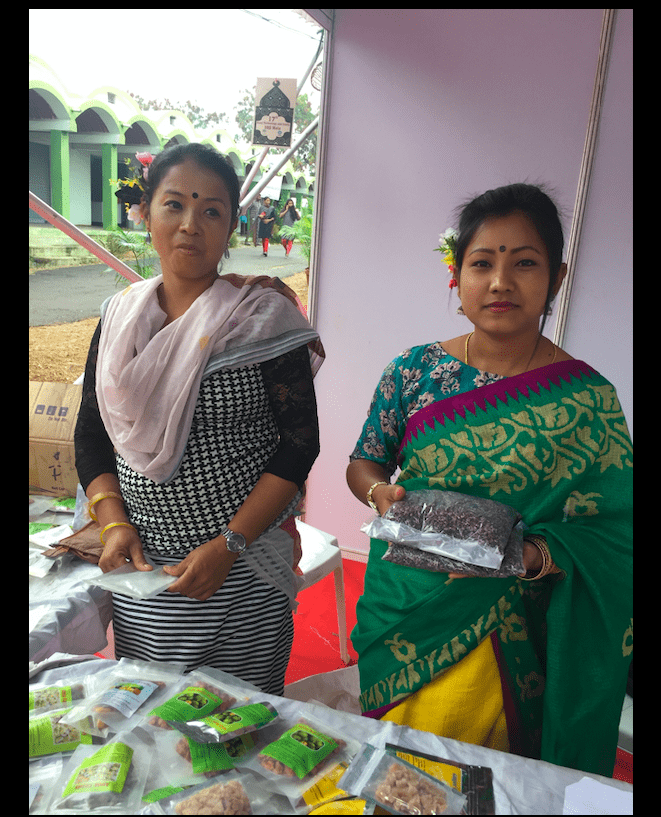
The Speaker visited the Stalls put up by tribal artisans and interacted with them. He witnessed the Tribal Cultural performances on the occasion.
Addressing the tribal artists and artisans, Shri Birla praised Ministry of Tribal Affairs and TRIFED for their unique exemplary efforts for transforming the lives of tribal people of our country. He paid homage to tribal freedom fighters. He opined that the tribal people are true protectors of our nature and environment. Aadi Mahotsav is a very novel initiative for overall development and welfare of tribal people of our country. He congratulated all participating tribal artists and artisans for their creative endeavors and it is very important that their natural skills must be channeled to promote their sources of income for their better life.
In his address, Shri Arjun Munda said that thetribal people have always fought for our country since ancient period till freedom struggle. They are firm believer in Panchtatva and have always protected our nature and environment. He opined that tribal people are protector of our ancient culture also and always away from social evils. The Adivasi way of life is guided by primal truth, eternal values and a natural simplicity. The tribes of India have a wide range of handicrafts. The Aadi Mahotsav is an effort to take tribal commerce to the next level of digital and electronic transactions. The concept of organizing Aadi Mahotsav in major cities of the country has proved to be a boon for tribal artisans.
Chairman TRIFED, Shri R. C. Meena, in his speech said that TRIFED is doing significant workfor the overall development and welfare of tribal people and events like Aadi Mahotsav are veryimportant in this regard. The tribes of India have a wide range of handicrafts and the governmentseeks to promote interaction between tribal artisans and the people.
The theme of the Mahotsav is: “A Celebration of the Spirit of Tribal Culture, Craft, Cuisine and Commerce”. The festival features exhibition-cum-sale of tribal handicrafts, art, paintings, fabric, jewellery and much more through 220stalls. Over 1000 tribal artisans and artists from different States creating a Mini-India are participating in thefestival.
Post inauguration of event on 16th November 2019, the balance 14 days of the festival have been dedicated to Parliamentarian’s Day, All India Service Day, Diplomats Day, Tourism Day, Defence Day, Sports Day, Textile Day, IAS Officers Wive’s Association, Media Day, Cooperative Day, North East Day, TRIFED Partner/Tribal Entrepreneur Day with Closing Ceremony on last day i.e. 30th November 2019. 
The tribal textiles manufactured by Master tribal Craftsmen from Jammu & Kashmir in the North to Tamil Nadu in the South and from Gujarat in the West to Nagaland/Sikkim in the East are the main attractions. For the first time, this AADI MAHOTSAV is showcasing a wide range of products from the tribal artisan from Leh (Ladaakh). Apart from this special attraction a wide range of products from North Easter States are on display and sale. TheTribalhandicrafts are soldthrough more than 220Stalls under the Tribes Banner by tribalArtisans.
In line with the national aspiration to go cashless, the tribal artisans are accepting payment through major credit/debit cards for which Point of Sale (POS) machines have been provided in each stall. A special training has been conducted by State Bank of India for smooth operations of this. The Mahotsav is displaying  the rich digital commerce and e-commerce being promoted by Tribes India.
TRIBES India proudly informs the signing of MOUs with Amazon, Amazon.com, Snapdeal, Flipkart, PayTM and GEM, a Government of India Portal for e-commerce of the tribal products. Besides TRIBES India has also has its own e-com portalwww.tribesindia.com.The Aadi Mahotsav is an effort to take tribal commerce to the next level of digital and electronic transactions. The Mahotsav apart from exotic handicrafts is also showcasing the electronic and digital skills of the tribals as a special attraction.
*****

Home Minister launches winter-grade diesel suitable for extreme winters of up to -30O Celcius for Ladakh Region

Union Home Minister ShriAmit Shah presided over a function to launch a special winter-grade diesel, developed by Indian Oil Corporation (Indian Oil), for the high-altitude regions of Ladakh through a video-link here today. Shri Dharmendra Pradhan, Minister of Petroleum & Natural Gas and Steel, and Shri Jamyang Tsering Namgyal, MP of Ladakh were also present on the occasion.
Motorists in high-altitude sectors like Ladakh, Kargil, Kaza and Keylong face the problem of freezing of diesel in their vehicles when winter temperatures drop to as low as -30o Celsius. Indian Oil has come up with an innovative solution to this problem by introducing a special winter-grade diesel with a low pour-point of -33o Celsius, which does not lose its fluidity function even in extreme winter conditions.
Speaking on the occasion, Shri Amit Shah congratulated the people of Ladakh for getting their long-pending demand fulfilled, by getting Union Territory status for Ladakh. The new status will accelerate the pace of holistic development of the region and bring prosperity to the people at par with the rest of India.
The Home Minister said that the Government of India has initiated a number of development projects for the UT of Ladakh,in the areas of power, solar energy, education and tourism with an estimated investment of Rs. 50,000 crore. He further said that, keeping in view the special development requirement of the region, the Government of India has made a provision that the budget allocation for the UT of Ladakh will remain non-lapsable, so as to enable the local administration to make full use of these funds as per their development needs. The Home Minister assured the people of UT of Ladakh that they will witness a fast pace of growth and development of the region under the decisive leadership of Hon’ble Prime Minister, Shri Narendra Modi.
Expressing his happiness at Indian Oil’s customer-driven approach,Shri Dharmendra Pradhan said that  today is an important day for the people of Ladakh region as they will now get  uninterrupted supply of special winter-grade diesel, which will help reduce the hardships faced by the local people for transportation and mobility during the harsh winter months. This will further facilitate the local economy as well as tourism of the region. Shri Pradhan expressed his gratitude to the Home Minister for launching the special winter-grade diesel and facilitating ease of living for the Ladakh region.
Shri Pradhan reassured that the UT of Ladakh will have all-round development under the visionary leadership of Hon’ble Prime Minister Shri Narendra Modi and people-centric welfare initiatives of Home Minister Shri Amit Shah.
The Home Minister and Petroleum Minister complimented the Indian Oil Team for devising solutions to help cater to the energy needs of the consumers in various parts of the country.
-=-=-=

Prime Minister attends All Parties Leaders Meeting ahead of Winter Session of Parliament beginning tomorrow

Prime Minister Shri Narendra Modi attended the All Parties Leaders meeting here today. Leaders from all major political parties were present on this occasion and they put forth their views on the upcoming session of Parliament.
In his remarks, Prime Minister observed that this session of the Parliament will be a special occasion for it will mark the 250th session of the Rajya Sabha and expressed his happiness that special events and activities were being planned to mark this occasion. Prime Minister emphasized that the 250th session of the Upper House provided a unique opportunity for highlighting the unique strengths of the Indian Parliament as well as the Indian Constitution, in providing an overarching framework of governance institutions for a diverse country like India. The backdrop of the session being held as India celebrates the 150th birth anniversary of the Father of the Nation Mahatma Gandhi also made it a unique and special occasion.
Prime Minister, while responding to specific issues raised by the representatives of various political parties said that the Government would work together with all parties in a constructive manner to address pending legislations and frame policy solutions for specific issues related to environment and pollution, the economy, the agricultural sector and farmers, and the rights of women, youth and the less privileged sections of society.
Prime Minister also complemented the Presiding officers of the two Houses for smooth running of the last session of Parliament and observed that this had helped to create a positive impact amongst the people about the functioning of the legislative arm of Government. In this regard, Prime Minister made a particular mention of the energetic participation by first term members of Parliament on discussions related to diverse issues and expressed the hope that constructive engagement between the Treasury and opposition benches will make the present session a successful and productive one
Briefing the media persons after the meeting,Union Minister for Parliamentary Affairs, Coal and Mines, Shri Pralhad Joshisaid that the Government is always ready to discuss on the floor of the both the Houses of Parliament, any issue as permitted under Rules of Procedure and sought the co-operation of all the party for the smooth functioning of the House.
Giving details about the ensuing Winter Session, Shri Joshi informed that The Winter Session, 2019 of Parliament is scheduled to be held from Monday, the 18thNovember, 2019, and subject to exigencies of Government Business, the Session may conclude on Friday, the 13th December, 2019.
He informed that 27 Bills will be taken up for introduction, consideration and passing. Shri Joshi also informed that two Bills replacing Ordinances namely (i) the Prohibition of Electronic Cigarettes (Production, Manufacture, Import, Export, Transport, Sale, Distribution, Storage and Advertisement) Ordinance, 2019 and (ii) the Taxation of Law (Amendment) Ordinance, 2019 are required to be passed during the ensuing Winter Session.
The Session will provide a total of 20 sittings spread over a period of 26 days including four Private Members’ days.
The Minister added thatin the meeting with Secretaries/ Senior Officers of various Ministries/ Departments held on 5thNovember, 2019, certain items were identified for being taken up during the ensuing Winter Session and based on the feedback tentatively 47* items have been identified for being  taken up during the Winter Session, 2019. (*46 Legislative and 01 Financial items)
Some important pending legislations in the Houses required to be considered and passed during the Session are (i) The National Institute of Design (Amendment) Bill, 2019; (ii) The Chit Funds (Amendment) Bill, 2019; (iii) The Surrogacy (Regulation) Bill, 2019; (iv) The InterState River Water Disputes (Amendment), Bill, 2019; (v) The Dam Safety Bill, 2019; (vi) The Transgender Persons (Protection of Rights) Bill, 2019; (vii) The Jallianwala Bagh National Memorial (Amendment) Bill, 2019; (viii) The Constitution (Scheduled Tribes) Order (Amendment) Bill, 2019; and (ix) The Constitution (Scheduled Tribes) Order (Second Amendment) Bill, 2019.
Some important new Bills likely to be introduced, considered and passed during this session apart from the 2 Bills replacing Ordinances are (i) The Pesticides Management Bill, 2019; (ii) The Insolvency & Bankruptcy (Second) Amendment Bill, 2019; (iii) The International Financial Services Centres Authority Bill, 2019; (iv) The Medical Termination of Pregnancy (Amendment) Bill, 2019; (v) The Citizenship (Amendment) Bill, 2019; (vi) The Personal Data Protection Bill, 2019; and (vii) The Arms Act (Amendment) Bill, 2019
Besides Legislative items, 1 financial item relating to First Batch of Supplementary Demands for Grants for 2019-20 is required to be discussed and passed during the Session.
Shri Joshi also informed that a function would be held in the Central Hall, Parliament House to commemorate the 70 years of adoption of the Constitution on 26th November 2019. Hon’ble President, Hon’ble Vice President, Hon’ble Prime Minister and Hon’ble Speaker, Lok Sabha will address members of both Houses of Parliament assembled together.
The all-party meeting was attended by the Union Minister for Home Affairs Shri  Amit Shah, the Minister for Social Justice and Empowerment Shri Thawar Chand Gehlot, the Minister of State for Parliamentary Affairs and Heavy Industries and Public Enterprises Shri Arjun Ram Meghwal andthe Minister of State for Parliamentary Affairs and External Affairs Shri V. Muraleedharan, along with other leaders.
The leaders of the Political parties raiseda number of issues during the meeting. A consensus across emerged across party lines to ensuring smooth functioning of the Parliament without disruptions and deadlocks which may be resolved through constructive discussions in both the Houses.
Items of Government Business Identified for being taken up in both the Houses of Parliament during ensuing Winter Session, 2019

1st Winter-Grade Diesel outlet for Ladakh inaugurated by Union Home Minister through video-conferencing

Union Home Minister Shri Amit Shah today launched the the first Winter-Grade Diesel outlet for Ladakh region, which will help to address the problem faced by people due to loss of fluidity in Diesel fuel during extreme winter conditions. He said, the winter grade diesel produced by Panipat Refinery for the first time has a pour point of – 33degreeCelsius and does not lose its fluidity function even in the extreme winter weather of the region unlike the normal grade of Diesel which becomes exceedingly difficult to utilize.
Speaking on the occasion, Shri Shah said that the government led by Shri Narendra Modi was committed since 2014 to bring the region of Ladakhat par with the rest of the country, which wasneglected for the last 70 years. He said that the abrogation of Article 370 was a step in that direction. He also said that by bringing change in the status of Ladakh and the enhanced budget, all round development of the region has been ensured. He added that the newly introduced provisions of local taxation will also augment their financial resources.
Referring to a series of developmental measures taken by the Narendra Modi Government in the last 5 years including the Srinagar-Leh Transmission Line for electricity, 14 Solar projects for Leh and Kargil, Ladakh University, 2 new degree colleges, 5 new Tourist Circuits and Tracks for tourists and mountaineers, subsidised helicopter sewaand up gradation of District Hospital, Shri Shah said that people of Ladakh, Leh and Kargilnow enjoy same rights and will be an equal partner in the development of the country.
Shri Shah said that besides 9 MW Hydro power project, India’s largestSolar project of 7500 MW with an outlay of Rs, 50,000 Crore will be completed in 4 years. This will not only bring development in the Ladakh region but will also create employment opportunities.
The Home Minister said that this Winter-Grade Diesel will not only smoothen the travel and transportation during peak tourist season in extreme cold, but will also help in giving a boost to tourism and supply needs of the people of the region and helping in the overall economic development.
Tour and Taxi operators and the common man linked through the video-conferencing from Leh thanked the Union Home Minister for taking this historic measure and said this new version of Diesel will bring a New Dawn in the region.
Union Minister for Petroleum and Natural Gas, Shri Dharmendra Pradhan, Member of Parliament from Ladakh,JamyangTseringNamgyal and other senior officials of the Home Ministry and Petroleum Ministry were present on the occasion.
<><><><>

Raksha Mantri Shri Rajnath Singh meets US Secretary of Defence Dr Mark T Esper on the sidelines of ADMM-Plus in Bangkok

Raksha Mantri Shri Rajnath Singh held a bilateral meeting with US Secretary of Defence Dr Mark T Esper on the sidelines of ASEAN Defence Ministers’ Meeting-Plus (ADMM-Plus) in Bangkok today. Expressing happiness on the growing relationship between India and US, Raksha Mantri said, the bilateral cooperation between the two sides has grown across a wide range of sectors including defence and security, economy, energy, counter-terrorism and people-to-people ties.
Shri Rajnath Singh added that there is growing convergence between India and US in the Indo-Pacific region and India’s vision for Indo-Pacific is for a free & open, peaceful, prosperous and inclusive region supported by a rules-based order and respect for sovereignty and territorial integrity. Association of Southeast Asian Nations (ASEAN) is central to India’s vision of Indo-Pacific. Both countries are working together in the area of Maritime security including elements such as joint exercises, Humanitarian Assistance and Disaster Relief (HADR) operations and Maritime Domain Awareness.
The two Ministers also discussed a number of other issues concerning regional security and bilateral defence cooperation. The meeting ended on a positive note and Raksha Mantri looked forward to have substantial discussions during the forthcoming 2+2 dialogue in Washington DC later next month.
Later, in a tweet, Shri Rajnath Singh described his meeting with US Secretary of Defence as excellent. “We talked about ways to expand defence cooperation between India and the United States,” he tweeted.
***

Raksha Mantri Shri Rajnath Singh holds various bilateral meetings on the sidelines of ADMM-Plus in Bangkok

Raksha Mantri Shri Rajnath Singh is in Thailand’s capital Bangkok to attend the 6thASEAN Defence Ministers’ Meeting-Plus (ADMM-Plus). Today, on the sidelines of ADMM-Plus, Raksha Mantri held bilateral meetings with US Secretary of Defence Dr Mark T Esper, Deputy Prime Minister of Thailand General Prawit Wongsuwan, Defence Minister of Japan Mr Taro Kono, Defence Minister of Australia Ms Linda Reynolds and Defence Minister of New Zealand Mr Ron Mark.In the deliberations, Shri Rajnath Singh reviewed the entire gamut of bilateral defence relations with the respective leaders and discussed ways to further improving the ties.
It was Raksha Mantri’s first meeting with US Secretary of Defence. Both the leaders expressed satisfaction over the increasing defence engagements between the two countries and looked forward to meeting again for the 2+2 meeting in Washington DC later next month. Shri Rajnath Singh also discussed the regional security situation and shared with Dr Mark Esper India’s vision and perspective on the Indo-Pacific.
In his meeting with Deputy Prime Minister of Thailand General Prawit Wongsuwan, Raksha Mantri discussed wide-range of issues pertaining to bilateral relations between India and Thailand. Raksha Mantri complimented the Deputy Prime Minister of Thailand for the successful conduct of activities during the year as the chair of ADMM-Plus and ASEAN for 2019. Shri Rajnath Singh also apprised General Prawit Wongsuwan about the Act East policy of the Government of India and the centrality of ASEAN in the Indo-Pacific policy.
Raksha Mantri’s meeting with the Defence Minister of Japan Mr Taro Konowas also his first with the leader. Both of them will meetagain in New Delhi for the 2+2 meeting scheduled later this month. Both the leaders had a detailed discussion on adding further momentum to India-Japan defence cooperation. They expressed satisfaction over the defence engagements and exercises between the Armed Forces.
Shri Rajnath Singh also met his counterparts from Australia and New Zealand and discussed ongoing defence cooperation and potential areas for enhanced engagement. The Australia Defence Minister is likely to visit New Delhi early next year during the Raisina dialogue.
The ADMM-Plus meeting will be held tomorrow in which Defence Ministers of 18 ADMM-Plus countries will take part.
***

Prime Minister attends All Parties Leaders Meeting ahead of Winter Session of Parliament beginning tomorrow

Prime Minister Shri Narendra Modi attended the All Parties Leaders meeting here today. Leaders from all major political parties were present on this occasion and they put forth their views on the upcoming session of Parliament.
In his remarks, Prime Minister observed that this session of the Parliament will be a special occasion for it will mark the 250th session of the Rajya Sabha and expressed his happiness that special events and activities were being planned to mark this occasion. Prime Minister emphasized that the 250th session of the Upper House provided a unique opportunity for highlighting the unique strengths of the Indian Parliament as well as the Indian Constitution, in providing an overarching framework of governance institutions for a diverse country like India. The backdrop of the session being held as India celebrates the 150th birth anniversary of the Father of the Nation Mahatma Gandhi also made it a unique and special occasion. 
Prime Minister, while responding to specific issues raised by the representatives of various political parties said that the Government would work together with all parties in a constructive manner to address pending legislations and frame policy solutions for specific issues related to environment and pollution, the economy, the agricultural sector and farmers, and the rights of women, youth and the less privileged sections of society. 
Prime Minister also complemented the Presiding officers of the two Houses for smooth running of the last session of Parliament and observed that this had helped to create a positive impact amongst the people about the functioning of the legislative arm of Government. In this regard, Prime Minister made a particular mention of the energetic participation by first term members of Parliament on discussions related to diverse issues and expressed the hope that constructive engagement between the Treasury and opposition benches will make the present session a successful and productive one.
***

Lachit Borphukan: Great Patriot and Dedicated Army General

Time to time in India many great legendry personalities and patriots were born as India’s civilisation is one of the oldest in the world and the country is endowed with all types of resources including human resource. So many foreigners invaded India at times.
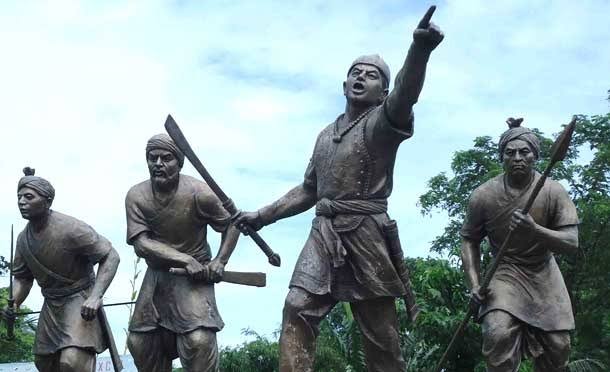
One of them is Lachit Borphukan who was born on 24 November 1622 at Gargaon (near Sivasagar of Assam). His courage and dedication, no Indians in general and people of north-east in particular can forget. In commemorative of his dedication, every year on 24 November Lachit Divas (Lachit Day) is celebrated across the State (Assam) as well as the victory of the Ahom Army at the Battle of Saraighat (now near Guwahati). Today his statue may be seen in many places of Assam including at National Defence Academy (NDA), Khadakwasla of Maharashtra. Also the best passing out cadet of National Defence Academy – the Lachit Borphukan Gold Medal- is conferred in his name every year from 1999.
Lachit Borphukan
Lachit Borphukan’s name and Ahom rule are closely associated. It is pertinent to mention that, Ahom rule started in upper part of Assam (popularly known as Upper Assam) in 1228 with the entering of a person named Sukaphaa with his followers, a Tai prince originally from Mong Mao (which is now included within the Dehong-Dai Singhpho Autonomous Prefecture of Yunnan in Peoples Republic of China). He established his relation with the local persons by making them friends. It is believed that Sukaphaa and his people helped by imparting knowledge and practical demonstration to the local people for cultivation of wet rice which earlier were not known to them thoroughly. With the pace of time, Ahom kings expanded their base in other parts of Assam. As religious faith Hinduism influenced Ahom and Assamese language gained popularity all over the State. Literatures show Ahom rulers never neglected their defense base rather they gave importance for the protection of their territory, as sequel time to time different invaders attacked Assam but could not succeed. Against the back-drop, it may be mentioned that in 1962, our leaders could not anticipate strong defense-force after independence as sequel China took the advantage triggering lot of damage to our properties, killing of our soldiers, forcefully occupying land etc. However, Ahom rule continued up to 1826, and after the Treaty of Yandaboo with the British, Assam was under British rule.
As mentioned already during Ahom rule, a great army general as well as a patriot Lachit Borphukan was born. The people of India remember Lachit Borphukan because of his valour, sincerity, patriotism and dedication for which the Battle of Saraighat (a naval battle) needs to be mentioned here. The Battle was fought in 1671 between the Mughal Empire (led by Raja Ramsingh I), and the Ahom Kingdom (led by Lachit Borphukan) on the Brahmaputra river at Saraighat, now in Guwahati. The various literatures reveal that the Ahom Army was not strong in comparison to the Mughal Army in spite of this, by meticulous uses of the terrain, guerrilla tactics, psychological warfare, military intelligence etc., the Mughal Army was defeated. The Battle of Saraighat was the last battle in the major attempt by the Mughals to spread their rule into Assam. The most memorable event of the Battle was that Lachit Borphukan beheaded his own maternal-uncle who was also with him during the war. The incident happened like this, to foil the attack Lachit ordered to construct an earthen wall for fortification under the supervision of his own maternal uncle within the night. When Lachit came at mid-night to take stock of the situation, he found his maternal uncle was telling others to have nap because of mid-night. Lachit became furious and immediately, beheaded his maternal uncle in presence of all the persons uttering, “My maternal uncle is not greater than my country”. In Assamese the famous saying is “Desotkoi Momai Dangor Nohoi”. That night with Lachit’s initiative (in spite he had fever), the fort was completed. This is reflected as his sincerity, seriousness, dedication and patriotism. He was great hero, a great patriot and a great Army General.
Dr Shankar Chatterjee
Former Professor & Head (CPME),NIRD & PR ( Govt. of India), Hyderabad,  India
Former Associate Professor, Eritrea
Former Assistant Prof, Govt. Degree College, Tripura, India
Former Senior Planning Officer, Govt of Assam, India