Government clears misgivings of amendment in the Indian Forest Act, 1927

The Government of India (GoI)has cleared misgivings over the zerodraftwhich sought a techno-legal suggestions in the Indian Forest Act, 1927. Speaking to media persons at a Press Briefing in New Delhi today, the Union Minister of Environment, Forest and Climate Change (MoEF&CC), Shri Prakash Javadekar categorically stated that the Central Government for past 5 years have always worked in the interests of tribals and forest dwellers and as such will not give space to misgivings, “We are completely withdrawing the draft amendment to the Indian Forests Act to remove any misgivings,the tribal rights will be protected fully and they will continue to be the important stakeholder in forest development”, said Shri Javadekar. He also further clarified that it was a techno-legal exercise by officials to carry out an assessment which sought suggestions from various states and the document was circulated to Principal Chief Conservator of Forests of each states.
The Environment Minister also highlighted the continued commitment bythe Central Government to enrich the livelihood of tribals and forest dwellers, “We have supported not only with finances and more welfare schemes but have also ensured Minimum Support price for their forest produce and have also allotted various of hectares of land during this 5 years by giving them titles of ownership”, stated the Environment Minister.
Echoing similar sentiments,Union Minister for Tribal Affairs, Shri Arjun Mundaalso welcomed the move of withdrawal, “By withdrawing the draft amendment of Forest Act 1927, the Government of India reiterated the commitment that water-forest-land and tribal are synonymous with each other, their interests will not be ignored”, said Shri Munda.
To watch the full video of the Press Briefing, click here:

***

Raksha Mantri Shri Rajnath Singh inaugurates Sisseri River bridge connecting Dibang Valley and Siang in Arunachal Pradesh

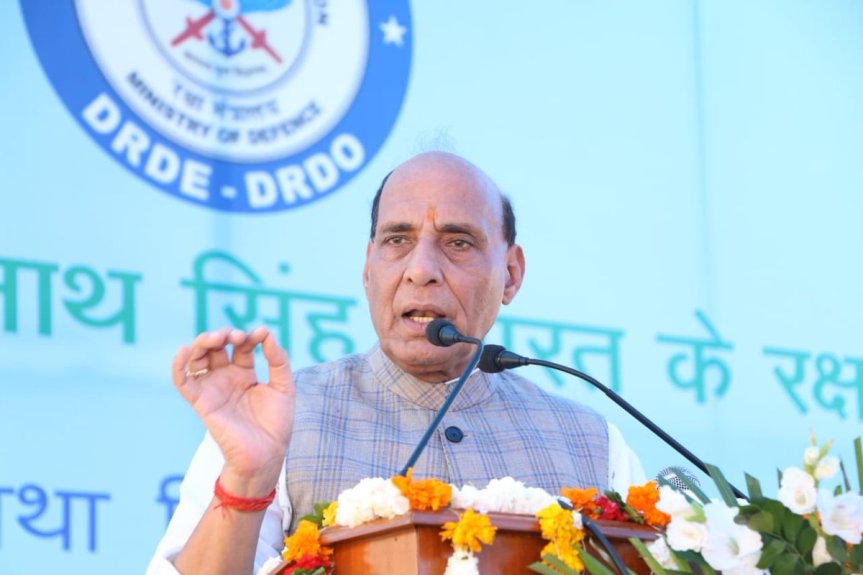
Raksha Mantri Shri Rajnath Singh today called for bolstering the border infrastructure, saying that national security is the top most priority of the Government. He was inaugurating the Sisseri River bridge at Lower Dibang Valley in Arunachal Pradesh. The 200-metre long bridge between Jonai-Pasighat-Ranaghat-Roing road will provide connectivity between Dibang Valley and Siang to meet the long-pending demand of the people of Arunachal Pradesh as it would cut down the travel time from Pasighat to Roing by about five hours.
Raksha Mantri said, the Government has adopted the Border Area Development Programme (BADP) in its plan keeping in view security of the people residing in the border areas. “Infrastructural upgradation is necessary for the security of the North-East and the entire country,” he added.
Shri Rajnath Singh said, the Government has initiated numerous infrastructure projects in the state. He listed out various projects, including the proposed Bhalukpong – Tenga – Tawang railway line, operationalisation of Pasighat airport, nod to Hollongi airport and approval to construct Sela Pass tunnel, reaffirming the Government’s commitment to establish a strong and efficient roadways, railways, airways, waterways and digital network in the region.

Shri Rajnath Singh said, Prime Minister Shri Narendra Modi took the decision to stay out of the Regional Comprehensive Economic Partnership (RCEP), keeping in mind the economic interests of the country, especially the North-East. “You must have seen that during the ASEAN summit in Bangkok recently, our PM took a very important decision that India will not be a part of RCEP… Farmers, labourers, factories and industries would have got affected had India joined the RCEP. This is a big decision,” he said.
Raksha Mantri added that the Government’s focus on the Act East Policy would open new doors of rapid infrastructural development in the North-East, especially Arunachal Pradesh. He expressed confidence that just as the Sisseri River bridge would help the development of Lower Dibang Valley and East Siang, the strong infrastructure in Arunachal Pradesh would also act as bridge between India and South-East Asian countries.
The Sisseri River bridge provides connectivity to Tinsukia via Dhola-Sadia bridge. It was constructed by Project Brahmank of Border Roads Organisation (BRO). This bridge is also strategically important from military view point and will be a part of Trans Arunachal Highway. Raksha Mantri said, the bridge will play an important role in the overall development adding that it would open more avenues in the fields of employment, trade & tourism.
Shri Rajnath Singh also commended BRO for constructing and maintaining roads and bridges in the border areas all over the country and meeting the strategic needs of the Armed Forces. There are four projects of BRO in the state namely Vartak, Arunank, Brahmank and Udayak working relentlessly to meet the strategic requirement of the nation and also immensely contributing in the socio-economic development of the region. 
Chief Minister of Arunachal Pradesh Shri Pema Khandu, Deputy Chief Minister Shri Chowna Mein, Director General Border Roads Lt General Harpal Singh and Arunachal East Member of Parliament Shri Tapir Gao were also present on the occasion.
*********

MCA notifies Insolvency and Bankruptcy (Insolvency and Liquidation Proceedings of Financial Service Providers and Application to Adjudicating Authority) Rules, 2019 (Rules)

The Ministry of Corporate Affairs (MCA) has notified the Insolvency and Bankruptcy (Insolvency and Liquidation Proceedings of Financial Service Providers and Application to Adjudicating Authority) Rules, 2019 (Rules) today to provide a generic framework for insolvency and liquidation proceedings of systemically important Financial Service Providers (FSPs) other than banks. The Rules shall apply to such FSPs or categories of FSPs, as will be notified by the Central Government under section 227 from time to time in consultation with appropriate regulators, for the purpose of their insolvency and liquidation proceedings.
The Insolvency and Bankruptcy Code, 2016 (Code) provides a consolidated framework for reorganisation, insolvency resolution and liquidation of corporate persons, limited liability partnerships, partnership firms and individuals in a time-bound manner. Section 227 of the Code enables the Central Government to notify, in consultation with the financial sector regulators, financial service providers (FSPs) or categories of FSPs for the purpose of insolvency and liquidation proceedings, in such manner as may be prescribed.
Shri Injeti Srinivas, Secretary, Corporate Affairs, stated that the special framework provided under Section 227 of the Code for financial service providers is essentially aimed at serving as an interim mechanism to deal with any exigency pending introduction of a full-fledged enactment to deal with financial resolution of Banks and other systemically important financial service providers.  The special framework under Section 227 of the Code shall not apply to Banks.  Separately, however, the government will notify specific categories of FSPs that do not fall under the systemically important category and shall be resolved under the normal provisions of the Code as ordinarily applicable to corporate debtors.

The Rules provide that the provisions of the Code relating to the Corporate Insolvency Resolution Process (CIRP), Liquidation Process and Voluntary Liquidation Process for a corporate debtor shall, mutatis mutandis, apply to a process for an FSP, subject to modifications, as under:
  1. The CIRP of an FSP shall be initiated only on an application by the appropriate regulator.
  2. On admission of the application, the Adjudicating Authority shall appoint the individual, who has been proposed by the appropriate regulator in the application for initiation of CIRP, as the Administrator.
  3. While conducting a proceeding of an FSP, the Administrator shall have the same duties, functions, obligations, responsibilities, rights, and powers of an insolvency professional, interim resolution professional, resolution professional or liquidator, as the case may be. He shall be appointed or replaced by the Adjudicating Authority on an application made by the appropriate regulator in this behalf.
  4. The appropriate regulator may constitute an Advisory Committee of three or more experts to advise the Administrator in the operations of the FSP during the CIRP.
  5. An interim moratorium shall commence on and from the date of filing of the application for initiation of CIRP by the appropriate regulator till its admission or rejection by the Adjudicating Authority.
  6. The provisions of interim-moratorium or moratorium shall not apply to any third-party assets or properties in custody or possession of the FSP, including any funds, securities and other assets required to be held in trust for the benefit of third parties.
  7. The Administrator shall take control and custody of third-party assets or properties in custody or possession of the FSP and deal with them in the manner, to be notified by the Central Government under section 227.
  8. The license or registration which authorises the FSP to engage in the business of providing financial services shall not be suspended or cancelled during the interim-moratorium and the CIRP.
  9. Upon approval of the resolution plan by the Committee of Creditors, the Administrator shall seek ‘no objection’ from the appropriate regulator to the effect that it has no objection to the persons, who would be in control or management of FSP after approval of the resolution plan. The appropriate regulator shall issue ‘no objection’ on the basis of the ‘fit and proper’ criteria applicable to the business of the FSP without prejudice to the provision of Section 29A of the Code.
  10. The FSP shall obtain prior permission of the appropriate regulator for initiating voluntary liquidation proceedings.
  11. The Adjudicating Authority shall provide the appropriate regulator an opportunity of being heard before passing an order for liquidation or dissolution of the FSP.
These Rules shall come into force on the date of their publication on the official gazette.
These Rules are available at www.mca.gov.in and www.ibbi.gov.in.
****

India’s Foreign Trade: October 2019

India’s overall exports (Merchandise and Services combined) in April-October2019-20* are estimated to be USD 310.23 billion, exhibiting a positive growth of 1.51per cent over the same period last year. Overall imports in April-October 2019-20* are estimated to be USD 359.68 billion, exhibiting a negative growth of 4.61per cent over the same period last year.
*Note: Services data pertains to April-September 2019-20 as September 2019 is the latest data available as per RBI’s Press Release dated 15thNovember 2019. It is arrived at by adding quarterly data of RBI for Q1 of 2019-20 with Month-wise QE data of RBI’s press release for July, August and September 2019-20. This data is provisional and subject to revision by RBI. In addition, it may be noted that data for October 2019 is estimated and added to the April-September 2019-20 data of RBI to calculate the Overall Trade Deficit for April-October 2019-20. It will be revised based on RBI’s next press release for October 2019.
I. MERCHANDISE TRADE
EXPORTS (including re-exports)
Exports inOctober 2019 were USD26.38 billion, as compared to USD26.67billion in October 2018, exhibiting a negative growth of 1.11 per cent. In Rupee terms, exports were Rs. 1,87,382.29crore in October 2019, as compared to Rs. 1,96,406.43crore in October 2018, registering a negative growth of 4.59per cent.
In October 2019, major commodity groups of export showing positivegrowth over the corresponding month of last year are
Cumulative value of exports for the period April-October 2019-20 was USD185.95 billion (Rs.13,04,149.06crore) as against USD190.15billion (Rs.13,17,881.40crore) during the period April-October 2018-19, registering a negative growth of 2.21per cent in Dollar terms (negative growth of 1.04per cent in Rupee terms).
Non-petroleum and Non Gems and Jewellery exports in October 2019 were USD19.04billion, as compared to USD18.93billion in October 2018, exhibiting a positive growth of 0.59per cent. Non-petroleum and Non Gems and Jewellery exports in April-October 2019-20 were USD137.45billion, as compared to USD137.93billion for the corresponding period in 2018-19, a decrease of 0.35per cent.
IMPORTS
Imports in October 2019 were USD37.39billion (Rs.2,65,628.46crore), which was 16.31per cent lower in Dollar terms and 19.26per cent lower in Rupee terms over imports of USD44.68billion (Rs.3,28,973.56 crore) in October 2018. Cumulative value of imports for the period April-October 2019-20 was USD280.67billion (Rs.19,67,625.73crore), as against USD306.31billion (Rs.21,23,857.76crore) during the period April-October 2018-19, registering a negative growth of 8.37per cent in Dollar terms (negative growth of 7.36per cent in Rupee terms).
Major commodity groups of import showing negative growth in October 2019 over the corresponding month of last year are:
CRUDE OIL AND NON-OIL IMPORTS:
Oil imports inOctober 2019 were USD9.63billion (Rs. 68,400.14crore), which was 31.74percentlower in Dollar terms (34.15percent lower in Rupee terms), compared to USD14.11billion (Rs. 1,03,864.85crore) in October2018. Oil imports in April-October 2019-20 were USD73.93billion (Rs. 5,18,270.66crore) which was 12.16per cent lower in Dollar terms (11.31percent lower in Rupee terms) compared to USD84.17billion (Rs. 5,84,362.56crore), over the same period last year.
In this connection it is mentioned that the global Brent price ($/bbl) has decreased by 26.22% in October 2019 vis-à-vis October 2018 as per data available from World Bank.
Non-oil imports inOctober 2019 were estimated at USD27.76billion (Rs. 1,97,228.32crore) which was 9.19per cent lower in Dollar terms (12.39percent lower in Rupee terms), compared to USD30.57billion (Rs. 2,25,108.71crore) in October 2018. Non-oil imports in April-October 2019-20 were USD206.74billion (Rs. 14,49,355.07 crore) which was 6.93per cent lower in Dollar terms (5.86percent lower in Rupee terms), compared to USD222.14billion (Rs. 15,39,495.20crore) in April-October2018-19.
Non-Oil and Non-Gold imports wereUSD25.92billion in October 2019, recording a negative growth of 10.04per cent, as compared to Non-Oil and Non-Gold importsof USD 28.82billion in October 2018. Non-Oil and Non-Gold imports wereUSD189.10billion in April-October 2019-20, recording a negative growth of 6.73per cent, as compared to Non-Oil and Non-Gold importsUSD 202.74billion in April-October 2018-19.
II. TRADE IN SERVICES
EXPORTS (Receipts)
As per the latest press release by RBI dated 15thNovember 2019, exports in September2019 were USD 17.54 billion (Rs. 1,25,090.78 crore) registering a positive growth of 7.05 per cent in dollar terms, vis-à-vis September2018. The estimated value of services export for October 2019* is USD 17.22 billion.
IMPORTS (Payments)
As per the latest press release by RBI dated 15thNovember 2019, imports in September 2019 were USD 11.10 billion (Rs. 79,151.87 crore) registering a positive growth of 11.56 per cent in dollar terms, vis-à-vis September 2018. The estimated value of service Import for October 2019* is USD 10.92 billion.
III.TRADE BALANCE
MERCHANDISE: The trade deficit for October 2019 was estimated at USD11.01billion as against the deficit of USD18.00billion inOctober 2018.
SERVICES: As per RBI’s Press Release dated 15thNovember 2019, the trade balance in Services (i.e. Net Services export) for September, 2019 is estimated at USD6.44billion.
OVERALL TRADE BALANCE: Taking merchandise and services together, overall trade deficit for April-October 2019-20* is estimated at USD49.45 billion as compared to USD71.45 billion in April-October 2018-19.
*Note: Services data pertains to April-September 2019-20 as September 2019 is the latest data available as per RBI’s Press Release dated 15th November 2019. It is arrived at by adding quarterly data of RBI for Q1 of 2019-20 with Month-wise QE data of RBI’s press release for July, August and September 2019-20. This data is provisional and subject to revision by RBI. In addition, it may be noted that data for October 2019 is estimated and added to the April-September 2019-20 data of RBI to calculate the Overall Trade Deficit for April-October 2019-20. It will be revised based on RBI’s next press release for October 2019.
MERCHANDISE TRADE
(PROVISIONAL)
OCTOBER
APRIL-OCTOBER
EXPORTS(including re-exports)
2018-19
26.67
190.15
2019-20
26.38
185.95
%Growth 2019-20/ 2018-19
-1.11
-2.21
IMPORTS
2018-19
44.68
306.31
2019-20
37.39
280.67
%Growth 2019-20/ 2018-19
-16.31
-8.37
TRADE BALANCE
2018-19
-18.00
-116.15
2019-20
-11.01
-94.72
EXPORTS &IMPORTS: (Rs. Crore)
(PROVISIONAL)
OCTOBER
APRIL-OCTOBER
EXPORTS(including re-exports)
2018-19
1,96,406.43
13,17,881.40
2019-20
1,87,382.29
13,04,149.06
%Growth 2019-20/ 2018-19
-4.59
-1.04
IMPORTS
2018-19
3,28,973.56
21,23,857.76
2019-20
2,65,628.46
19,67,625.73
%Growth 2019-20/ 2018-19
-19.26
-7.36
TRADE BALANCE
2018-19
-1,32,567.13
-8,05,976.35
2019-20
-78,246.17
-6,63,476.67
SERVICES TRADE
EXPORTS & IMPORTS (SERVICES) : (US $ Billion)
(PROVISIONAL)
September 2019
April-September 2019-20
EXPORTS (Receipts)
17.54
107.06
IMPORTS (Payments)
11.10
68.10
TRADE BALANCE
6.44
38.96
EXPORTS & IMPORTS (SERVICES): (Rs. Crore)
(PROVISIONAL)
September 2019
April-September 2019-20
EXPORTS (Receipts)
1,25,090.78
7,49,213.20
IMPORTS (Payments)
79,151.87
4,76,546.62
TRADE BALANCE
45,938.90
2,72,666.58
Source: RBI Press Release dated 15thNovember 2019
Note: Services data pertains to April-September 2019-20 as September 2019 is the latest data available as per RBI’s Press Release dated 15thNovember 2019. It is arrived at by adding quarterly data of RBI for Q1 of 2019-20 with Month-wise QE data of RBI’s press release for July, August and September 2019. This has been used along with the estimate of service exports and imports for August 2019, as explained in page-1 for the purpose of this Press note
***

India to host the 8th International Conference on Agricultural Statistics in New Delhi

The 8th International Conference on Agricultural Statistics (ICAS-VIII) will be organized by the Ministry of Agriculture in New Delhi from 18th to 21st November 2019. Addressing the media here today, Dr. Trilochan Mohapatra DG ICAR & Secretary DARE informed that the conference will be inaugurated by the Union Minister for Agriculture & Farmers Welfare Shri Narendra Singh Tomar and Chief Guest will be Bill Gates. The conference will be organised in collaboration with the Ministry of Statistics and Programme Implementation, ISI-CAS, FAO, the USDA, ADB, World Bank, Bill & Melinda Gates Foundation, Eurostat, AfDB and various other organizations. The theme of this year’s ICAS is ‘Statistics for Transformation of Agriculture to Achieve the Sustainable Development Goals (SDGs)’.
Dr. Trilochan Mohapatra said that it is for the first time that such an important conference in the field of agriculture statistics is happening in the country and this will be a learning opportunity for the statisticians, young scientists and decision makers in India to adopt modern practises in agriculture such as Big Data analysis, AI, precision farming etc. He added that the conference is held with an aim to address various challenges faced in producing data to report on the SDGs and various leading research and also to deliberate and finalize the best practises in the field of agriculture statistics.
The Director General said that the Conference will see participation of more than 600 delegates of which 200 delegates will be from 108 countries. There will be 5 plenary sessions and 44 technical sessions. Dr. Mohapatra added that ample discussions are not happening in the field of statistics in the country today even if a large amount of data is available. He further emphasized that this available data should be utilised effectively in agriculture sector with help of modern methods and practises taking inputs from the conference.
Speaking at the briefing, Dr. Michael Steiner World Bank representative & International Statistical Institute-CAS chair said that ICAS is a series of conferences that started in 1998 based on overarching need for agricultural data worldwide. The conference is conducted every three years based on overarching need for agricultural data worldwide and the last conference was held in Rome in 2016. He added that the agenda for this conference covers domains of food and agricultural statistics, related methodologies, technologies and processes.
*****

Shripad Naik Inaugurates Two day International Conference on Yoga at Mysuru, Karnataka

Union Minister of State (Independent Charge) for AYUSH and Defence, Shri Shripad Yesso Naik inaugurated two days International Conference on Yoga today at Mysuru, Karnataka. The theme of the conference is ‘Yoga for Heart Care’. More than 700 national and international delegates are expected to participate in the conference spread over ten technical sessions involving fifty resource persons & experts.  Vd. Rajesh Kotecha, Secretary Ministry of AYUSH, Swami Ram Dev, Patanjali Yog Peeth, Haridwar,  Sh. Pratap Simha, Member of Parliament, Mysuru. Dr. H.R. Nagendra, Chancellor, SVYASA, Bengaluru, and Sh. Kamlesh D. Patel, Ramachandra Mission, Hyderabad, were also present in the inaugural session.
In his inaugural address the Minister said that the Government has introduced several schemes for promotion of Yoga among the people of our country. He said that the rewards of Yoga are so immense that people are easily motivated to adopt Yoga in their lives once they learn about its benefits. The Minister further said that by introducing Yoga in the schools in the curriculum of physical education, generations of healthy Indians can be raised and crores of rupees now being spent on medical care can be saved. Shri Shripad Naik informed the gathering the Ministry has constituted a Yoga Certification Board to address to certify individual trainers and accredit Yoga Training institutions. He said the Board’s programme is essentially a Voluntary scheme of Certification and will increase quality and standards in Yoga teaching and promote Yoga as a career skill. The Minister added “as many of you are aware Yoga is an integral part of the 1.5 lakh primary health care centres under AYUSHMAN BHARAT. This will make learning Yoga and practicing it easier for the people all across the country”.

On the first day of the conference, technical sessions on ‘Yoga for heart care; emerging trends and researches’, ‘role of Yoga in preventive cardiology’, ‘Role of Yoga in the management of Hypertension’ and ‘Yoga for coronary artery disease’ discussed.   During the second day of the conference, technical session on ‘physiology and integrative cardiology’, ‘Yoga for Cardiovascular health’ will be organized. A Symposium on ‘need for promotion of Yogasana as sports’ and presentation of research papers on ‘Yoga for heart care; emerging trends and researches’ will also be organised.
The Pre-conference events such as Yoga walk, mass Yoga demonstration, CME programme etc are also planned to project the health benefits of Yoga and healthy lifestyle.
This conference is fifth in the series to commemorate the unanimous adoption of Resolution by the United Nations General Assembly during its 69th Session for observing 21st June as International Day of Yoga. After the UN declaration of International Day of Yoga since 2014, overwhelming interest towards Yoga has been witnessed from the international communities across the globe. The tremendous success of the International Yoga Conferences organized by the Ministry of AYUSH during last four consecutive years is evident from the participation of increasing large number of Indian and foreign delegates.
Indian Missions in the countries with whom the Ministry of AYUSH has some kind of cooperation such as MoUs, Academic Chairs, Information cells, etc. have been requested to nominate two prominent Yoga experts or enthusiasts from the country/countries under their jurisdiction, who would participate in the Conference to enable them capture and understand various dimensions of Yoga, and could help them to further propagate the same in their respective countries.
***

PM greets people of Jharkhand on their Statehood Day

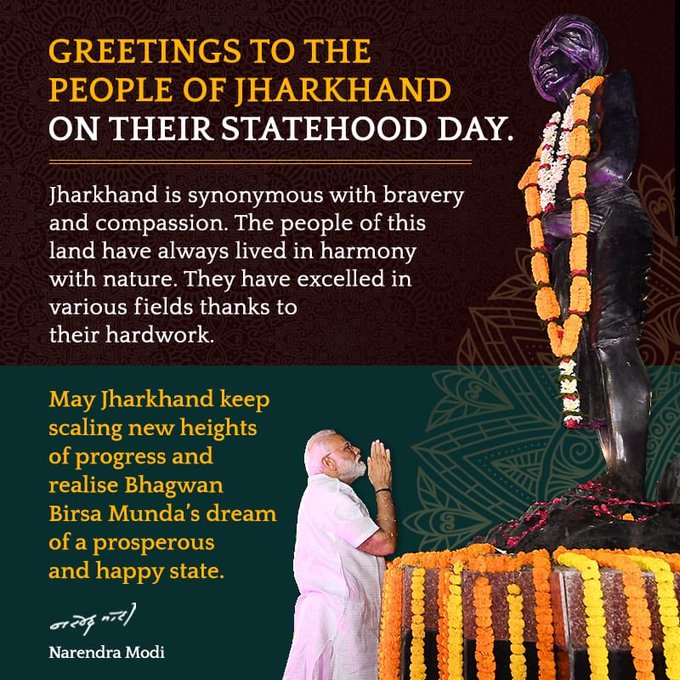
The Prime Minister, Shri Narendra Modi, has greeted the people of Jharkhand on their Statehood Day. 
झारखंड की जनता को राज्य के स्थापना दिवस की बहुत-बहुत बधाई। मेरी कामना है कि झारखंड प्रगति की नित नई ऊंचाइयों को छुए और भगवान बिरसा मुंडा के समृद्धसशक्त और खुशहाल राज्य के सपने को साकार करे।
Greetings to the people of Jharkhand on their Statehood Day. Jharkhand is synonymous with bravery and compassion. The people of this land have always lived in harmony with nature. They have excelled in various fields thanks to their hardwork.
May Jharkhand keep scaling new heights of progress and realise Bhagwan Birsa Munda’s dream of a prosperous and happy state”, the Prime Minister said.
झारखंड की जनता को राज्य के स्थापना दिवस की बहुत-बहुत बधाई।

मेरी कामना है कि झारखंड प्रगति की नित नई ऊंचाइयों को छुए और भगवान बिरसा मुंडा के समृद्ध, सशक्त और खुशहाल राज्य के सपने को साकार करे।

View image on Twitter

4,823 people are talking about this

**********

The entire world is indebted to mothers, she is the bond that holds the family together- VP

The Vice President, Shri M. Venkaiah Naidu today said that ‘Vasudhaiva Kutumbkam’ has been the guiding light for the Indian family system since time immemorial and our ethos and socio-cultural fabric are woven around this perceptive phrase.
Inaugurating the International Conference of Global Mothers-2019, “Vasudhaiva Kutumbakam –Family System and Role of Mother”, in New Delhi today, the Vice President expressed happiness over the theme of the Conference saying that the conference is a celebration of motherhood.
“The entire world is indebted to mothers and this is the reason that in all religions and in all parts of the world mothers hold a special position of relevance and reverence”, he added.
Quoting from various ancient texts such as Vedas and Puranas, Shri Naidu said that respect to women has been central to our civilization. He further said that in any family, be it nuclear or joint, united or extended; the mother is at the centre. She is the bond that holds the family together. By her dedication she converts the four walls of house into the home where love, affection, respect for others, selfless contribution towards family, society and country exist.

Highlighting that all rivers are named after women, the Vice President said, “In our culture, women are considered not just equal to men, but in many respects, superior”.
However, he said that somewhere along the way, our strong values have been weakened. He also expressed concern on the rise in violence against women and abandonment and ill-treatment of elderly mothers.
He listed several steps for women empowerment taken by the Government, such as ‘Beti Bachao -Beti Padao’, 50 percent reservation in Local Self Governments and said that much more needs to be done to protect women and give them an equal platform.
To stress the importance of equal rights to women, the Vice President quoted Mahatma Gandhi, who once wrote that, “the way we treat our women is an indicator of the richness of our culture”. The weakening of women will lead the weakening of the family, society and the country, he said.
Speaking on the importance of family, Shri Naidu said that our forefathers developed the best family model based upon the values of sacrifice, respect and togetherness and practiced the same for ages together. “India can be a role model for the entire world because of its robust family value system which has successfully withstood the test of the time”, he added.
Opining that Indian family system discourages individualism and encourages collectivism, Shri Naidu said that India has grown and attained its current stature under the strong and supportive framework of its joint family system. A strong family system can be the best possible solution to overcome several crippling social evils, he added.
Highlighting the benefits of joint family system, the Vice President said that it develops a sense of responsibility, a propensity for adjustment and love for discipline in children, right from an early age. Respecting and loving elders, caring for them and seeking their wise counsel while taking important decisions, are few practices which are followed in Indian joint families, he added.
However, the Vice President also recognized that with the advent of urbanization and modernization, even in India, joint families are being fragmented. “People are migrating in search of jobs and thus new family systems are emerging in the evolving socio-economic scenario, replacing the traditional joint family model”, he said.
Accepting that the change is inevitable, Shri Naidu said that, whatever the family system be, the core values that sustained and nourished Indian families for centuries together must never be compromised. Even if families are far away physically, they must always remain close to one another, firmly bonded in the eternal values of love, brotherhood and sacrifice, he advised.
The Vice President also called upon the younger generation to spend time with grandparents. “There is need to curb the negative trend of not spending enough time with the grandparents due to mobile phones and TV”, he said.
He appreciated Indira Gandhi National Centre for Arts (IGNCA) for organizing this conference on a highly relevant social theme. The two days Conference is being organized by IGNCA in partnership with Foundation for Holistic Development in Academic Field (FHDAF) and Bharatiya Shikshan Mandal (BSM).
Dr. Sachchidanand Joshi, Member Secretary, IGNCA. Shri Mukul Kanitkar, National Organising Secretary, BSM, Mrs Madhuri Sahasrabudhe, Chairperson, FADF, Sushri Geeta Gunde and mothers from several Central Asian and European countries were among the dignitaries who graced the occasion.
Following is the full text of speech –
“I am delighted to be here today with all of you for this international conference on “Vasudhaiva Kutumbkam –Family System and Role of Mother”.
Let me extend my deep appreciation to Indira Gandhi National Centre for Arts (IGNCA) for organizing this momentous conference. The theme of the conference is a highly relevant one, an idea that we must ponder upon, especially in this fast-paced world where families are increasingly being fragmented by emerging socio-economic and cultural factors.
I am happy to know that IGNCA is committed to in-depth research, promotion and preservation of Indian arts & culture. I applaud IGNCA for its efforts towards understanding women’s history from an Indian perspective, through its Nari Samvaad Prakalp (NSP): the gender studies program.
I am told that this event is being organized in collaboration with Foundation for Holistic Development in Academic Field (FHDAF), an organization that has been actively involved helping needy students and people from border areas.
Dear sisters and brothers,
“ayam bandhur ayam neti gananaa laghu chetasaam/
udaara charitaanaam hi vasudhiava kutumbakam//”
meaning, “The distinction of ‘this (person) is mine; and this one is not’ is made only by the narrow-minded, or ignorant people. For those who are of noble conduct (or the one who knows the Ultimate truth) the whole world is one family (one unit).”
The phrase Vasudhaiva Kutumbakam is made up of three Sanskrit words, Vasudhaa (earth/world), iva (like) and kutumbakam (large/extended family). The verse finds mention in Maha Upanishad (VI.72); and is further referred to in the Hitopadesha and other literary works of India.
The context of the verse is to describe the attributes of an individual who has attained the highest level of spiritual progress and one who is capable of performing his worldly duties without any sense of attachment to the material possessions.
This verse has been the guiding light for the Indian family system since time immemorial.
Our ethos and socio-cultural fabric is woven around this perceptive phrase and our worldly wisdom resonates with such moorings, visualized and expressed so lucidly by our sages.
I am also glad that this conference is a celebration of motherhood.
The entire world is indebted to mothers and this is the reason that in all religions and in all parts of the world mothers hold a special position of relevance and reverence.
Hinduism says – “janani janma bhoomish cha svargaad api gareeyasee” (जननीजन्मभूमिश्चस्वर्गादपिगरीयसी), meaning – “the Mother and the motherland are superior even to the Heavens.”
In Islam the Prophet Muhammad also says in a famous narration: – “Al jannanto tah-ta aqq-daam al-omm-haat” meaning, “Paradise lies at the feet of your mother.”
In Christianity – “Motherhood is spoken of throughout Scripture as a high and important calling. Children are viewed as a blessing—a heritage from the Lord… a reward from Him” (Psalm 127:3). 
The Rig Veda reveals a tolerant and unbiased society where women and men were equal and women enjoyed great liberty.
In the Rig Vedic family, the matriarch occupied a place of great important place, so much so that the compound word for father and mother stated ‘Maataraa pitaraa’, signaling the importance of mother.
The word Maatri is used most often to refer to mother. We also find some words like Maatritamaa (meaning very loving mother) to denote the expanse of the concept.
In the Rigvedic times, the mother was identified as the most important person in one’s life.
In the Vedic culture there were several Vedic Rishikas (Women seers) who were the fountainheads of wisdom.
They lived the ideal life of spirituality and chose the path of Vedic studies.
Co-education seems to have existed in this period and all the students got equal attention from the teacher, irrespective of their gender.
It is remarkable that young girls, during Vedic times, were given education after undergoing an initiation ceremony (Yajnopavit) just like the boys.
In the Puranic tradition, women are considered as the harbingers of power and prosperity and revered as Lakshmi, as Sarasvati, as Subhadra, as Durga and as Kali.  Even divine power in the form of Shakti is considered feminine.
The Great Bhishma explained the same concept in the Mahabharatha to his great grandson Yudhisthira, ‘O ruler of the earth (Yuddhisthira), the lineage in which daughters and the daughters in-law are saddened by ill treatment, that lineage is destroyed. When out of their grief these women curse these households, such households lose their charm, prosperity and happiness.’ (Mahabharata, Anushashanparva)
Manu-Samhita says
“Yatra naryastu pujyante ramante tatra Devatah,
yatraitaastu na pujyante sarvaastatrafalaah kriyaah”
Meaning ‘where women are honored, there the gods are pleased; but where they are not honored, no sacred rite yields rewards. Where the female relations live in grief, the family soon wholly perishes; but that family where they are not unhappy ever prospers.’
Shakta Sutra explicitly establishes Goddess or Feminine as the ultimate transcendental reality as well. Adya Shakti, is considered as the Mother of all origins, the matrix of the unborn. ‘All forms of knowledge are aspects of Thee, and all women throughout the world are Thy forms.’ (Devi Mahatmya)
As a mother, woman becomes a figure of profound reverence; ‘Treat your mother as a deva’ maatridevobhava… is a common dictum in Hinduism.
Indeed God is described as ‘mother’ in many verses, as mentioned in the Devi Mahatmya.
The Atharvaveda states that women should be valiant, scholarly, prosperous, intelligent and knowledgeable; they should take part in the legislative chambers and be the protectors of family and society.
The Yajurveda tells us, ‘The scholarly woman purifies our lives with her intellect. Through her actions, she purifies our actions. Through her knowledge, she promotes virtue and efficient management of society.’ (20.84)
In any family, be it nuclear or joint, united or extended; the mother is at the centre. She is the bond that holds the family together. By her dedication she converts the four walls of house into the home where love, affection, respect for others, selfless contribution towards family, society and country exist.
I would confidently say that in our culture, women are considered not just equal to men, but in many respects, superior.
Unfortunately, somewhere along the way, our strong values have been weakened.
Today we see a formidable rise in violence against women and abandonment and ill-treatment of elderly mothers. 
Mahatma Gandhi, who used the term ‘Stree-Shakti’, once wrote that, “the way we treat our women is an indicator of the richness of our culture”. No one can deny that men may have greater physical power than women, but women have more internal strength and energy. This is the reason that women are identified as Shakti (the embodiment of Power) in the Vedic civilization. The weakening of Shakti will lead the weakening of the family, society and the country, too.
Though we have taken a number of steps to secure the rightful position of respect and leadership to our women,  from Beti Bachao and Beti Padao to institutionalizing 50 percent reservation in Local Self Governments for women, much more needs to be done to protect women and give them an equal platform. 
My dear sisters and brothers,
I believe that without discussing the rich philosophy of Indian family system and tradition, a deliberation on family systems and values would remain incomplete.
Our forefathers developed the best family model based upon the values of sacrifice, respect and togetherness and practiced the same for ages together.
The guiding force for our value system were the Vedas, and it is because of this Vedic foundation that the institution of marriage and the philosophy of an inclusive family; which assimilated the entire world into its fold, without any discrimination, came into being.
A strong family system can be the best possible solution to overcome several crippling social evils.
India can be a role model for the entire world because of its robust family value system which has successfully withstood the test of the time.
India, like most other less industrialized, traditional, eastern societies, emphasizes more on family integrity, family loyalty, and family unity.
Indian family system discourages individualism and encourages collectivism.
India has grown and attained its current stature under the strong and supportive framework of its joint family system.
Here in the presence of the elderly, children learnt lessons of ethics and morality.
Respecting and loving elders, caring for them and seeking their wise counsel while taking important decisions, are few practices which are followed in Indian joint families.
The joint family system develops a sense of responsibility, a propensity for adjustment and love for discipline in children, right from an early age. In case of disagreements, the matters are wisely sorted out by consultative and democratic processes, rather than taking recourse to bitter unilateral decisions.
But we must also recognize that with the advent of urbanization and modernization, even in India, joint families are being fragmented.
People are migrating in search of jobs and thus new family systems are emerging in the evolving socio-economic scenario, replacing the traditional joint family model.
Change is, of course, inevitable. Whatever the family system be, the core values that sustained and nourished Indian families for centuries together must never be compromised.
Even if families are far away physically, they must always remain close to one another, firmly bonded in the eternal values of love, brotherhood and sacrifice. 
I am sure that platforms like this conference will help us find means to adapt to changing scenarios without compromising on the identity and individuality of our civilization. I hope that through informed deliberations and open discussions, you will further strengthen the institution of the family in whatever form it may assume.
I extend my best wishes to each one of you to make this great vision of “Vasudhaiva Kutumbkam”- a reality.
I am confident that together we will fulfill the responsibility entrusted to us by our ancestors to lead the world from darkness and ignorance to the light of wisdom.
I wish IGNCA and this conference a great success!”
*****


Rashtrapati Bhavan to Host Conference of Directors of IITS, NITS and IIEST on November 19

Rashtrapati Bhavan will host a conference of the Directors of IITs, NITs and IIEST, Shibpur on November 19, 2019. This Conference is part of regular interactions of the President of India, Shri Ram Nath Kovind, with such institutions in his capacity as visitor to 152 Central Universities and institutions of higher learning.
The agenda items of the conference will include – deliberations on challenges / opportunities along broad parameters on which NIRF rankings are based; participation and contribution of alumni in activities of the institutes; steps to increase representation of women in faculty and student intake; ways to involve students in nation building; promotion of research, innovation and entrepreneurship; filling up of vacancies, including faculty from foreign universities;  and review of major infrastructure projects.

Apart from the Directors of 23 IITs, 31 NITs and IIEST, Shibpur, the Conference will be attended by the Union Minister for Human Resource Development, Minister of State in the Ministry of Human Resource Development, Secretary (Higher Education), Secretary, Department of Science and Technology and Chairman AICTE.
****

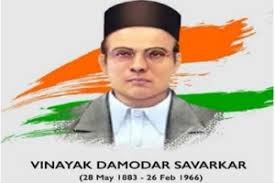
Veer Savarkar was a multidimensional personality – a freedom fighter, social reformer, writer, political thinker – Vice president

The Vice President, Shri M. Venkaiah Naidu said today that Veer Savarkar was a multidimensional personality – a freedom fighter, social reformer, writer, poet, historian, political leader and philosopher – all combined into one.
Releasing the book – ‘Savarkar: Echoes from a Forgotten Past’, in New Delhi today, the he opined that there are many facets of Veer Savarkar’s personality that remain under appreciated.
“Very few in India know that Veer Savarkar started one of the most powerful social reform movements against untouchability in India”, Shri Naidu said adding that Savarkar built Patit Pavan Mandir in the Ratnagiri district to allow entry to all Hindus, including Dalits. “He was the first to envision a casteless India”, the Vice President said.

Highlighting that it was Veer Savarkar who named the 1857 rebellion as the first war of independence, Shri Naidu called for the right sense of history that is reflective of Indian values.
The Vice President also listed what Veer Savarkar called as Seven Shackles of the society. Enumerating these shackles, VP said that Veer Savarkar condemned these “seven swadeshi fetters” as they were dividing society. The seven Shackles described by Savarkar are –
First, the rigid caste system which, according to Savarkar, “deserves to be thrown into the dustbins of history”.
The second reform Veer Savarkar wanted was to popularize Vedic literature to everyone, not only to a particular caste. He called Vedic literature civilizational knowledge for the entire human race and India’s unique gift to mankind.
The third was to break away from caste-based vocational rigidity and encourage persons to pursue any vocation of their choice based on aptitude and ability. In the absence of motivation of competition, or lack of aptitude, Savarkar believed, “merely following what one’s father did, will make one both complacent and unproductive.”
Fourth, Savarkar believed in global mobility and the need for Indians to venture out into foreign lands so as to “bring back the best of the world and carry the fragrance of India and her culture to every corner of the globe.”
Fifth, Savarkar wanted to break away from the taboo on inter-caste dining. He had said, “Religion is in the heart, the soul, the spirit; not the stomach!”
The sixth was promotion of inter-caste marriage
The seventh aspect, Veer Savarkar underscored was the need to develop a scientific temper. “We are 200 years behind Europe”, he had remarked adding, “It is through science, modern thoughts and industrialization that we can ensure that every man woman in India will have a job to do, food to eat, clothes to wear and a happy life to lead.”
The Vice President called Savarkar’s far-sighted vision of India’s future development as ‘truly remarkable’. Recounting the innumerable sufferings faced by Indian freedom fighters, he appealed to everyone to visit the Cellular Jail at least once in their lifetime.
Noting that it is not easy to write a biography, sepecially of a person as illustrious and as controversial as Savarkar, the Vice President complimented the author, Dr. Vikram Sampath for a very well researched and extremely well written account of Savarkar’s life and message.
“The book by Dr Sampath brings out these remarkable visionary ideas of Savarkar in a very compelling manner. After we put down the book, we see Savarkar in a new light”, he said.
Author of the book, Dr. Vikram Sampath, Rajya Sabha Member, Dr. Sonal Mansingh, Secretary General, Rajya Sabha, Shri Desh Deepak Verma, Secretary to Vice President, Dr. I.V. Subbarao, Chairman, Prasar Bharati, Dr. A. Suryaprakash, Shri Meghnath Desai, Shri Sanjeev Sanyal, Shri Ranjeet Savarkar were among the dignitaries who grace the occasion.
Following is the full text of the speech –
“It is a matter of great pleasure for me to launch this book on eminent freedom fighter, revolutionary and political ideologue, Swatantrya Veer Vinayak Damodar Savarkar today.
I must compliment the author, Dr Vikram Sampath for a very well researched, extremely well written account of  Savarkar’s life and message.
It is not easy to write a biography. Especially of a person as illustrious and as controversial as Savarkar. It is easy to swerve into a judgemental path, either being unduly critical or eulogistically effusive.
Dr Sampath maintains a fine balance and gives the reader a vivid glimpse of the historical context in which Savarkar emerged and left his unique imprint on the nation’s struggle for independence.
It is an engaging tale that grips the attention of the reader right from the first page till the end.
It is a chronicle of events, people, ideas and convictions narrated with an authenticity that makes us “live through” the past.
It is a biography not a hagiography.
Dear sisters and brothers,
Veer Savarkar was a multidimensional personality – a freedom fighter, social reformer, writer, poet, historian, political leader and philosopher – all combined into one.
The story of Veer Savarkar as it unfolds in this book, reveals the staunch patriotic vision of  this bold and determined son of Mother India who named the 1857 rebellion as the first war of independence and chose armed resistance as the modus operandi for achieving independence.
Veer Savarkar’s courage and commitmentto his cause is evident from the fact that he tried to escape to France by jumping off a British Ship near French coast in 1910. Savarkar provided leadership to several other young bravehearts in London and across Europe to garner support for India’s freedom.
The book contains riveting accounts of his exemplary role and innumerable sacrifices for the cause of country’s freedom. We also learn about the stellar role of his associates as well. The glorious chapter of India’s freedom struggle is recounted with the touch of an imaginative novelist and the penchant for accurate detailing of a studious historian.
The role of stellar heroes and heroines such as Madame BhikajiCama, Shyamaji Krishna Varma, Madan LalDhingra, LalaHarDayal, Bhai Paramanand, V.V.S. Aiyar comes alive in these pages.
Sisters and brothers,
I find that the book brings out many facets of Savarkar’s life and places his actions and thoughts in the historical context.
This helps us to get a clear understanding of the real import of Savarkar’s speeches and the vision he had elaborated at great length in his writings.
As Meghnad Desai, eminent author and columnist and Professor Emeritus, London School of Economics has commented, “Savarkar has long been a subject of abuse and adulation, both based on an incomplete understanding of his life and ides. Vikram Sampath has written the finest biography.  He has researched his subject in incredible depth and breadth, tracked down documents and memories long forgotten. This will restore the right balance to the story of one of the revolutionaries of modern India.”
Sisters and brothers,
Veer Savarkar was no ordinary man. He was a visionary social reformer, a forward-looking liberal, an iconoclast in many ways and an eminently  practical strategist who wanted to free India from the colonial rule, if necessary,  by violent armed resistance.
Recognizing the lack of unity as the underlying cause of colonial subjugation,  Savarkar’s emphasis has been on a quest for India’s unity and search for the unique Indian identity. As the author mentions in the book, “ Right from his childhood, Vinayak had bemoaned the lack of unity and organisation in Hindu society, ridden as it was with innumerable caste differences and other complexities.  Finding an answer to ‘Who is a Hindu?’ seemed germane to him at this point of time.” Pursuing this question, he came up with a postulate that the story of “the civilization of a nation is the story of its thoughts, its actions, and its achievements.  Literature and art tell us of its thoughts; history and social institutions of its actions and achievements. The commonality of our shared history and inherited works of art and architecture binds us all as a nation.”
What he is talking about is a shared cultural identity of a people, who were called Hindus simply because they were inhabiting a certain geographical space between the Sindhu river and the Indian Ocean. Their shared heritage is what he called “Hindutva” or being a Hindu.
The author brings out in great detail the historical context and the reason why Savarkar’s efforts to define Hindutva assume significance in the fight to unitedly take on the British might.
Sisters and brothers,
There are many facets of Veer Savarkar’s personality that remain under appreciated.
Very few in India know that Veer Savarkar started one of the most powerful social reform movements against untouchability in India. He built PatitPavanMandir in the Ratnagiri district to allow entry to all Hindus, including Dalits.
Criticizing the caste system, Veer Savarkar said –
 “To achieve social revolution we first have to strike at the birth-based caste system and bridge the differences between the various castes”
His feeling against caste based discrimination are best described in the letter he wrote to his brother Narayan Rao in 1920. Savarkar wrote –
“I feel the need to rebel against caste discrimination and untouchability as much as I feel the need to fight against foreign occupation of India.”
He was the first to envision a casteless India.
The author has very thoughtfully added a chapter on important thoughts of Veer Savarkar. It is quite revealing to read about Veer Savarkar’s reformist ideas and his iconoclastic observations.
Veer Savarkar decried what he called “seven swadeshi fetters”. Let me a cite a few of them. Please note that what Savarkar was condemning were societal factors that were dividing society. He wanted unity and freedom from societal ills. He wanted inclusive development.
“One of the most important components of such injunctions of the past that we have blindly carried on and which deserves to be thrown in the dustbins of history”, according to Savarkar, “ is the rigid caste system”.
The second reform he wanted was to popularize Vedic literature and make it available to everyone not only to a particular caste. He had remarked, “Vedic literature is civilizational knowledge for the entire human race and India’s unique gift to mankind.  Active propagation of its learning and internalization among all communities not only within but also outside India must be encouraged without delay.”
The third was to break away from caste-based vocational rigidity and encourage persons to pursue any vocation of their choice based on aptitude and ability. In his view, “Without the motivation of challenge and competition, or lack of aptitude, and merely following what one’s father or his father did make one both complacent and unproductive.”
Fourth, Savarkar believed in global mobility and the need for Indians to venture out into foreign lands. He had said, “Young Indians must be encouraged to cross the seas with no fear of losing caste and bring back to us the best of the world and carry the fragrance of India and her culture to every corner of the globe.”
Fifth, he wanted to break away from the taboo on inter-caste dining. In his view, “Eating and drinking with another human being can, by no stretch of imagination, ruin something as esoteric as one’s religion.  Religion is in the heart, the soul, the spirit; not the stomach!”
The sixth was “The intemperate practice of abolishing inter-caste marriage” which as per Savarkar, “ has caused our Hindu society a lot of harm.”
The seventh aspect he underscored was the willingness to develop a scientific temper.His far-sighted vision of India’s future development is truly remarkable. He had remarked, ‘The era that our country is now entering is the one that Europe had entered two centuries ago. This means we are 200 years behind Europe. This scientific temper is the foundation and cornerstone of the machine age and modernization, which will lead to prosperity for India. It is through science, modern thoughts and industrialization that we can ensure that every man woman in India will have a job to do, food to eat, clothes to wear and a happy life to lead.”
The book by Dr Sampath brings out these remarkable visionary ideas of Savarkar in a very compelling manner. After we put down the book, we see Savarkar in a new light. As Savarkar himself describes his mission, “A true social or religious reformer should only be driven by the desire to do good for the larger society.” He had the unity, integrity and the development of our country as the only objective in life. He makes this amply clear in his statement that, “As far as I am concerned, so that I am not torn about the choice between popularity and public good, I have this stamped on my mind: Varamjanahitamdhyeyamkevalam na janastuti (It is better to think only of the welfare of people, not receive adulations from them).
The following words of Veer Savarkar sum up his unwavering commitment to the cause he passionately believed in.
“I have given you the stores of all our martyrs and I have advised all along to hold firm by our creed of violent resistance if circumstances were to force it upon us.  I have kept the flag flying.  When I heard the sentence passed upon me fourteen years ago, the words dancing upon my lips were the same that are dancing upon them today.  I uttered them then, I have uttered them during my long stay in prison, and they come forth from my mouth today, to be carved on your heart and mind, and to ring in your ears for good. Let us say all of us- Glory to the Goddess of Freedom; Victory to our Mother.”
It is truly a remarkable book about a versatile genius.
I once again heartily compliment Dr Vikram Sampath for producing this excellent biography and hope that he will continue to produce similar biographies that will illuminate different aspects of great men and women who have left a lasting legacy.
Jai Hind”
****

Rashtrapati Bhavan to Host Conference of Directors of IITS, NITS and IIEST on November 19

Rashtrapati Bhavan will host a conference of the Directors of IITs, NITs and IIEST, Shibpur on November 19, 2019. This Conference is part of regular interactions of the President of India, Shri Ram Nath Kovind, with such institutions in his capacity as visitor to 152 Central Universities and institutions of higher learning.
The agenda items of the conference will include – deliberations on challenges / opportunities along broad parameters on which NIRF rankings are based; participation and contribution of alumni in activities of the institutes; steps to increase representation of women in faculty and student intake; ways to involve students in nation building; promotion of research, innovation and entrepreneurship; filling up of vacancies, including faculty from foreign universities;  and review of major infrastructure projects.

Apart from the Directors of 23 IITs, 31 NITs and IIEST, Shibpur, the Conference will be attended by the Union Minister for Human Resource Development, Minister of State in the Ministry of Human Resource Development, Secretary (Higher Education), Secretary, Department of Science and Technology and Chairman AICTE.
****

2-day Regional Conference on Replication of Good Governance Practices concludes today

The two-day Regional Conference on ‘Replication of Good Governance Practices in UTs of Jammu & Kashmir and Ladakh being organised in Jammu concluded today. The Conference was inaugurated yesterday by the Union Minister (PP) Dr Jitendra Singh. The Lt. Gov. of J&K, Shri G.C. Murmu, The Secretary DoPT and DARPG, Dr C. Chandramouli, J&K Chief Secretary, Shri BVR Subrahmanyam, Additional Secretary, DARPG, Shri. V. Srinivas and other senior Officers were present during the inaugural session.

During the Valedictory session held in Jammu today, the Conference has unanimously adopted the Sushasan Sankalp outlined below after intensive deliberations during the sessions held over two days. The Conference resolved that Government of India and the participating State Governments and the Union Territories of Jammu & Kashmir and Ladakh shall collaborate to:
  1. Develop the Union Territories of Jammu & Kashmir and Ladakh as models of administrative excellence using digital technologies in implementation of welfare Union Territory programs;
  2. To make sustained efforts to create a transparent, accountable and people-centric administration in the Union Territories of Jammu & Kashmir and Ladakh;
  3. Improve the Citizen’s interface with Government by promotion of digital governance, citizen centric governance, innovation and capacity building in the Union Territories of Jammu & Kashmir and Ladakh;
  4. Refine and consolidate the successful local Governance initiatives and upscale them across Jammu & Kashmir and Ladakh to bring out the best outcomes of Governance and Public Policy to the Union Territories of Jammu & Kashmir and Ladakh;
  5. To improve the grievance redressal mechanisms by forging greater synergy between Awaaz e-Awam and the CPGRAMS;
  6. Promote the use of e-Office and move towards less paper Secretariats in the Union Territories of Jammu & Kashmir and Ladakh;
  7. Promote capacity building and personnel administration by formulating mid-career training programs and specific need-based training programs for officials in the Union Territories of Jammu & Kashmir and Ladakh;
  8. Replicate the innovations and the best practices in successful national governance initiatives including digital governance, citizen centric grievance redressal and aspirational districts so as to provide a clean, transparent and people centric governance to the UTs of J&K and Ladakh.
The Advisor to Lt. Governor J&K, Shri K. K. Sharma, Additional Secretary, DARPG, Government of India Shri V. Srinivas, Principal Secrertary, AR, J&K, Shri Rohit Kansal, Secretary GAD, Shri Farookh Ahmad Lone, Joint Secretary, DARPG, Ms Jaya Dubey and other delegates were present during the Valedictory session.
During the two-day event, various sessions were organized on the topics ranging from Digital Governance to Capacity Building and Personnel Administration.
On the Inaugural Day, a session on ‘Public Policy and Governance’ was organised which was chaired by Shri Arun Kumar Mehta, the Financial Commissioner Finance Department, J&K. He said that good governance is about ensuring greater good for the people, specially poor people who don’t have a voice in the system. He emphasized upon the fast and efficient delivery of services. AS, DARPG, Shri V. Srinivas said that this is one of the important conferences as 19 states and 4 UTs are participating in it. He said that successful implementation of priority programmes is important for achieving PM’s ‘New India’. While quoting the examples of e-mitras, digital merchants, Shri Srinivas said that Digital transformation is very important part of good governance. For inclusive model of Governance, the digital divide needs to be reduced, he added. He mentioned about various initiatives across the country, which included Swacchh Bharat Abhiyan, Education and others. He quoted example of Banko Bikano of Bikaner, Ambikapur model- Foot soldiers in Chhattisgarh and Unnayan Banka model, among others.
He also quoted examples of UPI, BHIM App, DBT, Common Service Centres and Aadhaar scheme with regard to implementation of Digital India.
Speaking about e-Vidhaan Dr. Satya Prakash, Joint Secretary, Ministry of Parliamentary Affairs, said that National e-Vidhan Application is an one nation one application which will be a huge and authentic knowledge pool for Members, researchers, media and citizens. All members will be linked through telephone and email. It will be cost effective model, he said. He added that it is a Digital legislature using digital tools for rule & role clarity. Quoting its features, Shri Prakash said that it leads to In house automation, responsive and responsible information and WiFi enabled Houses.
Speaking about the factors influencing the public policy and governance, Smt Jaya Dubey, Joint Secretary, DARPG, said that up-gradation in technology requires some amendments in the laws. She added that reforms in public administration are essential for good governance. She emphasised that expertise in policy making, ethics and time bound decisions are important and extensive deliberations are required on it. She also spoke about the outcome budget and utilisation certificates should be issued on the basis of physical progress.
During the session on ‘Digital Governance’, the Principal Secretary IT Nagaland Shri K. D. Vizo, chaired the session. Various presentations included GEM by Shri Talleen Kumar, CEO Government e-Market, UMANG by Shri Neeraj Kumar, Director (Project Appraisal & Finance & Projects), National e-Gov Division, MeITY and presentation on e-Office by Smt. Rachna Srivastava, DDG, NIC.
The next session was held on Citizen Centric Governance, chaired by Principal Secretary to LG, J&K Shri Bipul Pathak. A presentation was made by Mrs Prisca Mathew, Deputy Secretary, DARPG on the CPGRAMS 7.0 and Grievance Redressal – systemic improvements. Shri D. Baskara Pandian, Special Officer, CM Grievance Cell made presentation on Grievance redressal – the Tamil Nadu experience. The Additional Secretary (Finance), Jammu, Dr Syed Abid Rasheed Shah made presentation on Delivery in challenging law and order circumstances. A presentation on Awaz e-Awam was made by Ms Azeeta Qureshi, Under Secretary, Government of J&K. During the session, Shri Shanbor Warjri, MCS, Shillong from Chief Minister’s Public Grievance Redressal Mechanism also made a presentation.
The session on Aspirational Districts was chaired by the Additional Secretary, DARPG Shri V. Srinivas. Collector YSR Kadapa Shri C. Hari Kiran made presentation on Water conservation through Sub-Surface Dams. The Deputy Commissioner, Hazaribagh, Jharkhand, Dr Bhuvnesh Pratap Singh made presentation on BDO & Panchayat Score card. A presentation on Mission Indradhanush was made by Shri D. Krishna Bhaskar, District Collector Sidipet, Telangana and on Mission API-10 (malaria eradication) by Dr Arun Kumar Padhi, DPHO, Koraput, Odisha.
On the second day of the conference today, presentations were made on ‘Select Innovations’ at the session chaired by Shri Atul Dulloo, Financial Commissioner, Health & Medical Education, J&K. A presentation on Jung-e-Azaadi by Shri Vinay Bublani, CEO Punjab Freedom Movement Memorial Foundation & DC, Shaheed Bhagat Singh Nagar. A presentation on NRLM was made by Shri Angrez Singh Rana, Collector, Kishtwar and on e-NAM by Shri Susheel Guleria, Secretary (APMC), Kullu, HP.
The session on Capacity Building and Personnel Administration was chaired by Shri B.P. Acharya, DG, MCR HRD Hyderabad, Telangana, Dr Poonam Singh Associate Professor, NCGG made presentation on training. Dr Reva Sharma (Training), IMPARD, J&K made presentation on Training Programs in J&K.
********

Vice President of India presents ‘National Awards for Excellence in Journalism 2019′ on the occasion of National Press Day

On the occasion of National Press Day, the Vice President 0of India, Shri M. Venkaiah Naiduawarded the winners of ‘National Awards for Excellence in Journalism 2019′ at New Delhi today. The journalists in different areas werehonoured for their outstanding and exemplary work in journalism at an event organized by Press Council of India.
Speaking on the occasion, the Vice President highlighted the significance and the role of media. He emphasized that ever since the launch of the first newspaper in India-‘The Bengal Gazette’ by James Augustus Hickey in 1780, the press has been playing an outstanding role in empowering the people.
In his address, the Vice President said “The cardinal principle of journalism is to present fair, objective, accurate and balanced information to the reader and viewer without journalists assuming the role of the gatekeepers”.
Shri Naidu also spoke of the evils of fake news and urged media to always maintain objectivity, fairness and accuracy, “ With the electronic and social media providing news by the minute with alerts and flashes on smart phones, journalists will have to exercise greater caution and guard against ‘fake news’, disinformation and misinformation”.
.
the Norms of Journalistic Conduct Edition -2019
Addressing the gathering, Union Minister of Information & Broadcasting, ShriPrakashJavadekaraddressed the key issues that the media fraternity faced, “Today there is a crisis of fake news more than paid news. Fake news has a higher TRP and this is not good for the society and the country. Media must understand the important responsibility they have to shoulder and cater towards delivering the right news to the end-users”, stated ShriJavadekar.
The recipients of today’s prestigious awards are:
  1. , eminent Journalist and chairman of Rajasthan Patrika Private Limited,has been selected under the prestigious category of “Raja Ram Mohan Roy Award” for his outstanding contribution towards Journalism and will be venerated with citation.
  2. Mr.SanjaySaini, Correspondent Dainikbhaskar,Mandi,Himachal Pradesh and Mr.RajChengappa, Group Editorial Director (Publishing),India Today,Noida ,Uttar Pradesh,have been jointly designated the  award in the category of “Rural Jounalism” for their respective articles captionedभारतजापानकीयारी ,मंडीजिलामेंकिसानोंकेखेतोमेंलिखरहीहैविकासकीनईकहानी and “The New Bharat;Hope and grand ambition course through the great Indian hinterland even amid  the enveloping gloom of rural  distress”.
  3.  from 15.7.2018 to 22.8.2018 and “ArogyaKeralum learning Not (about the Nipah outbreak in Kerala)” from 2.6.2018 to 6.6 2018 respectively.
  4. Under the category of“Photo Journalism- Single News Picture”,ShriP.G.Unnikrishnan, Senior Photographer The Mathrubhumi,New Delhi, for the  photo published with caption “Hon’able Prime Minister NarendraModi and his Canadian Counterpart Justin Tradeau At RashtrapatiBhawan during ceremonial reception to the latter. Hon’able prime Minister NarendraModi fondly touches younger son of Justin Tradeau.”and  Mr.Akhil E.S,News  photographer, Mathrubhumi,NationalDaily,Malayalam for photograph published with caption “They had no aversion  to splashing of mud  On their cloths and they enjoy this spot as anything else mud football”,have been Jointly awarded.
  5. Ms.Sipra Das,Consulting Editor(photography),India Empire Magazine and Parliamentarian Magazine,Delhi has been selected  in the category of  “Photo Journalism-Photo Feature” for  The published photographic illustration under the caption “Shail’s  Journey  with AIDS”.
  6. Mr SaurabhDuggal, Hindustan Times, Chandigarh has been selected in the “Sports Reporting” for the article published under caption “Rugby gives wings of tribal girls from impoverished Bengal Village”.
  7. Ms Ruby Sarkar, Special Correspondent, Deshbandhu, Bhopal and Ms.AnuradhaMascarenhas, Senior Edito, The Indian Express, Pune have been jointly awaded in the newly introduced award category of ‘Gender Based Reporting’ for their respective articles under captioned मिथिलाकीहिम्मतसेआत्मनिर्भरहुआसरीखेरागांव” and Locals atAraku valley help reach out to tribal women, ensure zero maternal deaths in last two year”.
  8. Mr KrishnKaushik, and ShriSandeep Singh, Working with The Indian Express have been selected in the newly introduced award category of ‘Financial Reporting’ for their joint series of articles on “ICICI: CEOChandaKochhar; Videocon get rupees 3250 Cr. Loan from ICICI Bank CEO’s husband gets sweet deal from Venugopaldhoot; ChandaKochers’ Brother in law advised ICICI Borrowers on their Foreign loans”.
For viewing the list, click the link below:
***

‘Aadi Mahotsav’ a platform for tribals to showcase their handicrafts, culture, traditions and food in front of the world: Shri Amit Shah

Union Minister for Home Affairs, Shri Amit Shah inaugurated the National Tribal Festival ‘Aadi Mahotsav’, in New Delhi today. Union Minister for Minority Affairs, Shri Arjun Munda also graced the occasion, among other dignitaries.
3.JPG

Addressing on the event, Shri Shah said that Prime Minister Shri Narendra Modi has seen a vision of the ‘Aadi Mahotsav’ and developing ‘Van Dhan Vikas Kendras’, to accelerate the development of tribal people across the country, who reside in 40% of its area and constitute 8% of its population. Over a thousand tribal artisans from 27 states are participating in the event. This platform is helping the tribal artisans, their handicrafts, culture, traditions and food to showcase them in front of the world. Such a platform not only proves to be a vital source of employment to lakhs of tribals, but also gives them recognition and instills a sense of pride and worthiness in them, he said.

Through this initiative, Home Minister said, Modi government is showing its commitment to safeguard tribal culture and ensure its development in a sustainable manner, as it believes in Pandit Deen Dayal Upadhyay’s philosophy of Antyodaya. Shri Shah said, “I want to assure crores of tribal brethren that the Narendra Modi government is committed to ensure sustainable development and improvement in standard of living of tribals, without disturbing their culture and traditions”. He further said that it was first time since independence that, under the government led by Shri Atal Bihari Vajpayee, a separate Ministry was formed for the development of tribals. Such an important thing was neglected by governments in the past, he added.
1.JPG

Remembering Bhagwan Birsa Munda on his birth anniversary, Home Minister said that it was he who gave the first call of a revolution against the British rule in the ‘Ulgulan Andolan’. He was the person who showed new horizons to the tribal society with his revolutionary thoughts. In such a short life, he fought for the rights of the tribals and forest dwellers, which is why he came to be known as ‘Bhagwan’ among them. Talking about recognizing the immense contribution of tribals in fighting the British rule, Shri Shah said that Modi government has built museums worth over Rs. 180 crores across the country to preserve the contribution of tribal leaders in India’s freedom struggle.
Shri Shah called the tribals as the protectors of forests, which in turn are the lungs of the nation. The tribals are still attached to nature as well as maintain their centuries-old culture. Such a coexistence of nature with human culture is best exemplified by the tribal society. Tribals might not have the modern life of luxury and comfort, yet they have the gift of happiness that comes from staying in the lap of nature with harmony, he said. Shri Shah noted that in today’s times of climate change, when the whole world is seeing ill effects of global warming, it is the tribals who are a live example for the whole world of how humans can sustainability coexist with nature.

4.JPG
Talking about the schemes of Government of India that are benefiting tribal population, Shri Shah said that Narendra Modi government has given every household gas, electricity, free healthcare till Rs. 5 lakhs and houses with toilets, among others, which are the basic needs of the people. Talking about specific schemes about tribal development, he said that Modi government initiated the concept of the District Mineral Fund, under which proceeds of over Rs. 32000 crores, besides budgetary allocations, have been employed in the last 5 years for development of tribal areas, villages and people. Further, an audio-visual digital library consisting of over 10,000 tribal cultural events has been developed by this government to preserve and protect the tribal culture and traditions for future generations, he said.

Talking about the government’s push to increase penetration of education in tribal areas, Shri Shah talked about how Modi government has initiated the ‘Eklavya’ model and increased the funds of Tribal Research institutes across the country. He said that by the 75th year of India’s independence, 2022, each block would have a tribal school on Eklavya model. 465 schools have already been constructed, he added.

Observing how the earlier governments have neglected the development of the under privileged sections of the society and how privileged classes have cornered benefits of development, Home Minister said that tribals and dalits have never been the priority of any government earlier, but Modi government is a firm believer that the poor and underprivileged sections have the first right over the resources of the country before anyone else. This government truly believes in Prime Minister Modi’s vision of ‘Sabka Saath, Sabka Vikas’, he said.
2.JPG
Concluding his speech, Shri Shah assured the tribal people across the country that Narendra Modi government is standing like a rock behind the adivasis and would leave no stone unturned in the path of their development.
*****

Dr. Harsh Vardhan inaugurates 6th National Summit on Good, Replicable Practices and Innovations in Public Health Care Systems.

This NHM National Summit is a celebration of ideas, innovations and knowledge sharing and we all must take back these and ensure that we implement at-least a few of them” said Dr. Harsh Vardhan, Union Minister for Health & Family Welfare as he inaugurated the Sixth National Summit on Good, Replicable Practices and Innovations along with Union Minister of State for Health & Family Welfare Shri. Ashwini Kumar Choubey, Shri. Vijay Rupani, Chief Minister, Gujarat, Shri. Nitinbhai Ratilal Patel, Dy. CM & Minister of Health & Family Welfare, Gujarat and Dr. Vinod K Paul, Member (Health), NITI AAYOG at Gandhinagar (Gujarat), today.
Calling the Summit as the aggregating ground of new ideas, t

houghts and expression, the Union Health Minister stated “MoHFW endeavors to foster cross learning amongst the State Governments, NGOs, Healthcare organizations and other academic institutions so that these work in concordance to achieve the overarching public health goals.” Dr. Harsh Vardhan suggested that similar to the National NHM Summit, the States also can have State/Regional conferences for sharing of knowledge within the districts. “Let the national knowledge and ideas be transmitted to the districts level health workers, functionaries through the state/regional conferences”. He added that in addition to presenting best practices, states must also emulate and roll out the best practices from other states. He stressed the importance of self-auditing for performance assessment.

Dr. Harsh Vardhan also highlighted the noteworthy achievements in the health sector during the past few years such as Ayushman Bharat, Telemedicine, NHP 2017, Medical Education, and Health Systems Strengthening.
Shri. Ashwini Kumar Choubey, Minister of State for Health & Family Welfare appreciated the efforts made by the Centre and States to reach out to the beneficiaries and provide access to quality healthcare services. He said that “The Summit provides a valuable platform for sharing of knowledge and experiences. This will immensely contribute to meeting our health outcomes”. He also highlighted the initiatives taken for providing preventive, promotive, affordable and quality healthcare services including AYUSH services.
Dr. Vinod K Paul, Member (Health), NITI AAYOG addressing the summit emphasized the importance of system level change for greater strides in healthcare and termed NHM as great program for healthcare delivery to the populace. He said ”There are seven building blocks for the future advances in the health sector- focused stewardship, adequate finance, capable HR, health commodities, service delivery which is equity & quality driven, information systems, and community participation for social and behavior change.”
The Summit saw the launch of SAANS campaign i.e. “Social Awareness and Action to Neutralise Pneumonia Successfully” to control Pneumonia. This campaign will mobilize people’s for protecting and preventing children from pneumonia; and health personnel, governments & other stakeholders to prioritize treatment towards the control of Pneumonia — one of the most fatal childhood illnesses. Under the SAANS campaign, new interventions have been included like a child suffering from Pneumonia will be treated with pre-referral dose of Amoxicillin by ASHA; Pulse Oximeter will be used at the Health and Wellness Centre for identification of low oxygen levels in the blood and if required treated by use of Oxygen. The initiative also aims to create mass awareness about the most effective solutions for pneumonia prevention like breast feeding, age appropriate complementary feeding, immunization, good quality air etc.
The web portal for home based care of children including newborn visited by ASHA, was also launched at the Summit. This portal has all the resource materials (training materials, IEC videos, audios, banners, posters etc.) for the home visits of ASHAs. The portal will also be used to monitor the progress of programs regarding home visits by ASHAs and referral of sick newborns, an intervention considered globally as game changer to improve child survival and also improve nutritional status and overall development of children.
The dignitaries also unveiled the Coffee Table Book documenting the Good and Replicable Practices presented during the Summit. Dr. Harsh Vardhan along with other dignitaries acknowledged the exemplary progress of States and Union Territories in key health indicators and programme areas by presenting them with awards for excellent performance.
The Ministry of Health & Family Welfare, GoI holds National Summit on Good, Replicable Practices and Innovations in Public Healthcare Systems in India annually to recognize, showcase and document various best practices and innovations adopted by States and UTs for addressing their public health challenges and to improving their health outcomes though better implementation of programmes under National Health Mission (NHM). More than 300 participants attended the summit. At the summit 37 good practices were presented and 73 emerging good practices were showcased in the form of poster presentations.
Also present at the event were senior officers from MoHFW; State Health Secretaries and NHM MDs; Health Care Officers from almost all States and Union Territories along with Programme Officers, heads of Programme Divisions, MoHFW; Development Partners; Civil Society representatives and other healthcare organizations.
***