Know About ITR-1

ITR-1 can be filed by Resident Individual who has:-

1.Total income less than 50lakh rupees during the financial year. 
2. Income from salary.
3.Income from one house property.
4.Family pension scheme.
5.Agriculture income upto 5000 rupees.
6.Income from other sources that is:-
           – Interest from Saving Accounts
           – Interest from deposit (Bank/Cooperative Society/ Post Office)
           – Interest from income tax refund
           – Interest received enhanced compensation.
           – Any other interest income   
           – Family Pension 
 7.Income of Spouse (other than those covered under Portuguese Civil Code) or Minor is clubbed (only if the source of income is within the specified limits as mentioned above).
ITR-1 cannot be filed by any individual who:-
1.Is a Resident Not Ordinarily Resident (RNOR), and Non-Resident Indian (NRI).
2.has total income exceeding 50 lakh rupees.
3.has agricultural income exceeding 5000/- rupees.
4.has income from lottery, racehorses, legal gambling etc.
5.has taxable capital gains (short term and long term).
6.has invested in unlisted equity shares.
7.has income from business or profession.
8.is a Director in a company.
9.has tax deduction under section 194N of Income Tax Act.Section 194N is applicable in case of cash withdrawals of more than Rs. 1 crore during a financial year. This 
section will apply to all the sums of money or an aggregate of sums withdrawn from a particular customer in a 
financial year. Further, while calculating the limit of Rs 1 crore, cash withdrawals from all accounts maintained 
by a person with one bank are to be considered. 
8.has deferred income tax on ESOP received from employer being an eligible start-ups.
9.owns and has income from more than one house property.
10.is not covered under the eligibility conditions for ITR-1.
The precautions to be taken while filing return of income are:-
1.Download Form 26AS (Annual Information Statement) and check the actual TDS / TCS / tax paid. If you see any discrepancy, you should reconcile it with the Employer / Tax Deductor / Bank.
2.Compile and carefully study the documents to be referred to when filing your ITR, like bank statement / passbook, interest certificates, receipts to claim exemptions or deductions, Form 16, Form 26AS (Annual Information Statement), investment proofs, etc.
3.Ensure details like PAN, permanent address, contact details, bank account details, etc. are correct in the pre-filled data.
4.Identify the correct return for you (from ITR-1 to ITR-7). Provide all the details in the return such as total income, deductions (if any), interest (if any), taxes paid / collected (if any), etc. No documents are to be attached along with ITR-1. However, you need to keep these documents for situations where they need to be produced before tax authorities such as assessment, inquiry, etc.
5.e-File the return of income on or before the due date. The consequences of delay in filing returns include late filing fees, losses not getting carried forward, deductions and exemptions not being available.
6.After e-Filing the return, e-Verify it. If you want to manually verify your return, send the signed physical copy of ITR-V Acknowledgement (by ordinary post or speed post) within 120 days of filing the return to Centralized Processing Center, Income Tax Department, Bengaluru 560500 (Karnataka).
Changes in itr 1:-
In ITR-1 for AY 2021-22, there is an addition of section 115BAC. If you wish to opt for the new tax regime under section 115BAC, select Yes in the new ITR form, else select No. Please note that option for new tax regime u/s 115BAC will be available only till due date of filing of return u/s 139(1).
Documents needed to file ITR-1 are:-
1.Form 16
2.House Rent Receipt (if applicable)
3.Investment payment premium receipt (if applicable).
  • In case you miss filing the ITR within the due date u/s 139(1), you can still file your Income Tax Return but you maybe required to pay a late filing fee of up to 5000/- rupees. Additionally, you will also be required to pay interest on the tax liability (if any).
  • Different tax returns are prescribed for filing by individual taxpayers depending on their source of income and residential status. To determine the correct ITR to file, you can use the Help me decide which ITR Form to file option. You can then proceed based on questions displayed to determine the correct ITR to file.

LGBT RIGHTS IN INDIA


                                                                   (Photo: iPleaders Blog)

Every cloud has a silver lining.” This proverb goes well with the historic judgement passed by the Supreme court on 6th September 2018 in the favor of LGBT community rights. This has been much debated topic since a long time. Nothing could be more blessing than the enactment of Article 377 for the relief of LGBT community. The hearing of the petitions began with a bench consisting of Chief justice Dipak Misra and justices DY Chandrachud, AM Khanwilkar, Indu Malhotra, and Rohinton Fali Nariman. It was truly a landmark decision which struck down a 19th century law criminalizing homosexuality in India.


What role does the Indian Constitution play towards the emancipation of the society’s most marginalized and excluded? What vision does the Constitution espouse with respect to basic fundamental rights and freedoms? And what conception of inclusion and pluralism does the Constitution pursue in a society that remains deeply divided and disjointed? All these searching questions came to form a distinct part of the decision of the Indian Supreme Court (Court) when it was called upon to rule on the constitutional validly of Section 377 of the Indian Penal Code, 1860. It was not the first time however, that the Court was examining Section 377 on the touchstone of the Constitution, as the case previously travelled through several levels of judicial adjudication involving different jurisdictional procedures.


Embodying the ethos of Victorian morality, Section 377, a colonial-era law, criminalized ‘…carnal intercourse against the order of nature with any man, woman or animal…’. Anything that was not penal-vaginal sexual encounter was ‘against the order of nature’ and as a consequence ‘unnatural’. Through this provision, homosexual acts even between consenting adults was considered and proscribed as a criminal offense punishable with imprisonment. Thus, a significant section of the population comprising the LGBT+ community remained perpetually ostracized by the Indian society, persecuted by State authorities and marginalized in the discourse of constitutional rights. Therefore, when the Court decided in Navtej Johar v Union of India that Section 377 in so far as it criminalizes same sex acts between consenting adults, violates the constitutional mandate enshrined under the Fundamental Rights chapter, especially, Art. 21 (life and personal liberty), Art. 14 (equality and equal protection of laws), Art. 15 (non-discrimination) and Art. 19 (Freedom of expression), truly, it was a historic undoing of injustice towards the LGBT+ people. In other words, as a result of this decision, LGBT+ people who were historically and by default considered ‘criminals’ under the law, came a bit closer to acquiring an ‘equal moral membership’ of the society and the State. It was a tough as well as a long road but at the end everything seemed to be mightier.

Let us look back into the history of India from where the seeds of this discrimination were actually sown. India has a long tradition of tolerance for all kinds of beliefs, faiths, philosophies, and ways of living. This takes us back to the 1800s. Lord Macauley first created this law in 1860 when he was the President of the Indian Law Commission. The reason for this law was because the British WANTED TO “impose Victorian values” on the colony of India. Not only were such values trying to be inflicted on the Indian society but also the Constitution of India wanted to “…narrow constructions of patriarchal gender relations and heteronormativity” (Ramasubhan 91).

 What’s important and a reflection of the movement itself is that the support has come not just from the queer people, but across a range of actors, movements and institutions.  Progressive groups, state bodies like the National Human Rights Commission, teacher’s associations, professional associations including the medical and mental health establishments, women’s groups, student groups, trade unionists and private companies came out publicly against the judgement. Thousands across the country stood together, repeating the chant that brought together our resistance: ‘No Going Back’.


In declaring Section 377 to be unconstitutional, however, the Court was deeply reflective about the fact that for Constitutional rights to acquire a meaningful purpose for the marginalized communities, disciplining State action alone will not be sufficient. In this regard, the Court did not mince words when it stated that it is both, criminality of the law and the ‘silence and stigmatization’ of the society towards the LGBT+ community that orchestrates the marginalization and the exclusion of the former. Implicit in that claim was the understanding that inequality, hierarchy and prejudice transpires as much from State action as it does from societal sanctions, community conventions and private relationships. In the context of such social realities, what is the stated role of the Constitution and the laws? Is the mandate of the Constitution simply confined towards ordering the relationship between the State and the individual (vertical) or does the Constitution have an equal role to play in shaping normative values among individuals within the society?


The Court unequivocally embraced the latter narrative and found that the Indian Constitution envisions an expansive role for both the State and the individual to actively promote social change within the contours of the Constitution. It seeks transformative change ‘in the order of relations not just between the State and the individual, but also between individuals’. The transformative potential in Indian Constitution is a conscious ‘attempt to reverse the socializing of prejudice, discrimination, and power hegemony in a disjointed society’. Therefore, the Constitution, the Court surmises, obliges not only the State not to violate fundamental rights, but also individuals to ‘act in a manner that advances and promotes the Constitutional order of values’.


“Sexual orientation” is an essential attribute of privacy. Discrimination against an individual on the basis of sexual orientation is deeply offensive to the dignity and self-worth of the individual. This judgement can be considered as a revolutionary one in a society like India. But every judgement has two parts, one is written and other is its execution. The written part is progressive and reformist and its execution includes sensitizing the society and institutions in accepting what is written in this judgement. That may take time. Till then I would like to put forth some suggestions. The first step is sex education in schools and at homes. The second step is that the law enforcement agencies such as the police needs to be more sensitized towards the LGBT people. Similarly, our media and film fraternity can play a very important role in imparting knowledge and disseminating true information about LGBT people.


To conclude, we all are equal.  Nobody should be discriminated on whatsoever ground.  In the last few years LGBT are gaining acceptance in many parts of India. Many Bollywood films have dealt with homosexuality. They have also fair well at the box office. There’s a transformative constitutionalism which is happening and the real import of transformative constitutionalism lies in positive measures that the State ought to take in bringing the Constitution closer to the most deprived. Indian society needs to shrug off its old thinking and come out of the widely prevailing homophobia.


Morality in Rule of Law

                                                            (Photo: Thought and action)

Rule of Law is the fundamental principle which ensures good governance as well as individual rights and liberties. It says no one is above the law and every person living in a particular society is subject to the law of that society. All other notions associated with the rule of law must also be considered alongside it. It is a mechanism that encourage the equality of all citizens before the law. It also secures a non-arbitrary form of government, and specifically prevents the arbitrary use of power. In general, the rule of law implies that the creation of laws, their enforcement, and the relationships among legal rules are themselves legally regulated, so that no one including the most highly placed official is above the law.

Moralityis a concept that distinguishes right from wrong. It also talks about conduct that is considered acceptable or unacceptable in a particular society. The source of morality is usually considered to be natural law and God’s instructions through sacred documents.

Morals provide a basis for the development of law by virtue of justice, equity, good faith, and conscience. Morality plays an important role in making of law and its interpretation. Morals are an intrinsic part of the laws. In the ancient time morals and laws were considered as one and the same. In the current period though law and morality have several distinctions yet the same are not completely different or distinct. A relationship can be established between morality and law on three grounds: –

1)     morals as the basis of law

2)      morals as test of positive law

3)      morals as the end of law.

According to Stammer “jurisprudence depends much upon moral ideas as just law has a need of ethical doctrine for its complete realization. Positive law and just law correspond to positive morality and rationally grounded ethics. There’s no difference and if any, it is only the difference of manner in which the desire for justice present itself”.

H.L.A Hart believes that there are several relations between law and morals. He was of the view that a legal system must exhibit some specific conformity with morality or justice or must rest on a widely diffused conviction that there is a moral obligation to obey it.

Ronald Dworkin has argued that both laws and constitutions are unavoidably rooted in political and moral principles. The law is not derived logically from accepted true moral principles. Rather, it is established by legislatures that come to agreement on public rules that are shaped by a political consensus about right and wrong.

Rule of law prioritizes the supremacy of law whereas morality prioritizes the moral values and consciences of the subjects of the state. For instance, a man is under no duty to help a beggar or the distressed and can neglect his sick and old parents without the fear of any legal or penal consequences, but morality does not allow a person to do so as it amounted to undesirable conduct condemned by morals and ethics. There is a close relation between the rule of law and morality.  Morality complements the rule of law. But it is a casual relationship, as laws are not made out of moral principles, rather, they are established and shaped by a “legal consensus of right and wrong”. Even though morality is ultimately involved in making and modifying the law, it is never legally binding and does not have constitutional value.  Laws have a marginal origin from the morals and ethics derived in the society which initially monitored the conduct of people, but morality solely cannot be the basis on which law has been derived. An acceptable statement is that both morality as well as rule of law have adapted to the development of society. Sometimes what seems right from the morality point of view may be contrary when viewed from the point of rule of law.  For instance, when a person tries to feed a needy person, by means of theft solely for the purpose of feeding that needy person, morally the act may be justified yet the same may not be the case under rule of law. Because under the concept of rule of law, a person has committed. Therefore, morality has a marginal presence in rule of law whereas it is highly contradictory of the same.

Morality in Rule of Law with reference to H.L.A. Hart theory

Professor Herbert Lionel Adolphus Hart (H.L.A. Hart) is an influential legal professor. Hart revolutionized the methods of jurisprudence and the philosophy of law. He authored ‘The Concept of Law’ and made major contributions to political philosophy. Law can be analyzed in terms of rules which is largely based on Hart’s theory of law. According to him, rules are concerned not with what happens but with what is to be done. Rules are imperative or prescriptive rather than indicative or descriptive. Rules have a certain independence or self-legitimating character. Rules are different from commands. Commands normally call for one unique performance whereas rules have a general application and demands repeated activity. According to Hart, ‘Law consists of rules which are of broad application and non-optional character, but which are at the same time amenable to formalization, legislation and adjudication. According to Hart the law consists of primary and secondary rules. Primary rules are duty imposing rules on the citizens and have a legal sanction. Secondary rules are power conferring laws that describe how laws should be recognized, adjudicated or changed. Hart says these rules form the heart of the legal system.

Hart’s version of natural law is empirical. His position is based on a theory of human nature which believes in certain truisms. For example, Hart believes that one truism of human nature is that the overwhelming majority of human beings wish to survive. It means they would rather live than die. If one wish to survive, it is imperative that a society be developed which will help ensure survival. Hart believes there are five features of the human condition which sometimes work against survival, and the legal system must take these into account.  Hart believes that: –

  •      there is the feature of human vulnerability.
  • .     there is the Hobbesian notion of approximate equality.
  • .      human beings possess at best a limited altruism.
  • .      the concept of limited resources governs our actions.
  • .     the idea of limited understanding and strength of will is important to any society.
     Conclusion
    The fundamental principle which ensures good governance as well as individual rights and liberties is the rule of law under which no one is above the law and every person living in a particular society is subject to the law of that society.  Morality, on the other hand, is concept that distinguishes right from wrong and may refer to conduct that is considered acceptable or unacceptable in a particular society.  Coercion and sanction may be important considerations but not the basic elements to make law work. The law is meant to facilitate. It is mechanism that resolves conflicts of interest among individuals. This idea of law brings us to the concept of rule of law which aims to treat every individual equally, irrespective of social status. Under the rule of law, individuals are protected from the element of coercion. Another element of the rule of law is equality, which is often confused with generality. Laws are based on generality and bind everyone, not any singular group. But equality here means that every individual is subject to the same law and procedures and has the same rights. A close relation exists between the rule of law and morality, since morality complements the rule of law. But it should still be considered a casual relationship, as laws are not made out of moral principles, rather, they are established and shaped by a “legal consensus of right and wrong”

THE INFLUENCE OF GENDER ROLES ON HEALTH SECTOR INCLUDING REPRODUCTIVE RIGHTS

                                                                          (Photo: Singularity Hub)

  Men form one-third of a typical medical school’s population; Rest of the seats are all occupied by women. The pay gap in the healthcare sector is 25% higher than any other sector. Most women agree to work at low wages because of the financial crises they face. Gender inequality is leading to a shortage of healthcare workers in the sector. Women in India face “extensive gender discrimination” in access to healthcare. Gender inequality is leading to a shortage of healthcare workers in the sector because obviously only one-third of the seats were taken by men. 

Under the National Health Mission, the government has launched several schemes. The most important program launched by the government is Rashtriya Arogya Nidhi which provides financial assistance to the patients that are below poverty line and are suffering from life-threatening diseases.  Rashtriya Swasthya Bima Yojana is a government-run health insurance program for the Indian poor. It aims to provide health insurance coverage to the unrecognized sector workers belonging to the below poverty line.  National AIDS Control Organization was set up so that every person living with HIV has access to quality care and is treated with dignity.  Anganwadi Workers and the ASHA workers are the grassroots level functionaries under the umbrella ICDS Scheme and the National Health Mission respectively.  Both these functionaries being closely connected with the rural and urban poor families, play a pivotal role in addressing their nutrition and health related problems/issues.

How the Government has failed them ?

·        Do not have regular salaries, partly because their work is supposed to be voluntary and part-time.

·        Even though the Code on Social Security, 2020 aims to include formal and informal sectors under a social safety net, it excludes several categories of workers, including ASHA and Anganwadi workers. The Code on Wages, too, has left this constituency out of its coverage, depriving employees of a fixed minimum wage.

·        As per Modi government’s definition, Anganwadi and ASHA workers are not ‘workers’ but only ‘volunteers’, who do not receive any ‘wage’ but only an ‘honorarium’! So the principle of minimum wage would not apply to these scheme workers.”

Also a gender issue

·  Limited space for career progression is linked to low institutional recognition, demotivation, and curtailed opportunities for growth. ASHAs face sexual harassment by other health workers and community members, linked to their mobility and public profile. ASHAs have worked to further women’s interests, particularly in Chhattisgarh state where Mitanins(the name for ASHAs there) have mobilized protests against alcoholism, supported women’s collectives and taken action against gender based violence. ASHAs have begun taking action to mobilize their peers to reduce gender based violence. ASHAs have reported an increased sense of empowerment and personal growth, in part through their belief in the social value of their work.

     Gender as a social determinant of health

  •     The social determinants of health (SDH) are the non-medical factors that influence health outcomes. They are the conditions in which people are born, grow, work, live, and age, and the wider set of forces and systems shaping the conditions of daily life. These forces and systems include economic policies and systems, development agendas, social norms, social policies and political systems.
  •          The SDH have an important influence on health inequities – the unfair and avoidable differences in health status seen within and between countries. In countries at all levels of income, health and illness follow a social gradient: the lower the socioeconomic position, the worse the health.
  •        The following list provides examples of the social determinants of health, which can influence health equity in positive and negative ways:

              1.Income and social protection

              2. Education

              3.Unemployment and Job security

  •      Research shows that the social determinants can be more important than health care or lifestyle choices in influencing health. For example, numerous studies suggest that SDH account for between 30-55% of health outcomes. In addition, estimates show that the contribution of sectors outside health to population health outcomes exceeds the contribution from the health sector.
  •     Addressing SDH appropriately is fundamental for improving health and reducing longstanding inequities in health, which requires action by all sectors and civil .
  •      Social determinants of health are conditions in the environments in which people are born, live, learn, work, play, worship, and age that affect a wide range of health, functioning, and quality-of-life outcomes and risks. Conditions (e.g., social, economic, and physical) in these various environments and settings (e.g., school, church, workplace, and neighborhood) have been referred to as “place.”
  •      In addition to the more material attributes of “place, ” the patterns of social engagement and sense of security and well-being are also affected by where people live. Resources that enhance quality of life can have a significant influence on population health outcomes. Examples of these resources include safe and affordable housing, access to education, public safety, availability of healthy foods, local emergency/health services and, environments free of life-threatening toxins.
     Reproductive rights in India
     Reproductive Rights are rights of individual to decide freely and responsibly the number, spacing and timing of children. It is individual’s right to decide whether to reproduce and have reproductive health. The Supreme Court of India and several state high courts have recognized the importance of reproductive rights and have observed that the denial of reproductive rights is violation of women’s fundamental and human rights.
     Courts have been at the forefront of expanding, protecting, and promoting reproductive rights. court through its various judgements from time to time has promoted and protected the reproductive rights of women. for instance, Puttaswamy judgment, Suchita Srivastava V. Chandigarh Administration, Navtej Singh Johar V. UOI. 
     
     Role of socio-physical environment in health care
     Social determinants of health are the conditions in the environment where people sustain, i.e. they born, live, learn etc., which affects the health, functioning and quality of life outcomes and risks. Health starts from our localities, our homes, schools, communities where it is also examined by our access to social and economic opportunities. So, social determinants of health are designed to identity ways to create social and physical environment that promote good health.


Role of IBC in the credit sector


                                                                (Photo: SignalX)
As per the Reserve Bank of India (RBI), India’s banking sector is sufficiently capitalized and well – regulated. Credit, market and liquidity risk studies suggest that Indian banks are generally resilient and have withstood the global downturn well. The Indian economy is a mixed economy. It is known to be the world’s sixth largest in terms of nominal GDP. The legal environment plays a vital role in the economic development of a country.

After GST, IBC is the second most crucial reform in the legal setting of India. It was implemented through an act of Parliament. The law was necessitated due to huge pile up of non-performing loans of banks and delay in debt resolution. Insolvency resolution in India took 4.3 years on an average against other countries such as U.K (1 year) and U.S.A (1.5 years), which is sought to be reduced besides facilitating the resolution of big-ticket loan accounts. Two years on the IBC has succeeded in a large measure in preventing corporates from defaulting on their loans. The IBC process has changed the debtor-creditor relationship. A number of major cases have been resolved in two years, while some others are in advanced stages of resolution. 

With a strict 180+90 days ‘resolve-or-liquidate’ diktat, the Code has received commendation, not only from the Indian Industry, but from the global fraternity, including The World Bank and IMF, and has materially contributed to India’s 30 place jump in 2018’s Ease of Doing Business ranking. IBC truly enforces the concept of ‘creditor in control’ instead of ‘debtor in possession’, and maximize value recovery potential corporate debtors.  “Capitalism without Bankruptcy is like Catholicism without Hell,” said Frank Borman, renowned astronaut and erstwhile chairman of a failed US airline. As such, the institutions established by the state should promote freedom to start a business (entry), to run the business (level playing field) and to exit/discontinue the business. The reforms of the 1990s focused on freedom of entry (dismantling the license-quota raj) and then, from the beginning of this century, the focus shifted to freedom of continuing business. The third leg, which is freedom to exit, has now been provided in the shape of the IBC, to provide a mechanism to stressed businesses to resolve insolvency in an orderly manner.

The IBC seeks to consolidate scattered and unstructured jurisprudence on insolvency prevalent in various Acts, like the Presidency Towns Insolvency Act, 1909, Sick Industrial Companies Act, 1985, Limited Liability Partnership Act, 2008, Companies Act, 2013, etc. On the positive side, we have witnessed that debtors were reconciling with the ‘creditor in control’ scenario, with the committee of creditors (CoC) becoming all- powerful in the resolution process.

It was the first time that the government and Reserve Bank of India were on the same page for effective resolution of the problem of bad debt and improving overall financial discipline in the way business is conducted in India. As Nelson Mandela said, “I never lose; I either win or I learn.” The jury is still out on the IBC even though the World Bank has acknowledged the efforts.

WHAT IS INSOLVENCY AND BANKRUPTCY CODE, 2016?

“In One line we can say that in case of a default by the equity owners to meet their debt obligations, control is transferred to the creditors and equity owners take a back seat.”

The insolvency and Bankruptcy code, 2016 (IBC) is the bankruptcy law in India and whose aim is to consolidate the existing framework by creating a single law for insolvency and bankruptcy and amend the laws relating to the entities in India with the time being enforce. The consolidation of laws in India is not a new concept like GST was framed by consolidating 17 laws into one. This code was introduced in Lok Sabha in December 2015. It was passes by Lok Sabha on 5 May 2016. 

The purpose of this act can be divided into the following two goals:

 1. Making sure that the insolvency proceedings can be completed within a minimum amount of time.

 2. Making sure that the financial risks to the foreign investors is decreased.
Its primary goal was to consolidate insolvency resolution process for LLPs. Companies, individuals and partnerships.
 That being said, the purposes of these codes, being a part of The Companies (Amendment) Act 2017, are the following:

 1.  Establishing and amending the laws associated with reorganizing and resolving the insolvency of entities like partnership firms, individuals and corporate persons.

 2.  Providing resolution in a time bound manner.

3.  Promoting entrepreneurship in India.

4.  Maximizing the availability of credit in the Indian market.

5.  Establishing Insolvency and Bankruptcy Board in India.

The four pillars of supporting institutional infrastructure, to make the Insolvency and Bankruptcy Process work efficiently are:

  1. The regulator – The Insolvency and Bankruptcy Board of India (IBBI)
  2. Adjudicating Authority (AA):
    1. National Company Law Tribunal (NCLT) – For Corporate, i.e., Companies and Limited Liability Partnerships
    2. National Company Law Appellate Tribunal (NCLAT) will act as Appellate Authority.
    3. Debt Recovery Tribunal (DRT) – For Individuals and Unlimited Partnership Firms
  3. A private industry of Insolvency Professionals (IPs) with oversight by private Insolvency Professional Agencies (IPAs)
  4. A private industry of Information Utilities (Ius)

THE ROUTE TO THE IBC

The main objective of the act is to consolidate and amend the laws relating to reorganization and insolvency resolution of corporate persons, partnership firms and individuals in a time bound manner for maximization of value of assets of such persons, to promote entrepreneurship, availability of credit and balance the interests of all the stakeholders including alteration in the order of priority of payment of Government dues and to establish an Insolvency and Bankruptcy Board of India, and for matters connected therewith or incidental thereto.

IBC provides for a time-bound process to resolve insolvency. When a default in repayment occurs, creditors gain control over debtor’s assets and must make decisions to resolve insolvency. When a default in repayment occurs, creditors gain control over debtor’s assets and must make decisions to resolve insolvency. Under IBC, debtor and creditor both can start ‘recovery’proceedings against each other.


It is a comprehensive Code enacted as the Preamble states, to

“consolidate and amend the laws relating to reorganization and insolvency resolution of corporate persons, partnership firms and individuals in a time bound manner for maximization of value of assets of such persons, to promote entrepreneurship, availability of credit and balance the interests of all the stakeholders including alteration in the order of priority of payment of Government dues and to establish an Insolvency and Bankruptcy Board of India, and for matters connected therewith or incidental thereto”.

The Preamble clearly states that the legislative intent to incorporate this code is

Firstly, to remove the ambiguity that had been prevailing in the previous legislations;

Secondly, to prevent unnecessary delays and to ensure fast dismissal of matters, i.e., within 180 days;

Thirdly, to prevent loss to corporate creditors due to depreciation of assets of the insolvent company;

Fourthly, to establish a balance among the interests of the various stakeholders, and

Lastly, to create a common forum to deal with such matters.

IMPACT OF IBC

The Covid-19 pandemic has been driving corporate failures around the world, including in India. The global financial news reveals an increase in bankruptcies due to the Covid-19 induced global lockdowns. While the bankruptcies are unfortunate, a recognition of the bankruptcies facing companies in the face of the collapse and an efficient resolution of such bankruptcies (which will allow both the companies and creditors involved to move along) is vital to rejuvenating the economy.

 In the light of the Covid-19 pandemic and business failures globally, it is important that financially distressed companies can still access the credit market thanks to a strong bankruptcy system and survive under stressed scenarios. Using a panel of 33,845 non-financial firms for the period of 2008-19 and by exploiting a difference-in-differences analysis, a study has been undertaken revealing the impact of the IBC policy on the availability of long- and short-term financing for, and the cost of, credit of distressed firms as compared to their non-distressed counterparts. As in most emerging markets, India’s debt market is dominated by state-owned banks and the domestic credit to private sector by banks (percentage of GDP) is 50 per cent in 2019 compared to a world average of 90.5 per cent (Source: World Development Indicators). Recent statistics from World Bank’s Doing Business Data show the creditor rights index in India improving from 6 in 2014 to 9 in 2019 compared to the world average of 5.67 in 2019.

Bose et al. (2021) study shows that after the introduction of the IBC reform, the access to long-term debt increased by 6.3 per cent, short-term debt increased by 1.4 per cent, while the cost of borrowing declined for distressed firms. This is the first study that provides evidence on the impact of the IBC policy on the “credit channels” of distressed firms. The enactment of the code has helped to enforce discipline in the country’s credit culture. IBC has created a credit culture that discourages defaults. There has been a change in the business culture as well: there is now an understanding that when things go wrong, companies will not get an automatic rescue package from the taxpayer funds. The objective of IBC was to create conditions so that credit could be generated from the domestic market and investments drawn from the international market. In order to achieve those objectives, it was necessary to create a culture of deterrence against default. The practice of dragging lenders to court to delay the repayments of outstanding loans is slowly coming to an end. India’s Insolvency and Bankruptcy Code is ensuring that lenders get repaid on time and this is making India a more attractive investment destination.

IBC has played a great role in macroeconomic objectives providing India a strong stand in the global platform. After the enactment of the code, the FDI has substantially increased. In 2012-13, the FDI of India was 34298 US$ Million and just after enactment of the code it rose to 61463 US$ Million in 2017-18 which is growing by approximately 80%. There has been an increase in Mergers and Acquisitions activity in the country. It also led to the establishment of Information Utilities (IUs) which further accelerated the development of the credit market of India.

In previous, no law prevented the operational creditors but under the code, there is a provision that the operational creditors (domestic as well as international) have right to file suit against the default. Thus, the code provides right to the foreign creditors which will enhance the economic transactions of India and others.

 MEASURES TAKEN DUE TO COVID

The global COVID-19 pandemic and its consequential lockdown are having an economic ripple effect on the business of Indian citizens. To mitigate its impact, in the last tranche of economic reforms, the Central Government made numerous changes upon the Insolvency and Bankruptcy Code, 2016 (“IBC”), and its adjudicatory processes, which will have wide-ranging ramifications. In exercise of its powers under Section 4 of the IBC, the Central Government has raised the threshold for invoking insolvency to Rs 1 crore from the existing Rs 1 lakh. This provision will relegate MSMEs to civil remedies for debt recovery and may have an effect of excluding it under the IBC. At this cost, the amendment may have successfully addressed the issue of frivolous recovery claims initiated under the grab of insolvency processes due to the seemingly low original threshold of rupees one lakh.

The government has come up with IBC 2020 to streamline the CIRP, protect last-mile funding, and boost investment in financially distressed sectors. The changes put a threshold condition for initiating CIRP by the financial creditors, who are allottees under a real estate project. It also imports safeguards for successful bidders, the corporate debtors, and its assets from the offenses of the former promoters or management.

India took decades to implement such an effective insolvency regime and improve its global ranking of doing business. It promotes entrepreneurship and tries to balance the interest of the various stakeholders.

CONCLUSION

Resolving insolvency in a strict time bound manner is an important challenge for any country to maintain a healthy and robust economic system. This study has made an attempt to understand and analyze the impact of the IBC on the credit sector of the economy. The study emphasizes the fact that IBC is a big step in the direction of resolving the issues of Non-Performing Assets and hence will act to the rescue of banks which have been facing a lot of difficulties due to corporate defaults. The number of companies that have benefitted from this law is large, there has been improvement in the speed as well as the success rate of the resolution process.

There is still a long way to go ahead and as the saying goes,

“We have to acknowledge the progress we made, but understand that we still have a long way to go. That things are better, but still not good enough.”

Legal and policy challenges in space technology


                                                           (Photo: Outlook India)

History is agreed upon as an uninterrupted process in time and space.”

India before independence was very different from the India that we see today. Of course, it is common knowledge that pre 1947 India consisted of modern day, Pakistan and Bangladesh. The after-independence chase of India faced major developments and changes that we can see today. India has an impressive array of achievements in the development of space transport as well as aviation industry for various applications. From a humble beginning with a small RH 75 rocket in the sixties to the successful launch of PSLV-D2 with 804 kg IRS-P2 in October, 1994, the Indian space programme has made remarkable progress through a well-integrated, self-reliant programme. On the other hand, the civil aviation industry of India has emerged as one of the fastest growing industries in the country during the last three years. India has become the third largest domestic aviation market in the world and is expected to overtake UK to become the third largest air passenger market by 2024.

Every country’s success depends upon its government. The way it handles the whole economy largely affect its economic environment. In such a globalized environment, the governmental policies act as the key factor in determining its real success, be it in field of aviation, space technology or any other. The government however has reviewed its aviation policies from time to time and tried to make it friendlier however it lagged in certain jurisprudence. In the recent past, the outlook of the government of India has undergone substantial change. It has tried to adopt emerging trends and include different terminologies, ownership of private companies, more new projects, financing, hassle free management and its operations. The government has increased its investment in this sector. Moreover, it has tried to devise the privatization method to solve many problems attached to this sector. Privatization is needed for solving the problem of “distressed state syndrome”. The complete or partial privatization will give positive impact on efficiency, productivity and profitability. Trends of privatization is rising all around the world and it is important to analyze all consequences and specific results, which will be helpful to understand better difficulties and structural changes.

During the COVID time, there was a dramatic drop in demand for passenger air transport. This threatened the viability of many firms, putting many jobs at stake. While the aviation industry has often been a target of government policies, the COVID-19 crisis has precipitated a new suite of loans, loan guarantees, wage subsidies and equity injections, raising concerns about efficient use of public resources. The COVID-19 crisis has hit hard to the economy.

Although the aviation and space sector contribute a lot to the economy, however every coin has two sides. The other side of the story is that we have grown, but grown at the cost of our mother nature. The question that we need to dwell into is: “Do we belong to this earth or does this earth belong to us”. Commercial aviation is experiencing dramatic growth in various regions throughout the world but at the cost of what. It is leading to the pollution of the environment. Over the past 50 years global demand for air travel has risen by 9 per cent per annum. The environmental impact it has caused is very degrading. This has become a cause of concern.

INVESTMENT

According to the data released by Department for Promotion of Industry and Internal Trade (DPIIT), FDI inflow in India’s air transport sector (including air freight) reached US$ 2.79 billion between April 2000 and June 2020. The government has allowed 100% FDI under the automatic route in scheduled air transport service, regional air transport service and domestic scheduled passenger airline. However, FDI over 49% would require government approval.

India’s aviation industry is expected to witness Rs. 35,000 crore (US$ 4.99 billion) investment in the next four years. The Indian Government is planning to invest US$ 1.83 billion for development of airport infrastructure along with aviation navigation services by 2026.

Key investments and developments in India’s aviation industry includes:

  • In October 2020, Zurich Airport International signed the concession agreement for the development of Jewar Airport on the outskirts of Delhi. The agreement has granted Zurich Airport International the license to design, build and operate Noida International Airport (NIAL) for the next 40 years.
  • In October 2020, the Airports Authority of India (AAI) announced plan to upgrade runways at seven airports across the country by March 2022.
  • In January 2020, IndiGo became first Indian carrier to have an aircraft fleet size of 250 planes and became the first airline to operate 1,500 flights per day.
  • In December 2019, AAI announced its plans to set up India’s first three water aerodromes in Andaman & Nicobar.
  • As of December 2019, France-based Safran Group planned an investment of US$ 150 million in a new aircraft engine maintenance, repair and overhaul (MRO) unit in India to cater to its airline customers.
  • AAI plans to invest Rs. 25,000crore (US$ 3.58 billion) in next the five years to augment facilities and infrastructure at air transport.

THE NEED FOR SPACE LEGISLATION

What we can sketch out is that there’s a greater need for space legislation. With no legal obligation, the dream of ‘DIGITAL INDIA’ can’t be achieved. A robust legal regime would instill investor confidence, attract FDI and new technologies, reduce administrative and regulatory uncertainties, provide clarity on stamp duty, registration requirements, insurance, transfer of property, contractual obligation, space debris liability and intellectual property rights concerning space-related issues, and flourish space entrepreneurship by providing a level playing field to the private entities. 

The policymakers need to resolve the following issues in virtue of requisite space legislation:

·       Single Independent Regulator – In contradiction to the present multiple ministries, agencies and departments, namely, the Ministry of Home Affairs, the Department of Space, the satellite divisions of Department of Telecom, the Department of Telecommunications, the Telecom Engineering Centre, the Network Operation and Control Centre, the Ministry of Defense, and the Ministry of Defense, a single independent regulator is required to perform regulatory processes including the issuance of a place in orbit to launch a satellite and/or rocket, mandatory licenses to launch it, spectrum to communicate with it, and clearance for the technology and/or space equipment to be used. 

·       Space debris – Space debris or space junk encompasses both man-made and natural (meteoroid) particles that enhance the probability of disastrous collision that may cause damage to space vehicles. Although there is no specific international treaty or convention dealing with the imposition of liability, some long-standing guidelines were issued by NASA, on ‘how to deal with space debris’ which were later adopted by the UN General Assembly and COPUOS. However, well-defined provisions on liability of the launching state need to be formulated to reduce the persisting or potential conflicts among countries.

·       Security measures – With the rising threats to national peace and security by potential space and cyber warfare possibilities, countries need to invest adequately in adopting cyber and military security measures. Rules and regulations on lines with the Data protection laws need to be formulated to ensure that adequate cyber security measures are in place.

·       Granting of license – The process for granting a license is yet to be developed, but section 5 of the Bill envisages that there will be eligibility criteria, and a fee to pay, without giving any detail or indication as to what those criteria or fees might be. In particular, it sets out the obligation to provide a financial guarantee or insurance, which essentially addresses the broader liability question and the principles of liability that flow under the international space regime.

·        Intellectual property rights- Section 25 of the Bill states, Any invention, or other form of intellectual property rights, developed, generated or created during the course of any space activity shall be protected by any law for the time being in force, with the primary objective of safe guarding national security. such a provision might deter the potential participation of the private sector in the Indian space industry and thus needs to be looked into by the policymakers to enable innovation in the space industry.    

CONCLUSION

“Without your involvement you can’t succeed. With your involvement you can’t fail.”

Well said by APJ Abdul Kalam.India’s aviation and space transport are largely untapped with huge growth opportunities. It’s the need of the hour to grab these opportunities and the government should deeply involve in this process by making key changes in its policy and legal framework. A single policy should be adopted. In aviation industry, a lot of digital transformation is required. A big vision and strategy are needed to get through stormy waters. Cost pressure should be taken into account. New technology should be adopted. With the increase in competition and entry of private players, only the companies who do best will be able to survive. On the other hand, in space industry, policy changes are needed to make the space sector more accessible to private players. There’s a need of single space legislation. Changes are needed in New Space India Limited (NSIL). Last year, the finance minister announced the opening up of the ISRO’s facilities to the country’s private sector as part of its COVID-19 special economic stimulus. This was an early but a commendable step. Many a thing have changed since COVID.

As it is said, “Every cloud has a silver lining.” We should also hope for the best. It is at these times when the government was able to realize its incapability and failure and hopefully it has started considering legal and policy aspect that needs deeper consideration


South India Is Better For Women Than North India

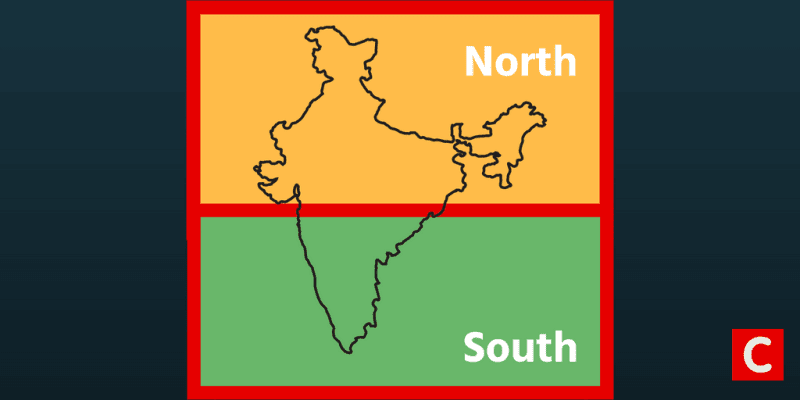
Hi everybody, If you were to ask an Indian woman, to prefer between living in North India or South India, imagine what would her answer be? Don’t worry, it’s not a trick question? Most women would prefer to live in South India. And it shouldn’t come as a surprise. In South India, women marry late, live longer, and are more educated. 

The gender gap in education is 26% for the north and while for the south it’s only 9%. Other than economic and social benefits, safety is another factor that could explain the woman’s preference. Compared to North India there could be less crime against women in the south. If you notice, I used the word ‘could’. It’s because data suggest that states like Kerala have high crime rates against women. But it’s not clear why the crime rate is higher in Kerala. 

NORTH INDIA VS SOUTH INDIA

Due to which a woman and her family will feel safer to lodge a police complaint against a crime. compared to the north Indian states? We’re aware that the family of a sexual assault victim doesn’t lodge a complaint in India. Around 99% of the sexual assault cases go unreported. Like the data we studied before, due to many socioeconomic indicators, women of South India live better lives than that of North India. But what’s the reason?

 It’s very interesting to find an answer to such a question. Because this difference didn’t arise in the past 70 years. It dates back to the 19th century. According to research, due to a famine in the 19th century, the women in Punjab got affected more severely than the women in Madras. Around that time the sex ratio of South India was better compared to the north. 

So Maharastra has been included in South India and West Bengal in North India. Professor Alice Evans wrote a detailed article on this subject. In her article, she wrote that when during the 19th century a group of Marathi women traveled to Calcutta, they got surprised by what they saw. According to the group of Marathi women, a woman in Calcutta could scarcely stand in presence of her relatives. Her face was always veiled. 

She wasn’t allowed to speak to any man, muss less laugh with him. Before discussing the factors that could explain this difference, let’s first understand the factors that can’t explain it. One such factor is Poverty. Many might think South India has more female empowerment given how rich the state is. But it’s not necessarily the truth. According to the GDP, Punjab and Haryana are one of the richest states in India. But these states have the worst sex ratio too.

 Doctor Evans uses these charts to prove that it’s not necessary that a woman belonging to a rich state will find better job opportunities. The second factor that can’t explain the difference, is the marriage custom or traditions. In North India, women are generally married into other villages. When they go away from their families, the chances of them ever getting their share of inheritance of property becomes nil. 

In South India, women are most probably married into the same village. And according to research when a woman marries into the same village, she’s more likely to move freely, and earn more cash. And the logic behind this is that in an intra-village marriage, you get more freedom as you live within the security of your parents and a community with whom you’ve grown accustomed. But can this norm of intra-village marriage explain the gender difference? Alice believes that it can’t. As we can see the examples of cousin marriages in the Middle East and North Africa. 

Even though after marriage the women live among their relatives, the cases of women empowerment weren’t reported in these regions. The third reason is that of colonialism. This map shows the years Britishers governed a certain region of India. They governed some regions for more than 200 years and on the other hand, they scarcely governed some regions at all. Given this, we never saw much difference in the terms of women empowerment. 

As you can notice, Britishers governed the regions of Tamil Nadu and UP for the same time period. But there’s a huge difference in the female literacy rate of UP and Tamil in the data of the 19th and 20th centuries. Now let’s discuss the factors that can better explain the difference. And one of the factors relied largely on the British administration. Looking at a broader level we won’t sense the difference that the Britishers created in the women empowerment between North and South India. 

But we dig deeper, it becomes clearer. According to Hindu law, there are two types of property inheritance rights. One is called Mitakshara and another is called Dayabhaga. Dayabhaga originated in the Bengal region. According to Dayabhaga, women could inherit property. Mitakshara operated in Madras and Bombay presidency. According to this law, women had no inheritance rights.

 Looking at the surface level, you might think that the Bengal region should have more women empowerment given it had Dayabhaga law, which ensured property to women. But we saw in research how surprised the women of Madras were on seeing restrictions on the women of Calcutta. So what’s going on here? If Bengali women held more rights, why didn’t they have a better position? According to research, the district governed by Dayabhaga saw an increase in the practice of Sati Pratha (widow immolations) too. 

Instead of improving a women’s position in society, inheritance rights led to an average increase of between 115 and 437 widow immolations in Dayabhaga districts. This law was enacted at the time of extreme elite patriarchy. This suggests that women were subjected to torments. This positive law backfired. Many joint families argued that by implementing Dayabhaga law they would tarnish their traditions. Due to this, the districts where women were given the rights of inheritance, saw an increase in the practice of sati too.

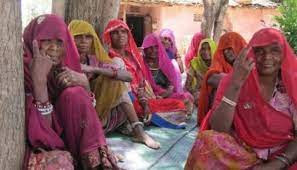
 The second factor that can explain this difference is the tradition of Ghunghat (veil). This system originated in the Arabic region and was introduced to India during the Islamic invasions. This was a mode of ensuring status. The families that belonged to higher status wanted their women to practice Purdah (veil) to maintain their status of superiority. The cast system of India was already had several restrictions for women. If a woman from an upper-caste married a man belonging to a lower caste, the family of the woman lost its honor. And the Purdah system got added to that.

 This was common among the Rajput families belonging to North India. This practice severely affected the way the women lived their lives. In rural Haryana, if a woman failed to cover her face with a veil, she was subjected to afflictions and her character was questioned too. This affected the women’s ability to earn a living. As researches have shown that due to Purdah or Ghunghat, women become more dependent on men for financial support. 

Many of you might wonder who would be practicing an age-long tradition of the Purdah system nowadays. But that’s not true. In rural Rajasthan, 98% of women in the age group of 18-25 cover their faces with a veil. The third reason is the difference in the agricultural practices between North and South India. In India, crop cultivation has two patterns. One is the cultivation of wheat by plowing of fields as seen in North India. 

Another one is the wet and intensive cultivation of rice in South India. If we take wheat for an instance, the intensive plowing isn’t carried out by women. And cultivation of wheat isn’t labor-intensive. This lowers the demand for female labor in the field. Whereas cultivation of rice is labor-intensive. Here women are required to contribute to the workforce. Dr. Evans states in her research that, women are required to step out and contribute to the workforce for the cultivation of rice. And that’s the reason why women in South India are better empowered as compared to their North Indian compatriots.

 These three factors can explain the difference in the condition of women in North and South India. Inheritance rights, Purdah/Ghunghat system (veil system), and the agricultural practices. But we need to let go of the delusion that women living in south India are leading a perfect life. They too have to face problems of their own. 

Our government shouldn’t have an objective that they should somehow provide North Indian women the quality of life as that of South Indian women. They should have a broader objective. If you consult the rankings, India is further low in gender issues. In the UN’s Gender Inequality Index, India ranks 131st, even lower than Iraq. According to World Bank, nations not well off as India, like Bangladesh and Nepal, have better literacy rates among girls. 

Our politicians dream about making India a superpower. But it would never become a reality until Indian women are given opportunities to contribute too. Through this video, we learned the differences in the situation of women in North and South India. But North Indian women shouldn’t take the lives of South Indian women as their ideal. They should aim for something better than that. This is the way India will become a superpower.

Sales of goods act 1930

According to Sec 4(1) of sale of goods act, “A contract of sale of goods
is a contract whereby the seller transfers or agrees to transfer the
property in goods to the buyer for a price”.

Agreement to Sale
The sale of Goods Act defines it as, “where the transfer of the property in the
goods is to take place at a future time or subject to some condition thereafter to be
fulfilled, the contract is called an agreement to sell.”

Unpaid Seller
According to the sales of goods act, 1830 the seller of goods is deemed to be an
unpaid seller when. The whole of the price is not paid or rendered.The bill of exchange or other negotiable instrument has been received as
conditional payment and the condition on which it has was received has not
been fulfilled by reason of the dishonour of the instrument.

Examples
X sold certain goods to Y for Rs. 50,000. Y paid Rs. 40,000 but fails to pay the
balance. X is an unpaid seller.
P sold some goods to R for Rs. 60,000 and received a cheque for a full price. On
presentment the cheque was dishonoured by the bank. P is an unpaid seller.

Difference between Sale & Agreement to sale
When in a contract of sale, the exchange
of goods for money Consideration takes
place immediately, it is known as sale.

In sale, title of goods is transferred to the
buyer with the transfer of goods.
When in a contract of sale the parties to
contract agree to exchange the goods for
a price at a future specified date is known
as Agreement to sale.

Ordinance Making Power of the President

One of the important provisions in the Constitution of India is regarding the ordinance making power of the executive. The nature of the Indian Constitution can be called exhaustive citing the example of the above provision. The President is the Head of the State acting on the advice of the Council of Ministers. He can exercise the executive powers allotted to him either himself or through subordinates. The legislative power to promulgate ordinances is granted to the President under Article 123. The Indian Constitution clearly differentiates the powers and functions of the Parliament and the State Legislatures, providing no room for each to encroach upon the powers and functions of the other, in accordance with the theory of separation of power. To achieve the separation of power, the government is divided into three branches, namely The Legislative, The Executive, and The Judiciary. The powers and functions of these organs are sufficiently differentiated. The motive is to ensure a fair democracy through checks and balances.   

     The President is empowered to pass ordinances when the circumstances make it necessary. It is passed by the President to deal with emergency situations or unforeseen circumstances. These have the same legal status as that of laws passed by the Parliament. This power helps the government in urgent times. For example, the recent   Epidemic Act 1897 (Amendment) Act Ordinance, 2020. Any attack or abetment of violence against healthcare workers was made an offence. This paper explores the nature of ordinance making power, whether it is subject to judicial review, its usage over the years, its limitations and trends in promulgation of ordinances. This paper aims to critically analyse the power of ordinance promulgation granted to the executive by the Constitution.

Ordinance Making Power of the President

The ordinance making power of the President is explained under Article 123. Though India follows the theory of separation of powers and powers and functions are sufficiently differentiated, it is not incorporated in its strictest sense. The ordinance making power can be seen as an overlapping of executive and legislative. Article 123 explains the ordinance making power as follows:

(1) If at any time, except when both Houses of Parliament are in session, the President is satisfied that circumstances exist which render it necessary for him to take immediate action, he may promulgate such Ordinance as the circumstances appear to him to require

(2) An Ordinance promulgated under this article shall have the same force and effect as an Act of Parliament, but every such Ordinance

(a) shall be laid before both House of Parliament and shall cease to operate at the expiration of six weeks from the reassemble of Parliament, or, if before the expiration of that period resolutions disapproving it are passed by both Houses, upon the passing of the second of those resolutions; and

(b) may be withdrawn at any time by the President Explanation Where the Houses of Parliament are summoned to reassemble on different dates, the period of six weeks shall be reckoned from the later of those dates for the purposes of this clause

(3) If and so far as an Ordinance under this article makes any provision which Parliament would not under this Constitution be competent to enact, it shall be void.

This allows the President to promulgate ordinances during an emergency when the Parliament is not in session. The President can pass ordinances if one house is not in session. The nature of the ordinances is temporary. These ordinances have the legal force similar to any law passed by the legislation. Similarly, the Governor of an Indian state is empowered to pass laws under Article 213. Article 213 deals with the law making powers of the Governor of a state. These laws can be promulgated only when the legislative assembly is not in session and are temporary in nature. In the cases of states following bicameral form of legislature, the Governor can pass an ordinance if any one house is not in session. According to the Constitution, the ordinance may have a retrospective effect and may be passed to repeal other acts and ordinances. This power, however, cannot be used to amend the Constitution. This granting of legislative power was seen as a necessity during the drafting of the Constitution and the opinion is shared by many other experts and jurists. The ordinance making power of the President was justified by Dr. Ambedkar in the constituent assembly. 

“It is not difficult to imagine cases where the powers conferred by the ordinary law existing at any particular moment may be deficient to deal with a situation which may suddenly and immediately arise, what is the executive to do. The executive has got a new situation arisen, which it must deal with. Ex hypothesi it has not got the power to deal with that in the existing code of law. The emergency must be dealt with and it seems to me that the only solution is to confer upon the President the power to promulgate a law which will enable the executive to deal with that particular situation because it cannot resort to the ordinary process of law because, again ex hypothesi , the legislature is not in session. Therefore it seems to me that fundamentally there is no objection to the provisions contained in article 102.” 

To this, B. N. Rau observed that:

“The ordinance-making power has been the subject of greater criticism under the present Constitution. It must, however, be pointed out that the circumstances may exist where the immediate promulgation of a law is absolutely necessary and there is no time in which to summon the Union Parliament. . . .The President who is elected by the two Houses of Parliament and who was normally to act on the advice of ministers responsible to Parliament is not at all likely to abuse any ordinance-making power with which he may be invested.”

The article concerning ordinance making power drew inspiration from the previous The Government of India Act, 1935. Another appropriate could not be thought of at that time.

The Government of India Act, 1935 had two provisions dealing with the ordinance making power of the Governor General. According to Section 42 of this act, the Governor General had the power to introduce ordinances when the legislature was not in function. The Governor General could promulgate ordinances on his own or by following the advice of the ministers. The consultation with ministers was mandatory. According to Section 43 of this act, the Governor General could issue ordinances to carry out his functions or under the act which required him to act in his discretion. This can be seen as a parallel legislative power with a lifespan of only six months. The lifespan could be extended with the consent of the Crown. This act was also a source for the ordinance making power provided in the Indian constitution. In India, this provision has been met with mixed response. While some have supported the power citing emergency as a reason, others opposing the provision have reasoned that the power is undemocratic and an encroachment upon the legislative. 

The power vested in the executive is not without limitations. The president is empowered to pass legislation only in certain scenarios. He can pass legislations only when the Parliament is not in session. He can pass legislations even if one house is not in session. The President is allowed to legislation only when situation demands immediate action. Another necessary element, according to the Constitution, is that the President should be satisfied as to the circumstances that necessitate action. The legislation thus passed has to be approved within the prescribed time limit of six weeks after the reassembling of the Houses of the Parliament.  

Persons Under Illegal Detention Shall Be Paid Compensation By State

It is a matter of great solace, immense satisfaction and tremendous happiness to note that in a latest, learned, laudable and landmark judgment titled Shiv Kumar Verma and Another v. State of U.P. and 3 Others in Criminal Misc. Writ Petition No. – 16386 of 2020, while underscoring in no uncertain terms that the award of compensation for harassment by public authorities not only compensates the individual, satisfies him personally but helps in curing social evil, the Allahabad High Court has most commendably directed the State Government to strictly implement its policy of granting compensation to a citizen (25k), who has been illegally detained. What also cannot be missed out is that the Bench of Justice Surya Prakash Kesarwani and Justice Shamim Ahmed also unanimously, unhesitatingly and unconditionally appreciated the State Government for coming up with a policy decision to pay compensation of Rs 25,000/- for illegal detention of any citizen by any Officer of the State Government and initiation of disciplinary proceedings against such officer. The Court was dealing with the illegal detention of 2 persons who continued to be under detention despite submitting personal bond and other papers as directed under the pretext of verification and thus they challenged their illegal detention before the Court.
To start with, the ball is set rolling in para 2 of this brief, brilliant, balanced and bold judgment authored by Justice Surya Prakash Kesarwani for himself and Justice Shamim Ahmed wherein it is put forth that, “This writ petition has been filed praying for the following reliefs: 
“i) Issue a writ, order or direction in the nature of mandamus directing the respondents to give compensation to the petitioners in lieu of illegal detention from 12.10.2020 to 21.10.2020 in connection with Case Crime No.624 of 2020, State vs. Shiv Kumar Verma and another, under Section 151, 107 and 116 Cr.P.C., Police Station Rohania, District Varanasi.””
While stating the facts of the present case, the Bench then observes in para 3 that, “Briefly stated, facts of the present case are that there was some dispute relating to ancestral property between the petitioners and their family members. In paragraph 3 of the writ petition, it has been stated that some tiff arose between the petitioners and other family members, namely, Rajendra Prasad, Shiv Kumar Verma and Raj Kumar Verma regarding partition of an ancestral land and in apprehension of breach of public peace, the police arrested the petitioners under Section 151 Cr.P.C. on 08.10.2020. A Challani Report dated 08.10.2020 was submitted by the Sub Inspector, Police Station Rohania, District Varanasi to the Sub Divisional Magistrate, District Varanasi under Section 151/107/116 Cr.P.C., which was in printed form and merely name of the petitioners and others, name of village and “land dispute” have been filled by ink in the aforesaid Challani Report. On receipt of the Challani Report, the Sub Divisional Magistrate registered the case as Case No.624 of 2020 (State vs. Shiv Kumar Maurya and others) and passed the following order on 08.10.2020” which to put it shortly reveals that the petitioners were sent to jail for not submitting personal bonds and other papers.”
Shortly put, the Bench then states in para 4 that, “It appears that on 12.10.2020 the petitioners submitted personal bond and other papers but the respondent no.3 has not released them and instead, under the pretext of verification, directed the file to be placed on 21.10.2020.”
As a corollary, the Bench then discloses in para 5 that, “Thereafter, on 21.10.2020 the petitioners were released. Aggrieved with the arbitrary and illegal action of the respondents and illegal detention, the petitioners have filed the present writ petition praying for the relief as afore-quoted.”
As we see, the Bench then to put it shortly states in para 7 that, “In paragraph 8 of the counter affidavit dated 02.02.2021, the respondent no.1 has stated that the State Government has taken corrective action in the matter vide letters/circulars dated 30th January, 2021 and 31st January, 2021.”
Needless to say, the Bench then specifies in para 8 that, “In compliance to the afore-quoted Government Order dated 30.01.2021, the Director General of Police, Uttar Pradesh has issued a Circular being letter No. DG-8-94 (Order) 2021, dated 31.01.2021 to all the Zonal Additional Director General of Police, Uttar Pradesh, and all the Police Commissioners, Uttar Pradesh and directed them to ensure strict compliance of the afore-quoted Government order.” 
As is quite ostensible, the Bench then lays bare in para 9 that, “From the facts briefly noted above and the counter affidavit of respondent no.1, it stands admitted that the police authorities are arbitrarily and illegally submitting Challani Reports under Sections 107/116 Cr.P.C. Since the respondent no.1 has taken steps to correct the mistakes and illegalities, therefore, we do not propose to issue any further direction in that regard, except that the afore-quoted Circulars dated 30th January, 2021 and 31st January, 2021 shall be strictly implemented in the whole of the State of Uttar Pradesh.”
To say the least, the Bench then envisages in para 10 that, “In the counter affidavit dated 01.02.2021, the respondent no.3 has stated in paragraph 5 and 8 that “the petitioners submitted the applications through their counsel that they are ready to furnish personal bonds as well as bail bonds, therefore, they may be released on bail and the answering respondent directed the concerned Tehsildar to verify the revenue records produced by the sureties and on verification the petitioners shall be released on 21.10.2020 on bail.” 
Truth be told, the Bench then lays down in para 11 that, “In his counter affidavit, the respondent no.3 has tried to justify his arbitrary action and clear breach of statutory duty cast upon him as well as the fundamental rights guaranteed under Article 14 and 21 of the Constitution of India. In this regard, it would be appropriate to refer to the provisions of Sections 107, 111 and 116 of the Code of the Criminal Procedure, 1973, which are reproduced below: 
“107. Security for keeping the peace in other cases. 
(1) When an Executive Magistrate receives information that any person is likely to commit a breach of the peace or disturb the public tranquillity or to do any wrongful act that may probably occasion a breach of the peace or disturb the public tranquillity and is of opinion that there is sufficient ground for proceeding, he may, in the manner hereinafter provided, require such person to show cause why he should not be ordered to execute a bond, with or without sureties, for keeping the peace for such period, not exceeding one year, as the Magistrate thinks fit.
(2) Proceedings under this section may be taken before any Executive Magistrate when either the place where the breach of the peace or disturbance is apprehended is within his local jurisdiction or there is within such jurisdiction a person who is likely to commit a breach of the peace or disturb the public tranquillity or to do any wrongful act as aforesaid beyond such jurisdiction. 
“111. Order to be made. When a Magistrate acting under section 107, section 108, section 109 or section 110, deems it necessary to require any person to show cause under such section, he shall make an order in writing, setting forth the substance of the information received, the amount of the bond to be executed, the term for which it is to be in force, and the number, character and class of sureties (if any) required.”
“116. Inquiry as to truth of information. 
(1) When an order under section 111 has been read or explained under section 112 to a person present in Court, or when any person appears or is brought before a Magistrate in compliance with, or in execution of, a summons or warrant, issued under section 113, the Magistrate shall proceed to inquire into the truth of the information upon which action has been taken, and to take such further evidence as may appear necessary.
(2) Such inquiry shall be made, as nearly as may be practicable, in the manner hereinafter prescribed for conducting trial and recording evidence in summons- cases.
(3) After the commencement, and before the completion, of the inquiry under sub- section (1), the Magistrate, if he considers that immediate measures are necessary for the prevention of a breach of the peace or disturbance of the public tranquillity or the commission of any offence or for the public safety, may, for reasons to be recorded in writing, direct the person in respect of whom the order under section 111 has been made to execute a bond, with or without sureties, for keeping the peace or maintaining good behaviour until the conclusion of the inquiry, and may detain him in custody until such bond is executed or, in default of execution, until the inquiry is concluded: Provided that- 
(a) no person against whom proceedings are not being taken under section 108, section 109, or section 110 shall be directed to execute a bond for maintaining good behaviour;
(b) the conditions of such bond, whether as to the amount thereof or as to the provision of sureties or the number thereof or the pecuniary extent of their liability, shall not be more onerous than those specified in the order under section 111. 
(4) For the purposes of this section the fact that a person is an habitual offender or is so desperate and dangerous as to render his being at large without security hazardous to the community may be proved by evidence of general repute or otherwise.
(5) Where two or more persons have been associated together in the matter under inquiry, they may be dealt with in the same or separate inquiries as the Magistrate shall think just. 
(6) The inquiry under this section shall be completed within a period of six months from the date of its commencement, and if such inquiry is not so completed, the proceedings under this Chapter shall, on the expiry of the said period, stand terminated unless, for special reasons to be recorded in writing, the Magistrate otherwise directs: Provided that where any person has been kept in detention pending such inquiry, the proceeding against that person, unless terminated earlier, shall stand terminated on the expiry of a period of six months of such detention. 
(7) Where any direction is made under sub- section (6) permitting the continuance of proceedings, the Sessions Judge may, on an application made to him by the aggrieved party, vacate such direction if he is satisfied that it was not based on any special reason or was perverse.””
For the sake of clarity, the Bench then lays bare in para 12 that, “Section 107 Cr.P.C. requires the Magistrate receiving the information that any person is likely to commit a breach of peace or disturb the public tranquillity or to do any wrongful act that may probably occasion a breach of peace or disturb the public tranquility and is of opinion that there is sufficient ground for proceeding, he may, in the manner provided, require such person to show cause why he should not be ordered to execute a bond, with or without sureties, for keeping the peace for such period, not exceeding one year, as the Magistrate thinks fit. Perusal of the order dated 08.10.2020, passed by the respondent no.3 would reveal that there is no such satisfaction recorded by the respondent no.3. The aforesaid order dated 08.10.2020 would further reveal that the respondent no.3 has not required the petitioners to show cause that why they should not be ordered to execute a bond with or without sureties. Thus, the respondent no.3 has committed clear breach of mandate of Section 107 Cr.P.C.”
Simply put, the Bench then states in para 13 that, “Section 111 Cr.P.C. provides that when a Magistrate acting under section 107, section 108, section 109 or section 110, deems it necessary to require any person to show cause under such section, he shall make an order in writing, setting forth (i) the substance of the information received, (ii) the amount of the bond to be executed, (iii) the term for which it is to be in force, and (iv) the number, character and class of sureties (if any) required. These necessary ingredients of Section 111 Cr.P.C. are totally absent in the order dated 08.10.2020 passed by the respondent no.3. Thus, it is evident on record that the respondent no.3 has acted arbitrarily and illegally.” 
Be it noted, the Bench then seeks to point out in para 14 that, “It would further be relevant to note that admittedly the petitioners have submitted personal bond on 12.10.2020 although the order passed by the respondent no.3 dated 08.10.2020 does not specify the substance of the information received, the amount of the bond to be executed, the term for which it is to be in force, and the number, character and class of sureties, if any, required. Despite submission of personal bond and other papers on 12.10.2020 by the petitioners before the respondent no.3, they were not released by the respondent no.3 and that too against his own order dated 08.10.2020 that the petitioners shall be detained till presentation of personal bond/bail bond. Non release of the petitioners by the respondent no.3 even after submission of personal bond/bail bond and other papers, is a clear breach of Article 21 of the Constitution of India, by the respondent no.3 which resulted in illegal detention of the petitioners at least since 12.10.2020 to 21.10.2020.”
Adding more to it, the Bench then puts forth in para 15 that, “On 02.02.2021 this Court noted the statement made by the State Government in Paragraph 15 of the order dated 02.02.2021 as under:
“15. Learned Additional Advocate General and the Secretary, Home, U.P. Lucknow jointly state that the State Government shall develop a mechanism and shall also issue appropriate guidelines so as to ensure that such instances may not repeat again. They further state that the State Government shall consider to grant monetary compensation to the petitioners for breach of their fundamental rights under Article 21 of the Constitution of India.””
Furthermore, it is then illustrated in para 16 that, “In pursuance to the statement made on own behalf of the State government as noted in the afore-quoted paragraph 15 of the order dated 02.02.2021, the State Government filed an affidavit of compliance dated 24.03.2021 of Sri Tarun Gauba, Secretary, Home Affairs, Uttar Pradesh, in which in paragraph 10 it has been stated as under :
“That it is most respectfully submitted that the State Government has issued directions to all District Magistrates and all Executive and Special Magistrates who are sub ordinate to the District Magistrates, to exercise their power under Section 107, 116 Cr.P.C. for maintenance of public peace and public tranquility in their territorial jurisdiction. They have been further advised that each and every case under the aforesaid proceedings shall be decided on its own merit with the application of judicial mind and in accordance with the established law & procedure to ensure that the fundamental rights of citizens are protected. The State Government has directed all the District Magistrates of the State to ensure strict compliance of the policy/guideline dated 23rd March, 2021. The State Government has reformulated the earlier policy dated 02.03.2021 and after including the aforementioned issues it has re-issued policy/guideline dated 23rd March, 2021. For kind perusal of this Hon’ble Court copy of policy/guideline dated 23rd March, 2021 is being filed herewith and marked as Annexure-1 to this affidavit.””
While citing the relevant case law, the Bench then remarks in para 18 that, “In the case of Lucknow Development Authority Vs. M.K. Gupta (1994) 1 SCC 243 (Paras 8, 10, 11 and 12 Hon’ble Supreme Court observed that under our Constitution Sovereignty vest in the people. Every limb of the constitutional machinery is obliged to be people oriented. No functionary in exercise of statutory power can claim immunity, except to the extent protected by the statute itself. Public authorities acting in violation of constitutional or statutory provisions oppressively are accountable for their behaviour before authorities created under the statute like the commission or the courts entrusted with responsibility of maintaining the rule of law.”
Most remarkably, the Bench then minces no words to state simply, shortly yet strongly in para 19 that, “An ordinary citizen or a common man is hardly equipped to match the might of the State or its instrumentalities. The servants of the government are also the servants of the people and the use of their power must always be subordinate to their duty of service. A public functionary if he acts maliciously or oppressively and the exercise of power results in harassment and agony then it is not an exercise of power but its abuse. No law provides protection against it. He who is responsible for it must suffer it. But when it arises due to arbitrary or capricious behaviour then it loses its individual character and assumes social significance. Harassment of a common man by public authorities is socially abhorring and legally impermissible. It may harm him personally but the injury to society is far more grievous. Nothing is more damaging than the feeling of helplessness. An ordinary citizen instead of complaining and fighting succumbs to the pressure of undesirable functioning in offices instead of standing against it. Therefore, the award of compensation for harassment by public authorities not only compensates the individual, satisfies him personally but helps in curing social evil.”
Equally remarkable is what is then stipulated in para 20 that, “In a modern society no authority can arrogate to itself the power to act in a manner which is arbitrary. It is unfortunate that matters which require immediate attention linger on and the man in the street is made to run from one end to other with no result. Even in ordinary matters a common man who has neither the political backing nor the financial strength to match the inaction in public oriented departments gets frustrated which erodes the credibility in the system. Where it is found that exercise of discretion was mala fide and the complainant is entitled to compensation for mental and physical harassment then the officer can no more claim to be under protective cover. The test of permissive form of grant is over. It is now imperative and implicit in the exercise of power that it should be for the sake of society. It is the tax payers’ money which is paid for inaction of those who are entrusted under the Act to discharge their duties in accordance with law.”
Most laudably, the Bench then seeks to make it clear in para 21 that, “Once it is found by the competent authority that a complainant is entitled for compensation for inaction of those who are entrusted under the Act to discharge their duties in accordance with law, then payment of the amount may be made to the complainant from the public fund immediately but it may be recovered from those who are found responsible for such unparadonable behaviour. This legal position is reflected from the law laid down by the Apex Court in Lucknow Development Authority’s case (supra). In the said case it was further observed by the Apex Court that the Administrative law of accountability of public authorities or their arbitrary and even ultra vires actions has taken many strides and it is now accepted both by this Court and English Courts that State is liable to compensate for loss or injury suffered by a citizen due to arbitrary action of its employees.”
Equally commendable is that while citing all the relevant case laws, the Bench then states in para 22 that, “The legal principles as enumerated in foregoing paragraphs Nos. 18, 19, 20 & 21 also finds support of the law laid down by Hon’ble Courts in the case of Lucknow Development Authority (supra); Jay Laxmi Salt Works (P) Ltd. Vs. State of Gujarat (1994) 4 SCC 1; N. Nagendra Rao & Co. Vs. State of A.P. (1994) 6 SCC 205; State of Maharashtra and others Vs. Kanchanmala Vijaysing Shirke and others (1995) 5 SCC 659; Chief Conservator of Forests and another (1996) 2 SCC 293; S.P. Goel vs Collector Of Stamps, Delhi (1996) 1 SCC 573; Common Cause A. Registered Society Vs. Union of India JT 1999 (5) SC 237: AIR 1999 SC 2979; Shiv Sagar Tiwari Vs. Union of India and others (1996) 6 SCC 558; Chairman, Railway Board and others Vs. Chandrima Das (Mrs.) and others (2000) 2 SCC 465; State of A.P. Vs. Challa Ramkrishna Reddy and others (2000) 5 SCC 712; Research Foundation for Science (10) Vs. Union of India (2005) 13 SCC 659; M.C. Mehta Vs. Union of India and Others (2006) 3 SCC 399; Union of India Vs. Prabhakaran Vijaya Kumar and others (2008) 9 SCC 527; Action Committee, Unaided Private Schools and others Vs. Director of Education, Delhi and others (2009) 10 SCC; Delhi Jal Board Vs. National Campaign for Dignity and Rights of Sewerage and Allied Workers and others (2011) 8 SCC 568; Municipal Corporation of Delhi, Delhi Vs. Uphaar Tragedy Victims Association and others (2011) 14 SCC 481.”
On a candid note, the Bench then is generous enough to observe in para 23 that, “We record our appreciation for the State Government to take the afore-quoted policy decision dated 23.03.2021 for payment of compensation of Rs.25,000/- for illegal detention of any citizen by any Officer of the State Government and initiation of disciplinary proceedings against such officer. Since the State Government itself has taken a policy decision and has paid compensation to the petitioners herein, therefore, no further direction for payment of compensation is required to be issued in the present writ petition.”
To put it shortly, the Bench then holds in para 24 that, “In view of the aforesaid, this writ petition is disposed of with the following directions :- 
(i) The State Government shall ensure that the provisions of the Cr.P.C. as referred in the policy decision dated 23.03.2021 are strictly followed/observed by all the concerned officers. 
(ii) The State Government shall further ensure that paragraph 12 of the policy decision dated 23.03.2021 is strictly implemented.
(iii) The State Government shall publish Para 12 of its Policy decision dated 23.03.2021 in all largely circulated National Level Newspaper having circulation in the State of Uttar Pradesh and shall also display it on display board at prominent places within public view, in all blocks, Tehsil Headquarters, Police Stations and in campus of District Collectorate in the whole of the State of Uttar Pradesh. 
(iv) Copy of this order shall be sent by the State Government to all District level and Tehsil level Bar Associations in the whole of the State of Uttar Pradesh.”
Finally, the Bench then holds in para 25 that, “Let a copy of this order be sent by the Registrar General of this Court to the Chief Secretary of the State of Uttar Pradesh and the Additional Chief Secretary, Home, for strict compliance.”
In essence, it is a judgment which deserves generous praise straight from the bottom of heart. It mandates that persons under illegal detention shall be paid compensation by the State. Illegal detention which is the worst violation of human rights and so also custodial torture which we keep hearing time and again not sparing even senior Army Officers as we saw in case of Lt Col Shrikant Purohit who was illegally arrested, illegally detained and illegally tortured most brutally deserves the most stringent punishment by all those who were behind it as we are now leaving in a democratic India and not in British India where Britishers called Indians as “You bloody Indians” as was pointed out once by famous cricketer Farrukh Engineer! 
There has to be zero tolerance against all forms of custodial violence and illegal detention by those in uniform! Of course, the most dangerous, most despicable and most dastardly tendency to protect men in uniform who commit the worst crime leaving behind even criminals has to be shunned completely now and they too like others have to be taken to task at the earliest if we really want our country to be truly democratic whenever they do anything wrong! No denying!
Sanjeev Sirohi

Implementation Of K Padmanabhaiah Committee’s Report Is Imperative For Giving Fresh Impetus To Effective Police Reforms

 Let me begin by pointing out that the image of police in the eyes of common man has taken a severe beating in the last few decades . The reasons are manifold . A few black sheeps have tarnished the reputation of the entire police department . Just recently , we saw for ourselves that how policemen in Punjab were beating a woman when she complained of eve-teasing . This is not an isolated incident . Time and again , we keep hearing such untoward incidents . In Bulandshahar also some time back , a minor rape victim herself was locked by police in jail lock up . What is most shocking to see on various news channels is many men in police uniform beating a man most brutally like goons without any respect for ‘rule of law’!


                                                                                    Needless to state, the mindset of police must change . Police must be made more gender sensitive . Police must be freed from political control so that they don’t act as willing stooges for ruling party . Let me point out here that the Government of India vide its Notification No. 11018 / 17 / 99-PMA North Block , New Delhi – 1 dated 5-1-2000 set up a committee consisting of Shri K Padmanabhaiah Ex-Union Home Secretary as Chairman , and the members Sarv Shri Vijai Kumar IPS , MD Sharma , IPS ( MP-62 ) , Retd Amitabh Gupta , IPS ,( Raj-64) DGP Raj and BB Nanda , IPS ( OR-65 ) DIG , BPR&D ( Secretary ) and issued the following terms of references of the Committee –

1.      To examine and specify the challenges that the Police in India would face during the next millennium .

2.      To evaluate the strength and weaknesses of the Police Force as it is organised and structured today , to see if it would be able to meet those challenges .

3.      To understand and appreciate the gap between the public expectations and the Police performance and whether this gap can be filled without making any basic changes in the structure , organization and the attitude of the Police .

4. To envision a new look , cultured people-friendly and a fighting fit Police Force which is able to win confidence and trust of the people and , at the same time , can tackle effectively the problems of the organized crimes , militancy and terrorism .

5. To examine and bring out the changes which should be made in the following systems to perform our Police into a most professional and competent Force –

      ( a ) Recruitment at different levels ;

      ( b ) Training – both induction and in service ;

      ( c ) Career planning at all levels ;

      ( d ) Accountability of the Police ;

      ( e ) Redressal of public grievances ;

      ( f ) Redressal of Police grievances ;

      ( g ) Police Station of the next Millennium ;

      ( h ) Village and city Police ; 

      ( i ) Techniques of investigation ;

      ( j ) Prosecution  of cases ;

      ( k ) Management of traffic ;

      ( l ) Dealing with women and weaker section of the society .

6. To suggest measures to equip the Police to adequately meet the challenges of the modern hi-tech criminal and cyber crime .

7. To recommend changes in the weaponry , communication and mobility of the Police Force .

8. To examine how the intelligence gathering machinery could be revamped both at the Centre and the States and how their mutual interaction for intelligence sharing could be made faster and more reliable .

9. To devise methods of insulating the Police from politicisation and criminalisation .

10. To devise ways of securing public trust and co-operation in preventing and solving crime .

11. To examine the need  to clarify some crimes as “Federal Crimes” and to create a Federal Law Enforcement Agency under the ministry of Home Affairs .

12. The structural changes that need to be introduced for the Police to function more efficiently and professionally .

                         Let me also bring out here that this Padmanabhaiah  Committee was directed to submit its report within a fixed time period of three months . The Committee submitted its 270 pages report on August 30 , 2000 . Without wasting any more time , let me straightaway describe in a brief summary the important recommendations of this Committee . They are as follows : –

1.      The essence of the mandate is to recommend a new concept and structure for a Police force for the new millennium , which is modern , efficient , people friendly and which can elicit public trust and cooperation in its work ( Para 1.1 ) .

2.      The Government should make the Committee’s report public so that there is a healthy debate on the recommendations . ( Para1.4 ) .

3.      The major weakness of the Indian Police Force are –

( a ) the attitudes , behavior and the mindset of Police ;

( b ) lack of fairness and impartiality in dealing with public , especially in investigation of crime ;

(c ) a widely held perception that it is a Force to take care of the interests of the political and social elite ;

( d ) willingness to be manipulated by the party in power ;

( e ) rampant corruption at various levels  and

( f ) non-registration of crime ( Para 1.6 ) .

4.      The strength of the Indian Police is that it is a well organized , well structured and a disciplined Force inspite of extraneous influences ; has a well educated and intelligent leadership in the Indian Police Service  that can provide the required motivation / inspiration , given some basic requirements ; a great degree of uniformity in the working of the Police in the country notwithstanding minor differences from State to State , and finally an All India outlook which has helped in promoting and preserving the integrity of the nation ( Para1.7 ) .

5.      The Police Department itself is enthusiastic about the reforms and it is a welcome sign indicating that the reform have a good chance of success ( Para1.8 ) .

6.      Internal Security management adds a new and important dimension to the traditional Police role of ( a ) investigation of crime and ( b ) maintenance of law and order . Though maintenance of law and order , and internal security are two different concepts , the dividing line between the two different concepts is sometimes thin . Police need to be trained and reoriented to take the role of maintaining internal security . The role of the States and the Centre including their role in funding , need to be discussed and clearly defined ( Para 1.11 and 15 , 18 ) .

7.      The factors which shape the attitude and performance of the Police force are the Police leadership the political ethos in a State , proper requirement need based training and interaction with and support of the public ( Para 1.9 ) .

8.      The role of the Police is bound to be an expanding one and none of the activities handled by the Police should be curtailed unless they are totally irrelevant to the maintenance of law and order . However the resources made available to the Police should be commensurate with the responsibility entrusted to them ( Para 1.10 ) .     

9.      The Police Force is presently constable dominated . Recruitment to constabulary should be restricted in future , till a teeth to tail ratio of 1: 4 are reached ( Para 1.11) .

10.The existing constabulary should be retained to enable them , to imbibe right attitudes to work and to acquire professional skills . Those who do not successfully complete the training need to be compulsorily retired . ( Para 1 : 11[ 4 ] ) .

11.Unless the Police department makes conscious and serious efforts towards specialization they would not be able to tackle the emerging sophisticated crime situation . Specialisation is the key to success ( Para 1.11 [ 16 ] ) .

12. Prevention of crime is more cost effective than investigation . In each district , there should be a crime prevention cell manned by officers who have specialised in the subject ( Para 1.11 [ 17 ] ) .

13. There should be a re-ordering of priorities of governance . With deregulation and privatisation , responsibilities of the government in future are going to be essentially in law enforcement and other regulatory functions and infrastructure development . Law and order is central to governance ( Para 1.11 [ 12 ] ) .

14. Various components of criminal justice system namely Police prosecuting agency , judiciary and prison system have received very low attention from government in the past , with a result that the system is almost at the point of collapse . In the coming three years , government must give the highest priority to the reform of criminal justice system ( Para 1.15 ) .

15. For the reforms to succeed there has to be total commitment from the Police leadership . The reform process should face the challenge of developing a new relationship with the public . This would require a strong will , both at the political level and in the Police leadership ( Para1.14 ) .  

                                                            CHAPTER 2

      POLICING IN THE NEW MILLENNIUM

17. The Police in India derives its statutory powers from the Police Act 1861 . For 86 years thereafter , it remained an integral part of the British India colonial administration . In this very long period , it imbibed the credo of a colonial force and became the repressive arm of the administration . Unfortunately 50 years thereafter independence , it is still saddled with an unflattery image . The reform process should begin by realising that there is no vision , at least a clear enunciation of a vision or call it a mission , for the Police . A beginning should be made with a mission Statement which should be affirmed as an oath by every police personnel immediately after recruitment , at the time of passing out parade , and at other suitable occasions as the government may decide .

                       CHAPTER 3

                                                     RECRUITMENT

18. In contrast to an army Jawan who comes across as a disciplined , committed and friendly figure , subordinate Police personnel are perceived as corrupt , inefficient and unfriendly ( Para 3.1 ) .

19. Conscious efforts to be made to change this image and make all Police personnel feel that they are part of elite force , which has been created for the betterment of our country . They should feel proud in joining the service ( Para 3.4 ) .

20. The key to successful reform is to recruit people with right attitude . The best way of doing this is to pick up candidates at young age and give them a sufficiently long training during which they could be moulded into upright , honest and competent Policemen ( Para 3.6 ) .

21. While the situation differs from State to State , generally nepotism , favouritism and money power have become the hallmark of recruitment to the Police force . With the liberalisation and consequent diminution of State in various economic areas and restructuring of PSUs , recruitment to Police and para-military forces has remained the biggest avenues for employment in Government and hence has become a source of patronage in certain States . Recruitment of a  Constable who is a visible symbol of authority of the government and who has an official life span of 35 years cannot be treated in such a cavalier fashion . Senior officers must give up powers to select Constables and Sub-Inspectors . Most modern forces use genuine professionals for the job of selecting the right candidates . Selection of Constables and Sub-Inspectors must be based on a pre-qualifying screening test an open competitive examination on the lines of the Joint Entrance Examination ( JEE ) for admission to Engineering and Medical courses . The candidates for Constables should be 10th Standard pass with upper age limit of 19 years and for S.I.’s 12th Standard pass with upper age limit of 21 years . A three year relaxation can be made in the case of SC / ST candidates . There should be no other category of age relaxation . The Constables would undergo training for 2 years and S.I.’s for a period of 3 years . The syllabus for the training should be so devised in consultation with the Board of Secondary Examination and with a University that in addition to policing subjects , it includes general subjects like Arts , Science and Computers . Thus , at the end of the training , when they pass the final examination , the Police constable would get a 12th Standard pass certificate and S.I.’s would become graduates . ( Para 3.2 & 3.7 to 3.18 ) .   

22. In order to ensure that candidates of high and comparable standard are picked up for training as S.I.’s , we recommend that the question papers for the screening test should be set at the national level , initially by a committee of experts . We envisage ultimately a Permanent National Board for Police Recruitment to take over this responsibility . The actual conduct of the examination and the evaluation of the papers would be done by the States ( Para 3.13 to 3.15 ) .

23. A constable is required to display a number of skills while dealing with a variety of law and order situations and crime investigation . His job is arduous and also hazardous . His status should be equated to a skilled worker . We recommend that the constables all over the country be given at least the same scale of remuneration as that fixed for the Delhi Police by the 5th Pay Commission . We are aware that the financial position of States vary , but unless a proper remuneration is given , we would not be able to get the best results from the staff , nor would we be able to attract good talent in future recruitment . However , the revised scales should only be given to those who successfully re-train themselves according to the prescribed norms . ( Para 3.11 )

24. The upper age limit for recruitment to IPS should be brought back to 24 years . States from where recruitment to IPS is very low should take special steps for training and providing other facilities for deserving candidates to successfully compete in the IPS examination . Allotment of cadre rules , especially , the roster system needs re-examination . As regards reservation to Scheduled Tribes quota in the IPS , a condition should be laid down that the candidates appearing for the examination should have spent a minimum period of time in the tribal areas . ( Para 3.20 to 3.23 ) .  

24 (A ). All IPS officers/DSP recruits should work independently as SHOs for the first six months after they complete their training and before being posted as ASPs/DSPs . ( Para 3.24 ) .

25. Lack of interest on the part of DGs in the matter of training has been a major inhibiting factor . ( Para 4.1 ) .

26. Training is at the very heart of effective and responsible policing . While a lot of lip service is paid to it , in reality , it is the most neglected area . Training should not be treated as an end in itself . The real challenge is to translate the best possible training into the best possible police performance . ( Para 4.2 & 4.3 ) .

27. There has to be a co-relation between training undergone by the officer and his posting . No officer should be posted to a new discipline unless he has undergone the requisite training . ( Para 4.2 ) .

28. Promotion should be linked with training like in the Army . It must be mandatory for officers to undergo certain prescribed training programmes and to pass departmental promotion examinations before they are promoted . For this purpose , a Police Promotion Examination Board should be established in each State . ( Para 4.2 ) .

29. Training cannot be effective unless organisational climate encourages use of training concepts and unless the organisation as a whole should be established in each State . ( Para 4.3 ) .

30. One must get out of the mindset that training is a once-in-life-time affair at the beginning of the career . In-service training needs to be given greater attention . ( Para 4.4 [ I ] ) .

31. There is a need for total re-orientation in the approach for training . All training needs to be sub-divided into 2 areas , one that is basic , motivational , value based , which enhances discipline and communication skills . The second area of training should have as its objectives , acquisition of specialised skills and professional expertise . Training in both these areas together should achieve two purposes , namely attitudinal transformation and development of skills . ( Para 4.4 [i ] ) .

31 ( A ). The existing police force of the level of SIs and below need to be re-trained by putting them through a capsule of an intensive re-orientation course over the period of next five years . Revised pay scales suggested for constables should be given only to those who successfully retrain themselves . ( Para 3.11 and 4.4 ) .

32. Each DGP should constitute an in-house “Committee on Training” . The Committee should prepare a panel of competent trainers , since without competent trainers the entire reform would receive a set back . ( Para 4.4 [xvi ] ) .   

33. Police behaviour , image , public relations and efficiency are interrelated areas . Of these , Police behaviour is the most vital parameter and has negative or positive impact on the remaining three areas . We recommend that each State Police force should adopt the concept of “change-agent action plan” ( A part of the UNDP project on improving the organisation and management of law enforcement system in India ) and train the required number of change-agents at various levels of Police hierarchy . ( Para 4.4 [iv ] ) .

34. The impact of training needs to be evaluated properly . There should be a method for such evaluation of each person who has undergone a training programme , at the end of one year after the training . Relevant entries should be made in the ACRs whether  the officer is using the skills acquired in the training . ( Para 4.4 [xi & xii ] ) .

35. There must be greater emphasis on joint training of officers belonging to various components of the criminal justice system . ( Para 4.4 [ xix ] ) .  

36. In order that the Government gets the best possible advice on improving the standards of training , we recommend that at the Union level and the State level , there should be a Police Training Advisory Council to advise the Home Ministers . The composition of such advisory council at the Centre is given at para 4.4 ( viii ) .

37. The suggestion made in para 4.4 regarding improving the infrastructure at the training institutes , improving the quality of trainers , provision of incentives to trainers etc. , need to be implemented .

38. The other suggestion made in paragraphs 4.4 need to be implemented .

39. UN studies have revealed that crime prevention is far more cost effective than investigating the crime after its commission . The subject of crime prevention , however , gets very low priority in the police thinking . Success of crime prevention programmes depends on mobilisation of people , local leadership and expertise . Police need to give greater attention to these aspects .

40. Best system is the basic essence of policing . It has , however , been in disuse in most places in the past one-decade or so . All efforts should be made to revive the heat system with necessary variations in rural and urban areas . ( Para 5.8 ) .  

41. In most States , the traditional system of village policing has become defunct . Revival of this traditional system at village level and the proper utilization of the village functionaries by the police departments would give rich dividends . ( Para 5.9 ) .

42. Investigation under a number of special and local laws should be taken out from the police and assigned to senior officials of the concerned departments . ( Para 5.14 ) .

43. Trial of cases under a large number of social legislations can be entrusted to the executive magistrates . For the purpose of those Acts , the executive magistrates can be deemed to be judicial magistrates . Appeals from their orders would lie to the appropriate higher judicial Courts . ( Para 5.15 and 5.16 ) .

44. We feel that all IAS / IPS probationers after they complete their training should be posted for a period of two years to work as judicial magistrates . This would serve two purposes . It would give the administrators and law enforcers the much needed judicial outlook in their future career and would enable them to give just and sound decisions . It would also help reduce pendency in the Courts . Government may like to seek public opinion on this suggestion and examine the feasibility of its implementation . ( Para 5.16 ) .

45. While traditionally prevention and investigation of crime and maintenance of law and order have been the main responsibilities of police , a new dimension of internal security has become a major police responsibility in the last 15-20 years . It is essential for various levels in the police force to appreciate this major qualitative change in the job they are called on to handle . Once the police force sees this additional dimension to their responsibility in clear light , it would become easier to give them necessary training and to impart professional expertise to handle it . ( Para 5.18 ) .      

46. There are roughly 120 non-cognizable offences listed in the Indian Penal Code . The dividing line between cognizable and non-cognizable is sometimes very thin . As such an SHO could convert a cognizable offence into a non-cognizable offence and vice-versa depending on his inclination which leaves considerable scope for malpractices and corrupt practices at police station level . ( Para 5.20 ) .  

47. The classification into cognizable and non-cognizable offences made 150 years ago is not very relevant in the present circumstances . For instance , while white colour crime and economic offences have become a matter of concern to the Government , those very offences like cheating , fraudulent execution of deeds of transfer , forgery , falsification of accounts , issuing false certificates , counterfeiting of property marks , selling of counterfeit goods are still classified as non-cognizable offences . There are many other categories of non-cognizable offences , which need to be treated as cognizable . There are some minor non-cognizable offences which can be entrusted to Nyaya Panchayats for adjudication and trial . The entire subject of classification of cases into cognizable  and non-cognizable and the question of powers of police to investigate such cases should be entrusted for review to the Law Commission of India . ( Para 5.22 ) .

48. Every Police station must maintain a separate non-cognizable register as a uniform practice throughout the country . ( Para 5.21 ) .

49. In metropolitan areas , which are windows to the world , where the traffic rules are enforced and obeyed sends strong signals about the citizens’ respect for law . Therefore law enforcement should be seen in all its majesty in vehicular traffic management .Various suggestions made by us in para 5.24 need to be implemented .

50. Police patrolling on highways – both national and state highways should be introduced and where existing , strengthened , to prevent interstate crime . ( Para 5.25 ) .

51. Criminal intelligence gathering capability of the police at the moment is agonisingly poor . Neither the State CID branches nor the Central Bureau of Investigation have made any special measures or arrangements for collecting , collating , analysing and disseminating criminal intelligence on a systematic basis .These capabilities have to be properly built up . ( Para 5.26 ) .

52. The intelligence gathering at the level of police stations has also suffered very seriously . To ensure intelligence gathering by police stations , DCP / SP should insist on a daily intelligence report from his SHOs . ( Para 5.26-5.27 ) .

53. Duties of service of summons , issue of parking tickets ,verification of antecedents , static guard duties should be taken out from the purview of the police . Similarly , police should not be entrusted with the duties like demolition of unauthorised constructions ,conducting Board examinations , investigation of electricity thefts etc. ( Para 5.30 to 5.37 ) .

54. In militancy affected areas , the State Armed Police battalions can be deployed for static guard duties . In other areas , this job can be entrusted to private sector . As regards personal security of VIPs ,provision of such security at the expense of the State should be given to about 200 individuals in the country as mentioned at para 5.35 . If security is demanded by others , it should be on the basis of recovery of full cost . If there is adequate demand an additional battalion may be raised as part of the police for this purpose . ( Para 5.36 )                                   CHAPTER 6

         POLICE BEHAVIOUR

55. A set of well-defined positive duties , which can be conveniently carried out by the police , should become a part of police agenda so as to give a positive image to the police and improving the police behavior . These duties are spelt out at para 6.6 ( iv ) .

56. To stop police interfering in almost every matter , police should be spared , on pain of law , from enforcing a law which is domain of some other government agency .

57. Today , constabulary constitutes 87 % of the total civil police force . Because of low educational standards and poor training , we have a mass of semi-literate and illiterate constabulary , which is essence is the police force . The only way to handle the future policing requirements is by restricting the recruitment of constabulary so that a teeth ratio of 1: 4 is achieved and increasing the intake of sub-inspectors to make up the numbers and also to improve the standards of recruitment for constables . ( Para 7.5 ) .   

58. A lot of ills of the police department arise out of lack of proper man power planning which should address such questions as the type of manpower needed at various levels of hierarchy , the levels of recruitment , requirements of specialisation taking into account the emerging trend , requirements of size of manpower taking into account the technological advances , functions and responsibilities that need to be shed or that need to be taken on , type of infrastructure service that can be privatized , etc . ( Para 7.6 to 7.11 ) .

59. Lack of proper career planning has adversely affected acquiring professional expertise , skills and specialization and has also resulted in whimsical postings and favouritism in postings . ( Para 7.12 to 7.18 ) .

60. Police department should have the wherewithal to prepare a good career plan which takes into account the promotional avenues and prospects , the needs of specialisation , the training needs and posting policy and should scrupulously implement such career plan . ( Para 7.12 to 7.18 ) .

61. In the Foreign Service , foreign stations of posting are classified into A , B and C and an officer is required to complete the cycle of each type of posting before he comes back to the headquarters at Delhi , whereafter the cycle repeats . By and large , an officer knows what type of posting he is likely to get next . While the conditions of working of police are no doubt different , the practice in Foreign Service is worth emulating . Officers would then , by and large , know their career graph . ( Para 7.12 ) .

62. Good career plan should provide for at least three promotions during the entire service , for every level of recruitment . This is especially important for constable level . ( Para 7.14 ) .

63. Cities with a population of over one million and State capitals should switch over to the Police Commissionerate System . ( Para 7.19 ) .

64. In city and metropolitan areas , where police stations have a fairly large compliment of staff , duties of officers other than the SHO have not been clearly spelt out . There is no delegation of power below the level of SHO . It is necessary that there is adequate delegation of powers below the rank of SHO level to build up the morale of the lower levels and to give them job satisfaction . ( Para 7.20 ) .

65. It is not possible for a Committee like this to give a comprehensive list of requirements of manpower and material resources at the police station level . One has to rely on the assessment made by the department . Each DGP and Commissioner of Police should prepare an assessment of the requirement of manpower and material at the police station level and these should be met as first priority . We would only like to point out that not even the basic necessary requirements are provided at the police stations presently . ( Para 7.25 , 8.2 to 8.4 ) .

66. Law and order are central to governance and the financial requirements of police should be the first charge on the resources of the State . The defence forces , which are meant to protect the country from external threats , are rightly given their due share of budget . The police which is required to meet threats to internal security , which are growing day-by-day , need to be given comparable treatment in terms of budget .

67. Escalation in costs of maintaining and running the police establishment should automatically be provided in the annual budgets . In addition , an amount equivalent to 10 % of the present police budget , should be earmarked as a development fund to be spent for augmentation of manpower and upgradation of its infrastructure and skills , in a phased and sustained manner . ( Para 7.26 [2 ] ) .

68. Directors General of Police and Police Commissioners should be delegated adequate financial powers . As an immediate measure , the staff should be conferred with such financial powers , which are presently enjoyed by DG , BSF and DG , CRPF . An Internal Financial Advisor should be located in the office of DG of Police to advise him on financial matters . There should be no ban on recruitment to police on grounds of financial stringency . ( Para 7.26 [ 4 ] ) .

69. Other recommendations are contained in paragraphs 7.26 and 7.27 .  

                                                            CHAPTER 8

     POLICE INFRASTRUCTURE

70. Out of a total of 11,976 police stations , 2846 police stations do not have buildings . The 11th Finance Commission has recommended a considerable sum of Rs. 153 crores for building of 1273police stations . Utilisation of these funds needs to be monitored closely by MHA . ( Para 8.2 ) .

71. Before we talk of modernisation of police stations , basic facilities like furniture , chairs , tables , provision of drinking water , telephones , vehicles , wireless sets needs to be provided . An ‘Imprest’ money of Rs. 5000 / – ( Rs. 20,000 / – in metropolitan areas ) should be sanctioned to each police station ( Para 8.3 ) .

72. In the second phase of modernization , all police stations need to be provided with computers and linked in a national network with facilities for transmission of date , fax and video clippings . ( Para 8.4 ) .

73. While opening new police stations , they should be located in residential or commercial areas to make them easily accessible . Such location would act as a check on mal-practices , third degree and violation of human rights , etc. , at the stations . ( Para 8.4 ) .

74. Tamil Nadu Government have devised standard designs for police stations for city , urban and rural areas . Other States can emulate this practice . The inside office layout of police stations should have an open plan with cubicles built for each officer . There should be a separate and well-equipped interrogation room in each police station . Similarly , there should be a reception counter in each police station manned by a police officer of genial temperament . ( Para 7.22 ) .

75. Attractive boards describing the services provided by the police station , and indicating the rights of persons arrested , etc. , in bold letters , should be displayed in a prominent place in police stations . ( Para 8.4 ) .

76. Mobility of police is fundamental to its effective performance . Adequate provision should be made for cycles , motorcycles and light vehicles , depending on the size of the police station and to meet the requirements of beat patrolling , law and order and investigation . Police vehicles are used day and night and their wear and tear being more , there should be different norms for writing off old vehicles . ( Para 8.5 ) .

77. Musketry practice has been badly neglected . In some States , this has not been done for years at a stretch . The present scale of practice ammunition is also grossly inadequate . It needs to be doubled , so that firing practices could be given twice a year . ( Para 8.8 ) .

78. A view has been expressed that weapons rejected by the Army are diverted to the police irrespective of their suitability for being used in the domain of policing . Ministry of Home Affairs ( MHA ) needs to look into this matter more closely . In fact , the question of adequacy of supplies of weapons , the source of supplies and arrangements for repair should be closely examined . There should be a high-powered standing committee to constantly review the nature and scale of arms and ammunition for police . ( Para 8.8 ) .

79. The present level of provision of family accommodation for constables is generally dismal . A sizeable proportion of them are forced to live in slum areas . Only two States , namely , Gujarat and Maharashtra register over 50 % satisfaction in housing for constables . When governments come out from time to time with schemes to provide homes for the homeless , it is a travesty of justice that government cannot provide houses for its own employees who are responsible for sensitive and arduous tasks of law enforcement . We recommend that family accommodation be provided to 60 % of police personnel in a phased manner over the next 5 years . The remaining 40 % can be covered by way of barrack accommodation . It must be noted that provision of a small family accommodation is the one single factor which enhances the morale of the Police personnel substantially . ( Para 8.10 ) .

80. A multi-pronged strategy for meeting housing satisfaction , mentioned at para 8.10 ( a ) to ( i ) need to be implemented .

81. The state of forensic science in India and its use by police in investigation of crime are both in a pathetic state . While , on the one hand , there are chronic delays in obtaining forensic science reports , no proper studies have been carried out to identify the supply and demand of forensic science laboratories and the quantum of work done by them . Forensic science in India was established 150 years ago and it should have grown into world-class excellence . However , the organization of forensic science in India has not grown adequately to meet the mandated role it is expected to play . ( Para 8.11 ) .

82. There are four issues relating to forensic science which need government’s attention : ( a ) to build world-class forensic science facilities ; ( b ) to ensure that the police use forensic science facilities in criminal investigation ; ( c ) to ensure that the forensic science reports achieve a reputation for integrity , impartiality and accuracy of their findings ; and ( d ) to ensure that forensic science reports are available without delay . ( Para 8.13 ) .

83. The National Human Rights Commission in May 1999 appointed a core group of scientists to prepare a report on effective use of forensic science in the criminal justice delivery system . We endorse the recommendations , which need to be implemented in a systematic manner . ( Para 8.15 ) .

84. Quality of investigation would radically improve if investigations are carried out through properly constituted teams and not by one officer alone . Such a team functioning right from the beginning should have an investigating officer , a forensic scientist of required expertise ( ballastics , chemical analysis , explosive experts , etc. ) , a finger print expert , an expert from forensic medicine and a legal advisor . ( Para 8.15 & 11.24 ) .

85. Police manuals must be amended to make it mandatory to collect samples and to obtain expert forensic opinion in all serious cases like murder , sexual assault , terrorist cases , etc . At the district level , a fairly senior and qualified police officer should be designated as a “scientific support manager” whose responsibility would be to secure optimum benefits of forensic science to the police force . ( Para 8.15 ) .

86. There must be at least one mobile forensic science laboratory for each district . Each police station should have two or three investigation kits with proper instruction manuals and these should be operated by adequately trained police technicians . ( Para 8.15 ) .

87. To meet the standards of forensic science laboratories , they should be asked to obtain accreditation from National Accreditation Board for Testing and Calibration Laboratories ( NABL ) over the course of next two years . ( Para 8.15 ) .

88. The National Institute of Criminology and Forensic Science should be divided into two parts . One should be designated as National Institute of Forensic Science and should continue to function from the present premises in Delhi . The criminology portion should be shifted to the National Police Academy ( NPA ) where it should function as a separate school or merged with the NPA , after further examination . ( Para 8.15 ) .

89. Various other recommendations made at para 8.15 needs to be implemented .

90. It is well recognized that the police work lends itself to a very high degree of computerisation and computerisation can play a very major role in detection and investigation of crime . ( Para 8.16 ) .

91. Cost of computerisation has come down , computer literacy is increasing by leaps and bounds , computer trained manpower is readily available , many application packages suitable for Police departments are available off-the-shelf and the country is going through an IT revolution , but computerisation in police has not kept pace inspite of its early start . Though computers have been supplied to all the police districts , they work as stand-alone pieces , since their connectivity could not be achieved till now because of chronic delay in setting up a dedicated satellite communication network ( POLNET ) , which is pending for the last 12 years . ( Para 8.17 & 8.22 ) .

92. Police computerisation is also making slow progress due to – 

     ( a ) lack of priority for computerisation ;

     ( b ) delay in the standardisation of forms for recording and reporting crime ;

     ( c ) lack of an all-India digital connectivity ; and

     ( d ) fear of transparency . ( Para 8.22 ) .

93. It is essential that POLNET is made operational without any further loss of time as day-to-day monitoring of its progress is necessary , so that the programme does not slip once again . ( Para 8.18 ) .

94. Partly because of this delay , some States , which are anxious to go ahead with computerisation and connectivity , are making some uncoordinated and directionless efforts . There is a great need for coordination by MHA , so that duplication of work is avoided . ( Para 8.16 ) .

95. We do not have at the national level , data relating to firearm registration , motor vehicles registration , or motor driving licences . We do not even have State-level databases , since there are a number of registering authorities within the State and no serious measures have been taken to computerise the data . It is essential to develop computerised database for national arms licences , motor vehicle registration and motor vehicle driving licences . Similarly , there is no computerised Court and prison record . Systematic efforts should be made by the concerned departments to computerize the above type of data , which would be extremely useful for prevention and investigation of crime . ( Para 8.20 ) .

96. Tele-communications and information technology are converging and it would be useful if the police wireless and computer branches function under one Director , who should be in a salary scale equivalent to an Additional DG of Police . With rapid changes in these technologies that are taking place , it is necessary that these two branches are headed by competent technical persons and not by officers from the Indian Police Service . ( Para 8.25 ) .

97. There is need to create a separate department of forensic science , and to constitute an All-India Forensic Science Service comprising of Junior Class I level officers and above . ( Para 8.15 ) .

98. Other recommendations contained in para 8.15 and para 8.23 are equally important and need to be implemented .

                                                                        CHAPTER 9

                      POLITICISATION AND CRIMINALISATION OF POLICE

99. The desire to make money by corrupt means and career ambitions on the part of certain police officers are the root causes for politicisation and criminalisation of police . The vesting of absolute powers regarding recruitment , posting and transfers , etc. , in the hands of politicians facilitates politicization , and also criminalization wherever there is nexus between politicians , criminals and police . Failure of political leadership , failure of police leadership and lack of transparent recruitment and transfer policies and procedures are factors squarely responsible for this . The recommendations made in para 9.7 deserve immediate consideration . 

                                                                   CHAPTER 10

         CONTROL OVER POLICE

100. Police , in modern society , is perceived as an agency to enforce the laws of the land and thus provide a safe environment for the people to live and carry on their daily activities . In India , the widely held view is that the police force serves the government of the day . It is neither the people police nor is it service-oriented , but is a police which serves the political interests of its masters . The National Police Commission and the National Human Rights Commission have made certain recommendations , to reduce political interference . The Supreme Court of India also is on record expressing its concern at the undue political interference in the postings and transfers of police personnel . The American writer , Prof. David Bailey , who studied the Indian Police in great depth over a period of two decades , says , “Altogether the rule of law in modern India , the frame upon which justice hands , has been undermined by the rule of politics . Supervision in the name of democracy has eroded the foundations upon which impartiality depends in criminal justice system .” ( Paras 10.1 , 10.2 , 10.8 & 10.10 ) .    

101. Countries like UK , Canada , Japan , Australia and USA have given a great deal of operational autonomy to the police . Another reform in the police world-wide is the concept of Community Policing where police are required to consult the community in setting up their priorities and targets and are also answerable to the community for the performance . ( Paras 10.3 to 10.7 ) .   

102. After examining various models and views expressed by other august bodies , we feel that the rules should provide for a minimum tenure of 2 years for police officials at various levels . Normally , we should have recommended that the statutory tenure be given only to DGP . However , tinkering with police system has gone to such an extent that SHO’s postings are being made by Chief Ministers in some States and the average tenure of SPs and DMs in a particular State is about four months . In addition , we recommend that a Police Establishment Board should be constituted in each State to decide on transfers and postings of all officers of the rank of Superintendent of Police and above . A committee under the Chief Secretary should be constituted to see that the transfer rules are properly implemented . There should be a committee under the Chief Justice of the High Court to recommend a panel of names for appointment as DG . Detailed recommendations are made in para 10.12 and we commend these for acceptance .

102( A) Promotion upto DSP rank should be based on passing required promotion  examinations . If an officer fails to pass an examination in three attempts , he should be compulsorily retired . Promotions to the rank of DIG and above should be based on the system of empanelment . An officer who fails to get empanelled twice should also be asked to retire . A police welfare and rehabilitation board should be constituted in every State to rehabilitate those who cannot make the grade . It is particularly important as regards the lower levels . ( Paras 4.4 , 7.11 and 10.12 ) .

                                                          CHAPTER 11   

         POLICE INVESTIGATION

103. Separation of investigation wing from law and other duties should no longer be delayed and it should forthwith be implemented at the Police station level in urban areas and later it should be extended to rural areas . Each district SP should be given an additional SP exclusively to supervise the work relating to investigation . ( Paras 11.24 [ xii ] ) .

104. Burking leads to serious long terms effects on police administration . Burking should be treated as serious dereliction of duty and should also be made a criminal offence . Excessive weightage that is presently given to crime data in assessing officers’ work should be removed . ( Paras 11.1 to 11.4 ) .

105. Formal training in the skills of interrogation is hardly imparted to policemen , apart from a few odd lectures during training . Central Detective Training Schools should be strengthened and renamed as Schools for Detection , Investigation and Interrogation . ( Para 11.12 and 11.20 ) .

106. Since our legal system requires a cast iron case against an accused , the endeavour of a police officer is to build such a cast iron case , even by padding it with false evidence . This has given rise in India since British time of course , the concept of ‘stock witnesses’ . Every police station has its own inventory of stock witnesses . A court knows about them , often comments upon them and even pass strictures against the police ; but the practice continues . Law should be amended to provide deterrent punishment for stock witnesses like in case of habitual offenders . The only reaction that a stock witness at present provokes in the Court is , to pass some strictures against the police . ( Para 11.13 ) .

107. A sentence of short-term imprisonment has no deterrent effect on the criminal . On the contrary , he spends the period in prison interfacing with other criminals and refining his existing modus operandi and in learning new crimes . This aspect should be studied by specialists in penal administration . ( Para 11.15 ) .

108. Sections 25 and 26 of Indian Evidence Act which make a confession made to a police officer inadmissible as evidence in Courts needs to be deleted . Under the present law , confession made to anybody , even the most notorious criminal is admissible as evidence . but not the confession made to a police officer , even if he is of the highest rank in the police hierarchy . Confessions made to officers of the rank of Superintendent of Police and above should be admissible . police Manuals should clearly prescribe that sole reliance on confessions would not be permitted and corroborative evidence must be sought . ( Paras 11.16 and 11.24 ) .

109. There are chronic delays in obtaining reports of forensic science and lie detector tests , opinion of questioned documents and medico-legal case reports . The set of recommendations made by us for revamping the forensic science set up need to be implemented . ( Para 11.24 ) .

110. The Law Commission should be requested to examine whether at least certain salutary aspects of inquisitorial system could be adopted in the Indian jurisprudence . ( Para 11.24 ) .

111. Adjournments are indiscriminately sought and are freely given . The total discretion is left to the Court . We have noticed IPC cases where the time period between 2 successive dates of hearing is as long as 15 months . This requires attention of the higher judiciary .

112. The set of recommendations made in para 11.24 to improve the quality of police investigations need implementation .

                                                          CHAPTER 12

                                                         PROSECUTION

113.  Unless there is a great degree of coordination between the police and the prosecution agency , no improvement in conviction rate can take place . States in which there is no Directorate of Prosecution may create such a Directorate under the Home department . The control of the Director of Prosecution should extend to the prosecutors at the Courts of magistrates , upto and inclusive of sessions Courts . We commend the pattern being followed by the Tamil Nadu Government for adaptation elsewhere . ( Para 12.9 ) .

114. The police departments also need to do some in-house reform regarding handling of cases under trial . All the cases under trial should be allotted to individually named officer for proper follow up and monitoring . ( Para 12.12 ) .

115. The set of recommendations made to improve the prosecution machinery at para 12.13 need to be implemented .

                                                            CHAPTER 13

                                                   COMMUNITY POLICING

116. Rich dividends can be obtained in crime prevention and in ensuring a safer society , if the Indian police absorb the philosophy and the rationale of community policing . ( Para 13.16 ) . However the practices that are termed as ‘community policing’ vary so widely that some experts say that the term has become a meaningless “catch-all” . It is therefore essential to understand the concept of community policing , its evolution , its limitations and merits properly . The word refers to some arrangements for policing that give a significant role to the community in defining and guiding the performance of policing in their locality .

117 . Before adopting community policing in India , various problems which are likely to arise listed at paras 13.11 to 13.14 need to be taken into account .

118. There are certain relatively minor but useful elements in community policing that can be undertaken despite many problems presented by the Indian context . Placing police stations in more accessible locales , patrolling poor neighbourhoods , providing information about crime , organizing security of homes of people going on vacations , regular visits to residences of senior citizens and discussing crime issues and police policies with community members , can make useful contribution in improving discussions and the development of public security policies . ( Para 13.15 ) .

119. Community Liaison Groups should be formed at police station level and at the district level .

120. Police Manuals of each State should incorporate a chapter on community policing explaining clearly the rationale of approach , the type of programmes that can be taken up , preparatory work that is required , implementation details and  techniques of evaluation of results . Government of India could play a supportive role by bringing out an operational handbook on community policing , by sponsoring officers for training in community policing and by funding certain pilot projects . ( Para 13.16 ) .

                         CHAPTER 14

       WOMEN AND WEAKER SECTION

121. The best way of dealing with Weaker Sections and Women would be for the police to prevent atrocities against these sections with all the force at their command and to investigate the cases against them diligently and to co-ordinate with the prosecution to see that convictions are obtained , so that these sections would feel that justice has been done to them . ( Para 14.1 ) . 

122. When the Weaker Sections feel that a government enforcement agency is itself ill-treating them , then it could affect the very ‘fairness’ of the government . Government and the head of the police force need to vigorously curb any tendency in the police personnel to exploit these under-privileged sections .

123. Treating these issues as ‘core issues’ in training modules and creation of human rights cells in the offices of the State police headquarters and in the Commissioner’s offices and constant monitoring of their work would help . ( Para 14.1 ) .

124. 91 % of the crime against women falls under various provisions of the IPC . The conviction rate of these crimes against women under IPC are much lower than the national average conviction rate for IPC crime ( except in the case of sexual harassment ) . More attention needs to be paid both to investigation as well as conduct of prosecution of cases of Crime Against Women . ( Para 14.2 ) .

125. Crimes Against Women Cells in various States should network with key NGOs for counseling , since police themselves are not at present trained to do counseling . ( Para 14.3 ) .

126. A considerable proportion of women who come to the police are not able to pay for the legal services . Steps should be taken to ensure that effective legal aid is made available for such indigent and deserving cases through the Crimes Against Women Cells . ( Para 14.3 ) .  

127. In rape cases , timely medical examination is not forthcoming . In each government hospital , a panel of doctors must be designated to examine rape cases . ( Para 14.4 ) .

128. Greater resort to be had to DNA testing in rape cases . ( Para 14.4 ) .

129. Conscious efforts should be made to increase the percentage of women police to 10 % in the coming few years . ( Para 14.5 ) .

130. There should be a proper evaluation of the working of ‘all-women-police stations’ . ( Para 14.6 ) .

131. In all big police stations , there should at least be 2 women police constables posted . ( Para 14.7 ) .

132. Cr PC should be amended to provide for arrests without warrant in cases of offences under Sections 376B , 376C and 376D of the Indian Penal Code . ( Para 14.8 ) .

133. Though there are special laws relating to Scheduled Castes and Scheduled Tribes , most of the crime against these classes is covered by various provisions of the Indian Penal Code . IPC crime against SCs & STs constitute about 68 % of the total crime against those classes . Crime statistics at national level should be given separate figures for the charge sheeting rate and for conviction rate for IPC crime against members of the Scheduled Castes and Scheduled Tribes . ( Para 14.9 ) .

134. The conviction rate under Protection of Civil Rights Act and the SC & ST ( Prevention of Atrocities ) Act is dismally low compared to the overall conviction rate for all SLL crimes . That this happens inspite of many salutary provisions in the law and in the rules providing for proper investigation and proper prosecution is a matter of concern . There is an immediate need for the State Government to carefully review the entire question of investigation and prosecution of cases under these Acts . ( Para 14.10 ) .

135. The district superintendents of police should be made personally responsible for monitoring investigation and prosecution of Crime Against Scheduled Castes and Scheduled Tribes . ( Para 14.10 ) .

                     CHAPTER 15

            MILITANCY AND TERRORISM

136. The first priority for government would be to convince the international community that attacks on civilian targets , wherever they occur , should be treated as terrorist acts ; there is need to strengthen bilateral and international co-operation to counter such terrorist attacks countries which give shelter to such groups should be subjected to appropriate sanctions . ( Para 15.3 ) .

137. Government must take all necessary steps to see that the local police is fully involved in and capable of fighting militancy . The present capabilities of police in many North Eastern States do not permit them to play any effective role in insurgency . ( Para 15.3 ) .

138. These capabilities can be built and improved by designing suitable training programmes relevant to anti-insurgency and counter terrorism , in consultation with the Army . ( Para 15.4 ) .

139. Communications and transport facilities for police must get a much higher priority in the insurgency-affected areas . ( Para 15.4 ) .

140. Police station buildings need to be suitably strengthened , so that they withstand terrorist attacks . ( Para 15.4 ) .

141. Weaponry practices and training must be improved before more sophisticated weapons are given to the police and it must be ensured that the police are able to protect their weapons . * Para 15.4 ) .

142. A complete review of the numbers and capability of the police in insurgency affected areas and Naxalite-affected areas should be undertaken . ( Para 15.4 ) .

143. A strong expression of political will to curb militancy through a comprehensive action plan on various fronts is missing . Present disjointed measures look half-hearted . A coordinated response of various organs of the State to fight militancy is needed . ( Para 15.5 ) .

144. Because of problems in securing the services of local lawyers in militancy-affected areas , police in these States should be permitted to operate a panel of eminent lawyers from outside . ( Para 15.6 ) .  

145. Some of the so-called Human Rights groups , especially operating at the local level are essentially front organizations for the militant groups . Actions against such groups should not be mis-judged as if they are attacks on Human Rights Organisations . ( Para 15.7 ) .

146. There is need for the State and Central Governments to provide legal protection to bona-fide actions in the militant areas . A law of limitation , say , 2 years , should apply to the filing of cases against police personnel . ( Para 15.8 ) .

147. More medals should be awarded to police personnel working in the insurgency-affected areas , especially in the North-East . ( Para 15.9 ) .

148. There is a need for a very clear ‘surrender policy’ and ‘rehabilitation policy’ for surrendered militants . A surrender policy cannot be open-ended but should have a time limit . ( Para 15.10 ) .

149. In the context of Assam , Union and State Governments should take measures to sort out the border dispute between Assam and the neighbouring States . The post of a police / security liaison officer in Bhutan may be revived in consultation with the Royal Bhutanese Government . ( Para 15.11 ) .

150. Good intelligence is the best weapon against terrorism . The first priority has to be to prevent terrorist attacks . No other single policy effort is more important for preventing , pre-empting and responding to attacks than good intelligence . ( Para 15.12 ) . 

151. Our counter-terrorism policy should be based on certain fundamental principles , like making no concessions to terrorists and striking no deals with them . ( Para 15.13 ) .

152. There should be a national counter-terrorism coordinator to prepare a comprehensive counter-terrorism plan and budget . ( Para 15.14 ) .

153. There is need for a comprehensive law to fight terrorism . Taking into account the wide ramifications of the terrorist crime , there have to be different norms regarding the burden of proof , the degree of proof and the legal procedures in regard to trial of terrorist cases . The concept of special Courts for trying terrorist cases has not been very successful and there are endemic delays even in the special Courts . Even transfer proceedings of terrorist cases from one High Court to another , under the TADA Act took over a year . The UK Terrorism Bill , 1999 is proposed to be a permanent piece of legislation and has extremely stringent provisions . ( Paras 15.15 to 15.17 ) .           

154. There need not be any conflict between the human rights and a stringent anti-terrorism law . The European Union has a very strong commitment for human rights . The UK Terrorism Bill , 1999 under consideration of the House of Commons for example , has an explanatory note ( which is mandatory under British Law ) that the Minister-in-charge is convinced that the provisions of the Terrorism Bill are compatible with human rights under the European Convention . ( Para 15.16 ) .

155. The adverse effect of the weak laws was very clearly seen in India in relation to the drug trade . Before the enactment of the Narcotics Drugs and Psychotropic Substances Act , 1985 , drug mafia chose Bombay as a transit point only because the then laws in India were far too mild compared to the Pakistani law . ( Para 15.18 ) .

156. The policy to fight Naxalism and left-wing terrorism should be based on certain principles mentioned in para 531 .

                   CHAPTER 16

               ORGANISED CRIME 

157. The main characteristics of organised crime are described . Attainment of wealth is the driving motivation for it . It subverts administrative , political and judicial system through bribery , blackmail and intimidation . ( Para 16.1 ) .

158. While various types of organised crime are generally known , certain activities in the government and PSUs , like the fodder scam , the bitumen scam , the security scam , systemic frauds in banking , systematic looting of coal and petroleum products from public sector undertakings , and mafia influences on various governmental contracts are other examples of organised crime and should be dealt with accordingly . ( Para 16.3 ) .   

159. Any effective strategy to deal with organised crime must have well-trained , specially selected teams comprising experts in multiple disciplines and should have access to other outside specialists in disciplines like banking , financial analysis , computer operations , etc. , and provided with proper equipment and weapons and with intelligence gathering capabilities . With the exception of one or two forces , our police forces are yet to do a great deal to control the growing menace of organised crime . ( Para 16.2 ) .

160. Constitution of special task forces working in close co-operation with the police stations can achieve best results . Officers on the special task force should be given sufficient tenure on the job . ( Para 16.7 ) .   

161. Our system and the laws do not encourage the investigating officers to go deep into the matter , unravel the entire conspiracy and to smash the criminal investigation . Thus , though the police claim to have solved most crimes committed by organised gangs , , they have in fact not been able to administer a crippling blow to any gang . ( Para 16.5 ) .

162. Not only the Indian police , but the entire Indian Criminal Justice System is not adequately geared to deal with the growing menace of organised crime . ( Para 16.4 ) .  

163. The objective of an investigation into organised crime should be prosecution of gang members at all levels of its hierarchy , more particularly the top leadership . ( Para 16.9 ) .

164. The reasons for inappropriate legal framework for fighting organised crime may be partly due to the lack of critical awareness of the social realities , but it may not be untrue that quite a few amongst the dominant sections seem to have developed a vested interest in an inappropriate or imperfect legal framework . A concerted action will require support of all major political parties . ( Para 16.10 ) .  

165. There are three reasons to deal with organised crime differently from traditional crime under law . Firstly , the enormous power and influence wielded by the organisations ; secondly , the much greater harm potential-physical and economic-of the organised crimes ; and thirdly, enormity of seriousness of the implications of organised crimes for the political , social and legal systems that stand discredited by their presence . ( Para 16.12 ) .

166. We need to adopt provisions similar to those contained in the Racketeer Influenced and Corrupt Organisations Act of US ( RICO Act ) . ( Para 16.13 ) .

167. The experience with the special Courts , which were expected to dispose off cases expeditiously , has been very disappointing . This proves that the villain is not the pendency in the courts but our legal procedures which need radical simplification . Various suggestions have been made relating to framing of charge , examination of routine witnesses , immunity to the approver , etc . ( Para 16.14 ) .

168. The existing laws of extradition have not been of much help in getting certain important fugitives from abroad . ( Para 16.15 ) .

169. We also need to have stricter control on the possession of illegal firearms and explosives and provide for enhanced punishment for those found in possession of those . The need to obtain sanction of DM for prosecution under Arms Act and Explosives Act should be deleted . ( Paras 16.15 and 11.24 xli ) .

                                                          CHAPTER 17

                 FEDERAL OFFENCES

170. There appear to be two factors which prompted thinking on the lines of declaring certain offences as ‘federal offences’ . The first one is a handicap faced by the CBI in getting permission in each case from the State Government , and the action of some of the State Governments in withdrawing the permission once given . This matter can be handled easily . An amendment may be made in the Special Police Establishment Act to enable CBI to take actions against all employees of the Union , wherever they are located , a further amendment could be made to the effect that permission once granted by the State Government cannot be withdrawn . ( Paras 17.1 & 17.2 ) .

171. The second factor is the deteriorating internal security situation due to growth of terrorism and crime having national and international ramifications and the perception that , the State police departments are not able to handle such cases effectively either due to lack of expertise or lack of resources . ( Para 17.1 ) .

172. There is need to declare a very limited category of offences based on clearly defined selection criteria as ‘federal offences’ . ( Paras 17.3 to 17.5 ) .

173. Any temptation to expand this list , especially to include the so called “serious crimes” per se should be resisted . The CBI currently investigates a miniscule proportion of cases under the IPC compared to the State police . If the proposed list has to be expanded , the CBI needs a huge set up with offices spread throughout the country . In this context , we should carefully note the growing opinion critical of federalisation of criminal laws in USA . ( Paras 17.6 to 17.9 ) .

174. The task of investigating the proposed federal offences should be given to the special crimes division of the CBI , which should report to the Home Ministry . This would call for the strengthening of the special crimes division . Care should be taken to see that the division is manned by a proper mix of officers drawn from the executive police and the CBI’s own cadres . Similarly , there should be another division with the CBI charged with responsibility  for collecting , collating , analysing and disseminating criminal intelligence , since the existing arrangements for collection of criminal intelligence are very unsatisfactory . ( Para 17.10 ) .

                                                         CHAPTER 18

                                           ACCOUNTABILITY OF POLICE

175. The awesome powers given to the police must be matched with a proper system of accountability to ensure that powers given to the police are not misused . The way accountability is enforced presently is very diffused and vague . Presently , there is no independent outside assessment of various aspects of functioning of a State Police Force to come to a judgment whether it is efficient and effective . The Home Departments have neither the expertise , nor wherewithal , and sometimes , not even the time to properly evaluate the working of the police force . Commissions , like the National Human Rights Commission and the National Commission for Women only look into certain aspects of the police work . Therefore , there is need for a statutory , Independent Inspectorate of Police to carry out annual inspections of the police and to report to the State Home Minister whether the police force is functioning efficiently and effectively . In addition to annual inspections , the Inspectorate would carry out thematic inspections also . The head of the police would be required to offer his comments on the reports of the Inspectorate . Thereafter , the reports along with the comments of the head of police should be published and laid in the concerned State Assemblies . ( Para 18.1 to 18.10 ) .

176. To enable the Inspectorate to assess the work of the police forces , State Governments should define certain limited number of key objectives for their police force to be accomplished during the year . Similarly , for each district , certain local key objectives should be defined . ( Paras 18.5 & 18.6 ) .   

177. To assess the performance of the district police , certain performance indicators / indices need to be developed and proper information on those needs to be gathered on the basis of surveys . ( Para 18.6 ) .

178. Proper evaluation criteria should be developed to judge the performance of a district , a sub-division and a Police Station as units . Similarly , there is need to evolve proper evaluation criteria to judge the performance of individual officers who head these units . The evaluation criteria need to be understood by all members of the force and published for information . ( Para 18.2 ) .  

179. A District Police Complaints Authority should be set up with the DM as the Chairman . Investigation into all complaints against police would , in the first instance , be made by the superior formations in the police departments itself . Those who do not find satisfaction can approach the District Police Complaints Authority , which can direct the police to re-investigate the complaints . ( Paras 18.11 to 18.13 ) .

180. There should be a mandatory and automatic judicial inquiry into all cases of ( a ) alleged rape of a women in custody and ( b ) death caused while in police custody .

              CHAPTER 19

          POLICING IN THE NORTH EAST

181. Policing in the North-East requires special attention because of militancy in certain States in the area . Except , to some extent in the case of Nagaland , where insurgency has a political objective and ideology ( even here , of late , it has partly degenerated into criminality ) , the so-called militancy in the other North Eastern States mostly comprises of extortions and kidnappings , abductions and murder by many odd groups . Had the police force in these States been vigilant to record , detect and obtain convictions of these extortionists and kidnappers in proper time , the situation would not have deteriorated as it presently is . ( Para 19.1 ).

182. Extortion is a big industry in many of these States . Even government departments and government servants pay money to extortionists . The general perception is that a number of politicians also pay extortion money . One thing certain is politicians in authority are fully aware of the extortions that go on . Each State should have , therefore , constituted separate specialised

Cells to deal with cases of extortions . The National Crime Records Bureau does not even give separate figures for extortions in its reports . It is necessary that separate figures for extortion cases are compiled at the national level , at least to get the focus on the issue .

183. While kidnapping and extortions are an outcome of the unrest , the basic causes of unrest are the clashes of one tribe against the other and of tribals against non-tribals and vice versa . Being small ethnic communities , their fear that their culture , traditions , etc. , may be subsumed by the influx of “outsiders” needs to be addressed . Similarly , their perception , though may be unjustified , that governments have been playing one tribe against the other also need to be addressed . Government of India may like to appoint a Commission of Experts in Anthropology , Culture , History and Administration to study the “tribal problem” in the North East in the context of militancy .

184. There are very few prosecutions and fewer convictions of the militants caught by the Army with the result the militant who is caught stays in prison at most for a year if picked under the National Security Act or for lesser period if he can manage to get bail . Thereafter , he circulates back into militancy . Thus , the cycle goes on and on . Prosecution agencies need strengthening immediately . ( Para 19.1 ) .

185. A large number of firearm licenses running into hundreds and valid for all-India are being issued by authorities in Nagaland to people living in such far flung places as Bombay , Pune , Thane  , Delhi , and places in Gujarat , Bihar and West Bengal . Prima facie it is clear these are issued without jurisdiction and without proper inquiry . Ministry of Home Affairs should conduct a thorough probe in the matter which has implications for law and order and national security . ( Para 19.3 ) .

186. There are various reasons as to why the police should be increasingly involved in anti-militancy activities . Capability for this should be built through proper training . ( Para 19.4 ) .  187. In our judgment , there is adequate Police force in almost all States in the North East . ( Para 19.6 ) .

188. The record of these States as regards police housing is extremely poor . Manipur has got housing accommodation only for 5 % of its constabulary . ( Para 19.7 ) .

189. There are many police stations in India without a proper building , but the position in the North East is even worse . ( Para 19.8 ) .

190. The crime rate is lower in the North East compared to the average for the country . this again shows that most of the crime goes unrecorded in these States . ( Para 19.9 ) .

191. The charge-sheeting rate is very low , while , for the country , it is 77.8 % , in Manipur , it is abysmally low as 3.4 % . In Assam , 55 % of the cases investigated have been filed as ‘true but undetected’ . ( Para 19.10 ) .

192. These States spend a larger proportion of their budget on ‘police’ . The fact that despite this the police performance is poor is a matter of serious concern . ( Para 19.13 ) .

193. The North Eastern Police Academy , established in 1978 , has got very good infrastructural facilities and also has no shortage of funds . Greater attention needs to be paid by the Union Home Ministry to the Academy to make it into an institute of excellence . On the contrary , we notice that for 3 years ( 1995-98 ) , the Academy was without a Director . ( Para 19.14 ) .

194. The other suggestions made in para 19.15 for improving the working of the Academy need attention .

195. The intelligence co-ordination requires a thorough overhaul . The Regional Communications Centre , established by IB at Shillong in 1996 , has not served the purpose for which it is created . ( Para 19.17 ) .


196. Personal matters relating to IPS cadre management of the North Eastern States needs a careful review by the Home Ministry . ( Para 19.1 ) .

197. Inspite of the fact that the budget allocations are good , most of the police chiefs complain about lack of funds even for purchase of uniforms , repair of vehicles , fuel for vehicles , etc . This reveals that there are no adequate and foolproof systems of financial control which need to be put in place . ( Para 19.20 ) .

198. It is not only the police , but various other issues relating to the prosecuting agency , the working of the judiciary , the state of prisons , the need for greater co-ordination between local police and para-military forces and the Army , that require careful review . Ministry of Home Affairs may set up another committee to study all these aspects of Criminal Justice System and maintenance of law and order in the North Eastern region . ( Para 19.21 ) .

                  CHAPTER 20

                 CENTRAL ROLE OF MHA

199. In its coordinating role , the focus of MHA has been on terrorism and insurgency , and marginal on crime prevention , investigation and the general policing issues . MHA should be playing a greater role in constantly reviewing the crime situation in the country in a systematic manner . Currently , it is left to the NCRB to produce annual reports on crime situation , which are published after a time lag of about 2 years . ( Para 20.1 ) .

200. The Committee has identified seven subjects as priority items for the Home ministry , which need to be reviewed on six monthly basis , through regional meetings of DGPs . The subjects are : ( a ) progress of computerization ; ( b ) progress of communication ; ( c ) strengthening forensic science and ensuring its greater utilisation in police work ; ( d ) adherence to training norms ; ( e ) progress in police housing ; ( f ) matters relating to weaponry and musketry practice ; and ( g ) progress in improving the infrastructure at the police stations . Home Ministry may decide for coordination from year-to-year . ( Para 20.4 ) .

201. There is a greater need for coordination between the Home Ministry and the Ministry of Law / Department of Justice , since a number of comprehensive amendments for Indian Penal Code and criminal Procedure Code , etc. , are pending for a long time . ( Para 20.2 & 20.12 ) .

202. We recommend setting up of a National Commission for Policing Standards which would be responsible for laying down certain uniform norms and standards on matters of common interest , for all the police forces , like training , norms for setting up of police stations , for weaponry , for evolving various performance indicators , for evaluating the work of police , etc . In addition to setting up of standards , it should oversee that the police forces of various States comply with the standards . ( Para 20.6 ) .

203. A Police Training Advisory Council may be set up at the Government of India level . A post of Joint Secretary ( Training ) should be created in the Ministry of Home Affairs and the post should be held by a competent police officer who has a flair for training . There is need to review the cadre management of IPS , especially the cadre allotment rules . ( Para 20.5 ) .

204. An institutional mechanism should be developed for coordination of investigation work of various Central Government agencies functioning under the Home Ministry and the Finance Ministry . The Union Home Secretary should play a nodal role in achieving this coordination . A similar role should be suggested to DIB to coordinate the internal intelligence work . ( Para 20.7 ) .

205. Government of India in the Ministries of Home and Finance should issue instructions to their agencies to ensure effective coordination between the Central agencies and the State Government agencies in intelligence gathering and in investigation of organised crime , narco-terrorism , etc. , at the State level . ( Para 20.8 ) .

206. Before release of Central grants for modernisation or upgradation funds earmarked by the Eleventh Finance Commission . Government of India should lay down certain conditionalities for compliance on certain central and basic issues , like each State having a manpower planning system , career planning system , a transparent recruitment policy , promotion policy , transfer policy and following certain minimum standards for training . ( Para 20.9 ) .

207. The Police Act , 1861 should be replaced by a new Act to send a clear message that government wants that the police should have a clear break with the old philosophy and old style of working . ( Para 20.11 ) .

208. The Home Ministry should be re-organised and have three Joint Secretaries looking after police work . One would provide policy support to Central Police Organisations , one would be responsible for training , human resource development , inspections , management of IPS cadre , computerization and communications for State police and the third one would be responsible for the remaining aspects of the working of the State police . One of the Joint Secretaries should be made responsible for processing recommendations of this Committee on a time-bound basis . ( Para 20.13 to 20.15 ) .  

                                        Let me also point out here that the Committee made the following recommendations for the Prosecution Wing : –

1.      Initial recruitment should be made through an open competitive examination of law graduates through the State PSC and higher posts are filled by promotions ;

2.      The service conditions should be such as to attract the required talent ;

3.      Proper training including Medico-legal and Forensic Science should be imparted ;

4.      There should be separate Training Institute for the APP’s and PP’s ;

5.      After completion of training they should be posted to Police Stations for a period of six months ;

6.      Delinking of service of Prosecutors from Bar and making them full time government servants ;

7.      The Director of Prosecutions should not have Police powers ;

8.      The Director of Prosecutions should have the responsibility for supervising and dividing the work to all Prosecutors in Magistrate Courts and the Sessions ;

9.      There should be an APP to work as Legal Advisor to S.P. , in each District . The weak case should not be sent to the Court .

10.  The police Department and prosecutors should take greater recourse to Sections 301 and 302 Cr PC ;

11.  The State Government should appoint , as far as practicable , sufficient number of women PP and APP’s , so that they can effectively deal with cases involving women .   

Let me  point out here that regarding the accountability of the Prosecutors , the Committee said that their role is very important especially in those cases where the Court has framed the charges and the concerned Prosecutor should be answerable for acquittals . Let me also point out here that as regards the follow up of the chargesheeted cases are concerned the Committee found the same to be quite unsatisfactory . There is no monitoring . The position of service of summons is not to the mark .

                                                                        Now coming to community policing , before deliberating on what the Committee said , it is imperative to elaborate on what it actually is . As we all know , no police anywhere can succeed in detecting and controlling crime without the active participation and well coordination of community . Needless to say , the community policing is based on the democratic principle that anyone who exercises authority , as for instance , the Police is accountable to the community for the exercise of that authority . There is no gainsaying that the Committee observed that , “Simply put , community policing is an active partnership between the Police and the local community in identifying the basic problems which give rise to crime and in identifying solutions in preventing and controlling crime ,” As per the Committee , the review of the history of the policing shows that most Police Organisations have held tenaciously to what is called reactive police theory – that is , reacting to crime which has taken place . The Committee laid emphasis on these following programmes for effective community policing : –

1.      Police department – sponsored neighbourhood watches ;

2.      Crime prevention news letters ;

3.      Crime education for the public ;

4.      Community identification of local problems ;

5.      Promotion of civil volunteers liaison with community ;

6.      Foot patrols ;

7.      Special problem-solving task units ;

8.      Increased attention to minor offences that are major annoyance to local residents ;

9.      More role for the minorities ;

10.  Increased education level of Police ;

11.  Permanent assignment of Officers to neighbourhoods ;

12.  Re-alignment of certain management tasks from Police personnel to civilian personnel ;

13.  Police to do civic jobs also .

                  The Committee also pointed out that the main obstacles in effective community policing are : –

1.      Police resistance – Community policing implies a long-term reform process that seeks to change institutional culture over time . Much Police resistance comes from the reluctance to abandon set habits and practices . Commitment from political and Police leadership is vital to initiate and maintain reform process of this dimension .

2.      Community trust and engagement – The general aptitude amongst the people are that they do not relish the visits of the Policemen at their abode . Besides it there is community scepticism and the cognizance they have heard ; the public perception that the approach is soft on crime , people’s fear that they would face repraisals by criminals , if they co-operate with the Police .

                                                                          It emphasized that more attention has to be focused towards neighbourhood and colonies having marginalized and disadvantaged people . The community policing will be more effective in inner city environments characterised by poverty , social fragmentation and high crime , particularly juvenile crime . The Police will have to be more responsive . It has to guard against the possibility of local ‘goondas’ and ‘dadas’ getting a foothold and hijacking the community policing .

                                                                             The common evaluation tool i.e. , citizens surveys have not been implemented . Different channels of the community have to be systematically brought into confidence . Mohalla community has to be revamped , alert citizens programmes are organized . The private security Guards and Chowkidars to be briefed . More than anything else , it must be realized that community policing is not a programme , but a philosophy . It is not a set of dis-jointed schemes like neighbourhood watch , or involvement of school children in road safety patrols , but a long term strategy to develop a partnership with the people . It takes a long time , effort and patience for it to take roots and succeed . It calls for total change in the mindset of the Police . The Committee also suggested that the Police Manuals of each State should incorporate a Chapter on community policing explaining clearly the rationale of the approach .

                                                            According to the Committee , the community liaison group ( CLG )  represents a group of people belonging to various socio-economic strata of the society within a given geographical area who come together with a common specific objective to improve relationship between public and Police of the given area with an aim to foster peace and harmony in the society through cooperation and constant communication , interaction and understanding between the Police and public . The following steps have to be taken for making the community policing pragmatic and result oriented : –

1.      The community as a group should maintain continuous relationship with the community and Police Department to bridge the gap between both the parties .

2.      The community should try to improve the law and order situation in the locality in partnership with Police ;

3.      The community should listen to the grievances and problems faced by the community people and endeavour for feasible redressal of such grievances in partnership with Police ;

4.      The community should help the Police to prevent and detect crime in the locality ;

5.      The community should take responsibility of spreading awareness among the community regarding legal affairs , procedure of the Police Department and rights and obligations of the citizens . This can be done by educating people through pamphlets , hoarding , organizing cultural programmes , seminars , debates and related events and daily contacts with people of the locality ;

6.      The committee should be able to mobilize and manage resources towards its long terms sustainability . The committee should not expect or depend on grants or any other financial assistance from the government . This will help to generate a sense of belongingness among the community members .

7.      The committee should apprise appropriate  authorities about the performance of the Police including instances of alleged atrocities . At the same time , it should also monitor the activities taking place in the community . It should act as a pressure group to motivate the Police to do their work in proper manner and within the legal frame work . it should help to upkeep the social order through preventing riots and building harmonious relationship in the community ;

8.      The committee should actively follow up each grievance of the people . If law and order issues are not solved at the beat level committee , the members should take up the issue at the Police Station level committee ;

9.      Members should be willingly associated with this process and with the spirit of voluntarism . It is expected that the people will serve selflessly and should devote time to this kind of work . Members should be socially aware and involved in social activities ;

10.  The confidentiality of the sources of information should be maintained ;

11.  No member of CLG shall go the Police Station individually to support of any person having grievance . If any complainants grievance is found to be genuine by a member of the CLG , he shall apprise at least two other members of the CLG of such complaint and go to the Police Station in a group of three members ;

12.  No member of the CLG shall be actively involved in the affairs of any political party or shall be an office bearer of a union .

                          The Committee observed that the Police should prevent atrocities against the women class and the weaker sections of the society . The crimes are to be investigated diligently and complete coordination with the prosecuting agency has to be established so that the accused person may be convicted by the Court of law .By helping the victims of crime , the Police will be doing a great service and erase its traditional image as exploiters of the weaker sections . The Policemen need to be trained with these core issues in training modules and the impact of the same reviewed constantly . The Human Rights Cell working under the DGP and in the office of Commissioner of police should monitor this assignment .The NHRC has issued certain guidelines on the role and duties of Human Rights Cell .

                         As per the Committee , to deal with the crime against women ( CAW ) , District Women Cells have been opened at the District level and cities . The Central Crime against Women Cell also have been started at the Police Head Quarters at the State level and in major cities . The Delhi CAW Cell has been liasing with the National Commission for Women and Delhi Commission for Women and with other NGO’s . While the crime is being registered at the various Police Stations , these Cells , both at the District level and at the city level are supervising and coordinated the activities . The Cell has taken up other activities to educate and making women aware of the menace of eve teasing by conducting awareness / educational campaigns in girls / Schools / Women colleges and has also started counseling units where efforts have been made by lady Counsellors from the Department of Social Welfare to prevent break down of the family on flimsy issues or where differences between the couples are not serious . The committee found that at present the couples are not serious . The Committee found that at present the Police personnel are not well equipped and trained to do counselling . They must , therefore , do considerable amount of networking with good NGO’s . The Literacy mission , members of Panchayat and Municipalities should be involved in the matter . An effective aid will have to be provided to lot of women who reach Police Station with genuine complaints .                                           

171. The second factor is the deteriorating internal security situation due to growth of terrorism and crime having national and international ramifications and the perception that , the State police departments are not able to handle such cases effectively either due to lack of expertise or lack of resources . ( Para 17.1 ) .

172. There is need to declare a very limited category of offences based on clearly defined selection criteria as ‘federal offences’ . ( Paras 17.3 to 17.5 ) .

173. Any temptation to expand this list , especially to include the so called “serious crimes” per se should be resisted . The CBI currently investigates a miniscule proportion of cases under the IPC compared to the State police . If the proposed list has to be expanded , the CBI needs a huge set up with offices spread throughout the country . In this context , we should carefully note the growing opinion critical of federalisation of criminal laws in USA . ( Paras 17.6 to 17.9 ) .

174. The task of investigating the proposed federal offences should be given to the special crimes division of the CBI , which should report to the Home Ministry . This would call for the strengthening of the special crimes division . Care should be taken to see that the division is manned by a proper mix of officers drawn from the executive police and the CBI’s own cadres . Similarly , there should be another division with the CBI charged with responsibility  for collecting , collating , analysing and disseminating criminal intelligence , since the existing arrangements for collection of criminal intelligence are very unsatisfactory . ( Para 17.10 ) .

                                                         CHAPTER 18

                                           ACCOUNTABILITY OF POLICE

175. The awesome powers given to the police must be matched with a proper system of accountability to ensure that powers given to the police are not misused . The way accountability is enforced presently is very diffused and vague . Presently , there is no independent outside assessment of various aspects of functioning of a State Police Force to come to a judgment whether it is efficient and effective . The Home Departments have neither the expertise , nor wherewithal , and sometimes , not even the time to properly evaluate the working of the police force . Commissions , like the National Human Rights Commission and the National Commission for Women only look into certain aspects of the police work . Therefore , there is need for a statutory , Independent Inspectorate of Police to carry out annual inspections of the police and to report to the State Home Minister whether the police force is functioning efficiently and effectively . In addition to annual inspections , the Inspectorate would carry out thematic inspections also . The head of the police would be required to offer his comments on the reports of the Inspectorate . Thereafter , the reports along with the comments of the head of police should be published and laid in the concerned State Assemblies . ( Para 18.1 to 18.10 ) .

176. To enable the Inspectorate to assess the work of the police forces , State Governments should define certain limited number of key objectives for their police force to be accomplished during the year . Similarly , for each district , certain local key objectives should be defined . ( Paras 18.5 & 18.6 ) .   

177. To assess the performance of the district police , certain performance indicators / indices need to be developed and proper information on those needs to be gathered on the basis of surveys . ( Para 18.6 ) .

178. Proper evaluation criteria should be developed to judge the performance of a district , a sub-division and a Police Station as units . Similarly , there is need to evolve proper evaluation criteria to judge the performance of individual officers who head these units . The evaluation criteria need to be understood by all members of the force and published for information . ( Para 18.2 ) .  

179. A District Police Complaints Authority should be set up with the DM as the Chairman . Investigation into all complaints against police would , in the first instance , be made by the superior formations in the police departments itself . Those who do not find satisfaction can approach the District Police Complaints Authority , which can direct the police to re-investigate the complaints . ( Paras 18.11 to 18.13 ) .

180. There should be a mandatory and automatic judicial inquiry into all cases of ( a ) alleged rape of a women in custody and ( b ) death caused while in police custody .

                          CHAPTER 19

             POLICING IN THE NORTH EAST

181. Policing in the North-East requires special attention because of militancy in certain States in the area . Except , to some extent in the case of Nagaland , where insurgency has a political objective and ideology ( even here , of late , it has partly degenerated into criminality ) , the so-called militancy in the other North Eastern States mostly comprises of extortions and kidnappings , abductions and murder by many odd groups . Had the police force in these States been vigilant to record , detect and obtain convictions of these extortionists and kidnappers in proper time , the situation would not have deteriorated as it presently is . ( Para 19.1 ).

182. Extortion is a big industry in many of these States . Even government departments and government servants pay money to extortionists . The general perception is that a number of politicians also pay extortion money . One thing certain is politicians in authority are fully aware of the extortions that go on . Each State should have , therefore , constituted separate specialised

Cells to deal with cases of extortions . The National Crime Records Bureau does not even give separate figures for extortions in its reports . It is necessary that separate figures for extortion cases are compiled at the national level , at least to get the focus on the issue .

183. While kidnapping and extortions are an outcome of the unrest , the basic causes of unrest are the clashes of one tribe against the other and of tribals against non-tribals and vice versa . Being small ethnic communities , their fear that their culture , traditions , etc. , may be subsumed by the influx of “outsiders” needs to be addressed . Similarly , their perception , though may be unjustified , that governments have been playing one tribe against the other also need to be addressed . Government of India may like to appoint a Commission of Experts in Anthropology , Culture , History and Administration to study the “tribal problem” in the North East in the context of militancy .

184. There are very few prosecutions and fewer convictions of the militants caught by the Army with the result the militant who is caught stays in prison at most for a year if picked under the National Security Act or for lesser period if he can manage to get bail . Thereafter , he circulates back into militancy . Thus , the cycle goes on and on . Prosecution agencies need strengthening immediately . ( Para 19.1 ) .

185. A large number of firearm licenses running into hundreds and valid for all-India are being issued by authorities in Nagaland to people living in such far flung places as Bombay , Pune , Thane  , Delhi , and places in Gujarat , Bihar and West Bengal . Prima facie it is clear these are issued without jurisdiction and without proper inquiry . Ministry of Home Affairs should conduct a thorough probe in the matter which has implications for law and order and national security . ( Para 19.3 ) .

186. There are various reasons as to why the police should be increasingly involved in anti-militancy activities . Capability for this should be built through proper training . ( Para 19.4 ) .  187. In our judgment , there is adequate Police force in almost all States in the North East . ( Para 19.6 ) .

188. The record of these States as regards police housing is extremely poor . Manipur has got housing accommodation only for 5 % of its constabulary . ( Para 19.7 ) .

189. There are many police stations in India without a proper building , but the position in the North East is even worse . ( Para 19.8 ) .

190. The crime rate is lower in the North East compared to the average for the country . this again shows that most of the crime goes unrecorded in these States . ( Para 19.9 ) .

191. The charge-sheeting rate is very low , while , for the country , it is 77.8 % , in Manipur , it is abysmally low as 3.4 % . In Assam , 55 % of the cases investigated have been filed as ‘true but undetected’ . ( Para 19.10 ) .

192. These States spend a larger proportion of their budget on ‘police’ . The fact that despite this the police performance is poor is a matter of serious concern . ( Para 19.13 ) .

193. The North Eastern Police Academy , established in 1978 , has got very good infrastructural facilities and also has no shortage of funds . Greater attention needs to be paid by the Union Home Ministry to the Academy to make it into an institute of excellence . On the contrary , we notice that for 3 years ( 1995-98 ) , the Academy was without a Director . ( Para 19.14 ) .

194. The other suggestions made in para 19.15 for improving the working of the Academy need attention .

195. The intelligence co-ordination requires a thorough overhaul . The Regional Communications Centre , established by IB at Shillong in 1996 , has not served the purpose for which it is created . ( Para 19.17 ) .


196. Personal matters relating to IPS cadre management of the North Eastern States needs a careful review by the Home Ministry . ( Para 19.1 ) .

197. Inspite of the fact that the budget allocations are good , most of the police chiefs complain about lack of funds even for purchase of uniforms , repair of vehicles , fuel for vehicles , etc . This reveals that there are no adequate and foolproof systems of financial control which need to be put in place . ( Para 19.20 ) .

198. It is not only the police , but various other issues relating to the prosecuting agency , the working of the judiciary , the state of prisons , the need for greater co-ordination between local police and para-military forces and the Army , that require careful review . Ministry of Home Affairs may set up another committee to study all these aspects of Criminal Justice System and maintenance of law and order in the North Eastern region . ( Para 19.21 ) .

                          CHAPTER 20

             CENTRAL ROLE OF MHA

199. In its coordinating role , the focus of MHA has been on terrorism and insurgency , and marginal on crime prevention , investigation and the general policing issues . MHA should be playing a greater role in constantly reviewing the crime situation in the country in a systematic manner . Currently , it is left to the NCRB to produce annual reports on crime situation , which are published after a time lag of about 2 years . ( Para 20.1 ) .

200. The Committee has identified seven subjects as priority items for the Home ministry , which need to be reviewed on six monthly basis , through regional meetings of DGPs . The subjects are : ( a ) progress of computerization ; ( b ) progress of communication ; ( c ) strengthening forensic science and ensuring its greater utilisation in police work ; ( d ) adherence to training norms ; ( e ) progress in police housing ; ( f ) matters relating to weaponry and musketry practice ; and ( g ) progress in improving the infrastructure at the police stations . Home Ministry may decide for coordination from year-to-year . ( Para 20.4 ) .

201. There is a greater need for coordination between the Home Ministry and the Ministry of Law / Department of Justice , since a number of comprehensive amendments for Indian Penal Code and criminal Procedure Code , etc. , are pending for a long time . ( Para 20.2 & 20.12 ) .

202. We recommend setting up of a National Commission for Policing Standards which would be responsible for laying down certain uniform norms and standards on matters of common interest , for all the police forces , like training , norms for setting up of police stations , for weaponry , for evolving various performance indicators , for evaluating the work of police , etc . In addition to setting up of standards , it should oversee that the police forces of various States comply with the standards . ( Para 20.6 ) .

203. A Police Training Advisory Council may be set up at the Government of India level . A post of Joint Secretary ( Training ) should be created in the Ministry of Home Affairs and the post should be held by a competent police officer who has a flair for training . There is need to review the cadre management of IPS , especially the cadre allotment rules . ( Para 20.5 ) .

204. An institutional mechanism should be developed for coordination of investigation work of various Central Government agencies functioning under the Home Ministry and the Finance Ministry . The Union Home Secretary should play a nodal role in achieving this coordination . A similar role should be suggested to DIB to coordinate the internal intelligence work . ( Para 20.7 ) .

205. Government of India in the Ministries of Home and Finance should issue instructions to their agencies to ensure effective coordination between the Central agencies and the State Government agencies in intelligence gathering and in investigation of organised crime , narco-terrorism , etc. , at the State level . ( Para 20.8 ) .

206. Before release of Central grants for modernisation or upgradation funds earmarked by the Eleventh Finance Commission . Government of India should lay down certain conditionalities for compliance on certain central and basic issues , like each State having a manpower planning system , career planning system , a transparent recruitment policy , promotion policy , transfer policy and following certain minimum standards for training . ( Para 20.9 ) .

207. The Police Act , 1861 should be replaced by a new Act to send a clear message that government wants that the police should have a clear break with the old philosophy and old style of working . ( Para 20.11 ) .

208. The Home Ministry should be re-organised and have three Joint Secretaries looking after police work . One would provide policy support to Central Police Organisations , one would be responsible for training , human resource development , inspections , management of IPS cadre , computerization and communications for State police and the third one would be responsible for the remaining aspects of the working of the State police . One of the Joint Secretaries should be made responsible for processing recommendations of this Committee on a time-bound basis . ( Para 20.13 to 20.15 ) .  

                         Let me also point out here that the Committee made the following recommendations for the Prosecution Wing : –

1.      Initial recruitment should be made through an open competitive examination of law graduates through the State PSC and higher posts are filled by promotions ;

2.      The service conditions should be such as to attract the required talent ;

3.      Proper training including Medico-legal and Forensic Science should be imparted ;

4.      There should be separate Training Institute for the APP’s and PP’s ;

5.      After completion of training they should be posted to Police Stations for a period of six months ;

6.      Delinking of service of Prosecutors from Bar and making them full time government servants ;

7.      The Director of Prosecutions should not have Police powers ;

8.      The Director of Prosecutions should have the responsibility for supervising and dividing the work to all Prosecutors in Magistrate Courts and the Sessions ;

9.      There should be an APP to work as Legal Advisor to S.P. , in each District . The weak case should not be sent to the Court .

10.  The police Department and prosecutors should take greater recourse to Sections 301 and 302 Cr PC ;

11.  The State Government should appoint , as far as practicable , sufficient number of women PP and APP’s , so that they can effectively deal with cases involving women .   

Let me  point out here that regarding the accountability of the Prosecutors , the Committee said that their role is very important especially in those cases where the Court has framed the charges and the concerned Prosecutor should be answerable for acquittals . Let me also point out here that as regards the follow up of the chargesheeted cases are concerned the Committee found the same to be quite unsatisfactory . There is no monitoring . The position of service of summons is not to the mark .

                                                                        Now coming to community policing , before deliberating on what the Committee said , it is imperative to elaborate on what it actually is . As we all know , no police anywhere can succeed in detecting and controlling crime without the active participation and well coordination of community . Needless to say , the community policing is based on the democratic principle that anyone who exercises authority , as for instance , the Police is accountable to the community for the exercise of that authority . There is no gainsaying that the Committee observed that , “Simply put , community policing is an active partnership between the Police and the local community in identifying the basic problems which give rise to crime and in identifying solutions in preventing and controlling crime ,” As per the Committee , the review of the history of the policing shows that most Police Organisations have held tenaciously to what is called reactive police theory – that is , reacting to crime which has taken place . The Committee laid emphasis on these following programmes for effective community policing : –

1.      Police department – sponsored neighbourhood watches ;

2.      Crime prevention news letters ;

3.      Crime education for the public ;

4.      Community identification of local problems ;

5.      Promotion of civil volunteers liaison with community ;

6.      Foot patrols ;

7.      Special problem-solving task units ;

8.      Increased attention to minor offences that are major annoyance to local residents ;

9.      More role for the minorities ;

10.  Increased education level of Police ;

11.  Permanent assignment of Officers to neighbourhoods ;

12.  Re-alignment of certain management tasks from Police personnel to civilian personnel ;

13.  Police to do civic jobs also .

                  The Committee also pointed out that the main obstacles in effective community policing are : –

1.      Police resistance – Community policing implies a long-term reform process that seeks to change institutional culture over time . Much Police resistance comes from the reluctance to abandon set habits and practices . Commitment from political and Police leadership is vital to initiate and maintain reform process of this dimension .

2.      Community trust and engagement – The general aptitude amongst the people are that they do not relish the visits of the Policemen at their abode . Besides it there is community scepticism and the cognizance they have heard ; the public perception that the approach is soft on crime , people’s fear that they would face repraisals by criminals , if they cooperate with the Police .

                                                                          It emphasized that more attention has to be focused towards neighbourhood and colonies having marginalized and disadvantaged people . The community policing will be more effective in inner city environments characterised by poverty , social fragmentation and high crime , particularly juvenile crime . The Police will have to be more responsive . It has to guard against the possibility of local ‘goondas’ and ‘dadas’ getting a foothold and hijacking the community policing .

                                                                             The common evaluation tool i.e. , citizens surveys have not been implemented . Different channels of the community have to be systematically brought into confidence . Mohalla community has to be revamped , alert citizens programmes are organized . The private security Guards and Chowkidars to be briefed . More than anything else , it must be realized that community policing is not a programme , but a philosophy . It is not a set of dis-jointed schemes like neighbourhood watch , or involvement of school children in road safety patrols , but a long term strategy to develop a partnership with the people . It takes a long time , effort and patience for it to take roots and succeed . It calls for total change in the mindset of the Police . The Committee also suggested that the Police Manuals of each State should incorporate a Chapter on community policing explaining clearly the rationale of the approach .

                                                            According to the Committee , the community liaison group ( CLG )  represents a group of people belonging to various socio-economic strata of the society within a given geographical area who come together with a common specific objective to improve relationship between public and Police of the given area with an aim to foster peace and harmony in the society through cooperation and constant communication , interaction and understanding between the Police and public . The following steps have to be taken for making the community policing pragmatic and result oriented : –

1.      The community as a group should maintain continuous relationship with the community and Police Department to bridge the gap between both the parties .

2.      The community should try to improve the law and order situation in the locality in partnership with Police ;

3.      The community should listen to the grievances and problems faced by the community people and endeavour for feasible redressal of such grievances in partnership with Police ;

4.      The community should help the Police to prevent and detect crime in the locality ;

5.      The community should take responsibility of spreading awareness among the community regarding legal affairs , procedure of the Police Department and rights and obligations of the citizens . This can be done by educating people through pamphlets , hoarding , organizing cultural programmes , seminars , debates and related events and daily contacts with people of the locality ;

6.      The committee should be able to mobilize and manage resources towards its long terms sustainability . The committee should not expect or depend on grants or any other financial assistance from the government . This will help to generate a sense of belongingness among the community members .

7.      The committee should apprise appropriate  authorities about the performance of the Police including instances of alleged atrocities . At the same time , it should also monitor the activities taking place in the community . It should act as a pressure group to motivate the Police to do their work in proper manner and within the legal frame work . it should help to upkeep the social order through preventing riots and building harmonious relationship in the community ;

8.      The committee should actively follow up each grievance of the people . If law and order issues are not solved at the beat level committee , the members should take up the issue at the Police Station level committee ;

9.      Members should be willingly associated with this process and with the spirit of voluntarism . It is expected that the people will serve selflessly and should devote time to this kind of work . Members should be socially aware and involved in social activities ;

10.  The confidentiality of the sources of information should be maintained ;

11.  No member of CLG shall go the Police Station individually to support of any person having grievance . If any complainants grievance is found to be genuine by a member of the CLG , he shall apprise at least two other members of the CLG of such complaint and go to the Police Station in a group of three members ;

12.  No member of the CLG shall be actively involved in the affairs of any political party or shall be an office bearer of a union .

                                       The Committee observed that the Police should prevent atrocities against the women class and the weaker sections of the society . The crimes are to be investigated diligently and complete coordination with the prosecuting agency has to be established so that the accused person may be convicted by the Court of law .By helping the victims of crime , the Police will be doing a great service and erase its traditional image as exploiters of the weaker sections . The Policemen need to be trained with these core issues in training modules and the impact of the same reviewed constantly . The Human Rights Cell working under the DGP and in the office of Commissioner of police should monitor this assignment .The NHRC has issued certain guidelines on the role and duties of Human Rights Cell .

                                                             As per the Committee , to deal with the crime against women ( CAW ) , District Women Cells have been opened at the District level and cities . The Central Crime against Women Cell also have been started at the Police Head Quarters at the State level and in major cities . The Delhi CAW Cell has been liasing with the National Commission for Women and Delhi Commission for Women and with other NGO’s . While the crime is being registered at the various Police Stations , these Cells , both at the District level and at the city level are supervising and coordinated the activities . The Cell has taken up other activities to educate and making women aware of the menace of eve teasing by conducting awareness / educational campaigns in girls / Schools / Women colleges and has also started counseling units where efforts have been made by lady Counsellors from the Department of Social Welfare to prevent break down of the family on flimsy issues or where differences between the couples are not serious . The committee found that at present the couples are not serious . The Committee found that at present the Police personnel are not well equipped and trained to do counselling  . They must , therefore , do considerable amount of networking with good NGO’s . The Literacy mission , members of Panchayat and Municipalities should be involved in the matter . An effective aid will have to be provided to lot of women who reach Police Station with genuine complaints .   

                                        As regards the victims of rape , timely examination should be ensured . A panel of Doctors must be designated to do medico-legal job at any time , day or night . The Committee suggested that the Indian Medical Council should examine this aspect . The Committee also suggested for greater resort to DNA Tests .

                                                          The Committee considered the penal provisions like Section 376B , 376C and 376D of IPC , which deals with custodial rapes and provides that no arrest shall be made without a warrant or without an order of a Magistrate . Thus , the offences ought to have been treated as more serious . In addition the offence has been made bailable . the Committee recommended for the deletion of these liberal provisions .

                                                I also deem fit here to disclose that the Committee felt quite perplexed over the abysmally low rate of convictions under the SC and ST ( Prevention of Atrocities ) Act . The Act authorizes the Government to empower the Officers of other Departments to conduct investigation , effect arrest and launch prosecutions . Thus , the Government should consider this aspect in view of the lower rate of convictions and observed that if the investigation is to be continued with the Police , the SP in-charge of the District should be made personally responsible for monitoring investigation and prosecution aspect . It was also suggested by the Committee that the performance evaluation of the I.O.’s should be on the basis of convictions obtained and not merely on investigations completed .

                                           The Committee was of the view that the Government of India should play much more active role i.e. , all aspects of training like setting norms and standards , provide infrastructural and specialized support services , intelligence support , maintaining crime records and data banks , supply of critical equipments like night vision devices , BP Jackets , cars and weaponry , funding of various innovative pilot projects . Also , the Government of India should set up National Commission for Policing Standards and increase central grants for modernization . The Committee recommended that the Police Act , 1861 should be replaced . The proposed Act should define all the aspects of policing , and the extent and magnitude of Human Rights .

                          I am hugely gobsmacked and outraged to see nearly everyday in various news channels how our police force is increasingly becoming more and more intolerant and violent while dealing with the common man . As if this is not enough , they have just stopped caring whether the person whom they are beating black and blue is an old man or woman or a girl or a child . They are breaking all previous records of even the British Raj and care a damn as to where they are hitting anyone , not sparing even the delicate organs of body including private parts . Fake encounters are rising every year and this certainly does not augur well for a democratic country like India which believes in Gandhiji’s ideal of non – violence . Have you ever heard Kasab or Afzal Guru or any other terrorist like Balwant Singh Rajoana who killed former Punjab Chief minister late Beant Singh and who openly shouts anti – India slogans being killed by police in fake encounter ? No , never . Rather they are given all facilities and our government makes it clear that they will hold “talks and dialogues” only with terrorists and not with rapists or murderers or other ordinary criminals because they consider only terrorists worth shaking hands with and extending them all VVIP treatment and not rapists or other ordinary criminals . So what if terrorists can attack our nuclear installations and destroy our entire nation ? So what if terrorists attack our courts , blow off trains , hijack aeroplanes , attack our national symbols like Red Fort etc , get rigorous training from hostile nations like Pakistan , are armed to the teeth by them for beheading our soldiers , killing innocents and receive huge money to be used against India ? Yet , our politicians are firm that under no circumstances will they hold “talks and dialogues” with rapists or other ordinary criminals as this is reserved only for terrorists and cases too are withdrawn against them at the drop of a hat ! With such politicians at the helm of affairs , do we really need Pakistan or any other external enemy to destroy India ?  

                                                                           It needs therefore , no Albert Einstein to realize that the first step to reform our police is to free them from political control . Right now , we see that it is the political masters who remote controls not only police but also CBI and this explains why recently Supreme Court termed CBI as “caged parrot” which must be freed . Right from appointment of police from top to bottom , their postings , promotions and everything is remote controlled by their political masters . Not surprising , terrorists are not killed rather VVIP treatment is extended to them because they have to hold “talks and dialogues” with MPs and MLAs and ceasefire is declared by ruling elite and police is instructed not to fire at them and result is terrorists exploit such declaring of ceasefire and mercilessly murder hundreds of policemen and securitymen but our politicians refuse to learn anything and keep declaring ceasefire again and again . This has to stop and police must not indulge in tom-tomming and kowtowing before politicians as we see right now . Police must be deployed for security of common man and not politicians as most unfortunately we see right now . This explains why crime rate is increasing so rapidly in India .


                                              I must invite my readers attention to the clinching fact that Supreme Court has time and again slammed police for the atrocities committed by them . Just recently , the Supreme Court has sought an explanation from the UP and Delhi state governments on two incidents in which a 65 – year – old woman and a 17- year – old girl were beaten up while protesting against rape of minors . A bench of Supreme Court Judges led by Justice GS Singhvi said that , “Even a wild animal won’t do what your officials are doing . Is your government left with any shame ? Are we mute spectators to everything ?” Radical police reforms have to be effected soon to save India from going to not just dogs but to terrorists . Here I must mention that the suggestions which made by K Padmanabhaiah Committee are very exhaustive and praiseworthy which must be implemented now itself as it brooks no delay and is imperative for giving fresh impetus to effective police reforms . In addition , the guidelines and directions made by the Supreme Court itself in the landmark Prakash Singh’s case  of 2006 also must be implemented without fail!


<

p class=”MsoNormal” style=”font-family: Calibri, sans-serif;font-size: 11pt;line-height: normal;margin: 0in 0in 0.0001pt”>Sanjeev Sirohi


President Must Speak Up For Lt. Col Purohit

  I am sorry to say but his (Lt Col Srikant Purohit) plight is worse than even Kulbhushan Jadhav who too was wrongly implicated as a terrorist but this happened in Pakistan and not in India which is his own country!  Not one or two or seven but seventy six Army officers who had served with him earlier testified to his being an upright and committed officer but India trusted Mumbai ATS who are notorious for wrongly implicating innocents and here they didn’t spare even an honest and committed Army officer like Lt Colonel Srikant Purohit! What has happened with Lt Colonel Purohit should not happen even with a terrorist! Even Nasik Police Chief whose jurisdiction extended to Malegaon had commended Lt Col Purohit for actively working to expose terrorists funded directly from Pakistan! Can all this be dismissed lightly? NIA too it must be said with dismay has not crowned itself with glory by keeping quiet for 9 years which is a very long time!

                                          Needless to say, Lt Colonel Purohit was regularly informing his superiors in Army informed about what all he was doing yet NIA didn’t care to listen his version properly! Is it a coincidence that Mumbai terror attack of 26/11 happened just months after his arrest? Why such a senior Army officer was treated so shabbily? Why when he was working to expose those who supported terrorism locally was he himself arrested, tortured and branded a terrorist and for 9 years not a single evidence was produced before any court? All this must be investigated impartially and truth must come out! The bold Army officer who was the only one to help Mumbai ATS in falsely implicating Lt Colonel Purohit and get him arrested breaking all norms and who has not produced a single shred of evidence in any court even after 9 years must be taken to task and not allowed to go scot free!
                                                  Let me be direct in asking: Who will compensate him for the 9 years that he, his wife and his children have suffered endlessly? There can be no compensation that can compensate for the terrible sufferings he and his family had to undergo! I am sorry to say but even Army has not held his hand when he needed it most and this is the worst tragedy! However, I am extremely happy to note that one of the most reputed lawyer of our country – Harish Salve has taken up his case and has ensured that Lt Col Purohit got bail after being in jail for about 9 years!  I am sure that now at least he will get justice from the highest court!  
                                               Be it noted, Supreme Court had reserved its verdict on a plea of Lieutenant Colonel Shrikant Prasad Purohit seeking interim bail in the 2008 Malegaon blast case after Bombay High Court had earlier dismissed his bail plea. A Bench of Justices RK Agarwal and AM Sapre said it will pass an order on the plea. During the hearing, senior advocate and former Solicitor General Harish Salve who just some months back had successfully defended Kulbhushan Jadhav in ICJ said that he has been in jail for the past nine years but charges have still not been framed against him! He said the MCOCA charge has already been dropped against him and therefore he is entitled to get interim bail! Our whole judicial system should be ashamed that a serving Army Officer is designated a terrorist by Mumbai ATS but for last nine years no charges have been framed against him! This itself is the strongest testimony to prove that how strong case Mumbai ATS has against Lt Col Purohit!
                                        To put things in perspective, while seeking bail in the 2008 Malegaon blasts case, Lt Col Shrikant Purohit made it clear to the Supreme Court that he was caught in a “political crossfire” and was falsely implicated. But the NIA while opposing his plea accused him of running Abhinav Bharat which NIA alleged is an outfit promoting fundamentalism and unlawful acvtivities. One is tempted to ask here: Why Hurriyat leaders who openly rant against India, chant anti-India slogans, indulge in unlawful activities and get funded hugely from Pakistan due to which they have amassed huge money empire and purchased properties all across the country have not been sent to jail for 9 years as we see in case of Lt Col Shrikant Purohit? Why those Hurriyat leaders who had a hand in murder of Kashmiri Hindus when they fled Kashmir in lakhs way back in 1989 were all released from jail and till now they are roaming scot free?
                                        Anyway, coming back to Lt Colonel Purohit’s case, his senior counsel Harish Salve contended that the officer attended meetings of Abhinav Bharat as an “Army mole” and was not involved in terrorist activities. He rightly said that there were “big holes” in the probe which is why another accused Pragya Singh Thakur was granted bail. Harish Salve made a strong case for bail to be granted to Lt Col Purohit by pointing out that, “My client has been in jail for nine years but charges have not been framed. Since 2001, he has got numerous recommendations (as intelligence officer). I am not asking for discharge but give interim bail after nine years of incarceration till framing of charges in the case.”  He also pointed out that Purohit had informed seniors about meetings of Abhinav Bharat and there were infirmities in the probe conducted by the Maharashtra ATS and NIA. Why then Army has not firmly stood behind him is most baffling!
                                         Not stopping here, Harish Salve said on behalf of his client that, “The allegation against me is that I supplied explosive material on the conspiracy hatched by Sadhvi Pragya Thakur. Now if she is enlarged on bail and given a clean chit by the NIA, then the link between me and her is snapped.” Salve also rightly pointed out that, “My client has got himself caught in political crossfire. He has been in jail for nine years but still he is serving in the Indian Army. Since 2001, he has got numerous recommendations for infiltration. From an unsung hero, he has been now called an incarcerated hero.” If he was a terrorist would he still be serving in the Indian Army? Would he not have been dismissed? Did he not pass all information about activities of Abhinav Bharat group who allegedly masterminded Malegaon bomb blast on September 29, 2008 in which seven people were killed to his seniors? Have his seniors not testified about it? Still why he is being made the scapegoat? Why was he arrested at the first place? Why he was kept in illegal detention?
                                     Simply put, while denying his involvement in the incident, Purohit told the court that even assuming that the charges that he had supplied the bomb were true, even then he would have to be out of jail as the offence attracted a maximum of seven years imprisonment. Why is he still in jail after nine years when no charges have been proved against him and even a chargesheet has not been filed against him? Why his arrest was not carried out as per procedure? Why he was deceived and then arrested by another Army Officer who it is alleged had even tortured him and till now has not produced even a single shred of evidence against him? Why Lt Col Purohit has been made to suffer so much that he is in jail for nine years even though the maximum term for the offence for which he was charged was just seven years? Who are the powerful forces who are not allowing truth to come out? Why should their questionable conduct not be probed?
                                          There are many unanswered troubling questions that must be answered: Why NIA had to file a separate chargesheet stating that ATS had planted the RDX found from Purohit’s house? Why ATS planted RDX  found from Purohit’s house? What does all this prove? Why ATS was hell bent in implicating Purohit as a terrorist? Was it at the instance of some political party? This itself shows that there is a political angle to it also which merits no a thorough probe!  Why MCOCA charges were also dropped? Why it has taken 9 years for the case to move at snail’s pace and still till date no charges have been framed against him as Harish Salve has pointed out? Truth must come out finally!
                                                 It is a national shame that some news channels even before the case is finally pronounced by the Courts not just labelled him a “Hindu Terrorist” but also leveled many other serious charges against him and they have not been able to substantiate it in any court! These very news channels had no compunctions in inviting Pakistani invader Gen Pervez Musharraf and honouring him knowing fully well that he had masterminded the Kargil war in which we lost more than 600 soldiers! The negative hype created by various news channels against him was just not done! It certainly served to tarnish his image because very few know the real truth! Additional Solicitor General Maninder Singh while appearing for the National Investigation Agency (NIA), said there was some evidence against him which would help in framing of charge! Even an illiterate person will have the common sense to ask: Why no charge framed against him for 9 years if there was evidence against him?
                                              For nearly nine years a serving army officer of the armed forces and that too of the intelligence wing was made to suffer all sorts of humiliation along with jail and yet not even chargesheet has been filed against him leave alone trial being started! Is this the way a nation treats its officers? What message is being sent to future aspirants who want to join the Indian Army?
                                 It must be asked: If there was an open and shut case against him as those who arrested him projected then why after nine years they have not been able to even file a  chargesheet and why they have not produced any evidence before the court? How can any person leave alone army officer be made to wear the tag of a terrorist without giving him any opportunity to defend himself in last nine years? Why the Mumbai ATS did not frame charges for 9 years if they had evidence to prove that Lt Colonel Purohit is a terrorist? Why RDX was planted in his house as NIA alleged?
                                          It must also be asked: How long will police keep the nation waiting? Who will be responsible if it is found that there is no evidence against Purohit and others? Why a UN report which mentioned that a Pakistan based terror group was responsible for the terror attack yet Purohit who as intelligence officer was providing information on terrorist was himself implicated instead? Why no evidence has been produced against him?
                                            Why even a bench of Supreme Court comprising of Justices FMI Kalifulla and Abhay Manohar Sapre said that, “There was no concrete evidence to show their involvement in any other criminal case and the trial court should decide their bail plea on merit, preferably within one month”? Was it just for fun that two Judges and that too serving judges of our highest court – Supreme Court are saying that there was no concrete evidence to show their involvement in any other criminal case? Why Supreme Court said there was considerable doubt about the involvement of those charged under the MCOCA?
                                                      Why trial court didn’t decide their bail plea nearly nine years back and why Lt Col Purohit was made to suffer along with Sadhvi Pragya Thakur in jail where their health deteriorated thus grossly violating their legal rights? What was the compelling circumstance that police decided to keep a serving army officer of the rank of Lt Colonel in jail for nearly nine years without producing any evidence against him in any court? This itself proves that there is more to it than meets the eye and his arrest along with others was done as part of a grand political conspiracy to keep the ruling elite happy and to be on their right side!             
 
                                        Why for nearly nine years Lt Colonel Purohit was not shown even the army documents which he had a right to see? Why it is that only  after the ex Defence Minister Manohar Parrikar  himself personally intervened to make it clear that the main accused in the Malegaon and Samjhauta blasts, Lt Col Prasad Purohit, would be given access to documents he had sought to enable him to prove his innocence? Why was he denied even his basic legal right for such a long time? Who were those army officers who didn’t want that he should be shown any documents and why? They must explain!
                                          Let me also be direct in asking: Why such a senior army officer of the rank of Major General and having an impeccable reputation whom we keep listening in most of the news channels speaking always about defence and our national interests – GD Bakshi keeps crying foul on the ghoulish manner in which Lt Colonel Purohit was falsely implicated and he was made a fall guy while the real culprits were allowed to run away? Why so many other Army officers 76 who had earlier served with him have all hailed him as “a man of courage, conviction with firm uprighteousness”? Are they all speaking lies and only Mumbai ATS and one odd Army officer who falsely implicated him and who has kept quiet for 9 years by not producing any evidence in any court speaking truth?  Why RSN Singh a retired officer of RAW whom again we keep listening in various news channels talking always about our national interests writes in his cover story titled “Col Purohit : A Victim Of Hindu Terror Industry” published in Uday India magazine dated March 22, 2014 that, “It is a travesty to paint Purohit as the Indian Osama Bin Laden. Going by the selective and flip-flop leaks by the Anti Terrorist Squad (ATS) of Maharashtra, and the manner in which the media is lapping it up, it appears that there is a concerted bid to make an ‘Osama bin Laden’ out of Lt Col Purohit, and prove that Sadhvi Pragya and her accomplices are the new ‘Hindu jihadis’. The credulity of the general public is being stretched on various scores. Firstly, the speed at which fresh revelations are being disseminated by the ATS, is in complete disregard to professional propriety. Secondly, the unprecedented number of narco tests the accused are being subjected to. Thirdly, there is a total blankout with regard to the version of the accused. Fourthly, with every passing day, the network is being enlarged; as if to suggest that the entire country is being consumed by ‘Hindu terrorism’, and has pan-Indian dimension. Fifthly, if intercepts of some of the accused were available prior to the blasts, why were no pre-emptive measures taken? Sixthly, no army representative has been included in the interrogation team. Seventhly, the most intriguing aspect is the timing of the investigations—on the eve of elections.”
                                              Truth be told, Lt Col Purohit claimed that he had been framed in the Samjhauta blasts while he had successfully infiltrated various terror groups such as the Indian Mujahideen and the SIMI. He said with tears in his eyes that, “I have been robbed of honour, dignity and rank and punished for serving the nation”. What a tragedy that Indian politicians go out of the way to invite Pakistani invaders like Gen Pervez Musharraf who masterminded Kargil war in which we lost officially more than 600 soldiers and treat him like a royal emperor but care two hoots for Indian officers like Lt Col Purohit who at the risk of their own lives penetrate inside enemy camp only to be themselves labeled a terrorist! Captain Saurav Kalia was brutally tortured by Pakistani soldiers and terrorists but Lt Col Purohit is even more unlucky as he was tortured most brutally not for just 22 days but for nearly 9 years to force him to give a confession not by any Pakistani army or terrorist or ISI but by Indian police, Indian intelligence and all donning uniform of India which is his own nation and not Pakistan! Kashmiri separatists leaders openly rant against India, wave flags of ISIS and Pakistan, are known for their proximity to terror leaders but yet they are not arrested but an army officer with a distinguished track record like Lt Col Purohit is arrested and kept in jail without even filing a chargesheet for nearly 9 years! Disgusting!
                                         Anyway coming back to the main subject, incidentally, NIA Director General Sharad Kumar had clarified that Lt Col Purohit was never an accused in the Samjhauta blasts case. However, he had been charge-sheeted by the Mumbai Anti-Terrorism Squad in the Malegaon blast case, and the NIA was investigating the matter. Does it take nine years to file chargesheet?
                                             I am hundred percent convinced that he is not a terrorist rather is “a victim of most dangerous political conspiracy hatched up in cahoots with some senior police officers and some in the army”. If there was even an iota of proof against him that proof would not have been taken to any temple for some havan or puja for nearly nine years but produced before the court! Just because a person sets up an organization or even has hardline views is no ground to send him to jail and keep him languishing there for nearly 9 years without even showing him the chargesheet and without producing him even before the lowest court!
                                         You can dismiss what I say lightly but certainly not what Supreme Court says or a senior army officer of the stature of Gen GD Bakshi or a former RAW officer Col RSN Singh or 76 Army officers says and whom we always love to hear in various news channels because they always speak keeping in mind our national interests first and not any regional or religion interest first! Even the seniors of Lt Col Purohit confirm him as “over zealous officer” and profusely praised him but in his bad days he was left in the lurch to suffer all alone by himself with no one standing near him to defend! If this is the way in which an intelligence officer is treated for doing his duty who will like to take risk only to be himself labelled a terrorist? This is terrible!
                                                  Justice must not only be done in Purohit’s case but also seen to be done! By not filing even a chargesheet in last nearly 9 years several questions have been thrown up and all those who are responsible for this needs to be taken to task! NHRC must itself also investigate the matter and all those who tortured Lt Col Purohit must themselves be sent behind bars and taken to task for their misdeeds and misdemeanours! What Lt Col Purohit’s family is bearing and what he himself is bearing that only they themselves can understand best! Punish them with the strictest punishment if they are terrorists but facts on ground indicate otherwise! I have not seen one Army Officer speaking against Lt Col Purohit till now openly in any news channel not even that Army Officer who it is alleged was hands-in-glove with Mumbai ATS in falsely implicating him because of the personal grudge that he held against him! Why deafening silence? It is because there is no strong case against him!
                                  I am sure Supreme Court will consider all facts on the ground and deliver justice to Lt Colonel Purohit by granting him bail! Nine years in jail for a serving Army officer without dismissing him or producing any evidence against him and not even filing chargesheet against him for 9 years speaks volumes of how strong the case is against Lt Col Purohit! The jury is still out! Let’s wait and watch what happens! Truth must prevail! This case is not just of Lt Col Purohit alone! This is attached directly with Army’s impeccable reputation which has unnecessarily been sought to be damaged by those having vested interests without producing any hard evidence for 9 years and worst of all, by not even filing any charges against him till now!  President must himself directly intervene and make sure that justice is done with this senior serving Army Officer who is still in service but was framed in most questionable manner and tortured most ruthlessly as he himself candidly acknowledged also while speaking to journalists after getting bail! He is still proud to have joined the Army as an officer to serve this nation. President is the supreme commander of Armed forces and he must speak up just like former Defence Minister Manohar Parrikar had spoken up! Let’s hope for the same so that this serving senior army officer gets his honour and pride back at the earliest!
Sanjeev Sirohi

What Happened With Lt Col Purohit And Pragya Is Most Unfortunate!

Coming straight to the crux of the matter, let me initiate my humble piece by first and foremost pointing out that in a huge relief for Lt Col Prasad Shrikant Purohit, Sadhvi Pragya Singh Thakur and others in the 2008 Malegaon blast case, the Supreme Court on April 13, 2016 said categorically that there was no evidence to charge them under Maharashtra Control of Organised Crimes Act (MCOCA) at this stage and their bail could hence be examined on merit by a trial court. We all saw how after rotting for nearly nine years on jail could Lt Col Purohit get bail after legal giant who is none other than Harish Salve. himself most meticulously, brilliantly and most convincingly argued for his bail in the top court! It is most unfortunate that the order to consider their bail expeditiously came close to eight years after the military intelligence officer and others were arrested and jailed in connection with the blast case. This cannot be justified under any circumstances!           For nearly eight years a serving army officer of the armed forces and that too of the intelligence wing was made to suffer all sorts of humiliation along with jail and yet not even chargesheet has been filed against him leave alone trial being started! Same is the case with Sadhvi Pragya Singh Thakur. Is this the way a nation treats its officers?                                                    If there was an open and shut case against him as those who arrested him projected then why after eight years they have not been able to even file a  chargesheet and why they have not produced any evidence before the court? How can any person leave alone army officer be made to wear the tag of a terrorist without giving him any opportunity to defend himself in last eight years? Why was the police worshipping in temple the evidence it has to prove that Lt Colonel Purohit is a terrorist? Why only media hype against Lt Col Purohit for. 8 to 9 years that he was planning to make India a Hindu state without any evidence whatsoever?                                     How long will police keep the nation waiting? Who will be responsible if it is found that there is no evidence against Purohit and others? Why a UN report which mentioned that a Pakistan based terror group was responsible for the terror attack yet Purohit who as intelligence officer was providing information on terrorist was himself implicated instead? Why no evidence has been produced against him?                                               Why a bench of Supreme Court comprising of Justices FMI Kalifulla and Abhay Manohar Sapre said that, “There was no concrete evidence to show their involvement in any other criminal case and the trial court should decide their bail plea on merit, preferably within one month”? Was it just for fun that two Judges and that too serving judges of our highest court – Supreme Court are saying that there was no concrete evidence to show their involvement in any other criminal case? Why Supreme Court said there was considerable doubt about the involvement of those charged under the MCOCA? Again was it just for fun? What nonsense!                                                      Why trial court didn’t decide their bail plea nearly eight years back and why Lt Col Purohit was made to suffer along with Sadhvi Pragya Thakur in jail where their health deteriorated thus grossly violating their legal rights? Why Lt Col Purohit’s wife had to say with moist eyes that, “Nothing has changed. I am tired?” What was the compelling circumstance that police decided to keep a serving army officer of the rank of Lt Colonel in jail for nearly eight years without producing any evidence against him in nay court? This itself proves that there is more to it than meets the eye and his arrest along with others was done as part of a grand political conspiracy to keep the ruling elite happy and to be on their right side!     We have just seen the murky racket of police officers extorting crores of rupees from rich to pay hundreds of crores to politicians in this very State named Maharashtra  due to which senior police officials were either dismissed from service as we saw in case of Assistant Police Inspectors Sachin Waze, Riyazuddin Kazi and Sunil Mane! The NIA claimed that  Sunil Mane was part of the conspiracy to kill Thane-based business man Hiran   who purportedly owned the explosive-laden vehicle which was found parked near Ambani’s house ‘Antilia’ in South Mumbai on February 25. By the way, Hiren’s body was found in a creek in Thane on March 5, 2021. Very serious allegations were levelled against Maharashtra State Home Minister Anil Deshmukh by former Mumbai Police Commissioner Param Vir Singh!                                      Why for nearly eight years Lt Colonel Purohit was not shown even the army documents which he had a right to see? Why it is that only now after the Defence Minister Manohar Parrikar has himself personally intervened to make it clear that the main accused in the Malegaon and Samjhauta blasts, Lt Col Prasad Purohit, would be given access to documents he had sought to enable him to prove his innocence? Why was he denied even his basic legal right for such a long time? Who were those army officers who didn’t want that he should be shown any documents and why? They must explain!                                                    Why such a senior army officer of the rank of Major General and having an impeccable reputation whom we keep listening in most of the news channels speaking always about defence and our national interests – GD Bakshi keeps crying foul on the manner in which Lt Colonel Purohit was falsely implicated and he was made a fall guy while the real culprits were allowed to run away? Why RSN Singh a retired officer of RAW whom again we keep listening in various news channels talking always about our national interests writes in his cover story titled “Col Purohit : A Victim Of Hindu Terror Industry” published in Uday India magazine dated March 22, 2014 that, “Look at the distance the anti-national discourse of Indian politics has travelled. A film actor serving sentence for aiding and abetting terrorism is the beneficiary of parole with vulgar regularity and brazenness and Col Purohit, a patriotic soldier continues to languish in prison. His cardinal sin being his infiltration into the network of Indian Mujahideen and its patron LeT. More than two dozen concerned officers have vouched in Court-of-Inquiry that in pursuit of his duty, by no standards ordinary, he had kept the organization in loop. Purohit, in keeping with the imperatives of country’s security, shared intelligence with sister agencies including the Maharashtra ATS, which invited him on several occasions to deliver lectures. By now it is clearly established by some prime plotters and participants of 26/11 like Ajmal Kasab, David Headley and Abu Jundal, that a painstaking diligence was invested by the planners to portray the attack as handiwork of ‘Hindu terror’ organisations. If Ajmal Kasab had not been caught alive the plot had nearly succeeded. It was a sort of divine intervention that Kasab developed cold-feet and failed to destroy himself as per the instruction of his handlers and jihadi indoctrination. The network of plotters included some politicians and journalists in India. Readers may find out who wrote a book, (to apologise later) about 26/11 being a handiwork of Hindu groups and which politician was the chief guest during the release of the book!Fabrication of ‘Hindu Terror’Few days before 26/11, I was solicited by the Tehelka magazine to write a column on my views on the arrest of Col Purohit. My initial response, knowing the unabashed pro-establishment proclivities of the magazine, was that my views would be repugnant. Only when, I was assured of my intellectual freedom, I relented. I must say, my views were not only respected, it was carried as the very first item on Nov 22, 2008 issue. Without the benefit of hindsight I then wrote:“It is a travesty to paint Purohit as the Indian Osama Bin Laden. Going by the selective and flip-flop leaks by the Anti Terrorist Squad (ATS) of Maharashtra, and the manner in which the media is lapping it up, it appears that there is a concerted bid to make an ‘Osama bin Laden’ out of Lt Col Purohit, and prove that Sadhvi Pragya and her accomplices are the new ‘Hindu jihadis’. The credulity of the general public is being stretched on various scores. Firstly, the speed at which fresh revelations are being disseminated by the ATS, is in complete disregard to professional propriety. Secondly, the unprecedented number of narco tests the accused are being subjected to. Thirdly, there is a total blankout with regard to the version of the accused. Fourthly, with every passing day, the network is being enlarged; as if to suggest that the entire country is being consumed by ‘Hindu terrorism’, and has pan-Indian dimension. Fifthly, if intercepts of some of the accused were available prior to the blasts, why were no pre-emptive measures taken? Sixthly, no army representative has been included in the interrogation team. Seventhly, the most intriguing aspect is the timing of the investigations—on the eve of elections.“The ATS revelations are extremely complex in nature due to the alleged involvement of an army officer belonging to military intelligence. The media, therefore, needs to be cautious about the manner in which it reports the briefs by the ATS. The Colonel is a legitimate intelligence operative. Interaction with the police authorities, other intelligence agencies, desirable and undesirable elements, was very much a part of his duty. No intelligence agency issues written orders in pursuance of intelligence operations. The entire system is based on trust and faith. It is yet to be established how much disconnect there is between the legitimate and illegitimate activities of the officer during the course of his duty. The level and extent of interaction and cooperation that the officer had with other intelligence agencies is not known. There can be no greater travesty than the suggestion by certain quarters that the involvement of Lt Col Purohit is symptomatic of a deeper malaise in the Indian army.“An officer of military intelligence is not in direct command of troops. He has only a small complement of personnel working under him. A military intelligence officer is hardly competent in providing training on improvised explosive devices. Importantly, the nation must trust in the legal procedures of the army which is far more stringent. The army will brook no ideology which impacts on its established secular character and credentials. As and when Lt Col Purohit is handed back to army custody, it is inevitable that he will be meted out the appropriate punishment, if found guilty. The media must be patient, and, spare the army.”In flagrant violation of all imperatives, norms and practice Col Purohit was not handed back to the army nor the Indian army was meaningfully incorporated in the interrogation and investigation. The country could trust the Indian army with 92,000 Pak prisoners in the wake of 71 War, but could not be depended for fairness and justice with one of its own intelligence officer. It is now beyond doubt that the decision of his civil custody was deliberate and conspiratorial. It nails the persisting doubts regarding involvement of facilitators within the Indian dispensation in staging 26/11.Anticipating that Col Purohit will eventually be handed over to the Army I wrote in the Indian Defence Review in 2008:“The level and extent of intelligence interaction and cooperation with other intelligence agencies that this officer had, is also not known. That is why, it was very important to have a representative of the military intelligence, when the interrogation of the officer began. To that extent, a state police organisation is not only under-equipped but also out of sync with central intelligence agencies in dealing with an official of military intelligence.”The stories being fed to the media by the government was not only incredulous but outrageous to any professional intelligence personnel. Those feeding the information particularly to a particular newspaper were police discards who had gravitated to this altered ATS, solely for the purpose of politicising terror at the behest of their political masters. Subsequently, post 26/11 another investigative organisation was created to perpetuate politicisation of terror at national scale. The low intensity blasts in Malegaon in September 2008 was the trigger for creation of the desperate theme of Hindu terror, following which the respective ATSs of states ruled by one particular party went on an overdrive. The newspaper as mentioned, in its blind fidelity, reproduced stories of Hindu terror dished out by the govt, having hilarious contradictions in frequency of two consecutive days. The plot was slowly unraveling and so was the desperation of the spin-doctors. I therefore expressed my suspicion thus in Indian Defence Review in 2008:“The investigation following the ‘Malegaon blasts’, is extremely complex in nature due to the alleged involvement of an army officer belonging to the military intelligence. The media, therefore, needs to be extremely cautious and circumspect about the manner in which it reports the briefs by the ATS. I have deep apprehension that the complete truth, as and when it unfolds in the future, could have several unsavoury and damaging twist.”Unsavoury and Damaging DeductionsIt has indeed proven to be unsavoury and damaging. Now, with the benefit of hindsight analysis and driven by growing crops of facts and evidence, some of the ineluctable deductions are:■             26/11 was orchestrated by Pakistan and other external powers in concert with vested interests in India. The objectives of external interests was geopolitical and of internal players— the need to balance the spate of jihadi terror by fabricating so-called ‘Hindu terror’. Towards this, there were plans in place in all three phases of 26/11, i.e. preparatory phase, conduct phase, and post-conduct phase. In the preparatory phase, the jihadis were taught about Hindu ways and were also taught Hindi language. Their instructor was none other than Abu Jundal, who has confessed as much to the Indian authorities. The jihadis were made to wear sacred threads on their wrists to establish their identities as ‘Hindus’ after their ‘shahadat’ (martyrdom). In the conduct phase, it appears that the chief of the ATS Mr Hemant Karkare was eliminated as he knew ‘too much’ and in the post-conduct phase or consolidation phase, the plans to publish books labeling 26/11 as an act of ‘Hindu terror’ was pursued, despite the unexpected apprehension of Ajmal Kasab, which had put paid the conspiracy.■             The low intensity blast in Malegaon were probably orchestrated in September 2008 (Malegaon-II), just two months before 26/11 to create the bogey of ‘Hindu terror’ so that the attack could be sold as an act of ‘Hindu terror’ with some degree of credulity.■             Later, Malegaon-II was used as the trigger and kernel to weave the story of so-called ‘Hindu terror’. High publicity suspects were carefully chosen, created and implicated. It included an army officer (Col Purohit) and a saffron clad woman Hindu activist (Sadhvi Pragya). Great combination for publicity and to neutralise Pak-sponsored jihadi terror!■             Once Malegaon-II to facilitate 26/11 was effected, to dispel obvious doubts the spin-doctors began to work backwards in order to prove that all terrorist attacks in which Muslims were victims, were the handiwork of the so-called ‘Hindu terror’ groups. In this bid, they got badly stuck on two counts, i.e. Malegaon-I (2006) and Samjhauta Express blast (2007). In Malegaon-I, the casualties were very high, some 37 people were killed and usage of RDX was in evidence. In establishing the attack as ‘Hindu terror’, the spin-doctors are in quandary about pin-pointing the source of RDX. Initially, through the medium of its captive newspaper, it was disseminated that it was sourced from the army. However the very next day, it was clarified that the Indian army does not use RDX. As far as Samjhauta Express blasts are concerned, the Moroccan wife of David Headley, Faiza Outalha, had told the US Embassy in Pakistan that her husband was the mastermind. The US State Treasury Department till today maintains that the main financer of the blasts was a Karachi-based businessman, and LeT operative, Muhammad Arif Qasmani.■             It also appears that Col Purohit was castigated and then taken into custody to facilitate 26/11, as he had infiltrated deep into LeT network. His arrest was also used a measure to scare conscientious operatives of other intelligence agencies.■             Similarly, the self-inflicted vicissitudes of the Aseemanand case are ludicrous. Sometimes he undergoes a ‘change of heart’ and is on a song, only to retract later, sometimes a ghost journalist interviews him in the dark room of the jail, which he subsequently denies.■             The scripting of the untruths has been so unprofessional and so politically motivated that the establishment is finding it nearly impossible to prepare credible and sustainable charge-sheets against these so-called ‘Hindu terrorists’.”ConclusionIndia’s most respected and incisive intelligence and geopolitical analyst, Mr B Raman, a former senior official of R&AW, was at pains to underscore that there is no phenomenon such as ‘Hindu terrorism’. He was castigated by his detractors. He was called names. His detractors insinuated that he was looking for sinecures by the future dispensation. A hurt and distraught Mr Raman had to finally reveal that he, suffering from terminal stages of cancer, and was only looking for sinecures away from this earth. Mr Raman left for the heavenly abode on June 16, 2013.                                                 After series of jihadi attacks across the nation in the preceding five years, the decision to script the so-called ‘Hindu terror’ by the ‘Hindu terror industry’ was in keeping with the imperatives of vote-bank politics in run up to the elections in 2009. Untruths are now recoiling on the establishment. In the past five years, nothing has been established against the so-called ‘Hindu terrorists’, like Col Purohit and Sadhvi Pragya. They deserve to be restored and rehabilitated with dignity with which a saint and soldier deserves. If a nervous establishment decides to see last of them before it relinquishes power, then it is another matter. What  a senior former intelligence officer of RAW – Col RSN Singh has written cannot be brushed aside very lightly!                                                  Lt Col Purohit claimed that he had been framed in the Samjhauta blasts while he had successfully infiltrated various terror groups such as the Indian Mujahideen and the SIMI. He said with tears in his eyes that, “I have been robbed of honour, dignity and rank and punished for serving the nation”. What a tragedy that Indian politicians go out of the way to invite Pakistani invaders like Gen Pervez Musharraf who masterminded Kargil war in which we lost officially more than 600 soldiers and treat him like a royal emperor but care two hoots for Indian officers like Lt Col Purohit who at the risk of their own lives penetrate inside enemy camp only to be themselves labelled a terrorist, Captain Saurav Kalia and 5 soldiers of 4 Jat Regiment who were the first to inform about Pakistan troops infiltration and who on being captured alive were brutally tortured for not 5 or 10 days but nearly a month before maiming them, not sparing even their private parts but our politicians forgot everything within two-three months and started dining in Gen Musharraf – mastermind of Kargil and who labels terror leaders of dreaded terror organizations like Hizbul Mujahideen and Lashkar-e-Taiba like Syed Salaluddin and Hafiz Saeed as “Yeh to hamare hero hai ji hero. Bharat ke liye to aatankwadi hain paar hamare liye to yeh aasli hero hain ji aasli hero”. Captain Saurav Kalia was brutally tortured by Pakistani soldiers and terrorists but Lt Col Purohit is even more unlucky as he was tortured most brutally not for just one month but for nearly 8 years to force him to give a confession not by any Pakistani army or terrorist or ISI but by Indian police, Indian intelligence and all donning uniform of India which is his own nation and not Pakistan! Disgusting!                                         Anyway coming back to the main subject, incidentally, NIA Director General Sharad Kumar clarified that Lt Col Purohit was never an accused in the Samjhauta blasts case. However, he had been charge-sheeted by the Mumbai Anti-Terrorism Squad in the Malegaon blast case, and the NIA was investigating the matter.                                             I have always been deadly against terrorists ever since my best friend Sageer Khan told me way back in 1994 that terrorists are a threat to our entire nation unlike other ordinary criminals who are a threat to just one or few individuals and can never ever in my life be on their side but after going through Lt Col Purohit’s case, I am hundred percent convinced that he is not a terrorist rather is “a victim of most dangerous political conspiracy hatched up in cahoots with some senior police officers and some in the army”. If there was even an iota of proof against him that proof would not have been taken to any temple for nearly eight years but produced before the court! Just because a person sets up an organization or even has hardline views is no ground to send him to jail and keep him languishing there for nearly 8 years without even showing him the chargesheet and without producing him even before the lowest court!                                         You can dismiss what I say lightly but certainly not what Supreme Court says or a senior army officer of the stature of Gen GD Bakshi or a former RAW officer Col RSN Singh says and whom we always love to hear in various news channels because they always speak keeping in mind our national interests first and not any regional or religion interest first! Even the seniors of Lt Col Purohit confirm him as “over zealous officer” and profusely praised him but in his bad days he was left in the lurch to suffer all alone by himself with no one standing near him to defend! If this is the way in which an intelligence officer is treated for doing his duty who will like to take risk only to be himself labelled a terrorist?                                                  Justice must not only be done in Purohit’s case but also seen to be done! By not filing even a chargesheet in last nearly 8 years several questions have been thrown up and all those who are responsible for this needs to be taken to task! NHRC must itself also investigate the matter and all those who tortured Lt Col Purohit or Sadhvi Pragya must themselves be sent behind bars and taken to task for their misdeeds and misdemeanours! The hush hush manner in which Lt Col Purohit was arrested and the total opaque manner in which he was treated for days after his arrest raises most serious question marks on those who arrested him!  What Lt Col Purohit’s family is bearing and what he himself or Sadhvi Pragya is bearing that only they themselves can understand best yet he always present a brave face which is truly commendable! Punish them with the strictest punishment if they are terrorists but facts on ground indicate otherwise! Kashmiri separatists leaders openly rant against India, chant anti-India slogans, are known for their proximity to terror leaders yet are not arrested but a serving army officer of intelligence like Lt Col Purohit is arrested and kept in jail without even filing a chargesheet for nearly 8 years! Disgusting! Most disgusting! Our courts as well as our governments must feel terribly ashamed for this unpalatable fiasco! Keeping a serving Army Officer in jail for nearly nine years without even chargesheet being filed against him is the biggest insult of our Indian Army and President being the supreme commander of Armed Forces should have spoken out vocally in his support and even now he can speak out for it is better to be late than never!  Sanjeev Sirohi,

Uniform Bail Act Must Be Initiated At The Earliest

 Let me at the very outset begin by voicing my utmost indignation at the discriminatory manner in which bails are given with poor being at the receiving end almost in all the cases barring a few notable exceptions. This has to change now. The earlier this is done, the better it shall be in the long term interest of millions and millions of poor people who for many years languish in jail just because they don’t have the push and pull to obtain the necessary money and other things required to obtain bail.

                                      It is only the rich and influential who face no difficulty or just a few hassles in obtaining bail as they can arrange for money, surety etc at the drop of a hat. Why this raw discrimination between the rich and the poor? Under no circumstances can this be justified. I will not like to be even the last person on earth to ever justify this raw discrimination just because this malady has been an integral part of our legal system not just since independence but since British Raj days as we have also inherited the legal system mostly in the form Britishers handed over to us.
                                    While craving for my esteemed readers exclusive indulgence, let me invite their undiminished attention to what our former. Union Law Minister Sadanand Gowda had said in this regard while as Law Minister for which I fully and unstintedly extend my fullest support to him. He had rightly urged the newly appointed chairman of Law Commission – Justice (retd) Dr BS Chauhan who is a former Supreme Court Judge and former Chairman of Cauvery Water Dispute Tribunal to explore the possibility of a ‘Bail Act’ that would ensure “uniformity and predictability” in matters relating to grant of bail in the country. Gowda has minced no words in urging Dr Chauhan to explore a “major revamp” in the bail system so that there is parity between the poor and the rich in their right to bail. I am sure that Dr Chauhan will pay heed to what our Law Minister Sadanand Gowda has very rightly urged him to do so.
                                          For my esteemed readers exclusive benefit, let me also reveal here that Sadanand Gowda met Justice BS Chauhan on March 29, 2016 where he very rightly urged the latter to examine bail laws prevailing in countries such as the UK and US. Under Section 5(3) of the Bail Act, 1976 of the UK, a court in England that withholds bail is required to give reasons for doing so. Likewise, in the US an accused has the right to bail unless there is sufficient reason not to grant it. Why should India also not emulate the law as prevalent now in UK and US rather than blindly sticking to what the British Raj left when they treated Indians as slaves and we were ruled also by them?
                                                Needless to say, the matter was first mooted by the law ministry after Bollywood star Salman Khan was granted bail the same day when he was convicted in a hit-and-run case. The ministry in September had written to the then Chairman of Law Commission – Justice (retd) AP Shah, seeking a report suggesting a revamp of the bail system. We all had seen how Salman Khan quickly got bail just because he had hired top lawyers like Harish Salve whereas we see how on the contrary a poor man who has no money to hire good lawyer languish in jail for an interminably long period just because of his poor financial condition.   
                                      I have always opposed tooth and nail Sadanand Gowda for not supporting the creation of a high court bench for not just 26 districts of West UP but for any of the 80 districts of UP except the one at Lucknow which is so close to Allahabad. When 3 high court benches can exist for just 6 crore population of Karnataka with less than 2 lakh pending cases and whose districts are half nearly as compared to that of UP then why can’t 3 and rather 5 or 6 high court benches be created for UP which has maximum pending cases among all states – more than 10 lakh as per official figures maintained by the ministry of Law itself, maximum population more than 20 lakh with West UP alone accounting for more than 9 crore population which is much more than Karnataka and most of the other states except Bihar, Maharashtra and UP itself of which it is a part yet has not even a single bench! If 2 benches of high court can be created for home state of Gowda for just 4 and 8 districts at Gulbarga and Dharwad then why can’t a single bench be created for 26 districts of West UP or for 80 districts of UP? Similarly why a lawless state like Bihar has no bench? The 230th report of Law Commission favoured more benches not just for Karnataka but for all  the big states like UP, Bihar, Rajasthan etc! But on his courageous decision on enacting a uniform bail act, I fully support him.
                                  It may be recalled that  Gowda had spearheaded the most commendable initiative with an internal note. He wrote that, “There is a growing dissatisfaction among public about the system of grant of bail. Though it is a uniform and reasonable provision in theory but in practice it does not prove to be so. Rather, it has a crude effect on the undertrials and hence the system of grant of bail has come under severe criticism from a cross-section of society. Therefore the bail system as it is practiced in India may have to be studied in detail and major revamp may have to be brought in.” I fully support Gowda’s historic initiative. How I wish he also could have unbiasedly implements 230th report of Law Commission in all major states! 
                                           A senior official of the Law ministry while requesting anonymity told reporters of The Economic Times as reported in 13 April, 2016 that , “Bail(s) should not be a matter of discretion (of the judges). A poor person should be treated at par with a rich or an influential person when it comes to grant of bail. And that is possible only when there are specific guidelines laid down for grant of bail.” He also said that, “Another benefit of this will be that the judges would be required to give reasons for denying bail which would benefit an accused or an undertrial in challenging the order before an appellate court. Since at present bail is a matter of discretion (of the judges) the accused virtually has no cogent reason to immediately move in appeal against the denial of bail”. This is the crying need of the hour also!
                                  Frankly speaking,  I wholeheartedly support the landmark initiative of our the then Law Minister Sadanand Gowda in this regard. I am also happy to note that the Law ministry has told the Law Commission to submit a report after detailed examination of the subject. I am sure that Law Commission too which is headed by a former very learned Judge of the Supreme Court Justice (retd) BS Chauhan too will seize upon this landmark initiative of Gowda and act in the interest of millions of poor people who rot in jail for many years just because they don’t have enough money to hire lawyer leave alone good or very good lawyers as opposed to rich people leave alone celebrities like Salman Khan who get bail very easily! This should now end permanently! Uniform Bail Act must be initiated at the earliest cutting across different states so that no person of any particular state faces any kind of discrimination in this regard! No delay of any kind is advisable on this score! I don’t see anything happening on this since last five years when the idea was first mooted historically but let’s hope that better wisdom prevails on our lawmakers on this count also!
        
Sanjeev Sirohi

Fast Tracking The Entire Criminal Justice System Is Imperative Now

 To begin with , in no uncertain terms had the Supreme Court responded with alacrity to PM Narendra Modi’s suggestion to fast track trials in criminal cases against MPs by emphasizing that the Centre should look at fast-tracking the entire criminal justice system instead . A bench of 3 Judges comprising of the then CJI RM Lodha and Justices Kurian Joseph and RF Nariman made it very clear that , “It cannot happen piecemeal . If fast-tracking of trials against MPs is needed , it is equally true for cases involving women and senior citizens .” No sane person will ever dispute what the bench of 3 Judges led by CJI said !

                                                     What a tragedy that UP tops the list among all the States in crimes against not only women but also all other types of crimes and yet has the least number of benches in India ! What a tragedy that UP has been given only one bench and that too just about 200 km away from Allahabad at Lucknow and not anywhere else! This is so shocking and so ironical that more than 9 crore people of 26 districts of West UP have to travel whole night on an average more than 700 km all the way to Allahabad as there is no High Court Bench in West UP ! 
                       What a tragedy that time and again riots keep breaking out in West UP at either Moradabad or Meerut or Muzaffarnagar or Saharanpur as happened some years back in which 4 were killed and many injured and more than 250 shops were gutted and yet West UP comprising of 26 districts has no bench and people have to travel about 700 km on an average to get justice from faraway Allahabad ! The bench of Apex Court led by the then CJI RM Lodha had rightly asked the government to explain how it intends to speed up the system so that the Constitution’s resolve of “justice to all” is fulfilled ! 
 
                                                     It is terrible that lawyers of West UP comprising of 26 districts have been going on strike every Saturday since last more than four decades and as if this was not enough even went on strike for more than 6 months at a row on several occasions but Centre decided instead not to bother for West UP with a population of more than 9 crore and took no time to create 2 more benches for Karnataka at Dharwad and Gulbarga for just 4 and 8 districts even though they never went on strike for such a long period or even for a short period or even for a single day as lawyers of West UP did and still doing !          
                                           What a tragedy that ex UN Secretary General Ban Ki Moon in his official capacity condemned the law and order situation in UP after 2 minor girls were gangraped and then hanged in Badaun publicly but Centre decides not to allow a single more bench to be created in UP while approving 2 more benches for Karnataka for just 4 and 8 districts at Dharwad and Gulbarga respectively ! What a tragedy that UP has more pending cases than Karnataka , has more Judges than Karnataka – UP has 160 and Karnataka has only 50 yet UP has one bench and Karnataka has 3 benches ! On this score pertaining to lack of courts and benches , CJI RM Lodha said that , “Fast-tracking of cases  without creation of additional courts and infrastructure creates more burden of the category of cases left out of the fast-track system . I have my own limitation as the Chief Justice of India as I cannot constitute more courts .”  Even former CJI Ranjan Gogoi while hearing a PIL on setting up of  High Court Bench in West UP filed by a woman lawyer KL Chitra in his official capacity as CJI in 2018 had acknowledged the dire need for a High Court Bench in West UP but clarified that it is for the Centre to take the final call on it! But Centre since 1947 has been very firm that under no circumstances can a single bench be allowed to come into existence not just in West UP but in any hook and corner of UP under any circumstances ! This alone explains why the people of Uttaranchal had to travel about 1500 km all the way to Allahabad to get justice for 50 years until 2000 when it was created as a separate State after massive protests were held for months together !
                                             What a tragedy that Ajay Shukla who was the Chairman of UP Bar Council   openly expressed his support for the creation of a high court bench in West UP in his personal capacity but Centre is not prepared ! The present UP Bar Council Chairman Rohitashwa Kumar Aggarwal who has been the President of Meerut Bar five times and has always led from the front the sacred demand to create a High Court Bench in West UP too fully supports this age old demand!  He has even suffered head injuries while protesting the denial of a High Court Bench in West UP when police tried to stop lawyers! What a tragedy that two senior ministers of UP ex CM Akhilesh Yadav openly advocated the creation of 6 more high court benches in UP while addressing lawyers of Meerut Bar and claimed that Centre can create them whenever it wants but they are not prepared ! 
             .        What a tragedy that Justice Jaswant Commission appointed by late Mrs Indira Gandhi government in 1980s advocated the creation of 3  benches in West UP and one in Aurangabad in Maharashtra but Centre did not allow creation of a single bench in West UP while conceding a bench at Aurangabad ! What a tragedy that 230th report of Law Commission advocated creation of more high court benches in big States like UP , Rajasthan , Bihar etc but Centre gave green signal only for Karnataka !
                                              Ex-CJI RM Lodha also stated when he was CJI that , “I have written to the Chief Justices of the High Courts too for fast-tracking cases involving senior citizens and women but they also have their own limitations… you don’t need a huge investment for providing better infrastructure .” The bench also added that , “Fast-tracking is a must . You ( government ) have to come out with a comprehensive scheme . Take all the states into confidence and convene a meeting of all law secretaries and chief secretaries if required . We are worried about the pace of the system . This is the most important thing we have to do . You have to work really hard to improve the system .”  
                                        Let me also bring out here that the bench made it clear that , “There is a demand by you ( government ) that criminal trials involving MPs should be fast-tracked . Fast-tracking one type of cases cannot be at the cost of other kinds of cases . For how long will we keep on taking out one category of cases and creating special courts ? We are not fast-tracking the system with such approach .” The CJI RM Lodha further added that , “Setting up of additional courts cannot be just a symbolic gesture . There has to be a substantial and methodical approach . You ( government ) cannot have old mindset and an old burdened justice delivery system yet expect faster results .” What wrong has he said?
              Coming straight to the heart of the matter , let me say that it is heartwarming to learn that the law ministry , in consultation with the home ministry , is preparing a blueprint to reform the entire criminal justice system , with particular emphasis on fast-tracking trials of elected representatives which , as per a ruling of the Apex Court , should be completed within a year after registration of the case . Instances like J Jayalalithaa’s conviction in a disproportionate assets case after 18 years and former Bihar CM Lalu Prasad’s conviction after 17 years may soon be a thing of the past . All thanks to the law ministry preparing a blueprint to reform our entire criminal justice system by which cases against elected representatives will be decided at a faster pace within a year and not in decades as most unfortunately we see right now !
                                                    The guidelines to be soon communicated to Chief Justices of High Courts and Chief Ministers , provide for setting up of a special cell in each of the 24 High Courts where records of all cases filed against elected representatives will be maintained and updated on a quarterly basis . I must also mention here that earlier already former  home minister Rajnath Singh and law minister Ravi Shankar Prasad have written to Chief Ministers and Chief Justices of High Courts to create a databank on all cases against elected representatives and ensure their trials are completed within a year , adhering to the Apex Court order . This is certainly a laudable step and deserves unadulterated and unqualified appreciation !
                                                       While craving for the exclusive indulgence of my esteemed readers , it would be pertinent to discuss briefly the main guidelines proposed to expedite cases and they are as follows : –
(a) Role of Police : –
1.    It has been proposed that the investigation to be completed within three months and chargesheet to be filed within six months in case of influential public personalities .
2.    An investigating officer or the SSP to be made responsible for monitoring the completion of a probe and filing of chargesheet against a lawmaker charge-sheeted for heinous crimes within three months or face action .
3.    The SSP has been made the supervisory authority responsible for all investigation to be completed in the specified period . Any failure can invite disciplinary proceedings against the SSP .
4.    All confessions should be recorded by Magistrate under Section 164 of CrPC .
5.    Where there are no formal complaints , police to register FIR based on credible information .
6.    It would be mandatory for police to send FIR through email and update courts on all confessional statements electronically and details to be posted on website of the court concerned .
(b) Role of Courts : –
1.    Special cell is proposed in each High Court to take stock of old pending sessions case against MPs/MLAs .
2.    In case the police is not cooperating , the district judge shall send a special report to the High Court .
3.    High Court can invoke Article 235 of the Constitution to play their due role in ensuring the speedy disposal of criminal cases against influential persons .
4.    Quarterly report to be generated by district judges on all cases against MPs/MLAs and record the stage of trial in each case and send to the High Court special cell .
5.    When it comes to trials of MPs or MLAs , the district judges to be made responsible to monitor cases against politicians in sessions courts and ensure trials are completed within a year .
6.     In case of delay in investigation , district judge may order arrest of accused and initiate action against the Senior Superintendent of Police ( SSP ) or Investigating Officer ( IO ) of the case .
7.    Also , in case of delay , this has to be conveyed to the Chief Justice of the High court giving reasons for it .
                                                     For my readers benefit , let me tell them that the guidelines proposing reform of the criminal justice system is being drawn based on various Supreme Courts judgments and incorporating recommendations of past reports of the Law Commission . The district judge may be vested with powers to arrest accused politicians in case he is found to be influencing the probe or take action against the superintendent of police in whose jurisdiction the case has been registered if the SP fails to complete the probe within three months of the FIR . I have no doubt in my mind that the blueprint which the law ministry is preparing to reform our criminal justice system is much needed . At present , there is a lot of resentment and brewing anger in the mind of a common man that to acquire any job , you need a police verification and even if somebody maliciously and deliberately frame your name in a criminal case , you are barred from all government jobs but to become an MP or MLA , you can murder scores of innocents like Phoolan Devi and still enter Parliament , like former underworld don Arun Gawli and other mafias can contest elections even from jail itself ! This all the more necessitates fast tracking the entire criminal justice system!          
                                         In addition, Centre must ensure that time limit is set for disposing of cases! This time limit must be strictly implemented also! Centre must ensure that all vacant posts of Judges are promptly filled up in totality both in lower courts and the High Courts! ! Cases should be conducted online by virtual hearing as we see now in times of corona! All this will go a long way in fast tracking our entire criminal justice system which is most essential for the very survival of people’s faith in judiciary and democracy to stay intact! No step should be spared which will ensure this to become a reality!
Sanjeev Sirohi