The Implications of COVID-19 effect on the Compliances under The Companies Act, 2013:- The Indian Context

COMPANY COMPLIANCES DURING THE COVID-19 ERA: AN INTRODUCTION
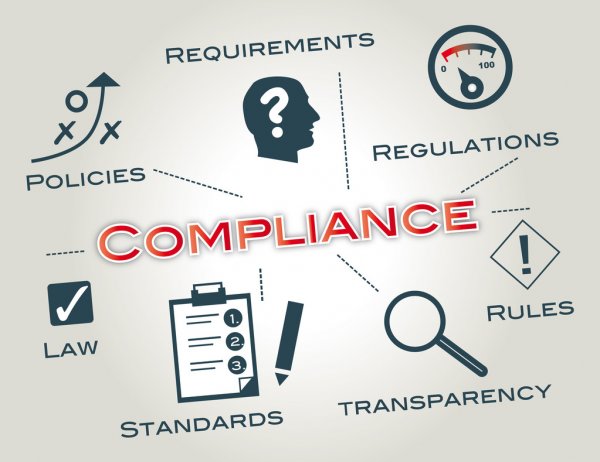
The global outbreak of the novel coronavirus has taken the world by storm. While the issue pertaining to the public health is the talk of the town, the impact of COVID-19 on businesses and corporates seems to be least talked about.

Day to day business of the corporates is being affected due to decreased inflow of the human resource and a decrease in the workflow. While technologies have provided a relief to the human resource for physical attendances and conferences, there seemed to be unsettled trouble regarding legal compliances that required various filings and physical meetings.

Pursuant to the ongoing global COVID-19 pandemic and the Finance Minister, Ms. Nirmala Sitharaman’s announcements on March 24, 2020, the Ministry of Corporate Affairs (“MCA”) has issued various circulars to provide relief to companies from certain compliances under the Companies Act, 2013 (“Act”) and associated rules. This has been done as a measure to reduce the compliance burden on entities during the unprecedented health and economic situation caused by COVID-19. Following are the measures:-

1. Company Affirmation of Readiness towards COVID-19
Social distancing has gained its importance as a way to contain the spread, morbidity, and mortality of COVID-19. Government of India (“GOI”), responsible for the public welfare at large, has realised that social distancing can be achieved in its true sense only if the employers of the Indian public make the same application in their respective premises.

Considering that major employers of the nation belong to the companies or limited liability partnership (“LLP”) type entity, GOI as part of disaster management have advised all companies/LLPs to put in place an immediate plan to implement the “work from home” policy as a temporary measure up till March 31, 2020.

Further, in case of a requirement of physical visits of the essential staff to such offices by the employers, staggered timings may be followed in order to minimize physical interactions of all kinds.

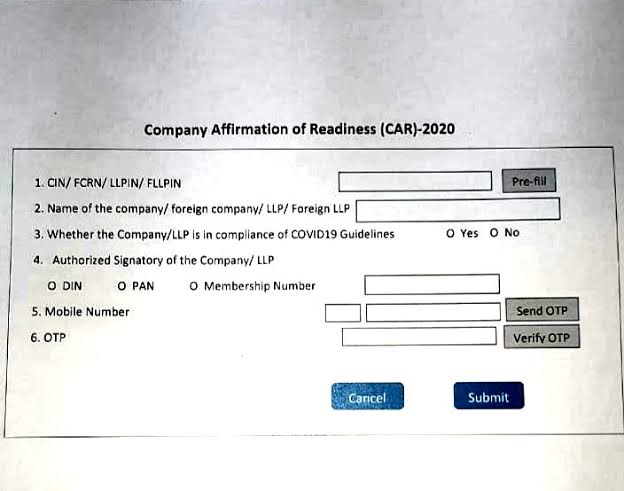
A simple webform for companies/LLP shall be deployed by MCA on March 23, 2020, in order to confirm the readiness of the employers to deal with COVID-19 threat. The webform shall be called CAR (Company Affirmation of Readiness towards COVID-19) and would be required to be signed and submitted by the authorised signatory of the company/LLP.

Therefore, it shall be expected by each company/LLP to ensure reporting of the compliance through CAR instantly from the date of its deployment.

2. Companies Fresh Start Scheme 2020

The MCA issued a circular on March 30, 2020, introducing the Companies Fresh Start Scheme, 2020 which, inter alia, grants a one-time opportunity to defaulting companies to complete all belated filings, including, without limitation, annual filings and filings required under IEPFA (Accounting, Audit, Transfer and Refund) Rules, 2016 in relation to transfer of money remaining unpaid or unclaimed for a period of seven years under Section 124(5) of the Act and transfer of relevant shares in the name of the ‘Investor Education and Protection Fund’ under Section 124(6) of the Act, with the MCA21 registry, without incurring additional fees on account of any delay.

This scheme came into force on April 1, 2020, and is valid till September 30, 2020. The application for seeking immunity for belated filings under this scheme should be made within a period of six months from September 30, 2020, through Form CFSS-2020. Thereafter, an immunity certificate will be provided by the designated authority on the basis of the declarations made in such form.

However, no immunity shall be provided under the scheme in a matter where (i) an appeal or management dispute is pending before any court or tribunal, or (ii) a court has ordered a conviction, or the adjudicating authority under the Act has imposed a penalty, and in respect of such orders, no appeal has been filed prior to the scheme coming into force.

Further, the scheme shall not apply: (i) where an application has been filed or an action for final notice for striking off the name of the company has already been initiated; (ii) where the company has been amalgamated; (iii) when application of obtaining dormant status has been filed; (iv) to vanishing companies; and/or (v) where charge related documents or an increase in authorised capital is involved.

3. CSR Spending
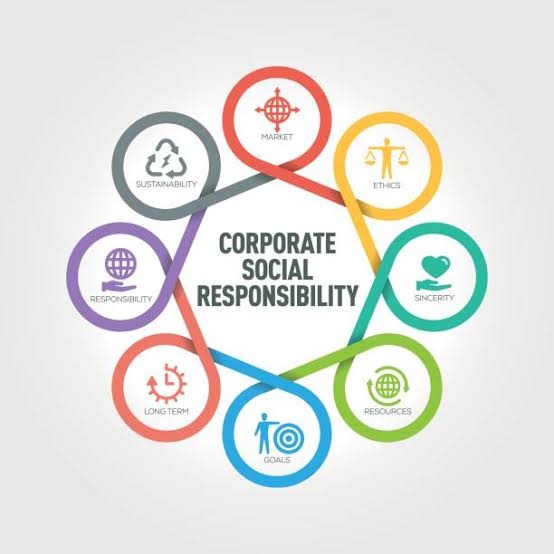
The MCA has by way of circular dated March 23, 2020 and the office memorandum dated March 28, 2020, clarified that the spending of CSR funds by companies in relation to COVID-19, including by way of contribution to the PM CARES Fund, is an eligible CSR expenditure under the Act.

The MCA has further clarified by way of FAQs dated April 10, 2020 that contributions made to the State Disaster Management Authority will also be eligible CSR activity, but contributions towards (a) ‘Chief Minister’s Relief Fund’ or ‘State Relief Fund for COVID-19’; and (b) payment of salary/ wages to employees and workers (including contract labour/ temporary/ casual/ daily wage workers) during the lockdown period will not be considered as eligible CSR expenditure.

However, ex-gratia payment over and above the disbursement of wages to temporary/ casual workers/ daily wage workers, specifically for the purpose of fighting COVID-19, will be admissible towards CSR expenditure, provided there is an explicit declaration to that effect by the board of the company, which is duly certified by the statutory auditor.

4. Meetings of Board and the Shareholders

  • The Companies (Meetings of Board and its Powers) Rules, 2014 were amended by a notification dated March 19, 2020, to enable companies to hold board meetings on the following matters (which earlier had to be necessarily held at a physical meeting) through video-conferencing or other audio-visual means (collectively “VCC”) till June 30, 2020: (i) approval of annual financial statements and board’s report; (ii) approval of prospectus; (iii) audit committee meetings for consideration of financial statements; and (iv) approval of amalgamation, merger, demerger, acquisition and takeover.
  • MCA has, by way of a general circular dated April 8, 2020, requested companies to pass all decisions of an urgent nature requiring shareholder approval, other than those of ordinary business or business where any person has right to be heard, through postal ballot/ e-voting in accordance with the relevant statutory provisions without holding a physical general meeting. However, in cases where holding an extraordinary general meeting (“EEGM”) is unavoidable, these have now been permitted to be held through VC until June 30, 2020. The circular further lays down certain conditions to be met for conducting an EGM through VC and the key conditions, inter alia, include: (i) attendance of at least one independent director (where a company is required to appoint one) and auditor (or his authorised representative who is qualified to be the auditor); (ii) maintenance of recorded transcripts of the EGM and, in case of a public company, such transcripts to be uploaded on the company website (if any); and (iii) e-voting facility being available. All other provisions relating to general meetings under the Act (and relevant rules) will continue to apply.
  • Due to difficulties faced by various stakeholders in serving and receiving notices/responses by post on account of COVID-19, the MCA, on April 13, 2020, provided that notice of EGMs to be held through VC (and for passing shareholder resolutions through postal ballot/ e-voting) may now be given to shareholders only through email addresses of the shareholders registered with the company or with the depository participant/ depository. This circular also specifies various conditions which companies must comply with while sending email notices to shareholders.

CONCLUSION

Business entities in India are requested and expected to keep an eye on the major government websites to ensure timely compliance with all such immediate requirements and mandates issued by GOI as need of the hour from time to time.

WEBSITES REFERRED:-

1)  MCA General Circular No. 10/20 dated March 23, 2020 on Clarification on spending of CSR for COVID-19.

2) MCA General Circular No. 12/20 dated March 30, 2020 on Companies Fresh Start Scheme, 2020

3) MCA Notification dated March 19, 2020 on Companies (Meetings of Board and its Powers) Amendment Rules, 2020

4) MCA General Circular No. 14/2020 dated April 8, 2020 on Clarification on passing of ordinary or special resolutions by companies under the Companies Act, 2013 and rules made thereunder on account of threat posed by Covid-19.

5) MCA General Circular No. 17/20 dated April 13, 2020 on clarification on passing ordinary and special resolutions by companies under the Companies Act, 2013 and rules made thereunder on account of threat posed by COVID-19.

6)http://www.conventuslaw.com/report/india-implications-of-covid-19-on-compliances/

7)https://www.lexology.com/library/detail.aspx?g=7862d71f-35ae-443c-964b-a381d11102bc

8)https://www.google.com/search?q=COMPANY+COMPLIANCE+India+Images+Copyright+Free+and+Royalty+Free&tbm=isch&ved=2ahUKEwjK6fe59tvqAhVZOCsKHTZKCh0Q2-cCegQIABAC&oq=COMPANY+COMPLIANCE+India+Images+Copyright+Free+and+Royalty+Free&gs_lcp=ChJtb2JpbGUtZ3dzLXdpei1pbWcQAzoECB4QCjoECCEQClCMPljJiQFgoIwBaARwAHgAgAHIAYgB4x2SAQYwLjI3LjGYAQCgAQHAAQE&sclient=mobile-gws-wiz-img&ei=qpoVX8rsBdnwrAG2lKnoAQ&bih=682&biw=393&client=ms-android-xiaomi-rev1&prmd=insv#imgrc=UEkUjY7KpsptxM

9)https://studycafe.in/2020/04/companies-fresh-start-scheme-2020-or-cfss-2020.html

10)https://www.a2ztaxcorp.com/mca-introduces-companies-fresh-start-scheme-2020-for-non-compliant-companies/

11)https://www.istockphoto.com/illustrations/corporate-social-responsibility?mediatype=illustration&phrase=corporate%20social%20responsibility&sort=mostpopular

12)https://www.istockphoto.com/illustrations/shareholders-meeting?mediatype=illustration&phrase=shareholder%27s%20meeting&sort=mostpopular
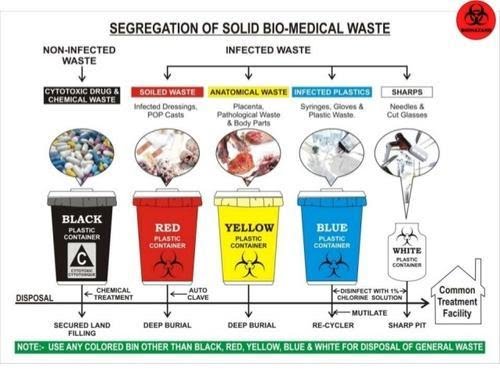
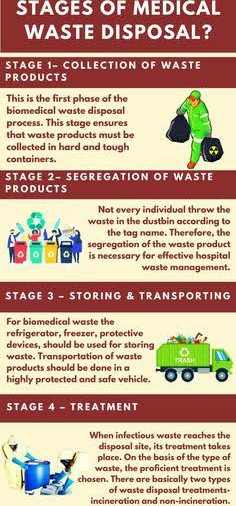
COVID-19 PANDEMIC: BIO-MEDICAL WASTE AND HOW THE HOSPITALS ARE LIABLE

Biomedical Waste Management & Handling Rules, 1998 (“1998 Rules”) in India govern the handling, disposal and management of bio-medical waste (“BM Waste”)in India have been notified by the Central Government in the exercise of the powers conferred by Section 6,8 & 25 of the Environmental Protection Act, 1986. These rules provide for the framework of the management and Handling of disposal and scientific management of BM Waste

In wake of the COVID-19 pandemic, the Centre Pollution Control Board (“CPCB”) recently issued guidelines dated March 27, 2020 for handling, treatment and safe disposal of BM Waste generated during treatment, diagnosis and quarantine of patients confirmed or suspected to have COVID-19 (“Guidelines”).

The Guidelines have been necessitated due to the super infectious nature of the Novel corona virus and provide for a mechanism for the segregation, packaging, transportation, storage and disposal of BM Waste in order to avoid further spread of the virus through BM Waste.

So what do you mean by the BM Waste and what are the categories of BM Waste that the hospitals generate?

The Bio-Medical Waste Management Rules 2016[1] (“2016 Rules”) define the BM Waste as any waste, which is generated during the diagnosis, treatment or immunisation of human beings or animals or research activities pertaining thereto or in the production or testing of biological or in health camps, including the categories mentioned in Schedule I the 2016 Rules.

The 2016 Rules apply to all persons who generate, collect, receive, store, transport, treat, dispose, or handle bio medical waste in any form. The next imminent question that comes to our minds is what are the categories of BM Waste that the hospitals generate?

BM Waste generated from a hospital could be human anatomical waste, animal waste- microbiology & biotechnology, waste sharps, discarded medicines and cytotoxic drugs, solid & liquid waste.

Now that we know what’s the meaning and various categories of BM Waste, the most pertinent question arises that how is it supposed to be treated and disposed of by the hospitals in India during the ongoing COVID-19 pandemic? 

While the hospitals in their usual course deal with the segregation, management and storage of BM Waste, the situation in times of COVID-19 is extraordinary the reason being the highly contagious nature of the virus and also it’s transmission cycle and multiplicity rate.

As the hospitals are being flooded with the suspected and confirmed cases, the Ministry of Health and family welfare (“MoHFW”) and the CPCB have issued various guidelines for the handling and management of waste generated from the COVID-19 facilities.

Under the 2016 Rules, while the hospitals are required to ensure that there is a secured location within its premises for a spill/pilferage free storage of segregated BM Waste in labelled/coloured bags or containers, the duty to transport the stored BM Waste from the hospital premises onwards to the common BM Waste treatment and disposal facility is of an ‘operator’ as defined in the Rules.

Specifically, in wake of COVID-19, the CPCB has issued Revision 1 to the Guidelines dated March 25, 2020 for Handling, Treatment and Disposal of Waste Generated during Treatment/Diagnosis/ Quarantine of COVID-19 Patients (“CPCB Guidelines”).

[2] The said CPCB Guidelines inter-alia, state that hospitals are required to depute separate BM Waste sanitation workers to COVID-19 isolation wards and maintain records of all waste generated in such isolation wards and ensure that the BWM generated is collected and separately stored in separate leakproof color-coded double layered bags or bins /containers labelled as “COVID-19 waste” as per the 1998 Rules and the Guidelines.

In fact the Bombay High Court in a recent pending public interest litigation has, while issuing notices to local municipal corporations and the State Pollution Control Board, also directed the Maharashtra government to clarify whether it was ensuring that all COVID-19 related biomedical waste generated in the state was being disposed of in a safe manner[3].

Now that we have a thorough understanding of how the BM Waste is supposed to be treated and disposed of the most important and the widely discussed about topic is that what are the measures that a hospital is required to take for the safety of its employees doctors, nurses and other support staff who are known as the (“healthcare personnel”) from the dangerous diseases like COVID-19?

In order to answer this pertinent question which is often there in the limelight, one must keep in mind that the Healthcare personnel who are the Frontline workers have a high risk of contracting the COVID-19.

While the hospitals are taking precautions and measures to control any spread of infection within the premises, it is particularly difficult given the highly super-infectious nature and hyper-speed feature of the virus. Due to this feature it spreads widely and it becomes a bit difficult to contain it in an over-crowded environment but it’s not impossible to achieve that as we all have been deterrent enough to contain it’s spread but still there is always scope for improvement.

The first steps towards controlling the spread of a virus is personal protective equipment also known as PPE which should preferably be a two-layered fluid-resistant apron and basic items like N-95 masks, face shield, full cover gowns  and sanitisers but the same are rendered ineffective against the COVID-19 if the quality of these equipments is not up to the standard as required.

Greater emphasis is also to be laid upon the proper training and awareness of healthcare personnel towards proper use and disposal of the equipment. The spread of the COVID-19 virus is also particularly fast due to the heavy load of asymptomatic patients coming into the hospital and hence a greater need for the formulation of national COVID-19 protocol.

The MoHFW has vide its revised guidelines for clinical management of COVID-19 dated March 31, 2020[4] (“Clinical Management Guidelines”) impressed upon strict compliance of Infection prevention control (IPC) protocol for Hospitals and a consequent effect of the same is prevention and management of COVID-19 in the hospital staff.

This protocol inter-alia,  standard precautions such as hand hygiene, use of PPE to avoid direct contact with patients’ blood, body fluids, secretions (including respiratory secretions) and non-intact skin, prevention of needle-stick or sharps injury, safe waste management, cleaning and disinfection of equipment and cleaning of the environment around a COVID-19 patient.

The 2016 Rules also provide as follows that in order to and for ensuring the safety of the healthcare workers and others involved in the segregation and pre-treatment of BM Waste, the hospital is required to train to all its healthcare workers, immunise them for protection against diseases which likely to be transmitted by handling of BM Waste, in the manner as prescribed in the National Immunisation Policy[5].

Also, hospitals are required to ensure occupational safety of all its health care workers and others involved in handling of BM Waste by providing appropriate and adequate PPE and also they must conduct health check ups at the time of induction and at least once in a year maintain the records for the same.

Now due to the pandemic if one is an employee ie the Healthcare personnel of the hospital one must understand the Legal aspect and angle also and the most important aspect of all is that what is the Legal obligations of the hospital, if and when an employee of the hospital tests positive for COVID-19.

Let’s answer this as it’s the most crucial and critical aspect. The present COVID-19 pandemic is an unprecedented event and is unlike any other infectious disease known to mankind and the medical world which is yet to fully decipher its modus operandi of infecting humans.

In a hypothetical situation wherein a hospital employee contracts COVID-19, it will be imperative for the employee in such a situation to establish that his possible exposure to COVID-19 was in the Hospital itself not in the community after considering that the employee is spending time outside as well apart from the hospital premises.

While in an ideal case, if it is proved that a hospital staff has contracted it ,i.e., it shall amount to ‘a hospital acquired infection’, then the hospital would be ordinarily liable. However, in the case of COVID-19 since it is seemingly impossible to trace down the exact source of the infection, in absence of such evidence and in light of utmost safety measures and precautions taken by the hospitals as per the guidelines, fastening of any liability on the hospital would be peculiarly difficult.

The defence available to the hospital may be culpability and negligence of the employee and proving that the hospital itself took all possible measures to avoid any mass spread of the infection.

The next relevant point to be analysed and answered is that when a Non COVID-19 patient contracts the virus during his term of being admitted in the hospital what are the Legal obligations of the hospital when this happens?

The National Consumer Dispute Redressal Commission in the matter of Apollo Emergency Hospital vs Dr. Bommakanti Sai Krishna & Anr.[6] observed that “As already observed, the infection occurred during the stay of the Complainant at the hospital. On the other hand, there is nothing to show that the source of infection lay outside the hospital. Thus, there is preponderance of possibilities of the infection having been acquired in the hospital itself. We therefore, do not accept the contention that it was necessary for the Complainant to produce expert evidence to prove negligence on the part of the concerned doctors in the hospital.

The afore-stated judgement implies a presumption of liability on the hospital that in cases where the probability of acquiring the infection is much higher inside the hospital than from other sources. However, the same may not apply in COVID cases in light of the peculiar difficulty of tracing the source of acquiring the COVID-19 infection. Therefore, the presumption rendered by the aforesaid judgement will not be ipso facto applicable to cases of COVID patients.

As we have discussed the various pertinent relevant questions another one is that what are the legal obligations of the hospital, if and when a patient is misdiagnosed positive or negative for COVID-19 by the hospital due to a fault in the COVID-19 rapid testing kit (“testing kits”)?

The liability of a hospital in cases of misdiagnosis depends on the methodology of procuring of testing kits. A hospital may procure testing kit either from third party manufacturer or may manufacture them internally i.e. by itself or its subsidiary.

In cases where the misdiagnosis is on account of faulty testing kit procured externally, the hospital cannot be held directly liable as the liability may be shifted upon the manufacturer.

In cases where the misdiagnosis is on account of faulty testing kit is due to testing kits produced internally the hospital may be liable subject to it being proved that the misdiagnosed patient was indeed positive. However, factors such as the success rate of any testing kit not being 100% may have an interplay in determining the liability.

We have to be aware of what are the Legal liability of a hospital in a situation where the hospital discharges a mild/very mild/pre-symptomatic COVID patient to ramp up the capacity for serious COVID-19 patients.

 A hospital will not be held liable for a systematic discharge of a mild/very mild/pre-symptomatic/moderate COVID-19 patient as the same is directed by the Central Government. On May 8, 2020, the MoHFW released its revised policy for the discharge of COVID-19 patients.[7] This revised policy provides that hospitals can discharge mild/very mild/pre-symptomatic in accordance with the protocols given therein.

In the earlier advisory[8], COVID-19 patients could be discharged only after chest radiograph clearance, viral clearance in respiratory samples, and if two of the patient’s specimens were negative within a period of 24 hours. The discharged patient would then have to home quarantine themselves in accordance with the revised policy.

So what is the protocol to be followed by a Hospital while disposing of the dead bodies of the COVID-19 patients?

The corpses are a source of infection for healthcare personnel/ other patients and cannot be disposed of by usual methods of disposal and therefore, the MHFW issued guidelines dated March 15, 2020 on dead body management in COVID-19.[9] The guidelines provide inter-alia, the protocol to be followed at the time of removal from the isolation room or area, put in bio-hazard bag and disinfection. Further, all surfaces of the isolation area (floors, bed, railings, side tables, IV stand etc.) should be wiped with 1% Sodium Hypochlorite solution and then it should allow a contact time of 30 minutes, and allow it to air dry as well.

While treating patients infected with the COVID-19 virus, what is the protocol for the treatment?

The All India Institute of Medical Sciences (AIIMS) has issued clinical protocol dated April 21, 2020 for treatment of Covid-19 patients and states such as Madhya Pradesh and Delhi have directed Hospitals and health centres dedicated to treating COVID-19 patients to follow the said clinical protocol.[10]

Treatment must be affordable for all. One must know whether or not there is a standardisation of costs of treatment of a COVID-19 for private hospitals?

Government hospitals are reaching their intake capacities and for that reason COVID-19 patients have been resorting to treatment in private hospitals. While some private hospitals are charging exorbitant amounts as costs of treatment, the same is worrying not just for the patients but also to the insurers.[11] 

In a first, the State government of Maharashtra has capped treatment costs in private hospitals for people without medical insurance and for other patients, the capped prices will come into effect once they exhaust their medical insurance cover.[12]

The Hon’ble Gujarat High Court has vide its order dated May 22, 2020 directed the state government to issue a notification making it mandatory for all multi-speciality hospitals private/ corporate hospitals in Ahmedabad and on its outskirts to reserve 50% of their beds (or such other capacity as maybe specified by the state government) for COVID-19 patients.

In view of the same, the Government of Gujarat may come up with similar caps on costs as Maharashtra.[13]  The Hon’ble Gujarat High Court also observed that the certain private hospitals authorised by the government to treat COVID-19  patients in Ahmedabad are charging exorbitant fees which is unaffordable for a massive section of the society and directed the state government to ensure that private hospitals do not  charge exorbitant fees. [14]

Also in light of the same The Hon’ble Bombay High Court recently directed a charitable hospital to make court deposit of monies in a case pertaining to levy of exorbitant charges for treatment of COVID-19 patients belonging to poor strata of the society despite reserving 20% of its beds for poor and the needy.[15]


[1] Available at – https://dhr.gov.in/sites/default/files/Bio-medical_Waste_Management_Rules_2016.pdf last accessed on June 27, 2020 at 1000 hours.

[2] Available at https://www.mohfw.gov.in/pdf/63948609501585568987wastesguidelines.pdf last accessed on June 26, 2020 at 1243PM.

[3] https://www.hindustantimes.com/mumbai-news/bombay-hc-seeks-state-govt-s-reply-on-disposal-of-covid-19-biomedical-waste/story-ivVDDnsp6yMKgfqIYk2TEN.html last accessed on July 03, 2020 at 1243PM. As per reports, replies have to be filed by July 14, 2020.

[4]https://www.mohfw.gov.in/pdf/RevisedNationalClinicalManagementGuidelineforCOVID1931032020.pdf ; pre-revision guidelines are at https://www.mohfw.gov.in/pdf//National%20Guidelines%20for%20IPC%20in%20HCF%20-%20final%281%29.pdf

[5]Available at https://main.mohfw.gov.in/sites/default/files/108481119000.pdf last accessed on June 26, 2020 at 1400Hours.

[6] The Apollo Emergency Hospital vs Dr. Bommakanti Sai Krishna & Anr., MANU/CF/0051/2013

[7] Available at https://www.mohfw.gov.in/pdf/ReviseddischargePolicyforCOVID19.pdfhttps://www.mohfw.gov.in/pdf/FAQsonRevisedDischargePolicy.pdf last accessed on May 12, 2020 at 1300 Hours.

[8] Available at https://www.mohfw.gov.in/pdf/Corona%20Discharge-Policy.pdf ; also refer to https://www.mohfw.gov.in/pdf/FinalGuidanceonMangaementofCovidcasesversion2.pdf last accessed on May 13, 2020 at 1800 Hours.

[9]Available  at https://www.mohfw.gov.in/pdf/1584423700568_COVID19GuidelinesonDeadbodymanagement.pdf last accessed on May 4, 2020 at 1200Hours.

[10] Available at https://health.economictimes.indiatimes.com/news/hospitals/mp-hospitals-to-follow-aiims-protocol-for-covid-19-care/75470554; last accessed on May 23, 2020 at 1200Hours; Available at https://timesofindia.indiatimes.com/city/bhopal/mp-hospitals-to-follow-aiims-protocol-for-covid-19-care/articleshow/75463520.cms last accessed on May 23, 2020 at 1300Hours.

[11] Available at  https://www.livemint.com/money/personal-finance/insurers-want-standard-covid-19-treatment-cost-11589734285328.html last accessed on May 23, 2020 at 0214Hours.

[12]Available at  https://economictimes.indiatimes.com/news/politics-and-nation/regulate-fees-of-private-hospitals-treating-covid-19-patients-hc/articleshow/75758648.cms?from=mdr last accessed on May 23, 2020 at 1200Hours.

[13] Refer to order dated May 23, 2020 passed by the Hon’ble Gujarat High Court passed in  W.P.PIL No. 42 of 2020.

[14] Refer to order dated May 14, 2020 passed by the Hon’ble Gujarat High Court passed in  W.P.PIL No. 42 of 2020.

[15]https://www.thehindu.com/news/cities/mumbai/cant-expect-patients-to-submit-proof-of income/article31936388.ece ; https://www.thehindu.com/news/cities/mumbai/coronavirus-mumbai-charitable-hospital-treated-just-four-poor-patients-bombay-high-court-told/article31877330.ece  last accessed on July 3, 2020 at 2000 hours.

(16)https://corporate.cyrilamarchandblogs.com/2020/07/bio-medical-waste-and-liability-of-hospitals-in-wake-of-the-covid-19-pandemic/#more-3982

(17)https://www.civilsdaily.com/news/pib-regulation-of-bio-medical-waste/amp/

(18)https://www.google.com/search?q=Treatment+and+Disposal+of+Bio+Medical+Waste+Generated+by+COVID-19+virus+Animated+Image+Royalty+free+and+Copyright+free&tbm=isch&ved=2ahUKEwjnosG22tnqAhXWTCsKHeBjDqIQ2-cCegQIABAC&oq=Treatment+and+Disposal+of+Bio+Medical+Waste+Generated+by+COVID-19+virus+Animated+Image+Royalty+free+and+Copyright+free&gs_lcp=ChJtb2JpbGUtZ3dzLXdpei1pbWcQAzoECCMQJzoECB4QClCN8gFYjL0CYNnFAmgDcAB4AIABogGIAcQMkgEEMC4xMZgBB6ABAcABAQ&sclient=mobile-gws-wiz-img&ei=13AUX6fbDtaZrQHgx7mQCg&bih=682&biw=393&client=ms-android-xiaomi-rev1&prmd=inv#imgrc=f6k4LiLl7qKKwM

The Politics Of PHONE TAPPING

The ghost of phone tapping in Indian Politics has returned, this time in Rajasthan. After releasing three audio clips by the congress, BJP has alleged the state government of doing illegal phone tapping. BJP spokesperson Sandeep Patra has asked for a CBI probe. Patra accused, chief minister Ashok Gehlot of “manufacturing lies” and undertaking “illegal measures like phone-tapping” to save his government. He said that, “The Congress has a history of phone-tapping.”

On the other hand Bahujan Samaj Party chief Mayawati named Ashok Gehlot, a serial offender and alleged him of acting illegally. Mayawati called for President’s rule in the state. While the Congress has refuted the claims of phone tapping and said that the audio clips were sourced from the social media.

Political History of Phone Tapping

Tapping of phones for political gain is illegal but not rare in Indian Politics. Be it in 2010 phone tapping case between then IPL Chief Lalit Modi and NCP supremo Sharad Pawar, in 2017 Kerala, in 2018 Karnataka or in 2019 Chhattisgarh. Even the phones of Rashtrapati Bhavan had also been bugged.  

Last year hearing the matter of Chattisgarh Phone Tapping case, the Supreme court of India had remarked that, ‘No Privacy Left For Anybody’. The bench of justices Arun Mishra and Indira Banerjee, had sternly said that, ‘‘what is the need to do (things) like this? No privacy is left for anybody. What is happening in this country?”

Procedure for Phone Tapping:

Though the country has seen various infamous instances of phone tapping, but there are laws which allows phone tapping in certain circumstances legal. Under entry 31 of the Union List of the Constitution and Entry 7 of the Federal List of the Government of India Act, 1935, telephonic along with other communication devices is mentioned. And both the Central government and the State government has the right to tap phones of people under Section 5 (2) of the Indian Telegraphic Act, 1885.

  1. Section 69 of the Information Technology Act, 2000, empowers the central government or a state government to intercept, monitor or decrypt or cause to be intercepted or monitored or decrypted, any information generated, transmitted, received or stored in any computer resource in the interest of the sovereignty or integrity of the country.
  2.  This power of interception is to be executed as per the provisions of law, rules and Standard Operating Procedures (SoPs), approved by the Union Home Secretary in case of central government and by the Home Secretary of the state concerned in case of the state government.
  3. Only ten agencies are authorised for phone tapping: (i) Intelligence Bureau, (ii) Central Bureau of Investigation, (iii) Enforcement Directorate, (iv) Narcotics Control Bureau, (v) Central Board of Direct Taxes, (vi) Directorate of Revenue Intelligence, (vii) National Investigation Agency, (viii) R&AW, (ix) Directorate of Signal Intelligence and (x) Delhi Police Commissioner.
  4. Such authorities must seek permission from the Home Ministry before they tap the calls of the person. In the application to the Ministry, the agency has to mention reasons and the needs for tapping the phone calls. In the case of State, the permission has to be taken from State Home secretary.

Remedies:

  1. Unauthorized tapping or interception is a violation of the right to privacy, and the aggrieved party can file a complaint with the National Human Rights Commission.
  2. The aggrieved party can also file an FIR against unauthorized tapping.
  3. The aggrieved person can also move to the Court against the person doing any unauthorized act under Section 26 (b) of the Indian Telegraphic Act.

AN OVERVIEW OF INTELLECTUAL PROPERTY RIGHTS AND THE EFFECT OF COVID-19 PANDEMIC ON THE I.P. HOLDERS

INTRODUCTION

‘Intellect’ refers to the creations of the mind. Intellectual Property is a type of intangible property and includes inventions, literary and artistic works, symbols, names and paintings.

Intellectual Property Rights (IPRs) are the Rights granted to the creators of Intellectual Property (IP) by the Government. The nature of IPR is territorial. In any country an IP has to seek protection separately under the relevant laws.

Mechanisms which are Special in nature have been kept in place for various territories in order to provide protection to different types of IPRs. It confers an exclusive right to the inventor/ creator or assignee to fully utilize the invention/ creation for a given period of time.

It’s been established that the intellectual labor associated with the innovation should be given due importance so that public good emanates from it.

This is a strong tool, to protect investments, time, money, effort invested by the inventor/creator of an IP, since it grants the inventor/creator an exclusive right for a certain period of time for use of his invention/creation.

Hence it aids in the economic development of a country by promoting healthy competition and encouraging industrial development which shall also aid in the growth of the economy.

WHAT IS AN INTELLECTUAL PROPERTY?

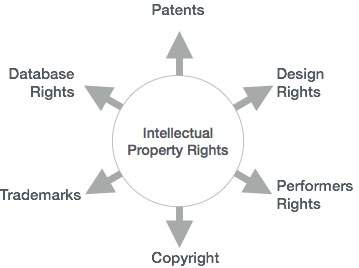
Intellectual Property(IP) refers to creations of the mind; inventions; literary and artistic works; and symbols, names and images used in commerce.

IP is divided into two categories: 1) Industrial Property:- includes patents for inventions,trademarks, industrial designs and geographical indications. 2) Copyright:- covers literary works (such as novels,poems and plays), films, music, artistic works (e.g., drawings, paintings, photographs and sculptures) and architectural design.

In Intellectual property(IP), there are Rights which relates to the rights of performing artists in their performances, producers of phonograms in their recordings, and broadcasters in their radio and television programs are included.

WHAT ARE INTELLECTUAL PROPERTY RIGHTS?

So what do you mean by intellectual
property rights? IP rights like any other property right allow creators, or owners, of patents, trademarks or copyrighted works to benefit from their own work or investment in a creation.

These rights are outlined in Article
27 of the UDHR which provides for the right to benefit from the protection of moral and material interests resulting from authorship of scientific, literary
or artistic productions.

The importance of intellectual property was first recognized in the Paris Convention for the Protection of Industrial Property (1883) and the Berne Convention for the Protection of Literary and Artistic Works (1886). Both treaties are administered by the World Intellectual Property Organization (WIPO).

There are various pros which are more compelling than the cons.

1) The progress and well-being of humanity rest on its capacity to create and invent new
works in the areas of technology
and culture.

2) The legal
protection of new creations and this encourages the commitment of additional resources for further innovation.

And Lastly the third pros is that the 3) Promotion and protection of intellectual property spurs economic growth, creates new jobs and industries,
and enhances the quality and enjoyment of life.

An efficient and equitable intellectual property system can help all countries to realize intellectual property’s potential as a catalyst for economic development and social and cultural well-being. The intellectual property system helps strike a balance between the interests of innovators and the public interest, providing an environment in which creativity and invention can flourish.

INTELLECTUAL PROPERTY HOLDERS IN A QUANDARY DUE TO COVID-19 PANDEMIC

While experts are in a combat mode and the race is on to discover the cure for COVID-19, the claim of intellectual property rights for exclusive use of the cure poses a dilemma as it is not considered the most rational thing to do at the moment.

Carlos Correa addressed to organizations like WHO, WTO and WIPO via an open letter to seek support for WTO countries that invoke the ‘security exception’ contained in Article 73 of the Agreement on Trade Related Intellectual Property Rights (TRIPS) Agreement, to take ‘actions it considers necessary for the protection of its essential ‘security interests’ in the wake of COVID-19 threat.

It has been suggested that invocation of exception under Article 73 will be warranted to procure medical products and devices or to use the technologies to manufacture them as necessary to take cue of the present public health emergency.

By suspending the enforcement of any Intellectual Property right as given under Article 73(b) of TRIPS Agreement, an obstacle for the procurement or local manufacturing of the medical equipments shall be necessary in order to protect the population of the world will be outlasted.

The question which is raised due to the above is regarding IP rights which are aimed to aid the public by promoting technological advancement in return of providing the inventor an exclusive right over the invention, though for a limited time. Though the IP rights are at a standstill due to the outbreak the IP Registry offices all over have limited their functioning.

TYPES OF INTELLECTUAL PROPERTY

  1. Trade Mark: –

A trademark is used in order to identify a business entity and it also differentiates the goods made or services offered by a company or an individual. Names, Words, Logos, Colors, Packaging, Sounds (audible), Signs (visual) or any combination thereof are considered and can be filed as trademarks.

A trademark must be Unique and Distinctive in nature and must also avoid adjectives for eg efficient and Names of person or places (E.g. India). Even Obscene words, Religious or Government words or symbols (E.g. OM) and Common Shapes (Square) should be avoided.

The Trade mark means a mark used in relation to goods for the purpose of indicating a connection in the course of trade between the goods and some person having the right as proprietor to use that mark.

The function of a trade mark is to give an indication to the purchaser or a possible purchaser as to the manufacture or quality of the goods, to give an indication to the trade source from which the goods come or the trade hands through which they pass on their way to the market.

The Trade Marks Act, 1999 is an act which provides for the registration and better protection of trademarks for goods and services and for the prevention of the use of fraudulent marks. A trade mark is valid for a period of 10 years.

Case Name: The Coca-Cola Company v. Bisleri International Pvt. Ltd
Case Citation: Manu/DE/2698/2009

  1. Copyright: –

Copyright is an exclusive legal right granted to the creators of an intellectual work. The owner of a Copyright has rights to reproduce, translate, adapt, perform, distribute and must be publicly allowed to display the work, etc.

Registration is not mandatory since copyright comes into existence as soon as the intellectual work is created but it is recommended to register a copyright for better enforceability, since registered copyrights have more evidentiary value in court.

(a) Types of Works covered under Copyright:-

(1) Literary including Software – Books, Essay, Compilations, Computer Programs.

(2) Artistic – Drawing, Painting, Logo, Map, Chart, Plan, Photographs, Work of Architecture.

(3) Dramatic – Screenplay, Drama.

(4) Musical – Musical Notations.

(5) Sound Recording – Compact Disc.

(6) Cinematograph Films – Visual Recording which includes sound recording.

(b) Duration of Copyright:-

(1) Literary, Dramatic, Musical or Artistic Works – Lifetime of the author + 60 years from the death of the author.

(2) Anonymous & Pseudonymous Works – 60 years from the year the work was first published.

(3) Works of Public Undertakings & Government Works – 60 years from the year the work was first published.

(4) Works of International Organizations – 60 years from the year the work was first published.

(5) Sound Recording – 60 years from the year in which the recording was published.

(6) Cinematograph Films – 60 years from the year in which the film was published.

Case Name:- Indian Performing Rights Society Ltd. v. Eastern India Motion Picture Association
Case Citation: – 1977 SCR (3) 206

  1. Designs: – The Design Act, 2000 states that it protects the aesthetic and ornamental features of an object. As per the Act a 2D or 3D pattern of a handicraft, a product, or even an industrial commodity.

The Unique Selling Point (USP), protects the looks and feels of the product and it prevents the duplication of the product. An industrial design helps in drawing a customer’s attention and helps in increasing the commercial value of an article.

Case Name:-Cello Household Products v. M/S Modware India and anr
Case Citation:- Notice of Motion (L) No. 209/2017 in Suit (L) No. 48/2017

  1. Patents On the 4th December, 2018, The Ministry of Commerce and Industry released the draft (rules amendment) for Patents Act 1970. These rules are mainly amended with respect to international applications, patent opposition and a few form related extensions. The Central Government proposes to make these amendments in exercise of the powers conferred by section 159 of the Patents Act, 1970.In order to align with TRIPS, inventions which are not patentable have been included even, wider rights of patentee is incorporated. Uniform period of protection is 20years. Case Name: Bajaj Auto Limited v.TVS Motor Company Limited. Case Citation: JT 2009 (12) SC 103

5. Integrated Circuits

Semiconductor Integrated Circuits Layout Design (SICLD) Act 2000 states the meaning of Semi conductor Integrated Circuit as, a product having transistors and other circuitry elements designed to perform an electronic circuitry function. There are 2 types of designs as per the act:-

(i) Layout Design – A layout of transistors and other circuitry elements including lead wires which connects semiconductor integrated circuits.

(ii) Layout-Design Registry (SICLDR) is the office where the applications on Layout-Designs of integrated circuits are filed for registration. The jurisdiction of this Registry is whole of India. The Registry, as per the guidelines laid down in the Semiconductor Integrated Circuits Layout Design (SICLD) Act 2000 and the Semiconductor Integrated Circuits Layout-Design (SICLD) Rules 2001, examines the layout-designs of the Integrated Circuits and issues the Registration Certificate to the original layout-designs of the Semiconductor Integrated Circuits.

Case Name: Sunil Alag v. Union of India and Others
Case Citation: W.P. (C) 8152/2013

6. Biological Diversity

The Biological Diversity Act 2002 was enacted to realize the objectives enshrined in the United Nations Convention on Biological Diversity (CBD) 1992 which was passed by the Lok Sabha on 2nd December 2002 and by the Rajya Sabha on 11th December 2002.

It recognizes the sovereign rights of states to use their own Biological Resources due to the scarcity and also to conserve it. The Act provides for a mechanism for equal sharing of benefits arising out of the use of traditional biological resources and knowledge. It is a federal legislation enacted by the Parliament of India for preservation of biological diversity in India.

Case Name: Environment Support Group vs National Biodiversity Authority
Case Citation: W.P. No.41532 / 2012

7. Plant Varieties and Farmers

Protection of Plant Varieties and Farmer’s Rights Act of 2001(PPV & FR Act, 2001) confers right to breeders, researchers and farmers over their plant varieties. Reaching legislation with regards to establishing rights for farmers to save, use, exchange and sell farm saved seed.

The Act establishes nine rights for farmers of which the most important in this regard are the right to “seed” and the right to “compensation” for crop failure (Art. 39). Not only does the 2001 Act protect the rights of framers to save, use, exchange and sell farm- saved seed, it also seeks to ensure that these seeds are of good quality, or at least that farmers are adequately informed about the quality of seed they buy.

In addition, safeguards are provided against innocent infringement by farmers. Farmers who unknowingly violate the rights of a breeder are not to be punished if they can prove that they were not aware of the existence of such a breeder’s right (Art 42).

Case Name:- Monsanto Technology LLC & Ors Vs. Nuziveedu Seeds Ltd & OrsHigh Court of Delhi
Case Citation: CS (Comm) 132/2016

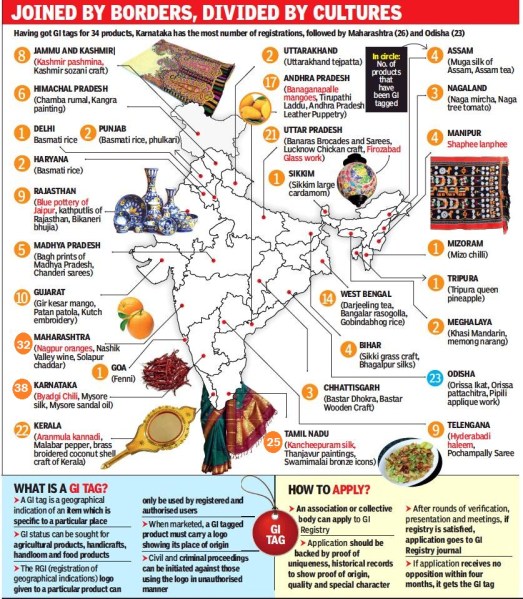
  1. The Geographical Indication of Goods:- The Geographical Indications of Goods (Registration and Protection) Act, 1999 states Geographical Indication as it is primarily an agricultural or food product, natural or a manufactured product (handicrafts, Handloom textiles or industrial goods) originating from a definite geographical territory. A product is considered to be manufactured in a territory if any one of the activities of either the production or of processing or preparation of the goods takes place there. It promotes the producers prosperity of goods which have been produced in the geographical territory.

It helps the producer community to differentiate its products from other competing products that are present in the market and generate goodwill around its products. Hence, it acts as a signaling device by helping consumers to identify genuine quality products.

Case Name:- Tea Board Vs ITC Limited on 20 April, 2011
Case Citation:- GA No. 3137 of 2010 CS No. 250 of 2010

It has been suggested that invocation of exception under Article 73 will be warranted to procure medical products and devices or to use the technologies to manufacture them as necessary to take cue of the present public health emergency.

CONCUSION

The above overview clearly depicts that India has adopted and adhered to the latest IPR Regime and it has forayed into the global trade competition with a double edged sword.

WEBSITES REFERRED

(i)https://www.ncbi.nlm.nih.gov/pmc/articles/PMC3217699/

(ii)https://www.mondaq.com/india/Intellectual-Property/656402/Patents-Law-In-India–Everything-You-Must-Know

(iii) http://sicldr.gov.in/

(iv)http://www.grkarelawlibrary.yolasite.com/resources/SM-Jul14-IPR-4%20-Samantha.pdf

(v)http://www.farmersrights.org/bestpractices/success_seed_1.html

(vi)https://www.latestlaws.com/articles/all-about-geographical-indications-of-goods-act-1999-by-ritik-dwivedi/

(vii)http://cipam.gov.in/wp-content/uploads/2017/09/bookletIPR.pdf

(viii)http://www.ipindia.nic.in/writereaddata/Portal/Images/pdf/Final_FREQUENTLY_ASKED_QUESTIONS_-PATENT.pdf

(ix)http://www.ipindia.nic.in/act-1999.htm

(x)https://taxguru.in/corporate-law/intellectual-property-rights-vis-a-vis-covid-19.html

(xi)https://www.google.com/url?sa=t&source=web&rct=j&url=https://www.wipo.int/edocs/pubdocs/en/intproperty/450/wipo_pub_450.pdf&ved=2ahUKEwjI-_TJxtTqAhWGlEsFHemYASEQFjAAegQIAhAB&usg=AOvVaw2iHkUR-AGDYkrLrntA3199

(xii)https://www.pngitem.com/middle/hRRmTJo_intelligent-clipart-human-brain-business-intelligence-brain-hd/

(xiii)https://www.istockphoto.com/photo/intellectual-property-rights-copyright-patent-or-trademark-infringement-gm1054513236-281758003

(xiv)https://www.tutorialspoint.com/information_security_cyber_law/intellectual_property_right.htm

(xv)https://www.discovermagazine.com/health/how-the-covid-19-pandemic-will-change-the-way-we-live

(xvi)https://depositphotos.com/stock-photos/registered-trademark-symbol.html

(xvii)https://www.shutterstock.com/video/clip-21491902-animated-copyright-red-3d-icon-loop-modules

(xviii)https://www.google.com/search?q=Design+Act+2000+India+Images&tbm=isch&ved=2ahUKEwiA6trXztTqAhUlnUsFHRUpDMQQ2-cCegQIABAC&oq=Design+Act+2000+India+Images&gs_lcp=ChJtb2JpbGUtZ3dzLXdpei1pbWcQAzIFCAAQzQI6BwgjEOoCECc6BAgjECc6AggAOgUIABCxAzoECAAQQzoHCAAQsQMQQzoECAAQHjoGCAAQBRAeOgQIABAYUPinCFjPjglg1pYJaApwAHgAgAGRAYgB5B-SAQQwLjMymAEAoAEBsAEFwAEB&sclient=mobile-gws-wiz-img&ei=cMURX4DyOaW6rtoPldKwoAw&bih=682&biw=393&client=ms-android-xiaomi-rev1&prmd=ivn#imgrc=SBSWXkD4ztdRZM

(xix)https://www.lexorbis.com/indian-patent-applications-and-the-biological-diversity-act/

(xx) http://www.plantauthority.gov.in/

(xxi)http://www.ipindia.nic.in/act-1999.htm

Mob lynching: Politics, Law and Solution

A bare reading of the definition of lynching states,

“To punish (a person) without legal process or authority, especially by hanging, for a perceived offense or as an act of bigotry”

One clear understanding from the above-mentioned definition is that there is no place for Mob lynching in a civilized land and especially in the world’s largest democracy.

The drafters of the Indian Constitution knew that laws in the country could be twisted to challenge the Fundamental Rights which were assured to the citizens and that’s exactly why The Right to Constitutional Remedies, that is, a process to seek justice through courts, was included in it.

Also going to through the epics, it holds no substantial, memorable or any quoted reference to this stated vicious practice.

Thus, in today’s world, Lynching stands as an exception.

The biggest irony and misfortune of our country is that everything and anything is politicized for insignificant political interests and vote bank. The same is true with most inhuman and abominable activity of mob lynching.

Early political context has been witnessed in the Kherlanji massacre in 2006. It was when four people were lynched over a land dispute at Kherlanji in Maharashtra. A mob of at least 50 villagers captured Bhaiyyalal Bhotmange’s house, and lynched four members of his family. Bhotmange’s wife and their daughter were marched naked in the village and sexually abused before being brutally murdered. The attack was after these women filed a police complaint against 15 villages who thrashed a relative. And despite such chaos, there were efforts to normalise the lynching later saying it was a casteist outrage against Dalits by the politically dominant Kumbi caste.

The next lynching that shocked the nation happened in Dimapur in 2015. A mob of least 7,000 to 8,000 infuriated people broke into Dimapur Central Jail, dragged Syed Farid Khan accused in a rape case out, marched him naked, stoned him, thrashed him, dragged him for over seven kilometres. There were attempts of tying a rope to his waist from a motorcycle. Ultimately, killing him and displaying his body on a clock tower. The brutal punishment was for the rape on a superficial level but what the mob thought was that they were lynching a Bangladeshi migrant. Khan, originally from Assam, had been living in for over Dimapur eight years. What is conflicting in this case is that the medical reports about the rape initially said the woman, who filed the complaint, was raped and then denying the same. Khan’s family claimed he was framed and said that the woman invited Khan to a hotel, forced him to drink and demanded Rs 2,00,000 from him. Ironically, this horrific mob violence executed was quoted by many as an example of serving justice.

Not much time later, Dadri lynching was witnessed. A 52-year-old Muslim man, Mohammad Akhlaq and his son, were attacked by a village mob with sticks and bricks, accusing them of stealing and slaughtering a cow calf and storing and consuming beef. The son was severely injured in the attack. Akhlaq was beaten till he died. This incident in Uttar Pradesh’s Bisara village near Dadri, was the first case of a Muslim lynched by a Hindu mob in the name of cow and beef. A primary inquiry by the Uttar Pradesh Veterinary Department said the meat recovered from Akhlaq’s refrigerator was not beef but of “goat progeny”. After a year in Mathura’s forensic department, the report said that the meat was of a cow or its progeny. And not much to surprise, the report was said to be politically motivated to normalise the lynching saying the mob was “emotionally charged” since cow slaughter is an extremely emotional issue for Hindus.

India is a multi-religious, multi-cultural, multi-ethnic, multi-dimensional and diverse country where people belonging to various faiths and religious denominations live together in peace and tranquillity. In such a diverse country, mob lynching in the name of protecting cow has the potential of leading to communal disharmony which may lead to national disintegration when national integration is badly required for peace, economic development and societal upliftment of the country.

Even since, Government imposed a ban on the sale and purchase of cattle for slaughter at animal markets across India, under Prevention of Cruelty to Animals statutes in 2017, it flashed a new wave of cow vigilante throughout the country. Though the SC suspended the ban on the sale of cattle in its judgment in 2017, giving relief to the multi dollar beef and leather industries and several states where beef is one among the primary foods, there was a rise in attacks on Muslims accusing them as beef eaters. Several innocent Muslims were murdered in such mob attack.

Law and order is a state subject and therefore all State Governments should deal with this inhuman activity strictly to maintain the rule of law and its supremacy. No one should be allowed to tinker with the law and the law violators and unruly mobs that resort to mob lynching should be put behind bars and severe punishment should be given to them so that this issue will be curbed and the country is saved from disturbance and violence. The primitive mindset and mob lynching are alien to our culture and should as such be discouraged and the secular democracy saved for the welfare of its citizens without any distinction of caste, creed, color or sex. Otherwise we will stoop to the 18th century which will take us back to the days of ignorance and illiteracy.

The government, though, has taken initiatives as it has asked States to appoint a nodal officer in each district to prevent the incidents of mob lynching. It has also asked to set up a special task force to procure intelligence reports about the people who are likely to commit such crimes or who are involved in spreading hate speeches, provocative statements and fake news.

Two high-level committees have also been constituted by the Centre to suggest ways to deal with incidents of mob lynching. One of the committees is being headed by Union Home Minister and the other by Union Home Secretary. The move came a week after the SC asked the Centre to enact a law to deal with incidents of lynching and take action on mob violence. The government respecting the directions of the Apex Court on the issue of mob lynching has issued an advisory to the State governments urging them to take effective measures to prevent such incidents, and also take severe actions as per the law.

Mob lynching should be dealt with an iron hand as it has the ramification of disturbing communal amity and peace in the diverse society and as such should not be tolerated and no one should be allowed to take law into his or her hands. It cannot be associated with any particular religion as it is a criminal activity and the criminal mindset does not come into people of any specific community. Thus to associate it with majority community is unjustified. But the majority community has the moral responsibility to protect and safeguard the minorities and supplement the efforts of the Government in this regard otherwise we cannot claim to build a new India where everyone irrespective of religion and faith will be safe and sound. We can rebuild new India only when there will be peace and the sectarian and communal violence will be things of yesteryears.

Thus, mob lynching should be condemned, discouraged and curbed if we have to build a strong and new India as a big economic power.

THE BEGINNING OF A NEW AGE: VIRTUAL COURT HEARINGS: THE INDIAN CONTEXT

INTRODUCTION

The Covid-19 pandemic has hit all the countries hard but as far as the legal system is concerned, it has shown us how the coming times and the future shall be and also how things in the ‘new normal’ would be.

But there is always a Silver lining in these tough times which is the Virtual Court Hearings which has ensured that Justice isn’t delayed for the one’s who seek it inspite of these tough times as Justice delayed is Justice denied.

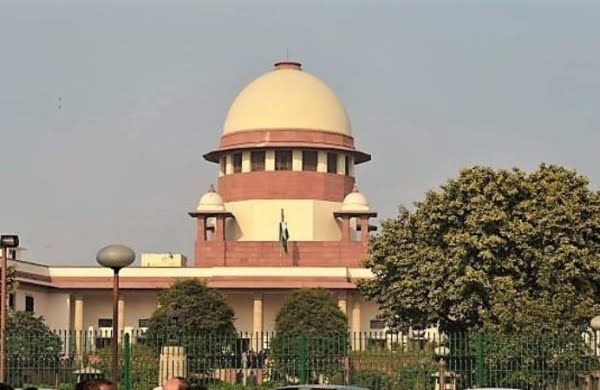
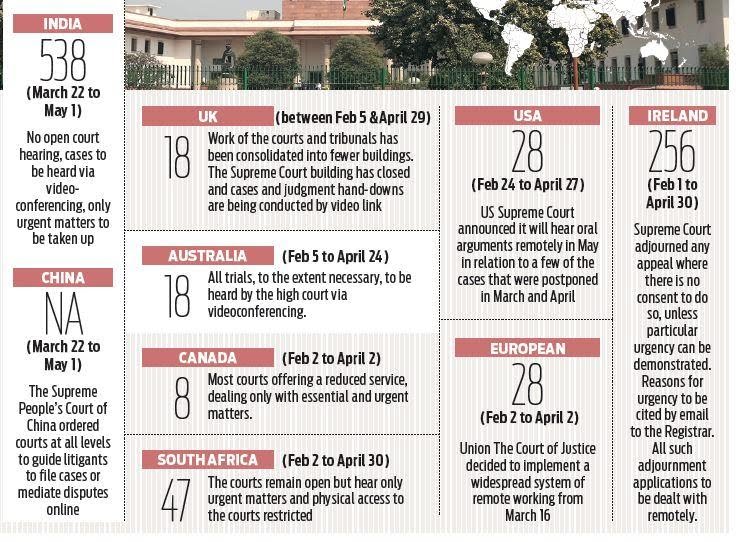
The lockdown has affected the functioning of courts across the globe, but the Hon’ble Supreme Court of India has done much better than the top courts in countries like the UK, the US, Singapore and Canada.

The Apex Court began the hearing of urgent matters virtually till May 1st and heard them for 22 days via video conferencing in March after the imposition of lockdown in order to curb the spread of COVID-19.

ABOUT VIRTUAL HEARINGS

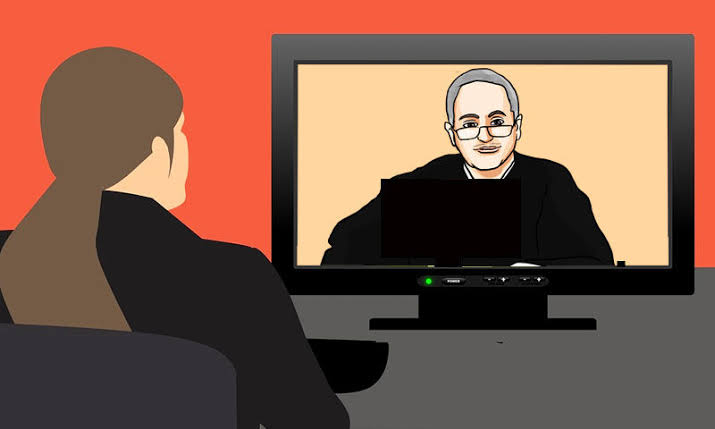
Virtual hearings are court hearings conducted by audio-visual means, where cases are progressed without the need for participants to attend the Court in person. It also shows how the distance becomes immaterial when one has to appear before the court to argue the case.

FOR THE FIRST TIME

The Hon’ble Supreme Court of India held its first Constitutional bench sitting and this is the first time since March 5 that five judges sat together in a single court hall ever since the lockdown forced the apex court to stop physical court hearings and begin hearing cases through videoconferencing from March 25 this year.

It was for the first time on Tuesday, the 14th July, 2020 that a Constitutional Bench (comprising five judges) held a virtual hearing. A bench of justices Arun Mishra, Indira Banerjee, Vineet Saran, MR Shah and Aniruddha Bose appeared wearing masks and maintaining nearly two-feet distance between them on the bench.

The first case that was heard by the five-judge bench was a legal tussle on whether Centre or States have the power to provide reservation to in-service candidates in post-graduate medical degree courses. The plea was brought up by Tamil Nadu Medical Officers Association.

Opening the argument, Senior Advocate Arvind Datar exchanged the extensive compilation of his arguments including cases to be referred through Google drive with all Lawyers. One of the Lawyers, Senior Advocate Vikas Singh appearing for Medical Council of India (MCI) complained about being unable to access Google Drive.

He objected to Datar referring to the same, the first hiccup encountered by the Court in the virtual proceeding. The problem was sorted as Hon’ble court asked Senior Advocate Arvind Datar to give case law citations.

As the virtual hearing proceeded the Senior Advocate Arvind Datar was inaudible to the Hon’ble Court. Hon’ble Justice MR Shah commented in a lighter vein that, “Don’t keep social distancing with your mike.” Datar heard ‘mike’ as “wife”, leaving the bench in splits.

SUCCESS STORY: DATA THAT MATTERS

The Hon’ble Supreme Court of India shared the ‘success story’ of virtual court proceedings. At the beginning of June as many as 2,893 lawyers appeared in the hearings via video-conferencing, it said in the data release.

According to the data, 538 matters were taken up by the SC during the lockdown period, besides 297 connected cases. Judgment was delivered in 57 matters. Besides, 49 special leave petitions, 92 writ petitions, 138 review petitions and 58 pleas for interim relief were also taken up.

HOW THE COURTS FARED AND PERFORMED?

India has fared the best as per the above data as many other countries have been using the virtual system but their top courts that have lagged way behind in the hearing or disposal of cases.

It conducted proceedings via video-conferencing from March 25 as it has suspended the entry of lawyers and other staff into its premises and also the apex court decided to explore the feasibility of ‘physical appearance’ of advocates in real courtroom hearings after strictly adhering to the guidelines of the COVID-19 triggered lockdown and resorting to virtual hearings since March 25.

Data available on other judicial websites indicate that in the nations hit hard by the pandemic like the US, the UK, France, Italy, Germany, China, Canada, Australia etc., The organs of that state which carried out the administration of justice are mostly relying on the virtual court methodologies and online case management.

CONCLUSION

Hence after going through the above facts and circumstances it’s certainly a grand success yet there is always room and scope for improvement.

WEBSITES REFERRED:-

1)https://www.supremecourt.vic.gov.au/law-and-practice/virtual-hearings/virtual-hearings-glossary

2)https://www.google.com/amp/s/www.newindianexpress.com/nation/2020/may/04/virtual-hearing-indias-apex-court-way-ahead-than-many-counterparts-2138843.amp

3)https://scholarlykitchen.sspnet.org/2020/03/30/marketing-amidst-a-pandemic/

4)https://www.google.com/amp/s/m.hindustantimes.com/india-news/supreme-court-holds-first-virtual-constitution-bench-hearing/story-6OIJDbbzpliujLFjz1z3mI_amp.html

Trespass : A civil wrong

Trespass is one of the ancient forms of action that arose under the common law of England as early as the 13th
century. It was considered a breach of the king’s peace for which the wrong doer might be summoned before the king`s court to respond to a civil proceeding from the harmed caused. The courts were concerned with punishing the trespasser rather than compensating the landowners and from the beginning a defendant convicted of trespass was fined; a defendant who could not pay was imprisonment. The fine in these criminal proceedings developed into an award of damages to the plaintiff and this change marked the beginning of tort action under the common law which has eventually become operative in Nigeria by virtue of Section 45 of the Interpretation Act. Today, the law of trespass has developed to become an aspect of tort with several branches of its own.

TYPES OF TRESPASS :

TRESPASS AGAINST IMMOVABLE PROPERTY LIKE LAND

Legal maxim ‘Quare clausum fregit’ defines land as, “Land includes not only the surface and any buildings on it but also the airspace and subsoil, in so far as these are vested on the plaintiff. The action of trespass to land penalizing direct interference with other people’s land.”
Trespass is mainly a wrong against possession and is available at times against the owner himself. Court in the case opined that “The correct position in law may, in our opinion, be slated thus in order to establish that the entry on the property was with the intent to annoy, intimate or insult, it is necessary for the Court to be satisfied that causing such annoyance, intimidation or insult was the aim of the entry; that it is not sufficient for that purpose to show merely that the natural consequence of the entry was likely to be annoyance, intimidation or insult, and that this likely consequence was known to the persons entering: that in deciding whether the aim of the entry was the causing of such annoyance, intimidation or insult, the Court has to consider all the relevant circumstances including the presence of knowledge that its natural consequences would be such annoyance, intimidation or insult and including also the probability or something else than the causing of such intimidation, insult or annoyance, being the dominant intention which prompted the entry”.
No one has the right to dispossess the trespasser if he is in a settled possession of a property and he can’t be evicted unless due process of law is followed. The possession, which a trespasser is entitled to defend against the rightful owner must be a settled possession extending over a sufficiently long period and acquiesced in by the true owner. A casual act of possession would not have the effect of interrupting the possession of the rightful owner. Under the doctrine of prescriptive easements, for example, a property owner loses the absolute right to exclude (all other persons from taking possession of his land) when a nonowner has used that land openly, peaceably, continuously, and under a claim of right ad- verse to the owner for a period set forth by a particular state (known as the prescription period). It was held by the High Court of Bombay in case that a rightful owner who dispossesses another cannot be treated as a trespasser except as provided by Section 9 of the Specific Relief Act, 187.
Trespass may also arise upon the easement of one person upon the land of another. For example, if A grants B a right to pass freely across A’s land, then A would trespass upon B’s easement by erecting a locked gate or otherwise blocking B’s rightful access. In some jurisdictions trespass while in possession of a firearm, which may include a low-power air weapon without ammunition, constitutes a more grave crime of armed trespass.
The maxim “cuius est solum, eius est usque ad coelum et ad infernos” (whoever owns the land owns it all the way to the heavens and to hell) is said to apply, however that has been limited by practical considerations. For example, aerial trespass is limited to airspace which might be used (therefore aeroplanes cannot be sued). Landowners may not put up structures to prevent this. The courts have been more lenient with underground trespass.

There may be regulations that hold a trespasser to a higher duty of care, such as strict liability for timber trespass (removing trees beyond a permitted boundary), which is a type of trespass to chattels as a result of a trespass to land.
Some cases also provide remedies for trespass not amounting to personal presence, as where an object is intentionally deposited, or farm animals are permitted to wander upon the land of another. Furthermore, if a new use of nearby land interferes with a land owner’s quiet enjoyment of his rights, there may be an action for nuisance, as where a disagreeable aroma or noise from A drifts across the land of B.

Trespass ab initio is when a person is granted access to land but then abuses that access. The entry to the land is considered to have been a trespass from the beginning. This only applies to access given by law, not to access given by a person.


TRESPASS TO A PERSON

TRESPASS TO PERSON IS A TORT WHICH IS FREQUENTLY
COMMITTED IN EVERYDAY LIFE. IT IS BASICALLY
UNREASONABLE INTERFERENCE WITH BODY OF A PERSON
WHICH CAN BE COMMITTED EITHER BY CAUSING ACTUAL HARM OR BY JUST CAUSING AN APPREHENSION OF FORCE.

Critical Analysis on The Concept of Trespass To Person

Trespass to person is a tort which is frequently committed in everyday life. It is basically unreasonable interference with body of a person which can be committed either by causing actual harm or by just causing an apprehension of force.

The tort of trespass to person has developed as it is today is a result of many changes and modifications. In early English law, a physical interference with the person was given special protection, partly to avoid the unhappy consequences of people taking the law into their own hands by revenge attacks. Untill the abolition of the old forms of action in the 19th century; direct attacks upon the person were protected by the action of trespass, which required no proof of damage. Indirect interference with the person was protected by the action on the case, which did require proof of damage.

Today, the basic position is that direct and intentional acts of interference are still dealt with by the tort of trespass, while indirect and unintentional acts fall under the tort of negligence. However, the situation is more complex than this suggests and some authorities suggest that even in trespass the claimant must now establish intention or negligence in addition to the act of interference.

This appears to suggest that there is a form of negligent trespass, which is almost a contradiction in terms.

Trespass To Person:
Definition:
Interference, however slight with a person’s elementary civil right to security of person, and self-determination in relation to his own body, constitutes trespass to person. Trespass may be done intentionally, deliberately or negligently. The fundamental principle plain and incontestable law is that every person’s body is inviolate.

TRESPASS TO PERSON MAY BE CATEGORISED AS:

  1. Assault, which is “any act of such a nature as to excite an apprehension of battery”;
  2. Battery, ” intentional and unpermitted contact with the plaintiff’s person or anything attached to it and practically identified with it”.
  3. False imprisonment, the “unlawful obstruction or deprivation of freedom from restraint of movement.”

Assault
• In everyday parlance assault is taken to mean physical contact. In tort, however, an assault occurs when a person apprehends immediate and unlawful physical contact due to the intentional actions of another. Fearing you are about to be physically attacked, therefore, makes you the victim of an assault.
• It is also necessary that an attack can actually take place. If an attack is impossible, then despite a person’s apprehension of physical contact, there can be no assault – for example, a person waving a stick and chasing another person who is driving away in a car would not be an assault. It is also generally thought that words alone cannot constitute an assault, but if accompanied by threatening behaviour the tort may have been committed.
Battery
• If the physical contact that is apprehended in an assault actually takes place, the tort of battery has been committed. It is not necessary for the physical contact to cause any injury or permanent damage to the victim, or even be intended to do so. The only intention required is that of making physical contact.
• It is also not necessary for the wrongdoer to actually touch the victim, so battery may be committed by throwing stones at someone or spitting on them.
False imprisonment
• False imprisonment is the unlawful restraint of a person which restricts that person’s freedom of movement. The victim need not be physically restrained from moving. It is sufficient if they are prevented from choosing to go where they please, even for a short time. This includes being intimidated or ordered to stay somewhere. A person can also be falsely imprisoned even if they have a means of escape but it is unreasonable for them to take it; for example, if they are in a first floor room with only a window as a way out.
• False imprisonment can also be committed if the victim is unaware they are being restrained, but it must be a fact that they are being restrained.

TRESPASS TO GOODS

Trespass de bonis asportatis, affords a remedy where there has been a direct interference with goods in the claimant’s possession at the time of the trespass, whether that be by taking the goods from him or damaging the goods without removing them.Trespass and conversion deal with intentional interference with goods. Where goods are lost or damaged as a result of the defendant’s breach of a duty of care, an action may lie in negligence.


TRESPASS TO GOODS:


Trespass to goods is an infringement of the right of possession not of ownership. There are three types of torts relating to goods
• Trespass to goods
• Conversion
• Detinue
Prof. Salmond: “Trespass to goods consists in committing without lawful justification any act of direct physical interference with a chattel in the possession of another person.”
Pollock: “Trespass to goods may be committed by taking possession of them or by any other act in itself immediately injurious to the goods in respect of the possessor’s interest as by killing, beating or chasing animals, or defacing a work of art.”
Two forms – it may assume:
a. Taking the thing away from the plaintiffs possession, when it is termed aspiration (removal, seizure etc.)
i. this would amount a crime of theft ii. To robbery if it was also forcible.
b. Different application of force- damage
i. killing or injuring of an animal ii. Defacing a work of art.
Damage is not always essential. Even the slightest application of force like touching is wrongful.
Essentials of trespass to goods:

  1. Possession (Servant and master; trustee; administrator)
  2. A person in possession, though not the owner can sue.
  3. Jus tertii (Title of third person).
    Self defences:
    • Rightful claim
    • Authority of law
    • Consent
    • Negligence of the plaintiff
    • Reception of goods.

Trespass can be faced by people innumerable times in a day, but what is important is to truly understand the nature of trespassed act, property, loss and impact of it on the plaintiff. If the nature of the act is itself suggestive of a wrongful incident, voluntarily undertaken to constrain the enjoyment of the right to exclude from the private property, then evaluation of all possible recourses to recoup the damage should be identified. The four tests, when deciding trespass disputes, courts should evaluate the following factors: the nature and character of the trespass; the nature of the protected property; the amount and substantiality of the trespass; and the impact of the trespass on the owner’s property interest.
It would help to uncover various facets and understand the dimensions that trespass law is clutching in its circuitous surrounding so as to loosen the screws and solve cases and situations in an efficacious manner. The true meaning of each term needs to be understood to evaluate trespass and resolve the cases by applying the relevant doctrines.

Internet Theft: Can the government be considered as a white collar criminal?

With the constant rise in digitalization, the computer stores information in binary data form and deeply on the data form which is a way that the device tracks a lot of information in an effective way. Subsequently, with the invention of personal computers and microprocessors the idea of using computers for exclusive use of an individual rose. The process was not only affordable but also made management and storage of information easier. But this evolution has also led to increased interactions and sharing of private data using computer, ultimately leading to illegal activities known as cybercrimes. Identity theft is one such crime. Identity theft refers to a crime when a person fraudulently obtains information of another person and later uses it for economic or personal gain.  The theft happens in a two-step process. Firstly, the personal information gets stolen. Later, the information gets used to impersonate the victim and commit the fraud.  Identity theft has already made its place among the fastest growing sector in not only the developed countries but also the developing countries. The primary reason for US being affected stands firm to the fact that all the personal information is linked to a single social security number. The number allows an individual to avail all government schemes and records related to the individual whose social security number it is. This allows very little safeguarding to the individuals whose number gets leaked. Landing on Indian records, there has been an 11% increase in identity theft and ransom ware, followed by phishing attacks increase to 9%.  India also been ranked amongst top 5 countries to be affected by cybercrimes in 2013.  Problematically, there is a very low conviction rate despite the high levels of cybercrime.

There are provisions in Indian Penal Code, 1860 which governed the crimes of forgery and fraud but it was later amended by the Information technology Act, 2008 as it also included the electronic record, ultimately widening the ambit of such computer data related crimes. Provisions such as section 464 criminalizing forgery, Section 465 criminalizing making of false documents, section 468 criminalizing forgery for purpose of cheating, Section 469 criminalizing forgery for purpose of harming reputation, Section 469 criminalizing the use of a genuine document as forged and section 474 of having possession of a document with intention of using the genuine document as forged were coupled with IT Act. Section 420 could be used in circumstances when the Act requires including unique identification information of any individual. 

In the present scenario, the IT Act, 2000 is the main legislation governing cybercrimes in India. The objective of the Act, however, was to mainly recognize e-commerce and that’s why it did not define cybercrime. Before the 2008 amendment, the Act could impose civil liability for unauthorized access to computer or network which would have facilitated an illegal act under section 43 by way of compensation under the pecuniary limit of one crore. Also, Section 66 criminalized hacking which would result to destruction, deletion or alteration of any resource in the computer. 

The Amendment of 2008 introduced the term ‘Identity Theft’.  Section 66C of the Act governs the crime and provides punishment for the same.

The ‘sensitive personal data’ however required stronger laws to be formulated which could ensure the protection of private data. The ambit of the term has been defined by IT rules, 2011. It involves the data related to one’s password, financial information, sexual orientation, biometric information, medical records. Such a clause would be exceptional to the State or central government for monitoring, surveillance or interception. The same was provided under Section 69 of the Act. 


Data Protection Bill 2019 and Cyber-Crime are often used together these days. Not scholarly but indeed since the bill does come with serious implications for all technological and digital service provider companies and has already generated controversies. Despite India’s attempts to create a complex legal framework with the objective of protecting data but it comes with shortcomings which are inevitable. On a bare reading, there are three serious flaws with the current draft.

Firstly, the section of data localization requires data fiduciaries to store atleast one copy of personal data on a data centre or server which is located in India. However, the centre holds the upper hand to exempt categories falling under the personal data. Also the centre can declare certain datas as critical and require them to be stored in India. In the present, this would allow all the social sites also known as foreign internet services to physically able a user data in the country. This would allow law enforcement easy access to this data, which brings to the second issue.

The law enforcement access to data section would allow processing of data considered personal by an individual in the hands of centre and in the interest of security and public welfare, the state can utilize the information which would not be illegal as it would be according to procedure established by law. Now, this access stands as a threat to the right to privacy that exists in India. If combined with the section of data localization, the government shall have access to information about users in social media.

However, this legal framework for surveillance by the government is governed by the judgment in PUCL v Union of India in which the Apex Court stated rules to concentrate the power to order and review surveillance in the executive body which doesnot require court orders or supposedly, any third party review. The measure intended to act as a stopgap measure by the SC and if any subject falls short of international human rights then there will be very little to safeguard the citizens.

The last section is about the regulatory structure created. The Centre has control significantly over the controls. The bill further gives powers to data protection authority to appoint its members by merely the recommendation of an outside committee. For a person to be an effective regulator of an institution, one must have sufficient time to learn and the bill providing only five years of term seems ineffective.


The term white collar crime has grown to define the fraudulent crimes of business and government professionals over time. The characterization of such a crime is violation of trust, concealment of information, deceit through information and categorically not dependent on any kind of force or violence imposed. White collar crimes end up having huge impacts on the society. There have been various scams in the country like the Havala scam, 2g scam, fodder scam, banking scam and many more. This does not necessarily indicate towards the entire involvement to be criminal but it merely requires one financial fraud in greed of money or power to commit such an act. Cybercrime stands as one of the biggest causes to these types of crime in the country. It is the information that single handedly threatens a person’s security and financial status.

Since the actions of Government have direct impact on the society, it is easily identifiable that when a white-collar group is discussed, the Government is a part of it.

Now, bringing the recent proposed bill and the white-collar crime concept together, the question stands whether the bill in the name of data protection is actually for protection or is merely a tool of mass surveillance by the Government.

The SC in its judgment of right to privacy in K.S Puttuswamy case declared the right as a part of Article 21 guaranteed under the Constitution. The judgment clearly stated that the right is a natural right and is a measure to protect an individual from the scrutiny of the State. Thus, any action by the State would undoubtedly result in violation of such a right and would be subject to judicial review. But the right clarified to have reasonable restrictions which empower the State to impose restrictions in accordance with a law in the interest of State’s need and also the means should be in proportion to the objectives of law.

Even if not called the worst but if the bill is passed, it would bring in major implications especially in areas of national security, foreign investment as well as international trade.


Mistake Of Law In No Offence!

PERFECT EXAMPLE:

Even when we apply law ,it is not perfectly applied, when we will be left acquitted under the law, mistake of law is done by the convicted in Indian constitution where it is purely mention mistake of law is no defence. As our law is stratified ,superior always enjoys the power over inferior ,rule or any norms always passes through and superior to inferior even if Superior has a malaise intentions and inferior knows it, then also, superior will lead this always seems a major drawback of democracy, results, as we can see that politicians misleading their powers for their interest .

RESPONSIBILITY OF CITIZENS:

If people are on the lower hand and did it not follow The orders given by their superior ,eventually, they will get fired .Higher post in a major institutions is always filled by the public visit the present representative although ,evidently, as a democracy suggests that every citizen has the right of speech and expression suggested in article 19 of Indian constitution he or she can argue with these demagogue although this argument leads to the consequences Of suffering of the common man.

Magnificently it seems like they have no responsibility towards the public where on the other hand the same public shown their respect and faith towards this people and here comes out another drawback in which the educated people are left behind and here democracy denies this fact that educated people must be preferred as it violates article 14 of Indian Constitution right to equality education is left behind due to the leadership qualities in these people I do agree with the fact but probably will go with the educated people preferred over and educated one or the one having only leadership skills only.

Apparently it’s a fact which can easily be seen at many places these leaders don’t even know what development is, they are all over report of the secretaries and their subordinates.
there is a reason behind of aiming at goal and  achieving something which cannot be got in the absence of a  thoughtful personality which acknowledge me that this  elevates their credibility of free human hegemony by Play the religious code which often bring them better results as the card of caste always wins. These people are whole into corruption and political equivocal which ultimately resulting in the deprivation of the public development for their own deeds.

In the developing nation like India knowledge and innovative thoughts plays a very crucial requisites then some magniloquent behavior.

If we take this thing to the ancient time in the time of Mahabharata where Argon was a brilliant student of Dronacharya there also we can see that Arjun was having all the qualities to lead but their knowledge was the pro factor he taught the leadership skills but the knowledge to lead makes the odd work in the favour this can be a great lesson which can teach us how vulnerable are we if we are not going to educate people. This endangered the whole human civilization.