What is Leadership?

Leadership, according to Peter DeLisle, is the ability to influence others, with or without authority. All successful endeavors are the result of human effort; thus, the ability to influence others is a derivation of Interpersonal Communications, Conflict Management, Problem solving. Leadership is a direct function of three elements of interpersonal effectiveness.

  1. Awareness : Awareness is a state of consciousness. It is the ability to recognize yourself, others, events and situations in real time.
  2. Ability : Ability to learn and understand technical issues is the basis of our careers – Ability to communicate, Ability to resolve conflicts, Ability to solve problems and make decisions.
  3. Commitment : Taking decisions without recognizing the impact in both positive and negative manner. To be dedicated and keeping engage.

Attributes or Characteristics of Leader

  • Guiding vision : Effective leaders know their strength to pursue the objectives and achieve the goals.
  • Passion :Leaders have a positive outlook on who they are, and they love what they do.
  • Integrity : Leaders know who they are, effective leaders are also aware of their weaknesses. They only make promises they can follow through on.
  • Honesty : Leaders convey an aura of honesty in both their professional and their personal lives.
  • Trust : Effective leaders earn the trust of their followers and act on behalf of their followers.
  • Risk : Effective leaders take calculated risks when necessary, to achieve their objectives . They learn from the
    mistake and use it as an opportunity to explore other avenues.
  • Dedication : The effective leaders are dedicated to their charge. The leader gives himself or herself entirely to the task when it is necessary.

Leadership Styles

1) Persuasive Leadership
• Leader engage his team through cooperation.
• Explains projects and values, stimulates, encourages, mobilizes resources.
• Remains accountable for every decision.
• Flexible on methods, supports co-workers.

2) Authoritative Leadership
• An Authoritative leader is self committed , gives instructions, structures the team activities.
• Sets precise objectives, defines evaluation criteria, solely accountable for decisions.
• Does not accept co-workers requests, does not accept failure.
• Always decides- does not listen

3) Delegative Leadership
• Defines the rules, mission and the responsibilities
• Plans and organizes the teams activities.
• Gives autonomy, only when required.
• Fosters mutual respect through expertise.

4) Democratic Leadership:
• Supports team work and offers collective projects
• Always encourages the team members to express freely
• Takes into account the individuals needs
• Fosters positive work environment and engages his team in decision making process.

Tips for better Leadership
• Be a good role model.
• Be clear about your rules and expectations.
• Leave room for input.
• Reward employees for good behavior.
• Be liked.
• Stamp out ‘them and us’ culture
• Honor the business roots
• Be passionate, enthusiastic and proud• Communicate effectively.
• Know your limits
• Learn from the past
• Keep meetings productive
• Walk your talk
• Presentations
• Motivational skills

Health & Ginger

Ginger is one of the common spices which is used all over the world .It is a very ordinary Spice which can be found in any kitchen . But did you know that it has extraordinary medicinal power? Yes ! Ginger is not only a spice but it is also an organic & aromatic medicine .Ginger is an important compound for making herbal tea which is used for various health purposes .Ginger is the important spice for Asian foods. Come and let’s talk about ginger .

Herbal tea
Ginger Powder as Spice

Ginger is the rooting part of a flowering Ginger plant . So obviously  we collect Ginger under soil .The binomial name of Ginger is Zingiber officinale . Ginger is closely connected to turmeric cardamom and some other spices .There are many types of Ginger all over the world .  The taste of the Ginger is very strong  & has a pungent smell .

Young ginger

Various Types of Ginger :   1) COMMON GINGER ( Its Scientific name is Zingiber Officinale . It is the most popular ginger in the world .)

COMMON GINGER

2) PEACOCK GINGER

PEACOCK GINGER Plant

3)MANGO GINGER (Its biological name is Curcuma amada .This type of Ginger has the taste and smell of raw sweet mango . )

Mango Ginger & its Paste

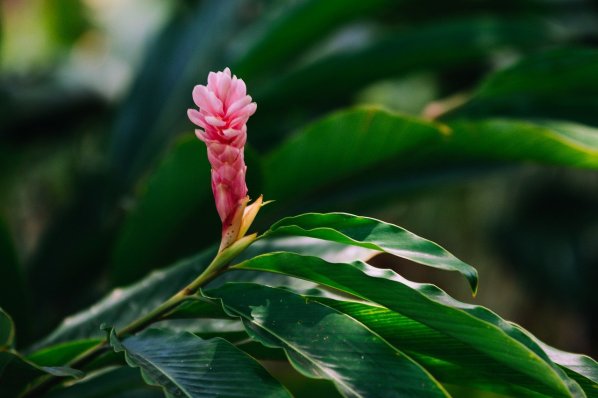
4)GINGER LILY

GINGER LILY Plant & Flower

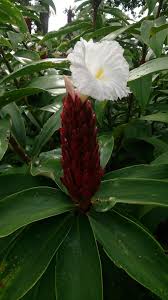
5)CREPE GINGER ( Cheilocostus speciosus is its scientific name & grow in a white crepe paper flowering plant ) 

CREPE GINGER Plant & Flower

6)BUTTERFLY LILY GINGER (  Hedychium coronarium is its botanical name)

BUTTERFLY LILY GINGER Plant & Flower

7)DANCING LILY GINGER ( Scientific name is Globba winitii & have honey sweet smelling unique structural flower)

8)YELLOW GINGER (Its botanical name is  Hedychium flavescens )

YELLOW GINGER

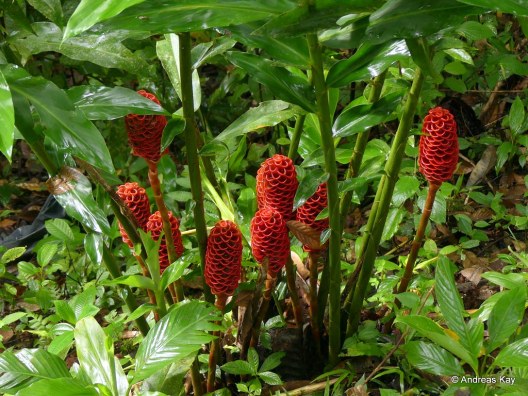
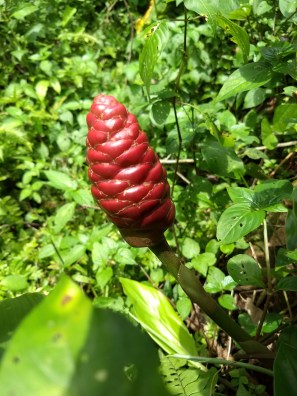
 Apart from this type of these Gingers there are many more  Red Ginger ,Thai Ginger, Japanese Ginger ,Torch Ginger ,Shell Ginger ,Blue Hawaiian Ginger ,Beehive Ginger ,Bitter Ginger , Culinary Ginger ,Spring Ginger , Red Ginger etc.

Beehive Ginger Flowering Plant
Bitter Ginger Flower
Culinary Ginger
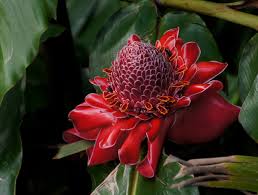
Flower of Torch Ginger Flower
Red Ginger
Ginger as common kitchen ingredient

Nutrients of Ginger :100 gm of ginger contain 

a)17.7 gram carbohydrate 

b) 1.7 gm sugar

c) 2 gram dietary fibre

d) 1.8 gram protein

e) 0.7 gram fat

f)  Some vitamins like – 0.7 mg vitamin B3 ,0.2 mg vitamin B5 ,0.16 mg Vitamin B6 ,5 mg Vitamin C ,0.26 mg Vitamin E                                                                                                                                        g) Some minerals – 16 mg calcium ,43 mg magnesium ,34 mg phosphorus ,415 mg potassium ,13 mg sodium ,0.6 mg iron ,0.2 mg manganese ,0.3 mg zinc .

h)Ginger also contains 79 gm water .

i) Ginger gives us 80 kilo cal energy .

j) Ginger also contains Vitamin B1 ,vitamin B2 ,folate . 

k)Ginger has excellent amount of Gingerol which is a powerful antioxidant

Effectiveness : 

1)Gingerol is a very strong and effective antioxidant ,which is found in Ginger in high amounts . It prevents the free radicals from damaging our body cells  by oxidation .

2)Ginger is very effective for pregnant women in the time of morning sickness . Ginger fights back the symptoms of nuisance .It is also helpful for nuisance created by chemical therapy for digestive nuisance and others .

3)Research in 2019 shows that Ginger has a low amount of fat so it is very good for a weight loss diet . 

4)Ginger is also helpful for osteoarthritis, joint pain and other bone problems . 

5)Ginger is able to act as a very powerful anti diabetic medicine which helps to decrease the amount of blood sugar in blood and protect our heart from any heart problems .

6)Menstrual pain during the monthly cycle is a very common problem for girls . This menstrual cramps is called Dysmenorrhea & Ginger is a very good pain reliever for Dysmenorrhea .

7)Some research  shows that Ginger has anticancer properties. It specially helps to prevent colorectal cancer .

8)Gingerol antioxidant which is present in Ginger , can ward off the infection problems .

9)Ginger is also good for an upset stomach ,indigestion and other digestion problems .

10)Ginger also prevents common cold and other symptoms of cold & cough .

Pain to Gain!

So the very title, and yes I probably do acknowledge how the initial word would appeal your mind. That’s fine. Stress, Failures, Rejections, Frustrations, Agony, Depression, Pessimism, cynicism, Indolence, Apathy, Indifference… How does these terms sounds like?.. Well am not the genius and even the experts couldn’t suggest a permanent lifetime solution to those who face these barriers. All I could do now is to suggest how they would  appear in someone’s lucid appearance, which may worth the time taken for your eyes to blink a second.

How mean it is to conceive that one is the most innocent victim for all the traps! So.. most probably, all of us would have come across this. While reading this, some amidst us may even think that they are the most experienced in all those. That’s not the issue. But the very thing lies in how we receive it. Again; it is an universal topic that it is not possible for me to discuss each corners and peripheral aspects of something called pain.

For instance a little boy gets slapped often by his parents, an innocent teenager is often blamed for something that he/she has not done, one feels sorry for themself in contrast with others state and what if one faces interruptions in all their endeavours.., It is definite to bring them some bitter feel. It’s never gonna be an astonishing fact that these bitterness is most often inflicted by the environment!

It would have caused much pain for the little boy when he realises someone is much happier next to his door, than the literal pain that he had received during his slaps. It would have caused much pain when someone does mistakes without being noticed whilst the innocent is blamed. It would have caused much pain to the one who is pursuing their studies for a long time while the other go for a work; and that other would feel for losing their studies for the sake of doing some job. It would have caused much pain when others get their things done easily, in accordance with time than the moment when that one person had repeatedly faced interruptions.

I couldn’t disagree with the point that we tend to live our lives with interdependence in this society. But it still remains as a wonder, why are we easily carried upon by others, as even the personal emotion is replaced with the very thought of others life. Pain is something which drives us in a good way when it is internalized. One tends to find the solution when he repeatedly sorts out his faults and amends it. The same feel could be disastrous when it is juxtaposed. There is a saying that ‘Everything appears upon our views’ and here, this could be the suitable one here! Such pessimistic thing would lead to an optimistic track when the pain is optimised in a personal manner.

I wouldn’t like to discuss about the gain here as it is a comfort zone for a  many. ‘Bed of thorns proves to be effective than the Bed of roses’ as as the senses in our skin as well as in our mind gets the strengthened stimulus. It really requires some effort to gain any a thing. It may also be success, happiness, cherishments, ecstacy, satisfaction… Both the pain and gain is something that is present in your ‘ain’ (Yourself).

“Turn the pain to gain, but not to disdain thy ain”!

The Missile Man

Introduction

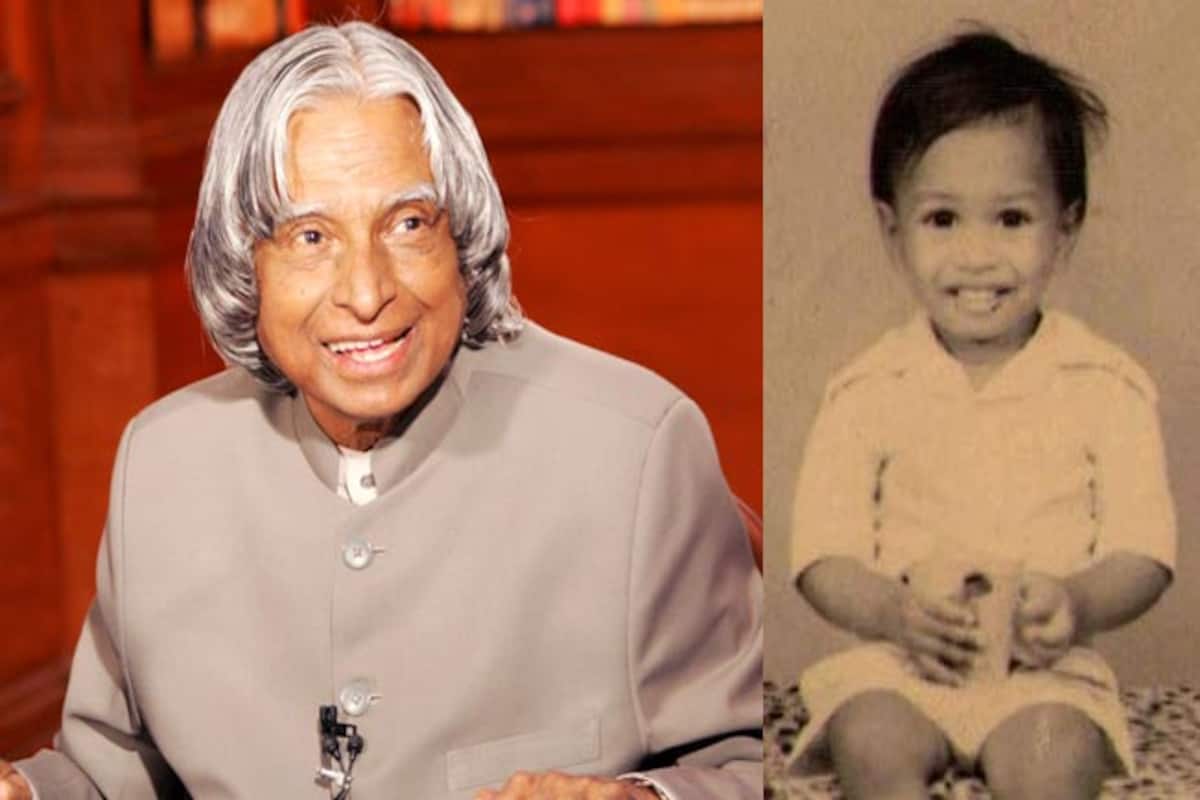
Dr. APJ Abdul Kalam was famously known as the “Missile Man” of India. He was also known for his humility. All the citizens of India are remembering him on his death anniversary on July 27th, when in 2015 he passed away because of a heart attack he suffered in Shillong. He is known to be the people’s President because of his simplicity and humility. He was one of the few Presidents every citizen loved and was fond of. He was the only President of India who did not have a political connection, that is, came from a non-political background. He was the 11th President of India, from 2002 to 2007. This year, July 27th, 2021 is his 6th death anniversary.

About Him

His full name was Avul Pakir Jainulabdeen Abdul Kalam. He was born on 15 October 1931. He was an Indian scientist and politician who played a major role in developing India’s missile and nuclear weapons programs. He was born into a Tamil Muslim family in the pilgrimage center of Rameswaram on Pamban Island, which was then in the Madras Presidency, which now is the State of Tamil Nadu. His father was a boat owner and an imam of their local mosque and his mother was a homemaker. He was the youngest of four brothers and one sister in his family. His ancestors were wealthy Marayakar traders and landowners but the family had lost all fortunes during the poverty-stricken time. Marayakar is a Muslim ethnic found in Tamil Nadu and Sri Lanka who are claimed to be descendants of Arab traders and local women. As a young boy, he sold newspapers to help his family in contributing income.

During his school years, he scored average grades but he was said to be a bright and hardworking student with a desire to learn. He spent a lot of his time studying, especially Mathematics. On completing his education, he went to Saint Joseph’s College, Tiruchirappalli, which was at that time affiliated with the University of Madras. He graduated from there in Physics in 1954. In 1955, he moved to Madras to study aerospace engineering from Madras Institute of Technology. Once while he was working on a senior project, the Dean was dissatisfied because of the lack of progress and he threatened Kalam to either finish the project in three days or get his scholarship revoked. To his surprise, Kalam met the deadline and impressed the Dean. His dream was to become a fighter pilot which he missed by one place.

Career as a Scientist

He had joined the Defense Research and Development Organization (DRDO) in 1958 as a senior scientific assistant. Later on, in 1969, he joined the Indian Space Research Organization (ISRO) where his responsibility was as the project director of the SLV-III, which is known as the first satellite launch vehicle.

He then rejoined DRDO in 1982 as the director. This is when he got the name of the “Missile Man” because of the implementation of the Integrated Guided Missile Development Program. He was then appointed as the senior scientific adviser to India’s defense minister in 1992. He also played an eminent role in the Pokhran-II tests in May 1998.

Awards

He won various awards:

  • Padma Bhushan – 1981
  • Padma Vibhushan – 1990
  • Bharat Ratna – 1997
  • Indira Gandhi Award for National Integration – 1997
  • Veer Savakar Award – 1998
  • SASTRA Ramanujan Prize – 2000
  • Von Braun Award – 2013

Conclusion

We should take a look at his inspiring quotes on this death anniversary and follow the great inspiration that he is to all of us. One of the most important one is “We are all born with a divine fire in us. Our efforts should be to give wings to this fire and fill the world with the glow of its goodness.”

References

Importance and Benefits of Reading Books.

Growing up we all have learned basic skills and out of all the skills, our ability to read is the most significant. Whatever you read, it ends up enlightening you. And when it comes to books, each book that you read is an opportunity to learn something new. By reading you can broaden your vocabulary, improve your writing skills, train your mind, enhance your wellness, lower stress, and most important thing you can discover something new about yourself. 

Why is reading important?

It has been said that a person who can read can educate themselves in any field of life they’d like to. In this modern era, everything is flooding with fresh information. And reading is the best way to clarify and relate to further information. 

Although you can find it easier to watch a Youtube video or listen to a podcast, reading still tastes the cake when it comes to comprehension and enhancing your education. 

What are the benefits of reading books? 

If you are a bookworm, you already know many of the benefits of reading books. And if you are not then you are reading the right article. Mentioned below are some of the benefits of reading books:-

I) Improves Concentration

Reading requires concentration, time, and patience. In simple words, reading forces you to use your brain. According to One World Literacy Foundation, “when you read, you need to reason things out that are unfamiliar to you.”

II)  Broaden Vocabulary 

If you read, you uncover new words, that allow understanding on a greater level. If you read an hour per day, you’ll end up exposing yourself to approx 4 million words in a year. Isn’t it amazing?

III) Reduces Stress

According to a study by Sussex University, reading can reduce stress by 68%. When you read you involve your mind in reading, which takes away your focus from all the worries.  

David Lewis​ (a cognitive neuropsychologist) said, “It doesn’t matter what book you read. By losing yourself in a thoroughly engrossing book you can escape from the worries and stresses of the everyday world and spend a while exploring the domain of the author’s imagination.”

IV) Makes You A Better Communicator

When you learn new vocabulary, you become a far better communicator. With all the new vocabulary, you’ll know which word is right for which context. For example, when you feel bad, it can be anything like you are feeling hungry, you have a fever, you have a headache, etc. But if you say that I am feeling bad then you are not specifying the feelings, which results in another person not understanding what are you going through. In that case, your vocabulary can help, that you learn by reading.

V) It Helps Your Writing

With all the creativity, vocabulary, and communication skills gained from reading, imagine what you can do with your writing skills. By reading other’s work you can experience their way of explaining a feeling or certain situation. Hence, you learn how to use other writers’ experiences to improve yours.

VI) Reading Improves Empathy

Empathy is being able to put yourself in someone’s else shoes. Reading fiction or non-fiction can bring you as close as you’ll ever be in someone”s shoes. Studies have shown that readers have a better sense of empathy. 

There is a saying, “Books are man’s best friend.” I believe every one of us should follow this and start reading. 

The President

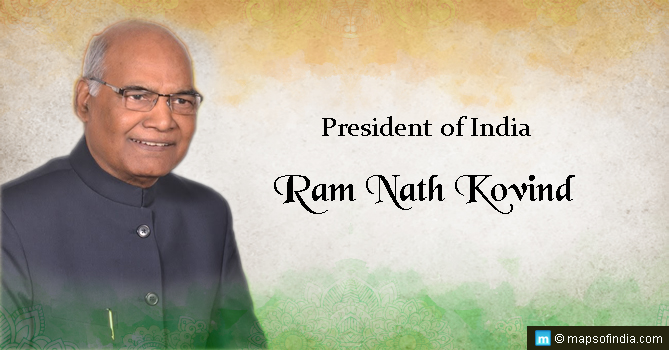
At the head of the Union Executive stands the President of India.

Election of the President of India:- The President of India is elected by indirect election, that is, by an electoral college, by the system of proportional representation using the single transferable vote. The electoral college shall consist of the following:

(a) the elected members of both the House of Parliament;

(b) the elected members of the Legislative Assembly of the state; and the elected members of the Legislative Assembly of the Union Territories [Article 54].

The system of indirect was criticized by some as falling short of the democratic ideal underlying universal franchise, but the indirect election was supported by the framers of the Constitution, on the following grounds-

(i) Direct election by an electorate of some 510 million people would mean an enormous loss of time, energy, and money.

(ii) Under the system of responsible Government introduced by the Constitution, real power would vest in the ministry; so, it would be bizarre to elect the President directly by the people without giving them real power.

Qualification of the President:- In order to be qualified as President of india, one must –

(a) be a citizen of India;

(b) has completed the age of 35 years;

(c) be qualified for election as a member of the House of the People; and

(d) must not hold any office of profit under the Government of India or the Government of any of the state or any local or other authority subject to the control of any of the said Government [Article 58].

Term of Office of President:- The President holds his office for five years from the date of the appointment in the office, and he is eligible for re-election [Article 56-57].

Appointment of the President:- The President is appointed by the Prime Minister into his office.

Termination:- The President’s office may terminate within the term of five years in either of the two ways-

(a) by written resignation in his handwriting, addressed to the Vice President of India.

(b) by removal for the violation of the Constitution [Article 61(1)].

Procedure for the impeachment of the President:- An impeachment is a quasi-judicial procedure in Parliament. Any of the House may charge for the violation of the Constitution, before the other, and shall either investigate the charges by themselves or may stimulate once to be investigated. But the charge cannot be preferable unless-

(a) a resolution passed by the any House of the Parliament with not less than 1/4 of the total members of that House within 14 days of notice.

(b) the resolution was then passed by a majority of not less than 2/3 of the members of both the House of the Parliament.

Employments Allowances of the President:- The President shall be entitled without payment of rent to the use of his official residence and shall also be entitled to such emoluments, allowances, and privileges as may be determined by the Parliament. The emoluments and allowances of the President cannot be diminished till he holds his office [Article 54(4)].

Difference between Robbery and Dacoity

Although they may appear similar in common usage, they are two distinct crimes under criminal law. What exactly is the legal meaning of robbery and dacoity? What are the requirements for a criminal act to be classified as a robbery or a dacoity? What is the distinction between robbery and dacoity? What are the punishments for these crimes under the Indian Penal Code? When you read the title, these thoughts may arise. This blog will attempt to answer these questions as thoroughly as possible.

Robbery

Robbery is a particular and intensified kind of theft or extortion that implies felonious stealing from the person of another or in his presence against his will, by violence or putting him in terror, and it becomes Dacoity when five or more people co-jointly do it.

When theft becomes robbery— Theft is “robbery” if, in order to commit the theft, or in committing the theft, or in carrying away or attempting to carry away property obtained by the theft, the offender voluntarily causes or attempts to cause death, hurt, or wrongful restraint to any person, or fear of instant death, hurt, or wrongful restraint.

When extortion becomes robbery.— Extortion is “robbery” if the offender is in the presence of the person put in fear at the time of committing the extortion, and commits the extortion by putting that person in fear of instant death, instant hurt, or instant wrongful restraint to that person or to some other person, and induces the person so put in fear then and there to deliver up the thing extorted.

Illustrations:-

(a) A restrains Z and steals Z’s money and diamonds from Z’s clothing without Z’s consent. In this case, A has committed theft and, in order to perpetrate that theft, has voluntarily restrained Z. As a result, A has committed robbery.

(b) A encounters Z on the high roads, brandishes a gun, and demands Z’s pocketbook. As a result, Z gives over his purse. Here, A has extorted the purse from Z by placing him in fear of immediate harm and conducting the extortion in his presence. As a result, A has committed robbery.

(c) On the highway, A encounters Z and Z’s child. A seizes the child and threatens to throw it down a cliff unless Z returns his purse. As a result, Z hands up his purse. Here, A has extorted the money from Z by making Z fearful of inflicting immediate harm to the kid who is present. As a result, A has committed robbery on Z.

Dacoity

When five or more people co-jointly commit or attempt to commit a robbery, or when the total number of people co-jointly committed or attempting to commit a robbery, as well as those present and aiding such commission or attempt, totals five or more, each person committing, attempting, or aiding is said to commit Dacoity.

In the case of Poolan Devi vs. State of Madhya Pradesh, Smt. Phoolan Devi has been in jail since February 12, 1983, when she claims to have willingly surrendered in the State of Madhya Pradesh despite having a criminal record. On this premise, it is argued that the petitioner’s custody for eleven years is sufficient to fulfil the criteria, and that all prosecutions pending against her in Uttar Pradesh courts should be dismissed. According to the petitioner, she is facing around 55 criminal trials in Uttar Pradesh courts for allegedly committing horrific crimes such as dacoity and murder.

Points of Difference between Robbery and Dacoity 

Robbery and Dacoity can be differentiated on the basis of various grounds:

Definition:

Robbery has been defined in Section 390 of IPC and Dacoity has been defined in Section 391 of IPC.

Essential Ingredients:

Essential ingredients of the offence of Robbery are as follows:

  • Theft as described in Section 378.
  • The offender caused or tried to cause the following to certain people: fear of death, bodily harm, or wrongful restraint.
  • Fear of sudden death, instant harm, or instant unlawful restraint.
  • The offender did not do such an act.
  • In order to commit theft.
  • While committing the theft.
  • In taking or attempting to take away the goods.

Essential ingredients of the offence of Dacoity are as follow:-

  • The accused commits or attempts robbery;
  • The number of people committing or attempting to commit robbery, as well as those present and assisting, must not be less than five.
  • All of these people should work together.

Note: The term “conjointly” refers to a coordinated or concerted action by five or more people in the act of committing the offence. In other words, five or more people must be involved in the commission of the crime and must commit or attempt to commit robbery.

Number Of Persons:

In Robbery the number of persons are less than five. It may be committed by a single person.

In Dacoity, the number of persons are five or more.

Seriousness:

Robbery is less serious in nature.

Dacoity is more serious offence than robbery because of the terror caused by the presence number of offenders.

Position of Abettors:

In Robbery, the abettors are liable independently.

In Dacoity abettors who are present and aiding when the crime is committed are counted in the number.

Jurisdiction of Court

In case of robbery, the offence is cognizable, non-bailable, non-compoundable and triable by Magistrate of the first class.

In case of dacoity the offence is cognizable, non-bailable, non-compoundable and triable by Court of Session.

Punishment:

Whoever commits robbery shall be punished with rigorous imprisonment for a term which shall not be less than three years, nor more than ten years and shall also be liable to fine.

Whoever commits dacoity shall be punished with imprisonment for life, or with rigorous impris­onment for a term which may extend to ten years, and shall also be liable to fine.

In the case of Ashfaq vs State, the Supreme Court ruled that weapon with which the offender is armed is a deadly weapon within the meaning of this section, if it is within the vision of the victim and is capable of creating terror in the mind of victim. It is also sufficient to satisfy the word ‘uses’ for the purpose of section 397 IPC.

Position In Highway:

If robbery is committed on the highway, the imprisonment may be extended to fourteen years.

The fact that the Dacoity is committed on the highway does not change the position or punishment. 

Conclusion

To summarise, the concept of robbery requires an accused to have the purpose to deprive another person of property from the start, and to that goal, either harm is caused or a person is placed. Under improper constraint, or it must be proven that the victim was put in immediate danger of death, bodily harm, or wrongful detention when the same conduct is committed by five or more severe offenders.


Drugs effect on Human body

Methodology

(i) Introduction

(ii) Physical harms of drugs on body

(iii) Addiction of drugs

(iv) Conclusion

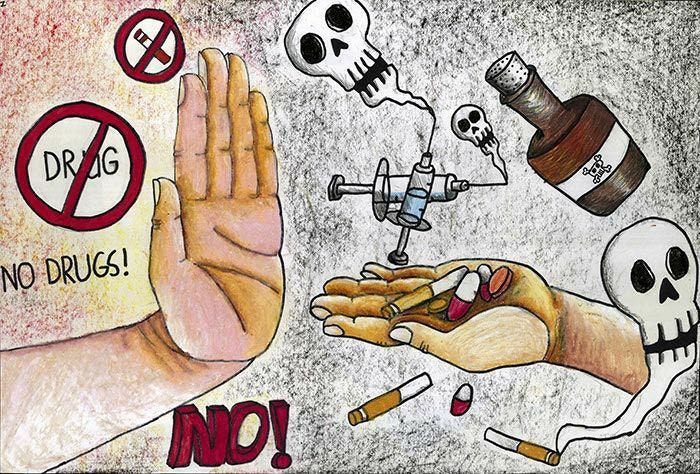
(i) Introduction– Different substance affects the body in different ways, but all psychoactive drugs have chemical effects on the human body as well. The short-term effects that occur in drug users depend on the quantity they use and also whether it is mixed with any other mind-altering substances. Drugs have serious effects on the human body. It affects the thinking, mood, energy level, and also behavior of the person and sometimes also makes the human unconscious for several days and even further.

(ii) Physical harm from drug use:- Durg use can lead to risky and or out-of-character behavior. When affected by drug:

• One is more likely to have an accident wherever you are.

• One can commit sexual assault or other violent act.

• One may find unable to sleep, think, remember and solve the problem.

Drugs can also result in long-term health problems that include:

• harm to organs and systems of our body such as throat, stomach, lungs, liver, heart, brain, pancreas, and nervous system, etc.

• May cause cancer or other serious illness.

(iii) Addiction of drugs- All drugs cocaine, marijuana affects the brain. The brain reward circuit is a part of the limbic system. Drugs target this system causing a large amount of dopamine release, this flood of dopamine cause a high intoxication in the brain again and again and also from time to time. Although initial drug use may not be voluntary drugs. But continuous intoxication of the drugs makes the human body addicted to them which may affect the health of that particular person badly. And the addition can also become a cause of murder, robbery cases, etc.

Different drugs, different effects:- The three main types are depressants, hallucinogens, and stimulants.

Depressants- It slowdowns or depress the functions of the nervous system. They slow down the massage going to and from the brain. In small quantities, depressants can cause a feel relaxed and less inhibited. In large quantities, it can cause vomiting, unconsciousness, or even death.

hallucinogens- Distort one’s sense of reality. You can see or feel or hear things that are not real, or see things in a distorted way. Other effects include emotional and psychological euphoria, panic, upset, or nausea. Keta mine, LSD, PCP, magic mushrooms, and cannabis are some examples of hallucinogens.

Stimulants- Stimulate the central nervous system. They speed up massaging to and from the brain, which makes one feel more alter and confident. This can cause an increase to heart rate, blood pressure, and body temperature.

(iv) Conclusion:- Our body executes a natural cycle. And if we disturb this cycle, then it abruptly affects the working of the body. Taking drugs may sound cool for a while, but can cause serious illness for a lifetime. It can also lead to the death of an individual. Resisting these drugs at parties and celebrations is warned. Especially youth shouldn’t engage themselves in such activities which lead to the massive destruction of the one’s precious life.

Photography – The Poetry of Images

Photography is nothing less than an art form of absolute purity. Silent poetry with the moments
captured in an image is photography. The most memorable and beautiful way to remember the
special things in life with full clarity. Photos are a way of preserving the best memories and
moments for eternity. Photos are the permanent reminder of the past. Never get forgotten. They
will always be alive. The past, the memories, everything is hidden in the photos. Hidden but so
transparent in emotions. All the feelings just in a single place. They get old but are
unforgettable. But on the bright side, photos are a way of expressing your emotions in a
completely different and innovative way.

Photo by Kaique Rocha on Pexels.com

Photography is not just work, it is a passion filled with excitement and hope. It is a specific but
not so specific piece of art. It can be done in various forms with no boundaries. There’s nothing
to dislike in photography. It’s just another way to showcase talent of immense beauty.
Everything, every moment can be captured and kept for the rest of your life. Photos have the
finest texture and the most amazing depiction of a thing. It feels like it’s real.
Photographers have the ability and power to make a photo so great that it magnifies the
moment. They are able to drastically change the outcome of an image by using various
equipment for high quality and definition. Every small detail is shown through photos. It gives
pleasure to experience and relive the moments in life through photos.

Photos are not just a piece of paper or a file occupying a little space in your mobile or camera roll. They are an
explicit version of your life in brief. The small moments to the big memories, all are stored in a
single place for you to look after decades and enjoy living in the moment again. Photography depicts the vulnerability of the photographers through their art. Photographers use photography as a medium for creative expressions. They pour their heart out in the photos. They are artists of very fine quality and beauty in its purest form. The beauty and creativity can not be ignored by any living heart in this world. Embrace moments and capture them in real time
with photography.

Why physical activity is important in this pandemic

Pandemic has changed our lifestyles , made us stuck in our phones & laptops , & left us with no physical activity .

The COVID-19 pandemic is an unprecedented time all across the world. Worldwide, extensive social distancing policies are put into place, restricting people’s daily activities and worldwide pleas from governments asking people to stay safe and stay at home. This of course means that most people will spend much of their time (if not all) at home.

These social distancing measures mean that people have far fewer opportunities to be physically active, especially if activities such as walking or cycling as transportation, or taking part in a leisurely activity (e.g. jogging, walking the dog, going to the gym) are being restricted. Furthermore, these drastic measures also make it so much easier to be sedentary at home for long periods of time. The impact of this physical inactivity may very likely be seen in many areas such as health and social care and the mental well-being of people all across the globe Though this social distancing is the need of now , but physical activities are also the need of now.

In light of the current situation worldwide, certain benefits of physical activity may be specifically pertinent to the COVID-19 Pandemic. These benefits are:

  • Physical activity enhances immune function and reduces inflammation therefore it could reduce the severity of infections which will automatically leads to good health.
  • Physical activity improves common chronic conditions that increase the risk for severe COVID-19 (i.e. Cardiovascular Disease, Diabetes) , but taking these physical activities in your daily lives , risk of death due to corona virus will reduce .
  • Physical activity is a great stress management tool by reducing symptoms of anxiety and depression.
  • Physical activity helps bring cortisol levels in balance. Stress and distress (such as during a pandemic) creates an imbalance in cortisol levels and this negatively influences immune function and inflammation.
  • Instead of always keeping an eye on your phone & laptops keeping an eye on your physical activities will leads to rest for your eyes, neck, & back.

We all know that this pandemic will stay with us for a long go , even if you are save with no corona virus symptoms , poor physical health will lead you to major heath issues . Instead of surrounding yourself with heath problems , indulge yourself into physical exercise, like yoga , meditation , exercise ,etc. ” STAK HOME , STAY SAFE , INDULGE YOUR SELF WITH INDOOR PHYSICAL ACTIVITES & HENCE SATY FIT”.

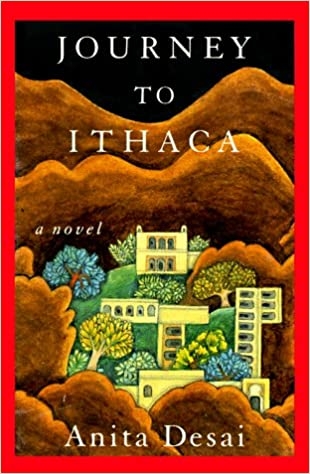
Journey to Ithica

How the character of 'the Mother' was dubious.

Introduction:
The novel Journey to Ithica is a literary genre from the second half of the 19th century. Novel as a literary genre rose in Spain in the 17th century, France and Europe in the 18th century and America in the first half of the 19th century. Literary novel is a criticism of life and gives an authentic picture of life. It’s only character based and the central character revolves around the growth and development of that character.

The main theme is how Sophie wants to prove that what the Mother is seen for is fake, and she wants to expose her true self. Things weren’t exactly harmonic between Sophie and her husband Matteo, Matteo was ill from hepatitis (dangerous form of jaundice). He finds the Mother/Guru and starts to live in her ashram and blindly believes everything be sees. On the other hand, Sofie, the more mature one, realized that there is more to what meets the eye and tries to uncover the truth as only then can Matteo be treated in the hospital. In this article, I’ll be expanding my thoughts on how the character of the Mother is dubious.

About the author:
Anita Desai was born on June 24, 1973 in Missouri, India. She is an English language Indian novelist who excels in evoking character and mood through visual images. Most of her novels reflect the tragic view of Life. Journey to Ithica was first published in 1995.

Journey to Ithica describes a pilgrimage to India by a young couple, Matteo and Sophie and the life of a mysterious woman, ‘the Mother’, who runs the ashram where they live. The ashram is located at the foothills of the Himalayas.

~ The character of ‘the Mother’ in the novel is portrayed as very suspicious or dubious. Even though Matteo completely trusted and devoted himself to her, Sophie was still unsure about her and the fact that she went on a whole journey just to learn more about her or learn about her spiritual journey does raise a lot of suspicion.

~ We see how Matteo was so ill, he still chose to stay with ‘the Mother’ and learn more about scriptures rather than go home to his kids and wife. This shows how devoted he was to ‘the Mother’. It is also suspicious how every time the mother falls, all her devotees fall ill too. It is very a natural for something like that to happen.

~ Even though, in the story she is shown as someone who might be doing better than other gurus, the readers do not find it amusing or any different as she sits among her devotees and not at the top. This raises suspicion of her being a Guru.

~ The novel tells us how ‘the Mother’ has childhood roots from Egypt but the doubtful part here is that she possesses the Indian English accent of dragging the letters.

~ It is still a question as to why she travelled to India and what was the reason that she decided to do things differently compared to other cult leaders. All of her actions points towards the fact that she has not yet attained enlightenment or even any kind of divinity. Her actions are childish and immature which makes us question if she is even worthy of the title ‘Guru’.
~ She also does not treat her devotees equally. She mainly focuses on the new members and ignores the old members which is suspicious.

Conclusion:
Henceforth, all her actions prove that she is a very doubtful and dubious person.

https://www.boloji.com/articles/2371/journey-to-ithaca

THE BIGGER THE AGE DIFFERENCE, THE SHORTER THE MARRIAGE

There are numerous factors which can affect a relationship. Some of them are income levels, age difference or commitment etc. With the help of different researches and studies, it was concluded that age difference can also emerge as one of the factors for divorce and for creating odds in an relationship. Studies have concluded that, the greater the age difference between couples, the greater is the chance of ending a marriage and having divorce. Different studies were conducted for understanding the situation of marriage in different age intervals . According to different studies, couples having one or less than one year age difference have only 3% chances of getting divorced. If there is a difference of 5 years then the risk increases to 18%. And if the age difference is 10 years then the risk factor is 39%. This rate keeps on increasing with the increasing age gap. Couples who have less age gap have lesser chances of getting divorced and ending the marriage than those with someone who is very young or old as compared to the other. Individuals who are close in age belong to the same generation and have similar mindsets and outlook towards society and life. This provides a strong foundation to the relationship. These people have similar cultural references and taste, life experiences and will be achieving milestones in the same time. According to different findings, the chances of ending a marriage is highly reduced if marriage is done with the person having same age.

SMALL GAPS : Researchers have found that the couples having small age gaps have less chances of getting divorced. That’s not to say those marriages will not end in divorce. They certainly could. But the age difference would not be the reason for the divorce.

LARGE GAPS :The problem arises when the age difference is higher and the bigger the gap there is between people’s age, the more likely they are to end in divorce.

Changes happen slowly. The marriage may feel to be successful in the starting but the feeling change with time if there are unsuitable conditions. And in case of large age difference, it is seen that the people of more age feel to be more satisfied than the younger one and this eventually pushes the couple to divorce. People find themselves in different places and phases of and in life. If one thinks about his career or good health while the other will be focusing on retirement or declining health due to old ages. Despite the age differences and perspectives, people also have similar feelings and must have felt the happiness but in the similar way there will be numerous differences also. While examining or understanding any relationship it is necessary to understand both the partners. Relative ages of spouses affect if the husbands will leave their wives or the wives leave the husband and mostly it is found that the older spouses are left by the younger. Hence, spouses start to look less appealing and the thinking styles differs more and more as he or she ages, and it is absolute age that is driving divorce.

Sunsets

The only reason I believe in happy endings

Like SRK said if the ending is not happy ending then, “Picture abhi baki hai mere dost”. When the sky is in it’s beautiful colours and the sun is going down, may be they are trying to say us that look, “the endings can be beautiful too”, may be they are giving us hope, hope for better and beautiful future, may be, they are trying to say us that, let go what happened today, just forgot what happened in the past by looking at this beautiful sunset skies and look forward to every sunrise, it’s your golden opportunity to “RESET”.

It’s the nature of life that things don’t stay the same but sunsets are the proof that, they can end beautifully, so don’t give up, just keep going no matter what happens the end gonna be beautiful. After entire day work just you, a cup of coffee and beautiful sunset with your favourite music will help you to forgot about all your worries and you’ll just want to live in that moment forever when the sky is in it’s beautiful colours. The world is fighting against the virus and we are too young to dealing with all this, so much has happened, so much is happening, at some point in our life we all feel depressed, sad and lonely, sometimes we just want to give up and it’s a life but, DON’T, comfort yourself by looking at these beautiful sunset skies.

Some people may sound like that, you need to do something special in life, and that’s not true. They will judge you at every point in your life but, don’t think, don’t put so much thoughts into what you’re doing and what others are saying or what others will say, you just have to keep going. Start doing things for yourself let them call you selfish sometimes it’s really okay to be selfish.

Also always remember, you are just a little bit doubtful of your potential and unsure of your worth but you are as amazing as these sunset skies.

How to build a good Team ?

A team is a group of people working together towards a common goal. Creating an opportunity for people to come together to share concerns, ideas, experiences, and to begin to work together to solve mutual problems and achieve common goals.

Team Development Life Cycle

  1. Forming : In this stage high dependence on leader for guidance and direction. Little agreement on team. Individual roles and responsibilities are unclear. Leader must be prepared to answer lots of questions about the team’s purpose, objective and external relationships.
  2. Storming : In this stage decisions don’t come easily within group. Team members compete for position Clarity of purpose increases but plenty of uncertainties exist. Compromises may be required to enable progress.
  3. Norming : In this stage agreement and consensus forms among team. Roles and responsibilities are clear and accepted. Big decisions are made by group agreement. Commitment and unity is strong. The team discusses and develops its processes and working style. There is general respect for the leader and some of leadership is shared.
  4. Performing : The team clearly knows “why it is doing ?” and “what it is doing ?” . The team has a shared vision. There is a focus on over-achieving goals. Disagreements occur but now they are resolved within the team positively. The team is able to work towards achieving the goal. Team members look after each other. The team does not need to be instructed or assisted.
  5. Adjourning : Adjourning, is the break-up of the group, hopefully when their task is completed successfully, their purpose fulfilled; everyone can move on to new things, feeling good about what’s been achieved. From an organizational perspective, recognition of and sensitivity to people’s vulnerabilities during this fifth stage is helpful. Feelings of insecurity would be natural

Characteristics of a Good Team

  • Everyone participates actively and positively.
  • Team goals are understood by everyone.
  • Everyone takes initiative to get things done.
  • Each teammate trusts the judgment of the others.
  • The team is willing to take risks.
  • Everyone is supportive of the project and of others.
  • Team goals are given realistic time frames.
  • Everyone is focused on the ultimate goal of the project.

Common Team Problems

  • Overbearing or dominating participants
  • Unwilling to become involved
  • Unquestioned acceptance of opinions as facts
  • Rush to accomplishment
  • Quarreling members
  • Disconnected/lack of contact between members

Groups members should avoid the following behaviors –

  • Being overly aggressive toward other members.
  • Withdrawing and refusing to cooperate with others.
  • Horsing around when there is work to be done.
  • Using the group as a forum for self-confession.
  • Talking too much about irrelevant matters.
  • Trying to compete for attention and recognition

Poverty in India

Poverty one of the major problem in India. India is the second most populous country after China with 1.2 billion people and it is the seventh largest country in the world in terms of area.

Around ⅔rd of people in India live in poverty in which 68.9 % of Indian population lives on less than 2 dollar a day and over 30% even have less than 1.25 dollar per day. And thus they are considered extremely poor.

India subcontinent is one of the poorest country in the world.

The most poor section of our country is children and Womens. They are considered as the weakest member of Indian society and that’s why they suffer the most.

In India womens are not considered as the strongest member of the society because of a patriarchy.

Education and job for womens are not considered important in our society.

By preventing education for Childrens and womens leads to the poverty and poverty is also preventing children from getting an education

Poverty in India impacts children and families in a variety of different ways:-

  • High infant mortality
  • Child labour
  • Malnutrition
  • Lack of education
  • Child marriage

High infant mortality rate

  • India is one of the country with highest child mortality rate.
  • Around 1.4 million children die each year in India their fifth birthday.
  • Major causes of death are due to pneumonia, malaria, diarrhoeal diseases as well as chronic Malnutrition.

Child labour

  • Child labour for children under the age of 14 in India is prohibited by law.
  • According to official figures 12.5 nilganj children between the age of 5 to 14 are working.
  • It is believed that Indian children’s contribute to the living wood of their poor family.
  • Children’s work in the field in factories, in quarries, private households .

Malnutrition

  • India is one of the world’s top countries when it comes to Malnutrition.
  • 7.8 infants were found to have birth weight less than 2.5Kg
  • More than 200 million people don’t have sufficient access food.

Lack of Education

  • Most of childrens have no access to education in India.
  • Girls are excluded from the school in higher numbers with respect to boys.
  • We should have to treat them equally but it is believed to be inferior on lower caste.
  • Without education, chances of finding living from employment in India is impossible.
  • If educated peoples start teaching childrens at free of cost then it also be very useful in making a better world.
  • Like If 30 college students are studying in 1 course and they start teaching poor childrens only 1 day per month then the childrens study 1 month at free of costs.
  • We also have to put some efforts in making better world not for others, but for ourselves as well.

Child marriage

  • As we know Child marriage is crime according to Child marriage Restraint Act, 1929.
  • But it is still widespread in many regions of India.
  • Poverty is also the main reason behind this.

Overpopulation

  • Overpopulation leads to high competition in every aspects of life.
  • We see lack of job opportunities, education.
  • Food production is not as much to fulfill the need of this higher population.
  • Due to overpopulation, and not doing work after having such high population in India is main reason behind poverty.
  • If we utilise this overpopulation as the opportunity to increase country’s financial condition then it actually going to worth it.