Jobs For People Who Don't Know What To Do.

First of all you need to evaluate what you love and what you want to do. Figure out your skills and interests and what you are good at. If you are not able to identify yourself then ask your friend or peers to help you out. Evaluating your past can also help you recall your critical moments you might have overlooked that would have made it clear you were not happy with your existing work. Also get in touch with personalities of the field in which you are interested and gain as much information as you can regarding demands from the job, their professional past and aspirations. Before actually pursuing that career you must attend workshops, take online classes, Read books and watch YouTube tutorials so that you may find out that you’re really into that career or not. Consider in which work environment you would like to work and which type of colleagues you want around, are you capable of cooperating with those people or not.
And in the end think, what is that one thing that you will love doing and willing to do it for free and then start connecting it to paid possibilities in the same field. A job must be something which you love to do and will also provide a great pay in return and let you lead a prestigious life. Below are some suggestions you are looking for.

First Step

There are times when one is not able to pursue career which they always wished to do. There could be many reasons behind this. Not getting successful, family issues, financial problem or any such circumstances. One should always be passionate about their career, as quoted by Australian leadership coach Simon Reynolds in his book Why People Fail, “We need to understand failure if we are ever to master success”. Sometimes youngsters get demotivated and don’t find future anymore in the career they wanted and wish to switch their career but have no clue about what to pursue next. Worry not! We are here to suggest you some amazing jobs that could do wonders in your career life. So let’s begin.

1) Medical and Health Services Manager

While they work in the Healthcare sector, Medical and Health Services managers don’t provide clinical care. Instead, they manage how Healthcare businesses are run. Their work is to prepare budgets, oversea stuffing decisions and develop strategic goals for a hospital clinic or a similar organisations they are also known as executives or administrators.
Medical and Health Services managers need a bachelor’s degree and largest organisations may prefer to hire someone with a masters degree. In some cases managers may begin in a clinical role such as nursing and later be promoted to an administrative position

2) Information Security Analyst
Median Salary : $99,730
Expected Job growth by 2029 : 31.2%

The technology industry is another sector that has many jobs with unfamiliar titles. They are specialised workers who design and implement security measures for computer systems and networks. They research the latest security technology and educate system users on security protocols.
Information Security analyst often have a bachelor’s degree in computer science or a similar field. Some companies may prefer to hire analysts who have a master’s degree.

3) Operations Research Analyst
Median Salary : $84,810
Expected Job growth by 2029 : 24.8%

Operations research analysts have a straightforward job. They are given a problem, such as how to reduce costs or improve efficiency and ask to solve it to do so they may need to conduct extensive research, use some software and run hypothetical models using a variety of scenarios. It can be a challenging job, and operations research analyst are paid well for their problem solving ability.
Workers in this occupation are expected to have at least a bachelor’s degree in a technical field such as engineering, analytics, computer science or mathematics. A few schools have dedicated degrees and operations research.

4) Computer System Analyst
Median Salary : $90,920
Expected Job Growth by 2029 : 7.4%

They are also known as System architects, computer systems analysts are responsible for ensuring a business or organisation’s technology is appropriate for its needs. They identify Technology requirements, configure Software and Hardware and make recommendations to help systems operate more efficiently and effectively.
A bachelor’s degree in a computer related field is the standard education for computer systems analyst. However, some employees may hire analyst with a variety of educational backgrounds.

5) Logistician
Median salary : $74,750
Expected Job Growth by 2029 : 4.4%

These professionals are experts in supply chains. In other words they are the people who make sure products move smoothly from suppliers to consumers. They can oversee all aspects of acquiring product materials, storing inventory and transporting it to buyers. Some logisticians may be responsible for moving people as well, such as military personnel.
Some people may become logisticians through work experience or by earning an associate degree. However, a bachelor’s degree is a more common entry point into this occupation.

6) Environmental science and protection technician
Median salary : $46,540
Expected Job Growth by 2029 : 8.4%

Environmental science and protection technicians may be employed by consulting firms, the government or testing laboratories. Technicians may collect air, soil and water samples for analysis and present their findings to verify a site’s compliance with environmental regulations.
To land one of these interesting jobs, workers typically need an associate degree or two years of post Secondary education. Majors in the field include environmental science environmental health and the public health.

7) Construction Managers
Medium annual pay : $93,370
Projected Job growth through 2026 : 11%
Also called general contractors or product managers these workers co-ordinate and supervise a wide variety of building projects from start to finish. the prepare cost estimates budgets and work time tables for the project collaborate with Architects engineers and other construction specialist select subcontractors and co-ordinate their activities in sure compliance with legal regulations and safety standards.
You can enter this occupation in a variety of ways but it is becoming increasingly important for construction managers to have a bachelor’s degree in construction science, construction management, architecture or engineering as construction processes become more Complex and employers plays greater importance on specialised education.

8) Detectives and criminal investigators
Median annual wage : $79.970
Projected job growth through 2026 : 5%

These types of law enforcement of officers collect evidence and gather facts for criminal cases. They conduct interviews, examine records, observe the activities of suspects and participate in raids and arrests. They typically specialize in one type of crime such as homicide or fraud and work on a case until an arrest and trial are completed or the cases is dropped.
To become a detective you will need at least a high school diploma, although many federal agencies and some police departments require collage coursework or a college degree.

9) Elevator installers and repairs
Median annual wage : $79,780
Projected job growth through 2026 : 12%
These workers install, fix and maintain elevators and escalators moving walkways, chairlift and other lift. Elevator repairers typically earn a little more as their job requires a greater knowledge of Electronics, hydraulics and electricity than do installers, since a large part of maintenance and repair work is troubleshooting.
Becoming an elevator installer or repairer starts with the four year apprenticeship program sponsored by union, industry association or individual contractor. To enter such a program, you will need a high school diploma, Even after the program, on-going training is required and 35 states, currently require an installer or repairer to be licensed.

10) First line supervisors of fire fighters
Median annual wage : $76,330
Projected job growth through 2026 : 7%

As the name suggests, these fire fighters are responsible for supervising and coordinating the actions of other fire fighters engaged in battling blazes for those working on the prevention measures. They may also need to oversee rescue operations. Enforcing correct departmental procedures fall to them as well.
To take this rank in a fire house, workers typically have attended some college but no degree is required and have done a fair bit of on-the-job training.

A LIST TO PREPARE

You must also know your skills and strengths, and not just the technical ones for that you must make a list as following:
•Great at leading others
•Organized
•Hard working
•Great at building new relationships
•Quick learner
•Excellent at multitasking
•Proficient at Excel
•Strong writing skills
•Public speaking
•Hard-working

Separating your career path from academics and identifying your key skills and positive past experiences will help you in exploring companies and reading through job descriptions. You might find yourself considering a role you did not even realise you were qualified for!

All the best for achieving great laurels in your near future.

Facts about Yagnaseni- Draupadi

Draupadi’s birth

Draupadi was the daughter of King Drupada of Panchala. Draupadi was an unwanted child born to him. She was not born from her mother’s womb. Instead, it is said that Draupadi was born out of revenge as an adult. King Drupada was defeated by the Pandava prince Arjuna on behalf of Drona, who then took half of his kingdom. By burning the fire of revenge, king Draupada performed tapas followed by a Yajna to obtain a boy child as a means of blessing who can take revenge from Guru Drona. Draupadi appeared as a beautiful dark-skinned young woman from the sacrificial fire after her sibling Dhrishtadyumna.

Various names of Draupadi

Draupadi is one of the leading characters of Mahabharata. Draupadi is known by several names and each name defines her different qualities.

  • Drupadi – daughter of king Drupad
  • Panchali – Princess of the kingdom of Panchala
  • Parshati – Granddaughter of Prishata
  • Yagnaseni – Born from the sacrificial fire
  • Sairandhri – An expert maid
  • Nityayuvani – One who remains young forever and never becomes old.
  • Malini – One who makes garlands.
  • Krishnaa – Represent for her dark complexion and pure skin, radiating purity, honor, and principality.

Draupadi condition for Pandavas

Draupadi agreed to become the wife of five Pandavas on one condition, i.e., she would never share her household with any other women, which means the Pandavas had no right to bring their other wives to Indraprastha.

Draupadi cursed the Dogs

Draupadi mentioned a condition in front of Pandavas that only one brother was allowed to enter her chamber at a time. The Pandava who will enter her chamber will keep his shoes outside the chamber. The one who will violate this condition will be sent to long-term exile.

But one day, when Yudhisthar was in her chamber, the dog stole his shoes. Unaware of the fact Arjun entered the chamber of Draupadi seeing no shoes outside and saw his brother Yudhisthir with Draupadi copulating. Arjun was sent to exile as per the condition of Draupadi. Embarrassed Draupadi cursed dogs by saying: “All the world will see you copulate in public, stripped of all shame.”

Incarnation of Kali

There is a common belief in South India that Draupadi was also an incarnation of Maha Kali. She was born to assist Lord Krishna to destroy all the arrogant Kings. That is why they are considered brothers and sisters although Draupadi was born from fire.

Avatars of Draupadi

As per Narada Purana and Vayu Purana, she is the combined avatar of;

Goddess Shyamala (wife of Dharma)

Bharati (wife of Vayu)

Shachi (wife of Indra)

Usha (wife of Ashwin)

Parvati (wife of Shiva)

Draupadi blessed to be a virgin

Draupadi is one of Panchakanyas including- Sita( Kunti), Ahalya, Draupadi, Tara, and Mandodari , known as five virgins. She used to walk through fire to regain her virginity and purity before she moved to the next Husband.  Such rules were never perceived before this. Pandavas have other wives, but these wives used to stay with their parents and they used to travel to them to visit their wives in four years.

History of Tea in India

Though the Camellia synesis is also native to India, and grew in the wild long before its actual value was understood, it is thought that tea was carried to India by silk caravans travelling from China to Europe centuries ago.

Native Americans ate the leaves occasionally, but they were largely employed for their medicinal powers.

Photo by Lisa on Pexels.com

It took a long time for it to evolve into what is currently known as chai, a flavorful black tea sweetened with sugar and milk, along with spices like cardamom and ginger, and used in cooking, vegetable dishes, and soup.

Tea was initially introduced to Indians by the British and is now an integral component of daily life. Tea originated in India thanks to the British, who sought to break China’s tea monopoly after discovering that Indian soil was ideal for growing these plants.

The presence of native flora indicated that the soil was suitable for transplanting Chinese seedlings, and the Assam valley and Darjeeling’s towering mountains were chosen as early tea planting sites.

Tea manufacturing in India began to blossom after 14 years of fruitless attempts, allowing the manufacture of a tea that was equivalent to, if not better than, its Chinese counterpart.

The native tea species

When Scotsman Robert Bruce identified a native type of Camellia sinensis plant in Assam in 1823, commercial tea plantations were first created under British rule.

According to legend, a local merchant named Maniram Dewan brought Bruce to the Singpho people, who drank a tea-like beverage. The Singphos gathered fragile leaves from a wild plant and dried them in the sun.

It’s worth noting that, at the time these changes were taking shape, the East India Company was attempting to break the Chinese monopoly on the global tea trade due to a growing conflict of interests.

In response to this scenario, one of the Company’s initiatives was to begin producing tea in British possessions, particularly India.

Around the year 1840, India’s tea industry began to take shape. Chinary tea plants, which were first tested in Assam, were later tested in the high-elevation districts of Darjeeling and Kangra, where they thrived.

Tea planting in Darjeeling began in 1841, when Archibald Campbell, the first superintendent of Darjeeling, experimented by planting a few chinar trees.

Tea consumption has evolved in a variety of ways, with each region of this large country producing its own chai variations. On one end of the scale are the gourmet stores that sell and serve good Indian tea, while on the other are the simple roadside chaiwallas who offer hundreds of steaming cups to people from all walks of life.

Photo by Tatiana Syrikova on Pexels.com

While India is today known for its high-quality tea and the countless cups of chai consumed by Indians, the custom of drinking tea as a regular beverage did not begin in India.

Tea had been used as a medicinal drink in India since ancient times (nearly identical to China), but it had never been used as a beverage.

After years of selling tea to Portugal, Japan opted to seal its doors to the rest of the world and isolate itself, leaving the global tea trade in the hands of the Chinese. While China was willing to trade, it was adamant about keeping the secrets of tea cultivation.

Darjeeling tea estates began in the 1850s, and the world soon sampled the “Champagne of teas,” Darjeeling tea.

The Chinese tea monopoly was fully broken with the creation of Darjeeling tea and widespread marketing by the British, and Indian teas quickly seized both the market and the imagination of worldwide tea consumers; and the rest, as we all know, is history.

References

http://www.teatrunk.in

http://www.wikipedia.com

http://www.cafesrichard.com

http://www.teabox.com

Gandhigiri With Munna Bhai: Valuable Lessons From The Film

Released in 2006, Lage Raho Munna Bhai is a movie directed by Rajkumar Hirani, screenplay by Vidhu Vinod Chopra, and starring talented actors like Sanjay Dutt, Arshad Warsi, Vidya Balan, Boman Irani, etc that proved to be a massive hit on the box office. The story begins with Munna Bhai being in love with the radio jockey Jhanvi. To win a chance to meet her, he cheats his way through the Mahatma Gandhi quiz and passes. When he finally meets Jhanvi, Jhanvi requests him to give a lecture on Mahatma Gandhi to the old people in her house. Munna who pretended to be a History professor and a Mahatma Gandhi fan has no choice left but to study all about Mahatma Gandhi for the remaining 3-4 days that he has left until the fixed date. This causes an extensive load on his brain due to which Munna Bhai starts hallucinating about Mahatma Gandhi’s persona.

The whole story moves forward with a battle against the corrupt Lucky Singh who deceives Munna and takes over the 2nd Innings House (of the old men) versus Munna Bhai who fights back using Gandhigiri. All along the movie Munna’s hallucinations of Gandhi continue to help him win and showcases Gandhi’s ethics that were long forgotten. Lage Raho Munna Bhai leaves its viewers with a deep sense of morality and Gandhigiri along with bouts of humor and comedy that keeps the audience engaged throughout the end, making it such a massive hit.!

The movie succeeds in reminding the long-forgotten ethics laid by Mahatma Gandhi for the country that he visioned. Below are the major matters that the movie tackles by implementing the concept of Gandhigiri. A neologism that refers to implementing and following the methods and guidelines laid and preached by Mahatma Gandhi. Throughout the movie, Munna acts as a spokesperson for Gandhiji’s values.

Here are some of the valuable lessons from the movie:

1. Truth – Truth is one of the fundamental teachings of Mahatma Gandhi. In this movie too, the value to always speak the truth no matter what is depicted firmly. There are 3 major instances when the characters are encouraged to speak the truth. The first instance is when Munna hides his real identity from Jhanvi and is later persuaded by Gandhi to tell Jhanvi the truth.

The second instance is when Munna and Jhanvi start their ‘Gandhigiri’ program to help people and a caller explains his desire to die as he doesn’t have the courage or way to return the hard-earned money of his father. To this Munna convinces the caller to tell his father the truth honestly and work hard to return the money. No matter how small the amount he earns or how long it takes to return the money Munna requests the caller to speak the truth.

The last instance is when Lucky’s daughter runs away from her wedding because she is upset about the lie that her father told her in-laws about her not being ‘Manglik’. Munna advocates her to face whatever it is and to tell the truth to her in-laws. Further, he comforts her by saying that if the boy loves her then he will not care about such stuff and will still marry her regardless of all this.

2. Non-Violence – This is the 2nd fundamental teaching of Mahatma Gandhi. Non-violence is also preached through the movie in a very subtle and effective way. The first example of non-violence in the movie is when Gandhi advocates Munna to turn to non-violence rather than hurting his enemy.

The second example is when another caller asks Munna for help to stop his fellow neighbour from spitting on his entrance wall. Munna suggests him to adopt the Non-Violent way and instead of beating or spewing bad words, he should clean up the spit every day with a smile on his face. This will reduce the hatred in the enemy’s heart and make him realize his mistake. And so, it happens!

3. Importance of values and respect for elders – At the start of the film, we see how children abandon their parents in their old age. This is a very heart-wrenching scene. Later Munna is seen remarking and rebuking the son of one of the old men. He scolds him saying that the parent who raised him with everything he got, is being abandoned today by his son when he needs him the most. This is a strong criticism towards people who, in their selfishness forgets the values and morals that one needs to follow in life.

4. Satyagraha and peaceful methods of protests – The very core theme of Lage Raho Munna Bhai movie explores the aspects of corruption and bribery. Gandhi Ji advocated the concept of Sarvodaya for everyone’s progress however, we know that the present world does not focus on equity but greed.

Corruption in the system is growing at a stark rate. By adopting the Gandhigiri way to fight against this, the peaceful methods of protests preached by Mahatma Gandhi are ignited again in this movie. First, Munna adopts the peaceful method of Satyagraha to fight against Lucky Singh’s corruption. In another instance, again through one of the callers, we are reminded about how to fight bribery and corruption in the system i.e. by making the other person feel ashamed in the most non-violent way.

5. Superstitious beliefs in India Lage Raho Munna Bhai smoothly tackles the superstitious problems that are still common in India. We see the plot of the movie revolve around Lucky Singh’s daughter being ‘Manglik’ and how Lucky Singh lies about it, which in the end is revealed to the in-laws by Lucky Singh’s daughter. It shows how most of the superstitions that Indians have is nothing but a way for the so-called ‘pandits’ and ‘Jyotish’ to extract money from people. Mahatma Gandhi never showed support for superstitious beliefs and always asked people to walk with reason, empathy, truth, and non-violence. Thus, this also remains an important point in Gandhian Philosophy.

The film succeeds in lining up with the expectations of people. Lage Raho Munna Bhai proves to be a great movie to convey the message of Gandhigiri to the audience in a serious yet humoristic way without being didactic. It not only shows Gandhi’s principles of thought but also shows a way to employ them in the present situations in India. The film is a great medium for anyone who wants to explore Gandhi Ji’s ideals without needing to have any prior knowledge about it.

Fruits Which Will Cost Your Fortune

I have already written about expensive fruits before ( Here is the link — https://wordpress.com/post/eduindex.org/55706 .Please check it also .) but that was not enough . Apart from Buddha Shaped Pear ,Sembikiya Queen strawberries ,Square watermelons ,Sekai-ichi Apple ,Yubari melon ,Taiyo – No – Tamago Mango , there are some more fruits in the world which can be proudly placed in the list of expensive .Let’s talk about them .

1) Ruby Red Grapes or Ruby Roman : This comes under the species Vitis vinifera .Its color is beautiful ruby red that’s why it is called ruby red grapes .Every grape is as big as a ping pong ball & perfectly round in shape  .These types of grapes are very juicy & sweet in taste .You can only able to buy it from  Ishikawa Prefecture in Japan as it is grown & cultivated in this place . These grapes first appeared in 2008 in Japan . According to a 2019 report , One bunch of a ruby roman costs almost 750000 rupees & one grape costs almost 35000 rupees in Indian currency . The reason for this high price value is the low amount of production of these grapes as only 2400 bunches are harvested per year .

Ruby Roman or Ruby Red Grapes
Ruby Red Grapes in a Japanese store

2) Heligan Pineapple or British Pineapple : Pineapples usually grow in warm weather but the cold weather of Europe, especially the United Kingdom is not very suitable . But these heligan pineapples are exclusively cultivated only in a Victorian garden, The Lost Gardens of Heligan which has existed from the 18th century & situated in Cornwall in UK .This pineapples are grown in utmost care & in special condition .They cost more than $ 1500 or 100000 rupees . Still now the highest price of heligan pineapple is $ 16000 .

Heligan Pineapple
Heligan Pineapple cultivation in Lost Gardens of Heligan

3) Dekopon Orange : Dekopon orange is a hybrid citrus fruit of two citrus species Kiyomi & Ponkan .It was first developed in 1972 in Japan .It is a seedless orange with sweet juicy flesh .It is considered as one of the best & expensive citrus fruit & only sold in Japan . The price of a dekopon orange is $ 80 or 6000 rupees per pack which contains only 6 oranges .

Dekopon Orange
Dekopon Orange

4) Densuke Watermelon : It is one of the most costly watermelons in the world .This watermelon is perfectly round shaped with spotless deep green outer surface .The edible red flesh of this watermelon are much sweeter & juicier than other watermelons .Each piece of watermelon is weight of 11 kg or more than  11 kg . Densuke watermelon are only farmers in the Hokkaido island in Japan & only  can be brought from Sembikiya Flagship store situated in Tokyo , Japan . Only 10000 number of densuke watermelons are produced  per year .It costs almost $ 6000 or 4.4 lakh in Indian currency .

Densuke Watermelon

5) Black Diamond Apple : These apples have a very unique color .The outer shell is of the deep blackish red or purple color ,very different from any other types of apple. They are much sweeter & flavorful than the rest of the apples .It is a scarce breed ,which belongs to the Huaniu apple species . These apples are only produced in Nyingchi provinces in Tibet .It is believed that this unique color is due to the cultivation in high altitude (3500 m or above ) & ultraviolet ray .This apples are not available in Indian market for its low lifetime . It cost almost $ 7 or 500 rupees per piece .

Uniform Civil Code in India

Introduction

India is a very diverse nation having several different cultures, traditions and religions. This diverse nature of India makes it a vibrant and varied country, where it reconciles different religious and cultural views to form one unified nation. However, this also necessitates the need for personal laws that govern each religion and allow their followers to live according to certain religion-specific laws and regulations. For example, Hindus have the Hindu Marriage Act (1955), Muslims have the Muslim Personal Law (Shariat) Application Act (1937), Christians have the Indian Christian Marriage Act (1871), etc. The personal laws are aimed at giving each religion a fair opportunity at following their own customs and traditions. However, many instances in Indian history are evidence to the fact that distributing justice on the basis of religion leads to a multitude of communal issues. Moreover, numerous personal laws have been found to be discriminatory in nature and thereby in derogation of the Fundamental Rights as given in the Indian Constitution. Many a times, these personal laws are regressive in nature and represent ancient societal views that show no congruence to the current, progressive Indian society. It is in view of this that the framers of the Indian constitution, and many other prominent figures during the period of drafting, made efforts to implement a ‘Uniform Civil Code’ in the interest of national consolidation and communal harmony.

The Uniform Civil Code

The Uniform Civil Code refers to a single set of rules or a singular code of law that is applicable to all the citizens of India, regardless of their religious affiliations or which community they belong to. Such a code is the hallmark of a contemporary, progressive nation that has ascended the need for segregation based on religion, caste, race, etc. Article 44 of the Indian Constitution states that a ‘Uniform Civil Code’ is to be implemented for the citizens of India. The Article reads: “The State shall endeavour to provide for its citizens a uniform civil code throughout the territory of India.” Therefore, the idea of a uniform civil code is enshrined in the Indian constitution and stands as a something that the country should strive for. However, it is included as one of the Directive Principles of State Policy, and not as a Fundamental Right or constitutional guarantee. Hence, despite being mentioned in the constitution, there have been no significant steps taken by India to realise such a code.

Goa is the only state in India to have a fully functioning uniform civil code called the Portuguese Civil Code (1867). This code replaces the personal laws based on religion in Goa, and introduces a common law for all its residents regardless of their religion, caste, gender, etc. For example, according to the code, a Muslim man whose marriage is registered in the State of Goa cannot practice polygamy. Although polygamy is a part and parcel of the Muslim personal law, it is nullified in the State of Goa due to the presence of a UCC. Furthermore, a married couple share equal property and divide their assets equally, and succession rights for men and women are similar in Goa. Thus, Goa acts as a contemporary example as to how a uniform civil code works, and what it involves.

Evaluation of the Uniform Civil Code

It can be said that the uniform civil code is a very polarising concept, and that it can bring about both benefits and adversities. It is important to understand these before a solid decision about it can be made. In case it seems like the benefits outweigh the adversities, then it should be implemented, and vice-versa. These can be discussed as:

Pros

  • The application of a uniform code will allow for a much more coherent and efficient system of administration, mitigating a lot of the confusion and conflict created due to the existence of numerous personal laws.
  • A uniform civil code is the hallmark of a secular democracy like India. As mentioned in the Preamble, India is a secular country and does not identify any particular state religion. It is acceptive of all faiths, and gives the freedom to practice and preach any religion its citizens deem suitable for themselves.
  • A common feature seen among most personal laws is discrimination towards women. This is again a reflection of ancient and obsolete beliefs that have no place in modern society. The uniform civil code, however, is devoid of any such discrimination and promotes equal treatment of both genders.
  • Possibly the most important pro is that the implementation of a uniform civil code will infuse the Indian legal system to make it one well-oiled machine. As of right now, the segregation of different personal laws implies different practices in different religions.

Cons

  • Although aiming for communal harmony, the uniform civil code may cause some divisiveness in the Indian society. Communities such Hindus and Muslims have deep-rooted hate against each other, and neither one will be pleased to follow the same code as the other. Hence, the UCC may cause some communal disharmony.
  • It will be a very lengthy and cumbersome process to come up with a uniform civil code that is equitable and non-discriminatory in nature. Realistically, it will take numerous years and make use of many resources, which might not be the best idea considering the many issues India has to focus on in the current times.
  • Most importantly, as mentioned before, people in India have deep emotional ties to their religions. The introduction of such a code that trumps their personal laws is not advisable and can lead to antipathy from the citizens of India.

Conclusion

Ultimately, the debate around the uniform civil code does have valid arguments both for and against it. It boils down to whether it is worth sacrificing some diversity for a stable law and order situation in India. I believe that the UCC could be the need of the hour, and could help in building the egalitarian society India is striving for. India’s long history of communal disputes and discrimination can come to an end, or at least be reduced exponentially, and there can be national integration and unity. However, such a uniform code cannot be suddenly implemented with the hope that it will rectify issues. People should be educated and made aware about it, and a gradual approach should be administered in introducing the UCC.  This will allow it to be effective and accepted in society. Furthermore, each community’s interests should be taken into consideration. In this way, the secular nature of India will be preserved and it will allow for India to progress and grow.

AN INCIDENT THAT RESTORED MY FAITH IN HUMANITY

Prior to disclosing to you my story , I need to make myself clear that I am not saying that humankind has totally evaporated from our reality. Yet, it is truth that we people have gotten insatiable and egotistical. More often than not we don’t help other people except if we see our benefit. These days, cash has gotten more essential to us than others. I additionally sort of accepted that thing, however after that one incident I came to realize that there are as yet pleasant individuals in world, who will help other people without seeing their benefit.

Save The Humanity – We Care For Everything

So, it was around 10 years prior, I was 7 years old around then. It was the long stretch of February and was recent days I was felling extremely debilitated, it was such a lot of that we chose to visit the doctor. The specialist recommended me a medicines, yet those prescriptions were of high dose which consequently demolish my condition. Scarcely any days after that I understood that I was unable to move my limbs much. My parents got truly stressed and we visit to the specialist once more. I got conceded in the emergency clinic yet my condition didn’t improve, it continued getting decline. Then, at that point two of my Mom’s companions came and encouraged to go to the next clinic which was in other city. We went their and we came to realize that my left half of body got paralyzed.

My folks couldn’t really accept that what they heard, they were stunned. I got conceded in that hospital. Since that emergency clinic was not in our city, we dealt with issues particularly me since I was unable to eat custom made food. Close to my ward there was additionally an old individual conceded. His family used to live in that city just , so they brought him hand crafted quality food and other important things. Be that as it may, one day his family visited my ward and connected with my folks. They felt terrible for me and said to my folks that “You can uninhibitedly get in touch with us on the off chance that you need anything”. Following day, when his family came they brought nourishment for us too. We were so moved by their thoughtful gesture. Also, regardless of being a finished outsider to us. They brought food and other important things for us practically ordinary, even after that grandpa got discharged. Following one and a half month I got released, despite the fact that I was not totally well.

They offered us to live in their home since we may require help. In any case, we declined the offer since we would prefer not to give them more difficulty, since they previously helped us a great deal in this range of one and a half month. We chose to go to our home yet following not many months we went to their home to express gratitude toward them, since we were so moved by their thoughtful gesture. We felt so fortunate to met them. They were really heavenly messengers in human structure. They helped us in our difficult stretches. Besides, they additionally gave us moral help and support my parents. They energized me while I was recovering and they wished me wellbeing and accomplishment before we left.

This thoughtful gesture reestablished my confidence in humankind. It caused me to accept that there are as yet pleasant individuals in our reality. Furthermore, in all honesty we as a whole have encountered such incidents in our life which have made us puts stock in humankind. As a result of such individuals “Humankind” actually exist in our reality.

Humanity Online Assignment Help | Thoughtful Minds

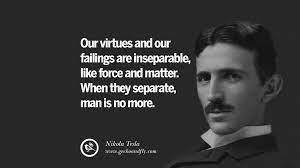
NIKOLA TESLA!!!

Many scientists have left their mark in the field of science. Their hardwork have led us to this development. Yes, if those scientists wern’t think of those different ideas, will you be able to live in this cosy and comfortable world. Think of those days, there were no mobile phones, mixer grinder, car and even current. When we think of this, the fullest credits goes to the scientists who invented this right? If there is no Edison, will there be any current now? If there is no Graham Bell, will there be a telephone? Have you ever thought if you can live without current and mobile phones? The answer would be no. Okay, let me get the point. You know about Edison, Graham Bell, Albert Einstein etc., and you know something about them. I will tell you about a scientist who left his mark in the field of physics. Yes. I’m to talk about our Nikola Tesla. He made many breakthrough in the production, application and transmission of the electric power. The first alternating current motor was invented by him. This made a breakthrough in the field of engineering. Come on! Let’s know something about him.

NIKOLA TESLA (1856 – 1943)

Nikola Tesla was born on 10th July 1856 in Croatia, America. His father, Milutin Tesla was preist in Eastern Orthodox Church. His mother,Đuka Mandić was very talented and she has the power to memorise Serbian epic poems. The crave for knowledge in Tesla came from his mother. Tesla was the fourth child of the family. He had three sisters and an older brother. His brother died when Tesla was five years old.

Tesla said that his interest in demonstration of electricity came from his physics teacher. He has a talent to calculate integral calculus in his head which prompted his teachers to believe that he was cheating. In 1875, Tesla enrolled at the Imperial Royal Technical College, Gauz, on a Military Frontier scholarship. During his first year, Tesla never missed a lecture, earned the highest grades possible, passed nine exams. He even got the letter of recommendations from his dean. After his father’s death in 1879, Tesla lost his scholarship and addicted to gambling. He never get through the final semester exams and didn’t finish of his degree. To hide fact, he severed the ties with his family and his friends thought that he was dead.

TESLA IN THE FIELD OF ELECTRICITY

  • In 1884, he reached America with the letter of inrtoduction to work with Thomas Edison, whose DC-based electrical works were fast becoming the standard in the country. Edison hired Tesla and the two worked hard tirelessly on Edion’s inventions. After some months, they two parted their ways due to some issues related to their business.
  • Tesla discovered, designed and developed ideas for a number of important inventions which were officially patented by other inventors including dynamos and the induction motor. Tesla designed the alternating-current (AC) electrical system, which had become the prominent power system of the 20th century and has remained the worldwide standard ever since.
  • In 1887, Tesla found funding for his new Tesla Electric Company, and by the end of the year, he had successfully filed several patents for AC-based inventions.
  • In 1895, Tesla designed what was among the first AC hydroelectric power plants in the United States.
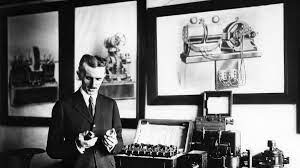
  • In the 19th century, Tesla patented Tesla coil, which laid the foundation for wireless technologies and is still used in radio technology today. The heart of an electrical circuit, the Tesla coil is an inductor used in many early radio transmission antennas. The coil works with a capacitor to resonate current and voltage from a power source across the circuit.

Tesla died due to Chronic Thrombosis on 7th January 1943. He died in New York where he lived for sixty years. He worked hard to prove himself in the field of electricity. As the result of his hardwork, he was able to leave his marks in the field of elctricity. These are just a few information given by me. If you began to search on him, you can know various interesting facts about him.

Read more;

AN INCIDENT THAT RESTORED MY FAITH IN HUMANITY

Prior to disclosing to you my story , I need to make myself clear that I am not saying that humankind has totally evaporated from our reality. Yet, it is truth that we people have gotten insatiable and egotistical. More often than not we don’t help other people except if we see our benefit. These days, cash has gotten more essential to us than others. I additionally sort of accepted that thing, however after that one incident I came to realize that there are as yet pleasant individuals in world, who will help other people without seeing their benefit.

Save The Humanity – We Care For Everything

So, it was around 10 years prior, I was 7 years old around then. It was the long stretch of February and was recent days I was felling extremely debilitated, it was such a lot of that we chose to visit the doctor. The specialist recommended me a medicines, yet those prescriptions were of high dose which consequently demolish my condition. Scarcely any days after that I understood that I was unable to move my limbs much. My parents got truly stressed and we visit to the specialist once more. I got conceded in the emergency clinic yet my condition didn’t improve, it continued getting decline. Then, at that point two of my Mom’s companions came and encouraged to go to the next clinic which was in other city. We went their and we came to realize that my left half of body got paralyzed.

My folks couldn’t really accept that what they heard, they were stunned. I got conceded in that hospital. Since that emergency clinic was not in our city, we dealt with issues particularly me since I was unable to eat custom made food. Close to my ward there was additionally an old individual conceded. His family used to live in that city just , so they brought him hand crafted quality food and other important things. Be that as it may, one day his family visited my ward and connected with my folks. They felt terrible for me and said to my folks that “You can uninhibitedly get in touch with us on the off chance that you need anything”. Following day, when his family came they brought nourishment for us too. We were so moved by their thoughtful gesture. Also, regardless of being a finished outsider to us. They brought food and other important things for us practically ordinary, even after that grandpa got discharged. Following one and a half month I got released, despite the fact that I was not totally well.

They offered us to live in their home since we may require help. In any case, we declined the offer since we would prefer not to give them more difficulty, since they previously helped us a great deal in this range of one and a half month. We chose to go to our home yet following not many months we went to their home to express gratitude toward them, since we were so moved by their thoughtful gesture. We felt so fortunate to met them. They were really heavenly messengers in human structure. They helped us in our difficult stretches. Besides, they additionally gave us moral help and support my parents. They energized me while I was recovering and they wished me wellbeing and accomplishment before we left.

This thoughtful gesture reestablished my confidence in humankind. It caused me to accept that there are as yet pleasant individuals in our reality. Furthermore, in all honesty we as a whole have encountered such incidents in our life which have made us puts stock in humankind. As a result of such individuals “Humankind” actually exist in our reality.

Humanity Online Assignment Help | Thoughtful Minds

History of the Olympic Games

Introduction

The Olympic Games are an international sports festival which is held every four years. The goal of these games is to cultivate human beings through sports and contribute to world peace. The Summer and Winter Games are held separately. The last Olympics was held in Brazil. After that, it was supposed to be held in 2020 but because of the pandemic, it got postponed to 2021 and is being held in Japan from 23rd July to 8th August 2021.

History

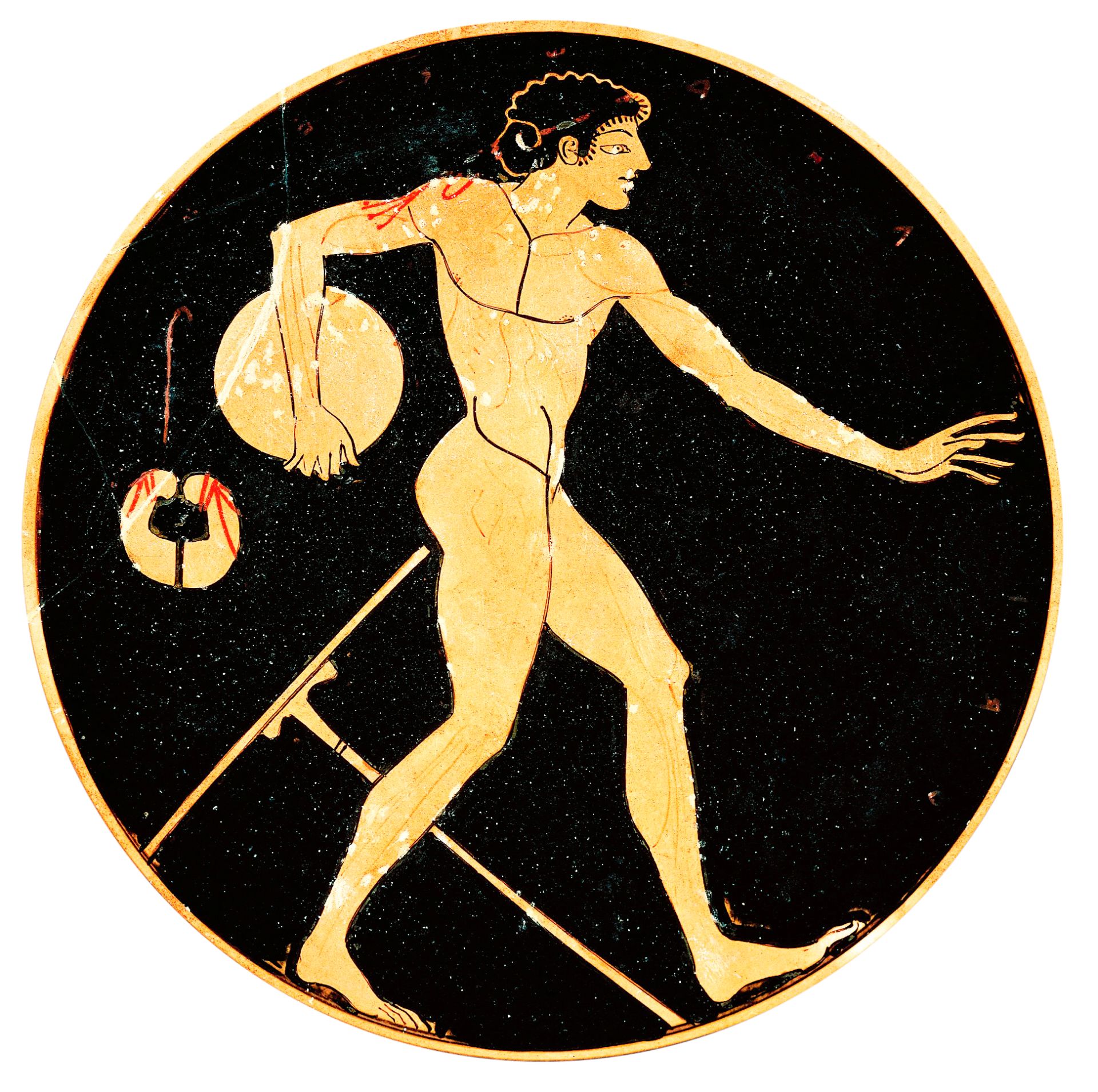
The Olympic games originated in ancient Greece which would make it as old as 3,000 years. From then it was revived in the late 19th century. The Games were held every four years in Olympia from the 8th century B.C. to the 4th century A.D. Olympia was located in the western Peloponnese peninsula, honouring the god Zeus. They used to be held from August 6 to September 19. It became such an important part of the culture that people start measuring time by the interval between the Olympics, this measurement of time is called the “Olympiad”. These games were an intrinsic part of a religious festival in honour of Zeus and the first recorded champion is known to be Coroebus of Elis, who was a cook. He won the sprint race in 776 BCE.

In 776 BCE, there was just one event, that of a footrace which was known as “stade”. This very word is the origin of the modern English word “stadium”. Other competitions were added over the decades. Wrestling and pentathlon were introduced in 708 BCE, boxing was introduced in 688 BCE.

In ancient Olympics, all events were held on one day, from that they later shifted to covering all events in four days. It is also said that the participants followed the practice of participating in the nude. This practice has been tried to explain and the top explanations are that nudity bespoke a rite of passage, nudity was a holdover from the days of hunting and gathering, the Greeks believed that nudity had a special power to ward off any harm, public nudity used to be a costume of the upper class and to be nude in public without erection showed a high level of self-control.

Women in Olympic Games

There were no women participants in the ancient Olympics, although some names of women can be seen on the official list of Olympics victors as the owners of the stables for the chariot entries.

Demise of Olympics

In the middle of the 2nd century BCE, Greece had lost its independence to Rome. The Romans did not think kindly of athletics. They thought that stripping naked and competing in public was a degrading act.

Modern Olympic Movement

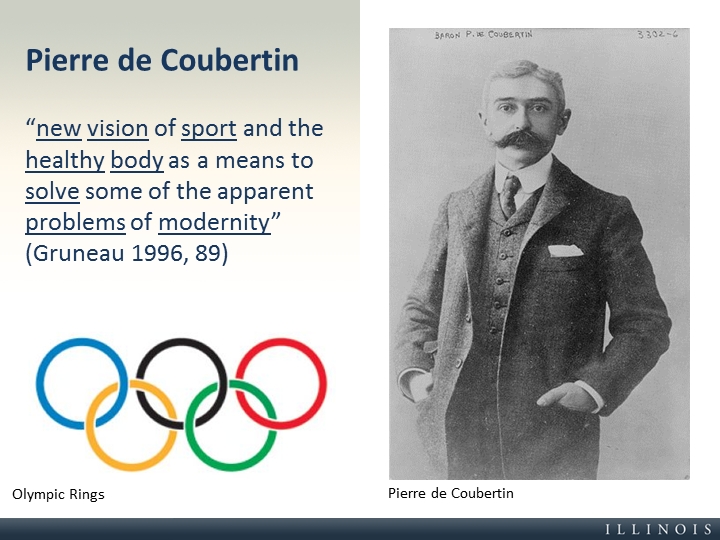
The architect of the modern Games was Pierre, baron de Coubertin who was born in Paris. In 1890, he traveled to England where he met Dr. William Penny Brookes who had been trying to revive the ancient Olympic Games for decades. He got the idea from a series of modern Greek Olympiads held in Athens since 1859. Brookes first attempt at British Olympiad in 1866 was successful but the subsequent attempts were unsuccessful. In the 1880s Brookes started arguing to begin an international Olympics in Athens. But Coubertin stole Brookes’ idea and proposed the same in 1892 at a meeting of the Union des Sports Athletiques in Paris. Coubertin faced a lot of problems in the establishment of this, like refusal by the Greek Prime Minister but when a new Prime Minister took place, Coubertin and his colleague were able to convince him and the Games were held in the first week of April 1896.

Conclusion

Coubertin said the spirit of the Olympic Games is “The elevation of the mind and soul, overcoming differences between nationalities and cultures, embracing friendship, a sense of solidarity, and fair play; ultimately leading to the contribution towards world peace and betterment of the world.”

References

THE PICARESQUE NOVEL

The Picaresque novel is a famous technique in earlier periods. These techniques were used to record the Kings’ and other person’s victories in and out of the battlefields even during his adventures. This form of literature helped in recording the real historical heroes and events from various perspectives. Many authors adapted these techniques and succeeded in making new epic fictions, mythologies, and other real events and incidents.

The Picaresque Novel originated in Spain. The term ‘Picaresque’ is derived from the Spanish ‘picaro’ meaning an anti-hero or rogue. A Picaresque novel is generally an autobiography account of the hero’s fortunes, sufferings and wanderings. It is a combination of episodic tales arranged as journeys. They episodes generally depict low life in a rambling manner and come to an abrupt ending.

The first prose fiction in the nature of the picaresque was John Lyly’s ‘Euphues’ published in 1578 detailing the loves and adventures of a young Athenian called Euphues. Six years later, Thomas Nash published his ‘Unfortunate Traveller’, a more perfect picaresque romance dealing with the travels and adventure of a page called Jacky Wilton. Defoe’s ‘Moll Flanders’ published in 1722 had an affinity with the picaresque mode of writing. But Smollett’s  ‘The Adventure of Ferdinand Count Fathom’ is a more perfect form of the picaresque. However, it was Fielding’s ‘Tom Jones’ which established the respectability of the picaresque novel. Fielding’s novel describes through 18 book’s the adventures and several love affairs of The Young anti-hero Tom Jones. Elements of the picaresque can be found in Dickens’s Nicholas Nickleby and in Joyce Cary’s “The horse’s mouth.”

The object of the picaresque novel is to take a central figure through a succession of scenes and adventures, introduce a great number of characters around him and thus build-up picture of society. In the eighteenth century and before travel was the only way to get acquainted with social life. That is why heroes in the Picaresque novels are travelling heroes. The hero in a picaresque novel is always in the Whirlpool of adventures and he has to be present in several human situations. The picaresque hero often transcends the level of the rogue into a tragic figure with human attributes as in the case of Fielding’s Tom Jones.

Another feature of the picaresque novel is the dynamic movement of the hero. He should run through a succession of scenes as Tom does during his journey to London. The novelist constructs the picture of society through the narration of the hero’s wanderings. Smollett sends his hero Roderick Random not only to London but also to France and for a ship journey. The picaresque novel may go deeper into a contemplation of the more intricate relationship between good and evil. They also reveal the strange truth that generous impulses exist even in those whom society considers as rougues. Tom Jones is a generous and manly youth in spite of the rouguish elements in his character.

Until now this technique is used by various authors for various books in the name of Mythologies, fiction, and other Genres.

Short stories within novels

All about autobiography

ETHOS OF VEDANTA IN MANAGEMENT

Ethos of Vedanta are based on supreme truth & supreme soul. If you do good to someone , you will get good . If you are good , the whole world is good to you . Management ethics is the ethical treatment of employees, stockholders, owners and the public by a company. A company, while needing to make a profit, should have good ethics. Employees should be treated well, whether they are employed here or overseas. By being respectful of the environment in the community a compound ethics, and good, honest records also show respect to stockholders and owners. Most of us would agree that it is ethics in practice that makes sense; just having it carefully drafted and redrafted in books may not serve the purpose. Of course all of us want businesses to be fair, clean and beneficial to the society. For that to happen, organizations need to abide by ethics or rule of law, engage themselves in fair practices and competition; all of which will benefit the consumer, the society and organization.

When ethics are used in management , organization grow at a different level .

In these days of globalization, Vedanta-based values will surely have to make a sympathetic assessment of values of those brought up according to Islamic or Christian faith. However desirable it may be to universalize the teachings culled from the Vedanta philosophy, ultimately one will have to find in that same school the lessons of co-existence with alien cultures and roots.

Ethics are about making choices that may not always feel good or seem like they benefit you but are the ‘right’ choices to make. They are the choices that are examples of ‘model citizen’ and are the examples of ‘golden rules’ like; don’t hurt, don’t steal, don’t be dishonest, don’t lie. But if we take Ethics as a subjective philosophy then what will happen to these golden rules. Especially at the time of facing any ethical dilemma how one should decide-what is ethical and what’s unethical? Organization provides rules, regulations, code of conduct, protocols which provide guidelines to work, it shows how to walk, but it does not show the correct path to walk on. Ethical dilemmas faced by managers are often more real to life and highly complex with no clear guidelines, whether in law or often in religion. Ethics gives us a message to always look forward , which gives a message to look at a long go . Ethics teaches a management the most important thing that is forward looking approach . With this forward looking approach , it teaches to be always true to the organization .

Some of the principles of Indian ethos are :

  1. Know who you are & what is your purpose of existence , this concept is used in management because a management’s main motive is to know what who they have to manage & what they have to deal through
  2. Holistic approach : We should behave with others in the manner which we expect from them . Effectiveness & efficiency of an organization increases when the employees are highly motivated.
  3. Service motive : A person should have service motive & at the same time should have a smiling face while providing that service . An organizations main motive is to provide service to other , & they should not be profit oriented .
  4. Self sacrifice : One should have self sacrifice attitude , means sacrificing self ego , & should always be helpful to others

FIVE YEAR PLANS IN INDIA

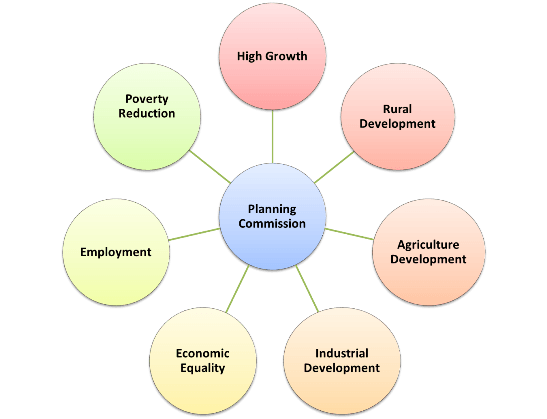
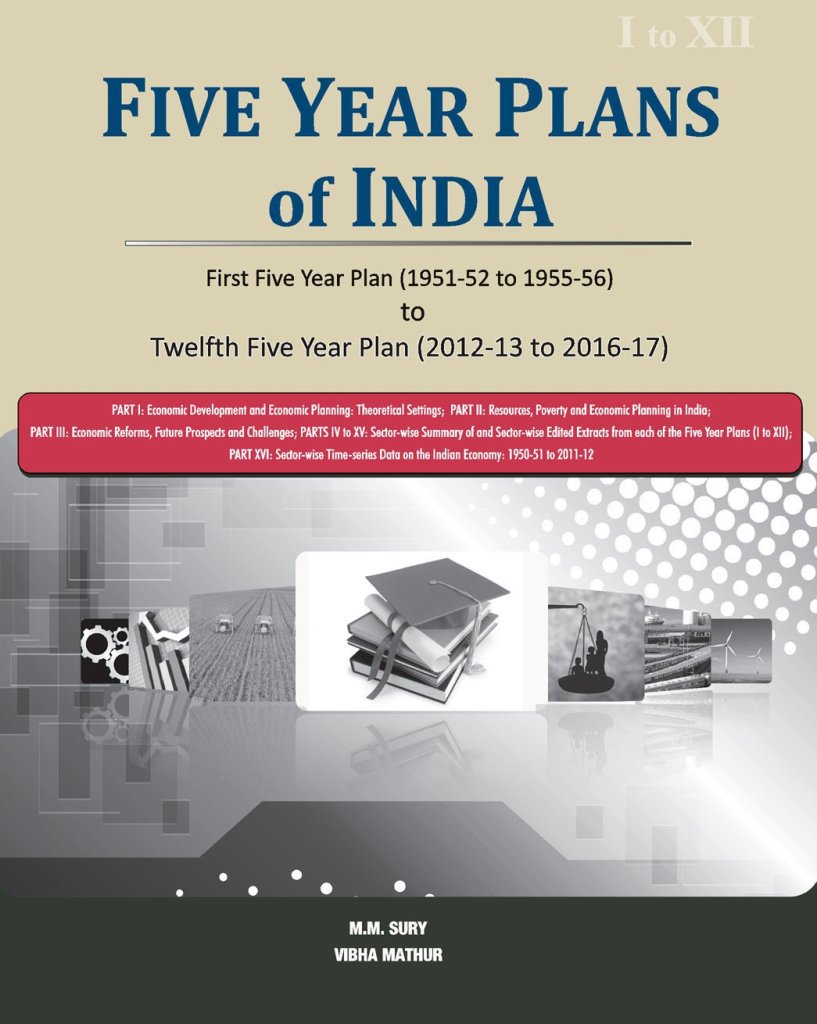
From 1947 to 2017, the Indian economy was premised on the concept of planning. This was carried through the Five-Year Plans, developed, executed, and monitored by the Planning Commission (1951-2014) and the NITI Aayog (2015-2017). With the prime minister as the ex-officio chairman, the commission has a nominated deputy chairman, who holds the rank of a cabinet minister. The first year plan was Harrod – Domar model of development economics. FYP had a target of 2.1% PA growth in national income. Top priority was given to the development of agricultural sector. The idea was agricultural development would lead to higher rate of economic growth.

FIRST PLAN (1951-1956)

Based on Harrod-Domar model. There were arrival of large number of refugees, severe food shortage and mounting inflation confronted the country at the onset of the first five year plan. High priority was given to agriculture, price stability, power and transport. It was a successful plan primarily because of good harvest in the last two years of the plan. Objectives of normal life of refugee, food self-sufficiency and control of prices were more or less achieved. The target growth rate was 2.1 and actual growth rate achieved was 3.7.

SECOND PLAN (1956-61)

Second plan was prepared by Prof. P.C. Mahalanobis. It has s also called Mahalanobis plan. Second plan was conceived in an atmosphere of economic stability. The plan was focused on rapid industrialization by setting up of heavy and basic industries. Importance was given to the public sector. The industrial policy was based on establishment of a socialistic pattern of society as the goal of economic policy. The target growth rate was 4.5 and the actual growth rate achieved was 4.3.

THIRD PLAN (1961-1966)

When this plan was started it was felt that Indian economy has entered a “takeoff stage”. Therefore it’s aim was to make India a self-reliant and self- generating economy. Based on the experience of first two plans, agriculture was given top priority to support the the exports and industry. The plan was thorough failure in reaching the targets due to Chinese aggression (1962), Indo-Park (1965), severe drought (1965-66), food shortage, inflation and adverse balance of payments, Devaluation of the rupee happened in 1966. The target growth rate was 5.6 and the actual growth rate achieved was 2.8.

ANNUAL PLANS (1966-69)

Failure of Third plan and that of the Devaluation of rupee along with inflationary recession led to postponement of fourth FYP. Three annual plans were introduced instead. During the Annual plan a whole new agricultural strategy called the High Yielding Variety Program also known as Green Revolution was implemented.

FOURTH PLAN (1969-74)

The main objective of the fourth plan was “growth with stability” and “progressive achievement of self- reliance. First two years of the plan saw record production. The plan was to improve the standard of living of the weaker sections of the society through employment programmes. The target growth rate was 5.7 and the actual growth rate achieved was 3.3.

FIFTH PLAN (1974-79)

The fifth plan was prepared and launched by D.P. Dhar in the backdrop of economic crisis arising out of run-away fuelled by hike in oil prices and failure of the Government takeover of the wholesome trade in wheat. The two main objectives of this plan is ‘removal of poverty’ (Garibihatao) and ‘attainment of self-reliance’. But due to high inflation, cost calculations for the plan proved to be completely wrong. The target growth rate was 4.4 and the actual growth rate achieved was 4.8.

ANNUAL PLANS (1978-80) AND HINDU RATE OF GROWTH

There were two annual plans 1978-79 and 1978-80. The objectives of first plan were removal of unemployment and provision of basic necessities of drinking water, primary education and health care. Second plan was focused on the rural sector with importance accorded to agriculture.

The phrase Hindu rate of growth, economist Raj Krishna who used it to describe India’s unsatisfactory growth trend in 1950-80 was stuck at 3.5 to 4 per cent per year. The word ‘Hindu’ was used to refer the inactive growth rate of Indian economy.

SIXTH PLAN (1980-85)

The plan was focused in national income and modernization of technology. Sixth plan was considered as success as most of the target were realised even though during the last year (1984-1985) many parts faced severe famine conditions and agricultural output was less than the record output of previous year. The target growth rate was 5.2 and the actual growth rate achieved was 5.7.

SEVENTH PLAN (1985-90)

The plan aimed at accelerating food grain production, increasing employment opportunities and raising productivity with focus on food, work and productivity. The plan was successful. The target growth rate was 5 per cent and the achieved growth rate was 6.

ANNUAL PLAN (1990-92)

The eight plan was postponed by two years because of political uncertainty at the centre. The focus of the plans was to increase employment opportunities and social transformation.

EIGHTH PLAN (1992-97)

There was issues during the launch of plan were Worsening Balance of Payment position, rising debt burden, widening budget deficits, recession in industry and inflation. The plan undertook drastic policy measures to combat the bad economic situation and to undertake an annual average growth of 5.6 percent under Prime Minister of Shri P V Narasimha Rao. The annual growth rate was 6.5 per cent and the achieved growth rate was 34 percent.

NINTH PLAN (1997-2002)

The plan prepared under United Front Government focused on “Growth with Social Justice and Equality”. The plan aimed to demand predominantly on the private sector, India as well as foreign (FDI). It assigned  priority to agriculture and rural development with a view to generate productive employment and eradicate poverty. The target growth rate was 6.5 and the actual growth rate achieved was 5.4.

TENTH PLAN (2002-2007)

Other than the economical growth, tenth plan had set “monitorable targets” in reduction in gender gaps in literacy and wage rate, reduction in infant and maternal mortality rates, improvement in literacy, access to potable drinking water cleaning of major polluted rivers. The target growth rate was 8.0 and the actual growth rate achieved was 7.6.

ELEVENTH PLAN (2007-2012)

Eleventh Plan was aimed “Towards Faster and More Inclusive Growth”. The vision of Eleventh Plan included several inter related components like rapid growth reducing poverty and creating employment opportunities. Access to essential services in health and education, specially for poor, extension of employment opportunities using National Rural Employment Guarantee Programme, environmental sustainability and reduction of gender inequality. Its growth rate was 8.1 per cent but it achieved only 7.9 per cent.

TWELFTH FIVE YEAR PLAN (2012-2017)

The Twelfth Plan commenced at a time when the global economy was going through a second financial crisis. This crisis affected all countries including India. Growth rate slowed down to 6.2 per cent. Therefore the plan emphasizes that the first priority must to bring economy back to rapid growth in all fields. The aim was bring back economic growth faster, more inclusive and with sustainable growth. The target growth rate was 8.0

With the Planning Commission dissolved, no more formal plans are made for the economy, but Five-Year Defence Plans continue to be made. The latest would have been 2017–2022. However, there is no Thirteenth Five-Year Plan.

Kargil Vijay Diwas 2021

Introduction

Kargil Vijay Diwas is celebrated every year on July 26th to remember the sacrifice of the Indian soldiers during the Kargil war of 1999 with Pakistan. The brave-hearted men of the Indian army had aided the Indian air force in defeating Pakistan on this very day 22 years ago.

Kargil War

The war was fought between India and Pakistan from May to July 1999 in the district of Kargil which is in Kashmir, along the Line of Control (LOC). It is also known as “Operation Vijay”. India launched “Operation Vijay” to clear the Pakistani infiltration in the Kargil sector. A huge part of this war was the Indian Air Force’s role in acting along with the Indian Army ground troops. Indian Air Force’s role was to flush out the regular and irregular troops of the Pakistan Army. This operation of flushing out the Pakistani troops was given the codename “Operation Safed Sagar” which means “White Sea”.

Cause of the War

This war was caused because the Pakistani troops infiltrated the Indian side of the Line of Control acting as Kashmiri militants. The Line of Control is the de facto border between India and Pakistan in Kashmir. In the starting stages of the war, Pakistan blamed Kashmiri militants for all the fighting but later they messed up and left some documents because of casualties which showed clear involvement of the Pakistani paramilitary forces. Adding to that, later a statement by the then Prime Minister of Pakistan, Nawaz Sharif, and the Chief of Army Staff, General Pervez Musharraf, confirmed the involvement of the Pakistani paramilitary which was being led by General Ashraf Rashid. With the help of Operation Vijay and Operation Safed Sagar, the Indian Army recaptured most of the area. Adding to that, Pakistan was facing international diplomatic opposition so they had to withdraw their forces as well.

This War is the most recent example of high-altitude warfare in mountainous terrain which for obvious reasons posed logistical challenges.

World’s Opinion

Pakistan was greatly criticized for instigating war. They claimed they did not start the war and that it was the Kashmiri militants but a lot of evidence contradicted their claim and nobody believed them, for one, the war was at heights where only trained soldiers could fight, and not some simple freedom fighters.

Pakistan’s Prime Minister, Nawaz Sharif had flown to the United Stated to ask the US President Bill Clinton for support, who showed his clear disapproval and asked him to withdraw his soldiers from the Indian territory.

The G8 nations at that time, Canada, France, Germany, Italy, Japan, Russia, United Kingdom, and the United States supported India. Even the European Union opposed Pakistan’s violation of the LoC. China who is known as a long-time ally of Pakistan also suggested retreating and settling the issue peacefully. Even ASEAN supported India.

Gallantry Awards

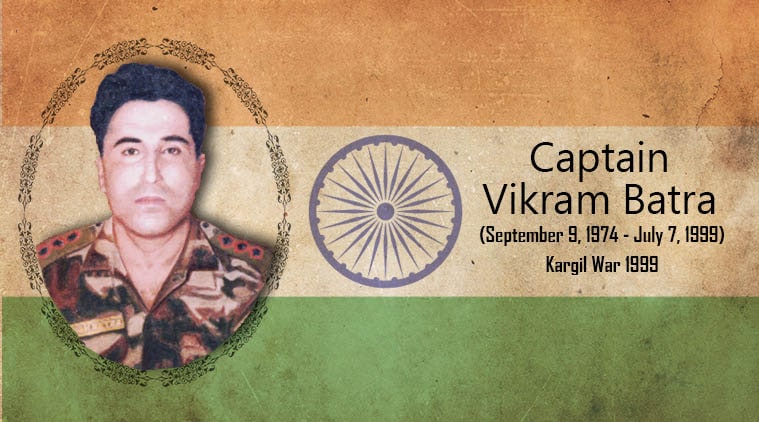
Four Param Vir Chakras were awarded to – Grenadier Yogendra Singh Yadav, Lieutenant Manoj Kumar Pandey, Captain Vikram Batra, and Rifleman Sanjay Kumar. And eleven Maha Vir Chakras were awarded.

Facts

  • The war was fought at a height of 8,780 feet. 
  • The soldiers had to fight at a temperature of minus 10 degrees Celsius. 
  • Operation Safed Sagar was the first time the Air Force conducted an operation at the height of 32,000 above sea level. 
  • The pilots and engineers of the Air Force were given just one week to train. 
  • As many as 527 Indian soldiers laid their lives and the Indian Army built a memorial wall with all the names of the soldiers who lost their lives. 

Conclusion

The victory of the success of Operation Vijay meant a lot to India and all the Indians. Till now, every year Indians remember July 26th as the day of victory and remember the sacrifice their fellow Indians paid for the safety of all.

References

Be Safe With Your Dinnerware

Are you staring at your plate right now with suspicious eyes? If so, then relax and take off that crease from your forehead. If you are worried about lead being present in your dishes, then we are here for you. Here all your doubts about how to test dinnerware for lead will be addressed and you don’t have to worry.

Safety is the first thing anyone wants while buying any product. You wouldn’t have thought about searching for lead in your dinnerware. Did you? Dinnerware is the most regularly used item in our homes, but to find that unsafe for us is disappointing. And also you shouldn’t be even asking this question. Think about it, you bought a nice dinner set from a respectable company, but here you are getting suspicious? Don’t worry any further. We will clear all your suspicions. Come on, let’s have a look at how to test your dinnerware for lead?

Why is Lead unsafe?

Lead is a harmful toxin that if ingested, may cause serious damage to the body systems. Children and pregnant women stay at a higher risk of health issues from the toxic effects of lead. You may have heard of lead poisoning too. It is very real and lethal.

Lead does not leave your body after entering. It accumulates there and due to this, even small amounts are harmful to health. You need to remove lead from your dinnerware so that you can eat your food safely.

Why is Lead Used in Dinnerware?

Lead is used in dinnerware for glazes and bright colors. It is basically used to beautify the dishes. The glazes that make the dishes shine like glass, the bright red color designs, these all are lead. It seems nice but it’s lethal. Lead also provides strength to the dishes and prevents them from moisture.

How Does Lead Enter Our Body?

There are many ways in which lead can enter our bodies. Let us point them out for you.

  1. If hot food is served on plates with glaze, the heat tends to extract the traces of chemicals from the surface and enter the food.
  • If you heat your food in the microwave, it can get lead into it. So don’t heat too many times.
  • Serving too much acidic food on a plate can also cause lead to enter the food. Acids tend to fast forward the process.

What Type of Dishes Contain Lead?

Dishes come in many varieties, so it can be hard to figure out the safest one. But we have something for you that can help. Now try to avoid the following things when looking for dishes:

  1. Antique dishes that may be passed down in your family from generations.
  • Heavily designed dishes, especially with bright colors like red, yellow, or orange.
  • Used dinnerware found in thrift stores or second-hand dishes you bought at a lower price.
  • Terra cotta dishes which are heavily glazed
  • Handmade dishes or pots.
  • Any dish with corroded glaze, or old dishes with worn-out designs.
  • Dishes with designs made above the glazed surface.

How to Test For Lead in Dishes?

You didn’t think you can check for the lead with plain sight, did you? No, you can’t. But there are some ways to test dishes for lead. One of them is to avoid the above mentioned types of dishes. Another useful way is by testing the dinnerware by home kit for testing lead in dinnerware.

Home Kit for testing lead in dinnerware is mainly useful for high content lead testing. It does not detect if there are only small amounts of lead in the dishes.

Another way is to send the dishes to a laboratory. But this may be a bit of absurd advice considering everyone doesn’t have access to labs and it is a bit expensive as well.

Method to Test For Lead With Home Kit

  1. Buy the chemically tested swabs, which are not very expensive.
  • Clean your dish with the swab.
  • If your dish contains lead, the lead detector on the swab with turn bright red indicating the presence of lead in your dish.
  • Or use a small chipped section of the glaze from the dish.
  • Peel a small part of the glaze and test it with the swab for more accuracy.

This method doesn’t tell you the exact amount of lead present in the dish. It is not much use but is fine for testing at home.

Method For Testing Lead in Laboratories

  1. Laboratories use X-ray systems to test for lead in dishes.
  • This method tells the accurate amount of lead present in the dish by using some electron reactions (which you don’t need to know about).

There are many ways to test for lead in laboratories. But some of them might damage the dish in the process. So this method is not feasible.

How to Reduce Exposure to Lead From Dishes?

The following points might be of some help:

  1. Stop using antique dishes
  • Don’t heat food in contaminated dishes
  • Don’t use highly glazed dishes for regular use
  • Stop storing food in contaminated dishes for a long time
  • Don’t wash the dishes containing lead in the dishwasher
  • Don’t serve acidic food on dishes containing lead. It speeds up the process.

Safest Lead Free Dinnerware

Choosing lead-free dinnerware for your safety is not that hard as it sounds. Just keep some points in mind next time while shopping for dishes.

  1. Choose the dishes with minimum designs
  2. Dishes with less glaze will be safe
  3. Plain white plates or dishes is definitely a winner
  4. Try to find less bright colored dishes
  5. We recommend more glass dishes. With them, you can be sure they are lead-free.
  6. If you are an appreciator for old, vintage dishes, you may want to restrict to the plain white ones.
  7. Melamine is considered to be the safest as it is more plastic than a glazed surface.

Now you are just a step away from buying lead-free dinnerware. Step out, go to that store, keep these few points in mind and find the perfect dinner set for you. And we hope now you know how to test for lead in dinnerware.