OXYGEN DEBT

Exercise and Oxygen Deficit vs. Oxygen Debt - Oxygen Plus

Oxygen debt means when the demand for oxygen is greater than the supply. It means that when your body works hard you breathe a lot of oxygen but you can not absorb enough oxygen to cope with the level of activity. It is the stage of oxygen debt. As a matter of fact, ATP (or adinosine triphosphate) is the source of energy for muscular contraction . There are three main sources , which provide a continual supply of ATP.

  • Creatine phosphate.
  • Glycolysis
  • Oxidative phosphorylation ( critic acid )

When our muscles remain in resting position, these contain large amount of ATP and creatine phosphate . But, when we start exercise during the first few seconds of muscular contraction, the reserved ATP is used up immediately. During this period , ADP ( or adinosine diphosphate ) levels increase. Creatine phosphate rapidly supplies ATP for the contraction of muscles. The molecule of creatine phosphate contains both energy and phosphate , which are transferred to a molecule of ADP to form ATP and creatine. If the contraction is short , the muscle can drive all its ATP from creatine phosphate. If light exercise is to be done for longer period, other sources of ATP must be available . Glycolysis is the process by which glycogen ( stored from of glucose in muscles ) or glucose from the blood is broken down to  CO2 and H2O by oxidative phosphorylation in the citric acid cycle to produce more ATP . The breakdown of ATP , the combination of creatine phosphate with ADP , and glycolysis can occur both aerobically (in the presence of oxygen ) and anaerobically ( in the absence of oxygen ) . Oxidative phosphorylation is an aerobic process . It means it requires the presence of oxygen . If oxygen supplied to muscles gets exhausted ( during heavy muscular activity ) , the pyruvic acid formed in glycolysis is converted to lactic acid . The accumulation of lactic acid in the muscle causes fatigue. At this stage ,m muscle is in oxygen debt . If exercise is continued , then there will be more debt of oxygen . In oxygen debt , lactic acid diffuses out into the blood and is carried to the liver, where it is reoxidised to pyruvic acid. In the liver , pyruvic acid can enter the citric acid cycle and can be broken down to CO2 and H2O . It can be said that it is reconverted to glycogen . It has been observed that up to the deficit of 2.3 litres oxygen , the lactic acid is not produced in muscles but , after that , if the amount of lactic acid goes on increasing , the deficit of O2 will be increased at the same rate .A complete rest helps in removing oxygen debt . During the rest , ATP is again stored in the muscles for activities . Generally , lactic acid is removed approximately in one hour if cooling down is performed properly . It may also take 2 hours or more if cooling down is not done with gentle exercise .


JEE mains 4 attempt postponed

In order provide the gap between JEE mains 3 and JEE mains 4 , NTA has announced to postponed the JEE mains 4 ( may session) .Now Jee mains 4 will be conducted on August 26,27 ,31 , September 1 and 2 ,2021.

The Hon’ble education minister Pradhan says “In view of the persistent demand from the student community and to enable the candidates to maximize their performance, the NTA has been advised to provide a gap of four weeks between session 3 and session 4 of the JEE(Main) 2021 Exam.”

Now the application will be accepted till 20th july 2021.Students whose who have not applied at can do so before 20th july 2021.

The NTA releases official notice stating “With a view to remove hardships caused to candidates and to ensure larger participation of candidates, it has been decided to extend the last date further for: submission of online application form by new candidates and withdrawal/ correction by the existing/ interested candidates for the exam,”

Mental Health should be given Importance

In todays time with the ongoing pandemic, mental health should be the concern for everyone. It can affect every aspect of a person’s life.

Photo by Maksim Goncharenok on Pexels.com

Mental illness can have a negative impact on daily life, relationships, and physical health.

This link, however, also works in the opposite direction. Mental health issues can be caused by a variety of causes, including personal circumstances, interpersonal relationships, and physical conditions. Stress, despair, and anxiety can all have an impact on a person’s mental health and disturb their daily routine.

Taking care of one’s mental health can help one’s ability to appreciate life. To do so, you must strike a balance between your daily activities, duties, and efforts to improve your psychological resilience.

Mental health, according to the WHO, is “more than merely the absence of mental diseases or disabilities.” Peak mental health entails not only avoiding active mental illnesses but also maintaining overall well-being and happiness.”

They also underline the need of protecting and repairing mental health on an individual level, as well as in many groups and societies around the world.

Mental health is essential to our ability to think, emote, interact with others, earn a living, and enjoy life on a collective and individual level. On this basis, mental health promotion, protection, and restoration might be considered a critical concern for individuals, communities, and societies all over the world.

What does mental health basically mean:

Mental health is a condition of well-being in which a person recognizes his or her own potential, is able to cope with typical life challenges, is able to work efficiently, and is able to contribute to his or her community.

Photo by cottonbro on Pexels.com

The early signs of Mental Disorder can be :

There is no reliable physical test or scan that can determine whether or not someone has developed a mental disorder. However, the following are probable indications of a mental health condition that people should be aware of.

1)Avoiding activities that they would typically like withdrawing from friends, family, and coworkers sleeping too much or too little

2)Too much or too little food

3)Feeling despondent

4)Having low energy levels on a regular basis

5)Using mood-altering substances such as alcohol and nicotine on a more regular basis

6)Expressing negative feelings

7)Being perplexed

8)Having persistent thoughts or memories that resurface on a frequent basis being unable to execute daily duties, such as commuting to work or cooking a meal

9)Considering harming yourself or others physically

10)Recognising voices

11)Having hallucinations

SELF HELP IS IMPORTANT

A person dealing with mental health issues will almost always need to make lifestyle modifications in order to be well.

Reducing alcohol consumption, sleeping more, and eating a well-balanced, healthy diet are examples of such adjustments. People may need to take time from work or handle personal relationship issues that are negatively impacting their mental health.

Relaxation techniques such as deep breathing, meditation, and mindfulness may be beneficial to people suffering from anxiety or depression.

Having a support network, whether through self-help groups or close friends and family, is extremely important for mental illness rehabilitation.

Photo by Madison Inouye on Pexels.com

TREATMENT AND CARE OF MENTAL HEALTH

Suicide prevention, the prevention and treatment of mental problems in children, the prevention and treatment of dementia, and the treatment of substance abuse disorders all have a number of successful interventions. The mental health Gap Action Programmed (MH GAP) has developed evidence-based guidelines for non-specialists to help them better identify and manage a variety of mental health conditions.

In the framework of national efforts to design and execute mental health policy, it is critical to not only safeguard and promote citizens’ mental well-being, but also to address the needs of people with specific mental diseases.

LIFE A GUIDED PATH

                                                           LEARN YOUR LIFE BY YOUR WAY/JOURNEY

There is always a conflict between our heart and mind to explore or to cling on with the wise people’s saying before starting our track of life/career. In my opinion I require I both to be implemented in life as not everything can be known to everyone. But choose try your journey to write your novel and recite it to others. An unguided travel will always have various adventures and mysteries to be revealed, “Life is a journey explore your experience by unfolding mysteries”.  

“Life is a stage where men and women are mere players

They come and play their part and leave the stage” – Words told by Shakespeare

 So no one is permanent and don’t depend on others make yourself depended on you. As an infant you try to crawl then try to walk followed by jogging and finally running. Each and every step is taken by you is your effort to grasp things at every level and learn them after you mature every stage in life. Instead of getting guidance try to gain your guidance by making your way of what your mind says. You can do work your thinking tells you as it has never gone wrong. If you learn without training you will never forget your lesson that made you perfect out of the incidence. As you learn without training you improve your skills and your character to understand every aspect in life.

“Not everyone is perfect it is life shaping people in their own destiny”

Help yourself in understanding things without your rage or anger controlling you. You’re thinking and actions in life helps you decide who you are. Trespass your limits and create your path where there is a block. As you move forward you will face every aspect of life understanding factors like adjustments, emotions, sadness, sorrow. The more you explore, the deep you learn and face boldly to overcome your hinderances out of courage. Guidance helps you to travel safely but own path makes you to face the obstacle and how strong you are by heart. And it is an unavoidable fact that still 2 out of 4 children are handled and guided until their old days without they taking their own pavement. “Help children to find paths but don’t travel with their paths as the path will travel and teach them the value of them”.

Improving 'syllabus' at school

India is a country where people from different religions, customs, regions, etc. reside without any restriction. But it is often seen that people fight for their religion or castes either to establish supremacy over others’ or to protect theirs’. Isn’t it ironical to hear same people singing “Bharat Mata Ki Jai” during political rallies or on national days!

People celebrating the Gandhi Jayanti don’t even hesitate to spread violence when it comes to their so called self-respect. Is this what the slogan of “unity in diversity” strives ?

The loophole stands in the education system. The youth today is walking on the path enlightened by the corrupt and selfish people of the society. We are not empowered enough to take action since everyone is either scared or lack adequate resources. The world is revolving fast. It is peak time for action which should start by providing correct and necessary information and knowledge to the students.

It should be taught at school level to respect each person you meet, to be kind to every section of society, to learn from failures rather than taking revenge or hurting oneself. The secondary level begins from sixth standard in school which should be the time Life lessons should be started for the students where they would learn what the world offers to the people and how they can tackle their problems.

Personal mentorship should be provided to guide each one through the circumstances they may be facing. Only textbook knowledge cannot make a person successful. Education should be learning based. Some schools follow it by arranging sessions for their students but this is majorly the case of private schools. Now that the govt. is improving the facilities in public schools, such programmes should be arranged which will guide the students in their problems.

Health and sanitation is a must to be taught from beginning, not only through books but the students should be taught such basic things during interactions. Syllabus should not be the focus point of the teachers at schools. Shaping the students in a way that they become responsible citizens and more importantly good human being, should be a matter of concern for the teachers. Being formal and not interacting with students on a regular basis happens to be the reason why today, nobody cares for anybody. People don’t even talk without any self motive.

Teachers always stress on procuring good marks which brings competition to life at early stage. The time has come when the world needs to pace down and bring out moments of life. It seems like machines are working when people work hard to earn more comfort. They should bring out moments for themselves to improve as a human not as a worker.

The Education system is designed in a way that personality development gets compromised in front of theoretical knowledge, hindering the youth to step up for themselves. A good system supports well being of the society as a whole without discriminating on the basis of caste, religion, gender, etc.

Equity vs Preference shares

We keep hearing the term ‘shares’ or ‘stock’ nowadays as it is a common topic of discussion. However, it is essential to know the different types of shares available in the market to be aware of our options as investors and also to determine which type suits the objectives of the investor better.

According to section 86 of the companies act, a company can issue only two types of shares:
(a) Preference shares
(b) Equity shares

PREFERENCE SHARES

As the name suggests, a preference share gives a preferential right to its shareholder, to get a fixed rate of dividend over other types of shares. This implies that preference shareholders are entitled to receive their dividends BEFORE any dividend is paid to equity shareholders from the profits.

Preference shareholders are also entitled to return of share capital before equity shareholders when the company is winding up. This implies, that after the company has paid off its debts to outsiders, the surplus and remaining assets are used to return the share capital to preference shareholders before equity shareholders. The remaining assets and surplus, if any, is distributed among the equity shareholders.

However, Preference shareholders don’t get to enjoy voting rights. They are only allowed to vote on

a) Any resolution affecting their rights

b) All resolutions when dividend has not been paid to them for the time period mentioned in the Act.

Types of Preference shares

Different kinds of shares have different rights associated with them.

  • Cumulative Preference Shares– Dividends not declared and paid in the current year (due to loss or inadequate profit), is accumulated and can be paid out of profits of subsequent years before dividend is paid to equity shareholders. Preference shares are always cumulative, unless the contrary is expressly stated in the Articles of Association.
  • Non-Cumulative Preference Shares- In the case of non-cumulative preference shares if dividend is not paid in any particular year, it lapses. It does not accumulate. Hence, it is not paid in the subsequent years.
  • Participating Preference Shares- In addition to the fixed rate of dividend, these shares carry a further right to participate with the equity shareholders in the surplus profits which remain after paying a certain rate of dividend to equity shareholders. Thus, they get two kinds of dividend, one fixed rate and the other changing every year depending on the level of excess profits. Similarly, such preference shares have a right to participate in the surplus assets of the company on its winding up after paying in full the preference and equity share capital.
  • Non-Participating Preference Shares– These shares are entitled to only a fixed rate of dividend. They do not participate either in the surplus or in the surplus assets on winding up after paying in full the preference and equity share capital. Preference shares are presumed to be non-participating unless specifically stated otherwise in the articles.
  • Convertible Preference Shares– These shares can be converted into equity shares within a specified time period.
  • Non-Convertible Preference Shares- These shares cannot be converted into equity shares. Preference shares are presumed to be non-convertible unless specifically stated otherwise in the articles.
  • Redeemable Preference Shares- Capital raised by means of these shares can be returned after a specified period or at any time at its options after giving notice as per terms of issue. These shares can be redeemed either out of profits or out of the proceeds of a fresh issue of shares.
  • Irredeemable Preference Shares- Any preference share that cannot be redeemed during the lifetime of the company is known as irredeemable preference Shares. Such shares are not offered anymore.

EQUITY SHARES

Equity shareholders are entitled to get dividend only after the fixed rate of dividend is paid to preference shareholders. Similarly, at the time of winding up of the company, only after returning preference share capital in full, and if there is any surplus, it will be paid to equity shareholders.

The rate of dividend is not fixed as it varies from year to year and depends on the profit earned every year. Higher the profits, higher the dividends of equity shareholders. However, in case of loss or inadequate profits, equity shareholders often do not get dividends for that year. Moreover, even in case of profits, the company can choose to retain the surplus in the business instead of paying dividends to equity shareholders. Hence, dividends for equity shareholders are not assured.

However, equity shareholders are considered as the owners of the company and hence, get voting rights on all resolutions.

To conclude, equity shares are quite risky since dividends and return of capital when the company is winding up is not assured. However, if the company is reputed and does well, equity shareholders dividends are usually more than fixed dividends of preference shareholders. Moreover, equity shareholders enjoy voting rights and are more involved in the management of the company as they are the owners.

On the other hand, for investors looking for fixed rate of return (dividends) and assured return of capital invested, preference shares should be a good investment.

Software Engineering – A Layered Approach

What is layered approach of Software Engineering ?

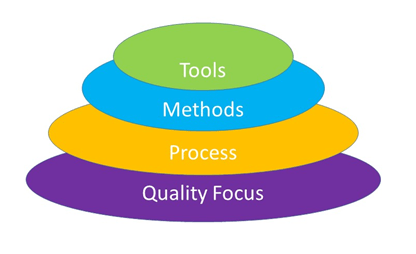
Software engineering deals with process, methods, and their implementation tools and finally the quality of the product.This is known as the layered approach of software engineering

  1. Quality Focus

 Software engineering is a layered technology. Referring to Figure 1.1, any engineering approach must
rest on an organizational commitment to quality.
 Total quality management, Six Sigma and similar principles help a continuous software process
improvement, and this ultimately leads to the development of increasingly more mature approaches to
software engineering.
 The bedrock that supports software engineering is a quality focus.

2. Process Layer

 The foundation for software engineering is the process layer.
 Software engineering process is the glue that holds the technology layers together and enables balanced
and timely development of computer software.
 Process defines a framework for a set of key process areas that must be established for effective
delivery of software engineering technology.
 Process defines the context in which technical methods can be applied, work products are produced,
milestones are established, quality is ensured etc.

3. Method Layer

 Software engineering methods provide the technical how-to’s for building software.
 Methods encompass a broad array of tasks that include communication, requirements analysis, design,program construction, testing, and support.

4. Tools Layer

 Software engineering tools provide automated or semi-automated support for the process and the
methods.
 Tools are combines so that information created by one tool can be used by another, a system that is
developed for the support of software development, is called as computer-aided software engineering(CASE). CASE combines software, hardware, and a software engineering database.

Characteristics of a Good Software

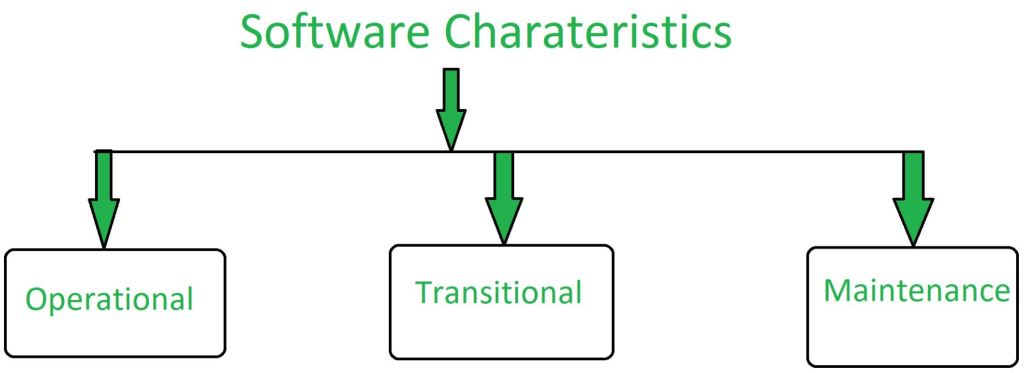
A software product can be judged by what it offers and how well it can be used. This software must satisfy on the following grounds: Operational, Transitional, Maintenance Well-engineered and crafted software is expected to have the following characteristics:

  1. Operational:

This tells us how well software works in operations. It can be measured on:

  • Budget
  • Usability
  • Efficiency
  • Correctness
  • Functionality
  • Dependability
  • Security
  • Safety

2. Transitional:

This aspect is important when the software is moved from one platform to another:

  • Portability
  • Interoperability
  • Reusability
  • Adaptability

3. Maintenance:

This aspect briefs about how well software has the capabilities to maintain itself in the ever-
changing environment:

  • Modularity
  • Maintainability
  • Flexibility
  • Scalability

EDUCATION DEVELOPMENT DAY IN TAMILNADU!!!

Though many National leaders rendered their selfless service to our country, one among them to be noted was the Kingmaker Kamaraj. K. Kamaraj, familiarly known as Kamarajar was an independent activist and the former Chief Minister of Tamil Nadu. He was popularly known as the Kingmaker of India during the 1960s. He supported Lal Bahadur Shastri, to be the President of India after the death of Nehru. After the sudden dismissal of Lal Bahadur Shastri, he supported Indira Gandhi to be the President of India. He was a man of simplicity and known for his best leadership in the development of Tamil Nadu. The Midday Meals Scheme introduced by him was very popular in India. He was popularly known as Karmaveerar, KalviKan Thirantha Mudhalvar, etc.

K KAMARAJ – Former Chief Minister Of TamilNadu

Kamaraj was born on 15th July 1903 at Virudhunagar in TamilNadu to Kumarasamy and Sivagami Ammal. His birth name was Kamatchi and later changed to Kamarajar. He studied primary education in a traditional school and he was to drop out because of his father’s death to support his family. He had a younger sister named Nagammal. He worked in his uncle’s shop and begun to attend political meetings and common meetings related to Home Rule Movement. He developed his interest in politics by reading daily newspapers. In 1920, at the age of 18, he became a very enthusiastic person and joined Indian National Congress. He organized public meetings for leaders in Virudhnagar and was very eager to meet Mahatma Gandhi. As he wished, he met Gandhiji for the first time in the meeting. Kamaraj went to jail for two years for taking part in ‘Salt Sathyagraha’ led by C. Rajagopalachari at Vedaranyam.

At the age of 34, he contested in the Legislative election for the first time and marked his first victory at Sattur in 1937. He stuck by the principle ‘ One should not accept any post/leadership to which one could not do full justice ‘. In 1954, Kamaraj became the Chief Minister of Tamil Nadu. Various schemes and deeds introduced by him as a Chief Minister are as follows:

  • He removed Hereditary Education Policy introduced by Rajaji.
  • He reopened more than 12,000 schools during his leadership as a Chief Minister.
  • Education and trade hiked during his period.
  • Kamarajar aimed to eradicate illiteracy and introduced compulsory education. The literacy rate was 7% during the British period but during his period, the literacy rate increased to 37%.
  • He also introduced the Midday Meals Scheme to provide atleast one healthy meal per day to the poor and needy children. He introduced the uniform scheme to the school children to eradicate the germination of caste-based flaws in young minds.
  • He built several irrigation canals during his period. He built nine dams which are appreciated till now and they are as strong as him.
  • Huge investment industries such as Neyveli Lignite Corporation, BHEL, etc. were started during his period.

He has been the Chief Minister of Tamil Nadu for three consecutive terms, by the victory in 1957 and 1962. His ruling period was known as the Golden Age of Tamil Nadu. Kamaraj was a great follower of Mahatma Gandhi, yet to this fact, he died on 2nd October 1975 during his sleep in his native Virudhunagar. He was awarded ‘Bharat Ratna’ posthumously in 1976. The Chennai Airport is named after him as Kamaraj Terminal.

His birthday is celebrated as ‘ Education Development Day ‘ in Tamil Nadu every year. Though he died, his good deeds remain in the hearts of the people.

Intelligence plus character – that is the goal of Education.

– K Kamaraj.

Basics of Software Engineering

What is a Software ?

  • It is a set of instructions (computer programs) that when executed provide desired function and performance.
  • It is a Data structures that enable the programs to adequately manipulate information.
  • It is a Documents that describe the operation and use of the programs.

What is Embedded Software ?

 Intelligent products have become commonplace in nearly every consumer and industrial market.
 Embedded software resides in read-only memory and is used to control products and systems for the
consumer and industrial markets.
 Embedded software can perform very limited and esoteric functions (e.g., keypad control for a
microwave oven) or provide significant function and control capability (e.g., digital functions in an
automobile such as fuel control, dashboard displays, and braking systems).
 A function point extension called feature points.
 It is a superset of the function point measure that can be applied to systems and engineering software applications.

 The feature point measure accommodates applications in which algorithmic complexity is high. Real-
time, process control and embedded software applications tend to have high algorithmic complexity and are therefore amenable to the feature point.

Changing Nature of Software

 Whenever one starts with the software implementation changes can occur any time.
 The software can be change due to any reason.
 But while implementing software one should be ready for such changes as if changes occur there shall not be drastic change in the system.
 The development team should manage to implement/mould the implemented system so that the
changes can be reflected and the user requirements meet.
 When change occur the team look for the current status of the system and from there onwards they starts implementing a system with new requirements of a user or changes which is to be implemented in a system.

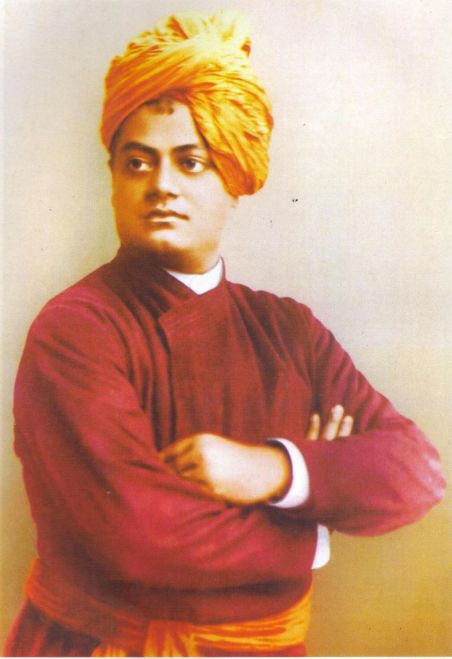
BIOGRAPHY of 'Swami Vivekanand'

Born: 12 January, 1863

Place of Birth: Kolkata, India

Childhood Name: Narendranath Dutta

Father: Vishwanath Dutta

Mother: Bhuvaneshwari Devi

Education: Calcutta Metropolitan School; Presidency College, calcutta

Religion: Hinduism

Guru: Ramakrishna

Founder of: Ramakrishna Mission (1897), Ramakrishna Math, Vedanta Society of New York

Philosophy: Advaita Vedanta

Literary works: Raja Yoga (1896), Karma Yoga (1896), Bhakti Yoga (1896), Jnana Yoga, My Master (1901), Lectures from Colombo to Almora (1897)
Death: 4 July, 1902

Place of Death: Belur Math, Belur, Bengal

Memorial: Belur math, west bengal

About Swami Vivekanand:-

There are some rare men who leave their footprints on the sands of time, becoming a source of motivation for thousands of lost wanderers in the battlefield of life. Swami Vivekananda is one such example. “Come up, o lions and shake off the delusion that you are sheep; you are souls immortal, spirits free, blest and eternal….’ These words of stunning optimism proclaimed the arrival of a prophet- philosopher no less than Swami Vivekananda on the stage of the world. Such were his words that shook the world in the Chicago address on 19 September 1893. A young, educated man, Narendranath Dutta once walked the path of scepticism and even cynicism when it came to religion.

All the powers in the universe are already our. It is we who have put our hands before our eyes and cry that it is dark.”- –Swami Vivekananda

A visit to Ramakrishna Paramahansa changed his life. He challenged Ramakrishna’s claims of having seen God. Ramakrishna put his fingers on Naren’s heart, and in a moment of overwhelmingly powerful spiritual vision, Naren discovered God everywhere- from the rich man in his mansion to the poor rickshaw puller on the streets of Kolkata. God was no more a wishful thinking confined to the Kali temple at Ramakrishna’s Dakshineshwar. He was a living entity beyond all limitations of caste, creed, religion, language, time and space. Thus Narendranath Dutta metamorphosed into Swami Vivekananda, a disciple of Ramakrishna. This, however, was merely the beginning. The master, Ramakrishna, had told him before his passing away that he, Naren, would have to do ‘Mother’s work’, to teach mankind and be like a banyan tree, giving shelter to the tired and weary. In January 1891, he left the company of his brother monks and traversed the country from the North to the South alone with God. He wept to see the suffering and ignorance of the poor, and was disturbed at the material complacency of the affluent classes. The picture of ancient India appeared vividly before his eyes in all its grandeur and glory, and the contrast was unbearable. Swamiji set upon himself the task of rebuilding a new and rejuvenated India.

Learn everything that is good from others but bring it in, and in your own way absorb it; do not become others.” –Swami Vivekanand‘.

Be it his journey to America or the lecture at Chicago or the setting up of the Ramakrishna Mission in 1897, his main aim was service to mankind and the rebuilding of a young, vibrant and educated India. · Ramakrishna Mission today is a giant organisation which dedicates itself to the execution of extensive educational and philanthropic work in India and abroad, and expounds the profound Vedantic philosophy preached by Swamiji. The impact Swamiji had on India and across the world can be best understood by the comment made by The New York Herald about his speech at Chicago; ‘He (Swamiji) is undoubtedly the greatest figure in the Parliament of Religions. After hearing him, we see how foolish it is to send missionaries to this learned nation.

“Take up one idea. Make that one idea your life; dream of it; think of it; live on that idea. Let the brain, the body, muscles, nerves, every part of your body be full of that idea, and just leave every other idea alone. This is the way to success, and this is the way great spiritual giants are produced.”

― Swami Vivekananda

Narendranath Dutta was born on 12 January 1863, and Swam Vivekananda passed away on July 4, 1902. But the lionheart with his piercing eyes, mobile lips, swift movements, clad in yellow and orange, shining like the sun of India in the heavy atmosphere of Chicago, lives on in the memory of millions. He inspires every ma in the world to ‘arise, awake, and stop not till the goal is reached.

You have to grow from the inside out. None can teach you, none can make you spiritual. There is no other teacher but your own soul.”
― Swami Vivekananda

If anyone wants to study the origin of the Vedanta movement in America then study Swami Vivekananda travels across the US. He was a great thinker, great orator, and passionate patriot. It is not wrong to say that he was more than just a spiritual mind.

“Be the servant while leading. Be unselfish. Have infinite patience, and success is yours.”
― Swami Vivekananda

5 Tourists Places in India with the Touch of Nature

Photo by Tatiana Syrikova on Pexels.com

Who does not want to explore new places? Everyone loves to travel and visit beautiful places. India is a destination for tourist lover of all over the world as every type of tourist place can be found here. From mountains to sea, from forest to desert and from historical to science places. According to statistic 2019, India ranks 34th out of 140 tourism countries from all over the world. Here I have given some suggestion of places from India where you will forget yourself with the touch of nature. So, pack your bag and go to these places.

Snow in Gulmarg

1) Gulmarg, Jammu-Kashmir (North of India) : Jammu- Kashmir is called ‘heaven on earth’. It is a popular hill station and town in Kashmir. Its location is sets in the Pir panjal Range of WESTERN Himalayas. The height of this place is 2650m from sea level. During summer (April- May) it is full of greeneries. But the best time for tourism is January to February for snowfall. Here you can take a ride of gondola, enjoy the beautiful scenery of mountains in Khilanmarg, make an iceman from snow and feel the speed of snow skiing.

Gulmarg meadow in Summer
Desert of Jaisalmer

2) Jaisalmer, Rajasthan (west of India): Jaisalmer, the golden city, is a desert city. It’s the 9th biggest sub- tropical desert in the whole world. It also works as a natural barrier between two countries, India and Pakistan. In the sea and mountains of the sand, you can enjoy the camel riding, feel the hot and cold weather during day and night in campaign. Take the pleasure of camel ride to travel in the desert .Don’t think that sand can’t give you the pleasure because it will certainly give you much more than you think.

Camel Ride in The Desert of Jaisalmer
Blackwaters in Kerala

3) Blackwaters, Kerala (south of India): It is a nature made water path in Kerala. This biackwaters is a water connection between lagoons, and lakes of Arabian sea. This blackwater wide more than 900km in size with some rivers, lake, water cannels etc. Vambanad lake which is India’s ever long lake, situated here. You can enjoy these waterbed sceneries in ferny ride.

Gangtok in Sikkim

4) Gangtok, Sikkim (North- east of India): It is the capital town of Sikkim which is situated in the height of 1650m from sea level. It is a valley town with the scenery of majestic mountains. It was famous for pilgrims’ place of Buddhist. The spectacular mountain scenery, wonderful Tibetan culture and magnificent monasteries, flower gardens will make you addict to this place.

Scenery of Gangtok
al lake in Srinagar

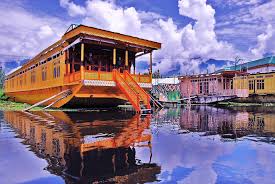
5) Srinagar, Jammu & Kashmir (North of India) : It is the northeast city of India .There are lot of lakes in Srinagar .You can enjoy & travel in the lake with shikara ride. You can enjoy luxury living in cozy boat houses . Dal lake is the most famous lake in the northern India . You can also bought things from floating market in the morning time . You also be able to enjoy the traditional festive meat dish Wazwan .The enormous sight of  30 hector tulip garden will enlighten your mood . You can also watch the whole Srinagar from the city tower of Pari Mahal in Zabarwan mountain . The water of Chashme shahi will cure your body with your medicinal power . You will feel yourself as a ruler in the majestic palace of Maharaja Hari Singh .

Boat house in the lakes of Srinagar
Shikara in the lake of Srinagar

Confidence:a key to success?

Confidence means feeling sure of yourself and your abilities in a realistic and secure way. Yes, it is rightly said that confidence is the key to success. It is built on the choices and accomplishments that feed your passion, most of all making you happy and feeling proud on yourself.

It doesn’t mean to feel like superior from others or in any arrogant way but to believe in a positive manner that you’re capable. A confident person can achieve the goals and face the scenarios of life far better than those who lacks it.

The people who are confident enough are admired by others ,can take the risk , look up the situations positively and also inspire others.

” low self-confidence isn’t a life sentence. Self confidence can be learned , practiced and mastered- just like any other skill. Once you master it, everything in your life will change for the better”.

Barrie Davenport

Tips to be confident:

  1. It is obvious that if you don’t believe in yourself how do u expect any other person to do that ? Confidence begins to develop by the time of accomplishment of the goals. So GET THE THINGS DONE is the foremost step in which you are required to set-up your day-to-day goals and when you will achieve them, automatically you will have the confidence of doing it.
  2. Just setting up of the goals is not enough and there comes the second tip to MONITOR THE PROGRESS by which you can easily know how much you have achieved and also can make any changes in your goals if needed to satisfy them.
  3. The way you appear or dress have a significant impact on your confidence .So DRESS SMART , it is the international symbol of status and no matter where you live it is always preferable to bring more attractiveness and confidence in you.
  4. Here comes the role of a BODY LANGUAGE which plays more important role in judging the personality of a person. Behave in a manner which will present you more confident . Always walk tall ,have an eye contact while talking and be energetic.
  5. Find out your strengths and try to LEVERAGE YOUR STRENGTHS dont give much focuss on your shortcomings otherwise you will become less confident. Just know your areas of master and bring them to more upper level to increase them it will eventually help you to be more confident about yourself.

|Political parties and Party system in India|

Political parties are voluntary associations for organised groups of individuals who share the same political views and who try to gain political power through constitutional means and who decide to work for promoting the national interest. 

There are four types of political parties in the modern democratic states : Reactionary parties which cling to the old social economic and political institutions, conservative parties which believe in the status quo, liberal parties which aim at reforming the existing institutions and radical parties which aim at establishing a new order by overthrowing the existing institutions.

Characteristics of party system in India:

Multi party system- The continental size of the country, the diversifying character of Indian society, the adoption of Universal adult franchise, the particular type of political process and other factors have given rise to a large number of political parties. In fact, India has the largest number of political parties in the world.

One dominant party system- In spite of the multi party system the political scene in India was dominated for a long time by the Congress, hence Rajni Kothari an eminent political analyst prefers to call the Indian party system as “one party dominance system” or the “Congress system”.

Lack of clear ideology- Except the BJP and two Communist Parties (CPI and CPM), all the parties do not have a clear cut ideology. They are ideologically closer to each other. They have a close resemblance in their policies and programmes.  Almost every party advocates democracy, secularism, socialism and Gandhism.

Personality cult- Quite often, the parties are organised around an eminent leader who becomes more important than the party and its ideology. Parties are known by their leaders rather than by their manifesto. It is a fact that the popularity of Congress was mainly due to the leadership of Nehru, Indira Gandhi and Rajiv Gandhi.

Based on traditional factors- In the western countries, political parties are formed on the basis of socio-economic and political programmes. On the other hand, a large number of parties in India are formed on the basis of religion, caste , language , culture , race and so on. 

Emergence of Regional parties- Another significant feature of Indian party system is the emergence of a large number of Regional parties and their growing role. They have become the ruling parties in various states like BJD in Odisha, Akali Dal in Punjab and so on.

Factions and defections- Factionalism, defections, splits, mergers, fragmentation, polarization and so on have been an important aspect of the functioning of political parties in India. The passion for power and material considerations have made politicians leave their party and join other party or start a new party.

Lack of effective opposition- An effective opposition is very essential for the successful operation of the parliamentary democracy prevalent in India. It checks the autocratic tendencies of the ruling party and provides an alternative government. However, in the last 50 years an effective, strong, organised and viable natural or position could never emerge except in flashes.

CHILDHOOD – BEST DAYS

I don’t know when I lost my childhood
I think I lost my childhood
When I started focusing on my studies,
Maybe I lost it
When I start overthinking about tomorrow
Maybe when I get jealous of my cousin
Maybe I lost it when my parents compare me with others
May be when I started doing something to please my parents
Maybe when I feel guilty for saying something
Maybe when I came to know that everything that I learnt in my childhood is just a bookish line
And no one takes that seriously in real life
Not even my parents
Maybe then I lost my childhood

We have to learn from our childhood
●To be happy for no reason
●To always be curious
●To fight tirelessly for something

I think Childhood was the best memories of everyone.

My childhood was also very memorable to me.
I used to play till 7pm without any thought of my homework or my parents.
At that time my father was in Indian army that’s why he couldn’t live with us.I was living with my mom and grandma
Thus whenever I come from school I have to go to market for food supplies or everything that is needed for home.And that’s why I am always onMy angry mood because my friends were playing when I had to go to market
And as a child I also wanted to play.
Thus whenever I return to the market I started playing with my friends till 7 pm.
My grandma is always waiting for me to come back after playing.
My grandma loves me so much.I usually sleep with my grandma and she always sang a song for me, tells bad time stories.She loves to irritate me..
She was my best friend at that time.I think I was closer to my grandma even more than my mom.
My grandma and I were just like friends.
Whenever grandma borrows some money from me then I always get it back with some intrest.

Whenever I went to my maternal grandmother’s home I enjoyed a lot there.My uncle always takes me to a resturant for my favorite foods.He took me to a fair.And in my grandfathers shop I played a lot.I used to irritate every customer but my grandfather never scolds me for that.
In the evening grandmother took me to the tour of village and I enjoyed it a lot.
Best thing is that I was known by my mothers name there.And I am proud of them.

My Childhood was definitely the best memory for me.
There was no tension for homework, assignment, exams career, future
We just enjoy our lives but now everything is the opposite.

We always complete some tasks.Always always always…..
In the morning we wake up and keep doing our work whether we enjoy it or not.As it is our duty and we have to do it because we get paid for it or to get a job we have to study hard.

Some have dreams to achieve it thus they also enjoy their everywork that brings them closer to their dreams
But some don’t have, they are just doing things because their parents want them to do or they want to earn money for their livelihood.

But what do you think about it?Are they enjoying their lives?
Of course not.

So according to my best things for happiness is stop questioning yourself and be proud of yourself for enjoying your life

●You have a roof over your head.

●You ate today.

●You have clean water.

●You have a good heart.

●You wish for others.

●You are breathing.

●Atleast one person care for you.

●You have clean clothes.

Be grateful for the little things…

Sometimes we stress over things that we don’t have and not thankful for the things we already do have.

  • Subjects to be incorporated in the school curriculum
    Education is more than a black board and ahead of the school text books. Woefully education has just been dumped and limited to the curriculum followed in schools which comprises of science, mathematics, social science and languages. These five subjects cannot solely provide the skills required for the career of every individual in the long run. Although the above subjects frame a basic foundation for the students, education is beyond this small circle. It should facilitate quality learning all through the life which should be enduring. Education should be concentrated on a wide range of fields and provide platforms to […]
  • IIT-MADRAS, AVISHKAR HYPERLOOP TEAM QUALIFIES FOR EUROPEAN HYPERLOOP WEEK
    A group of students with team named “AVISHKAR” from IIT Madras have been working tremendously towards the technology behind the future of transportation, HYPERLOOP. The team comprises of forty students from various department of IIT, madras. They have been working on this new prototype hyperloop project since last November. BUT, WHAT IS HYPERLOOP? Basically, hyperloop is a high speed mass transportation system. A hyperloop is a super speed ground-level transportation system in which people could travel in a hovering pod inside a vacuum tube at speeds as high as 760 mph (1220 km/h). While talking about the product, Neel said, “Hyperloop […]
  • 360 Wander Writer
    Welcome to the Festive world The Carnival of Venice This Carnival of Venice is described as one of the best carnivals in the world. It is centered around the Piazza San Marco. The events are held in every towns and cities of Venice. This event also contains boat parades along with the Grand Canal. Its main specialty is about their elaborate masks and a mask parade is done in the Piazza San Marco. It comprises of a special Carnival for Children in the Cannaregio district of Venice. It is kind of annual festival held every year in the city of […]