Literature broadly is any collection of written work, but it is also used more narrowly for writings specifically considered to be an art form, especially prose fiction, drama, and poetry. In recent centuries, the definition has expanded to include oral literature, much of which has been transcribed.
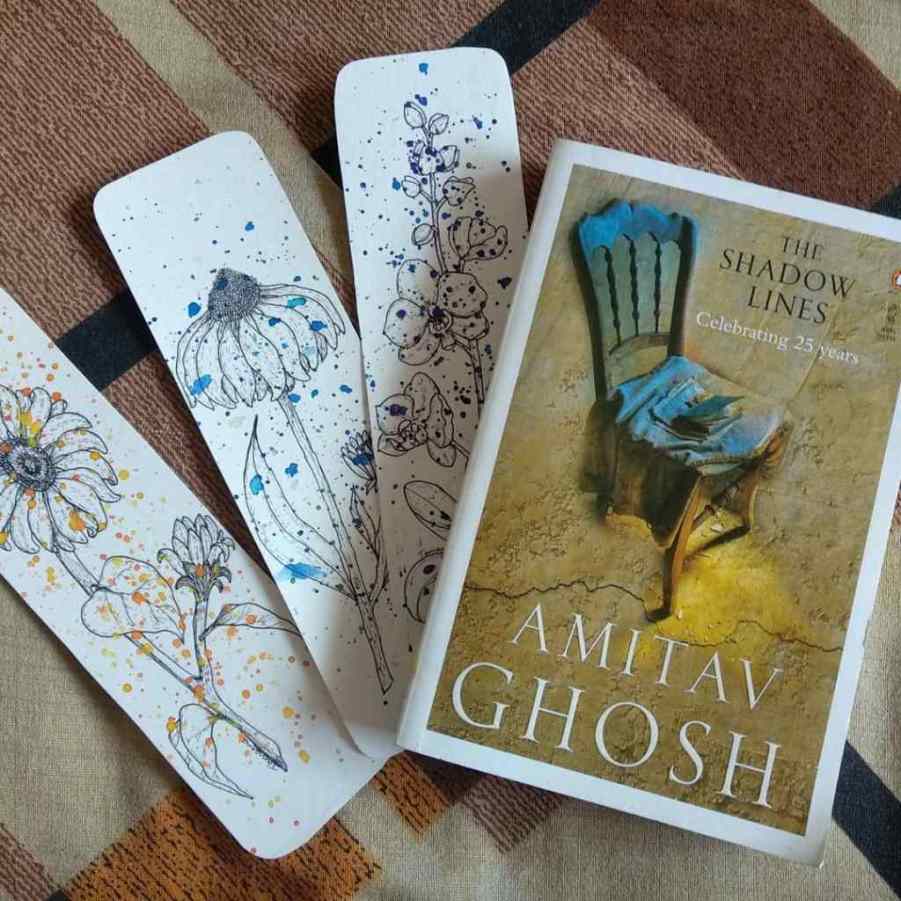
The novel ‘The Shadow Lines by Amitav Ghosh centers around a young boy, the narrator, whose growth in age and maturity is traced slowly through his understanding of the memories that connect him and his family members. Through the novel, we see that the narrator has flashbacks in time as bits and pieces of stories, both half-remembered and imagined, come together in his mind until he arrives at an intricate, interconnected picture of the world where borders and boundaries mean nothing, mere shadow lines that we draw dividing people and nations.
The title ‘The Shadow Lines’ depicts the author’s perspective on the cultural, ideological, geographical, and psychological borders, which he asks us to disregard in favor of broader humanism. The title ‘shadow lines’ can refer to many different things, but I believe that the allusion of Amitav makes is to the borders that separate nations from each other.
Divisions between nations – shadow lines
Amitav Ghosh asserts that the borders that separate nations are nothing more than artificial lines created by humans. Thus, the ‘shadow lines of the title are the borders that divide people, and one of the main emphases of the novel is on the arbitrariness of such cartographic demarcations.
Why are these lines ‘shadowy’ then? Because like shadows, they lack substance, they lack meaning. Ghosh believes that these ‘shadow lines’, these meaningless borders, can and should be crossed – if not physically, then at least mentally through our imagination and open-minded acceptance of people, irrespective of nationality, religion, or race.
In the novel, the lives of the narrator’s family have been irrevocably changed as a consequence of Bengal’s Partition between India and Pakistan at the time of Independence and the subsequent experience of the East Pakistan Civil War of 1971, which led to the creation of Bangladesh. Towards the end, when members of the family are about to undertake a journey from Calcutta to their former home in Dhaka, the narrator’s grandmother asks whether she will be able to see the border between India and East Pakistan from the plane.
She is puzzled when told that there will be no such visible demarcation and says: “But if there aren’t any trenches or anything, how are people to know? I mean, where’s the difference then? And if there’s no difference both sides will be the same; it’ll be just like it used to be before when we used to catch a train in Dhaka and get off in Calcutta the next day . . .”
The novel is about how pain inflicts in human life even though it is a heart-throbbing past. The burden of the past never leaves is quite visible through this novel, as the characters in the novel who have suffered from the feeling of losing their real homes, their originality, and motherland show the readers about the devastation of Humans and the consequences with humans community due to war and riots.
This ingenious response on her part highlights the absurdity of the revisionist map-making of the politicians responsible for Partition. Because the truth is that there is no difference between this side of the border and that. There’s nothing concrete about these borders for they only exist in maps and our minds.
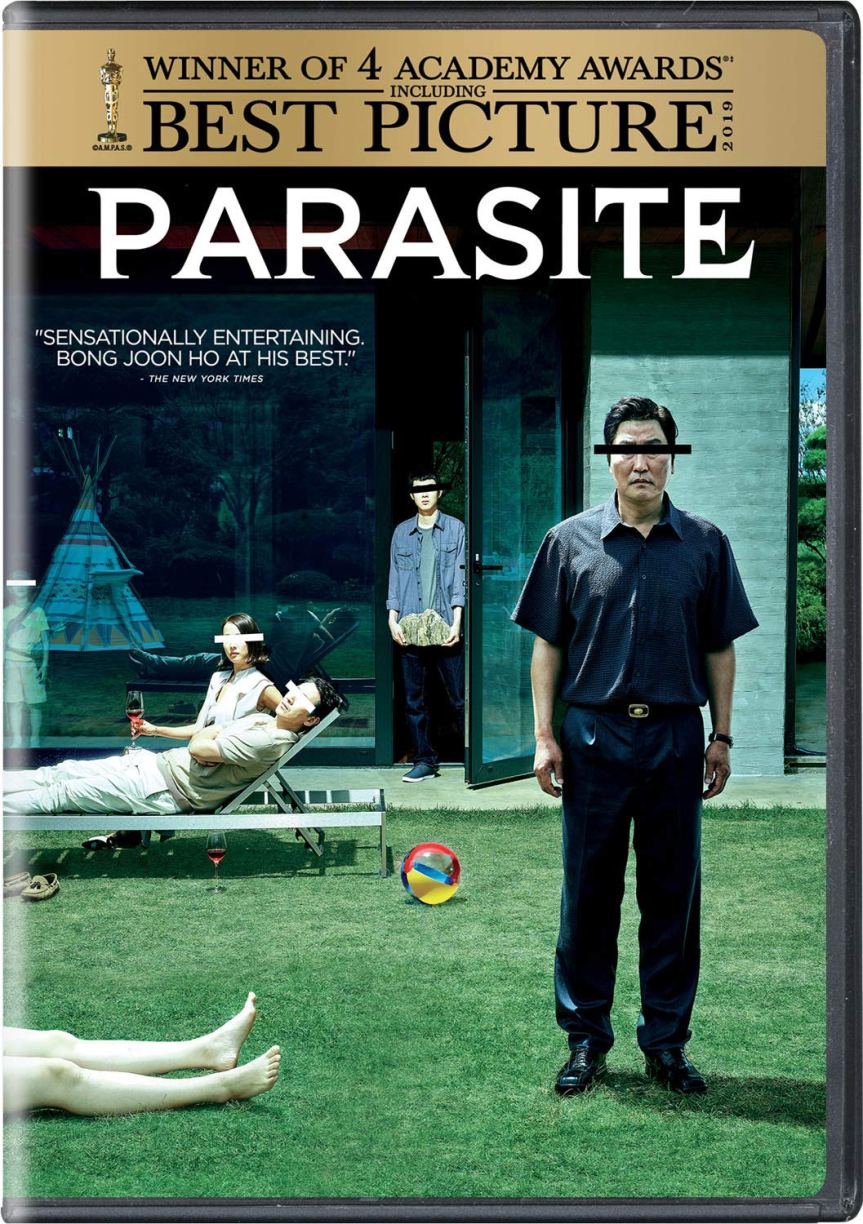
The parasite is a film that is inevitably mind-blowingly awesome, whichwould leave even the most verbose enthusiast speechless!.
The movie was celebrated all over the world for its nuanced take on social inequality and making its way to Oscar’s history as the first foreign language winner of best picture.But Bong Joon Ho’s ( director ) scathing critique of modern society goes way beyond its riveting plot points.
Plotand title
Parasite centers around the abjectly poor but cunning Kim family who dream of escaping their filthy semi-basement they scam their way into the lives of the very wealthy park family innovating methods to find work as a tutor, chauffeur, art therapist, and housekeeper for most parts things went smoothly until they found out they’re not the only one beguiling the family, the former housekeeper husband has been staying in the house hidden bunker for year’s to hide from debt collectors.
Tensions between the two working-class families mount and everything descents down at a very bloody birthday party leaving several deaths, after stabbing Mr park, Mr. Kim retreats into the same bunker to hide avoiding the foreseeable future, meanwhile the Kim son fantasies about buying the house and freeing his dad.
Title
The title parasite represents the way these four members of the lower class leach off the good nature and generosity of the Park family, but what is Bong trying to tell us in the aftermath is that the parks are also leaching off the lowers classes by living comfortably on the backs of their labor thus questioning the audience In late-capitalist society who are the parasites? the poor are surviving off the rich while the rich are living off the poorthe middle class are busy making resumes
Cinematography and symbolic references
The film owes much of its success around the world to its reliance on cinematic language rather than the spoken language we examine two families on opposite sides of the economic spectrum and every cinematic tool has been used to contrast between the two.
The first shot of the film shows Kims semi-basement window with a glimpse of natural sunlight pouring through and the camera moves downward compare to that we see the park’s home, the camera is moving upwards to the modern home architecture into the full view of the sun we see that Bong ( director) has used the balance of light and darkness, natural and urban environment to signify their economic status
Most parts of the movies showed Kim’s family infiltration process following the same visual pattern upward towards light finding their host and again moving downwards into darknessuntil the revealing of the bunker where we descend to the lowest point with no sunlight and no hope it’s more of a prison than a home, but at least better than being dead.
The Kim’s got a taste of paradise to live among the rich before the rain flushed them right back downthe parks are sanctioned from everything, not necessarily antagonists but rather they are disconnected from everyday life failing to see the harsh reality of the economically weaker section of the society.
Everything in the movie from clothing, hairstyle to the sad empty fridge, is used to indicate their stature as a family in the lower class, even their smell gives them the way but something never changes and that the dream that once lifted you can come back to haunt you.
The parasite is a film that is inevitably mind-blowingly awesome, whichwould leave even the most verbose enthusiast speechless!.
The movie was celebrated all over the world for its nuanced take on social inequality and making its way to Oscar’s history as the first foreign language winner of best picture.But Bong Joon Ho’s ( director ) scathing critique of modern society goes way beyond its riveting plot points.
Plotand title
Parasite centers around the abjectly poor but cunning Kim family who dream of escaping their filthy semi-basement they scam their way into the lives of the very wealthy park family innovating methods to find work as a tutor, chauffeur, art therapist, and housekeeper for most parts things went smoothly until they found out they’re not the only one beguiling the family, the former housekeeper husband has been staying in the house hidden bunker for year’s to hide from debt collectors.
Tensions between the two working-class families mount and everything descents down at a very bloody birthday party leaving several deaths, after stabbing Mr park, Mr. Kim retreats into the same bunker to hide avoiding the foreseeable future, meanwhile the Kim son fantasies about buying the house and freeing his dad.
Title
The title parasite represents the way these four members of the lower class leach off the good nature and generosity of the Park family, but what is Bong trying to tell us in the aftermath is that the parks are also leaching off the lowers classes by living comfortably on the backs of their labor thus questioning the audience In late-capitalist society who are the parasites? the poor are surviving off the rich while the rich are living off the poorthe middle class are busy making resumes
Cinematography and symbolic references
The film owes much of its success around the world to its reliance on cinematic language rather than the spoken language we examine two families on opposite sides of the economic spectrum and every cinematic tool has been used to contrast between the two.
The first shot of the film shows Kims semi-basement window with a glimpse of natural sunlight pouring through and the camera moves downward compare to that we see the park’s home, the camera is moving upwards to the modern home architecture into the full view of the sun we see that Bong ( director) has used the balance of light and darkness, natural and urban environment to signify their economic status
Most parts of the movies showed Kim’s family infiltration process following the same visual pattern upward towards light finding their host and again moving downwards into darknessuntil the revealing of the bunker where we descend to the lowest point with no sunlight and no hope it’s more of a prison than a home, but at least better than being dead.
The Kim’s got a taste of paradise to live among the rich before the rain flushed them right back downthe parks are sanctioned from everything, not necessarily antagonists but rather they are disconnected from everyday life failing to see the harsh reality of the economically weaker section of the society.
Everything in the movie from clothing, hairstyle to the sad empty fridge, is used to indicate their stature as a family in the lower class, even their smell gives them the way but something never changes and that the dream that once lifted you can come back to haunt you.
As we already read about the secret to living happily from The Alchemist book by Paulo Coelho. Today we will look at two different stories from different books.
THE KITE RUNNER BY KHALID HOSSEINI
It was a dark little tale about a man who found a magic cup and learned that if he wept into the cup, his tears turned into pearls. But even though he had always been poor, he was a happy man and rarely shed a tear. So he found ways to make himself sad so that his tears could make him rich. As the pearls piled up, so did his greed grow. The story ended with the man sitting on a mountain of pearls, knife in hand, weeping helplessly into the cup with his beloved wife’s slain body in his arms.
This story must give you goosebumps but, the real conclusion is when Amir the protagonist and the narrator of the book The Kite Runner wrote this story and shared it with his friend Hassan, who is a servant’s boy of Amir’s family. Hassan was shocked and impressed with Amir’s story but, he asked why he has to kill his own wife, instead of he can shed tears by cutting onions?
MORAL: When you have to choose something… Choose wisely.
VERONICA DECIDES TO DIE BY PAULO COELHO:
Zedka started to narrate a story to Veronica.
A powerful wizard, who wanted to destroy an entire kingdom, placed a magic potion in the well from which all the inhabitants drank. Whoever drank that water would go mad.
The following morning, the whole population drank from the well and they all went mad, apart from the king and his family, who had a well set aside for them alone, which the magician had not managed to poison. The king was worried and tried to control the population by issuing a series of edicts governing security and public health. The policemen and inspectors, however, had also drunk the poisoned water, and they thought the king’s decisions were absurd and resolved to take no notice of them.
When the inhabitants of the kingdom heard these decrees, they became convinced that the king had gone mad and was now giving nonsensical orders. They marched on the castle and called for his abdication.
In despair the king prepared to step down from the throne, but the queen stopped him, saying: ‘Let us go and drink from the communal well. Then we will be the same as them.’
The king and the queen drank the water of madness and immediately began talking nonsense. Their subjects repented at once; now that the king was displaying such wisdom, why not allow him to continue ruling the country?
After drinking water from the poisonous well all became mad and equal. The country continued to live in peace although its inhabitants behaved very differently from those of its neighbors. And the king was able to govern until the end of his days.
Zedka asked veronica: Do you know what exists outside beyond the walls of this asylum?
Veronica said People who have all drunk from the same well.
MORAL: Zedka and Veronica both are patients in the asylum. Through this story, Zedka symbolically tells that people think they are civilized and normal. But, when they encounter some strange people they started to divide the borders and make them as a patient.
With the rapid growth in the usage of social networks worldwide, uploading and sharing of generated content, both text and visual, has become increasingly prevalent.
Today, social media refers to a wide range of Web sites and Internet-based services that allow users to create content and interact with other users. Language is an evolving thing. It’s naive to think that the language of social media isn’t affecting the way we use English in day-to-day life. It’s more appropriate to consider just how much of an effect it’s having on the way we communicate. A whole host of words originating from social media and the wider Internet have become so commonplace that they’ve now slipped into popular usage, and we don’t even realize it.
Just a few interesting words that have their origins in technology are blogosphere (the collective word for personal websites called blogs), troll (someone who creates conflict online by starting arguments or upsetting people)
Modern companies (like Adidas, mad over marketing or even celebrities) use their presence on social media platforms for diverse business goals. Social media present a new and unique way for direct interaction between the company and different users, right down to the customer as well. While most social media platforms offer some way to measure user engagement, many focus on customer conversion, rather than content.
The emphasis on linguistics and user-generated keywords on social sites
Multilingualism:
As of now, and according to the data of http://www.internetworldstats.com, the Internet has eight-hundred fifty million English-speaking users out of one billion five hundred million total users. This means that the market for the English language is more or less than one-third of the total market. All this means that there is an enormous body of information being constantly generated which is also being constantly lost behind language usage this proves language diversity in Internet ecology is of paramount importance.
We consider linguistic features in two classes: variations of English, including spelling, and differences in emotive and personal language, including pronouns, interrogatives, and exclamations but emotive language, and personal informal language are used more frequently than the formal tone.
Variation in Lexical Conventions Tweets in the social chats are more likely to contain apostrophes commas and full stop (such as “can’t”), with missing apostrophes (such as “cant” and “didn’t”) or abbreviations (e.g., “u” for “you” or “k” for “ok”)
Emotive and Personal Language The two collections also show striking differences in tone and the degree to which posts describe personal experiences or opinions. The social community collection has more instances of exclamations and questions, and more non-standard strings of exclamation and question marks. The abundance of exclamations suggests the messages are more likely to be strongly emotive.
Emotions of one kind are also suggested by the number of messages containing any of several dozen grammatically incorrect or swear words or and those all in upper case. Pronouns too are much more prominent in tweets that include the first-person pronoun, and sometimes include the abundance of “ and ” as a word is partly due because we treated “&” as a word boundary.
The infrequent use of the second person pronoun indicates people are not as involved in discussions. Users in this collection also make much greater use of Twitter hashtags to label their posts. We believe this points to more careful use of the posts and a curatorial intent, where hashtags serve to direct a tweet or post to the right audience when the two individuals do not know each other.
There are also instances of online brands becoming so powerful that words have crept into the English language based on them. ‘Google’ is the world’s leading search engine and it has become so universal in its usage that the phrase ‘Google it’ has virtually replaced the phrase ‘search for it’ in common speech. There are examples of this lifted directly from social media too; ‘tweet it’ refers to writing a message using Twitter, but has essentially come to mean ‘share it’
Colors are also being widely used to indicate the source of topics: Topics triggered by the page owners on Instagram or Twitter are highlighted through a light blue color. All data is available in an all-time overview.
To summarise, not all social media language is the same. In our collection, talk in the science or work arena is more formal, with more care taken to address an audience, and more concerned with passing on non-personal information, while the tweets or posts in the social environment are more on a personal note, expressing emotions, describing experiences and asking more questions. This mirrors what could be the equivalent genres in other media: a conversation, on the one hand, scientific writing on the other
The not so scientific techniques of language phrasing on social sites
Some of these tools, such as multi-party chats, discussion forums, blogs, and online reviews, have been a focus of “natural language processing (NLP) research for quite some time now. But within the last decade, NLP work has expanded rapidly to cover an immense variety of new social media content—microblogs such as Twitter, social networks such as Facebook, comments on news articles, captions on user-contributed images such as on Instagram, and forums dedicated to specialized topics and needs (e.g., health and online education)”. Simultaneously, many other research communities are carrying out work using social media data information science, social science, psychology, and linguistics.
Today, a large number of businesses are also centered on or benefit from, analytics and language usage performed on social media. Given these vast research and commercial interests in the social media domain, we are at a time where we should seek to clearly understand what role language has in the field of social media analysis, both in terms of the key and interesting language questions, as well as contributions NLP had made to the research carried out in other fields.
Identifying patterns of usage:
People use the same language for different purposes; most of the time similar content or language used receives millions of views over a week or a course of few hours( likely because of the language which probably have been making the headlines) timing as well play a major role in deciding how fast that particular language or a keyword is being transferred across a particular location for example if there’s a news related to examination during the pandemic chances are the search engines related to that particular news topic will continue to be on the topmost chart among students on a wider range thus making these words ‘lockdown’, ‘online exams’, and covid, etc a specific headlines on Google or social media sites.
Social network and language impact on Cultural awareness
People using social media primarily collect cultural and language examinations through their own experiences and general mobility: by traveling, working, and studying. Nevertheless, they can also gain additional knowledge on languages, cultures, and cultural awareness through social media itself and through other collaborative virtual communities in which they participate.
From unfriend to selfies, social media is having an impact on language and cultural changes. As someone who writes about social media, I’m aware of not only how fast these online platforms change, but also of how they influence the language in which a person writes.
But how much can we trust different categories of social media, such as Instagram for example? The quality and certainty of available materials remain an open question. For that reason, Many researchers suggest the use of authorized materials already available over the Web and in different virtual communities, but not necessarily social media
Most social media users use social media tools for information gaining or cultural acknowledgment particularly through knowing the names of foods consumed by various people over the world, places or the type of clothes worn by people of different cultures and the everyday experiences of populations, (e.g, cottage cheese which is a generic term used around the world is known by a specific name in other world countries like Feta in Greece, Ricotta in Italy, and paneer in India so on )
Conclusion
What social media has done is enable us to communicate with a much larger number of people on a global scale in a way that we only really used to be able to do on a local level. It is a rich playground for experimenting, creating new words, and repurposing old ones; it also provides a platform for people who aren’t consumed by grammatical rules and syntax, giving the freedom to flout the usual maxims of conventional English Language and be innovative, creative and forward-thinking. Language is and always has been ever-evolving. Although the developments and trends we witness in language over time are significant, the foundation of the English language remains as strong and infallible as it always has been.
With the rapid growth in the usage of social networks worldwide, uploading and sharing of generated content, both text and visual, has become increasingly prevalent.
Today, social media refers to a wide range of Web sites and Internet-based services that allow users to create content and interact with other users. Language is an evolving thing. It’s naive to think that the language of social media isn’t affecting the way we use English in day-to-day life. It’s more appropriate to consider just how much of an effect it’s having on the way we communicate. A whole host of words originating from social media and the wider Internet have become so commonplace that they’ve now slipped into popular usage, and we don’t even realize it.
Just a few interesting words that have their origins in technology are blogosphere (the collective word for personal websites called blogs), troll (someone who creates conflict online by starting arguments or upsetting people)
Modern companies (like Adidas, mad over marketing or even celebrities) use their presence on social media platforms for diverse business goals. Social media present a new and unique way for direct interaction between the company and different users, right down to the customer as well. While most social media platforms offer some way to measure user engagement, many focus on customer conversion, rather than content.
The emphasis on linguistics and user-generated keywords on social sites
Multilingualism:
As of now, and according to the data of http://www.internetworldstats.com, the Internet has eight-hundred fifty million English-speaking users out of one billion five hundred million total users. This means that the market for the English language is more or less than one-third of the total market. All this means that there is an enormous body of information being constantly generated which is also being constantly lost behind language usage this proves language diversity in Internet ecology is of paramount importance.
We consider linguistic features in two classes: variations of English, including spelling, and differences in emotive and personal language, including pronouns, interrogatives, and exclamations but emotive language, and personal informal language are used more frequently than the formal tone.
Variation in Lexical Conventions Tweets in the social chats are more likely to contain apostrophes commas and full stop (such as “can’t”), with missing apostrophes (such as “cant” and “didn’t”) or abbreviations (e.g., “u” for “you” or “k” for “ok”)
Emotive and Personal Language The two collections also show striking differences in tone and the degree to which posts describe personal experiences or opinions. The social community collection has more instances of exclamations and questions, and more non-standard strings of exclamation and question marks. The abundance of exclamations suggests the messages are more likely to be strongly emotive.
Emotions of one kind are also suggested by the number of messages containing any of several dozen grammatically incorrect or swear words or and those all in upper case. Pronouns too are much more prominent in tweets that include the first-person pronoun, and sometimes include the abundance of “ and ” as a word is partly due because we treated “&” as a word boundary.
The infrequent use of the second person pronoun indicates people are not as involved in discussions. Users in this collection also make much greater use of Twitter hashtags to label their posts. We believe this points to more careful use of the posts and a curatorial intent, where hashtags serve to direct a tweet or post to the right audience when the two individuals do not know each other.
There are also instances of online brands becoming so powerful that words have crept into the English language based on them. ‘Google’ is the world’s leading search engine and it has become so universal in its usage that the phrase ‘Google it’ has virtually replaced the phrase ‘search for it’ in common speech. There are examples of this lifted directly from social media too; ‘tweet it’ refers to writing a message using Twitter, but has essentially come to mean ‘share it’
Colors are also being widely used to indicate the source of topics: Topics triggered by the page owners on Instagram or Twitter are highlighted through a light blue color. All data is available in an all-time overview.
To summarise, not all social media language is the same. In our collection, talk in the science or work arena is more formal, with more care taken to address an audience, and more concerned with passing on non-personal information, while the tweets or posts in the social environment are more on a personal note, expressing emotions, describing experiences and asking more questions. This mirrors what could be the equivalent genres in other media: a conversation, on the one hand, scientific writing on the other
The not so scientific techniques of language phrasing on social sites
Some of these tools, such as multi-party chats, discussion forums, blogs, and online reviews, have been a focus of “natural language processing (NLP) research for quite some time now. But within the last decade, NLP work has expanded rapidly to cover an immense variety of new social media content—microblogs such as Twitter, social networks such as Facebook, comments on news articles, captions on user-contributed images such as on Instagram, and forums dedicated to specialized topics and needs (e.g., health and online education)”. Simultaneously, many other research communities are carrying out work using social media data information science, social science, psychology, and linguistics.
Today, a large number of businesses are also centered on or benefit from, analytics and language usage performed on social media. Given these vast research and commercial interests in the social media domain, we are at a time where we should seek to clearly understand what role language has in the field of social media analysis, both in terms of the key and interesting language questions, as well as contributions NLP had made to the research carried out in other fields.
Identifying patterns of usage:
People use the same language for different purposes; most of the time similar content or language used receives millions of views over a week or a course of few hours( likely because of the language which probably have been making the headlines) timing as well play a major role in deciding how fast that particular language or a keyword is being transferred across a particular location for example if there’s a news related to examination during the pandemic chances are the search engines related to that particular news topic will continue to be on the topmost chart among students on a wider range thus making these words ‘lockdown’, ‘online exams’, and covid, etc a specific headlines on Google or social media sites.
Social network and language impact on Cultural awareness
People using social media primarily collect cultural and language examinations through their own experiences and general mobility: by traveling, working, and studying. Nevertheless, they can also gain additional knowledge on languages, cultures, and cultural awareness through social media itself and through other collaborative virtual communities in which they participate.
From unfriend to selfies, social media is having an impact on language and cultural changes. As someone who writes about social media, I’m aware of not only how fast these online platforms change, but also of how they influence the language in which a person writes.
But how much can we trust different categories of social media, such as Instagram for example? The quality and certainty of available materials remain an open question. For that reason, Many researchers suggest the use of authorized materials already available over the Web and in different virtual communities, but not necessarily social media
Most social media users use social media tools for information gaining or cultural acknowledgment particularly through knowing the names of foods consumed by various people over the world, places or the type of clothes worn by people of different cultures and the everyday experiences of populations, (e.g, cottage cheese which is a generic term used around the world is known by a specific name in other world countries like Feta in Greece, Ricotta in Italy, and paneer in India so on )
Conclusion
What social media has done is enable us to communicate with a much larger number of people on a global scale in a way that we only really used to be able to do on a local level. It is a rich playground for experimenting, creating new words, and repurposing old ones; it also provides a platform for people who aren’t consumed by grammatical rules and syntax, giving the freedom to flout the usual maxims of conventional English Language and be innovative, creative and forward-thinking. Language is and always has been ever-evolving. Although the developments and trends we witness in language over time are significant, the foundation of the English language remains as strong and infallible as it always has been.
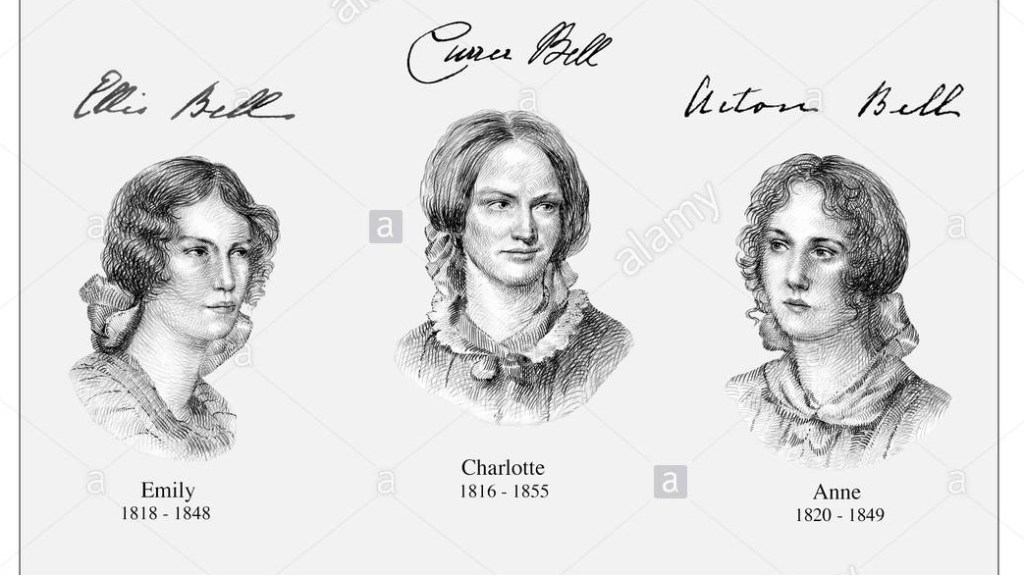
The Victorian era is known for the galaxy of female novelists. Charlotte Brontë, Emily Brontë, Mrs. Gaskell and George Eliot are in prime focus. However, the four most important women novelists, who yet are quite important, are charlotte Brontë, Emily Brontë, Mrs. Gaskell and George Eliot. Of the four, the two first named were sister, and their methods and achievement as novelists met at many places. But each of the remaining two priced her own line and made herself known in the field of English novel in her own way.
BRONTË SISTERS LIVES:
Charlotte bronte was born in 1816. They were the daughters of an Irish clergyman Patrick Brontë who held the living in Yorkshire. Financial difficulties comepelled Charlotte to become a school teacher in 1835 to 1838 and then a governess. Along with Emily she visited Brussels in 1842 and then return home where family cares kept her closely tied. Later her books had much success and she was released from many of her financial worries. She was married in 1854 but died in the next year.
Emily was born in 1818. Emily was perhaps the greatest of the three Brontë sisters, but the record of her life is extremely meagre, for she was silent and reserved and left no correspondence of interest. She was never married and had no any romantic attachments.Soon after the publication of her novel (wuthering heights), Emily’s health began to fail rapidly. She had been ill for some time, but now her breathing became difficult, and she suffered great pain. She died of tuberculosis in December 1848.
Anne Brontë was born in 1820. Anne Brontë started writing her first novel some time between 1840 and 1845 while she was working as a governess for the Robinson family, at Thorp Green near York. She laboured away in her neat, elegant handwriting, Anne must have felt that she was writing a novel that would go off like a bomb. She was the least famous among famous among her sisters. She died in 1849.
THEIR WORKS:
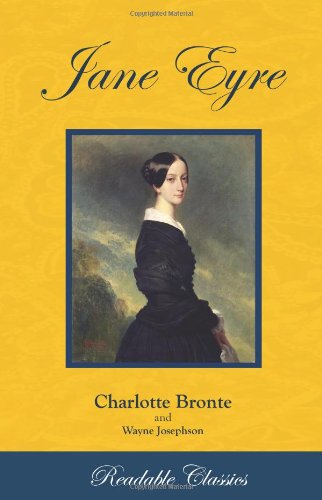
Charlotte Brontë: Charles first novel “The professor” fail to find a publisher and only appeared in 1857 after her death. Jane eyre published in 1847 is her greatest novel. The love story of the plain but very with vital heroine is an unfolder with the frank truthfulness and depth of understanding that are new in English fiction. The next novel “Shirley” published in 1849, Charlotte Brontë reverts to a more normal and less impassioned portrayal of life. “Villette” published in 1853 is written in a reminiscent vein and the character of Lucy snowe is based on the author herself. the truth and intensity of Charles work are and questioned. Most of the plots of her novel are largely restricted to her own experiences, her seriousness is unrelieved by any humour and her passion is a times over charge to the point of rage. But her novels bought an energy and passion that gave to commonplace people the wonder and beauty of the romantic world.
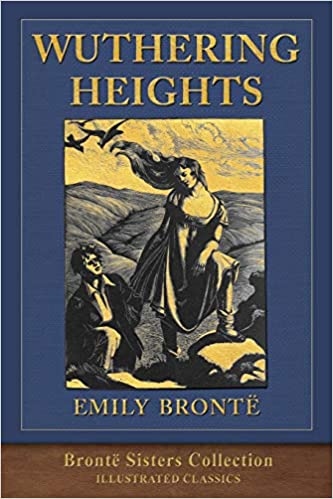
Emily Brontë: Even though she wrote less than Charlotte, Emily bronte is in some ways the greatest of the three sisters. Her one novel “Wuthering heights” published in 1847 is unique in English literature. This novel is highly imaginative work of passion. Her single novel darkens rather than solves the mystery of her spiritual existence. A few of her poems reached the very highest levels, though the majority lack distinction. her finest poems were probably “No coward soul is mine” and “cold in the Earth” and “The deep snow piled above thee”.
Anne Brontë: Anne bronte is by far the least important figure of her sisters. Her two novels “Agnes grey” published in 1847 and the “Tenant of wildfell hall” published in 1848 are much inferior to those of a sisters, for she lacks nearly all their power and intensity.
THEIR IMPORTANCE IN THE HISTORY OF NOVEL:
With Brontës the forces which had transformed English poetry at the beginning of the century were first felt in the novel. They were the pioneers in fiction. Their works are as much the products of the imagination and emotions. In their concern with the human soul they were to be followed by George Eliot and Meredith.
If you are like me, you love greek mythology and everything that comes with it, the lies, the betrayal, the love and tragedies. So what better way to know more about Greek mythology than starting with the Olympians.
1) Zeus:
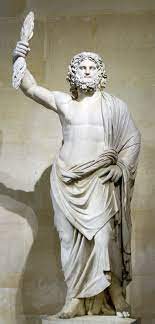
An ancient Greek god, who is known to a sky, weather god. He is a thunder god who rules the other gods of Mount Olympus.
The youngest child of Titans Cronus and Rhea, who overthrew his father and rescued his other siblings who were swallowed by their father.
He later drew lots with his brothers, and won the lot and became the supreme ruler. He is married to Hera but has had many affairs.
2) Poseidon
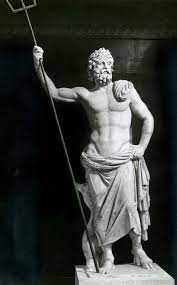
Brother of Zeus. after the overthrow, won the sea portion and became the lord of the sea.
He married Amphitrite.
His weapon is a trident that can shake the earth and shatter anything.
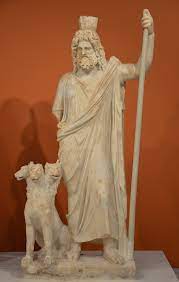
3) Hades
Known as the god of the dead and the king of the underworld.
He was the eldest son.
Hades received the underworld based on the lot. Hades is often portrayed with a three-headed guard dog called Cerberus.
Hades obtained his wife and queen, Persephone, through abduction at the behest of Zeus.
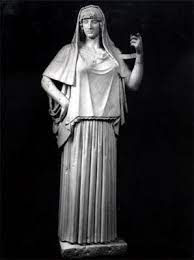
4) Hestia
Hestia is the virgin goddess of the hearth.
She is the firstborn child of the Titans.
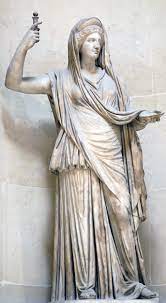
5) Hera
Wife and sister of Zeus.She is the protector of marriage and marriage women.
Her scared animals are cows and peacocks. Her favourite city is Argos.
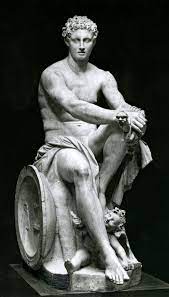
6) Ares
Son of Zeus and Hera.
He is the god of war.
His animal is a dog and the bird is a vulture.
He was caught in an act of adultery with Aphrodite.
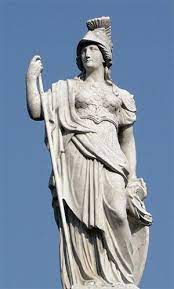
7) Athena
Daughter of Zeus.
She is fierce and brave in battle but, only wars to defined the state and home from outside enemies.
She is the goddess of the city, handicrafts, and agriculture. Her favourite city is Athens, her tree is olive.
She is a virgin goddess.
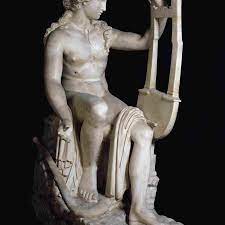
8) Apollo
Son of Zeus and Leto.
He has a twin sister called Artemis.
He is the god of music, medicine, light, truth. His tree was a laurel, the crow was his bird and the dolphin was his animal.
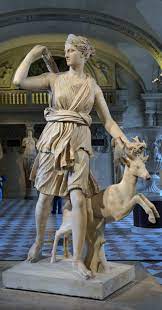
9) Artemis
Daughter of Zeus and Leto. Her twin brother is Apollo. She is the protector of the young. She also presides over childbirth, which may seem odd for a virgin, but goes back to causing Leto no pain when she was born. She is the goddess of chastity
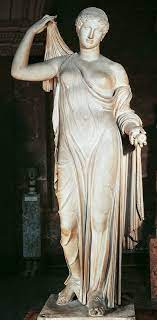
10) Aphrodite
She is the goddess of love, desire and beauty. Wife of Hephaestus, but was caught in an affair with Ares.
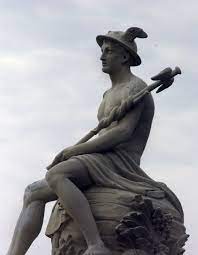
11) Hermes
Son of Zeus and Maia.
He is Zeus messenger.
He is the god of thieves and the god of commerce. He is the guide for the dead to go to the underworld.
He invented the lyre, the pipes, the musical scale, astronomy, weights and measures, boxing, gymnastics, and the care of olive trees.
12) Hephaestus
Son of Zeus and Hera.
He is the god of fire and the forge.
He is the smith and armourer of the gods. He uses a volcano as his forge.
He is the patron god of both smiths and weavers. He is kind and peace-loving.
His wife is Aphrodite. Sometimes his wife is identified as Aglaia.
We live in the age of the internet. Also, it has become an important part of our life that we can’t live without it. Besides, the internet is an invention of high-end science and modern technology. Apart from that, we are connected to internet 24×7. Also, we can send big and small messages and information faster than ever. In this essay on the Internet, we are going to discuss various things related to the internet.
Reach of Internet
It is very difficult to estimate the area that the internet cover. Also, every second million people remain connected to it with any problem or issue. Apart from that, just like all the things the internet also has some good and bad effect on the life of people. So the first thing which we have to do is learn about the good and bad effect of the internet.
Good effects of the internet mean all those things that the internet make possible. Also, these things make our life easier and safer.
Bad effects of the internet mean all those things that we can no longer do because of the internet. Also, these things cause trouble for oneself and others too.
You can access in any corner of the world. Also, it is very easy to use and manage. In today’s world, we cannot imagine our life without it.
Uses Of InternetFrom the time it first came into existence until now the internet has completed a long journey. Also, during this journey, the internet has adopted many things and became more user-friendly and interactive. Besides, every big and small things are available on internet and article or material that you require can be obtainable from internet.
Tim Berners-Lee can be called one of the main father of internet as he invented/discovered the WWW (World Wide Web) which is used on every website. Also, there are millions of pages and website on the internet that it will take you years to go through all of them.The Internet can be used to do different things like you can learn, teach, research, write, share, receive, e-mail, explore, and surf the internet.
Convenience Due To Internet
Because of internet, our lives have become more convenient as compared to the times when we don’t have internet. Earlier, we have to stand in queues to send mails (letters), for withdrawing or depositing money, to book tickets, etc. but after the dawn of the internet, all these things become quite easy. Also, we do not have to waste our precious time standing in queues.Also, the internet has contributed a lot to the environment as much of the offices (government and private), school and colleges have become digital that saves countless paper.Although, there is no doubt that the internet had made our life easier and convenient but we can’t leave the fact that it has caused many bigger problems in the past. And with the speed, we are becoming addict to it a day in will come when it will become our basic necessity.
“That is part of the beauty of all literature. You discover that your longings are universal longings, that you’re not lonely and isolated from anyone. You belong.” ― F. Scott Fitzgerald
In today’s world of cut-throat competition and skills-based learning, parents, particularly in India, encourage their children to pursue higher education in the sciences, especially in engineering and medicine as the number of job opportunities in these fields are far more than in any other field. Consequently, there is a predominant idea among large sections of the society in India that those who pursue subjects related to Humanities and Social Sciences are less intelligent and that these subjects are only of academic importance, having no real value in the practical world as they offer limited employment opportunities.
However, such people are mostly ignorant or not highly educated as they tend to make injudicious comparisons between fields of studies, most of them do not realize that the Arts and the Sciences are interconnected. As there have been scientific movements in the course of history, whereby earlier pseudo-scientific notions were replaced with modern inventions and discoveries, so there also have been artistic and literary movements that have displaced the age-old concepts in a similar manner, transposing them with newer approaches. Accordingly, even the study of literature has become more practical in approach and has adopted the experiential method of learning. Few people are aware of the fact that the inspiration behind Einstein’s theory of Relativity was the writings of the sixteenth century philosopher and visionary, Giordano Bruno.
The study of literature has actually had a humanizing effect on people. It has opened the eyes of people to the problems of the world and has enabled them to empathize with the victims of an unequal social order. Knowledge of these has induced many industrialists and business people to involve themselves in philanthropic activities. Also, literature has provided us insights into the cultures and practices of different countries across time Through the study of literature, we have come to know about the social orders of ancient Greece, India and Mesopotamia as well as of Medieval Europe and Early Modern America and Europe.
A Literature also provides us with a welcome respite from the hectic day-to-day lives because it is also a source of entertainment in the form of theatrical productions and films. Good films and plays provide families the opportunity to be together, even if for a short while. This is important in maintaining the familial bond because every individual is always busy in chasing his or her dreams.
Lastly, one cannot help but admit that good stories are always welcomed and they are an integral part of human existence, and all good stories are nothing but literature. Thus, we cannot deny the fact that literature helps in enhancing the whole personality of a reason. It has the power to lead the whole society towards the right path.
Meaning of citizenship– Citizen are the member of the political community to which they belong. They are the people who compose the State.
Constitutional Rights and Privilegesof the Citizens of India-
Citizens of India have the following rights under the Constitution: (a) Fundamental Rights mentioned under Article-15,16,19
b) Only citizens are eligible for certain offices such as those of the President, Vice-President, Judge of the Supreme Court, or a High Court, Attorney General, Governor of a State, Advocate General.
(c) The right of suffrage for election to the House of the People and the Legislative Assembly of every State and the right to become a member of Parliament and of the Legislature of a State.
Person who became Citizens on 26thJanuary, 1950:
Under Article 5-8 of the Constitution, the following persons became citizens of India at the commencement of the Constitution –
(1) who was born as well as domiciled in the “territory of India”- irrespective of the nationality of his parents A- 5(a).
(2) who are domiciled in the “territory of India”, either of whose parents was born in the territory of India- irrespective of the nationality of his parents or the place of birth of such person A- 5(b).
(3) who or whose father/mother was not born in India, but-
(a) had his domicile, in the territory of India
(b) had been ordinarily residing within the territory of India not less than 5 years soon after preceding the commencement of the Constitution.
(4) A person who had migrated from Pakistan, provided-
(a) He or either of his parents/grandparents was born in India as defined in the Government of India Act, 1935
(b) (i) if he migrated before 19 July, 1948
(ii) if he had migrated on or after 19th 1948, he further had made an application before the commencement of this Constitution for registering himself as a citizen of India by an officer appointed by the Government of India.
(5) Person who had migrated from India to Pakistan after 1 March 1947, but had subsequently returned to India under a permit issued under the authority of the Government of India.
(6) A person who, or any of whose parents/grandparents were born in India as defined in the Government of India Act, 1935 but who is ordin
Acquisition of Citizenship after 26thJanuary 1950
The various modes of acquisition of Citizenship prescribed by the Citizenship Act, 1955 are as follows-
(a) Citizenship by birth
(b) Citizenship by descent
(c) Citizenship by registration
(d) Citizenship by naturalization
(e) Citizenship by incorporation of territory
(f) In 1985 a special provision was also added as to citizenship of persons of Indian origin covered by the Assam Accord. Under section 6A (2) two conditions are required to be satisfied –
(1) persons who are of Indian Origin came before 1 January 1966 to Assam from the specified territory
(2) have been ‘ordinarily resident ‘ in Assam as it existed in 1985 since the date of entry in Assam.
Citizenship Amendment Act, 2019- The migrants of Hindu, Sikh, Buddhist, Jain, Parsi, or Christian communities from Afghanistan, Pakistan, or Bangladesh who had entered India without valid travel documents or if the validity of their documents have been expired were regarded as illegal migrants and were ineligible to apply for Indian citizenship under section 5 and 6 of the Citizenship Act, 1955.
Education is a very powerful medium to grow in life and perceive something important. In a human’s life, education benefits a lot in decreasing the difficulties of a hard life. The expertise obtained through the education era encourages everybody regarding their life.Education is a way to enter into several doors for possibilities to obtain more real prospects in life to improve career growth. Government is also arranging various programs to educate everyone about education and its benefits in our life especially in rural areas. Education delivers knowledge of equality among everyone in society and encourages the growth and improvement of the nation.
In this modern technology-based era, education performs a supreme role in our life. And in this era, there are so many methods to boost the level of education. The complete criteria of education have now been modernized. And education makes a big impact on anyone’s life.
To say Education is important is an understatement. Education is a weapon to improve one’s life. It is probably the most important tool to change one’s life. Education for a child begins at home. It is a lifelong process that ends with death. Education certainly determines the quality of an individual’s life. Education improves one’s knowledge, skills and develops the personality and attitude. Most noteworthy, Education affects the chances of employment for people. A highly educated individual is probably very likely to get a good job. In this essay on importance of education, we will tell you about the value of education in life and society.
Importance of Education in Life
First of all, Education teaches the ability to read and write. Reading and writing is the first step in Education. Most information is done by writing. Hence, the lack of writing skill means missing out on a lot of information. Consequently, Education makes people literate.
Above all, Education is extremely important for employment. It certainly is a great opportunity to make a decent living. This is due to the skills of a high paying job that Education provides. Uneducated people are probably at a huge disadvantage when it comes to jobs. It seems like many poor people improve their lives with the help of Education.
Better Communication is yet another role in Education. Education improves and refines the speech of a person. Furthermore, individuals also improve other means of communication with Education.
Education makes an individual a better user of technology. Education certainly provides the technical skills necessary for using technology. Hence, without Education, it would probably be difficult to handle modern machines.
People become more mature with the help of Education. Sophistication enters the life of educated people. Above all, Education teaches the value of discipline to individuals. Educated people also realize the value of time much more. To educated people, time is equal to money.
Finally, Educations enables individuals to express their views efficiently. Educated individuals can explain their opinions in a clear manner. Hence, educated people are quite likely to convince people to their point of view.
Importance of Education in Society
First of all, Education helps in spreading knowledge in society. This is perhaps the most noteworthy aspect of Education. There is a quick propagation of knowledge in an educated society. Furthermore, there is a transfer of knowledge from generation to another by Education.
Education helps in the development and innovation of technology. Most noteworthy, the more the education, the more technology will spread. Important developments in war equipment, medicine, computers, take place due to Education.
Conclusion
Education is a ray of light in the darkness. It certainly is a hope for a good life. Education is a basic right of every Human on this Planet. To deny this right is evil. Uneducated youth is the worst thing for Humanity. Above all, the governments of all countries must ensure to spread Education.
A story within a story is referred to as an embedded narrative. The embedded narrative is a literary device in which a character within a story becomes the narrator of a second story within the first one. Multiple layers of stories within stories are sometimes called Nested Stories. These stories mostly exist in a book to enlighten people. Sometimes the author himself wrote some short stories which are really motivating and alluring, then he might include them in his novels. In the other case, the author pushes himself to write short stories which will be suitable within his/her novels.
We all love stories, especially short stories. So, we will look at some stories within stories or stories within novels or dramas one by one as parts of segments.
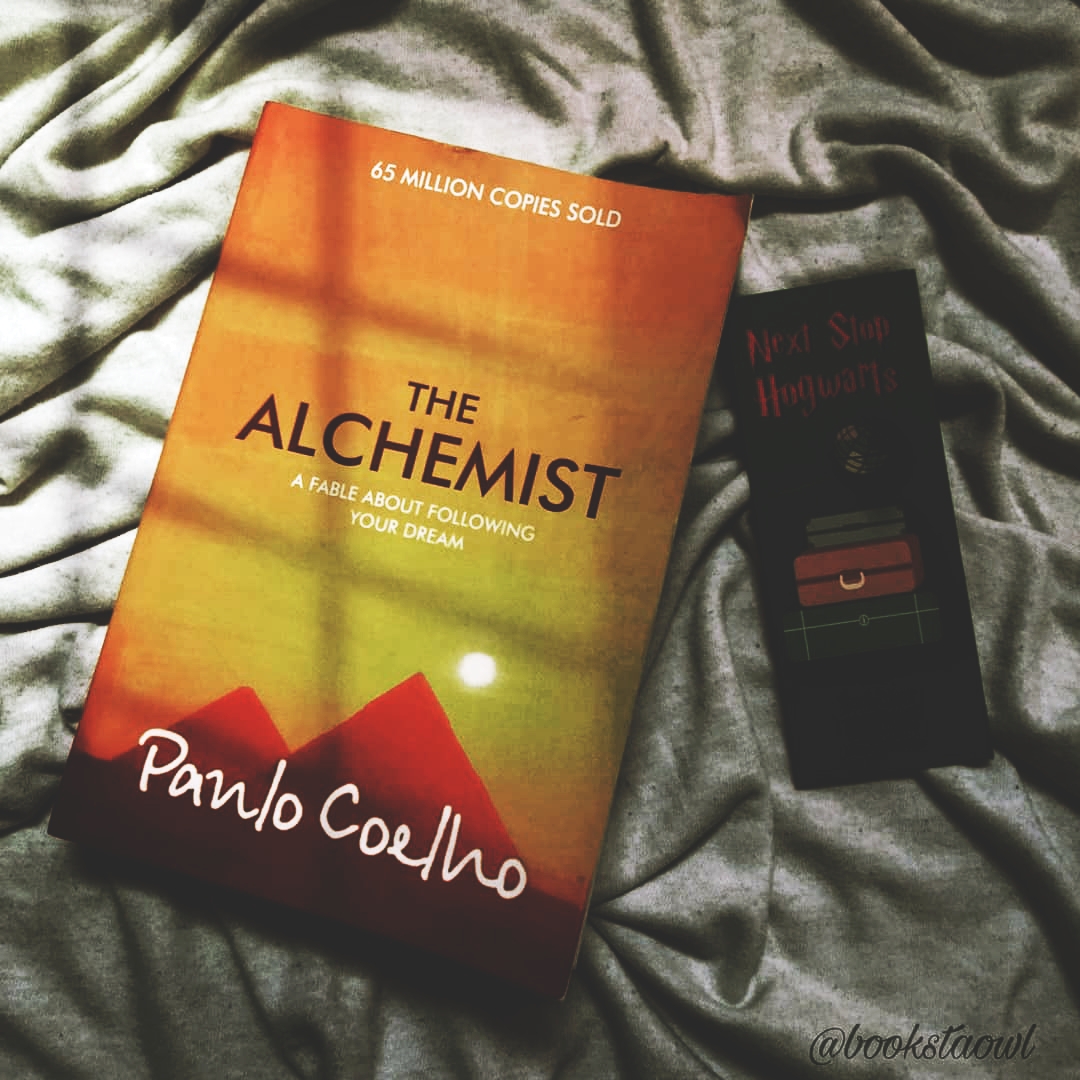
THE ALCHEMIST: BY PAULO COELHO
The shopkeeper sent his son to learn about the secret of happiness from the wisest man in the world. The lad wandered through the desert for forty days, and finally came upon a beautiful castle, high atop a mountain. It was there that the wise man lived.
“Rather than finding a saintly man, though, our hero, on entering the main room of the castle, saw a hive of activity: tradesmen came and went, people were conversing in the corners, a small orchestra was playing soft music, and there was a table covered with platters of the most delicious food in that part of the world. The wise man conversed with everyone, and the boy had to wait for two hours before it was his turn to be given the man’s attention.
“The wise man listened attentively to the boy’s explanation of why he had come, but told him that he didn’t have time just then to explain the secret of happiness. He suggested that the boy look around the palace and return in two hours.
“‘Meanwhile, I want to ask you to do something,’ said the wise man, handing the boy a teaspoon that held two drops of oil. ‘As you wander around, carry this spoon with you without allowing the oil to spill.’
“The boy began climbing and descending the many stairways of the palace, keeping his eyes fixed on the spoon. After two hours, he returned to the room where the wise man was.
“‘Well,’ asked the wise man, ‘did you see the Persian tapestries that are hanging in my dining hall? Did you see the garden that it took the master gardener ten years to create? Did you notice the beautiful parchments in my library?’
“The boy was embarrassed and confessed that he had observed nothing. His only concern had been not to spill the oil that the wise man had entrusted to him.
“‘Then go back and observe the marvels of my world,’ said the wise man. ‘You cannot trust a man if you don’t know his house.’
“Relieved, the boy picked up the spoon and returned to his exploration of the palace, this time observing all of the works of art on the ceilings and the walls. He saw the gardens, the mountains all around him, the beauty of the flowers, and the taste with which everything had been selected. Upon returning to the wise man, he related in detail everything he had seen.
“‘But where are the drops of oil I entrusted to you?’ asked the wise man.
“Looking down at the spoon he held, the boy saw that the oil was gone.
“‘Well, there is only one piece of advice I can give you,’ said the wisest of wise men. ‘The secret of happiness is to see all the marvels of the world, and never to forget the drops of oil on the spoon.’”
Through this story author express, that one should follow his dreams and must take care of his responsibilities also. That’s the secret of happiness.
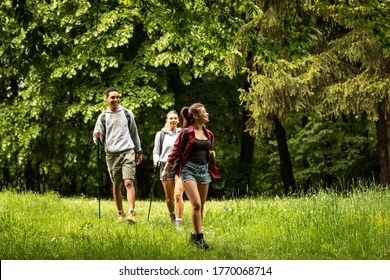
My father’s ancestral village of Rampur, on the left bank of the Ganga at the Himalayan foothills, has a long stretch of forest which has not been afflicted by deforestation yet. Without exception, my vacations here have always been very exciting.
One cold December, my kid brother went missing. My father was at his wit’s end trying to get someone to accompany him to the forest.The village elders were divided in their opinion on the course of action. My mother was too shocked to speak. He was last seen playing near the trees at the end of the field in front of our house. Then some local boys saw him disappearing further into the area which had denser growth. It had been more than an hour since he had vanished. Nobody could have imagined such audacity from an eight year old who had been strictly instructed not to go beyond the field.
Ten of us left for the forest at three in the afternoon. My mother was most unwilling to let me go. While I managed to convince my mother, some elders were not too happy with my presence, but nothing discouraged my optimistic father. As we kept walking into the denser zones of the forest, ominous visions began to cloud our imagination. Calling out my brother’s name loudly had been futile.
The silence of the forest was punctuated by the shrill notes of various insects and distant growls. The approaching darkness was waking them up. Though we had both fire and torches along with guns, the village elders were becoming sceptical about proceeding further without more help. My father, though nervous by this time, refused to give up.
We had reached a small stream. Suddenly one of the elders asked us to stand still. The approaching dusk forced us to follow his example, and we witnessed a herd of elephants crossing the stream. The leader, to our horror, suddenly stopped and raised his trunk in the air, trying to locate us, I presumed! My father was sweating. Mahato, the shooter, was getting his gun into position almost without any obvious movement. For a moment I thought the leader of the herd was staring at me, but thankfully, they moved on and we heaved a sigh of relief.
Suddenly the shrill cry of a child pierced our ears along with the growl of some wild beast. Fearing the obvious fatal end, we rushed towards that direction. In about seven minutes, we reached an open area to find Ratan standing at a distance of barely five feet from a tigress. Handsomely built, the sinewy and powerful beast seemed to be more interested in sniffing my brother. My brother was speechless and was not even aware of our presence behind him. Before Mahato could get ready, the tigress, aware of and disturbed by our presence, snarled and disappeared into the deep forest.
My father rushed towards Ratan, who fainted at his mere touch. The tigress, perhaps a mother, had spared my brother. I hope, we men too, spare the tigresses.
So, this is my Adventurous experience in forest. Becauseyou know what , Forests are essential for life on Earth. Three hundred million people worldwide live in forests and 1.6 billion depend directly on them for their livelihoods. Forests also provide habitat for a vast array of plants and animals, many of which are still undiscovered. They inspire wonder and provide places for recreation. They supply the oxygen we need to survive. They provide the timber for products we use every day.
Photo taken in Rockerville, United States
Forest conservation act: Forests are an important resource that nature can bestow upon mankind. Therefore, it is the duty of every citizen to preserve the ecosystems of forests. But due to rapid deforestation, the cycle of nature is itself being disrupted. Therefore, the need to bring about a law to ensure the preservation of forest was needed.
One of the first legal drafts to protect forest tracts was the Indian Forest Act, 1865 replaced by a 1927 version of the same act. However, it was more geared towards protecting the commercial interests of the British Empire in India.
The act gave authority to the British to restrict tribal activities by levying taxes on timber and forest services. In other words, it mainly regulated the cutting of timber and flow of raw materials rather than protecting forests.
Upon independence, the President of India enforced the Forest (Conservation) Ordinance in 1980 which was later repealed by virtue of Section 5 of the Forest (Conservation) Act, 1980. Under the 1980 Act, the restriction was made on the use of the forests for non-forest purposes.
Our speech sounds can produce a wide variety of speech sounds. However , each language makes use of only a selected group of sounds .These selected sounds are organized in different ways in different languages .This selection and organization of speech sounds in an individual language is called Phonology .
PHONEMES
Every language has a definite number of distinctive sound units .These sound units constitute the phonemes of that language .They are the most basic and smallest elements in the expression system of a language .A phoneme may be defined as the minimal ,distinctive sound unit of a language .By minimal we mean that it cannot be sub-divide ; by distinctive we mean that , when one phoneme is substituted by another it produces a meaning change .Thus the phoneme is the smallest unit of sound that forms the basis of distinction between words in a language .The two words , for example , bat and cat are distinguished and differentiated by the initial phonemes of these two words , /b/ and /k/ .
When /p/ is substituted by /b/ in the word pit it becomes bit . With substitution , a different word with a different meaning is formed . Thus /p/ and /b/ are contrastive in English and hence they are two phonemes in English. Phonemic symbols are enclosed with in slant lines ; phonetic symbols within square brackets indicate the precise phonetic qualities of sounds represented by the symbols . It is also to be noted that phonemes refers to sounds and never to spellings .
The English RP has a system of forty four phonemes .Hindi has forty six phonemes and Malayalam has fifty two .All these languages have their own language specific phonemes .As phonemes are contrastive units of sound in the sound system of a particular language , they have validity only in that language.











 Eduindex
You must be logged in to post a comment.