Shrawan month

Shrawan Month is the Hindu Calendar’s fifth month. Hindus all through the world honor this promising month. “Shrawan” is moreover thought to suggest “to hear charming things.” In solicitation to observe Lord Shiva, darlings focus on talks, respectful petitions, singing, and moving during the Shravan months. The other demanding meaning of “Shravan” is “Saawan,” which connotes “month of storm, sprouting blooms, and swinging.”

Lord Shiva, who is viewed as the most impressive, destroyer, and safeguard, is respected during the month of Shrawan. This month is believed to be the hour of the incomparable Samudra Manthan. During this Manthan, the Poison and Amrit (mixture of life) arose out of the profundities of the sea. The toxin Halahaal was powerful to such an extent that it could clear out the entirety of the Gods just as the Earth. Lord Shiva drank the toxic substance and kept it in his neck to save the world and the Gods. From that point forward, Lord Shiva has been known as “Neelkanth,” which signifies “blue throat.” However, in the wake of ingesting the toxic substance, Lord Chandra (Moon) remained in Lord Shiva’s cerebrum to shield him from the toxin’s belongings. There are a huge number of such convictions encompassing the period of Shrawan. During this month, adherents quick (vrat or brata) on quickly, however especially on Monday. The quick may be of any length; it very well may be full or fractional. Fasting is generally done by ladies, everything being equal, to respect Lord Shiva. Unmarried ladies follow the quick to appeal to God for an optimal spouse like Lord Shiva, while wedded ladies petition God for their better half’s long life, acceptable wellbeing, and success. They visit the sanctuaries, make contributions like as milk, bel patra, blossoms, and perform Bhajan-kirtans (reverential petitions and melodies). It is likewise said that venerating Lord Shiva during this month is multiple times more powerful and viable than loving him during different months. This favorable month of Shrawan is especially propitious for ladies. They will just sport green, red, and yellow bangles, potes (dots), sarees, and kurthas, in addition to other things. Green is the essential shade of Nature and addresses quiet. During this month, the women make Mehendi or Heena utilizing their hands. Green, red, and yellow bangles of different plans can be found in plenitude in shops and markets. The utilization of Mehendi or Heena on the hands, just as wearing sarees, kurtas, or outfits in green, red, or yellow, just as bangles and ear-rings in comparable tones, has gotten trendy among Hindu ladies. During the period of Shravan, it is standard to break the quick or burn-through just vegan food varieties. Aside from strict reasons, there is a logical reasoning for fasting over time of Shrawan to work on one’s wellbeing. This is the stormy season. At the point when the downpours start to fall, daylight turns out to be scant. Thus, absorption eases back down. Individuals typically eat light food varieties, for the most part veggie lover eats less, consistently. Fasting additionally helps in stomach related framework detoxification. During this storm season, it gives a characteristic protection against water-borne contaminations. The endowments of Lord Shiva give bliss, great wellbeing, and abundance to everybody during the Shravan month.
Kanwar Yatra

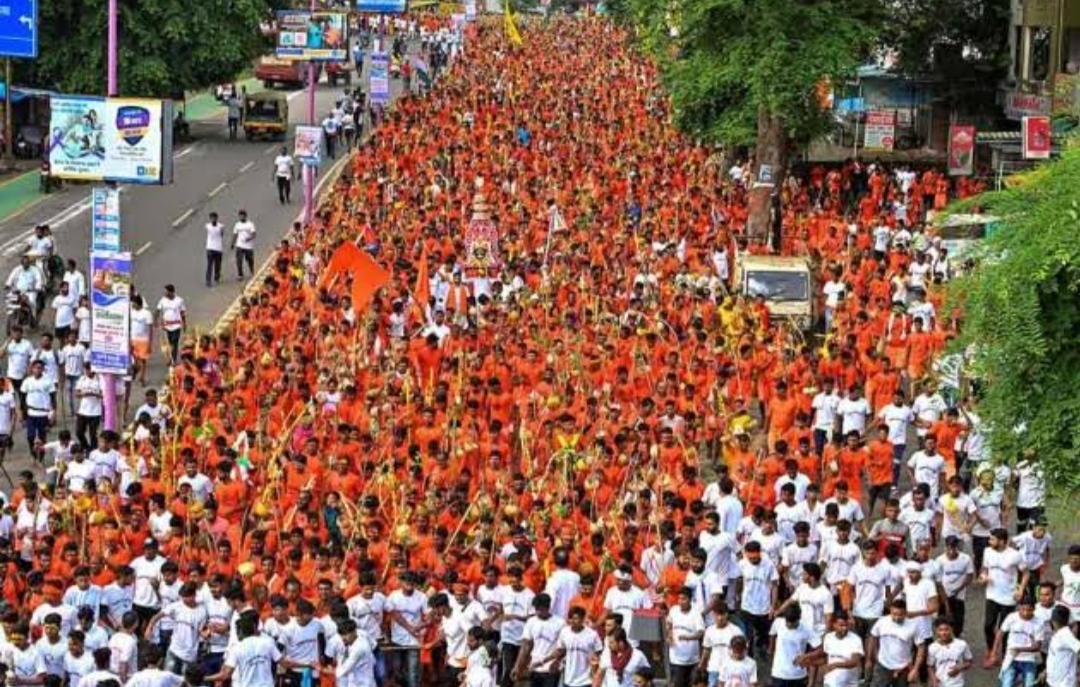
The Kanwar Yatra is the annual pilgrimage of the devotees of Shiva known as Kanvaria; to Hindu pilgrimage places like Haridwar, Gaumukh and Gangotri in Uttarakhand and Sultanganj in Bihar to fetch the holy waters of the Ganges River to pour it on various Shiva temples in India.

Kanwar Yatra: UP CM requests Uttarakhand govt to allow entry into Haridwar for some devotees.

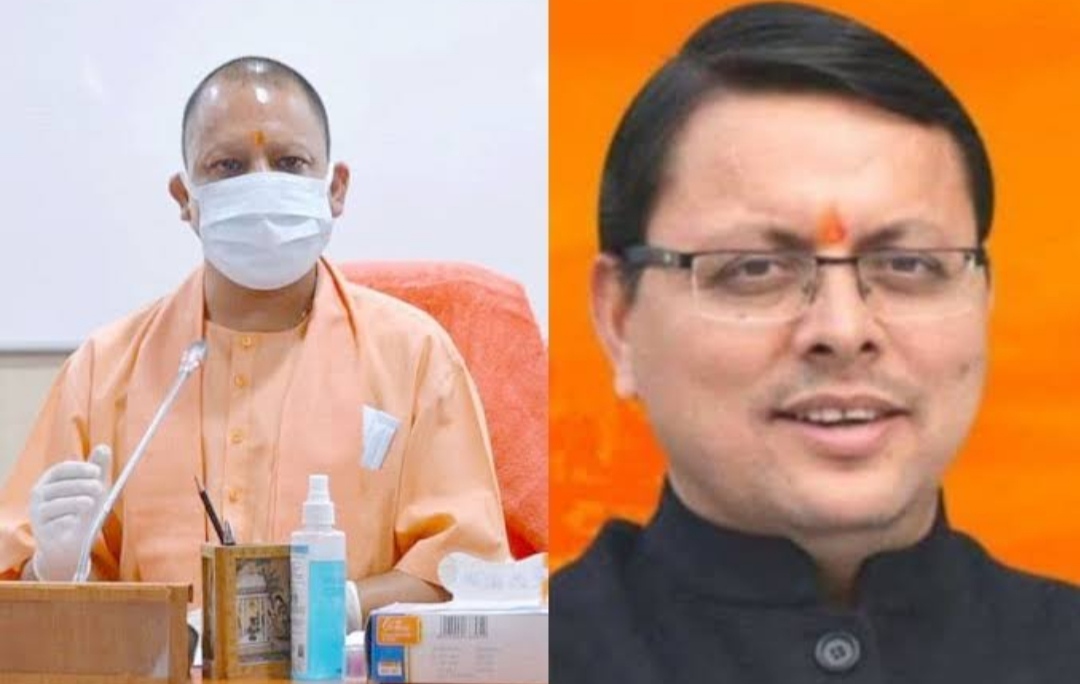
UP CM Adityanath has requested his counterpart in Uttarakhand, Pushkar Singh Dhami, to allow some devotees from UP to travel to Haridwar for the Kanwar Yatra.

The Uttarakhand government has decided to call off the annual Kanwar Yatra for the second year in a row in view of the Covid-19 pandemic. This decision was taken by CM Pushkar Singh Dhami on Tuesday.

At the same time, the Uttar Pradesh government decided to go ahead with the pilgrimage with strict curbs. CM Yogi Adityanath directed officials to ensure that devotees are allowed to take part in the Kanwar Yatra only after they attain a negative RT-PCR test report.

UP CM Adityanath was requested by Uttarakhand CM to allow a limited number of devotees from the state to visit Haridwar for the Kanwar Yatra.

Shrine of Lord Shiva

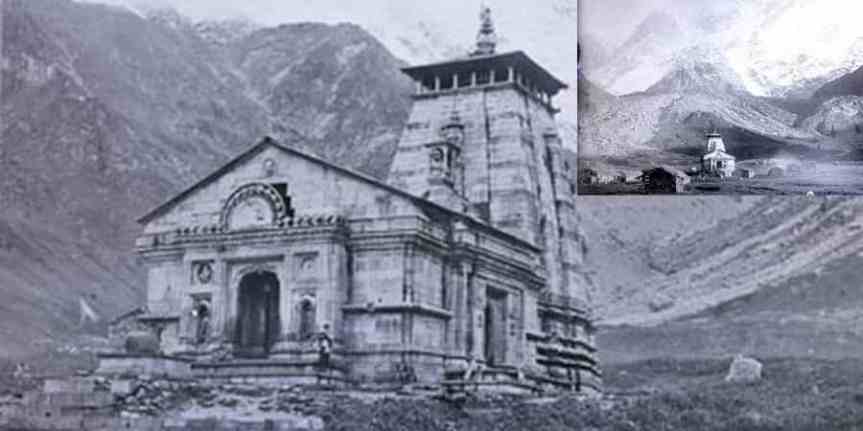
The Lord Shiva shrine of Kedarnath is of extreme importance to Hindus. Kedarnath temple is situated in the laps of the Himalayas and is said to have gained prominence after the Mahabharata tale depicted how the Pandavas urged Lord Shiva to forgive their bad Karma.

The temple is said to have been built or resurrected by the great religious Guru Adi Shankaracharya to its present form.

The Kedarnath Mandir (Temple) that nestles at the foothills of the Himalayas is one of the holiest sites of Hinduism. A shrine dedicated to Lord Shiva, the Destroyer of Evil, the temple is one of the 12 Jyotirlingas across India, one of the Char (4) Dhams (Badrinath, Kedarnath, Yamunotri, Gangotri), and one of the 5 Kedars

Given the treacherous weather in the region, this temple opens to devotees only between the months of April to November each year. It is said that this temple was constructed by a king from the Pandava lineage. His name was Janmajeya. The Shiva Linga here is very ancient. 

The temple’s architecture style is said to be the same as most ancient temples of its period – the ashlar style of construction – wherein stone slabs are interlocked into each other without the use of mortar or cement. Each year, thousands of Hindu pilgrims flock to the temple to seek the blessings of Lord Shiva. 

History of the temple:

The shrine finds a mention in the Mahabharata but the temple one sees today is said to have been built under the orders of the great Guru Adi Shankaracharya in the 8th Century. Some also claim that it was built by Raja Bhoj of Malwa region in the 2nd Century. After the April-November season of darshan, before harsh winter temperatures set in, the murti (vigraha) of the deity is carried to Ukimath for the next 6 months. The Rawals (the priests of Karanataka-origin) travel along with the deity and carry out worship there.

The Mahabharat connection: 


It is said that after the Mahabharata war ended, the Pandavas were full of remorse at having lost thousands to the violence.  They handed over the kingdom’s reins to grandson Parikshit and started for Varanasi to seek Lord Shiva’s pardon.

Not interested in meeting them, Shivji leaves Varanasi/Benaras/Kashi and heads for the Himalayas in the form of a Bull (Nandi, the Bull). He reappears in Guptakashi as the bull and the Pandavas reach there. 

Shiva escapes again and this time reappears as the bull in five different parts of India as 5 different parts of the bull’s body: the face at Rudranath, arms at Tungnath, navel and stomach at Madhyamaheshwar, the locks at Kalpeshwar and the hump at Kedarnath. The powerful Pandava – Bhima – is said to have grabbed the bull’s tail, forcing him to appear before them and forgive them. The Pandava brothers then built the first temple at Kedarnath. 

These 5 places where the bull had appeared in parts after diving underground are known as the Panch (5) Kedar.

Situated in a region of Glacial activity, the temple is said to have been under snow for 400 years. The signs of glacial assault are still there on the walls, say geologists. The temple was miraculously saved by a BhimShila (massive boulder) that rolled down the mountains during the horrific cloudburst and natural calamity in June 2013. It is said Baba Bhairo Nath saves the temple.

Nara – Narayana connection:

Nara and Narayana – two incarnations of Vishnu performed severe penance in Badrikashrayain devotion to Lord Shiva Bhole Shankar himself appeared in front of them. When the Lord granted them a boon, Nar and Narayan requested Shiva to take up a permanent abode at the place to benefit the devotees. Therefore, it is believed that Lord Shiva assumed the form as a Jyotirlingam at Kedarnath so that all people who worship Shiva shall be freed from their miseries.