Animals too have a right to live

It is fascinating how diff. people takes this issue in diverse ways. As time passes by, it’s getting more contradicting since everyone has their own feelings towards animals. There are most of us those who believe that animals more or less like human beings with feelings and emotions. They too are able to feel physical and emotional pain and they does have RIGHT TO LIVE AS A HUMAN DOES HAVE.

Nature has created all of us Animals, plants or rather Microbes and we are nobody to interfere in it’s creation, we are none to destroy its beings. It is the correct time for us to understand that all animals have right to existence, all animals have right to live.

If we can’t understand its importance today then it would be very late as it is a high time now. We are destroying nature by our even small deeds. So, at last but not the least- Human society it is a high time now, if you couldn’t understand that every Animal have right to existence then the day is not so far for all species of animals to get extinct.Animal behaviorists increasingly find that nonhuman animals possess complex social lives and share many human emotions, while molecular biologists have discovered stunning commonalities between humans and other animals on the genetic level.In this beautiful world, animals have as much right to live as human beings. In totality, the entire earth is a common property of all of us. It is our world and it is their world. Should humans have rights? Most of you would say yes. People often ask if animals should have rights, and quite simply, the answer is “Yes!” Animals surely deserve to live their lives free from suffering and exploitation. Just because we are at the top of the food chain, does that give us the right to take animal rights away? A life is a life and it should be valued, no matter what you are.

Animals cannot speak for themselves and for that reason we need to protect them. Protecting them is something we should take pride in, it is our responsibility. Animal rights is the belief that animals have an intrinsic value separate from any value they have to humans and are worthy of moral consideration. They have the right to be free of oppression, confinement, use and abuse by humans. By respecting animal rights and having consideration for animal welfare, we also support ecological balance.Physical abuse, communication wounds and neglect are often cases we see at the LSPCA.  The current transport of live animals, roadside sale of live animals and slaughter procedures all contribute to animal abuse and cruelty in Malawi.  Donkeys for instance suffer from wounds inflicted by whipping the animals as they do not respond well to being attached to a cart with a yoke.  A donkey’s strength lies in its chest and therefore needs to pull a cart in a harness as opposed to what’s happening in Malawi, where donkeys are pulling a cart by being attached through a yoke meant for oxen, who have their strength in their necks!  Often animlas are expoited for breeding or culling with no regard to their wellbeing from birth to death.  Responsible pet ownership is needed to protect dogs from having multiple litters, which in effect will control the dog population.  Most dogs roam and live a fairly miserable life, with little care and do not die a natural death in Malawi.  Dogs are being killed on the road in large numbers every day!  This is not the fault of the dog, but that of the owner.  Often people are oblivious of the cruelty they inflict on animals and it is our task to ensure our fellow Malawians open their eyes and ears to the plight of animals and the daily abuse and suffering they endure under our hands.

Street animals all over the world are in a very bad plight. They live virtually wherever cities exist and the local human population allows, especially in the developing and the former second world. Street dogs may be stray dogs, pets that have strayed from or are allowed freedom by their owners, or may be feral animals that have never been owned. Compared to the rest of the world, street animals and especially stray dogs of Nepal are in a very pitiful condition. Approximately 26,000 stray dogs live on the streets of the Kathmandu city. Most of these dogs live in a miserable condition and most of them do not die a natural death. Nepal is one of the few Asian countries without proper animal welfare legislation. Most urban stray dogs are discarded pets which have become sick, pregnant or developed aggressive behavior, or the offspring of such animals. Outbreaks of rabies are often traced to unvaccinated street dogs, one of the most common carriers of the painful and deadly disease. There are dozens of hit and run cases by speeding vehicles leaving stray animals wounded and severely injured. The plight of stray animals is devastating.

In the course of controlling the population of stray dogs, the government had started the campaign of killing them. However, the program was later discarded after it gathered massive criticism. Despite the efforts of both the government and private sectors, the number of stray dogs is yet to go down as expected. While the reasons for this tragedy are multi-faceted, they are not complicated. In addition, the problems that cause animals to become homeless and end up in the streets are preventable, with the solutions in all of our hands. If the government agents can provide proper management, the situation can improve greatly. Many dogs would have their conditions improved if they had obtained vaccination and other medical treatments timely. Proper spaying and neutering of these animals would stop further growth of animals in the streets. This would solve the problem largely.
The cat families… part 2

this is the continuation article of part 1

26.Maine Coon cat:

undefined
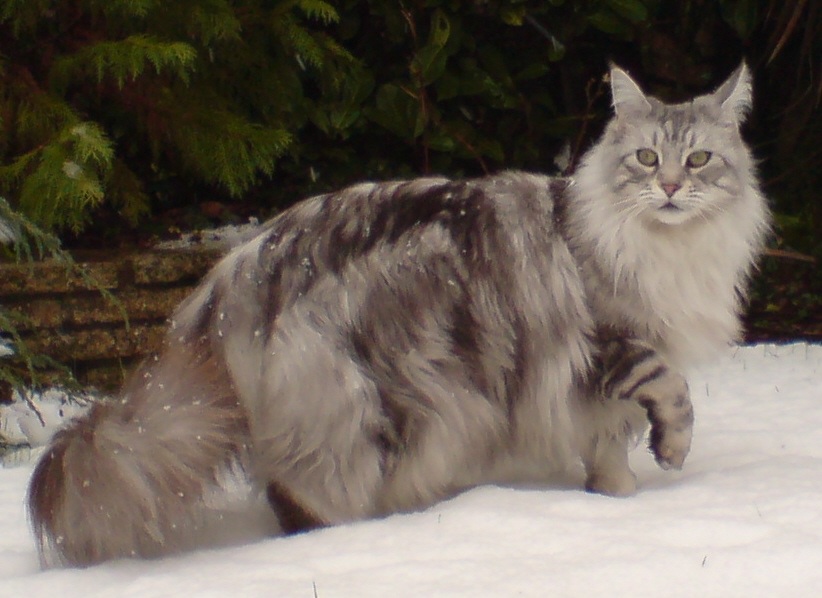
Maine coon cat, North America’s only native breed of the longhaired house cat . Though its origins are unknown, it had been first shown in Boston in 1878. Maines is large, muscular, and heavy-boned; they’ll are named for his or her raccoon-like tail. Excellent mousers, they’re known for his or her gentleness, intelligence, and type disposition, and are especially good with children and dogs. Most are brown tabbies.

27.Manx:

undefined
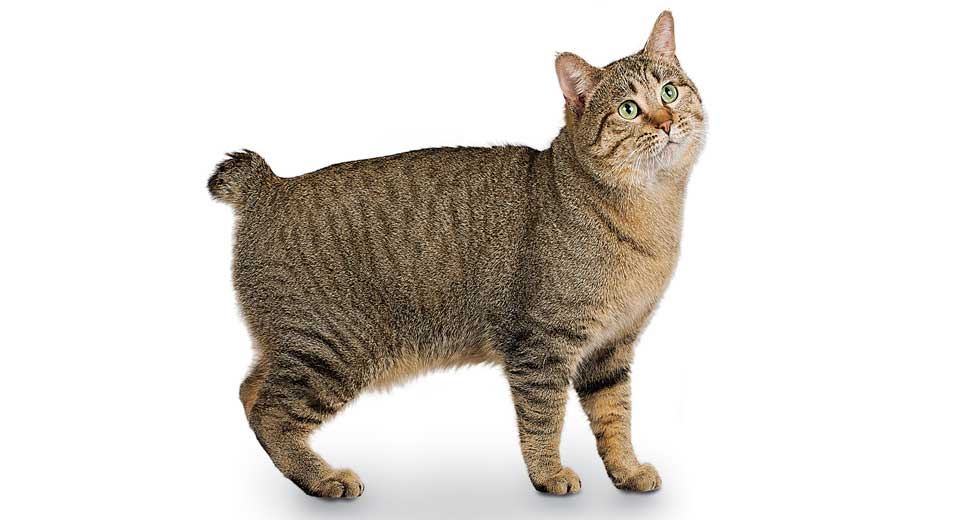
Manx, breed of the tailless house cat of unknown origin but presumed by tradition to possess come from the Isle of Man. Noted for being affectionate, loyal, and courageous, the Manx is distinguished both by its taillessness and by its characteristic hopping gait. it’s compactly built, with a rounded head; large, round eyes; and little , wide-set ears. The rump is additionally rounded and, because the hind legs are considerably longer than the forelegs, is distinctly above the shoulders. The Manx could also be born with a tail but ideally should be totally tailless with a hollow at the top of the backbone where the basis of the tail should be. The double coat could also be any solid, variegated, or tabby color.

28.marbled cat:

undefined
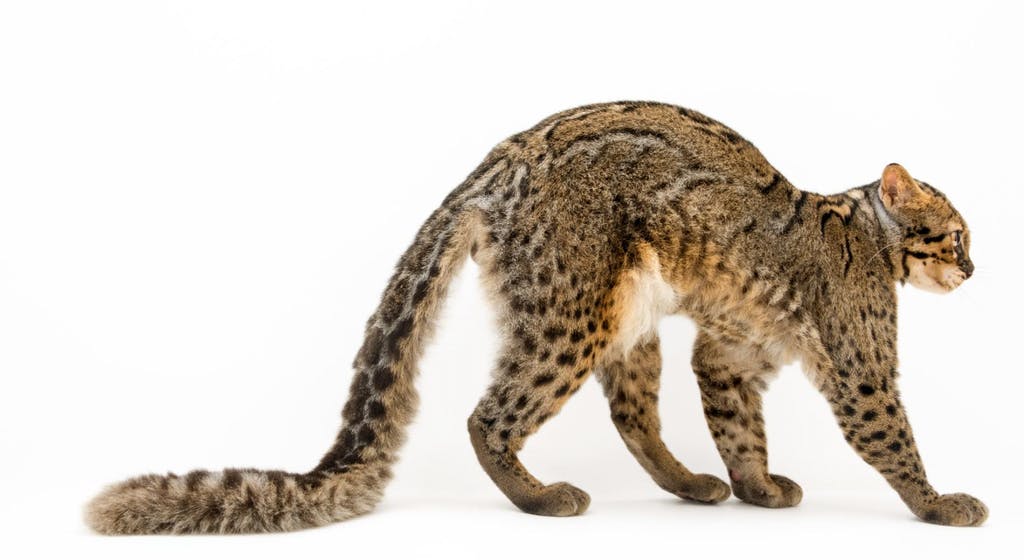
Marbled cat rare Southeast Asian cat, Felidae , often mentioned as a miniature version of the unrelated clouded leopard. The marbled cat is about the dimensions of a domestic cat; it measures roughly 45–60 cm long, excluding a tail of roughly an equivalent length. The coat is long, soft, and pale brown to brownish-gray, with large, dark-edged blotches on the body and smaller dark spots on the legs and tail. The marbled cat is nocturnal and lives in jungles, and should prey on small animals and birds.

29.margay:

undefined
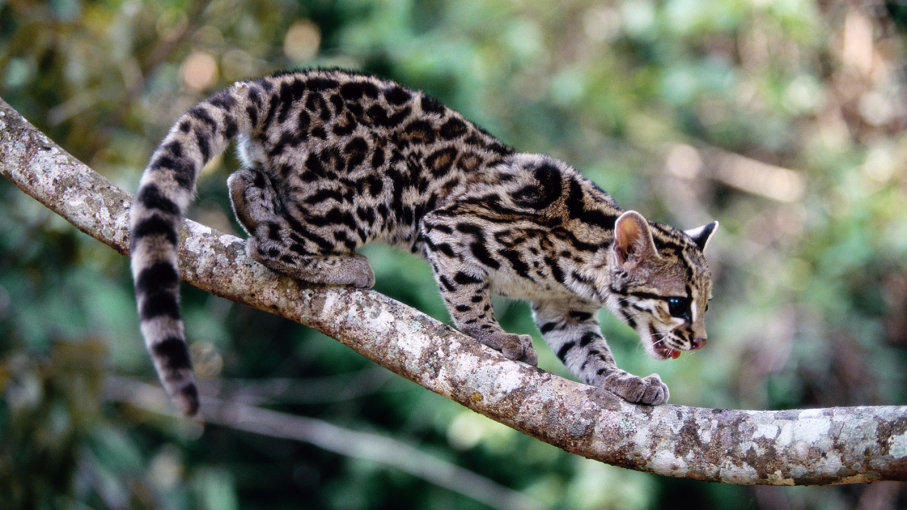
Margay also called tiger cat or tigrillo, alittle cat that ranges from South through Central America and, rarely, into the acute southern us . Little is understood about the habits of the margay. It lives in forests and presumably is nocturnal, feeding on small prey like birds, frogs, and insects. it’s largely arboreal and has specially adapted claws and feet that enable it to scamper up tree trunks and along branches with ease. The margay resembles the related ocelot but features a longer tail and fuller face, emphasized by large, dark eyes and rounded ears. The male attains a maximum length of about 1.1 meters, including a tail about 46 cm long, and weighs up to about 16 kg. the feminine is usually smaller and features a relatively long tail. Coloration varies from pale gray to chocolate with dark markings like spots, stripes, bands, and black-edged blotches. When hand-reared from a kitten, the margay reportedly is definitely tamed; as an adult, however, it’s going to become unpredictable.

30.ocelot:

undefined
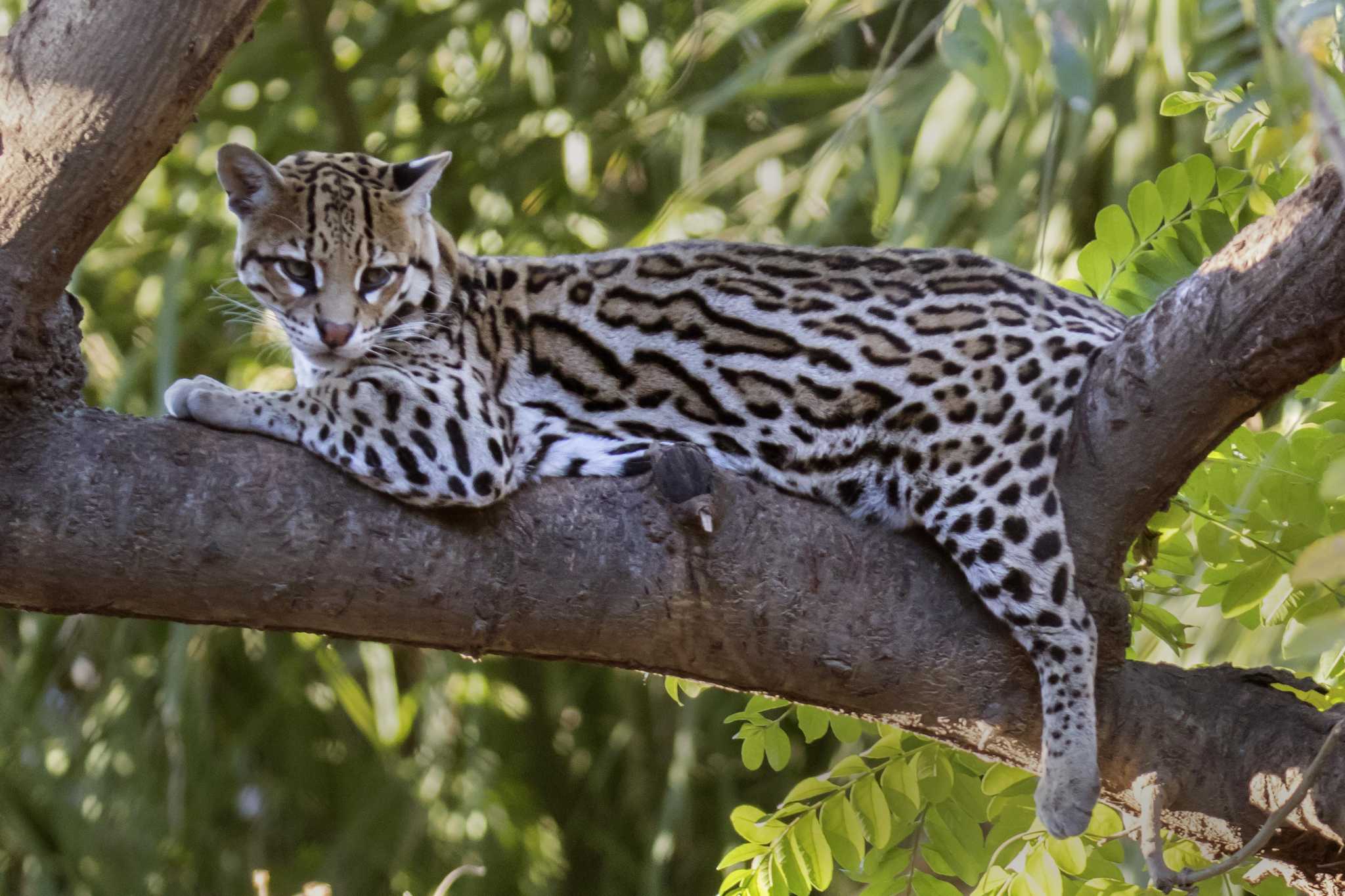
the spotted cat of the New World found in lowland areas from Texas southward to northern Argentina. The short, smooth fur is patterned with elongated, black-edged spots that are arranged in chainlike bands. The cat’s upper parts vary in color from light or tawny yellow to gray. There are small black spots on the top , two black stripes on each cheek, and 4 or five black stripes along the neck. The ocelot’s underparts are whitish, spotted with black, and therefore the tail is marked on the side with dark bars or blotches.

31.Pallas’s cat:

undefined
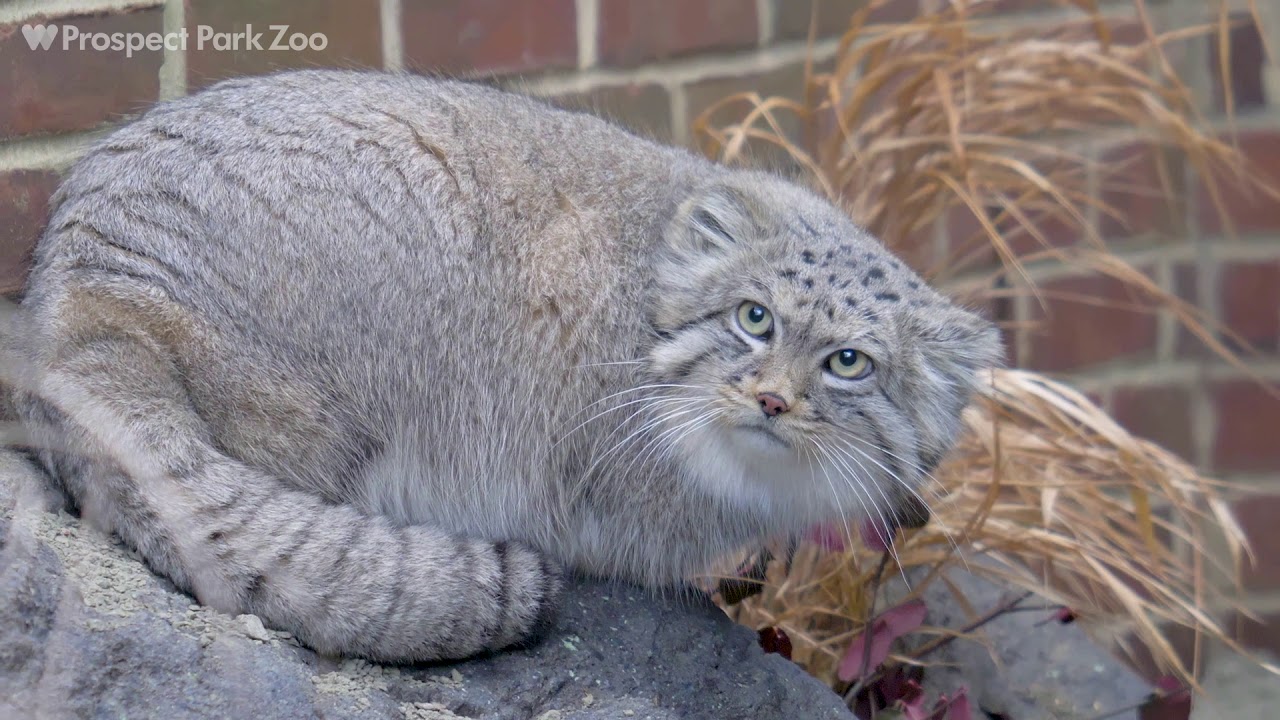
Pallas’s cat also called Steppe Cat, or Manul, small, long-haired cat native to deserts and rocky, mountainous regions from Tibet to Siberia. it had been named for the naturalist Peter Simon Pallas. The Pallas’s cat may be a soft-furred animal about the dimensions of a domestic cat and is pale silvery gray or brown in color. the top of its tail is ringed and tipped with black, and a few individuals have vague, dark markings on the body. The fur of the underparts is about twice as long as that of the upperparts and possibly represents an adaptation to the cat’s habitual lying and crouching on the cold ground.

32.pampas cat:

undefined
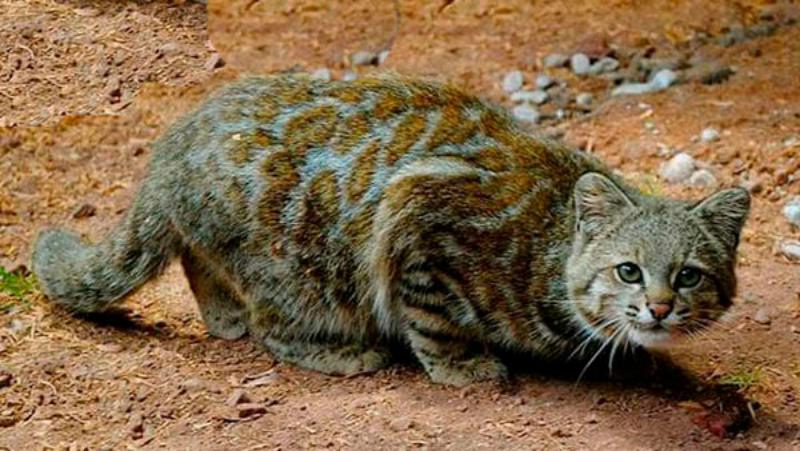
Pampas cat small cat, Felidae , native to South America. it’s about 60 cm long, including the 30-centimeter tail. The coat is long-haired and grayish with brown markings which in some individuals could also be indistinct. Little is understood about the habits of the pampas cat. it’s reported to measure in thick shrubbery and to hunt birds and little animals in the dark .

33.puma:

undefined
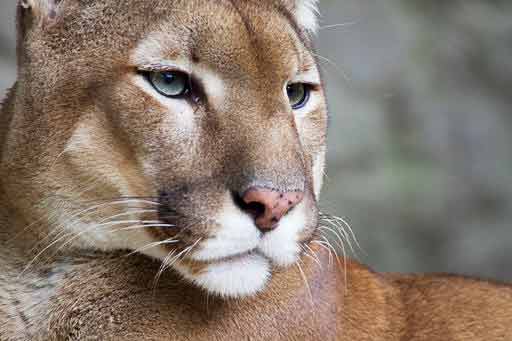
Puma also called cougar , cougar, panther, or catamount, large brownish New World cat comparable in size to the jaguar—the only other large cat of the occident . The puma, a member of the Felidae , has the widest distribution of any New World mammal, with a variety extending from southeastern Alaska to southern Argentina and Chile. Pumas sleep in a spread of habitats, including desert scrub, chaparral, swamps, and forests, but they avoid agricultural areas, flatlands, and other habitats lacking a canopy . Six subspecies of Puma concolor are recognized by most classifications.

34.Rex cat:

undefined
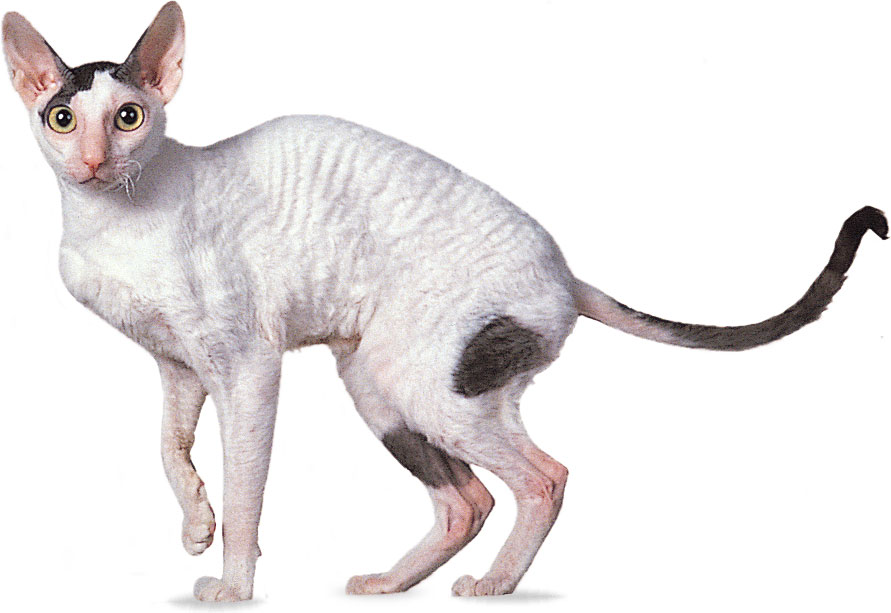
Rex cat, curly-coated breed of house cat that features a dense, soft coat lacking any projecting guard hairs, or outer coat. Except on the top , legs, and paws, the coat forms fairly deep waves, or crimps. The eyebrows and whiskers of the Rex cat are crinkled, the eyes are almond-shaped, and therefore the ears are large and high set. The adult Rex cat is slender and typically has long legs, an extended neck and head, and an extended , tapering tail. Show cats could also be any of the colours or patterns that are accepted for domestic cats.

35.tiger:

undefined
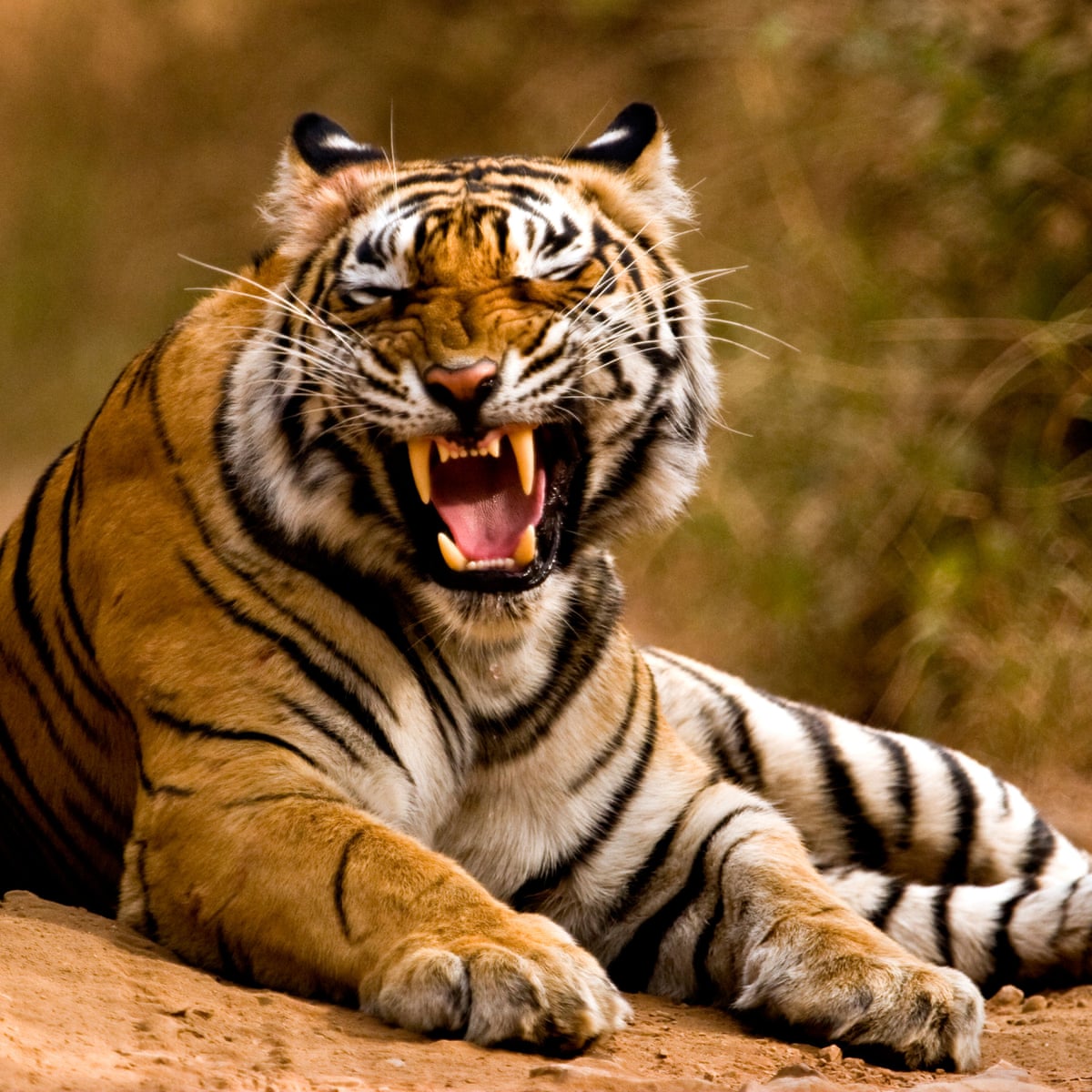
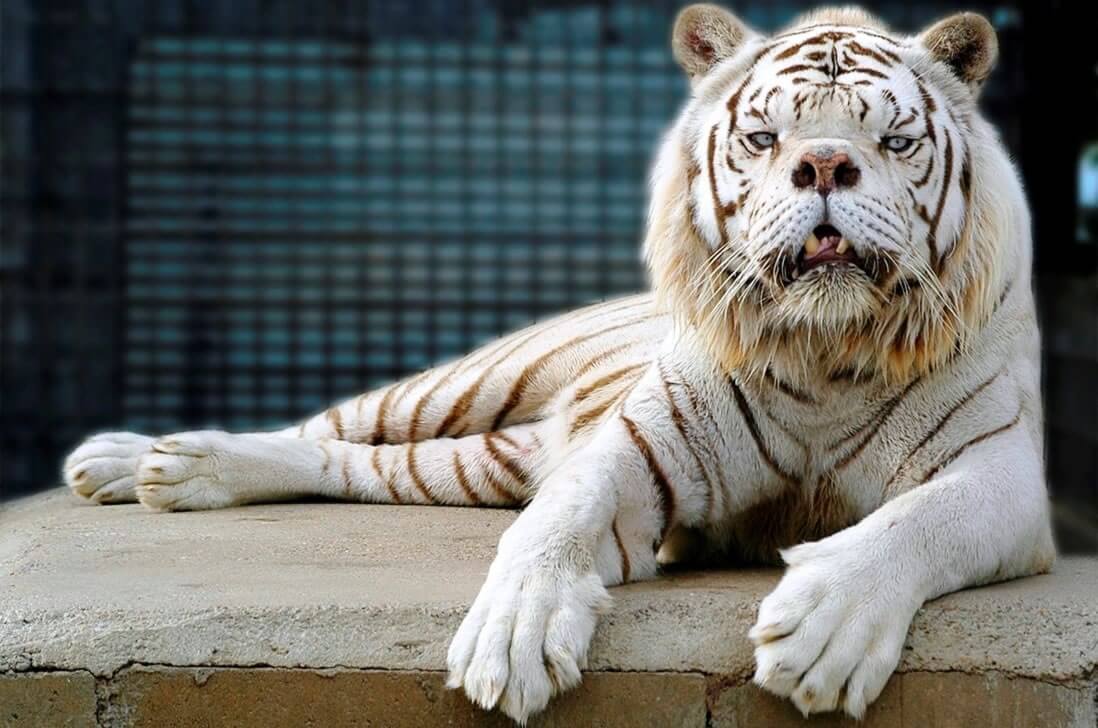
Tiger’s largest member of the cat family, rivaled only by the lion in strength and ferocity. The tiger is endangered throughout its range, which stretches from the Russian Far East through parts of North Korea , China, India, and Southeast Asia to the Indonesian island of Sumatra. The Siberian, or Amur, the tiger is that the largest, measuring up to 4 meters in total length and weighing up to 300 kg. The Indian, or Bengal, the tiger is that the most numerous and accounts for about half the entire tiger population. Males are larger than females and should attain a shoulder height of about 1 meter and a length of about 2.2 meters, excluding a tail of about 1 metre; weight is 160–230 kg, and tigers from the south are smaller than those of the north.

36.tigon:

undefined
Tigon, offspring of a tiger and a lioness. The tigon, or tiglon, may be a zoo-bred hybrid, as is that the liger, the merchandise of the reverse mating of a lion with a tigress.

Animal Cruelty Needs To Stop!

Every year, millions of animals are killed in India either to feed the non-vegetarian population or in laboratories for medical experiments. Cruelty against animals is a cognizable offence under Section 428 and Section 429 of the Indian penal code. There is an urgent need to implement effectively the laws made for the protection of animals. The first step towards which is educating children to have respect for animals and treat with them kindly. Food and shelter should be provided to street dogs by government shelters, and registered firms and NGOs to assure their safety. There is also a need to have stricter laws for protection of animals.

Compassion and kindness are true-blue Indian values. Even the Constitution of India reflects these values in its Fundamental Duties [51 A (g)]. Show your kindness and stand up for the animals.

In the early twentieth century, when the colonial state’s emphasis shifted from the ‘preservation of game’ to the ‘protection of wildlife’ in keeping with the emergence of a global conservationist discourse, the “natives” were now deemed incapable of appreciating the aesthetic value of ‘Nature’ because of their inherently “utilitarian” philosophy of life. Contemporary critiques of the “cruelty” of those people who live in intimate proximity with wild animals, ‘cruelty’ that is believed to be rooted in an inability to appreciate Nature at best and in natural depravity at worst, echo these racialised colonial discourses in disturbing ways. Indeed, the demand that “problem” animals be “humanely” killed with a clean shot instead of explosives (as if shooting does not often lead to debilitating injury for wild animals) is eerily, even if unintentionally, reminiscent of colonial distinctions between “good” and “bad” hunting.

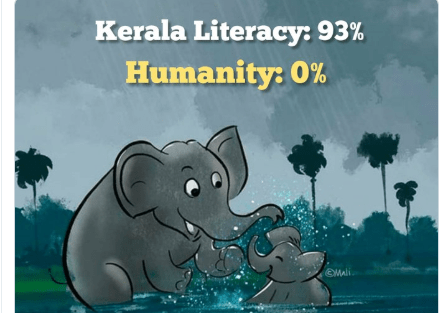
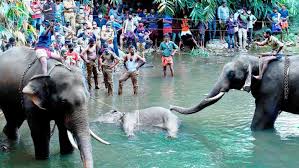
On May 30 2020, Mohan Krishnan, a Forest Officer in Kerala, posted images of an elephant standing chest-deep in a pool of clear green water to his Facebook page. The text accompanying the image described how the elephant, who was pregnant, had eaten some fruit that concealed an explosive. She stayed in the water, presumably to find relief for her injuries, until she eventually passed away. This isn’t the first instance of cruelty that burst into headlines. In 2016, a police horse Shaktiman, died following the merciless thrashing it reportedly received from a BJP MLA during a party rally in Uttarakhand and the ensuing political battle over who deserves blame raises the more important moral battle around our treatment of animals in India. Such incidents have become all too common (just a few days after this tragic incident, a young man was charged with stabbing stray dogs on the streets of Delhi). This pattern of animal abuse across India reveals enduring weaknesses in our country’s laws against cruelty to animals.

While the elephant’s death was an unhappy event, the categories of “cruelty” and “innocence” that were deployed to narrate it are not simply descriptive. Instead, they are the legacy of complex histories and politics. For instance, the supposedly intrinsic “cruelty” of the “natives”, a racist caricature, was a favorite theme in the shikar memoirs of many colonial officials. Colonial hunters condemned most “native” shikaris, who belonged largely to Dalit, Bahujan, and Adivasi communities, for the lack of “sportsmanship” they exhibited in the method they chose when killing animals, whether it was poisoning carcasses or setting snares and traps for animals.

These practices were criminalised as “poaching” under game-protection laws passed by the colonial state in the late nineteenth century. Ironically, these laws were passed to arrest a steep decline in wildlife numbers that was caused not by “native” hunters, but by what could be described as an orgy of hunting by colonial officials bent on eradicating “vermin” animals (which included tigers,  lions, leopards, bears, and wolves among others). 

Glimmer of Hope

The onus is only partially on lawmakers – and yes, we have made some progress in the last few years. In 2014, the Ministry for Health and Family Welfare published a draft notification to amend The Drugs and Cosmetics Rules, 1945, to ban the import of cosmetics tested on animals, as I had proposed. Humane Society International estimates that approximately 100,000 to 200,000 mice, rabbits, hamsters, guinea pigs, dogs, and monkeys suffer and die for the sake of cosmetics — an alarming number, which may be an undercount since many countries do not have reliable statistics or data.

Narratives that emphasise the intrinsic innocence of animals are also problematic in the ways that they construct the object of activism. As the anthropologist Miriam Ticktin notes, figures of innocence – whether the child or the animal – play a key role in driving modern humanitarian projects because they promise a space of purity in an impure world. Much animal-welfare activism, for example, relies heavily on the claim that it is morally good to protect innocent animals, who cannot protect themselves, from human depravity. However, as Ticktin argues, innocence always implies its opposite: non-innocence. Establishing the innocence of the pregnant elephant thus relied on highlighting the ‘conscious, criminal cruelty’ of those who killed her. The danger of these categories, then, is that they create a purity that makes it difficult to understand the complex history of human-animal relationships in everyday contexts where humans are as much at risk from wild animals as the other way around. 

As its righlty said, ‘Be the change you want to see in the world’. So, we need to stop animal cruelty at home by not attacking stray dogs. So maybe we should all take a minute to step back and think, before freaking out the moment we see a stray dog on the street? After all, what harm can it really do to us? It has no reason at all to attack us, and there is, therefore, no reason to fear an attack from it. Further, if stray dogs can dauntlessly strut around humans, in light of the torture we inflict upon them, we should also have the courage to not be afraid of them.

It is surprising how such incidents occur in a land that has worshipped animals for centuries. The very core values of Hinduism live in consonance with nature, as vividly demonstrated in the Mahabharata and Ramayana.

Gods have presented themselves as animals in their various avatars, formed partnerships with them and used them as sacred vehicles (vahanas) and companions – from the little mouse that  Ganesha rides, to Anantha or Sheshanaga, Vishnu’s snake bed and protector, or Hanuman, Rama’s vassal who plays an integral role in helping him defeat the ten-headed King Ravana. Animals have been celebrated in our lives and culture sice time immemorial. Hence, it is time we stop our inhumane behaviour and let animals live without pain.

“Unseen they suffer,

Unheard they cry,

In agony, they linger,

In loneliness, they die.”

Live and Let Live : Heartbreaking Kerala Elephant News Exclusive >>>>>

Is really humanity is left is this world? This is the question that is there in mind because seeing around the world it seems like now humanity is left just in words. When we hear a news like an incident in Kerala it just seems like where we are today are we in our dreams where we are not got effected by our pain , just running in this world  behind the frame, pride and especially money.

Are we really lost in this world? Are we really getting caught in this world’s rattrap? Where everybody just competing for its place in this world but just tell me one thing. Are we humans alone in this planet? Are we only responsible to take forward the earth or we needs other creatures to maintain and to balance this ecosystem? I think we all know the answer of all these questions.

If a person needs both oxygen and water as crucial things to survive in this beautiful world likewise our mother nature also requires humans as well as animals and trees to maintain an ecosystem balance. Like the incident happened in Kerala with the pregnant mother elephant there are many incident taking place all around the world with the innocent animals and we humans are only responsible for it.

Credit: Third Party Reference

Just imagine a condition that a human mother is pregnant and if by the case the animals attack that lady so what we call that animal, what we will do with that animal and the sure answer is that almost 90 percent people will kill that animal calling her demon. Now you only think that are we people should not be called as demon and instead of killing that human or harming the human community that innocent lady elephant went to the water and taken its last breath in silence.

If any human were in her place he/ she should have taken the world in its head. See the difference between a humans and a animal, Remember it the same community which you all enjoy eating, remember that fish , she belongs to the same community she is the one who you catch first from the water bodies then fry her and then enjoy in your plate, remember that hen, remember the other creatures you all have enjoyed eating.

Are they not innocent? What was their crime, this that they are the small creatures and you are the humans, who always takes everything in granted, what was their crime? This that they are weak and you are strong. This was their crime? The right answer is that you all are just blank, completely blank hearing these questions. Are we have not got enough things to eat or is our mother nature is not able to fulfil the requirements of these greedy humans because these humans can kill the innocent animals just for their fun.

Credit: Third Party Reference

After that incident I have seen and heard many people’s just shouting for the justice of that innocent lady elephant, writing articles, putting stories for the justice without realising their own activities. Out of all who want to give justice to that innocent lady elephant, 90 percent are non-vegetarian; they enjoyed having those innocent animals in their plate. Are they not the criminals of all those innocent animals which they have enjoyed eating in their plates? Who have given them right to shout for other persons punishment.

I say that the person who has committed the Kerala’s incident should get the strict punishment but the other peoples should also realise that where they are today? There where they want innocent animals to survive, they kill other innocent animals so that they can live happily and can enjoy non-vegan meals. It’s the not the topic to debate it’s the topic to think from your inner self that are you not the criminals of many of those innocent animals? Sit in silence and think and the right answer will come from your inner self. Just sit and think and if your answer is not “Live and Let Live”. So I don’t know where you are? And who you are? Human or……..