Gandhi Jayanti

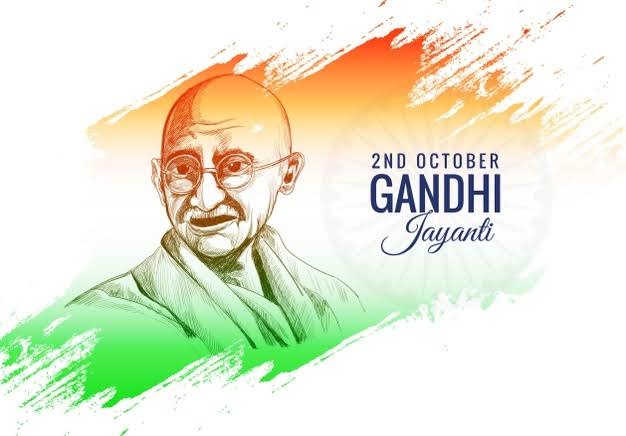
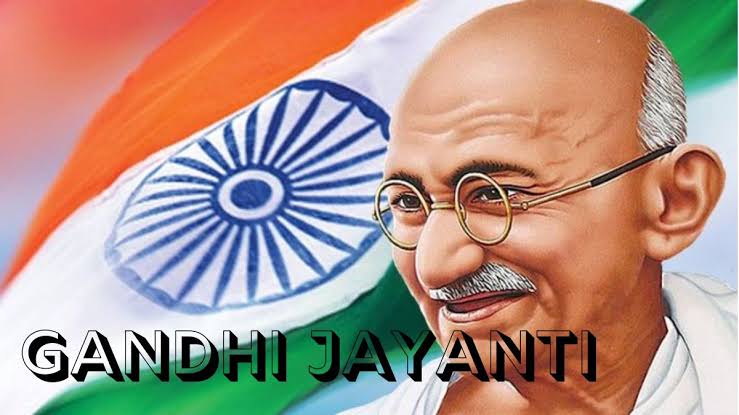
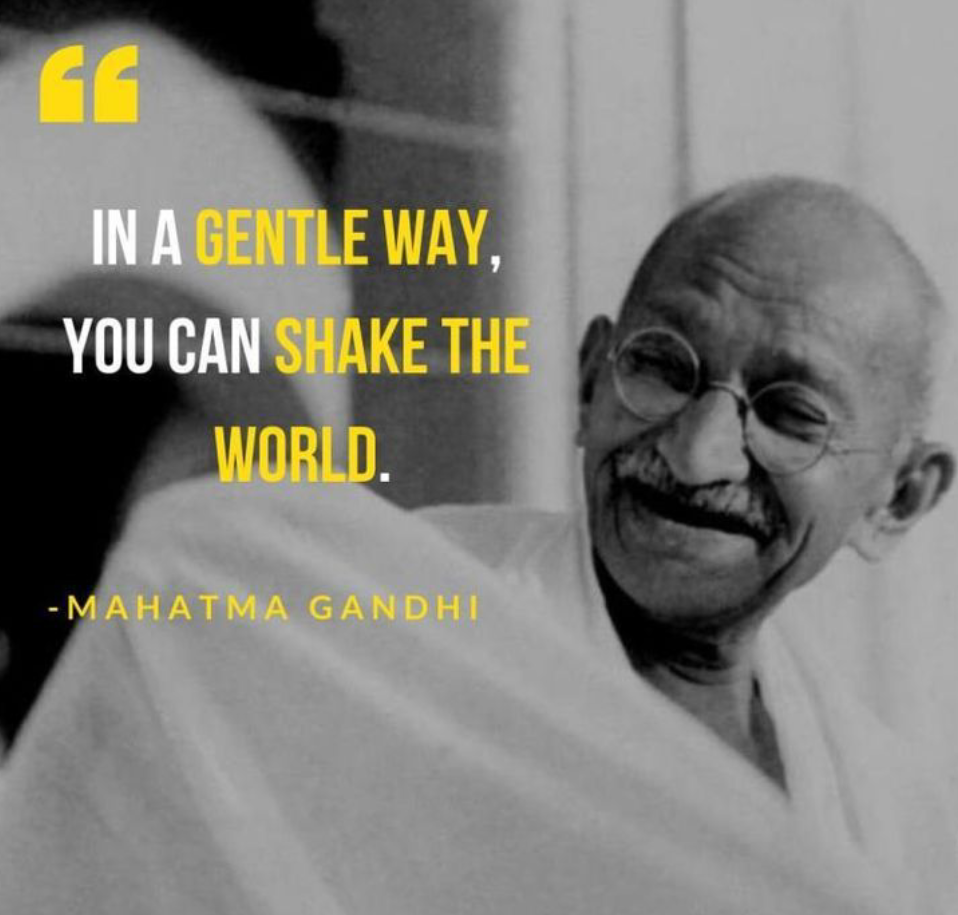
2nd October, Gandhi Jayanti ,a date which needs no introduction. Father of our nation Mohandas Karamchand Gandhi was born on this day. He was one of the strongest pillar for India during in struggle for freedom from British era.

He was very different from other freedom fighters. He believed in the concept of nonviolence and self sufficiency. His personality has impressed many leaders around the world like Martin Luther King Jr, Nelson Mandela, Einstein and even the Britishers one of those.

He was a gentleman who gained law degree in London and came back to the India and I was so touched by the living conditions of the people here that he decided to be one of them. He wore a dhoti and thin cloth on upper body.

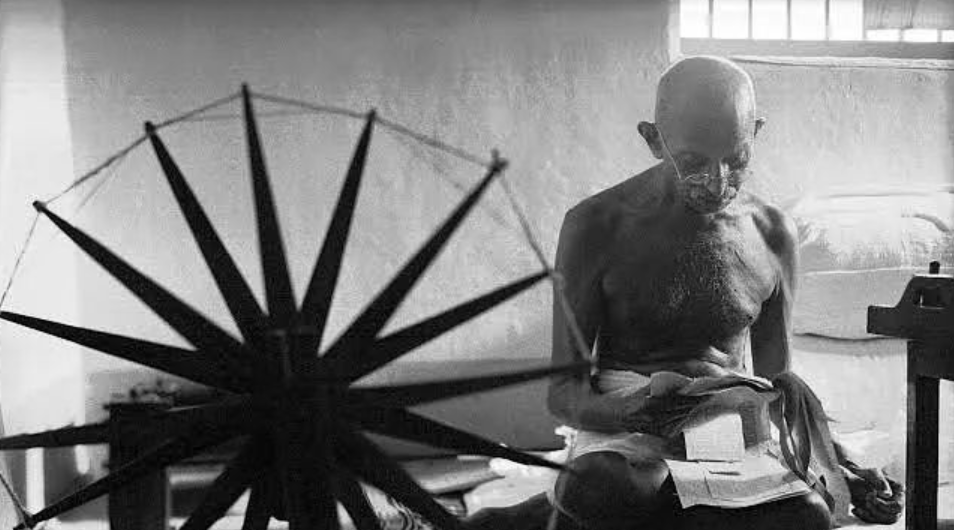
He was a man of principle, in his aashram he did all of his work on his own and teach the same lesson to his followers. He was a tiny man but having a great speed. He walked miles on his foot that too with great speed, matching his speed was not easy.

He always live for his countrymen and tried to solve their problems and dedicated whole of his life for the country. He fought the fight of freedom with never compromising his principles. That’s the reason he was given the title of ‘Father of India’.

Gandhigiri With Munna Bhai: Valuable Lessons From The Film

Released in 2006, Lage Raho Munna Bhai is a movie directed by Rajkumar Hirani, screenplay by Vidhu Vinod Chopra, and starring talented actors like Sanjay Dutt, Arshad Warsi, Vidya Balan, Boman Irani, etc that proved to be a massive hit on the box office. The story begins with Munna Bhai being in love with the radio jockey Jhanvi. To win a chance to meet her, he cheats his way through the Mahatma Gandhi quiz and passes. When he finally meets Jhanvi, Jhanvi requests him to give a lecture on Mahatma Gandhi to the old people in her house. Munna who pretended to be a History professor and a Mahatma Gandhi fan has no choice left but to study all about Mahatma Gandhi for the remaining 3-4 days that he has left until the fixed date. This causes an extensive load on his brain due to which Munna Bhai starts hallucinating about Mahatma Gandhi’s persona.

The whole story moves forward with a battle against the corrupt Lucky Singh who deceives Munna and takes over the 2nd Innings House (of the old men) versus Munna Bhai who fights back using Gandhigiri. All along the movie Munna’s hallucinations of Gandhi continue to help him win and showcases Gandhi’s ethics that were long forgotten. Lage Raho Munna Bhai leaves its viewers with a deep sense of morality and Gandhigiri along with bouts of humor and comedy that keeps the audience engaged throughout the end, making it such a massive hit.!

The movie succeeds in reminding the long-forgotten ethics laid by Mahatma Gandhi for the country that he visioned. Below are the major matters that the movie tackles by implementing the concept of Gandhigiri. A neologism that refers to implementing and following the methods and guidelines laid and preached by Mahatma Gandhi. Throughout the movie, Munna acts as a spokesperson for Gandhiji’s values.

Here are some of the valuable lessons from the movie:

1. Truth – Truth is one of the fundamental teachings of Mahatma Gandhi. In this movie too, the value to always speak the truth no matter what is depicted firmly. There are 3 major instances when the characters are encouraged to speak the truth. The first instance is when Munna hides his real identity from Jhanvi and is later persuaded by Gandhi to tell Jhanvi the truth.

The second instance is when Munna and Jhanvi start their ‘Gandhigiri’ program to help people and a caller explains his desire to die as he doesn’t have the courage or way to return the hard-earned money of his father. To this Munna convinces the caller to tell his father the truth honestly and work hard to return the money. No matter how small the amount he earns or how long it takes to return the money Munna requests the caller to speak the truth.

The last instance is when Lucky’s daughter runs away from her wedding because she is upset about the lie that her father told her in-laws about her not being ‘Manglik’. Munna advocates her to face whatever it is and to tell the truth to her in-laws. Further, he comforts her by saying that if the boy loves her then he will not care about such stuff and will still marry her regardless of all this.

2. Non-Violence – This is the 2nd fundamental teaching of Mahatma Gandhi. Non-violence is also preached through the movie in a very subtle and effective way. The first example of non-violence in the movie is when Gandhi advocates Munna to turn to non-violence rather than hurting his enemy.

The second example is when another caller asks Munna for help to stop his fellow neighbour from spitting on his entrance wall. Munna suggests him to adopt the Non-Violent way and instead of beating or spewing bad words, he should clean up the spit every day with a smile on his face. This will reduce the hatred in the enemy’s heart and make him realize his mistake. And so, it happens!

3. Importance of values and respect for elders – At the start of the film, we see how children abandon their parents in their old age. This is a very heart-wrenching scene. Later Munna is seen remarking and rebuking the son of one of the old men. He scolds him saying that the parent who raised him with everything he got, is being abandoned today by his son when he needs him the most. This is a strong criticism towards people who, in their selfishness forgets the values and morals that one needs to follow in life.

4. Satyagraha and peaceful methods of protests – The very core theme of Lage Raho Munna Bhai movie explores the aspects of corruption and bribery. Gandhi Ji advocated the concept of Sarvodaya for everyone’s progress however, we know that the present world does not focus on equity but greed.

Corruption in the system is growing at a stark rate. By adopting the Gandhigiri way to fight against this, the peaceful methods of protests preached by Mahatma Gandhi are ignited again in this movie. First, Munna adopts the peaceful method of Satyagraha to fight against Lucky Singh’s corruption. In another instance, again through one of the callers, we are reminded about how to fight bribery and corruption in the system i.e. by making the other person feel ashamed in the most non-violent way.

5. Superstitious beliefs in India Lage Raho Munna Bhai smoothly tackles the superstitious problems that are still common in India. We see the plot of the movie revolve around Lucky Singh’s daughter being ‘Manglik’ and how Lucky Singh lies about it, which in the end is revealed to the in-laws by Lucky Singh’s daughter. It shows how most of the superstitions that Indians have is nothing but a way for the so-called ‘pandits’ and ‘Jyotish’ to extract money from people. Mahatma Gandhi never showed support for superstitious beliefs and always asked people to walk with reason, empathy, truth, and non-violence. Thus, this also remains an important point in Gandhian Philosophy.

The film succeeds in lining up with the expectations of people. Lage Raho Munna Bhai proves to be a great movie to convey the message of Gandhigiri to the audience in a serious yet humoristic way without being didactic. It not only shows Gandhi’s principles of thought but also shows a way to employ them in the present situations in India. The film is a great medium for anyone who wants to explore Gandhi Ji’s ideals without needing to have any prior knowledge about it.

What is the Biography of Mahatma Gandhi?

I would like to ask you some questions first. What happened in the life of Mahatma Gandhi? How many struggles did he face? How did he passed away? Do you know the answer to all this? We are going to read the answers in this article. Let’s start reading the article.

In this we will see in detail about Mahatma Gandhi who was born as a human being and transformed himself into a ‘Great Man’ in accordance with the words in Tirukkural ” If man you walk the stage, appear adorned with glory’s grace. “

Gandhi’s birth and adolescence 

Gandhi was born on October 2, 1869 in Porbandar, Gujarat. His father’s name was Karamchand Gandhi and his mother’s name was Putlibai. He learned to pay divine feeling and love to his mother. He later earned his title of barrister in England. At the age of 12, he married Kasturba. But then at the age of 19 he went to study barrister.

Gandhi’s mental strength and self-awareness

Anything born as an organism has a kind of mental strength and self-awareness. Time can put it off if desired. Thus many events took place in the life of Gandhiji. He worked as a lawyer in South Africa from 1893 to 1914. He was heartbroken to see that there were racist policies against Indians in British-dominated South Africa. Gandhi was once denied that he could not be given the opportunity to get a ticket to travel in a first class compartment while traveling by train. He was not allowed to sit in the train on another trip when he was so thoughtful about it. But he struggled and eventually sat down with the driver and traveled. When the driver asked him to get off, he refused.

The struggles waged by Gandhiji


He started a “Civil disobedience movement” against the British there because of the many atrocities he witnessed while in South Africa. Gandhi returned to India after 1914 and took the field in the Indian independence struggle. After the demise of Bal Gangadhar Tilak, he assumed the responsibility of leading the Indian freedom fighters. But unlike Tilak, he did not follow extremist methods but followed a non-violent system called moderation. He also accepted Gopal Krishna Gokhale as his guru for his struggle. 

He opposed the laws of England by using the Rowlatt Act in an oral way. He spoke out against not only the British but also the atrocities such as sectarianism, untouchability and feminism that had plagued the Indians at the same time. 

He wore Khadar clothes to support the Swadeshi movement. On March 12, 1930, he launched the Non-Cooperation Movement against the British. On April 6 of the same year he staged a salt satyagraha with 2500 volunteers against the tax on salt. In 1942, he launched the ‘Quit India Movement’ movement.

Victories achieved by struggles

He started the ‘Civil Disobedience Movement’ against the South Africans. So got the rights for Indians in South Africa. August 15, 1947 was declared our Independence Day because of the determination of the British Government to liberate India as a way of fighting ‘Without a knife and without blood’. 

On January 30, 1948, one of us, ‘Godse’, shot and killed our Gandhiji, who loved the Indian nation and people very much and lived for us. Gandhiji even forgave the one who shot himself. One cannot talk about Gandhiji who lost all his body, substance and spirit for others by proving that man can become Mahatma through his activities. But we must try, that we may live in his way. This is the duty we owe him.

Gandhi jayanti

Gandhi jayanti is celebrated on 2nd October.The day signifies gandhiji birth anniversary. Gandhi ji was a freedom fighter. We celebrate this day in the memory of his sacrifices done for the country. He led various movements to drive out the British from India. Satyagrah was one of the famous movements. Quit India movements and the Swadeshi movement are other two famous and important movements that got us freedom in 1947.

On this day, many students perform plays sending people a message of non-violence. Many students sing patriotic songs on the day, to mark his birth anniversary. Many students paint on the theme of Gandhiji and his teachings. The day is soaked in patriotic fervor and we remember his wise teachings- “not to see bad, not to hear bad and not to speak badly”. On this day, many movies are broadcasted on television and radio channels centering around his life. Soonly we will Update Paragraph on Gandhi Jayanti in Hindi, Malayalam.

Gandhi Jayanti is a major national festival whose celebration occurs on 2nd October in India. Most noteworthy, this festival celebrates the birth anniversary of Mohandas Karamchand Gandhi. Furthermore, Gandhi Jayanti is one of the three national holidays of India. 2nd October has been declared as the International Day of Non-Violence by the United Nations. The festival is certainly a momentous occasion in India.

Significance of Gandhi Jayanti

Mahatma Gandhi was born in India under British rule. He was certainly the most prominent individual in the Indian Independence struggle. Mahatma Gandhi has the honour of the title of “father of the nation”. This was due to his persistent paramount efforts for India’s independence.
Gandhi had a family of the merchant class. This confident man went to South Africa at 24 years of age. He went there to pursue law. His return from South Africa came in 1915. Then he became a member of the Indian National Congress. Due to his relentless hard work, he soon became the president of Congress.

Mahatma Gandhi’s efforts were not restricted to Indian independence only. The man also fought various kinds of social evils. These social evils were untouchability, casteism, female subjugation, etc. Furthermore, he also made significant efforts to help the poor and needy.

Mahatma Gandhi had a great dislike for the British rule in India. However, he was not in favour of the path of violence. Gandhi strictly was a believer in the philosophy of Ahimsa (non-violence). Consequently, the man opposed British rule in a peaceful manner. Furthermore, Gandhi’s peaceful protests and movements were highly effective. His methods and plans were very efficient. Due to his incredible effectiveness, Gandhiji became an inspiration for other World leaders. Once again, Gandhi was bestowed with another title of Mahatma. The meaning of the word Mahatma is a great soul. His birthday was made into a day of magnificent remembrance and celebration.

Commemoration of Mahatma Gandhi

First of all, Gandhi Jayanti is nothing but a grand commemoration of Mahatma Gandhi. Gandhi Jayanti is certainly one of the national holidays of India. This patriotic occasion’s celebration is held in every State and Union territory.

Prayer services and tributes take place on the occasion of Gandhi Jayanti. These prayer services and tributes take place all over the country. Furthermore, various prayer meetings and commemorative ceremonies also occur on Gandhi Jayanti. These events take place in schools, colleges, government, and private institutions. Most noteworthy, people from all walks of life take part in such events.

Competitions of painting, essay, etc. take place everywhere. Furthermore, there is a distribution of awards for such competitions. Students in many schools and colleges also watch documentaries and performances on Mahatma Gandhi’s life. Consequently, there is a promotion of a non-violent way of life among the youth. There are also singing events of Gandhiji’s favourite Bhajan( Hindu devotional song). Another observance is the decoration of Gandhi statues with flowers and garlands. Finally, some individuals avoid eating meat or drinking alcohol on Gandhi Jayanti.

Gandhi Jayanti honors the great personality of Mahatma Gandhi. It’s an opportunity to reflect and cherish the life of this great personality. Furthermore, everyone must try to live like him on this day. Gandhi Jayanti is certainly a very patriotic day in India.

Are Gandhian principles relevant today?

Gandhiji was a national leader of India who forced the Britishers to leave India without resorting to violence. He is regarded both as a transformational leader and a leader of the masses. Every year on 2nd October, we celebrate Mahatma Gandhi’s birth anniversary and recall his principles and philosophies. It is a fact that Gandhiji adhered to his principles of non violence, truth and satyagraha with utmost sincerity to achieve his goals. Many people argue that all his principles hold good in today’s world. We all have moved years ahead with lots of changes in lives, innovations in science and technology, vivid variety of lifestyles. Here the point is if the principles and ideologies of Gandhi are still relevant or practical in modern world or not.

YES

•Gandhiji’s principle are valid and everlasting His principles are based on truth and non-violence are the base of civilized human society. He practically proved to the whole world that a war can be fought without indulging in violence. In modern world violence is increasing rapidly. Nuclear weapons and terrorism are becoming common these days. More and more People are resorting to violence and divided into religious and ethnic compartments. We need guidance and the direction to save the world from this desperate situation.

• Gandhiji is an inspiration to international leaders also.

Gandhian principles are followed not only by national leaders but also by some eminent foreign leaders like Dalai Lama, Barack Obama, Martin Luther King Jr, Nelson Mandela etc.

• Gandhi’s principles of economic independence valid even today

Even today, our Prime minister has launched a programme ‘Make in India’ which very much reflects Gandhiji’s principles of spinning Khadi and giving employment to thousands of poor people.

NO

• Violence multiplies on being non-violent

In today’s era, violence can best be answered by violence. Those who remain silent when treated with violence suffer even worse if they do not fire back in the same way.

• Modern culture outplays Gandhian swawlambi philosophy

In today’s modern world, trends and fashion have taken a new shape and so people wear trendy outfits and by no means they are restricted to use self made khadi clothes as part of ‘Swawlambi’ philosophy of Gandhiji.

• Principle of truth not valid today

In a world where money is the most important part of life, big business houses and capitalists thrive on lies to make huge profits. Advertising agencies most of the time try to cheat people by projecting false claims. Today values and meaning of the success are far more different from the values of Gandhiji.

To conclude we can say that some of Gandhian principles are relevant even today, though some of them have become outdated and irrelevant. The principle of non violence cannot be ignored. Gandhiji’s vision cannot be ignored as they form the very base on which a new generation of decision makers must adapt in order to compete on the global level. If the energy of the youth can receive honest and selfless motivation and direction from the experienced then India can surely progress. Gandhi’s vision should not be lost in religious, political and emotional fervours. It must be reorganized and reconstructed for a brighter and logical future.

Thank you for reading. Have a nice day! 🌼

Malabar Rebellion: Looking 100 years back

2020 has been driving at the highest paces as every person in the country is finding themselves locked more often than not. Amidst all the negativity, India has specifically positive things to look forward as it celebrates the 100th-year anniversary of the Malabar uprising next year i.e in the year 2021.

The Rebellion is not much talked about except locally. The Malabar rebellion, is also commonly known as the Moplah rebellion. This rebellion by the Mappila Muslims of Kerala was one of a kind as it was an armed revolt staged against their Hindu landlords and the British authorities in 1921. The duration of the revolt says a lot of their efforts and neglect as India pauses to salute the six-month long movement. Despite being one of the first cases of nationalist uprisings in Southern India, it was actually occurred within the broader spectrum of the Non-cooperation movement led by Mahatma Gandhi, which is also popularly called as the Khilafat movement.

Moplahs or the so called Mappilas were of two known cultures. One being the Muslim tenants also called as Kanamdars and the other were the cultivators, locally called as Verumpattamdars. These two cultures resided in the Malabar region, a place where most of the landlords were upper caste Hindus. The majority having a say is particularly evident today as well as which gives us the idea on how the dominance could have been unprecedented then and totally shrilling. The Moplahs however, had gained some prominence when Hyder Ali and Tipu Sultan invaded Mysore. But the domination of the Hindu landlords was re-established soon following the 3rd Anglo-Mysore war, also around time after British occupation of Malabar in 1792. And in no time, the Mappilas found themselves at the mercy and under the shackles of their Hindu landlords who ultimately served as British agents and were sustained by them.

The history of feudal conflicts in the Malabar region was nothing but the years of pressured ostracizing as it particularly stands as one of the causes of the revolt. The tenant-landlord relations were historically strained. A total 32 uprisings between 1836 and 1919 were evidently organized by the Moplahs against their high caste Hindu landlords, the relatives of the landlords and also against the assistants of British officials.

The economic condition of Mappila tenants had deteriorated overtime which brought in Agrarian discontent among them. It was caused by the oppressions on them by the draconian British policies which had increased taxation, unsecured their tenancy, racked the renting, forced numerous evictions etc. This had also given rise to anti-feudal and anti-British sentiments among the Moplahs.

The Congress, specifically Gandhi, had tried to reached out to the Mappila cultivators to mobilize support and encourage them for independence through the non-cooperation movement. This led to the formation of Khilafat in Malabar in June 1920, which with time became increasingly active. Consequently, in August 1920, Gandhi along with Shaukat Ali, the leader of the Khilafat movement in India, visited Calicut with an aim to spread the idea of Khilafat and message of non-cooperation among the residents of Malabar. By January of 1921, the Mappilas under the shed of Mahadum Tanga, their religious head, had pledged to support the proposed movement.

But it was only under the leadership of Variyamkunnath Kunjahammed Haji that the Mappilas took up arms in August 1921 after the arrest of their Khilafat leader Ali Musaliyar. The immediate cause was led by a widespread rumour that the prominent mosque in Thirurangadi was raided.

The course of the rebellion largely took the shape of guerrilla-type attacks on the police, troops and janmis.  The symbols of the colonial state including the stations, telegraph lines, courts, offices etc. alongwith the houses of the landlords were attacked.

The rebellion spread across the Malabar district so much that the British officers and the local police officers had to escape leaving the huge territory under the control of the rebels.

The territory was then declared an ‘independent state’ under the ruling of Haji in August 1921. The territory headquartered in Nilambur and also had its own separate currency, system of taxation and passport for nearly six months. The Khilafat regime was run parallelly along with the state affairs. The local tenants were granted the power over their lands in which they cultivated and grew along with tax incentives.

Although the movement started off explicitly as a protest against British authorities, it had acquired the sights of communal implications that later culminated into communal violence. The independency did not last long as the British suppressions of the revolt led to the British government responding largely to the movement with much more aggression. They returned to bring in Gurkha regiment with the aim to suppress it. They succeeded and had imposed martial law.

Approximately 60 Mappila residents were sent on their way to a prison and suffocated to death in a closed railway goods wagon from which the movement is also referred to have given birth to the ‘Wagon Tragedy’. By January 1922, the British had taken back all the areas which were held by the rebels by capturing all the key Mappilan leaders. In this process, Haji was also arrested to be sentenced to death.

The ending in this particular rebellion is not celebratory but the struggles of the ancestors have certainly been. The courage, the revolts and the first uprisings which eventually led to India’s Independency is undoubtedly the kind of happy forward motivation the residents need as we are fighting the small little struggles of our own against as deadly a pandemic as Covid-19.  So, with open arms, the 100th year of Malabar Rebellion is all welcome!