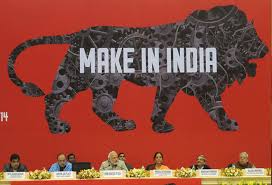
Make in India is a campaign launched by the PM, Narendra Modi, which facilitates all the big business investors worldwide who want to do business in India. This program was launched in 2014 on the 25th of September by the PM at the Vigyan Bhawan in New Delhi. It is a big step taken by the government of India to reduce the level of unemployment faced by the youths of the country. This campaign was launched a day after the Mars mission when PM was to go on his first visit to the USA as prime minister of India.
The aim of launching this campaign in India is to make India a world-level manufacturing powerhouse which will definitely help in solving the biggest issue of the Indian economy. This initiative was launched with new deals for foreign investors successfully in New Delhi with the top industrialists of India including Mukesh Ambani (Reliance Industries chairman), Azim Premji (Wipro chairman), etc. This initiative further aims at creating a favorable environment for investment, modern infrastructure, opening up new sectors for foreign investment, and establishing a partnership between government and industry through a broader outlook.
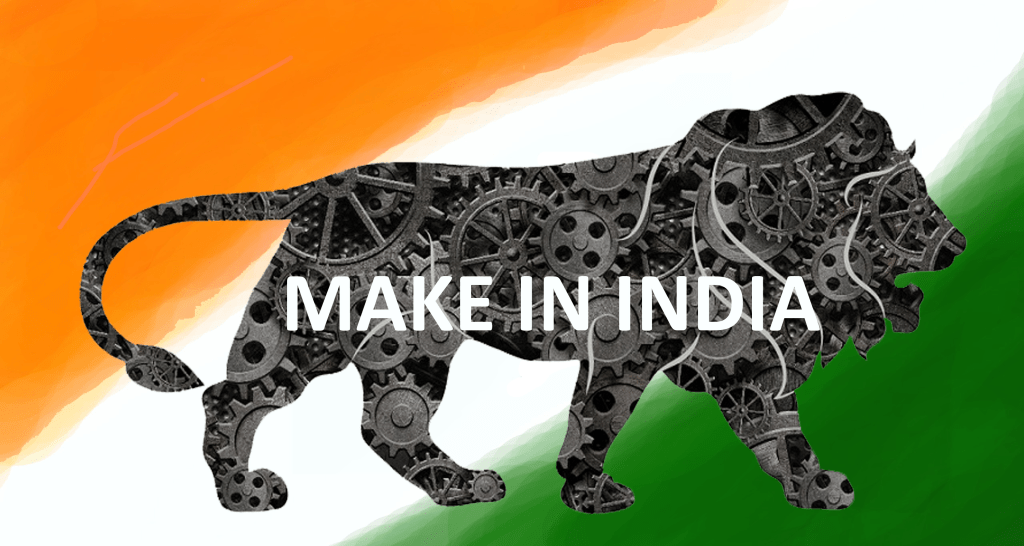
The symbol of this initiative is a giant lion having many wheels. This indicates peaceful progress and way to the vibrant future of the country. A giant walking lion with many wheels represents courage, strength, tenacity, and wisdom.
Guidelines and Policy for Make in India
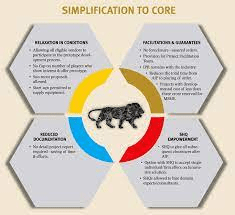
The government laid new Guidelines to start the mission successfully. The main objective of the Guidelines was to sanction the projects that are approved by state governments. Some Guidelines are like:
Reduce paperwork required for establishing companies.
Minimize the time required for government approvals.
Abolish the Corporate Social Responsibility (CSR) from the project cost.
Policies have been made for convenient transfer of funds while switching jobs anywhere in the country. A cell was dedicated to responding to the queries for business entities through a web portal.
Khadi, India‘s own versatile clothing material for ages
Introduction
Khadi, also known as Khaddar ,which started as a symbol of the Swadeshi Movement led by Mahatma Gandhi 100 years ago, is now a fashion statement in India and is gradually getting popular across the globe. Not only as an affordable and comfortable fabric for daily-wears, but also Khadi is now being considered as a Style Statement for its sustainability and eco-friendliness.
Khadi production
Nature of The Khadi Material
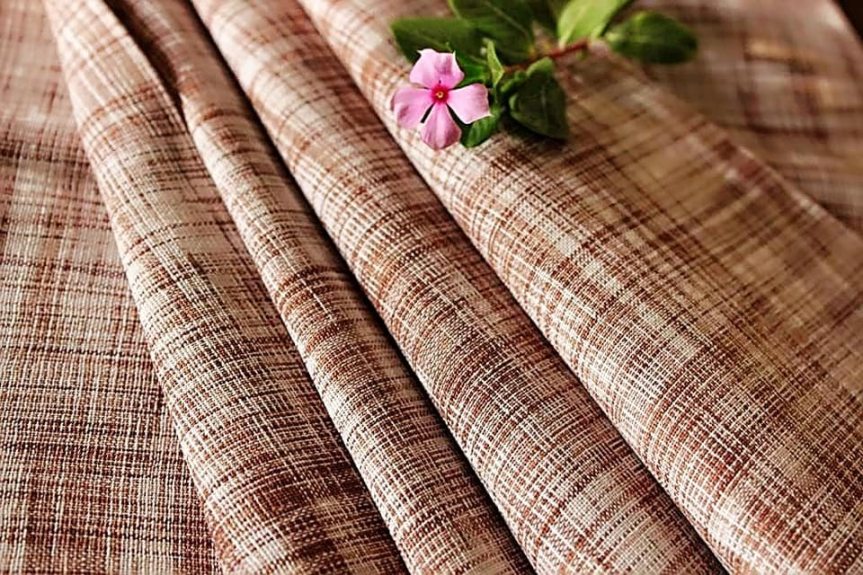
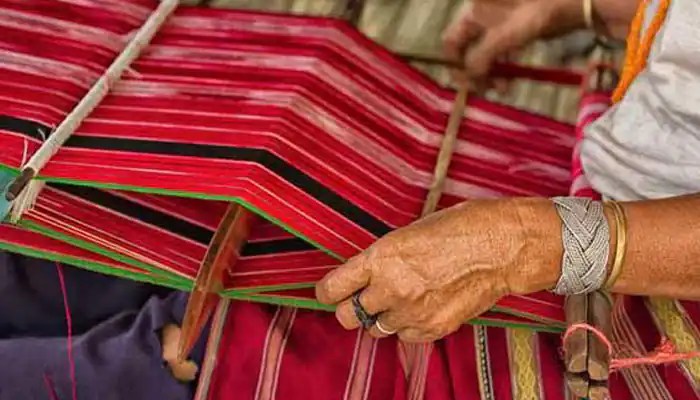
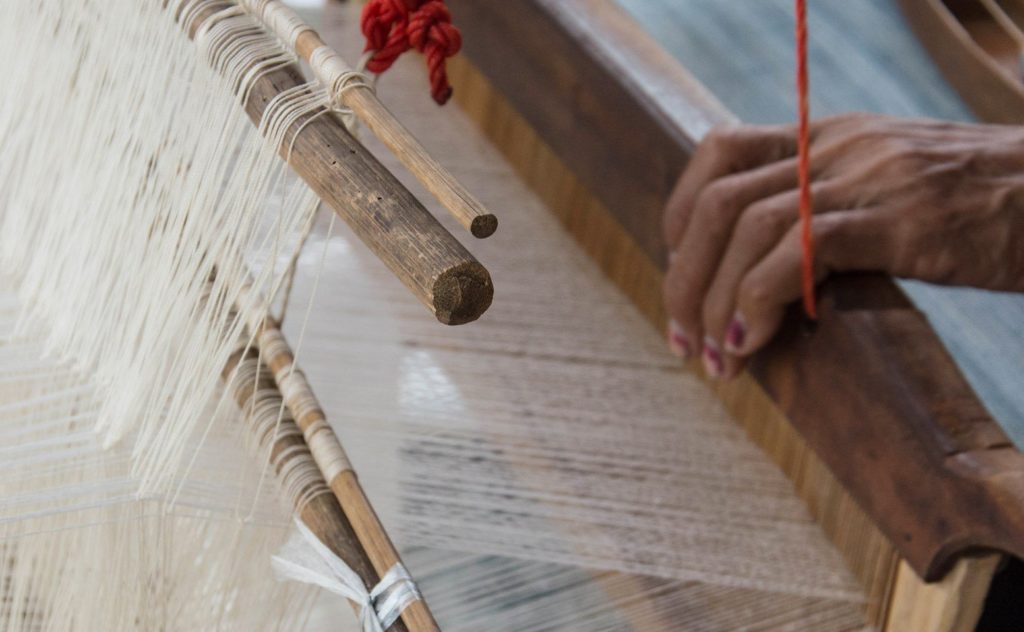
Khadi is a textile fabric made by hand-spun and hand-woven cotton, silk, wool or a mixture of these fibres. It is a traditional way of textile manufacturing and is generally produced by rural artisans. The method of manual spinning and weaving makes the fabric structure somewhat rugged and imparts a unique appearance and makes it soft and comfortable to wear. The spinning is carried out on a traditional wooden frame called charkha, while the weaving is done on a handloom. The specific fabric construction helps in circulation of air within the threads and imparts unique property of keeping the wearer warm in winter as well as cool in summer.
Weaving of Khadi
History of Khadi : Role in India’s Freedom Movement
India has an ancient heritage of cloth making based on the availability of natural fibrous raw material such as -agricultural cotton owing to the clement climatic conditions and fertile land, varieties of silk from different sericulture and wool from domestically reared sheep. The textile coloration was carried out using abundantly available natural dyes, derived from various plant and animal extracts. Such flourishing textile base was one of the major attractions for the Western world. After mechanised industrialisation, the situation changed and the basic raw material was exported from India, converted into mill-processed finished cloth and the imported fabric was brought back. This led to the demolition of traditional textile manufacturing in India and eventually the art and craft of fabric making diminished.
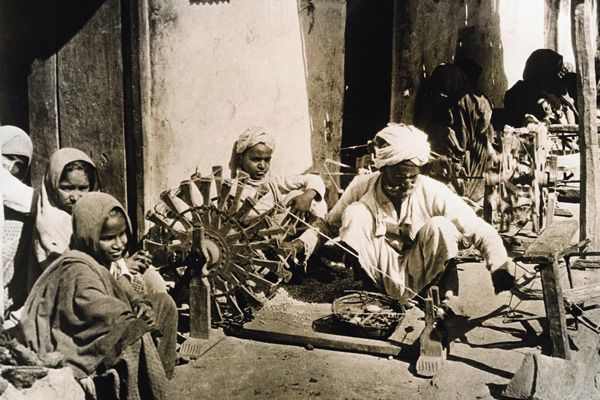
During the initial phase of the freedom movement, national leaders like Dadabhai Naoroji and Lokmanya Tilak initiated the Swadeshi Movement to promote Indian-made products. However, it was Mahatma Gandhi who in 1918 brought the focus of India’s freedom struggle to khadi by promoting that as a Swadeshi symbol.
Under the leadership of Mahatma Gandhi, khadi-making regained momentum and became a symbol of revolution and resistance. It also provided employment to the vast rural population of India and achieved distinct identity as a common man’s cloth. As everybody could wear the same form of clothing without any distinctions of class, creed or religion, they could demonstrate solidarity in freedom struggle. Wearing khadi became a matter of national pride and united the population of India by surpassing the divisive system of the region, language, religion, caste, age and gender. It reflected our country’s legacy of sustainable living and self-reliance. The Indian national flag is also made from khadi material.
Khadi making with Charkha, during India‘s Freedom Movement
Government Initiatives After India’s Independence
The Khadi and Village Industries Commission (KVIC) is the Indian government body that promotes khadi, whose production and sale comes under the small scale industry sector. KVIC was created by a parliament act after which many KVIC outlets were opened across the country. These shops sell khadi fabrics and apparel. Every year between October to January, all Khadi Gramodyog Bhavans offer discounts on their products. KVIC also organises exhibitions and trade fairs in the country and abroad to promote khadi.
An estimated 15 lakh people are now engaged in producing over 12 crore metres of khadi. KVIC is taking further steps to enhance its production as the market demand for such products is much more than the supply. A new programme is expected to establish the ‘Khadi Mark’ and a logo to indicate the genuineness of the product. The financial support provided and the political will exerted by the present government and the special emphasis from Prime Minister Narendra Modi has helped boost employment in the manufacturing and promotion of khadi products. Leading film artists, sports personalities and fashion designers have come forward to promote this unique ‘Made in India’ fabric in the global arena.
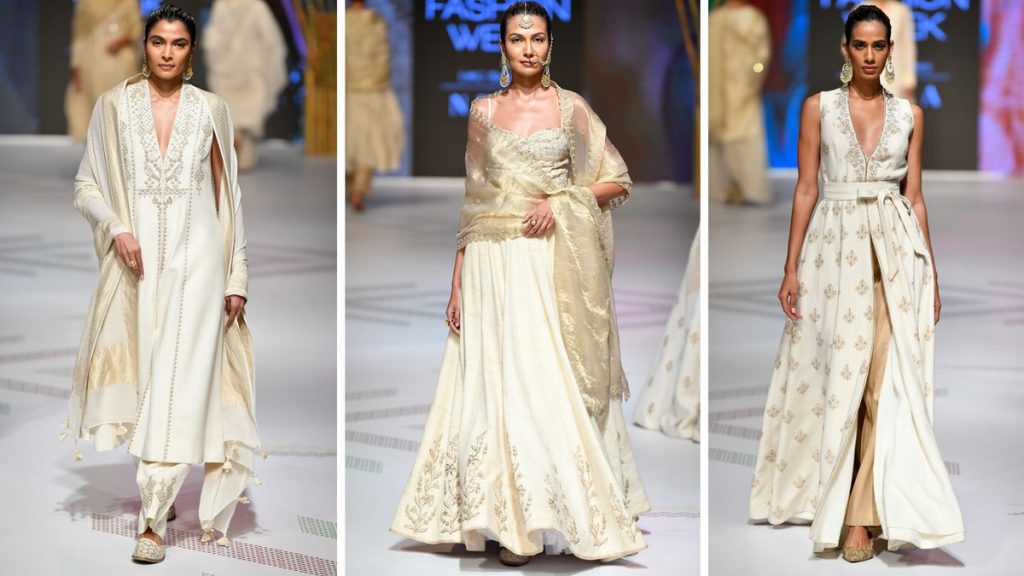
Khadi used in sustainable fashion
Contribution of Khadi in World Fashion
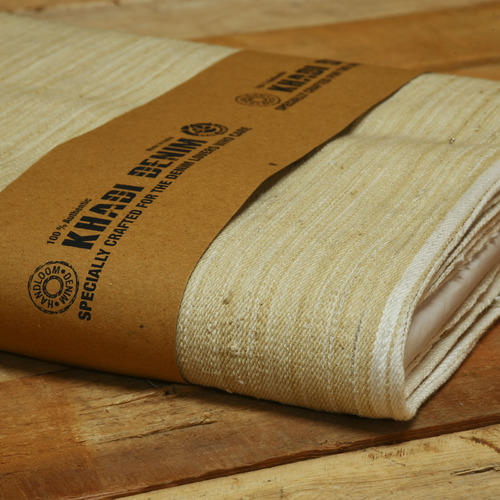
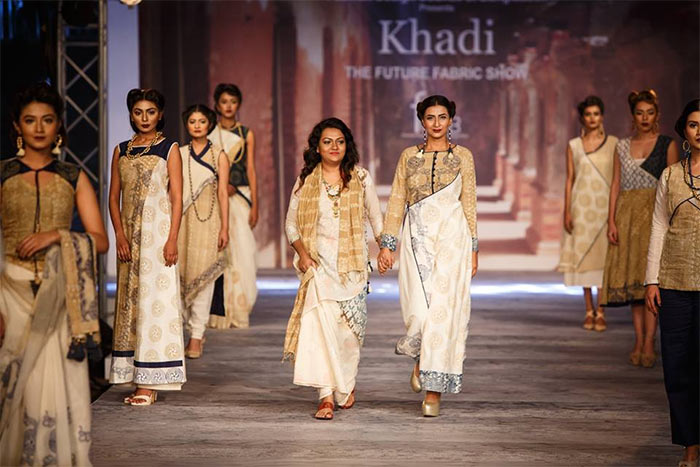
Considering khadi‘s eco-friendly and natural origin, it has become a focal point of global fashion owing to growing consumer awareness and the consistent demand for sustainability. Fashion designers have acknowledged the aesthetic appeal and comfort attributes of khadi and experimented it in blending with many other stuff to synergistically enhance the fashion appeal and outlook of products. Khadi is now used in denims, jackets, shirts, dress material, stoles, home furnishings and apparel accessories like handbags. Khadi, once considered as the fabric for political leaders and the rural folk, has entered the wardrobe of the fashion-conscious urban population. Wearing khadi now symbolises affluence as it offers a distinguished look. The ecological aspect and ethnic looks of khadi have caught the fancy of global brands and leading fashion designers have started including khadi material in their collections.
Global acceptance of the Khadi in fashion
Conclusion
Incorporating Khadi in our daily life may also pave the way for a simple spiritual living exuded by our clothing and home décor items. Khadi being such a versatile fabric can be easily incorporated, by changing the warp and weft, in a home decor and clothing lines. This will make us come closer to nature and add a touch of earthiness in our lifestyle.
Self-reliant India is the vision of the Prime Minister of India Narendra Modi of making India a self-reliant nation. The first mention of this came in the form of the ‘Self-Reliant India Mission’ during the announcement of the coronavirus pandemic related economic package on 12 May 2020. This self-reliant policy does not aim to be protectionist on nature and as the Finance Minister clarified, ” Self-reliant India does not mean cutting off from rest of the world”. The largest fund in the country worth Rs. 21,000 crore was setup by the IIT Alumni Council with the aim of supporting the mission towards self-reliance.
Everybody knows, that the youth are the future of any country. But India can take lead over many other nations because about 65 percent of the country’s population is below 35 years and 50 percent is below 25 years. With huge, educated young population, India is very uniquely poised to realise the demographic potential amd reap the advantage of this vast powerhouse of human resource talent. The need of the hour is to upgrade the skill or upskill the youth to meet the emloyment needs of technology driven 21st century and accelerate the pace of self-reliance.
The uncertainity created by the pandemic is being seen by many as an opportunity to upgrade knowledge and acquire new skills that will cater to the post-corona virus job scenario. The skills required for tomorrow’s jobs will be completely different from the skill-sets youth possess today.
So, its high time now, we have to make India self-reliant and youth plays the most important role in this mission.
The defence ministry will stop the import of 101 items “beyond given timeline” to boost indigenous production according to Prime Minister Narendra Modi’s mission of Atma Nirbhar Bharat (Self-Reliant India), Union minister Rajnath Singh said today. This would mean that the domestic industry will receive contracts worth almost Rs 4 lakh crore within the next six to seven years. The embargo will be implemented in phases between 2020 and 2024, the minister said.
The list includes high technology weapon systems like “artillery guns, assault rifles, corvettes, sonar systems, transport aircrafts, light combat helicopters, radars and many other items”, the Centre said in a statement
The list also includes wheeled Armoured fighting vehicles (AFVs), with an embargo date of December 2021, “of which the Army is expected to contract almost 200 at an approximate cost of over Rs 5,000 crore,” the ministry said.
The Navy is likely to place demands for submarines with indicative import embargo date of December 2021, of which it expects to contract about six at an approximate cost of almost Rs 42,000 crore.
For the Air Force, it is decided to enlist the LCA MK 1A with an indicative embargo date of December 2020. Of these, 123 are anticipated at an approximate cost of over Rs 85,000 crore, the government said. The ministry will identify more such equipment for import embargo.
The list has been prepared by the defence ministry after consultations with all stakeholders, including the Armed Forces, public and private industry, Mr SIngh said.
“This decision will offer a great opportunity to the Indian defence industry to manufacture the items in the negative list by using their own design and development capabilities or adopting the technologies designed and developed by the DRDO (Defence Research and Development Organisation) to meet the requirements of the Armed Forces,” the minister said.
All steps will be taken to ensure that timelines for production are met. This would involve a coordinated mechanism for “hand-holding of the industry by the Defence Services”, the minister said. The ministry will identify more such equipment for import embargo.



 Eduindex
You must be logged in to post a comment.