
NPV Net Present Value

NPV stands for Net Present Value. It is a financial metric used to evaluate the profitability of an investment or a project. NPV takes into account the time value of money, which means that money today is worth more than the same amount of money in the future.

The calculation of NPV involves discounting all future cash flows from an investment at a specified discount rate, which represents the minimum rate of return required by an investor to undertake the investment. The resulting sum is the present value of all future cash flows, which is then compared to the initial investment.

If the NPV is positive, it means that the investment is expected to generate returns greater than the required minimum rate of return and is considered a good investment. If the NPV is negative, it means that the investment is expected to generate returns lower than the required minimum rate of return and is considered a bad investment.

Advantages of NPV:

Time value of money: NPV takes into account the time value of money, which means that it provides a more accurate picture of the true value of an investment by discounting future cash flows to their present value.

Provides a clear decision rule: NPV provides a clear decision rule for investment appraisal. If the NPV is positive, the investment is expected to generate returns greater than the required rate of return and should be undertaken. If the NPV is negative, the investment is expected to generate returns lower than the required rate of return and should be rejected.

Considers all cash flows: NPV considers all cash flows associated with an investment, including initial investment, operating costs, and future cash flows. It provides a comprehensive evaluation of an investment and helps in making informed decisions.

Considers risk: NPV allows for the consideration of risk by adjusting the discount rate based on the level of risk associated with the investment.

Disadvantages of NPV:

Requires estimation: NPV requires the estimation of future cash flows, which can be difficult and uncertain, especially for long-term projects. Incorrect estimation can lead to inaccurate results.

Ignores non-monetary factors: NPV only considers the monetary aspects of an investment and ignores non-monetary factors such as environmental impact, social responsibility, and ethical considerations.

Dependent on discount rate: NPV is dependent on the discount rate used, which can be subjective and varies depending on the investor’s perception of risk and opportunity cost.

Ignores timing of cash flows: NPV assumes that all cash flows occur at the end of each period, which may not be the case for all investments. This can lead to inaccuracies in the evaluation of investments with complex cash flow patterns.

NPV Formula

C0 = Initial Investment

C1 is Cash Flow in First Year

r is discount rate e.g. 10 percent means 0.1

Learn NPV with an Example 

A company is considering an investment in a new project that requires an initial investment of $50,000. The project is expected to generate cash flows of $15,000 per year for the next five years. The required rate of return for the company is 10%.

What is the NPV of the project, and should the company invest in the project?

Solution:

To calculate the NPV of the project, we need to discount the future cash flows to their present value using the required rate of return. The calculation is as follows:

NPV = -Initial Investment + PV of Future Cash Flows

NPV = -$50,000 + ($15,000 / (1+0.1)^1) + ($15,000 / (1+0.1)^2) + ($15,000 / (1+0.1)^3) + ($15,000 / (1+0.1)^4) + ($15,000 / (1+0.1)^5)

NPV = -$50,000 + $12,105 + $10,777 + $9,797 + $8,997 + $8,334

NPV = $-641

The NPV of the project is negative, which means that the investment is expected to generate returns lower than the required rate of return. Therefore, the company should not invest in the project as it is not expected to be profitable.

Note: In this example, we assumed that the cash flows occur at the end of each year. If the cash flows occur at different time intervals, the calculation would need to be adjusted accordingly.

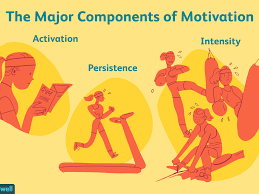
MOTIVATION IN MANAGEMENT

The term motivation is derived from the word motive and motives are expressions of a person’s needs and hence they are personal and internal and in this context, the term need should not be associated with urgency or nay pressing desire for something and it simply means something within an individual that prompts him to action and motives or needs are ‘whys’ of behaviour and they start and maintain activity and determine the general direction of the person and motives give direction to human behaviour because they are directed towards certain goals which may be conscious or sub-conscious. Motives are directed towards the achievement of certain goals which in turn determine the behaviour of individuals and this behaviour ultimately leads to goal-directed activities such as preparing food and a goal activity such as eating food and in other words, unsatisfying needs result in tension with an individual and engage him in search of the way to relieve this tension.

INTERRELATED TERMS

While discussing motivation, we need to understand three interrelated terms- Motive, Motivation, and Motivators.

1. Motive- A motive is an inner state or desire which energies an individual to move o to behave towards the achievement of goal and motive arises out of needs of an individual and it causes restlessness as he wants to fulfil his motive.

2. Motivation- It is a process of inducing people to perform to their best ability to accomplish a goal and it is a psychological phenomenon which arises from the feeling of needs and wants of individuals and it causes a goal-directed behaviour.

3. Motivators- Motivators are the incentives or techniques used to motivate the people in an organization and common motivators used by the mangers are increment, bonus, promotion, recognition, respect etc. 

 Motivations may be defined as the complex of forces inspiring a person at work to intensify his willingness to use his maximum capability for the achievement of certain objectives. According to Koontz and O’Donnell “ Motivation is a general term applying to the entire class of drivers, desires, needs, wishes and similar forces and to say that managers motivate their subordinates is to say that they do those things which they hope will satisfy drives and desires and induce the subordinates to act in the desired manner”

FEATURES OF MOTIVATION

1. Motivation is an internal Feeling/ instinct

Motivation is a psychological phenomenon which generates from within an individual and needs are the feelings arising in the mind of a person that he lacks certain things and such feelings affect the behaviour of that individual and causes him to do work and hence, motivation is the process of making an individual feel his needs.

2. Motivation produces goal-directed behaviour

Motivation is a power which leads the employees to the achievement of their goal and the behaviour of the motivated employees clearly shows that they are inclined towards the achievement of their goal.

3. Motivation can either be positive or negative

Positive motivation provides positive rewards like an increase in pay. Promotion, recognition etc. Negative motivation uses negative means like punishment, stopping increments, threatening etc., which also may induce a person to act in the desired way. 

TRAINING IN MANAGEMENT

Training is the process of helping employees to acquire more knowledge of the job and to learn or sharpen the needed skills, attitudes and values associated with the efficient performance of their job and new employees, as also existing employees, often need training as a means of their progress in their jobs and careers and it is an important element of the staffing function and many organizations make formal or informal arrangements for providing training to their managerial and non-managerial personnel. Training is practical education and it is a technique that brings out the hidden abilities in a person and teaches him to use his skills effectively. Training is an art and the trainer selects the best methods for training, keeping because of the requirements of the job and the ability of the concerned persons. Training is an activity which changes the outlook and behavior of persons and training may be understood as the practice of theoretical knowledge and the importance of training is well-recognized all over the world but the methods of training may vary from job to job and from industry to industry and typically, a separate training department under the charge of an expert in training techniques is established for the purpose. As Dale Yoder said, “Training is the process by which manpower is filled for the particular jobs it is to perform”.

METHODS OD TRAINING

1. On-the-job Method

On-the-jib methods are the methods that are applied, while the employee is working and it means Learning while doing and training is provided by superiors to subordinates and it is economical and less time consuming and it is used where jobs are simple, as in case of plumbers and motor mechanics.

a. Apprenticeship Programme

   Under this method, trainees are apprentices and they work under the direct supervision of the experts, who guide and help them in learning the job.

 b. Internship Training

In this method, professional institutes enter into arrangements with big business enterprises and send their students to these industrial enterprises to gain practical work experience.

c. Job Rotations

It is shifting the trainees from one department to another department or from one job position to another job position.

d. Induction Training

 It is training to help a new employee to settle down quickly into the job by becoming familiar with fellow workers the job and its environment including other people and machines in the business.

2. Off-the-Job Methods

Off-the-road jobs methods are used away from the place of work and it means Learning before doing and it is provided by experts either from within or from outside the organization and it is more expensive and more time consuming than on-the-job and it is used where jobs are complex involving the use of sophisticated machinery.

a. Vestibule training

 Under this method, training is given in a classroom and where the actual work environment is stimulated, a supplicate model of the workshop is prepared and instead of using original equipment, employees are trained on the dummy models.

b. Programming Instruction

The total information amount the job is broken into meaningful small units and are arranged in a logical sequence from simple to complex and the trainee goes through these units one by one by answering questions or by filling the blanks.