

Marie Curie was a Polish-born physicist and chemist who is best known for her pioneering work in the field of radioactivity. She was the first woman to be awarded a Nobel Prize, and the first person to win two Nobel Prizes in different scientific fields. Curie was born in Warsaw, Poland in 1867, and grew up in a family of educators. She was a highly intelligent and curious child, and had a passion for learning from a young age.
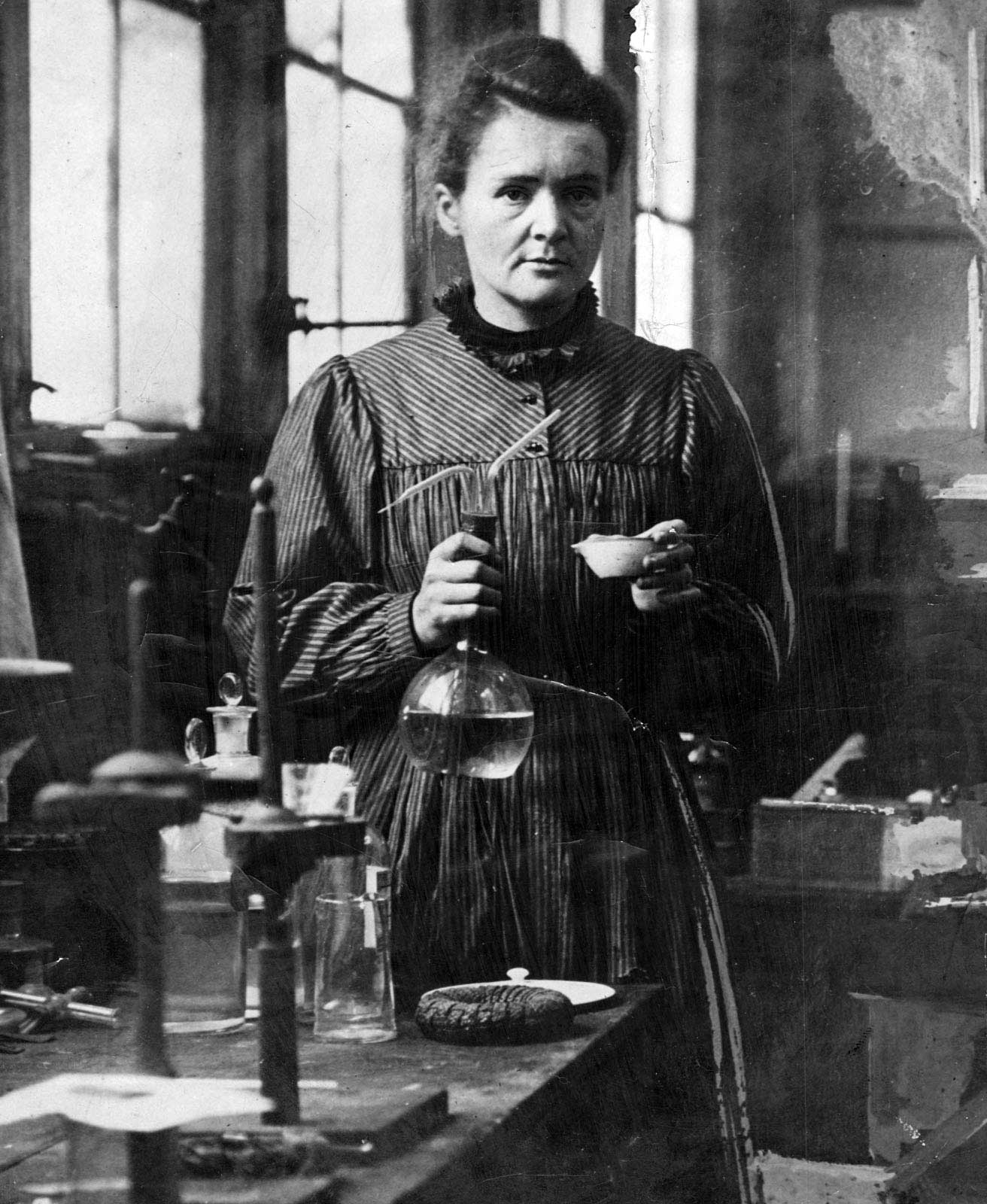
Source – https://www.atomicarchive.com/
In 1891, Curie moved to Paris to pursue further studies in physics and chemistry. It was there that she met her future husband, Pierre Curie, who was also a physicist. Together, the couple began to study the properties of radioactive materials, a field that was still in its infancy at the time. They discovered two new elements, polonium and radium, and Marie coined the term “radioactivity” to describe the phenomena they were observing.
Their work on radioactivity earned them the Nobel Prize in Physics in 1903, making Marie the first woman to receive this prestigious award. However, their research also had significant consequences for their health, as they were exposed to high levels of radiation in their laboratory work. Pierre died in 1906 from a tragic accident involving a horse-drawn carriage, leaving Marie to continue their research alone.
In 1911, Marie was awarded her second Nobel Prize, this time in Chemistry, for her discovery and isolation of pure radium. She was the first person ever to win two Nobel Prizes, and remains the only person to have won them in two different scientific fields. Despite her success, Marie faced significant discrimination as a woman in the male-dominated scientific community of her time. She was not allowed to join the French Academy of Sciences until 1962, more than 30 years after her death.
Marie Curie’s contributions to science and medicine have had a lasting impact on our understanding of the world. Her work on radioactivity helped pave the way for modern cancer treatments, and her discoveries of new elements and their properties expanded our knowledge of the basic building blocks of matter. Her legacy also serves as an inspiration to generations of women and girls who aspire to pursue careers in science and technology.
In addition to her scientific achievements, Marie was also a dedicated humanitarian. During World War I, she used her knowledge of radiology to develop mobile X-ray units that could be used to diagnose and treat wounded soldiers on the front lines. She also served as a role model and mentor to other women in science, including her daughter, Irène Joliot-Curie, who also won a Nobel Prize in Chemistry.
Marie Curie died in 1934 at the age of 66, from complications related to her exposure to radiation. She was buried in the Panthéon in Paris, alongside other French national heroes, becoming the first woman to be interred there on her own merits. Today, she is remembered as one of the most influential scientists of the 20th century, whose groundbreaking discoveries continue to inspire and inform our understanding of the natural world.

 Eduindex
You must be logged in to post a comment.