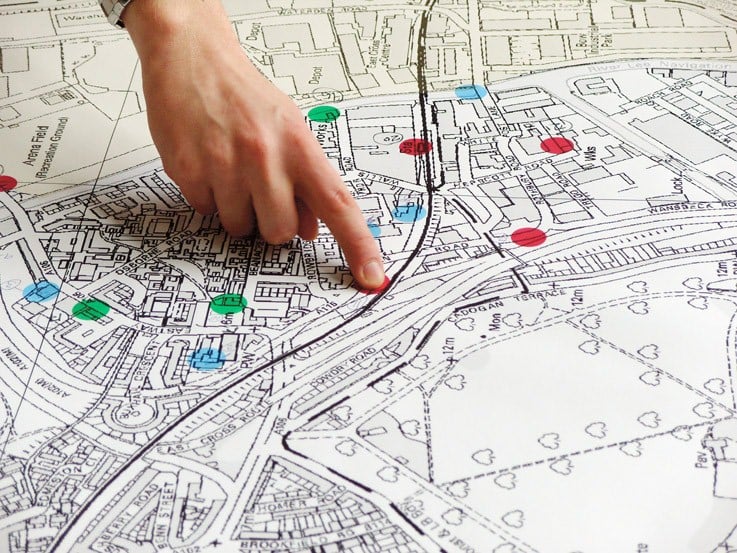
PM GatiShakti National Master Plan in States/UTs

 To promote wider adoption of PM GatiShakti National Master Plan (NMP), Department for Promotion of Industry and Internal Trade (DPIIT), Ministry of Commerce and Industry conducts weekly review meetings with States and Union Territories to monitor and extend support for efficient and effective utilization of their State Master plan (SMP) portals for infrastructure planning and implementation.

A review meeting was convened for the Western and Central Zones States/UTs of India, chaired by Special Secretary (Logistics), DPIIT, Ms. Sumita Dawra at New Delhi on August 31, 2023. The meeting witnessed active participation from States/UTs i.e. Maharashtra, Goa, Rajasthan, Daman & Diu and Dadar & Nagar Haveli, Gujarat, Madhya Pradesh and Chhattisgarh.

During the meeting, Special Secretary (Logistics) stressed upon the importance of utilising the GatiShakti NMP/SMP portal and adopting ‘whole of government’ approach for infrastructure and social sector planning.

The chair mentioned various benefits of PM GatiShakti National Master Plan (NMP) by leveraging data layers and tools for effective, data-driven decision making, that includes:

  1. Optimized Route Planning
  2. Enhanced visibility of intersections from forest, economic zones, archaeological sites etc.
  3. Enabling time and cost saving for planning and implementation of infrastructure projects, such as, use of digital surveys on NMP to streamline the preparation of Detailed Project Reports (DPR) with higher accuracy.

She also mentioned that the States/UTs are extensively using the PM GatiShakti approach for planning connectivity to Industrial Regions; for selecting the location of social infrastructure assets, such as anganwadis, schools, hospitals, etc.

States/UTs are integrating their existing development programmes/schemes with the GIS-based NMP/SMP to achieve better planning. For instance, the State of UP, integrated its Pahunch portal with the SMP, for effective decision-making about site suitability of new schools, based on various parameters like population, connectivity, teacher-pupil ratio, etc. Similarly, the Gujarat Government used the PMGS for planning its coastal corridor to promote tourism. State of Goa planned the disaster management/ evacuation route during floods to minimize loss of life, using the PMGS NMP/SMP portals.

It was further emphasised that the States/UTs must look after the following parameters for wider adoption of PM GatiShakti NMP:

  1. regular meeting/workings of institutional mechanism at States/UTs level;
  2. ensure quality of data layers on NMP/SMP portal;
  3. usage of SMP for project planning and implementation to facilitate Ease of Logistics, Ease of Living, and Ease of Doing Business; and

The States/UTs are being encouraged to formulate State Logistics Policy (SLPs) aligned with National logistics policy (NLP) to bring holistic focus on ‘logistics’ in public policy at State level. So far, 22 States have notified their State Logistics policies.

The States/UTs were sensitized about the advantages of utilizing PM GatiShakti NMP/SMP at the district level for planning purposes. To enable area-based development, it is essential to adopt PM GatiShakti principles for gap identification, project planning, etc. at grass root level. This is where the involvement of district-level officers becomes crucial in implementing the area-based approach for social and economic planning within their districts.

The approach can streamline several challenges, such as land acquisition, approvals, utility shifting coordination, administrative assistance, and more, expediting and ensuring time-bound project implementation. States/UTs were recommended to identify pilot areas for implementation of planning and analysis through the PM GatiShakti NMP/SMP.

***

Social Sector Ministries/ Departments being onboarded on PM GatiShakti National Master Plan

 In line with the vision of the Prime Minister, Shri Narendra Modi of expanding the outreach of the NMP platform for socio-economic development, Social Sector Ministries are being onboarded on mission mode through a series of meetings. During a high-level meeting on the adoption of PM Gati Shakti NMP by Social Sector Ministries/Departments held yesterday in New Delhi, Special Secretary, Logistics Division, DPIIT, Smt. Sumita Dawra highlighted that there is immeasurable potential for the adoption and augmentation of NMP in social sector planning.

As of date, 14 Social Sector Ministries/ Departments have been onboarded, namely Ministry of Panchayati Raj, Department of Health and Family Welfare, Department of Post, Department of School Education and Literacy, Department of Higher Education, Ministry of Culture, Ministry of Housing and Urban Affairs, Ministry of Rural Development, Ministry of Women and Child Development, Ministry of Tribal Affairs, Department of Youth Affairs, Department of Sports, Ministry of Skill Development and Entrepreneurship and Ministry of AYUSH. Individual portals of these Ministries/Departments have been developed, which are integrated at the backend with the NMP.

61 data layers of Social Sector Ministries related to infrastructure assets, such as primary and secondary schools, colleges, primary health centres, district hospitals, health sub-centres, public toilets, dump sites, Anganwadi centres, fair price shops, Amrit samovars, and dairy locations, etc., have been mapped on NMP.

Smt. Dawra stated that for wider adoption of PM GatiShakti NMP, a comprehensive area approach planning should be focused upon. It was further emphasized that Standard Operating Procedures (SOPs) are to be developed by each social sector Ministry to serve as guidelines for data management, which may be replicated by States.

The focus of the discussion in the meeting was on reviewing the status of the adoption of NMP for social sector planning and also on the measures to be taken for data management, i.e., improving the data quality, data uploading, and validation of data. The meeting saw the participation of 34 officers from all 14 Ministries/ Departments.

Ministries like the Ministry of Women and Child Development, the Department of School Education and Literacy, and the Ministry of Skill Development and Entrepreneurship showcased the use cases for the adoption of NMP.

Ministry of Women and Child Development has developed a mobile application viz., Poshan Tracker for the collection of data regarding Anganwadi Centres (AWC) under the Mission Poshan 2.0. The collected data is geo-tagged and integrated with the NMP platform through API integration. So far, 9.27 lakh Anganwadi Centres have been captured and integrated on NMP through this application. Hence, this has resulted in real-time data enrichment on the platform for infrastructure planning.

Further, after the mapping of the existing Anganwadi centres on the NMP platform, new areas were identified in terms for establishment of new Anganwadi Centres (AWC), basis the parameters like local population, habitat clusters, distance between institutions, and using the site suitability tool on the NMP.

Department of School Education and Literacy are using the NMP platform by identifying suitable sites for the opening of new schools through the use of the site suitability tool and mapping of existing data layers, i.e., road and rail network, population census data, and demographic layer for identifications of gaps and finalising the locations for opening new schools.

Other social sector Ministries, like the Ministry of Housing and Urban Affairs, Ministry of Health & Family Welfare, Department of Higher Education, Ministry of Culture, and Ministry of Tribal Affairs are also in the process of identifying assets essential for social sector planning, to be uploaded on NMP.

Individual portals for 22 infrastructure and user economic ministries and all 36 States/UTs have been created and integrated with the NMP at the backend. At present, 1460 data layers have been integrated into NMP, belonging to Central Ministries/ Departments (585) and States/ UTs (875).

***

What are Important Aspects of Preparing Master Plan for a Town

 In the beginning, a ‘Master Plan’ is prepared, which identifies the long-range, comprehensive planning by or for a government agency as a foundation for the overall land development policies within specific corporate limits. The master plan deals with the natural city or a town as a whole. It offers a broad, general picture of the projected spatial pattern of the total metropolis. Three aspects of the master plan may be studied, each of which represents a major historical emphasis on city planning. 

1) Land Use Pattern 

Planning for effective use of land within the town/city limits involves decisions regarding: 

  • The various types of utilization that require distinctive subareas. 
  • The percentage of the total occupied space that should be apportioned to each type and the grade of utilization. 
  • The proper location within the city/town of each type of functional area. 

2) Land Utilization 

The master plan or the general plan has to give scope to various categories of land utilization, both public and private. Three major categories of private land use are common stores, factories and residences each may be subdivided further. Factories may be separated into at least two subtypes, Tight’ and ‘heavy.’ Residences may be divided into three subcategories by value low, medium and high and into two or more subcategories according to the intensiveness of utilization. 

Commercial establishments may be divided into subcategories such as wholesale and retail, with the latter further subdivided. In addition, storage and switching facilities may require separate areas in connection with heavy transportation lines. Public land utilization, such as parks, playgrounds and civic centres, also have to be provided for in the city plan. However, the most extensive form of public land utilization streets spread throughout the city is in no need for a separate demarcation of space. 

3) Spatial Locations for Each Category

In determining the spatial location for each category, various types and grades of subareas available in the city are indicated on the master plan map. The planner then considers the following to determine which land has to be allotted to which category. 

  • The kinds of services to be performed within the city. 
  • The ideal locations for stores, factories and residences. 
  • Significant characteristics of the urban site that suits this ideal pattern. 
  • The existing heritage of the past construction that gives the city its present spatial pattern. 
  • The trends of the spatial change that already have started but have not run their full course. 
  • Anticipated effects of any new inventions. 

With these considerations in mind, the planner undertakes to formulate a general map of the most efficient spatial pattern. This plan is usually effected within a time span of 20 to 50 years. The planner has to recommend to appropriate officials such controls and changes as will further the realization of this pattern. The ideal master plan places every category and subcategory in a subarea of a city that 

  • The total cost of moving men and materials from place is minimized 
  • Safety and beauty are maximized 
  • Constructive social contacts are stimulated 

In formulating these proposals, the planner can utilize a generalized description of the ideal spatial pattern of a city or study the various types of city planning recommended by the experts.He needs to make detailed studies of the unique characteristics of each city and to modify the generalized ideal pattern so as to fit the local conditions and needs. For an already existing city/town, the urban planner ordinarily finds that the basic pattern of heavy transportation already has been established. The major system of streets has been laid out and the locations of the central business district and of major secondary commercial centres have been fixed, and that many areas of light and heavy industries have been established. Even though he must begin with this existing pattern and has numerous decisions to make regarding future changes. 

Industrial Location 

Although the planner has the choice to assign industrial locations to various typical positions, such as near the central business district; along the lines of heavy transportation and at breaks in transportation within the city; and at the periphery or in the nearby hinterland, etc., he has to make an effort to place them in the periphery. The planner should also provide a plan for peripheral and hinterland industrial areas, to prevent the loss of property values for the property owners of these areas.

Sometimes, it may so happen that the new industrial areas may generate many more factories, the plan has to provide for the growth of these interdependent industries, which cluster in adjacent sites, so that they can serve one another more effectively and also obtain cheaper and more efficient heavy transportation services. In addition, the urban planner needs to prepare for the expansion or migration of certain industrial areas within the city and also the migration of some industries to the city. Consequently, the planner has to make a detailed study of the factors affecting a particular city before determining the size and location of its industrial areas. 

Commercial Location 

Commercial areas ideally depend for the location and size both on the functions they are expected to perform and on the size and location of the population they will serve. In general, the major shopping goods and luxury goods centre should be planned for the middle or the centre of the city/town. This area normally is expected to expand slowly in the direction of greater population growth. With increase in the widespread automobile transportation, the larger shopping centres or commercial centres can also be located in the peripheral or outlying locations. The planner, however, has to provide for parking facilities and less traffic so that city dwellers may not face the inconvenience. 

Residential Location 

Within the built-up area of the city, some old residential districts will sometimes require extensive reconditioning or complete remodeling. Sometimes, the existing single family areas will need to give way to more intensive types of residential utilization. Sometimes, it may so happen that new residential areas have to be curved out in the peripheral regions or in the suburban areas. 

The general plan or the projected plan when made initially should place areas of multifamily residences close to busy centres of dominance especially the central business district or close to the streets or transportation lines that give ready access to such centres. Smaller areas of intensive utilization may be planned to take advantage of exceptional amenities. Expansion of residential areas into unoccupied land presumably follows the principles of distribution. Under the influence of individual and rapid speed transportation, residences will probably become more decentralized but larger numbers of peripheral communities will grow. 

City Beautification 

City beautification, which was emphasized to a very great extent in the ancient and medieval ages, has taken a backstage in recent years. Nevertheless, it deserves careful consideration by the urban planner. One major aspect of beautification, which claims the attention of many planners, involves the design and erection of an imposing civic centre. The planned civic centre counteracts the random erection of public buildings in scattered locations among other structures. When visitors visit this city, they will gain a more favourable impression of the metropolis and local residents will develop a greater civic pride if public buildings such as the corporation, public library and museum are grouped together in a beautiful civic centre. 

Other types of civic beautification projects involved in master planning include the selection of large and small parks to preserve exceptional beauty spots and make them available to the public and the designing and planting of parkways and residential streets so as to enhance their beauty. 

Buildings : Old and New 

The city/town consists of buildings that vary in age and condition. Cities require old buildings, else it is impossible that vigorous streets and commercial centres grow in them because if the cities consist of only new buildings, the enterprises that can exist there are automatically limited to those that can support the high costs of new construction. For example, well financed supermarkets, chain restaurants and banks, which are capable of paying high costs, use these buildings. But in a city, there are some small investors and shopkeepers, who cannot pay high costs; to cater to such people, old buildings are a must in a city. It is the same with respect to residential places also some people who can afford new buildings will reside in these buildings, some others prefer to reside in old buildings. 

The only harm of aged buildings is the harm that eventually comes of nothing but old age. In some cities/towns, some of the older buildings, year by year, are reconstructed or renovated. Over the years, therefore, there will be a mixture of buildings of many ages and types. With the passage of time, high building costs or new buildings of one generation become bargains or old buildings of the next generation. The colonies built up all at once usually change little physically over the years. But after many years, almost all the buildings in these colonies become old and dilapidated. 

Slum Clearance 

Many cities contain extensive areas of closely packed deteriorated dwellings, often called slums. To make the city more beautiful, the local authorities have to undertake to raze a few blocks of slum dwellings and to build new residences. At such times, city planning officials may be asked to study the local area and to make recommendations about its spatial layout. If a slum clearance project is to cover only one of several deteriorated sections of a city, the planner may first be asked to make recommendations as to which specific locality should be rebuilt. In carrying out this preliminary task, he starts with some estimate of land space that will be needed and proceeds to select one or more areas of that size. In deciding which area to recommend for reconstruction, he collects the data covering such points as follows. 

  • The number of structures unfit for human use. 
  • The number of dwelling units lacking adequate lighting. 
  • Delinquency rates. 
  • Income to the city from taxes as compared with the costs of expenditure on the police and health services. 

The planner should also take into account the location of various deteriorated areas as related to the anticipated changes in the total spatial pattern of the city. He then recommends for rebuilding only such areas as will be needed for residential utilization throughout the normal life of the proposed new dwellings. The planner then presents all these data to the officials.Based on all these data, the officials then select a slum area for clearance. The planner then has to prepare a map showing the recommended pattern of land utilization. He has to estimate the amount of space needed by store, shops, schools and playgrounds. He should also decide on the preferred locations for each type of utilization. 

He has to then recommend on how much of land has be utilized for residential purposes and also indicate the size and location of individual structures on a map. Usually on an in lying slum clearance area, the structures rebuilt are aimed at multifamily, low cost residences, generally fewer in number and higher in grade than those replaced. If a considerable slum area is cleared at one time, the planner can ignore the previous pattern of streets and can shape the area almost as if he were beginning with vacant land. Ideally, he places heavy traffic streets only among the edges of a neighbourhood and uses narrow, curved secondary streets to divide the neighbourhood into large residential super blocks, and provide necessary access to and from homes. These features of local street plans for slum clearance areas are much like those characteristics of the peripheral preplanned communities. 

Streets and Transportation Facilities 

The planning of streets and transportation facilities relates so intimately to the spatial structure of the city that the two cannot be separated. The major function of urban transportation is that of connecting one area with another so that men and materials can move with greater safety and less cost. Sometimes, some specific projects may create problems for transportation. Thus, a multiplicity of transportation and communication facilities confronts the city planner. Some facilities link the city with the hinterland and some others link with other cities, towns and villages. 

City planning has to deal with the routes of heavy transportation and location of terminal facilities and other problems that involve street use. It should also take into consideration the congestion and danger created by the large volume and potentially high speed of urban street traffic. Three aspects have to be considered while planning the streets, traffic counts and calculation of street requirements, elimination of bottlenecks and dangerous intersections, and special high-speed expressways and bypass routes. 

Traffic Counts and Major Street Pattern 

Sound planning of the major street system requires for the quantitative determination of needs. To determine these needs, the traffic engineers count the number of vehicles using each major street at different hours of the day and on various days of the week. Such traffic counts measure the total volume of traffic and the size and hours of peak loads. Sometimes, the engineers have to survey the origin and destination of the traffic to determine how much traffic can conveniently be diverted from the more congested streets to alternate routes. Using such data, engineers calculate the number and width of streets needed and make recommendations for new construction or for changes in the existing streets. 

Elimination of Bottlenecks and Dangerous Intersections 

One best method of lessening the traffic congestion on certain streets is the elimination of bottlenecks. If, throughout most of its length, a busy road is broad enough to handle the ordinary volume of traffic, then there will not be any problem of congestion. But at any point on the road, there is a narrow street or a bridge, it interferes in the ordinary movement of the traffic. The planner usually recommends the widening of such narrow places. 

Sometimes, if the bottleneck results from on street parking, the planner has to recommend the elimination of the practice or he may introduce a system of ‘one-way’ traffic streets. If peak loads result in congestion during morning and evening hours, and if the highway has four or more traffic lanes, the planner may recommend the use of movable directional signs so placed as to permit a greater number of lanes to be used in the direction of heavier traffic. 

Another major problem is traffic intersection or traffic caused due to intersecting streets. Collision and injuries are common at such places, which can be greatly reduced by overpasses and underpasses. These can eliminate cross traffic. At times, the planners can work out a system that provides for entrances and exits to facilitate the movement between cross streets or intersecting streets. 

The planners can provide for two special categories of highways to manage the traffic – high speed expressways and bypass routes. The former should ordinarily extend from the city centre outward through less populous areas into the hinterland. Such expressways can be entered only at designated points, with entrance and exit lanes especially designed to lessen the danger and to minimize interference with speeding traffic. The second highway should provide for slow traffic. These routes should lead through traffic around rather than through areas of congestion. Thus, planners can recommend a number of methods to overcome bottlenecks including the barriers caused due to pedestrian traffic.


Delhi Master Plan 2021 by Delhi Development Authority (DDA or MPD 2021)

 Delhi master plan tries to address numerous problems which are faced by residents in the city and provide policies to solve these problems. Study of master plan of Delhi is also important as it acts as guideline for various other cities and is one of the most comprehensive master plans. It remains one of the largest urban agglomerations in the world. Therefore it becomes important to look at the state of urban planning in the city and to constantly evolve and evaluate the strategies for managing its growth and development. The master plan for Delhi is supposed to be the main policy document for this purpose, a legally enforceable text which lays down the planning strategies and development controls applicable to the city. 

Delhi is the capital city of India and home to a population of almost 16 million people. It remains part of the largest urban agglomerations in the world. This large population makes planning of immense importance for providing good quality of life to its citizens. The history of planning in Delhi is centuries old much before India got independence and after independence the planning has been done by Delhi Development Authority (DDA) which prepared master plans for planned growth of the city. Master plan for year 1962, 2001 and 2021 has been made till now with increase in Urbanized Land and improvement in successive plan and aims at developing Delhi into a world class city. 

Master plan has been prepared while keeping in mind the larger context i.e. National Capital Region for integrated growth of the city with surrounding area. Master plan gives detailed information in form of various chapters such as shelter, transportation, industry, trade and commerce, land use, development code etc. these chapters gives well defined hierarchy, sizes & regulations for various facilities which needs to be provided. Various lower order plans like zonal plan, sub zonal plans, layout plans are made on the basis of policies provided in the master plan. The National Capital Region of Delhi is the 6th largest urban area in the world with a population of about 16 million people. Cities of such huge magnitude, having a population of over 10 million, are in fact now classified as ‘Mega Cities’.

                                                              Delhi master plan regions
But with the growth of such large urban areas also comes the problem of managing them well to ensure good quality of life for the residents. The existence of such large numbers of people densely packed into compact regions leads to ever increasing burdens on the resources available in the cities. Housing, waste management, slums, transportation, have emerged as some of the most pressing problems in urban areas along with the overall issue of effective utilization of land. It is in dealing with such problems that urban planning comes to the fore, in order to provide a comprehensive development strategy for the city with a forward looking approach. The city may thus get divided into administrative and uses based zones with separate plans for the same along with an all-encompassing master plan for the city as a whole.

Need of Master and Regional Plan 

Delhi Metropolitan city, the National Capital, has recorded an unprecedented growth during last several decades. In order to save Delhi from population explosion, it is necessary to regulate growth in the areas around it. The decennial growth rate has been as high as 90% during 1941-1951 and over 50% since 1951-1961 to 1981-1991. The explosive rate of growth in its population has been a cause of serious concerns to the govt. and all the concerned city authorities. The need for Regional approach to planning was felt as early as in 1959 when the draft master plan for Delhi was prepared. A statutory organization called “National Capital Region Planning Board” was set up in March 1985 to plan and promote the balanced and harmonious development of the region. 
The population increase has heavily strained the infrastructural facilities and its resources. Therefore it was felt necessary to invest in selected settlements outside the metropolis at appropriate distance and also, in impulse sectors to relieve Delhi from its present avoidable pressures. In the regional context, it is necessary to adopt a ‘poly-nodal’ model than a ‘mono�nodal’ model one.  

Delhi Master Plan Model 

Comprehensive planning model for the city to achieve balanced growth and built environment. Comprehensiveness in city planning refers primarily to an awareness that the city i.e. a system of interrelated social and economic variables extending over space. 
  • Geddesian triangle model of land use integration in terms of folk, work and place 
  • Integrated in time with reference to having a plan period 
  • Planning having a multi-disciplinary nature covering social and economic aspects
                                                               Delhi master plan 2021 

Conclusions over Delhi Master Plan 2021 

MPD 2021 provides scope for vast development within Delhi through the new land policy involving private participation. The Delhi Master Plan 2021 along with inviting private participation through opportunity for large scale development in Delhi, lays down norms to check unplanned growth and violations by developer entities. Though the land pooling model proposed by MPD 2021 brings in a remarkable change in the way private participation is perceived in the context of Delhi; it can be expected to impact the cost of new housing units. It will be interesting to witness the various parameters of land sharing, infrastructure provisions, mandatory EWS (Economically Weaker Sections) and LIG (Low Income Group) housing provision and premium factor for being located in Delhi impacting the pricing of the MIG (Middle Income Group) and HIG (High Income Group) housing segment. Market participants have been provided with good opportunities. However, the implication of different facets of regulatory and realty market characteristics / occurrences captured in this white paper will need to be analysed further to make an informed decision for benefiting from each opportunity.


Gandhinagar Master Plan – Case Study


Gandhinagar is located 23 km north of Ahemdabad planned in 1960s by Prakash M Apte and H. K. Mewada. Gandhinagar district is an administrative division of Gujarat, India, whose headquarters are at Gandhinagar, the state capital. It was organized in 1964. Gandhinagar is located in central Gujarat, Vadodra and Ahemdabad are located in the north. It is a planned city situated on the Ahmedabad, Gandhinagar is the commercial heart of Gujarat and western India. Gandhinagar is being developed as infocity. It has an area of 649 km², and a population of 13,34,455.

Streets 

Gandhinagar’s streets are numbered (eg. Road no. 1, Road no. 2 up to Road no. 7). All streets are aligned at 30 deg. N-W and 60 deg. N-E, to avoid direct glare of morning and evening sun while driving. The Gujarat assembly building is in the centre of the city to make it close to all the residents

Character of the City 

Infocity, Gandhinagar has many educational institutions like Dhirubhai Ambani Institute of ICT (Information and Communication Technology), EDI (Entrepreneurship Development Institute Of India), Indian Plasma Research Institute, and Gujarat Law University. Gandhinagar’s Education level is highest in Gujarat, 87.11% all over the Gujarat. 

Sectors 

Gandhinagar has 30 sectors which are of 1 x 0.75 km each in length and width. Each sector has a primary school, a secondary school, a higher secondary school, a medical dispensary, a shopping centre and a maintenance office. Gandhinagar is developed on the neighborhood concept.

Departments Working in Gandhinagar 

1) Roads and Building Department 

The Town planning section of this office deals only with the town planning for Gandhinagar city and the peripheral area of the city. The office deals with following activities. 

  • Preparing master plan of the city and areas outside 
  • Preparing layout of major roads and rail lines in the region 
  • Preparing layouts for residential area 
  • Preparing layouts for commercial areas 
  • Preparing layout for industrial areas 
  • Preparing layouts for special buildings such as capital complex, town hall and other public buildings
  • Preparing layouts landscaping of public buildings, parks and other public areas 
  • Guidance in policy regarding allotment of land 
  • Guidance for size of plot and land price in allotment of land 
  • Suggesting plots for auction for various uses along with base price 
  • Preparing of building bylaws for the city and the peripheral areas
  • Suggesting changes in the bylaws from time to time 
  • Permission for construction and completion of buildings as per the bye-laws 
  • Technical approval under the periphery control act 1960 for change of use (Section-11) as well as to start construction under section 5/6 of the above act. 

2) GUDA (Gandhinagar Urban Development Authority) 

This authority is the one that drafts all the town planning schemes and implements them. It was started on 12-03-1996 by Govt. of Gujarat. The prime objective of the GUDA’s formation was to carry out the sustained planned development of the area failing outside the periphery of Gandhinagar notified area. With a view to ensure well planned development of Gandhinagar capital city and 39 villages and measuring area of 388 km2 . The important functions of the authority include 

  • The preparation of development plan for the Gandhinagar urban agglomeration 
  • To prepare the draft town planning schemes 
  • To implement the revised town planning schemes and 
  • To monitor and control the development activities in accordance with the revised development plan 
  • Besides, it is also responsible for the development of the infrastructures like road, sewerage, water supply and other basic civic amenities 

Planned as the administrative capital of the state, the current and future population employed in state government offices was distributed in 30 residential sectors around the State Assembly secretariat complex. Each residential sector could accommodate about 50% of population, and was intended to house the half of the population employed by the government. Plots on the periphery of each sector are meant for private and supporting population that constitutes the remaining 50%. The city was planned for a population of 150,000 but can accommodate double that population with increase in the floor space ratio from 1 to 2 in the areas reserved for private development. The river being the border on the east, and the industrial area to the North, the most logical future physical expansion of the city was envisaged towards the north-west. 

To establish and maintain a separate identity for the new city, the surrounding area of about 39 villages was brought under a Periphery Control Act (as in Chandigarh) that permitted new development of farm houses only. The area later constituted a separate administrative district of Gandhinagar. The city was planned for a population of 150,000 but can accommodate double that population with increase in the floor space ratio from 1 to 2 in the areas reserved for private development. The river being the border on the east, and the industrial area to the north, the most logical future physical expansion of the city was envisaged towards the north- west. 

Due to a constant military confrontation with Pakistan, whose borders are close from the city, a large military presence was required here. The land acquired on the eastern bank, adjacent to National Highway No.8, was therefore allotted to the Border Security Force and military cantonment. Considering the mostly south-west to north-east wind direction, the land to the north of the city was allotted for the then biggest thermal power station and the adjacent areas were zoned for industrial use. This area was distanced from the township by a 2000 ft. wide green strip of thick vegetation. 

Gandhinagar Master Plan 

FSI (Floor Space Index) 

Residential

Ahmedabad is currently the real estate hotspot in Gujarat, followed by Surat and Vadodara. The FSI fixed by the Ahmedabad Urban Development Authority (AUDA) in R-2 zones (city outskirts) is 1.2 and in R-1 zone, it is 1.8, allowing uniform free FSI of 1.8, barring the state capital of Gandhinagar. 

Commercial

Earlier 2.8 now allowing up to 4 FSI. Under the ‘ease of doing business’ housing and slum redevelopment, under which it will give over 3.0 FSI 

Area of Sector 

75.70 hectare Ground coverage, 13.08 hectare (16.65%) Open Area, 59.28 hectare (78.30%) Roads, Primary Area 9.82 hectare and Secondary Area: 3.12 hectare. 

Linkages And Connectivity 

National highway (NH) 8 and 8C runs through the district connecting it with major cities (20 km from city), connected with Ahmedabad by the Sarkhej-Gandhinagar highway (28 km) and with Vadodara by the Ahmedabad, Vadodara expressway (139 km). Distance from major industrial centres in the state: Rajkot (249 km), Jamnagar (337 km), Valsad (373 km), Ankleshwar (223 km), Bhavnagar (228 km), Mehsana (68 km) and Surat (306 km). Distance from major cities in India: Mumbai (573 km), Delhi (943 km), Kolkata (1952 km) and Chennai (1854 km). 

Consciously designed and planned axially based on egalitarian and Gandhian ethos. The re planning of Gandhinagar by the Consultants of Gandhinagar Urban Development Authority (GUDA) has obliterated its identity as a capital city. Unbridled capitalism has led to its debasement and inorganic extension resulting in Gandhinagar becoming just another suburb of Ahmedabad. 

The New Plan (2002) 

The consultants recently appointed by GUDA have ignored that history and want the expansion of the city to take place to the south. A southward expansion proposed by the consultants will merge it with Ahmedabad and finally become its suburb, destroying its separate identity. This extension to the south has completely destroyed the plan’s most important concept, the central vista (Road No.4). It focuses on the capitol complex, and was naturally to be extended to the north-west maintaining the axis, expanding the city physically in that direction. Over 6000 acres of green cover to the south west of the city has been designated for residential use in an attempt to join with the city of Ahmedabad. All this land, when developed can accommodate a population of over 600,000. The consultants thus seek to destroy the identity of the new capital city and make it a suburb of Ahmedabad. The “Gamthan” (built up land in a village) areas of 7 villages just abutting the city limits of Gandhinagar are increased arbitrarily (much beyond their natural growth requirements) to allow private residential development. 

Dismantling of Important Urban Design Features 

A major Area for cultural facilities, in the city square in Sector 17 of the city centre is proposed to be converted to commercial use, killing Gujarat’s traditional concept of a ‘city square’ and destroying a major element of ‘urban design’ of the new capital city. An area along J road (along the river Sabarmati) across Sector 9 covered by ravines, was proposed for conservation as an adventure park. It is now designated by the consultants for residential taking away a unique recreational facility. The open spaces at the junctions of all main roads of the city, left open in the original plan to improve road geometrics in future, ornamental landscaping, road signage, guide maps etc. are proposed to be filled up with roadside petty shops and hutments for the immigrants giving the city a slum like look.

Gandhinagar Master Plan 2026 

Gandhi Nagar Master Plan 2026 provides the framework for rationalizing the orderly movement of traffic and transportation within the city and defines the area for laying down network of various services. The plan is used for promoting integrated development of the urban centre by rationalizing its pattern of land use and their interrelationship. It also defines the strategies and solutions for overcoming the existing problems of the urban centres and to overcome its infrastructural and service related inadequacies. In addition, it provides options for accommodating the future addition to population which is likely to come to the urban centre due to natural growth and migration. Master Plan acts as a tool for determining the infrastructural cost which would be required to make the city sustainable. The plans offer futuristic solutions by laying down agenda for its growth and development. 

New Schemes in Gandhinagar 

Metro between Gandhinagar and Ahemdabad. GIFT city : It’s full form is “Gujarat International Finance Tec-City”. This place is 12 km from the Ahmedabad International Airport and 8 km from Gandhinagar. It is a Global Financial Hub. To develop and implement the project, Gujarat Urban Development Company Limited (GUDCOL) and Infrastructure Leasing and Financial Services (IL&FS) have established a Joint Venture Company, “Gujarat International Finance Tec-City Company Limited” (GIFTCL). The estimated cost of the entire project is Rs. 70,000 crore (700 billion Rs). Its main purpose is to provide high quality physical infrastructure (electricity, water, gas, district cooling, roads, telecoms and broadband), so that finance and tech firms can relocate their operations there from Mumbai, Bangalore, Gurgaon etc. 

What are Process of Master Plan preparation


1) Legal Process 

A statutory backing is needed to prepare any legal plan so that it can be implemented on ground. It is governed by principles, statutes, and codes which is derived from the state. Various legislation which provide legal backing are: Development authority act; urban improvement trust act; Town and country planning act. The need for statutory backing is that it gives power to exercise police power and power of eminent domain. Any construction which does not follow master plan can be given court notice and demolished. Most of the planning processes taking place follows rational planning model. 

2) Technical Process 

It includes the framework of working in order to prepare a plan starting from defining goals to monitoring. Master Plan preparation is based on the “Systems view of planning” which involves instrumental rationality. The stages and steps followed by a particular authority or the concerned plan making body might differ. Complexity of the city and the organisation itself has a direct impact on the process adopted.

3) Public Process 

Involving community in plan preparation is one of the most important components in plan making as they are better verse of their local issues and solutions. In India public participation is in the form of public hearing. This process is also called as “Public Participation” or “Public Hearing”. The whole aim of having a master plan growth of area for the residents of the place thus it becomes essential to take their views, objections and suggestions into account.

Technical process of preparation of master plan

Master plan concepts 

4) Management Process 

Planning process is to be managed taking care of the resources like time manpower, internal organization of departments and working relationships and coordination among various departments and planning agencies. The number of stakeholders at times are numerous as in case of metropolis where the division of work is precise and given to different “boards” or other subdivision of concerned departments. This classification makes it integral to take into account all the concerned departments and agencies and thus their management.

How to ensure Master Plan Implementation

 Implementation of plan proposals has direct implications on urban growth and development. For this, a vibrant, robust and coordinated network of institutions and information system is essential for full utilization of available financial and other resources judiciously. Besides, a set of tools are needed to implement plan properly. These tools include legal protection of plan, regulatory measures of land use controls, i.e., land and zoning regulations, building regulations etc., controls on development activities and capital enhancement programmes. Other subordinate tools like tax policy, township policy, land acquisition, institutional reorganization, incentives for public-private partnerships etc. must be attuned to the goals and objectives of the master plan. 

Further, the plan constantly need its translation into socio-economic and investment programmes. However, spatio-temporal variations in availability of planning tools and their limitations should be recognized during preparation of plan to ensure its successful implementation. For instance, land use zoning or compulsory purchase of land may well exist on paper or in legislation but are not effective in practice. Such exercise enhances effectiveness of master plans and their implementation on ground level. 

The execution of master plan is carried out either by municipality or corporation. For execution a team of experts in Engineering, Architecture, Public health, Sociology, Economics, Finance etc. headed by a Town Planner is required. After the master plan is accepted and approved by the concerned authority, the steps to be taken will be 

  1. To fix the broad policies in connection with various proposals. 
  2. To prepare the list of the urgent works according to their priorities. 
  3. To prepare the detailed estimates of work of top priority. 
  4. To prepare a financial programme. 

It takes many years to complete the works contemplated in the master plan. The cost is also very high amount. So the expenditure will have to be distributed over several years. Moreover, several modifications will have to be made as such no final estimate is made in the initial stage. The most important part of master plan is the reservation of land for road system, open spaces, and public amenities, which cannot be provided for at a later date. Once it is finalized, no building should be allowed to construct which will upset the street system. 

Following inputs from preceding stages and prevailing statutes, a seamless plan implementation schedule must be prepared for development plan. It should contain roles and responsibilities of all stakeholders, resource mobilization framework and phase‐wise implementation schedule for planned project activities. The key aspects to be covered in the Implementation framework should be in line with aims, objectives and prioritized projects and schemes. Implementation framework may include the following: 

  • Priorities of projects and research 
  • Phasing of developmental activities 
  • Proposal for land resource mobilization 
  • Investment strategy and promotion 
  • Institutional set‐up 

1) Priorities 

Classify various projects identified as a part of development proposals by priority as under 

  • Essentials (Top priority)
  • Necessary (2nd priority)
  • Acceptable and desirable (3rd priority) 
  • Deferrable (4th priority) 

Projects and research should be identified by phases and implementing agencies (including private and corporate sectors) to be given as per the institutional setup. 

2) Phasing 

Development plan should advisably be in phases of 5 years to coincide with the state five year plans. The targets set for each phase can be assessed as the mid‐term review against the achievements at the end of each phase. For greenfield area phasing could include a ‘zero’ period for approvals, institutional set‐up, initial land pooling and revisiting any strategy. 

3) Proposal for Land Resource Mobilization 

Implementation mechanism detailing approaches for land polling and development in lines with the suggested mechanism in the state perspective plan. 

4) Investment Strategy 

Proposals for fiscal resource mobilization including: 

  • Internal revenue 
  • Grants and aids 
  • Institutional finance 
  • Market borrowing 
  • Private sector finance 

5) Institutional Setup 

 To clearly provide Stakeholders’ role and responsibility and organisation chart.