Is mathematics a kind of language

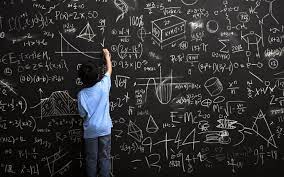
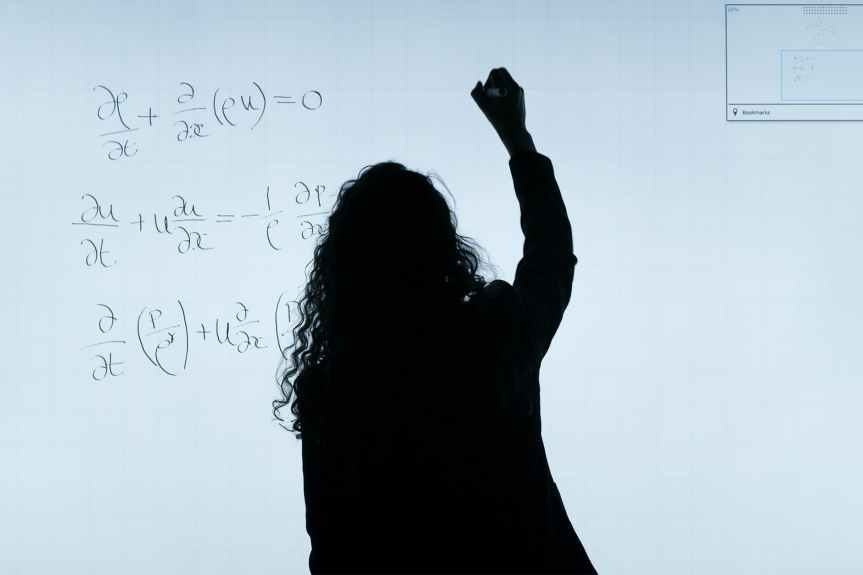
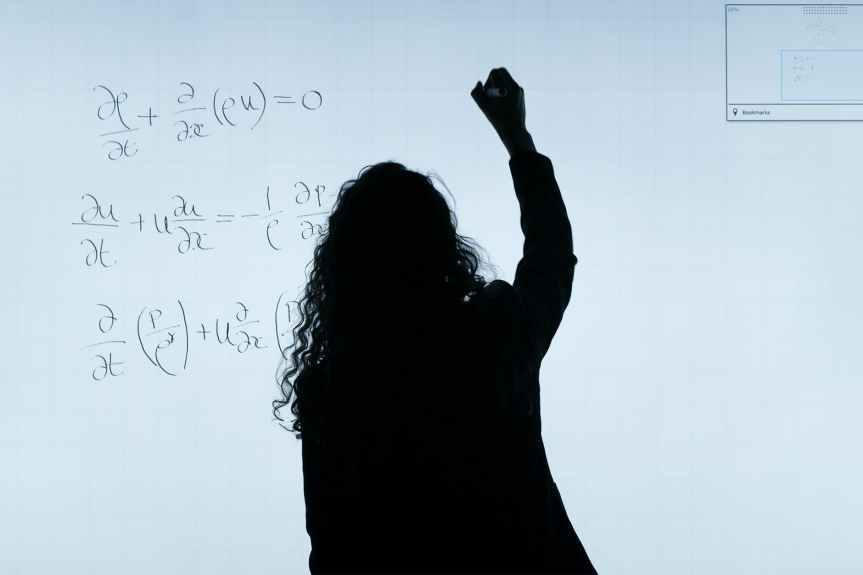
What it means to “explain” something in science often comes down to the application of mathematics. Some thinkers hold that mathematics is a kind of language–a systematic contrivance of signs, the criteria for the authority of which are internal coherence, elegance, and depth. The application of such a highly artificial system to the physical world, they claim, results in the creation of a kind of statement about the world. Accordingly, what matters in the sciences is finding a mathematical concept that attempts, as other language does, to accurately describe the functioning of some aspect of the world


At the center of the issue of scientific knowledge can thus be found questions about the relationship between language and what it refers to. A discussion about the role played by language in the pursuit of knowledge has been going on among linguists for several decades. The debate centers around whether language corresponds in some essential way to objects and behaviors, making knowledge a solid and reliable commodity; or, on the other hand, whether the relationship between language and things is purely a matter of agreed-upon conventions, making knowledge tenuous, relative, and inexact.

Lately the latter theory has been gaining wider acceptance. According to linguists who support this theory, the way language is used varies depending upon changes in accepted practices and theories among those who work in particular discipline. These linguists argue that, in the pursuit of knowledge, a statement is true only when there are no promising alternatives that might lead one to question it. Certainly this characterization would seem to be applicable to the sciences. In science, a mathematical statement may be taken to account for every aspect of a phenomenon it is applied to, but, some would argue, there is nothing inherent in mathematical language that guarantees such a correspondence. Under this view, acceptance of a mathematical statement by the scientific community–by virtue of the statement’s predictive power or methodological efficiency–transforms what is basically an analogy or metaphor into an explanation of the physical process in question, to be held as true until another, more compelling analogy takes its place.
https://www.google.com/url?sa=t&source=web&rct=j&url=https://www.mathnasium.com/southtowns/news/httpswwwthoughtcocomwhy-mathematics-is-a-language-4158142textin20order20to20be20consideredthis20definition20of20a20languagetextmath20is20a20universal20languageevery20country20of20the20world%23:~:text%3DIn%2520order%2520to%2520be%2520considered,than%2520spoken%2520form%2520of%2520communication.&ved=2ahUKEwjJnY6r2efxAhVpxDgGHcNZB8AQFjABegQIBBAF&usg=AOvVaw2TPelQCqxZ_C_u4XYX52ah

https://www.google.com/url?sa=t&source=web&rct=j&url=https://www.cut-the-knot.org/language/MathIsLanguage.shtml&ved=2ahUKEwjJnY6r2efxAhVpxDgGHcNZB8AQFnoECA4QAQ&usg=AOvVaw27gzEEM6urdLNhpvwaJxAJ

Polynomials and identities

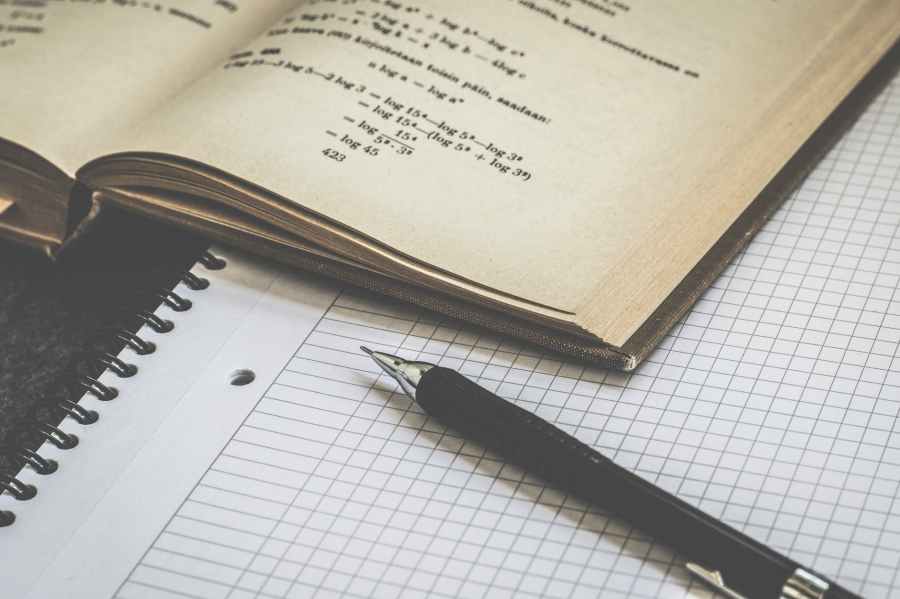
Photo by George Becker on Pexels.com

TO start with the topic first of all its necessary to know basic identities:-

a + b whole square is what? I.e a square +2ab+ b square. Similarly there are many more. TO begin with our basic topic we will try some questions and their approaches.

Q1. IF x +1/x = 4 then what is x2 +1/x2

So guys we are given value of x + 1/x =4. Now simply square both sides. You will get x2 + 2 + 1/x2 as 16. Now if you take to on RHS side it will be simply 16-2 i.e 14. Hence 14 is your answer. So dear reader you can follow a shortcut to solve orally that 4 square minus 2. I.e same 16-2 . Similarly if you have 9 instead of 4 in the question the answer would be 81-2 =79.

If now instead of this you need to find value of x4 +1/x4 . Then how would you solve. Just take out value of earlier one and square it and minus. For eg in first question as 14 was our answer subtract 2 from it and its your new answer .

Q2. If now in first question you need to find x3 +1/x3 (note its cube not three)

So you can use a shortcut i.e. p3 -3p. I.e. 4 cube -4×3 which will be 64-12=52.

Q3. If x-1/x =p then x3-1/x3 will be

Its easy just in above formula replace minus sign by plus . p3+3p.

Q4. If in first question I need to find x5+1/x5 then.

Here you need to know just the basic formula (xa )b = xa+b . Dear reader we now that 2+3=5 . So find the value in example 1 and 2. I.e 14 and 52 now multiply both of them and minus with value in question. 728-4=724.

For reference

https://www.google.com/url?sa=t&source=web&rct=j&url=https://byjus.com/maths/algebraic-identities/&ved=2ahUKEwiXnezZueLxAhWIxzgGHfbGChQQFnoECDMQAQ&usg=AOvVaw3kOAhEDrCdK4_MLjcyXg9U

https://www.google.com/url?sa=t&source=web&rct=j&url=https://www.vedantu.com/maths/algebraic-identities&ved=2ahUKEwiXnezZueLxAhWIxzgGHfbGChQQFnoECDQQAQ&usg=AOvVaw3S4Vj2T2sw7UHmGmefLXFC

Math 2.0 day

Today is math 2.0 day, but what exactly does that even mean?.With or without knowing we all use math several times every single day. The subject is also important for the advancement of technology. And thus, to celebrate the combination of maths and technology, Math 2.0 Day is celebrated on July 8. Read on to know other details.

Imagine the way the world used to be viewed! Math as known to be important but not thought to be something you could make a living at and the rising tide of technology was considered a fad! Math 2.0 Day reminds us that technology is here to stay!

Every year, Math 2.0 Day is celebrated on July 8. The day is observed to highlight the importance of the combination of maths and technology. The day was formed to celebrate the achievement made through the combination of maths and technology. Math 2.0 Day also helps to educate the masses about the benefits of maths and technology. Without maths and technology, it would have been impossible for us to achieve the various entertainment mediums we have now.

History of Math 2.0 Day

In 2009, the Math Interest Group formed Math 2.0 Day. Math is extremely important for the advancement of science, technology and education.Math 2.0 Day is a celebration of the blending of technology and mathematics. For a lot of us, math wasn’t a favorite subject, we’d spend the entire period staring at the equations and wondering what sort of livid madman designed these torture chambers on paper. Ultimately, however, we realized that math is utterly indispensable in our modern world. If you’ve ever wondered who uses math in their day to day careers, you aren’t alone and we have some answers for you.

Programmers deal with mathematics every day, as it’s the framework upon which all computer operations are formed. Everything from the order of operations to quadratic equations is necessary to make even the simplest program. Scientists are one of the biggest users of mathematics, whether they’re calculating the statistical variance of their data or figuring out how much to add to their chemistry experiment, it’s involved at every step.

One presumes you live in a house, drive a car, or operate a computer? The engineers responsible for designing those things so that they work, and especially in the case of the house, use math to ensure it doesn’t come crumbling down on your head. Math 2.0 day celebrates all these mathematical heroes and more.

How to celebrate Math 2.0 Day

If you’re like me, you probably have your old math books from college laying around. I suggest busting them open and studying them again. Who knows, in the intervening years you may have secretly developed a love for those dancing numbers. If not, make sure that you stop by those people who use math every day and thank them for doing the work so you don’ thave to.Mathematics is one of the most important fields in the world today, and just about everything we know and love is built on its back.

Basic Maths: Averages

What do you understand by averages?

Average is sum of all observations upon number of observation. For eg. Kripa had monthly salary of 20000 and krishna of 40000. There average would be 40000+20000 i.e. sum 60000 upon 2. Answer is 30000. In this question there were 2 observation.

some basic formulas

Sum of first n natural no. = n(n+1)/2

Sum of first n odd no. = n square

Sum of first n even no.= n(n+1)

sum of square of first n natural no. = n(n+1)(2n+1)/6

sum of cube of first n natural no= (n(n+1/2))whole square

  • If n is odd: The average of n consecutive numbers, consecutive even numbers or consecutive odd numbers is always the middle number.
  • If n is even: The average of n consecutive numbers, consecutive even numbers or consecutive odd numbers is always the average of the middle two numbers.

When two groups of Parts or objects are combined together, then we can talk of the average of the entire group. However, if we know only the average of the two groups individually, we cannot find out the average of the combined group of objects.

Ex: The average of 6 consecutive even number is 21. Find the largest number? Largest no. = A + (n−1)
A = average
n = no. of terms
Largest no. = 21 + ( 6 -1) = 26


Ex: The average of 5 consecutive even number is 46. Find the smallest number? 
Smallest no. = A – (n – 1)
A = average
n = no. of terms
Smallest no. = 46 -( 5 -1)
= 42

Ex: The average of 6 consecutive odd number is 22. Find the smallest number?Smallest no. = A – (n – 1)
A = average
n = no. of terms
Smallest no. = 22 – ( 6 – 1)
= 17

https://www.google.com/url?sa=t&source=web&rct=j&url=https://www.sscadda.com/quant-notes-average/amp&ved=2ahUKEwjhqr2rz8nxAhWw73MBHYxgA8gQFjACegQIBBAG&usg=AOvVaw1TahxS_tOROsOMfdE7IkbH&ampcf=1&cshid=1625408936926

https://www.google.com/url?sa=t&source=web&rct=j&url=https://byjus.com/free-cat-prep/shortcut-techniques-in-averages/&ved=2ahUKEwjhqr2rz8nxAhWw73MBHYxgA8gQFjADegQIHhAC&usg=AOvVaw0blWocmvGQEsmRMUWkhM2w&cshid=1625408936926

Why are numbers banned?

Bans, they are measures taken by the government to control whatever they feel is threatening to their rule or to the general populace. They say the pen is mightier than the sword, and authorities have often agreed. From outlawed religious tracts and revolutionary manifestos to censored and burned books, we know the potential power of words to overturn the social order. But as strange as it may seem, some numbers have also been considered dangerous enough to ban. Our distant ancestors long counted objects using simple tally marks. But as they developed agriculture and began living together in larger groups this was no longer enough. As numbers grew more complex, people began not just using them, but thinking about what they are and how they work.

By 600 B.C.E ancient Greece, the study of numbers was well developed. Pythagoras, one of the most famous mathematicians and his school of followers found numerical patterns in shapes, music and stars. For them math held the deepest secrets of the universe. But one Pythagorean named Hippasus discovered something disturbing. Some quantities like the diagonal of a square with sides of length one each couldn’t be expressed by any combination of whole numbers or fractions, no matter how small. These numbers which we call irrational numbers, were seen as a threat to the Pythagorean notion of a perfect universe. They imagined a reality that could be described with rational, numerical patterns. Historians write that Hippasus was exiled for publicizing his findings while legends of the Pythagorean era claim he was drowned by the god themselves as punishment for his blasphemous findings. While irrational numbers upset philosophers, later mathematical inventions would draw attention from political and religious authorities as well. In the middle ages, while Europe was still using roman numerals other cultures had developed positional systems that included a symbol for zero. When Arab merchants brought this system to Italy, its advantages for merchants and traders was clear. However, the authorities were wary as Hindu- Arabic numerals were quite easy to forge or alter, especially since they were less familiar to customers than to merchants. And since the concept of zero opened the path to negative numbers and the recording of debt at a time when money-lending was regarded with suspicion. In 13th century, Florence totally banned the usage of Hindu- Arabic numerals for record keeping. Even though they were immensely useful, controversies regarding zero and negative numbers continued for a long time. Negative numbers were dismissed as absurd and prominent mathematicians like Gerolamo Cardano avoided using zero despite the easier route it provided to solve cubic and quartic equations. Even today it is illegal to use various numbers for a plethora of reasons. Governments usually ban the usage f numbers which have symbolic meanings or connections to opposing political figures and parties. Some numbers are banned because of the sensitive information they carry. These days any image, file, video or executable program can be translated into a string of numbers. So, this means protected materials such as copyrights and state secrets can also be represented as numbers, so possessing or publishing these are considered a criminal offense.

Thus, in a world where calculations and algorithms, shape more and more of our lives, the mathematicians pen grows stronger each passing day.   

The mathematician who never existed

Mathematics, the scourge to students everywhere, be it high school or colleges. The study of the measurement, properties, and relationships of quantities and sets, using numbers and symbols. Mathematics includes the study of such topics as quantity, structure, space, and change. It has no generally accepted definition. Mathematicians seek and use patterns to formulate new conjectures. One of the most influential mathematicians of all time was Nicolas Bourbaki, who completely revolutionized the field of mathematics. However, when Nicolas Bourbaki applied to the American Mathematical Society in the 1950s, he was already one of the most influential mathematicians of his time. He’d published articles in international journals and his textbooks were required reading. Yet his application was firmly rejected for one simple reason: Nicolas Bourbaki did not exist.

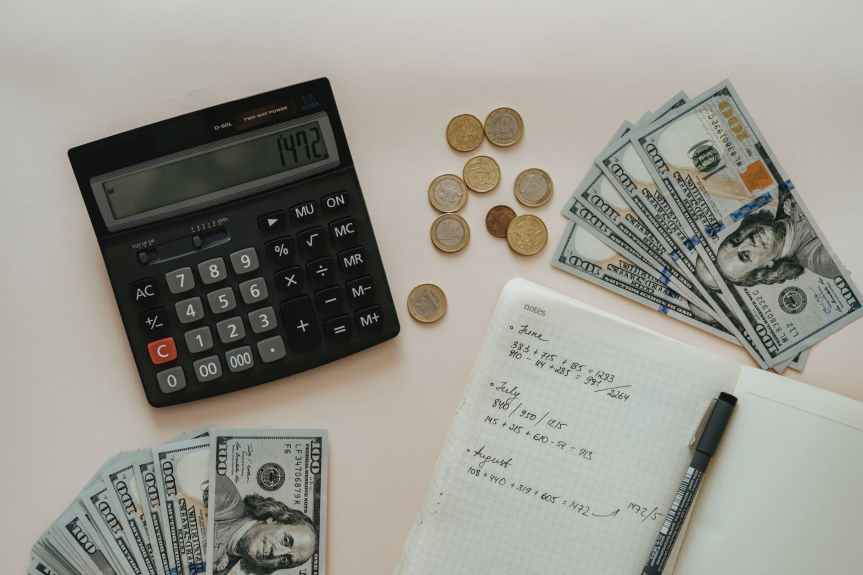
Photo by Lum3n on Pexels.com

Bourbaki had published articles in international journals and his textbooks were mandatory reading for any budding mathematician. Two decades before this application, the mathematical world was in complete disarray, many mathematicians had lost their lives in the first word war thus making the field fragmented. Different branches used disparate methodology to pursue their own goals and this lack of a shared mathematical language made it difficult to share and expand work. Thus in 1934, a group of fed up French mathematicians were particularly fed up and started a journey which would change the mathematical field in a way no one had imagined. While studying in the prestigious Ecole normale superieure, they found their books so disjointed that they decided to write a better one. The small group soon took up new member and as the project grew so did their ambition. The result was “Elements de mathematique”, a treatise that sought to create a consistent logical framework unifying all branches of mathematics. The text began with a set of simple axioms – laws and assumptions it would use to build its argument. From there its authors derived more and more complex theorems that corresponded with work done across each field. But to truly reveal common ground, the group needed to identify consistent rules that applied to a wide range of problems. To accomplish this, they gave new, clear definitions to some of the most important mathematical objects, including the Function.  It was believed that functions were like machines an input was given which in turn gave an output. But they sought to think functions as bridges between two groups, which made them formulate logical relationship between their domains. Thus, the group began to define functions by how they mapped elements across domains. This allowed mathematicians to establish logic that could be translated across the function’s domains in both directions. Their systematic approach was in stark contrast to the belief that math was an intuitive science, and an over-dependence on logic constrained creativity. But this rebellious band of scholars gleefully ignored conventional wisdom. They were revolutionizing the field and to mark the occasion they pulled their greatest stunt yet. They published their work under the collective pseudonym of Nicolas Bourbaki. Over the next two decades the publications became standard references and the group took their prank as seriously as work. They gave their Russian reclusive character due diligence, by sending telegrams announcing his “daughter’s wedding” and publicly insulting anyone who doubted his existence. In 1968, when they could no longer maintain the ruse, the group ended the prank in the best possible way, they printed out his obituary full of mathematical puns. Despite his “death”, his legacy lives on today.

Like Aristotle said “No great mind has ever existed without a touch of madness.” And these certainly were geniuses who pulled the greatest scholarly prank ever.