McLaren F1: The Ultimate Road Car Ever

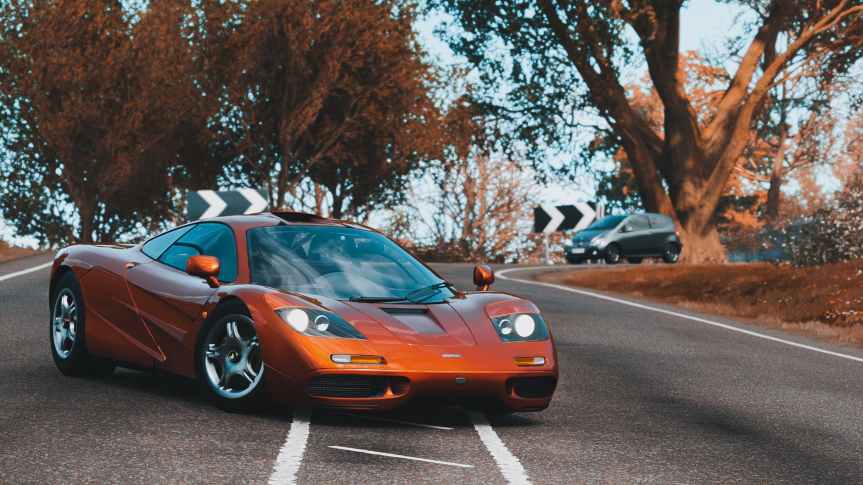
McLaren F1 was the fastest production car for 12 straight years from 1993 to 2005. At the time of its unveiling, McLaren F1 was an engineering marvel with numerous pioneering technological innovations. It was designed by the legendary designer and engineer Gordon Murray.

McLaren F1 Rear

It was the first road production car to be fully built carbon fiber. The entire Carbon fiber monocoque weighs just fewer than 220 pounds and 5000 pieces of carbon fiber pieces were used to mold the final frame.  This gives it double the strength of steel but it makes it five times lighter than traditional frames.

The car has a central seating position which is unique to this car. While developing McLaren F1, Gordon Murray drove and tested all the contemporary supercars of that time and he realized that their three-pedal boxes were somewhat offset. So He wanted to eliminate that. To solve this problem he placed the seat in the central driving position similar to a traditional F1 racing car. The central position also helps in increasing the visibility of the driver.

It has a naturally aspirated 6.1-liter V12 engine, but initially, McLaren has asked Honda to supply an engine for them as they were also the supplier for their F1 racing team at that time. But Honda didn’t follow the specification stated by Gordon Murray. Later they asked BMW to supply them with the engine of their car. BMW had to make a new engine as per the specification and the final results were incredible. The Engine is called BMW Motorsport S70/2

 The engine possesses extremely efficient heads. It also has continuous variable inlet valve timing and an emission-control system and four catalytic converters with ‘Lambda’ exhaust gas analysis control. Even with a 6064 CC displacement and a power output excess of 550bhp, the engine is quite efficient. The engine created so much heat that it had to be covered with a good heat deflecting material and to solve that problem the engine bay was covered with 16 grams of gold foil.

On 31 March 1998, Andy Wallace drove the McLaren F1 XP5 prototype at Volkswagen’s test track in Ehra-Lessen, Germany, and broke the record created by McLaren F1 itself in 1993. The car reached the top speed of 391 kilometers per hour or 243 Miles per hour. As of today, the F1 remains the fastest naturally aspirated production car in the world.

https://www.autozine.org/Archive/McLaren/old/F1.html

The car had a limited production of 106. Of those only 64 of them were road-going cars and 28 of them were racecars and the remaining of them were prototypes and special editions like the LM and longtail version. Rowan Atkinson (Mr. Bean) was for one period the owner of McLaren F1 as well.

Back in 1993, a brand-new McLaren F1 cost £540,000. In today’s money it would be approximately 1.1 million pounds but due to the rarity and the special status and engineering feat of the car. McLaren F1 has steadily climbed in value since then. As of today a McLaren F1 costs around £16 million and special versions can fetch even more. This car has also stood the test of time in its design, engineering, and craftsmanship.

References:

Geneva gear mechanism

Photo by Pixabay on Pexels.com

Geneva Gear Mechanism The main component of this machine will be the Geneva mechanism (or Maltese Cross). The Geneva drive or Maltese cross is a gear mechanism that translates a continuous rotation into an intermittent rotary motion. Geneva mechanism, also called Geneva Stop, is one of the most commonly used devices for producing intermittent rotary motion, characterized by alternate periods of motion and rest with no reversal in direction. Geneva Mechanisms are widely used in motion picture film projectors to intermittently advance film through a film gate having a projection aperture.

Geneva wheels having the form of the driven wheel were also used in mechanical watches , but not in a drive, rather to limit the tension of the spring , such that it would operate only in the range where its elastic force is nearly linear. If one of the slots of the driven wheel is occluded, the number of rotations the drive wheel can make is limited. In watches, the “drive” wheel is the one that winds up the spring, and the Geneva wheel with four or five spokes and one closed slot prevents overwinding (and also complete unwinding) of the spring. This so-called Geneva stop or “Geneva stop work” was the invention of 17th or 18th century watchmakers.

Other applications of the Geneva drive include the pen change mechanism in plotters , automated sampling devices, banknote counting machines, and many forms of indexable equipment used in manufacturing (such as the tool changers in CNC machines; the turrets of turret lathes , screw machines , and turret drills; some kinds of indexing heads and rotary tables ; and so on). The Iron Ring Clock uses a Geneva mechanism to provide intermittent motion to one of its rings.

https://www.google.com/url?sa=t&source=web&rct=j&url=https://en.m.wikipedia.org/wiki/Geneva_drive&ved=2ahUKEwjk-4-A8cTxAhUBzTgGHYauAmIQFjAWegQINhAC&usg=AOvVaw3mUfN64GEwu-zOLehlQRKm

https://www.google.com/url?sa=t&source=web&rct=j&url=https://www.britannica.com/technology/Geneva-mechanism&ved=2ahUKEwjk-4-A8cTxAhUBzTgGHYauAmIQFjAbegQIJRAC&usg=AOvVaw2E6FO5PKeRc-rRWb_BW9wi

1) Introduction to the solar tree

Photo by Pixabay on Pexels.com

Solar Tree or Solar Photovoltaic Trees are a kind of construction that looks similar to trees. They may be framed from small scale to big scale. It is an artwork which is a combination of creative and technological effort. Solar panels are put on top of its “branches”. Utilizing the sunlight energy, solar panels produce electric energy which is then used for charging gadget. It is very essential now to use the solar energy due to growing pollution form different energy producing power plant. And dew to growing population it is best renewable source of energy with no causing pollution and natural hazards.

It consumes very less space as compared to conventional flat a

.2) Introduction of Solar panel & types of solar panel

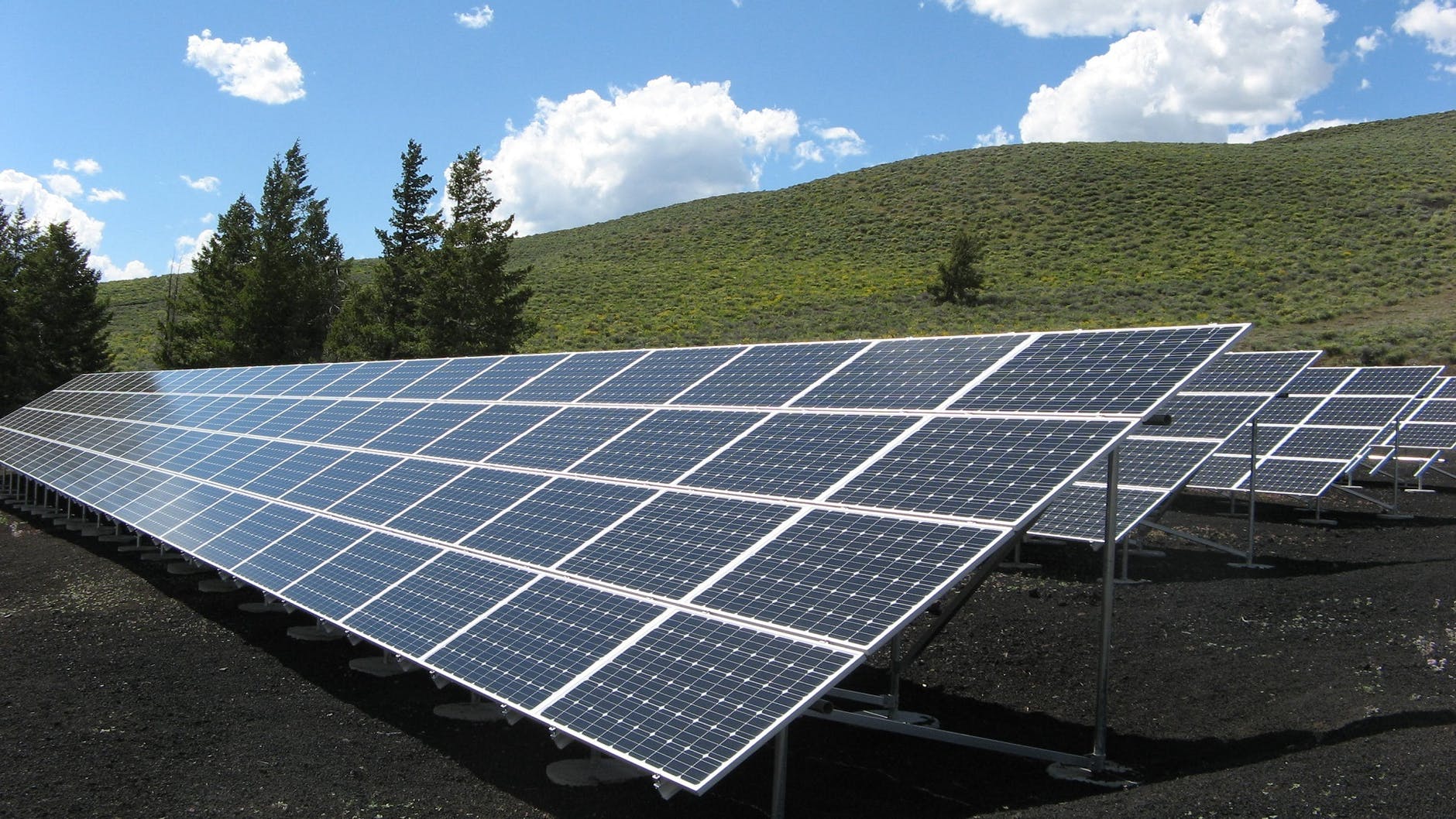
Solar panel are made of small unites called solar cell this is made up of silicon this works on the photo-voltaic (P-V) module.A PV module is an assembly of photo-voltaic cells mounted in a framework for installation. Photo-voltaic cells use sunlight as a source of energy and generate direct current electricity. In this module two type of silicon is used

  • N-type silicon
  • P-type silicon

And the combination is known as P-N junction this creates the positive and negative charge.

These days, solar panels are used in wide-ranging electronic equipments like calculators, which work as long as sunlight is available.

However, the only major drawback of solar panels is that they are quite costly. Also, solar panels are installed outdoors as they need sunlight to get charged.

Reference links

https://www.google.com/url?sa=t&source=web&rct=j&url=https://en.m.wikipedia.org/wiki/Solar_tree&ved=2ahUKEwiIhMS3o73xAhWgILcAHW81DD8QFjAYegQIPRAC&usg=AOvVaw3TwxzdGYrs4aiZTmc9RdaI

https://www.google.com/url?sa=t&source=web&rct=j&url=https://mercomindia.com/india-develops-largest-solar-tree/&ved=2ahUKEwiIhMS3o73xAhWgILcAHW81DD8QFjAXegQIKxAC&usg=AOvVaw0r5jJu2b–zk89PRBKfyep