Tag: Medical News
Children receive all missed/due doses of Measles Containing Vaccine
There have been some media reports alleging that an estimated 11 lakhs children in India missed their 1st measles vaccine dose in 2022, according to a report published by the World Health Organization and US Centres for Disease Control and Prevention (CDC).
These reports are not based on facts and do not reflect the true picture. These reports are based on the estimated number reported under WHO UNICEF Estimates National Immunization Coverage (WUENIC) 2022 report which covers the time-period from 1st of January 2022 to 31st of December 2022.
However, as per the HMIS of Union Ministry of Health & Family Welfare, a total of 2,63,63,270 children out of the eligible 2,63,84,580 children received their 1st dose of Measles Containing Vaccine (MCV) in the FY 2022-23 (April 2022 to March 2023) and only 21,310 children missed their 1st dose of Measles Containing Vaccine (MCV) in 2022-23.
Besides this, several initiatives have been undertaken by the Government of India in coordination with the States to ensure that all children, either unvaccinated or partially vaccinated receive all missed/due doses of Measles Containing Vaccine (MCV):
- The catch-up vaccination age for the administration of Measles Containing Vaccine (MCV) has been increased from 2 years to 5 years in the periodic immunization intensification activities.
- Intensified Mission Indradhanush, (IMI) 3.0 and 4.0 were carried out in 2021 and 2022 to vaccinate all unvaccinated/partially vaccinated children with missed/due doses of vaccines. Besides this, IMI 5.0 was carried out in 2023 with a special focus to increase the coverage of MR vaccine in children up to the age of 5 years.
- MR campaign was carried out in Delhi and West Bengal wherein all children in the age group of 9 months to 15 years (9months to 5 years in Delhi) were vaccinated with campaign dose of MR vaccine. The coverage of both the States reached >95%.
- Several States have carried out Supplementary Immunization activities and outbreak response immunization wherein a total of 30 million children have been vaccinated with an additional dose of MR vaccine.
- A Special Advisory on Outbreak Response Immunization was shared in November 2022 which clearly stated that One dose of MRCV has to be administered to all children aged 6 months to < 9 months in areas where the measles cases in < 9 months are above 10% of the total measles cases to not miss any child.
- The Non measles Non rubella (NMNR) discard rate is >5.8%, the highest achieved so far for the country for the current financial year, indicating a robust surveillance mechanism in place.
India’s unstinted commitment to ensure that every single child of the country is vaccinated with vaccines under Universal Immunization Programme has been recognized globally. India’s exemplary leadership and inspiration in the Regional Measles and Rubella Programme has been highly appreciated and recognized by the Measles and Rubella Partnership comprising of multiagency planning committee including the American Red Cross, BMGF, GAVI, US CDC, UNICEF and WHO. The Measles and Rubella Partnership Champion Award is scheduled to be conferred on the Ministry of Health and Family Welfare, Government of India in March 2024, at Washington DC.
****
Integration of Traditional Medicine with modern medicine
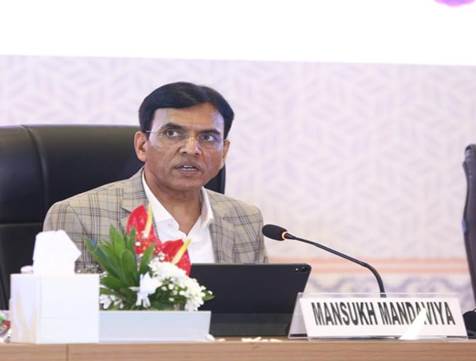
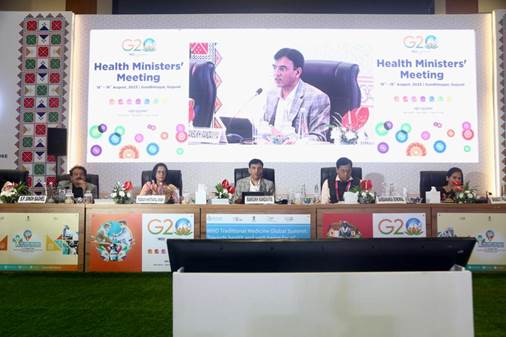
“Integration of Traditional Medicine with modern medicine would contribute to advancing the health system attributes related to quality, efficiency, equity, accountability, sustainability and resilience.” This was stated by Dr. Mansukh Mandaviya, Union Minister of Health and Family Welfare, in the presence of Shri Sarbananda Sonowal, Union Minister of Ayush and Dr. Tedros Adhanom Ghebreyesus, Director-General, World Health Organization during his valedictory address at the G20 co-branded event, WHO Traditional Medicine Global Summit, co-hosted by the Ministry of Health & Family Welfare and the Ministry of Ayush. Shri Mahendra Munjapara, Union Minister of State for AYUSH and Dr Bharati Pravin Pawar and Prof. S P Singh Baghel, Union Ministers of State for Health and Family Welfare were also present.
The two – day Global Summit for Traditional Medicine, with the theme “Towards Health and Well-being for All” explored the role of traditional complimentary and integrative medicine in addressing pressing health challenges and driving progress in global health and sustainable development.

Speaking on the occasion, Dr. Mandaviya said, “Since the advent of a public health systems approach, there has always been a focus on providing holistic health services centred around the principles of healthcare integration. WHO’s Global Conference on Primary Health Care, 2018 & Declaration of Astana on Primary Health care had also mentioned that the success of primary healthcare will be driven by applying scientific as well as traditional knowledge and by extending access to a range of healthcare services, which include traditional medicines.”
On the different types of traditional medicinal practices that are followed in member states, such as Ayurveda, Traditional Chinese medicine, Herbal medicine etc, the Union Health Minister said, “In India, under the leadership of the Hon’ble Prime Minister, we have a specific focus on Traditional Medicine & established a separate Ministry of AYUSH, which includes Ayurveda, Yoga, Unani, Siddha, and Homoeopathy.”

He highlighted that “during the COVID-19 crisis, traditional medicines had played a very important role through scientific and evidence-based medicines in terms of preventive, therapeutic and public health management”. “Ministry of Health and the Ministry of AYUSH works closely to integrate, endorse, and develop holistic health, including through availability of traditional medicines and yoga in 150,000+ Health & Wellness Centres and by establishing centres of integrated medicines in our tertiary hospitals”, he stated.
Dr Mandaviya said, “under the overarching theme of India’s G20 Presidency of ‘One Earth, One Family & One Future’ and focus on reducing fragmentation and enhancing convergence, this meeting will be a torch bearer for effective health systems strengthening and will bring additional research, evidence and innovation to help us meet health-related Sustainable Development Goals.”
Shri Sarbananda Sonowal said that “the Ayush industry’s evolution to holistic healthcare aligns with a global shift in health consciousness. This trend recognizes that health encompasses physical, mental, emotional and spiritual dimensions.” He noted that the summit will help identify potential areas for collaboration and innovation in traditional medicines and help harness traditional medicine in achieving Universal Health Coverage goals.
Highlighting that the pandemic has underscored the significance of holistic health approaches, leading to a surge in interest and recognition for AYUSH systems, the Union AYUSH Minister said, “the AYUSH systems of medicine like Ayurveda emphasizes equally on prevention and treatment parts of healthcare. Practices like yoga helps in mind and body healing.”
Shri Sonowal also emphasized on the versatility of AYUSH across different industries. He said, “the pharmaceutical and food processing sectors benefit from the demand for herbal remedies and natural products, while the diagnostic sector gains from AYUSH’s preventive focus. This synergy amplifies India’s healthcare ecosystem, contributing to economic growth and healthcare sustainability.”
Dr. Tedros Adhanom Ghebreyesus said, “Traditional medicines never had this kind of attention from governments, even though they have been practiced since millennia. Many of the important treatments of conventional medicines have their origin in traditional medicines like treatment for small pox.” He regretted that Traditional Medicinal practices are mostly stigmatized as unscientific but emphasized that they have their own utility as well. “Recognizing the benefits in the use of traditional medicines, WHO recently established the Global Centre for Traditional Medicine in Jamnagar, Gujarat”, he stated.
Dr. Ghebreyesus appreciated India’s role in promoting the use of traditional medicines and hoped that this first-ever summit on traditional medicines will be a catalyst for bringing together modern science and traditional knowledge in making health systems better.

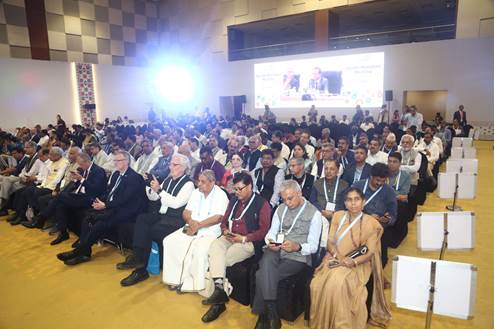
Shri Sudhansh Pant, Secretary, Ministry of Health and Family Welfare: Shri Rajesh Kotecha, Secretary, Ministry of AYUSH; Shri Lav Agarwal, Additional Secretary, Ministry of Health and Family Welfare; and Dr. Poonam Khetrapal Singh, WHO Regional Director, South East Asia Region, also participated at the event. The event also witnessed the participation of scientists, practitioners of traditional medicine, health workers and members of the civil society organizations from all over the world across the two days.
****
Doctors may soon diagnose peptic ulcer &amp; disease stage by recognising breath patterns
A newly developed non-invasive method of recognising breath patterns can help rapid, one-step diagnosis and classification of various gastric disorders like dyspepsia, gastritis, and gastroesophageal reflux disease (GERD).
Currently, peptic ulcer disease is an important medical-social problem that has received special attention all over the world. Helicobacter pylori bacterial infection is considered to be the most significant risk factor for the development of this disease. Patients with peptic ulcer encircling both duodenal and gastric ulcer may remain asymptomatic or symptomatic, and due to undefined risk factors along with lack of specific symptoms at the early stages, the diagnosis is often delayed, leading to poor prognosis and high rates of recurrence of the diseases.
Conventional painful and invasive endoscopic procedures are not suitable for early detection of the acute onset and progression of peptic ulcer as well as various gastric complications. Moreover, the conventional endoscopic methodology is not suitable for general population-based screening and consequently, many common people with complex gastric phenotypes remain undiagnosed.
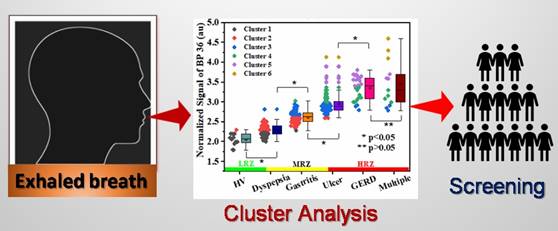
Prof. Manik Pradhan and his research team at S. N. Bose National Centre for Basic Sciences, Kolkata, under the Department of Science and Technology (DST), Government of India, used a pattern-recognition based clustering approach that can selectively distinguish the breath of peptic ulcer and other gastric conditions with that of healthy individuals.
The team used machine learning (ML) protocol to extract the correct information from the large complex breathomics data sets generated from exhaled breath analysis. In a paper published in the European Journal of mass spectroscopy, they implemented the clustering approach to recognize unique breath-pattens, breathograms, and “breathprints” signatures. This helped in a clear reflection of the specific gastric condition of an individual person along with three different risk zones for discrimination of early and late-stage gastric conditions and precise transition from one disease state to another state.
The breath-patterns generated from the patients are irrespective of the patient’s basal metabolic rates (BMR) and other confounding factors such as age, sex, smoking habits, or lifestyle.
The research carried out Technical Research Centre (TRC) at S. N. Bose Centre funded by the DST involved a project student Ms. Sayoni Bhattacharya and project scientists Dr. Abhijit Maity and Dr. Anil Mahato who worked in collaboration with Dr. Sujit Chaudhuri, a renowned medical scientist and Gastroenterologist at AMRI Hospital, Kolkata.
Over the decades, few volatile organic compounds (VOCs) or metabolites in the exhaled breath have been proposed for the non-invasive diagnosis of gastric conditions. However, a particular VOC is related to multiple of clinical surroundings and is likely to be affected by comorbid conditions, suggesting a single molecular marker is not suitable for distinguishing various gastric complications.
Prof. Pradhan who has been working on breath analysis for several years has for the first time unravelled missing links between various gastric conditions and pattern-recognition-based clustering method. These missing links has helped in the non-invasive diagnosis of various gastric disorders through a single breath test without going for painful endoscopy.
The fundamental concept behind the idea was based on the fact that the overall effect of the compounds produced endogenously by various biochemical reactions and intracellular/extracellular processes associated with the pathogenesis of various gastric phenotypes is reflected in the specific masses of the breathprints. Hence the method obviates the necessity of identification of molecular species in exhaled breath for diagnosis and classification of peptic ulcer.
The scientists have developed a prototype device called “Pyro-Breath” clinically validated it in a hospital environment and patented it. The relevant technology has been transferred through NRDC, New Delhi to a startup company for potential commercialization
This can open up new non-invasive avenues for early detection, selective classification, and assessment of progress of various gastric complications and could help widespread population screening of infants, children, pregnant women, and seniors.
Publication link: https://doi.org/10.1177/14690667231174350
For more details, please contact:
Prof. Manik Pradhan (manik.pradhan@bose.res.in)

New way to track particles in soft colloids using optical tweezers
Scientists have found a way to track minute clay particle movements within soft clay colloids using optical tweezers — the application of which in biological systems brought the Nobel Prize in Physics in 2018. This new way to track particles and manipulate them as desired can be applied in areas like targeted drug delivery.
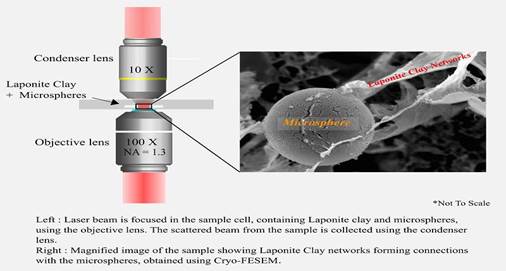
Using optical tweezers, researchers at Raman Research Institute (RRI), an autonomous institute funded by the Department of Science and Technology, Govt. of India, attempted to study the dynamics and hidden structural details of Laponite, a synthetic clay. As these clay particles are the same size (monodisperse) and transparent, so they are best suitable for performing advanced studies under light. Laponite is a widely used raw material in the pharmaceutical and cosmetics industries. This clay comprises disk-shaped particles sized 25 to 30 nanometres (nm) and one nm in thickness.
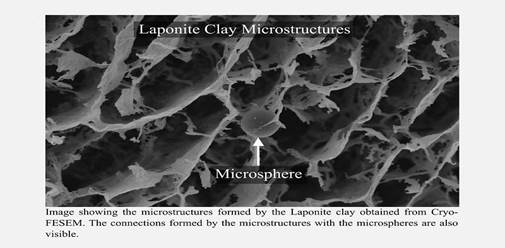
Polystyrene beads dispersed in Laponite clay suspension were used for the experimental setup. With time, microstructures were noted to have developed due to the electrostatic interactions between the clay particles. These microstructures grew stronger with time, with their network size dependent on the concentration of Laponite particles.
“These structures are responsible for the material’s elasticity, enabling adjustment of elasticity by tuning the microstructures. These microstructures also form connections with micron-sized polystyrene particles, which are used to probe these suspensions in such studies,” said Anson G. Thambi, a third-year Ph.D. student at RRI.
In a study published in the journal ‘Soft Matter, Ranjini Bandyopadhyay, faculty, RRI, and her team used optical tweezers as they wanted to measure movements of the probe in nanometres scales, where the properties of the medium evolve with passing time. Optical tweezer is a popular tool in an optics laboratory, used to measure minute forces and manipulate tiny dielectric beads trapped at the tight focus of an intense laser beam over length scales down to a few nanometers. It allows the inducement of movement in the trapped probe particle, and its response is analysed to extract previously inaccessible local viscoelastic properties of the underlying medium.
“These attachments between the probe (PS) and Laponite clay particles are necessary to understand the properties of the suspension if the internal networks are of sizes greater than the probe itself,” said Bandyopadhyay.
Furthermore, the team used cryogenic field emission scanning electron microscopy (cryo-FESEM) to examine the average pore areas formed by the Laponite microstructures.
“Interestingly, the collective observations obtained using an optical tweezer and cryo-FESEM experiments revealed an intriguing and previously unknown correlation. We found that beads trapped by the optical tweezer moved much slower in denser network structures,” added Bandyopadhyay.
The RRI team thus concluded the prevalence of a direct relation between the morphologies of the clay suspension structures and the probe particle dynamics at micrometre length scales.
Publication link: https://pubs.rsc.org/en/content/articlelanding/2023/SM/D2SM01457B


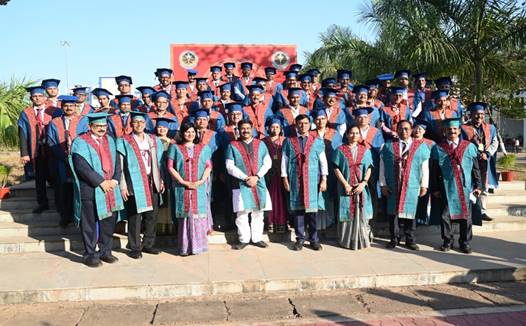
AIIMS, Bhubaneswar on the 4th Convocation Ceremony
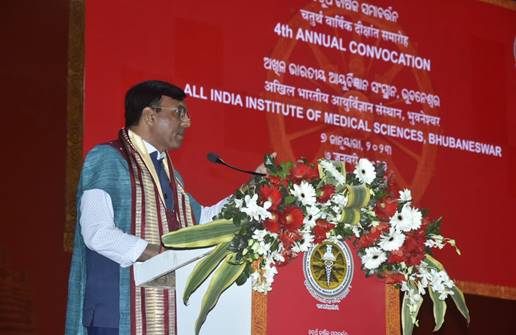
“AIIMS Bhubaneswar has won the trust of people in the field of quality health care within a decade not only in Odisha but also in adjoining states by fulfilling the mandate of equalizing the regional imbalance in tertiary health care delivery. This is a manifestation of the commitment of Govt of India under the leadership of Hon’ble Prime Minister where quality tertiary healthcare and medical education have been prioritised as part of the National Health Agenda”. This was stated by Dr. Mansukh Mandaviya, Union Minister of Health and Family Welfare as he addressed the students of AIIMS Bhubaneswar on their 4th Convocation ceremony, here today. Shri Dharmendra Pradhan, Union Minister for Education and Skill Development & Entrepreneurship and Dr Bharati Pravin Pawar, Union Minister of State for Health and Family Welfare were present on the occasion. Smt. Aparajita Sarangi, Member of Parliament was also present. The dignitaries remembered former Prime Minister Bharat Ratna Shri Atal Bihari Vajpayee who laid the foundation of the institute in 2003 and paid floral tributes to him.

Speaking on the occasion, Dr Mandaviya said, “Whether in teaching, research or health care, AIIMS Bhubaneswar has earned laurels in every sector”.
Congratulating students on the convocation, the Union Health Minister urged them to wholeheartedly take the opportunity of service and responsibility that medical science brings. He said, “our sense of responsibility should align with our service to humanity”. He highlighted that the new initiatives of “Heal in India” and “Heal by India” will give an impetus to medical value travel in the country and also fulfil the demand for skilled and qualified medical and para-medical human resource across the globe.
Reiterating the commitment of the Union govt towards improving healthcare services, Dr Mandaviya said, “The number of AIIMS in the country have increased from 8 before 2014 to 23 at present”. He further said that “50 Crore families have been given health security under the Ayushman Bharat – PMJAY scheme while affordable and quality medicines are being provided by more than 9000 Jan Aushadhi Kendras across the country”. While mentioning the AB-PMJAY, he urged the State Govt to implement the scheme in the state so that the eligible beneficiaries of Odisha can avail of the benefits of the scheme not only in the state but other states too.
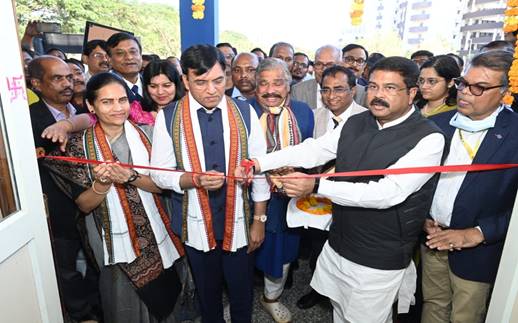
Dr Mansukh Mandaviya along with Shri Dharmendra Pradhan and Dr Bharati Pravin Pawar inaugurated the much-awaited state-of-the-art NTPC Burn Centre for the public. The Union Health Minister also laid the foundation stone of Critical Care Hospital Building. The dignitaries also released a handbook of millets in commemoration of the International Year of Millets (IOYM) 2023.

Dr Mandaviya and Shri Pradhan awarded 40 Gold medals to meritorious students of AIIMS Bhubaneswar from different disciplines like DM/MCh (4 scholars), MD/MS (10), MBBS (17), BSc Nursing (6) and BSc Paramedical (3).

Shri Dharmendra Pradhan congratulated students of AIIMS Bhubaneswar on their achievements and motivated them to take more responsibility ahead. Appreciating the rapid strides made by the institute, Shri Pradhan said, “It is a matter of pride that within ten years, AIIMS Bhubaneshwar has emerged as the second-best AIIMS in the country and the 26th best medical institution in the country, as per the NIRF rankings.”
Highlighting India’s contribution towards managing the COVID pandemic, Shri Pradhan said “India provided Made-in-India vaccines to 140 countries”. He also informed that under the administration of Prime Minister Shri Narendra Modi, the Govt is committed to have medical books in local languages to enhance the understanding of students. He urged the students to keep the campus clean and support the Hon’ble Prime Minister’s “Swacch Bharat” mission.
Dr Bharati Pravin Power noted that AIIMS Bhubaneswar has made a mark in kidney transplantation operations and is making rapid strides in other surgeries as well. She stated that “AIIMS Bhubaneswar always comes to mind when one thinks of the top medical institutions in the country today”. She emphasized that investment in health enhances a country’s progress. She also encouraged the young doctors to take more responsibility in the spirit of humanity.
Shri Manohar Agnani, Addl. Secretary, Health Ministry, Prof. (Dr.) Ashutosh Biswas, Director, AIIMS Bhubaneswar, Prof. (Dr.) Subrata Kumar Acharya, President, AIIMS Bhubaneswar, Prof. (Dr.) Prasanta Ranjan Mohapatra, Dean, AIIMS Bhubaneswar, and senior officials of the Health Ministry were present during the occasion.
****
Preparedness and response activities against biological emergencies
Ministry of Health and Family Welfare provides requisite guidance and logistic support to the States/UTs. The Integrated Disease Surveillance Programme through its State and District units conducts disease surveillance in the country through a decentralized State based surveillance system for epidemic prone diseases to detect the early warning signals, so that effective public health actions can be initiated in response to health challenges in the country.
For preparedness and response against health emergencies, the National Disaster Management Authority in 2008 has issued detailed guidance on management of biological disasters (available at https://ndma.gov.in/sites/default/files/PDF/Guidelines/biological_disasters.pdf).
Further, National Disaster Management Authority has also issued and widely circulated National Disaster Management Plan 2019 which provides an all-hazard plan with clarification on roles and responsibilities for preparedness and response activities against biological emergencies.
As per the information received from the Department of Biotechnology (DBT), the DBT has notified a “List of Infective Microorganisms corresponding to different Risk Groups, 2021” which provides the list of Infective Microorganisms corresponding to different Risk Groups, which determine the operational practice and minimum physical containment requirements and accordingly, allows selection of appropriate biosafety level facilities. The list can be accessed from https://dbtindia.gov.in/sites/default/files/Updated%20Risk%20Group13122021.pdf .
Furthermore, 138 bio-safety laboratories have been set up across the country under the Department of Health Research (DHR)’s Scheme- Setting up of Nation-wide network of Laboratories for managing Epidemics and Natural Calamities (VRDL). Indian Council of Medical Research (ICMR) has a well-established laboratory infrastructure, to combat biosafety and biosecurity threats to the country, including apex lab at National Institute of Virology (NIV), Pune
DBT has notified the “Guidelines for the Establishment of containment facilities: BioSafety Level 2 (BSL-2) & 3 (BSL-3) and Certification of BSL-3 facility” and Regulations & Guidelines for Recombinant DNA Research and Biocontainment, 2017. The guidelines encompass biosafety standards laid by various international agencies. All the biosafety laboratories specifically BSL-4 and BSL-3 established at ICMR and its network laboratories are trained in Biosafety laboratory operationalization. The key scientific staff of ICMR-NIV, Pune has also been trained at Center for Disease Control and Prevention (CDC), USA in biosafety practices.