

Introduction
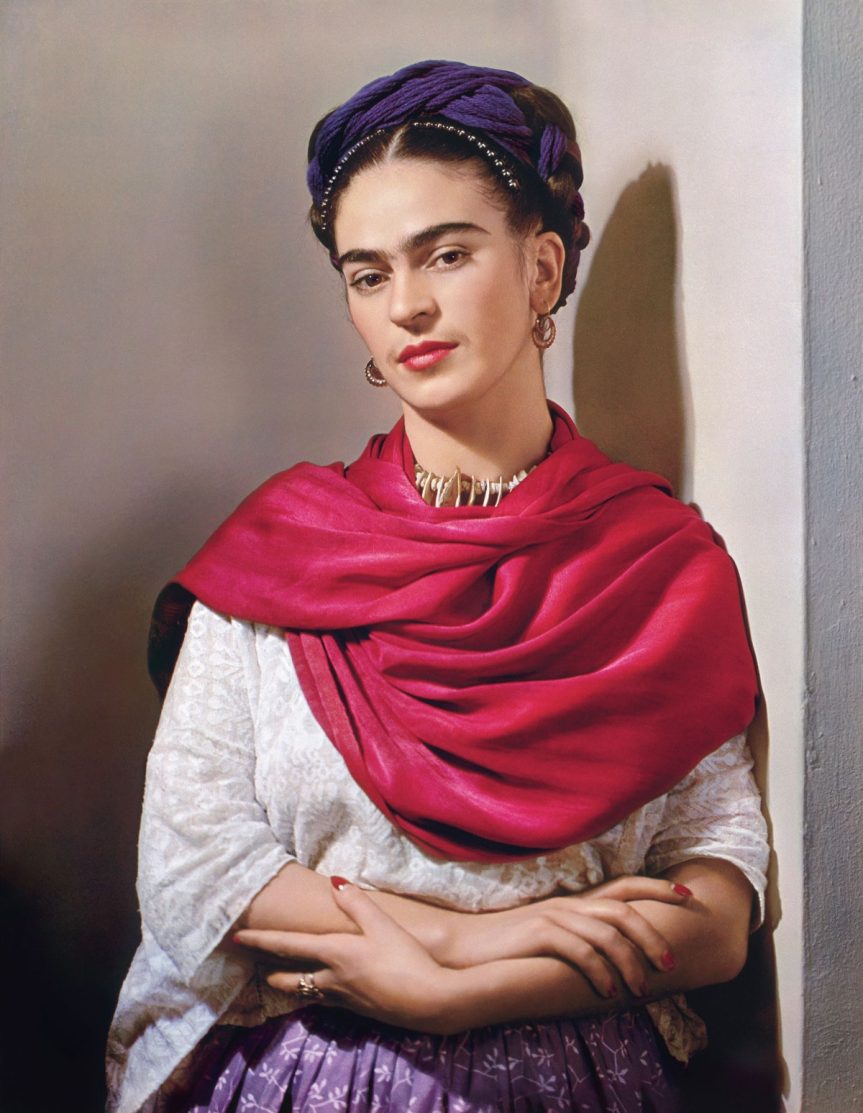
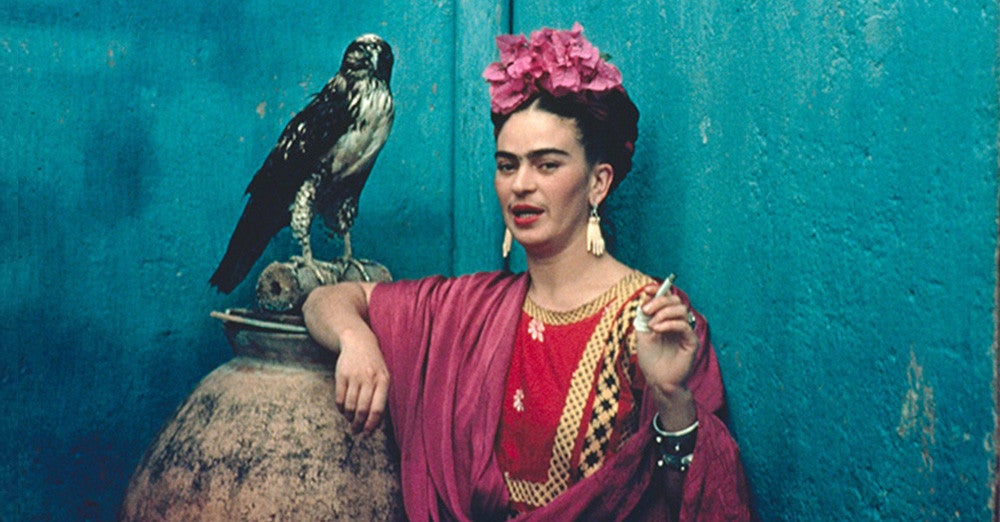
Even after years since Frida Kahlo’s demise, her charisma and powerful sense of style continue to captivate the world. The Mexican artist, famed for her self-portraits, is celebrated in her home country for her attention to indigenous culture, and by feminists worldwide for her depiction of the female experience and form. In fact, she was an advocate of feminism way before it became a staple in the social media age.
Early Life of Frida Kahlo
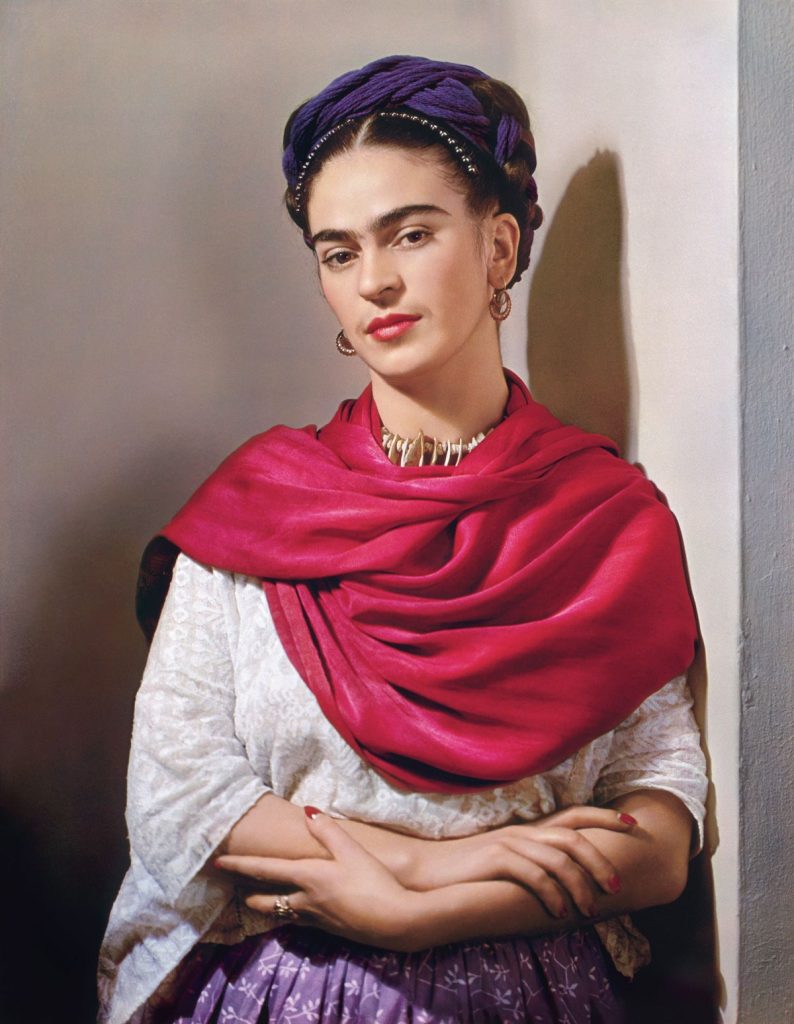
Magdalena Carmen Frida Kahlo y Calderón was born on 6 July 1907 in Coyoacán, a village on the outskirts of Mexico City. Born to a German father and a Mestiza mother, Kahlo spent most of her childhood and adult life at La Casa Azul, her family home in Coyoacán – now publicly accessible as the Frida Kahlo Museum. Although she was disabled by polio as a child, Kahlo had been a promising student headed for medical school until she suffered a bus accident at the age of 18, which caused her lifelong pain and medical problems. During her recovery, she returned to her childhood interest in art with the idea of becoming an artist.
Art Works of Frida Kahlo
Mexican artist Frida Kahlo is remembered for her self-portraits, pain and passion, and bold, vibrant colors. She is celebrated in Mexico for her attention to Mexican and indigenous culture and by feminists for her depiction of the female experience and form.
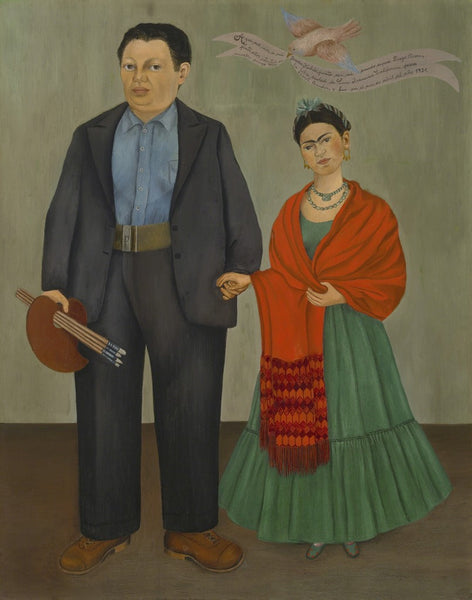
Life experience is a common theme in Kahlo’s approximately 200 paintings, sketches and drawings. Her physical and emotional pain are depicted starkly on canvases, because of her traumatic bus accident and multiple miscarriages depriving her of Motherhood and leading turbulent relationship with her husband, Mexican Mural artist Diego Rivera, who she married twice. Of her 143 paintings, 55 are self-portraits. She quoted, “I paint self-portraits because I am so often alone, because I am the person I know best.”
Kahlo’s first self-portrait was Self-Portrait in a velvet dress in 1926. It was painted in the style of 19th Century Mexican portrait painters who themselves were greatly influenced by the European Renaissance masters. She also sometimes drew from the Mexican painters in her use of a background of tied-back drapes. Self-Portrait Time Flies (1929), Portrait of a Woman in White (1930) and Self-Portrait (1937) all bear this background.
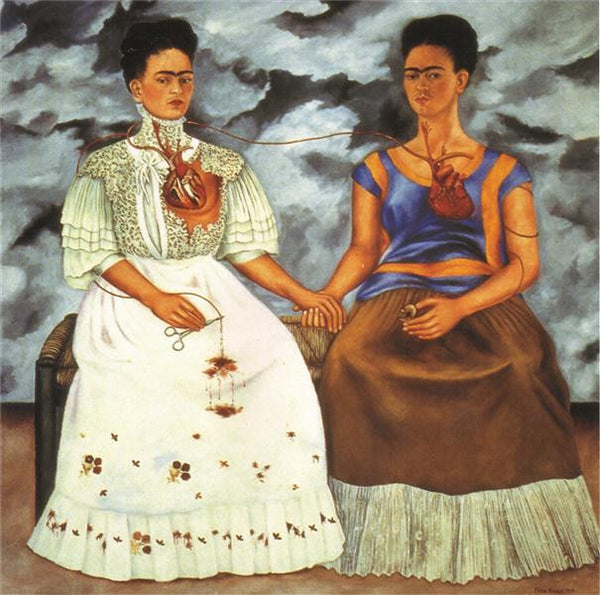
Self-Portrait With cropped hair (1940), Kahlo is depicted in a man’s suit, holding a pair of scissors, with her fallen hair around the chair in which she sits. This represents the times she would cut the hair Rivera loved when he had affairs. The 1937 painting Memory, The Heart, shows Kahlo’s pain over her husband’s affair with her younger sister Christina. A large broken heart at her feet shows the intensity of Kahlo’s anguish. Frida Kahlo and Diego Rivera divorced in 1939, but reunited a year later and remarried. The Two Fridas (1939) depicts Kahlo twice, shortly after the divorce. One Frida wears a costume from the Tehuana region of Mexico, representing the Frida that Diego loved. The other Frida wears a European dress as the woman who Diego betrayed and rejected. Later, she is back in Tehuana dress in Self-Portrait as a Tehuana (1943). Pre-Columbian artifacts were common both in the Kahlo/Rivera home (Diego collected sculptures and idols, and Frida collected Jewelry) and in Kahlo’s paintings. She wore jewelry from this period in Self-Portrait Time Flies (1926), Self-Portrait With Monkeys (1938) and Self-Portrait With Braid (1941), among others. Other Pre-Columbian artifacts are found in The Four Inhabitants of Mexico City (1938), Girl With Death Mask (1938).
Analysis of Frida’s Artworks: Mexican Nationalism
Frida Kahlo was heavily influenced by the Mexicayotl movement, which sprung from the colonialist mindset that native Mexican culture is inferior and that Mexico should emulate Europe. The Mexicayotl movement aimed at protecting the indigenous culture and traditions among the Mexican people. In most of Kahlo’s self-portraits, she paints herself in traditional indigenous Mexican dress. She wears long, colourful skirts, huiplis (loose-fitting tunic), rebozos (shawls) and elaborate headdresses. Painting herself in the Tehuana dress was a chance for Kahlo to express her anti-colonialist ideas and pay homage to her indigenous ancestry.

Symbolism and Surrealism
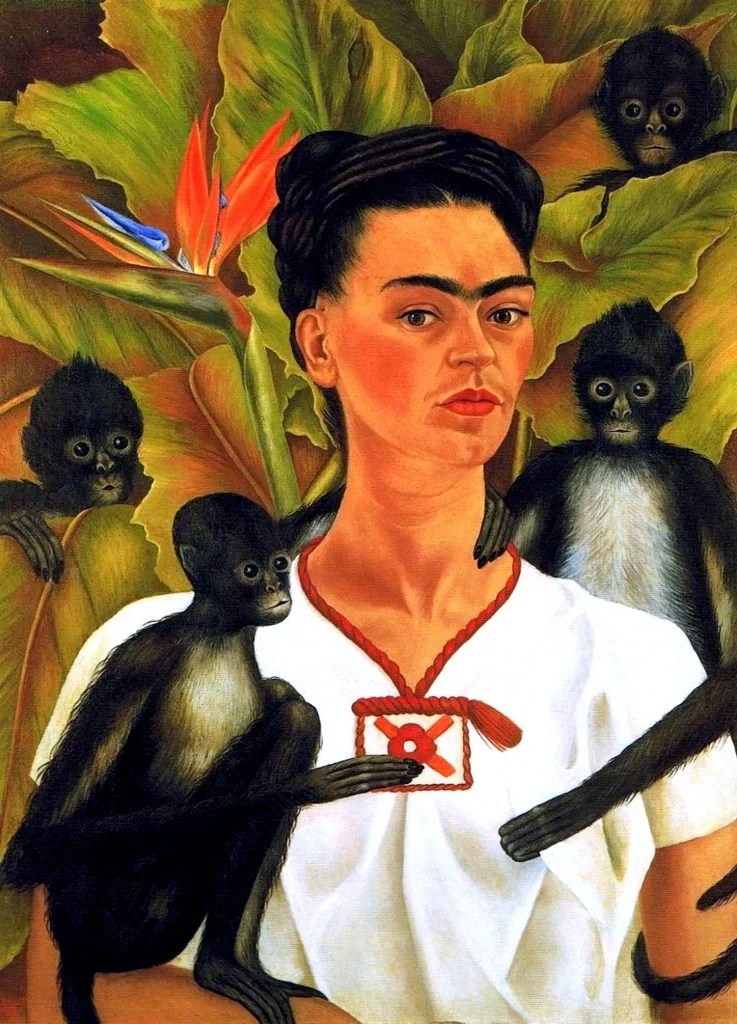
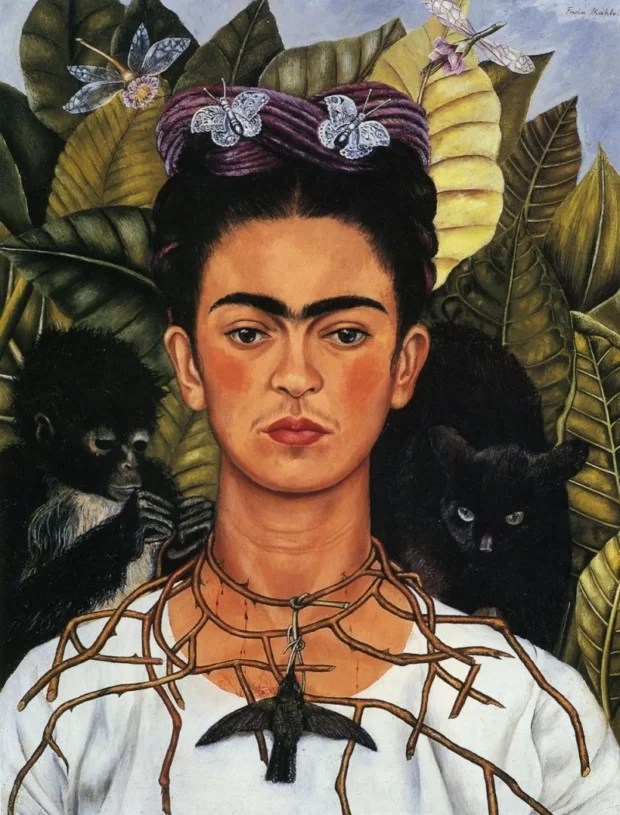
After periods of depression and miscarriages in her life she gave herself to pets around her. She liked to use animals as models in her artworks. Her paintings are domesticated by monkeys, hummingbirds, dogs, and cats. One of her self-portraits depicts her with three spider monkeys. The animals became protective and tender symbols to Kahlo. On the contrary, Mexican Mythology suggests monkeys are symbols of lust. Frida’s significant self-portrait was Self- Portrait with Thorn Necklace and Hummingbird. According to some art historians, Kahlo wanted to show that she had been resurrected and had started a new life with this painting. As a symbol of this idea, the hummingbird was placed in her necklace. The hummingbird symbolizes hope and good luck in Mexican culture. However, the audience may notice the black cat – known as a symbol of bad luck – taking its place behind the right shoulder of Kahlo. Different interpretations say that the hummingbird pendant refers to Huitzilopochtli. It is the Aztec god of war and may refer to the pain Kahlo suffered all her life internally. Other important symbols of the painting were butterflies and the thorn necklace. Butterflies symbolize resurrection and it may refer to her rebirth in life after the accident. Furthermore, the thorn necklace she wears may be the symbol of Jesus’ crown of thorns, which he bore while being dragged to his crucifixion. In addition to these symbols, Kahlo created a painting that both uses Christianity and animal symbolism in one subject matter. Painting The Little Deer, 1946 made by Frida depicts her as a deer with a human face. The artist portrayed herself in this painting. However, there is a much more important detail in this artwork – the deer wounded by the arrows reminds us of Andrea Mantegna’s depiction of Saint Sebastian from 1480. It may also be a reference to crucifixion and resurrection.
Conclusion
Women prior to Kahlo who had attempted to communicate the wildest and deepest of emotions were often labelled hysterical or condemned insane – while men were aligned with the ‘melancholy’ character type. By remaining artistically active under the weight of sadness, Kahlo revealed that women too can be melancholy rather than depressed, and that these terms should not be thought of as gendered.
 Eduindex
You must be logged in to post a comment.