What is Migration


Human migration is the movement by people from one place to another with the intentions of settling, permanently or temporarily in a new location. The movement is often over long distances and from one country to another, but internal migration is also possible, this is the dominant form globally.

People have always migrated to improve their lives. Today, movements from developing countries to other parts of the world are of intense interest to many policymakers, yet relatively little is known about the impacts of labour mobility on the people who move and their home societies.

Causes of Migration

Push Factors

The push factors refer to the poor economic conditions and the resultant economic misery or lack of opportunities for advancement which push the people out of region in search of better opportunists. Thus, the push factors compel the people to leave the place.

  • Drought (A single drought can mean disaster for communities whose lives and livelihoods rely on regular, successful harvests)
  • Hurricanes and Flooding
  • Earthquakes
  • Disease
  • War and Conflict
  • Poverty
  • Unemployment
  • Lack of safety
  • Lack of services

Pull Factors

Pull factors are those which encourage migration of people to an area where better economic and employment opportunities, facilities and amenities of life are available. These facilities attract the people to these areas. There is usually an exodus of population to the cities where rapid expansion of industries and commerce takes place.

  • Better economic opportunities
  • More jobs
  • Promise of a better life
  • Safer atmosphere
  • Fertile land
  • Greater wealth
  • Less risks of natural hazards
  • Political security
  • Better service provision

There are two basic types of migration studied by demographers.

Internal Migration

This refers to a change of residence within national boundaries, such as between states, provinces, cities, or municipalities. It includes urban to urban, urban to rural, rural to rural and rural to urban migrations.

International Migration

This refers to change of residence over national boundaries.

Impacts of Migration

Migration is becoming a very important subject for the life of cities. Many opportunities and attraction of big cities pull large numbers of people to big cities. Migration can have positive as well as negative effects on the life of the migrants.

Positive Impacts

  • Unemployment is reduced and people get better job opportunities.
  • Migration helps in improving the quality of life of people.
  • It helps to improve social life of people as they learn about new culture, customs, and languages which help to improve brotherhood among people.
  • Migration of skilled workers leads to a greater economic growth of the region.
  • Children get better opportunities for higher education.
  • The population density is reduced and the birth rate decreases.

Negative Impacts

  • The loss of a person from rural areas, impact on the level of output and development of rural areas.
  • The influx of workers in urban areas increases competition for the job, houses, school facilities etc.
  • Having large population puts too much pressure on natural resources, amenities and services.
  • It is difficult for a villager to survive in urban areas because in urban areas there is no natural environment and pure air. They have to pay for each and everything.
  • Migration changes the population of a place, therefore, the distribution of the population is uneven.
  • Many migrants are completely illiterate and uneducated, therefore, they are not only unfit for most jobs, but also lack basic knowledge and life skills.
  • Poverty makes them unable to live a normal and healthy life.
  • Children growing up in poverty have no access to proper nutrition, education or health.
  • Migration increased the slum areas in cities which increase many problems such as unhygienic conditions, crime, pollution etc.
  • Sometimes migrants are exploited.
  • Migration is one of the main causes of increasing nuclear family where children grow up without a wider family circle.
The Transit

Moving out, has to be a difficult choice especially if you live in a small town, moving to a big, metropolitan city could be one hell of ride. These metropolises can have a toll on the new, moved in person’s mind as they entail the feeling of racing through the life for a goal so far away to reach. The kid of 16-17 that moves out having a different perspective for everything that came across them changes as soon as that teenager finds himself/herself walking on the streets of a totally unknown place all alone. The innocence and purity that small town had taught to a person is soon discovered to be a fragile characteristic for a person who needs to compete in the rat race with other strong headed people. This rat race robs the person’s inner capability that was enlightening enough to him/her but not for others. The difference in lifestyle varies on whole new level and adjusting to that can be a sport in itself.

The Problems

Whenever a person from a small town moves into a different city there are a number of problems that they have to face and difficulties that they have to go through. These problems as some might feel hinder the development as compared to the natives. For a person moving into a new city, leaving behind the comfort home, living away from their beloved has to be a different sport altogether. They are on their own for at least three years, adjusting to the situations and circumstances all alone. The fear of uncertainty and aloofness stares right into the eyes of the migrated. The difference in culture, lifestyle, sometimes language and ethnicity is something that may further make the migrated anxious the fear of unknown. Further, for someone coming from a middle class of a small town shifting to a big city might become a financial constraint, a thing that definitely affects their overall development and growth for what they actually shift or migrate. The most important issue that the migrated ones face is discrimination. They are treated with the stereotypes that have existed for forever now. The immigrants aren’t treated with equal respect and dignity sometimes because of the small town origin. Immigrants are offered low-paying jobs because of the thinking that the standard of education is not so up to the mark that they might fit in the top positions.

The Bright Side

Though all these problems might be prevalent in the big cities even today but there have been a change in attitude in past few years. Today, globalization has reduced all sorts of gaps and hence, the standard of living in small towns has come near close to that of big cities. The settlers in new cities are judged for their capabilities and talents rather than their original cities. Although financial constrain still poses a big problem for the immigrants but the promise of a better and bright future makes them take the risk and mostly succeed in it. The peace that they find at home and among the people they love still might be missing in the new city but they do get the peace that they always aspire for. The rat race they become part of unknowingly might not be as beneficial as they believe it to be but it could still open the door to the illuminated path which turns out to be their real passion and the better career.

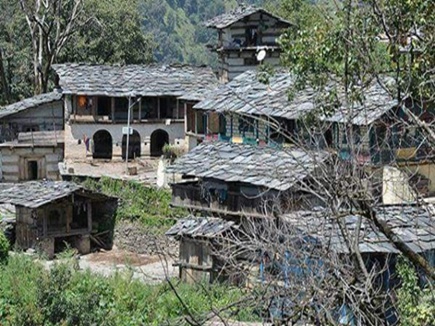
Ghost Villages of Uttarakhand

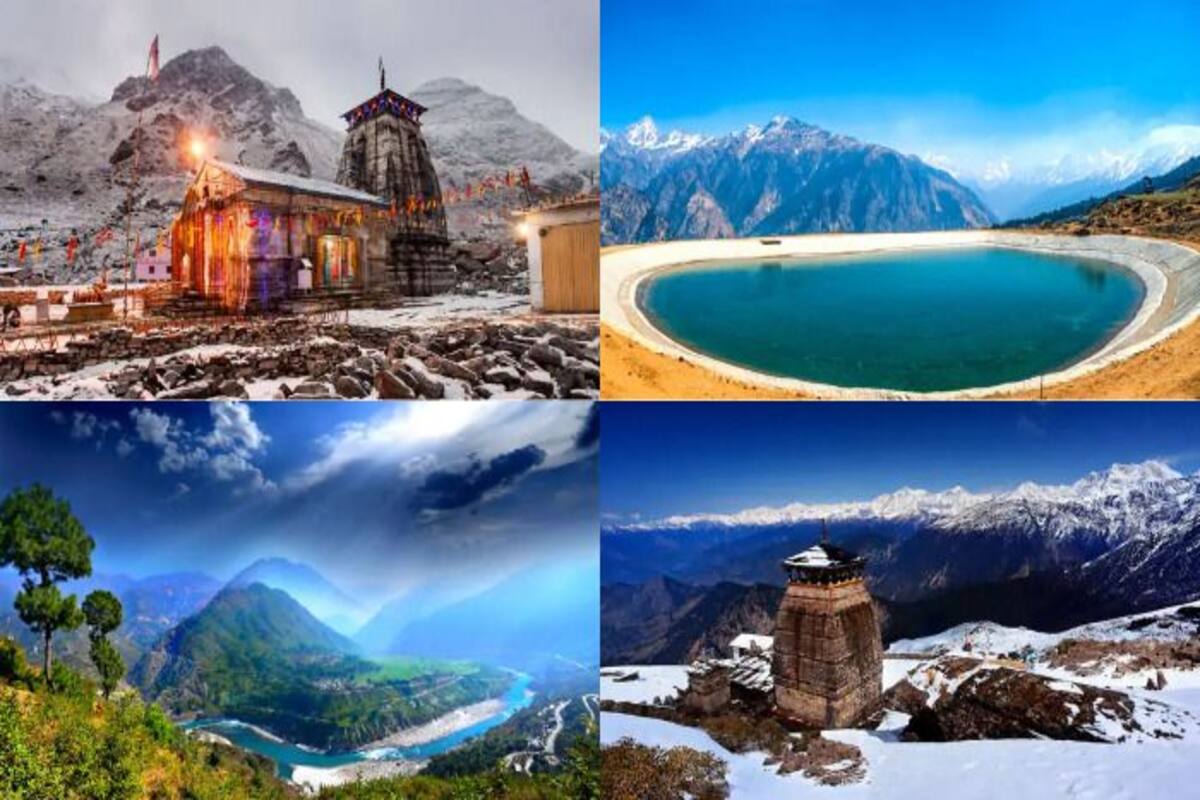
Uttarakhand fondly known as the Abode of God due to its rich cultural and religious history which is still stored in many temples sprawled across the state is also the origin of river Ganga and Yamuna , two of the most sacred rivers of India. The shrine of Baba Amarnath and Kedarnath in the state makes it a famous destination for pilgrims from all over the world not to mention the large number of tourists it attracts every year due to the picturesque scenery which the state offers . Despite such rich heritage of the state, in the last two decades it has faced a major issue where out of 16.739 villages in the state, 1702 villages were declared “Ghost villages” as they have no inhabitants. Whereas about 405 villages have less than 10 people as its residents( The data is based on the Census of 2011). The question is that why the area which was separated from Uttar Pradesh to form a separate state of UTTARAKHAND so that the people here may have better growth opportunities, has seen such a drastic decline in population over the last decade. Is there really some ghost as the title “ghost village” suggests that has occupied the place of the human beings? What is the reason that despite such a large number of tourists and pilgrims visiting the state every year, the villages here which act as a treasure chest preserving the culture, the heritage and the history of the place, are empty? This blog will answer all these questions.

Why are the villages devoid of any human habitant?

People from the villages have migrated to other states and other cities of Uttarakhand such as Rishikesh , Haridwar , Dehradun etc. in search of employment with an aim to have better lives. Initially, it was just the youngsters who would migrate to other places for earning but eventually as the time passed and the villages remained remote, elders also started to shift simultaneously as the cities offer better healthcare facilities. Imagine the emotional turmoil which people go through when they have to leave their homeland, their birthplace just to feed themselves.

The reasons for migration

  • The villages in Uttarakhand are least developed with many villages still having a narrow risky trek which connects them to the main road. Electricity till a decade ago was foreign to these places. Authorities pay absolutely no attention in catering to the needs of the people living there. Though the state is blessed with two of the most sacred rivers, yet the residents specially in the villages have to struggle even for water. Urbanisation in the hills brought with it such affects that many villages which were blessed with the streams full of water almost the entire year many decades back are now witnessing dried streams and barren land . Though the famous tourist places of the state, such as Almora, Nainital, Rishikesh, Haridwar, the capital city Dehradun etc. are provided with the facilities which ensures the safety and well being of humans, villages are still untouched.
  • Safety is another big issue which the residents have to face. The villages which are located amidst the dense jungles of the Himalayas are home to many wild animals many of which are man eaters. Even if the animal is not a man eater, wild animals such as wild boar , wild pig destroys the crops leaving no source of living for the people.
  • Since the entire state is situated in the mountains, the paths there are steep which leaves scope only for terrace farming and does not allows the growth of many crops. The crops which are grown are either destroyed by wild animals or by the famous mountain rains with very little left to fill the stomach with. Owing to these reasons, people have gradually stopped farming. Also, the extremely effective implementation of welfare schemes like the Mahatma Gandhi National Rural Employment Guarantee Act (MGNREGA) which allows the people working as laborers under the MGNREGA projects give them enough amount for sustenance and the enforcement of the food Security Act gives them enough ration to survive with . The reasons mentioned under this bullet point can be considered as the reasons for the decline of farming which was the sustenance profession of the state since years and validates the moving of people in search of better life opportunities.
  • Also, the people in the villages feel that City life is a heaven with all sorts of opportunities something which is rarely visible to them in the naturistic villages. Litle did they realize , that the reason for a large number of tourists coming to the state every year is their want to escape from the monstrous daily problems of the city life. How ironic it is , that geography has created such a vast opinion between two sets of human beings each one thinking that the other set resides in heaven! Well, this is how life is full of oxymorons and ironies!

Is the presence of ghost villages good for the state?

The answer is a big NO. Experts say that migration leads to abandonment of villages which causes degradation of land, makes villages unlivable, and further fuels migration. In fact, the migration to cities has been in such great numbers that Uttarakhand has recorded the highest increase in the share of urban population in any of the Himalayan states of the country while its rural decadal growth rate is the lowest. The inter state migration which was at its peek during the early 2000s when the state was newly formed was transformed into an intra-state migration after the devastating floods which destroyed Uttarakhand in 2013. The consequences being that the cities are overpopulated as they had no proper arrangements made to accommodate such a large number with the standards of living deteriorating for everyone. Whereas the villages have lost their mark.

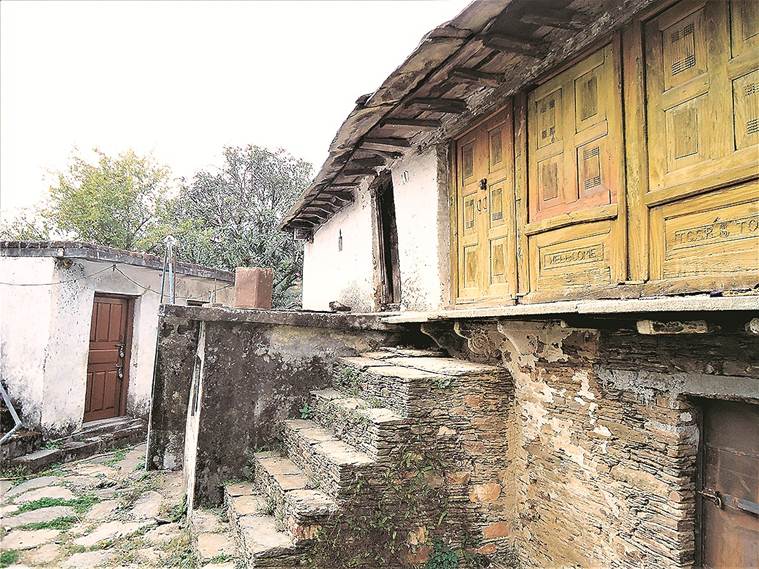
The empty village homes are now covered with the wild shrubs and has increased the area of exploration to the wild animals such as tigers and leopards many of which are man eaters. The increase encroachment of animalsin the human settlements may prove fatal to the villages which are still lively though in less numbers.

Owing to the nationwide lockdown in 2020, many of the migrants have come back home to resettle in their roots and are now trying farming which is more difficult now owing to the covering of the farming areas by the wild shrubs which are difficult to remove. The resettling phase will again be a difficult one as these villages are still the same with no better facilities.

Environmentalist Anil Joshi, who in 2015 undertook a 20-day march across Uttarakhand as part of the Gaon Bachao Andolan (“save village movement”) to address the issue of migration from villages says ” we should ask the government why there is still a need to migrate”. His words hits a deep chord forcing us to think, why is it this difficult to fulfill the basic needs of the simple villagers so that they can stay close to their roots saving our culture and our future.

Should borders be open?

The question of immigration in the modern world is a fact of life. It is deemed to be a problem because the world that we live in is a world of states and these states guard the right to determine who may settle within their borders. There are many reasons for opposition to open borders. These include security factor for example, the overarching fear of terrorism, secondly in the name of preserving a certain cultural integrity. Thirdly, as immigrants impose certain costs on society, the states wish to avoid these extra burdens i.e. if the state is a welfare state, they will have to fend for immigrants as well.

Thinkers such a Chandran Kukathas are in favour of open borders. He gave two reasons for the same. The first reason is the principle of freedom which talks about freedoms such as freedom of movement freedom of selling their labour, the freedom to associate with others and so forth. The second is the principle of humanity which talks about how most people live in poverty and therefore need to move to make their lives better. According to this principle, there must be very good reasons if one is to justify turning the disadvantaged away.

An important debate is between nationality and immigration. National interests are given greater importance than that of outsiders. Large immigration may change a society’s character is what defenders of closed borders are worried about. Outsiders who don’t share the same values will not be able to help sustain the same economy, culture or social institutions. There are also fears that bonds of social solidarity may break down.

While addressing the aspect of Security, the proponents of open borders suggest that security from terrorism, security of political system from foreign threats are all legitimate issues but instead of restricting legal immigration what should be done is that illegal immigration should be controlled. Meanwhile the advocates of closed borders do not agree with such a proposition. David Miller argues that people certainly have the interest in being able to migrate internationally but it cannot be a human right. While the right to exit is important as it enables movement from current state of residence, it does not entail an obligation of other nations to let such individuals in. He suggested the idea of entry applications where states can choose whom to accept rather than it being forced on them.

For Miller, the policy of open migration is not a solution because the very poor will anyhow not have the resources that are needed to move to a richer country. If open migration leads to doctors, engineers and other professionals moving from underdeveloped to economically developed countries, the country of origin will be deprived of vital skills. So equalizing opportunity for the few will diminish opportunity for the rest. Thus, improving life conditions at ground level becomes important.

Many underlie the importance of admitting all long-term immigrants to full and equal citizenship in the receiving society. There need to be active policies to help ensure immigrants become a part of the political life of the community.

Easing out the lockdown

The World Health Organization (WHO) has declared that the rate of infection of coronavirus has increased in those countries that relaxed the lockdown at once. They have indicated that underestimating the challenges that may arise in the future needs to be taken into consideration by the stakeholders.

WHO Director-General Tedros Adhanom Ghebreyesus has said that China and Germany have reported an increase in cases after a lockdown was relaxed. Any lifting of restrictions imposed for safeguarding the people be done with proper planning and catering for the contingencies, which includes testing on priority and vigilance of the government on every development.

The country lifting the lockdown should possess enough medical potential to deal with the development of new clusters of the coronavirus. Easing out the pressure on medical fraternity is the need for time as they are under stress for the last couple of months. A gradual and firm approach in lifting the restrictions is required. Indian public health system has been doing well when we think of coping up with the coronavirus pandemic.

India needs to facilitate investment in the health system to cope with any development of the second wave. The limitations of testing can be addressed by the government on top priority to avoid any resurgence going unnoticed for a longer period. A steep rise in the infected coronavirus cases can be seen for the last three days, India is about to touch the figure of the daily rise of coronavirus infected cases to ten thousand which is a matter of concern.

Rolling out of effective plans to revive the economy amidst the spread of coronavirus after keeping a lockdown for a considerable period is understood. However, hurried opening or relaxing the restrictions may boomerang on society and can cause a huge spread of coronavirus. Social distancing measures can be converted to the law for a certain period and people breaking the same can be imposed a penalty to stay in quarantine etc. this will reduce the unnecessary burden of movement of people.

Health and survival of the people be given the topmost priority over giving impetus to economics. A steep rise in the coronavirus cases during the past week in India is a sign to the government to monitor the cases more closely. The government needs to plan an effective exit strategy for a smooth transition from a complete halt.

Workplaces that require less manpower and contribute more to the development of the economy can be opened by the government on priority rather than the opening of malls and educational institutes that may become a hub of the spread of the infection. India has succeeded in keeping the mortality rate low due to coronavirus at a bare minimum in comparison with the developed countries of the world who delayed the lockdown and suffered the loss of lives.

Migrant workers moved to their native place causing economic loss to the place from where they moved and adding to the burden of accommodating them to their native place. Unemployment is increasing in urban areas and the migration of people has carried the infection to rural areas too. Unambiguous guidelines of the government are required and center-state face-off must be avoided on political grounds by both, rather the states should support the central government in dealing with the entire scenario diligently.