
Impact of light pollution on the night sky

Light pollution is a term used to describe the excessive or unnecessary use of artificial lighting in outdoor spaces, leading to a considerable increase in the amount of light that reaches the sky. This phenomenon has had a significant impact on the night sky, affecting not only astronomical observations but also the environment and human health.
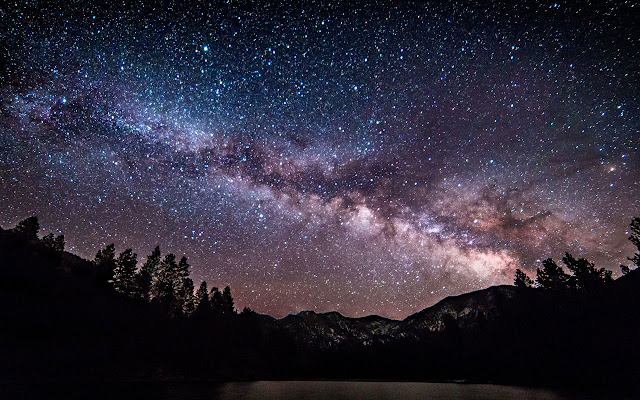

copyright – 2016 Joseph Cowdell

One of the most obvious effects of light pollution is the reduction of visibility of celestial objects such as stars, galaxies, and nebulae. In urban areas, where the artificial light is at its peak, the night sky is almost completely drowned out, and it is difficult to see anything other than the brightest stars. The Milky Way, which was once visible from any point on the Earth’s surface, is now invisible to more than two-thirds of the world’s population. This not only affects amateur and professional astronomers but also the general public who may have an interest in the night sky. The loss of this connection with the cosmos can have an impact on people’s sense of wonder and awe, and ultimately their wellbeing.

Light pollution also affects nocturnal wildlife, which rely on darkness for their activities. Light pollution can confuse and disorientate animals that use the night sky for navigation and can also disrupt breeding cycles, migration patterns, and other natural behaviors. This can ultimately lead to a decline in populations of various species, affecting the balance of the ecosystem. For example, the artificial lighting in coastal areas can disorientate sea turtle hatchlings, who rely on the moon and stars to guide them towards the sea.

The impact of light pollution on human health is also a growing concern. Exposure to artificial light at night can disrupt our circadian rhythms, which can lead to sleep disorders, depression, and other health problems. Studies have shown that exposure to blue light, which is emitted by electronic devices and LED lights, can suppress the production of melatonin, a hormone that regulates our sleep-wake cycle. This can affect our ability to fall asleep, stay asleep, and achieve restful sleep. Additionally, light pollution has been linked to increased rates of breast cancer, obesity, and other health problems.

Furthermore, light pollution has economic consequences, including increased energy consumption and higher energy bills. The unnecessary use of artificial lighting wastes electricity and contributes to greenhouse gas emissions, further exacerbating climate change. The cost of installing and maintaining outdoor lighting can also be significant, and many cities and municipalities are beginning to recognize the importance of reducing light pollution to save energy and reduce costs.
Qausars

When astronomers first started using radio telescopes in the 1950s to study the Universe, they discovered a strange phenomenon. They found objects that shone brightly in the radio spectrum, but they couldn’t see any visible object associated with them. They called them quasi-stellar radio sources, or “quasars” for short. Within a decade of their discovery, astronomers learned that these quasars were moving away at tremendous velocities. This velocity, or red-shift of their light, indicated that they were billions of light-years away; beyond the capabilities of most optical telescopes. It wasn’t until the 1960s when a quasar was finally tied to an optical object, a distant galaxy.

Here’s where Astronomers got creative. Maybe quasars weren’t really that bright, and it was our understanding of the size and expansion of the Universe that was wrong. Or maybe we were seeing the results of a civilization, who had harnessed all stars in their galaxy into some kind of energy source. Then in the 1980s, astronomers started to agree on the active galaxy theory as the source of quasars. That, in fact, several different kinds of objects: quasars, blazars and radio galaxies were all the same thing, just seen from different angles. And that some mechanism was causing galaxies to blast out jets of radiation from their cores.

Black hole at the center of Milky Way

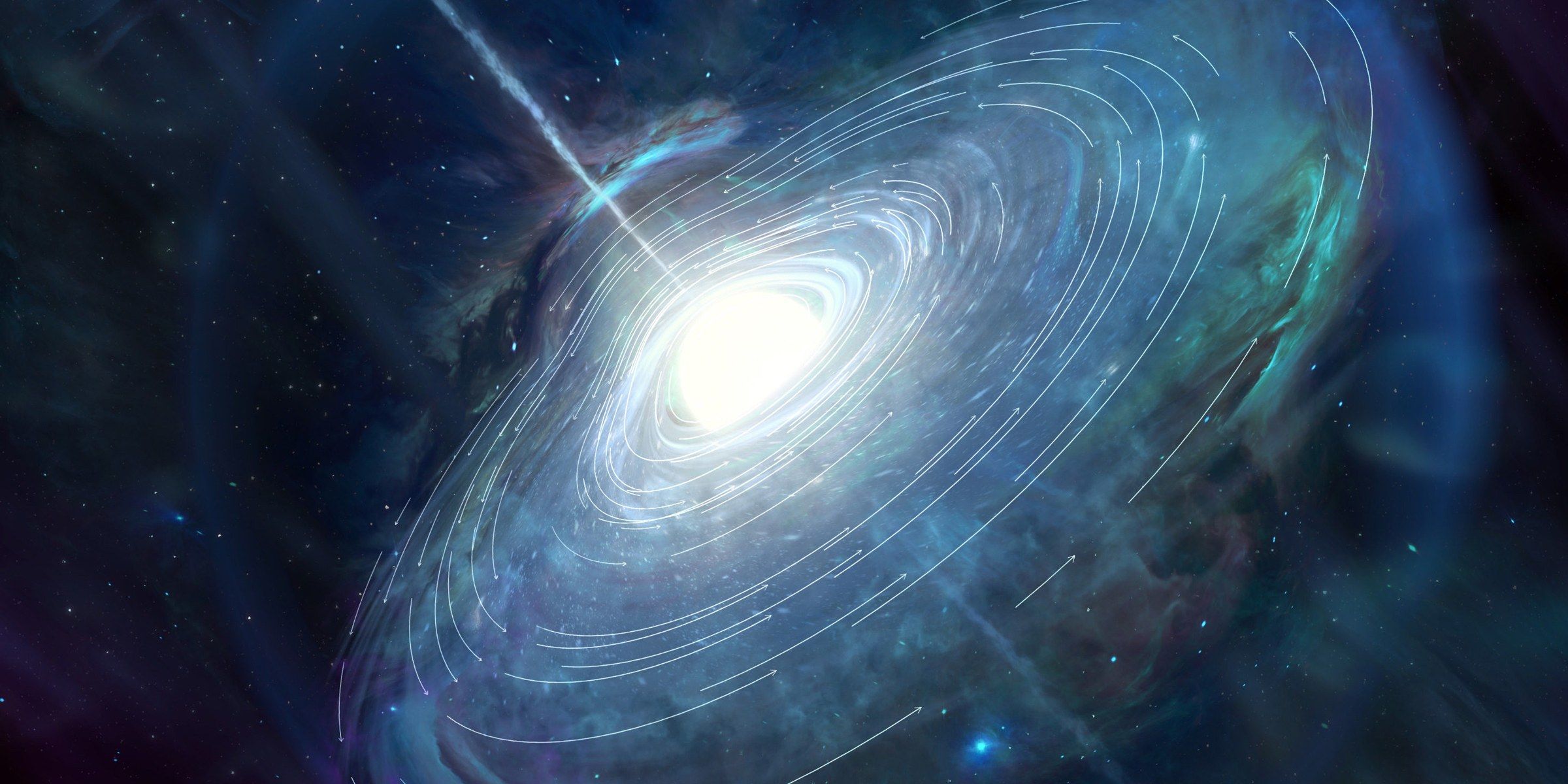
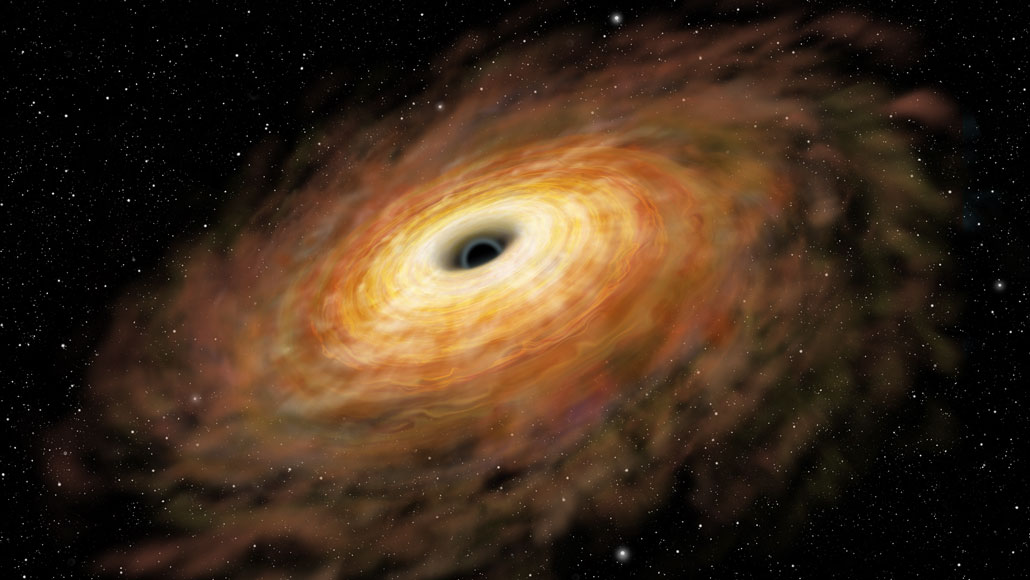
We now know that all galaxies have supermassive black holes at their centers; some billions of times the mass of the Sun. When material gets too close, it forms an accretion disk around the black hole. It heats up to millions of degrees, blasting out an enormous amount of radiation. The magnetic environment around the black hole forms twin jets of material which flow out into space for millions of light-years. This is an AGN, an active galactic nucleus. Since our own Milky Way has a supermassive black hole, it’s likely that we have gone through many active stages, whenever material is falling into the black hole; our galaxy would be seen as a quasar. But other times, like now, the supermassive black hole is quiet.

Supermassive black holes aren’t always feeding. If a black hole runs out of food, the jets run out of power and shut down. Right up until something else gets too close, and the whole system starts up again. The Milky Way has a supermassive black hole at its center, and it’s all out of food. It doesn’t have an active galactic nucleus, and so, we don’t appear as a quasar to some distant galaxy. With new powerful telescopes, astronomers have observed that some quasars have long jets of material firing out from the center of the galaxy. These are channeled by the magnetic fields created by the supermassive black hole’s rotation in the accretion disk. The most luminous quasars can exceed the radiation output of an average quasar. We may have in the past, and may again in the future. In 10 billion years or so, when the Milky way collides with Andromeda, our supermassive black hole may roar to life as a quasar, consuming all this new material.