

Introduction
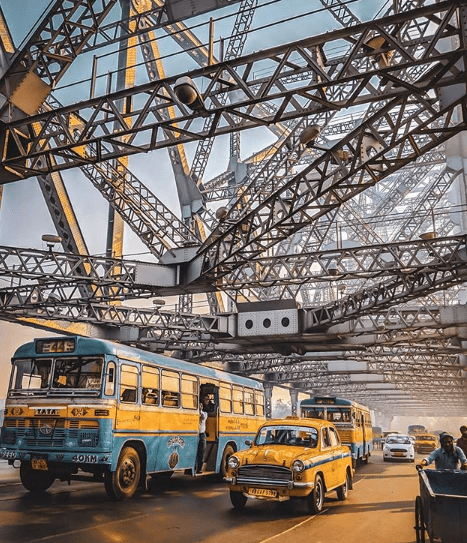
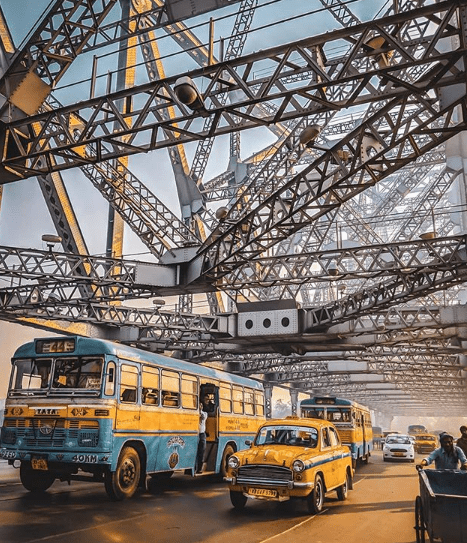
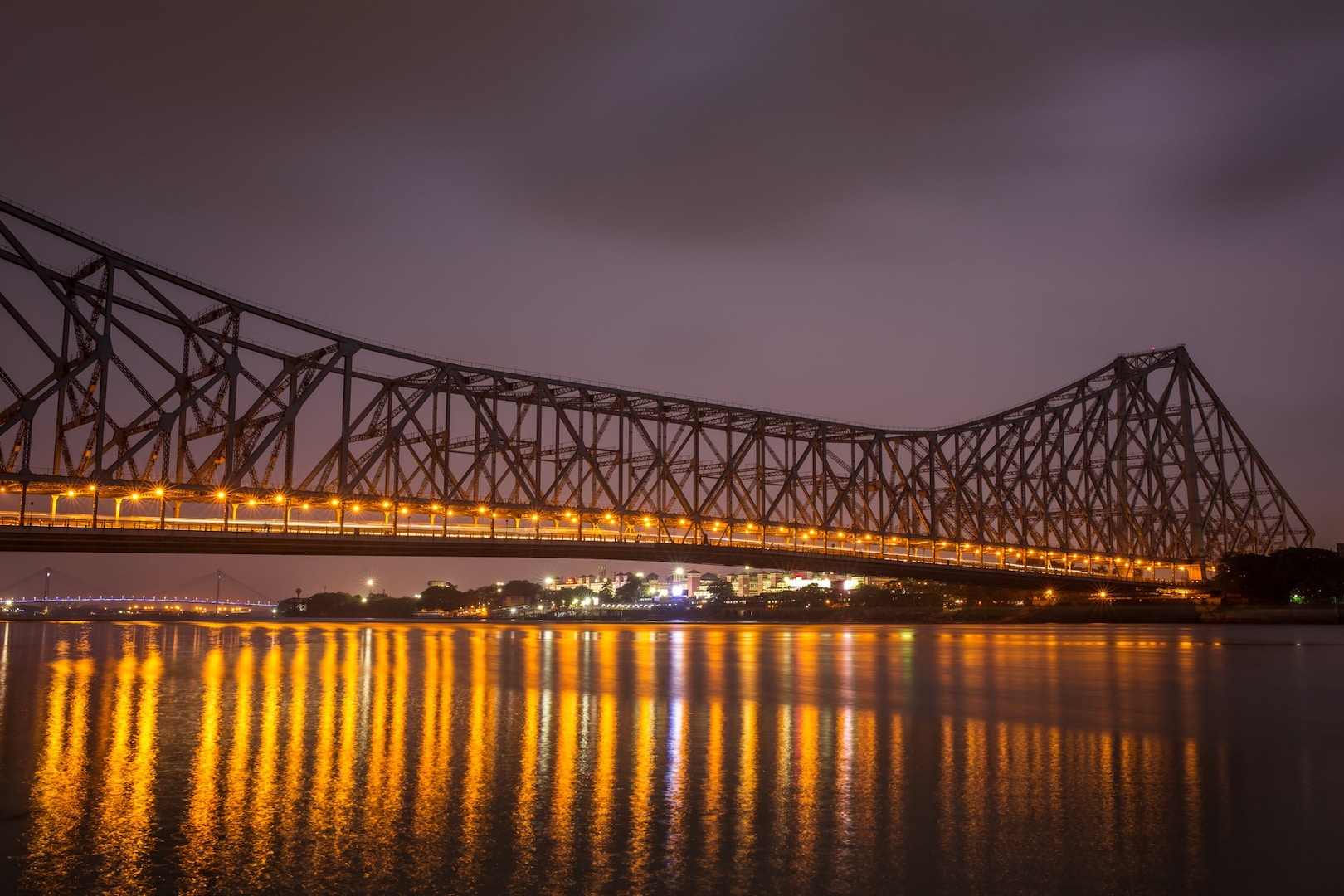
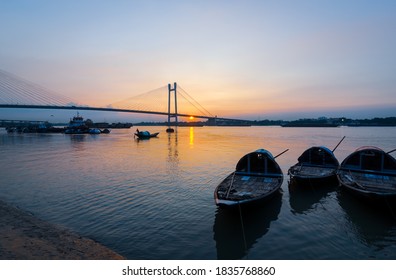
Howrah Bridge is an architectural marvel and a well-known Kolkata landmark. It has served as a backdrop for numerous movies since the 1950s, including a 1958 film named after the bridge. One can walk across the bridge and admire its unique construction or glide underneath while on a boat ride along the Hooghly River. With a central span of 1,500 feet (457 meters) between its two towers, this enormous steel structure is one of the longest cantilever bridges of its type in the world. Howrah Bridge extends across the Hooghly River, connecting the city of Howrah to Kolkata.
Historic Background
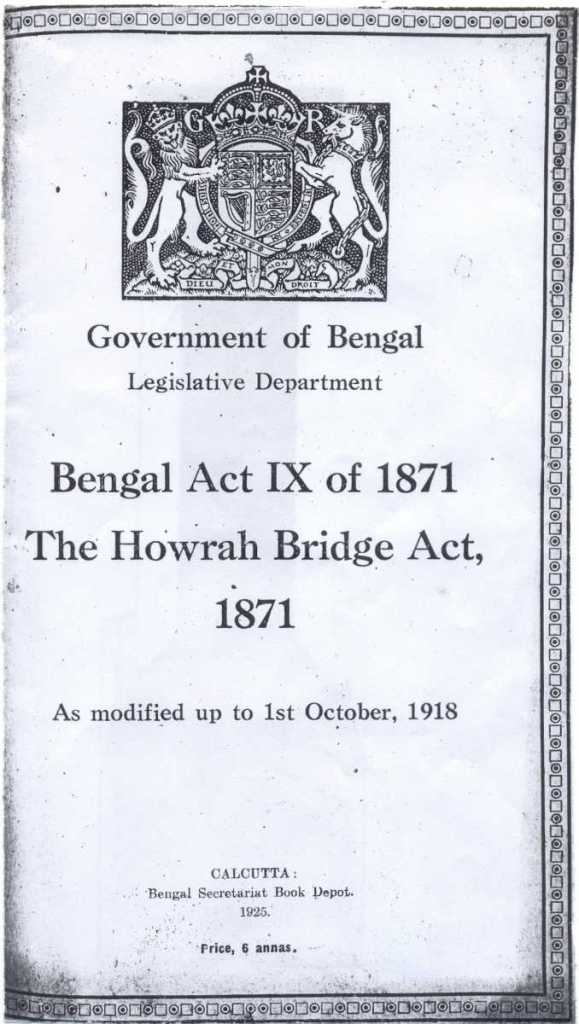
The construction of the Howrah Bridge was first proposed in 1862. The Government of Bengal wanted to build a bridge over the Hooghly River. They asked the Chief Engineer of the East India Railway Company to study the feasibility of the idea and come up with a proposal. But for several reasons, his proposal never materialised.
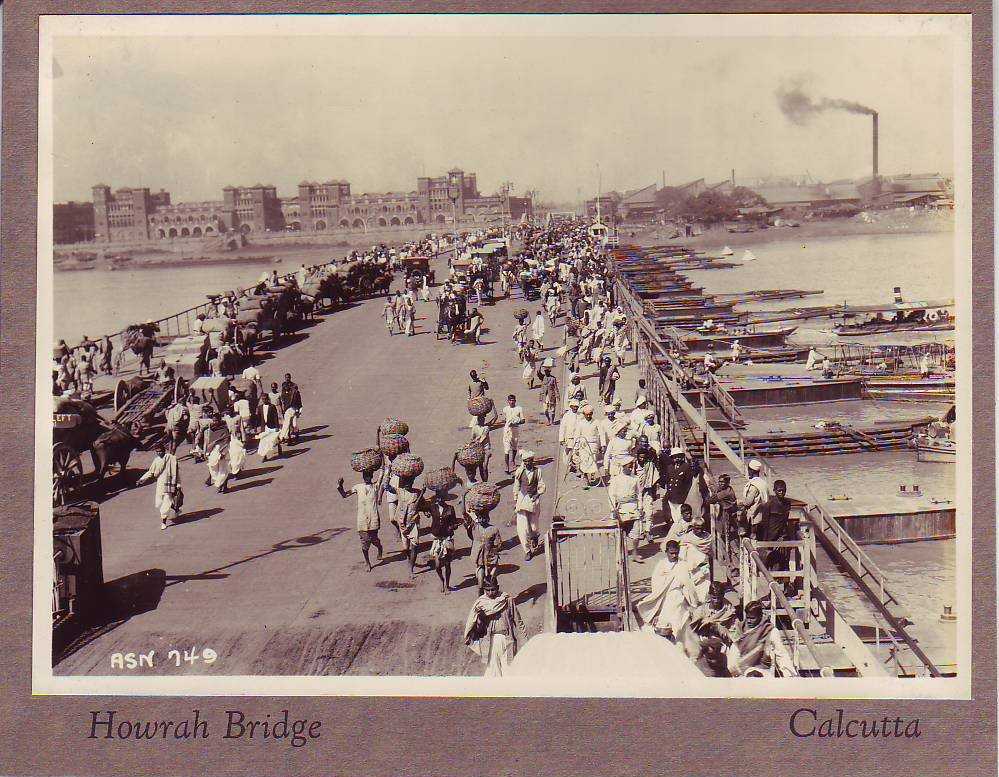
Later in the 1800s, a pontoon bridge or floating bridge was built between Howrah and Kolkata. But it wasn’t strong enough to handle the huge traffic between the two cities or to weather the frequent storms in the area. So the Bengal government continued to look for alternatives and, several decades later, the new bridge was finally commissioned. The contract to build it was awarded to a company called The Braithwaite Burn and Jessop Construction Company.The design of the Howrah bridge was made by Rendel, Palmer and Tritton and the bridge was constructed by Cleveland Bridge & Engineering Company. The construction of bridge was started on 1936 and ended in 1942. It was opened for the public transport on 3 Feb 1943. It was renamed as Rabindra Setu in June 1965 after the first Indian Nobel laureate Rabindranath Tagore.
Key Structure of The Bridge
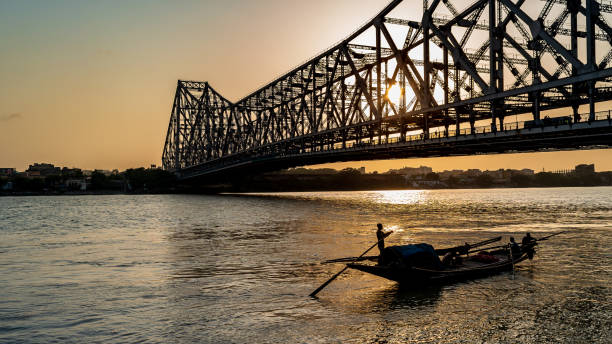
The Howrah Bridge is a suspension-type balanced Cantilever Bridge. It has a central span of 1500ft between the main towers. The anchor and cantilever arms are 325ft and 468ft long, respectively.The suspended span has a length of 564ft. The main towers are 280ft-high above the monoliths and 76ft apart at the top. The bridge deck measures 71ft in width and features two footpaths of 15ft on either side.The super-structure is built up with riveted sections made of a combination of high tensile and mild steel. The bridge deck descends from panel points placed in the middle of the towers, which are located in the lower chord of the main trusses through hungers.The bridge deck consists of a 71ft carriageway and a 15ft pathway projected on both sides of the trusses and supported by a fascia girder.The carriageway outside the tower is backed on the ground by an anchor arm. The deck system includes cross girders suspended between pairs of hungers by a pinned connection. Six rows of longitudinal stringer girders are arranged between cross girders and floor beams support transversally on top of the stringers.These joints support a continuous pressed steel troughing system surfaced with concrete. Two main expansion joints are placed at the interfaces in the middle of the suspended span and the cantilever arms.Eight articulation joints exist at the cantilever arms and suspended portions and separate the bridge into segments by a vertical pin connection to allow the deck’s rotational movements. The bridge deck features a longitudinal ruling gradient at each end.The main tower is based on single monoliths with 21 chambers. The minimum vertical clearance for the carriageway is 5.8m and 8.8m for the river traffic.
Specialities of The Bridge: What Made It A Heritage
Constructed without nuts and bolts, the Howrah Bridge was formed by riveting the entire steel structure. The bridge officially opened in 1943 when it was the world’s third longest cantilever bridge. Today, it is the sixth longest bridge of its type in the world. The Howrah Bridge is also thought to be the world’s busiest cantilever bridge.
In 1946, in a census carried out, it said that the bridge saw a daily traffic of 27400 vehicles and 12100 pedestrians. In fact ages ago the bridge had also carried trams that left from Howrah station terminus. However, it seemed like the bridge could not take the weight of the heavy weight and hence running trams on the bridge was discontinued. Currently, the bridge can bear the weight of 60,000 vehicles only but it still carried almost 90000 vehicles daily. The bridge also has a separate foot path for pedestrians to walk.While the bridge remains one of the key attractions in the city, the Howrah Railway Station at its Howrah end is another site of much historical significance as the country’s oldest railway station. At the Kolkata end, the bridge ends right by the stunning and colourful Mallick Ghat flower market, one of the city’s most vibrant markets.
Cultural Significance of The Bridge
Since the beginning of its journey, the bridge has been featured in numerous Bengali Hindi even International films, such as Do Bigha Zamin (1953), Bari Theke Paliye(1958), Parash Pathar(1958), Howrah Bridge(1958), Neel Akasher Neechey (1959), China Town(1962 ) and Amar Prem (1971), Teen Devian(1965), Calcutta 71 1972), Padatik (1973), Richard Attenborough’s 1982 Academy Award winning film Gandhi, Paar(1984), Ram Teri Ganga Maili (1985) , Nicolas Klotz’s The Bengali Night(1988), Rolland Joffé’s City of Joy (1992), Florian Gallenberger’s Shadows of Time (2004), Yuva(2004), Parineeta (2005) and the list goes on.
Recent Renovations of The Bridge
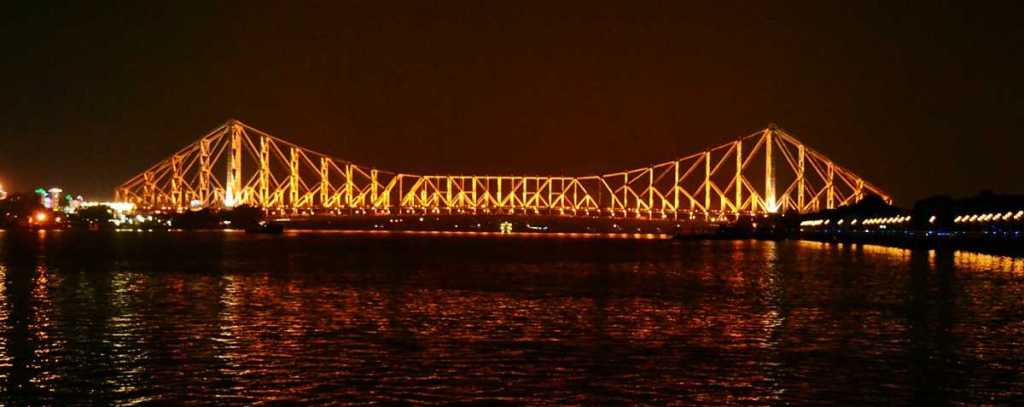
The articulation joints at deck level were renovated in 2008, and the bridge was illuminated in colours of gold and magenta in November 2006.Bridge operator Kolkata Port Trust (KPT) invested Rs35M in the project for laying 13km of cable, 700 lights, a new control tower and a sub-station. Around Rs27.3m was spent on the maintenance of the bridge in 2005.The pylons, the steel-lattice inner structure, the under-deck and the pathway were fixed with white and the upper structure with blue LEDs. Painted in June 2005, the bridge required more than 26,500l of aluminium paint to cover 23,500t of steel, occupying a surface area of 2.2mm².Prime Minister Shri Narendra Modi launched the interactive light and sound show of the bridge in January 2020. The new Rabindra Setu decorative lighting features 650 power-efficient LEDs and spotlight fittings for programmable multi-colour lighting, including a music-syncing show.
Conclusion
The surprising fact about this bridge is that, despite being such a heritage, it has suffered a lot of damage. And the damage is not only because of trams plying heavy load, but it is also because of human spit and bird excreta.The corrosion on the bridge is because of prolonged chemical reaction that has occurred because of continuous bird droppings. Calcutta Port Trust is currently in charge for the maintenance of the bridge. Along with the authority, the citizens should also be responsible for protecting the living heritage of our country.





 Eduindex
You must be logged in to post a comment.