
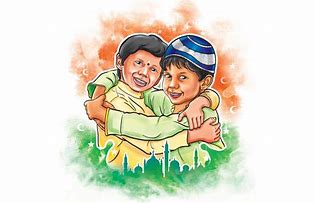
Top 3 Hindu-Muslim Unity Advertisements

Advertisements have the potential to change human thoughts, behaviour and actions. They can do a lot more than just promoting brands. Through visual and auditory modes, advertisements have the competency to bring about a societal change and provoke a positive impact on people. Readers can have a glance at such impactful advertisements through the examples listed out in this blog.

Red Label (Tea Brand)

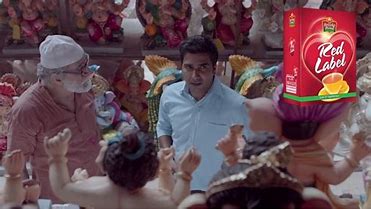
A man visits a store to place an order for a Ganesh idol (A Hindu God). The shopkeeper exhibits the different idols created by him to the man. While having a conversation with the buyer the shopkeeper also illustrates the meaning behind the different forms of the Ganesh idols. To the buyer, this shopkeeper seems to be a very knowledgeable man, who has much information about the Hindu worship and reverence. While conversing with the buyer, the shopkeeper puts on the Kufi (skullcap worn by Muslims). The Hindu buyer is taken aback after realising that the shopkeeper selling the Ganesh idols is a Muslim by religion. He attempts to cancel his order and go to his workplace. The Muslim shopkeeper offers him a cup of tea before leaving. The vendor explains him that , work is worship too, one need not compulsorily pray. The Muslim man was in fact worshipping God, by creating his idol. The buyer takes a sip of tea and plans to change his mind. He does not cancel his order and amiably buys the idol from that vendor on that day itself. The Brand, Red Label intends to portray that their product attempts to create harmonious relations between different religions.
Kaun Banega Crorepati (Reality Game Show)

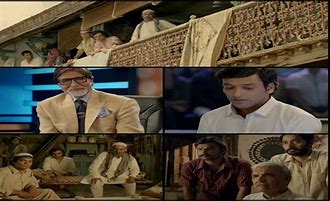
Six years ago, KBC came up with a phenomenal ad campaign featuring communal unity. In the ad it has been shown that, a Hindu boy had been selected for the episode. His family members were all set to bid him a goodbye as he was about to step out of his home, while his Muslim neighbors were watching him from the floor above. Just as the Hindu boy was about to step out, his neighbor sneezes. Sneezing while someone is about to leave from the doorstep is considered as a bad omen in the Hindu community. The Hindu boy’s family members feel agitated at the neighbor for sneezing and they misinterpret that, he had done it deliberately. Hours later, while facing a difficult question on the show, the Hindu participant decides to use the option of ‘Phone A Friend’ (According to the game’s format, this option is availed to all participants only once, whenever they wish to make use of it). He then rings up the same Muslim family and asks them the question i.e ‘What is the meaning of As-Salaam-Alaikum ?’ The man is overwhelmed by such a trustworthy gesture by the young boy. He answers his question accurately and assists him in winning the prize amount. This advertisement touched the hearts of many Indians. It indeed reflected the idea of communal harmony.
Surf Excel (Cloth Detergent Brand)

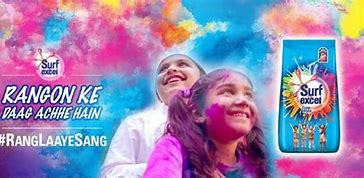
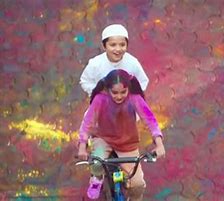
The advertisement broadcasted by this brand, intends to portray how Indian festivals are secular in nature. An individual from any community can enjoy a festivity according to his/her discretion. It is shown that, on the day of the Hindu festival of Holi (people celebrate this festival by applying colour on each other and splashing water with waterguns/waterballoons), a little boy wearing a white robe is hesitant to step out of his house. A girl of the same age as his, notices this and challenges her friends around, to smear all their colours on her. Her friends do accordingly, by throwing all the colour on her, from the floors above, as she waits down on her little bicycle. By doing so, she makes them use all their colour supplies on her and no colours are left out with them. Later, she offers to drop the boy to the place where he wants to go. It is then shown that, she drops him to the mosque, where he wanted to go to offer Namaaz (Islamic prayers). She also jests that, after he’s done with his prayers, the other kids will not leave him without including him in the merry festivities. He agrees to join them in the Holi celebrations after his prayers are done. The ad tagline said, “Rang Laaye Sang, Daag Acche Hai” (colours bind people together, such stains should be cherished). This advertisement depicts how mutual respect for each other’s religion can bring about unity. The principles of unity in diversity must be inculcated in children from their grassroot years, so that peace and harmony prevails in the society.
Advertisements can have a huge impact over the society, in terms of patriotism, unity, cohesiveness and peace-keeping. Various brands are positioning their ad campaigns around the pivot of National Unity in today’s times as the audience nowadays is readily accepting things which were not accepted earlier. Brands thus, not only create a name in the market with their products but also with their ad campaigns promoting social values and messages.

THE ROLE OF COMMUNAL HARMONY FOR SUSTAINABLE DEVELOPMENT OF THE INDIAN SOCIETY

BY DAKSHITA NAITHANI

India is a huge country with the second largest population on earth. It is a hub of various religious and the very nature of culture is diversified and composite. We gained independence in 1947 and keeping the diverse nature of our country, our fore fathers prepared our constitution and dreamed of a secular country where every religion will be respected and given equal weightage. They realised very early that unless we had ’unity in diversity’ there will be no development for the Indian society. India is a emerging economy where the small businesses and agriculture are the two main providers to the job industry. Unfortunately during communal violence the shopkeepers and various other small scale industry entrepreneurs and daily wagers are the ones who are the most hit and are prone to loss and damages. Violence usually resulting in loss of income and property are not recovered in any sorts of insurances and people are left to face the economic burdens afterwards.

In most of the typical Indian homes where the male is the sole earner for the family and females are designated to the household chores are amongst the worst sufferers which leads to disintegration of homes as well as community as a whole. Many children as a result of these broken homes usually end up missing a good education and a hope of good growth in life which in turn nullifies their future contribution to the society and economic growth of the country.

Communal violence leads to generations of suffering and spoiling the economic prospect of a country

The very famous Godhra riots which is also known as 2002 Gujarat riots was a three-day period of inter-communal violence in the western Indian state of Gujarat. Following the initial incident, there were further outbreaks of violence in Ahmedabad for three months; statewide, there were further outbreaks of violence against the minority Muslim population for the next year. The burning of a train in Godhra on 27 February 2002, which caused the deaths of 58 Hindu pilgrims karsevaks returning from Ayodhya, is cited as having instigated the violence.

According to official figures, the riots ended with 1,044 dead, 223 missing, and 2,500 injured. Of the dead, 790 were Muslim and 254 Hindu. The Concerned Citizens Tribunal Report, estimated that as many as 1,926 may have been killed. Other sources estimated death tolls in excess of 2,000. Many brutal killings and rapes were reported on as well as widespread looting and destruction of property. There was widespread destruction of property. 273 dargahs, 241 mosques, 19 temples, and 3 churches were either destroyed or damaged. It is estimated that Muslim property losses were “100,000 houses, 1,100 hotels, 15,000 businesses, 3,000 handcarts and 5,000 vehicles.” Overall, 27,780 people were arrested. Of them, 11,167 were arrested for criminal behavior (3,269 Muslim, 7,896 Hindu) and 16,615 were arrested as a preventive measure (2,811 Muslim, 13,804 Hindu). Thus destroying many lives and causing fear amongst people from one another On 23 May 2008, the Union Government announced a 3.2 billion rupee (US$80 million) relief package for the victims of the riots. In contrast, Amnesty International’s annual report on India in 2003 claimed the “Gujarat government did not actively fulfill its duty to provide appropriate relief and rehabilitation to the survivors”. The Gujarat government initially offered compensation payments of 200,000 rupees to the families of those who died in the Godhra train fire and 100,000 rupees to the families of those who died in the subsequent riots, which local Muslims took to be discriminatory.  Thus creating more hate between the two community

The recent riots in Delhi’s Chand Bagh Bhajanpiura and surrounding areas were one such example the violence led to huge losses both emotional as well economic . Around 42 people lost their lives. About 92 houses, 57 shops, 500 vehicles, 6 godowns , 2 schools,4factories and 4 religious places were burnt and taken down . The riots led to property and business losses of over 1000 cr. However long term economic loss, production loss, employment losses as well emotional losses cannot be quantified. These riots led to large scale migration of people to other states thus uprooting people who have been flourishing there for decades successful businesses were destroyed and demolished overnight dreams were shattered and the already stressed farm and agriculture was further stressed to support and feed the additional mouths.

The Delhi government was forced to announce compensation and financial support to the people who were affected running into crores of rupees. The precious funds which could have been used for development of schools, hospitals, betterment of the NCT and upliftment of the poor and needy were exhausted to support the riot victims. The immeasurable loss to the image of country and subsequent losses in share markets due to foreign funds pulling out their funds were a huge blow to India’s economic progress leaving it behind others. India is now being looked upon as an unsafe destination for Investments and travel. The travel tourism industry of India which provides employment to over 42 million people in India suffered huge losses in cancelled bookings. The Industry which was projected to grow at the rate of 4 per cent in 2020 is now looking at a bleak future.

India is a developing country and the vision of our leaders to make India a developed nation and an economic powerhouse cannot materialize unless the internal security of the nation, particularly communal harmony is intact. Maintenance of communal peace and tranquillity occupies a lot of government energy and valuable resources which could be used in nation building.

In case peace prevails, an ambience of trust will develop between various communities, leading the nation on the path of development and economic advancements.