

Being a part of a mixed economy , where politics tend to exploit the peace between different religions and so on …….. .
“India was the motherland of our race, and Sanskrit the mother of Europe’s languages: she was the mother of our philosophy; mother, through the Arabs, of much of our mathematics; mother, through the Buddha, of the ideals embodied in Christianity; mother, through the village community, of self-government and democracy. Mother India is in many ways the mother of us all.”
Will Durant, American historian
And now you want to know why I am being so dramatic over such things . Well , if you want to know than start reading the editorial .
Introduction
Indians say it is important to respect all religions, but major religious groups see little in common and want to live separately
More than 70 years after India became free from colonial rule, Indians generally feel their country has lived up to one of its post-independence ideals: a society where followers of many religions can live and practice freely.
Religion has historically influenced Indian society on a political, cultural and economic level. There is a sense of pride associated with the country’s rich religious history as the traditions of Hinduism, Buddhism, Sikhism and Jainism all emerged out of India. Moreover, while a majority of people in India identify as Hindu (79.8%), the medley of religions that exist within the country continually impact contemporary society.
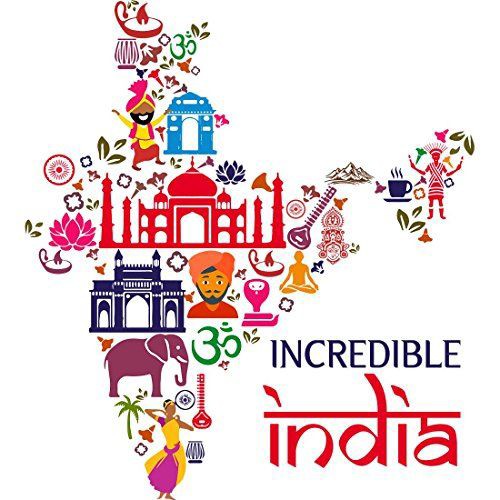
Census
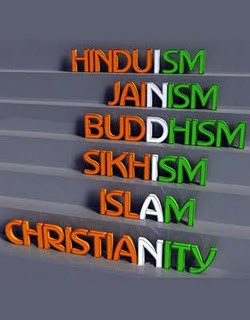
The 2011 Indian census indicated that 79.8% of Indians identified as Hindu, 14.2% identified as Muslim and 2.3% identified as Christian. A further 1.7% of the population identified as Sikh, 0.7% identified as Buddhist and 0.37% identified as Jain. Due to the massive population size of India, religious minorities still represent a significant number of people. For example, although only 0.37% of India may identify with Jainism, that still equates to over 4 million people. While not all religions in India can be discussed in detail, the following provides an overview of the major religions in the country as well as sizable religions that originated in India.
Social beliefs
“India has two million gods and worships them all. In religion all other countries are paupers; India is the only millionaire.”
Mark Twain
Karma, Acceptance and Personal Choice . Many Indians tend to have a sense of acceptance towards one’s life position or a belief that, due to actions in one’s past life, good or bad personal circumstances are deserved. This attitude partly stems from religious ideas such as ‘karma’ (the idea that one’s actions will affect their current or future life) and ‘samsara’ (the cycle of rebirth).
The interplay of these social, cultural and religious factors allows people to be accepting of life events and trajectories. However, this is not to be interpreted as Indians being unwilling to take responsibility for life circumstances. Many often contemplate how their actions may impact their future and make decisions accordingly. Some of India’s youth are challenging a fatalistic perspective by asserting their free will to choose their vocation, spouse and other life factors. Indeed, as social mobility becomes more common, there is a growing belief that one can change their circumstances.
It’s Role
Religion plays a major role in the Indian way of life. Rituals, worship, and other religious activities are very prominent in an individual’s daily life; it is also a principal organizer of social life. The degree of religiosity varies amongst individuals; in recent decades, religious orthodoxy and observances have become less common in Indian society, particularly amongst young urban-dwellers. As of the politics , they play with religion , people’s belief and with their trust .
Link :
 Eduindex
You must be logged in to post a comment.