Beauty of Bhangarh Fort

Located at the border of the Sariska Tiger Reserve in the Alwar district of RajasthanBhangarh Fort is a 17th-century fort, famous all over India for being the ‘Most haunted site in India’. Because of the various ghostly encounters and incidents in the fort premises, communities have sprung up far distant from the fort, due to the fear of whatever lies inside. Even the Archaeological Survey of India or the ASI has blocked the locals and sightseers from entering the fort at nighttime. Several legends have attested to the paranormal happenings inside the fort.

The first myth claims that a king called Madho Singh built the Bhangarh fort after getting due approval from a hermit called Bala Nath who lived there; having accepted to a condition which stated that the umbra of the fort must never descend upon the house of the hermit. But as destiny would have it, one of the aspiring heirs of Madho Singh affixed to the walls vertically, thereby creating its looming obscuration to cover the dwelling of the hermit, cursed the fort after the huge construction and its shadow overpowered his home. The fort was doomed within no time. The alleged prophecy stood fulfilled, and the Bhangarh Fort became haunted.

Another myth tells of a black sorcerer or wicked saint who fell in love with a princess from the fort town and tried to use a love potion to win her heart. However, the princess detected suspicion and hindered the entire plot of the black magician by throwing the potion onto a boulder, which then rolled down toward the magician, physically crumpling him. Before taking his last breath, he cursed the fort, declaring it would end up in a quandary in which no one could endure—as it is today.

No one is permitted to enter the fort after sunset or before sunrise. The complete panorama is subsumed by a covering of gloom and a chilling emptiness once the last ray of daylight bids adieu until the next morning. There are several local stories about the paranormal activities in the fort. It depends on a person whether he should believe it or not. It is said that the apparitions wander in Bhangarh Fort at night and various unusual sounds are detected. Also, as it is said, anyone who enters the fort at nightfall would not be able to return in the morning. People perpetually sense as if their actions are being observed, and the air is filled with a dizzying burden. A board put up by the Archaeological Survey of India warns the visitors not to venture inside the premises of the fort during the dark hours.

On the bright side the fort is decently maintained, for the most section, Bhangarh’s remains today hold different noble constructions, including several temples, public chambers, and the royal palace. Upon entry, visitants will flounder into a variety of temples, including a Hanuman temple, a Ganesh temple, and a Someshwar temple. These constructions, embellished with elaborate carvings and statues, are reasons that Bhangarh is worth touring for not just the spooks.

NATIONAL MUSEUM OF INDIAN CINEMA TOUR

I was fortunate enough to have a chance to visit the National Museum of Indian cinema in Mumbai. The museum is housed in two buildings – the 5 storey new museum building and the 19th-century Victorian gothic bungalow Gulshan Mahal. We arrived there at 1:40 p.m. The museum is housed in two buildings – the 5 storey New museum building and the 19th-century Victorian gothic bungalow Gulshan Mahal. It is a house of quaint artifacts of India’s pre-cinema history, it also showcases over a hundred years of Indian cinema through nine sections raining from the origins of Indian cinema to the studio era of new wave. Gulshan Mahal discovers nine aspects that are Origin of India, cinema comes to India, Indian silent film, the advent of sound, the studio era, the impact of world war 2, creative resonance, new wave and beyond & regional cinema. Besides artifacts, posters, film clipping, etc. Adjacent to the historic building is a classy building.

The swanky building house has mobile exhibitions, 3-D compatible theatres with 4 K projectors and 7.1 surround with specific themes Gandhi and Cinema, Children Film Studio, Technology, Creativity, and Indian Cinema & Cinema across India. Gandhi & Cinema: it not only depicts the movies made on the life of Mahatma Gandhi but also showcases the deep impact his life had on cinema. Children’s Film Studio gives visitors, particularly children, an opportunity to explore the science, technology, and art behind filmmaking. It offers hands-on experience on various facets associated with making a cinema-like camera, light, shooting, the experience of acting, etc. – presented in an interactive format. The exhibits displayed include chrome studio, immersive experience zone, stop-motion animation studio, virtual makeover studio, etc. Technology, creativity & Indian cinema: it showcases the creative use of technology by Indian filmmakers over the years to produce a cinematographic impact on the silver screen. Cinema across India: it showcases the charismatic kaleidoscopic presence of the vibrant cinematographic culture across India.

The trip aimed to gain knowledge on Indian Cinema and to understand Its importance. We get to know that Cinema has been one of the greatest influences in our modern life, and it’s also a form of art, the seventh art along with photography, architecture, literature, play, painting, and music. It’s the combination of technology, business, entertainment, and aesthetics, each and everything of these four has an important role in the present-day world. The first Bollywood movie was Raja Harishchandra (1913), however, it was a silent movie. In 1931, Alam- ara came which was India’s first sound film. Then in 1937 came Kisan Kanya which was India’s first color film. We were free to explore the museum on our own.

The visit to Gulshan Mahal was fascinating. The old artifacts gave us a brief idea about how films were made in the 20th century. There were instruments like Praxinoscope, Thaumatrope, Phenakistoscope, mutoscope Modern animation from plates of The Horse in Motion by Eadweard Muybridge, etc. that were used for making films. We also saw old film posters; cameras were used during that time. Then we visited the glass building which had all 21st-century movie posters and film equipment. Something which caught my interest the most was the Bioscope Show. There were different types of camera lenses used for shooting, we could also watch our favorite movie scenes and could listen to songs which made it fun.

Then my second favorite place was Children Film Studio. We had a lot of fun; we got experience or opportunity to become an actor, director, cameraman, animator, etc. We also tried using the green screen and got a virtual makeover. Amidst the fun, we realized how much we got to know about cinema. We then went to explore Gandhi & Cinema.   Gandhi, British-Indian historical film, was released in 1982, which tells the story of Mahatma Gandhi and his struggle to win independence for India through nonviolent civil disobedience. The movie won eight Academy Awards, including that for best picture, and five Golden Globe Awards, We even had got to spin the Charkha. The charkha, or spinning wheel, was the physical embodiment and symbol of  Gandhi’s constructive program. It represents Swadeshi, self-sufficiency, and at the same time interdependence, because the wheel is at the center of a network of cotton growers, carders, weavers, distributors, and users. It was an enjoyable and informative trip.   

8 Amazing Places to Visit in India

India – a land of diverse landscape, language and culture, offers a variety of destinations for travellers to add to their bucket list. Whether its heavenly mountains, historical forts or peaceful beaches, every nook and corner has something beautiful to offer. These exotic places will surely take your breath away.

DAL LAKE, KASHMIR

Being one of the most prominent lakes in India, Dal Lake is also known as Srinagar’s Jewel. Pristine clear water with the backdrop of heavenly hills and mountains is sure to take your breath away. A Shikara ride in the Dal Lake is a must to explore in Kashmir. Shikaras are beautiful houseboats which are used to travel across the lake. The lake also has a travelling market. With an old world charm, the lake gives you a breathtaking experience.

THE RANN OF KUTCH, GUJARAT

The Rann of Kutch is a salt marsh in the Thar desert located in the border between India and Pakistan. It is one of the largest salt deserts in the world. It is a really popular exotic travel location. The Rann festival is the best time to visit when the region celebrates with crafts, handwork, cultural and musical performances. It is famous for its colourful and intricate crafts. On a full moon night, the sparkling salt desert looks spectacular and is a treat to the eyes.

ANDAMAN & NICOBAR ISLANDS

The Andaman Islands is an Indian archipelago of about 300 islands scattered in the Bay of Bengal. Its palm lined beaches and coral reefs is sure to give you a wonderful experience. The islands are known for its popular tourist sights like Havelock Island, Neill Island, and Wilson Island. You can also enjoy exotic sports like Parasailing, Snorkeling, and Scuba Diving.

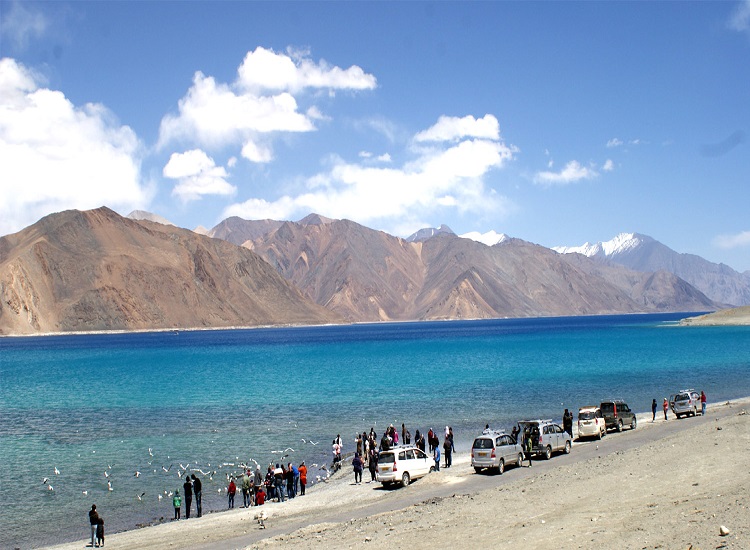
PANGONG LAKE, LADAKH

Also known as Pangong Tso, it is a beautiful lake situated in the Himalayas. The beautiful lake situated on a height of 4350 m, attracts tourists from all over the world. The alluring blue waters is a sight to soothe sore eyes. The best time to visit the lake is summer because in winter the whole lake freezes into ice. It is also a great place for bird lovers as it is home to different birds like cranes, seagulls and rodents.

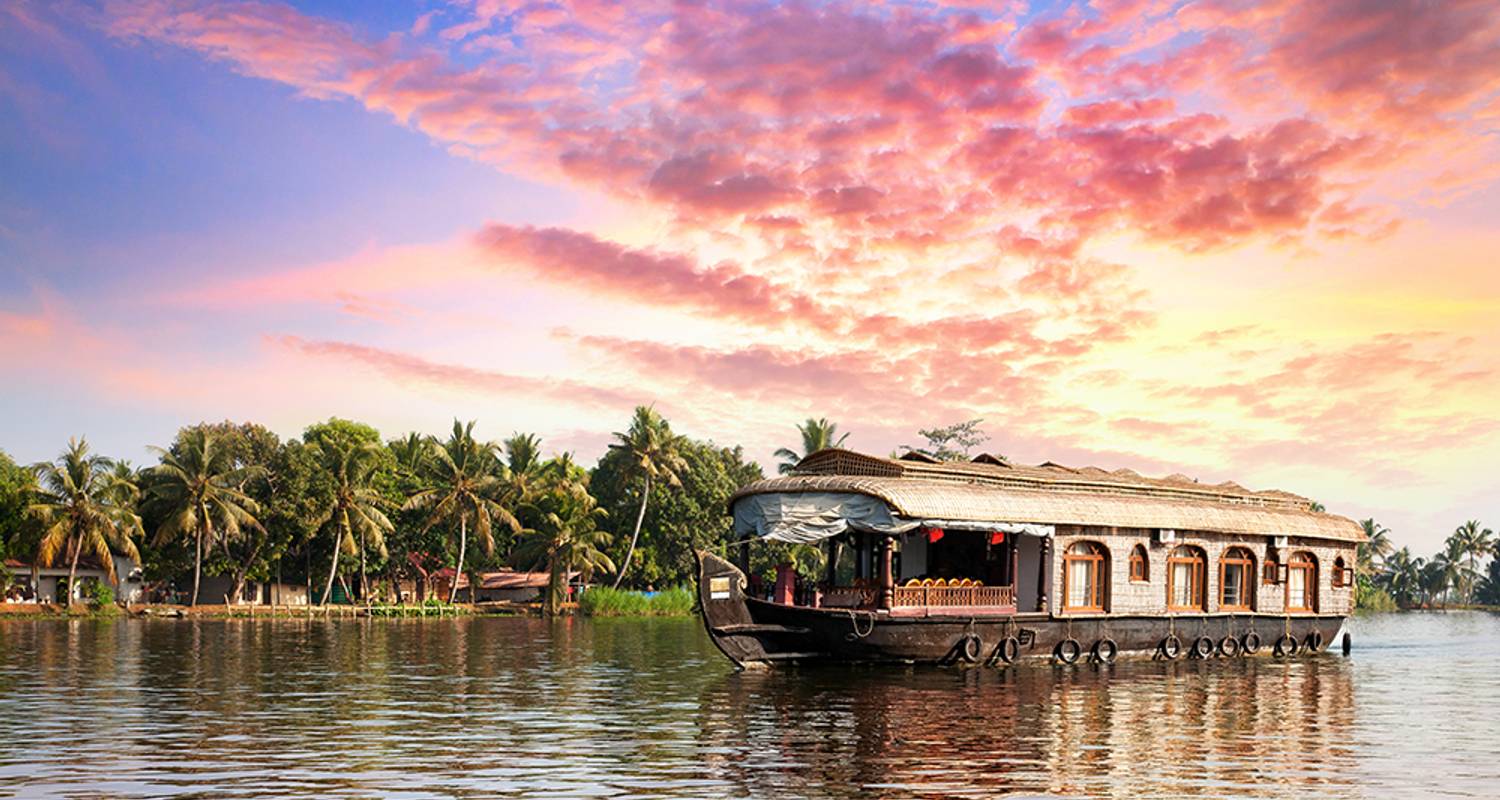
BACKWATERS, KERALA

The Kerala backwaters are a network of lagoons and lakes on the Arabian sea coast. With its rivers and inlets it is connected with almost 900 kilometres of waterways. The picturesque site with its lush green landscapes and diverse wildlife is a popular tourist attraction of South India. You can visit the backwaters by boat or shikara from Alleppey. Watching the sunset from a shikara in the midst of green landscapes and serene waters will give an experience of a lifetime.

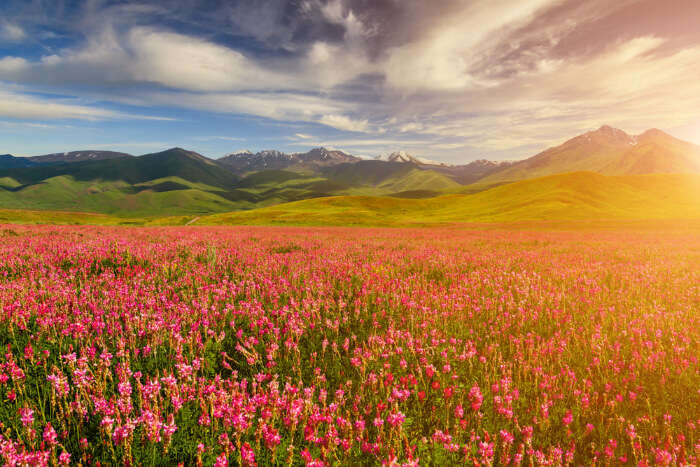
VALLEY OF FLOWERS, UTTARAKHAND

Valley of Flowers is an Indian national park, located in North Chamoli and Pithoragarh in Uttarakhand. With rare and exotic Himalayan flora it is located in the dense forests close to the Pushpawati river. The beautiful meadows with blossoms of Alpine flowers is a treat to any nature lover. The best time to go on a trek to the Valley of Flowers is March to October as during this time the valley is also known to change colours due to its colourful blossoms.

LOKTAK LAKE, MANIPUR

Loktak is the largest freshwater lake in Northeastern India. It is mostly known for the unique sight of floating phumdis which are heterogeneous mass of soil and organic matter at various stages of decomposition. It is the most popular tourist attraction around Imphal. Being almost like a miniature inland sea, the lake mesmerises all visitors.

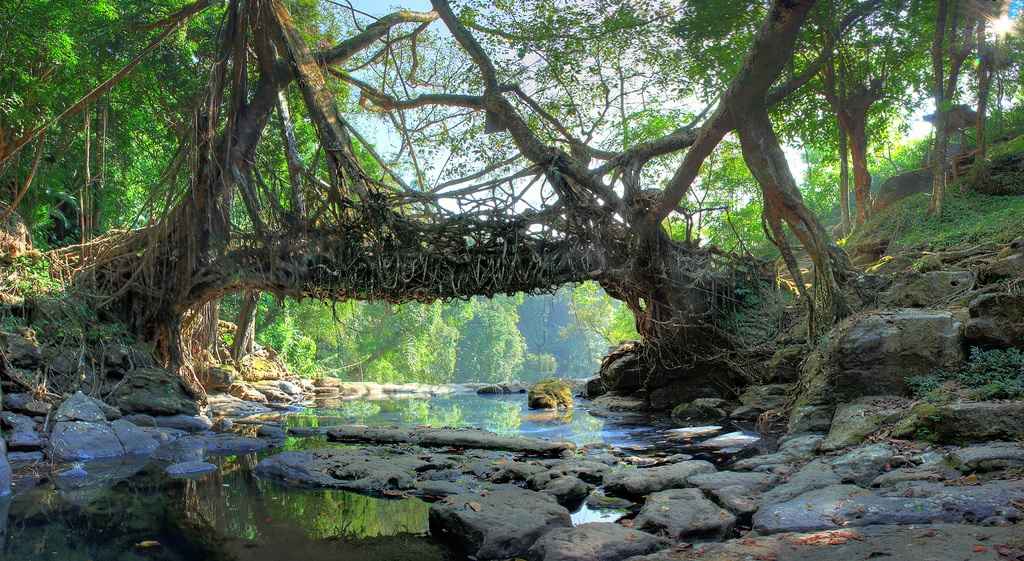
LIVING ROOT BRIDGE, MEGHALAYA

Located in the Khasi and Jaintia hills, the suspended root bridge is made up of a species of the Indian Rubber tree with a very strong root system. These are estimated to be around 500 years old and attract tourists all around the year. There are dozens of these root bridges near Cherrapunji. Since they are located in very remote places you may need a guide to reach there. The spectacular bridges in the Meghalayan villages will be a treat to any traveller.