National Campaign against Gender-based Violence – ‘Nayi Chetna – 2.0’

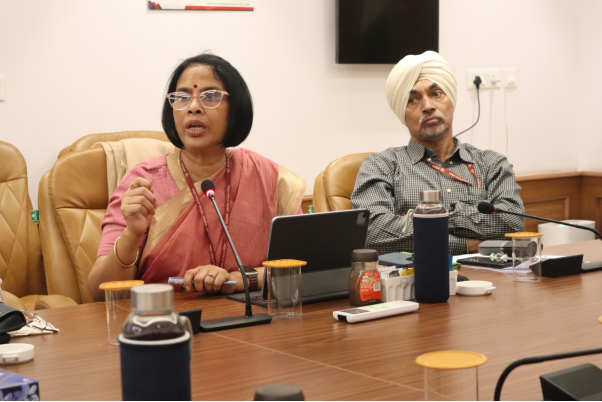
 In an inter-ministerial meeting which saw participation of nine line ministries, DAY-NRLM(Deendayal Antyodaya Yojana – National Rural Livelihoods Mission), Ministry of Rural Development announced its plans for the second year of its National Campaign Against Gender-Based Violence – ‘Nayi Chetna – 2.0’. The meeting held yesterday, was chaired by the Additional Secretary, MoRD Charanjit Singh. The Joint Secretary, Rural Livelihoods, Smriti Sharan, introduced the campaign to the gathered delegates. It was organized to foster convergence to collectively strengthen redressal mechanisms for survivors of GBV.

The campaign is to be launched on 25 November which is the International Day for the Elimination of Violence against Women. It will be observed across 34 Indian states and UTs till 23 December. The annual campaign will be led by DAY-NRLM’s self-help groups network of over 9.8 crore rural women members with the spirit of a Jan Andolan or people’s movement.
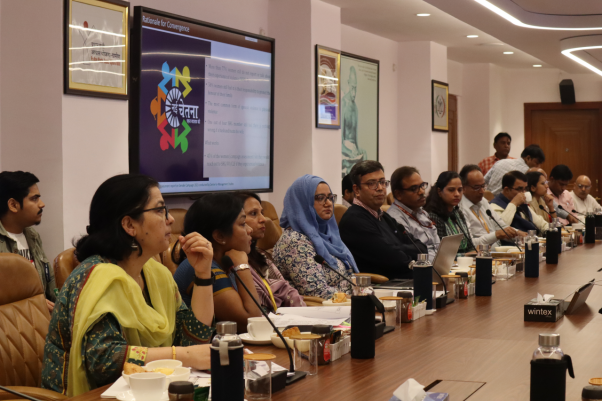
Data from NFHS – 5 show that more than 77% women still do not report or talk about their experience of violence. Such findings, as well as experiences of violence of women SHG members across the country is what encouraged this initiative. The Nayi Chetna Campaign aims to advance the rights of women and gender-diverse individuals, for a life without fear, and gender-based discrimination and violence. Campaign activities will deepen awareness on gender-based violence (GBV) amongst self-help group members and encourage GBV reporting. It will also address social norms which sanction and help such forms of violence to prevail.
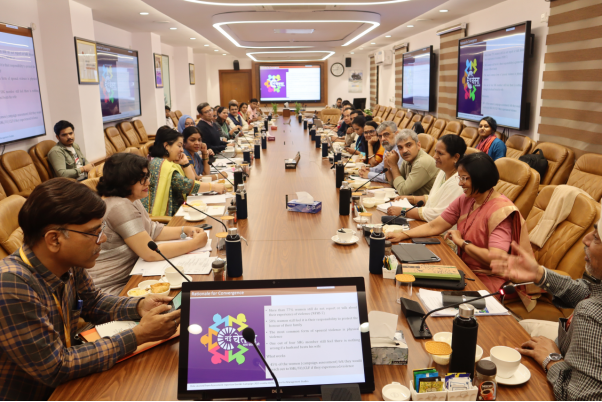
Through the deliberations, various ministries shared their interest and highlighted specific areas of support that could be provided. A key activity will be sensitization of service providers on their role in supporting survivors of gender-based violence. This will go a long way in creating a conducive environment for survivors to speak up and seek support and justice. Participating ministries included Ministries of Panchayati Raj, Women and child development, Home Affairs, Law and Justice, Information and Broadcasting, Youth Affairs and Sports, Education and Literacy, Social Justice and Empowerment, as well as Health and Family Welfare.
This campaign will compliment DAY-NRLM’s ongoing programmatic efforts to address GBV. In addition to multiple targeted activities which enhance women’s decision making, and agency, DAY-NRLM has been establishing Gender Resource Centres (GRC) at block level. These are to provide a community managed platform from where inequalities and discrimination on the basis of gender can be protested, and where survivors can seek redressal through the support of other departments and agencies working on those issues. More than 3000 GRCs have been established across the country till date, and measures are being taken to set up more.

This campaign is an attempt to bring together, and give impetus all initiatives aimed at fostering a societal level change with regards to gender-based violence.

****

Citizen participation in the national campaign for segregation of waste at source

The goal of the ‘Swachh Bharat Mission Urban 2.0’ is to make cities garbage free. One of the key aspects is to segregate waste at source. This key step will help to reduce the amount of waste that goes to legacy dumpsites. Sustainable waste management being one of the critical challenges, the priority is to shift from the current practice of dumping and burning to sustainable waste management practices that promote segregation, collection, recycling and a circular economy. With rapidly changing urban landscapes, ecosystems, population migrations, and ever-increasing households and establishments, it is essential that behaviour change is reinforced from time to time among citizens.

October is the month of festivals and with behaviour change at the centre of the campaign, MoHUA launched thematic activities to propel segregation of waste at source campaign. The core activities involve dissemination of key messages to the citizens through public outreach, door-to-door messaging and engagement with schools.  

Traditionally on Diwali, most households undertake home cleaning. Children as change agents have been long established under Swachh Bharat Mission and are known to impact overall community behaviors. This Diwali the school children can gift swachhta ka uphaar to their family and friends.


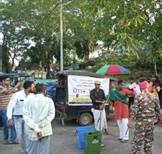
Urban Local Bodies are being encouraged to organize public outreach activities to garner the attention of the residents to promote the practice of segregation. The core activities include – door-to-door messaging with support from NGOs, SHGs, schools, colleges, youth organizations, RWAs, other civil societies, volunteers, etc demonstrating proper segregation covering all wards. ULBs can arrange separate storage systems to be fitted in the collection vehicles – wet (green), dry (blue) and any means of the collection – partitions, large bags, cane baskets, plastic/metal bins, or others. These core activities will ensure collected segregated waste remains segregated until processing facilities.

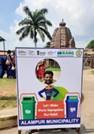
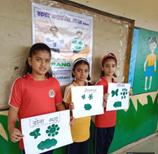
The special activities engaging school children have begun and will go on till 30th of October. Selfie points are being created using installations representing pair of bins -green (for wet waste) and blue (for dry waste). ULBs will engage with the public/school children through tongue-twister challenges. Participants can be challenged to repeat quickly ‘Hara Geela Sookha Neela’ as many times as possible. Mobile Vans/trucks can play “Humein Garv Hai” song and promote messages on clean/SUP free Diwali.

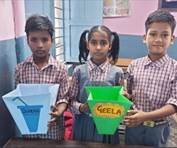
To encourage student participation in promoting segregation of waste both at school and at home, some of the activities planned are ‘Bins Out of Waste’ – Students can be encouraged to collect a bin from home and create art out of it at school using different painting media, students can participate in the Toycathon challenge (Register on https://innovateindia.mygov.in/swachh-toycathon/) where they can be asked to bring in 5-6 segregated dry waste items from home and create toys out of waste. To encourage Home to School Connect, students can create two labels each – green for wet waste and blue for dry waste with messages on segregation at source written on them. The finished labels can be taken back home and pasted on their bins meant for wet and dry waste. Students can also create labels for their homes that can be stuck outside their house proclaiming ‘My house segregates waste’. This can serve as an indirect platform to remind and motivate their visiting friends and family to segregate.

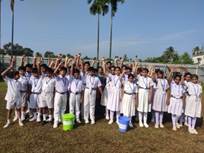
In a massive drive, in the first 72 hours more than 10 lakh children have already been engaged. Participating schools can register on the website sbmurban.gov.in. Each school can be awarded a certificate of participation after the activities.

Celebrating eight years of accomplishments of SBM-Urban, the Hon’ble President of India Droupadi Murmu, on 1st Oct 2022, urged the citizens of India to join in the ‘Segregation of waste at Source’ campaign that focuses on reinforcing correct waste segregation practices among the different sections of the society. As a part of the two-week long Swachh Amrit Mahotsav, MoHUA rolled out the national campaign for segregation of waste at source on 2nd October, Gandhi Jayanti.

*****