
National Workshop on Unleashing India’s Agribusiness Potential through Innovative Agri Value Chain Financing in New Delhi

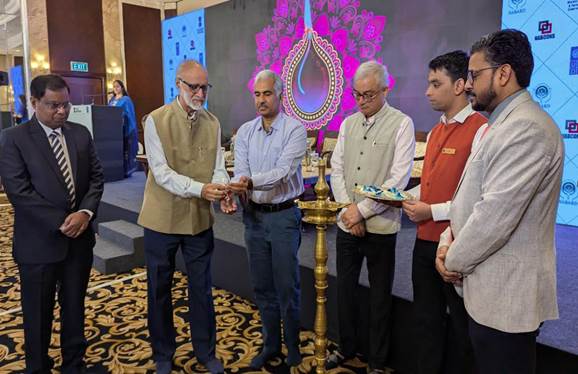
 Department of Agriculture and Farmer’s Welfare (DA&FW) organized a workshop titled “Unleashing India’s Agribusiness potential through Innovative Agri Value Chain Financing” on 27th June 2024 in New Delhi. The event brought together senior officials of the Government of India and the State Government, experts, and stakeholders to discuss the dynamics of agricultural financing.
Reflecting on the importance of Agriculture Finance in the value chain, Manoj Ahuja, Secretary DA&FW, underscored the pressing need to transition from a production-centric approach to a demand-driven one. “To develop Agricultural Value Chains (AVCs) more holistically and integrate them with global markets, we must shift our focus from merely addressing supply shortages to meeting market demands,” he stated. Shri Ahuja emphasized the importance of implementing accountable and digital systems for effective AVC development and highlighted the need for a comprehensive policy framework to ensure financial inclusivity for all stakeholders.
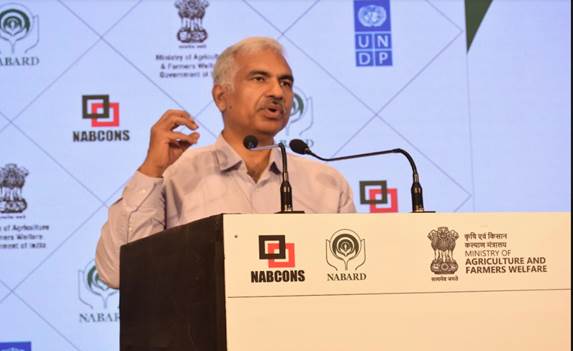
Shri Ahuja further advocated introducing financial instruments like bill discounting, bridge financing, and risk-hedging to improve liquidity and economic stability. “Creating an enabling environment with simplified application processes and reduced bureaucratic hurdles is crucial for effectively implementing these instruments,” he added.
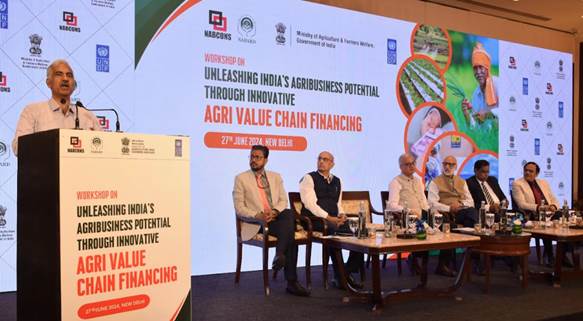
Dr. Vivek Joshi, Secretary Department of Financial Sservices, emphasized the critical role of Digital Financial Services in providing timely credit within the Agricultural Value Chain Financing (AVCF) framework, noting a significant increase in agricultural credit availability. “Our focus is on ensuring seamless and affordable access to credit to support farmers throughout the value chain,” he stated. He highlighted the significant role of NBFCs, fintech, and startups in providing last-mile credit access and specialized financial products, particularly in high-value agricultural markets.
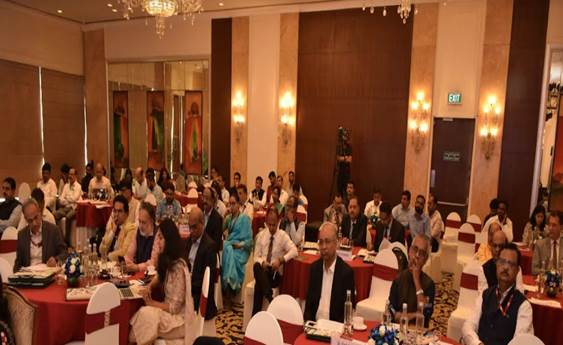
The workshop focused on creating awareness, facilitating collaboration, exploring solutions, and empowering participants with innovative agricultural finance solutions. The workshop saw robust participation from academia, industry, financing agencies, facilitating agencies, and various government departments. It served as a crucial platform for collaboration and partnership-building, paving the way for transformative initiatives in India’s agricultural sector. It included high-level strategic discussions featuring notable speakers such as Prof. Ashok Gulati, a Distinguished Professor at ICRIER, who highlighted the importance of transitioning to a demand-driven approach in agriculture to improve farmer incomes, the need to focus on the nutrition aspect in the food chain and develop climate resilience in agriculture.

While welcoming the participants, Shri Ajeet Kumar Sahu, Joint Secretary (Credit), DA&FW, set the context at the beginning by highlighting the need for a holistic approach to Agricultural Value Chain Financing (AVCF), noting that projections indicate agricultural Gross Value Added (GVA) will reach Rs 105 lakh crore by 2030, making value chain financing increasingly vital.

Chairman NABARD, Shri K.V. Shaji, emphasized the urgent need to improve farmers’ finance access and ensure reliable data availability for SHGs and FPOs, as the data is critical for the banks to make informed decisions and offer effective value chain financing. He advocated for the development of public infrastructure in rural areas, including facilities for processing, branding, and marketing agricultural products. He also emphasized the need to strengthen the governance structure of cooperatives in rural areas. He said these will lead to integrated value chain financings.

Insurance and CEO of PMFBY, Shri Ritesh Chauhan, gave a presentation on fostering financial resilience in agriculture through the Pradhan Mantri Fasal Bima Yojana (PMFBY) scheme. Shri Chauhan highlighted the government’s holistic approach to Agri-Value Chain Financing, emphasizing the need for comprehensive risk protection and financial support throughout the agricultural value chain. He underscored the importance of leveraging technology through platforms like SARTHI, AIDE, Kisan Rin Portal, and AGRISTACK to streamline credit availability and enhance agricultural resilience.

Panel discussions covered various aspects of agri value chain financing, including cluster-based approaches, innovative financing mechanisms, and integrating Farmer Producer Organizations (FPOs) into value chains. Experts from diverse backgrounds shared insights and experiences, enriching the discourse.

*******

SK/SS

DPIIT organizes ‘National Workshop on Next Phase of Reforms for reducing compliance burden’

 As part of Azadi ka Amrut Mahotsav, Government of India is observing Good Governance Week from 20th to 25th December 2021. In the Good Governance Week,  Department for Promotion of Industry and Internal Trade, organized a National Workshop on next Phase of Reforms for Reducing Compliance Burden on 22nd December 2021 at Ambedkar International Centre, New Delhi.

Workshop witnessed wide participation from States, Central Ministries, Industry Associations and Industry Representatives. More than 100 representatives from 27 States/UTs, more than 200 members from Central Ministries, Departments and subordinate organizations and 95 representatives from Industry Associations participated in deliberations of the Workshop.

Context of the workshop was set in the opening session wherein DPIIT made a short presentation on overview of the exercise of reducing compliance burden, status of compliances reduced, initiatives implemented by Ministries and States/UTs to reduce compliance burden on citizens and businesses and next steps of the exercise.

To understand views and seek suggestions from stakeholders, workshop included 3 Breakout Sessions on following themes- Breaking Silos and Enhancing Synergies among Government Departments, Chaired by Shri B.V.R Subrahmanyam, Secretary D/o Commerce. The key points discussed during this session are possibilities of issuance of Master Certificate listing all registrations, merging key business identity numbers into single ID, integration of State Single Window Systems with Central Ministries/Departments, etc.

Single Sign-on for Efficient Delivery of Citizen Services. Chaired by Shri Ajay Prakash Sawhney, Secretary MeitY. The main points discussed during this session are considering integration of all Citizen services at Central and State services on the National Single Sign-On, possibility of UMANG to be the National Single Sign-on (SSO) mobile application along with www.india.gov.in as the National Single Sign-On Webpage 

Effective Grievance Redressal, Chaired by Secretary D/o Land Resources. The key points which were deliberated are multiple platforms for raising grievances need to use technology to ensure that the complaints are genuine, use of Artificial Intelligence (AI) for predictive analysis and data filtration

During the concluding session of the workshop, core issues were identified and next steps on respective themes of the Breakout Sessions were presented by respective Chair Secretaries.

Cabinet Secretary acknowledged the efforts put in by Ministries and States/UTs to reduce compliance burden in earlier phase and making life easier for citizens of this country. He added that reducing burdensome compliances is a continuous process. Various policy reforms and programs have been implemented over last few years, however, Ministries and States/UTs need to identify what more can be done. Transformational governance reforms in the 75th year of the country’s Independence would go a long way in unshackling businesses and citizens. 

********

NITI Aayog to Hold National Workshop on Bamboo Development

 NITI Aayog is organizing a daylong national-level workshop on bamboo development tomorrow, 30 December. 

NITI Aayog Vice Chairman Dr Rajiv Kumar, Minister of State (Independent Charge) of the Ministry of Science and Technology and Earth Sciences Dr Jitendra Kumar, NITI Aayog Member Dr VK Saraswat and CEO Amitabh Kant will inaugurate the workshop. 

Several stakeholders from India and abroad will attend the workshop to understand the opportunities and challenges in bamboo development, explore missing linkages in the entire value-chain of the bamboo sector, and accordingly develop strategies and a roadmap for the sector. 

The workshop will have four technical sessions. First on ‘Production, Value Addition and International Experience of Bamboo’, second on ‘Government Policies, Programmes and Opportunities in Different Sectors’, third on ‘Circular Economy in Bamboo’, and the final session on ‘National and International Best Practices’. 

To scale up the utilization and commercialization of bamboo, NITI Aayog is in the process of formulating pragmatic policies/technologies for the holistic development of the Indian bamboo industry. Accordingly, a techno-commercial report, ‘Bamboo Development Mission Document’, is being prepared for this purpose. The report plans to analyse the complete bamboo value-chain in India—from plantation, production, processing to standardization and utilization. 

NITI’s efforts to tap into the potential of the bamboo sector are geared towards generating more employment in the rural economy, doubling farmers’ income, improving value addition and diversification of bamboo products to give a fillip to exports. 

The workshop will be broadcasted here.