

By Shashikant Nishant Sharma
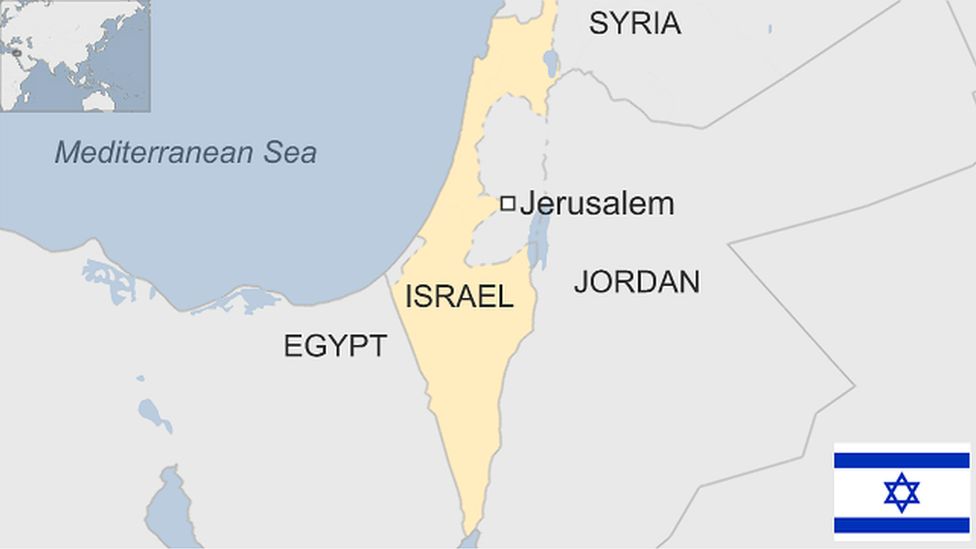
Israel is a small but geopolitically significant country located in the Middle East, at the eastern end of the Mediterranean Sea. Despite its size, Israel plays a major role in global politics, economics, and culture, largely due to its historical, religious, and strategic importance. It is bordered by Lebanon to the north, Syria to the northeast, Jordan to the east, Egypt to the southwest, and the Palestinian territories of the West Bank and Gaza Strip.
Historical Background
Israel’s history stretches back thousands of years, making it one of the most historically rich regions in the world. The land has deep significance for three of the world’s major monotheistic religions: Judaism, Christianity, and Islam.
- Ancient Israel: The ancient history of Israel dates back to the Biblical period, where the region was home to the ancient Hebrews. The formation of the Kingdom of Israel is recorded in the Old Testament, with Jerusalem as its capital. After a period of conquest and exile, particularly by the Babylonians, and later occupation by the Romans, the Jewish presence in Israel diminished.
- Diaspora and Return: Over centuries, Jews were dispersed across the world in what is called the Jewish Diaspora. The longing for a return to their ancient homeland became central to Jewish identity. This aspiration eventually led to the Zionist movement in the late 19th and early 20th centuries, aimed at establishing a modern Jewish state in the historical land of Israel.
- Creation of Modern Israel (1948): The creation of the modern state of Israel occurred on May 14, 1948, after the United Nations voted in 1947 to partition Palestine into separate Jewish and Arab states. This decision led to the 1948 Arab-Israeli War, as neighboring Arab nations opposed the establishment of Israel. Despite this, Israel survived and expanded its territory during the war.
Geography and Demographics
Israel is a small country, roughly 20,770 square kilometers in size, making it comparable to the U.S. state of New Jersey. Despite its small area, the country’s geography is diverse:
- Mediterranean Coast: Israel’s western border is defined by the Mediterranean Sea, home to major cities like Tel Aviv, a global hub for technology, finance, and culture.
- Negev Desert: The Negev, a vast arid desert in the south, makes up about 60% of Israel’s landmass.
- Jordan Rift Valley: To the east, the Jordan River and the Dead Sea mark the lowest point on Earth’s surface.
- Mountain Ranges: In the north, the Golan Heights and Mount Carmel form part of Israel’s highlands.
Israel’s population is approximately 9.5 million (as of 2024). It is a highly diverse society:
- Jews: About 74% of the population identifies as Jewish. Jews in Israel come from a wide range of ethnic backgrounds, including Ashkenazi Jews (from Europe), Sephardic Jews (from Spain, North Africa, and the Middle East), and Mizrahi Jews (from Arab countries).
- Arabs: Around 21% of Israel’s citizens are Arab, including both Muslims and Christians.
- Other Groups: There are also smaller communities of Druze, Bedouins, and other minorities.
Government and Politics
Israel is a parliamentary democracy, often referred to as the only democracy in the Middle East. It operates under a system of proportional representation, where the Knesset (Israel’s parliament) is the legislative body with 120 members. The Prime Minister serves as the head of government, while the President of Israel is a largely ceremonial head of state.
- Prime Minister: The Prime Minister holds executive power and is responsible for running the government. Israel has had a number of notable leaders, including David Ben-Gurion (Israel’s first Prime Minister) and Benjamin Netanyahu, one of the longest-serving Prime Ministers.
- Political Landscape: Israel’s political scene is characterized by numerous parties representing a broad spectrum of ideologies—from right-wing nationalist to left-wing liberal, as well as religious and secular groups. Major parties include Likud (a right-wing party), Yesh Atid, and Labor.
Economy
Israel has a highly developed and technologically advanced economy, often referred to as the “Start-Up Nation” due to its thriving tech sector. It is one of the world’s leaders in technology innovation, with major achievements in sectors such as cybersecurity, biotechnology, medical equipment, and agriculture. Some key aspects of Israel’s economy include:
- High-Tech Industry: Israel is home to a booming high-tech industry, with many tech giants such as Google, Intel, and Microsoft establishing significant operations in the country. Israel has also produced numerous successful startups, particularly in the areas of software, cybersecurity, and artificial intelligence.
- Agriculture: Despite its arid climate, Israel is renowned for its agricultural innovations, such as drip irrigation, which has enabled efficient farming in desert conditions.
- Natural Resources: In recent years, the discovery of large natural gas reserves in the Mediterranean has bolstered Israel’s economy, making it a key player in the regional energy market.
- Tourism: Tourism is a major industry, with millions of visitors each year attracted by Israel’s religious and historical sites, such as Jerusalem, Nazareth, and the Dead Sea.
Religious and Cultural Significance
- Jerusalem: Jerusalem is the most significant city for Israel and holds profound religious importance for Jews, Christians, and Muslims alike. The Western Wall (also known as the Wailing Wall) is one of Judaism’s holiest sites. The Temple Mount is a focal point of both Jewish and Muslim reverence, housing the Al-Aqsa Mosque and the Dome of the Rock.
- Christianity: For Christians, Israel is home to many sacred sites, including Nazareth (where Jesus grew up) and the Church of the Holy Sepulchre in Jerusalem, traditionally believed to be the site of Jesus’ crucifixion and resurrection.
- Islam: Israel is also significant to Muslims, with the Al-Aqsa Mosque in Jerusalem being one of the holiest places in Islam.
Security and Conflict
Since its establishment in 1948, Israel has faced ongoing security challenges, including wars, conflicts with neighboring Arab states, and internal tensions with the Palestinian population.
- Arab-Israeli Wars: Israel has fought several wars with neighboring Arab countries, including the 1948 Arab-Israeli War, the Six-Day War of 1967, and the Yom Kippur War of 1973. These conflicts resulted in significant territorial changes and enduring regional tensions.
- Israeli-Palestinian Conflict: The conflict between Israelis and Palestinians is one of the world’s most enduring and complex political disputes. The roots of the conflict lie in competing claims to the land of Israel/Palestine, particularly over Jerusalem and the territories of the West Bank and Gaza Strip. Numerous peace initiatives have been attempted, but a lasting resolution remains elusive.
- Gaza Conflict: Israel and the militant group Hamas, which controls the Gaza Strip, have engaged in multiple rounds of violence, including rocket attacks, airstrikes, and ground invasions. This ongoing conflict has led to significant humanitarian challenges for both Israelis and Palestinians.
Diplomatic Relations
Israel maintains diplomatic relationships with many countries, particularly in the West. Its closest ally is the United States, which provides significant military and economic aid. In recent years, Israel has also normalized relations with several Arab nations, such as the United Arab Emirates, Bahrain, Morocco, and Sudan through the Abraham Accords.
However, Israel still faces tensions with some neighboring countries and factions, particularly in relation to the Palestinian issue and its regional politics with Iran and Hezbollah in Lebanon.
Conclusion
Israel is a country of contrasts: ancient history meets cutting-edge technology, a diverse society with deep cultural and religious significance, and a place of both conflict and innovation. Despite its challenges, Israel remains a key player in global affairs, with its dynamic economy, strong military, and unique position in world history and religion.
References
Bright, J. (2000). A history of Israel. Westminster John Knox Press.
Ben-Israel, M. (1987). The hope of Israel. Liverpool University Press.
Friedlander, D., & Goldscheider, C. (1979). The population of Israel. Columbia University Press.
Sykes, C. (2022). Crossroads to Israel. Plunkett Lake Press.
 Eduindex
You must be logged in to post a comment.