

Tag: New Towns
Developing New Towns
For developing new small towns, it is important to know the possible line of selection of the various socio-economic components. Following important components should be give due consideration.
i) Demographic Factors
Growth rate and the size of settlement must be taken as an important factor, because over a period of time the population would increase and would promise the effective developmental possibilities of a small settlement into a future new town.
ii) Occupational Structural Pattern
This needs a check-up of census figures for knowing the occupational pattern of the already existing villages for various economic activities. The check-up would tell the occupational engagement of manpower in primary, secondary and tertiary sectors. The ideal occupational pattern would be about 60% in the primary and 40% in the combined secondary and tertiary sectors.
iii) Locational Proximity
The developing new towns should have two functional spatial dimensions; first of all, it should have resource base and second, it should be in proximity to the urbanized industrial centres. This later approximation in spatial location would accelerate a rapid rate of socio-economic development.
iv) Nodal Location
The nodal points with better transport linkage offer good opportunity for the development of a node as an important nuclei. Its transport links with adjoining areas offer several opportunities of growth. Thus, it can be rightly pointed out that, transport development is an imperative necessity because, the links of small towns with rural settlements and cities would create more employment possibilities.

v) Power Supply and Provision of Water
In the sixth plan, there is a programme of industrialization for decentralized electric power generation. This will open immense possibilities which would develop industrialization in the rural areas. The provision of water supply for industries, is another factor for the development of settlements. There must be protected water supply for the growth of a settlement.
vi) Agro-Industrial Development and Employment Prospects
The economic control of the small towns with agro-industrial base has to be identified in the prosperous agricultural areas, it will generate employment prospects and thus, rural migration to urban areas can be minimized.
The concept of new towns has become acceptable to many on the following considerations.
i) New towns are to provide manpower for new industrial growth outside the main concentration of population.
ii) New towns are the instrument to relieve congestion in the overcrowded urban centres.
iii) It is to provide an urban centre for a rural population and to solve rural unemployment.
iv) New towns are the ready-made media to populate underdeveloped areas.
v) Finally making of new towns provide a new capital city and extra urban growth to be at par with development.
Concept of New Towns
World civilization is growing and cities are expanding to their outer city limit which leads to an urban sprawl and the formation of suburbs. Specialized city suburbs have been developed over time which eventually separates the inhabitant’s social connection from the main city center. As a result, the city has exceeded its outer boundaries and leaves limited space for further urban development. When population and housing demands increased, government authorities, sought out for new and other options; the development of new towns.
New town, a form of urban planning designed to relocate populations away from large cities by grouping homes, hospitals, industry and cultural, recreational, and shopping centres to form entirely new, relatively autonomous communities. The first new towns were proposed in Great Britain in the New Towns Act of 1946; between 1947 and 1950, 12 were designated in England and Wales and 2 in Scotland, each with its own development corporation financed by the government. The new towns were located in relatively undeveloped sites. Each was to have an admixture of population so as to give it a balanced social life.
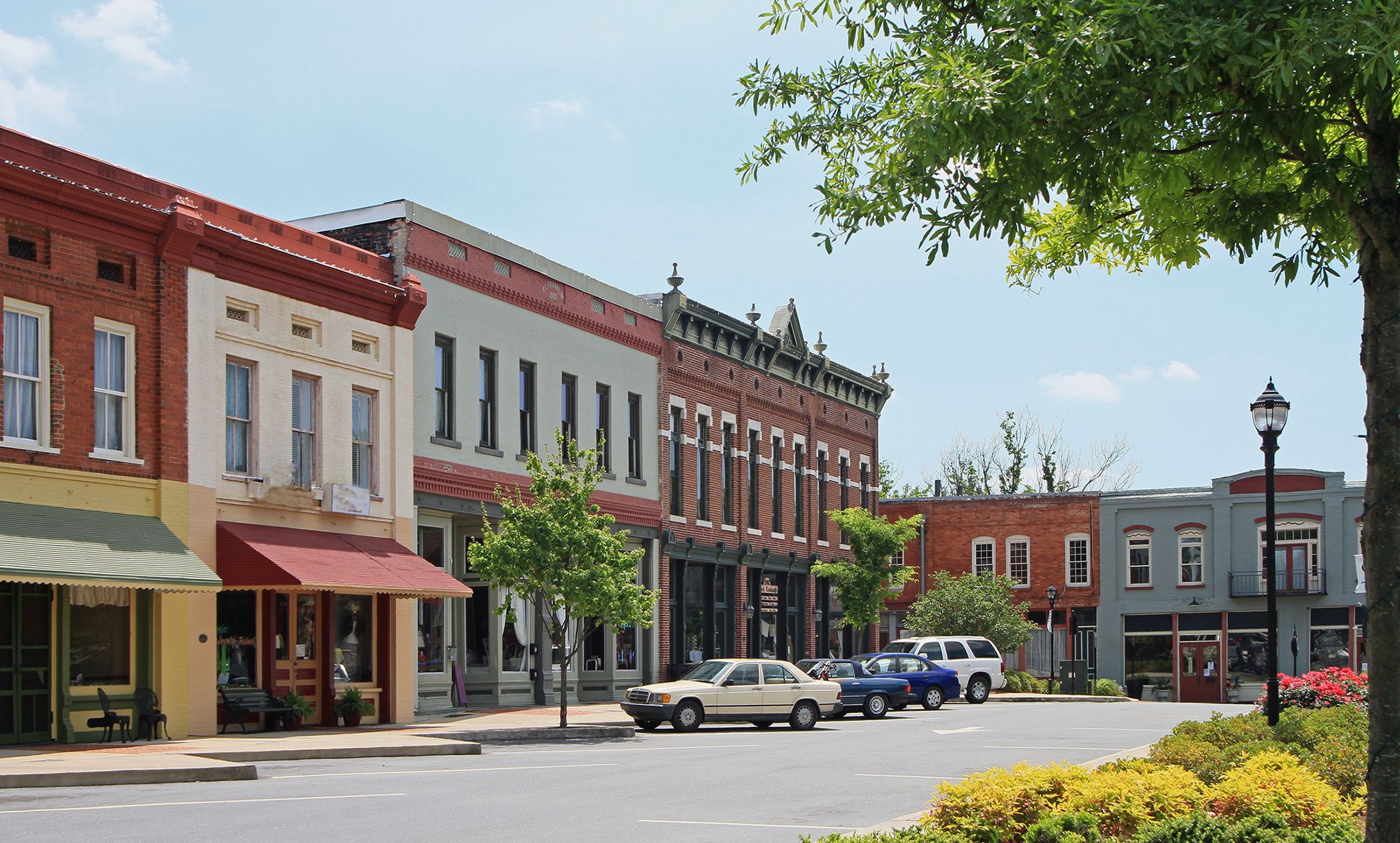
A new town is a new settlement built on either rural land transformed to urban land use or on new reclaimed land. The objective of developing new towns is to become a self-sufficient town. New towns seem to be the answer to the urban sprawl and suburban dilemma where there are low economic job opportunities creating a high percentage of commuting. This however becomes a mutual problem for new towns as they evolve making them dependent on neighboring towns and cities for employment and various types of social services. Another issue that new towns have to deal with is the identity crisis which links to its lack of history. This therefore leads people to the misconception of new towns as suburbs.
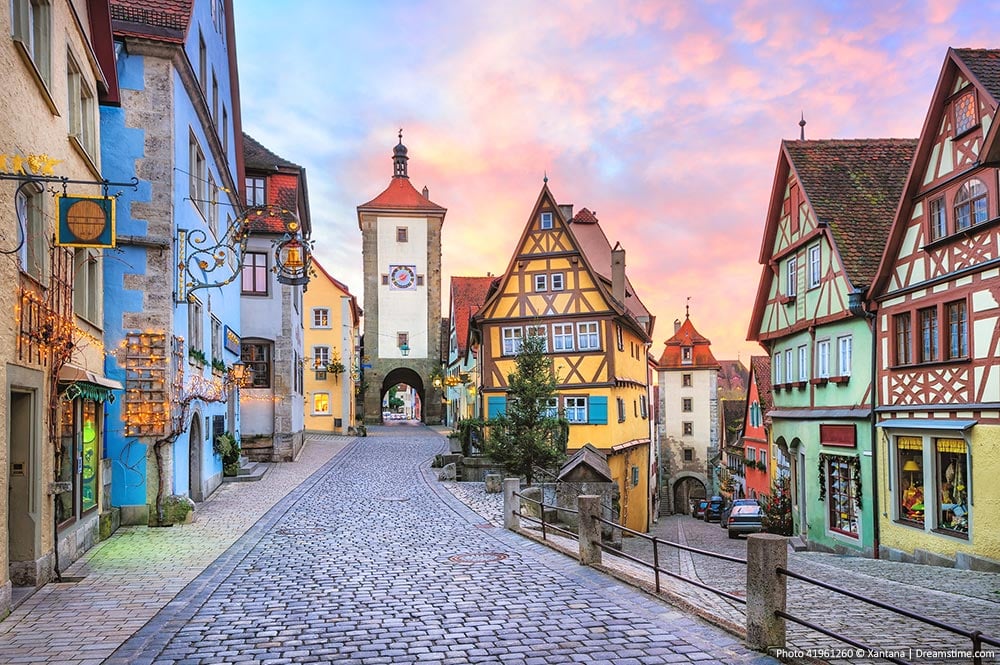
A more consistent definition of a new town is best described by the International New Town Institute as (INTI) human settlements that were founded at a certain moment in history by an explicit act of will, according to a preceding plan and aiming to survive as a self-sustaining local community and independent local government, able to play a role in the ongoing development of the region in which the new town is located.
A new town has been interpreted as a relocation of housing for overpopulated cities or a safe suburban living area for the middle class family. A new town is not an extension of an existing town or city. It is a blueprint plan of a new settlement before it was built. New towns were also characterized as a new concept of lifestyle: ‘living in a green and healthy environment’ after much destruction to existing cities and towns during World War II. New Towns became the answer to divert over populated and congested cities to a new location of a new town. The development of new towns has served as relocation for the over spill of existing cities. It should not be forgotten that new towns also exploits rural land that may have served for other land use developments such as for farmland or nature and recreation area.
Process of Planning and Designing a New Town
Planning is the process of thinking about and organizing the activities required to achieve a desired goal. The process of planning includes the determination of objectives and outlining the future actions that are needed to achieve these objectives. Various steps that are followed in the process of planning are:
1) Identifying the problem
It involves the identification of the aim for the fulfillment of which the plan is being formulated. If a new plan is require or the modification of an existing plan could help in achieving these aims.
2) Gathering information about the activities involved
An effective plan needs complete knowledge of the activities involved and their effect on other external and internal activities.
3) Analysis of information
This information is then analyzed minutely and the information related with similar subjects is classified so that similar type of data can be kept together.
4) Determining alternate plans
There are alternate plans available for the achievement of the objectives and ingenuity and creativeness are required as some plans are also developed at this stage.
5) Selecting the plan
At this stage the plan which is acceptable to the operating personnel is proposed. The adaptability and the cost of the plan are also taken into consideration.
6) Detailed sequence and timing
Detailed like who will perform which activity under the plan and the time within which the plan should be carried out is determining in this step.
7) Progress check of the plan
The provisions are made for the follow up of the plan as the success of any plan can be measured by the results only.
8) Implementation
Implementation is the carrying out, execution, or practice of a plan, a method or any design, idea, model, specification, standard or policy for doing something. As such, implementation is the action that must follow any preliminary thinking in order for something to actually happen.
9) Monitor and Control
Managers must continually monitor the actual performance of their work units against the unit’s goals and plans. Manager’s also need to develop control systems to measure that performance and allow them to take corrective action when the plans are implemented improperly or when the situation changes.
Designing a New Town
A new town built on land strongly controlled under unified public or semi public ownership, should be distinguished by combination of town and country life style and of environment, an uninterrupted greenbelt encircling and intersecting the town. A planned urban community that combines residential, commercial and recreational areas. Due to increasing population, we provide new town for reducing the burden of the city. Designing a new town for self-sufficient and providing housing, commercial, basic facilities and recreational area .
New towns are playing in the economic development of the countries they are emerging in, it is clear that economic motives are the dominant factor behind most new town initiatives. The present new towns are populated by the middle and upper classes, while the lower income groups live in the old city or in self organized cities and slums.
The New Town Movement
The new town movement refers to towns that were built after World War II and that have been purposefully planned, developed and built as a remedy to overcrowding and congestion in some instances and to scattered and settlements in others. The main reason for it was to decongest larger industrialized cities, rehousing people in freshly built, new and fully planned towns that were completely self-sufficient and provided for the community.
Records exist of plans for new towns back as far as the ancient Egyptians. Most of the “planned towns” in history were based on providing for military, trade or harbor needs. The idea of planning a city for the needs of the people who would live there didn’t crystallize until the end of the 19th century when Sir Ebenezer Howard, first suggested a series of “garden cities” north of London. However, it was another 50 years, at the end of World War II, when these garden cities really began to flourish.
The world was moving into a new era of rapid urbanization. The problems of pollution, traffic congestion and the impersonalized isolation of urban sprawl were growing. The concept of creating new towns spread across Europe with the creation of planned communities to deal with these problems. These “new towns” sought to plan in advance the design and growth of cities. Some of the key features were:

- Pedestrian friendly walkways separated from vehicle traffic to promote the safe movement of people between neighborhoods, schools and shopping
- Architecturally innovative housing
- Community owned land to create activity areas and a sense of openness
- Community works of art
- Close proximity of commercial and industrial parks for people to live close to where they work
- A development philosophy to respect the land
Need For New Towns
Developing new towns for various purposes, such as, to exploit natural resources, to provide raw material to industries, to serve nuclei and act as catalytic agents for stimulating economic growth in backward areas, for administration and for special purposes. Although in most cases new towns are expensive to build and they take several years to develop fully, still they offer several benefits. Building of new towns does not mean that, we should stop the growth of major cities. Major cities develop, but new towns reduce the rate of growth of metropolitan cities. In this regard it is necessary to prepare national and state physical plans. The national physical plan should be the physical and ecological guide of the policies, programmes and strategies relating to population changes and distribution.
 Eduindex