
Air India introduces new flights

Air India is one of the most talked about airlines in India. After the takeover by the Tatas, the airline is being put on a road to revival.

The first signs regarding the recovery of this airline are showing up. In October, the airlines got the top spot in terms of punctuality. Tata has three airlines all of which are occupying the top three slots in the punctuality index. Other than that, AI Express is not on the chart because it generally operates on international routes.

In recent developments, Air India is also planning to introduce some international flights to some important destinations.

Flights to New York, Paris and Frankfurt have already been announced. These flights were new on the route chart. Other than these, some non-flights have been introduced on other routes also Vienna, Milan and Copenhagen.

All the new flights are taking the tally of regular flights between India and the US to 47 and it will be around 79 to European countries and including Britain.

The new flights have been introduced and they will be using the new Dreamliners from Boeing. These introductions will ensure that the major cities in India get more connectivity with the other major cities of the world. It will also give people from other countries the to experience the hospitality and the friendly nature that Indians have.

https://unsplash.com/photos/0dvPFzubryE

Apart from all these, there has also been some news that Air India is also planning to hire more foreign pilots to fly its fleet of Boeing 777. It has come as a setback for the Indian-origin pilots who claim that India has sufficient skilled widebody aircraft pilots. A senior pilot also argued that India has no scarcity of able pilots and the pay the Indian pilots get is also lower than the global average.

The new hiring offer is also going to be costlier for the airlines as the foreign pilots usually get 40% extra that their Indian counterparts. According to the latest developments, the offer will be $11500 for a month of service. There will also be an extra payment of $134 for every hour flown above the stipulated limit of 70 hours on ultra–long–haul flights.

It has come at a point when Air India is planning to acquire more flights on lease from other airlines. These flights will ensure to fulfil of the long-haul-flight plans of the Maharaja. There are also some speculations that the prestigious airline is also on the lookout for some well-trained cabin crew for its long-haul- flights.

All of these are coming as a welcome change for the Maharaja. The airlines are currently going through a transition phase. The changes have been planned by keeping in mind a 5-year cycle. These changes will bear fruits for the airline in the long run. But in recent times. These changes will be difficult for some. There have also been some positive changes. For example, the airline is planning to retain some of these experienced pilots for a longer duration. Currently, their pilots retire at the age of 58. But some will be offered to extend their services until the age of 65.
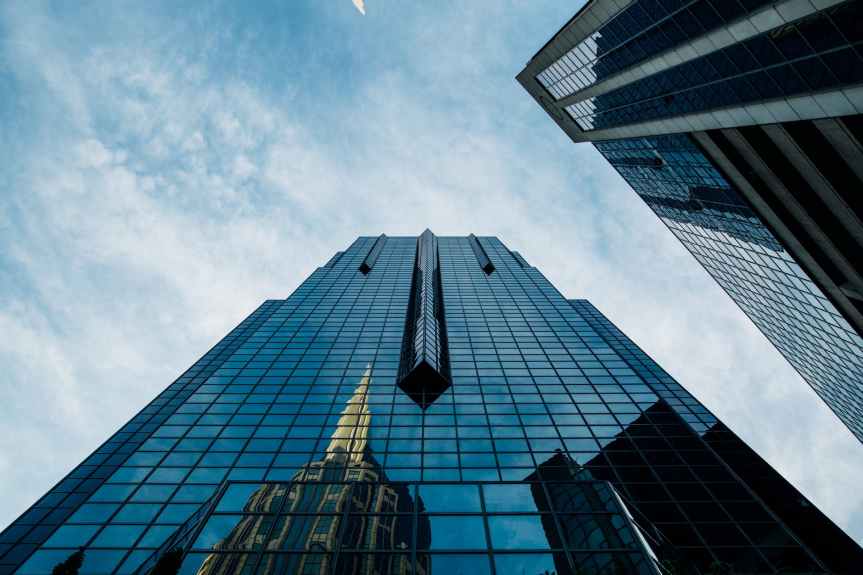
Why Skyscrapers are not that great.

The story of early skyscrapers begins in the late 19th and early 20th century America. Between 1884 and 1945 numerous skyscrapers were built American cities of New York City and Chicago. The two cities competed with each other with many subsequent constructions surpassing the earlier one. The growth of the skyscrapers in the 20th century American cities were mainly fueled by dynamic economic growth as the demand for various new office spaces to hold America’s expanding workforce of white-collar employees continued to grow. With better engineering and construction methods it became easier to construct taller buildings.    

Flatiron Building in New York City finished its construction in June 1902. The 22 floors building was one of the first tallest skyscrapers and later in the subsequent decades even taller buildings were constructed.

But the developments of modern skyscrapers have many challenges and questions that need to be cleared. Though the growth of skyscrapers has not subsided, they are not the most ideal form of buildings. According to engineer Tim Snelson, of the design consultancy, a typical skyscraper will have at least double the carbon footprint of a 10-story building of the same floor area. This tells us that skyscrapers are not environmentally sustainable. Also, any additional methods to minimize the environmental impact will require overcoming the fight of the handicap of being a tall skyscraper in the first place. As the majority of the building is made with glass and steel frame, high-rise buildings are subject to the consequence of the substantial amount of sunlight and a lot of wind on their mostly glass skins. Glass is inherently inefficient in keeping excessive heat out of the buildings in summer or keep heat trapped in the colder months. This also leads to the reliance on continuous Air Conditioning.

The modern construction of skyscrapers in the cities of today is no longer driven purely by economic growth or the need for commercial office space, but instead, it is more driven by glamorous architecture construction and many times the dirty money gets funneled into the construction of Skyscrapers.  High rises also separate people from the street and people lose a connection to nature and the outdoors. The occupants in the tall buildings are often isolated from the street of the city and meaningful contact with ground-level events is often disconnected with taller buildings.  

High-rise buildings also lead to gentrification and inequality. It is no surprise that taller buildings often tend to be luxury units as the higher a building rises, it becomes more expensive to construct. This means that high rises also inflate the prices of the adjacent lands and driving out the affordable properties, thus increasing the inequality. The areas near the skyscrapers are often dark and swept under the shadow of these tall buildings.

Contrary to the popular notion, skyscrapers are not the only way to build high-density construction. The mid-rise buildings are often more able to house more amount of people per area compared to the high rises. Mid rises are also more flexible to affordable.  The mid-rises can work as a good middle ground between the taller buildings and low-density buildings. Instead of blindly building taller buildings we will have to look at the construction of our future buildings that are more sustainable, affordable, and efficient.

References: