Kargil Vijay Diwas

July 26 is celebrated as the Kargil Vijay Diwas to cerebrate the victory of Operation Vijay, the moment which was launched by Indian army to recapture Indian Territories from Pakistani Army and Pakistani militants .Since 1999,This day is celebrated to show respect and gratitude to our brave soldiers who laid down their life to recapture the seized position from Pakistani Army.

The Kargil war was fought in 1999 between India and Pakistan. Kargil war was fought for more than 60 days and ended on 26 July 1999. however Indian prime minister at that time declared operation successful on 14 July. This war started when Pakistani troops silently occupied some Indian posts. However, Pakistani army denied their involvement . But later their Prime minister and other big officials revealed about the involvement of Pakistani forces, that was led by general Ashraf rashid.to give a response Indian army launched operation Vijay to clear the Pakistani Forces and militants.

Atal Bihari Vajpayee was the prime minister of India at that time. This war was not an easy war to be a part of. because this war was in high attitude in mountaineous terrain. Initially Pakistan captured various important Indian posts and India very well responded with recapturing the posts and pushing Pakistani troops back to their country.

To respond back ,India sent 5 infantory divisions, 44 battalions of Paramilitary forces in Kashmir and 73000 Indian troops. and after that deployment of 60 frontline aircrafts was also done. But all these things were not so easy.it was a high altitude region and very few tracks were connected with main roads. and snow was also a factor. Pakistan had occupied those posts keeping these factors in mind. The Pakistani army was trying to take a strong position in Kashmir by doing this. They were divided into many groups of intruders in Kargil. There total strength was considered to be 1000. with heavily armed with guns like AK-47, mortars, artillery and many other weapons.(Source:https://m.jagranjosh.com/general-knowledge/kargil-war-history-1595672853-1)

But soon Indian army detected the intruders occupying , and without wasting much time Indian army operations were planned in may 1999,’ operation Vijay’ was launched by Indian army. Indian army was successful in clearing of Drass sector. and many of those were pushed back to Batalik sector. Indian army with the help of Indian Air force attacked those intruders. Thousands of guns, bombs artillery guns were used which created havoc in kargil. Indian troops destroyed their positions and forced them to leave .till July 1999, Tiger hill was recaptured.In July 7,mashkoh valley was also re-captured. Gradually many were recaptured by our army. Air force also made a huge rule in the kargil war , over 300 aircrafts were used.It was believed that 700 intruders were killed by aircrafts.

The war was concluded on July 26,1999. with Indian army regaining all occupied posts by Pakistani Forces, but India also had to sacrifice a lot in Kargil war. More than 500 soldiers laid down their life in Kargil war, and more than 1300 were injured. Today is 22 nd Anniversary of Kargil Vijay Diwas and today whole nation is remembering soldiers’ Sacrifice for the country.

.

World After the COVID 19 Pandemic

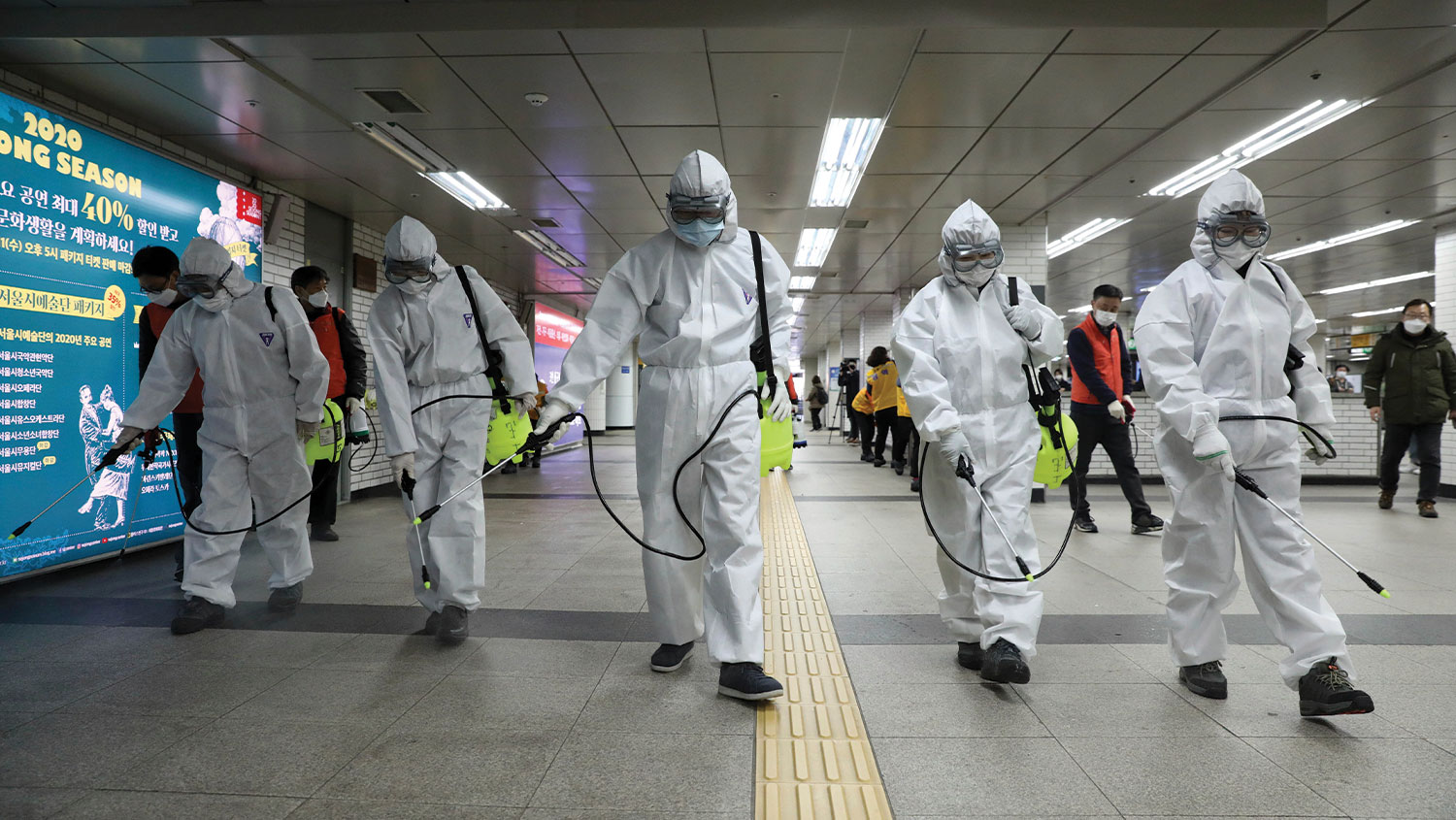
COVID-19 will reverse both of those trends, increasing the space both between countries and among people. Some will laud these changes for increasing safety and resilience. But a world that’s less global and fewer urban would even be less prosperous, less stable and fewer fulfilling. Future is shrouded in clouds of uncertainty, as resilient leaders steel oneself against all possible global outcomes, few are more prominent than others. These are two most predicted and certain scenarios of how the planet would begin of COVID 19. Less global, more isolated. Even before COVID-19, the decades-long trend toward ever-more globalization of trade, investment, supply chains and other people flow were starting to grind to a halt. We began to seem closer to range in terms of the products we produce and consume, the people with whom we interact, and where we get our energy and our money. In retrospect, we’ll come to look at the years right before the 2008 financial crisis as “peak globalization.” Since then, the mixture of recession, inequality and populism has created a growing anti-globalization and anti-immigration consensus in western countries, exemplified by the U.S. trade war with China. The reaction of developed economies to the coronavirus will only strengthen this consensus, as all things international are going to be viewed as incurring unnecessary and dangerous risks.

What WHO calling the coronavirus outbreak a pandemic means | Science News

What was a growing “anti-globalization” consensus is poised to crystalize into a “de-globalization” reality. We are being told this de-globalization will make us all more resilient. But it’ll also make us less prosperous — with less choice and better prices. it’s going to also make us less secure, as international cooperation will decrease and therefore the potential for international conflict will increase. Less density, more distance. Urbanization is probably going to be the opposite major casualty of the coronavirus. Unlike globalization, the trend of ever greater-urbanization was unaffected by the worldwide financial crisis. Even America — the land of all things suburban — joined the worldwide march into cities. People were interested in cities not just for economic opportunity but also for the urban lifestyle. After coronavirus, people are going to be more scared of crowded trains and buses, cafes and restaurants, theaters and stadiums, supermarkets and offices. Crowded spaces are the lifeblood of cities. But now crowds are seen as major health risks. People that have the power to exit the town will increasingly be tempted to try to do so. people that cannot leave will feel at increased risk, hunker down, and reduce their movements and contacts. it’s hard to believe Manhattan without the subway and 10-deep pedestrians on Fifth Avenue. But that will be the increasing post-COVID reality. De-urbanization would harm the economic process because cities generate enormous scale economies and have proved to be remarkably effective incubators of creativity and innovation. This might be particularly true in developing economies where the movement of individuals from rural areas to rapidly expanding cities has been perhaps the key driver of poverty reduction. But the shrinking of cities will produce other adverse effects too, from reducing cultural vibrancy and cosmopolitanism to exacerbating global climate change. Additionally, to be more productive, cities also tend to be more environmentally sustainable. A world that’s less global and fewer urban would be far less appealing to me, personally. But it’s also a world that might hurt economic prosperity, reduce shared understanding among disparate people, and increase the prospect of conflict among them. Our immediate reactions to COVID-19 will lead us to require both to de-globalize and to de-urbanize. But we must take fully under consideration the profound longer-term costs of doing so. Globalization and urbanization generate challenges we must confront, all the more so during a post-coronavirus world. the answer is to manage them, to not reverse them.

"SHOULD OTT BE REGULATED ?"

Regulation of OTTS is a matter of great concern for government.

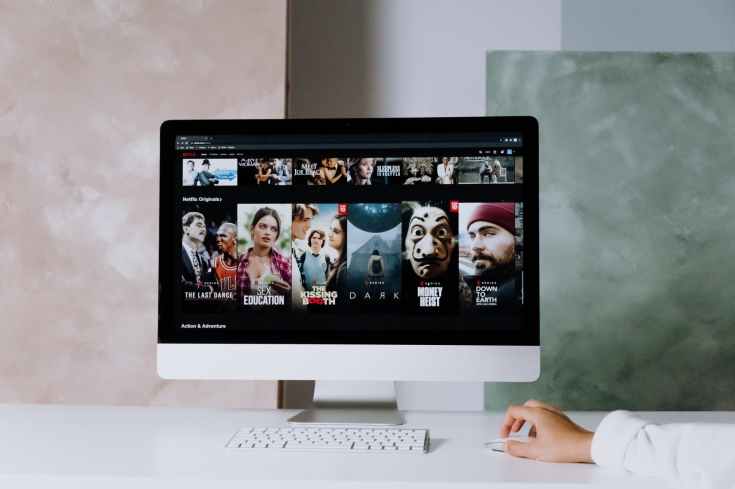
OTT platforms have grown rapidly in India, especially during the coronavirus-induced lockdown period, when the closure of film theatres led several production houses to release their films directly on OTT platforms. And this allows them to conveniently bypass even the basic scrutiny of a film regulatory authority. Many also believe that OTT platforms often perpetuate sexual crimes and soft porn, amplify bloodshed and gore which can potentially inflame passions, especially in young minds. Unregulated content can be damaging especially for a country like ours where communal tensions are not uncommon. Content on OTTs are age restricted , since their is no censor board for such & everyone can watch it , the content is influencing young minds in wrong way , which is why they need to be regulated.

Regulated OTT content could also imply missed opportunities for filmmakers and actors who are lured to the medium for the creative freedom it offers. This is the only drawback of regulation of OTTs . Filmmakers comes to this platform because this platform offers freedom of creativity , they can make whatever they want to , yes it is true that they make what is real , but this reality often brings problems among young minds because these minds are not able to take the message behind the content but grasp the things which are not meant for them .

In my view, self-regulation is highly preferred to strict censorship as the latter will curtail the creative freedom of OTT video platforms. If OTT platforms self-regulate and take adequate measures to ensure prohibited content is not watched by children and carry content descriptors, among other safeguards, they would emerge as the best platforms for content watchers

Broadcasters Association (NBA) regulates news channels, and the Central Board of Film Certification (CBFC) regulates film content. There is no such regulatory authority operating to scrutinize digital media content. So unregulated content that is now widely accessible owing to cheap data connections and the proliferation of smartphones has become a cause of concern. So there must be a regulatory body for OTTs , so that without violating the rules & guidelines & without showing content which is not good , they can give content which is meant for all & loved by all

A Reliable Learning Via Robotics and machines….

                                    IMPORTANCE OF STEM EDUCATION FOR AN ENHANCED LEARNING

  • Definition Of Stem

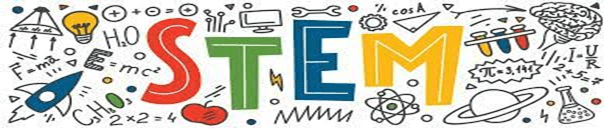
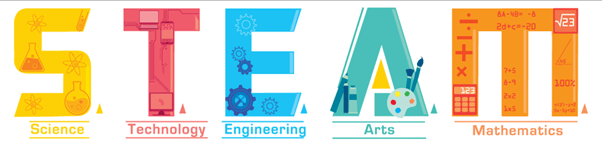
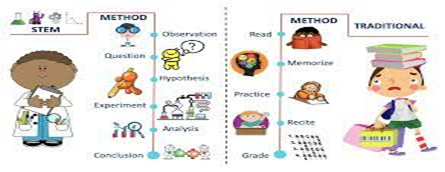
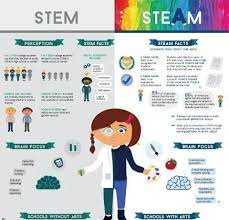
STEM is an artificial intelligence related to Science, Technology, Engineering and mathematics but it is a vast concept of more than these. It integrates and builds an advanced system of education taking into account every individual’s attention. STEM kind of learning needs to be paid attention as it has an improved technology with enclosing subjects that teaches moral values and discipline in inter-relating one another.

The main motive is to build advanced geniuses in the teenage able to tackle subject and real-time oriented issues. This tech unites with pupils making them to be well-versed and multi-talented in all occasions.

  • Benefits of STEM related education

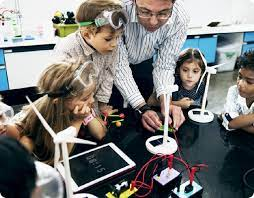
This kind of learning is focused on building higher order of thinking among students by connecting them a classroom experience to the modern world. A future model is built under campuses for upgrading their problem-solving ability, thinking skill, communication skills and creativity to sort out various critical circumstances in reality.

Generally, focuses on practical experience with real-time applications that gradually builds the skills ability level and shaping them to utilize a sense od outstanding creativity in a competitive world of 21st century.

The students brought up from this kind of teaching can tackle the reality as well as social media/virtual world simultaneously with their brilliance and social skills that comprises of curiosity, social skills, leadership, management and acceptance of up and downs in life.

In a specific period of life people will undergo circumstances where they become puzzled to take decision as choices will cause effects on their career which has to be made wisely. At that stage without realizing they randomly choose a false decision making them fall in a pit, which will be realized on later times by the same individual after which nothing can be undone.

This system basically concentrates on those kinds of cases so the growing kids can be exclusively intelligence while handling such experiences. This AI creates a similar kind illusion to make them think and decide their choices accordingly so they can adopt to changes or select a decision more preciously.

  • Differences from normal learning and AI integrated learning

In a standard learning taught by faculties they can give you their knowledge ask them to explore it on your way but mostly pupils memorize concepts that will be totally vanished in this type of system where a machine will broaden every word and concept of subject and explaining the facts deeper by triggering your anxiety to grasp the entire knowledge.

They also become as Book-worms instead of knowing the working behind every concept thus it becomes like mugging/memorizing and vomiting/producing in exam papers just for marks rather than knowledge or skill developed education.

STEM education is the path of future learning making upcoming generation as innovative ones.

These AI models create crucial real-time happenings thus testing their initial level of thinking and providing solutions to the same. By doing this they actually promote their working of brain at a younger age which we call as maturity and experience at small ages.

It is also a known to contribute steps towards economic growth by this deep level thinking knowledge (innovation) which is unique in every kid. That is why each one is special but as they discover their innovative skill it becomes too late for individuals so by enhancing them to bring up their key skills so they are ready to face out life and unavoidable circumstances.

  • Ways to spread an idea to enlarge the importance about it to the Society

There are various ways through which you can advertise and spread the initiative taken by you. The only thing you require is an account in media platforms that will enroll your ads in various random posts that people may be searching for.

 The only purpose of using social media is because the reach is tremendous while compared manually or just by recommendations. You need to focus on how you can market them by discussing their features and how it helps in the improvement of a teenager.

By adding relevant pictures or short clips of the same, people can get to know about the functionalities and capabilities of the system and the working.

Awareness can also be made and posters shall be published to keep a track of viewers and connect with them mutually to improve a knowledge of better learning among several institutions in exploring the skills of a teenager in their adolescent ages that support them vitally.

The base of any product to be recognized is how you explain and elaborate the advantages and benefits that grasps attention to every single student in a whole crowd or in a classroom.

If you are self-motivated to prove and provide minute specifications for the useful machine integrated model (AI/STEM education) it can be an added information for users so they support and promote in various different ways.

  • Social Media Channels

The enlarged platform of these trending applications has several unique features under each portal those are different from one another. From audience till owners of some companies have adopted to this virtual world that helps growing merchants to develop and stand tall of their product.

The only difficulty is not all the things are encouraged in these sites, if you want a product to be wide-spread then its uniqueness and features must grab the reader/visitor’s attention in such a way so they start marketing your brand as an affiliate or recommend your goods in some required places.

 You as a producer can share things that will be helpful for any individual before trying it out. Social platforms like helps you to enrich with the fruitfulness of customers especially YouTube. There are millions of people from various continents utilizing this open platform for various entertainment.

From this article you can get to know some ideas and the importance of the STEM education as an effective way of building up the mental thinking ability by teaching them in a provoking way that enhances of building an IQ that is an advanced level for teenagers to think in a multi-tasking way.

Olympics

The modern Olympic Games or Olympics (French: Jeux olympiques) are leading international sporting events featuring summer and winter sports competitions in which thousands of athletes from around the world participate in a variety of competitions. The Olympic Games are considered the world’s foremost sports competition with more than 200 nations participating. The Olympic Games are normally held every four years, alternating between the Summer and Winter Olympics every two years in the four-year period.

Their creation was inspired by the ancient Olympic Games (Ancient Greek: Ὀλυμπιακοί Ἀγῶνες), held in Olympia, Greece from the 8th century BC to the 4th century AD. Baron Pierre de Coubertin founded the International Olympic Committee (IOC) in 1894, leading to the first modern Games in Athens in 1896. The IOC is the governing body of the Olympic Movement , with the Olympic Charter defining its structure and authority.

The evolution of the Olympic Movement during the 20th and 21st centuries has resulted in several changes to the Olympic Games. Some of these adjustments include the creation of the Winter Olympic Games for snow and ice sports, the Paralympic Games for athletes with disabilities, the Youth Olympic Games for athletes aged 14 to 18, the five Continental games (Pan American, African, Asian, European, and Pacific), and the World Games for sports that are not contested in the Olympic Games. The IOC also endorses the Deaflympics and the Special Olympics. The IOC has needed to adapt to a variety of economic, political, and technological advancements. The abuse of amateur rules by the Eastern Bloc nations prompted the IOC to shift away from pure amateurism, as envisioned by Coubertin, to the acceptance of professional athletes participating at the Games. The growing importance of mass media has created the issue of corporate sponsorship and general commercialisation of the Games. World wars led to the cancellation of the 1916, 1940, and 1944 Olympics; large-scale boycotts during the Cold War limited participation in the 1980 and 1984 Olympics; and the 2020 Olympics were postponed until 2021 as a result of the COVID-19 pandemic.

The Olympic Movement consists of international sports federations (IFs), National Olympic Committees (NOCs), and organising committees for each specific Olympic Games. As the decision-making body, the IOC is responsible for choosing the host city for each Games, and organises and funds the Games according to the Olympic Charter. The IOC also determines the Olympic programme, consisting of the sports to be contested at the Games. There are several Olympic rituals and symbols, such as the Olympic flag and torch, as well as the opening and closing ceremonies. Over 14,000 athletes competed at the 2016 Summer Olympics and 2018 Winter Olympics combined, in 35 different sports and over 400 events. The first, second, and third-place finishers in each event receive Olympic medals: gold, silver, and bronze, respectively.

The Games have grown so much that nearly every nation is now represented. This growth has created numerous challenges and controversies, including boycotts, doping, bribery, and a terrorist attack in 1972. Every two years the Olympics and its media exposure provide athletes with the chance to attain national and sometimes international fame. The Games also provide an opportunity for the host city and country to showcase themselves to the world

Ancient Olympics

The Ancient Olympic Games were religious and athletic festivals held every four years at the sanctuary of Zeus in Olympia, Greece. Competition was among representatives of several city-states and kingdoms of Ancient Greece. These Games featured mainly athletic but also combat sports such as wrestling and the pankration, horse and chariot racing events. It has been widely written that during the Games, all conflicts among the participating city-states were postponed until the Games were finished. This cessation of hostilities was known as the Olympic peace or truce.[7] This idea is a modern myth because the Greeks never suspended their wars. The truce did allow those religious pilgrims who were travelling to Olympia to pass through warring territories unmolested because they were protected by Zeus.[8] The origin of the Olympics is shrouded in mystery and legend; one of the most popular myths identifies Heracles and his father Zeus as the progenitors of the Games.According to legend, it was Heracles who first called the Games “Olympic” and established the custom of holding them every four years. The myth continues that after Heracles completed his twelve labours, he built the Olympic Stadium as an honour to Zeus. Following its completion, he walked in a straight line for 200 steps and called this distance a “stadion” (Greek: στάδιον, Latin: stadium, “stage”), which later became a unit of distance. The most widely accepted inception date for the Ancient Olympics is 776 BC; this is based on inscriptions, found at Olympia, listing the winners of a footrace held every four years starting in 776 BC.[14] The Ancient Games featured running events, a pentathlon (consisting of a jumping event, discus and javelin throws, a foot race, and wrestling), boxing, wrestling, pankration, and equestrian events. Tradition has it that Coroebus, a cook from the city of Elis, was the first Olympic champion.

The Olympics were of fundamental religious importance, featuring sporting events alongside ritual sacrifices honouring both Zeus (whose famous statue by Phidias stood in his temple at Olympia) and Pelops, divine hero and mythical king of Olympia. Pelops was famous for his chariot race with King Oenomaus of Pisatis. The winners of the events were admired and immortalised in poems and statues. The Games were held every four years, and this period, known as an Olympiad, was used by Greeks as one of their units of time measurement. The Games were part of a cycle known as the Panhellenic Games, which included the Pythian Games, the Nemean Games, and the Isthmian Games.

The Olympic Games reached the height of their success in the 6th and 5th centuries BC, but then gradually declined in importance as the Romans gained power and influence in Greece. While there is no scholarly consensus as to when the Games officially ended, the most commonly held date is 393 AD, when the emperor Theodosius I decreed that all pagan cults and practices be eliminated Another date commonly cited is 426 AD, when his successor, Theodosius II, ordered the destruction of all Greek temples.

Modern Games

Forerunners

Baron Pierre de Coubertin

Various uses of the term “Olympic” to describe athletic events in the modern era have been documented since the 17th century. The first such event was the Cotswold Games or “Cotswold Olimpick Games”, an annual meeting near Chipping Campden, England, involving various sports. It was first organised by the lawyer Robert Dover between 1612 and 1642, with several later celebrations leading up to the present day. The British Olympic Association, in its bid for the 2012 Olympic Games in London, mentioned these games as “the first stirrings of Britain’s Olympic beginnings”.

L’Olympiade de la République, a national Olympic festival held annually from 1796 to 1798 in Revolutionary France also attempted to emulate the ancient Olympic Games. The competition included several disciplines from the ancient Greek Olympics. The 1796 Games also marked the introduction of the metric system into sport.

In 1834 and 1836, Olympic games were held in Ramlösa (Olympiska spelen i Ramlösa), and an additional in Stockholm, Sweden in 1843, all organised by Gustaf Johan Schartau and others. At most 25,000 spectators saw the games.

In 1850, an Olympian Class was started by William Penny Brookes at Much Wenlock, in Shropshire, England. In 1859, Brookes changed the name to the Wenlock Olympian Games. This annual sports festival continues to this day. The Wenlock Olympian Society was founded by Brookes on 15 November 1860.

Between 1862 and 1867, Liverpool held an annual Grand Olympic Festival. Devised by John Hulley and Charles Melly, these games were the first to be wholly amateur in nature and international in outlook, although only ‘gentlemen amateurs’ could compete.The programme of the first modern Olympiad in Athens in 1896 was almost identical to that of the Liverpool Olympics. In 1865 Hulley, Brookes and E.G. Ravenstein founded the National Olympian Association in Liverpool, a forerunner of the British Olympic Association. Its articles of foundation provided the framework for the International Olympic Charter. In 1866, a national Olympic Games in Great Britain was organised at London’s Crystal Palace.

How Much Does India Invest In Olympic Athletes?

Postponed by a year due to the pandemic, the Tokyo Olympics is now less than a month away. Last week, the Union Sports Minister Kiren Rijiju urged the people to extend their support to India’s Olympic-bound athletes, the same way they back India’s cricketers. However, India’s abysmal performances at the Olympics is in striking contrast to India’s immense success at cricket. The model of sports governance and financial irregularities are often blamed for the lack of competitive edge in sports other than cricket. So, the most obvious question that comes to our mind is, how much does India invest in the Olympics?

Money allocated for Sports

In the 2020-21 annual budget, the Government of India allocated Rs 2826.92 crore for sports, which meant an increase of mere ₹ 50 crore from the revised estimates of the financial year 2019-20. The Modi government’s flagship sports programme ‘Khelo India’ received a substantial hike of ₹ 312.42 crore and was allocated ₹ 890.42 crore compared to ₹578 crore in 2019-20. On the other hand, the National Sports Development Fund saw a reduction of ₹ 27.15 crore from ₹77.15 crore in 2019-20 to ₹ 50 crore in 2020-21. National Sports Federations saw the highest decrease after Finance Minister allocated ₹ 245 crore, ₹ 55 crore less than the previous financial year, according to The Wire. Even the budget for meritorious sportspersons saw a 40% reduction from the last financial year. It is important to note that the 2020-21 annual budget was presented in January 2020, when the government had no idea of the coming pandemic. It was also supposed to be the year of the Tokyo Olympics.

Target Olympic Podium Scheme

While these are the broad schemes under which Indian sportspersons are funded, the Target Olympic Podium Scheme (TOPS) provides financial assistance to potential Olympic medal winners. Launched in 2014, TOPS is the flagship programme of the Sports Ministry of India. The top-up funding scheme considers the performance of Indian athletes in the past three years. They are provided with personal coaches and other staff fees, cost of travel during competitions, purchase of equipment, and pocket allowance.

Looking Back At The Last Olympics

In the 2016 Rio Olympic, India spent ₹ 36.85 crore under TOPS, as per Financial Express. Nearly half of that amount was spent on shooting, which was India’s most successful Olympic sport in the previous three games. Shooting is also very expensive, which requires importing equipment from other countries. But shooting failed to bring any medal. Athletics received the second-highest funding of ₹ 7.80 crore in 2016, but India failed to make a mark in the sport. Unfortunately, out of the ₹ 36.85 crore, ₹30.49 crore had gone to disciplines that fell short of goals. Only 1.66 per cent of the total TOPS fund went to the fields that brought India two medals – PV Sindhu in Badminton and Sakshi Malik in wrestling.

Comparison With Other Countries

The United Kingdom allocated close to Rs 9000 crore on sports infrastructure and training in the annual sports budget, whereas India spent only one-third of the UK, Rs 3,200 crore, on youth affairs and sports, before 2016. The UK won 67 medals against India’s two at the Rio Games 2016. Abhinav Bindra had also tweeted back in 2016 that a medal cost UK 5.5 million pounds, and that is the kind of investment India needs to make. Otherwise, we cannot expect much. In the USA, a large number of athletes are privately funded. Individual athletes had started their own funding portal for donations from the general public. Therefore, only 10% of the US Olympic Committee’s finance was spent on athletes in Rio 2016, and the USA finished first. China, on the other hand, is known for its aggressive state-sponsored promotion of sports.

Private Investment In India

Before the 2016 Olympics, Indian Olympic Association (IOA) received donations from Reliance Jio, Amul, Tata Salt, Edelweiss Financial Services, Herbalife, Li Ning, and SBJ. Sakshi Malik had also thanked JSW Sport, a foundation funded by the OP Jindal group, after becoming India’s first medal winner in Rio Games, as reported by Hindustan Times.

However, unlike NSDF, where the contributions and sponsorships are open and documented, private funding to individual athletes is not. And most recently, the JSW Group has come on board to be the official sponsor of Team India in the Tokyo Olympics and has agreed to pledge sponsorship support of ₹ 1 crore to IOA. In 2018, the Sports Ministry earmarked ₹ 100 crore for funding of the athletes for the preparation of Tokyo Olympics 2020, which will take place this year. While the number of medals won cannot be equated to the investments made, since medals are not the only measure of success, India nonetheless needs to invest more and put in a new model of sports governance in action. A

Tribals demand power supply in Visakhapatnam, Andhra Pradesh

Tribals in villages under non-scheduled areas of Ravikamatam and koyyuru mandala in Visakhapatnam district on Friday protested, demanding power connection to their Hamlet’s.

President of the Primitive Tribals Group, koyyuru mandal, korra Mahesh said people living in Hamlet’s under Chimalapadu panchayat under Ravikamatam have been demanding for power connections for the past three years.  

The Broken Promise of Equality

Way back in July 2004, around 30 women walked naked in front of the army quarters in Assam with the slogan, “Indian Army, Rape us.” The movement was in protest of the death of Thangjam Manorama who was brutal ly raped, mutilated and killed by certain members of the Indian army. The army has wide powers under the Armed Forces Special Powers Act (AFSPA), 1958 including search and seizure and arrest and custody. Women have been major victims of sexual offences under this draconian legislation, in parts of the North East and in Kashmir, in particular.

Rape was also often used to shut down voices trying to resist human rights abuses. Sexual offences against women continue in different parts of the country, in different forms, both outside and inside the home. Although the constitutional guarantee of equality stays intact, the reality of gender relations in India is extremely unequal.

It goes without saying that Indian society is deep patriarchal. Women are by birth automatically at a disadvantage simply because our society treats its women much worse than it treats its men. There are different expectations from men and women in terms of behavioural pattern, conduct, mannerisms and actions. Chimamanda Ngozi Adichie, a feminist writer from Nige ria puts it quite neatly, “We teach girls shame. Close your legs, cover yourself. We make them feel as though being born female, they’re already guilty of something. And so, girls grow up to be women who silence themselves. They grow up to be women who cannot say what they truly think. And they grow up- and this is the worst thing we do to girls-they grow up to be women who have turned pretence into an art form.” Adichie is surely right. She indicates a phenomenon that is generally identified as ‘gender stereotyping’.

Gender stereotyping essentially is society’s expectations and beliefs about the behavioural patterns, roles, activities, characteristics, qualities about men and women and sometimes, the third gender. It focuses on what masculine and feminine qualities are expected of men and women. Society decides the type of toys boys and girls should play with, the kind of clothes they should wear and the kind of hobbies they should have and perpetuates the same through habituation. The role played by socialisation, religion, media and often the law in encouraging stereo types is problematic. Even in educated families, the pressure on Indian women to get married at an early age is a reality. Everybody in a given family gets to have a say in the matter of a girl’s marriage, except probably the girl herself. Quite undisputedly, the independence and career options offered for an Indian female is much less compared to that of men.

Can Russia 'Checkmate' US in global market,with its new fighter jet SU-75 (checkmate)?

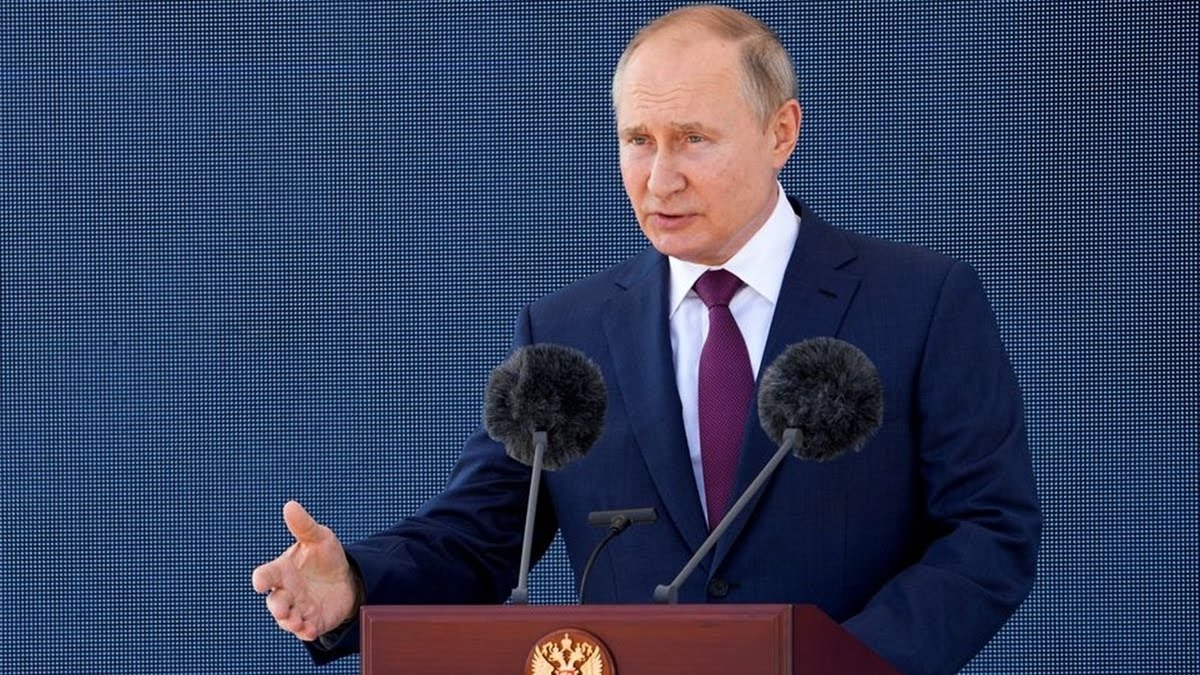
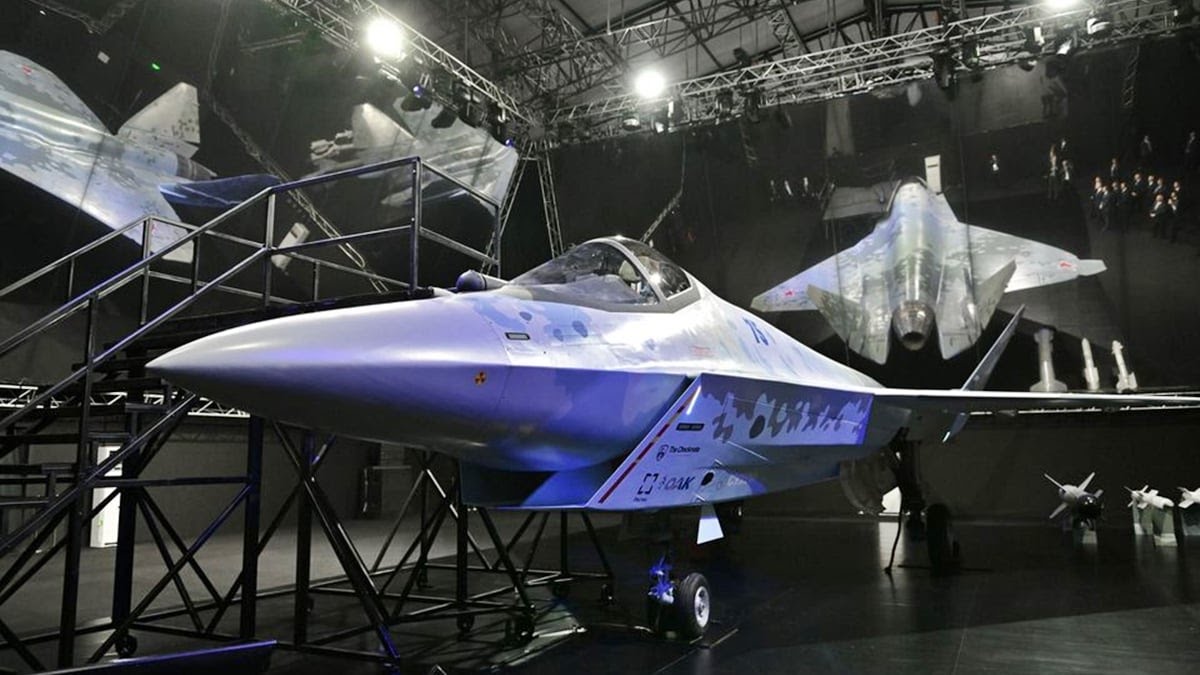
On Saturday, last week in MAKS-2021 arms show, a new fighter jet nicknamed ‘Checkmate’ was unveiled in Moscow, in presence of Russian president Vladimir Putin.This MAKS arms show is a chance for Russian industry to introduce the public to the next generations of its flagship vehicles, as well as for smaller players to pitch their prototypes and concepts to prospective buyers.

SU-75 (Checkmate) Specifications

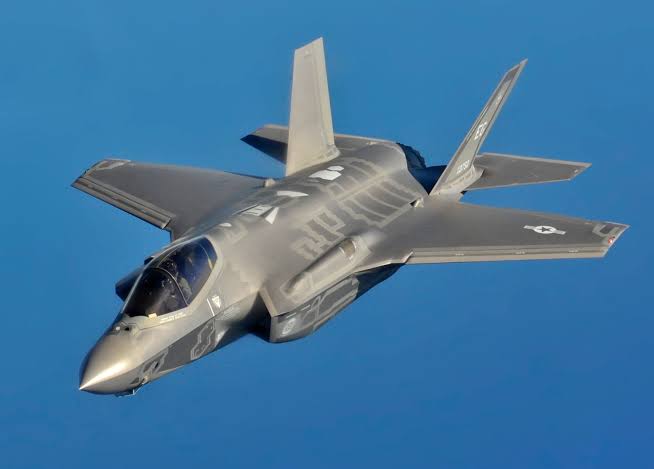
This jet by Rostec subsidiary United Aircraft Corporation comes With split angled tails, a narrow fuselage suggesting presence of one engine, and diamond shaped wings, it looks similiar to f-35. This jet can fly up to 1,500 kilometers in a single sortie, while loaded with weapons and payload. It is Capable of continuous supersonic flight at the speed of 1,180 miles per hour and can share data with other fighters in the air and it’s also hinted that it might have AI abilities and drone control abilities. It can engage upto 6 targets simultaneously on land,sea or air.

Cost

This aircraft would cost between $25 million to $30 million and Moscow expects demand from the Middle East, Asia Pacific region and Latin America. The cost is extremely low as compared to F-35, which comes at a price of over $75 million.

Competition

It will compete with likes of Swedish JAS-39E/F Gripen,the Dassault Rafale, the Lockheed Martin F-35. and the Shenyang J-35. This jet is expected to take to the skies in 2023, with first batch expected in 2026. Moscow plans to produce 300 units of the aircraft over 15 years once the production begins.

Road ahead for this jet

Russia is known for its fighter jets like Mikoyan-Gurevich MiG-21 (F-16 killer), Mikoyan-Gurevich MiG-25 foxbat,
Mikoyan MiG-29 (Fulcrum),Sukhoi SU-30. Countries like China, India, Egypt, Algeria,are the major buyers of Russian fighter jets. Russian jets are known for their ruggidity as compared with their US counterparts. Cold war is over long ago,but rivalry between Russia and US is still there and even in weapon market. Let’s see how many buyers this new hyped jet will attract in the global market.

8 pieces of clinching evidence that show how IAF’s Abhinandan shot down a Pakistani F-16

Fighting Corona with Humanity.

I still remember reading our history textbooks and pondering over the fact that how the people in those times had faced the draconian affects of epidemics. Having no vaccine or any scientific knowledge, made them quite helpless. Today in the 21st century, with all the technology in the world, when we are faced with yet another epidemic, it has become a little difficult for us to cope up with it too , but for all different reasons. I , for instance never expected rather never believed that history would repeat it’s one of the worst realities again.
“Just because things are the way they are , they’ll not remain the way they are.”
Bertolt Brecht
UN chief advisers have termed COVID19 as the worst thing to happen since World War II.

Corona virus or to be more specific COVID19 originated in Wuhan , a city in China. And before even the rest of the world could understand what was happening, the unwanted guest was already at their doors. Past these months, thousands of people have succumbed to it, and lakhs lay in the hope to recover. The situation in US had completely shattered the dogma that a superpower can conquer it all. And the eeriness in the’ Bel Pease’ (beautiful country) , Italy, has put the world in a shock. The world is suffering in all possible ways. But few positive outcomes of all this tragedy is the audible sound of birds chirping, the visible blue sky (which was not so visible, and not so blue before), the damaged ozone layer healing itself, and obviously the Earth finally getting a chance to breathe again. Sometimes I wonder how karma pays back and how maybe this situation is what we humans sort of had it coming.
The soldiers in this war, the doctors, police , cleaners and all those people who have been working these past months non stop have shown us that how humanity is the priority.

Novavax and J&J join the Covid-19 vaccine push | Evaluate

After many lives lost in the ongoing 2nd wave and the country preparing itself for the 3rd wave, we should all remember that to get vaccinated , wearing masks and following the social distancing guidelines is surely the key.

How can other people help in fighting the corona war you ask ?
Be Kind. This is a difficult time. Not a time to play the blame game but to play SAFE. Couple of days back I read that a girl from northeast was spat on by a person and called out as CORONA. This is so derogatory and discriminating. This difficult time is not only testing your patience but also testing to what level can you maintain your humane level.
A little help to the helpless please. Do whatever it is in your hands to help the needy. Donate food , money so that they can also get a fair chance at staying alive.
Who let the dogs out?! Well technically the lockdown has left them all alone. So please do take care of the animals out on the street. Don’t lock them out of your hearts.
Meditate the stress away I understand how this lockdown can be so stressful, so in order to keep calm , keep meditating.
Laugh it all out Stay happy and also try to keep your friends cheerful by calling them up. There might be plenty of your loved ones in different parts of the World, who must be waiting for a shoulder to lean on, so go ahead and give them a virtual shoulder to lean on to.
Being Munna bhai MBBS?! I agree that jaadu ki jhappi is all we need, but social distancing ,you know. Also don’t spread rumours and let the real doctors do the real work.
People all over the world are helping the needy with all their heart. Plenty of NGOs , business men, members of film fraternity, and many more have come forward to fight this war the humane way. Love,compassion, awareness and a sprinkle of humanity can help us to get through this war.

John F Kennedy rightly said ,
Ask not what your country can do for you , but what you can do for your country, and right now all you can do ,is Stay Inside.

The need to save the ocean

To paraphrase a line from Ron Burgundy, the ocean is a big thing. Big enough for scientists to point out that the term “Earth” is a misnomer. Water may be a more accurate name for a world that is nearly 3/4 covered in water, with marine plants contributing a whopping 50 percent or more of the oxygen we breathe. With all of that stated, it’s past time (high tide?) for us to band together to save the resource that has been depleted.

Photo by Kellie Churchman on Pexels.com

The state of the ocean is not good

The bad news is that human activity is wreaking havoc on the environment. The good news is that there are several things we can do to help stop (and even reverse!) those detrimental behaviors, which is why this is a message about hope and empowerment rather than doom and gloom.

Plastic pollution is destroying the ocean

A non-profit that works to protect the ocean Every year, 17.6 billion pounds of plastic is estimated to escape into the ocean from land-based sources, according to Oceana. Every 60 seconds, a garbage truck full of plastic is dumped into our waterways. The world’s most renowned (and largest) rubbish dump is located in the ocean.

The Great Pacific Garbage Patch covers 1.6 million square kilometres and contains 1.8 trillion bits of plastic in an estimated 80,000 metric tonne landfill. Plastic garbage in the ocean is believed to kill over one million sea animals each year, including sea turtles, sharks, and coral reef (yes, coral reef is an animal!).

Plastics in the ocean will surpass fish in the ocean (!?) by 2050, according to research, and 99 percent of seabirds will have plastics in their GI tract. Plastic pollution is not only destructive to the ocean; there is also evidence that it is harmful to humans.

Acidification in the ocean

Carbon dioxide emissions absorbed by the oceans over decades have changed the underlying chemistry of our ocean, resulting in an increase in acidity. Acidification causes small decreases in shell density in small creatures, which support entire ecosystems despite their small size.

As the world’s seas warm, species are moving in large numbers to new locations, posing new challenges or simply failing to develop as they should, while millions of people rely on fish as their primary source of nutrition. It’s also causing the Great Barrier Reef to perish. Coral reefs require all of the protection we can provide, given the disastrous effects of climate change.

Because it has the potential to cause the most apparent and immediate human misery, sea-level rise may be the most well-known of these concerns. Low-lying areas such as Miami and the South Pacific islands are growing increasingly vulnerable; 10% of the world’s population lives on the low-lying coast.

Meanwhile, deoxygenation, which is most typically caused by algal blooms fed by nutrient-rich fertilizer run-off, is causing enormous dead zones and suffocating marine life.

Overfishing

Fishing techniques that are illegal, uncontrolled, and unreported are common. Humans have already brought the giant grouper, several skates and rays, and a dozen or more other sturgeon species to the brink of extinction through fishing.

Bluefin tuna is one of the fish species whose populations may never recover as a result of unsustainable fishing techniques. Other apex predators, such as sharks, are among the most endangered.

Places like Monterey Bay National Marine Sanctuary have shown how impactful policy changes can be in helping species rebound.

Ocean conservation isn’t just a hobby for those who enjoy the water. You might not be a scuba diver, a fisherman, or a seaside dweller. Perhaps you have a seafood allergy and despise surfers! Even so, chances are you still breathe air and enjoy life when there is less human suffering.

Plants and trees are oxygen-producing powerhouses. But wait till you see what oceanic greens can accomplish! (Hint: it’s not just trees.)  More than half of the oxygen on the earth is produced by marine plants. 

Thoughts famous people have about ocean

Jacques Cousteau: “The sea, once it casts its spell, holds one in its net of wonder forever.”

Beyoncé Knowles: “I’m always happy when I’m surrounded by water, I think I’m a mermaid or I was a mermaid. The ocean makes me feel really small and it makes me put my whole life into perspective… it humbles you and makes you feel almost like you’ve been baptized. I feel born again when I get out of the ocean.”

William Wordsworth: “The ocean is a mighty harmonist.”

John F. Kennedy: “We are tied to the ocean. And when we go back to the sea, whether it is to sail or to watch, we are going back from whence we came.”

Photo by Emiliano Arano on Pexels.com

Ways in which you can help save the ocean

  1. EDUCATE YOURSELF

Step 1: Land and sea are far more intertwined than most people think, and activities taken on land have substantial consequences in the ocean. The good news is that there are a plethora of tools available—Pinterest offers a plethora of ocean-saving categorieS.

2. Opt for Ocean and Earth-Friendly Products

Oceana’s is to demand plastic-free alternatives to items such as plastic water bottles, straws, plastic cutlery, coffee cups, bags, balloons, plastic-wrapped produce, and take-out food containers.

References

http://www.growensemble.com

http://www.wikipedia.com

Things you should definitely do during your college life

You would agree that the college years are the most fun years of your life. The time we had spent in our college, bunking class and hanging out with our friends all day. We never wanted to get out of it! So here are 5 things you must do while you are in college.

1. Interact with your seniors

During our college life our seniors are the one who knows our college, teachers the better than us, that’s why its very important to interact with our seniors. Talk to them make them your friends, take advantage of their experience and most important ask them what mistakes they had done as fresher’s and make sure not to repeat those mistakes.

2. Participate in college fests

Never participated in any school function before? Well! It’s the time! Participate in your college fests, trust me college fests are the most fun places you’d ever be and the best place to showcase your talent. Its right time to gain some confidence, get out of your comfort zone and to face your fears. Dance , sing, act, play sports do whatever you want to do just enjoy the moment.

3. Hang out on campus on an off day

Everyone goes to college on a college day. But have you ever stepped into the campus on an off day? You must. No professors, no staff, no one to disturb you. Of course, you’ll have to sneak in and play hide and seek with security, but it’ll be worth it. You can do all the crazy shit you want with your buddies inside the campus, which you’ll never be able to do on a college day.

4. Go for an off-campus internship

Internships are an integral part of college curriculum. Whether it’s paid internship or unpaid it will definitely help you to get a good full time job and help you to take a glance into your work life after college years. Completing an paid or unpaid internship is similar to getting good grades in your exams. Doing an internship is the only way you can learn more about a life of an employee and the big world outside your college.

5. Be a part of any technical or cultural club

Being a part of collage cultural clubs or technical clubs is the best opportunity to showcase your talent and skills. Technical club will help you to hone your technical skills through workshops and projects, this will also help you to think more creatively. Apart from this you will get a chance to interact with your seniors, juniors and the other people outside your college, it will help you to make more friends. Being a part of any technical or cultural club will definitely help you to increase your leadership skills, communication skills and many more.

Internet For Students And Children

We live in the age of the internet. Also, it has become an important part of our life that we can’t live without it. Besides, the internet is an invention of high-end science and modern technology. Apart from that, we are connected to internet 24×7. Also, we can send big and small messages and information faster than ever. In this essay on the Internet, we are going to discuss various things related to the internet.

Reach of Internet

It is very difficult to estimate the area that the internet cover. Also, every second million people remain connected to it with any problem or issue. Apart from that, just like all the things the internet also has some good and bad effect on the life of people. So the first thing which we have to do is learn about the good and bad effect of the internet.

Good effects of the internet mean all those things that the internet make possible. Also, these things make our life easier and safer.

Bad effects of the internet mean all those things that we can no longer do because of the internet. Also, these things cause trouble for oneself and others too.

You can access in any corner of the world. Also, it is very easy to use and manage. In today’s world, we cannot imagine our life without it.

Photo by panumas nikhomkhai on Pexels.com

Uses Of InternetFrom the time it first came into existence until now the internet has completed a long journey. Also, during this journey, the internet has adopted many things and became more user-friendly and interactive. Besides, every big and small things are available on internet and article or material that you require can be obtainable from internet.

Tim Berners-Lee can be called one of the main father of internet as he invented/discovered the WWW (World Wide Web) which is used on every website. Also, there are millions of pages and website on the internet that it will take you years to go through all of them.The Internet can be used to do different things like you can learn, teach, research, write, share, receive, e-mail, explore, and surf the internet.

Convenience Due To Internet

Because of internet, our lives have become more convenient as compared to the times when we don’t have internet. Earlier, we have to stand in queues to send mails (letters), for withdrawing or depositing money, to book tickets, etc. but after the dawn of the internet, all these things become quite easy. Also, we do not have to waste our precious time standing in queues.Also, the internet has contributed a lot to the environment as much of the offices (government and private), school and colleges have become digital that saves countless paper.Although, there is no doubt that the internet had made our life easier and convenient but we can’t leave the fact that it has caused many bigger problems in the past. And with the speed, we are becoming addict to it a day in will come when it will become our basic necessity.

Women Empowerment

Women empowerment refers to making women powerful to make them capable of deciding for themselves. Women have suffered a lot through the years at the hands of men. In earlier centuries, they were treated as almost non-existent. As if all the rights belonged to men even something as basic as voting. As the times evolved, women realized their power. There on began the revolution for women empowerment.

Photo by William Fortunato on Pexels.com

As women were not allowed to make decisions for them, women empowerment came in like a breath of fresh air. It made them aware of their rights and how they must make their own place in society rather than depending on a man. It recognized the fact that things cannot simply work in someone’s favor because of their gender. However, we still have a long way to go when we talk about the reasons why we need it.

Need for Women Empowerment

Almost every country, no matter how progressive has a history of ill-treating women. In other words, women from all over the world have been rebellious to reach the status they have today. While the western countries are still making progress, third world countries like India still lack behind in Women Empowerment.

In India, women empowerment is needed more than ever. India is amongst the countries which are not safe for women. There are various reasons for this. Firstly, women in India are in danger of honor killings. Their family thinks its right to take their lives if they bring shame to the reputation of their legacy.

Moreover, the education and freedom scenario is very regressive here. Women are not allowed to pursue higher education, they are married off early. The men are still dominating women in some regions like it’s the woman’s duty to work for him endlessly. They do not let them go out or have freedom of any kind.In addition, domestic violence is a major problem in India. The men beat up their wife and abuse them as they think women are their property. More so, because women are afraid to speak up.

Similarly, the women who do actually work get paid less than their male counterparts. It is downright unfair and sexist to pay someone less for the same work because of their gender. Thus, we see how women empowerment is the need of the hour. We need to empower these women to speak up for themselves and never be a victim of injustice.How to Empower Women?There are various ways in how one can empower women. The individuals and government must both come together to make it happen.

Education for girls must be made compulsory so that women can become illiterate to make a life for themselves.Women must be given equal opportunities in every field, irrespective of gender. Moreover, they must also be given equal pay. We can empower women by abolishing child marriage. Various programs must be held where they can be taught skills to fend for themselves in case they face financial crisis.Most importantly, the shame of divorce and abuse must be thrown out of the window. Many women stay in abusive relationships because of the fear of society. Parents must teach their daughters it is okay to come home divorced rather than in a coffin.

5 common habits which are as dangerous as smoking

India is home to more than 12% of world smokers. In India alone, 10 million people die each year due to smoking. Smoking as a habit is seen more common in youngsters these days. These habits then become so addictive that for some people it is even carried to their death bed. But there are more habits that are as dangerous as smoking. We often ignore these habits but they have the potential of causing us the same harm as smoking does.

Loneliness:

Research has proven that loneliness can affect our overall health. Its impact is more significant on brain health. There are also studies that point out the connection between loneliness and developing diseases such as dementia and Alzheimer’s. In India, almost 22% of elders stay alone.

Poor diet:

We all know that food is necessary to maintain good health but not many of us practice that on daily basis. Many of us eat junk foods, and foods rich in salt and sugars. Not just those, we often do not include vegetables and fruits in our diet. Taking poor diet causes diseases like obesity, diabetes, etc. In India, people consume more cereals and avoids proteins, fruits, and vegetables. There is an increasing status of obesity among men and women, especially in urban areas.

Inactive lifestyle: 

In the contemporary world, we all sit long hours in front of the screen. A study in 2014, by the University of Regensburg in Germany, showed that every 2 hours a person sit, increases the chances of colon cancer by 8% and chances of lung cancer by 6%. This was regardless of other physical activity during the day.

Sleep deprivation:

Sitting long hours before the screen aids in sleep deprivation as well. The blue light from the screen has been linked with problems like strained eyes, blurred vision, and even cataracts. Almost 33% of adults in the country suffer from insomnia and the bigger problems.

Pessimistic attitude:

We all have heard of the phrase that does not let negative attitude ruin your life. But negative attitude and pessimism are now a widespread problem. Pessimism is when you think that things will go wrong or will not go according to your plans. This leads to depression and unwanted stress.

These 5 habits are as dangerous as smoking. So, give up on that negative attitude, sleep well, be more active in daily life, eat balanced food and be happy. You will see positive results in your mind, body and spirit once you give up on all these 5 habits.