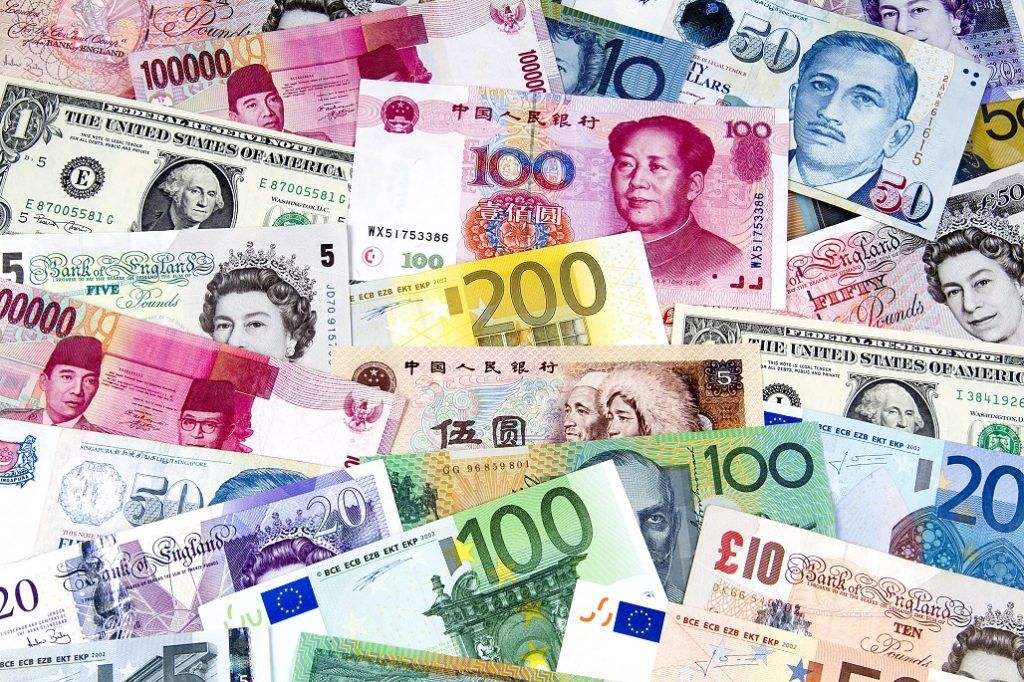
Before we get to that point we need to know the contrast between the two currencies. Dollar is considered as the strongest currency in the World. Each country in this World needs to have their cash as solid as Dollar since it is accepted that Stronger money = Stronger Economy. Be that as it may, is it in every case valid ? Since Countries like Japan and China have lower cash yet they are checked under nations with Strongest Economy.
So how is that conceivable that notwithstanding having the more fragile cash they have solid economy ? Fundamentally it relies upon , regardless of whether a nation is trade(export) orientated or import orientated ? The nations which purchases items or work from different nations are called import situated nations and these nations like to keep their money esteem higher so they can purchase merchandise from different nations at modest expense. Then again , nations which offer merchandise to different nations are called send out(export) orientated nations and these nations like to keep their cash esteem low so different nations purchase more and their creation builds which befits the economy. Nations like USA are import orientated while nations like China are trade orientated.
So what kind of nation is India is it import orientated or trade orientated ? India purchases products from different nations so it is significantly import orientated, yet larger part of India’s economy comes from exportation. India gives best specialists to I.T Sectors . At the point when organizations of different nations visit India they employ our people to work for them which consequently offers advantage to our economy. Numerous financial analyst accept that our economy ought to be more lower , while some accept that it ought to be higher.
PROS OF THE SITUATION:
*With more grounded rupee imports would be less expensive; you could now get the most recent iPhone for only 1000 INR. So everybody would claim an iPhone if 1 USD rises to 1 INR.
*Purchasing products from different nations in a global market will be less expensive which is advantageous for a non-industrial nation.
*Unrefined petroleum costs would go down significantly which we import the most, in this way the cost of petroleum and diesel will fall making the transportation cost modest if 1 USD approaches 1 INR.
*As the transportation cost would diminish the items that are made in India would be less expensive and effectively accessible to purchase.
*One would not travel abroad for a task. For instance, in the event that they get 3000$ abroad that will simply be equivalent to 3000 INR. So why bother voyaging? Yet, there is another side to it as well.
CONS OF THE SITUATION:
*Full stop on sends out we can trade merchandise due to the money contrast. The fares will become costly and on the off chance that we contrast Indian items if and other cutthroat nations, we will turn out to be far more costly and this will hamper our fares which isn’t useful for our economy.
*No unfamiliar venture: unfamiliar organizations put resources into India because of modest work now if an organization used to pay the laborer Rs20000 that is 300$ now they need to pay them 20000$ so they would begin putting resources into different nations as opposed to in our own if 1 USD approaches 1 INR.
*We will confront financial closure and expansion in joblessness for instance if my organization beneficiaries a designer from India for Rs75000 that is around 1000$ and if 1INR = 1 $ for what reason will I pay quite a lot more to the Indian specialist when I have choices. In this way, the Indian laborers need to deal with less expense or leave the work. The equivalent would occur with different callings too.
*In case they are chipping away at such a lot of lower compensation how might they pay their EMI? They proved unable. Joblessness will influence the banks as advances would be left neglected.
*We will confront financial log jam as cash would not be exchanged at a similar speed if 1 USD approaches 1 INR.
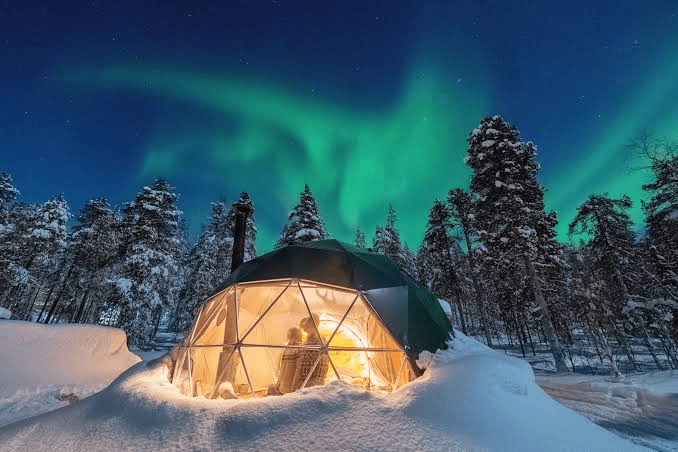
Irrespective of experiencing 200 days of winter with complete absence of sun, Finland has maintained it’s position to be the Happiest Country in the World for the last four years. It has been named the most stable, freest and the safestcountry by various international bodies because of the socio-economic and welfare policies of the nation. Finland is a natural beauty with forests, crystal clear lakes and wildlife. It has low pollution levels which makes the air clean and encourages more citizens to be amidst the nature. Hence, a large number of outdoor activities like kayaking, canoe, horse back riding and others can be experienced. Nature in itself is known to have immense healing power that can cheer people and lift their spirits.
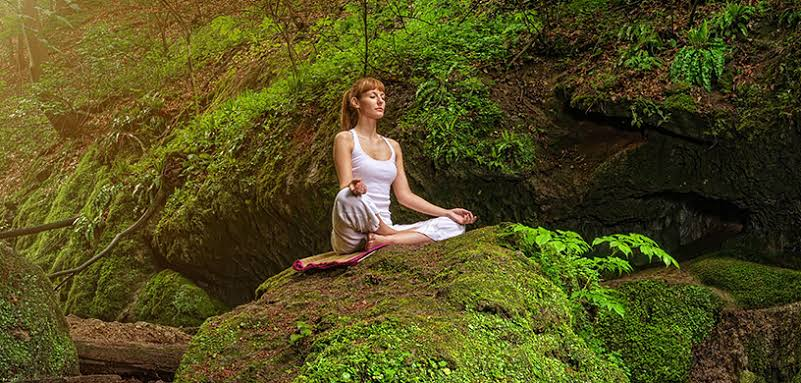
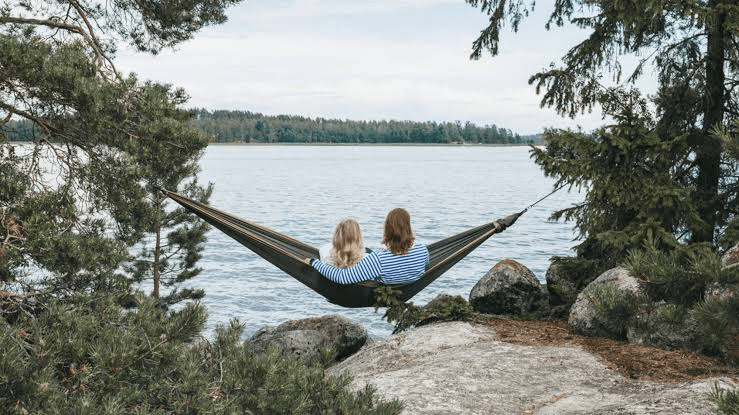
Finland offers free Forest Therapy to it’s citizens where the general public is allowed to roam freely in natural areas like forests, lakes, and rivers without any permission from the landowners (if the areas fall under a private land). This traditional legal concept is called ‘’Everyman’s Right ‘’. However, the only condition applied is that no damage or disturbance should be faced by the landowner.
Finns have a warm culture and enjoy a relaxed way of living. Unlike other Western countries they believe in cooperation over competition. The follow minimalistic approach to life and prefer well-made, sustainable, functional items that will stand the test of time. Finns are not considered to be happy bubbly people with cheerful smiley faces. In fact, they are the least expressive people who take life as it comes.
Coming to the most important topic, what makes them the happiest country in the world? Well, there cannot be a single factor to happiness. However, the main cause of it is self-satisfaction and inner peace, which in term is an outcome of various factors.
Finns follow a relaxed way of living and are at peace with themselves. Finland may not be the most powerful or wealthy economy but what makes them happy is the fact that they are at peace with their present situation. They are nottoo ambitious about what life should offer them and this helps them to feel satisfied with what they currently have.
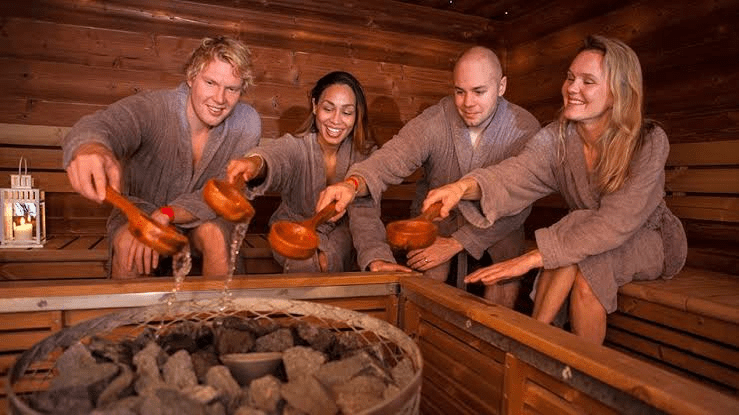
The national pass time for Finns is enjoying sauna baths. The fact that they have over 2 million saunas explains their love for the tradition. Saunas are places that purifies one’s body and soul. Sauna creates a sense of community and equality for the citizens as people from all backgrounds come together to enjoy the experience. Finns are used to being naked in the sauna with their family and friends, which can help create a comfort with and acceptance of their bodies, too.
Fins follow the philosophy of ‘Sisu’ that is focused on persevering when the odds are against us and viewing challenges as an opportunity. “Instead of waiting for a warm sunny day, many Finns practice daily sisu by heading out in any kind of weather for a brisk walk or cycle, or to spend time in nature.” They believe that happiness does not come from searching for it, but by living.
Finns value time over money. They choose a healthy work – life balance over wealth. A good personal life gives them the chance to pursue their personal interests and feed their creativity. This further contributes to the low inequality levels in Finland. The society majorly consists of middle-class households with very less poverty and more social security. They have few rich families but since the people are satisfied with themselves, they don’t believe in excessive show off of their wealth. This promotes the feeling of content and satisfaction amongst the low-income groups as well.
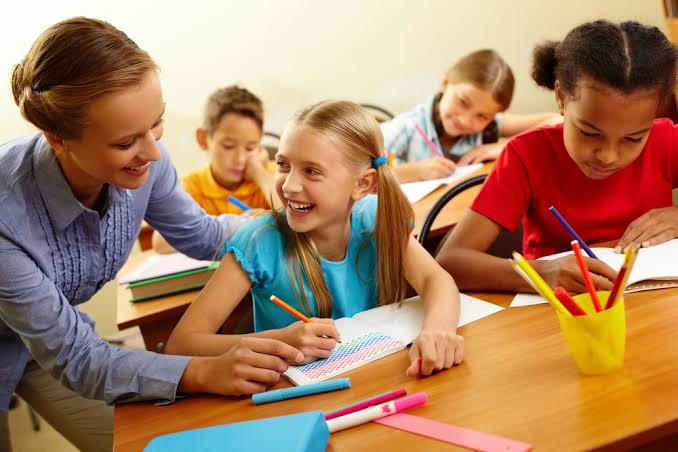
One of the main reasons why Finns are satisfied and happy with their lives is social equality. The government provides each new born a equal and healthy start to life. They distribute packages of clothing and other useful items to all new mothers. This was initially started to reduce the declining birth rate and high infant mortality but on a broader picture it reduces the difference and provides an equal start to all the new citizens. Equal opportunities are given to every citizen in terms of besteducation in schools and universities without any cost. This helps each child shape their own future without any form of economic hindrances. (A happy childhood breeds happy adults) The presence of best of healthcare opportunities to all the citizens at no cost reduces further disparity and makes them more secure and stress-free.
Under the ‘Housing first’ principle, it is ensured that even the rough sleepers are given the right support and a roof above them. The presence of equal opportunities for all makes people more satisfied with their lives, hence there is no need for people to adapt criminal offences. Low crime rates, in turn makes people more safe, secure and happy.
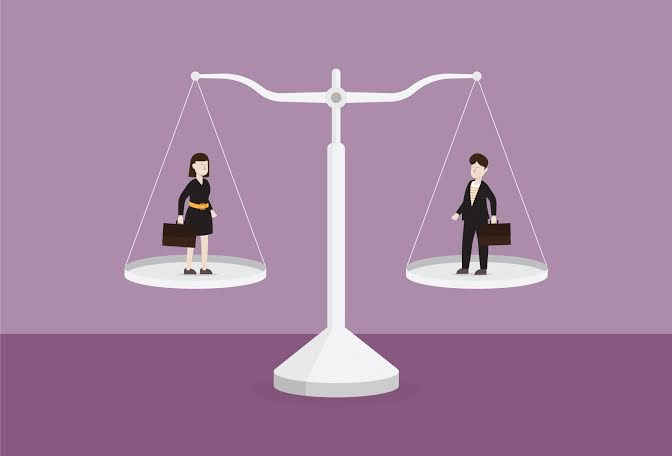
Finland strongly emphasises on closing gender equality as a means to promote the feeling of satisfaction and oneness amongst all citizens. Some of the measures includes providing new fathers with nine weeks of paternity leave at 70 percent of their salary and closing the gender pay gap. (Hence proving that a rising tide lifts all boats). Finland is one amongst the few Nordic countries where fathers spend more time with school-aged children compared to their mothers.
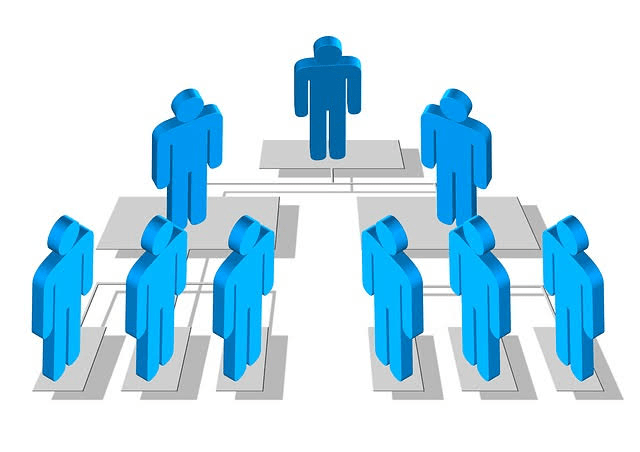
The extent of equality and freedom amongst the nation is such that they follow Flat Working Model in commercial world. For those who don’t know, a flat working model is one where there are few or nohierarchal levels between management and staff. This leads to less supervision and increased involvement with organizational decision-making, enabling open communication between all departments. Hence, increasing workplace productivity and team-cohesion. This worker-centric approach to business has served Finland well for more than a decade. Moreover, Finland is the only country that provides 25 paid workdays off in addition to the paid national holidays.
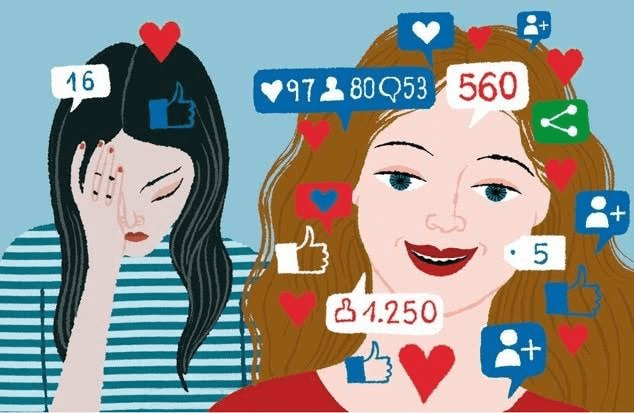
Finns are least active on social-media platforms that indulge in putting forward a polished view of their lives. They don’t brag about their success and wealth or show an outwardly exuberant zest for life. Rather, they believe in being reserved and accepting both the good and the bad as it comes. They believe that if they are truly happy, they don’t need to shove it in anyone’s faces.
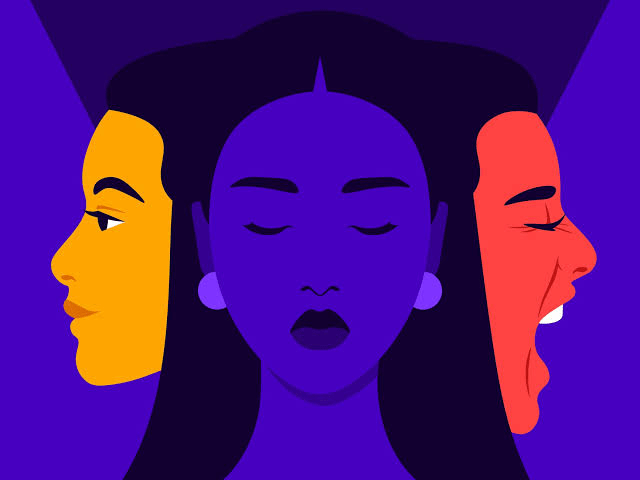
Even after being the happiest country in the world, Finns have an emotionless exterior and prefer melancholic songs to express themselves. This is because they accept negative emotions as part of life. Trying to suppress one’s negative emotions is considered bad for one’s well-being. They are taught to embrace such emotions and learn to accept one’s life for what it is. This in turn has a positive impact on their life and help them feel more satisfied. They believe in expressing their negative emotions to such an extent that they celebrate a national event called “The International Day of Failure” (celebrated annually on 13 October), that carries an important message that without the possibility of failure there is no success, and occasional failure is therefore acceptable.
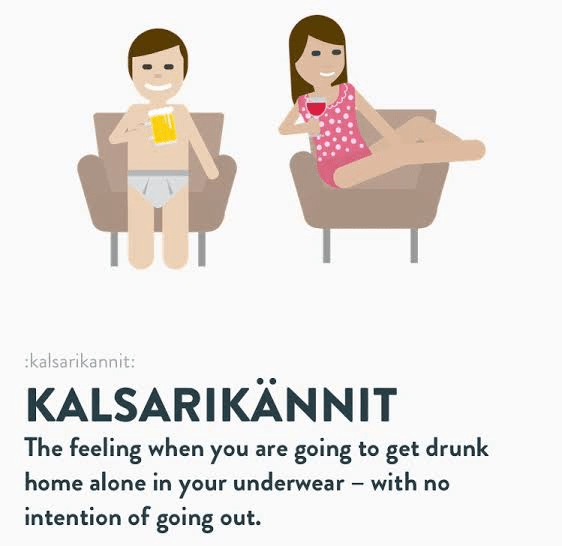
They follow the culture of Kalsarikännit or Pantsdrunk which is the practice of binge drinking alone in your home in your underpants. To a large extent, it is still considered a way of life in Finland, probably because of the stereotyped lack of social contacts among Finns.
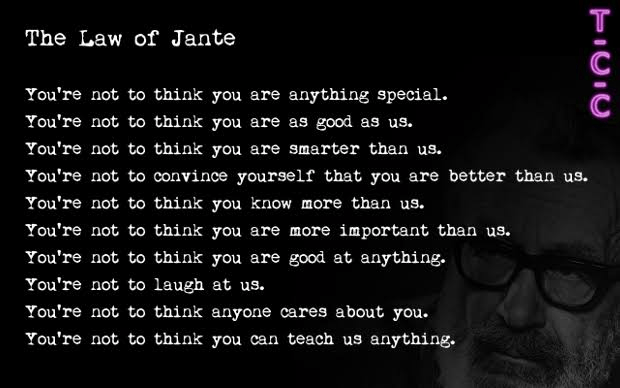
Another reason why nordic countries are most at peace with themselves may be the not mentioned, but always present, “Law of Jante” that is silently enforced by everybody in unison. Law of Jante explain the egalitarian nature of Nordic countries where they support a harmonious and happy society.
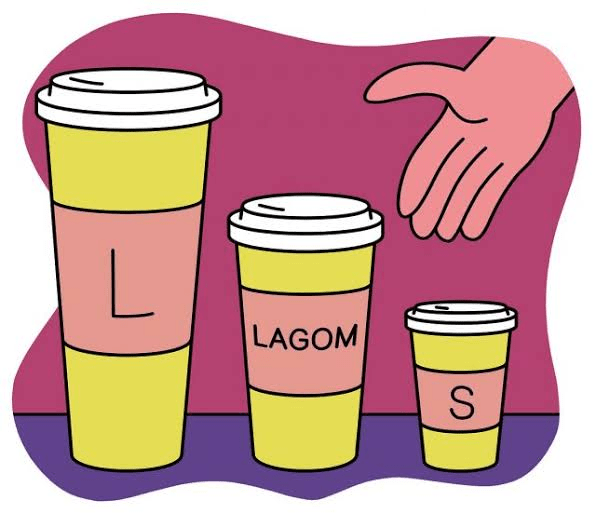
Finns are socialized to believe that what they have is as good as it gets—or close enough. Finns believe in the Norwegian term Lagom, which can be translated as “just the right amount,” i.e., neither too much nor too little. They believe that what they have is as good as it gets—or close enough. This mindset makes them the happiest people in the world despite living in small apartments, earning modest incomes, with even more limited purchasing power because of the high prices and taxation.
Hence, one thing that the world could learn from them is their willingness to embrace the less-sunny aspects of living i.e., to accept negative feelings as a normal part of life.
Global warming is the slow increase in the average temperature of the earth’s atmosphere because an increased amount of the energy (heat) striking the earth from the sun is being trapped in the atmosphere and not radiated out into space.
The earth’s atmosphere has always acted like a greenhouse to capture the sun’s heat, ensuring that the earth has enjoyed temperatures that permitted the emergence of life forms as we know them, including humans.
Without our atmospheric greenhouse the earth would be very cold. Global warming, however, is the equivalent of a greenhouse with high efficiency reflective glass installed the wrong way around.Ionically, the best evidence of this may come from a terrible cooling event that took place some 1,500 years ago. Two massive volcanic eruptions, one year after another placed so much black dust into the upper atmosphere that little sunlight could penetrate. Temperatures plummeted. Crops failed. People died of starvation and the Black Death started its march. As the dust slowly fell to earth, the sun was again able to warn the world and life returned to normal.Today, we have the opposite problem. Today, the problem is not that too little sun warmth is reaching the earth, but that too much is being trapped in our atmosphere.
So much heat is being kept inside greenhouse earth that the temperature of the earth is going up faster than at any previous time in history. NASA provides an excellent course module on the science of global warming.
What Causes Global Warming?
There are three positions on global warming: (1) that global warming is not occurring and so neither is climate change; (2) that global warming and climate change are occurring, but these are natural, cyclic events unrelated to human activity; and (3) that global warming is occurring as a result primarily of human activity and so climate change is also the result of human activity.The claim that nothing is happening is very hard to defend in the face or masses of visual, land-based and satellite data that clearly shows rising average sea and land temperatures and shrinking ice masses.The claim that the observed global warming is natural or at least not the result of human carbon emissions (see Climate Skeptics below) focuses on data that shows that world temperatures and atmospheric CO2 levels have been equally high or higher in the past. They also point to the well understood effects of solar activity on the amount of radiation striking the earth and the fact that in recent times the sun has been particularly active.
Greenhouse Gases Are the Main Reasons for Global Warming. …
Cause #1: Variations in the Sun’s Intensity. …
Cause #2: Industrial Activity. …
Cause #3: Agricultural Activity. …
Cause #4: Deforestation. …
Cause #5: Earth’s Own Feedback Loop.
The evidence is clear: the main cause of climate change is burning fossil fuels such as oil, gas, and coal. When burnt, fossil fuels release carbon dioxide into the air, causing the planet to heat up.
How to stop global warming ?
There is no one-size-fits-all approach to stopping or slowing global warming, and each individual, business, municipal, state, tribal, and federal entity must weigh their options in light of their own unique set of circumstances. Experts say it is likely many strategies working together will be needed. Generally speaking, here are some examples of mitigation strategies we can use to slow or stop the human-caused global warming :
Where possible, we can switch to renewable sources of energy (such as solar and wind energy) to power our homes and buildings, thus emitting far less heat-trapping gases into the atmosphere.
Where feasible, we can drive electric vehicles instead of those that burn fossil fuels; or we can use mass transit instead of driving our own cars.
Where affordable, we can conserve energy by better insulating our homes and buildings, and by replacing old, failing appliances with more energy-efficient models.
Where practicable, we can counterbalance our annual carbon dioxide emissions by investing in commercial services that draw down an equal amount of carbon out of the atmosphere, such as through planting trees or carbon capture and storage techniques.
Where practical, we can support more local businesses that use and promote sustainable, climate-smart practices such as those listed above.
We can consider placing an upper limit on the amount of carbon dioxide we will allow ourselves to emit into the atmosphere within a given timeframe.
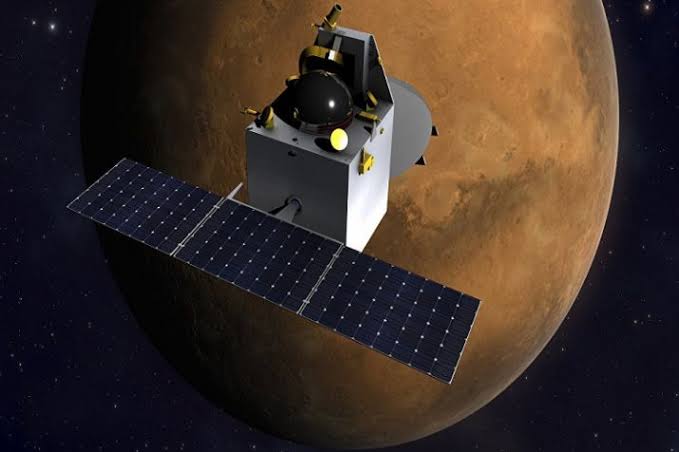
The Mars Orbiter Mission (MOM), also called Mangalyaan is a space probe orbiting Mars since 24 September 2014. It was launched on 5 November 2013 by the Indian Space Research Organisation (ISRO).It is India’s first interplanetary mission and it made it the fourth space agency to achieve Mars orbit, after Roscosmos, NASA, and the European Space Agency. It made India the first Asian nation to reach Martian orbit and the first nation in the world to do so on its maiden attempt.
Names Mangalyaan Mission type Mars orbiter Operator ISRO COSPAR ID 2013-060A SATCAT no. 39370 Website http://www.isro.gov.in/pslv-c25-mars-orbiter-mission Mission duration Planned: 6 months Elapsed: 6 years, 9 months, 19 days
Start of mission
Start of mission Launch date 5 November 2013, 09:08 UTC Rocket PSLV-XL C25 Launch site Satish Dhawan FLP Contractor ISRO
Timeline of Operations Phase Date Event Detail Result References Geocentric phase 5 November 2013 09:08 UTC Launch Burn time: 15:35 min in 5 stages Apogee: 23,550 km (14,630 mi) 6 November 2013 19:47 UTC Orbit raising manoeuvre Burn time: 416 sec Apogee: 28,825 km (17,911 mi) 7 November 2013 20:48 UTC Orbit raising manoeuvre Burn time: 570.6 sec Apogee: 40,186 km (24,970 mi) 8 November 2013 20:40 UTC Orbit raising manoeuvre Burn time: 707 sec Apogee: 71,636 km (44,513 mi) 10 November 2013 20:36 UTC Orbit raising manoeuvre Incomplete burn Apogee: 78,276 km (48,638 mi) 11 November 2013 23:33 UTC Orbit raising manoeuvre (supplementary) Burn time: 303.8 sec Apogee: 118,642 km (73,721 mi) 15 November 2013 19:57 UTC Orbit raising manoeuvre Burn time: 243.5 sec Apogee: 192,874 km (119,846 mi) 30 November 2013 19:19 UTC Trans-Mars injection Burn time: 1328.89 sec Heliocentric insertion Heliocentric phase December 2013 – September 2014 En route to Mars – The probe travelled a distance of 780,000,000 kilometres (480,000,000 mi) in a Hohmann transfer orbit around the Sun to reach Mars. This phase plan included up to four trajectory corrections if needed. 11 December 2013 01:00 UTC 1st Trajectory correction Burn time: 40.5 sec Success 9 April 2014 2nd Trajectory correction (planned) Not required Rescheduled for 11 June 2014 11 June 2014 11:00 UTC 2nd Trajectory correction Burn time: 16 sec Success August 2014 3rd Trajectory correction (planned) Not required 22 September 2014 3rd Trajectory correction Burn time: 4 sec Success Areocentric phase 24 September 2014 Mars orbit insertion
Recognition
In 2014, China referred to India’s successful Mars Orbiter Mission as the “Pride of Asia”. The Mars Orbiter Mission team won US-based National Space Society’s 2015 Space Pioneer Award in the science and engineering category. NSS said the award was given as the Indian agency successfully executed a Mars mission in its first attempt; and the spacecraft is in an elliptical orbit with a high apoapsis where, with its high resolution camera, it is taking full-disk colour imagery of Mars. Very few full disk images have ever been taken in the past, mostly on approach to the planet, as most imaging is done looking straight down in mapping mode.
The Ministry of Defense announced the theaterisation of the Indian Armed forces under the Chief of Armed Forces (currently, Gen Bipin Rawat), the Defense Secretary and the tri-force chief council.
The Insignia of the Indian Armed Forces
Theatres of defense would quite effectively wipe out the existing commands system in which the Indian uniformed forces work. India has 17 armed commands – 7 for the army, 7 for the airforce and 3 for the Navy. These commands are indepednent of each other and have a different officer from the corresponding service to serve as the commander. This model is the traditional one which has been followed for centuries. The British, the French, the Americans have all always had a separate command for the army and for the navy. The Mughal Empire did not have a lot of maritime enemies along its controlled regions in Bengal. However, by the time the Marathas took over, the Portugese and the French had arrived with newer war techniques and a large part of this warfare was at sea. So, the Marathas developed a strong naval force. Even then, the office of the admiral and the office of the Commander of Army were separate. Infact, even in the army, the office of the gun users and those of the cavalry and cannons were separate.
However, the first world war introduced new means of warfare. Trenches, tanks, heavier guns and soldiers – everything together. It was unlike the American Wars before 1860s where the two parties would stand on either side of the rift and shoot on orders and then jump to manual fighting. It was a new way of fighting where all forces of offense and defense needed to work together and several layers of bureaucracy and controls would hinder the effectiveness. Thus was introduced the concept of theatre of war. War office was segregated not based on the uniformed service but on the region to control. That makes orders easier, the need and procurement of weapons is simplified. The second world war only assured that the theatre warfare is better than the conventional war office. There is a commander of the theatre who addresses directly to the council of war or the defense council or the war office (As in World War 2 Britain) or to the chief of Defense forces and Defense Secretary (As in modern day USA).
China entered into the Theatrisation process very recently. Pakistan copied its model. India is probably the last large economy to change to the theatre model of warfare. And it means that Indian warfare should be more synchronized and effective now. So should be the process of weaponisation. There have been instances where the airforce and the army separately ordered jets causing the government to loose a lot on the benifits it could have had received for a bulk order. Similar is the story for missiles to be used by the army, the navy and the air force.
Unfortunately, there is a lot of drama going on in the defense forces headquarters in New Delhi about the theaterisation mechanics. However, all chiefs and the cabinet has shown commitment towards a fast and effective formalization of the new policy.
In the fourth match of the series played between Wi and Australia on 14 July. Australia registered a thrilling 4 run win over West Indies in the fourth match played in St Lucia. In this match, Mitchell Marsh played an important role in getting the Kangaroo team their first win in the T20 series. In this series, the West Indies team has already taken an unassailable lead by winning three consecutive matches.
In this match played at Darren Sammy National Cricket Stadium, Australia won the toss and batted first. Start was not good and the first wicket fell for 12 runs. Matthew Wade, came to open the innings, and was dismissed for 5 runs. After that, Mitchell Marsh came out to bat at number three and got Australia out of trouble with captain Aaron Finch with a 114-run partnership. Finch was dismissed for 53 while Marsh scored 75 runs. Alex Carey, Moises Henriques, Ashton Turner could not do much in the middle order. Dan Christian scored 22 runs in the lower order. Australia scored 189 runs for 6 wickets in the stipulated 20 overs in their innings.
The West Indies team, which came out to achieve the target of 190 runs, started strongly. Both the Caribbean team’s openers Lyndle Simmons and Evin Lewis added 62 runs for the first wicket. Lewis was dismissed for 31 while Simmons made 72. After the dismissal of these two batsmen, the middle order of the Caribbean team could not do much.
In the final overs, Andre Russell and Fabian Allen tried their best to win the match for West Indies but failed. Russell remained unbeaten on 24 off 13 balls while Allen was dismissed for 29 off 14 balls. West Indies managed to score 185 runs for 6 wickets and lost the match by 4 runs. Mitchell Starc bowled a superb last over and steal the show.
Mitchell Marsh took the three wickets for Australia and helped his team win first match in this series. For his all-round performance with both bat and ball ( 3 wickets and 75 runs ) ,he was awarded the player of the match award. West Indies now leads the series with 3-1 equation and last match will be played on 16th July.
In order provide the gap between JEE mains 3 and JEE mains 4 , NTA has announced to postponed the JEE mains 4 ( may session) .Now Jee mains 4 will be conducted on August 26,27 ,31 , September 1 and 2 ,2021.
The Hon’ble education minister Pradhan says “In view of the persistent demand from the student community and to enable the candidates to maximize their performance, the NTA has been advised to provide a gap of four weeks between session 3 and session 4 of the JEE(Main) 2021 Exam.”
Now the application will be accepted till 20th july 2021.Students whose who have not applied at can do so before 20th july 2021.
The NTA releases official notice stating “With a view to remove hardships caused to candidates and to ensure larger participation of candidates, it has been decided to extend the last date further for: submission of online application form by new candidates and withdrawal/ correction by the existing/ interested candidates for the exam,”
Though many National leaders rendered their selfless service to our country, one among them to be noted was the Kingmaker Kamaraj. K. Kamaraj, familiarly known as Kamarajar was an independent activist and the former Chief Minister of Tamil Nadu. He was popularly known as the Kingmaker of India during the 1960s. He supported Lal Bahadur Shastri, to be the President of India after the death of Nehru. After the sudden dismissal of Lal Bahadur Shastri, he supported Indira Gandhi to be the President of India. He was a man of simplicity and known for his best leadership in the development of Tamil Nadu. The Midday Meals Scheme introduced by him was very popular in India. He was popularly known as Karmaveerar, KalviKan Thirantha Mudhalvar, etc.
K KAMARAJ – Former Chief Minister Of TamilNadu
Kamaraj was born on 15th July 1903 at Virudhunagar in TamilNadu to Kumarasamy and Sivagami Ammal. His birth name was Kamatchi and later changed to Kamarajar. He studied primary education in a traditional school and he was to drop out because of his father’s death to support his family. He had a younger sister named Nagammal. He worked in his uncle’s shop and begun to attend political meetings and common meetings related to Home Rule Movement. He developed his interest in politics by reading daily newspapers. In 1920, at the age of 18, he became a very enthusiastic person and joined Indian National Congress. He organized public meetings for leaders in Virudhnagar and was very eager to meet Mahatma Gandhi. As he wished, he met Gandhiji for the first time in the meeting. Kamaraj went to jail for two years for taking part in ‘Salt Sathyagraha’ led by C. Rajagopalachari at Vedaranyam.
At the age of 34, he contested in the Legislative election for the first time and marked his first victory at Sattur in 1937. He stuck by the principle ‘ One should not accept any post/leadership to which one could not do full justice ‘. In 1954, Kamaraj became the Chief Minister of Tamil Nadu. Various schemes and deeds introduced by him as a Chief Minister are as follows:
He removed Hereditary Education Policy introduced by Rajaji.
He reopened more than 12,000 schools during his leadership as a Chief Minister.
Education and trade hiked during his period.
Kamarajar aimed to eradicate illiteracy and introduced compulsory education. The literacy rate was 7% during the British period but during his period, the literacy rate increased to 37%.
He also introduced the Midday Meals Scheme to provide atleast one healthy meal per day to the poor and needy children. He introduced the uniform scheme to the school children to eradicate the germination of caste-based flaws in young minds.
He built several irrigation canals during his period. He built nine dams which are appreciated till now and they are as strong as him.
Huge investment industries such as Neyveli Lignite Corporation, BHEL, etc. were started during his period.
He has been the Chief Minister of Tamil Nadu for three consecutive terms, by the victory in 1957 and 1962. His ruling period was known as the Golden Age of Tamil Nadu. Kamaraj was a great follower of Mahatma Gandhi, yet to this fact, he died on 2nd October 1975 during his sleep in his native Virudhunagar. He was awarded ‘Bharat Ratna’ posthumously in 1976. The Chennai Airport is named after him as Kamaraj Terminal.
His birthday is celebrated as ‘ Education Development Day ‘ in Tamil Nadu every year. Though he died, his good deeds remain in the hearts of the people.
Intelligence plus character – that is the goal of Education.
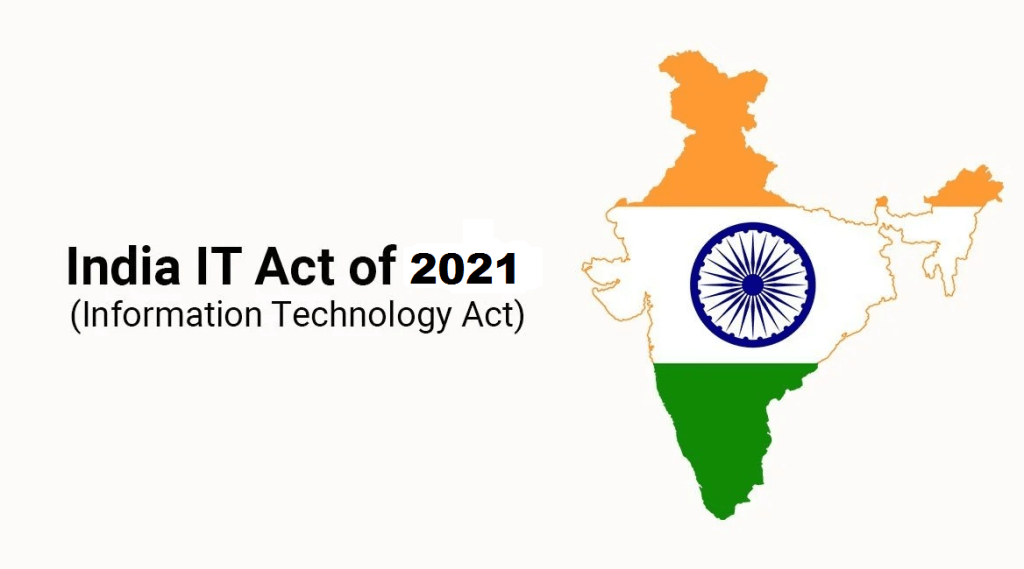
This year in February the Ministry of Electronics and Information Technology announced the Information Technology (Intermediary Guidelines and Digital Media Ethics Code) Rules. the Information Technology Rules 2011 were superseded by the Digital Media Ethics Code) Rules 2021, which were framed, in the exercise of powers under section 87 (2) of the Information Technology Act,2000. As per the data gathered, In India, there are 530 million WhatsApp users. While YouTube has 448 million users, Facebook and Instagram each have 410 million and 210 million users, respectively.
Social Media has grown into an arena for trade and commercial operations in addition to being a medium of entertainment. It has also preserved the fundamental standards for information transmission and provided a platform for individuals to openly express their ideas and beliefs.
Therefore, in this growing trend of using social media, few rules must be there in order to make social media a secure place to open up and share ideas. So, IT RULES, 2021 came up which intended to provide ordinary users of social media platforms and over-the-top (OTT) platforms with a system for grievance redress and fast resolution through the employment of a Grievance Redressal Officer (GRO) who must be a resident of India. Special attention has been paid to protecting women and children from sexual assaults, fake news, and other forms of social media abuse.
On the other hand, OTT platforms, online news, and digital media organisations would be required to adhere to a Code of Ethics. Under the new guidelines, OTT platforms would be referred to as “publishers of online curated content.” They’d have to divide the content into five groups based on age, and apply parental controls for everyone above the age of 13. They must also provide procedures for age verification for adult related content.
Furthermore, three-tiered grievance resolution system has been established. The appointment of a GRO, self-regulatory entities registered with the Ministry of Information and Broadcasting (MIB) to oversee the Code of Ethics, and a Charter for the self-regulating bodies created by MIB are all part of this.
However, the new regulations have been criticized by some as a breach of free expression, the government has emphasized that they allow social media sites to operate freely in India while adhering to the law. The country’s Constitution and the Rule of Law must be followed by all entities. Furthermore, according to Article 19 of the Constitution, the right to free speech and expression is not absolute and is subject to legitimate limitations, particularly when national sovereignty and security are at risk.
The new restrictions were given a three-month grace period for social media intermediaries to comply. On May 26, the government sent a second notice to all social media intermediaries, requesting information on the status of compliance with the new laws that took effect that day. Various social media sites such as Google, LinkedIn did shared details as per the requirements but other sites such as twitter requested for the compliance window to be extended and demanded a collaborative approach from the government to protect public freedom of speech. WhatsApp has launched a lawsuit against the government in the Delhi High Court, alleging that the new restrictions infringed user privacy by breaking the end-to-end encryption in order to identify traceability. The administration, on the other hand, has maintained that tracking will be necessary only in the event of “extremely serious offences” that endanger India’s sovereignty and integrity. It may also be done without compromising the end-to-end encryption. Companies, on the other hand, will be responsible for developing a technical solution
So, as we know that no freedom is a total freedom. It comes up with some level of restrictions and is not absolute unrestricted. Since the establishment of the Constitution of india, striking the appropriate balance between fundamental rights and determining the rationality of a limitation has been a continual struggle. Therefore, the battle between the governments that want to impose reasonable restrictions and users concerned about data privacy and restrictions on freedom of speech and expression vs the tech giants who own significant amount of huge data is only going to get more complicated before optimal solutions are found. So, The IT Rules 2021 which preserves digital sovereignty and aim to answer people’ concerns without compromising on their privacy or personal rights should be properly followed by the social media sites which is only the best solution left.
Right to repair is the movement started by the activist and oragination all around the world. Joe -Biden ,US president ,signed an executive order on Federal Trade Commission to institute rules to curb anticompetitive restrictions that limit consumers’ ability to repair gadgets on their own terms. The Uk too had introduced this .
The agenda of the movement is to get compinies to make spare parts of the gadget and the consumers can repair them rather than replacing the product.
Large tech compinies like Apple, Microsoft,Amazon and Tesla are opposing the movement stating that its opening up their intellectual property to third party to repair them.







 Eduindex
You must be logged in to post a comment.