Placing of the Budget by a third term government is being seen as a glorious event by the nation

 The Prime Minister Shri Narendra Modi gave a statement to the media before the start of the Budget Session.

Speaking on the occasion, the Prime Minister reiterated the pride in the fact that after a gap of 60 years a government has come for the third consecutive year. Placing of the Budget by a third term government is being seen by the nation as a glorious event, said the Prime Minister. The Prime Minister said that the Budget is a milestone budget of the Amrit Kaal and the government is working to realize the guarantees given over a period on the ground. “This Budget will set the direction of the next five years of the current government and will lay a strong foundation for the dream of Viksit Bharat by 2047”, he added. 

He highlighted that India is the fastest growing country among the major economies with about 8 percent growth in the last three consecutive years. Today, opportunities are at the peak due to positive outlook, investment and performance, he said. 

Noting that all the battles have now been fought among political parties and that the citizens have elected the government after the conclusion of the Lok Sabha elections, the Prime Minister urged all Members of Parliament to come together and fight for the country for the next 5 years. He also urged all political parties to rise up above their organizations and commit to the nation by making use of  the dignified platform of the Parliament for the next four and a half years. “Go to the battlefields of election in January 2029. Till then, the only priority should be the country, its poor, farmers, women and the youth”, he exhorted. He added that no stone will be left unturned to realize the dreams and resolutions of a Viksit Bharat in 2047.  

The Prime Minister lamented that due to the negative approach of some political parties, many Parliamentarians could not get any opportunity to put forward their views and the issues pertaining to their constituencies. He appealed to all the parties to give opportunities to all members, especially the first time members, to present their views. Shri Modi reminded the people about the efforts to muzzle the elected government and the Prime Minister’s speech in the Parliament. “This has no place in democratic traditions’, PM Modi asserted.  

The Prime Minister reminded the Parliamentarians that the people of the country have given their mandate to serve the county and not the agendas of political parties.“This House is not meant for political parties, this House is meant for the country. It is not meant to serve the Parliamentarians but 140 crore citizens of India”, he emphasized. Concluding the address, the Prime Minister expressed the belief that all Members of Parliament will contribute towards fruitful discussions. He added that the country requires positive views that take it forward. “Views that oppose are not bad, instead it is negative views that hamper development”, he added, concluding with confidence that this temple of democracy will be used to fulfil the dreams and aspirations of the common citizens. 


***

DS/TS

Regulation of Drugs, Cosmetics and Medical Devices

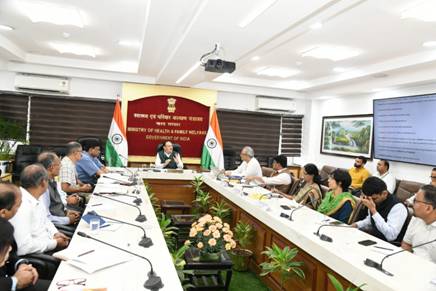
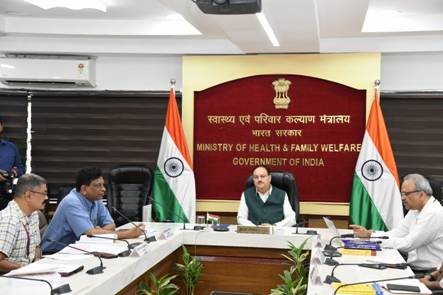
 “For India to become the global leader in drugs regulation to match our global reputation of ‘Pharmacy of the World’, we need to have world class regulatory framework matching our scale of operations and international expectations”. This was stated by Union Health Minister Shri J P Nadda, as he reviewed the regulation of drugs, cosmetics and medical devices, here today. Union Health Secretary Shri Apurva Chandra, Drugs Controller General of India (DCGI) Dr Rajeev Singh Raghuvanshi and senior officers of Central Drugs Standard Control Organization (CDSCO) and Union Health Ministry were present at the high level review meeting.

Highlighting the global position of India as the leading producer and exporter of drugs, Shri J P Nadda stressed on CDSCO to draw a roadmap with timelines of achieving global standards in its mandated activities. He stated that the upscaling needs to be systems-based focusing on highest standards of uniformity, technical upgradation and futuristic approach. For export of drugs and pharmaceuticals, the system should be designed for proper intervention to maintain the quality of drugs being exported, he emphasized.

Shri Nadda underscored the importance of transparency in the working of CDSCO. He stated that “In order to achieve global standards, our focus needs to be on transparency of procedures at CDCSO and within the drugs and medical devices industry”. Both the Drugs Regulatory body and the industry should work on highest principles of transparency to ensure that the products manufactured and sold by India meet the highest indices of global quality standards, he said.

The Union Health Minister stated that it is important for CDSCO to be in continuous dialogue with the drugs and medical devices industry to understand their issues and support them to fulfill the quality expectations and standards of CDSCO. “Our focus should be on developing mechanisms that ensure easy of doing business for the drugs industry within the regulatory requirements. For this, CDSCO needs to be a user-friendly organization with state-of-the-art facilities matching global standards”, he stated.    

On the topic of Micro, Small & Medium Enterprises (MSME) sector in drugs manufacturing and the issues faced by the small scale industries to meet quality standards, the Union Health Minister “Let us understand the issues faced by MSME sector and support them to strengthen their capacity and quality of products on the one hand, and encourage them to meet the regulatory requirements on the other.”

Shri Nadda was briefed about the mandated activities of CDSCO, its achievements, future plans and various issues and challenges faced by CDSCO. The Minister was also updated on the progress of the Scheme for strengthening state drug regulatory system with a budget of Rs.850 crores which was launched in 2016 during his earlier tenure.

The Union Minister was briefed on the roles and responsibilities of the central and state drugs regulatory bodies, and some of the challenges faced in alignment between them. Noting that the States are integral part of our regulatory value chain, Shri Nadda underscored the importance of working in tandem with the States so as to enhance their skills and capacities, and also encourage them to align with quality standards of the Central Government. “This is especially important in view of upgradation of Good Manufacturing Practices to global level embarked upon by CDSCO”, he added.

****

Concept of Viksit Bharat is not just a goal but a sacred mission

 The Vice-President, Shri Jagdeep Dhankhar today remarked that concept of Viksit Bharat @2047 is not just a goal but a sacred mission. Asserting that this century belongs to Bharat, he called upon “every citizen, every institution, and every sector of our society” to contribute their utmost.

Addressing the students and faculty of NMIMS in Mumbai today, VP underlined that as a consequence of series of affirmative governance initiatives, there has been a sea change in the business ecosystem and India is now seen as a favourite destination of investments and opportunities.

Shri Dhankhar compared India’s political journey to a rocket’s ascent, emphasizing resilience and progress despite occasional challenges. He noted that just as air pockets do not disturb a flight’s trajectory or destination, India’s political challenges have not hindered its rise. Highlighting the nation’s significant progress, Shri Dhankhar emphasized on the immense effort required a decade ago to launch this journey and remarked “Trust me, the next five years will see India’s rise like that of a rocket breaking beyond gravitational force.”

Highlighting the presence of nefarious forces with pernicious designs attempting to demean and taint the nation’s progress, the Vice-President called on the youth to actively counter negative narratives aimed at tarnishing India’s institutions and growth trajectory.

Talking about the abrogation of Article 370, VP referred to a Parliamentary discussion in 1963 in which the then Prime Minister had stated that Article 370 would wear away over time, emphasizing its temporary nature. Thanking the Parliamentarians for their decisive action in abrogating Article 370 in 2019, Shri Dhankhar mentioned that that the outcomes might have been different had Dr. Ambedkar drafted Article 370 or Sardar Patel been in charge of the integration of Jammu and Kashmir after the independence.

In his address, the Vice-President highlighted the illustrious history of India’s renowned educational institutions like Nalanda, Takshashila, Vikramshila, and Vallabhi. He emphasized that these ancient universities made India a knowledge powerhouse, significantly enhancing its diplomatic soft power and shaping trade directions. He also underlined the critical relevance of higher education in national development and empowerment, drawing from the legacy of these historic centers of learning.

Highlighting the transformative power of education, Shri Dhankhar described it as a driving force that empowers individuals, fosters innovation, and propels economic growth, contributing significantly to societal and national progress.

On this occasion, VP also urged the youth to break free from conventional thinking and embrace the vast opportunities available to today. Expressing the need to move beyond the traditional focus on competitive examinations and explore the new, unconventional prospects emerging in various fields, Shri Dhankhar encouraged everyone to look beyond the horizon and recognize the immense potential in emerging areas such as AI, quantum computing, Green Hydrogen Mission.

Dr. (Smt.) Sudesh Dhankhar, Shri Ramesh Bais, the Governor of Maharashtra, Shri Praful Patel, the Member of Parliament, Rajya Sabha, Shri Amrishbhai Rasiklal Patel, Chancellor of NMIMS, Dr. Ramesh Bhat, Vice-Chancellor, NMIMS, Dr. Sharad Mhaiskar, Pro Vice-Chancellor, NMIMS, faculty members, staff and students were present on the occasion.\

Read full text here : https://pib.gov.in/PressReleasePage.aspx?PRID=2032761

*****

Narsee Monjee Institute of Management Studies (NMIMS), Mumbai

 Distinguished members of the faculty, members of the staff, and dear students, Amrish Bhai ji does not need any test for his spine, he comes from a very distinguished lineage, Sardar Patel Ji stands in this country as the tallest leader with a great spine, and made India what it is. For the benefit of young boys and girls, let me tell you, Sardar Patel ji was entrusted with the task of putting various states into Bharat, India. He did it remarkably well, efficiently, but one state was kept out of his purview, the state of Jammu and Kashmir, that became a problem, which means Dr. Sardar Patel Ji provides solution, quick solution, lasting solution, difficult situations he tackled seamlessly.

Another instance, Dr. Ambedkar was chairman of the drafting committee, father of our Indian Constitution, did a remarkably good job. He drafted all the articles of the Constitution except Article 370. So these two very distinguished people, if Dr. Ambedkar had drafted Article 370, or Sardar Patelji had been given also the job of integration of the state of Jammu and Kashmir, things would have been very different.

Let me take you to a historical perspective, then I’ll come to the subject. In 1963, in Parliament, the then Prime Minister, the first Prime Minister of the country, a question came up: how long will Article 370 last? Because it is the only article in the Indian Constitution which is labeled as temporary. Many, for various reasons, believe it is permanent.

Now no longer in our Constitution, thankfully, thanks to parliamentarians like him. I salute all the parliamentarians who, in one voice, took note of it. But Pandit Ji then said, “घिसते घिसते घिस जायेगा.” I’m quoting him about Article 370. We have seen it. Article 370 ने हमको बहुत घिसाया, घिसाते गए till we had a dispensation that dispensed with Article 370. I am deeply honored to be amongst you all.

And the subject is of contemporaneous relevance. It is pivotal to the future of our great nation, empowering India. The role of higher education in Viksit Bharat by 2047.

This institute has been nurturing the leaders of tomorrow, as was indicated by the Vice-Chancellor. The alumni are spread over the entire globe, setting benchmarks in management studies. This institute, I have no doubt, is a crucible of change.

It catalyzes big change. And a big change that goes to the benefit of empowering our Bharat, home to one-sixth of humanity. Your commitment to academic rigor and innovation is commendable, as indicated by the Vice-Chancellor. And I am thrilled, therefore, to be amongst you all. Since the times of Vedic civilization, India has been home to some of the finest, world-renowned institutions and universities: Nalanda, Takshila, Vikramshila, Vallabhi, to name just a few.

Because of these institutions, India was a knowledge powerhouse. Because of these institutions, India then had great soft power in diplomacy. Our trade went in a different direction because of these institutions.

And therefore, higher education bears critical relevance to the development of a nation and empowering it. These universities, Nalanda, Takshila, were repositories of our age-old values and wisdom and provided direction for the wholesome evolution of society. Where you have institutions of this calibre, the flavour of the society, the flavour of the entire ecosystem is soothing, wholesome, and full of positivity.

You get to feel hope and possibility. These resource centres were linked between exalted ideals and pragmatic exigencies of life, a neat balance. Now, with the introduction of the new education policy, and that came after three decades, several hundred thousand stakeholders were taken into consideration. And it was emphasised that it should not be degree-oriented. It must reflect something more that makes a person really in a satisfaction mode to contribute as per his attitude. Friends, I firmly believe, and I experienced it, because my education was propelled by a scholarship.

From a small village, I could go to any school only on account of a scholarship. I believe education is the most impactful transformational mechanism of securing, first, equality, and second, containing decimating inequities. Education does wonders, and quality education makes things geometric, not arithmetic.

Power to empower emanates from education and that power is of the nation also, apart from society and the individual. Education facilitates the unleashing of your potential, exploitation of your talent, and it becomes a conveyance, a vehicle to realise your dreams and aspirations.

Education is the driving force that empowers individuals, fosters innovation, and propels economic growth by contributing to productivity and innovation that enables the nation and society to grow incrementally. In a sense, education is both personal empowerment and a cornerstone of community development, fostering a brighter future and social harmony. You may have several positions, wealth, house, car. That is individual in nature. Education is not. It empowers you simultaneously. It helps everyone else. You are educated, the benefit accrues to the entire people around you and the society. Now, if education is quality education, things are very different.

Then the human resource is sharpened to face any challenges and convert challenges into opportunities for larger welfare. And higher education, according to me, is fundamental to sustain our economic upsurge, to register social progress of the kind we aspire, something to attain like utopian society. Quality education helps fire all cylinders of the engine, and there is good productivity.

We have potential. India was taken to be a sleeping giant. Not any longer.  We are on the move. Our rise is incremental, unstoppable, and getting accolades from global institutions. But what do our youth need? Your quality education.

But you suffer certain drawbacks, and drawbacks are, you are really meritorious, but you find the system promotes patronage, favouritism, nepotism, and corruption becomes a password for securing a job, an appointment, or an opportunity. When you move out with your credentials that are illustrious, you find privileged pedigree marching ahead. Being made to march ahead, and you look, this generates despondency.

This shuts down the nation. That system was there not long ago. Our power corridors were infested with lies and agents, corrupt elements.

They extra-legally leveraged decision-making. An opportunity, a job, a contract, would come through a passage. That was corrupt.

Liaison and agents were there. Another thing, promising, talented boys and girls what they want?, they want equality before law. They are in deep pain that we live in a democracy when some are so privileged to be above law, not amenable to law.

The strong arm of law does not reach them. So these things were holding us back. But now, in the last decade or so, as a result of affirmative government policies, initiatives and innovative steps, an ecosystem is in place where our youth can have full play in their joints.

They can fully expand their potential. And this is because now our power corridors are sanitised of corrupt elements. I am sure youngsters will have no occasion to see what we have seen.

The institution of liaison and agents, which was indispensable, is now extinct, beyond revival. Equality before law, that eluded us for long, that was the bane of our system, is a ground reality. We see day in and day out people who entertain the idea they are beyond the reach of law, they are immune from legal process, are suffering the heat of law, suffering the heat of system.

Then, with this ecosystem, you will be marching into the world. You will be taking a big leap. Imagine, with this quality of education, with these credentials, the reputation of an institution and a system outside, nothing can be more soothing for you.

The entire world is before you. A number of vistas of opportunities, I therefore appeal to all of you, get out of silos. We are not fully exposed to the kind of opportunities that are available to our youth. We still are in a groove of competitive examinations. And what was conventional? Things are changing as much as energy has changed. Now the non-conventional sources of energy match the non-conventional sources of opportunities for our youth.

I would urge you to look beyond what is visible, and you will find, you will have opportunities in space, in every walk of life. Disruptive technologies, I’ll come to that later, afford you opportunities of development of a dimension which is unbelievable. 

My young friends, respect for law is a respect for nationalism. Respect for law is respect for democracy, and respect for law is respect for meritocracy. And therefore, we must always believe in being on the right side of law.

A shortcut is the shortest distance physically between two points. But on the Day of Awakening, if the shortcut is not lawful, it turns out to be painful and the longest distance. So never take shortcuts in life.

Let me tell you, those on the dais know it. In 1989, I started my political career, and around the same time, in the same Lok Sabha, the Hon’ble Governor was there. In 1990, Amrish Ji started.  In 1991, Mr. Parful Patel started. what a difficult situation I face in the house. But that apart, now look at the scene in 1990. I was a union minister.

The size of our economy was less than that of the cities of Paris and London. Where are we now? In the last decade, we have travelled from 11 positions to be the fifth largest global economy, ahead of the UK and France, because then we were behind Paris and London. That’s a big change.

During that time, our gold, gold of Bharat, gold of that nation, which was known earlier as Sone Ki Chidiya, was taken in an aircraft, physically, to be placed to two banks in Switzerland, because our foreign exchange was around one billion US dollars. Now, it is more than 650 to 660 billion dollars. I had the occasion then as a minister to go to Jammu and Kashmir.

There was a deathly silence. Just imagine, after removing Article 370, a temporary article from our constitution, we had tourists in lakhs. Now, here comes a catch. Media will report an incident.

I don’t know why people do not appreciate that India, globally at the moment, is a favourite destination of investment and opportunity, according to the IMF. According to the World Bank, our digitisation is worth emulating by others, it’s a role model. We have, we are breathing in an atmosphere which is not despondent, not dragging us, is one of hope and possibility.

We must look at the grandiose achievements we have, the exponential, phenomenal rise in every sector. Could we ever imagine that in our Bharat, every house will have a toilet? Could we imagine that cooking gas will be available in that measure? As members of Parliament, we had 50 gas connections a year and we thought we were a big power. We could distribute those 50 connections. And 25 phone connections. Where have we come now? By millions, gas connections have been given free to needy households. And telephone? Well, they persuade you to have a landline. They don’t charge these days. We all had telephones in the OIT category. Then, in the late 80s, it was 5000 rupees. A big change.

So we have really come to a level where global institutions that were earlier trying to advise us now are seeking our advice. All this has taken place recently in a decade. When you have a political journey, that journey may have sometimes Air pocket here and there. That air pocket doesn’t disturb the destination or the flight trajectory. In the next five years, India’s rise will be like that which a rocket has beyond gravitational force. The rocket took off. And you know, when a rocket takes off, huge power is required. That was there a decade ago.

Five years later, the rocket left gravitational force. And now the rocket is in space. And that is why the entire world says, look up to India. My young friends, just look at what has happened in G20. G20 functions were held in every state and every union territory. The main function was in Bharat Mandapam. 

Bharat Mandapam, a convention centre of world repute. We had P20, Parliament, world parliaments meet at Yashobombi. Meaning thereby, we are really going in big ticket achievements, infrastructure and otherwise.

Friends, in the face of all these, you will find nefarious forces with pernicious design trying to set afloat a narrative to demean, taint, tarnish our institutions, run down our growth trajectory. Now you youngsters know it. Your silence may not be appropriate because it gives wings to these false narratives.

We must neutralise these narratives because the ground reality is so very different. Sometimes I’m amazed that people are caught and it picks up fast. Some agency in the globe has said about India’s hunger status. I was governor of the state of West Bengal. The way we faced COVID, we helped 100 nations. There were some in the country who sounded alarming bells wrongly.

The leadership of the country took initiatives, innovative steps. We became the only country that gave digital certificates. Similarly, we have to be on guard that from 1st April 2020, to be precise, 850 million people of this country are getting free food, ration and dal.

Imagine, it will continue for 5 years. How can there be a challenge in this country? Now some people who always look for negativity say, Oh, 850 million people are being fed, so the country must be poor. No. This is hand-holding. This is hand-holding so that they march to the upper slot.

But that speaks of the strength our nation has. Friends, our progress at the moment is galloping. Cutting-edge can be given only by higher education. Power of a nation is decided by the progress of its technological innovations.

And that takes place in institutions of eminence like you. I would appeal from this platform. Our corporates should come forward. They should hand-hold these institutions. They must nurture them so that innovation and research take place. These institutions must be laboratories for innovation and research. And thereby they will become crucibles of change. 

2047 is our target. But I have no doubt we will accomplish it. Everyone in this room, particularly the youngsters, you are a great part of the marathon march for 2047. You are vital stakeholders in democratic governance of the nation. By 2047, you would be in the driver’s seat. And therefore, I have no doubt Bharat will regain what it had ages ago. 

Our concept of Vikshit Bharat is not just a goal. It’s a sacred mission. It calls on every citizen to be vigilant and commit. यह एक ऐसा हवन है इस हवन में हर किसी को आहुति देनी है| हर किसी का सहयोग होना है| पूर्ण आहुति होगी उसमें सब की भागीदारी होगी| यह हमने कर कर भी दिखाया है|

Can you imagine in our country? What was the stage of banking situation? I started my career by going to a bank and took a loan of 6000 rupees.  Opening a bank account was difficult. In 10 years, 500 million bank accounts. What a testament to inclusivity in society.

And that is why I come from a farmer’s family. More than 100 million farmers, three times a year, get amount in their account directly. I’m not on the amount. I’m not on the government capacity. I’m on the capacity of the farmer. That a farmer has a bank account, the farmer can receive direct payments. And that is where our Bharat is going. That is the change people have to notice. Presently, there are many who are in opposite atmosphere.

And I’m not aware where our Bharat is going. Go to any village, as indicated by Prabhupadaji, you’ll find digital connectivity, road connectivity, tap water, electricity. These are big changes.  If you have to work from home, you can work from your home in a village also. Because we are technologically enabled. Friends, a great beginning has been made. We have a resilient financial ecosystem. It is fueled by schemes. Mudra scheme.

Just imagine, our women and girls have enormously benefited. 60% out of this. Huge amounts are available to them. Women empowerment is so fundamental to growth of society on the planet. But Bharat has taken a great step. In 2023, there will be vertical and horizontal reservation for women in Parliament, Lok Sabha, and state legislatures, to the extent of one third. You must have witnessed Republic Day parade in 2024 on Kartavya Path. Our women empowerment was blossoming. Bharat is defining women empowerment and women-led empowerment to the entire world. We have, as a first citizen, a tribal lady. Imagine where we have come. Extremely talented, has seen great experience, ground reality. She is there. This is the big change that is coming.

Each one of you, let me tell you, can unsettle the list of top corporates because now we have in place new situations. If we go for, let’s say, quantum computing, you will have much better idea.

Our green hydrogen mission, something very different. Even 6G, the commercial part of it will start from 2025. And in all these things, my young friends, we are part of countries that are in single digit. All of you will be going to corporates or having your start-ups. But you will be helping the nation greatly. If you please take into consideration some of my suggestions.

I have urged parliamentarians on a number of occasions. Economic nationalism is fundamental to us. What a pain it is for us.  For fiscal gain, we import kites, furniture, dia, toys, curtains. Should our country be importing items that are available? We must have a policy to be vocal for local. We will be saving more than 100 billion US dollars in foreign exchange if we rigorously practise it.

You will find at the root of it that those in business, industry, trade and commerce engage into imports only to see their profit goes up. In the process they forget that the profit they are making is at the cost of indigenous labour, indigenous entrepreneurship and draining out our precious foreign exchange. To the leader here, I especially appeal.

Please catalyse the whirlwind of opinion. Why should our raw materials leave our shores without value addition? It is not a good reflection that iron ore is being so exported. We must add value to our produce. We must add value to our produce significantly if we have to empower our nation. And from that perspective, I will appeal to all of you. You can also in your life contribute because when it comes to economic nationalism, it is twofold. One, the importer. Second, the consumer.

We can be extremely right and I am sure that will bring about a big change. Friends, we like it or not, disruptive technologies are with us. They wanted our home, they wanted our workplace.

It is nothing short of a fourth industrial revolution. Because of these technologies, we are at the cusp of a big change. A change that will startle us.

There are challenges and opportunities. Impressionable minds like you can convert these challenges into opportunities. Artificial intelligence, Internet of Things, machine learning, blockchain are not defined by lexical words.

You have to go deep into it. I was myself startled at the enormous potential that is there. When I got a presentation from the experts. You can handle it. Because in whatever walk of life you go, you will be contributing massively. Therefore, your learning doesn’t stop once you walk out of this institution.

Your learning is lifelong. And as a human resource of the largest mother of democracy, you have to be ahead of the others in the world. I have no doubt our genius is defined by our history and civilization of 5,000 years.

I can say this century belongs to Bharat. Look at what we did in G20. I’ll take you to three decisions, fundamentally.

One, the European Union was already part of G20. And the countries of the European Union had colonised other countries by and large. It was in Bharat, at the initiative of the Prime Minister Narendra Modi, that African Union was made a part of G20.  A big thing. Another landmark decision. Global South constitutes a huge chunk of population and GDP of the world. It was unknown to the world. Prime Minister Modi took the initiative. And Bharat became the voice of Global South. And third, ages back, centuries back, we had trade with other countries through land and sea. That route has been formalised. It is a matter of time it will be functional. Enormous opportunities for all of you. 

Friends, you are not part of the privileged pedigree. You are the privileged. You are the privileged defined by your merit, by your attainment of skill. And therefore it lies that you not only work for yourself, but you handhold others also.

In your own life, if you make it a mission, you can certainly create a wave, that yes, I undertake to inspire, motivate, energise at least two persons. That will go a long way. Dear friends, when I look at young people, particularly institutions of your category, here I am interacting with you one way.

But when I have the occasion to interact both sides, I am enriched. I am enlightened. And I have no doubt our Bharat is on the rise.

I would be happy and delighted to ensure a visit of the students and faculty to new building of Parliament. I am the President of Indian Council of World Affairs. We will have an MOU with your institute in next one month.

We don’t have to define our progress in economic terms. But India’s rise, let me tell you friends, is like a plateau. That plateau is defined because of road connectivity to the villages, toilets, digitalization of the village, all the electricity.

And now a new concept has come. You power yourself because government has come out with a scheme of solar power for everyone. So I call upon industry, trade, business and commerce, their leadership, their associations, to nurture the spirit of educational institutions, innovation, research, economic nationalism.

These institutions must think beyond their normal working. When it comes to alumni, I have changed an idea. And we have people here who can rectify it.

We must have confederations of alumni associations. If we have alumni associations of prestigious institutions, like yours, IITs, IIMs, we will have a think tank, unmatched in the world, which can help us formulate policies. I’m sure it will take a lot of. 

Friends, don’t fear failure don’t have stress. Don’t have tension. Chandrayaan 3 would not have been a success but for Chandrayaan 2 effort. For some people Chandrayaan 2 was a failure. I was governor of the state of West Bengal. Chandrayaan 2 was to land around 2 a.m. Along with my wife, we went to Sai city in Kolkata. 500 boys and girls were before us. It reached quite close to the lunar surface. Landing was not soft. Some thought it was failure. No. It was largely successful.

Success of Chandrayaan 3 is firmed up on Chandrayaan 2. Therefore, if an idea occurs to you, don’t allow your mind to be a parking place for that idea. If you have a brilliant idea, it is parked in your mind, you don’t act on it, you are doing a disfavour to yourself and also not favouring the society at large. So never fear failure.

Friends, dream big, think out of the box, because you are living in times when you can achieve anything.

Let me end by saying one thing to you. Startups attract the attention of corporate giants. Startup is the brain wave of boys and girls like you.

So you will be looked upon immediately. Think about it. I would end by quoting Chanakya, because we are speaking of education and empowerment of the nation.

Chanakya said, “Education is the best friend. An educated person is respected everywhere”  Couple it with what Swami Vivekananda said “Arise, I’m quoting you, Arise, awake, and stop not until the goal is reached”.


Demographic dividend and labour reforms will drive future growth

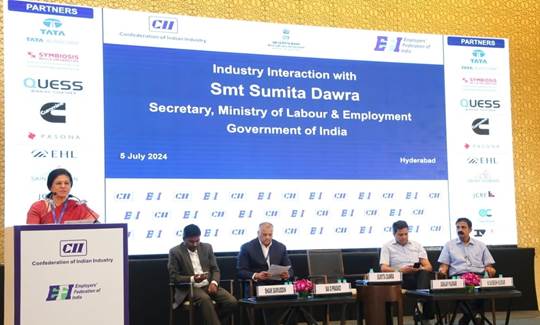
 Smt. Sumita Dawra, Secretary, Ministry of Labour & Employment, Government of India participated in an industry interaction organised by Confederation of Indian Industry (CII) and the Employers’ Federation of India (EFI) on 5th July 2024 at Hyderabad.

In her inaugural address, Smt. Sumita Dawra, Secretary, Ministry of Labour and Employment, highlighted India’s fast growth rates, and emphasized that India’s demographic dividend and labour reforms are pivotal to driving future growth, alongside other growth engines of manufacturing, expansion of service sector, infrastructure, etc.

Citing the RBI’s KLEMS data, she conveyed that about 8 crore new employment opportunities were created in India during past five years [ending 2021-22], largely driven by various government initiatives aimed at incentivising and promoting manufacturing ( such as PLI, Make in India), expansion of services sector, access to micro credit, investments, emergence of new areas such as Gig and Platform workers, Global Capability Centres (GCCs) and Startups, etc. She further highlighted the growing gig economy, which is estimated to employ about 2.3 crore people by 2030.

Smt. Dawra discussed the consolidation of 29 labour laws into four comprehensive codes aimed at simplifying regulations and administrative processes, including the decriminalization of labour laws, thereby enhancing ease of doing business and reduction in compliance burden. This will in turn be attractive for enhanced domestic and foreign investment flows, and in bringing supply chains and global value chains to India, she added. She further said that the reforms will stimulate the economy, enhancing employment opportunities, increasing female workforce participation, and improvements in social security and labour welfare, all of which are expected to drive inclusive growth in India. Currently, India’s GDP is more than USD 3 trillion and is expected to reach USD 33 trillion by 2047 riding on various initiatives, including labour reforms, she added.

Smt Dawra underscored the importance of expanding social security coverage for the unorganized and informal sectors while recognizing the need for governance reforms in the Employees’ State Insurance Corporation (ESIC) and the Employees’ Provident Fund Organisation (EPFO). She also highlighted various systemic reforms initiated in ESIC and EPFO such as auto settlement of claims, reduction in rejections, and improving the pace of claims settlement in EPFO, as well as enhancing the coverage and quality of services in ESIC.

During the interaction, presentations on various systemic reforms in ESIC and EPFO were made, outlining topics such as digitization, e-governance, and compliance simplification, with discussions aimed at gathering suggestions from participants to further improve these systems.

The National Career Service (NCS) portal of Ministry of Labour and Employment was also showcased as a comprehensive solution for career counselling and employment networking. It was highlighted that more than 1 crore vacancies were mobilised on NCS portal during 2023-24. The portal is also integrating SIDH database from the Ministry of Skill Development and Entrepreneurship to ensure availability of rich pool of skilled jobseekers on the portal to reduce skill gap in labour market. The ongoing integration of databases of the two Ministries will effectively link the youth to both skills and employment, resulting in aligning the demand-supply gap in the labour market, it was informed.

The session highlighted the collaborative efforts between the government and industry to create a positive environment for economic development and employment growth. Such interactions are crucial for creating awareness and implementing effective reforms, besides getting feedback from industry and other stakeholders.

The session witnessed participation from over 300 industry representatives keen to engage in discussions on critical labour and employment reforms shaping India’s economic landscape. Senior officials from the Ministry of Labour and Employment, EPFO, ESIC and State Government of Telangana also attended the session.

The event aimed to foster dialogue between government officials and industry stakeholders, focusing on employment generation, labour reforms, and ease of doing business in India.

****

Department Consumer Affairs meets Automobile Associations and partner companies to Onboard them on Right to Repair Portal India

 The Department of Consumer Affairs (DoCA) under Ministry of Consumer Affairs, Food and Public Distribution, Government of India has launched the Right to Repair Portal India (https://righttorepairindia.gov.in/) to provide consumers with an easy access to information for repairing their products and enabling them to reuse it, thereby contributing to the circular economy as well as reduction of e-waste in a hassle-free manner.

In an effort to uphold consumer rights and respond to evolving concerns regarding hassle free product repairs, a meeting was convened under the Chairmanship of Smt. Nidhi Khare, Secretary, Department of Consumer Affairs (DoCA) with Automobile Associations and their partner companies in the Automobile Sector. The objective was to onboard companies onto the Right to Repair Portal India.

In the meeting, it was emphasized that products that cannot be repaired or are subject to planned obsolescence—designed with an artificially limited lifespan—contribute to e-waste and compel consumers to purchase new products due to lack of repair options or extremely expensive repair options for reuse. Therefore, the goal is to eliminate obstacles such as restricted access to tools or repair information, ensuring that consumers have complete ownership of the products they purchase.

Over time, it has been noted that repair services are increasingly constrained due to significant delays in service and absence of repair documentation for vehicles. Additionally, products are sometimes repaired at excessively high costs, leaving consumers dissatisfied with repair services which often delays repairs, even if necessary, due to limited repair options. A major constraint is also the availability of genuine spare parts at affordable prices. Often their unavailability   at affordable prices, forces consumers towards purchasing counterfeit spare parts from the grey markets. Further, lack of accessible information for minor repairs or Do it yourself guides, exacerbates consumer distress, adding to their financial burden and overall dissatisfaction.

Secretary, Smt. Khare emphasized the need to enhance efforts towards democratization of repair manuals/videos accessible to all, fostering a robust ecosystem for third-party repair services, and establishing standards for them. She also laid stress on offering roadside assistance to consumers, esp. on highways and introducing a repairability index of the automotive that provide information on the life of the product, easy repair ecosystem, availability of spare parts, detailed manual on self-repair, warranty on different parts etc. These measures aim to empower consumers with informed choices regarding the post-sales service of their products, besides ease in enjoying their products fully. The meeting concluded with the consensus on to on board the Right to Repair Portal and adopting a greater collaborative approach in providing a vibrant post sale services to the consumers.

The discussions also covered topics such as aligning standardization of parts along with standardization of skilled workmanship, companies developing catalogs that should benefit consumers for post-purchase service and longevity of products life, and measures for addressing deceptive practices in repair workshops in the name of motor insurance that contribute to unnecessary generation of plastic waste.

In this regard, all companies were urged to on board on the unified Right to Repair Portal India which encompasses to facilitate and works as catalyst for providing relevant repair associated information between the consumers and companies. The information includes:

  1. Access to product manuals/ repair videos (by linking the websites and youtube channels of the companies);
  2. Address the concern on the price and warranty of spare parts;
  3. Explicit mention on differences in liability covered guarantee, warranty and extended warranty;
  4. Details of Companies Service Centre across India and Recognition third-parties repairers, if any, by the companies and
  5. Information on country of origin to be explicitly mentioned.

Some companies like TVS have shared their post-onboarding experiences on the portal. Companies including TATA Motors and TVS discussed how, based on complaints received from the National Consumer Helpline, they identified key repair issues and subsequently created repair videos accessible to consumers via their official YouTube channels. Additionally, associations like ACMA emphasized the Automotive Skill Development Council’s role in facilitating and supporting training youth for automotive skills in the dynamic and innovative market landscape.

The meeting was attended by various representatives of  Automobile Associations like ACMA, SIAM, ATMA, EPIC Foundation and Companies including TATA Motors, Mahindra, TVS, Royal Enfield, Renaulds and Bosch, Yamaha Motors India, Honda Car India were also present.

****

96TH DEATH ANNIVERSARY OF UTKALAMANI PANDIT GOPABANDHU DAS

 The President of India, Smt Droupadi Murmu graced the 96th Death Anniversary of Utkalamani Pandit Gopabandhu Das at Bhubaneswar, Odisha today (July 6, 2024). 

Speaking on the occasion, the President said it doesn’t matter how long a person lives; rather, what is important is the kind of life he or she lives. That is, the reputation of a person is evaluated based only on his/her contribution to society and country. She stated that it is amazing to think about the number of good deeds Pandit Gopabandhu Das did in his short lifespan. She said that his contribution to the fields of social service, literature, education, and journalism is unforgettable. She paid her tributes to Pandit Gapabandhu Das.

The President said that Pandit Gopabandhu Das knew very well that no society or nation can progress without proper education. That is why he established Muktakash School, also known as Van Vidyalaya, at Satyabadi in Puri district. His approach of introducing students to nature right from the beginning is very important. Pandit Gopabandhu emphasised on holistic development of students through Van Vidyalaya. In his view, education does not mean only bookish knowledge but, education should develop students physically, mentally, intellectually, and spiritually as well.

The President said that in the year 1919, Pandit Gopabandhu Das started the publication of the Samaj newspaper. Through this publication, he spread the message of freedom in Odisha. He also raised the problems of the people through this newspaper. His editorials in the Samaj have enriched Odia literature.

The President said that Pandit Gopabandhu Das believed in nationalism and democratic values. His poetries and prose give the message of patriotism and the welfare of the world. He was dedicated to Odia pride as well as Indian nationalism. Pandit Gopabandhu wrote ‘Wherever I am in India, I should believe that I am at home’. We should take inspiration from this pan-India thinking of Gopabandhu ji, the President stated.


***

Eduindex News

Eduindex is an online news portal that provides a wide range of content focused on education, research, and academic activities. The website, accessible at www.eduindex.org, serves as a comprehensive platform for educational news, articles, research papers, and other scholarly content.

Key Features and Services

  1. Educational News and Updates:

    • Eduindex offers the latest news and updates on various aspects of education, including policy changes, technological advancements in teaching, and global educational trends.
  2. Research and Scholarly Articles:

    • The portal features a vast collection of research articles, papers, and journals across different academic disciplines. It provides a platform for researchers, scholars, and educators to publish and share their work.
  3. Academic Resources:

    • Eduindex provides access to a variety of academic resources such as study materials, guides, and tools that cater to students, educators, and researchers.
  4. Events and Conferences:

    • The website also lists information about upcoming academic events, conferences, seminars, and workshops that are relevant to the educational community.
  5. Opportunities and Careers:

    • Eduindex highlights career opportunities, scholarships, and grants for students and professionals in the education sector. It also offers insights into different academic programs and courses.
  6. Community and Networking:

    • The platform fosters a community of educators, researchers, and students, encouraging collaboration and knowledge sharing. It provides forums and discussion boards for users to interact and exchange ideas.

Focus Areas

  • Higher Education: Coverage of news and developments in universities, colleges, and other higher education institutions.
  • Research and Innovation: Emphasis on breakthroughs and advancements in various fields of study.
  • Educational Technology: Insights into how technology is shaping the future of education and learning.
  • Policy and Administration: Updates on educational policies, reforms, and governance.

Vision and Mission

Eduindex aims to bridge the gap between academia and the general public by making scholarly knowledge more accessible and comprehensible. The portal’s mission is to promote educational excellence and innovation through the dissemination of high-quality content and the support of academic endeavors.

User Engagement

Eduindex encourages user engagement by allowing educators, researchers, and students to contribute articles, participate in discussions, and share their insights. This participatory approach helps build a vibrant and dynamic educational community.

Conclusion

Eduindex stands out as a valuable resource for anyone involved in the field of education. Whether you are a student seeking study materials, a researcher looking for the latest academic papers, or an educator interested in new teaching strategies, Eduindex provides a wealth of information and resources to support your educational journey.

World to witness 1st Indian in Space and other Indian in Deep Sea by 2025

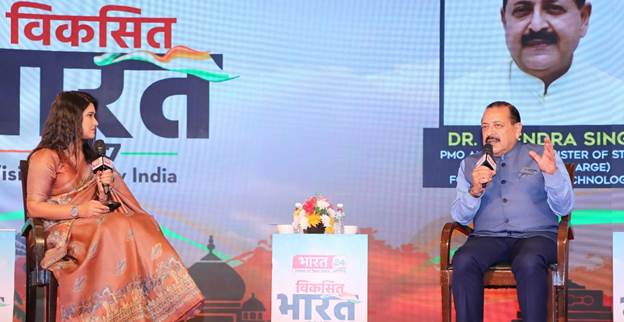
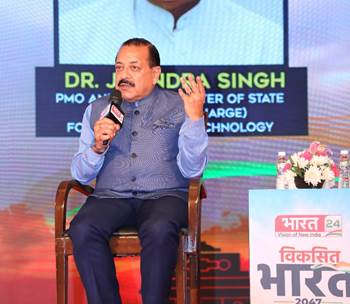
 World to witness 1st Indian in Space and other Indian in Deep Sea by 2025, says Union Minister Dr. Jitendra Singh on the stage of Bharat 24 News network during his address here today.

Speaking on India’ s progress in Space and Marine sector, Dr. Jitendra Singh shared that four astronauts-three Group Captains and one Wing Commander have been selected for India’s 1st Human Space Mission- Gaganyaan. Similarly, he also shared that India’s Deep-Sea mission will send three Indians to deep sea in 2025.

Union Minister Dr. Jitendra Singh at the programme hosted by Bharat 24 News network

During his address highlighting the Development in the Northeast India, Union Minister of State (Independent Charge) for Science and Technology, Minister of State (Independent Charge) for Earth Sciences, MoS PMO, Department of Atomic Energy and Department of Space and MoS Personnel, Public Grievances and Pensions Dr. Jitendra Singh said Infrastructure overhaul in Northeast India in the last decade is the role model of PM Modi’s development.” Going further he recalled the new airports made operational in Northeast. Increase in network of all-weather roads and highways along with remote connectivity. The railways operating trains from Itanagar and new waterways that have been opened. He categorically mentioned that not only in terms of Infrastructure but also in human resources development is commendable as recruiters in the hospitality and aviation industry are now visiting these states for talent acquisition. Going further he stated that Prime Minister is fond of the region and preferred Mizoram to establish a ‘Citrus Fruit Park- A Centre of excellence’ in Mizoram due its favorable conditions.

Dr. Jitendra Singh when asked about the progress of Jammu Kashmir in the last decade said “Record number of tourists visiting Kashmir nearly 2.5 crore in the last season is the testimony of development and peace in the region.” He also added that 1 lakh people have already arrived for Amarnath Yatra which also highlights boom in domestic tourism. He also mentioned that terrorism is in its last phase.

The media group congratulated Dr. Jitendra Singh for making a hattrick by winning from Udhampur constituency and also being the Minister for the 3rd time. The Science and Technology Minister recalled the recent progress and shared the path of India’s vision. He said “Space sector is limited to launch rockets and satellites but it will also propel growth and positively impact agriculture, infrastructure, communication, healthcare etc. Land Record management, new geospatial policy, new space policy, and initiatives such as soil health card, DBT, land mapping etc. will boost farmer productivity,”

He said, “In 2022 we had just one space Startup and in 2024 after opening the space sector for private participation we have nearly 200 startups and many among them have global capacity. He also shared that in just few months 1000 crore of Private sector investment has come into Space sector.

Dr. Jitendra Singh said, “India is among the frontline nations in terms quantum technologies as we have National Quantum Mission”. He also highlighted India’s Vast resources which are untapped such as Himalayan resources, Marine Resources of 7500km long coastline. The minister also shared that the government is successful in bringing agriculture and entrepreneurship together by Aroma Mission which promotes lavender cultivation and empowers farmers economically with the help of technology.

*****

New Criminal laws are for providing ‘justice’ in contrast to colonial legislations where focus was on ‘punishment’

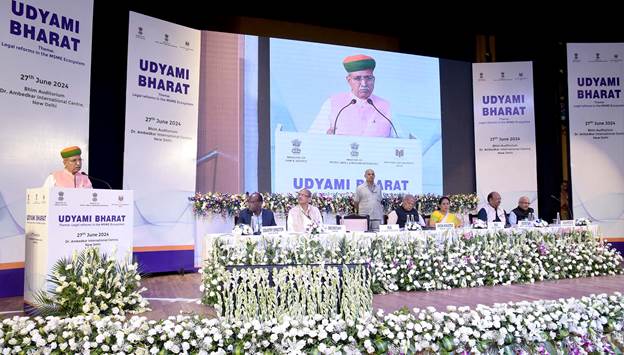
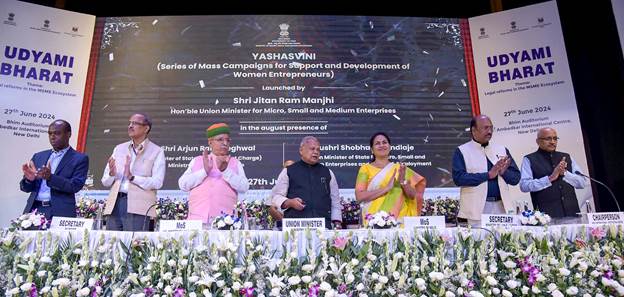
 Ministry of Micro, Small & Medium Enterprises organised a day-long programme here today on the theme of ‘Legal Reforms in the MSME Ecosystem’ of Udyami Bharat – MSME Day event. Speaking on the occasion Union Minister of State (Independent Charge) for Law & Justice, Shri Arjun Ram Meghwal structured his deliberation on three vital points. He emphasises the new Criminal laws are for providing ‘justice’ in contrast to colonial legislations where focus was on ‘punishment’. He observed that amendments in laws have been done with complete consultation with stakeholders. He said, firstly, it is important to understand that India has entered the era of Industry 4.0, tracing the history of evolution from Industry 1.0 to its present stage, he reiterated that the present era’s latest technologies such as Artificial Intelligence, machine learning, 3D printing, Robotics and its effect on the legal parlance has to be understood while working on legal reforms in the Micro, Small & Medium Enterprises sector. Secondly, he underlined the growing importance of Alternate Dispute Resolution (ADR) and mediation in solving disputes. He asserted that having an amicable solution is the best solution for any legal issues and the Public Sector Enterprises could also benefit from such ADR mechanism of dispute resolution between parties. Thirdly, reinforcing on Prime Minister Shri Narendra Modi’s vision, he said that 21st century is going to be India’s one and, in this context, India has the requisite potential to be the hub of Arbitration.

Delving into the theme of the conference Dr Rajiv Mani, Secretary, Department of Legal Affairs, Ministry of law and Justice said that Institutional arbitration comes with the advantage of better streamlined faster disposal of issues and effective way to resolve legal issues. He asserted that the MSME sector is the backbone of the economy and then the lengthy dispute resolution in traditional legal system could be avoided if the parties wish to resolve their issues via Alternate Dispute resolution and mediation.

Union Minister for Micro, Small and Medium Enterprises, Shri Jitan Ram Manjhi presided over ‘Udyami Bharat – MSME Day event. The Minister of State for MSME, Sushri Shobha Karandlaje along with other dignitaries highlighted the growing role of micro, small and medium enterprises in the growth of the economy.


The senior officials of Ministry of Micro, Small and Medium Enterprises and Ministry of Law and Justice were also present on the occasion.

***

PK/SB

No First Use & Massive Retaliation

 Chief of Defence Staff General Anil Chauhan has reiterated that the uniqueness of India’s nuclear trajectory is premised on the principle of ‘No First Use & Massive Retaliation’. Gen Anil Chauhan was delivering the keynote address on ‘Nuclear Strategy : Contemporary Developments and Future Possibilities’ in a seminar organised by Centre for Air Power Studies – IISS Seminar in New Delhi on June 26, 2024.

In his address, Gen Anil Chauhan highlighted the changing nature & characteristics of conventional warfare. He impressed that the threat from nuclear weapons has once again occupied centre-stage in the geopolitical landscape.

The CDS  stressed the need for a deeper thought, development of new doctrines, reimagning deterrence and safeguarding nuclear C4I2SR (Command, Control, Communications, Computers, Intelligence, Information, Surveillance and Reconnaissance) infrastructure.  

Gen Anil Chauhan also released the Asian Defence Review 2024 ‘Emerging Technologies and Changing Dimensions  of Threats to India’ at the CAPS – IISS Seminar.

***

Imposition of emergency had plunged world’s largest democracy into darkness

 Vice-President Jagdeep Dhankhar today said that in 1975 due to imposition of emergency, world’s largest democracy had plunged into darkness. Recalling the dark days of emergency, Shri Dhankhar asserted that the days of emergency will never be seen again as the constitutional democracy is very strong in Bharat and now constitutionally guaranteed at village, State and Union level.

Addressing at the golden jubilee celebrations of Central electronics Limited (CEL), Shri Dhankhar acknowledged the role of scientists and technologists of the country and called them as architects of new India. Applauding the turnaround of CEL from a loss making PSU on the verge of disinvestment to the conferment of ‘Miniratna’ status, Vice-President noted that CEL is a role model for other to energize themselves, motivate themselves so that they also grow in similar fashion.

“This story is not just about technological advancements; it is about transforming lives, empowering communities, and securing our nation’s strategic interests with innovation, resilience, and excellence”, he further added.

Noting the remarkable strides made by CEL in the field of solar energy, Shri Dhankhar underlined that renewable energy is not just an alternative; it is the future.  “By focusing on sustainable energy solutions, CEL is contributing to a greener, cleaner India. CEL’s innovations have brought sustainable energy solutions closer to the common man”, he added. He further called for promoting research to develop battery technologies and charging infrastructure to promote green mobility in the country.

Underlining the changing security landscape marked by electronic warfare techniques, artificial intelligence, reconnaissance, and surveillance, Shri Dhankhar highlighted the strategic importance of CEL in safeguarding national interests. “At the heart of all these [disruptive technologies] is electronics. Electronics forms the core, the base of any future technological development and expansion”, he stressed.

Lauding the recent steps taken in the country to support electronics manufacturing ecosystem, Shri Dhankhar said that the Indigenous capacity building for electronics design and manufacturing is significantly crucial to achieve ‘Aatmanirbharta’.

Earlier Vice-President, Jagdeep Dhankhar also unveiled the Golden Jubilee Logo of Central Electronics Limited and inaugurated the Multipurpose Hall ‘Swarn Mandapam’.

Dr Jitendra Singh, Hon’ble Minister of Science and Technology, Dr. N. Kalaiselvi, Secretary, DSIR & Director General, CSIR, Shri Chetan Prakash Jain, CMD CEL, members of CEL family and other dignitaries were also present on the occasion.

****

Developing world class manufacturing facilities is a must for realizing the Prime Minister’s vision of “Make in India “with “Zero Effect; Zero Defect”

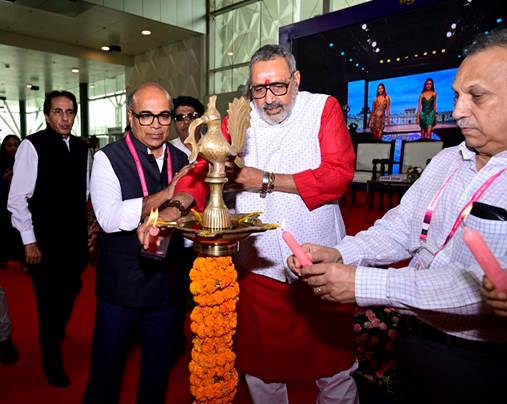
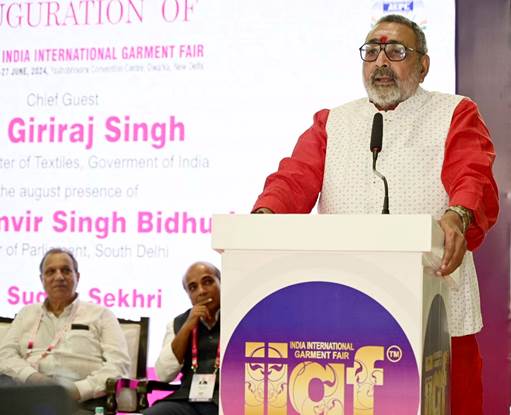
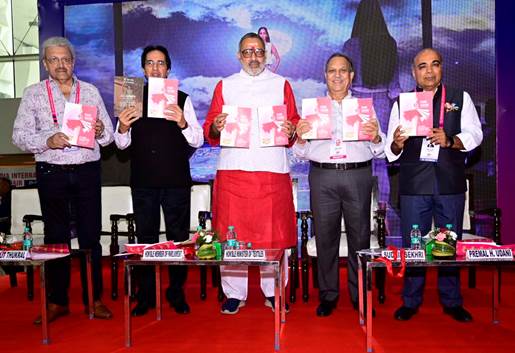
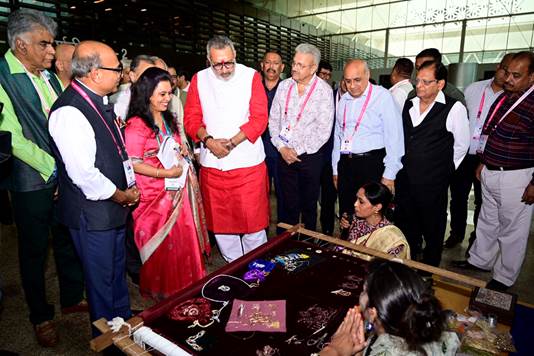
 Union Minister for Textiles, Shri Giriraj Singh inaugurated the 71st edition of the India International Garment Fair (IIGF) at Yashobhoomi Convention Centre today. Delivering his inaugural address, the Union Minister emphasized that the India International Garment Fair (IIGF) offers a unique marketing platform for micro, small, and medium exporters, showcasing India’s latest trends and diverse offerings to the rest of the world. Shri Giriraj Singh further said that developing world class manufacturing facilities is a must for realising the Prime Minister’s vision of “Make in India “with “Zero Effect; Zero Defect” at each level of the value chain.

Shri Singh also called for the adoption of the ‘hub and spoke’ model to enhance domestic manufacturing, encouraged industry collaboration and underscored the importance of establishing Indian brands. The ministry is also poised to revive the Scheme for Integrated Textile Parks (SITP) to create internationally standardized parks.

Shri Giriraj Singh stated that, “Today, India is one of the fastest growing economies in the world with a GDP growth rate of 7.2% and is expected to be 3rd largest economy by 2027-28.” The convergence of a positive domestic outlook with a growth-oriented political establishment has provided a conducive ecosystem for business in India. Several measures have been taken by the Government of India to enhance the infrastructure sector and ease of doing business, he added.

Further, the Minister stated that, the Indian Apparel and textiles market is of the size of 165 billion USD which has to touch 350 USD billion; a target, which has been fixed after industry consent. I request you to take it to 50 billion USD by 2030. Prime Minister made a roadmap to promote technical fiber and Geo textile, which is providing huge options for growth.


“I have said that my challenge is not Bangladesh. I would like to take ahead of China in time to come. Bangladesh water and raw material charges are going high. Further Shri Singh suggested that we will make small clusters for smaller players in India to boost RMG exports”.

Textiles Minister Giriraj Singh announces the expansion of the Rs 10,000 crore PLI scheme to the garment sector to boost domestic manufacturing and exports. Addressing the India International Garment Fair, Singh emphasizes revamping textile parks, and promoting green textiles will be our focus.

Shri Sudhir Sekhri, Chairman AEPC during his address underlined, “the global headwinds negatively affected Indian apparel exports. But despite these adverse scenarios, the Indian apparel export industry was able to hold its own and contain the damage to quite an extent.

Shri Mithileshwar Thakur, Secretary General said that there is a greater chance for Indian apparel exporters to expand its footprint across developed countries in coming years. The Indian apparel industry must in-cash this opportunity and start dreaming big.

Knowledge sessions are also being organised on the sidelines on the 25th and 26th June’2024 covering various topics like Navigating Global Trade: Challenges and Opportunities for the Industry, The Efficiency Advantage: Driving Manufacturing – Excellence in Apparel and Sustainable Fashion: From Concept to Reality.

This fair being organised by the Apparel Export Promotion Council (AEPC) through the International Garment Fair Association (IGFA), in association with three major garment Associations of India namely, Clothing Manufacturers Association of India (CMAI), Garment Exporters & Manufactures Association (GEMA) & Garment Exporters Association of Rajasthan (GEAR), is a testimony of the collective spirit, team-work and synergies built by these associations to achieve greater goal. More than 600 buyers from 50 countries participated in the event. 71st Edition will also host two fashion shows each day, from 25th to 27th June’2024, showcasing the best of the collections exhibited during the show.

***

18th Mumbai International Film Festival to be held from 15th to 21st June, 2024

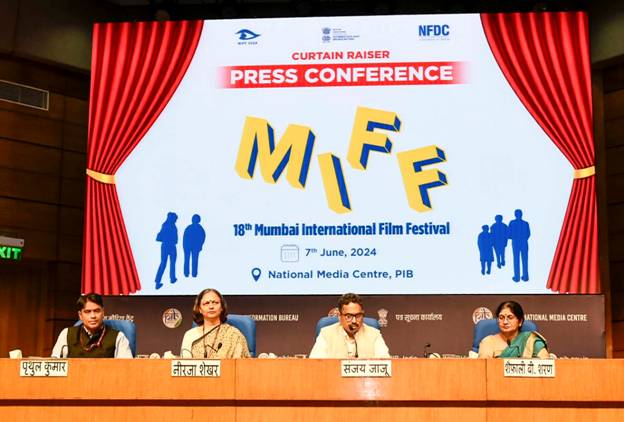
 Secretary, Ministry of Information and Broadcasting Shri Sanjay Jaju today announced that the 18th edition of the Mumbai International Film Festival will be held from 15th June to 21st June, 2024 in Mumbai. He said that while venue for the festival will be the FD-NFDC Complex, Mumbai, MIFF screenings will also be held in Delhi (Sirifort Auditorium), Chennai (Tagore Film Centre), Pune (NFAI auditorium) and Kolkata (SRFTI Auditorium).

Also present on the occasion were Additional Secretary, Ms. Neerja Sekhar, PDG, PIB, Ms.  Sheyphali B. Sharan and MD, NFDC, Sh. Prithul Kumar.

MIFF Film Programming

  1. Record Film Submission of 1018 films this year for the competition sections from 38 Countries across 65 Languages
  2. 118 films selected by the 3 Selection Committees of eminent film experts for the International (25) and National (77) competition sections. The Selection Committee also unanimously remarked that very high quality of film submissions has been received this year which made the selections tough.
  3. Total 314 films in the MIFF Programming this year
  4. There will be 8 world premieres, 6 international premieres, 17 Asia premieres and 15 India Premieres.
  5. Special packages have been curated in this edition, including:
    1. Award winning films package of Oscars and Berlinale (12 short films each)
    2. ‘Special Country Focus Packages’ from collaborating with 7 countries – Russia, Japan, Belarus, Italy, Iran, Vietnam and Mali
    3. Animation package curated from 4 countries – France, Slovenia, Argentina & Greece
    4. Student films from reputed institutes from across the country (45 films)
    5. Restored classics package from the NFDC-National Film Archives of India
    6. Competition films on the special theme of India at Amrit kaal showcasing the country’s growth, development, and prosperity
    7. Films for Divyangjan package for the visually challenged with audio description and sign language descriptions and for the hearing impaired with closed captions.
    8. Selected packages of films also on –
      1. Wildlife
      2. Mission Life
      3. Films by Asian Women Filmmakers

Opening & Closing Film of MIFF

  1. Opening Film of 18th MIFF will be “Billy & Molly, an Otter Love Story”, will initiate the festival with screenings in Mumbai, Delhi, Kolkata, Pune, and Chennai on 15th Jun, 2024.
  2. The Closing Film of festival is the film that wins the Golden Conch and will be showcased on 21st Jun, 2024.

Jury & Awards

  1. International jury includes eminent film personalities from across the world – Keiko Bang, Barthélemy Fougea, Audrius Stonys, Bharat Bala, and Manas Choudhary, who will award the Golden Conch for the best documentary film, the Silver Conch for the best international short fiction film and best animation film, and the Pramod Pati Award for the most innovative/experimental film.
  2. National jury for 18th MIFF comprises of notable names such as Adele Seelmann-Eggebert, Dr Bobby Sarma Baruah, Apoorva Bakshi, Munjal Shroff and Anna Henckel-Don nersmarck who will confer the Best Indian Documentary, Short Film, Animation, Best Debut Film Award (sponsored by Govt. of Maharashtra) and Best Student Film Award (sponsored by IDPA), in addition to a host of technical awards and a special Award for Best Short Film on “India in Amrit Kaal”.
  3. Further, 3 Technical Awards for 1) Cinematography, 2) Editing and 3) Sound Design, will be given common from National & International Competition.
  4. A FIPRESCI Jury 3 eminent film critics will also confer the award for a national competition documentary
  5. Total Awards of Rs 42 lacs.

Accessible Festival

  1. Films for the visually challenged with audio description and sign language descriptions and for the hearing impaired with closed captions.
  2. Besides the special films for the specially abled, NFDC has partnered with Svayam, a not-for-profit organisation to make the MIFF festival venue at NFDC-FD premises fully accessible for people who are differently-abled and also those who have special needs. The accessibility partnership will also ensure that volunteers at the event are sensitized to facilitate delegates with accessibility issues so as to make the experience of visiting delegates seamless.

Gala Opening /Closing Ceremony & Red Carpets

  1. Grand Opening & Closing ceremonies will be held at NCPA, Nariman Point, Mumbai. The events will see an artistic melange of cultural acts which will include an act depicting the journey of Indian animation, a cultural performance from Sri-Lanka in opening and from Argentina in closing ceremony and showcasing the FTII student short Film “Sunflowers were the first ones to know”, which won the La Cinef Award at the 77th Cannes Film Festival this year.
  2. Gala Red carpet screening will be held in NFDC-FD complex in Mumbai every day starting from the opening film on 15th June. The other red carpets being planned with the eminent film celebrities are Poacher, Inside Out-2, The Commandments Shadow, My Mercury, Srikant, Brand Bollywood, etc.
  3. Exclusive Red carpets will also be held at Delhi (17th Jun), Chennai (18th Jun), Kolkata (19th Jun) & Pune (20th Jun) with participation from eminent personalities from the film industry.

Masterclass & Panel Discussions:

  1. The 18th MIFF will host engaging 20 masterclasses, in-conversations and panel discussions with industry luminaries such as filmmakers Santosh Sivan, Audrius Stonys, Ketan Mehta, Richie Mehta, T.S Nagabharana, Georges Schwizgebel & many more.
  2. Open Forum discussions will be held in collaboration with Indian Documentary Producers Association (IDPA) every day at the vibrant Amphitheatre venue with eminent personalities of the film industry.
  3. A crash course on Animation and VFX pipeline has been organized for registered participants.

Doc Film Bazaar:

  1. DOC Film Bazaar is being organized for the first time, to help boost the film production by providing a platform to filmmakers to find buyers, sponsors and collaborators for their projects.
  2. Close to 200 projects have been received from 10 countries in 27 languages.
  3. 3 curated verticals will be organized in the Doc Film Bazaar – ‘Co-production Market’ (16 projects), ‘Work-in-progress (WIP) Lab’ (6 projects) and ‘Viewing Room’ (106 projects).
  4. Besides these opportunities for selected projects, there will also be an ‘Open Buyer-Seller Meet’ which will help filmmakers collaborate with buyers and corporates in the realm of production, syndication, acquisition, distribution and sales.
  5. A dedicated session to explore the symbiotic relationship between documentary filmmaking and corporate branding. With industry leaders from various industry verticals, like FICCI, will explore the CSR funding of documentaries as powerful tools for brand enhancement and as a catalyst for positive societal impact.

Dedicated Portal & Mobile App for MIFF

  1. An interactive website of MIFF has been developed providing engaging details about the films, events and activities planned at the festival www.miff.in
  2. A dedicated mobile app has been developed for facilitating participation of delegates in various activities such as prior booking of film screenings, attending masterclasses, open forums, etc. It will also help the festival obtain valuable feedback from the delegates.

Delegate Registrations

  1. The Delegate Registrations are simple but mandatory for attending the festival through the website or the QR code provided in promotional material of MIFF.
  2. The Delegate Registration are also being provided through Book My Show.
  3. There are no extra charges for attending any number of film screenings or masterclasses or Doc film Bazaar.
  4. Delegate registration Fees-
    1. Mumbai – Rs 500 for attending the entire festival
    2. Delhi, Chennai, Kolkata & Pune – Free
    3. Student & Press – Free
    4. All Delegate registrations are ‘FREE’ fort the next 3 days.

Partnerships

  1. This year for the very first time, MIFF has received corporate collaborations from more than 20 brands in the festival. The brands have collaborated with the festival at various levels – from sponsoring various aspects of the festival to bringing in expertise to strengthen the festival.

Background

MIFF is the oldest and largest film festival for non-feature films (Documentary, Short Fiction & Animation) in South Asia and a premier international event of the documentary film world, since it started in 1990. It is a biennial event organized once in 2 years.

MIFF provides a platform for documentary filmmakers from all over world to meet, exchange ideas, explore the possibilities of co-productions and marketing of documentary, short and animation films and also broaden the vision of filmmakers’ vis-a-vis world cinema. The festival will provide a platform for more conversations and discussions on the documentary, animation and short films front; aimed at fostering artistic expression and proving to be a creative catalyst to the filmmakers and attendees alike.

****

The India Opportunity Showcased at the IPEF Clean Economy Investor Forum

 On the sidelines of the inaugural Indo-Pacific Economic Framework for Prosperity (IPEF) Clean Economy Investor Forum, the Department of Commerce and Invest India organised a meeting to showcase various investment opportunities in India.


In his inaugural address Secretary, Department of Commerce, Shri Sunil Barthwal, stressed on how India’s growth rate is nearly double that of other emerging market economies. He remarked on how this strong growth is also leading to a trend of ‘reverse flipping’, where Indian start-ups that once moved abroad for capital access and tax benefits are now returning home. He emphasised how the digital economy along with emerging technologies like AI and rise of data centres were key to future Indian growth.

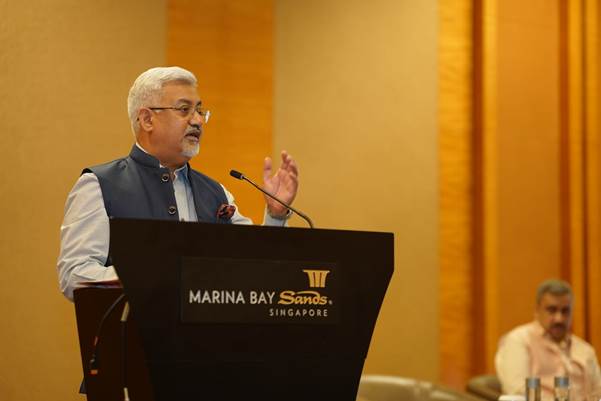
The meeting held at Marina Bay Sands, Singapore, attracted over 60 participants, including global investors from the US, Singapore, Japan, Australia, Korea, and other countries, as well as India’s private sector and government officials. The event brought together investors and financial institutions from IPEF Member countries like that of Temasek, Global Infrastructure Partners, GuarantCo, Private Infrastructure Development Group (PIDG), Goldman Sachs, I Squared Capital, Mizuho Bank Ltd, Advantage Partners, Nomura, DBS Bank and Citi Bank. The   Indian infrastructure and climate tech companies showcased their solutions and engaged with international investors to tap into global markets.

Indian High Commissioner to Singapore, H.E. Dr. Shilpak Ambule, focused on the fundamentals that are driving Indian growth. He said that the investment in physical and digital infrastructure will have multiplier effects on the Indian economy, and that the legislative and regulatory changes have created a pro-market field, providing conducive and predictable policy environment. He stressed on how shifting global supply chains and Indian efforts modernization of infrastructure will enable India to participate in them.

This was followed by an India opportunity presentation in which Invest India showcased the India’s through various government flagship initiatives like a flourishing startup ecosystem, a sizable pool of skilled and talented professionals across diverse industries, a push for investments in infrastructure projects, policy reforms aimed at streamlining regulations, enhancing transparency, and improving Ease of Doing Business.

MD and CEO of Invest India, Ms Nivruti Rai highlighted that India is keen on collaborating with investors, clean economy firms, and innovative startups to drive sustainable infrastructure, climate technology, and renewable energy projects to meet Net Zero targets.

Speaking during the fireside chat titled the Charting India Opportunity, Ms Radhika Rao, Senior Economist and Executive Director, mentioned that India strength is in 4C’s – Consistency & Continuity in Policy and reforms; Increasing Capex through government, household spending and private sector; Composition of trade shifting towards manufacturing sectors; Increasing consumption over the next 5 years.

Ms Sonal Varma, Managing Director, Nomura spoke in detail about the Nomura India report. The report shows that highest number of companies are looking at India than any other geography during their “Bottom’s up” study, a survey of around 130 companies mapping their investments in sectors and country.  India is attracting investments in broad based sectors ranging from semiconductor assembly to testing, automobiles to capital goods.

Mr Kunal Agarwal, Managing Director, I Squared highlighted that India is going through Infrastructure Supercycle, which is an enabler for digital revolution and India is viewed as a secular investment opportunity.

During the event, members of the industry expressed highlighted that the inaugural forum was a significant step forward in promoting economic cooperation in the Indo-Pacific region. They emphasized the importance of industries working together to address the challenges they faced and create new opportunities for growth. The forum also underscored the crucial nature of a clean economy and supply chain resilience.

About IPEF and Clean Economy Investor Forum

The Indo-Pacific Economic Framework for Prosperity (IPEF) was launched in May 2022 and currently includes 14 partners – Australia, Brunei Darussalam, Fiji, India, Indonesia, Japan, the Republic of Korea, Malaysia, New Zealand, Philippines, Singapore, Thailand, United States and Vietnam. The IPEF, comprising four pillars of cooperation, namely Trade, Supply Chain, Clean Economy and Fair Economy, provides a platform for countries in the region to collaborate on advancing resilient, sustainable, and inclusive economic growth and aims to contribute to cooperation, stability and prosperity in the region.

The IPEF Clean Economy Investor Forum, one of the initiatives under the IPEF, brought together the region’s top investors, philanthropies, financial institutions, innovative companies, start-ups and entrepreneurs to mobilise investments into sustainable infrastructure, climate technology and renewable energy projects.

***