Human-Centric Globalisation: Taking G20 to the Last Mile, Leaving None Behind

 ‘Vasudhaiva Kutumbakam’ – these two words capture a deep philosophy. It means ‘the world is one family’. This is an all-embracing outlook that encourages us to progress as one universal family, transcending borders, languages, and ideologies. During India’s G20 Presidency, this has translated into a call for human-centric progress. As One Earth, we are coming together to nurture our planet. As One Family, we support each other in the pursuit of growth. And we move together towards a shared future – One Future – which is an undeniable truth in these interconnected times.

The post-pandemic world order is very different from the world before it. There are three important changes, among others.

First, there is a growing realisation that a shift away from a GDP-centric view of the world to a human-centric view is needed.

Second, the world is recognizing the importance of resilience and reliability in global supply chains.

Third, there is a collective call for boosting multilateralism through the reform of global institutions.

Our G20 Presidency has played the role of a catalyst in these shifts.

In December 2022, when we took over the Presidency from Indonesia, I had written that a mindset shift must be catalysed by the G20. This was especially needed in the context of mainstreaming the marginalized aspirations of developing countries, the Global South and Africa.

The Voice of Global South Summit, which witnessed participation from 125 countries, was one of the foremost initiatives under our Presidency. It was an important exercise to gather inputs and ideas from the Global South. Further, our Presidency has not only seen the largest-ever participation from African countries but has also pushed for the inclusion of the African Union as a permanent member of the G20.

An interconnected world means our challenges across domains are interlinked. This is the midway year of the 2030 Agenda and many are noting with great concern that the progress on SDGs is off-track. The G20 2023 Action Plan on Accelerating Progress on SDGs will spearhead the future direction of the G20 towards implementing SDGs.

In India, living in harmony with nature has been a norm since ancient times and we have been contributing our share towards climate action even in modern times.

Many countries of the Global South are at various stages of development and climate action must be a complementary pursuit. Ambitions for climate action must be matched with actions on climate finance and transfer of technology.

We believe there is a need to move away from a purely restrictive attitude of what should not be done, to a more constructive attitude focusing on what can be done to fight climate change.

The Chennai HLPs for a Sustainable and Resilient Blue Economy focus on keeping our oceans healthy.

A global ecosystem for clean and green hydrogen will emerge from our presidency, along with a Green Hydrogen Innovation Centre.

In 2015, we launched the International Solar Alliance. Now, through the Global Biofuels Alliance, we will support the world to enable energy transitions in tune with the benefits of a circular economy.

Democratising climate action is the best way to impart momentum to the movement. Just as individuals make daily decisions based on their long-term health, they can make lifestyle decisions based on the impact on the planet’s long-term health. Just like Yoga became a global mass movement for wellness, we have also nudged the world with Lifestyles for Sustainable Environment (LiFE).

Due to the impact of climate change, ensuring food and nutritional security will be crucial. Millets, or Shree Anna, can help with this while also boosting climate-smart agriculture. In the International Year of Millets, we have taken millets to global palates. The Deccan High Level Principles on Food Security and Nutrition is also helpful in this direction.

Technology is transformative but it also needs to be made inclusive. In the past, the benefits of technological advancements have not benefited all sections of society equally. India, over the last few years, has shown how technology can be leveraged to narrow inequalities, rather than widen them.

For instance, the billions across the world that remain unbanked, or lack digital identities, can be financially included through digital public infrastructure (DPI). The solutions we have built using our DPI have now been recognised globally. Now, through the G20, we will help developing countries adapt, build, and scale DPI to unlock the power of inclusive growth.

That India is the fastest-growing large economy is no accident. Our simple, scalable and sustainable solutions have empowered the vulnerable and the marginalised to lead our development story. From space to sports, economy to entrepreneurship, Indian women have taken the lead in various sectors. They have shifted the narrative from the development of women to women-led development. Our G20 Presidency is working on bridging the gender digital divide, reducing labour force participation gaps and enabling a larger role for women in leadership and decision-making.

For India, the G20 Presidency is not merely a high-level diplomatic endeavour. As the Mother of Democracy and a model of diversity, we opened the doors of this experience to the world.

Today, accomplishing things at scale is a quality that is associated with India. The G20 Presidency is no exception. It has become a people-driven movement. Over 200 meetings will have been organised in 60 Indian cities across the length and breadth of our nation, hosting nearly 100,000 delegates from 125 countries by the end of our term. No Presidency has ever encompassed such a vast and diverse geographical expanse.

It is one thing to hear about India’s demography, democracy, diversity and development from someone else. It is totally different to experience them first-hand. I am sure our G20 delegates would vouch for this.

Our G20 Presidency strives to bridge divides, dismantle barriers, and sow seeds of collaboration that nourish a world where unity prevails over discord, where shared destiny eclipses isolation. As the G20 President, we had pledged to make the global table larger, ensuring that every voice is heard and every country contributes. I am positive that we have matched our pledge with actions and outcomes.

*******

G20 Technical Workshop on Climate Resilient Agriculture on 4th – 6th September 2023 in Hyderabad

 The Department of Agricultural Research and Education (DARE), Ministry of Agriculture and Farmers Welfare is organizing the G20 Technical Workshop on “Climate Resilient Agriculture” on 4-6 September 2023 in Hyderabad. The Workshop aims to bring together experts from around the world to discuss and highlight the challenges of Climate Change and would emphasize the cooperation and exchange of information to enhance the skills and competencies of countries in addressing challenges posed by climate change. The eminent speakers

The three-day event began today with the Inaugural Session which was graced by Minister of State for Agriculture and Farmers Welfare, Ms. Shobha Karandlaje. The first day was focused on the “Climate Resilient Agriculture Research Needs and Innovations” wherein the eminent speakers shared their experiences in their respective countries to achieve resilience in agriculture. They shall also list out scientific and innovative solutions that are required to address these emerging challenges to reduce the uncertainty in the agriculture food systems. The event is attended by dignitaries including foreign delegates from G20 member states, Guest-invited countries, and International Organizations (IOs). Senior Officials from the Ministry of Agriculture and other Ministries also attended the meeting to deliberate in the technical sessions on the various issues of agriculture research predominantly on Climate Change and other techniques and methods for sustainable development of agriculture in the Global context.

Minister of State for Agriculture and Farmers Welfare, Ms. Shobha Karandlaje mentioned that agriculture is the most sensitive sector and is greatly influenced by climate change which is already happening in G 20 Nations. She said that the impacts of climate change are already being experienced by all of us and hope that the recommendations emanated from this workshop will give direction towards attaining climate-resilient agriculture.

Secretary DARE, and DG ICAR, Dr. Himanshu Pathak reiterated that agriculture in India is highly vulnerable to climate change and variability. He said that in recent years, the frequency of climatic extremes has increased resulting in increased risks to agricultural production and food security all over the World, including India and emphasized that the efforts of ICAR are very significant in meeting the challenges of climate change. Additional Secretary & FA, DARE, Ms. Alka Nangia Arora opined that Climatic risk is manifested in terms of the incidence of droughts, floods, and high intra-season variability in rainfall. Hence, risk – climatic and other forms of risk – remains a key challenge to researchers and policymakers.

DDG(NRM), ICAR, Dr. S.K, Chaudhari chairman of Technical Workshop for Climate-Resilient Agriculture, expressed that G20 Nations, mindful of G20’s leadership role, can position themselves as pioneers in developing climate-resilient practices for sustainable agriculture to enhance food security. Location-specific Climate Resilient Technologies (CRTs) are being demonstrated in India for coping with climate variability in vulnerable districts of India to generate awareness and to build the capacity of farmers and other stakeholders. Further ensured that the deliberations of this workshop would provide a road map for the research and development agenda to comprehensively address the climate change impacts on the agriculture sector. Director, ICAR-CRIDA, Dr. V.K. Singh profusely thanked the dignitaries and delegates for attending the Technical Workshop by travelling all the way from different nations.

The Theme of the G20 Indian Presidency is One Earth, One Family, and One Future, which celebrates the spirit of togetherness and harmony amongst us to ensure a bright future for the world. Upscaling Climate Resilient Agriculture Case studies and Experiences, Policy, Finance, and Institutional Needs for Climate Resilient Agriculture will be discussed in the upcoming technical sessions of the three-day event. As a part of the program, on 5th September 2023, the delegates would be taken on an excursion visit to ICAR-Indian Institute of Millets Research (IIMR) Hyderabad to showcase the scientific advances made in the field of research on Millets as part of the International Year of Millets 2023. India is looking forward to strengthening its Scientific Research and Development initiatives in the field of Millet and cooperating with other countries to help them develop these crops in their countries.

Later the delegates would be taken on a short trip to Shilparamam, Hyderabad on 5th September 2023 to witness the live dance performances of Indian folk artists depicting the traditional dance forms of music. The delegates would also explore the traditional products of India and the opportunity to buy them at the Shilparamam Complex, Hyderabad. The delegates on 6th September 2023 would be taken on an excursion visit to ICAR- CRIDA Hayathnagar Research Farm where they would be taken to field farms and given an overview of the crops and their management. The Department in close coordination with the support of district administration has made elaborate arrangements for the safety and security of the delegates. The delegates would leave for their respective countries on 6th 7th September 2023.

********

What are different Types and Design of Blinds

 One of the popular item to make home and offices look nice is blinds. Blinds are versatile window coverings that serve both functional and aesthetic purposes in homes and offices. They offer control over privacy, light, and temperature while also contributing to the overall interior design. Peterjohn.co.uk provides different types of Blinds come in various designs, allowing individuals to choose the perfect option to suit their needs and style preferences.

Here are some of the most popular types and designs of blinds:

Photo by Pixabay on Pexels.com
  1. Vertical Blinds:
    • Vertical blinds consist of individual slats that hang vertically from a track.
    • They are an excellent choice for large windows and sliding glass doors.
    • Available in various materials, including fabric, vinyl, and wood, allowing for customization.
  2. Horizontal Blinds:
    • Horizontal blinds have slats that run horizontally and can be adjusted to control light and privacy.
    • Common materials include aluminum, wood, and faux wood.
    • Venetian blinds are a popular type of horizontal blind with wider slats.
  3. Roman Blinds:
    • Roman blinds are made of fabric that folds up into neat horizontal pleats when raised.
    • They create an elegant and soft look in any room and are great for bedrooms and living areas.
  4. Roller Blinds:
    • Roller blinds consist of a single piece of fabric that rolls up and down using a pulley system.
    • They are simple and functional and come in a wide variety of patterns and colors.
  5. Pleated Blinds:
    • Pleated blinds have a concertina-like structure and are made from pleated fabric.
    • They are perfect for adding texture and style to windows, especially in contemporary interiors.
  6. Cellular or Honeycomb Blinds:
    • These blinds are designed with a unique honeycomb structure that traps air, providing excellent insulation.
    • They are energy-efficient and help regulate indoor temperatures.
  7. Bamboo and Woven Wood Blinds:
    • These blinds are crafted from natural materials such as bamboo, reeds, and grasses.
    • They add a warm and earthy feel to interiors and are often used in eco-friendly designs.
  8. Panel Blinds:
    • Panel blinds consist of large fabric panels that slide horizontally along a track.
    • They are ideal for covering large windows and creating room dividers in open spaces.
  9. Motorized Blinds:
    • Motorized blinds can be controlled remotely or through a smart home system.
    • They offer convenience and can be programmed to adjust automatically based on time of day or sunlight levels.
  10. Blackout Blinds:
    • Blackout blinds are designed to block out all light and are perfect for bedrooms or home theaters.
    • They often have special light-blocking features and are available in various styles.
  11. Custom Blinds:
    • Many blinds can be customized to fit specific window sizes and design preferences.
    • Custom options include fabric choices, color, slat width, and decorative elements.

Blinds play a significant role in interior design, providing both functionality and aesthetics. When choosing blinds for your space, consider factors like light control, privacy, insulation, and style to find the perfect blinds that complement your decor and meet your needs.

International Lesson Learning Workshop of Infrastructure for Climate Resilient Growth program

 Minister of State for Rural Development and Consumer Affairs, Food & Public Distribution, Sadhvi Niranjan Jyoti inaugurated International Lesson Learning Workshop of the Infrastructure for Climate Resilient Growth program yesterday. Secretary (Rural Development), Shri Shailesh Kumar Singh, the British High Commissioner to India, Shri Alex Ellis, the Resident Representative of UNDP, Shri Isabelle Tschan, Joint Secretary (Mahatma Gandhi NREGA), Shri Amit Kataria and Director (Mahatma Gandhi NREGA), Shri Dharmvir Jha were also present on the occasion. Sadhvi Niranjan Jyoti, along with all notable guests jointly unveiled a book showcasing 75 success stories of climate resilience. This compendium, compiled by UNDP, highlights the significant role of the Mahatma Gandhi NREGScheme program in strengthening the climate resilience of vulnerable communities.

In her address, Sadhvi Niranjan Jyoti highlighted the nation’s unwavering commitment to building climate-resilient infrastructure for sustainable development. A shining example of this is the Mahatma Gandhi NREGA scheme, which is leading the way in conserving water and bridging vital gaps. Secretary, Shri Shailesh Kumar Singh praised the efforts of State Governments, acknowledging that without their support, the program would not succeed in integrating climate resilience into the planning and implementation of the Mahatma Gandhi NREGScheme. During the event, a recorded message of the Minister of State for Indo-Pacific, Government of United Kingdom, Ms. Anne-Marie Trevelyan was relayed. In her message, she underscored the deepening trust and partnership between the two Nations in the realm of climate resilience, emphasizing their commitment to working together.

The British High Commissioner to India, Shri Alex Ellis conveyed that India’s climate action plans and development agenda place great importance on Adaptation and Resilience, making them a key focus area of the India-UK partnership. The technical assistance programme ‘Infrastructure for Climate Resilient Growth’ (ICRG), which was jointly conceived by the Ministry of Rural Development, Government of India and Foreign, Commonwealth and Development Office, Government of United Kingdom, added value to the Mahatma Gandhi NREGScheme by way of integrating climate change considerations into the planning and implementation of the Scheme. The Resident Representative of UNDP, Shri Isabelle Tschan underlined that during the implementation of ICRG programme, UNDP used approach of building capacities of the key stakeholders including the rural communities and engaged them in planning and implementing Mahatma Gandhi NREGS. The efforts have showcased the success of this concept and approach to building resilience of the rural poor.

During his welcome note, Joint Secretary, Shri Amit Kataria highlighted the ICRG program as a demonstration of how climate-informed planning of Mahatma Gandhi NREGA infrastructure can contribute to resilient livelihoods through initiatives such as groundwater recharge, micro-irrigation, soil and water conservation, and plantations. During the workshop, the states of Bihar and Odisha, where the ICRG program was implemented, shared valuable insights on how MGNREGS has facilitated more effective investment in natural resource management (NRM) infrastructure. These insights focused on supporting resilient livelihoods, particularly in the agricultural sector.

The workshop saw participation from various national and international experts who covered a range of topics related to climate resilient growth. Lessons from Climate Resilience and Information and Systems Planning (CRISP-M tool) implementation were also shared by from International Institute of Environment and Development (IIED), United Kingdom. IIED discussed the innovative use of GIS and climate information for planning water conservation and harvesting. This approach aims to achieve long-term drought proofing and enhance flood resilience, showcasing the potential of technology in addressing water-related challenges in the context of climate change. Riya Rahiman from the Coalition for Resilient Infrastructure (CDRI) presented on the importance of early action and early warning systems in building climate and disaster resilience. She also shared case studies from Small Island Developing States (IRIS), highlighting practical examples of resilience-building efforts in vulnerable island communities.

Chief of Social Policy at UNICEF India, Shri Hyun Hee Ban discussed the opportunities for MGNREGS to contribute to child, gender, and shock-responsive social protection. During the presentation, Shri Hyun Hee Ban highlighted how MGNREGS can be utilized to address the unique requirements of children, advance gender equality, and offer assistance during periods of shocks and crises. The focus was on maximizing the program’s potential to provide targeted support and social protection for vulnerable groups in such circumstances. Dr. Luigi Di Sarno from the University of Liverpool provided insights on low carbon and sustainable engineering solutions for durable and resilient constructions. The briefing covered innovative approaches and technologies that can contribute to the development of environmentally friendly and resilient infrastructure.

An advisor from FCDO Nairobi, Shri David Kinyua shared insights and learnings from the Hunger Safety Net Programme in Kenya. This involved discussing strategies and approaches implemented in the program to address food insecurity and build resilience among vulnerable populations in Kenya. Shri Vivek Coelho Programme Policy Officer (DRR/DRM) from the UN World Food Programme – India, presented on international experiences from the World Food Programme by sharing insights and lessons learned from the organization’s work in various countries, highlighting effective approaches to disaster risk reduction and management in the context of food security.


*****

International Aerospace Conference jointly organized by MoCA and CII

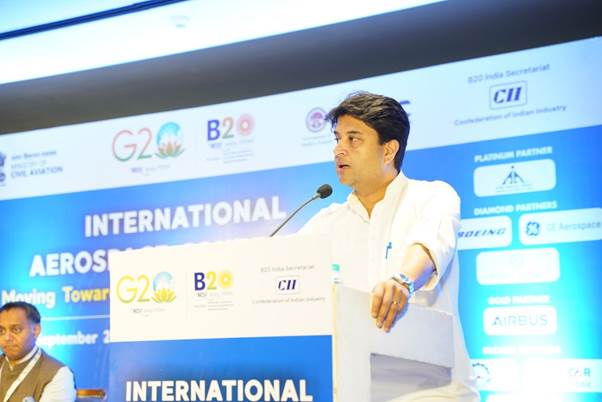
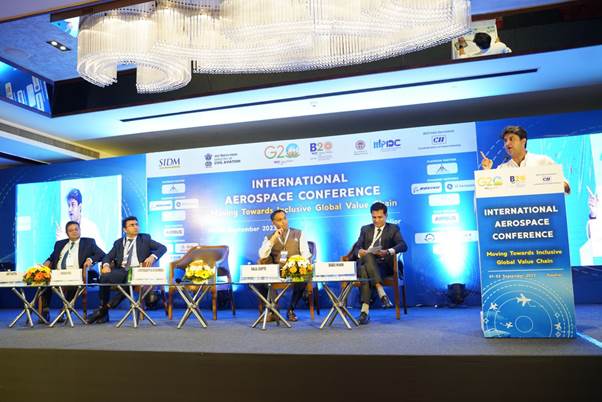
 Shri Jyotiraditya M Scindia, Union Minister for Civil Aviation & Steel today inaugurated the ‘International Aerospace Conference: Moving Towards Inclusive Global Value Chains’. It is being jointly organised by the Ministry of Civil Aviation and Confederation of Indian Industry (CII) on 1st and 2nd September 2023 in Gwalior, Madhya Pradesh.

Image

The International Aerospace Conference is a G20 initiative in the aerospace sector under G20 and B20 priority, focusing on developing inclusive global value chains for Global trade and Investment and aims to promote and strengthen trade and investment among the G20 countries.

In his inaugural address, Shri Jyotiraditya M Scindia said that now it is time for global aerospace industry players to supplant themselves to India and there are multiple reasons for it: A) Development of Infrastructure: Indian civil aviation sector had only 74 airports nine years ago; now it has moved to 148 airports including heliports and water aerodromes. And the government is committed to take this number upwards of two hundred in coming three to five years;  B) Availability of aircrafts: Earlier there were 400 planes in 2014 now this number has reached almost 700 and nearly 1000 more on order; C) Ecosystem Development: The disinvestment of Air India has brought about a transformation in civil aviation industry in the country, not only for passengers, not only airports, but also for MROs, for manufacturing sector, and for cargo. The huge orders of aircraft placed by Air India and Indigo and the emergence of new players like Akasha is another example of the changes that are taking place in Indian civil aviation industry;  D) Thrust on Regional Connectivity: UDAN has given birth to 4 new regional airlines in the country. The hub and connectivity network we have been talking about for decades is a reality in India today.

Image

Talking about the aviation infrastructure in the city of Gwalior, Shri Scindia assured that the development of the new integrated domestic terminal of the Gwalior Airport will be completed within shortest record-breaking time of fifteen month. He also assured greater and consistent support from the government for the holistic growth of aerospace manufacturing in India.

During interaction with the dignitaries, the Minister emphasized that under the leadership of Prime Minister Shri Narendra Modi, we believe in being monumental in our approach rather than being incremental and this stands true for the civil aviation sector as well, where liberalized drone policy & Production Linked Incentive Scheme for drone and its components, implementation of DigiYatra, New MRO Guidelines, and helicopters for last mile connectivity – have made the sector more accessible for its customers.

In the conference, panels of luminaries will be discussing a range of issues pertaining to global value chains and how to make them all-inclusive. The conference involves five sessions covering the following issues:

  • Spawning Global Value Chains in Design & Robust Aerospace Manufacturing: Importance of MSMEs
  • Integrated Global MRO Services
  • Women in Aviation: Fireside chat
  • Advanced Technologies in Aerospace & Air Mobility: Changing Skill Sets
  • Building Scale in Aerospace Manufacturing

In the last couple of decades, there has been a mammoth increase in Global Value Chains which has transformed the global economy. Over these years, GVCs have worked as an engine of growth and driven economic growth, technological innovation, and job creation. This event will further contribute to preparing India towards matching the challenges that the global supply chain offers.

***

Launch of the warship Mahendragiri in Mumbai


The launch of Mahendragiri is a significant milestone in our maritime history. It is the last of the seven warships of the Nilgiri-class stealth frigates built under Project 17A. Last month, Hon’ble President, Smt. Droupadi Murmu ji launched ‘Vindhyagiri’, the sixth frigate and the predecessor of this ship, which was built by Garden Reach Shipbuilders & Engineers Ltd. in Kolkata, the City of Joy.

A pleasant coincidence, a year ago, we had attained a new milestone. On 2nd September 2022, Hon’ble Prime Minister, Shri Narendra Modi ji had commissioned the country’s first indigenous aircraft carrier INS Vikrant at Cochin Shipyard Limited. It was just a year ago. Reflecting the aspirations of new Bharat, Vikrant stands as a symbol of indigenous potential, indigenous skills and our ambitions to ride over high-tides.

Let me share another accomplishment today that makes us all proud. It reflects our technological promise and deep penetration. UPI recorded over 10 billion transactions worth Rs. 15 trillion as of August 30, according to data issued by National Payments Corporation of India. Friends, this will make all of us very proud. Indeed a phenomenal feat that epitomises a big change taking place all over India.

The launch of a warship – Mahendragiri – is some kind of record, this indicates the best of progress we are having in this country, and this will mean five launches of the same class of warships in about 15 months- a feat that makes us all proud.

The warship Mahendragiri, named after a mountain peak in Eastern Ghats located in Odisha, is an engineering marvel, with state-of-the-art features and cutting-edge technologies. This majestic warship is a remarkable symbol of our nation’s strength and maritime prowess. A testament to the unwavering commitment and indomitable spirit of the Indian Navy that has ever made us proud in all kinds of situations.

The speed of manufacturing warships has improved ever since the new method of “integrated construction” has been adopted and this has yielded geometric results for the nation’s welfare.

The Nilgiri-class warships have been designed in-house by the Indian Navy’s Warship Design Bureau, the pioneer organisation for all warship design activities. Friends, this was not without many that the Naval Chief said ‘Made in India, Made for India, Made by India.’ And that is something which you could not object or contemplate a few decades ago. This is a great moment of joy for all of us.

Aligning with the country’s resolute commitment to ‘Aatma Nirbharata’, a substantial 75% of the orders for equipment and systems of the Nilgiri class have been made to indigenous firms. This is an important, but what is more important, what is more significant, the greatest impactful situation is that this job has been given to small, micro and medium enterprises; their contribution in this state of art Mahendragiri is commendable, which speaks about inclusive growth and involvement of our small enterprises.

The launch of Mahendragiri is an apt testament to the incredible progress our nation has made in building a self-reliant naval force. Amid evolving power dynamics in the Indian Ocean Region (IOR), this launch gains added strategic importance. India’s recent phenomenal economic rise and global ascendancy imperatively call for a modern Navy to protect its maritime interests and shoulder additional responsibilities, particularly in the current geo-political and security situation that prevails in the Indian Ocean region. It is soothing to note that the issue is being very well attended by the Government and the Navy.

Congratulations to all officials, engineers, workers and all other small and micro enterprises that have fructified this great occasion today. It is only apt that this symbol of India’s growing maritime power is being unveiled here in Mumbai.

The docks with a rich history of 250 years, will make anyone proud in the world and the journey of 250 years has been negotiated, traversed by the skill, hard work, dedication of the human resource and the competent leadership that has resulted in this great day. Therefore, it is very apt, befitting, and imminently stable that this is taking place in Mumbai. The docks with a rich history of a social and economic trajectory of the Diamond City and of the nation.

There is no city in the world as vibrant as Mumbai. Mumbaikars are never in complaint mode. They are always in gear to perform. This is one such testimony.

Friends, not many countries have the kind of history which we have. Our civilization dates back to thousands of years but when it comes to the maritime past, oceanic influence has been there for 2000 years.

Since the time of Indus Valley Civilization, we have been a seafaring nation. One of the earliest docks in the world was at Lothal– which connected the city to an ancient course of the Sabarmati River on the trade route between Harappan cities in Sindh and the peninsula of Saurashtra. Today, our nation stands at the cusp of remarkable growth.

The Naval Chief focused that we are going to be the third largest global economy. In September, 2022, we became the fifth largest global economy and in the process we all took over our colonial rulers; they ruled us for 200 years. उनको  पछाड़ कर, पांचवे पायदान पर आना, हर भारतीय के लिए गर्व का मौका है और ये हमने तब हासिल किया जब कुछ दशकों पहले इसकी कल्पना नहीं की जा सकती थी । The credit goes to the Government, the leadership, the vision, and every Indian who has contributed to this great growth.

Friends, by all consideration India will be the third largest global economy by the end of this decade. Now, when the economy grows, when trade grows, what we are doing today has great relevance. A growing economy means higher volumes of trade. Over 90% of the India’s trade by volume and over 68% by value, moves through maritime routes at present. This further underlines the importance of Navy and what we are doing today. हर भारतीय आज एक बात देख रहा है कि दुनिया में जो भारत का नाम है वो परकाष्ठा पर है। भारत के पासपोर्ट की क्या कीमत है, भारतीय होने में क्या अभिमान है, वो हम अपनी आँखों से देख रहे है । In such a situation, our eyes are well set for Bharat@2047 – the centenary celebration of its independence. I have no doubt some of us may not be around but youngsters will be around, Bharat will surely emerge as a global leader and a stabilizing force.

India’s maritime strength is quintessential for our economic and strategic upsurge. It is heartening to note that the stealth frigates of Project 17 Alpha have over 75% indigenous content. This is a significant contribution towards Prime Minister, Shri Narendra Modi ji’s vision of Make in India & ‘Aatma Nirbhar Bharat’. These are not empty slogans, these slogans have resulted in mega big ticket infrastructure projects in this country, what we have is at par with the best in the world today.

It shows the steadfast dedication to foster and believe in our own skilled people, their technique, their contribution, their innovation, and this is taking place in different sectors as well. The multi-mission frigates of this series would be capable of dealing with all kinds of threats to our maritime interests. The threats are multiplying and the role of India is increasing. The world is looking at us to secure these areas and it is gratifying to note Bharat has risen to the challenge, Indian navy has risen to the challenge, Mazagon Dock builders has risen to the challenge and that is why our country will ever be on the rise. The rise is unstoppable.

The Government of India has created an enabling policy architecture to promote the domestic defence sector. Go to Uttar Pradesh and Tamil Nadu you’ll see the defence corridors, they are functional, they indicate the times that are being seen by us.

It is indeed a matter of pride that the value of defence production in India has crossed the figure of Rs. One lakh crore for the first time ever during the financial year 2022-23 on our home front which is bound to geometrically increase. I have no doubt about it.

The Government had launched the Innovations for Defence Excellence (i-DEX) scheme to involve Start-ups, research institutions and academia in designing innovative solutions for our defence sector. This has resulted in big impactful development. More than 300 Start Ups have been engaged through i-DEX. Each of them will be contributing qualitatively in a significant area.

I congratulate the Indian Navy that they have the Directorate of Indigenisation – with the motto ‘Ideate, Innovate, indigenize’. This is an impactful step in the right direction. This motto very captures what Bharat is today.

Friends, when there is increased capability, when there is growth, when the world looks up to you, when you become a real global power, the challenges are not far behind. The challenges pursue you, they call upon you to be ever prepared to sustain the place and enhance your position.

India has emerged as a Net security provider in the Indo-Pacific region. Thanks to the capability of our naval force and its infrastructure. Today, we are an important global player to secure and ensure a peaceful, Rule-Based Maritime Regime across the nations. When there is something in the ocean, it becomes very imperative to ensure there is Rule-Based Maritime Regime, which is under stress at the moment, which is challenging at the moment. Therefore, what we are doing today is a step in the right direction to sustain, generate, and evolve a wholesome mechanism of Rule-Based Maritime Regime.

The security in the Indian Ocean Region, and the larger Indo-Pacific has diverse challenging aspects. That is known to all connected with the geopolitics of the region. This has attracted global attention also, as it has an element of strategic and economic aspects. These encompass concerns like piracy, smuggling of narcotics, human trafficking, illegal migration and natural disasters. All these are up to the Navy to perform, and the good part is that our Navy has vindicated in an exemplary fashion, thanks to the commitment of the Human Resource involved therein.

The discharge by the Indian Navy of the mandate to protect, preserve, and promote India’s maritime interests, could not have been more able. It is at the highest peak. I congratulate our naval force, I have full confidence that they will keep improving themselves for the security of the world at large.

Friends, like our country, like our civilizational ethos, like our belief that the world is one family, we stand for peace, harmony and global development. Our Navy has been a vehicle of peace and goodwill during the crisis. As Governor, state of West Bengal, I can tell you, I had first-hand experience of seeing the performance of our Navy and Coast Guard. There was not a single mortality on the high seas, when we had a number of cyclones. The damage to property was also absolutely limited.

Under the overarching vision of SAGAR (Security and Growth for All in the Region), India is cooperating with multiple partners to ensure economic growth & security in the region while also tackling threats.

Ladies and gentlemen, going beyond cutting-edge technology, the key asset that gives the Indian Navy an edge over others is our rich human resource. Their courage, competence and commitment make them the Navy’s true force multiplier. Other things can be there, but if there is no spinal strength of human resource, things can’t be productive. We as a nation are lucky that our human resources are dedicated, competent, skilled and quick to learn, we are proud of it.

We are also proud of the significant and laudable role that the women are playing in our defence forces. A few decades ago, when I was elected to the Parliament in 1989, this was unthinkable, I am a product of Sainik School, Chittorgarh, but it was beyond our contemplation that women would be playing such a significant role. Look at where we have come now. With a strong presence of over ten thousand women across the army, navy, and air force, the Indian armed forces have made considerable strides in gender equality.

We are an example to the developed world, with the kind of assignment that women are handling. Notably, women are now actively serving in combat roles in all branches, underlining their capabilities and commitment to serving the nation. The cementing of women’s position in the Indian Navy showcases a remarkable timeline: from the establishment of Short Service Commission in 1992, to June 2023, which saw the integration of women into all branches, cadres, and specializations of the Navy and other defence forces. Today, women are ably taking up roles on-board warships. This is a qualitative change because we are having involvement of 50% humanity. This is a turning point.

The launch of the warship today carries the clear message that India will continue to invest in her maritime power. It was a proud moment for me as Rajya Sabha Chairman, when the Hon’ble Defence Minister responded, “When it comes to the Defence budget, we do not go by the percentage of budget spending, we go by what is needed & it shall be done”. That was a Policy statement, reflecting the attitude of our government that our defence aspects are always a Priority and shall never be compromised.

This will further the nation’s strategic reach while ensuring safe and prosperous maritime order for all. I am sure that Mahendragiri, once commissioned, will proudly fly the Tiranga across the oceans, as an ambassador of India’s maritime might. When it comes to Tiranga, when it comes to Shiv Shakti point, you know what we saw recently, we stamped these two very important aspects even on the moon, something the world has never seen before.

Once again, congratulations to the Indian Navy, MDL, the designers, engineers, workers and everyone involved in the construction of this magnificent warship. Bharat is really proud of all those who have toiled hard to bring this ship to reality.

May Mahendragiri prove – Jalameva Yasya Balameva Tasya! (जलमेव यस्यबलमेव तस्य)- जिसका समंदर पर कब्जा है वही सबसे बलवान है!

मेरे मन में कोई शंका नहीं हैहजारों साल पहले जहां भारत थाविश्व की पराकाष्ठा पर थाविश्व का Economic Giant थाज्ञान का भंडार थादुनिया हमारी तरफ देखती थी. अब बदलाव आ गया हैजो लोग हमको राय दिया करते थेवह हमसे आज राय लेते हैंवह दिन दूर नहीं है… We will be at Number-1, and that will be the best that can happen to this planet because we stand for peace, prosperity, harmony and growth of all and treat world as one family.

Jai Hind!

*****

Ministry of Social Justice & Empowerment and National Safai Karamcharis Finance & Development Corporation

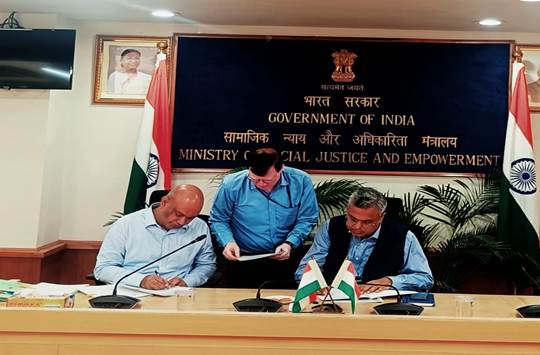
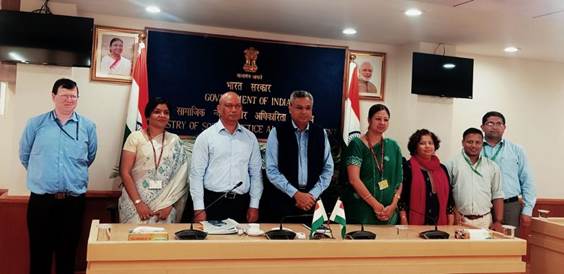
 A momentous collaboration has been cemented as the Ministry of Social Justice & Empowerment and the National Safai Karamcharis Finance and Development Corporation (NSKFDC) inked a Memorandum of Understanding (MoU) for the fiscal years 2023-24 and 2024-25. This strategic partnership aims to enhance the socio-economic upliftment of Safai Karamcharis, Manual Scavengers, Waste Pickers and their dependants focusing on empowering these marginalized communities across the nation.

The MoU underscores the commitment to accelerate inclusive growth through the effective allocation and utilization of funds for targeted welfare programs. The joint endeavor strives to amplify initiatives that promote safety, education, skill development, entrepreneurship, and sustainable employment opportunities, contributing to the holistic advancement of these workers who toil hard braving inclement weather to keep our surroundings clean.

NSKFDC, a prominent organization dedicated for this cause will collaborate closely with the Ministry to ensure the transparent and effective utilization of allocated funds. This alliance seeks to synergize expertise and resources for impactful implementation of programs that empower these marginalized populations.

The signing of this MoU is a testament to the shared vision of fostering equal opportunities and societal progress. Both parties are eager to channel their collective efforts to drive positive changes, fostering an environment where every individual can thrive and contribute to the nation’s growth.

****
Startup India initiative – Startup Seed Funding

The Startup India initiative was launched on 16th January 2016, by the Hon’ble Prime Minister. The Prime Minister also unveiled an Action Plan consisting of 19 Action Points that act as a guiding document for the startup initiative. Since the inception of the initiative:
There are over 99000+ startups recognized by the government of India as of May 2023

49% of them having a base in Tier 2 – Tier 3 cities
These startups are spread over 669 districts from 36 States and Union Territories of India
As of 31st March 2023, India is home to 108 unicorns with a total valuation of $ 340.80 Bn. Out of the total number of unicorns, 44 unicorns with a total valuation of $ 93.00 Bn were born in 2021 and 21 unicorns with a total valuation of $ 26.99 Bn were born in 2022

VISIT STARTUP INDIA PORTAL

Startup India
Seed Fund Scheme

Financial assistance to startups for proof of concept, prototype development, product trials, market entry, and commercialization

APPLY NOW

Startup India Seed Fund Scheme Launch

An Initiative To Spur Entrepreneurship Across India

The Need For Startup India Seed Fund Scheme

Easy availability of capital is essential for entrepreneurs at the early stages of growth of an enterprise.

Funding from angel investors and venture capital firms becomes available to startups only after the proof of concept has been provided. Similarly, banks provide loans only to asset-backed applicants.

It is essential to provide seed funding to startups with an innovative idea to conduct proof of concept trials.

Objective Of The Scheme

Startup India Seed Fund Scheme (SISFS) aims to provide financial assistance to startups for proof of concept, prototype development, product trials, market entry and commercialization.

This would enable these startups to graduate to a level where they will be able to raise investments from angel investors or venture capitalists or seek loans from commercial banks or financial institutions.
KNOW MORE ABOUT THE SCHEME

How Startup India Seed Fund Will Operate

The Seed Fund will be disbursed to eligible startups through eligible incubators across India
DPIIT

Department for Promotion of Industry and Internal Trade

Nodal Department
EAC

Experts Advisory Committee

Government Representatives & Industry Experts
Incubators

Govt assisted/Not-Govt assisted Incubators

Operational for atleast 2-3 years
Startups

DPIIT-recognised Startups

Incorporated less than 2 years ago

Features Of Startup India Seed Fund Scheme


Year-round ‘Call for Applications’ for Incubators and Startups
Sector-agnostic
No mandatory physical incubation
PAN-India startup programme
Startups can apply to 3 incubators simultaneously

Eligibility Criteria

For Startups
A startup, recognized by DPIIT, incorporated not more than 2 years ago at the time of application.
The startup must have a business idea to develop a product or a service with a market fit, viable commercialization, and scope of scaling.
The startup must have a business idea
MORE DETAILS

For Incubators
Incubator should be operational for at least two years on the date of application to the scheme.
Incubator must have facilities to seat at least 25 individuals.
Incubator must have at least 5 startups undergoing incubation physically on the date of application
MORE DETAILS

Startup India Seed Fund Scheme Launch

The Startup India Seed Fund Scheme was launched by
Honourable Shri Piyush Goyal on 19th April 2021

Scale Up Your Startup With
Startup India Seed Fund Scheme

Your journey of seed fund starts here.
Complete the application to initiate the journey
APPLY NOW

OUR FIVE PILLARS


POLICY


PARTNERSHIP AND PROGRAMS


GRASS ROOTS INITIATIVE & OUTREACH


VIRTUAL INCUBATORS


FACILITATION

Awareness Campaign and Training of Trainers for the Elimination of Sickle Cell Anaemia

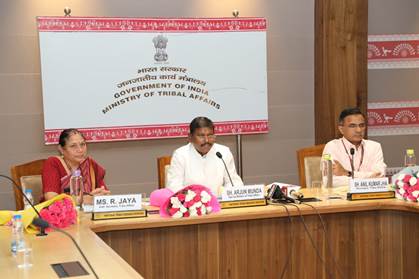
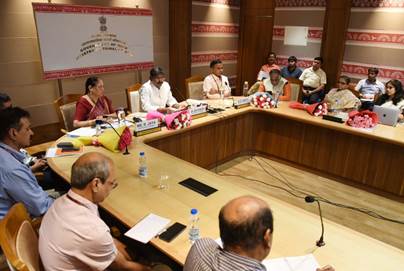
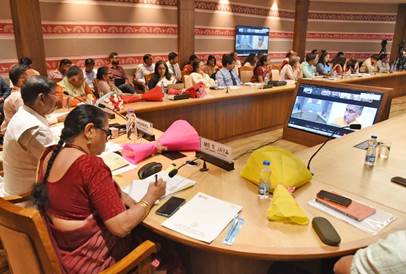
 Union Minister of Tribal Affairs, Shri Arjun Munda  launched the ‘Awareness Campaign and Training of Trainers’ as a part of the ‘Mission for Elimination of Sickle Cell Anaemia’ in New Delhi today. The programme envisages training of grassroot level functionaries so as to create awareness in this direction among the masses, especially in tribal regions.

In a recent announcement, the Government declared a Mission to eliminate Sickle Cell Anaemia by 2047 in the budget of 2023-24. This Mission will entail awareness creation, universal screening of 7 crore people in the age group of 0-40 years in affected tribal areas, and counselling through collaborative efforts of central ministries and state governments. The Mission was formally launched by the Prime Minister Shri Narendra Modi, on 1st July, 2023 in Shahdol District of Madhya Pradesh. 

Speaking to the media after the launch, the Minister said that the initiative would take forward Prime Minister, Shri Narendra Modi’s vision of a sickle cell disease free India by ensuring community participation. Under his inspirational leadership, the Ministries of Health and Family Welfare and Tribal Affairs are collaborating to launch awareness generation initiatives for the Mission for the Elimination of SCD, Shri Munda added.


The Minister further identified the challenges and opportunities in making this initiative a success. The fundamental challenge, he said, would be to make the mission a grassroot level movement by ensuring Jan Bhagidari. It would require countering misconceptions among masses and bring them on board to develop a truly participative ecosystem for eliminating the disease. The Minister cited the importance of creating a healthcare database of the affected population, which in turn would help in research and finding a lasting solution. Only then it would be possible to stop the transmission of this disease and save the coming generations, he added.

Shri Munda expressed happiness to note the response of the State Governments in nominating a large number of tertiary care medical practitioners as the master trainers at the State level. Medical professionals are working with tribal communities to promote understanding of the disease, its symptoms, and its agony while preventing misinformation about the illness and eradicating its stigma. As a result, he said, in order to guarantee that the correct information is sent to the public, the Ministry of Tribal Affairs constituted a Committee of experts, including medical professionals, patient support organisations, and other stakeholders, to publish a module on awareness generation and on counselling of the stakeholders. He added that these modules were released at the launch event of the Mission.

The Minister explained that the mammoth initiative of awareness generation is being undertaken and training module at various levels is being planned to reach the last mile. The Minister informed that it is planned to engage the leaders at community level who would further ensure wide participation of the masses in the mission. He further added that in an unprecedented step, the awareness campaigns are being translated into tribal languages so as to ensure deep penetration of the message at the grassroots level.

Speaking on the occasion, Secretary (Tribal Affairs), Shri Anil Kumar Jha informed that to ensure that the people are motivated enough to approach us for diagnostic testing, we are implementing a three-layer training programme at the State, District, and Village levels.Additionally, state governments have designated tertiary care physicians as master trainers at the state level, with district-level trainers training local influencers and opinion makers.

Ms. R Jaya, Additional Secretary, stated that the event marked the commencement of the awareness campaign. Further, she stated that the Ministry was engaging with all the stakeholders in the sector, so as to ensure that the Mission becomes a people’s movement. She requested the master trainers to ensure that they take the training forward and train district- level master trainers who would in turn take the message to the local- village level. There is a necessity to involve all stakeholders at all levels so as to reach the last mile. Further, the Ministry also intends to conduct regional workshops and promotional campaigns to raise awareness, and utilize online resources like Swasthya and Sickle Cell Corner.

Three technical sessions were held on (i) ‘Awareness modules and its importance as a preventive measure’ by Dr Deepti Jain, Rtd. Professor, Nagpur Medical College, Maharashtra and Chairperson of the Committee; (ii) ‘Diagnosis in Sickle Cell is critical’ by Dr Anupam Sachdeva, Head of Department, Pediatric Hematology and Oncology, Sir Ganga Ram Hospital, Delhi and the (iii) ‘Role of health workers in the prevention and management of the Sickle Cell Disease by Dr Nita Radhakrishnan, Associate Professor, SSPGI, Noida.

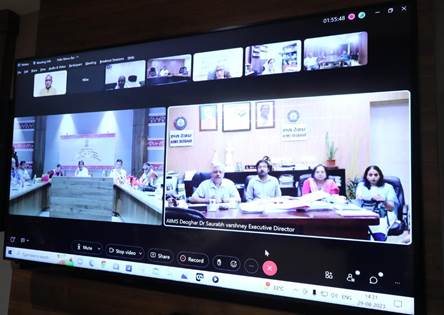
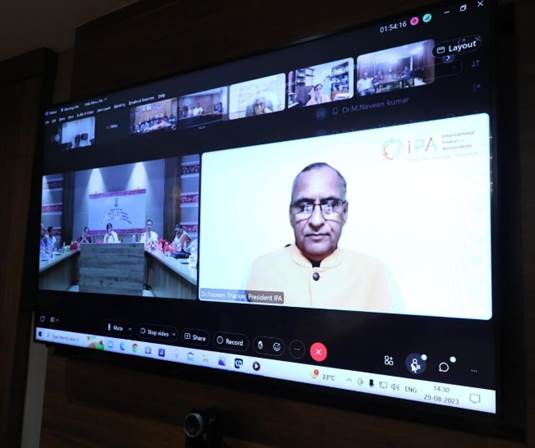
Dr. Naveen Thacker, President at The International Pediatric Association (IPA), Dr Saurabh Varshney, Director AIIMS Deoghar, other medical experts, various other stakeholders and all Committee Members shared their views on the occasion. 

Shri Asit Gopal, Commissioner- NESTS, Dr. Naval Jit Kapoor, Joint Secretary, Shri Biswajeet Das, DDG, Smt. Vineeta Srivastava, Health Advisor and other officials of the Ministry of Tribal Affairs were also present in the event.

***
Centre approves Startup Guidelines dedicated to Technical Textiles

 The Ministry of Textiles has approved the Startup Guidelines for Technical Textiles – Grant for Research and Entrepreneurship across Aspiring Innovators in Technical Textiles (GREAT) providing grant-in-aid upto INR 50 Lakhs for upto a period of 18 months, informed Shri Rajeev Saxena, Joint Secretary Textiles during a press conference held here today on the important developments in the National Technical Textiles Mission (NTTM).

With a strong emphasis on developing the Startup Ecosystem in Technical Textiles, the guidelines focus on supporting individuals and companies to translate prototype to technologies & products including commercialization. The GREAT Guidelines provides thrust in Technical Textiles’ application areas including Agro-textiles, Building-textiles, Geo-textiles, Home-textiles, Medical-textiles, Mobile-textiles, Packaging- textiles, Protective-textiles, Sports-textiles; Development of High-performance fibres and composites; Sustainable and Recyclable Textile materials; Smart Textiles using Artificial Intelligence, Internet of Things, 3D/4D Printing, and Rapid Prototyping; and Development of indigenous Machinery/Equipment/Instruments, among others.

To incentivize the incubators, Ministry to additionally provide 10% of total grant-in-aid to incubators. To strengthen authenticity and commitment towards the project, a minimum investment of 10% of the funding from the incubatee in two equal installments is mandated. The Startup Guidelines (GREAT) to provide much needed impetus for the development of technical textiles startup ecosystem in India, especially in niche sub-segments such as Bio-degradable and Sustainable textiles, High-performance & Specialty fibres, Smart textiles, among others.

Ministry also gave the nod to 26 institutes for upgrading their laboratory infrastructure and training of trainers in the application areas of technical textiles. Ministry has approved the applications of 26 institutions for development and introduction of technical textile courses/ papers in the key departments/specializationsas well as introducing new degree programme in technical textiles.

Total value of INR 151.02 Crores was approved wherein 15 applications valuing INR 105.55 Crores are from Public Institutes and 11 applications valuing INR 45.47 Crores are from Private Institutes.

Some of the premier institutes to be funded under the scheme include IIT Delhi, NIT Jalandhar, NIT Durgapur, NIT Karnataka, NIFT Mumbai, ICT Mumbai, Anna University, PSG College of Technology, Amity University,among others.

Notably, majority of the funding to be provided for upgradation of existing courses including Departments related to Textile Technology & Fibre Sciences to upgrade courses in all application areas of technical textiles including specialty fibres; Departments related to Design/Civil Engineering to upgrade courses in Geotextiles & Building textiles; Departments related to Fashion Technology/Design to upgrade courses in Smart Textiles, Protective Textiles, Sports Textiles, Home Textiles, Cloth Textiles; Department of Mechanical Engineering to upgrade courses in Mobile Textile, Industrial Textiles; and a New Degree Programme in Technical Textiles with predominant emphasis on all application areas of Technical Textiles.

In addition, Ministry to re-open the Guidelines for Enabling of Academic Institutes in Technical Textiles’ Education in India (Round II) under NTTM with relatively eased parameters and wider coverage including NBA score of 750 and above, NAAC rating of A+/3.26 or above or top 200 NIRF ranked institutes as eligible private institutes under the Education Guidelines 2.0. The guidelines have been in-principally approved and target the inclusion of new courses/papers in the curriculum of academic year 2025-26.

On the quality and regulation aspect of technical textiles, Ministry already notified 02 QCOs for 31 Technical Textiles products including 19 Geotextiles and 12 Protective Textiles, which will come in-effect from 7th October 2023 onwards. Besides, QCOs for 28 products including 22 Agrotextiles and 06 Medical Textiles are also in the final stages of issuance and likely to be issued in September 2023.

Furthermore, additional 28 items are also considered for QCOs including Building textiles, Industrial textiles, Ropes & Cordages, among other. To cover the comprehensive impact of the QCOs on the economy, industry and society at large, Ministry is proactively conducting multiple stakeholder consultations with Industries.

****

PM Ujjwala Yojana consumers

 In a move that will bring respite to households across the nation, the Government led by Prime Minister Sh. Narendra Modi, has announced a substantial reduction in the price of cooking gas. Effective 30.08.2023, the price of a 14.2 Kg LPG cylinder will be reduced by Rs 200 in all markets across the country. In Delhi for instance, the decision will bring down the cost of a 14.2 Kg cylinder from the existing Rs 1103 per cylinder to a more affordable Rs 903 per cylinder. Prime Minister Narendra Modi said, “This is a gift to crores of my sisters of the country on the occasion of Raksha Bandhan. Our Government will always do everything possible that improves people’s quality of life and benefits the poor and middle class.”

This reduction is in addition to the existing targeted subsidy of Rs 200 per cylinder to PMUY households, which will continue. For PMUY households therefore, the effective price in Delhi after this reduction will be Rs 703 per cylinder.

It may be noted that there are more than 31 Cr domestic LPG consumers in the country including 9.6 Cr PMUY beneficiary families and this reduction will help all LPG consumers in the country. To clear pending PMUY applications and to provide deposit free LPG connection to all eligible households, Government will shortly start distribution of PMUY connections to 75 lacs women from poor households who do not have an LPG connection. This will increase the total number of beneficiaries under PMUY from 9.6 cr to 10.35 cr.

These decisions come as part of the Government’s ongoing efforts to ease the financial burden on citizens and promote the welfare of households. The reduction in cooking gas prices reflects the Government’s commitment to prioritize the well-being of its citizens and ensure access to essential commodities at reasonable rates.

Sh. Hardeep Singh Puri, Minister of Petroleum and Natural Gas, expressed his happiness with the decision, stating, “We understand the challenges faced by households in managing their budgets. The reduction in cooking gas prices is aimed at providing direct relief to families and individuals, while also supporting Government’s larger goal of ensuring affordable access to essential items.”

The reduction in cooking gas prices is expected to have a positive impact on the cost of living for a wide spectrum of society. Government’s proactive step is projected to save significant expenses for households, making an appreciable contribution to the disposable income of citizens.

The Government has been taking various steps to ease the burden of the people and this reduction in cooking gas prices is a testament to the Government’s responsiveness to the needs of the people and its unwavering dedication to their welfare.

***

‘Electrified Flex fuel vehicle’ launched today

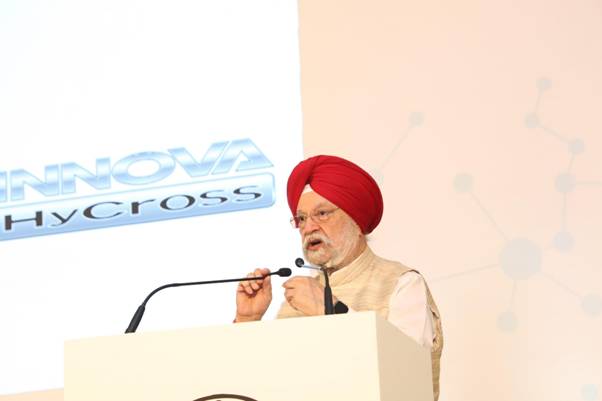
 Highlighting the potential of Flex Fuel Vehicle Technologies in energy and automobile industry Shri Hardeep Singh Puri, Minister of Petroleum & Natural Gas and Housing & Urban Affairs, said that these vehicle technologies provide opportunity of greater substitution of petrol by Ethanol as it is capable of using any of the higher blends of ethanol mix beyond 20%.

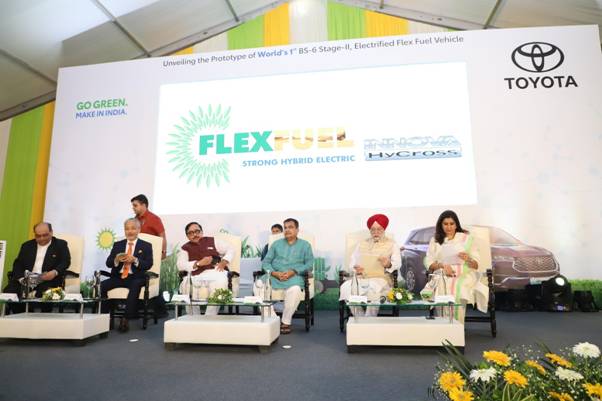
The Union Minister for Petroleum & Natural Gas was speaking at the unveiling of the Prototype of World’s 1st BS-6 Stage-II, Electrified Flex fuel vehicle, developed by Toyota Kirloskar Motor. Elaborating on this, he said that this initiative by Toyota is particularly important as it introduces the world’s first BS 6 (Stage II) Electrified Flex Fuel vehicle prototype, which has both the flex fuel engine as well as an electric powertrain, thereby offering higher use of ethanol combined with better fuel efficiencies. “With Industry and Government collaboration, we see India becoming a global hub for cleaner technologies and achieving self-reliance in energy soon”, he added further.

Shri Nitin Gadkari, Minister of Road Transport and Highways of India who was the chief guest at the event , expressing his views on the launch of world’s first prototype of the BS 6 Stage II ‘Electrified Flex Fuel Vehicle’,  stated that this innovative vehicle is based on the Innova Hycross and is engineered to adhere to India’s stricter emission standards, marking it as the first-ever BS 6 ( Stage II) Electrified Flex Fuel Vehicle prototype globally. He mentioned that the forthcoming stages for this prototype encompasses meticulous refinement, homologation, and certification processes.

Shri Hardeep Singh Puri during his address said that India has huge Ethanol potential, much beyond E20 mix.  This excess potential can be utilised by the country by promoting Flex Fuel vehicle (FFVs) and Flex Fuel Strong Hybrid Electric Vehicle (FFV-SHEV) / Electrified Flex Fuel Vehicle.

An Electrified Flex Fuel Vehicle has both a Flexi Fuel engine and an electric powertrain. This gives it ability to provide dual benefit of higher ethanol use and much higher fuel efficiency as is in case of a Strong Hybrid Electric Vehicle (SHEV), which can provide 30-50% higher Fuel Efficiency as it can run 40-60% in EV mode with engine shut off.

The Petroleum & Natural Gas Minister contended that various high-level bodies like National Green Tribunal (NGT), Energy Transition Advisory Committee (ETAC) have strongly recommended promotion of all green technologies including SHEVs & Electrified Flex Fuel Vehicle etc for hastening the shift away from fossil fuel and faster decarbonization. He noted that as technologies including SHEVs & Electrified Flex Fuel Vehicle etc. As Electrified Flex Fuel Vehicle uses minimal advanced chemistry batteries, it also guards against possible Geo-political risks of battery raw material supplies.

Shri Hardeep Singh Puri also mentioned the steps taken by the Government to fulfil Prime Minister’s vision to achieve ‘Atmanirbharta’ in energy by 2047 and lead the global fight against climate change. He apprised that with the huge efforts made by the Government and the industry, in a short span of 8 years, the Ethanol blending in India has increased by over 8 times. It has increased from 1.53 % in 2014 to around 11.5 % (Mar ’23) leading to savings in the import bills and also lowering of carbon emissions.

Noting the efforts made by all the stakeholders, Shri Puri said that we have advanced the target for E20 blending to 2025 (5 years ahead of earlier planned schedule), from the original plan of 2030. He noted that with the strong efforts made by all the stakeholders, we will achieve this target. He said that E20 fuel is being dispensed at more than 3300 fuel stations across the country and shall be available pan India by April 2025. With E20 implementation by April 2025, expected import bill savings may be around Rs 35000 cr annually, oil import displacement will be 63 million barrels of gasoline (in EY 2024-25).

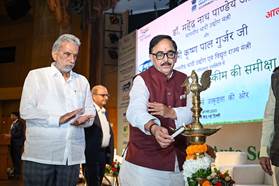
Minister of Heavy Industries Shri Mahendra Nath Pandey, MD & CEO, Toyota Kirloskar Motor, Shri Masakazu Yoshimura and Chairperson and Managing Director, Kirloskar System Pvt Ltd, Smt Geetanjali Kirloskar also attended the event.

**

Government fostering a conducive business environment and accelerating growth in Indian Auto sector

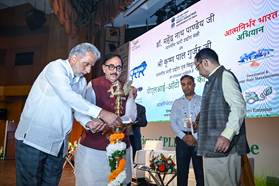
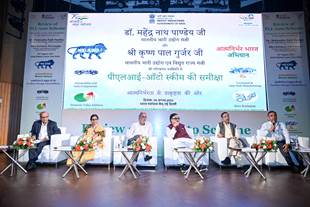
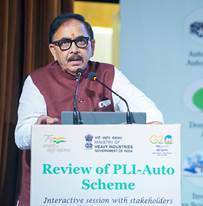
 Ministry of Heavy Industries (MHI) organised a meeting for “Review of PLI-AUTO Scheme” under the Chairmanship of  Union Minister for Heavy Industries Dr. Mahendra Nath Pandey, here today. The objective of the meeting  was to ascertain the problem or difficulties faced by OEMs and component companies under the PLI-AUTO scheme. Industry leaders  were encouraged to come forward and share their problems and views. The meeting  was organised in line with the vision of the  Prime Minister, Shri Narendra Modi, to make India a global hub for manufacturing. Minister of State for Heavy Industries, Shri Krishan Pal Gurjar, Secretary, MHI,   Shri Kamran Rizvi, Addl. Secretary, MHI and other senior officials were present in the meeting.

The event witnessed participation from approved applicants under the scheme, officials from MHI, NITI Aayog, IFCI (Project Management Agency for the Scheme), Testing Agencies of MHI viz. ARAI, ICAT, GARC & NATRAX, Automobile Associations viz. SIAM & ACMA and media professionals.

MHI has taken various initiatives to promote Cleaner Mobility and to develop an ecosystem of Innovation and Technology. The Production Linked Incentive Scheme for Automobile and Auto Component Industry (PLI-AUTO) with an outlay of ₹25,938 crore is a key initiative to drive the supply chain of Advanced Automotive Technology (AAT) products.


Delivering the keynote address at the event, Dr. Pandey called for  industry’s feedback and collaborative engagement to shape the policies, procedures and effectiveness of the PLI scheme. He  said that the government is committed to fostering a conducive business environment and accelerating growth in the Indian Automotive sector.

 The Minister mentioned that the PLI-AUTO scheme incentivizes only those eligible AAT products for which minimum 50% Domestic Value Addition (DVA) is achieved and has been certified by Testing Agencies (TAs) of MHI. This criterion shall reduce imports, facilitate deep localization for AAT products and enable creation of domestic as well as global supply chain.


  Speaking on the occasion, Shri Krishan pal Gurjar said that  Auto Industry  contributes 7% to country’s GDP and PLI scheme will further enhance the competitiveness of the sector and will create more employment opportunities.

In his address, Secretary, MHI,   Shri Kamran Rizvi said that automotive industry is a major economic contributor in India. The PLI-AUTO scheme will make the Indian automotive industry more competitive and will enhance globalization of the Indian automotive sector and incentivize emergence of global supply chain for Advanced Automotive Technologies (AAT) in India. He further stated that the scheme  will herald a new age in higher technology, more efficient and green automotive manufacturing, he added.

Attendees included giants of automotive sector such as Tata Motors, Mahindra & Mahindra, OLA electric, Ashok Leyland, Hyundai Motor, Bosch, Toyota Kirloskar Auto Parts, Minda Industries, Delphi-TVS, among others. Their presence ensured a diverse range of perspectives and fostered an environment of knowledge-sharing and networking. Key executives from these companies, along with government officials were actively involved in a collaborative open discussion and Q&A sessions throughout the event.

A comprehensive presentation highlighting the progress and performance under the PLI scheme was made. The investment as reported by the applicants (till 30th June 2023) is ₹ 10,755 crore. To facilitate ease of doing business (EODB) in the scheme, MHI published Standard Operating Procedure (SOP) for DVA certification on 27th April 2023. Thereafter, two applicants namely Tata Motors and Mahindra & Mahindra have received DVA certification, and four more applicants have applied for DVA certification. Further, another 23 applicants are expected to apply for DVA certification by the end of September 2023. A detailed SOP is being framed for verification and processing incentive claims and stakeholder consultations for the same shall be initiated shortly.

                                                         ***

Sagar Parikrama Phase VIII in Southern Districts of Tamil Nadu

 Union Minister for Fisheries, Animal Husbandry and Dairying Shri Parshottam Rupala and Minister of State Dr L Murugan will jointly launch Sagar Parikrama Phase-VIII on 31st August in Thengapattanam Fishing harbour in Kanyakumari district. This phase of Sagar Parikrama will be covering four coastal districts of Tamil Nadu including Kanyakumari, Tirunelveli, Thoothukudi, and Ramanathapuram.

The Tamil Nadu leg of Sagar Parikrama will begin on the 31st and will end on the second of September with the foundation laying stone of the Integrated Seaweed Park at Valamavur in Thondi, Ramanathapuram district. A Tamil song on Sagar Parikrama will also be launched during the event.

Sagar Parikrama Yatra is an outreach program intended to reach out fisher community across the coastal belt. The initiative has been launched to better understand the issues, experiences, and aspirations of fishermen, as well as to examine the scope of seafood exports and popularise programs available to fishermen in coastal areas.

Union Fisheries Ministers Shri Purushottam Rupala along with Minister of State Dr L. Murugan along with the State fisheries Department Tamilnadu, District officials and Senior officials from Department of Fisheries, Government of India and from State Government, National Fisheries Development Board, Indian Coast Guard, Fishery Survey of India, National Institute of Fisheries Post Harvest Technology and Training, Central Institute of Fisheries Nautical & Engineering Training and fishermen will participate in the Sagar Parikrama awareness campaign for three days.

Fishermen representatives, fish-farmers, entrepreneurs, fishermen cooperative society leaders, professionals, scientists, and other stakeholders in the four districts of Tamil Nadu will participate in the events.

Tamil Nadu has 1,076 km long coastline, which is the second largest in the country. The state is enriched with marine, brackish water and inland fisheries resources amenable for capture and culture fisheries. Marine fish production (2021-22) of the State stood at 5.95 lakh MT, of which 1.14 lakh MT, valued at Rs.6,559.64 crore was exported. The fisheries industry supports the livelihood of 10.48 lakh marine fishers through 5,830 mechanised and 45,685 traditional fishing crafts which are actively engaged in fishing and 4,41,977 marine fisherfolk enrolled in Tamil Nadu Fishermen welfare Board.

The rich fisheries biodiversity of Tamil Nadu provides livelihood opportunities to more than a million people directly and in the ancillary activities. During the year 2021-22, the sector’s contribution to the State agriculture GDP is 5.78%. The State’s contribution from fisheries sector in the foreign exchange is Rs.6,559.64 crore by exporting 1.14 lakh metric tonnes of fish and fishery products during the year 2021-22.

During the Sagar Parikrama journey across four coastal district of Tamil Nadu, Certificates/sanctions relating to the Pradhan Mantri Matsya Sampada Yojana (PMMSY), Fisheries and Aquaculture Infrastructure Development Fund (FIDF), Kisan Credit Card (KCC), and State Schemes shall be distributed to progressive fishermen, particularly coastal fishermen and fish farmers, young fisheries entrepreneurs. Literature on the PMMSY scheme, State schemes, e-shram, FIDF, KCC, will be widely disseminated through print media, electronic media, videos, and a digital campaign using jingles among fishermen to promote the schemes for their awareness and benefits.

The first seven phases of Sagar Parikrama has covered 3600 km in 8 Western Coastal states/UTs including Gujarat, Diu & Daman, Maharashtra, Goa, Karnataka, Kerala, Puducherry, and Andaman & Nicobar. The journey signifies an evolutionary initiative of the Government of India demonstrating solidarity with fisher folk, fish farmers, and other concerned stakeholders across the coastal belt. Aiming to resolve the challenges faced by the fishing community and facilitate their economic upliftment through various fisheries schemes and programs implemented by the government, such as the Pradhan Mantri Matsya Sampada Yojana (PMMSY) and the Kisan Credit Card (KCC) and to disseminate information about various fisheries related schemes and programs, promoting responsible fisheries with a focus on sustainable balance, and protection of marine ecosystems.

***

Animal Husbandry and Dairying

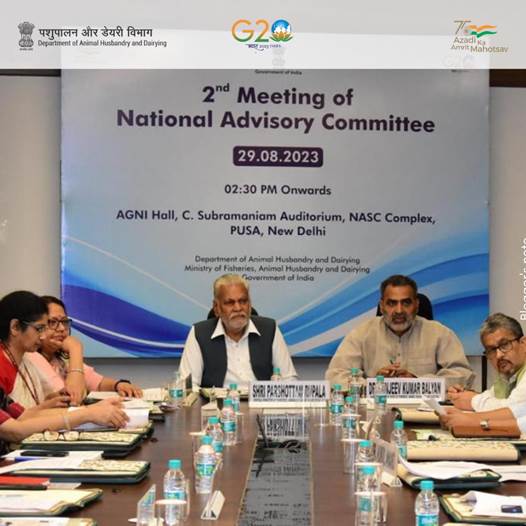
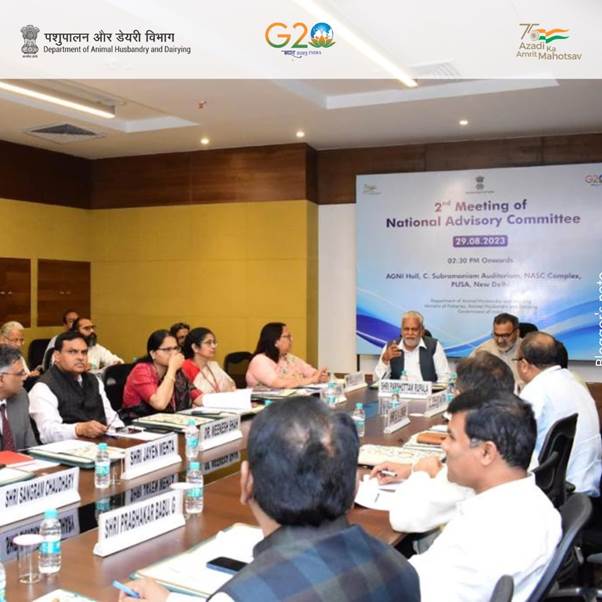
 Minister of Fisheries, Animal Husbandry and Dairying, Shri Parshottam Rupala chaired the 2nd National Advisory Committee meeting for Animal Husbandry and Dairying formed under the Department of Animal Husbandry and Dairying. Minister of State, FAHD, Dr. Sanjeev Kumar Balyan, Secretary DAHD, Smt. Alka Upadhyaya, and distinguished members of National Advisory Committee were also present in the meeting.

The Minister, FAHD took stock of the decision taken during 1st National Advisory Meeting and highlighted that the Ministry is committed to work with all stakeholders for creating rural Entrepreneurship and help in creating better livelihood opportunity for unemployed youth and livestock farmers in the Cattle, Dairy, poultry, sheep, goat, piggery, feed and fodder sector paving the way towards AtmaNirbhar Bharat. MoS, FAHD Dr. Sanjeev Kumar Balyan emphasised that the realigned schemes will bring a sharp focus on entrepreneurship development and breed improvement in rural poultry, sheep, goat and piggery including feed and fodder development. The Government is implementing various schemes/programmes to enhance poultry productivity, milk and meat production, for attaining nutritional security, employment generation and economic prosperity for the country.

At the outset, Secretary, DAHD, Smt. Alka Upadhyaya welcomed all members of the committee and explained the purport of the constituted committee for animal husbandry and Dairying. Minister, FAHD invited suggestions from Stakeholders in respect of the existing Policies/Programme/Schemes/Acts/ Rules/SoPs so that the same could be revised/modified based on ground realities.

In the meeting, key discussions were held on various aspects of animal husbandry. Dr. Mukul Anand emphasized strategies for promoting goat milk farms and ensuring the long-term sustainability of commercial goat farms under NLM. Shri Prabhakar Babu G addressed the importance of quality fodder seeds. Vaccination concerns for sheep and goat populations were raised by Shri Vinayak Narawade. Several members discussed topics such as animal welfare, PCA act amendments, and feed industries. The meeting covered a broad spectrum, including breeding technologies, disease surveillance, and entrepreneurship, aiming to advance the animal husbandry sector.

Formed in July, 2022, the National Advisory Committees serve as a platform for all stakeholders to come together and deliberate and discuss on key issues pertaining to Animal Husbandry and dairying. The first meeting of National Advisory Committee under the Chairmanship of Minister of State for Fisheries, Animal Husbandry and Dairying, Dr. Sanjeev Kumar Balyan was held on 28 October 2022 in New Delhi. Setting the context, Secretary DAHD, Smt. Alka Upadhyaya highlighted that Livestock Sector grew at a Compound Annual Growth Rate (CAGR) of 7.67% (at constant prices) from 2014-15 to 2021-22. The contribution of livestock in total agriculture and allied sector Gross value added (GVA)(at constant prices) has increased from 24.32 per cent (2014-15) to 30.47 per cent (2021-22). Livestock sector contributed 4.75 per cent of total GVA in 2021-22 (at constant price).

***