Best Web Series (OTT) Award

 The Information and Broadcasting Ministry has today extended the last date of submission of entries of the inaugural edition of the Best Web Series (OTT) Award from August 25 to 6pm on September 4 for online submissions, while the hardcopy of the series can be submitted by September 12, 2023.

In the event that September 12, 2023 is declared a holiday, the next working day will be considered as the final date for receipt of the application.

The decision to extend the date of submission was taken by the Ministry with an effort to ensure that maximum number of Web Series’ can participate for the award that intends to recognise the creative prowess of the OTT platform which has grown manifold in the last two years.

An eminent jury, consisting of personalities from the entertainment industry, will choose the Best Web Series and the winner will be awarded Rs 10 lakh as cash prize, along with certificates at the 54th International Film Festival of India.

To be eligible for the award, the web series has to be an originally created/shot series in any Indian language and has to be an original piece of work either commissioned or produced. Further, the series should have been co-produced, licensed, or acquired with the purpose of releasing ONLY on the OTT platform.

Also, to be eligible for the award, all episodes of the entry (web series/season), should have been released on an OTT platform from January 1, 2022, to December 31, 2022.

Further details of the eligibility for the awards is available on the websites of the Ministry of Information and Broadcasting, National Film Development Corporation and IFFI.

****

Sustainability and climate resilience must be embedded across the lifecycle of built environment.

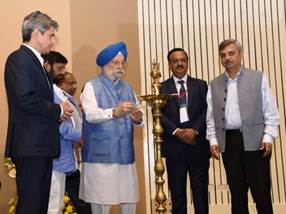
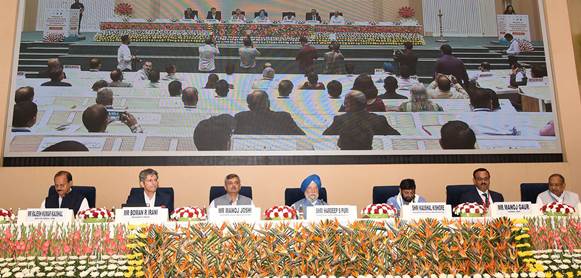
 Shri Hardeep S. Puri, Minister for Housing and Urban Affairs and Petroleum and Natural Gas stressed the need to view urban planning from the perspective of embedding sustainability and climate resilience across the lifecycle of built environment. Inaugurating the Conference on Adoption of New and Emerging Building Materials and Technologies in Construction Industry, the Minister said that the Modi government has viewed urbanisation as an opportunity for multifaceted growth and therefore India boasts one of the most comprehensive programmes for planned urbanisation. It is against this backdrop, that the Pradhan Mantri Awas Yojana-Urban (PMAY-U), the flagship housing scheme of the Ministry, gains particular significance as it has addressed the issue of affordable housing for India’s urban poor while creating sustainable and green infrastructure. Highlighting the use of green construction technologies in PMAY-U, Shri Puri informed the gathering that about 43.3 lakh houses are being constructed under the mission using sustainable building materials such as flyash bricks/blocks and AAC blocks. These houses will contribute to a reduction of 9 million tonnes of CO2 emissions by the end of December 2024.

To bring a paradigm shift in the housing construction sector, the Ministry of Housing and Urban Affairs (MoHUA) shortlisted 54 innovative construction technologies from all over the world, under the Global Housing Technology Challenge (GHTC). Further, 6,368 houses are being built under six light house projects currently being implemented in Chennai, Rajkot, Indore, Lucknow, Ranchi and Agartala. The Minister shared the multiple benefits of using these innovative construction technologies, including reduction in construction cost, time, cement used and waste generated apart from the enhanced thermal comfort and low lifecycle costs.

Shri Kaushal Kishore MoS, MoHUA, reiterated the need to provide quality housing to all strata of society, using latest and innovative technologies, as this would contribute to a better quality of life in the new and self reliant India.  Shri Manoj Joshi, Secretary MohUA, also underscored the importance of promoting and mainstreaming the modern and green construction technologies which will help the country to address the rising housing demand. These building materials facilitate faster and better quality housing construction to suit different geo-climatic and hazard conditions of the country. The conference organised by CREDAI, in collaboration with CPWD and NBCC, brought together some of the brightest minds in the construction and real estate industries.

***

India Smart Cities Awards Contest (ISAC) 2022- Winners Announced

 Smart Cities Mission launched on 25 June 2015, is aimed at providing core infrastructure, clean and sustainable environment and a decent quality of life to their citizens through the application of ‘smart solutions’.It is a transformational mission aimed to bring about a paradigm shift in the practice of urban development in the country. Of the total proposed projects under SCM, 6,041(76%) projects worth ₹1,10,635 crore have been completed and the remaining 1,894 projects worth ₹60,095 crore will be completed by 30 June 2024.

Most notable milestone achieved in the Mission has been, the Integrated Command and Control Centers (ICCC) which is operational in all 100 Smart Cities. These ICCCs work as the brain and nervous system for city operations, using technology for urban management. The urban services have significantly improved in diverse fields like crime tracking, safety & security of citizens, transport management, solid waste management, water supply, disaster management etc.

100 Smart Cities have taken up projects across diverse sectors related to mobility, energy, water, sanitation, solid waste management, vibrant public spaces, social infrastructure, smart governance, etc. For instance, in smart mobility, 1,174 projects have been completed worth ₹ 24,047 crore and another 434projects are ongoing worth ₹ 15,940 crore. In smart energy, 573 projects have been completed and 94 are ongoing. In Water Supply, Sanitation and Hygiene (WASH), more than 1,162 projects have been completed worth ₹ 34,751 crore and another 333projects worth ₹ 18,716 crore are ongoing. 100 Smart cities have already developed more than 1,063 public spaces worth ₹ 6,403 crore and another 260 projects worth ₹ 5,470 crore are ongoing. Further, 180 Public Private Partnership (PPP) projects worth ₹ 8,228 crore have been completed and another 27 are ongoing. 652 projects have been completed related to economic infrastructure such as market redevelopment and start-up incubation centers and another 267 projects are ongoing. In social infrastructuresector (health, education, housing etc.), 679 projects have been completed and 153 are ongoing.

The India Smart Cities Award Contest (ISAC) is organized under the Smart Cities Mission, Ministry of Housing and Urban Affairs, Government of India. This is one of the important activities initiated under the Mission, where pioneering city strategies, projects and ideas are recognized to award the exemplary performance, enable peer-peer learning and disseminate best practices. The ISAC recognizes and reward the cities, projects and innovative ideas that are promoting sustainable development across the 100 smart cities, as well as stimulating inclusive, equitable, safe, healthy and collaborative cities, thus enhancing quality of life for all.

In the past, the ISAC has witnessed three editions in 2018, 2019 and 2020. The fourth edition of the ISAC was launched in April 2022 during the ‘Smart Cities-Smart Urbanization’ event in Surat. The ISAC 2022 award had a two-stage submission process consisting of ‘Qualifying Stage’, which involved overall assessment of the city’s performance, and the ‘Proposal Stage’ which required the smart cities to submit their nominations for six award categories as follows:

  • Project Awards: 10 different themes,
  • Innovation Awards: 2 different themes,
  • National/Zonal City Awards,
  • State Awards,
  • UT Award, and
  • Partners Awards, 3 different themes

A total of 845 nominations were received for ISAC 2022 from 80 qualifying smart cities. These entries were evaluated in 5 stages. In the first stage, a pre-screening of the 845 proposals was carried out. 50% (423 proposals) moved to the next stage. In the second stage, for each award category top 12 proposals were identified by a jury of the National Institute of Urban Affairs (NIUA). In the third stage, each proposal proponent made a presentation to a panel of subject experts, leading to selection of Top 6 proposals. Finally, in the fourth stage, top 6 proposals made an elaborate presentation to a jury headed by MoHUA directors and comprising subject matter experts.Post this fourth stage, top 3 proposals have been identified for each award category by the Apex Committee of Smart Cities Mission. Of the total 845 applications received under the five awards categories, 66 final winners have been identified – 35 in Project Award, 6 in Innovation Award, 13 in National/Zonal City Award, 5 in State/UT Award and 7 in Partner Award categories. The final list of 66winners is available in the Annexure 1.

The Hon’ble President of India will felicitate the winners of ISAC 2022 awards on 27th September 2023 at Indore, Madhya Pradesh.


*******

RJ


Annexure – I: List of winning Smart Cities under ISAC 2022

Sl. No.

Award Name

Award Winner

Video Link

  1.  

Built Environment

  1. Coimbatore: Model Roads, Restoration and Rejuvenation of Lakes

Video Linkhttps://youtu.be/rQDcnrJNlXo

  1.  

Built Environment

  1. Indore: Riverfront Development (Stretch 1 from Rambagh bridge to KrishnapuraChhatri)

Video Linkhttps://youtu.be/9XDEjpv7LOI

  1.  

Built Environment

  1. New Town Kolkata: Landscape Redevelopment of NeemBanani Park and other Green Open Spaces

Video Linkhttps://youtu.be/iNCBAeNvgXc

  1.  

Built Environment

  1. Kanpur: Modernisation and Development of Palika Sports Stadium

Video Linkhttps://www.youtube.com/watch?v=6893E5Cunm8&feature=youtu.be&ab_channel=KanpurSmartCityLimited

  1.  

Culture

  1. Ahmedabad: Revamping and up keep of heritage structure and development of the heritage tourism using technology

Video Linkhttps://youtu.be/x5TIVnolnUc

  1.  

Culture

  1. Bhopal: Restoration of heritage buildings near SadarManzil precinct under Heritage Walk Project

Video Linkhttps://www.youtube.com/watch?v=wqhf4DOG43w

  1.  

Culture

  1. Thanjavur: Conservation of Ponds – Ayyankulam

Video Linkhttps://youtu.be/_DuRGIb-S-U

  1.  

Economy

  1. Jabalpur: Incubation Centre

Video Linkhttps://youtu.be/It4owfXrX3I

  1.  

Economy

  1. Indore: Value Capture Financing (VCF)

Video Linkhttps://youtu.be/pj_NmADthkY

  1.  

Economy

  1. Lucknow: Rojgar Training Centre

Video Linkhttps://youtu.be/lMKsDT_fLE8

  1.  

Governance

  1. Chandigarh: E Governance Services for Chandigarh Smart City

Video Linkhttps://youtu.be/6TybzAFg640

  1.  

Governance

  1. PimpriChinchwad: Smart Sarathi app

Video Linkhttps://youtu.be/aJU0hUONI3c

  1.  

Governance

  1. Jabalpur: Implementation of 311 App

Video Linkhttps://youtu.be/suT_8tBPiNo

  1.  

Governance

  1. Udaipur: Smart City Application

Video Linkhttps://youtu.be/60_vAyi_Vc0

  1.  

ICCC Business Model

  1. Ahmedabad: Traffic Management through ICCC

Video Linkhttps://www.youtube.com/watch?v=1R5VrhronA8

  1.  

ICCC Business Model

  1. Surat: Revenue Generation from different sources through ICCC

Video Linkhttps://www.youtube.com/watch?v=-B3H80Cn7s0&t=57s

  1.  

ICCC Business Model

  1. Agra: Revenue generation through ICCC and Carbon emission reduction

Video Linkhttps://youtu.be/bJTdTg_5Kok

  1.  

ICCC Business Model

  1. Gwalior: Intelligent traffic management system

Video Linkhttps://www.youtube.com/watch?v=Ee1IaD_VvPc

  1.  

Mobility

  1. Chandigarh: Public Bike Sharing (PPP) along with cycle tracks

Video Linkhttps://youtu.be/heKMVPxhZGQ

  1.  

Mobility

  1. New Town Kolkata: Promoting Non- Motorized Transport

Video Linkhttps://youtu.be/y893R3cyHFg

  1.  

Mobility

  1. Sagar: Intelligent Traffic Management System improving road safety

Video Linkhttps://youtu.be/VUrVQibliaE

  1.  

Sanitation

  1. Indore: Gobardhan Bio-CNG Plant

Video Linkhttps://youtu.be/kV-x51MlPSo

  1.  

Sanitation

  1. Kakinada: Solid Waste Management System

Video Link:https://youtu.be/wBrRx64H9aU

  1.  

Sanitation

  1. Ahmedabad: Door-to-door waste collection monitoring 

Video Linkhttps://www.youtube.com/watch?v=PhLAmQOf5Pc

  1.  

Sanitation

  1. Chandigarh: Provision of SCADA for Solid Waste Management

Video Linkhttps://youtu.be/44k5CvyDsK8

  1.  

Social Aspects

  1. Vadodara: Implementation of Hospital Management Information System (HMIS)

HMIS project video:https://www.youtube.com/watch?v=itD_cGKoXn4

HMIS citizen Feedback video: https://youtu.be/xyVMX_yPvbc

  1.  

Social Aspects

  1. Agra: Smart Health Centers (PPP) and Upgradation of municipal schools

Video Linkhttps://youtu.be/PysQRJfcjH0

https://youtu.be/N7wJSNt1yuY

  1.  

Social Aspects

  1. Raipur: B.P Pujari School – Upgradation of Hindi Medium Schools to School of Excellence in English Medium

Video Linkhttps://youtu.be/pGZVMu9-xYE

  1.  

Social Aspects

  1. Thoothukudi: Smart Classroom and E-Monitoring

Video Linkhttps://www.youtube.com/watch?v=DArIBNU04gQ

  1.  

Urban Environment

  1. Indore: Air quality improvement and Ahilya Van along with Vertical Garden

Video Linkhttps://youtu.be/6nKNvYYKMzk

https://youtu.be/-PCiarXwwqI

  1.  

Urban Environment

  1. Shivamogga: Development of Conservancies in Package-2

Video Linkhttps://youtu.be/0pqHC5BivBM

  1.  

Urban Environment

  1. Jammu: E-auto for old city

Video Linkhttps://www.youtube.com/watch?v=gK1M1BVmp_c&t=9s

  1.  

Water

  1. Indore: Saraswati and Kahn Lifeline Project (SANKALP), Rainwater Harvesting – “WATER PLUS TO WATER SURPLUS” and Rejuvenation of Lakes, Wells and Stepwells

Video Linkhttps://youtu.be/QhFSlSuHCRQ

https://youtu.be/GMJOkjKSqx0

https://youtu.be/4BXDACk9DAA

  1.  

Water

  1. Agra: Proving 24/7 water supply to ABD area along with smart water meters and SCADA systems

Video Linkhttps://youtu.be/PXUSOBdG1oA

  1.  

Water

  1. Rajkot: Rejuvenation of Atal Sarovar

Video Linkhttps://youtu.be/ObRF5J4ZzEw

  1.  

Innovative Idea Award

  1. Hubbali Dharwad: Open Space Upgradation 2 – Nalla Renovation and Green Corridor

Video Linkhttps://youtu.be/KZP4Mjbah_s

  1.  

Innovative Idea Award

  1. Surat: Self Sustaining of Public gardening Canal Pathway (Corridor)

Video Linkhttps://youtu.be/AgxJYKJnvW4

  1.  

Innovative Idea Award

  1. Raipur: NalandaParisar (Oxy Reading Zone Library)

Video Linkhttps://youtu.be/TK-bDKEmzBw

  1.  

Covid Innovation Award

  1. Surat: Covid 19 Response Category – Multiple Initiatives

Video Linkhttps://www.youtube.com/watch?v=uklX21I2Rh0

  1.  

Covid Innovation Award

  1. Indore: Covid 19 Response Category – Multiple Initiatives

Video Linkhttps://youtu.be/IZWLf_qOUDM

  1.  

Covid Innovation Award

  1. Agra: Covid 19 Response Category – Multiple Initiatives

Video Linkhttps://youtu.be/TnG2oohCQW0

  1.  

Partner Award: Industry (Infrastructure)

  1. L&T

Video Link:https://youtu.be/ue6mFL-kPSY


  1.  

Partner Award: Industry (Infrastructure)

  1. Enviro Control Private

Video Link:https://youtu.be/RGWNKISqn84

  1.  

Partner Award: Industry (Infrastructure)

  1. LC Infra Projects Pvt. Ltd.

Video Link:https://www.youtube.com/watch?v=0KyQjao5Kn8&t=6s

  1.  

Partner Award: Industry (MSI)

  1. L&T Construction- Smart World Division

Video Link: https://www.youtube.com/watch?v=INhFwjZ1aM4

  1.  

Partner Award: Industry (MSI)

  1. NEC

Video Link:https://www.youtube.com/watch?v=x8d_0yMD1-0

  1.  

Partner Award: Industry (MSI)

  1. Honeywell Automation India Limited

Video Link:https://youtu.be/xsxLAIZ7WYc

  1.  

Partner Recognition: PMC

PwC India

 
  1.  

Zonal Smart City Award (Eastern Zone)

Ranchi

 
  1.  

Zonal Smart City Award (Eastern Zone)

Bhubaneswar

 
  1.  

Zonal Smart City Award (Northeast Zone)

Kohima

 
  1.  

Zonal Smart City Award (Northeast Zone)

Namchi

 
  1.  

Zonal Smart City Award (Northern Zone)

Varanasi

 
  1.  

Zonal Smart City Award (Northern Zone)

Udaipur

 
  1.  

Zonal Smart City Award (Southern Zone)

Coimbatore

 
  1.  

Zonal Smart City Award (Southern Zone)

Belagavi

 
  1.  

Zonal Smart City Award (Western Zone)

Ahmedabad

 
  1.  

Zonal Smart City Award (Western Zone)

Solapur

 
  1.  

National Smart City Award

  1. Indore
 
  1.  

National Smart City Award

  1. Surat
 
  1.  

National Smart City Award

  1. Agra
 
  1.  

UT Award

  1. Chandigarh
 
  1.  

State Award

  1. Madhya Pradesh
 
  1.  

State Award

  1. Tamil Nadu
 
  1.  

State Award

  1. Rajasthan
 
  1.  

State Award

  1. Uttar Pradesh


‘Aatmanirbharta’ in defence

 Ministry of Defence, on August 25, 2023, signed a contract with Hindustan Shipyard Limited (HSL), Visakhapatnam for acquisition of five Fleet Support Ships (FSS) for the Indian Navy at an overall cost of approx. Rs 19,000 crore. It would be a major boost towards achieving the goal of self-reliance in defence manufacturing as these ships will be indigenously designed and constructed by HSL, Visakhapatnam. The Cabinet Committee on Security had approved the acquisition of these ships during its meeting on August 16, 2023.

The FSS will be employed for replenishing ships at sea with fuel, water, ammunition and stores, enabling the Indian Naval Fleet to operate for prolonged periods without returning to harbour. These ships would enhance the strategic reach and mobility of the Fleet. The induction of these ships will significantly enhance the blue water capability of the Indian Navy. The ships can also be deployed for evacuation of people and human assistance and disaster relief (HADR) operations.

The Fleet Support Ships of 44,000 Tons will be the first-of-its kind to be built in India by an Indian Shipyard. This project will generate employment of nearly 168.8 lakh mandays over a period of eight years. The construction of these ships will provide a new dimension to the Indian shipbuilding Industry and encourage active participation of associated industries, including MSMEs. With majority of the equipment and systems being sourced from indigenous manufacturers, these vessels will be a proud flag bearer of ‘Aatmanirbhar Bharat’ in consonance with the ‘Make in India’ initiatives of the Government.

*****

WOMEN’S PARTICIPATION IN PUBLIC LIFE AND THE WORKFORCE OF GOA

 The President of India, Smt Droupadi Murmu addressed the members of Goa Legislative Assembly at Porvorim, Goa today (August 23, 2023). 

Speaking on the occasion, the President said that she was happy to address the representatives of such people who believe in ‘one Goa’ and ‘one India’ despite following different religions, faiths and sects. She stated that this belief of oneness with India has always existed among the people of Goa. She added that India’s independence was also incomplete without the liberation of Goa and imbued with this feeling, people from all over the country took part in the Goa Liberation Movement. She said that political activists and members of civil society fought for the independence of Goa. She added that the use of the Indian national flag and slogan ‘Jai Hind’ during the Goa Liberation Movement by the revolutionaries of Goa was a testimony that the people of Goa wanted to be integrated with India after being freed from foreign rule.

The President said that Goa is among the leading states on many parameters of development. The per capita GDP in this state is almost two and a half times higher than the national average. Goa is also among the leading states of the country on parameters like water management, export preparedness, innovation, education and health. However, one area in which the Government and people of Goa need to give attention is the participation of women in public life and the workforce. She noted that the proportion of working women in Goa is relatively low. She said that this is not a proper situation for a liberal society like Goa and efforts should be made towards changing this situation.

The President said that parliament and state legislatures are sacred institutions that represent the sovereignty of the people. The people’s representatives discuss and take decisions on the subject of public interest at these sacred places. Therefore, meaningful and effective participation of the members in the proceedings is important. She noted that for the last several years, the proceedings of the Goa Legislative Assembly have been telecast live. She said that through this broadcast, common people see how their representatives are acting and raising their issues in the House. This live streaming strengthens relationships of people’s representatives with the public but also puts additional responsibility on people’s representatives. Their conduct in the House is expected to be decent. She was happy to note that right from the beginning, there has been a healthy tradition of debate-discussion-dialogue in the Goa Legislative Assembly. She expressed confidence that the members of the Goa Legislative Assembly would continue to set good examples of articulating and translating the hopes and aspirations of the people of Goa.

The President said that today the approach of the world towards India has changed. We have become the fifth largest economy in the world and are poised to become the third largest economy. With the mantra of ‘One Earth, One Family, One Future’, India, in collaboration with the G-20 countries, is striving to find collective solutions to present global challenges. She stressed that we have the right opportunity to showcase India’s potential and culture and we should take full advantage of this opportunity. She said that in this important period, it should be the endeavour of the Government and people of Goa to establish Goa as a model of development which can be emulated by other states as well. This would be an important contribution of Goa for the country in the Amrit Kaal.  


Please click here to see the President’s Speech – 


***

'India on Moon'

 “Hail India on Moon! Hail ISRO!”.

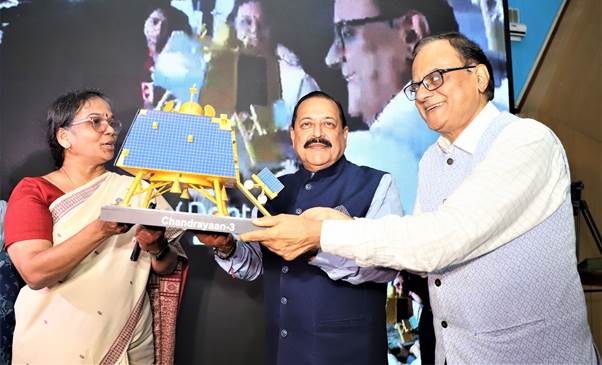
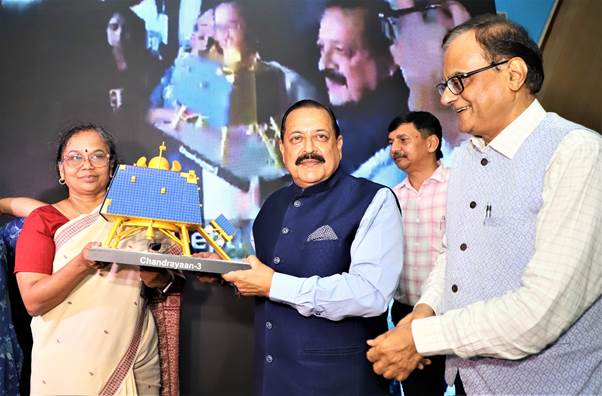
This was the opening sentence of Union Minister of State (Independent Charge) Science & Technology; MoS PMO, Personnel, Public grievances, Pensions, Atomic Energy and Space, Dr Jitendra Singh, who is also MoS Incharge Space, soon after the successful soft landing of Chandrayaan3 on the surface of Moon in the South Pole area, this evening.

Simultaneously, in a tweet which exactly coincided with the precise moment of the landing of Chandrayaan-3, Dr Jitendra Singh said, “While others fantasize Moon, we have felt the Moon. While others stuck in flight of dreams, Chandrayaan3 has actualised the dream. Tricolour flies high in lunar skies affirming India’s resolve, as articulated by PM Modi, ‘Sky is not the limit’”.

In a brief statement to the media, Dr Jitendra Singh complimented ISRO Chairman, Shri S. Somanath, Mission Director, Shri Mohan Kumar and the entire Team ISRO for having placed India’s national pride on the Moon in the virgin terrain of South Polar area, not accessed by any other space mission so far. He said, it is difficult for common citizens to understand how much consistent labour, hard work, commitment and passion have been put in while working day and night for months and years together to ensure meticulous planning and minutest details for the success of the mission.

After today’s successful feat, Dr Jitendra Singh said, India has reaffirmed its position as a world’s frontline leading nation in the Space sector. He gave full credit to Prime Minister Shri Narendra Modi for enabling India’s Space scientists to vindicate the dream of their founding father Vikram Sarabhai by “unlocking” India’s Space sector and providing a milieu in which India’s huge potential and talent could find an outlet and prove itself to the rest of the world.

Dr Jitendra Singh further informed that the Vikram has landed in a hazard-free location with the help of its algorithm and instruments and the tilt to the Lander is very small as measured by the inclinometers onboard. While the cameras onboard the Vikram have beamed the pictures of the moon and confirmed the touchdown, the confirmation is available from other sensors as well, he added. 

Narrating the further sequence of activities from this moment onwards, Dr Jitendra Singh said, the experiments onboard Vikram and Pragyan will be happening on all days and as much data will be collected from all instruments until the Moon’s Day lasts for the next 14 days.

On the Lander, the Minister informed that the instruments in operation include CHASTE (Chandra’s Surface Thermo-Physical Experiment) to carry out the measurements of thermal properties of the lunar surface near the polar region, LRA (Laser Retroreflector Array), RAMBHA-LP- a Langmuir Probe to measure surface plasma density, a laser reflector mounted on the corner of the Vikram for accurate positioning measurement of Lander on the Lunar surface by future orbiters, ILSA – Instrument for Lunar Seismic Activity to measure seismicity around the landing site and to understand the structure of the lunar crust and mantle, LIBS- Laser Induced Breakdown Spectroscopy to determine the elemental composition (Mg, Al, Si, K, Ca,Ti, Fe) of Lunar soil and rocks around the lunar landing site, APXS – Alpha Particle X-Ray Spectrometer to measure the chemical composition and mineralogical composition to further enhance our understanding of Lunar-surface and SHAPE – Spectro-polarimetry of HAbitable Planet Earth to study the spectro-polarimetric signatures of the habitable planet Earth in the near-infrared (NIR) wavelength range (1 – 1.7 μm).

Dr Jitendra Singh said, at the end of next 14 days followed by night and extreme cold conditions when the day breaks again, solar power generation for Vikram and Pragayaan is expected to start again. Meanwhile, the orbiter is designed to withstand long periods of life, he said.

<

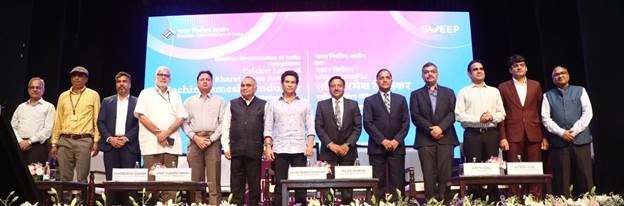
Cricket Legend & Bharat Ratna awardee Sachin Tendulkar begins his innings as National Icon for ECI

 Cricket legend and Bharat Ratna awardee Sachin Ramesh Tendulkar today began a new innings – as the ‘National Icon’ for voter awareness and education for the Election Commission of India. An MoU was signed with the legend for a period of 3 years at an event organized at Akashvani Rang Bhavan, New Delhi in the presence of Chief Election Commissioner Shri Rajiv Kumar and Election Commissioners Shri Anup Chandra Pandey and Shri Arun Goel. This collaboration marks a significant step towards leveraging Tendulkar’s unparalleled impact with the youth demographic for increasing voters’ participation in the forthcoming elections, especially in General Elections 2024. ECI through this partnership aims to bridge the gap between citizens, especially youth and urban populations and the electoral process thereby, trying to address the challenges of urban and youth apathy.


Sachin Tendulkar, in his role as the National Icon for the Election Commission of India, expressed his enthusiasm and commitment to the cause, and said that for a vibrant democracy like India, the youth play a key role in nation building. The hearts that beat for Team India during sports matches, with the unified cheer – ‘India, India!’ shall also beat the same way to take our precious democracy forward. One simple yet most powerful way to do that is to cast our votes regularly.

Speaking on the occasion he said that from thronging stadiums to thronging polling booths, from taking time out to stand by the National team to taking time out to cast our votes, we shall keep up the spirit and enthusiasm. When youth from the nooks and corners of the country participate in large numbers in electoral democracy, we shall see a prosperous future for our country.

Speaking on the occasion, CEC Shri Rajiv Kumar said that Shri Sachin Tendulkar, an icon revered not only in India but globally, has a legacy that extends far beyond his cricketing prowess. Mr Rajiv Kumar said his illustrious career is a testament to his commitment to excellence, teamwork, and the relentless pursuit of success. His influence transcends sports, making him an ideal choice to bat for ECI and drive up voter turn-outs, the CEC added.

The collaboration will encompass a range of activities, including Shri Tendulkar’s promoting voter awareness in various TV talk shows/ programs and digital campaigns etc, all aimed at raising awareness about the importance of voting and the role it plays in shaping the nation’s destiny.

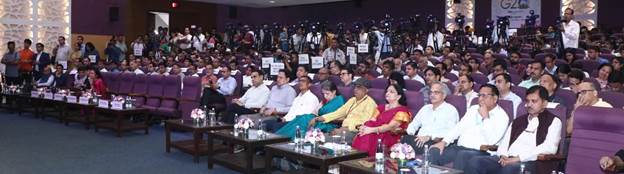
During the event, students from National School of Drama also presented an impactful skit on the importance of voting in strengthening of democracy.

ECI associates itself with renowned Indians from various fields and designates them as ECI’s national icons to motivate voters for participation in the festival of democracy. Last year, the Commission recognised famous actor Mr. Pankaj Tripathi as the National Icon. Earlier, during the 2019 Lok Sabha Elections, stalwarts like M.S.Dhoni, Aamir Khan and Mary Kom had been the ECI National Icons.

***

National Curriculum Framework for School Education

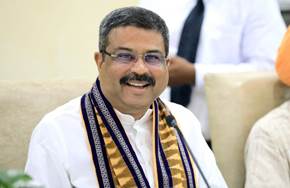
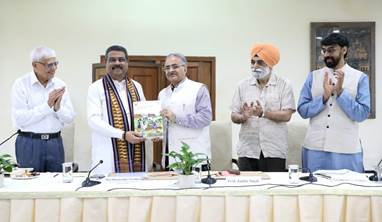
 Union Minister for Education and Skill Development & Entrepreneurship, Shri Dharmendra Pradhan today released National Curriculum Framework for School Education (NCF-SE), marking an important and transformative step towards the implementation of National Education Policy. The Minister addressed the 1st Joint workshop of the National Curriculum Framework Oversight Committee and the National Syllabus and Teaching-Learning Material Committee today. The development of the NCF-SE was guided by a vision to align education with the demands of the 21st century and the ethos of the Indian knowledge system. Under the stewardship of Prof. K Kasturirangan, a Steering Committee was formed to create a curriculum aligned with the National Education Policy 2020, emphasizing the 5+3+3+4 design of schooling. This framework addresses the entire educational journey from foundational to secondary stages. The framework introduces multidisciplinary education, nurturing values, fostering creative pedagogies, and preparing students for practical problem-solving.


Speaking on the occasion Shri Dharmendra Pradhan said that the world has high expectations from India. In order to live up to our global responsibilities, we have to develop technology-driven educational system that meets expectations of the world’s community alongside India, he added. He highlighted the framework’s role in shaping a holistic, contemporary, and Indian-rooted educational landscape. He further said that it is a momentous boost to implementation of NEP with release of National Curriculum Framework for School Education and efforts are on to make new textbooks available from next academic year. The textbooks for class 3-12 to be aligned with 21st Century requirements, making them rooted and futuristic, he added.

The NCF-SE’s comprehensive nature ensures that it covers all stages of schooling. It sets clear learning standards and competencies, enabling teachers to foster critical thinking, creativity, and genuine understanding. The framework empowers educators, encourages engaging pedagogies, and emphasizes the importance of school culture and values.

Art Education, Physical Education & Well-being, Environmental Education, and Vocational Education are reinvigorated under the NCF-SE. Multilingualism, conceptual understanding in Mathematics, and capacities for scientific inquiry also receive renewed attention. The curriculum’s interdisciplinary approach encourages students to study the relationships between individuals, society, and the environment.

The National Curriculum Framework for School Education (NCF-SE) is the curriculum framework for the 5+3+3+4 design of schooling as proposed by the National Education Policy 2020 (NEP 2020). It also recommended the formulation of a new and comprehensive National Curriculum Framework for School Education (NCF-SE) to respond to this four-stage school design. The entire curriculum framework for all the four stages – Foundational Stage, Preparatory Stage, Middle Stage, and Secondary Stage – was released. Some of the key related points:

  • Comprehensive curriculum framework covering all 4 stages of schooling. The NCF-SE comprehensively covers all the four stages of schooling. The NCF-SE has articulated the learning standards to be achieved and the principles for selection of content, pedagogy, and assessments for achieving the learning standards.
  • Enable real improvement in practise of education in the country. The NCF-SE is designed to enable and help actual change in practise on the ground. The NCF-SE has made conscious and deliberate effort to communicate to all stakeholders in school education including Curriculum and Syllabus developers, so that it is useable in practical circumstances. Teachers and parent community can also comprehend the intention of the curricula that is developed on the basis of the NCF-SE.
  • Learning Standards with clear, specific, and rigorous flow-down. It articulates specific learning standards for all school subjects that gives clear direction for action for all stakeholders in the school system, particularly Teachers. The Learning Standards have defined specific competencies to be achieved at the end of each stage for each school subject. There is a clear, specific, and rigorous flow-down of curricular logic from the broad aims of school education to specific curricular aims of each subject, resulting in curricular goals and competencies for a specific stage in that subject.
  • Development of Knowledge, Capacities, and Values. The curriculum focuses on development of knowledge with genuine understanding, fundamental capacities such as critical thinking and creativity, and constitutional and human values.
  • Empowering teachers and schools. The NCF-SE designed to enable and empower teachers and schools for the full flowering of their creativity and enhanced engagement.
  • Engaging and effective pedagogy. It enables the entire range of age and context appropriate pedagogy, from play-based, activity-based, inquiry-based, dialogue based, and more. This would also use effective, widely available, and highly engaging teaching-learning-material, including textbooks.
  • Transforming assessment including exams. Assessment and exams at all levels to be transformed, to enable genuine learning and reduce stress, including the Board exams.
  • Importance of School Culture. School culture and practises are to be developed as an integral and important part of the curriculum. 
  • Rooted in India. The curriculum is rooted in India and is informed by the wealth of Indian knowledge and thought on education. Contributions to the knowledge in various disciplines by Indians from the ancient to contemporary times have been integrated into the curricular goals of all school subjects.
  • Multidisciplinary education. All children to go through multidisciplinary education to develop an integrated and holistic perspective and learning.
  • Equity and inclusion. The NCF-SE is informed by principles to ensure equity and inclusion in all its aspects, from content and pedagogy, to, school culture and practises.
  • Renewed emphasis on Art, and, Physical Education & Well-being. The school subjects of Art Education and Physical Education & Well-being are given a renewed emphasis in the curriculum by defining specific learning standards to be achieved and recommended time allocation in the school timetables. Art Education encompasses both visual arts and performing arts and has equal emphasis on making, thinking about, and appreciating artwork. Physical Education and Well-being gives emphasis to sports, mind-body wellness through practices like Yoga, and ideas on incorporating traditional Indian games and sports into the curriculum.
  • Environmental Education. Responding to the triple challenge of climate change, biodiversity loss, and pollution, and the criticality of environmental awareness and sustainability in today’s world, Environmental Education is given due emphasis across all stages of schooling culminating in a separate area of study in the Secondary Stage.
  • Vocational Education. The NEP 2020 has made strong recommendations for Vocational Education to be an integral part of school education and the NCF-SE has included specific learning standards, content, pedagogy, and assessments for Vocational Education for all stages of schooling. The curriculum proposes engagement in the three different forms of work – work with life forms (agriculture, animal husbandry), work with materials and machines, and work in human services.
  • Multilingualism and Indian Languages. The NCF-SE has given the necessary emphasis on multilingualism and on learning languages native to India. Given the rich multilingual heritage of India, it expects all students to be proficient in at least three languages, at least two of which are native to India. It expects students to achieve a “literary level” of linguistic capacity in at least one of these Indian languages.
  • Conceptual understanding and procedural fluency in Mathematics. The school subject of Mathematics & Computational Thinking has emphasis on conceptual understanding along with procedural fluency – with a goal to appreciate the beauty and universality of mathematics and reduce fear of the subject. Higher order curricular goals such as problem solving, mathematical thinking, coding, and communication are given due importance.
  • Capacities for Scientific Inquiry. Science Education emphasises the development of capacities for scientific inquiry along with acquiring knowledge of fundamental theories, laws, and conceptual structures of science in disciplines such as Biology, Chemistry, Physics, and Earth Science.
  • Interdisciplinary understanding of Social Science through themes. The social science curriculum expects students to systematically study human societies and explore the relationships between individuals, society, the natural environment, social institutions, and organizations. This is to be studied through themes in an interdisciplinary manner in the Middle Stage and developing disciplinary depth in the Secondary Stage.
  • Flexibility and Choice in Secondary Stage. The Secondary Stage has been significantly redesigned to offer more flexibility and choice for students. There are no hard separations between academic and vocational subjects, or between science, social science, art, and physical education. Students can choose interesting combinations of subjects for receiving their school-leaving certificates.
  • Interdisciplinary Areas of Study. Interdisciplinary Areas of Study has been introduced as a separate subject of study in the Secondary Stage. In this subject, students develop the ability to reason about contemporary challenges using knowledge from multiple disciplines including moral and ethical concerns. They are expected to use these abilities to understand and respond effectively to the concerns of environmental degradation that include climate change and biodiversity loss.

The NCF-SE is organised into five parts.

  • Part A articulates the broad aims of school education, and the desirable values and dispositions, capacities and skills, and knowledge that are required for achieving these aims. It also lays down the principles and approaches for content selection, pedagogy, and assessment and gives the rationale and design principles for the four stages of schooling.
  • Part B focuses on some of the important cross-cutting themes of NCF-SE, viz., rootedness in India, education for values, learning and caring about the environment, inclusive education, guidance and counselling, and use of educational technology.
  • Part C has separate chapters for each school subject. Each of these chapters have Learning Standards defined for all the relevant stages of schooling along with specific guidelines for content selection, pedagogy, and assessments appropriate for that subject. The part also has a chapter on the Foundational Stage and one on design and range of subjects in Grades 11 and 12.
  • Part D handles school culture and processes that enable a positive learning environment and inculcate desirable values and dispositions.
  • The last part, Part E, outlines the requirements for an overall ecosystem of schooling that would enable the achievement of the aims of the NCF-SE. This includes aspects of teacher capacities and service conditions, physical infrastructure requirements, and the role of the community and family. 

*****

Eklavya Model Residential School (EMRS)

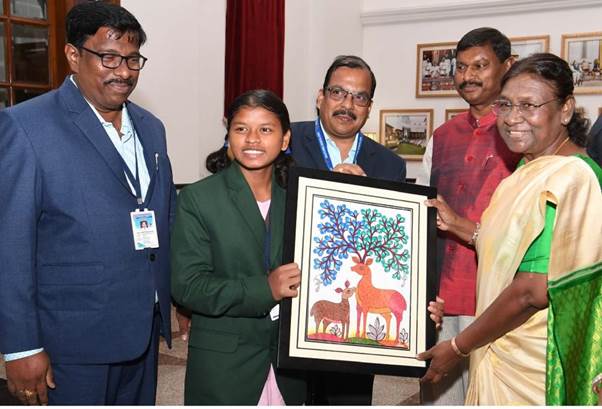
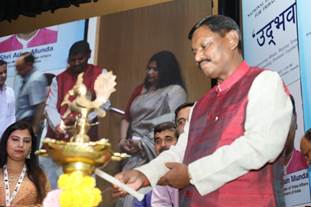
 As part of an educational visit organised by the Ministry of Tribal Affairs and NESTS on 22nd September 2023, Eklavya Model Residential School (EMRS) students interacted with the Union Minister of Tribal Affairs, Shri Arjun Munda at the Dr BR Ambedkar International Centre in New Delhi.

During the day, the students also received the opportunity to visit Rashtrapati Bhawan and meet with the President of India, Smt. Droupadi Murmu. In addition, the students received a guided tour of the Amrit Udyan, Rashtrapati Bhawan Museum and Library.


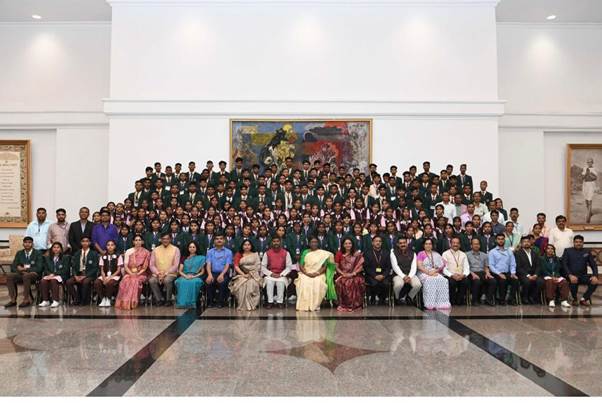
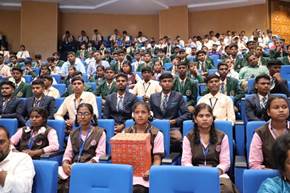
460 students and 40 teachers from  Eklavya Model Residential Schools from six states, namely Rajasthan, Uttarakhand, Jharkhand, Madhya Pradesh, Odisha, and Chhattisgarh participated in the programme.

Speaking on the occasion, Union Minister, Shri Arjun Munda remarked, that tomorrow is an important day and Chandrayaan 3 will land on the moon and by this landmark feat India will reach the skies. He urged the students they should have the courage to aim for the sky but keep their feet on the ground. He also asked the students to watch the landing of the Chandrayaan 3.

He added that the Culture of tribals  is inspired from the connectivity they feel for the mother earth.  He also added that Constitution ensures new opportunities for tribals and their empowerment and in the similar terms, EMRS aims to give opportunities for all round development of students and provide quality education to the tribal students.


He asked students to meet their seniors who have benefitted from the scholarship schemes and are pursuing higher education in field of medical, education, or are preparing for civil services, and add their own hard work in the guidance received to touch the sky. He urged the students to reflect on their goals and achieve these with the hard work and patience. He asked the students to have personal and collective goals for society and nation also.

He mentioned that EMRS number will reach 740 and which will help education reach the grassroots level. He also said that teachers are being recruited for old and new schools.

On the occasion, Secretary, Ministry of Tribal Affairs, Shri Anil Kumar Jha said that our Ministry is focused on giving impetus for the overall education of tribal youth through our Eklavya Model Residential Schools in various states. He added that students are invited to explore our educational schemes and opportunities to the fullest, as these will benefit you in the future.

During the interaction, the students and scholarship recipients from the various EMRSs shared their experiences in a candid manner with the Ministers, dignitaries, and the students. EMRS Students and EMRS Scholarship beneficiaries also put forth various questions and concerns to the Ministers.

Further, Shri Asit Gopal, Commissioner, NESTS delivered a brief background about the objective of establishing Eklavya Model Residential Schools across the country.

This was followed by a brief overview about Scholarship Schemes of the Ministry of Tribal Affairs by Dr Navaljeet Kapoor, Joint Secretary, MoTA.

EMRS students of Odisha, Jharkhand, Chhattisgarh, Uttarakhand, and Madhya Pradesh presented scintillating performance in a Cultural Program organised at the venue in the spirit of Ek Bharat Shrestha Bharat.

A photo session of the students with the Ministers during the closing ceremony was also organised.

The students are scheduled to visit the Parliament House on August 23, 2023, in the morning hours. Their visit to this prestigious institution will provide them with a unique opportunity to familiarise themselves with Parliament House’s functioning and gain a comprehensive understanding of the duties and responsibilities related to the Parliament.

*******

Global Maritime India Summit 2023

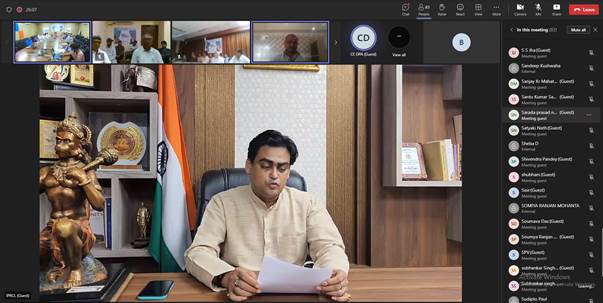
 As part of series of roadshows under the guidance and direction of Ministry of Ports, Shipping & Waterways for inviting and attracting clients and various stakeholders to participate actively in forthcoming Global Maritime India Summit scheduled to be held in October in New Delhi, Indian Port Rail & Ropeway Corporation Limited (IPRCL) organized a virtual roadshow today. This had a pan India presence involving corporate and regional & site offices of IPRCL across various States in India. Representatives from Zonal Railways, State Maritime Boards, MoRTH, Major Ports, major Government sector units like Coal India Ltd., NICDC, NTPC, OMC, NALCO participated in the roadshow. Various industrial bodies and corporate units like JSW, Vedanta, Tata Steel, Jindal Power, Thriveni, Pipava Port, Rungta Mines, Legacy Warehouse, Ennore Tank Terminal, URC and various other units were active participants in the roadshow. More than 190 participants were available in the roadshow consisting of Central and State Government agencies, Railways, Ports, Maritime Boards and various officials from different corporate and industrial units related to maritime, infrastructure, logistics and other sectors.

The Minister of State for Ports, Shipping & Waterways (MoPSW) Shri Shantanu Thakur virtually graced the occasion inspiring the stakeholders to join and participate in GMIS – 23. He said that GMIS-23 will provide viable opportunity to connect with industry leaders, innovators and business experts in maritime sector around the world and to collaborate and discuss. He further highlighted that the summit will also offer an unparallel opportunity to showcase talent and forge new partnership for gaining insights into national and global port related industrial, infrastructure and logistics opportunities. He mentioned that this event is inspired by our Prime Minister Shri Narendra Modi Ji’s inspiring vision of making Indian maritime sector as a leading blue economy of the world.
A person sitting at a desk looking at a piece of paperDescription automatically generated

In his inaugural speech Managing Director, IPRCL Shri Anil Kumar Gupta emphasized that the roadshow will be an enlightening experience, focused on providing stakeholders with comprehensive insights into forthcoming GMIS-23 involving global participation. Summarizing business opportunities in the GMIS-23, Shri Gupta explained that by attending this event, clients will gain access to a wealth of knowledge, expert perspectives, opportunity to collaborate and build a wider network.
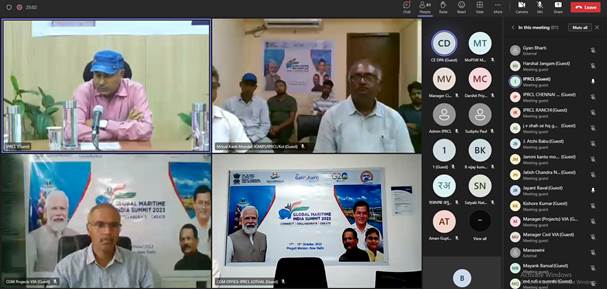
A screenshot of a video conferenceDescription automatically generated

A presentation was shown to all clients highlighting the professional profile of IPRCL and essential information about GMIS-23. Presentation widely covered the success journey of Indian Maritime sector and the growth trajectory since last decade in various areas of maritime industry. The smart port, green shipping, capacity enhancement through automation, ship building & recycling, maritime tourism, inland waterways grids, maritime safety & security were deliberated for the knowledge of clients. Corporate video of GMIS was also presented to enlighten clients about business opportunities in GMIS. Shri Anang Pal Malik, Director Works and Shri R.K. Lal, CGM Business Development, IPRCL interacted with clients flagging advantages for business growth and collaboration by participating in Global Maritime India Summit 2023.
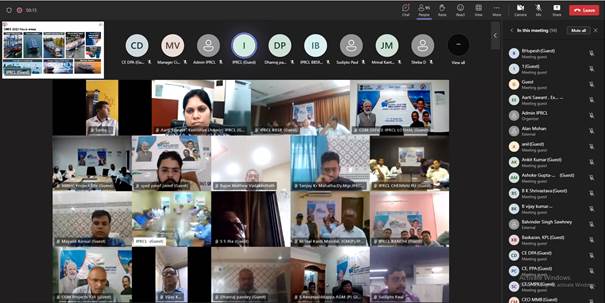
A screenshot of a video conferenceDescription automatically generated

Senior officers from South-Eastern Coalfields Ltd. and JNPA represented their companies as Guest speakers and highlighted business opportunities which companies will gain during GMIS-23.

*****


Deliberating on the growth prospects of Indian maritime industry, the Minister of Ports, Shipping & Waterways, Shri Sarbananda Sonowal extended a warm invitation to all the Indian Ambassadors from the East and the West Zones to explore the investment opportunities in the domestic maritime sector.

The meeting saw a remarkable display of collaboration and commitment to maritime excellence with participation from more than 45 Indian missions including USA, UK, France, Canada, Singapore, Russia, UAE, Australia, Korea, Spain, Sweden, Switzerland, Denmark, Netherlands, Brazil etc. to name a few. Indian missions from the Commonwealth of Independent States, BIMSTEC, Middle east, Gulf and other neighbouring countries on eastern side were also present.
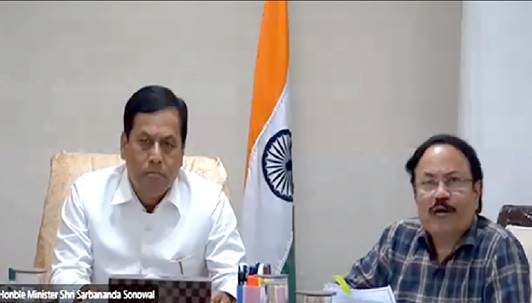
Shri Sonowal alluded to the upcoming Global Maritime India Summit (GMIS) 2023 and urged ambassadors to leverage their positions to drive participation from respective governments and corporates in various countries across the globe. Highlighting India’s emergence as the 5th largest economy in terms of GDP and the 3rd largest in purchasing power parity, Shri Sonowal outlined that the nation’s progress in the maritime domain, characterised by a commitment to 100% Foreign Direct Investment through automatic routes.

“With a potential investment of more than INR 10 lakh crore (US$12,000 million), we can drive economic transformation that resonates within our borders and reverberates globally. We recognize the importance of robust international trade relations for its economic growth and are taking various initiatives to enhance global cooperation on the maritime front” the Minister noted.
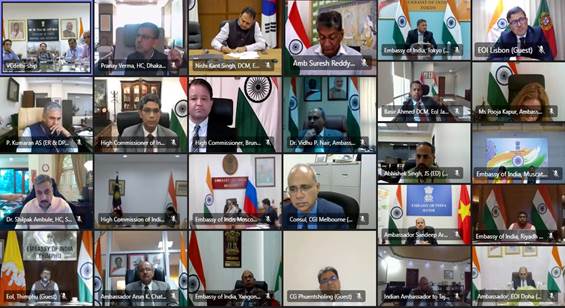
The emphasis on the blue economy was visible as the Minister invited investors to participate in diverse industries, creating an expansive canvas for growth. From cruise tourism to shipbuilding and maritime education, the vision encompasses multiple domains that present opportunities for international collaboration.

Reflecting on the collaboration potential, Shri Sonowal concluded, “India has already entered bilateral agreement & MoUs with 34 countries on maritime transport & cooperation and signed MoUs on recognition of certificates of seafarers with 40 countries. We have also been an active participant in various multinational maritime forums for equitable and sustainable development. Through your support, we shall attain mutual growth and reap the rewards, cultivating a legacy of collaboration, innovation, and prosperity”

Shri T K Ramachandran, Secretary, Ministry of Ports, Shipping & Waterways discussed the goals of the upcoming Global Maritime India Summit (GMIS) during his introductory remarks. He underlined the global aspect, emphasising three key elements: advancements in ports and interior waterways, partnerships with foreign businesses for technology and project execution, and the unique trade requirements of many nations.

Additionally, Shri Periasamy Kumaran, Additional Secretary (ER & DPA), Ministry of External Affairs provided an overview of the transformative phase in India’s ports and shipping, focusing on potential for domestic and foreign investment. He went on to discuss how Indian missions aid in business networking and matchmaking, encouraging participants to find possible investors and partners, promote conversations, and serve as information hubs for the sector.

About Global Maritime India Summit (GMIS), 2023:

GMIS 2023 is a premier maritime sector focussed event to bring together pivotal figures from the industry to explore opportunities, understand challenges, and stimulate investment within India’s maritime sector. Building upon the legacy of its preceding editions, this third instalment aims to unveil broader prospects for domestic and international maritime stakeholders and investors. Ready to make its presence felt on the global stage and spotlight India’s maritime industry, the Maritime India Summit has now evolved to the ‘Global’ Maritime India Summit this year. The summit is slated for 17th to 19th October 2023, at Bharat Mandapam, New Delhi.

For more details on the Global Maritime India Summit 2023, including a complete agenda and registration details, please visit the official website at www.maritimeindiasummit.com

*****

India is set to achieve $150 billion Bio-Economy by 2025

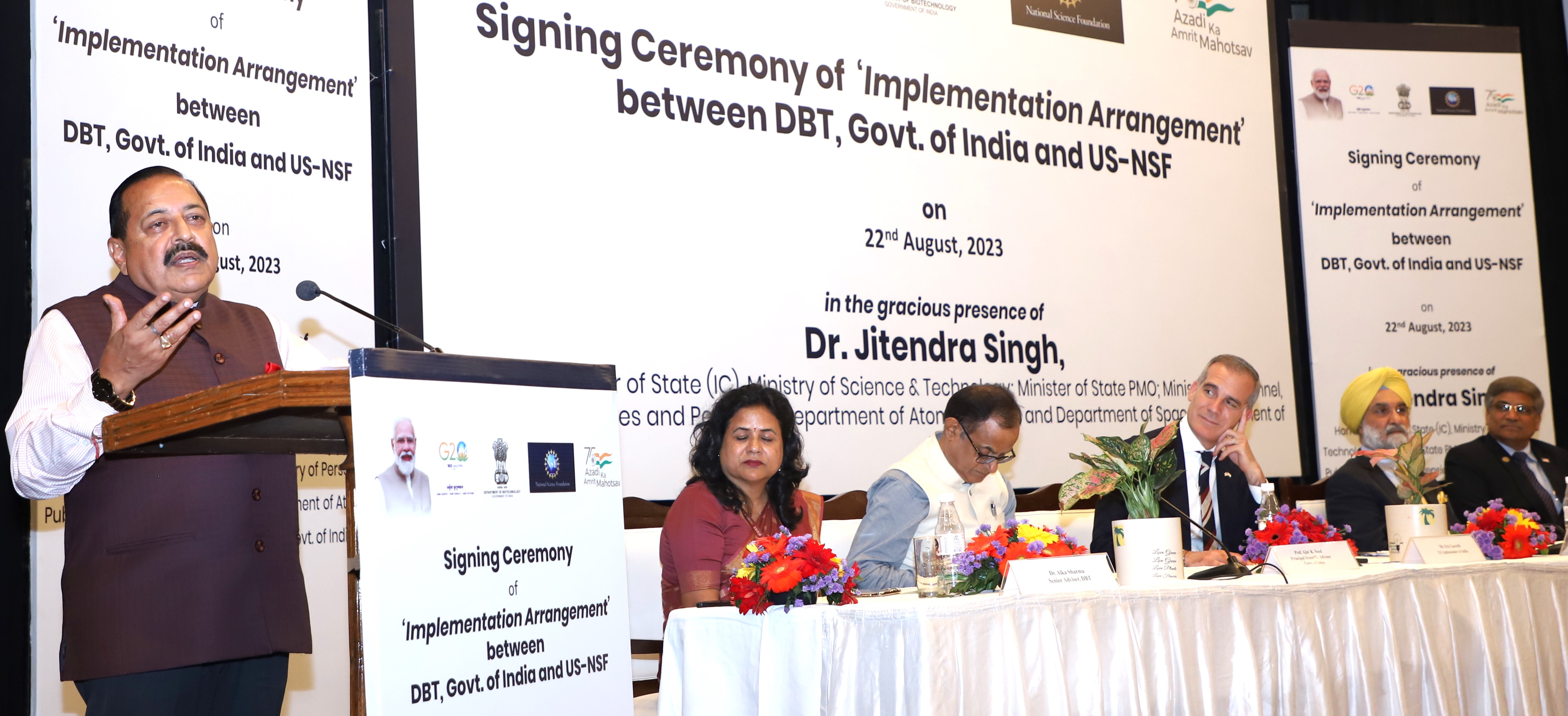
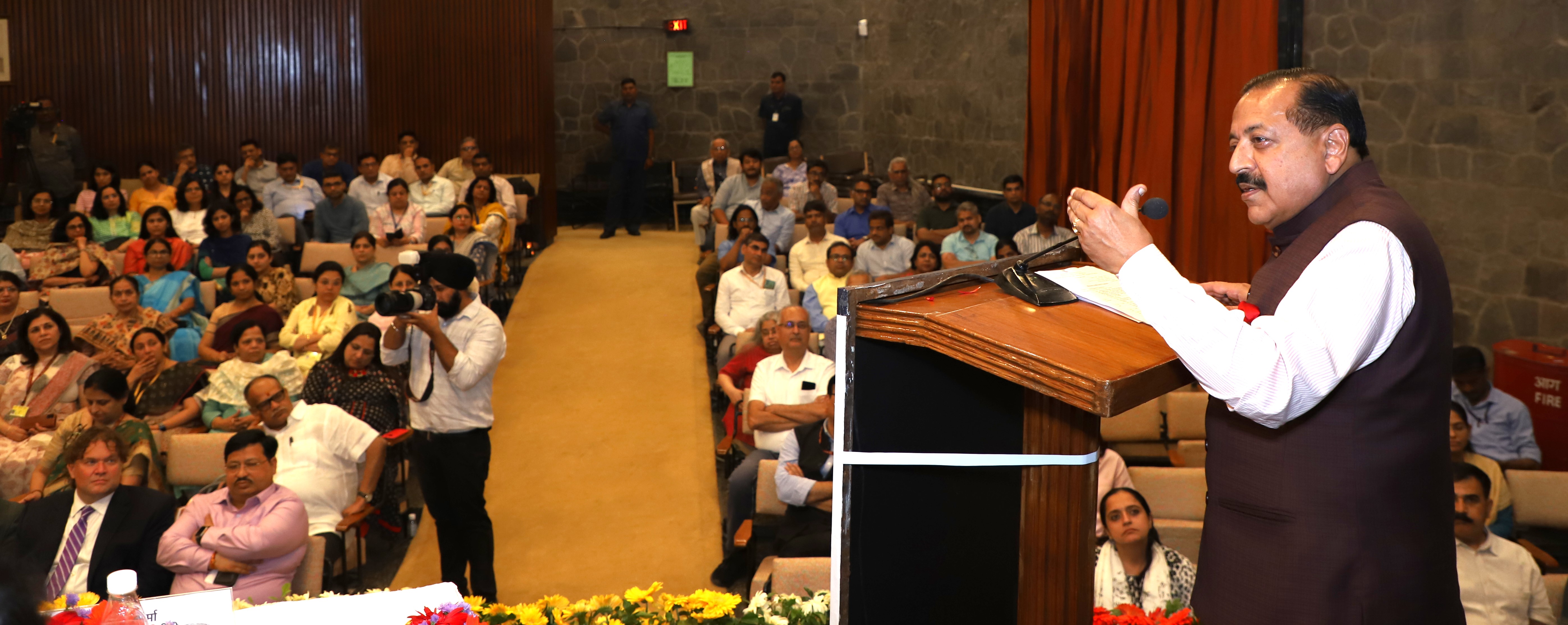
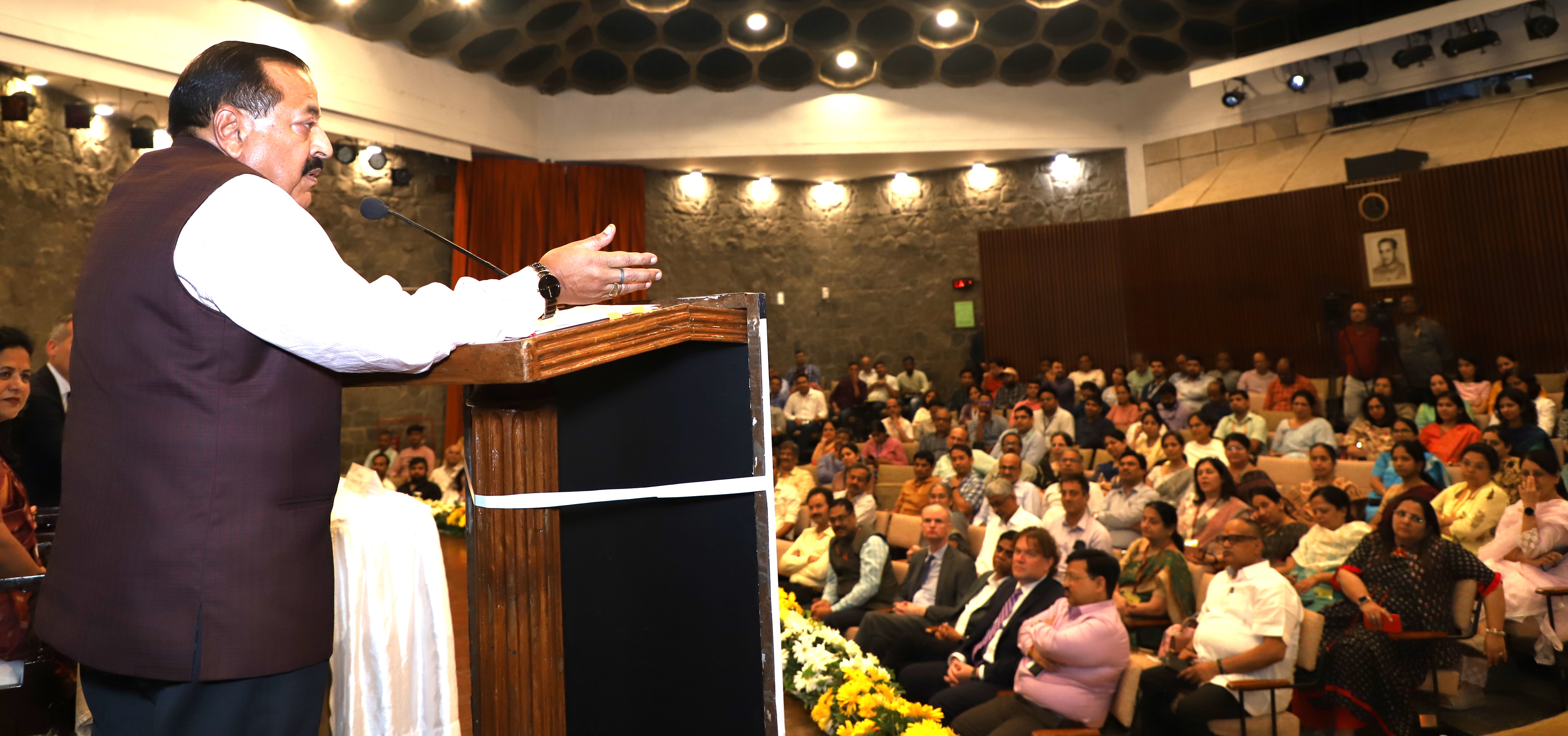
 Union Minister of State (Independent Charge) Science & Technology; MoS PMO, Personnel, Public Grievances, Pensions, Atomic Energy and Space, Dr Jitendra Singh today said, India is set to achieve $150 billion Bio-Economy  by 2025, which stood at over $100 billion in 2022.

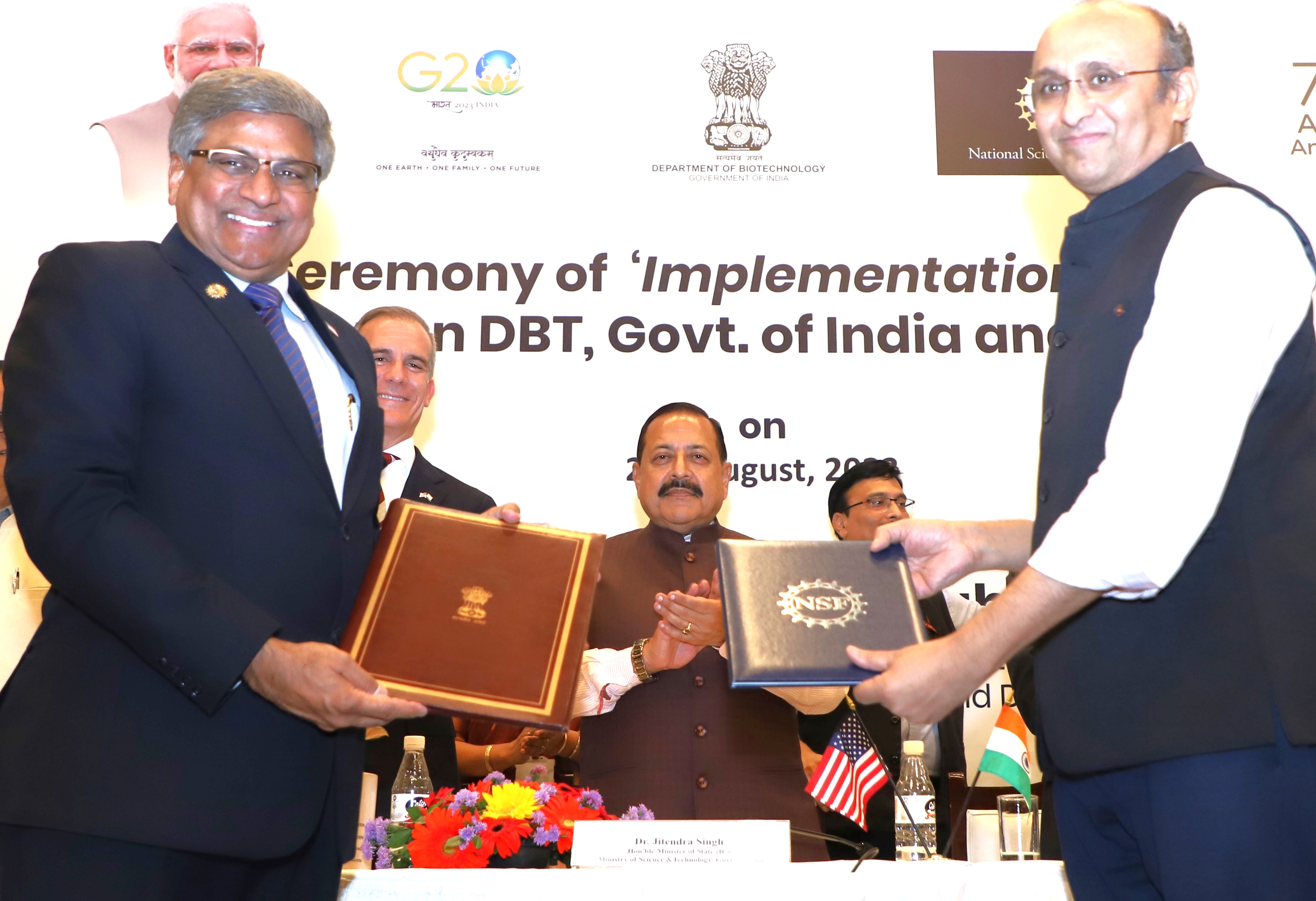
The Minister was speaking, while overseeing the signing up of the ‘Implementation Arrangement’ between the Department of Biotechnology (DBT) and the United States-National Science Foundation (US-NSF) today in New Delhi.  This was a follow-up of the discussion meeting held between Dr. Rajesh S. Gokhale. Secretary, DBT and Dr Sethuraman Panchanathan, Director, NSF in June, 2023 to discuss opportunities for developing ‘Strategic Partnership’ between DBT and US-NSF.

Dr Jitendra Singh recalled that during the recent visit of Prime Minister Narendra Modi to the US in June 2023, the leaderships of the both the countries called on their administrations to extend the existing partnerships to advanced biotechnology and biomanufacturing, and enhance biosafety and biosecurity innovation, practices, and norms.

Dr Jitendra Singh said, India’s ever-growing Bio-Economy graph is going to contribute significantly to India’s Overall Economy. He said, India has a 3-5% market share in the global biotechnology industry and it ranks 12th in the world in biotech and 3rd in Asia-pacific.

 The Minister said, India has the 3rd largest Startups ecosystem globally; and the largest vaccine manufacturer. Moreover, India’s ranking in global science and technology indices continues to rise and India has been ranked 40th among the innovative economies as per Global Innovation Index, 2022.

Dr Jitendra Singh pointed out that the Department of Biotechnology has created and nurtured a strong foundation in biotechnology innovation, research and manufacturing across segments such as bio-pharma, bio-services, agri biotech, industrial biotech, and bioinformatics through public-private partnership, Make-in-India and Atma Nirbhar Bharat initiatives of the Government.

Dr Jitendra Singh said, Indian Government has always supported technology-driven innovation towards the creation of a ‘future-ready’ technology platform in line with the Prime Minister Modi’s vision of Aatmanirbharta and he congratulated DBT and NSF for building on the bilateral collaborations between India and USA through this Implementation Arrangement.

Dr Jitendra Singh said, the climate change, inadequate resource utilization, an unsustainable pattern of material consumption and waste generation are global threats and require concerted sustainable interventions and therefore called for futuristic research and innovation strategies for accelerating Biomanufacturing are essential to address global sustainable goals. He said, accordingly, DBT has undertaken a major initiative on “Fostering High Performance Biomanufacturing- An integrated approach towards promoting circular economy for Green, Clean and Prosperous India” and added that it exemplifies ‘Lifestyle for the Environment (LIFE)’launched by Prime Minister that urges all stakeholders to pursue green and friendly environmental solutions in every aspect of life to effectively achieve climate and energy goals;

The Minister said, the ‘Implementation Arrangement’ will lay the foundation for collaboration between the two countries on accelerating innovations in the area of ‘Biotechnology Innovation and Biomanufacturing’.This will advance knowledge, technologies, and innovation through supportive collaborative research to empower biotechnology industries and promote bioeconomy of both the countries, he added.

Dr Sethuraman Panchanathan, Director, NSF, said that “USA and India can together address pressing global needs such as climate mitigation and energy goals through biotechnology innovation and biomanufacturing”.

Dr Rajesh S. Gokhale, Secretary, DBT added that “this partnership will be an important step to mutually address the challenges in the innovation space as well as for enhancing technological opportunities. This will also bring synergy to DBT’s initiatives for fostering high performance Biomanufacturing- an integrated approach towards promoting circular economy for Green, Clean and Prosperous India”.

About Department of Biotechnology (DBT)The Department of Biotechnology (DBT), Ministry of Science and Technology,Government of India creates and nurtures strong foundation in biotechnology innovation, research and development across segments such as bio-pharma, bio-services, agri-biotech, industrial biotech, and bioinformatics.

The U.S. National Science Foundation (US-NSF) is an independent federal agency that supports science and engineering in the United States. It was established to promote the progress of science, advance the national health, prosperity and welfare, and secure national defence, through administering grants.

***

Mentor young generations to embellish efforts in the march toward Viksit Bharat of 2047

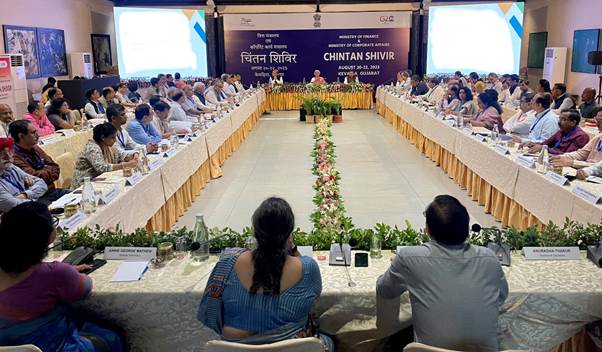
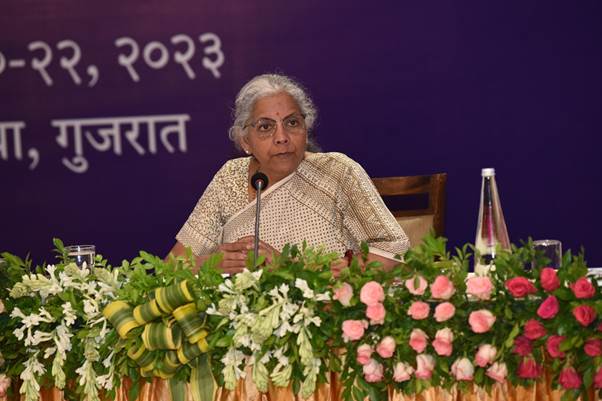
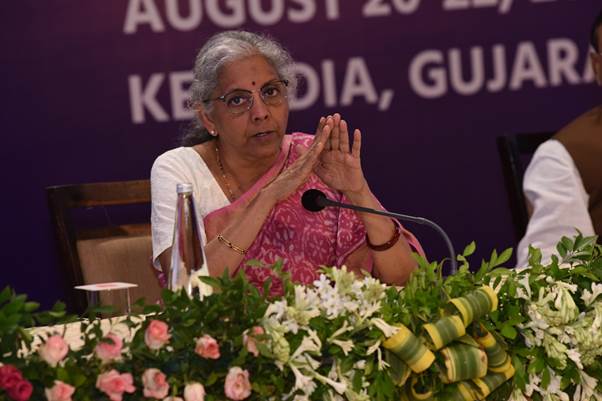
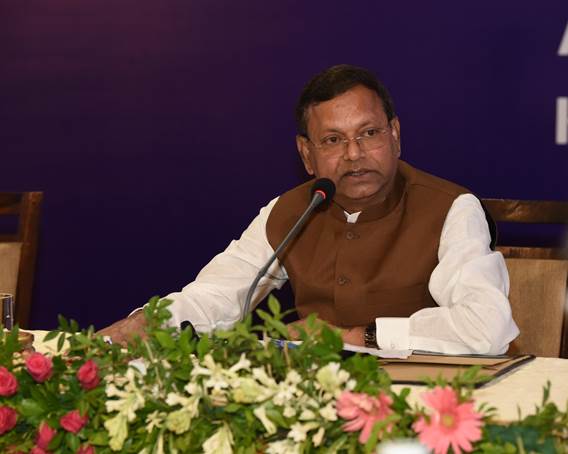
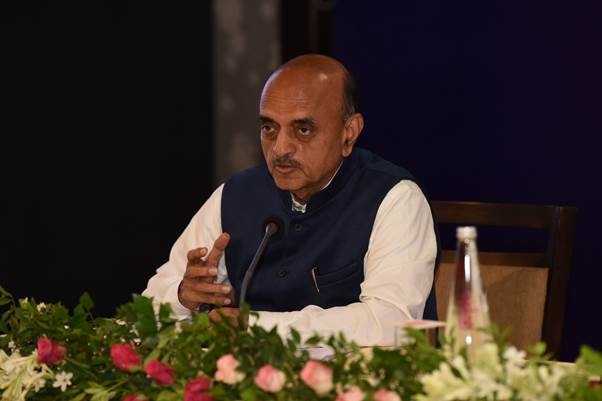
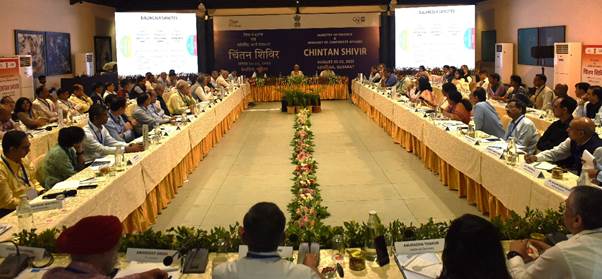
 The three-day Chintan Shivir of the Ministry of Finance and Ministry of Corporate Affairs concluded in Kevadia, Gujarat, today. Union Minister for Finance and Corporate Affairs Smt. Nirmala Sitharaman chaired the Chintan Shivir in presence of Union Ministers of State for Finance Shri Pankaj Chaudhary and Dr. Bhagwat Kisanrao Karad.

The Chintan Shivir was attended by senior officials of Ministry of Finance and Ministry of Corporate Affairs. The Finance Secretary, Secretaries from D/o Economic Affairs (DEA), D/o Investment and Public Asset Management (DIPAM), D/o Revenue (DoR), D/o Financial Services (DFS) and Ministry of Corporate Affairs, Chief Economic Advisor, Chairmen of CBDT and CBIC were also part of the deliberations.

Free and frank discussions were held by more than 100 senior officers of MoF and MCA on how to re-orient to achieve the Amrit Kaal goals by embracing the Panch Pran as envisioned by Prime Minister Shri Narendra Modi.

Interactive sessions were held on the “Role of Ministry of Finance and Ministry of Corporate Affairs in Amrit Kaal”, “Building our Capacities”, and “Improving our Efficiencies”.

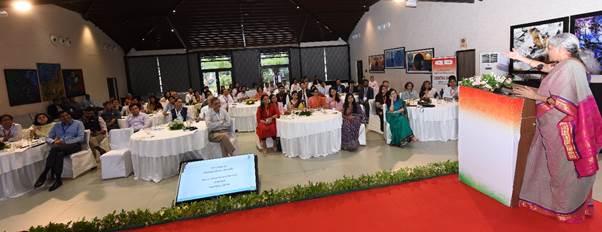
Smt. Sitharaman advised the officers to optimally utilise the vast pool of resources and experience at disposal in the Government. The Finance Minister underlined mentoring of young generations to embellish efforts in the march toward Viksit Bharat of 2047 in the Amrit Kaal.

Smt. Sitharaman urged the officers to go beyond to explore frontiers beyond their set roles and make an extra impact on other domains as well so that synergistic thoughts emerge which can be useful for the overall Ministry.

In her concluding remarks during the Chintan Shivir, the Union Finance Minister stated that both effectiveness and efficiency are long-term phenomenon and consistency in reform policy, with focus on both, individual and institutional efficiencies, are vital ingredients in public service delivery.

Referring to phenomenon of information overload as counter-productive to effectiveness and efficiency, the Union Finance Minister emphasised that both MoF and MCA must strive for simplification of processes with focus on not just the whole-of-Government-approach, but also whole-of-the-country approach to maximise delivery and engagement.

Smt. Sitharaman urged MoF and MCA senior officers to continuously mentor the new entrants/younger colleagues to develop the wherewithal in delivering results in the Amrit Kaal and beyond making Viksit Bharat by 2047. The Union Finance Minister also emphasised on the need to continuously reorient policy in the cultural context and to instil a sense of ownership in decision-making, to enhance effectiveness with efficiency.

During the discussions, Union Minister of State for Finance Shri Pankaj Chaudhary called for ambitious target-orientation for productively achieving goals towards India’s journey in becoming a developed country by 2047.

In his remarks during the session, Union Minister of State for Finance Dr. Bhagwat Kisanrao Karad emphasised on building self-confidence through knowledge and skilling. Dr. Karad said that decisions must be made in consultation with knowledgeable partners and stakeholders besides developing appropriate feedback mechanism for real-time assessment of delivery.

The Session on the “Role of Ministry of Finance and Ministry of Corporate Affairs in Amrit Kaal” focused on enabling growth and stability, and focused on the following four themes:

  1. Capital Formation and Retention
  2. Inclusive Growth
  3. Aatmanirbhar Bharat
  4. Strengthening Public Finance

During the session on “Building our Capacities”, discussions revolved around:

  1. Building Professional Capacity
  2. Building Personal Capacity
  3. Work-life Balance Capacity
  4. Institutional Capacity

The discussions during the session were focused on various aspects of capacity-building in the areas of human resource and institutions, role of technology and software-enabled systems, intra and inter-ministerial consultations, importance of training at various levels, and mentoring young blood for leading roles in Amrit Kaal in the journey towards building strong and resilient India Viksit Bharat by 2047.

During the session on “Building our Efficiencies”, in-depth discussions were held on:

  1. Enabling skilled and motivated workforce
  2. Robust internal processes
  3. Coordination and engagement with internal stakeholders
  4. Focus on external stakeholders
  5. Changing organisational culture

The discussions in the session revolved around skilling, maintaining robust organisational processes, streamlining file management systems and expediting decision-making in MoF and MCA, onboarding of stakeholders from the start, citizen-friendly technology tools, leveraging technology and use of AI for future-readiness, whole-of-Government-and-holistic approach towards public service delivery, time-bound delivery of citizen-centric services, removing duplicity of effort, and leveraging technology and use of AI for future-readiness.

On the sidelines of the Chintan Shivir, Union Finance Minister also interacted with the G20 Finance Track India Team. The G20 Finance Track Team shared thoughtful introspections with Smt. Sitharaman on various aspects of navigating the first nine months of Indian G20 Presidency.

***

Union Education Minister questions rationale of Karnataka Government over scrapping of NEP in the state

 Union Education & Skill Development Minister Shri Dharmendra Pradhan while addressing media today raised serious concerns over the Karnataka Government’s decision to scrap NEP in the state. The Minister asked about the repercussions, which such a decision will have for the younger generation.

He asked whether the Karnataka Government was opposed to early childhood care and education as a part of formal education, wondering if the State Government did not want children to achieve Foundational Literacy and Numeracy by the time they complete grade 2. He questioned if the State Government opposed Indian toys, games, play-based learning and ‘Chennemane’ in Karnataka.

He further asked if the State Government opposed education in Kannada and other Bharatiya Bhasha, along with the conducting of examinations, like NEET, CUET, JEE in Kannada, in a transparent manner.

He questioned if the State Government opposed multidisciplinary education, integration of vocational education, physical education, arts and sports as critical areas of study in school education. Does the State Government not want youth of Karnataka to avail world-class research facilities through the National Research Foundation, he further asked.

He questioned the decision of the State Government as to why it did not want students to learn about new and emerging technologies and consequent life skills in the 21st century, while utilising new textbooks relevant for 21st century education. He expressed concerns over the missed opportunities for earning while learning for Karnataka students.  Does the State Government not want teachers’ capacity building to be strengthened through reimagining DIETs and SCERTs as centers-of-excellence, Shri Pradhan further questioned. It’s a decision which would impact the collective future of the state,known for its IT prowess, in the future.

He asked the State Government not to weaponize Education, as such statements on NEP compromise the interests of students of Karnataka.

Defence Correspondents Course – 2023 Commences at ENC, Visakhapatnam

 The 2023 edition of Defence Correspondents Course (DCC), a three week course conducted by the Ministry of Defence for select journalists from National and Regional Media organisations, commenced at Eastern Naval Command (ENC), Visakhapatnam on 21 August 2023. Vice Admiral Sameer Saxena AVSM, NM Chief of Staff, ENC delivered the inaugural address and Shri A Bharat Bhushan Babu, Spokesperson (MoD) and Additional Director General (Media & Communication) gave an insight into Defence Journalism of the course at the Maritime Warfare Center. The aim of DCC is to bring media and military closer and enable a pool of journalists at all levels to have better appreciation of the Armed Forces and are cognizant of the domain when reporting on stories relating to the maritime environment.

 During the one-week naval attachment, the participants will be addressed by subject matter experts from within the Navy and the Coast Guard. They will acquaint the journalists with various aspects of the Navy including naval operations, naval diplomacy, Humanitarian Assistance and Disaster Relief and the organisational structure of the Navy and Coast Guard. As part of the course, the participants visited the Indian Naval ship and submarine on 21 Aug 2023 and they were briefed on various facets of life onboard. The participants will also have a scheduled tour at Naval Dockyard, Naval Air Station and onboard Coast Guard ships at Visakhapatnam in this week.  A sea sortie onboard a front-line warship of the Indian Navy is the highlight of the naval leg of the course, which will provide the journalists an insight into naval operations at sea.

****

India Post Payments Bank continues profit streak with sustained growth

 Making a transformative milestone in the realm of banking services, India Post Payments Bank (IPPB) proudly declares the continuation of its profit streak, reiterating its steadfast dedication to sustainable financial inclusion and citizen empowerment. Celebrating maiden profit journey last financial year and continuing of a successful profit run with the close of first-quarter this financial year, the IPPB is wholeheartedly committed to driving the Digital India initiative, ensuring no one is left behind, even in the remotest corners of the country.

Since its foundation, the IPPB has been motivated by the dream of extending doorstep banking services to millions of households nationwide. The journey began with pilot branches launched in Ranchi, Jharkhand and Raipur, Chhattisgarh in the year 2017 and witnessed unprecedented success in a remarkably short span to make it a dominant banking service provider at the last mile.

The IPPB is delighted to share the extraordinary accomplishment of generating a net profit of Rs. 20.16 crore during financial year 2022-23, culminating in a year of tremendous progress for the bank. A growth of 66.12 per cent in overall revenue was witnessed, which surpassed an increase in overall operating costs of 17.36 per cent, were the main factors in this accomplishment, demonstrating the power of IPPB’s customer-centric and cost-effective banking model.

“The IPPB’s success story is a testament to the collective efforts of our dedicated team, stakeholders, and most importantly, the trust of our family consisting of more tthan seven crore valuable customers,” quoted Shri J Venkatramu, MD & CEO, India Post Payments Bank. “Thanks to the slew of policy initiatives like Jan Dhan, Aadhaar, India Stack, etc & regulatory push like differentiated banking category, e-KYC, etc in the domain of financial inclusion that contributed tremendously in propelling IPPB’s success story. The bank’s prudent financial management, backed by regulatory support, has paved the way for exponential growth in customer base and product offerings,” he added.

Today IPPB has become the Most Accessible, Affordable and Trusted Bank for the unbanked & underbanked common man in India by leveraging the World’s Largest Postal Network comprising 1,55,000 Post Offices (1,35,000 in rural areas) and 3,00,000 postal employees, aided amply by the country’s Digital Public Infrastructure in delivering citizen centric financial services to the common man at their doorstep. Thus, a PHYGITAL Banking Service platform at a national scale has been created, with a differential positioning, envisaged to operate where traditional banking failed to catch up owing to conventional barriers.

This journey to profit with a purpose has been a collective effort. IPPB is indebted to tireless services of the Postmen/Gramin Dak Sevaks who have immensely contributed to the journey. IPPB will continue to sow seeds of financial prosperity with newly introduced services including loan referral services, low cost health & accidental products like Antyodaya Shramik Suraksha Yojana for Shramyogis registered on e-Shram portal, Digital Life Certificate to pensioners, citizen services initiatives like Aadhaar-mobile update, child Aadhaar enrolment, Aadhaar based banking transactions (AePS), enabling citizen access to govt. Direct Benefit Transfer programmes like PM KISAN etc. It’s initiatives like ‘Niveshak Didi’ has been able to reach to women beneficiaries across countries and helped them in providing much needed financial literacy to lay strong foundation of empowered India of the future.

Going forward, the IPPB aims to transform itself into a Universal Service platform bridging the last mile accessibility gaps using Digital Public Infrastructure.

About India Post Payments Bank

Communication with 100 per cent equity owned by Government of India. The IPPB was launched by the Prime Minister Shri Narendra Modi on September 1, 2018. The bank has been set up with the vision to build the most accessible, affordable and trusted bank for the common man in India. The fundamental mandate of India Post Payments Bank is to remove barriers for the unbanked & underbanked and reach the last mile leveraging the Postal network.

The IPPB’s reach and its operating model is built on the key pillars of India Stack – enabling Paperless, Cashless and Presence-less banking in a simple and secure manner at the customers’ doorstep, through a CB—integrated smartphone and biometric device. Leveraging frugal innovation and with a high focus on ease of banking for the masses, IPPB delivers simple and affordable banking solutions through intuitive interfaces available in 13 languages.

It is committed to provide a fillip to a less cash economy and contribute to the vision of Digital India. India will prosper when every citizen will have equal opportunity to become financially secure and empowered. Our motto stands true – Every customer is important, every transaction is significant and every deposit is valuable.

*****