In the midnight hours of 03 – 04 May 23, an Indian Air Force C-17 Globemaster aircraft airborne from Hindan, flew through the night to land in the early morning hours at Jeddah, Saudi Arabia. The aircraft refuelled at Jeddah to undertake a nonstop flight from Jeddah, via war torn Sudan and back to India. The aircraft took excess fuel from Jeddah to avoid a situation of non-availability of fuel and refueling delays in Sudan. The mission was one of a kind, with the aircraft carrying 192 passengers, mostly ladies, children and elderly persons, who either were NRIs, foreign nationals or OCIs (Overseas Citizens of India). These people could not be taken to Jeddah, and hence were required to be flown directly to India in a nonstop flight by the heavy jet.
At Sudan, the aircraft carried out an overhead steep tactical arrival followed by an assault approach to land the heavy jet. During the entire duration of the ground operations, the aircraft engines were kept running in readiness of a quick exit from the airfield, in case of such a need arising.
The crew encountered another unplanned emergency when one of the passengers became unconscious during the flight. This situation was immediately and proficiently handled by the crew who administered him 100% Oxygen to stabalise him.
The aircraft landed at Ahmedabad late in the evening on 04 May 23 late in the evening and then at the home base of Hindan late in the night on the same day. The crew thus flew through extended duty periods of nearly 24 hrs to get some of the last stranded countrymen back to India.
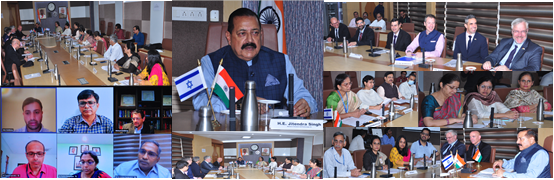
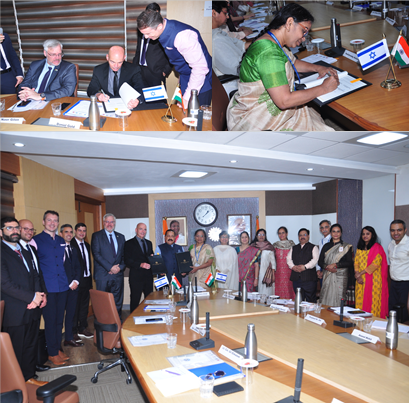
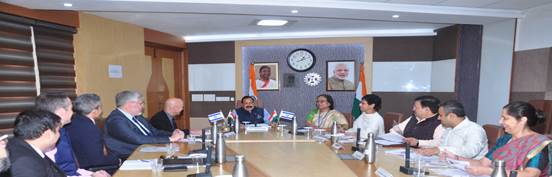
In a momentous milestone in S&T cooperation between India and Israel, a Memorandum of Understanding (MoU) on Industrial Research and Development Cooperation was signed between the Council of Scientific and Industrial Research (CSIR) under the Ministry of Science and Technology (MoST) of the Republic of India and the Directorate of Defense Research and Development (DDR&D), under the Ministry of Defense of the State of Israel.
Dr N Kalaiselvi, DG, CSIR and Secretary, DSIR thanked the Hon’ble Minister of State(IC), Ministry of Science and Technology and Earth Sciences, GoI and Vice President, CSIR Society for gracing the meeting and his continued support to CSIR. She welcomed the dignitaries and gave an overview of CSIR, showcasing its technological and research prowess as also the ongoing collaboration discussions with DDR&D, Israel in Aerospace, Healthcare, Energy. Sharing CSIR’s priority topics she concurred to the interest of DDR&D for furthering collaboration with Israel in high technology areas such as Artificial Intelligence, Quantum and semiconductors, synthetic biology etc.
Acknowledging the ongoing cooperation efforts of CSIR and his team, Dr. Daniel Gold, Head, DDR&D envisioned that the CSIR-DDR&D cooperation would be beneficial for the welfare of both the countries. He added that DDR&D welcomes collaboration not only with R&D organizations but also with start-ups and companies, venture capitals on both sides. He apprised that AI and photonics are strengths of Israel and welcomed cooperation with CSIR in High Technology sectors which would pave the way for building a better future.
Stressing the successful completion of three decades of India-Israel successful diplomatic relations, Mr. Naor Gilon, Ambassador of Israel to India emphasised the close friendly relations between Israel and India, which have culminated into a strategic partnership after the complimentary visits of Prime Ministers of both the countries in 2018. The present CSIR-DDR&D cooperation would add another feather and be a milestone for India-Israel relations.
Dr N Kalaiselvi and Dr. Daniel Gold signed the CSIR-DDR&D MoU in the august presence of Hon’ble Minister of S&T, Government of India and Vice President, CSIR Society, Dr Jitendra Singh.
The MoU shall enable cooperation in the industrial R&D programs in mutually agreeable industrial technology fields through implementation of specific projects. The collaboration would encompass some of the key industrial sectors including Healthcare; Aerospace & Electronics Instrumentation; Civil, Infrastructure & Engineering; Chemicals and Petrochemicals, Sustainable Energy including Energy Devices; Ecology, Environment, Earth & Ocean Sciences and Water; Mining, Minerals, Metals & Materials; Agriculture, Nutrition & Biotechnology. The collaboration through the MoU would be steered and the execution monitored by a Joint Steering Committee led by the heads of the CSIR and DDR&D for taking forward mutually benefiting Industrial and technology cooperation.
Specific collaboration on Hydrogen and Aerospace currently under discussed between CSIR and DDR&D were briefed by Dr Abhay Pashilkar, Director, CSIR-National Aerospace Laboratories (CSIR-NAL), and Dr Ashish Lele, Director, CSIR-National Chemical Laboratory (CSIR-NCL); they welcomed collaboration on futuristic technologies in these domains, including in High Altitude Platform, Hydrogen Valley programs of CSIR, respectively.
Specific collaboration on Therapeutics between CSIR-Indian Institute of Chemical Technology (CSIR-IICT) and M/s 101 Therapeutics for conducting clinical trials of a COVID-19 drug having enormous therapeutic potential was briefed; if successful this would prove to be highly appropriate and effective for preparation of future pandemics. The cooperation MoU between CSIR-IICT and M/s 101 Therapeutics was also signed during the meeting.
In his remarks, Dr Jitendra Singh said that it is a very important year in the S&T sphere of India under the leadership of PM of India as India is holding G20 presidency, celebrating the International year of Millets, as also India and Israel completed 30 years of successful diplomatic relations.
He apprised that CSIR has specialized laboratories in almost all the identified priority sectors therefore assured appropriate competence for this cooperation. For e.g. indigenous Hydrogen Fuel Cell bus by CSIR-NCL, purple revolution (Lavender cultivation) by CSIR-IIIM.He welcomed technology partnership with Israel and congratulated both sides for for their efforts to strengthen the India-Israel relationship.
Dr. Rama Swami Bansal, Head, International S&T Affaris Directorate (ISTAD), CSIR thanked the Hon’ble Minister for his continued support to CSIR, the team from Israel for building and formalizing the cooperation and her colleagues from CSIR and MEA for their kind and gracious presence during the MoU signing meeting today.
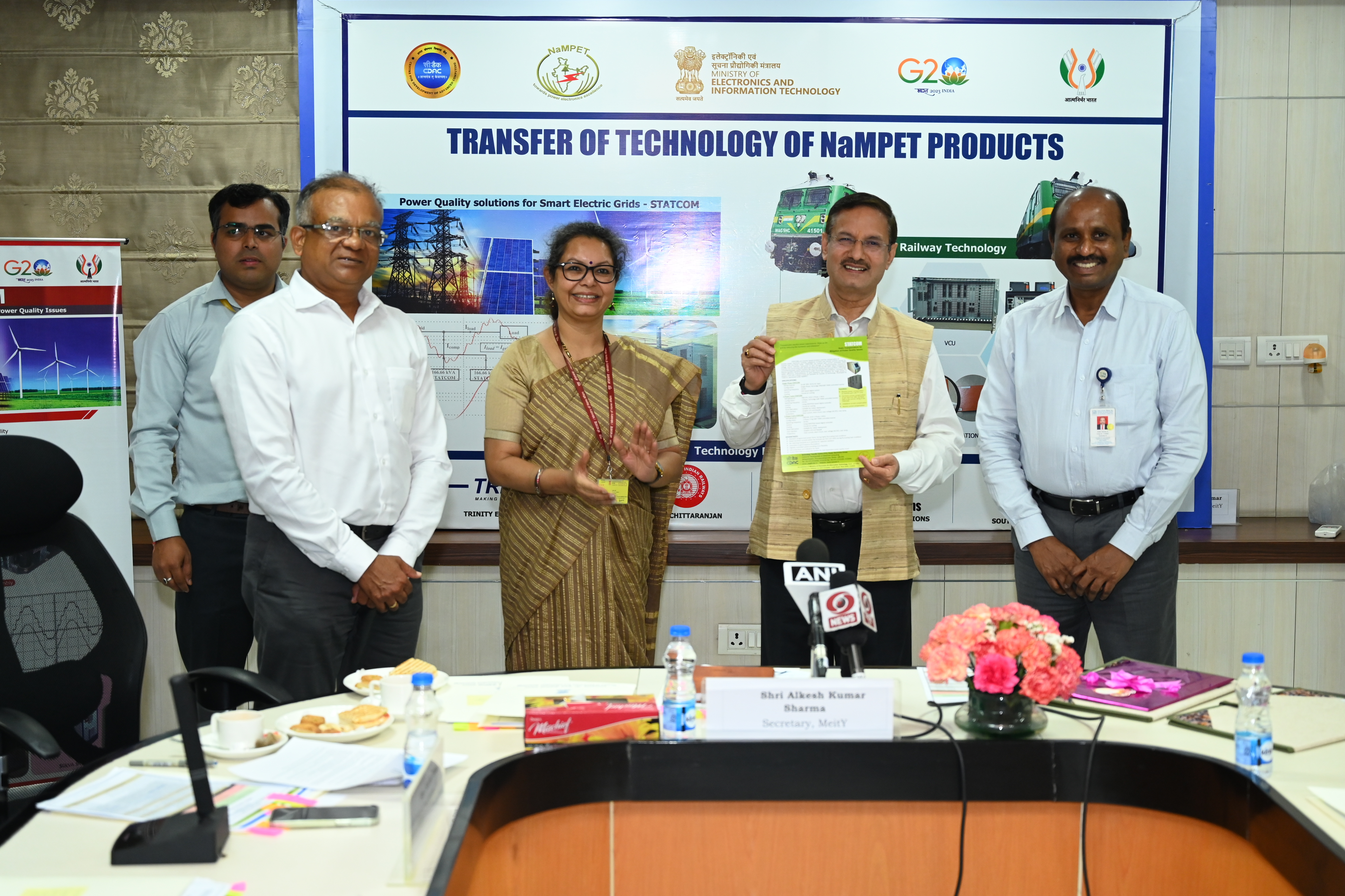
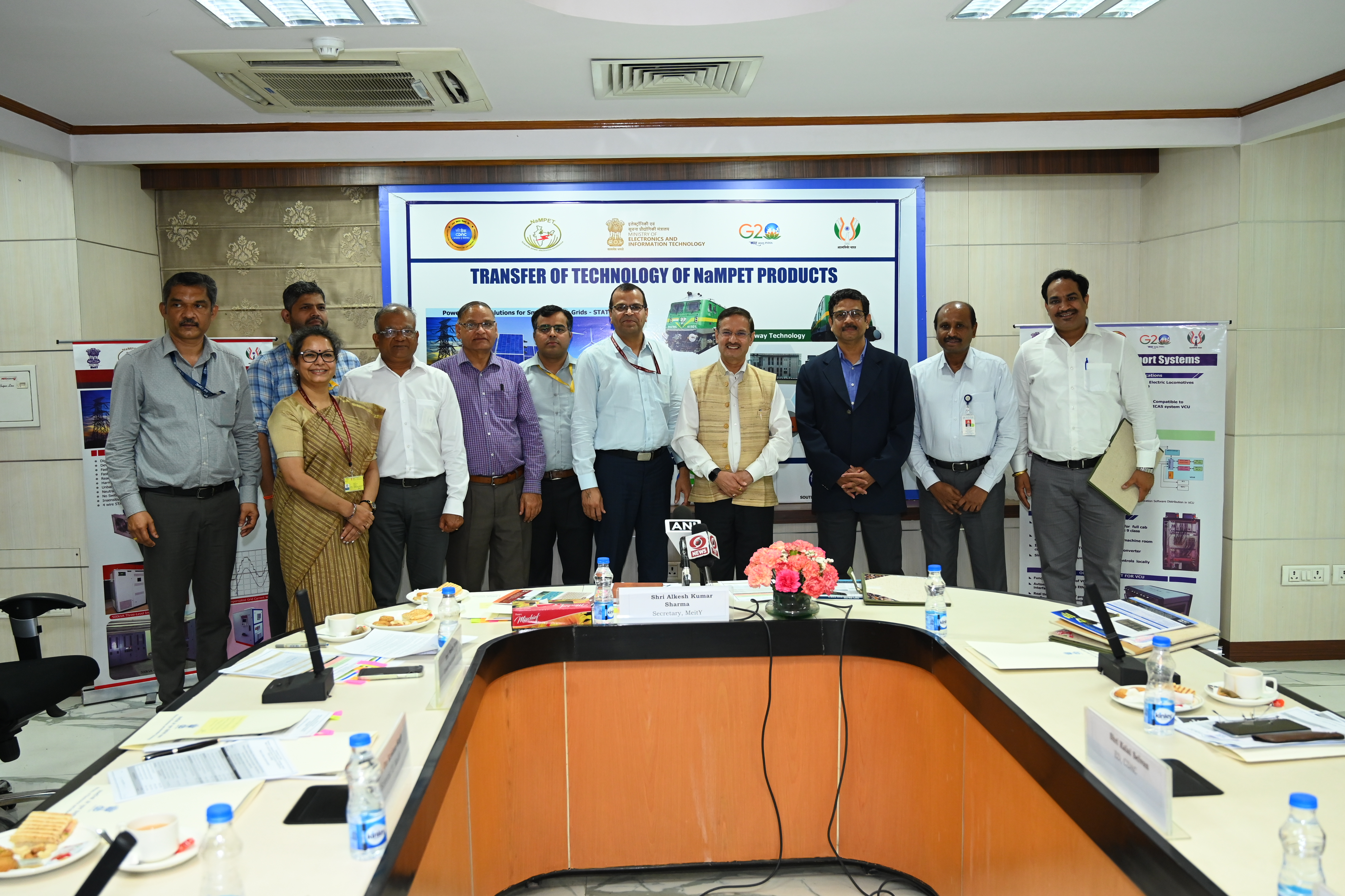
Centre for Development of Advanced Computing (C-DAC), Thiruvananthapuram, Ministry of Electronics and Information Technology (MeitY), Transferred Indigenous Technology of Power Quality Solution and Railways VCU solutions to industry partners in the presence of MeitY Secretary Shri Alkesh Kumar Sharma here today.
Addressing the gathering, Shri Alkesh Kumar Sharma said the Prime Minister’s vision of ‘Make in India- Make for the World’ can be achieved through more and more indigenisation of technology and taking it forward by the industry. “The STATCOM technology will help the masses in integration of different renewable sources of energy to the grid without depleting power factor and can help the grid in unbalanced grid conditions. Also, the VCU and its offshoot technologies given to the Indian Railways will ultimately help the passengers, freight, Shatabdi and Tejas trains to have more indigenisation of the technologies,” he added.
Shri Alkesh Kumar Sharma said, “India is slowly transforming and strengthening itself in the R&D and manufacturing sector in which the industry partners has more roles to play as Indian Entrepreneurs and stakeholders to take this mission forward and this synergy will make India a ‘Aatmanirbhar Bharat’.” There is a huge market for the new and innovative, upgraded, devices, and the whole advantage of this technology is on efficiency which will be a win-win situation for both the developer of the technology and the industry, in which the momentum gain of Indian technology will be crucial as an exporter hub, he added.
Group Coordinator, MeitY, Smt Sunita Verma in her address said the development technology for STATCOM for Power quality solution and Electronics Solutions for Railways (Vehicle Control Unit, Rolling Stack software, Loco Simulation Controller and Off-Loco VCU test kit) is a good initiative when country is focussing on self-reliance. The requirement of these five applications will grow manyfold in coming years, She added.
STATCOM: The Static Synchronous Compensator (STATCOM) based on PQ standard-IEEE519 & IEEE1459. The STATCOM technology has become increasingly relevant in recent years due to the growing demand for renewable energy sources such as wind and solar power, which are intermittent and variable in nature. The integration of these sources into the power grid can cause voltage fluctuations and instability, which can be mitigated by using STATCOMs. This Technology of STATCOMs developed by C-DAC, Thiruvananthapuram was transferred Trinity Energy Solution
VCU: The VCU based on the Standard IEC-61375. The technology was based on TCN protocols available during early 2010s. Since then various enhancements have come up in TCN protocol. Further, it has been felt that there was a need to upgrade the VCU at par with contemporary technology. The existing C-DAC-VCU in terms of hardware and software and to handhold the technology for 5 years while in-house capacity is built at CLW to tackle the day-to-day and long term maintenance requirement of locomotive fleet. This Technology of VCU developed by C-DAC, Thiruvananthapuram was transferred CLW Chittaranjan.
Loco Simulation Controller: The Loco Simulation Controller is based on the Railways standard. The VCU and its application software needs to be tested in locomotive to better debugging, understanding the response of the outputs given from VCU to various sub-systems of locomotives. This test platform could simulate the actual functionalities of locomotive and will be giving inputs to VCU as per actual locomotive logic. Similarly, it also takes inputs from VCU and processes it and generates outputs as of actual locomotive to VCU. This Technology of Loco Simulation Controller developed by C-DAC, Thiruvananthapuram was transferred to CG Power & Industrial solution.
Rolling Stack Software: The Rolling Stack Software is as per the requirement of Indian Railways. The rolling stock application that controls the loco function is distributed among the 4 processors boards in the VCU set. So as to make the loco operation more reliable in case of processor board failures, the important functions are implemented redundantly. This will also help the loco pilot to steer the train without moving from the driving cab to rear cab to address the failure. This software of Rolling Stack Software developed by C-DAC, Thiruvananthapuram was transferred to CG Power & Industrial Solutions.
Off-Loco VCU Test Kit: The Off-Loco VCU Test kit is as per the necessity of Indian Railways. The PCB test jig is used to verify the basic functions of the sub-system PCBs that are being used in C-DAC developed VCU for 3 phase electric locos. The OK/ Not OK status of VC MeitY U subsystem PCBs under test is used for screening the PCBs for use in VCUs. This technology of Off-Loco VCU Test Kit developed by C-DAC, Thiruvananthapuram was transferred to Electrical Loco shed, Rayapuram Southern Railway.
Executive Director (Electrical), Railway Board, Shri Ram Niwas; Scientist ‘D’, Dr Om Krishan Singh, representatives from the industry and other senior officials from MeitY, C-DAC and Indian Railways were also present on the occasion.
Union Minister of Commerce & Industry, Textiles and Consumer Affairs, Food & Public Distribution Shri Piyush Goyal said that the India-U.S. partnership is the defining moment of the 21st century and reiterated the “ChaleinSaathSaath: Forward Together We Go” motto underscoring the depth of the partnership. During his Inaugural Address on ‘US-India Partnership: Forging Ahead’ at American Chamber of Commerce in India (AMCHAM) India’s 31st Annual General Meeting today in New Delhi, he talked about diversifying and deepening India-U.S. trade and investment ties for mutual growth and prosperity.
The Minister emphasised that the leaders of both the countries, Prime Minister of India, Shri Narendra Modi and President of the United States of America, Mr. Joe Biden, understand each other and work smoothly together to find solutions to complex geopolitical problems around the world. Shri Goyal mentioned the 5Ts-Talent, Technology, Tradition, Trade and Trusteeship- identified by the Prime Minister as the vision for the India-U.S. relationship.
The Minister noted that the bilateral trade between India and U.S. has been the highest in the last couple of years and said that it is aimed to increase multifold in the coming years. He said that the target of US$2 trillion exports by the year 2030 is doable with the increasing eminence and recognition of India across the world and with strengthening partnerships with like minded countries having shared values like the U.S.
Shri Piyush Goyal cited the examples of many Indian companies operating in the U.S. and vice versa and highlighted how significantly they are contributing to each other’s economy. The Minister said that these business relations are deepening the partnership between the two countries. He expressed hope that more and more U.S. based corporations will work together with Indian companies in the near future.
The Minister encouraged companies from the U.S. to establish their base in India and expand to newer frontiers like the markets of Africa and South-East Asia. He said that India offers assured prosperity and growth to the U.S. companies with the recent policy reforms undertaken with focus on the fundamental macroeconomic parameters, affordable labour costs, inclusive and sustainable development and increasing ease of doing business.
The Minister said that the businesses in both countries can work together to expand to the next level in many sectors like defence manufacturing, pharmaceuticals, textiles, engineering products, auto components, electrical products, agricultural products, etc. on the merchandise side while IT, accounting, business processes outsourcing, research & development, tourism, etc. on the services side. He said that the bilateral trade between both the countries is growing rapidly and has tremendous potential to scale further heights. He said that the technical and managerial talent offered by India to businesses around the world cements India’s relationship with the world; he cited the example of many U.S. corporations having Indian or Indian-origin CEOs.
The Minister said that Amrit Kaal is the defining period for India in which the demographic dividend is contributing to the growth of the economy bringing prosperity & future for the country. He said that the reform processes undertaken by the government in the last 9 years will turn India into a global manufacturing hub. He said that the efforts of the government towards improving logistics infrastructure like connectivity, power, etc. is leading to better quality of life for the people of India and enabling the aspirational youth to contribute to the rapid development of India. Shri Goyal stressed that it is important for the industry to stand on its own feet with delivery of high quality products and services with government interference in business to the minimum.
The Minister said that there is multifarious interaction between India and the U.S. at various platforms like the Indo-Pacific Economic Framework for Prosperity (IPEF), U.S.-India CEO Forum, Quad, etc. He said that the comprehensive & strategic partnership between India and the U.S. is based on the strong foundation of shared values, commitment to the rule of law, transparency, freedom of business, freedom of media, independent judiciary, etc. The Minister said that there is complementarity between the India-U.S. economy and both countries collaborate to make prosperous and rational decisions.
He mentioned the significance of the recent visit of United States Secretary of Commerce, Ms. Gina Raimondo to India for the strengthening and deepening of the India-U.S. Partnership. He said that during her visit, Ms. Raimondo met the Prime Minister of India, Shri Narendra Modi and praised his visionary leadership in transforming India. He said that Ms. Raimondo noted the efforts of the Government in eliminating poverty and improving the lives of the people of India through the efficient use of technology and effective policy formulations.
The Minister said that India is committed to the fight against climate change and praised the performance of India as it performed better than the commitments it had made with being among the top 5 countries in performance on climate action. He said that India is consistent in the fight against climate change under the visionary leadership of Prime Minister, Shri Narendra Modi who brought less developed, developing and developed countries together for the signing of the Paris Agreement.
The Minister appreciated the important role played by AMCHAM and the impetus provided by it for the India-U.S. partnership. He said that the collective effort between the leadership of both countries, warmth between people, etc. enables both the countries to partner in uncharted territories for mutual growth and development. The Minister also released two reports at the event: 1. The India edge – US Industries catalysing the growth trajectory and 2. Future of Urban Mobility- Integration of Platforms.
In line with the vision of the Prime Minister, Shri Narendra Modi of expanding the outreach of the NMP platform for socio-economic development, Social Sector Ministries are being onboarded on mission mode through a series of meetings. During a high-level meeting on the adoption of PM Gati Shakti NMP by Social Sector Ministries/Departments held yesterday in New Delhi, Special Secretary, Logistics Division, DPIIT, Smt. Sumita Dawra highlighted that there is immeasurable potential for the adoption and augmentation of NMP in social sector planning.
As of date, 14 Social Sector Ministries/ Departments have been onboarded, namely Ministry of Panchayati Raj, Department of Health and Family Welfare, Department of Post, Department of School Education and Literacy, Department of Higher Education, Ministry of Culture, Ministry of Housing and Urban Affairs, Ministry of Rural Development, Ministry of Women and Child Development, Ministry of Tribal Affairs, Department of Youth Affairs, Department of Sports, Ministry of Skill Development and Entrepreneurship and Ministry of AYUSH. Individual portals of these Ministries/Departments have been developed, which are integrated at the backend with the NMP.
61 data layers of Social Sector Ministries related to infrastructure assets, such as primary and secondary schools, colleges, primary health centres, district hospitals, health sub-centres, public toilets, dump sites, Anganwadi centres, fair price shops, Amrit samovars, and dairy locations, etc., have been mapped on NMP.
Smt. Dawra stated that for wider adoption of PM GatiShakti NMP, a comprehensive area approach planning should be focused upon. It was further emphasized that Standard Operating Procedures (SOPs) are to be developed by each social sector Ministry to serve as guidelines for data management, which may be replicated by States.
The focus of the discussion in the meeting was on reviewing the status of the adoption of NMP for social sector planning and also on the measures to be taken for data management, i.e., improving the data quality, data uploading, and validation of data. The meeting saw the participation of 34 officers from all 14 Ministries/ Departments.
Ministries like the Ministry of Women and Child Development, the Department of School Education and Literacy, and the Ministry of Skill Development and Entrepreneurship showcased the use cases for the adoption of NMP.
Ministry of Women and Child Development has developed a mobile application viz., Poshan Tracker for the collection of data regarding Anganwadi Centres (AWC) under the Mission Poshan 2.0. The collected data is geo-tagged and integrated with the NMP platform through API integration. So far, 9.27 lakh Anganwadi Centres have been captured and integrated on NMP through this application. Hence, this has resulted in real-time data enrichment on the platform for infrastructure planning.
Further, after the mapping of the existing Anganwadi centres on the NMP platform, new areas were identified in terms for establishment of new Anganwadi Centres (AWC), basis the parameters like local population, habitat clusters, distance between institutions, and using the site suitability tool on the NMP.
Department of School Education and Literacy are using the NMP platform by identifying suitable sites for the opening of new schools through the use of the site suitability tool and mapping of existing data layers, i.e., road and rail network, population census data, and demographic layer for identifications of gaps and finalising the locations for opening new schools.
Other social sector Ministries, like the Ministry of Housing and Urban Affairs, Ministry of Health & Family Welfare, Department of Higher Education, Ministry of Culture, and Ministry of Tribal Affairs are also in the process of identifying assets essential for social sector planning, to be uploaded on NMP.
Individual portals for 22 infrastructure and user economic ministries and all 36 States/UTs have been created and integrated with the NMP at the backend. At present, 1460 data layers have been integrated into NMP, belonging to Central Ministries/ Departments (585) and States/ UTs (875).
Union Minister of Commerce and Industry, Textiles and Consumer Affairs, Food and Public Distribution, Shri Piyush Goyal said that the media and entertainment industry will make a mark that will be matchless in the Amrit Kaal poised to be the defining moments for India. During his address at the FICCI Frames 2023, the Minister lauded the industry for its commitment to take Indian cinema on the global map.
The Minister said that the government under the visionary leadership of the Prime Minister, Shri Narendra Modi is supportive to all the efforts by the media and entertainment industry to expand the frontiers of the sector globally and reach the remotest corners of the world. Shri Goyal said that the media and entertainment industry can disseminate the message to the world that India is on the pathway to become a developed nation by 2047. He also said that India as the fastest growing economy of the world along with an unparalleled talent and skill base at a very competitive price offers unmatched opportunities for economic development and business growth to the world.
The Minister appreciated the industry for efficiently adopting modern technologies and cited the example of widespread use of smartphones as cameras. Shri Goyal said that the media and entertainment industry will grow by leaps and bounds with the emergence of digital platforms. Shri Piyush Goyal lauded the Indian VFX companies involved in Hollywood movies like Avatar. He said that startups are contributing to the growth of this sector significantly.
The Minister noted that the media and entertainment industry can showcase to the world, the New India of today and boost the economy, helping the country reach a new audience, influencing opinions, and spreading positivity. He said that this positivity encourages people, government and businesses to be more aspirational and look at the future with greater hope demanding better lifestyles and better business opportunities.
Shri Goyal said that the media and entertainment industry are the cultural ambassadors of India and have given a unique identity to India. He highlighted that the media and entertainment industry has a huge potential to connect people, businesses and nations leading to a better understanding and appreciation of different cultures and conditions across the world.
The Minister said that the world is also appreciating Indian art and culture and the recent Oscar Awards for the ‘Naatu-Naatu’ song and the ‘Elephant Whisperers’ showcase this global appreciation. Shri Goyal said that these Awards helped India convey a social message that sustainability is at the core of Indian culture and tradition. He said that the message of Naari Shakti was also effectively conveyed as the Awards highlighted that Indian women of substance are defining the New India. Shri Goyal said that these achievements are boosting the morale of billions of people.
Shri Piyush Goyal noted that the theme ‘inspire, innovate and immerse’, is relevant to the current times as it reflects the vibrancy demonstrated by the media and entertainment industry. He said that the theme also resonates with the belief that creativity can indeed enhance commerce. He said that the industry acts as a key pillar of India’s cultural identity and cultural heritage. The Minister noted that FICCI Frames has now become an established platform in the media and entertainment sector showcasing to the world what India truly represents.
The Minister said that every artist can dream and every dreamer can succeed in New India and urged the media and entertainment industry to build an industry which entertains, empowers, enlightens and inspires the whole nation, in this journey of progress and prosperity.
Keep it Simple: A simple and minimalist design is easier for users to navigate and will make your website more accessible.
Use a Clear and Legible Font: Choose a font that is easy to read and is legible on both desktop and mobile devices.
Use a Consistent Color Scheme: Choose a color palette and stick with it throughout your website to create a cohesive look and feel.
Make it Mobile-Friendly: Your website should be optimized for mobile devices since more than half of all internet traffic now comes from mobile devices.
Use High-Quality Images: Use high-quality images that are optimized for web use to enhance the visual appeal of your website.
Ensure Fast Load Times: Ensure your website loads quickly by optimizing images, compressing files, and reducing HTTP requests. You can learn more from opsite.biz
Make Navigation Easy: Make sure your website’s navigation is easy to use, clear, and consistent.
Use White Space Effectively: Use white space effectively to make your content more readable and visually appealing.
Ensure Accessibility: Make sure your website is accessible to all users, including those with disabilities.
Include Social Sharing Buttons: Include social sharing buttons to encourage visitors to share your content on their social media channels.
Use Calls-to-Action: Use clear and concise calls-to-action to guide visitors through your website.
Keep Content Fresh: Keep your website’s content up-to-date and relevant to keep visitors engaged.
Optimize for Search Engines: Optimize your website’s content for search engines to improve its visibility in search engine results pages.
Include Contact Information: Make it easy for visitors to get in touch with you by including contact information on your website.
Make it Scannable: Use headings, bullet points, and short paragraphs to make your content more scannable and readable.
Use Responsive Design: Use responsive design to ensure your website looks great on all devices.
Ensure Consistency: Ensure consistency in design and layout throughout your website to create a seamless user experience.
Use Whitespace: Use whitespace effectively to break up content, draw attention to important elements, and create a sense of balance and harmony.
Test Your Website: Test your website on different devices and browsers to ensure it works well across all platforms.
Make it Easy to Share: Make it easy for visitors to share your content on social media by including social sharing buttons.
As the blockchain industry continues to grow, smart contracts have emerged as one of its most promising applications. These self-executing contracts allow for secure and automated transactions between parties, without the need for intermediaries. However, for smart contracts to reach their full potential, they must be able to connect to real-world data sources and external systems. This is where Chainlink comes in. If you are interested in bitcoin trading, then you can start your trading journey by (Official App)
Chainlink is a decentralized oracle network that provides reliable, tamper-proof inputs and outputs for smart contracts. In other words, it acts as a bridge between smart contracts and the outside world, enabling them to access real-world data and execute accordingly. In this article, we will explore why Chainlink is critical for the future of smart contracts, how it works, and what benefits it offers.
Chainlink is a decentralized oracle network that provides secure and reliable inputs and outputs for smart contracts. Oracles are essential for smart contracts because they enable them to access data outside of the blockchain, such as stock prices, weather reports, and sports scores. Without oracles, smart contracts would be limited to executing only within the blockchain, which would significantly reduce their usefulness.
Chainlink is unique in that it is a decentralized oracle network, meaning that it is not controlled by a single entity or authority. Instead, it uses a network of nodes to provide inputs and outputs for smart contracts. These nodes are run by independent operators, who are incentivized to provide accurate data by receiving payment in LINK, Chainlink’s native cryptocurrency.
How Does Chainlink Work?
Chainlink works by connecting smart contracts to real-world data sources and external systems. It does this by using a three-step process:
Aggregation: Chainlink aggregates data from multiple sources to ensure accuracy and reliability. This helps to mitigate the risk of a single point of failure or a single source of data being compromised.
Validation: Chainlink validates the data using multiple nodes to ensure that it is accurate and tamper-proof. If a node provides inaccurate data or fails to respond, it is penalized by losing LINK.
Delivery: Chainlink delivers the data to the smart contract in a format that it can understand and execute accordingly. This enables the smart contract to execute autonomously and securely, without the need for intermediaries.
Why is Chainlink Critical for the Future of Smart Contracts?
Chainlink is critical for the future of smart contracts because it enables them to access real-world data and external systems. Without Chainlink, smart contracts would be limited to executing only within the blockchain, which would significantly reduce their usefulness.
Chainlink also offers several other benefits for smart contracts, including:
Security: Chainlink’s decentralized oracle network provides a high level of security for smart contracts. By using multiple nodes to validate data, Chainlink helps to mitigate the risk of a single point of failure or a single source of data being compromised.
Reliability: Chainlink’s aggregation process ensures that data is accurate and reliable. This helps to ensure that smart contracts execute correctly and as intended.
Flexibility: Chainlink can connect smart contracts to a wide range of data sources and external systems, making them more versatile and adaptable to real-world use cases.
Cost-effectiveness: Chainlink’s decentralized oracle network reduces the cost of accessing real-world data for smart contracts. This is because it eliminates the need for intermediaries and reduces the risk of data tampering.
Use Cases for Chainlink
Chainlink has a wide range of use cases in various industries. Some of the most promising use cases include:
Finance
Chainlink can be used in the finance industry to connect smart contracts to financial data sources, such as stock prices and interest rates. This can enable the creation of decentralized financial products, such as prediction markets, insurance products, and decentralized exchanges.
Supply Chain
Chainlink can be used in the supply chain industry to provide real-time data on shipments, inventory levels, and other key metrics. This can enable more efficient and transparent supply chain management, as well as reduce the risk of fraud and counterfeiting.
Gaming
Chainlink can be used in the gaming industry to provide real-time data on in-game events, such as scores, achievements, and rewards. This can enable the creation of more immersive and interactive games, as well as provide players with more control over their in-game assets.
Insurance
Chainlink can be used in the insurance industry to provide real-time data on weather events, traffic patterns, and other key metrics. This can enable more accurate and automated insurance products, such as parametric insurance and microinsurance.
Conclusion
Chainlink is critical for the future of smart contracts because it enables them to access real-world data and external systems. It offers several benefits, including security, reliability, flexibility, and cost-effectiveness. With its decentralized oracle network and wide range of use cases, Chainlink has the potential to revolutionize various industries, from finance to gaming to insurance. As blockchain technology continues to evolve, Chainlink will undoubtedly play a vital role in its development and adoption.
FAQs
What is the LINK token?
The LINK token is Chainlink’s native cryptocurrency. It is used to incentivize node operators to provide accurate data and penalize them for providing inaccurate data. It can also be used to pay for data feeds and other services on the Chainlink network.
How is Chainlink different from other oracles?
Chainlink is unique in that it is a decentralized oracle network, meaning that it is not controlled by a single entity or authority. This helps to ensure that the data provided to smart contracts is accurate and tamper-proof.
What are some examples of companies using Chainlink?
Several companies are currently using Chainlink, including SWIFT, Google, Oracle, and Web3 Foundation.
How can businesses integrate Chainlink into their operations?
Businesses can integrate Chainlink into their operations by using the Chainlink API or partnering with a Chainlink node operator. They can also develop their own Chainlink nodes if they have the necessary technical expertise.
In the world of blockchain, smart contracts are becoming increasingly popular. These self-executing contracts allow for trustless transactions to take place without the need for intermediaries. However, one of the main challenges with smart contracts is accessing real-world data. That’s where Chainlink comes in. You can go for crypto trading and investment by Register Today and logging into Bitcoin smarter.
Chainlink is a decentralized oracle network that connects smart contracts to real-world data and events. In this comprehensive guide, we’ll explore what Chainlink is, how it works, and its many use cases.
What is Chainlink?
Chainlink is a decentralized oracle network that provides smart contracts with secure access to off-chain data. In simpler terms, it’s a bridge between blockchain and the real world.
Chainlink was founded in 2017 by Sergey Nazarov and Steve Ellis. Its native cryptocurrency, LINK, is used to incentivize the network’s nodes to provide accurate and reliable data.
Chainlink works by using a decentralized network of nodes to retrieve data from various sources, such as APIs, websites, and other blockchains. These nodes are called oracles, and they are responsible for retrieving and validating the data before sending it back to the smart contract.
Here’s a step-by-step breakdown of how Chainlink works:
A smart contract requests data from Chainlink by creating a job.
The job is then assigned to one or more oracles.
The oracles retrieve the data from various sources.
The oracles validate the data to ensure its accuracy and reliability.
The oracles then send the data back to the smart contract.
The smart contract can then execute based on the received data.
Chainlink’s decentralized network ensures that the data provided to smart contracts is secure, reliable, and tamper-proof. It also allows for customization, as smart contract creators can choose which nodes to use and which data sources to access.
Why is Chainlink Important?
Chainlink is important because it solves a critical problem in the world of smart contracts. Smart contracts are only as good as the data they rely on, and Chainlink provides a reliable and secure way to access real-world data.
Without Chainlink, smart contracts would be limited to on-chain data only, which severely limits their potential use cases. With Chainlink, smart contracts can access data from virtually any source, opening up a world of possibilities.
Use Cases for Chainlink
Chainlink has many potential use cases across various industries. Here are just a few examples:
Finance
Chainlink can be used to provide secure and reliable price feeds for financial applications, such as decentralized exchanges and derivatives platforms. It can also be used to access credit scores and other financial data for lending platforms.
Gaming
Chainlink can be used to provide verifiable randomness for gaming applications, such as lotteries and online casinos. It can also be used to provide real-world data for sports betting platforms.
Supply Chain Management
Chainlink can be used to provide real-time tracking of goods and materials throughout the supply chain. This can help prevent fraud and ensure that products are authentic and ethically sourced.
Insurance
Chainlink can be used to provide real-world data for insurance applications, such as weather data for crop insurance and flight data for travel insurance.
Conclusion
Chainlink is a critical component of the blockchain ecosystem, providing reliable and secure access to real-world data for smart contracts. Its decentralized network and customizable options make it a powerful solution with many potential use cases.
Whether you’re a developer looking to integrate Chainlink into your application or a user curious about its potential, understanding what Chainlink is and how it works is essential. With this comprehensive guide, you’re now equipped with the knowledge to explore the world of Chainlink and its many possibilities.
FAQs about Chainlink
What is the difference between Chainlink and other oracle solutions?
Chainlink differs from other oracle solutions in several ways. First, it’s decentralized, which means that there’s no single point of failure. This makes it more secure and reliable than centralized solutions.
Second, Chainlink provides a wide range of customization options. Smart contract creators can choose which data sources to access and which nodes to use. This allows for greater flexibility and can result in more accurate and relevant data.
What is the LINK token used for?
The LINK token is used to incentivize nodes to provide accurate and reliable data. Nodes are paid in LINK tokens for their services, and smart contract creators must pay in LINK tokens to use the Chainlink network.
How does Chainlink ensure the security of its network?
Chainlink uses a combination of cryptographic protocols, secure hardware, and tamper-resistant software to ensure the security of its network. Nodes are required to stake LINK tokens as collateral, which incentivizes them to behave honestly.
Is Chainlink easy to use?
Chainlink can be complex for non-technical users, but there are tools and resources available to make it easier. The Chainlink documentation provides detailed instructions on how to use the network, and there are third-party tools available to simplify the process.
Chainlink is a decentralized oracle network that connects smart contracts to real-world data and events. Oracles act as bridges between the blockchain and off-chain data sources, allowing smart contracts to execute based on real-world information. Chainlink uses a network of nodes to aggregate and validate data from various sources, providing secure and reliable data feeds for smart contracts. If you are interested in bitcoin trading, then you can start your Bit Traderjourney and open an account here.
The Role of Oracles in Smart Contracts
Smart contracts are self-executing contracts that automatically execute when certain conditions are met. They are typically used to automate transactions and enforce the terms of an agreement without the need for intermediaries. However, smart contracts are limited by the information they can access on the blockchain. They cannot access data from external sources, such as real-world events or market prices. This is where oracles come in.
Oracles provide smart contracts with access to external data, allowing them to execute based on real-world information. They act as trusted intermediaries between the blockchain and off-chain data sources, ensuring that the data is accurate and reliable.
The Growing Ecosystem of Chainlink Integrations
Chainlink has been rapidly expanding its ecosystem of partnerships and use cases, spanning across blockchain platforms, DeFi applications, traditional enterprises, and the gaming industry.
Blockchain Platforms
Chainlink has partnered with several blockchain platforms, including Ethereum, Polkadot, and Binance Smart Chain. These partnerships have enabled developers to integrate Chainlink oracles into their decentralized applications (dApps), providing secure and reliable data feeds.
DeFi Applications
Decentralized finance (DeFi) has been one of the most popular use cases for Chainlink. Chainlink oracles provide real-time price feeds for DeFi protocols, enabling developers to create more sophisticated financial products. Chainlink has partnered with several DeFi platforms, including Aave, Synthetix, and Compound.
Traditional Enterprises
Chainlink has also been making inroads into traditional enterprises, such as banks and insurance companies. Chainlink oracles provide secure and reliable data feeds for these companies, enabling them to automate their processes and reduce costs. Chainlink has partnered with several traditional enterprises, including SWIFT, Google Cloud, and Hedera Hashgraph.
Gaming Industry
The gaming industry has also been a growing area of focus for Chainlink. Chainlink oracles provide real-time data feeds for gaming applications, enabling developers to create more immersive and engaging experiences. Chainlink has partnered with several gaming companies, including Ubisoft and Nifty Gateway.
Chainlink Partnerships
Chainlink has formed partnerships with a wide range of companies and organizations, ranging from blockchain startups to traditional enterprises.
Use Cases of Chainlink Integrations
Chainlink has been integrated into various use cases, such as:
Decentralized Finance
Chainlink has been instrumental in the growth of DeFi by providing reliable and secure data feeds for price oracles, enabling developers to create new financial products. Some of the notable DeFi protocols that have integrated Chainlink include Aave, Synthetix, and Compound.
Insurance
Chainlink oracles have also been used in the insurance industry to provide real-time data for underwriting, policy management, and claims processing. This has enabled insurers to automate processes, reduce costs, and offer more personalized insurance products. Some of the companies that have integrated Chainlink for insurance include Etherisc and Arbol.
Supply Chain Management
Chainlink has been used in supply chain management to provide transparency and traceability of goods and services, as well as real-time tracking of shipments and deliveries. This has enabled companies to reduce costs, improve efficiency, and increase customer satisfaction. Some of the companies that have integrated Chainlink for supply chain management include IBM and Intel.
Gaming
Chainlink has been used in gaming to provide real-time data feeds for in-game items, such as collectibles, weapons, and skins, as well as to verify the outcome of games and events. This has enabled developers to create more immersive and engaging gaming experiences. Some of the gaming companies that have integrated Chainlink include Ubisoft and Nifty Gateway.
Real Estate
Chainlink has been used in the real estate industry to provide real-time data feeds for property valuations, rental prices, and market trends. This has enabled companies to make more informed decisions about buying, selling, and renting properties. Some of the companies that have integrated Chainlink for real estate include Propy and Realio.
Future of Chainlink Integrations
Chainlink is poised for further growth as more companies and organizations seek to integrate its oracle network into their blockchain applications. As blockchain technology becomes more mainstream, the demand for reliable and secure data feeds will continue to increase, and Chainlink is well-positioned to meet that demand.
Challenges and Limitations
While Chainlink has been successful in expanding its ecosystem of partnerships and use cases, there are still challenges and limitations that need to be addressed. One of the biggest challenges is the complexity of integrating Chainlink into existing systems, which can be time-consuming and costly. Additionally, there is the risk of oracle attacks, where malicious actors try to manipulate the data that is being fed into smart contracts.
Conclusion
Chainlink has been at the forefront of the blockchain revolution, providing reliable and secure data feeds for smart contracts. Its growing ecosystem of partnerships and use cases is a testament to its success in bridging the gap between the blockchain and the real world. As more companies and organizations seek to integrate Chainlink into their applications, we can expect to see even more innovative use cases in the future.
FAQs
What is Chainlink?
Chainlink is a decentralized oracle network that connects smart contracts to real-world data and events.
What are oracles in blockchain?
Oracles are trusted intermediaries that provide smart contracts with access to external data, enabling them to execute based on real-world information.
What are some use cases of Chainlink?
Chainlink has been integrated into various use cases, including decentralized finance, insurance, supply chain management, gaming, and real estate.
What are some challenges of integrating Chainlink?
The complexity of integration and the risk of oracle attacks are some of the challenges of integrating Chainlink.
What is the future of Chainlink?
As blockchain technology becomes more mainstream, the demand for reliable and secure data feeds will continue to increase, and Chainlink is well-positioned to meet that demand. We can expect to see even more innovative use cases and partnerships in the future.
How does Chainlink ensure the security of its oracle network?
Chainlink uses a decentralized network of nodes to aggregate and validate data from various sources, ensuring that the data is accurate and reliable. It also has a robust security framework in place to prevent oracle attacks.
What are some of the benefits of using Chainlink?
Using Chainlink provides developers with access to real-world data and events, enabling them to create more sophisticated and innovative blockchain applications. It also ensures the accuracy and reliability of the data being fed into smart contracts.
Can Chainlink be used outside of blockchain?
Yes, Chainlink can be used in any context where real-world data needs to be integrated into a digital system.
How can I get started with using Chainlink?
Developers can get started with using Chainlink by visiting the Chainlink website and exploring its documentation and tutorials. They can also join the Chainlink community to connect with other developers and stay up-to-date on the latest developments.
Cryptocurrency markets have been expanding at a tremendous rate in recent years, with the total market capitalization of cryptocurrencies reaching over $2 trillion in April 2021. However, one of the most significant challenges that these markets face is the lack of a reliable source of external data. This is where Chainlink, a decentralized oracle network, comes into play. In this article, we will explore how Chainlink is solving the oracle problem in cryptocurrency markets.
To understand the significance of Chainlink in the cryptocurrency market, it is essential to first understand what oracles are. Oracles are a third-party service that provides external data to smart contracts on blockchain networks. In simpler terms, they act as bridges between blockchain networks and the outside world. If you’re searching for something recognizable to trade, the www.btceer.de platform operates similarly to other cryptocurrency exchange platforms available on the market.
The Oracle Problem in Cryptocurrency Markets
The oracle problem refers to the issue of reliability and security of external data sources used by smart contracts. In the context of cryptocurrency markets, this problem arises when smart contracts rely on unreliable or manipulated external data sources, leading to inaccurate execution of contracts and potential financial losses for investors.
Chainlink is a decentralized oracle network that aims to solve the oracle problem in cryptocurrency markets by providing a secure and reliable source of external data. The network consists of independent nodes that retrieve external data from multiple sources, aggregate it, and deliver it to smart contracts.
How Chainlink Works
Chainlink uses a combination of cryptography, blockchain technology, and smart contracts to ensure the security and reliability of the external data it provides to smart contracts.
Node Operators
Chainlink relies on independent node operators to retrieve external data and deliver it to smart contracts. These nodes are incentivized to provide accurate and reliable data through a system of staking and reputation.
Data Aggregation
Chainlink aggregates data from multiple sources to ensure accuracy and reliability. This is done through a process called aggregation, which involves combining data from different sources to create a single, more reliable data point.
Smart Contract Integration
Chainlink can be integrated with any smart contract-enabled blockchain network, allowing smart contracts to securely and accurately retrieve external data.
Benefits of Chainlink in Cryptocurrency Markets
Chainlink provides several benefits in cryptocurrency markets, including:
Reliability and Security
Chainlink’s decentralized oracle network provides a secure and reliable source of external data, reducing the risk of financial losses due to inaccurate execution of smart contracts.
Flexibility
Chainlink can be integrated with any smart contract-enabled blockchain network, making it a versatile solution for a wide range of applications.
Scalability
Chainlink’s decentralized network of nodes can handle large amounts of data and requests, making it a scalable solution for cryptocurrency markets.
Chainlink’s Future in Cryptocurrency Markets
Chainlink’s innovative solution to the oracle problem has gained significant attention in the cryptocurrency community, with several blockchain networks already integrating Chainlink into their smart contracts. The demand for reliable and secure external data sources in cryptocurrency markets is only expected to grow, and Chainlink is well-positioned to become a leading solution in this space.
Conclusion
The lack of a reliable source of external data has been a significant challenge for cryptocurrency markets, leading to potential financial losses for investors. Chainlink’s decentralized oracle network provides a secure and reliable solution to this problem, making it a valuable addition to the cryptocurrency ecosystem.
FAQs
What is Chainlink?
Chainlink is a decentralized oracle network that provides external data to smart contracts on blockchain networks.
What is the oracle problem?
The oracle problem refers to the issue of reliability and security of external data sources used by smart contracts.
How does Chainlink solve the oracle problem?
Chainlink solves the oracle problem by using a decentralized network of independent nodes to retrieve external data from multiple sources and deliver it to smart contracts securely and reliably.
What are the benefits of using Chainlink in cryptocurrency markets?
The benefits of using Chainlink in cryptocurrency markets include reliability and security, flexibility, and scalability.
What is the future of Chainlink in cryptocurrency markets?
Chainlink is well-positioned to become a leading solution in the cryptocurrency ecosystem, as the demand for reliable and secure external data sources is expected to grow.
Blockchain technology has revolutionized the world of finance by creating a decentralized system that removes the need for intermediaries, reduces costs, and increases efficiency. One of the most exciting innovations in the blockchain space is decentralized finance (DeFi), which has seen explosive growth in recent years. In DeFi, smart contracts automate financial transactions, allowing for more transparent, secure, and accessible financial services. However, one major challenge for DeFi is the lack of reliable and secure data feeds, which are essential for executing smart contracts. This is where Chainlink comes in – a decentralized oracle network that provides a secure and reliable bridge between smart contracts and external data sources. In this article, we will explore the benefits of Chainlink for DeFi. If are you interested in bitcoins trading then Join Immediate Edge Trading Platform.
Chainlink is a decentralized oracle network that connects smart contracts with external data sources, such as price feeds, weather reports, sports scores, and more. In other words, it acts as a bridge between on-chain and off-chain data, allowing smart contracts to access and use information from the real world. Chainlink was founded in 2017 by Sergey Nazarov and Steve Ellis, and it has since become one of the most popular oracle networks in the blockchain space.
How does Chainlink work?
Chainlink works by connecting smart contracts with decentralized oracles, which are nodes that retrieve and verify data from off-chain sources. These oracles are incentivized to provide accurate and timely data through a system of staking and reputation. When a smart contract needs to access external data, it sends a request to the Chainlink network, which then selects a set of oracles based on their reputation and availability. The oracles retrieve the data from the external sources, verify its accuracy, and then send it back to the smart contract. This process ensures that the data used by smart contracts is reliable and tamper-proof.
Benefits of Chainlink for DeFi
Reliable Data Sources
One of the biggest challenges for DeFi is the lack of reliable and secure data feeds. Smart contracts rely on accurate and up-to-date information to execute financial transactions, such as trading, lending, and insurance. Chainlink solves this problem by providing a network of decentralized oracles that retrieve and verify data from multiple sources, ensuring that the data used by smart contracts is accurate and tamper-proof.
Decentralized Oracle Network
Chainlink’s decentralized oracle network is one of its key strengths. Unlike centralized oracles, which are controlled by a single entity and can be subject to manipulation or censorship, Chainlink’s oracles are distributed across multiple nodes, making it highly resistant to attacks and failures. This also ensures that there is no single point of failure, which makes the network more reliable and secure.
High Level of Security
Security is paramount in DeFi, as the value of assets at stake is often significant. Chainlink’s oracle network uses a combination of cryptographic techniques and economic incentives to ensure that data used by smart contracts is secure. The system uses a reputation-based model, where oracles with a good track record are rewarded, while those that provide inaccurate data are penalized. Additionally, the system uses advanced cryptography to ensure that the data is not tampered with or manipulated during transmission.
Flexibility and Customization
Chainlink is highly customizable, allowing developers to create their own oracle networks and customize them to their specific needs. This flexibility means that developers can design their own data sources and customize the parameters of their smart contracts to fit their requirements. This allows for more complex and sophisticated smart contracts, which can perform a wide range of functions.
Cross-Chain Interoperability
One of the most exciting features of Chainlink is its ability to work across different blockchain networks. This means that developers can create smart contracts that interact with multiple blockchains, which increases the flexibility and scope of DeFi applications. Additionally, Chainlink can integrate with traditional financial systems, providing a bridge between the old and new financial worlds.
Use Cases for Chainlink in DeFi
Chainlink has a wide range of use cases in DeFi, including:
Decentralized Exchanges (DEXs)
Decentralized exchanges (DEXs) rely on accurate and up-to-date price feeds to execute trades. Chainlink provides a reliable and secure source of price data, which ensures that trades are executed at the correct price.
Insurance
Insurance is an important application of DeFi, but it requires accurate and reliable data to assess risk and calculate premiums. Chainlink provides a secure and tamper-proof source of data, which can be used to create innovative insurance products.
Lending and Borrowing
Lending and borrowing are key functions of DeFi, but they require accurate and up-to-date information to assess creditworthiness and calculate interest rates. Chainlink provides a reliable source of data, which can be used to create sophisticated lending and borrowing platforms.
Prediction Markets
Prediction markets rely on accurate and timely data to make predictions about future events. Chainlink provides a secure and reliable source of data, which can be used to create prediction markets for a wide range of events.
Gaming
Gaming is an emerging application of DeFi, but it requires secure and tamper-proof data to ensure fairness and prevent cheating. Chainlink provides a reliable and secure source of data, which can be used to create innovative gaming platforms.
Challenges and Criticisms of Chainlink
While Chainlink has many benefits, it is not without its challenges and criticisms. Some of the key challenges include:
Centralization: While Chainlink is decentralized in theory, the reality is that a few large nodes control a significant portion of the network. This could potentially lead to centralization and reduce the security and reliability of the network.
Complexity: Chainlink is a complex system that requires significant technical expertise to understand and use. This could limit its adoption and make it less accessible to developers with limited experience.
Cost: Chainlink’s decentralized oracle network can be expensive to use, particularly for small-scale applications. This could limit its adoption and make it less accessible to developers with limited resources.
Conclusion
Chainlink is an important innovation in the DeFi space, providing a secure and reliable source of data for smart contracts. Its decentralized oracle network and reputation-based model ensure that the data used by smart contracts is accurate and tamper-proof, while its flexibility and customization allow for sophisticated and complex applications. While there are challenges and criticisms, Chainlink has the potential to transform the DeFi landscape and create new opportunities for financial innovation.
FAQs
What is Chainlink?
Chainlink is a decentralized oracle network that connects smart contracts with external data sources, allowing for more reliable and secure financial transactions in DeFi.
How does Chainlink ensure the security of its data feeds?
Chainlink uses a reputation-based model and advanced cryptography to ensure that the data used by smart contracts is secure and tamper-proof.
What are some of the use cases for Chainlink in DeFi?
Chainlink has many use cases in DeFi, including decentralized exchanges, insurance, lending and borrowing, prediction markets, and gaming.
What are some of the challenges facing Chainlink?
Chainlink faces challenges with centralization, complexity, and cost, which could limit its adoption and accessibility.
How does Chainlink compare to other oracle networks in the blockchain space?
Chainlink is one of the most popular and widely used oracle networks in the blockchain space, but there are other competing oracle networks, such as Band Protocol and API3.
Atal Innovation Mission (AIM), NITI Aayog, and the United Nations Capital Development Fund (UNCDF) today jointly launched a whitepaper aimed at making India a global leader in Agri-Tech innovation and expanding these innovations to the least developed countries in Asia and Africa.
The whitepaper, meticulously prepared by experts from AIM, NITI Aayog, and UNCDF, offers actionable steps to overcome challenges faced by Agri-Tech start-ups and facilitate their growth at national and international levels.
The whitepaper outlines the significant observations and recommendations required to tackle challenges in the agriculture sector and promote sustainable practices that support smallholder farmers across developing economies. Agri-Tech innovations will help address food security, supply chain inefficiencies, and climate change concerns.
Addressing the audience, Mr. Samuel Praveen Kumar, Joint Secretary, Ministry of Agriculture and Farmers Welfare stated, “Agri-tech startups in India have emerged as a game-changer in the agriculture sector, offering innovative solutions to the emerging challenges in Agriculture like Climate change, Improving Productivity etc. The AIM-UNCDF Agri-tech challenge has uncovered the immense promise and potential of this market, and we are excited to see what the future holds.”
Speaking during the launch, Mission Director Atal Innovation Mission Dr. Chintan Vaishnav said “the agriculture sector is critical to food security, supply chain efficiency, and climate change mitigation, and the Agri-Tech start-ups in India have provided significant solutions to these challenges. Through this partnership with UNCDF, we aim to facilitate cross-border engagement, knowledge exchange, and investments to support high-impact Agri-Tech innovations and make agriculture practices efficient, resilient, and sustainable for smallholder farmers across developing economies. We look forward to working with our partners to realize this vision.”
At the launch, Jaspreet Singh, Global lead, Financial health and Innovation, UNCDF, said, “The learnings from the Agri-tech challenge have been immense and revealed that the market is enormous and has immense potential for global south-south collaboration. Moving forward, we are working towards creating a community platform for smallholder farmers which can be helpful for Agri and Agri-tech startups to exchange ideas, explore collaboration, and share knowledge”
With over 70% of the agricultural workforce in India comprising smallholder farmers, Agri-tech start-ups have emerged as the solution to the challenges faced by farmers. AIM, in partnership with UNCDF, aims to create a south-south collaboration environment where start-ups from Asia and Africa can exchange ideas and generate opportunities in their respective countries.
AIM, an anchor partner of the south-south collaboration initiatives, collaborates with partner countries such as Indonesia, Malaysia, Kenya, Uganda, Malawi, and Zambia. The collaboration focuses on addressing three key challenges in the agriculture sector, namely low productivity, poor risk resilience, and inefficient supply chain management. Out of 25 potential Agri-Tech start-ups that aim to solve critical challenges around production, supply chain, risk, and climate change, the partners have shown interest in and are at various stages of cross-border engagement.
The Agri-Tech start-ups in emerging economies have successfully provided digital solutions to several agricultural challenges that the sector has faced in the past. AIM, in partnership with UNCDF, is committed to supporting high-impact Agri-Tech innovations, creating an enabling environment that facilitates start-up growth and sharing of knowledge across borders. The Indian start-up sector has the potential to play the role of a knowledge hub and support market development in less-developed start-up economies across the globe.
The launch of the whitepaper marks a significant milestone in the journey towards making India a global leader in Agri-Tech innovation and expanding these innovations to the least developed countries in Asia and Africa. AIM, NITI Aayog, and UNCDF are committed to working together towards this goal and achieving sustainable and inclusive growth in the agriculture sector.
As games and sports lover, I normally watch cricket and other my favourite games and sports. Presently Indian Premiere League (IPL) is going on which I am enjoying. On April 9, 2023, while watching Gujrat Titans (GT) vs Kolkata Knight Riders (KKR) match held at the Narendra Modi Stadium in Ahmedabad, Gujarat, I was fascinated to observe wonderful batting by a budding genius cricketer originally from Uttar Pradesh Rinku Singh, played for KKR. The match came to a dramatic end at the stadium because Kolkata Knight Riders needed 29 runs to win against Gujarat Titans in the last over (20 overs match) which was almost impossible for KKR but Rinku Singh made it possible by hitting five sixes in five balls in a row. He has become the hero of victory overnight. He was born on October 12, 1997, in Aligarh, Uttar Pradesh and he is the third of five siblings. He hails from an ordinary family as his father supplies LPG gas cylinders door to door as a worker and one elder brother ekes out his livelihood by driving an auto. So, the family was not economically sound and from his childhood, he struggled. Rinku was not good in education also as he was a dropout after class 9th standard. In spite of all these, Rinku was a great cricket lover and used to play cricket. In his teenage, he was employed as a sweeper by his elder brother to earn income for their family, Rinku did not like it as he desired to be a cricketer. At the age of 17 (2014), he got the opportunity to play for the first time in the Uttar Pradesh state cricket team. After that, Rinku was introduced in first-class cricket on November 5, 2016. He scored four fifties in the seven matches and in those days many predicted ‘he is the budding genius cricketer’. This left-handed batsman scored 91 runs off 44 balls against Tripura in Vijay Hazare Trophy in 2018. In 2017, Rinku was bought by Kings XI Punjab for Rs 10 lakh, however, he did not get a chance to play in the tournament so he could not bat in any match. In 2018, Rinku was bought by KKR for Rs. 80 lakh. Since then, he has been with the KKR team. According to various media sources, Rinku’s total assets are around Rs. six crore and he has become a millionaire by playing IPL. Wishing the cricketer, a bright future with more and more laurels. (Basic inputs collected from anandabazar.com/photogallery/kolkata-night-riders, 10 April 2023).
Idol worshipping is common in India. And it’s a great way to show respect to someone who is more better. It shows the path of hope in pathetic conditions.
But is that enough? Just simply worshipping and giving respect to someone else who is more better is a good way to appreciate/ promoting goodness in a society.
Simply just worshipping a deity and committing crimes , doing bad deeds would not take us anywhere.
In fact having a ‘ paradox mindset ‘ is one of the main reason of being underdeveloped and unprogressive.
Because if we see our indian culture closely and analyse it ,we will get to know that our real culture promotes goodness, openness and values irrespective of, from where they are coming. The mindset of being open to adaptability is one of the main reason of having advanced technology in Vedic era.


17MO.jpeg)
RCS3.jpeg)













 Eduindex
You must be logged in to post a comment.