The Account Aggregator framework, introduced by the RBI, aims to make financial data more accessible by creating data intermediaries called Account Aggregators (AA) which will collect and share the user’s financial information from a range of entities that hold consumer data called Financial Information Providers (FIPs) to a range of entities that are requesting consumer data called Financial Information Users (FIUs) after obtaining the consent of the consumer.
For example, if a user wishes to apply for a loan, the lender (an FIU) will require access to the previous financial statements of the user – which reside with the user’s Bank (an FIP) – in order to check their creditworthiness. Here’s how an AA will facilitate the flow of information:
The FIU will request the AA to share the desired financial information.
The AA will request the user for their consent to share financial information with the FIU. The Account Aggregator must interact with the customer using either a web-based or a mobile app-based client.
If the user consents, the AA will request the FIP (the User’s bank in this case) to share the financial information.
The FIP will transfer the information, which will be encrypted, to the AA, which will then transfer it to the FIU.
Roles of each party:
Banks act as financial data providers. They supply the data required for Reserve bank of India to create a database of the account data and create reliable rankings.
Lenders act as financial data seekers. The lenders or financial institutions who provide fund to people acts as the seekers or demands the data aggregated by the Reserve bank.
Non-banking finance corporations act as mediums of communication between banks and lenders and they are the links.
Third-party service providers work with AAs.
Process
An individual or business opens an account with an account aggregator. Then, they link their bank accounts, insurance policies, etc. — which are accounts containing the customer’s financial data.
The customer can provide consent to a lender to access their financial data through the NBFC-AA.
After consent is provided, the account aggregator seeks permission from the financial data providers to access the customer’s data.
The data is sent to the account aggregator, which, in turn, empowers lenders to better evaluate the customer’s financial profile and risk associated with providing a loan.
Banks involved at present are:
These are the banks which act as the data providers:
State Bank of India
ICICI Bank
Axis Bank
IDFC First Bank
Kotak Mahindra Bank
HDFC Bank
IndusInd Bank
Federal Bank.
Advantages
Data scattered around the financial system can be made available under a single database.
This helps the institutions build a better understanding of potential customers and tailor their services accordingly.
It also enables the free flow of data between banks and financial service providers.
Helps financial institutions to make better assessment of creditworthiness of individuals and thus make better loan decisions.
Helps to eliminate the limitations of credit rating agencies.
Helpful for creditworthy customers
Disadvantages
It faces the issue of data privacy.
It is proposed as a self- Regulator framework, which would be an issue.
This data could be used for several other purposes.
Public policy is a new discourse that emerged in the early 1950s. Public policy is designed as goal oriented action to stimulate decision making. Policy mounted on law & regulations, funding management with the concern of governmental representation. It is a discipline to solve the Conflict by making policies such as education Policy, health Policy, employment policy, foreign policy, Agriculture Policy and labor policy.
Public policy developed in the context of the Indian governance scenario; is becoming more and more significant in today’s world. The importance of civil societies, non-profit organizations, and the media have a communicative role in producing policies.
This book carved out a few questions that needed to be answered like what is the nature of this new style of governance ? How does it affect the role of the state in framing public policy? And this book also delve deep into the nature and role of these networking to determine public policy, promoting the sledgehammer research in this area of public policy.
Kuldeep Mathur, the author of this book put forward his own research essays that focus on an analysis of Indian public policies. The theme of the book also concerned the processes of policy making. Author explores the impoverished aspects of Policies in india; what was lost in the dominant theme pursued by most scholars was that policy was an arena of Contestation – of bargaining & Compromises of politics.
Questioning the bureaucratic imperative of impersonality and neutrality inhibited an understanding of how policies were formulated and implemented.
Main Content
This book emphasizes on certain Sphere or excessive involvement of political executive, exclusiveness of politics in Policy Making. Discuss the Guidance of Governance in India, Research bases Policy Analysis and how policy research organized in the South Asian region provides the understanding for Supreme Court, Technocrats and populist Politics in india in the sphere of Policymaking, importance of policy evaluation for education Policy.
The impact of privatization, Liberalization and public sector Enterprises in India, how governance is used as networks between state, Business, NGOs for enhancement of relationships. Development of cognitivism towards strengthening the Bureaucracy: state and Development in India, enforces the Administrative reform in india as policy fixation and Consequences.
Following tenets explained by author; Book explained the Policy mechanism of different Commissions, Active inputs of parliamentary Committees, Concentrate on political and Administrative Constraints. Introductory policy Analysis from planning to implementation failure.
Articulation of how formulation of policies differ in South Asia; social political environment and character of Social Science research context that shapes the characteristics of policy research organization, emergence of policy research organization in South Asia. However, South Asian Countries do not have Common model for the growth of such institutions. Below mentioned important outlining from the book.
“Initiative taken by the govt establishing research institution at the beginning of the planning period indicates recognition of the fact that research can contribute to policy making”. Policy failure were seen to be located in the bureaucratic/managerial process rather than in programme design & formulation of objectives.
“The dilemma of increased political participation within a system of limited economic benefit is the major Challenge for policymakers as india enters the second millennium”.Author underline the role of supreme Court in Policymaking; Political Contestation & govt reluctance in implementing what had already long been on the statute books and nature of environmentalist politics.
Explored the role of various actors in shaping outcomes, the impact of education policy since independence. The significance of privatization emphasis on the virtue of the market is highlighting the weaknesses of the public sector hence the need of privatization political leadership
promoting economic reform in india, prescribed few reforms and possible reasons for failure lead to desirability of wholesome privatization.
Consideration of the role of legislation in the making of Public Policy has been a relatively neglected area of Political environment. Articulation of Governance as networks with ngos, state & market ponderability of relationship of the state with the corporate sector is based on a transformed view of the role of the state in neo liberal economic framework.
Also, In this book the author emphasizes strengthening of bureaucracy for ameliorate the Governance. All the following, explanatory principles in the book require the administrative Reforms; changing the intellectual climate that provides understanding of the role & scope of Public Administration propelled this discourse.
Conclusion
I highly recommend this book not only to those who are studying Public Policy but to all who desire to acquire knowledge regarding public policies mechanisms & approaches of Public Policy in India. The language of the book is moderate to understand, easy to absorb and grasp.
Also, This book clear the idea of policy making, social science, economic decision making, necessity of pivotal agencies gravitate our attention towards policy
processes rather than focus on consequences. Dominant Strategy of development and the state determined development outcomes. Propounded economic reform was a response to the economic crisis and became an instrument of crisis management by the government.
Critical significant stream in the general area of policy studies which here attracted considerable attention of policy evaluation. Critical evaluations of various policies and programmes have sought to identify the factors responsible for policy failures and to suggest what the Government should have done to improve their chances of successful Policy structure.
Policies could not achieve their objectives without bureaucratic and administrative adequate sophistication. Discussion on little attention was paid to the policies themselves and their appropriateness by Government, Policies began to be assessed in relation to plan models, sectoral relationships and the global economic context. Importance of public policies have primarily focused on the dimensions of efficiency and effectiveness.
Policies are shaped and designed. Social scientists need to fill the gap in our comprehension of how state institutions function particularly when policy is a political statement and not a techno-rational output of State action. This book provide all kind of reasoning and perception to improve the Public Policy structure.
We know that India is the second most populous nation in the world. In order to meet the needs of this growing population, India is putting large amount of pressure on the natural resources. The carbon emissions and natural resource depletion by the nation is on the high.
In terms of natural resources exploitation, India is among the first ten nations. As it is a developing nation it’s contribution towards controlling these emissions is also limited.
However, realizing it’s global position as one of the leader of developing countries, it has started initiatives towards environment friendly initiatives.
Let us look into such initiatives:
Panchamrit or “five elixirs.”
These are goals laid down by India regarding its climate action. Four out of five of these so-called elixirs are short-term goals that would pave the way for achieving a net-zero emissions target by 2070. The immediate goals are:
Reaching a non-fossil fuel energy capacity of 500 GW by 2030;
Fulfilling 50 percent energy requirements via renewable energy by 2030
Reducing CO2 emissions by 1 million tons by 2030
Reducing carbon intensity below 45 percent by 2030
India will achieve net zero by 2070
Net zero goal
India’s announcement that it aims to reach net zero emissions by 2070 and to meet 50% of its electricity requirements from renewable energy sources by 2030 is a hugely significant moment for the global fight against climate change. India is pioneering a new model of economic development that could avoid the carbon-intensive approaches that many countries have pursued in the past – and provide a blueprint for other developing economies.
International solar alliance
The International Solar Alliance (ISA) is an alliance of 105 signatory countries (81 of whom are members), most being sunshine countries, which lie either completely or partly between the Tropic of Cancer and the Tropic of Capricorn. The primary objective of the alliance is to work for efficient consumption of solar energy to reduce dependence on fossil fuels. This initiative was first proposed by Indian Prime Minister Narendra Modi in a speech in November 2015 at Wembley Stadium (London HA9 0WS, United Kingdom), in which he referred to sunshine countries as Suryaputra (“Sons of the Sun”). The alliance is a treaty-based inter-governmental organization. Countries that do not fall within the Tropics can join the alliance and enjoy all benefits as other members, with the exception of voting rights.
National action plan for climate change
National Action Plan for Climate Change (NAPCC) is a Government of India’s programme launched in 2008 to mitigate and adapt to the adverse impact of climate change. The action plan was launched in 2008 with 8 sub-missions. The plan aims at fulfilling India’s developmental objectives with focus on reducing emission intensity of its economy. The plan will rely on the support from the developed countries with the prime focus of keeping its carbon emissions below the developed economies at any point of time.
Indian government has also formulated several new schemes and incorporated climate conscious initiatives in its existing schemes realizing the urge of the hour. Being a large nation, India’s efforts will contribute significantly towards world efforts.
Let us join our hands in the efforts of the nation.
We know that India is the second most populous nation in the world. In order to meet the needs of this growing population, India is putting large amount of pressure on the natural resources. The carbon emissions and natural resource depletion by the nation is on the high.
In terms of natural resources exploitation, India is among the first ten nations. As it is a developing nation it’s contribution towards controlling these emissions is also limited.
However, realizing it’s global position as one of the leader of developing countries, it has started initiatives towards environment friendly initiatives.
Let us look into such initiatives:
Panchamrit or “five elixirs.”
These are goals laid down by India regarding its climate action. Four out of five of these so-called elixirs are short-term goals that would pave the way for achieving a net-zero emissions target by 2070. The immediate goals are:
Reaching a non-fossil fuel energy capacity of 500 GW by 2030;
Fulfilling 50 percent energy requirements via renewable energy by 2030
Reducing CO2 emissions by 1 million tons by 2030
Reducing carbon intensity below 45 percent by 2030
India will achieve net zero by 2070
Net zero goal
India’s announcement that it aims to reach net zero emissions by 2070 and to meet 50% of its electricity requirements from renewable energy sources by 2030 is a hugely significant moment for the global fight against climate change. India is pioneering a new model of economic development that could avoid the carbon-intensive approaches that many countries have pursued in the past – and provide a blueprint for other developing economies.
International solar alliance
The International Solar Alliance (ISA) is an alliance of 105 signatory countries (81 of whom are members), most being sunshine countries, which lie either completely or partly between the Tropic of Cancer and the Tropic of Capricorn. The primary objective of the alliance is to work for efficient consumption of solar energy to reduce dependence on fossil fuels. This initiative was first proposed by Indian Prime Minister Narendra Modi in a speech in November 2015 at Wembley Stadium (London HA9 0WS, United Kingdom), in which he referred to sunshine countries as Suryaputra (“Sons of the Sun”). The alliance is a treaty-based inter-governmental organization. Countries that do not fall within the Tropics can join the alliance and enjoy all benefits as other members, with the exception of voting rights.
National action plan for climate change
National Action Plan for Climate Change (NAPCC) is a Government of India’s programme launched in 2008 to mitigate and adapt to the adverse impact of climate change. The action plan was launched in 2008 with 8 sub-missions. The plan aims at fulfilling India’s developmental objectives with focus on reducing emission intensity of its economy. The plan will rely on the support from the developed countries with the prime focus of keeping its carbon emissions below the developed economies at any point of time.
Indian government has also formulated several new schemes and incorporated climate conscious initiatives in its existing schemes realizing the urge of the hour. Being a large nation, India’s efforts will contribute significantly towards world efforts.
Let us join our hands in the efforts of the nation.
As commoners say every action can be viewed from more then one perspective. Similarly, India’s struggle for independence was interpreted in different ways by many historians who lived during that period. For some it was a worthless act by jobless people whereas for others it was their prime motive of life. Many viewed British rule over India as a means for civilising the uncivilised, poor people in India and for some others British rule was the symbol of exploitation.
In this seventy fifth year of independence, we could Look back to these thoughts and could identify the reality from the facts available before us. Let us look into some of these school of thoughts:
Colonial Approach is influenced by the colonial ideology of domination. It focuses on criticism of indigenous society and culture, and praises the Western culture and values. James Mill, Vincent Smith etc., followed this approach.
Nationalist Approach evolved as a response to and in confrontation with the colonial approach. Before independence, this school dealt with the ancient and medieval periods of Indian history, and not the modern period. After independence this school focused on modern India. R.C. Majumdar and Tara Chand belonged to this school.
Marxist Approach focuses on the primary contradiction between the interests of the colonial masters and the native subjects. It also takes notice of the inner contradictions between the different sections of Indian society. R.P. Dutt and A.R. Desai were noted Marxist historians of India.
Subaltern Approach takes the position that the entire tradition of Indian historiography has an elitist bias and the role of the common masses has been neglected. Ranajit Guha belonged to this school.
Communalist Approach views Hindus and Muslims as permanently hostile groups whose interests are mutually different and antagonistic to each other.
Cambridge School envisages Indian nationalism as a product of conflicts among the Indians themselves for getting the benefits from the British rulers. For them Indian nationalist leaders were inspired by the greed of power and material benefits.
Liberal and Neo-liberal Interpretations imply that the economic exploitation of the colonies was not beneficial to the people of Britain as it delayed the development of the ‘new’ industries in Britain.
Feminist Historiography focuses on areas of research that analyse colonial structures, such as the legal structure, which affected women’s lives. It also focuses on women’s vulnerability due to the denial of ownership of productive resources.
When we closely examine these thoughts, we could find some of these extremely different from reality. It also symbolizes different ideologies that prevailed during the period. Even if bring it to discussion today, people may find it difficult to reach to an opinion accepted by all the people. It is because even today many stands with colonial thinkers and many are with nationalists.
Even though it is the case when we closely examine the historical text from ancient and medieval ages India was a civilised nation with rich historical background rooted in Indus valley civilisation and such golden ages. The present position of India as the torch bearer of world democracy also makes it clear that India never required an external intervention to be civilised. The people of India were capable of building a strong nation then, now and in future.
So, we could conclude that most of the thinkers who tried to give a communalist, colonial or any such face to this great struggle were mistaken. It was India’s struggle to reach its uncontrollable destiny and on fifteenth of august in 1947, it made its tryst with destiny.
As commoners say every action can be viewed from more then one perspective. Similarly, India’s struggle for independence was interpreted in different ways by many historians who lived during that period. For some it was a worthless act by jobless people whereas for others it was their prime motive of life. Many viewed British rule over India as a means for civilising the uncivilised, poor people in India and for some others British rule was the symbol of exploitation.
In this seventy fifth year of independence, we could Look back to these thoughts and could identify the reality from the facts available before us. Let us look into some of these school of thoughts:
Colonial Approach is influenced by the colonial ideology of domination. It focuses on criticism of indigenous society and culture, and praises the Western culture and values. James Mill, Vincent Smith etc., followed this approach.
Nationalist Approach evolved as a response to and in confrontation with the colonial approach. Before independence, this school dealt with the ancient and medieval periods of Indian history, and not the modern period. After independence this school focused on modern India. R.C. Majumdar and Tara Chand belonged to this school.
Marxist Approach focuses on the primary contradiction between the interests of the colonial masters and the native subjects. It also takes notice of the inner contradictions between the different sections of Indian society. R.P. Dutt and A.R. Desai were noted Marxist historians of India.
Subaltern Approach takes the position that the entire tradition of Indian historiography has an elitist bias and the role of the common masses has been neglected. Ranajit Guha belonged to this school.
Communalist Approach views Hindus and Muslims as permanently hostile groups whose interests are mutually different and antagonistic to each other.
Cambridge School envisages Indian nationalism as a product of conflicts among the Indians themselves for getting the benefits from the British rulers. For them Indian nationalist leaders were inspired by the greed of power and material benefits.
Liberal and Neo-liberal Interpretations imply that the economic exploitation of the colonies was not beneficial to the people of Britain as it delayed the development of the ‘new’ industries in Britain.
Feminist Historiography focuses on areas of research that analyse colonial structures, such as the legal structure, which affected women’s lives. It also focuses on women’s vulnerability due to the denial of ownership of productive resources.
When we closely examine these thoughts, we could find some of these extremely different from reality. It also symbolizes different ideologies that prevailed during the period. Even if bring it to discussion today, people may find it difficult to reach to an opinion accepted by all the people. It is because even today many stands with colonial thinkers and many are with nationalists.
Even though it is the case when we closely examine the historical text from ancient and medieval ages India was a civilised nation with rich historical background rooted in Indus valley civilisation and such golden ages. The present position of India as the torch bearer of world democracy also makes it clear that India never required an external intervention to be civilised. The people of India were capable of building a strong nation then, now and in future.
So, we could conclude that most of the thinkers who tried to give a communalist, colonial or any such face to this great struggle were mistaken. It was India’s struggle to reach its uncontrollable destiny and on fifteenth of august in 1947, it made its tryst with destiny.
“The elections are the greatest symbol of participation and political reform”
-Mohammad Khatami (former president of Iran)
An election is a process by which the citizens of a democratic nation, irrespective of their caste and creed, decide who should take decisions on behalf of them. These have been the common mechanism for the functioning of representative democracies since the seventeenth century. The elections could be either direct elections or indirect elections. In direct elections, people could directly take part in the election process, whereas in indirect elections one individual is entitled to vote on behalf of a representative group. India being the largest democracy in the world considers elections as the “festivals of democracy” in which we celebrate the powers of common man.
In India elections held once in five years normally. Representatives are elected on the basis of universal adult franchise. As per the conditions laid down by the makers of Indian constitution any citizen who has attained the age of 18 could cast their vote irrespective of their religion, economic and social status. Similarly, Indian constitution also enables any citizen to contest in elections without any discrimination. In order to monitor the equal participation in elections the constitution has also setup an independent body named “election commission”. Thus, elections in India are an inclusive process where common man is pivotal point.
Indian democracy is the one in which all voters are considered equal thus, the contestants in elections are forced to treat each and every voter of his constituency with same importance at least at the time of elections. The truth is that, it is only during elections that the politicians will listen to the demands of common man. The elections instill a special power in the common man, who constitute a major portion of the society. Even the richest contestant is at the mercy of common man at times of election. It provides each and every individual an opportunity to shape the future of their nation regardless of their socio- economic conditions. Elections are the easiest way in which a citizen can express their discontent towards an existing government. Apart from this electoral system also lay down certain provisions by which common man could contest in elections and thereby contribute towards nation building directly. But many citizens are still unaware of this immense power.
The voting percentages of elections make it evident that people are still reluctant towards casting their vote. Despite of providing holidays and several other measures to encourage people to vote, many people are not ready to play their role in nation building. Low literacy rates, apathy, unprincipled politics, lack of concrete effort on the part of the political parties in motivating the voters and local conditions in some part of the country can also be sited as the reason for lower public participation in elections. The corrupt, divisive, dishonest and exploitative practices might have decreased the confidence of people in this process. Increase in the use of money power, reliance on money power during elections, inciting communal and caste prejudice in the voters and the misuse of official machinery have shaken the foundations of the electoral process. The only remedy in these circumstances lies in bringing about systematic changes in the polity and elections.
As John f Kennedy rightly quoted, “The ignorance of one voter in a democracy impairs the security of all”. It is necessary to make the voters aware of their rights and duties. The voters should be encouraged to cast their votes in an informed manner. The political system should take efforts to educate voters and bring back the trust in democratic system. The children should be taught about the need and worth of elections from a younger age. Above all, people should develop a feeling of obligation towards voting and should keep in mind that voting is their duty towards their nation.
By making proper use of the right to vote a common man could contribute immensely towards building their nation. On the whole as Roald Dahl said “Somewhere inside all of us is the power to change the world”. Elections are one the easiest way for a common man to contribute towards this change.
“The elections are the greatest symbol of participation and political reform”
-Mohammad Khatami (former president of Iran)
An election is a process by which the citizens of a democratic nation, irrespective of their caste and creed, decide who should take decisions on behalf of them. These have been the common mechanism for the functioning of representative democracies since the seventeenth century. The elections could be either direct elections or indirect elections. In direct elections, people could directly take part in the election process, whereas in indirect elections one individual is entitled to vote on behalf of a representative group. India being the largest democracy in the world considers elections as the “festivals of democracy” in which we celebrate the powers of common man.
In India elections held once in five years normally. Representatives are elected on the basis of universal adult franchise. As per the conditions laid down by the makers of Indian constitution any citizen who has attained the age of 18 could cast their vote irrespective of their religion, economic and social status. Similarly, Indian constitution also enables any citizen to contest in elections without any discrimination. In order to monitor the equal participation in elections the constitution has also setup an independent body named “election commission”. Thus, elections in India are an inclusive process where common man is pivotal point.
Indian democracy is the one in which all voters are considered equal thus, the contestants in elections are forced to treat each and every voter of his constituency with same importance at least at the time of elections. The truth is that, it is only during elections that the politicians will listen to the demands of common man. The elections instill a special power in the common man, who constitute a major portion of the society. Even the richest contestant is at the mercy of common man at times of election. It provides each and every individual an opportunity to shape the future of their nation regardless of their socio- economic conditions. Elections are the easiest way in which a citizen can express their discontent towards an existing government. Apart from this electoral system also lay down certain provisions by which common man could contest in elections and thereby contribute towards nation building directly. But many citizens are still unaware of this immense power.
The voting percentages of elections make it evident that people are still reluctant towards casting their vote. Despite of providing holidays and several other measures to encourage people to vote, many people are not ready to play their role in nation building. Low literacy rates, apathy, unprincipled politics, lack of concrete effort on the part of the political parties in motivating the voters and local conditions in some part of the country can also be sited as the reason for lower public participation in elections. The corrupt, divisive, dishonest and exploitative practices might have decreased the confidence of people in this process. Increase in the use of money power, reliance on money power during elections, inciting communal and caste prejudice in the voters and the misuse of official machinery have shaken the foundations of the electoral process. The only remedy in these circumstances lies in bringing about systematic changes in the polity and elections.
As John f Kennedy rightly quoted, “The ignorance of one voter in a democracy impairs the security of all”. It is necessary to make the voters aware of their rights and duties. The voters should be encouraged to cast their votes in an informed manner. The political system should take efforts to educate voters and bring back the trust in democratic system. The children should be taught about the need and worth of elections from a younger age. Above all, people should develop a feeling of obligation towards voting and should keep in mind that voting is their duty towards their nation.
By making proper use of the right to vote a common man could contribute immensely towards building their nation. On the whole as Roald Dahl said “Somewhere inside all of us is the power to change the world”. Elections are one the easiest way for a common man to contribute towards this change.
Padmabhusan Manna Dey was born on 1 May 1919 in present Kolkata the day which coincides with International Labour Day. By reading Manna Dey’s life, I have understood for reaching the zenith there is no shortcut to hard labour.
In India, from time to time many great singers were born and among the famous classical singers, a few great personalities are: Tansen, Ustad Bade Ghulam Ali Khan, Dr. Balamuralikrishna, Pandit Bhimsen Joshi, M S Subbulakshmi, Pandit Jasraj, and many others. On the date of 1 May 1919 naturally one name crops up as Padmabhusan Manna Dey. He is a legendary figure in Indian music. And that is why he received many awards inter alia of which are: Padmabhusan Award, Padma Shri Award, Bongo Bibhusan Award, given by the Government of West Bengal; Lifetime Achievement Award by Filmfare; Hony D.Lit Award from Jadavpur University; Dadasaheb Phalke Award; First Akkshaya Mohanty Award by the Government of Odisha; National Film Award, Best Male Playback Singer for the Hindi film \”Mere Huzoor”. His original name was Probodh Chandra Dey, and he was born on 1 May 1919 in present Kolkata. He received his early education, in a small pre-primary school popularly known as Indu Babur Pathshala. Later on, he went to Scottish Church Collegiate School to complete both his schooling and intermediate studies. He completed his graduation from Vidyasagar College. From the very childhood, Manna Dey had a special liking for sports viz., wrestling, and boxing. Anyway, it is pertinent to mention that during his intermediate study at Scottish Church College, Manna Dey’s singing talent came to the limelight. He learned singing mainly from his uncle Krishna Chandra Dey and from Ustad Dabir Khan. It is heartening to mention that Manna Dey stood first for three consecutive years in three different categories of inter-collegiate singing competitions. In 1942, Manna Dey accompanied his renowned uncle Krishna Chandra Dey on a visit to Mumbai. There he met another legendary figure Sachin Dev Burman and Manna Dey started working as an assistant music director. Later on, he also assisted other famous music composers for some time and then decided to work independently. While working as a music director for different successful Hindi films Manna Dey was keen to learn Hindustani Classical music, which he could do from two classical stalwarts, Ustad Aman Ali Khan and Ustad Abdul Rahman Khan.
In 1943, Manna Dey started his career in playback singing with the film Tamanna. The musical score was set by his uncle Krishna Chandra Dey and he had to sing a duet with Suraiya. The song was an instant hit. The people across the country loved the song. In 1950, Mashal was the second film where Manna Dey got the opportunity to sing a solo ‘Upar gagan vishal’, and this time the melody was created by Sachin Dev Burman. In 1952, Manna Dey sang both for a Bengali and a Marathi film of the same name and storyline – Amar Bhupali and established himself as a booming playback singer. Thus, he reached in zenith in the music world. It is found from the different reports, publications that Manna Dey has recorded more than 3500 songs over the course of his career in many Indian languages.
On 18 December 1953, Manna Dey married Sulochana Kumaran from Kerala. They were blessed with two daughters. The versatile genius singer passed away on 24 October in Bengaluru, at the age of 94 years where he settled permanently. Because of his versatile and melodious singing, he will be in the heart of millions of generations after generations of Indians.
Financial inclusion may be defined as the process of ensuring access to financial services and timely and adequate credit where needed by vulnerable groups such as weaker sections and lower income groups at an affordable cost. Financial inclusion, broadly defined, refers to universal access to a wide range of financial services at reasonable cost. These not only include banking products, but also other financial services such as insurance and equity products.
INDICATORS OF FINANCIAL INCLUSION
As per the general laid down standards following are the key indicators of financial inclusion:
· Formal banking system
This refers to the existence and usage of banking services which are regulated by formal mechanism.
· Formal credit
The usage of formal or recognized credit providers indicates the presence of an inclusive financial system.
· Insurance
Apart from formal lending and depositing the citizens will also have access to proper insurance providers in a well inclusive financial system.
· Savings options
An inclusive financial system should provide attractive options to deposit the saved funds irrespective of the customer background.
· Modern banking
Each and every user should have access to modern banking services like electronic banking, mobile banking, internet banking, etc.
FACTORS AFFECTING FINANCIAL INCLUSION
Access to financial services have been recognized as an important aspect of development and more emphasis is given to extending financial services to low-income households. The lack of financial services limits the range of financial services and 7 credits for households. There are multiple factors which have affected the access to financial services, like
· Place of living
The area of operation of banks are limited to some specific geographical areas which leaves a significant portion of the rural population unbanked.
· Absence of legal identity and gender biasness
Due to lack of financial independence and unemployment there exists a bias on the basis of gender in having access to formal financial services.
· Limited knowledge of financial services
Illiteracy and lack of proper knowledge about banking system has led to reluctance towards formal banking practices among deprived classes.
· Level of income and bank charges
The charges and fines levied by banks make them less attractive for some classes of society.
· Rigid terms and conditions
Since formal banking system is subject to strict rules and regulations, many finds it difficult.
NEED FOR FINANCIAL INCLUSION
Financial inclusion broadens the resource base of the financial system by developing a culture of savings among large segment of rural population and plays its own role in the process of economic development. Further by bringing low -income groups within the perimeter of formal banking sector, financial inclusion protects their financial wealth and other resources. Financial inclusion also mitigates the exploitation of vulnerable sections by the usurious money lenders by facilitating easy access to formal credit.
India is a nation with a major chunk of the population living under vulnerable conditions. So, it is the duty each and every privileged section to lift the conditions of the underprivileged. Financial inclusion will pave a path of uplifting the society and empowering the people.
Urbanization refers to moving rural population in urban areas. With the gradual growth of the economy, the process of urbanization depends on the shift of surplus population from rural to urban areas along with the growth of some industrialized urban centres.
People from isolated village started to move towards urbanized centres in search of job, established industries and other activities constantly offer job opportunities to those people migrating to cities.
Urbanization in india
In India, an increasing trends towards urbanization has been recorded from the very beginning of this era. The census data on the rural – urban mixture reveal a continuous rise in the rate of urbanization in india.
Causes of Rapid Urbanization in India
Expansion in government services as a result of the second World War.
Migration of people during the partition of India and Industrial Revolution.
Eleventh Five year Plan that aimed at urbanization for the economic development of India.
Growth of Private sector after 1990.
Infrastructure facilities in the urban areas.
Land fragmentation, village being erased due to roads and highway construction, dam construction and other activities.
Agriculture is the primary source of livelihood, but now it is not profitable due to several reasons such as drought low productivity. These situations are forcibly the people of rural areas to migrate towards cities.
Growth of employment in cities is attracting people from rural areas as well as smaller cities to large towns. According to Mckinsey India’s urban population will grow from 340 million in 2008 to 590 million in 2030.
Therefore, it is being driven by economic compulsions where people move out for economic advancement to areas offering better job opportunities.
Urban Local Government
The concept of local self Government is based on the assumption that there are certain basic human needs having direct bearing on the lives of the individual and the community as a whole. The Governance of an urban areas by the local people through their elected representative is called urban Governance. Urban local government in India was constitutionalised through the 74th constitutional Amendment Act of 1992. The Ministry at Central level dealt with urban local government such as Ministry of Urban development, Ministry of Defense in the case of cantonment Boards, Ministry of Home Affair in the case of Union Territories.
The Institution of Urban local Government originated and developed in modern India during the period of British rule. 1667 Municipal Corporation Madras, 1726, Municipal Corporation Bombay, Calcutta. 1870 Lord Mayo resolution on financial decentralization. 1882 Lord Rippon resolution, which is held as the Magna Carta of local Self Government. Rippon is remembered as father of local Self Government. 1919 Dyarchical scheme introduced in provinces.1924 Cantonments Act was passed and 1935 Provincial autonomy introduced.
73rd Amendment Act of 1992
The act has added part IX – A to the Constitution of India. It is entitled as the municipalities and consists of provision from Article 243P to 243G. This act added 12th schedule to the Constitution. Indian long history of Urban Municipal Governance was characterised by some structural infirmities & affected it’s performance. Municipal bodies we’re delegate limited powers with restricted autonomy.
The 74th act gave constitutional status to the municipalities which has brought under the preview of judicial part of the Constitution. The act aim at revitalizing and strong thing the urban Government so that they function effectively as units of self Government.
The members of municipality are directly elected by people of the area. The territorial constituency of municipality is known as wards. The state legislature determine the manner of election of chairperson and representation of knowledgeable person and member of parliament to municipality.
The salient features of the 74th Amendment Act are: 1) Reservation of seats for SC/ST and women 2) Term of Municipalities 3) Ward Committee 4) Disqualification 5) Metropolitan Planning committee
Municipal Corporation
Municipal Corporation are created for the administration’ of big cities like Delhi, Mumbai, Kolkata. They are established in the states by the acts of the concerned state legislature and in Union Territories by the acts of parliament of India. A municipal corporation has three authorities like – The council, standing committee and the commissioner. The corporation council consists of councillors directly elected by the people.
Corporation council is head by a mayor assisted by a deputy mayor. He is elected for a 1 year renewable term. The standing committee are created to facilitate the working of the corporation, which is large deals with taxation and finance.
Supply of pure water, construction and maintenance of Public streets, cleaning places, Public streets, sewers, Naming streets and numbering houses, lighting and watering of Public streets. Regulation of offensive, dangerous or obnoxious trades, Maintenance or support of Public hospitals, establishment of primary school are the following functions of Municipal Corporation.
Municipal Council
It is an Institution of local self Government in india. It is also known as Nagar palika. It is constituted in cities having population around 1 – 3 lakh. These are basically established for the administration of district level cities. The municipal Council is entrusted with the development related matters of Municipal Corporation areas and providing basic civic amenities. The services provided by the MC some of them are :
Construction, maintenance and cleaning of drains and drainage works and of public latrines, urinals. Supply water for public and private purposes. Scavenging, removal of garbage, survey of building and lands, maintenance and development of the value of all properties, maintenance of monuments and memorial vested in local authority etc.
Nagar panchayats
NP also known as notified area Council or city council helps in the transformation of rural and urban. It has a committee consisting of a chairman/mayor along with Ward members. The members are choosen via direct election and have a tenure of 5 years. Following are functions of Nagar panchayat such as essential services and facilities to the urban area, sanitation programme, street lighting and providing roads in wards and main roads, school in urban areas, water supply to wards of Urban areas, clean the drainage system, culverts for underground drainage system, programme for adult literacy and run city libraries and death & birth records.
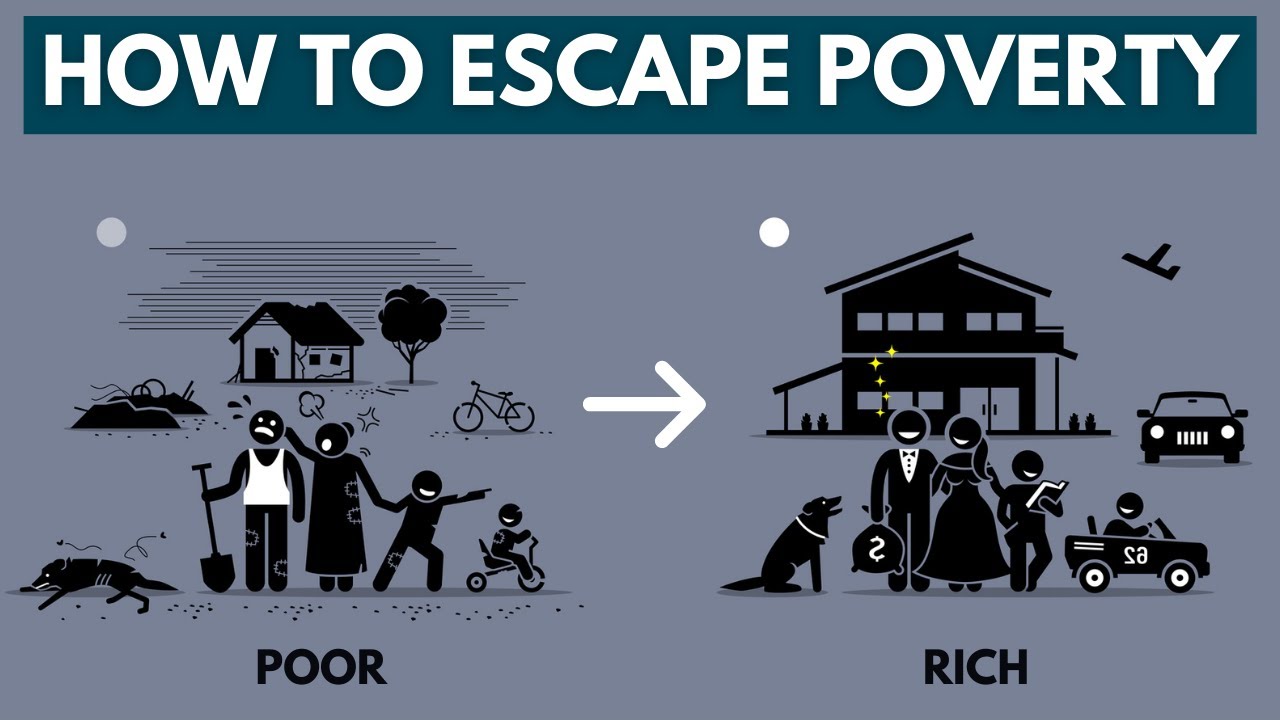
Poverty is about a lack of money, but also about a lack of hope. People living in poverty often feel powerless to change their situation. They can feel isolated from their community. If you want to overcome poverty, you need a combination of financial planning, a positive attitude, and a willingness to ask for help.
The global economic system is built on the exploitation of the majority, mainly in the so called third world countries. The system needs cheap labourers to work as it does. Therefore, it does not allow too many poor to become wealthier simply because then they wouldn’t do the labour anymore. That would either mean reduced profits for the investors or increased prices up to the point where the normal people in the so called first world could not afford it anymore.
Stereotypes about how to get out of poverty have real consequences. Unfortunately, despite mountains of evidence, you may still have a hard time shaking the idea that the only thing standing between poor people and wealthy people is how hard they’ve worked and how much they wanted to succeed. Even more unfortunately, this belief – when held by voters and reinforced by lawmakers eager to please their constituents – has led to troubling and even dangerous policies that perpetuate the cycle of poverty.
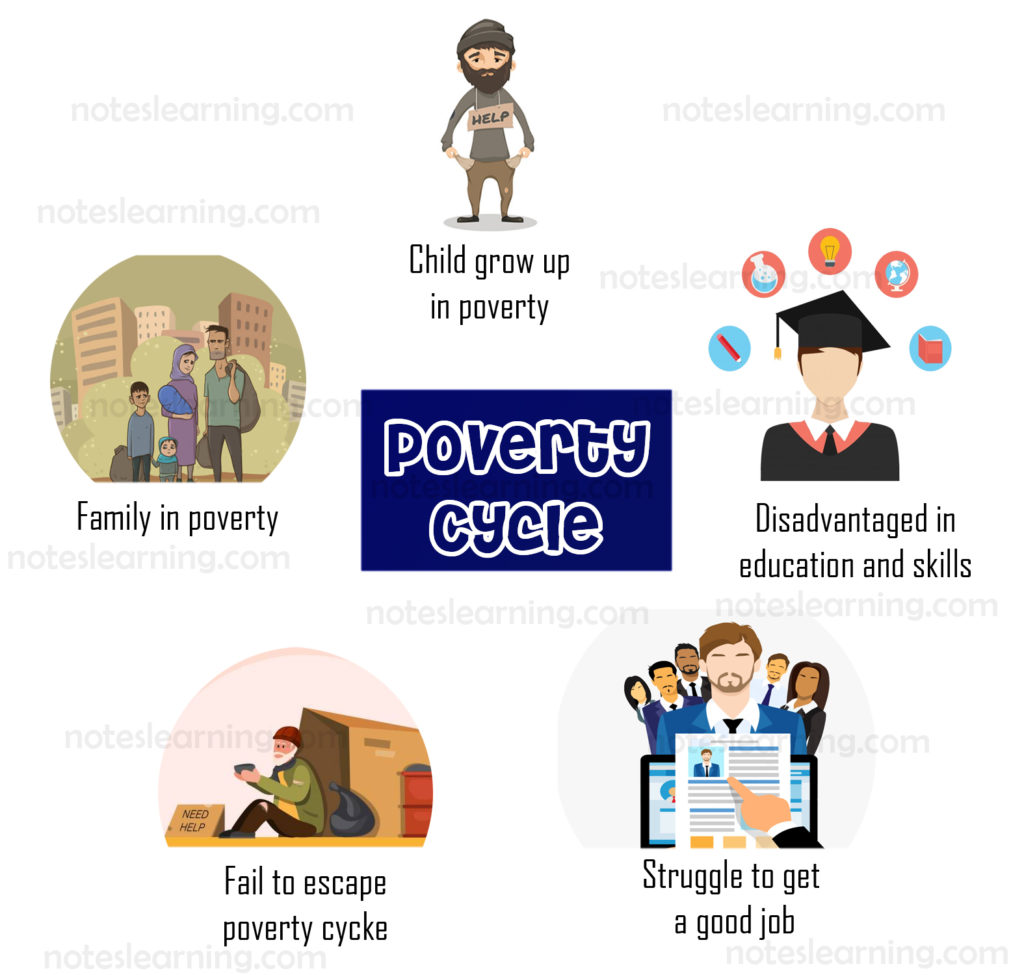
Poverty is an intersectional issue We don’t often look at the ways that poverty intersects with the issues of marginalized groups, and instead, tend to treat it as a separate ailment. In reality, poverty is caused by much more than just a lack of jobs or expensive housing. For many communities, poverty is a by-product of other systemic issues. Poverty is a complex cycle of factors. One of the most important aspects of conceptualizing how poverty impacts people is to understand that it is more than just not having money. We often think of poverty as monetary status – someone doesn’t have money right now; thus, they are poor – rather than a cycle. Put more simply, poor people are just like not-poor people, except they have less money right now. But chronic poverty (the kind that impacts families and entire communities) is not the same as being broke, and it’s not the same as being low on funds before your parents deposit your rent money.
In economics, a poverty trap or cycle of poverty is caused by self-reinforcing mechanisms that cause poverty, once it exists, to persist unless there is outside intervention. It can persist across generations, and when applied to developing countries, is also known as a development trap. Families trapped in the cycle of poverty have few to no resources. There are many self-reinforcing disadvantages that make it virtually impossible for individuals to break the cycle. This occurs when poor people do not have the resources necessary to escape poverty, such as financial capital, education, or connections. Impoverished individuals do not have access to economic and social resources as a result of their poverty. This lack may increase their poverty. This could mean that the poor remain poor throughout their lives.
Controversial educational psychologist Ruby K. Payne, author of A Framework for Understanding Poverty, distinguishes between situational poverty, which can generally be traced to a specific incident within the lifetimes of the person or family members in poverty, and generational poverty, which is a cycle that passes from generation to generation, and goes on to argue that generational poverty has its own distinct culture and belief patterns
Factors maintaining personal poverty
Once poor, people can experience difficulty escaping poverty because many changes that would allow them to do so require money they don’t have, such as:
Education and retraining with new skills
Child care which would enable a single parent or second parent to work or take classes
Transportation to a distant job
Migration to an area with better economic opportunities
Starting a new business, which might require market research, technical assistance, and startup funding
Obtaining land for subsistence farming
Cure a health condition that prevents work, including diseases of poverty which don’t affect people outside of the “cycle of poverty”
This vicious cycle is harmful to those in poverty and those outside of it. Mainstream economic models think people are rational actors who weigh the costs and benefits of their options and choose the most advantageous path forward. If those in poverty know they’ll get no net benefit from working they’re incentivized to remain on government assistance. Of course, people works for many reasons including societal norms and personal values .but income is major incentive in pursuing new employment. When less people take on jobs the economy slows down keeping people in poverty and potentially pushing people in the cusp of poverty over the edge. Some of them suggest feedback loop could be removed by eliminating government assistance programmes all together. But most agree this solution is neither realistic nor humane. So how can we redesign benefits in a way that doesn’t penalize people for working? Many countries have tried different ways to circumvent this problem. Some allow people to continue receiving benefits after finding a job. Others faze out benefits gradually as income increases. These policies still removes financial incentive to work but the risk for welfare trap is lower. Other Gov. provide benefits like education, Child care or medical care, equally across all their citizens. One proposed solution takes this idea of universal benefits even further. Universal basic income would provide a fixed benefit all members of society regardless of wealth or employment status this is the only known policy that removes welfare trap since earned wages would supplement benefit rather than replace it. In fact creating a stable income floor which no one can call basic income might prevent people from falling into poverty in the first place. Numerous economists, thinkers have championed this idea. Eighteenth century. But for now universal basic income remains largely hypothetical. Although it’s been tried in some places on a limited scale these local experiments don’t tell us much about how the policy will play out across the entire nation or a plant. Whatever strategy government’s pursuit, solving the welfare trap requires respecting people’s agency and autonomy. Only by empowering individuals to create long term change in their lives and communities can we begin to break the cycle of poverty.
Jadav Peyang from Jorhat district in Assam was given the title of “The Forest Man” in Delhi by government of Indian on World Earth Day in 2010 for turning a barren land of 550 acres into a forest all by himself. It took him nearly 30 years to accomplish the task. It is officially called as Molai Forest. The locals call it “Molai” as a tribute to Jadav who used to be a fair child with pink cheeks, thus resembling a Mola(raddish in local language). At the age of 16, Jadav Payeng had experienced that a large number of snakes died due to excessive heat after floods washed them onto the sandbar. He then planted around 20 bamboo seedlings on the sandbar of the Brahmaputra river.
He started working in the forest from 1979 when the Social Forestry division of Assam’s Golaghat district had launched a scheme of tree plantation on 200 hectares of land at Aruna Chapori, situated about five kilometres from Kokilamukh in Jorhat district. He was one of the labourers of the project which was completed after five years. Jadav has a simple solution to the global problem of depleting forest cover: teach our children to love Nature. “The rest will happen on its own,” he feels. According to wildlife experts, the forest atrracts around world’s 80% migratory birds.Jadav’s story also inspired a children’s book, Jadav and the Tree Place, that tells his story of how he made a forest that is now home to wild animals. He has been the subject of award-winning documentaries and now people travel across the globe to see the Molai forest. His inspirational story is also being taught in ecology classes at schools across the United States.
You might have seen and heard on TV news are read papers about foreigner looking to India for surgeries liver transplant dental and even cosmetic care. Why? Because our health services combined the latest medicinal Technologies with qualified professional and are cheaper for foreigners as compared to cost of similar Healthcare services in their own countries. In 2016, as many as 200000 foreigners visited India for medical treatment. Speaker is likely to increase by 15% each year. Expect that by 2020 India could earn more than 500 billion rupees research medical tourism. Health infrastructure can be upgraded to attract more foreigners to India.
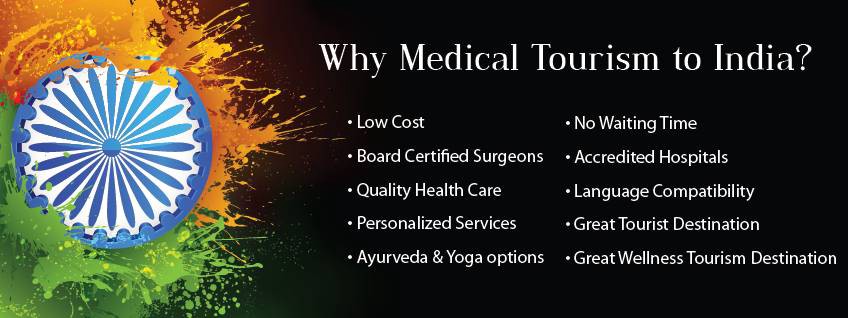
India in the recent years has emerged as a major hub for medical tourism and is now considered amongst the top 6 medical value travel destinations in the world. Foreign tourism arrivals for medical purposes have increased from 1,39,447 in 2014 to 4,95,056 in 2017. Some of the factors which make India a compelling destination for medical travel are reputed health care professionals and hospitals, English speaking health care workers, cutting edge global technology, personalized service, lower cost, lesser waiting time and rich cultural and leisure destinations.
The potential of wellness systems, developed through centuries of wisdom of this ancient civilization would be fully tapped. This is being done by positioning India as a centre of Ayurveda, Yoga, Sidha, Naturopathy, etc. together with the spiritual philosophy that has been integral to the Indian way of life. Ministry of Tourism has drafted guideline for wellness tourism. These guidelines address issues regarding making available quality publicity material, training and capacity building for the service providers, participation in international & domestic Wellness related events, etc.
Mushrooming of wellness centres in the country has given rise to the concern for quality service. The Guideline for Accreditation of wellness centres have been developed by National Board for Accreditation of Hospitals & Healthcare Services (NABH) in consultation with AYUSH and released during the workshop on wellness tourism organized by Ministry of Tourism on 15 Feb 2011. The Ministry of Tourism has also extended its Market Development Assistance (MDA) scheme to wellness tourism service providers including accredited wellness centres. Presently the wellness centres accredited by State Tourism Departments are also eligible for the MDA. After the accreditation guidelines of NABH is in place, all wellness centres seeking MDA would be asked to be as close to the accreditation guidelines of NABH as possible.
The initiative of accreditation of wellness centre by NABH and AYUSH has been greatly driven be the Ministry of Tourism as also consultation with the Wellness Tourism Service Providers, State Governments and other stakeholders.
MEDICAL TOURISM
Medical tourism (also called medical travel, health tourism or global healthcare) is a term used to describe the rapidly-growing practice of travelling across international borders to seek healthcare services. Services typically sought by travellers include elective procedures as well as complex surgeries, etc.
India has emerged as the fastest-growing medical destination around the world and is expected to grow more with time. Anyone from any nation can get their medical treatment done in the country at an affordable cost. Several medical tourism companies in India are readily available to help out the patient from across the world. India holds advantage as a medical tourism destination due to following factors:
Most of the doctors and surgeons at Indian hospitals are trained or have worked at some of the medical institutions in the US, Europe, or other developed nations.
Most doctors and nurses are fluent in English.
Top -of-the-line medical and diagnostic equipment from global international conglomerates is available at many Indian hospitals.
Indian nurses are among the best in the world. Nearly 1000 recognized nurses-training centres in India, mostly attached to teaching hospitals, graduate nearly 10,000 nurses annually.
Even the most budget-conscious traveller can afford first-rate service and luxury amenities
Lower cost of treatment when compared to the other developed countries
Getting a visa for medical treatment in India is easier
The patients can get access to immediate service
India provides the world-class and standardized medical facility with the help of latest technology
The patients can receive post-treatment recovery with therapies like Ayurveda, yoga, and naturopathy
The patience taking the medical tourist trip can visit some of the most alluring and inspiring places in India
The nation is full of qualified and skilled doctors in various fields
Getting medical treatment in India was never so easy. With an increase in the demand for medical treatment, there is an increase in the medical tourism companies in India, who are there to provide the patients with the best and affordable medical tourism in India.








 Eduindex
You must be logged in to post a comment.