Feminism is the advocacy of the equality of the sexes. It does not seek exploitation and harassment of men by women in any field as many ‘intellectuals’ think! It only seeks to eradicate the violence against women and their poor treatment by their male counterparts wherever it is happening. People think feminism is giving women another superpower through which they can rule others , but this is not the true side , Feminism means equality in education & professional fields , equality in terms of rights , & this equality is not only for women but for men also . Feminism seeks to achieve the political, economic, personal, and social equality of BOTH the sex & not just females. Societies around the world often give exclusive rights and privileges to men (like standing up for themselves without being branded as being ‘loud’ and ‘bossy’, doing what they love to do, not being responsible for bringing up the kids and many more!) while women, in general, are treated unfairly. Feminism fights against gender stereotypes and seeks equal educational and professional opportunities for women. Feminists work for women’s rights, like the right to work, to remove the gender pay gap, to get an education, to have equal rights and respect within marriage, and to have paid maternity leave , to do what ever they want to , etc.
FIVE REASON WHY FEMINISM IS STILL A NEED OF THE HOUR ARE :
Gender inequality is very bad for women health : Gender inequality is bad for women health , it makes them think that they are not superior to others , which leads to bad mental health . Further mental health leads to many diseases like PCOD, heart diseases, etc.
Equal pay for all genders : Since work hours are same , so should be the pay range is the moto of feminism. Women are often paid less as compare to men & gives the reason that they work less , this belief should be removed & females should be paid equal to men .
Education : Girls are pressurized to marry , then what about their dreams & education ? This is why we need feminism , just like men are asked to study so do women should have been asked too .
Right to work : Still there is this stereotype in our brain that women can not do this job or this job is not meant for women . to remove this thinking from the society , feminisms is the need of the hour.
Have equal rights & respect within the marriage .
At last i would like to conclude this article with a quote , ” Feminism is not a dirty word. It does not mean you hate men. It does not mean you hate girls that have nice legs and a tan, and it does not mean you are a bitch or a dyke, it means you believe in equality.”
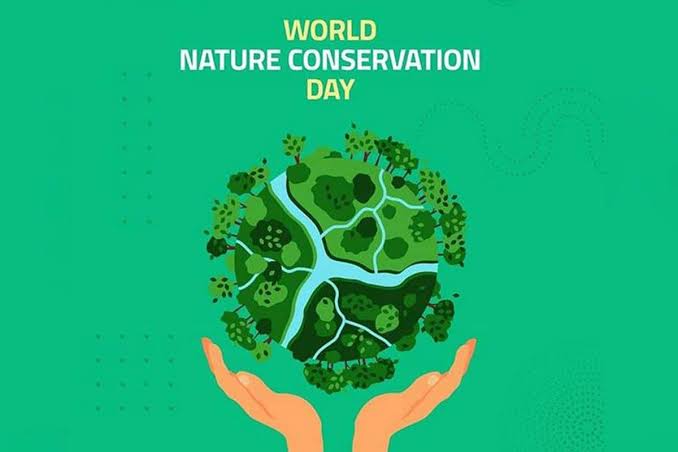
The main objective behind celebrating the day is to conserve trees and animals that are on the verge of going extinct from the natural environment of the Earth. World Nature Conservation Day is celebrated on 28 July every year. There are several initiatives that India has undertaken to conserve nature like Swachh Bharath Abhiyaan, Project Tiger, etc.
The day also recognises that a healthy environment is a foundation for a stable and productive society. This day also ensures the well-being of present and future generations. How nature can be conserved or how we can protect our nature?
“Earth provides enough to satisfy every man’s needs, but not every man’s greed.” ― Mahatma Gandhi
It is necessary to create a healthy environment to safeguard the present and future generations. There are several threats to nature like deforestation, illegal wildlife trade, pollution, using plastics, chemicals, etc. Earth has provided basic necessities to live like water, air, soil, minerals, trees, animals, food, etc. So, we should keep nature clean and healthy. Industrial development and several other factors are also responsible for the depletion of nature. Whatever we do affects the environment because the world is one and somehow linked together.
World Nature Conservation Day History:
The history and origin of World Nature Conservation Day are unknown but the main aim of celebrating it on 28 July is to come together and support nature, don’t exploit it. Conservation of nature is the wise management and utilization of natural resources. As we know that due to natural imbalance, we are facing several problems like global warming, various diseases, natural disasters, increased temperature, etc. Therefore, for the next generation, it is necessary to preserve it. So, it is important to raise awareness among people all over the world to understand the importance of saving resources, recycle it, preserve it, and also understand the consequences of damaging them.
“Conservation means the wise use of the earth and its resources for the lasting good of men”- Gifford Pinchot
What are the steps taken for the Conservation of Wildlife?
Methods to Conserve the Environment:
It is not mandatory that only the government and big companies conserve the environment. Everyone can participate and conserve nature which is a beautiful gift to us. Several ways are there by which we can conserve the environment like:
Recycling: Try to buy reusable and biodegradable products as much as possible. Recycle everything if it is possible.
It is necessary to reduce the consumption of water.
Reduce the use of electricity. When your work is done with an electric appliance then turn it off. In this way, energy and money will be saved.
Plant trees and make the planet green.
Grow vegetables. In the market vegetables that are available are grown with chemicals and pesticides. So, it is better to plant vegetables and eat organic food.
“Environment isn’t asking us to conserve her for her but for our future generations”- Mohith Agadi
To avoid littering it’s better to do composting.
As we know that batteries are dangerous for the environment so, it is better to use rechargeable batteries.
Don’t smoke. Smoking is injurious to health and sometimes it is seen that people after smoking don’t throw cigarettes in the dustbin but on the ground directly which is just pure littering.
Reduce pollution.
Aware people about the use of conservation of nature, environment, and energy.
There are also three essential words about the conservation of the environment that is reduce, recycle, and reuse.
Conservation of nature is very necessary, even scientists have also warned us about the mass extinctions in the near future. Several documentaries about nature show that resources are being wasted. Due to global warming temperature is increasing day by day, storms and the level of the sea are also increasing, freshwater glaciers are melting which threatens lives. We are connected to each other with natural resources. The natural world is facing an increasing threat from unsustainable practices and the challenge is how to preserve and conserve nature to achieve sustainable development.
Let us come together and make an effort to contribute to the local, national, or global levels in conserving nature. It will not only benefit our present generation but also future generations.
“Conservation is a cause that has no end. There is no point at which we will say our work is finished”- Rachel Carson
“Conservation is not merely a question of morality, but a question of our own survival” – Dalai Lama
We all know that the transition to electric automobiles is near, leading manufacturers have now taken drastic steps towards making this shift possible soon. Leading automakers have signaled their intention to scrap internal combustion engines by 2030 or cut back sharply on their production as the sector turns towards electric vehicles. Let’s take a look at what some of the leading automobile manufacturers have to say about this.
Firstly, let’s see BMW; this German luxury brand is intending sales of over 10 million electric vehicles within the next decade, a steep jump from its initial target of just four million vehicles. Although they already sell the i3 model it has lost market share to Tesla. Next, let’s take a look at Volvo, owned by a Chinese group. Volvo along with Bentley and Ford intends to no longer offer internal combustion models, including hybrids, by 2030. Volvo chief Hakan Samuelsson stated in March that by 2025, “half of our cars will be electric.”
Now let’s see what Renault and Toyota have to say in this regard; Renault expects EVs to account for more than 65 percent of its vehicles by 2025. Plans call for 10 new electric models by that date, including a new and affordable version of its classic compact, the Renault 5. Whereas Toyota is a hybrid pioneer and stuck to its guns for a long time before deciding to launch seven fully electric models by 2025. It expects 10 percent of European sales to be vehicles powered by electricity or hydrogen by then, along with 70 percent hybrids, 10 percent rechargeable hybrids, and 10 percent petrol.
Now Jaguar and Land Rover, iconic brands owned by the Indian group Tata, plans to devote a large part of its annual investment budget of £2.5 billion to electric vehicles. Jaguar expects to be completely electric by 2025.
Volkswagen, the German giant wants to be the global leader in electric vehicles. Its ID3 model, which was launched in late 2020, is battling Tesla for the top spot in the European electricity market. The company expects electric vehicles to represent half of all sales by 2030 and “almost 100 percent” by 2040 in its main markets. It has earmarked 73 billion euros in investments and, like Tesla, plans to create a global network of charging stations.
This was a brief idea on how leading automobile makers, want to shift to the electric era; reducing the burden on our environment.
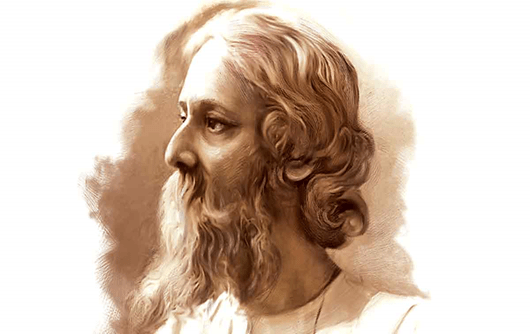
Tagore‘s religious verse as given in the Gitanjali gained in the wake of award of the Nobel Prize had let people believe that he is a writer of spirituality and mysticism. Tagore‘s humanism is connected with his spiritualism. His spiritualism does not make him reluctant of the world and man, but brings him nearest to the man and something above God too. According to Tagore, spiritual life is a human affair and salvation is not through renunciation but through love, beauty, and service.
Salvation through love:
Tagore believe that man can get God only when he is in love as love is the ultimate meaning of everything around us. Love is considered as the true nature of one personality. Tagore suggest his follower that for finding God it‘s not necessary to visit any religious place nor meditating works efficiently but in nature in humanity one perceive his God. He says that “To get the intimacy of supreme consciousness through love of nature, to perceive the form less inform that I call the way to liberation. I am fascinated by the nature, and in that I get the taste of salvation.” It was his believe that Divinity is inherent in real love. His pure thinking also suggest that internal God is existing in human heart, where the internal love goes on. So when we give or take love we say the glimpse of infinity.
Salvation through action:
Tagore says love demands certain actions towards the object of our love. One should feel as well as do something for love. Love is a complete feelings and it‘s perfect in knowledge, action, and renunciation. Tagore says that the Upanishads never forbade us to work because the sages knew that the freedom of work lies in joy and the freedom of joy lies in ‗work‘.
Salvation through worships of beauty:
Tagore‘s faith was one of the affirmations of acceptance of life with joy. He believes that God does not want the world to be cheerless and dead like a desert and man to be regret ascetics but he want love for humanity and love for the nature so that man can attain joy and experience the love of the Supreme Being. According to him, we can, feel the present of internal existing God in beauty and love which is defused in whole world. Our sense organ is created by God so that he can enjoy an experience the form, colour, beauty, taste which are revealed in the nature. Tagore never ignores the importance of body or senses. He wants to enjoy each and every moral object of the world. He believes that “To look upon the world as joyful it is not to become a slave of pleasure. Pleasure is finite in nature, but joy is divine and infinite.”
Humanity and Divinity according to him are not two different order but they expect of same reality. Tagore is empathetic in ascertaining that the Devine is also in certain respect human. Tagore’s thinking was different and he believes that “I want to see my God in the temple where there are no rites, rituals and rigid practices” For realizing God‘s present in one‘s heart the rites rituals and rigid practices are considered as obstacles. He says that “Religion of man in which the infinite is define in humanity.” One’s religion must be his approach in a truth and the actual meaning of true religion is one’s humanity. The religion of man should be become like a man, behave like a man and except the value of man as the man and to love humanity. He believes and spreads the meaning of pure religion is that which accept the unity of all people instead of their different in religious faith. He calls religion as a “united force “and it has a power to make a man rise above the society, country and sect and it can‘t be judged by rites, rituals and superstitions. According to Tagore, man‘s salvation live in freezing his personality from the narrow limitation of selfhood. Man‘s ego makes him self- center and all his activities directed to the satisfaction of his own self. His finite nature is only revealing them. Therefore we can see that Tagore salvation is not in renunciation of the world but in perfecting human personality, when we realize divinity in us, we achieve salvation within this earthly frame.
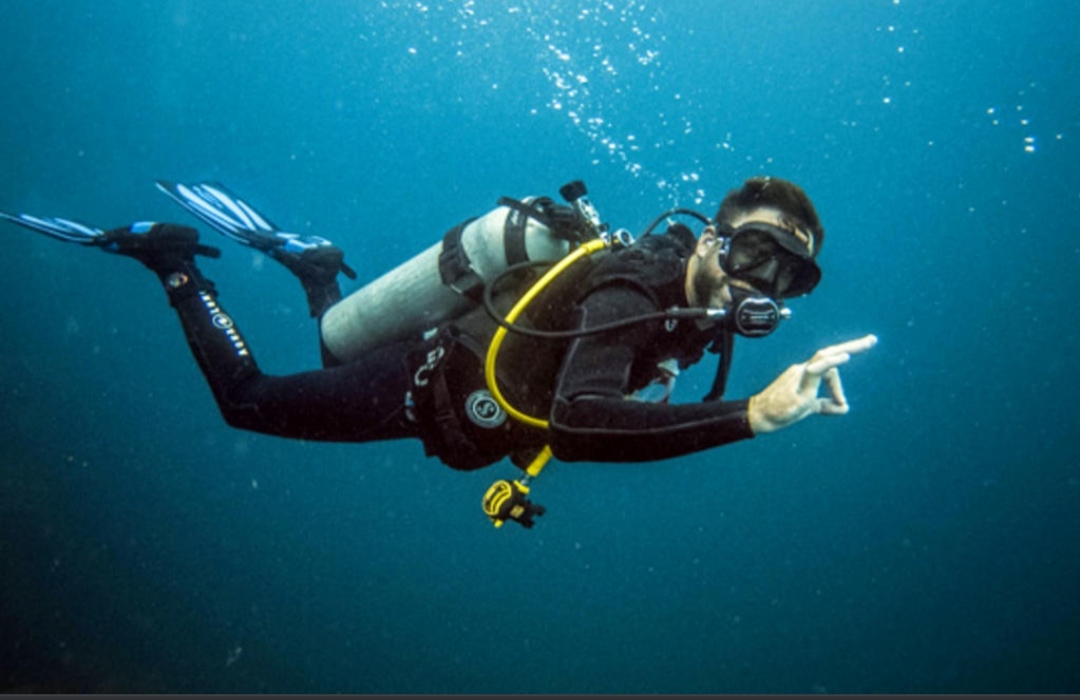
Here is some good news for all the watersport lovers in Vizag. A scuba diving academy will be coming up soon in the district, at Chintapalli. The city of beaches has been into the watersports trend, with activities like kayaking, snorkeling, jet skiing and scuba diving. Among these four, scuba diving is the more popular watersport. This watersport is not available at places in India such as Goa, Pondicherry, and the Andaman and Nicobar Islands. But fortunately, Vizag has adopted this highly thrilling and mesmerising underwater activity.
Taking a big step towards promoting tourism in Vizag, a scuba diving academy at Chintapalli village in Visakhapatnam District. The academy will be started by Livein Adventures, a Vizag-based adventure sports firm, which operates water sports activities in the city with the support of the Andhra Pradesh Tourism Development Corporation (APTDC). This will be a first-of-its-kind scuba diving academy in Andhra Pradesh and one among very few such academies in India. The academy will come up on four acres of land at chintapalli and will be built at an estimated budget of Rs 2 crore.
Speaking to Yo! Vizag, Balaram Naidu, of Livein Adventures, revealed, “The academy will have courses on basic diving, kayaking, and boating from October 2021. The courses will range from two days to 6 months in duration. Interested individuals, swimmers and non-swimmers, will be able to take globally certified courses on open water diving, rescue diving and advanced diving.”
The single and the biggest problem in communication is the illusion that has taken place which is called misunderstanding. If a man cannot understand the beauty of life, it is probably because life never understood the beauty of him.
“Misunderstanding is basically because, some have the unique ability to listen to one part of the story and understand the another part of it.”
You can’t control the way people understand your ideas and thoughts but you can control the words and tones you choose to convey them. Wonderful relationship is built on understanding and the same can also be destroyed by a single misunderstanding.
When people pull apart ,they usually use misunderstanding as a weapon to break their relationship. A beautiful relationship does not depend on how well you understand each other but it depends on how well you avoid misunderstandings.
It is better to understand little than to misunderstanding a lot. Believe that simple things really matters because even a simple misunderstanding can ruin great relationship.Problems comes from nothing it is because of the misunderstanding that does not even exist.
A single moment of misunderstanding is very poisonous that it makes us forget hundreds of loveable moments you have spent together within a minute. When a plant grows denser, we cut the branches and not whole plant, similarly when misunderstanding grows,cut your ego and not your relationship.
If you don’t clear your misunderstanding on time then they will become the reason for distance forever and ever.
Don’t build a relationship before understanding and don’t break a relationship because of a misunderstanding.
“Earth provides enough to satisfy every man’s needs, but not every man’s greed.” ― Mahatma Gandhi
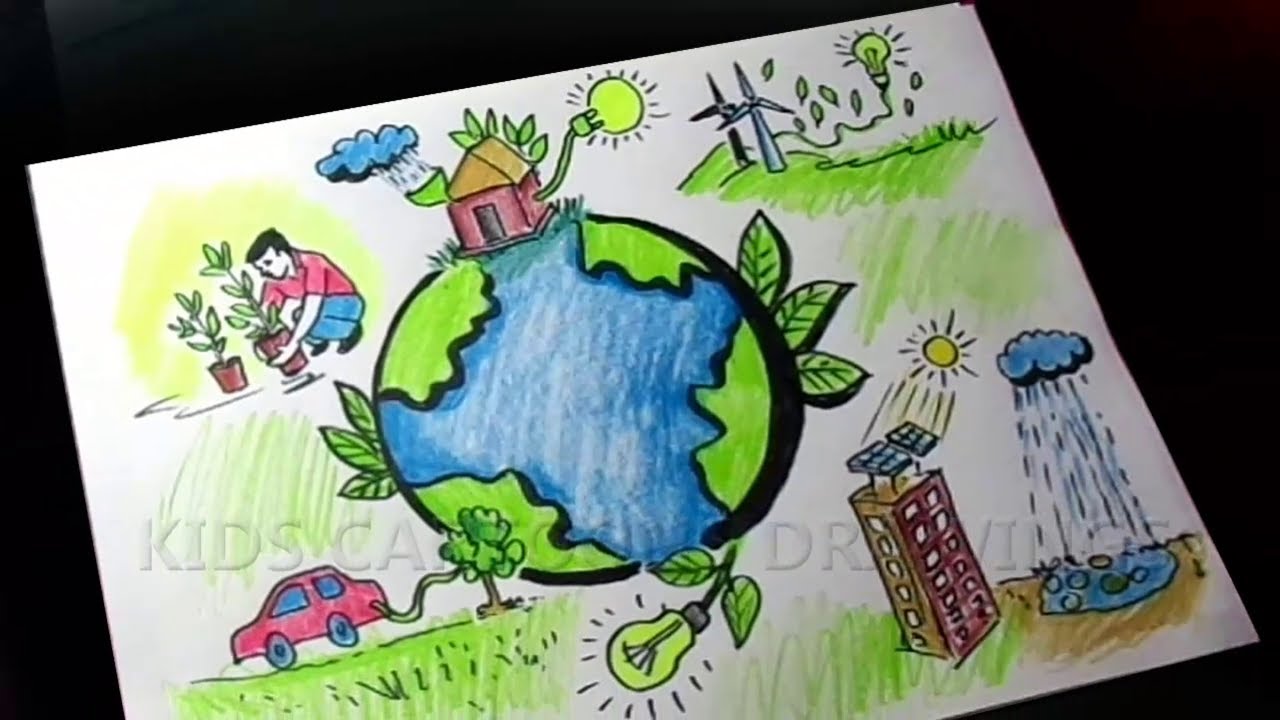
July 28 is celebrated as “World’s Nature Conservation Day” and reminds us that healthy environment is the foundation of a stable and productive society. This day is observed every year and is celebrated to educate people about the best techniques and practices adopted in different areas of the world to protect and preserve our natural resources as our planet has limited amount of resources left but the reliance on these resources is increasing day by day. This day aims to create and increase the awareness about the importance of natural resources and environment. It shows how we can live sustainably. This day encourages the people to save and protect the natural resources of earth because they are depleting in a rapid rate and are getting exploited and even misused.
This day recognizes that a healthy environment is the most vital part of stable and productive society. And sustainable practices are important for maintaining this stability and this environment for the future generations as well. The day reminds us about our responsibility as the child of the planet and urges us to be responsible and practice sustainable living practices and bring small changes in our lifestyle which can bring sustainability in our life style and lives. This day motivates us to find alternatives which could decrease our dependency on the natural resources.
This day ensures sustainability of present and future generation. How can we help in conserving the nature ? Lets have a look!
WATER CONSERVATION: Everything starts from home and can be done by using less water while showering and bathing. By practicing Rain water harvesting methods in home to reduce our dependency on other water sources and rely on rain water without wasting it. It is important to conserve water because it is estimated that 2050 we may run out of water.
PLANTING OF TREES : This helps in preventing soil erosion and promoting greenery. Home gardening, kitchen garden etc. can be practiced at home and at any scale for planting trees. Green roof is also one such initiative which helps in promoting greenery at homes. Spending few minutes in planting and amid nature can greatly promote mental well being too.
WASTE MANAGEMENT : Reduce, reuse and recycle waste. Practice rainwater harvesting and using wastewater treatment plants for treating the waste water. This waste water when treated can be used in landscaping purpose. Organics can also be used.
SUSTAINABLE COMMUNICATION : Sustainable communication can help in reducing the carbon footprint and lessen the pollution. It is good if people use public transport and sustainable modes of transport while commuting to different places as fewer vehicles will ensure lesser pollution.
Reduce your electricity consumption; switch off electrical appliances when not in use, or every time you walk out of a room.
REDUCE PAPER USE : Saving papers means saving trees and in todays digital age, all the devices are capable of taking notes which saves the need of print outs.
AVOID SINGLE USE OF PLASTIC : The plastics which we are using are getting discharged into the oceans and grasslands or forests etc. which is destroying the lifeforms, ecosystem as well as the natural resources. Single use plastic consumption has increased during the pandemic and the amount of gloves and face masks being used is also increasing. Landfills are getting filled with the large amount of plastics which is polluting the environment.
The main objective of the day is to be live, promotive consciousness and mindful living. The aim is reduce overexploitation of resources and reduce the non-essential travel and play our part of role in building a sustainable future.
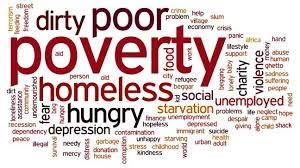
Poverty is about not having enough money to meet basic needs including food, clothing and shelter. However, poverty is more, much more than just not having enough money.
The World Bank Organization describes poverty in this way:
“Poverty is hunger. Poverty is lack of shelter. Poverty is being sick and not being able to see a doctor. Poverty is not having access to school and not knowing how to read. Poverty is not having a job, is fear for the future, living one day at a time.
Poverty has many faces, changing from place to place and across time, and has been described in many ways. Most often, poverty is a situation people want to escape. So poverty is a call to action — for the poor and the wealthy alike — a call to change the world so that many more may have enough to eat, adequate shelter, access to education and health, protection from violence, and a voice in what happens in their communities.”
In addition to a lack of money, poverty is about not being able to participate in recreational activities; not being able to send children on a day trip with their schoolmates or to a birthday party; not being able to pay for medications for an illness. These are all costs of being poor. Those people who are barely able to pay for food and shelter simply can’t consider these other expenses. When people are excluded within a society, when they are not well educated and when they have a higher incidence of illness, there are negative consequences for society. We all pay the price for poverty. The increased cost on the health system, the justice system and other systems that provide supports to those living in poverty has an impact on our economy.
While much progress has been made in measuring and analyzing poverty, the World Bank Organization is doing more work to identify indicators for the other dimensions of poverty. This work includes identifying social indicators to track education, health, access to services, vulnerability, and social exclusion.
There is no one cause of poverty, and the results of it are different in every case. Poverty varies considerably depending on the situation. Feeling poor in Canada is different from living in poverty in Russia or Zimbabwe. The differences between rich and poor within the borders of a country can also be great.
Despite the many definitions, one thing is certain; poverty is a complex societal issue. No matter how poverty is defined, it can be agreed that it is an issue that requires everyone’s attention. It is important that all members of our society work together to provide the opportunities for all our members to reach their full potential. It helps all of us to help one another.
On the basis of social, economical and political aspects, there are different ways to identify the type of Poverty:
Absolute poverty.
Relative Poverty.
Situational Poverty.
Generational Poverty.
Rural Poverty.
Urban Poverty.
Now let us understand them one by one:
1.Absolute poverty: Also known as extreme poverty or abject poverty, it involves the scarcity of basic food, clean water, health, shelter, education and information. Those who belong to absolute poverty tend to struggle to live and experience a lot of child deaths from preventable diseases like malaria, cholera and water-contamination related diseases. Absolute Poverty is usually uncommon in developed countries.
It was first introduced in 1990, the “dollar a day” poverty line measured absolute poverty by the standards of the world’s poorest countries. In October 2015, the World Bank reset it to $1.90 a day. This number is controversial; therefore each nation has its own threshold for absolute poverty line.
“It is a condition so limited by malnutrition, illiteracy, disease, squalid surroundings, high infant mortality, and low life expectancy as to be beneath any reasonable definition of human decency.” Said by Robert McNamara, the former president of the World Bank.
2.Relative Poverty: It is defined from the social perspective that is living standard compared to the economic standards of population living in surroundings. Hence it is a measure of income inequality. For example, a family can be considered poor if it cannot afford vacations, or cannot buy presents for children at Christmas, or cannot send its young to the university.
Usually, relative poverty is measured as the percentage of the population with income less than some fixed proportion of median income.
It is a widely used measure to ascertain poverty rates in wealthy developed nations.
In European Union the “relative poverty measure is the most prominent and most–quoted of the EU social inclusion indicators”
3.Situational Poverty: It is a temporary type of poverty based on occurrence of an adverse event like environmental disaster, job loss and severe health problem. People can help themselves even with a small assistance, as the poverty comes because of unfortunate event.
4.Generational Poverty: It is handed over to individual and families from one generation to the one. This is more complicated as there is no escape because the people are trapped in its cause and unable to access the tools required to get out of it.
“Occurs in families where at least two generations have been born into poverty. Families living in this type of poverty are not equipped with the tools to move out of their situation” (Jensen, 2009).
5.Rural Poverty: It occurs in rural areas with population below 50,000. It is the area where there are less job opportunities, less access to services, less support for disabilities and quality education opportunities. People are tending to live mostly on the farming and other menial work available to the surroundings.
The rural poverty rate is growing and has exceeded the urban rate every year since data collection began in the 1960s. The difference between the two poverty rates has averaged about 5 percent for the last 30 years, with urban rates near 10–15 percent and rural rates near 15–20 percent (Jolliffe, 2004).
6.Urban Poverty: It occurs in the metropolitan areas with population over 50,000. These are some major challenges faced by the Urban Poor:
• Limited access to health and education. • Inadequate housing and services. • Violent and unhealthy environment because of overcrowding. • Little or no social protection mechanism.
Qutub-Minar in red and buff sandstone is the highest tower in India.
Built in the 13th century, the magnificent tower stands in the capital, Delhi. It has a diameter of 14.32m at the base and about 2.75m on the top with a height of 72.5m. It is an architectural marvel of ancient India.
The complex has a number of other important monuments such as the gateway built in 1310, the Alai Darwaza, Quwwat-ul-Islam Mosque; the tombs of Altamish, Ala-ud-din Khalji and Imam Zamin; the Alai Minar, a 7m high Iron Pillar, etc.
Qutub-ud-Din Aibak of Slave Dynasty laid the foundation of Minar in A.D. 1199 for the use of mu’azzin (crier) to give calls for prayer and raised the first storey, to which were added three more storeys by his successor and son-in-law, Shams-ud-Din Itutmish (A.D. 1211-36). All the storeys are surrounded by a projected balcony encircling the minar and supported by stone brackets, which are decorated with honey-comb design, more conspicuously in the first storey.
Quwwat-ul-Islam Mosque, to the north-east of minar was built by Qutub-ud-Din Aibak in A.D. 1198. It is the earliest extant – mosque built by the Delhi Sultans. It consists of a rectangular courtyard enclosed by cloisters, erected with the carved columns and architectural members of 27 Hindu and Jaina temples, which were demolished by Qutub-ud-Din Aibak as recorded in his inscription on the main eastern entrance. Later, a lofty arched screen was erected and the mosque was enlarged, by Shams-ud- Din Itutmish (A.D. 1210-35) and Ala-ud-Din Khalji. The Iron Pillar in the courtyard bears an inscription in Sanskrit in Brahmi script of fourth century A.D., according to which the pillar was set up as a Vishnudhvaja (standard of god Vishnu) on the hill known as Vishnupada in memory of a mighty king named Chandra. A deep socket on the top of the ornate capital indicates that probably an image of Garuda was fixed into it.
The tomb of Itutmish (A.D. 1211-36) was built in A.D. 1235. It is a plain square chamber of red sandstone, profusely carved with inscriptions, geometrical and arabesque patterns in Saracenic tradition on the entrances and the whole of interior. Some of the motifs viz., the wheel, tassel, etc., are reminiscent of Hindu designs.
Alai- Darwaza, the southern gateway of the Quwwat-ul-Islam mosque was constructed by Ala-ud-Din Khalji in A.H. 710 (A.D. 1311) as recorded in the inscriptions engraved on it. This is the first building employing Islamic principles of construction and ornamentation.
Alai Minar, which stands to the north of Qutub-Minar, was commenced by Ala-ud-Din Khalji, with the intention of making it twice the size of earlier Minar. He could complete only the first storey, which now has an extant height of 25 m. The other remains in the Qutub complex comprise madrasa, graves, tombs, mosque and architectural members.
UNESCO has declared the highest stone tower in India as a world heritage.
Friendship is one of the greatest bonds anyone can ever wish for. Lucky are those who have friends they can trust. Friendship is a devoted relationship between two individuals. They both feel immense care and love for each other. Usually, a friendship is shared by two people who have similar interests and feelings.
You meet many along the way of life but only some stay with you forever. Those are your real friends who stay by your side through thick and thin. Friendship is the most beautiful gift you can present to anyone. It is one which stays with a person forever.
True Friendship
A person is acquainted with many persons in their life. However, the closest ones become our friends. You may have a large friend circle in school or college, but you know you can only count on one or two people with whom you share true friendship.
There are essentially two types of friends, one is good friends the other are true friends or best friends. They’re the ones with whom we have a special bond of love and affection. In other words, having a true friend makes our lives easier and full of happiness.
Most importantly, true friendship stands for a relationship free of any judgments. In a true friendship, a person can be themselves completely without the fear of being judged. It makes you feel loved and accepted. This kind of freedom is what every human strives to have in their lives.
In short, true friendship is what gives us reason to stay strong in life. Having a loving family and all is okay but you also need true friendship to be completely happy. Some people don’t even have families but they have friends who’re like their family only. Thus, we see having true friends means a lot to everyone.
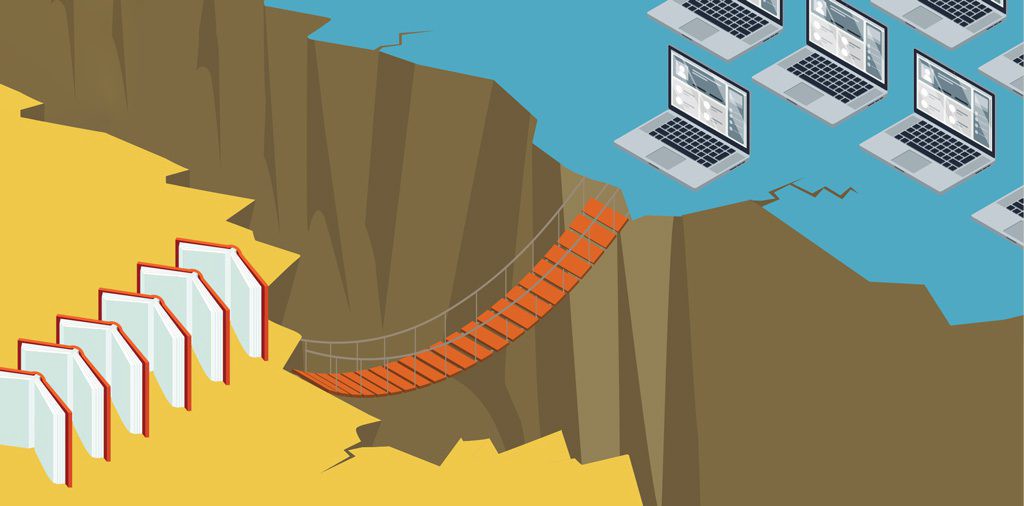
Covid-19 pandemic has exposed the deep fault lines that have created challenges for India’s march towards a digitally enabled society.
During the pandemic, several essential services, ranging from access to healthcare services (including vaccination) to education, livelihoods, and rations — have felt the effects of unequal distribution of technology in the country.
Thus, with increasing inequalities and the burden on systems, the need for digitally driven programmes is now more urgent than ever before.
Digital Challenge
Digitally Inaccessible Remote Communities: The first wave of Covid-19 brought with it an immediate and urgent need for the development sector to shift towards technology, when faced by the inability to access communities remotely.
A survey in June 2020 indicated that only about half of the respondents were aware of online classes being held in their communities.
The consequences of these gaps are likely dire – an estimated 10 million girls could drop out of school.
Unserved Remote Areas: With digital services not being uniformly distributed, communities in remote areas often require on-ground staff to deploy and supplement digital tools.
They may also face significant barriers in accessing funding for innovative and infrastructural digital solutions.
Digital Divide: During the second wave, urban Indians have consistently relied on social media platforms to seek life-saving medical supplies but rural Indian could not utilise it to the fullest.
Unequal access to the internet has also made accessing and registering for Covid-19 vaccines in India a challenge, leaving millions of Indians unable to even register for them.
Digital Illiteracy: It’s apparent that a majority of Indian citizens lack digital literacy and online safety is an alien concept to many who may have digital literacy.
Language and accessibility barriers and limited data and infrastructural systems further compound the scenario.
Social barriers and systemic inequality also play a large role in this — even today, mobile ownership among women is significantly lower than their male counterparts.
Moreover, communities continue to remain averse to mobile devices in the hands of young people, especially young women, to prevent them from disrupting existing patriarchal systems.
Way Forward
Need For Technology Enabled Development Sector: It is time for the development sector to shift towards technology-driven ecosystems, to enable a more systematic and concerted effort to bridge the present digital divide and help access remote communities digitally. NGO’s and CSO’s can play a vital role in this step.
Technological Intervention: The process of creating and implementing digital solutions is multi-layered and complex. According to many CSOs, the first step is to address the demands posed by technological interventions across a programme life cycle.
This calls for customised digital interventions. The issue gets complicated because CSOs need to work with local communities who face digital challenges themselves. Digital interventions have to factor in these imperatives.
Feedback from People: The success of technology-based programmes is ultimately contingent on the support for it on the ground, and community feedback is critical to driving successful and sustainable programmes.
Programmes, therefore, need to integrate and account for interpersonal mediation and the last-mile “human touch”.
Partnership with Stakeholders: To enable them to incorporate technology at scale, CSOs require more systematic partnerships with stakeholders across the development ecosystem.
Collaboration with the government and other civil society partners is vital to normalising the use of technology-based interventions at scale.
For example, the government and private sector service providers need to prioritise the availability of digital infrastructure and connectivity while civil society integrates programmatic responses into government priorities.
Documenting the Learning: There are no blanket solutions to the critical challenges that come with embracing technology in framing programmes for the development sector.
Documenting their learnings is an important first step in pushing for more open conversations with regard to digital interventions in India.
Conclusion
Recognising the essential role that digital tools, access and literacy will play in the months and years to come, Civil societies and NGOs can play a major role in bringing technological revolution in their working.
These days, all it takes is one surprise medical bill to send a patient into bankruptcy. The United States’ health care system operates differently from many others in the world with high costs for the individual as a distinguishing characteristic. In fact, the higher prices mean the U.S. spends more on health care than other “developed countries,”. According to a February 2020 survey, almost one in three Americans worries about affording health care. So, what exactly makes health care in the U.S. so expensive?
The most important reason is that U.S. health care is based on a “for-profit insurance system,” one of the only ones in the world, according to Carmen Balber, executive director of Consumer Watchdog, who’s advocated for reform in the health-insurance market. In the U.S, most health insurance is administered by private companies and individuals must pay for it themselves, even if their employer subsidizes some of it. The underlying motive to make money has a ripple effect that increases prices.
Similarly, Dr. Georges Benjamin, executive director of the American Public Health Association, pointed to a lack of universal health care, where everyone is guaranteed access without undergoing financial hardship, as a primary reason for high costs.”Part of our system is that everybody is … paying for somebody else’s underpayment, whether they like it or not,” he said. “Everybody is trying to figure out who else can pay for it instead of them.”
Pay per service
U.S. health care exists in a system where patients are charged based on the services they receive. In many parts of the healthcare ecosystem, people are paid for volume, and so that fuels an orientation toward, ‘Might as well get an extra scan.’ It’s in the economic interest of the hospital, the physician, the health care system when they’re being paid fee-for service, and the justification is that more is better.
As a result, there’s lower use of primary care, because the fee-for-service model “encourages overutilization.” Instead of taking people in a room, examining them, taking the history and spending the time talking to patients, doctors are quick to jump to getting a CAT scan or a diagnostic test when a history and physical exam would tell the answer. The fee-for-service creates an incentive to provide more procedures, instead of helping patients get healthier so that the nation as a whole needs fewer procedures.
Lack of government regulation
The companies that provide and charge for health care, like hospital systems and drug makers, have more power to keep costs high when they’re negotiating with multiple potential payers, like various private insurance companies. But when they must negotiate with a single payer, like the federal government, there’s more pressure to meet the demand in order to sell their services.
For example, a study found that private insurance companies paid almost two and a half times what Medicare would’ve paid for the same medical service at the same facility.
To make matters costlier, the U.S. government doesn’t regulate what most companies in the health care space can charge for their services, whether it’s insurance, drugs or care itself.
Consolidation of insurance and hospital systems
While the U.S. healthcare system itself may be fragmented, in many parts of the country, there’s only one or two companies providing health insurance or medical care. This means that, again, there’s little to no incentive for them to lower costs since patients don’t have much of a choice.
What’s more, health care providers are paid, on average, much more in the U.S. than in other countries. “Despite the enormous cost that we have in America for health care, we don’t get the same value of our health care dollar as other nations do,” Benjamin added. “If you get sick, this is the place to be, no doubt about that, but … we don’t have a system with everybody in and nobody out.”
It all started in France when that people decided o serve tiny portions of food for a very simple reason that is to make enough place for some dessert and a fancy coffee. When you eat a lot of food at once you tend to forgot the taste or get used to it that it doesn’t leave a mark i your memory. But the less amount of food that you eat you happen to remember the taste for a lot longer and appreciate it.
Most fancy restaurants have 3-6 course meals that makes it easy for you to try them all out . It would be a waste if you ordered a 6 course meal that consists of a large amount of food and not have enough space in your tummy to finish it off. People often happen to appreciate things that are rare and limited edition, therefore eating a tiny amount of luxurious food is somewhat pleasure seeking to the people.
The chefs don’t just make food, they make pieces of art. It is impossible to make food look art when it is served in a large amount as it might end up looking like ‘a meal that is made by emptying the fridge’. It also is very pleasing to the people when they eat something very elegant with shiny cutlery and pretty clothes, rather than eating something messy and huge with pretty clothes.
Fancy restaurants are all about dim lighting, pretty aura, and delicate fragrances. These aspects make the atmosphere look more comfortable and keeps you from leaving the place early. Whereas the scenario with tiny and cheap restaurants are that they are more prone to attract people’s gaze and are brightly lit, that makes the people cautious of what they eat, how they eat, and with who they eat.
Fun fact is that the fancy restaurants can make a new dish with the left over food and you wouldn’t know. They can actually save a large amount of food from being thrown away, that the fast food makers fail to do so.
Between 1970 and 2008, Cheng-Tong Lir Wang and Evan Schofer, two sociologists from the University of California discovered that the global divorce rate rose from 2.6 divorces for every 1,000 married people to 5.5 – the rate had more than doubled. Meanwhile, in 2017 India’s divorce rate — stood at 1%, according to a report from the Organisation for Economic Co-operation and Development. While the absolute number of divorces has gone up from 1 in 1,000 to 13 in 1,000 over the last decade or so, India still remains at the top of the list of countries with the lowest divorce rates. But why a sudden increase in divorce rates for a country where marriage holds the highest status and divorce is still a taboo?
Divorces are riddled with stigma in India with divorced women being looked down upon in society. One of the main reasons for the rise in divorce rates is women finally taking a stand against the injustice done to them for generations. Today, three billion women and girls live in a country where rape within marriage is not explicitly criminalized. But injustice and violations take other forms as well. In one out of five countries girls do not have the same inheritance rights as boys, while in others (a total of 19 countries) women are required by law to obey their husbands. Around one third of married women in developing countries report having little or no say over their own healthcare. A divorce gives them the opportunity to be more in control of their lives and not rely on anyone else.
Cheating and affairs are also major contributors to divorce in India. This issue has grown with the growth of a more digitalised world, with apps providing the ability to contact people at a ‘tap’ of a screen. Many Indian women in marriages are even aware of their husbands having affairs and ‘turn a blind-eye’ due to their age or years in the marriage. But it does not mean the dynamics of the marriage are happy anymore. Having an affair is the one thing that is destructive to a marriage, once found out. It destroys trust, love and care but for many, the marriage will carry on due to family and society pressures.
Indian marriages are influenced, supported and inspired by family. But also, sadly, marriages are destroyed by family too. Especially, extended family. The most common marital issue is that of the in-laws and the daughter-in-law. Breakdown of Indian marriages where the daughter-in-law is not good enough for the in-laws is one of the biggest reasons for divorce in India. From issues like ‘not enough dowry’ to ‘not being part of the family’ to ‘stealing the son from the family’ are all typical examples of the cause.
Divorce has led to the death of marriages which gives it a reputation of it being a negative word. But women are challenging that perception now and pushing for a change. Through stand-up comedies, spoken word poetry, Instagram accounts and support groups, they are fighting the stigma around divorce, one act, one verse, one post at a time. The end of a marriage could mean the beginning of a happy life and not necessarily the end of life itself.
Everyone had struggled with confidence before and it’s completely normal. If you are wanting to come out of your comfort zone and do better in making friends or make a good first impression, then these tips are fair enough to help you today.
1) ASK QUESTIONS
People tend to lean towards the one who need help. If you are a person who asks a lot of questions then it is a way you are attracting a lot of people. It could also be a great way to start a conversation, but never over-ask because people might interpret you as a little annoying.
2) SHOW YOUR FLAWS
Never shy away from showing your flaws as it makes you more relatable and people often would feel comfortable around you. You will soon gain the trust of many people and get along well with people who have similar flaws.
3) SPREAD POSITIVITY
People often tend to find the happiest ones more attractive as they make sure to make everyone laugh and feel happy. If you have a positive aura then make sure you spread all those smiles and share those jokes that can create an atmosphere that is much lighter. Beware of faking emotions, it can lead to you loosing people as well.
4) CARE TRUTHFULLY
If you happen to help the ones who are in desperate need then you leave a good impression not only on that person but also on the ones who are silently watching you help. People feel gratitude towards the ones who tend to be more kind and caring. Make it genuine, and people will seek for you when they are in urgent need. Never expect anything in return!
5) A POSITIVE BODYLANGUAGE
A positive body language can decide your likability. If you always carry a smile on your face and are friendly then you will be able to gain more people’s attention. Remember to never fake your actions and build a bad impression on people. Words spread faster and can bring you bad luck.
Most importantlymake sure you are taking care of yourself as it is the most important aspect in life.







 Eduindex
You must be logged in to post a comment.