People who single handedly brought a CHANGE in the society

What we learn from our society we follow that and pass on the same to the generation which follows. In India, if anyone wants to make a change in the normal dynamical functioning of a society, they are generally demotivated by the statement that “What will happen by a SINGLE PERSON’s efforts”. This is what we have heard since ages and this is what is being passed on to us from the older generations. As people prefer security in every sense, whether it be life security, job or financial security. Because to make changes requires guts to stand alone and continue doing what one believes in.

Also, we inspire each other in the way we may have never thought of. How many of you after watching a sport inspired movies have at least once tried that sport? Inspiration lies in every corner of the world i.e. if you really open your eyes to see it.

This blog will tell you about some INDIANS who single handedly managed to bring a drastic change in the society.

  1. JADAV PAYENG– Popularly known as the “FOREST MAN OF INDIA”, a title which was conferred to him by the vice Chancellor of the Jawaharlal Nehru University in 2012, Jadav is a man responsible for creating the  forest that stands at 550 hectares today on the island of Majuli near Jorhat.

It all started when a teenager Jadav living in the state of Assam near the Brahmaputra river region noticed the decreasing number of reptiles and snakes from the forests near his house due to excessive cutting of the trees. The elders of his village told him that if a house is not made for the animals they will all die. He thought about how he will feel when instead of snakes, the number of human started to decrease. He knew he had to do something, so he went to the forest department with his problem which was actually everyone’s but it was conveniently ignored. The forest department then taunted him to start planting trees himself and that is what he did. He started planting saplings on a small deserted island near the Brahmaputra river for nearly three decades and now this full grown forests spread over many hectares of land.

People travel from across the globe to see his forest that is visited by 120 species of birds, including migratory ones; and elephants, rhinos, and tigers that visit from Kaziranga National Park. Also, a herd of 50 to 150 elephants remains in the forest for nearly three months a year. Locals call it ‘Mulai forest’; Mulai is Jadav’s nickname.

While rest of his friends have a stable , comfortable life in the cities, Jadav refused to leave the forests which was his home and live with his wife and 3 children in a hut in the village. He says that his awards are his wealth.

2.SUDHANSHU BISWAS- A revolutionary freedom fighter who was one of those many unsung heroes who were the support to the ones at front on the battlefront, is the founder of 18 schools which educates poor and orphan children with the aim of giving them a brighter life. After India gained Independence , Biswas wen toff to Himalayas to understand true purpose of life and when he came back , there was a new mission he decided to embark upon. Biswas established two Ashrams in South 24 Parganas. Later, in 1973, he set up Sri Ramakrishna Sevashram near Baruipur. By 1996, he had built 18 free schools for the poor and downtrodden in the most underdeveloped areas of Sundarbans. He also has a old age home for people from nearby villages .

It is truthfully said that a REVOLUTIONARY NEVER DIES. Now in his 90s, Biswas still continues to run the schools and even teaches mathematics to the students. Biswas has proved that Age is just a number, it is the will power that matters.

3. RITU BIYANI – After having suffered and recovered from Breast cancer herself, she made it a point to educate the women living in the tribal , urban and rural areas to educate them about Breast cancer and help them find adequate treatment for the same. In India, women generally tends to ignore their health problems as they do not wish to disturb the dynamics of her family by bringing forth her health issue. The reason being that In Indian households women carry the ultimate responsibility of the family from feeding to taking care of everyone. In the process of fulfilling their responsibilities , they often tend to care about themselves and this carelessness then leads to dangerous consequences.

Many women doesn’t know or fail to notice the early signs of breast cancer and even if they do , they fail to get proper help for the same. Ritu Biyani holds a LIMCA BOOK OF RECORDS recognition in being the only woman to travel across the four points of the country to spread awareness about the same. If she might also have “minded with her own business” after getting recovered, then the many whose lives have been saved because of her efforts may have died.

Her BREAST CANCER AWARENESS CAMPAIGN continues to help those who have been living under darkness and scaredness of this disease taking them away soon.

4.GANGADHARA TILAK KATNAM-Once on a rainy day in Hyderabad, the car driven by Mr. Tilak suddenly fell, into a pothole and he ended up accidentally spoiling the uniform of kids standing nearby. He felt so ashamed for the same but again it was not his fault. Gangadhar like many other Indians could have left the matter at this but no he decided to find a solution by himself as such things which are the responsibility of the authorities are blatantly ignored by them. Now, a retired railway officer at 67, instead of enjoying his retirement he set off every morning in his car filled with gunny sacks containing tar to repair the roads himself. He picks these left over sacks from the roadsides and when the quantity fell short of the required amount , he even uses money from his own pocket.

It is his dream to see a pothole -less Hyderabad. He has until now  fill over 1,125 potholes so far. For two and half years, he filled potholes single-handedly and with his own money. Now many citizens and software engineers are joining in Gangadhara’s Shramadaan (voluntary contribution of labor). From June 2012, the GHMC (Greater Hyderabad Municipal Corporation) started supplying BT MiX material to Gangadhara.

Media

  1. The negative implications of Facebook
  2. Television programs must be censored before broadcasting.
  3. Talking during movies at the theater is rude behavior.
  4. How the paparazzi hinders free press
  5. The good and bad when it comes to Google
  6. The paparazzi are the real stalkers.
  7. Celebrities get away with everything.
  8. Video games are not evil.
  9. Downloading copyrighted MP3s is piracy.
  10. Sex and violence on television is harmful to children.
  11. Ad spots in news programs should be banned.
  12. News media should give equal attention to all politicians.
  13. There is nothing real about reality TV.
  14. Social media should be blocked at work places.
  15. Fake news writers should be punished.
  16. Word of mouth will always be the best form of advertising.
  17. TV’s will soon be a thing of the past.
  18. Romantic movies set unrealistic standards.
  19. Ads aimed at children should be strictly regulated.
  20. Television has become the number two news source after the internet and tv will be further downsized.
  21. Beer advertisements promote irresponsible drinking and ought to be banned from the communal street views.
  22. Harry Potter books are popular even among adults.
  23. News reporters earn money because of people who make a mess of their lives.
  24. No news is good news!
  25. Books should never be burned in public.

Health

  1. People need to visit dentists more often.
  2. Fast foods must be more expensive than healthier foods.
  3. Music has healing power.
  4. Fast food restaurants are not responsible for obesity.
  5. Eating fruit is healthier than drinking fruit juice.
  6. Medical marijuana isn’t a cure.
  7. Vegan diets are too extreme.
  8. Benefits of drinking 2L of water per day is a myth.
  9. Calcium doesn’t make teeth stronger.
  10. Losing weight is easy, keeping it off is not.
  11. Aging cannot be reversed.
  12. Fat isn’t bad for you.
  13. Electronic cigarettes are harmful.
  14. Diet pills do not work.
  15. Balanced sugar-free nutrition is an effective treatment for ADHD.
  16. Hospitals should allow owners of pets to have their pets brought in
  17. Buying local goods is better for the economy and for our health
  18. The impact of consuming all organic foods on our bodies
  19. The benefits of alternative medicine vs. Western medicine.
  1. Fast food and the war on obesity
  2. Morbidly obese people should have to pay more for public transportation
  3. Healthcare should include a gym membership and nutrition counseling

Government and the Law

government and the law
  1.  Two child max rule should apply worldwide.
  2. Smoking in all public places should be illegal worldwide.
  3. Legalize abortion for rape and incest cases.
  4. Buyers should be punished even harsher than poachers.
  5. Cosmetic surgery should be regulated.
  6. Equal punishment and less protection for celebrities who break the law
  7. Impose bi-annual drivers tests for people over 60
  8. People on welfare should be drug tested to receive welfare, and at random to keep it
  9. Moral and legal stance on capital punishment
  10. Immigrants should be required to speak the primary language of the country they wish to immigrate to
  11. Red light cameras at every traffic light
  12. Everyone having access to affordable or even free universal health care
  13. The government is no longer “by the people and for the people”
  14. Impose stricter federal restrictions on internet content
  15. Making self-defense courses available to the public
  16. Regulate automobile emissions
  17. All weapons must be registered with the police
  18. The government shouldn’t censor information given online
  19. Stricter punishments for driving drunk
  20. No death penalty for juveniles
  21. Higher standards held for the President
  22. Weeding out the dirty politicians
  23. Protecting the quality of drinking water in America
  24. Criminals should pay restitution to their victims rather than to society
  25. Eliminate cursing on day-time television
  26. Restrictions on garbage output to reduce pollution and carbon footprint
  27. Legal issues are the best sources to find suggestions for persuasive speech topics.
  28. There is a need for more prisons.
  29. Human rights must be respected.

SOCIAL MEDIA FRAUD

This is the era of the 21st century, the era of technology, advancement and growth, digitalization has reached its peak.
Earlier technology was bare minimum. No electricity. No transportation. No watch. No television. No radio or any other means of communication.
In order to send a message in the very ancient period it is said that pigeons were used. It would take months for a message to reach as messages were sent with the help of messengers. Further development came. Postal system was created which was quite faster than those messengers.
As time passed, people and technology developed, computers were invented, systems of typing and faxing were invented through which sending messages became much quicker.
Further after 2000's when Remote sensing and GIS developed, launching of Satellites developed, Internet facilities developed, system of e-mail facilities developed, and sending messages became the game of a few seconds. As time passed Google search engine came into existence after Yahoo. As mobile phones developed the Short Message Service(SMS) became far easier and faster. Social networking sites developed in which we can frequently send messages and can communicate live.

After 2010 when these facilities became more developed and faster, for the convenience of people and in order to stop corruption, the government of India decided to digitize all the banking facilities. This made it possible to withdraw and deposit money via online services. Government is trying to go cashless with less paper work as soon as possible so that people can operate or can take advantage of banking facilities sitting in any part of the country. Also people could adapt themselves to the changing scenario of developing technologies.

It's the universal truth that even the bestest thing in this world has its own disadvantages. Let's say love, which is the most beautiful thing, has its own drawbacks. Similarly non-development of technology as well as the development of technology has their flaws. Another truth is that people in India don't want to work. They want to earn money without struggling. They either beg or use their smart, intellectual and intelligent mind in doing frauds. They want to make money by cheating others.
On one hand technology is becoming a boon in the sense of quickness and comfort. On the other hand it is a boon for those ethical hackers. These people play with the psychology of people, they study the mindset of people and accordingly they plan to cheat on them and grab money from them.
They take help of links, messages and email through which they can lure people. They send random emails giving their identity as a manager of any foreign company. They invoke greed in people as being a lucky winner or a jackpot winner of crores of rupees. One who gets caught in their trap, they ask them to deposit huge amounts of money as service tax, transaction fees, conversion fees before transferring money, which they never send. These types of hackers operate these cells from some remote areas. Some people, even literate ones get caught in the trap of greed invoked by these hackers.
Secondly, phishing is a type of online fraud done by hackers, through sending links. If a person clicks on the link the account and the phone goes in control of the hacker. They can withdraw all the money without the owner's consent. Sometimes they behave as a worker in a bank, by saying that they want to renew their accounts and ask OTP (one time password) from them. They build a person's trust by giving them all the general information of their bank account.
On social media too people do too many frauds by offering jobs, money, gold and many other items by which even a mature and literate person becomes a prey of these hackers.
The bad thing is they have no fear of anybody. If someone identifies them, they are fearless, they continue to cheat because they consider people as dumb.
Another, more sad thing is that when a person faces such kind of fraud he looks forward to police and crime branch but officers over there don't give a damn to these complaints. They don't even notice it. They don't take any actions against these hackers, which makes them more confident and strong on whatever they are doing and that's the reason they have no fear.
Another reason is the government has the least focus on such big issues of the country.
I agree that despite this much awareness, because of people's dumbness and greed, people get caught in these traps, but somewhere I feel that the government is failing to spread awareness and in taking actions against it. Many people who face these frauds are the ones who are in need of money, and hence they get caught in a trap. Many of them earn every penny with great efforts and by giving blood and sweat.
This is a very serious problem of theft on the internet, which is going to become a bigger problem for the people of the country, as technology advances. Hackers and their way of hacking is also getting advanced.
The Internet, technology and advancement are for making our life easy. One should use it smartly, because it depends on us whether we make this advancement of technology as a bane or boon for ourselves.

History of Indian Rupee

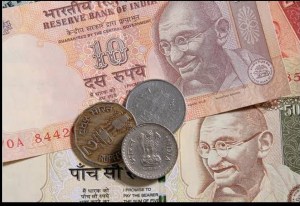
The Indian rupee refers to India’s national currency and is represented by ISO code INR. It is regulated by the Reserve Bank of India (RBI), the country’s central bank. The Indian rupee is named after the “rupiya,” a silver coin issued for the first time in the 16th century.

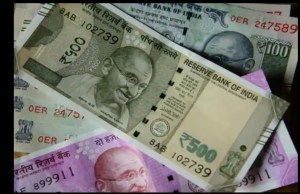
India’s economy used to be cash-based, resulting in the circulation of counterfeit currencies by those involved in criminal activity. Over the years, RBI was compelled to change and upgrade INR notes with new security features. Generally, large denominations are the most forged bills. In 2016, the Government of India declared the demonetization of all notes in denominations of 500 INR and 1000 INR of the Mahatma Gandhi Set.

At the beginning of 1830, the English exerted a significant influence in India. The Coinage Act of 1835 made a standardized coinage possible in the country. The new version of the coins featured the effigy of William IV on the original side and the denomination on the reverse, written in Persian and English.

On the other hand, coins issued after 1840 bore a portrait of Queen Victoria. In 1862, the first coin issued under the crown was authorized. The Coinage Act of India, which regulates the establishment of mints and the issuance of coins, was passed in 1906 and is still in force today.

Historically, the rupiya was a silver coin. It resulted in significant implications in the 19th century when the world’s largest countries were under the gold standard. The discovery of huge volumes of silver in the European colonies and the U.S. sparked the panic of 1873. It led to the devaluation of silver compared to gold, resulting in a fall in India’s standard currency value.

The condition during the Second World War led to Quaternary Silver Alloy replacing the regular rupee. The coins produced in 1940 were substituted in 1947 by pure nickel coins. India gained its independence on August 15, 1947. However, the prevailing currency remained frozen until January 26, 1950, when the country adopted its own constitution. In 1957, India introduced a decimal currency scheme where 100 paise formed a rupee.

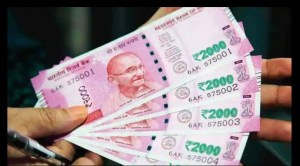
In 2016, the government decided to demonetize 500 and 100 INR notes, arguing that it would curb the underground economy, rendering it even more difficult to use illicit and counterfeit cash to finance crime and terrorism. Following the move, the RBI declared the issuance of new notes of denominations 500 and 2000 INR in a new Mahatma Gandhi series.

As of April 2019, the latest circulated notes included denominations of 5 INR,10 INR, 20 INR, 50 INR, and 100 INR notes of the Mahatma Gandhi Old Series and the 10 INR, 20 INR, 50 INR, 100 INR, 200 INR, 500 INR and 2000 INR notes of the Mahatma Gandhi New Series. The new series of INR notes contains various micro-printed texts, such as “Bharata” and “RBI,” in different locations.

Officially, INR’s exchange rates are determined by the market. However, the RBI aggressively deals in the USD/INR currency market to influence the exchange rate. As a result, the currency system in place for INR compared to the USD is a regulated exchange rate. It is often called a “managed float.”

Other exchange rates, such as INR/JPY and EUR/INR, are subject to fluctuations characteristic of floating exchange rates. As a result, it generates arbitrage opportunities against the exchange rates.


Successive governments through RBI prefer not to pursue a strategy of pegging the INR to a particular foreign currency at a specific exchange rate. RBI’s interference in currency markets is primarily intended to make sure that the exchange rate volatility is low.


Mountains- A history (Part-2)- Tectonic plates

Photo by ROMAN ODINTSOV on Pexels.com

Now, before going any further with our mountains, let us first see the various types of interactions possible between our 2 types of tectonic plates- The Oceanic crust and the Continental crust: The 3 basic interactions are converging boundaries, diverging boundaries and transform boundaries.

  • Converging- It is defined as the two plates moving towards each other, colliding in the process. Now, there are 3 possibilities-
  1. Continental-continental collision- Here, two continental landmasses( eg.- The North American plate or the Eurasian plate or collision of Australia, South America and New Zealand (It formed the Great Australian Dividing range)) collide and the two plates fold over one another and lead to the formation of fold mountains. Try using a paper bringing it closer from the opposite ends. The raised structure represents the fold mountains. They have no volcanic activity (though earthquakes are possible). Examples are the Urals, the Atlas, The Rockies, the Alps, the Himalayas
  2. Oceanic- Oceanic Collision- In these types of collision, the heavier oceanic plate subducts under the lighter oceanic plate(forming trenches- eg. Mariana Trench). Due to subduction, it reaches the area of high pressure and temperature in the mantle and thus melts converting to magma. This magma later rises and when it finds an opening (like the one created by the diverging limbs) in the oceanic crust, it comes out. It, hence, forms oceanic volcanoes, ridges and later volcanic islands like those of Indonesia and the Phillipines.
  3. Continental Oceanic Collision- When a continental and an oceanic plate collide, it leads to the formation of either fold mountains(Rockies) or trenches(Philippines Trench) or both(Andes and the Peru- Chile Trench).
  • Diverging- When two plates or landmasses move away from each other ,in the opposite directions, it is known as diverging. Even here, there are 2 possibilities-
  1. Continental continental diversion- When two continental plates move away from each other, it leads to the formation of rift valleys and plateaus. Examples are- The east African rift valley (formed due to the drifting apart of Arabian peninsular plate from African plate- they were connected millions of years ago).
  2. Oceanic oceanic diversion- It occurs when two oceanic plates move away from each other, creating a ridge in its wake. The Atlantic ocean is divides by a ridge known as the Mid oceanic ridge (named so because it passes through the middle of Atlantic ocean). Here, the plate boundaries of Africa, Eurasia, North America , South America diverge from each other. The Pacific and the Indian ocean are the other two oceans that have ridges.
  • Transform – When one tectonic plate moves past another, it forms transform plate boundary. These plate movements most commonly produce earthquakes as during movements the plates experience friction and intermolecular force of attraction due to which one plate might find itself bounded to another plate. Then, when the plates move past one another it requires a lot of energy and produces heat and waves. Example- the boundary between Pacific plate and North American plate in Western California.

Now, that we know about tectonic plates, studying the formation of mountains becomes a lot easier. Stay tuned for the 3rd part where we will look into the formation of various mountains and the tectonic plates and movements involved . Till then, take care (a smiley emoji).

Gender Identity and Gender Roles.

Gender roles in society means how we’re expected to act, speak, dress, groom, and conduct ourselves based upon our assigned sex. For example, girls and women are generally expected to dress in typically feminine ways and be polite, accommodating, and nurturing. Men are generally expected to be strong, aggressive, and bold.

Every society, ethnic group, and culture has gender role expectations, but they can be very different from group to group. They can also change in the same society over time. For example, pink used to be considered a masculine color in the U.S. while blue was considered feminine.

How do gender stereotypes affect people?

A stereotype is a widely accepted judgment or bias about a person or group — even though it’s overly simplified and not always accurate. Stereotypes about gender can cause unequal and unfair treatment because of a person’s gender. This is called sexism.

There are four basic kinds of gender stereotypes:

  • Personality traits — For example, women are often expected to be accommodating and emotional, while men are usually expected to be self-confident and aggressive.
  • Domestic behaviors — For example, some people expect that women will take care of the children, cook, and clean the home, while men take care of finances, work on the car, and do the home repairs.
  • Occupations — Some people are quick to assume that teachers and nurses are women, and that pilots, doctors, and engineers are men.
  • Physical appearance — For example, women are expected to be thin and graceful, while men are expected to be tall and muscular. Men and women are also expected to dress and groom in ways that are stereotypical to their gender (men wearing pants and short hairstyles, women wearing dresses and make-up.

Hyperfemininity is the exaggeration of stereotyped behavior that’s believed to be feminine. Hyperfeminine folks exaggerate the qualities they believe to be feminine. This may include being passive, naive, sexually inexperienced, soft, flirtatious, graceful, nurturing, and accepting.

Hypermasculinity is the exaggeration of stereotyped behavior that’s believed to be masculine. Hypermasculine folks exaggerate the qualities they believe to be masculine. They believe they’re supposed to compete with other men and dominate feminine folks by being aggressive, worldly, sexually experienced, insensitive, physically imposing, ambitious, and demanding.

These exaggerated gender stereotypes can make relationships between people difficult. Hyperfeminine folks are more likely to endure physical and emotional abuse from their partners. Hypermasculine folks are more likely to be physically and emotionally abusive to their partners.

Extreme gender stereotypes are harmful because they don’t allow people to fully express themselves and their emotions.  For example, it’s harmful to masculine folks to feel that they’re not allowed to cry or express sensitive emotions. And it’s harmful to feminine folks to feel that they’re not allowed to be independent, smart or assertive. Breaking down gender stereotypes allows everyone to be their best selves.

Economy of Ireland.

Introduction
In this research paper we are going to be discussing about the micro-economic issues of Ireland, The economy of Ireland is a highly developed knowledge economy; a knowledge economy focuses on the production of goods and services induced by knowledge intensive activities. In the case of Ireland , it is focused on services in high-technology , life sciences, financial services and agriculture including agrifood . Ireland is also an open economy (6th on the Index of Economic Freedom), an open economy means that the country not only posses domestic actors but is also engaged in trade of products in the form of managerial exchange and technology transfers .  In the global GDP per capita tables, Ireland ranks 4th of 186 in the IMF (international monetary fund) , table and 4th of 187 in the World Bank rankings. Foreign-owned multinationals make up a significant percentage of Ireland’s GDP. The “multinational tax schemes” used by some of these multinational firms contribute to a distortion in Ireland’s economic statistics; including GNI, GNP and GDP.
Despite the two jurisdictions using two different currencies (the euro and pound sterling), a growing amount of commercial activity is carried out. This has been possible by the two jurisdiction’s shared membership of the European Union, business communities and policymakers are all for the creation of an “all-Ireland economy” to take advantage of cost and boost competitiveness
There are two multi-city regions on the island of Ireland:

Dublin – Belfast corridor
Cork – limerick – Galway corridor

Current micro-economic status of Ireland
Since the end of the EU-IMF in 2013, Ireland has experienced steady economic growth, and has proven itself to be the fastest growing European economy. In 2019, the Irish economy continued to grow at a rapid pace, but experienced a slowdown ahead of the UK’s departure from the Euro zone. It experienced a 8.3% increase of GDP in 2018, then a growth slowdown of 5.5% of GDP in 2019 according to the IMF. The national economy has been supported by strong domestic demand and by the activities of multinational companies operating in the country. According to the updated International monetary fund reports from 14th April 2020, due to the outbreak of the COVID-19, GDP growth is expected to fall to -6.8% in 2020 and pick up to 6.3 %, subject to the post-pandemic global economy recovery, this might also be the conclusion of post-Brexit transition period.
The IMF expects the unemployment trend to be heavily affected by the negative economic impact of the COVID-19 pandemic, the rate being currently estimated to increase to 12.1% in 2020 and decrease slightly to 7.9% in 2021.

Types of social movements.

There is no single, standard typology of social developments. As different researchers center around various parts of developments, various plans of order arise. Henceforth any friendly development might be portrayed as far as a few measurements.

Numerous endeavors at order focus on the goal of the development. The social foundation in or through which social change is to be achieved gives one premise to sorting social developments as political, strict, monetary, instructive, and such. It could be contended that all developments will in general be either political or strict in character, contingent on whether their technique targets changing political designs or the virtues of people.

An ordinarily utilized yet exceptionally abstract qualification is that among “change” and “progressive” developments. Such a qualification infers that a change development advocates a change that will save the current qualities however will give further developed method for carrying out them. The progressive development, then again, is viewed as pushing substitution of existing qualities. Perpetually, in any case, the individuals from a purported progressive development demand that it is they who value the genuine upsides of the general public and that it is the adversaries who characterize the development as progressive and incendiary of essential, customary qualities.

A few endeavors to portray developments include the course and the pace of progress pushed. Modifiers like revolutionary, traditionalist, moderate, liberal, and moderate are regularly utilized for such purposes. In this setting the assignments “progressive” and “change” are frequently utilized in a fairly unexpected sense in comparison to that portrayed above, with the ramifications that a progressive development advocates fast, steep change while a change development works for moderate, transformative change.

The American humanist Lewis M. Killian progressed still another typology dependent on the bearing of the change supported or went against. A traditionalist development advocates the rebuilding of a past condition of get-togethers, while a reformist development contends for another social game plan. A moderate development goes against the progressions proposed by different developments, or those appearing to create through social float, and promoters conservation of existing qualities and standards.

Killian and the American analyst Ralph H. Turner contended that it is helpful now and again to arrange social developments based on their public definition, the personality of the resistance evoked, and the method for activity accessible to the development. This plan is intended to kill the abstract assessment of objectives intrinsic in such classes as reformist and progressive. A development that doesn’t seem to undermine the qualities or interests of any critical portion of society is freely characterized as decent. In case there is no contending development supporting a similar goal, it is additionally nonfactional. The good nonfactional development should fight principally with the issues of lack of engagement and token help, yet it approaches genuine method for advancing its qualities. A decent factional development should battle with contending developments pushing a similar general target yet additionally approaches real method for expanding its impact. A development that seems to compromise the upsides of incredible and critical vested parties inside the general public is freely characterized as progressive and experiences savage concealment. Thus, it is denied admittance to real method for advancing its program. Another kind of development is characterized as neither good nor risky yet as exceptional; this sort, seen as odd yet innocuous, experiences disparage and has restricted admittance to genuine means.

Social developments may likewise be ordered based on the overall person of their methodology and strategies; for example, regardless of whether they are authentic or underground. The well known qualification among extremist and moderate developments mirrors this kind of arrangement. An undeniable contrast between kinds of developments relies upon their dependence upon rough or peaceful strategies. However, a peaceful development may likewise be characterized as progressive or revolutionary since it acknowledges common defiance, as opposed to legitimate or parliamentary moving, as a significant element of its procedure. It ought to be added that the qualification among vicious and peaceful developments is a relative one in light of the fact that a development might move quickly from one to the next as it creates.

Electrical world: How Electricity changes the way and view of human society

  •                     

Electricity which is used as a power resource or fuel from years is now showing us a picture of a world where literally everything is based upon electricity and its effects, And it’s not wrong to say that this picture is starts taking shape from many small companies to unicorn startup everyone is in race of electrical era which is quite good, and also challenging because its not initially easy to for us to adapt this change and meet such a  tremendous consumption of electricity but some of the companies are already shows us the revolutionary projects which blows up our hearts like, Tesla.

I think every body is aware of the revolution the it regains in the world of electricity TESLA is one the leading company that has made very successful electrical cars for long range distances with some modern technology and features. And this is not only up to the electrical cars which leads us to the second example there are companies  that works on the electrical drones which is also a major part of todays world. Similarly there are a number of companies which take the uses of electricity beyond the levels.

  ELECRICAL COMSUPTION AND ITS FORMATION

If we thing about the world where we see our future in electricity then it is also very important to look some of the futuristic way for the production of electricity. So to meet a good consumption of electricity we cannot rely on the few way of its production that’s why many scientists from the various parts of world are trying to discover some new and advance methods to produce electricity but as per the rising number of humans in the world the production is not only the way to meet the consumption bar, the another and the most important thing is humans have to make a mindset to conserve the electricity, And we have to do this from today not only for us but also for the upcoming humans society, because the process of saving the energy is much cheaper and easier rather process it .

ADVANTAGES OF THIS ELECTRICAL FUTURE

There are a number of advantages of such a electrical future, first we use most of the vehicle and machines which are pollution free which is  not good for us but also for our society , if we talk about electrical cars than, electric cars run on electrically powered engines, and hence there is no need to lubricate the engines, anything related to the combustion engine or a ton of maintenance tasks that are usually associated with a gas engine. And if we look at some other machines which plays an important role in your life such as satellite which helps us to collect basic to advance data may also contain hybrid engines which uses electricity to run and for that we use the solar power, which is also a example that electrical energy and easier to interchange with other source of energy.

DISADVANTAGES OF THIS ELECTRICAL FUTURE

Although the evidence of the positives has become very clear, there are also some downsides that needs to consider so if we talk in case of electrical cars than some most possible disadvantages are:-

1.Recharge Points

2. Electric fueling stations are still in the development stages. Not a lot of places you go to on a daily basis will have electric fueling stations for your vehicle, meaning that if you’re on a long trip or decide to visit family in a rural area and run out of charge, it may be harder to find a charging station. You may be stuck where you are.

However, until charging stations are more widespread, be sure to have a charging station maps where you live and where you frequently go so that you’ll be able to charge your new EV when you need to.

3. If we move to such a world where we fully depend upon electricity then a short power cut can send us in trouble. People have to face difficulties in the areas who suffering from lack of electric power. So whatever the future is we have to remember a think that in the race or era where technology in its peak we also have to save this planet for upcoming generations.

Cyber Crimes and Privacy.

Words and expressions that barely existed 10 years prior are presently essential for our regular language, as hoodlums utilize new advancements to submit cyberattacks against governments, organizations and people. These violations know no boundaries, either physical or virtual, cause genuine mischief and posture genuine dangers to casualties around the world.

Cybercrime is advancing at an amazingly high speed, with recent fads continually arising. Cybercriminals are turning out to be more spry, abusing new advances with lightning speed, fitting their assaults utilizing new strategies, and helping out one another in manners we have not seen previously. Complex criminal organizations work across the world, planning multifaceted assaults surprisingly fast. Police should in this manner stay up with new advancements, to comprehend the conceivable outcomes they make for hoodlums and how they can be utilized as apparatuses for battling cybercrime.

There are numerous protection concerns encompassing Cybercrime when classified data is caught or revealed, legally or something else. Globally, both legislative and non-state entertainers take part in cybercrimes, including secret activities, monetary burglary, and other cross-line wrongdoings. Cybercrimes crossing worldwide boundaries and including the activities of no less than one country state are now and then alluded to as cyberwarfare. Warren Buffet portrays Cybercrime as the “number one issue with mankind.Computer extortion is any untrustworthy distortion of reality expected to let another to do or shun accomplishing something which causes misfortune. In this specific circumstance, the misrepresentation will bring about acquiring an advantage by:

Changing in an unapproved way. This requires minimal specialized ability and is a typical type of robbery by workers modifying the information before section or entering bogus information, or by entering unapproved directions or utilizing unapproved measures; Changing, obliterating, stifling, or taking yield, as a rule to hide unapproved exchanges. This is hard to distinguish , Changing or erasing put away information Government authorities and data innovation security experts have archived a huge expansion in Internet issues and worker examines since mid 2001. There is a developing worry among government offices like the Federal Bureau of Investigations (FBI) and the Central Intelligence Agency (CIA) that such interruptions are important for a coordinated exertion by cyberterrorist unfamiliar insight administrations, or different gatherings to plan potential security openings in basic frameworks. A cyberterrorist is somebody who threatens or forces an administration or an association to propel their political or social destinations by dispatching a PC based assault against computers, organizations, or the data put away on them.

Cyberterrorism, as a rule, can be characterized as a demonstration of psychological warfare submitted using the internet or PC assets (Parker 1983). Thusly, a basic publicity piece on the Internet that there will be bomb assaults during special times of year can be viewed as cyberterrorism. There are additionally hacking exercises coordinated towards people, families, coordinated by bunches inside networks, having a tendency to cause dread among individuals, exhibit power, gathering data important for demolishing people groups’ lives, burglaries, extorting, and so on.

Man Does Not Live By Bread Alone

This is a Biblical quotation. The full quotation reads: “Man shall not live by bread alone; but by every word that proceedeth of the mouth of God”. Food is necessary to exist but mere existence cannot be the be-all and end-all of life. We eat in order to live but life is a means and not an end itself. Bread is like a staff and support to help us reach our destination. Man does not live simply to eat and drink. Eat, drink and be merry cannot be the aim and objective of life. We share the need of food and shelter with all other animals. But man is the crown of creation. God has created man in his own image. His intellectual and spiritual capacities and capabilities are limitless. There cannot be more majestic, wonderful, awe-inspiring and valuable thing than man in the whole creation. He signifies the ultimate in creation. Then, how can he be satisfied with mere bread?

Man is an intellectual being. His intelligence urges him to probe the mysteries of nature, To conquer the elements, reach to the moon and planets and go beyond them. It wants to unravel the mystery of life, death and creation. It inspires and stimulates him to evolve higher and higher and still higher till perfection is achieved. His Hunger for knowledge and thirst for enlightenment know no bounds. Even the sky is not the limit for him. His spiritual, ethical, aesthetic, social, cultural and technological urges are two strong to be resisted. He wants to create wonderful, fantastic and very beautiful things. He dreams of making a perfect example. Satisfaction, in ordinary sense, is not his cup of tea. It belongs to animals and beasts.

Had he being satisfied with the gratification of his senses alone, there would not have been such great religions, literature, piece of wonderful art, cultures ever reaching to greater heights and so wonderful technological, scientific and industrial advancements. He could have then not planted his foot on the moon or probed Mars and sent flying machines far beyond the planets. Today he is master of all that he surveys only because of these deep urges to reveal the secrets of nature and spirit. No doubt, man was at first a savage animal like all other animals. Then he lived in caves, under trees, covered himself with barks and leaves and satisfied his hunger by eating flesh of the animals. But is was just a beginning Of the long and triumphant march- a march from savagery to civilization, culture and great spiritual heights.

Obviously, Bread is important but not all important. Bread sustains us, but the purpose of life is far higher, nobler, subtle, refined and wonderful. Life becomes worthy of its name when it is dedicated to nobler aims, activities, achievements and struggles. Man is by nature a dreamer, an idealist and prophet. He wants to translate his dreams into a reality. He does not treat life as an empty dream. It is not a walking shadow or a poor player signifying nothing. He is ready to lose his life to discover its real meaning, to lace it with a nobler purpose and significance. Life of man anticipates all these and much more. Food, shelter, clothing are a mere Staff and man never wants to turn them into a crutch. He knows the difference between a mere tool and the higher goals it is meant to serve. He can never be satisfied with a good length of life but believes in quality, in its meaningfulness and which is why there is so much struggle, efforts, exertion and sweat. Man search for the truth, the ultimate reality leads him to higher and higher steps of evolution. He knows how to live but still better he knows how to die. He eats to live but never lives to eat.

MAGIC IN A CUP OF TEA!!!

Every morning won’t be complete without a cup tea right? Many people can’t do their work without a cup pf tea. Tea gives us refreshness and make us active. Though many like coffee, there are people who love tea too. The reason for me to talk about tea is nothing but today’s topic revolves around tea. Let me tell you an essay written by Eric Arthur Blair about a cup of tea.

Eric Arthur Blair, known by his pename George Orwell, was an English Novelist, journalist and a critic. He opposed totalitarianism and supported democratic socialism. He is best known for the Allegorical novella ‘Animal farm” and the dystopian novel “Nineteen Eighty Four”. He wrote an essay about ‘A nice cup of tea’ and it was published in London Evening Standards in 1946. It is about the discussion of the art of making tea. He states ten rules to be followed while making tea. Let me tell you about his essay.

Eric Arthur Blair (George Orwell)

The author said that there are no cookery books that has the preparation of tea as a recepie. Countries like Eire, NewZealand and Australia which has tea as a part of civilization. He says that Chinese tea has virtues but there is no much stimulation in it. So the author prefers Indian or Ceylonese tea.

  • The first rule is that one should prefer Indian or Ceylonese tea. One does not feel wiser or more optimistic after drinking it. ‘A nice cup of tea’ literally means Indian tea.
  • Second rule is that tea should be made in small quantities in a tea pot. The teapot should be made of China or earthenware. Silver and birtannia ware tea pots produce inferior tea and enamel parts are worse. In the army, the tea is made in a big cauldron, tastes of grease and whitewash.
  • Thirdly, the pot should be warmed beforehand rather than placing it with water in it.
  • Fourthly, the tea should be strong. He states that one strong cup of tea is better than twenty weak ones. All tea lovers not only love a strong tea but like it a little longer with each year that passes.
  • Fifthly, the tea should be put straight into the pot. Don’t use strainers or muslin bags to imprison the tea. One can swallow tea-leaves in considerable quantities without ill effect and if the tea is not loose in the pot it never infuses properly.
  • Sixthly, one should take teapot to the kettle and no other way about. The water should be boiling at the time, one should keep it on the flame while pouring it.
  • Seventhly, after making the tea, one should stir it, or better give it a good shake allowing the leaves to settle.
  • Eighthly, one should drink it out in a cylindrical type of cup rather than a shallow type of cup. The shallow cup will have the tea half cold before one starts, drinking it.
  • Ninthly, one should pour the cream off the milk before using it for tea. Milk with cream gives a sickly taste.
  • Tenthly, one should pour tea into the cup first and then add milk. By pouring the tea first, one can regulate the amount of milk to be added to the tea. He also says that one should drink tea without adding sugar. Adding sugar, destroys the taste of the tea. He also asks the question to the tea lovers, How can you call yourself a tea lover if you destroy the flavour of your tea by adding sugar into it? He also says that adding sugar is similar to drinking a hot water.

The points said by him are quite controversiable. But try to drink a cup of tea without sugar for a fortnight, and you will never ruin your tea by adding sugar to it. Think about yourself guys. This essay is quite interesting. I like this essay and how about you guys?

Read more;

BUILDING A GOOD RELATIONSHIP WITH YOUR COLLEAGUES

Building Good Work Relationships:

     "Making Work  Enjoyable and Productive"

How good are the relationships that you have with your colleagues?

According to the Gallup organization, people who have a best friend at work are seven times more likely to be engaged in their jobs. But it doesn’t have to be a “BFF.” Gallup found that people who simply have a good friend in the workplace are more likely to be happy. What’s more, good work relationships are linked to better customer engagement and increased profit.

In this article, you’ll learn why it’s important to have good working relationships, how to build and maintain them, and even find ways to work with people that you don’t get on with.

Why Have Good Work Relationships?

Human beings are naturally social creatures. And when you consider that we spend one-third of our lives at work, it’s clear that good relationships with colleagues will make our jobs more enjoyable.

The more comfortable co-workers are around one other, the more confident they’ll feel voicing opinions, brainstorming, and going along with new ideas, for example. This level of teamwork is essential to embrace change, create, and innovate. And when people see the successes of working together in this way, group morale and productivity soars.

Good work relationships also give you freedom. Instead of spending time and energy dealing with negative relationships, you can, instead, focus on opportunities – from winning new business to focusing on personal development.

And having a strong professional circle will also help you to develop your career, opening up opportunities that otherwise might pass you by.

Defining a Good Relationship:

A good work relationship requires trust, respect, self-awareness, inclusion, and open communication. Let’s explore each of these characteristics.

Trust: when you trust your team members, you can be open and honest in your thoughts and actions. And you don’t have to waste time or energy “watching your back.”

Respect: teams working together with mutual respect value one another’s input, and find solutions based on collective insight, wisdom, and creativity.

Self-awareness: This means taking responsibility for your words and actions, and not letting your own negative emotions impact the people around you.

Inclusion: don’t just accept diverse people and opinions, but welcome them! For instance, when your colleagues offer different opinions from yours, factor their insights and perspective – or “cultural add” – into your decision-making.

Open communication: all good relationships depend on open, honest communication. Whether you’re sending emails or IMs, or meeting face-to-face or on video calls, the more effectively you communicate with those around you, the better you’ll connect.

Which Work Relationships Are Important?

Although you should try to build and maintain good working relationships with everyone, some deserve extra attention. Like the relationship between a boss and employee. Gallup found that a manager alone can account for up to 70 percent of a team’s engagement.

Regular one-on-ones let managers build relationships with employees. At these catch ups, you can show how an individual’s work fits with the organization’s “bigger picture,” understand their strengths, and help them identify areas to develop.

You can also explore managing upwards, to analyze how your own manager prefers to work, anticipate their needs, and adapt your approach for a smoother relationship.

You’ll also benefit from developing good work relationships with key stakeholders. These are the people who have a stake in your success or failure, such as customers, suppliers, and your team. Forming a bond with them will help you to ensure that your projects – and career – stay on track. A Stakeholder Analysis helps you to identify who these people are so you can devote time to building these partnerships.

How to Build Good Work Relationships:

As you’ll know from your oldest friends, building close connections with people can take time. But there are also steps you can take today to get on better with your colleagues.

1.Identify Your Relationship Needs:

Do you know what you need from others? And do you know what they need from you? Understanding these needs can be instrumental in building better relationships.

2.Develop Your People Skills:

Good relationships start with good people skills. Take our quiz How Good Are Your People Skills? to test how well you collaborate, communicate, and deal with conflict. The quiz will also point you toward useful tools to improve any weak areas.

3.Focus on Your EI:

Emotional intelligence (EI) is your ability to recognize your own emotions, and better understand what they’re telling you. By developing your EI, you’ll become more adept at identifying and handling the emotions and needs of others.

4.Practice Mindful Listening:

People respond better to those who truly listen to what they have to say. By practicing mindful listening , you’ll talk less and understand more. And you’ll quickly become known as trustworthy.

5.Schedule Time to Build Relationships:

If possible, you could ask a colleague out for a quick cup of coffee. Or give a “one-minute kindness” by commenting on a co-worker’s LinkedIn post you enjoyed reading. These little interactions take time but lay the groundwork for strong relationships.

6.Manage Your Boundaries:

Make time, but not too much! Sometimes, a work relationship can impair productivity, especially when a friend or colleague begins to monopolize your time. It’s important to set your boundaries and manage how much time you devote to social interactions at work.

7.Appreciate Others:

Everyone, from your boss to the intern, wants to feel that their work is appreciated. So, genuinely compliment the people around you when they do something well. Praise and recognition will open the door to great work relationships.

8.Be Positive:

Focus on being positive. Positivity is contagious and people gravitate to those that make them feel good.

9.Avoid Gossiping:

Office politics and gossip can ruin workplace relationships. If you’re experiencing conflict with someone in your group, talk to them directly about the problem. Gossiping with other colleagues will only exacerbate the situation, accelerating mistrust and animosity.

Handling Difficult Work Relationships:

Sometimes, you’ll have to work with someone you don’t get on with. With the rise of virtual workspaces, many colleagues are benefiting from some time apart. But even communicating virtually can cause misunderstandings or tension.

While it’s natural to avoid people who cause friction, it’s not always feasible or for the good of your team. So, here are a few tactics to mend or maintain a professional relationship.

1.Reflect on your positive history: If a good relationship has taken a turn for the worse after an incident, research shows that reflecting on positive experiences with a co-worker can strengthen a broken bond. Another option is to use an impartial mediator to bridge the divide and find a quick resolution.

2.Look to yourself: When we feel negative about someone, we can become impatient, get angry, and demotivate others. And others can direct those negative behaviors back at us. The Betari Box can help to break this cycle of conflict, stopping these harmful attitudes and behaviors in their tracks.

3.Find mutually beneficial goals: Have you considered that a difficult relationship might be due to a power imbalance? You can use professor John Eldred’s power strategies model to identify any conflicting goals or power imbalances, and devise a method to communicate better and improve your relationship.