'Netaji'

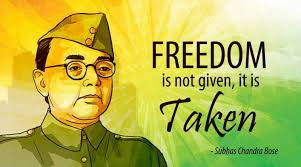
Subhash Chandra Bose is fondly remembered as one of the greatest freedom fighters of India, and popularly known by the name of ‘Netaji’ (Respected Leader). He was strongly influenced by Swami Vivekananda’s teachings, and also believed that the Bhagavad Gita was a great source of inspiration for the struggle against the British. Bose was an Indian nationalist, and a prominent figure of the Indian independence movement. The leader spearheaded the revolutionary Indian National Army during World War II. He always pitched for complete and unconditional independence of India from the British Rule.
S. C. Bose was a twice-elected President of the Indian National Congress (INC), founder and President of the All India Forward Bloc, and founder and Head of State of the Provisional Government of Free India, which he led alongside the Indian National Army from 1943 until his demise in 1945. Spoken as a part of a motivational speech for the Indian National Army at a rally of Indians in Burma in July 1944, Bose’s most famous slogan was “Give me blood, and I shall give you freedom!”
Early Life of S. C. Bose

Subhash Chandra Bose, popularly known by the name of ‘Netaji’ (Respected Leader), was born to Prabhavati Devi and Janakinath Bose on January 23 in 1897 in Odisha. He took admission into the Protestant European School which was run by the Baptist Mission. He did B A in Philosophy from the Presidency College in Calcutta, and was later expelled for assaulting Professor for the latter’s anti-India remarks. After the incident, Bose was considered as one of the rebel-Indians. During his college days, he gradually developed nationalistic temperament, and became socially and politically aware. He found Britishers’ insults to Indians in public places as offensive. In December 1921, Bose was arrested and imprisoned for organising a boycott of the celebrations to mark the Prince of Wales’s visit to India. Bose left for England in 1919 to appear for Indian Civil Service Examination. 

Political Life of Subhash Chandra Bose

After a few years, Bose returned to India as he resigned from his civil service job in April 1921, and later joined the Indian National Congress to fight for the independence of India. Subhash Chandra Bose started the newspaper known as ‘Swaraj’, and took charge of publicity for the Bengal Provincial Congress Committee. In 1923, Bose was elected as the President of All India Youth Congress and as the Secretary of Bengal State Congress. He was also editor of the newspaper called ‘Forward’, founded by his mentor Chittaranjan Das, and he served as the CEO of the Calcutta Municipal Corporation. By December 1927, Bose was appointed as the General Secretary of the INC. In November 1934, he wrote the first part of his book ‘The Indian Struggle’, which was about nationalism and India’s independence movement during 1920–1934, but the British government banned the book. By 1938, he agreed to accept nomination as the Congress President, and presided over the Haripur session. However, due to his strong differences with Mahatma Gandhi and Jawaharlal Nehru, he resigned in 1939. 

Subhash Chandra Bose’s Role in India’s Independence

S C Bose was always in favour of armed revolution in order to expel the Britishers from India. During the time when the Second World War took place, Bose revived the Indian National Army (INA) with the help of the Imperial Japanese Army, and also founded an Indian Radio Station called ‘Azad Hind Radio’. A few years later, he travelled to Japan, where more soldiers and civilians joined the INA. Even when faced with military reverses, Bose was able to maintain support for the Azad Hind movement. In Europe, S C Bose sought help from Adolf Hitler and Benito Mussolini for the liberation of India. Bose had struck an alliance with Japan and Germany as he felt that his presence in the East would help India in the freedom struggle against the British. 

Subhash Chandra Bose’s famous quotes

S C Bose’s most famous slogans/quotes are “Give me blood and I will give you freedom”, Dilli Chalo (“On to Delhi)!” This was the call he used to give to the INA army to encourage them. “Jai Hind”, or, “Glory to India!” was another slogan used by him, and later adopted by the Government of India and the Indian Armed Forces. Another slogan coined by him was “Ittefaq, Etemad, Qurbani” (Urdu for “Unity, Agreement, Sacrifice”). INA also used the slogan “Inquilab Zindabad”, which was coined by Maulana Hasrat Mohani. In July 1944, in a speech broadcast by the Azad Hind Radio from Singapore, Bose addressed Mahatma Gandhi as the “Father of the Nation”. 

Death of Subhash Chandra Bose

Subhash Chandra Bose is believed to have died in a plane crash in Taiwan in 1945, but his body was never found. There have been several theories regarding his disappearance. The government had set up a number of committees to investigate the case and come out with the truth.

Bhimrao Ramji Ambedkar

Bhimrao Ramji Ambedkar, (born April 14, 1891, Mhow, India—died December 6, 1956, New Delhi), leader of the Dalits (Scheduled Castes; formerly called untouchables) and law minister of the government of India (1947–51).

Born of a Dalit Mahar family of western India, he was as a boy humiliated by his high-caste schoolfellows. His father was an officer in the Indian army. Awarded a scholarship by the Gaekwar (ruler) of Baroda (now Vadodara), he studied at universities in the United States, Britain, and Germany. He entered the Baroda Public Service at the Gaekwar’s request, but, again ill-treated by his high-caste colleagues, he turned to legal practice and to teaching. He soon established his leadership among Dalits, founded several journals on their behalf, and succeeded in obtaining special representation for them in the legislative councils of the government. Contesting Mahatma Gandhi’s claim to speak for Dalits (or Harijans, as Gandhi called them), he wrote What Congress and Gandhi Have Done to the Untouchables (1945).

In 1947 Ambedkar became the law minister of the government of India. He took a leading part in the framing of the Indian constitution, outlawing discrimination against untouchables, and skillfully helped to steer it through the assembly. He resigned in 1951, disappointed at his lack of influence in the government. In October 1956, in despair because of the perpetuation of untouchability in Hindu doctrine, he renounced Hinduism and became a Buddhist, together with about 200,000 fellow Dalits, at a ceremony in Nagpur. Ambedkar’s book The Buddha and His Dhamma appeared posthumously in 1957, and it was republished as The Buddha and His Dhamma: A Critical Edition in 2011, edited, introduced, and annotated by Aakash Singh Rathore and Ajay Verma.

Hardware :

🔹️A computer is a machine that can be programmed to accept data (input), and process it into useful information (output).

🔹️It also stores data for later reuse (storage). The processing is performed by the hardware.

🔹️The computer hardware responsible for computing are mainly classified as follows:

🌟Input device
🌟CPU
🌟Main memory
🌟Secondary memory
🌟Output devices

Input devices allows the user to enter the program and data and send it to the processing unit. The common input devices are keyboard, mouse and scanners.

The processor ,more formally known as thr central processing unit (CPU), has the electronic circuitry that manipulates input data into the information as required. The central processing unit actually executes computer instructions.

Memory from which the CPU fetches the instructions and data is called main memory. It is also called as primary memory and is volatile in nature.

Output devices show the processed data – information – thr result of processing. The devices are normally a monitor and printers.

Storage usually means secondary storage, which stores data and programs. Here the data and programs are permanently stored for future use.

The hardware devices attached to the computer are called peripheral equipment. Peripheral equipment includes all input, output and secondary storage devices.

The latest autonomous drone technology and its capabilities

The scout drone 137

American Robotics’ autonomous drone has been certified by the Federal Aviation Administration, making it the first federally licensed drone on the market.

Drones that operate independently are a significant technical advancement. Not for domestic use because safety is still an issue, but this could boost productivity in a variety of industries because it’s nearly impossible to have someone operate multiple drones from day to night all of the time.

The autonomous drone is a fully integrated system that automates everything from landing to charging to data processing, making it an all-in-one solution.

Scout, the AI-powered autonomous drone, Soutbase, the weatherproof charging, and edge computing station, and Scoutview, the fleet management, and analytics software, are the solution’s three key components.

The Scout base is where the Scout is charged and data is processed. Scoutview allows businesses to monitor and communicate with drones without the need for a human operator.

The drone is equipped with visual, multispectral, and infrared cameras, making data collection quick and straightforward. The acquired data may be accessed instantaneously in real-time. The Scout systems will be able to perform missions independently after the installation is complete, collecting, processing, and analyzing data.

Demands for Autonomous Drones and the Market

Drones that can be used for commercial purposes have a huge market. Its TAM is expected to be worth 100 billion dollars (total addressable market). Drones might thus be utilized in a variety of areas, including industry, agriculture, and defense.

It might be used in industrial markets for asset inspection, tracking, security, and safety. It may be used for weed identification, disease detection, plant counting, research, harvest planning, and harvest timing in the agricultural market.

You’re in luck if you’re seeking surveillance and reconnaissance in the defense industry! As a consequence, these markets and sectors may use autonomous drones to perform work in broad fields that are difficult to analyze swiftly by people. It also makes data collection easier thanks to its integrated software and solutions.

Ondas has bought the Software Defined Radio platform for Mission Critical IoT applications. To manage thousands of connected devices over long distances,

Ondas provides a choice of trustworthy and secure broadband networks. With the help of Ondas’ high-bandwidth network, American Robotic’s autonomous drones will be able to send and receive long-range data, with thousands of drones continually gathering and processing high-resolution data.

This, we believe, is the way industrial data will be collected in the future. The combined company can provide the ultimate autonomous drone with unrivaled capabilities that can boost production in a variety of sectors.

ASTEROIDS

Asteroids are small, atmosphere-less rocky objects orbiting the Sun. Here are 10 things that you might not know about these planet-like celestial bodies that can crash into the Earth and create havoc.

10 Things You Need to Know about Asteroids:

  1. They were Created at the Same Time as the Earth:

Many astronomers believe that asteroids are rocky leftovers from the formation of the Solar System 4.6 billion years ago. One theory is that after the Big Bang, dust particles came together to form celestial objects through a process called accretion – smaller objects came together with other small objects, creating larger space rocks. Some of these celestial rocks were able to grow large enough to develop their own gravity and became planets. Many others were held back from getting together by Jupiter’s gravitation force. These became asteroids.

Because they revolve around the Sun like planets do, asteroids are also sometimes called planetoids or minor planets.

  1. Most are Found in One Area:

Of the millions of asteroids that inhabit our solar system, a majority can be found in a region between the orbits of Mars and Jupiter. This region is called the Asteroid Belt.

3.A Very Lonely Area:

Imagining the Asteroid Belt as in the movies – a small strip of space littered with huge rocks intent on mowing down your space ship?

Well, imagine again because the Asteroid Belt is nothing like that. In fact it is a very lonely place for an asteroid. Astronomers estimate that the average distance between two asteroids in the asteroid belt is about 600,000 miles (966,000 km). This is about 2.5 times the distance between the Earth and the Moon. That is a lot of space between two neighboring asteroids!

  1. Not all of Them Reside in the Belt:

While most of the known asteroids live in the Asteroid Belt, there are many that orbit the Sun outside this belt. For example, Trojan Asteroids, named after the Trojan Wars in Greek Mythology, follow the orbits of a planet. Jupiter has two clusters of Trojans following its orbit around the Sun – the one ahead of the planet is called the Greek Camp and the one behind is known as the Trojan Camp.

In 2010, scientists discovered the first Trojan Asteroid, 2010 TK7, that follows the Earth’s orbit.

Asteroids that are pushed close to the Earth’s orbit are known as Near Earth Asteroids.

  1. They Come in Different Sizes:

Asteroids can measure anywhere between a few feet to several hundred miles in diameter. The largest asteroid known to man, Ceres, is about 590 miles (950 km) in diameter.

Astronomers estimate that if all the asteroids in the Solar System were put together, the size of the resulting rock will be much smaller than our Moon!

  1. And Yet, some Asteroids have Moons:

About 150 Asteroids are known today to have one or more moons orbiting them. The most famous of these is Dactyl, a small moon orbiting Ida, an Asteroid Belt asteroid.

7.They can be Classified According to their Composition:

Most Asteroids fall into one of three groups based on their composition: C, S and M types. The composition is determined by how far the asteroid was from the Sun during the time of its formation.

About two-thirds of all asteroids are thought to be C type asteroids. These asteroids are very dark, with an average albedo of about 0.06 and are thought to have a similar composition as the Sun. They can be found in the outer regions of the Asteroid Belt

S type asteroids are considerably brighter with an average albedo of 0.16. These asteroids are usually found in the inner regions of the Asteroid Belt and are composed of iron and magnesuim silicates.

M type asteroids can be found in the middle of the Asteroid Belt and are much brighter than an average albedo of 0.19. These are mostly composed of Iron.

8.This makes Asteroids Attractive to Miners:

Asteroid mining? That is no longer in the realm of science fiction. Asteroids are rich sources of metals like Iron, Platinum and Titanium, metals that humans use daily to build and create things. In addition, scientists believe that water present on the surface of these asteroids could be broken down and used as fuel for space vehicles.

While asteroid mining hasn’t started yet, many companies around the world have started exploring the idea seriously.

9.Close Encounters of the Asteroid Kind:

The Earth’s atmosphere acts as a shield protecting us from meteoroids and other objects that populate space. When a meteoroid enters the atmosphere, it usually burns up before hitting the surface of the Earth. If any part of the meteoroid survives and hits the surface of the Earth, it is called a meteorite.

What are Meteor Showers?

Sometimes however larger space objects collide with the Earth’s atmopshere and impact the surface of the Earth. Scientists have identified about 100 sites on Earth that may have been impacted by a large asteroid or comet.

While no humans have been killed due to a meteorite in recent history, there is some worry among the scientific community about the possiblity of a large asteroid impact and the effect it may have on human life.

  1. An Asteroid may have Killed the Dinosaurs:

In fact, there is a theory prevalent among the scientific community that it was an asteroid that wiped out the dinosaurs. Many scientists believe that the epicenter of the mass extinction of the dinosaurs lies in the Chicxulub Crater, an impact crater that was discovered under the Yucatán Peninsula in Mexico.

29 Interesting facts about 29 different states(part-2)

Here is the part-2 of this article, in part-1, we have seen some interesting facts about some states in India. In this article, we are going to see some facts about rest of the states.

Telangana

Do you know once a Indian ruler was the world’s richest person in the world. He is Osman Ali Khan Bahadur, the last ruler of Nizam. In 1937, the time magazine featured Mir Osman Ali Khan Bahadur in there cover page as the world’s richest person. His estimated net worth is $2 billion in 1940, as of now $236 billion.

Karnataka

Do you know that 5 rivers flow in a single district in Karnataka. Vijayapura district in Karnataka witness flow of five rivers through it, they are Krishan, Doni, Bhima, Ghataprabha and Malaprabha. This district is also known as land of five rivers.

Haryana

Several historic battles like Mahabharata were fought in Haryana. Haryana is the home land for Indus and Vedic civilizations.

Punjab

According to the world records, The Golden Temple in Amritsar is the most visited place. The golden temple is located in Punjab. As by its name, it is really made of gold. This is the most popular tourist attraction in Punjab.

Odisha

In Odisha, you can find some of the oldest rocks in the world. The old rocks are about 3 Billion years ago. Our earth is believed to 4.5 Billion years old.

Sikkim

Each and every state in India have there own official language. Every state in India, have up to 1 or 2 official language. But Sikkim is the only state in India which 11 official languages.

Arunachal Pradesh

Do you known earlier Arunachal pradesh was a union territory, but later on 20th February it become a independent state.

Manipur

It is believed that the sport polo has originated in Manipur and was spread in the western countries by the Britishers during the colonial rule.

West Bengal

Have you ever wondered West Bengal is located at east but called as West Bengal? The answer is when India got its independence, the Bengal region was partitioned, the western part went to India and the eastern part went to Pakistan(Now Bangladesh). That’s why it is called West Bengal.

Chattisgarh

In Chattisgarh, motorcycle ambulances are used to save people life in the remote villages where ambulances cannot reach. So far it has saved about 200 pregnant women.

Bihar

Nalanda University is one of the world’s oldest university is located at Bihar. It was established in 5th century and it was functioned between 5th to 13th century. However it was destroyed in during some battles.

Tripura

Do you know 91 percent of the land in Tripura is under Cultivation? Rice is the crop of Tripura.

Meghalaya

Mawsnyram is the place located in Meghalaya, which receives highest amount of rainfall on this planet. The average rainfall here is 11,871mm.

Jharkhand

The state Jharkhand is rich in minerals such as iron ore, coal, mica, and limestone. It accounts for 40 percent of the total minerals found in India.

Nagaland

Nagaland is the only state in India to register population decline from 2001 to 2011 by 0.46 percent.

Himachal Pradesh

There is a village in Himachal Pradesh, which is called village of taboos. You cannot touch anything in there villages without there permission. If you touch anything without there permission then you have to pay fine to them.

Goa

Portuguese ruled Goa for more than 450 years. The rule of ended on 17th December 1971, by the invasion of Indian army.

That’s all from my side. I hope you like it.

Health Benefits Of Natural Medicines.

NATURE’S MEDICINES.

The plant world is an immense store of active chemical compounds. Nearly half = the medicines we use today are herbal in origin, and a quarter contains plant extracts or active chemicals taken directly from plants. Many more are yet to be discovered, recorded and researched; only a few thousand have been studied. Across the globe, the hunt will always be on to find species that could form the bases of new medicines. Humans have always used plants to ease their pains. They imbued them with magical powers and then gradually learnt to identify their properties. We can now enjoy the benefits of herbal medicines because, over thousands of years, our ancestors discovered which plants were medicinally beneficial and which were highly toxic.

Thousands of years ago, the ancient Egyptians discovered simple ways to extract and use the active ingredients within plants. Egyptian papyrus manuscripts from 2000 B.C. record the use of perfumes and fine oils, and aromatic oils and gums in the embalming process.

In ancient Greece in the 5th and the 4th centuries BC, Hippocrates, the father of medicine, was already recommending asparagus and garlic for their diuretic qualities, poppy as a way of inducing sleep and willow leaves to relieve pain and fever. In the 1st century AD, another Greek doctor, Dioscorides, established the first collection of medicinal plants. His treatise on the subject was translated into Arabic and Persian. Centuries later, his work was also used by the Muslim scholars who influenced great universities of the period, particularly at Montpellier, Europe’s most famous centre for the study of botany.

As a result of trade with Africa and Asia, the Western world’s store of herbal medicines was enriched by the inclusion of camphor, cinnamon, ginger, ginseng, nutmeg, sandalwood, turmeric and henna. For a long time, however, the use of both local plants and those with more distant origins was based on more or less fanciful beliefs. Throughout the Middle Ages herbal medicine consisted of a mixture of magic, superstition and empirical observation. From the Renaissance onwards, scientists and their scientific studies, discoveries and inventions came to the fore, rejecting alchemists’ elixirs and other magical remedies. Local plants were carefully collected and widely used to make infusions, decoctions and ointments. These plants make up the major part of the traditional cures that we have inherited.

Chandan or sandalwood sticks.

History behind Nature’s Medicines:

In the late 1700s, Carl Wilheim Scheele, a gifted Swedish chemist, obtained tartaric acid from grapes, citric acid from lemons and malic acid from apples. The techniques that he and his contemporaries used led to the isolation of the first purified compounds from plants that could be used as drugs. First came the isolation of morphine from the opium poppy in 1803, then caffeine from coffee beans in 1819, quinine from cinchona bark and colchicines from meadow saffron both in 1820 and atropine from deadly nightshade in 1835.

Image Source -google.

One tree that generated considerable interest among scientists was the willow. In the early 1800s, chemists from Germany, Italy and France began the search for the compounds responsible for the acclaimed pain-relieving effects of its bark. In 1828, the German pharmacist, Johann Buchner, was the first to obtain salicin, the major compound in a pure form. In 1838, the Italian chemist, Raffaele Piria also obtained salicylic acid from the bark by various chemical processes. But these early compounds caused blisters in the mouth, and stomach upsets when ingested. In 1853, a French chemist, Charles Frederic Gerhardt, synthesised a modified form of salicylic acid-acetylsalicylic acid. But still it wasn’t further modified form developed for more than 40 years until a German chemist, Felix Hoffman, working for Bayer, rediscovered Gerhardt’s compound. Hoffman gave it to his father who suffered from arthritis and reported the beneficial effects.

Bayer decided to market the acetylsalicylic acid as a new drug for pain relief and patented the compound acetylsalicylic acid in 1899. At last from the willow, the first modern drug was born and, with 12000 tons of aspirin sold every year throughout the world, it has kept its number one position.

From the 1930s onwards, advances in chemistry have made it much easier to reproduce the active ingredients in plants. But plants will continue to have a medicinal importance in their own right. Their active constituents may be slightly modified to improve their efficiency or to reduce their undesirable effects, but they are still vital for the treatment of disorders such as cancers and heart diseases or as a means of combating malaria. And they remain the essence of herbal medicine-an area that has still not been fully understood and explored.

How can we make ourselves better?

How do we make ourselves better?

this question comes in our mind a lot and we look for the answer everyday.

But it is true that change is the law of life. Which we can’t change.
And every person keeps changing on his own according to the change of life and change happens automatically, even a people cannot do anything in it. for example:
We liked many things in our childhood, but now we will not like them at all.

But Self-Improvement does not happen like change. We have to make many efforts to become better ourselves and do certain things to become a better version of himself. And it is not necessary that we can make ourselves better in the same field. We can improve ourselves in every field.

For example, you can become better in studies, you can become a good parent, you can become a good son and daughter, You can become a good person, you can become a good employee in your job that your payment will increase, You can become a good sport, you can be better at languages, you can be better at many things or a field that you like.

That’s why self-improvement is about knowing your limits.
Self-improvement is a way of transforming your weaknesses into your strengths and self-improvement can happen at any age and there is no age to learn, we can learn anything whenever we want.

And there is no time limit to learn anything Because if a person takes 5 to 6 months to learn something, then someone learns sooner.

There comes some time in life that we do not like ourselves, then there is more desire in our mind to become better ourselves. We see our shortcomings and when we see a better person than ourselves So these questions come a lot in our mind that we are lacking and now we have to become better.

You have to know your shortcomings, what you do not know, where you are lacking, only then you will be able to improve yourself. if you know your goal, you can improve what you want to do, improve what you lack. Make a time table out of your time And if you are learning something and you don’t understand it, take help of teachers or people who know something about them who can teach you. make someone your inspiration And when you are learning something, look at it every day to see how much you have learned, how much progress you have made in your work.

If you do all this, then you are succeeding in trying to be a better yourself.

And we should never give up if we learn one thing and if we learn it then we should learn something else Because by this we are making ourselves better but we are also learning a lot.

Lovelina Borgohain Saves the Day!!!

Lovelina Borgohain lifted the day of India as whole nation was disappointed by shooters. Lovelina Borgohain defeated German Boxer N. Apetz on women’s welterweight Round of 16 at Tokyo Olympics 2020.She is only one match away to bring a medal home. Here’s the detail to know her—

Lovelina Borgohain was born on 2nd October 1997 Golaghat ,Assam. At first she started as kickboxer , following the example of her twin sisters Licha and Lima. Later she shifted to boxing after seeing an opportunity. Her parents were never financially stable and did a lot of struggle to raise the kids.

When Lovelina participated at trials done by Sport Authority of India, held at her school Barpathar Girls High school, she was noticed by renown coach Padum Boro. That’s how she started her career as Boxer.

She won bronze medal at 2018 AIBA women’s World Boxing Championship and 2019 AIBA Women’s World Boxing Championship. She won her first gold at Open International Boxing held in New Delhi and Silver medal at 2nd Open International Boxing held in Guwahati, India. She was also ranked as 3rd in the 69kg welterweight category.

She became pride of Assam at the age of 23 by qualifying for Olympics and she is the first woman from the state to do so. She is also the 6th person from Assam to receive Arjuna Award. She is second boxer from the state to represent the country after Shiva Thapa.

Memory

Memory refers to the processes that are used to acquire, store, retain, and later retrieve information. There are three major processes involved in memory: encoding, storage, and retrieval. Human memory involves the ability to both preserve and recover information we have learned or experienced.

The term memory denotes a specific brain function of storing and retrieving of informations related to experiences.Tge duration of memory varies from few seconds or hours,to several years.

Types of memory

⭐Sensory memory:It means the ability to retain sensory signals in the sensory areas of the brain for a short interval of time following the actual sensory experience.This is the initial stage of memory process.

⭐ Primary memory:It is the memory of facts,words, numbers,letters,or other information.The information in this memory is instantaneously made available so that a person need not search through his or her mind for it.

⭐ Secondary memory:It is the storage in the brain of information that can be recalled at some later time(hours,days,months or years later).This is also called long term memory,fixed memory or permanent memory.

Physiology of memory: Certain anatomical, physical or chemical changes occur in the pre synaptic terminals or perhaps in whole neurons that permanently facilitated the transmission of impulses at the synapses.

All the synapses are thus facilitated in a thought circuit.This circuit can be re excited by any one of many diverse signals at later dates thereby causing memory.The overall facilitated circuit is called a memory engram or a memory trace.

Amnesia: Amnesia means memory loss.It is the inability to recall memories from the past.

The greatness of a nation can be judged by the way its animals are treated

Humans can cause extinction of a species through overharvesting, pollution, habitat destruction, introduced of invasive species such as new predators and food competitors, overhunting, and other influences. … Several species have also been listed as extinct since 2004.

Diminished resources or introduction of new competitor species also often accompany habitat degradation. Global warming has allowed some species to expand their, range, bringing unwelcome competition to other species that previously occupied that area.

Extinctions happen when a species dies out from cataclysmic events, evolutionary problems, or human interference.

The truth is, scientists don’t know how many species of plants, animals, fungi, and bacteria exist on Earth. The most recent estimate put that number at 2 billion, and that will most likely change at some point.

One thing we do know : The western black rhinoceros, the Tasmanian tiger, and the woolly mammoth are among the creatures whose populations at one point dwindled to zero, and it’s possible that species extinction is happening a thousand times more quickly because of humans.

Extinction happens when environmental factors or evolutionary problems cause a species to die out.

The disappearance of species from Earth is ongoing, and rates have varied over time. A quarter of mammals is at risk of extinction, according to IUCN Red list estimates.

To some extent, extinction is natural. Changes to habitats and poor reproductive trends are among the factors that can make a species death rate higher than its birth rate for long enough that eventually, none are left.

Humans also cause other species to become extinct by hunting, over harvesting, introducing invasive species to the wild, polluting, etc..

GLOBAL WARMING

Glaciers are melting, sea levels are rising, cloud forests are dying, and wildlife is racing to keep pace. It has become clear that humans have caused the warmth of the last century by releasing greenhouse gases as we energize our modern life. Called greenhouse gases, their levels are now higher than at any other time in the past 800,000 years.

We often call the result global warming, but it causes a set of changes in the Earth’s climate, or patterns of long-term climate, varying from place to place. While many people think of global warming and climate change as synonymous, scientists use “climate change” when describing complex changes now affecting our planet’s climate and climate systems — in part because some areas are actually cooling off in the short term.

Climate change includes not only rising temperatures but also extreme weather events, displacement of wildlife and habitats, rising sea levels, and other impacts. All of these changes are emerging as humans continue to add warmer air to the atmosphere, changing the rhythm of the climate that all living things rely on.

What can we do – what can we do – to reduce this man-made global warming? How will we cope with the changes we have already made? While we find it hard to find everything, the future of the Earth as we know the beaches, forests, farms, and snow-capped mountains.

Doesn’t the temperature change naturally?

Human activities are not the only thing affecting the world’s climate. Volcanoes and solar eclipses from solar dots, solar eclipses, and solar panels also play a role. So do extreme weather conditions, such as El Niño.

But the climate models that scientists use to monitor Earth’s temperatures account for those things. Changes in solar radiation and minute particles suspended in the air from a volcanic eruption, for example, have contributed to only about 2 percent of the effects of recent warming. The balance comes from greenhouse gases and other human-caused factors, such as changes in land use.

The short term for this latest warmth is in unity again. A volcanic eruption, for example, releases particles that temporarily cool the earth’s surface. But their effect lasts only a few years. Events like El Niño also work in shorter and unpredictable cycles. On the other hand, global warming, which has had a profound effect on ice, occurs over hundreds of thousands of years.

For thousands of years now, greenhouse gases have been emitted by natural gas. As a result, the concentration of greenhouse gases and temperatures was not stable enough, which allowed human civilization to flourish within a more stable climate.

Nebula

What is a Nebula?

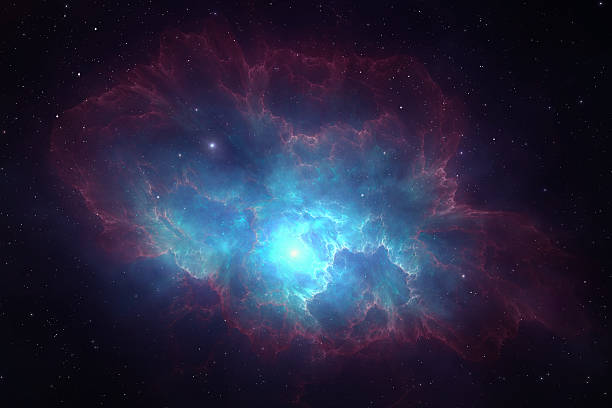
A Nebula is named from the Greek word for “cloud”. Nebulae (plural) come in many shapes and sizes and have a way of captivating those that observe and photograph these deep sky objects in space.

Most nebulae are enormous in size. Some are even hundreds of light-years in diameter. Nebulae do contain some mass. They have a greater density than the space surrounding them. Yet many nebulae are less dense than any vacuum we have created on Earth.

Deep space nebula with vibrating colors and bright stars

“a nebula is a cloud of gas and dust in outer space, visible in the night sky either as an indistinct bright patch or as a dark silhouette against other luminous matter.”

Nebulae usually consist of Hydrogen and Helium, as these are the most common and stable compounds in the Universe. The formation of a nebula can occur when a star undergoes a significant change, such as excess fusion in its core.

Types of Nebulae

HII regions and dark nebulae are where stars can form. They are made mostly of hydrogen and helium, with traces of other gases and infusions of dust grains. hey are found largely in the spiral arms of our galaxy. Our own solar system was born in such a region more than 4.5 billion years ago. The best-known molecular clouds are the Orion Nebula, the Eta Carinae Nebula, The Eagle Nebula (also, known as the Pillars of Creation), the Tarantula Nebula in the Large Magellanic Cloud, the Horsehead Nebula, the Coal Sack, and the Lagoon Nebula. Most of them, except for the Coal Sack, are bathed in the light of the stars that formed within them. The Coal Sack is an example of a dark nebula that obscures nearby stars, and may be forming stars within.

Supernova remnants are the final remains of massive stars that have blown themselves apart at the ends of their lives. These are expanding clouds of gas and dust with neutron stars or even black holes marking the final resting place of the star. The most famous supernova remnant is the Crab Nebula in Taurus. Its explosion appeared in our skies in the year 1054 AD. It contains a pulsar — a spinning neutron star — surrounded by filamentary clouds of material blasted out when its progenitor star exploded.

Planetary nebulae are the leftovers of stars like the Sun. They consist of a cloud of gas and dust surrounding a slowly cooling white dwarf star. The best-known planetary nebula is the Ring Nebula in the constellation Lyra. It was once a sun-like star that gently blew its outer atmosphere to space as it aged. What’s left of that atmosphere is a ring-shaped cloud that glows from the radiation of the dwindling white dwarf star.

Facts About Nebulae

  • Most nebulae contain the “stuff of stars and planets”, including gases, dust, and complex molecules.
  • As stars die and lose their materials to space, their gases and dust mix with clouds of gas, creating the complex nebulae we see.
  • Nebulae are always in motion, even though they look quiescent in images. The clouds mix and churn, which creates magnetic fields.
  • There are several types of molecular clouds: dark globules, emission nebulae, and reflection nebulae. Emission nebulae glow as their gases are heated. Reflection nebulae are mostly dust which reflects the light from nearby stars.
  • Our Sun and planets formed in a nebula some 4.5 billion years ago.
  • Nebulae exist in other galaxies. Astronomers have observed them in all spirals as well as the nearby Magellanic Clouds.

APICULTURE

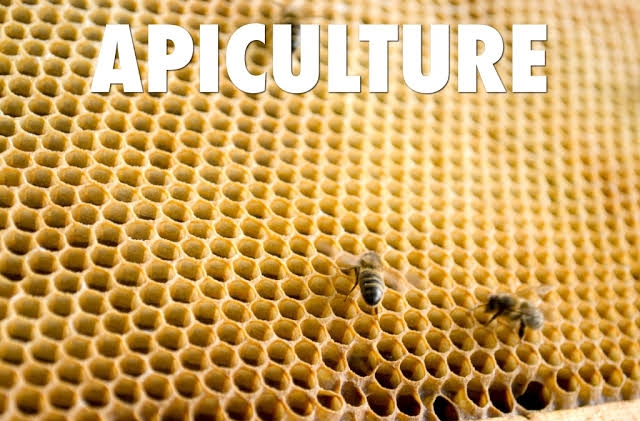
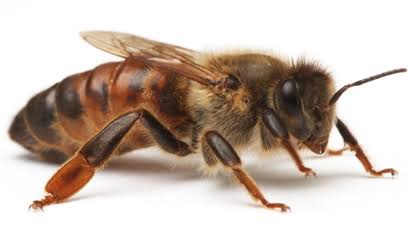
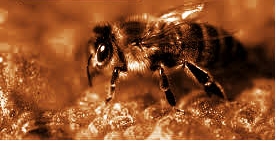
Apiculture is the rearing of honey bee for honey. It is also called Bee keeping. It is a profitable rural based industry. Honey bees are domesticated by farmers to produce honey.

Types of Honey Bee

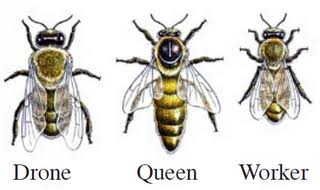
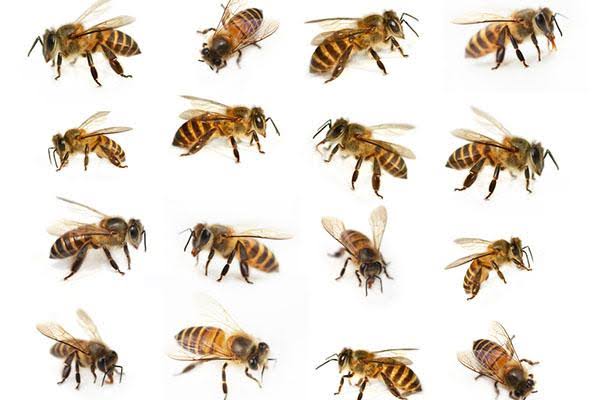
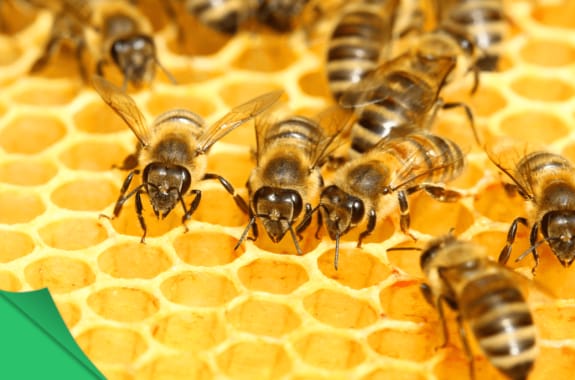
There are three types of individuals in an honey bee colony namely the queen bee, the drones and the worker bees.

Queen Bee

The queen is the largest member and the fertile female of the colony. They are formed from fertile eggs. The queen is responsible for laying eggs in a colony.

Drones

They are the fertile males. They develop from unfertilized eggs. They are larger than the workers and smaller than the queens. Their main function is to fertilize the eggs produced by the queen.

Worker Bees

They are sterile female bees and are the smallest members of the colony. Their function is to collect honey, look after the young ones, clean the comb, defend the hive and maintain the temperature of the bee hive.

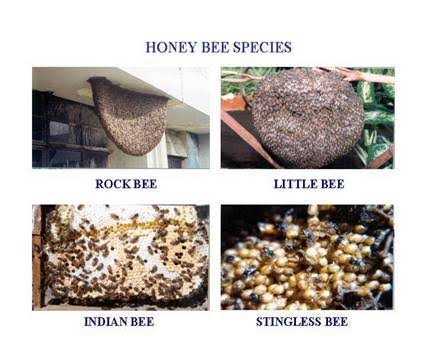
Varieties of Honey Bee

Indigenous varieties
✓Apis dorsata (Rock bee or Wild bee)
✓Apis florea (Little bee)
✓Apis indica (Indian bee)

Exotic varieties
✓Apis mellifera (Italian bee)
✓Apis adamsoni (African bee)

Structure of Bee Comb

The comb of the bees is formed mainly by the secretion of the wax glands present in the abdomen of the worker bee. A comb is a vertical sheet of wax with double layer of hexagonal cells.

Formation of Honey

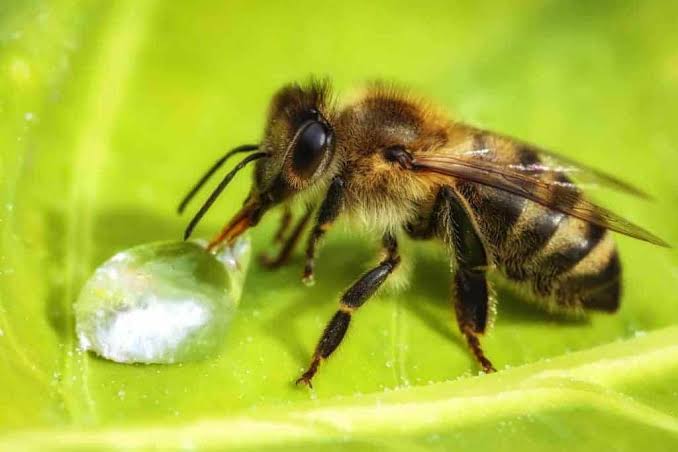
The honey bees suck the nectar from various flowers. The nectar passes to the honey sac. In the honey sac, sucrose present in the nectar mixes with acidic secretion and by enzymatic action it is converted into honey which is stored in the special chambers of the hive.

Quality of honey depends upon the flowers available to the bees for nectar and pollen collection.

Products from Honey Bee

Honey bees are used in the production of honey and bee wax. Other useful products obtained from honey bees are bee pollen, royal jelly, propolis and bee venom.

Uses of Honey

✓Honey has an antiseptic and antibacterial property. It is a blood purifier.
✓It helps in building up of haemoglobin content in the blood.
✓It prevents cough, cold, fever and relieves sore throat.
✓It is a remedy for ulcers of tongue, stomach and intestine.

THE AGRARIAN REVOLUTION

The term Agrarian Revolution implies the great changes that took place in the agricultural methods of England during the second half of the 17th century and the first half of the eighteenth century.

Causes of the Revolution:

  • The old open field system was wasteful of land because, according to this arrangement, every year one of the three fields was to be out of cultivation.
  • Secondly, come the old system of distribution of land was wasteful of time.
  • Thirdly, there was the necessity of confirming the customs of the village and thus made experiments in agriculture method possible.

In the 18th century, the population was increasing and so more food was needed. Owing to the scarcity of food materials there was a rise in prices. The old-fashioned farmers thought that they could get more money if they produce more. This idea was an incentive for them to improve their agricultural methods.

Reallocation of Lands:

Reallocation of lands in consolidated blocks which could be enclosed, several Enclosure Acts were passed in the reign of George II and George III. There were many cases of the poor peasants being not satisfied with the reallocation. Such people sold their small holdings to wealthy businessmen of the city who were eager to possess lands of their own. The final result of this tendency was that the class of rural inhabitants known as yeomen disappeared.

Advantages of enclosure system:

One of the advantages of the enclosure system was that it gave scope for many enterprising people to make experiments. Jethro Tull of Berkshire was the inventor of the drill for sowing seeds. He also emphasized the necessity of capital selection of seeds if good crops were to be obtained.

Another pioneer is Charles Townshend of Norfolk. He adopted Tull’s principles and paid much attention to the question of rotation of crops. He introduced the four-course rotation of turnips, barley, clover, and ryegrass, and wheat. These measures prevented an unprotective fallow. His innovation made Norfolk a leading agricultural country. With the result that in the thirty years the rental of the one farm rose from 180 pounds to 800 pounds a year.

The work of Townshend was continued by Thomas Cook. He followed the precepts of Tull and in addition fed the soil with manures including bones. In nine years he was able to grow excellent wheat crops. He also introduced new artificial foods such as oil cake under led the way in fattening cattle for the London markets. He held a yearly meeting for farmers at his house and these meetings farming topics were discussed and much advice was given and received. It is estimated that the annual rental of his estate Rose from 2,200 pounds in 1776 to 20,000 pounds in 1816.

Cattle farming:

While Norfolk landlords were thus making great improvements in arable farming, a Leicestershire farmer, Kama Robert Bakewell was revolutionizing English methods of stock breathing. Up to this time sheep had been valued chiefly for their wool, the production of mutton had been only secondary. Bakewell was the first to turn his attention to the production of meat as the main consideration of stock breeding. By patient choice and experiment, he succeeded in producing a new breed of sheep with fattened quickly and weighed heavy. His success attracted the attention of many. Farmers from far and wide visited his farm at Dishley and became converts to his new methods. Others who did pioneering work in this field were George Culley, Charles Colling, and John Salman.

Board of agriculture:

Royal patronage was also given to the moment of revolutionizing the agriculture methods. George III, affectionately known to his subjects as a farmer George, established a model farm at Windsor. The success of the moment was due to the writings of agriculture writers, the most famous was Arthur Young. When a board of agriculture was established in 1793. Young was made its secretary.

Conclusion:

With the advent of the enclosure system, the English banking system also grows, for even the wealthy landlords did not have money to do the fencing and other improvements. So they have to borrow money from the banks. Through all those methods was very desirable from the point of view of production, it had a harmful effect on the partition. The system deprived him of the privilege of grazing his cattle and cutting fuel from the commons.

What is a Novel

Picaresque Novel