POSITIVE THINKING

Positive thinking is a mental attitude in which thoughts, words, and images that promote growth, expansion, and success are admitted into the mind. It’s a mindset that anticipates positive outcomes. Happiness, joy, health, and a favourable outcome of every event and deed are all predicted by a positive thinking. The mind discovers whatever it is looking for. Positive thinking isn’t universally accepted or believed. Some dismiss the topic as gibberish, while others mock those who believe it. Few people accept it, and even fewer know how to put it to good use. Nonetheless, as indicated by the numerous books, talks, and courses available on the subject, it appears that many people are getting interested in it.

When someone is feeling depressed and anxious, it is typical to hear someone advice, “Think optimistic.” The majority of people don’t take these terms seriously because they don’t understand what they mean or don’t think they’re beneficial or effective. How many people do you know who pause to consider the significance of positive thinking? As a result, the first step is to adopt a positive mindset. The first and most important step we must take is to think positively. We will be useless and worthless if we do not engage in positive thinking. When we begin something, we must believe that we will achieve success and be worthy of our efforts. And, even in the face of adversity, we should remain optimistic (think about our goal, that we must reach it). Then examine the outcome to see if it is superior to the norm. Consider what happens if we work on something without thinking positively. We will experience the “pain” of the process, and the end result will be worse than we anticipated.

Positive emotions like joy, satisfaction, and love clear the way for us to see greater possibilities in our lives. Positive emotions provide the greatest advantage in that they allow a person to recognize and develop his or her genuine abilities for later use. We feel pleasurable and joyful when we maintain a good attitude. It has a direct impact on our health and supplies us with an abundance of nutrients. It improves the way we talk, feel, and react in everyday situations. A negative person is prone to be narrow-minded and fixated on negative thoughts, causing problems in their lives. Positive thinking is not difficult to achieve if one makes a consistent and conscientious effort. Someone’s words, thoughts, or feelings may also affect us automatically and subconsciously. Positive thinking is a 99 percent effective way of living. Positive people are more trustworthy and helpful, therefore people like to associate with them. To employ this weapon in life, a person must know more than just that it exists. In whatever he does, he needs to maintain a positive attitude.

How to Apply Positive Thinking?

1. Use positive words while talking

2.Make use of terms that conjure up images of strength and achievement.

3.Shift your focus.

4.Remove all negative emotions and thoughts, and concentrate on happy ones.

5.Use affirmations that are positive.

6.Begin to believe that you will achieve your goals.

7.Allow yourself to forgive yourself and go forward.

8.Examine what went wrong to prevent making the same mistakes in the future, and look forward to a brighter future.

9.To increase positivity and motivation, work on your visualization or imagination.

10.Consider failure to be a chance to learn something new.

11.Practicing thankfulness can help you relax, boost your self-esteem, and stay resilient when things get tough.

12.Practice positive self-talk and be aware of your inner voice.

How to Maintain a Positive Attitude?

It’s important to keep a good attitude amid a deeply upsetting event or grievance, and it’s also important to relieve yourself of the burden of finding the silver lining. Instead, focus your efforts on obtaining adequate support from others. Positive thinking does not imply concealing unpleasant thoughts to avoid conflicting emotions, but rather motivating oneself to move forward and accomplish positive changes. When you’re going through a difficult period, comfort yourself by giving yourself excellent counsel, acknowledging your feelings, and reminding yourself how strong you are to fight and overcome.
CHILD MARRIAGE

Meetali soni

WHAT IS CHILD MARRIAGE ?

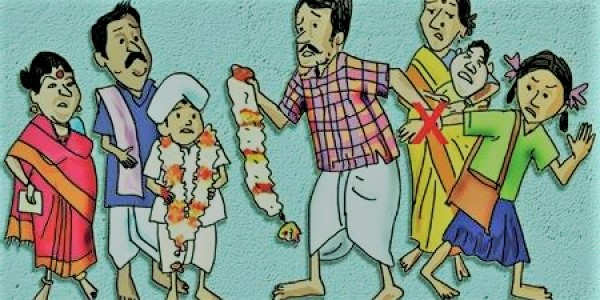
Child marriage is the system which is mostly held in villages. Child marriage simply refers to marriage under the age of 18 .One of the most common causes of child marriage is the tradition which has been in practice for a long time. In many places, ever since a girl is born, they consider her to be someone else’s property. Early marriage is a harmful practice in girls their right to make vital decisions about their sexual health and well-being. It forces them out of education and into a life of poor prospects, with an increased risk of violence, abuse, ill health or early death.Early marriage and forced marriage is highest in Sub-Saharan Africa where 38% of girls become child brides.  Girls married early are more likely to experience violence, abuse and forced sexual relations due to unequal power relations. They are more vulnerable to sexually transmitted infections (including HIV). Going to school gives girls choices and opportunities in life, allowing them to play an active role in their communities and break the cycle of poverty. Girls who are married are unlikely to be in school. Education, including comprehensive sexuality education, is essential for girls to be able to make informed decisions about their sexual health and well-being. Millions of girls to avoid marriage, stay in school and decide for themselves whether and when to marry.

They do early marriages becauses child marriages include poverty, bride price, dowry, cultural traditions, religious and social pressures, regional customs, fear of the child remaining unmarried into adulthood, illiteracy, and perceived inability of women to work for money. Early pregnancy is one of the most dangerous causes and consequences of this harmful practice. Interrupting her schooling and limiting her opportunities for career and vocational advancement.Before the COVID-19 pandemic, more than 100 million girls were expected to marry before their eighteenth birthday in the next decade. Child marriage robs girls of their childhood and threatens their lives and health. Girls who marry before 18 are more likely to experience domestic violence and less likely to remain in school. They have worse economic and health outcomes than their unmarried peers. Child brides become pregnant during adolescence, the risk of complications during pregnancy and childbirth increases – for themselves and their infants. Child marriage impacts a girl’s health, future and family.

While boys and girls who marry in childhood do not face the same risks and consequences due to biological and social differences, the practice is nonetheless a rights violation for children of both sexes. Similar to child brides, child grooms are forced to take on adult responsibilities for which they may not be prepared. The union may bring early fatherhood and result in additional economic pressure in the form of providing for the household; it may also constrain the boy’s access to education and opportunities for career advancement. Bride Price is when the family of the groom pay their future in-laws at the start of their marriage. The payment can be made up of money, presents, or a mixture of both. It’s sometimes paid in one go. 12 million girls marry before the age of 18 each year – almost one every 2 seconds.

There was a most famous serial which was played on the colous channel ”BALIKA VADHU ” . This serial is based on fight againt child marriage .

If we want to end this worst system , we have to educate girls and boys .

Thanks for reading ……

The Parthenon of Athens

The Parthenon is one of the crown jewels of the Acropolis of Athens and a formidable testament to the wealth and culture of ancient Athens, Greece. It is constructed as a dedication to Goddess Athena after whom the current city is named. Parthenon has been the center of the history of this city in the past and has seen lots of battles and various owners staking their claim to this magnificent monument that was constructed on top of the rock mountain in Athens. Its construction was completed in 438 BC the architecture is a Peripteral Octastyle Doric temple with Ionic architectural features.

The Parthenon temple is built on the site of the older Athenian temple which was decimated by the Persians in 480 BC. The Parthenon has seen lots and lots of events in history. It started as a treasury and was later converted to a Christian church dedicated to the Virgin Mary in the last decade of the 6th century. The Parthenon was also converted into a mosque at one stage by the invading Ottomans. It was during this unfortunate time that the siege of the city by Venetian forces and bombardment brought its way to igniting the gunpowder stored here and thus heavily damaging the monument and its sculptures.

The Architecture of the Parthenon of Athens

The whole architecture was decorated and designed with marble sculptures that represent past images from Athenian cult and mythology. There are three categories of architectural sculpture. The frieze which was made from low relief goes high up around all four sides of the building. The metopes which were made in high relief were positioned at the same level as the frieze above the architrave above the columns on the outside of the temple. The pediment sculptures which were carved in the round filled the triangular gables at each end.

The Parthenon was planned to go under a lot of changes but it remained untouched until the seventeenth century. The early Christians then turned the temple into a church, adding an apse at the east end. It was at this time that the sculptures representing the birth of Athena were removed from the center and lots of other sculptures were defaced. The Parthenon of Athens from thereon was viewed as a holy church until Athens was conquered by the Ottomans in the fifteenth century and they subsequently made it a mosque that was worshipped by many.

The Venetians after a prolonged battle succeeded in capturing the Acropolis but held it for less than a year. Further damage to the building was done in an attempt to remove sculptures from the west when the lifting equipment broke and the sculptures fell and were smashed.

IT’S NOT ACTUALLY A TEMPLE.

While we refer to the Parthenon as a temple—and it looks like one architecturally—the building doesn’t function quite the way one would think. Traditionally, a temple would host a cult image of Athena—the patron saint. Instead, the main cult image of Athena Polias is located in a different area of the Acropolis. While a colossal statue of Athena by the famed sculptor Phidias would have been located inside the Parthenon, it was not related to a particular cult and so would not have been worshipped.

IT WAS ORIGINALLY QUITE COLORFUL.

While we often think of classical art as being white and pristine, the Parthenon—as with much Greek architecture and sculpture—would have been colored originally. While historians debate just how much of the structure would have been covered in colour, archaeologists often use UV light to uncover pigments that have now been lost.

INDIA’S DEADLIEST SNAKES

In India, there are approximately 350 snake species however, only 15 to 17 percent of all snakes, including sea snakes, are venomous. Russell’s viper, Pit vipers, Saw-scaled vipers, Trimeresurus stejnegeri, Ptyas mucosa, Echis carinators, and many other venomous and poisonous snake species can all be found in India.

In India, approximately two lakh people are bitten by snakes each year, with about 50,000 of them dying. According to recent data, 1.2 million individuals in India have died as a result of snake bites in the last 20 years. Some of the snakes accounting for the bulk of casualties are mentioned below.

RUSSELL’S VIPER

Russell’s viper (Daboia russelii), often known in the community as “Daboia” or “Koriwala,” is a highly venomous terrestrial snake belonging to the Viperidae family. The Russell’s viper has killed more people in India than any other snake because it dwells in farmlands where there is a lot of human contact and rodent preys. Its bites have the potential to be fatal. Its venom is a hemotoxin, which affects the nervous system of any creature. Its bite can kill a human after internal bleeding, excruciating pain, and a brain hemorrhage. This dark brown or brownish-gray snake- with an average length of 4 feet, strikes and envenomates rodents, small birds, and lizards. The viper reaches a maximum size of 5 feet. It has a life expectancy of 10-17 years. Vipers have a pair of long, hollow venom-injecting fangs that are linked to moveable upper jaw bones and retracted in the mouth when not being used. Without antivenom, its bite can kill a human in 45 minutes.

King Cobra

The king cobra (Ophiophagus Hannah) also called hamadryad, is the world’s biggest venomous snake, with a length of up to 5.5 meters and the ability to elevate its head 2 meters above the ground. It’s a creophagous snake that eats other snakes as well. The non-venomous rat snake, other cobras, kraits, and small pythons are among its preferred targets. It is not often belligerent toward human beings but is hostile and threatening during breeding season or when frightened. The front section of the king cobra hoists when provoked. It can swerve or dart forward in this stance to strike its target.

The venom of a king cobra is lethal enough to kill an elephant in just three hours after being bitten. Without antivenom, its bite can kill a human in 30 minutes. It can be encountered in India’s deep jungles, damp wetlands, bamboo clusters, and tropics. This colossal and powerful snake with pale yellow crossbars can be brown, olive green, or black. The king cobra is distinguishable from other cobras by the presence of 11 enormous scales on the crown of its head. They have an average life-span of 20 years.

saw-scaled viper

The saw-scaled viper (Echis Carinatus) has a robust body with a distinct pear-shaped head, vertically elliptical pupils, tough and strongly keeled scales, and a short thin tail. Both sides of the body are covered in several rows of obliquely oriented serrated scales. Adults range in length from 1 to 3 feet. Echis, come in a range of colors including brown, grey, and orange, with darker dorsal blotches and lateral patches. They have an average life-span of 23 years. Saw-scaled vipers use sidewinding propulsion. They are nocturnal, emerging at dusk to forage on mammals, birds, snakes, lizards, amphibians, and invertebrates such as scorpions and centipedes.

Although saw-scaled vipers are diminutive, they are incredibly dangerous due to their irritability, aggressive temperament, and lethal venom. Saw-scaled vipers are believed to be responsible for more human deaths than all other snake species combined, in the areas where they dwell. The oblique scales brush against each other, creating a hissing sound that serves as a defensive warning to potential predators. These snakes strike quickly and bite victims have a high death rate.

Spectacled Cobra

The Indian Cobra (Naja naja), often referred to as the Spectacled Cobra, belongs to the Naja genus, found all across India. This species is one of the four snakes in India that are responsible for most human bites. The geographical region in which a Spectacled Cobra is found has a big influence on its coloration and patterning.  This species might be grey, yellow, tan, brown, reddish, or black in hue. On numerous specimens, a hood mark with two circular motifs joined by a curved line, resembling spectacles, can be seen. They have an average life-span of 9 years.

The remarkable hood of this species, which widens when alarmed, makes it easy to identify. It hisses and strikes viciously if disturbed. The length of an adult specimen varies between 3.3 and 4.9 feet. Dense forests, broad plains, agricultural belts, rocky terrain, and marshes are all locales where it can be spotted. Rodents, toads, frogs, birds, and snakes make up the prey base.

The Spectacled Cobra is an oviparous species that produces its eggs from April to July, the female cobra lays up to 10 to 30 eggs. The female stays with the eggs for roughly 60 days, until they hatch. The hatchlings range in length from 20 to 30 centimeters. They are self-sufficient from the beginning of life and have fully working venom glands. The Spectacled Cobra can swim proficiently. Without antivenom, its bite can kill a human within 2 hours.

Indian Krait

Kraits (Bungarus Caerulus) belong to the Elapidae family, which includes cobras. The average adult krait stands 5 feet tall. With little dark eyes, the head is short and rather flat. To the tip of the tail, they exhibit a bold pattern of contrasting dark and light bars. The body is long and narrow, with a triangular cross-section. Kraits have a smooth and shiny appearance. It has a 10-to-17-year life expectancy. Kraits are nocturnal creatures that feed on other snakes, including their own kind. The krait holds on to a victim snake’s body until it is motionless after plunging its fangs into it. Bites to humans are uncommon, yet they can be fatal.

Female kraits lay 5 to 12 eggs at once. Hatchlings are around 12 inches albeit they are not as colorful. Without anti-venom, its bite can kill a human within 45 mins.

SHORT STORIES WITHIN NOVELS – PART 2

As we already read about the secret to living happily from The Alchemist book by Paulo Coelho. Today we will look at two different stories from different books.

THE KITE RUNNER BY KHALID HOSSEINI

It was a dark little tale about a man who found a magic cup and learned that if he wept into the cup, his tears turned into pearls. But even though he had always been poor, he was a happy man and rarely shed a tear. So he found ways to make himself sad so that his tears could make him rich. As the pearls piled up, so did his greed grow. The story ended with the man sitting on a mountain of pearls, knife in hand, weeping helplessly into the cup with his beloved wife’s slain body in his arms.

This story must give you goosebumps but, the real conclusion is when Amir the protagonist and the narrator of the book The Kite Runner wrote this story and shared it with his friend Hassan, who is a servant’s boy of Amir’s family. Hassan was shocked and impressed with Amir’s story but, he asked why he has to kill his own wife, instead of he can shed tears by cutting onions?

MORAL: When you have to choose something… Choose wisely.

VERONICA DECIDES TO DIE BY PAULO COELHO:

Zedka started to narrate a story to Veronica.

A powerful wizard, who wanted to destroy an entire kingdom, placed a magic potion in the well from which all the inhabitants drank. Whoever drank that water would go mad.

The following morning, the whole population drank from the well and they all went mad, apart from the king and his family, who had a well set aside for them alone, which the magician had not managed to poison.
The king was worried and tried to control the population by issuing a series of edicts governing security and public health.
The policemen and inspectors, however, had also drunk the poisoned water, and they thought the king’s decisions were absurd and resolved to take no notice of them.

When the inhabitants of the kingdom heard these decrees, they became convinced that the king had gone mad and was now giving nonsensical orders. They marched on the castle and called for his abdication.

In despair the king prepared to step down from the throne, but the queen stopped him, saying:
‘Let us go and drink from the communal well. Then we will be the same as them.’

The king and the queen drank the water of madness and immediately began talking nonsense.
Their subjects repented at once; now that the king was displaying such wisdom, why not allow him to continue ruling the country?

After drinking water from the poisonous well all became mad and equal. The country continued to live in peace although its inhabitants behaved very differently from those of its neighbors. And the king was able to govern until the end of his days.

Zedka asked veronica: Do you know what exists outside beyond the walls of this asylum?

Veronica said People who have all drunk from the same well.

MORAL: Zedka and Veronica both are patients in the asylum. Through this story, Zedka symbolically tells that people think they are civilized and normal. But, when they encounter some strange people they started to divide the borders and make them as a patient.

SHORT STORIES WITHIN NOVELS https://eduindex.org/2021/07/24/short-stories-within-novels/

THE GOTHIC NOVEL https://eduindex.org/2021/07/21/the-gothic-novel/

Beautiful train journey

Who said that amazing views cost a lot, except when you chose the cheapest way to adore it. Some of the train journeys are worth capturing some memorable things at a cheap cost.
Indian Railways have been the largest rail network connecting different parts of India.

Some of the mesmerizing routes to take making your journey amazing:

Desert queen

The route of Jaisalmer to Jodhpur offers the scenario of barren desert land, desert wildlife, and tribes. the Desert Queen route passes through the Thar Desert, Rajasthan.

Himalayan Queen

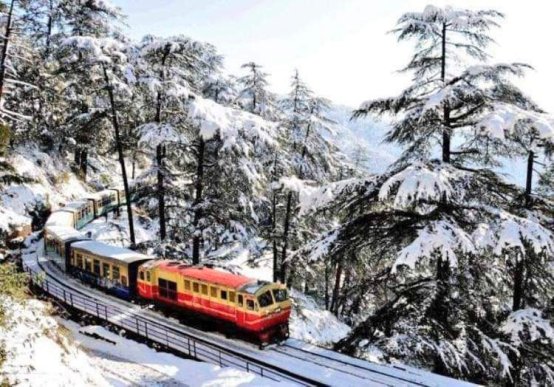
The route of Kalka to Shimla, journey four to five hours covers the 20 railway stations, 800 bridges,900 curves, and tunnels.


Nilgiri Mountain Railway

The route of Mettupalayam to Ooty, It’s the only rack railway of India.

Darjeeling Himalayan Railway

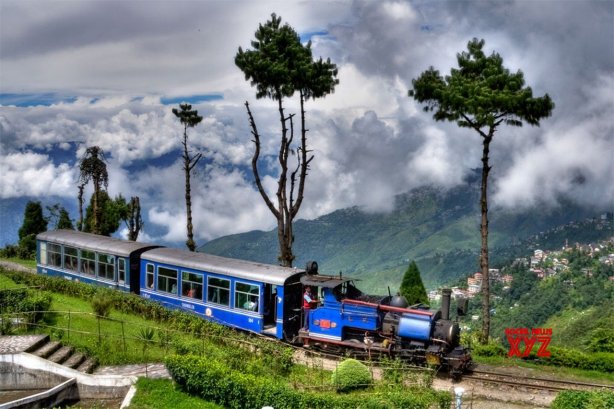
Route from Jalpaiguri to Darjeeling, it ben a toy train journey shows mesmerizing scenarios of Mt Kanchenjunga.

Sethu Express

Route of Mandapam to Rameswaram, a train route of thrill and adventure, passes through a bridge that is built over the sea.

Do Indians Get Enough SLEEP?

I’m telling you about on Sleep habits among Indians?

Aviral is a Man .Aviral knew he was dead tired. Though it had been more than thirty eight hours since the forty four year old marketing executive returned to Delhi early one morning from New York, he was still recovering from jet lag. He had forced himself to remain awake the whole day as he had hoped to coerce his body into sleeping at night.

But the much needed sleep seemed to elude him completely. “I hardly managed any sleep that night,” Aviral recalled. The time change had completely disrupted his sleep pattern, and when he got out of bed at 7a.m. to head for office, he was entirely ill at ease, to say the least. At the office, he could barely concentrate on his work.

Aviral wasn’t aware simply how exhausted he was until he had driven a quarter of the twenty-four kilometre stretch on his way back home in the suburbs of Delhi. He halted at a busy signal on the way, but fell asleep suddenly at the wheel. He dazed after the motorist behind him honked. Aviral drove on, but feeling woke up he couldn’t focus any further, he decided to pull off the main road and parked the car in a quiet place. Then, he rolled down the windows a bit and managed to take a two-hour nap in his car. It was only after that that Aviral could drive home safely.

It is an undisputed fact that not getting enough sleep can lead to problems in concentrating. In fact many sleep disorder experts think that lack of sleep is the reason for many ailments. Dr. Kumar Menon and his colleagues presented a study paper on sleep disorders in Mumbai in which they stressed on the need for early detection of the problem and concluded that it was high time that all the physicians “woke up to sleep disorders and included sleep history in evaluating their patients.”

Whatever be the cause of not getting proper and enough sleep, we’ve all experienced the exhaustion caused by lack of sleep. Thus, sleep is as important to a healthy lifestyle as eating properly and exercising. Getting a good night’s sleep is one of the simplest things we can do to stay healthy.

A good night’s sleep means waking up rested and invigorated. On an average, a healthy adult requires just over eight hours of sleep a night, according to Dr. Jeffrey Lipsitz, a Canadian expert on sleep disorders. However, the amount of sleep it takes to rejuvenate an individual varies from person to person. “It’s not a fixed number,” opines Joseph De Koninck, a renowned professor of psychology, adding that if one consistently gets less sleep than one needs, then “a sleep deficit accumulates.” The time it takes for a sleep deficit to accrue depends on how consistent the problem is. “Missing a couple of hours of sleep every night for a week is probably enough,” says another psychiatrist Robert Levitan.

Swarup Chatterjee, the 28 year-old IIM graduate and assistant manager at a BPO in Hyderabad, knows very well that he doesn’t get enough sleep. “I haven’t had more than four to five hours of sleep for the last three years. There’s always so much that needs to be done in my professional as well as personal life that I am constantly thinking.” Swarup is fully aware that all that is very stressful and he admits that even though he has high energy levels, he is often tired and so he drinks several cups of coffee to counter the fatigue. “But I know that I’ll be able to concentrate better if only I got more sleep,” Chatterjee concludes.

In a study conducted by sleep-disorder experts, it was found that at least one- third of adults have significant sleep loss, i.e. they have just six and a half hours or less of sleep every night. Then a recent survey conducted in India has shown that twenty-nine percent of Indians went to sleep only after midnight and sixty-one percent slept for seven hours or less. The survey also arrived at the conclusion that Indians were among the world’s earliest risers, with sixty-four percent getting out of bed before 7a.m. Is there a need to reiterate that “Early to Rise” is good provided a person follows the “Early to Bed” principle as well?

Sleep is crucial to maintaining one’s health. Without it, we increase our susceptibility to an astonishing array of health problems, including heart disease, stroke, diabetes, obesity and depression. Not sleeping enough can compromise your immune system, says Stanley Coren, noted professor of psychology and author of the very popular book, “Sleep Thieves”. You eat well and exercise in order to keep your immune system up, Coren goes on to explain, but if you aren’t sleeping, you undo all that good work. “The immune system works best when you are sleeping,” he says. “That’s when your natural killer cells are generated.”

Image Source -google.

Natural killer cells are produced in the bone marrow and found in the blood and lymph fluid. They are part of the body’s defence mechanism against viruses, bacteria, even cancer, and they do not work properly in the persons who are sleep- deprived. A study in Turkey revealed that after 24 hours of sleep deprivation, the percentage of natural killer cells in the blood declined by 37 percent. Another study in the USA conducted on 23 boys and men found that one night of partial sleep-deprivation reduced natural-killer-cell activity to 72 percent of normal levels. Though their activity returns to normal when we begin to get proper sleep, the real problem is that a lot of damage might have been done to our bodies when we were sleep-deprived for several nights and our immune system might have left us undefended and susceptible to infection.

Sleep is important in keeping not only our waistline trim, but ensuring a balanced brain activity too. During sleep, brain neurotransmitters-the chemicals that deliver messages between nerve cells in the brain-are replenished. When we do not sleep well, our brain chemicals become depleted which leads to emotional disturbances like depression, anxiety and general feelings of sadness, anger and irritation.

The Olympic flame in Tokyo is the first to be fueled by hydrogen.

Naomi Osaka stands near the Olympic torch after igniting it during the opening ceremony of the 2020 Summer Olympics in Tokyo, Japan, on Friday, July 23, 2021. (David J. Phillip/AP Photo)

TOKYO (AP) — The Tokyo Olympic cauldron was inspired by the sun and is built to be more eco-friendly.

Throughout the games, the flame at Tokyo’s National Stadium and another cauldron blazing along the waterfront at Tokyo Bay will be fueled in part by hydrogen, marking the first time the fuel source has been utilized to light an Olympic fire.

Since the first contemporary cauldron was ignited at the Amsterdam Games in 1928, propane has been the most common fuel, but magnesium, gunpowder, resin, and olive oil have all been used. Eight years later, for Berlin, the torch relay was inaugurated.

When hydrogen is burned, unlike propane, it does not create carbon dioxide. The Tokyo cauldron is fueled by hydrogen produced by a renewable-energy-powered facility in Fukushima Prefecture. During the torch relay, both propane and hydrogen were utilized.

The London 2012 Olympic Games organizers boasted about their intentions for a low-carbon torch, but they couldn’t get the design perfect in time. Instead, they utilized a propane-butane mixture. In 2016, Brazilian officials ordered a smaller cauldron for Rio de Janeiro to minimize the quantity of fuel required.

Oki Sato, a Canadian architect, created the Tokyo cauldron. His sun-inspired sphere opens like petals from a flower, evoking “vitality and hope,” according to the organizers.

At 11:48 p.m., tennis player Naomi Osaka ignited the torch, with performers throughout the night clutching sunflowers, which are known for blossoming toward the sun.

The first torch for these games was lighted 16 months ago at Olympia, Greece, however owing to the pandemic, the relay was put on hold for much of 2020. Until the relay was formally begun in Fukushima on March 25, 2021, officials displayed the torch across prefectures impacted by the earthquake and tsunami that destroyed the region in 2011.

Before the torch arrived at the National Stadium in Tokyo’s Shinjuku City, several parts of the relay were halted owing to concerns about the spread of the coronavirus.

Fighting Corona with Humanity.

I still remember reading our history textbooks and pondering over the fact that how the people in those times had faced the draconian affects of epidemics. Having no vaccine or any scientific knowledge, made them quite helpless. Today in the 21st century, with all the technology in the world, when we are faced with yet another epidemic, it has become a little difficult for us to cope up with it too , but for all different reasons. I , for instance never expected rather never believed that history would repeat it’s one of the worst realities again.
“Just because things are the way they are , they’ll not remain the way they are.”
Bertolt Brecht
UN chief advisers have termed COVID19 as the worst thing to happen since World War II.

Corona virus or to be more specific COVID19 originated in Wuhan , a city in China. And before even the rest of the world could understand what was happening, the unwanted guest was already at their doors. Past these months, thousands of people have succumbed to it, and lakhs lay in the hope to recover. The situation in US had completely shattered the dogma that a superpower can conquer it all. And the eeriness in the’ Bel Pease’ (beautiful country) , Italy, has put the world in a shock. The world is suffering in all possible ways. But few positive outcomes of all this tragedy is the audible sound of birds chirping, the visible blue sky (which was not so visible, and not so blue before), the damaged ozone layer healing itself, and obviously the Earth finally getting a chance to breathe again. Sometimes I wonder how karma pays back and how maybe this situation is what we humans sort of had it coming.
The soldiers in this war, the doctors, police , cleaners and all those people who have been working these past months non stop have shown us that how humanity is the priority.

Novavax and J&J join the Covid-19 vaccine push | Evaluate

After many lives lost in the ongoing 2nd wave and the country preparing itself for the 3rd wave, we should all remember that to get vaccinated , wearing masks and following the social distancing guidelines is surely the key.

How can other people help in fighting the corona war you ask ?
Be Kind. This is a difficult time. Not a time to play the blame game but to play SAFE. Couple of days back I read that a girl from northeast was spat on by a person and called out as CORONA. This is so derogatory and discriminating. This difficult time is not only testing your patience but also testing to what level can you maintain your humane level.
A little help to the helpless please. Do whatever it is in your hands to help the needy. Donate food , money so that they can also get a fair chance at staying alive.
Who let the dogs out?! Well technically the lockdown has left them all alone. So please do take care of the animals out on the street. Don’t lock them out of your hearts.
Meditate the stress away I understand how this lockdown can be so stressful, so in order to keep calm , keep meditating.
Laugh it all out Stay happy and also try to keep your friends cheerful by calling them up. There might be plenty of your loved ones in different parts of the World, who must be waiting for a shoulder to lean on, so go ahead and give them a virtual shoulder to lean on to.
Being Munna bhai MBBS?! I agree that jaadu ki jhappi is all we need, but social distancing ,you know. Also don’t spread rumours and let the real doctors do the real work.
People all over the world are helping the needy with all their heart. Plenty of NGOs , business men, members of film fraternity, and many more have come forward to fight this war the humane way. Love,compassion, awareness and a sprinkle of humanity can help us to get through this war.

John F Kennedy rightly said ,
Ask not what your country can do for you , but what you can do for your country, and right now all you can do ,is Stay Inside.

WHY IS THE "N" WORD PROHIBITED?

BY: VAIBHAVI MENON

It’s one thing to ban a word because it is a pitiless slur often used amid physical violence. That black people use it—and have forever—as a term of endearment among one another complicates matters somewhat, but whites who ask “Why can’t we use it if they do?” have always struck me as disingenuous. It isn’t rocket science to understand that words can have more than one meaning, and a sensible rule is that blacks can use the word but whites can’t. However, since the 1990s this rule has undergone mission creep, under which whites are not only not supposed to level the word as a slur, but are also not supposed to even refer to it. That idea has been entrenched for long enough now that it is coming to feel normal, but then normal is not always normal. It borders, as I suggested above, on taboo. There are societies—such as many in Australia—in which it is forbidden to use ordinary language with in-laws, and this taboo is often extended  even to referring to in-laws in conversation. Upon marrying, one must master a whole different vocabulary for talking to and/or about, for example, one’s mother-in-law. Many are familiar with the click sounds in Xhosa. However, clicks didn’t originate in Xhosa, but in lesser-known languages spoken by hunter-gatherers. Xhosa speakers, it is thought, adopted clicks from these other communities as part of an effort to create avoidance language, substituting them for ordinary sounds in Xhosa.

Practices like this sound neat to Americans—but also arbitrary. We understand that the practice is rooted in respect, but can’t help thinking that the official practice has drifted somewhat beyond what logic would dictate. The idea that nonblacks cannot even soberly refer to the N-word verges on this kind of thing. Note the word verges: The N-word is a slur and loaded in a way that, say, asking your mother-in-law what she’d like for dinner is not; sparing usage and serious caution are warranted. Respect, nevertheless, has morphed into a kind of genuflection that an outsider might find difficult to understand. There are matters of art involved, of course. Even when discussing rather than wielding the word, people—including black ones—might avoid barking out the word any more than necessary. (Or avoid writing it more than necessary, as in this very essay.) Surely, its history means that it provokes negative associations; it doesn’t sound good. Perhaps even the weird word niggardly ought to be let go. Accidentally, it just sounds too much like that other word to pass muster, especially when synonyms like stingy are so readily available. Those who use it should not be made to feel unfit for employment, as has actually happened.

But a white student so horrified at Sheck’s uttering the N-word within the context of its usage by a black, crusading anti-racist figure such as James Baldwin that the student reports her to the authorities? It surely felt like Doing the Right Thing—but the problem is that when Spike Lee’s film of (more or less) that title was playing in theaters, graduate students would have done no such thing. Some will object that we moderns are more advanced than those ‘80s troglodytes, or at least that the discussion has progressed, enrichened, that justice is being better served. And I am under no illusion that this is merely a matter of a certain kind of white performative wokeness. Quite a few black people, including authors of whole books on the word, would agree that Sheck should never utter that word at all for any reason. We might ask, though, what the reason for a diktat like that is. It conveys, certainly, a kind of power. Inevitably, here and there a nonblack person will either use the word in an unsanctioned way or, just as often, be revealed to have done so in the past. If the word is sinful even when referred to, then the ground is especially fertile for black Americans or white allies to express outrage. Enter the Teaching Moment, when we are reminded of black people’s plight in a racist nation, our history in savagery and dismissal, the power of even subliminal racist bias.

Migrant Labour

A person who migrates or who has migrated from one country to another with a view to being employed other than on his own account.India is a vast country with high percentage of uneducated, unemployed and unskilled labour suffering from acute poverty.Regional imbalances add to their problem.Many of them are unable to find means of livelihood within their habitat.

Frequent droughts,famines and other calamities force these poorest sections to migrate.These sections of people are constantly on the move seeking avenues of manual work.Such migrants are mostly employed by contractors in road works,quarry and brick works,mining works, clearing forests and in many hazardous works.A few of them become domestic help,and some become menials in hotels and other establishments.As migrant Labour,there is no protection to their person,no guarantee of a fair wage.They are forced to live in unhygienic transit slums without clean water and nutritious food.There is no guarantee for health care and no provision for care and education of their children.

Migrant labour,means,the labour who goes on moving from place to place seeking manual employment on temporary basis.They are constantly exploited by contractors.As they work in regions of different languages it becomes very difficult to become organised and to articulate on their needs and to demand and secure necessary remedies.In fact,most of the migrant labour are treated almost like bonded labour.

Wider highways,huge buildings for industries, business and institutions are coming up fast, however the conditions of the human labour involved in the expanding economy cannot be ignored.More than half of the labour involved in these developmental activities are migrant labour.

ACTUAL MEANING OF FEMINISM

BY: VAIBHAVI MENON

When they hear the word “Feminist,” most people think of a bunch of angry women who believe that they are better than men. By definition the word “feminist” means “the advocacy of women’s rights on the basis of the equality of the sexes.” Feminists are not just women who stand outside buildings demanding things. In reality they have revolutionized today’s society and have improved the lives of many. Most rights that women have today derived from true feminists fighting for equality. Feminism has lost its true meaning. Real feminists such as the Suffragettes, Eleanor Roosevelt, Barbara Walters, and so many more have made it possible for women to become news anchors, be more than just a housewife, or allow women to vote.

Today’s feminists have taken these remarkable women and twisted what they stood for. Women have turned against men. Past feminism changed society forever. Today, feminists believe that men are less superior and that women could live on the Earth without them, but that is not what true feminism is. True feminism allows women to be equal to men. True feminists make it possible for women to work the same jobs as men or have the right to own property like men. Although the basis of feminism is still the same, it has become a more aggressive movement. Instead of bringing men and women together as a united front, it has created an even bigger gap throughout the United States. Today’s feminism isn’t making the same progress or spreading the same message. There are still other problems that feminism could fix, but if we don’t use feminism the right way then we won’t be fixing anything. If we continue to misuse feminism then we really will be just a bunch of angry women protesting outside of buildings. The definition, as I have spent my life believing it to be, is the belief that men and women should have equal social, political, and economic rights and opportunities. I do think that that is the most inclusive definition of what feminism is about. It’s about equality for both men and women and a playing field that respects the voices of women. True equality, true feminism is recognition of the dynamics that each person brings to the table. And I say “each person” because women will have reached truest levels of equality when men also have truest levels of equality. As long as we stay and assign task and duty, responsibility and opportunity to a particular gender, then we are not actually striving for true feminism.

I think at that time there was such an imbalance of power that you had to recognize the need to at least get some balance of power to women, some recognition that women should have choices and opportunities outside of the home, and in the home itself. Today we recognize that true feminism is the true equality of both sexes, without it being limited or restricted. And we actually have more young men and young women growing up today that have been raised in more feminist households, where men and women do a share of work in the house. They both have opportunities for education and for job opportunities. Jobs are not labeled for men and for women. There’s still not true equality and there’s still true job segregation. But in that context, there was a time in the late 60’s and early 70’s when the term feminism started growing and when and the Ms. Foundation started that there was a true segregation. And now I think the feminist movement had to take on “the women’s movement,” the women’s perspective so that it could get to a mainstream conversation.

INTERIOR DESIGN CAREER

What is interior design?

Interior design is about our experience with places and shaping indoor spaces with beautiful aesthetics.

By definition, it is “the art and science of enhancing the interiors of a space to achieve a healthier and aesthetically pleasing environment.”

Related to architecture, interior design involves designing man-made spaces to make them pleasant and comfortable.

An interior designer is equipped with a professional degree and training in interior designing and has knowledge of colors, fabrics & furniture.

What does an interior designer do?

An interior designer makes the wish to have beautiful, plush homes come true and makes places worth living.

Interior design is all about research, conceptual development, efficient planning and creating a relaxed environment for the stakeholders.

Professional interior designers possess the working knowledge of space planning, textiles, color schemes and more.

They work with architects, engineers & builders to plan the look and function of indoor spaces.

Why build an interior design career?


Scope:

With an evolving lifestyle and fast-paced urbanization, the scope of interior design has grown significantly, making it one of the most sought after professions in India today.

The market trend shows a remarkable growth in the demand of interior designers.

Many people rely on professionals to design spaces to achieve a comfortable and happy living.

With booming property prices, Indian homes are becoming smaller and house owners seem to have found the solution to space crisis in the face of interior designing.

People are attracted to have theme-based interiors and styles to make their homes stand out, leading to the potential increase in interior design jobs in the coming years.

Demand:
The interior design market is expected to see an exponential growth by 2025 globally.

As per MarketWatch, in 2018, interior design market was valued at 130,100 million USD and can expect a potential (CAGR) growth rate of 8.5% between 2019-2024, leading the market to be valued at 212,300.

Talking about Indian Market, in a research conducted by CII, the number of designers in India was estimated at 36,387 out of which 10.17% were interior designers.

As per a report by Brandongaille , interior design jobs are expected to see an estimated increase by 13% in the next decade.

Going by the increasing number of people opting for interior design, the demand for interior designers is bound to significantly increase in the years to come.

Qualifications of an Interior designer:

Any creative and passionate person with basic knowledge of designing properties can become an interior decorator.

But an interior design career isn’t easy to build.

Here are some qualifications you need to become a professional interior designer:

10+2 with any stream: The individual should have passed 10+2 in any stream with minimum 50% marks to pursue a graduation course in interior design.

Take All India Entrance Examination for Design (AIEED): Some colleges select candidates based on their AIEED rank. It is conducted for students seeking admission to undergraduate courses in interior design.

Completion of a Bachelor’s of Science (B.SC) in Interior Design degree: To make a successful interior design career, a B.Sc. in Interior design degree from a recognized university would be helpful.

Diploma in interior design: An individual who has passed their 10+2 or equivalent exams with 50% marks can also opt for a Diploma in Interior Design.

Further, an individual can also pursue a Master’s of Science (M.SC) in interior Design

MBA in Interior Design: It is a 2-year course. The individual must have completed a Bachelor’s or Master’s from a recognized university with a minimum of 45% marks.

Tips to Get an Interior Design Job:


1) Research about the field:

Research well and learn everything there is to know about your field.

Understand the different aspects of interior designing and gather relevant information to choose a specific area of work.

2) Learn the necessary tools:
Make sure you are hands-on with important software like AutoCAD, Sketch Up, 3D Homeplanner, Vector works, etc.

All aspiring interior designers must learn these tools to help you start strong and grow early in your career.

3) Get a degree in interior designing:
Earn a formal degree to get well-versed with the technicalities and details of the profession before you set out to get a job in it.

4) Make a Portfolio:
A portfolio is an asset to your career. It is a collection of your best work.

Make a portfolio and include sketches of ideas, before and after images of work sites, fabric samples, etc.

A portfolio will help you take potential clients through the best of your work and will prove your credibility as an interior designer.

5) Intern to train:
In a profession like interior design, work experience really counts.

Before aiming for an interior design job, do intern for 6-12 months to understand the critical aspects of interior design.

DOWRY SYSTEM

Meetali soni

As we all know that dowry system is the worst system in the world but still in most of the villages take dowry. The dowry system in India, refers to the durable goods, cash, and real or movable property that the bride’s family gives to the groom, his parents and his relatives as a condition of the marriage. Dowry is essentially in the nature of a payment in cash or some kind of gifts given to the groom’s family from the bride including cash, jewellery, electrical appliances, furniture, bedding, crockery, utensils, vehicles and other household items that help to set up their home. The dowry system can put great financial burden on the bride’s family. In some cases, the dowry system leads to crime against women, ranging from emotionally and injury to even deaths. The payment of dowry has long been restricted under specific Indian laws including the Dowry Prohibition Act 1961 and subsequently by Sections 304B and 498A of the Indian Penal Code. In ancient times, a dowry was given to the groom and his family in exchange for the bride as a way of ensuring that she is properly taken care of and comfortable. In those times, it was also expected that the bride would leave her family home to reside with or near her new husband’s family. Today the government has come up with many laws (The Dowry Prohibition Act 1961) and reforms, not only to eradicate the dowry system, but also to uplift the status of the girl child by bringing in many schemes. In order to get rid of this problem, appealing to the social and moral consciousness of the people, providing education and economic independence for women, and effective enforcement of legislation against the dowry system,

WHO STARTED THE DOWRY SYSTEM ?
Dowry system in England was introduced in the 12th century by the Normans. Earlier to this there was another kind of practice where the husband gave some kind of morning gift to his wife. Dowry was generally given at the wedding by the husband at the church door in front of all present public.

GIRLS KILLER BY THE NAME OF DOWRY…..

Dowry deaths are deaths of married women who are murded or driven to suicide by continuous harassment by their husbands and in-laws over a dispute about their dowry. They making the women’s homes the most dangerous place for them to be. Dowry deaths are found predominantly in India. India reports the highest total number of dowry deaths with 8,391 such deaths reported in 2020, meaning there are 1.4 deaths per 100,000 women. Female dowry deaths account for 40 to 50 percent of all female homicides recorded annually in India. The highest rate of dowry death at 2.45 per 100,000 women. Dowry death is considered one of the many categories of violence against women, alongside rape, bride burning , and acid throwing .

Women killed by the name of dowry is not in logical way . In INDIA , it is the worst system . It is the burden over the bride and his family . Marriage is such a beautiful ritual in the world , but people take this the way of getting much money by the other family .

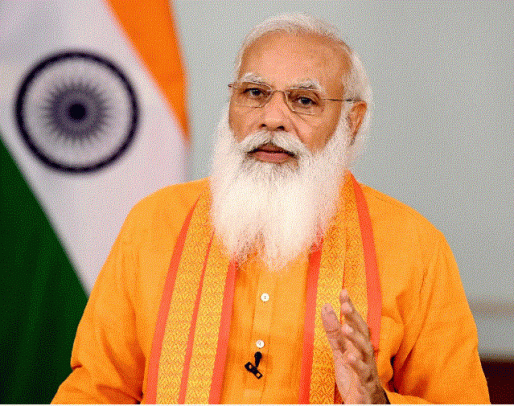
On Sunday, PM Modi talked about Independence Day Celebrations and Tokyo Olympics in Mann Ki Baat.

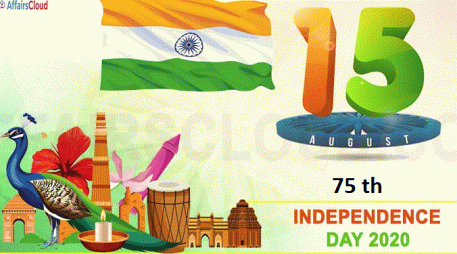
The Prime Minister in his Mann Ki Baat on Sunday urged the countrymen to be ready to celebrate India’s 74th Independence Day next month.
And asked to support the athletes in the Tokyo Olympics.

Addressing the state through his month-to-month radio program Mann Ki Baat on Sunday, Prime Minister Narendra Modi said that every Indian felt proud to see the contingent at the Tokyo Olympics and urged people to make Team India happy and requested help. “To guide our Olympic group on social media, the ‘Victory Punch Campaign’ has started. You support your team and share the victory. And the Prime Minister said that you also share the victory of the country. And cheer for India,

Referring to August 15, PM Modi said this year’s Independence Day is special since India is entering the 75th year of its independence. He said that a website called Rashtragaan.in has been created, and urged people across the nation to send a recording of singing the national anthem of India.

During the address, the prime minister also urged people to read the story of Kargil ahead of Kargil Vijay Diwas tomorrow. “Tomorrow is Kargil Vijay Diwas. Kargil war  is such a symbol of valour and discipline of our armed forces which the entire world has witnessed. I would like you to read the thrilling story of Kargil. Let us all salute the brave hearts of Kargil,” he said.

He also said that the Ministry of Culture had taken up a new initiative to mark Amrut Mahotsav. The idea behind this was to make people follow the path shown by the freedom fighters, he said.

Talking about the National Handloom Day which is celebrated on August 7, Modi spoke about the historical background, when the Swadeshi movement began in 1905. He urged people to support local entrepreneurs, artists, artisans, weavers by buying handloom and Khadi products. “Buy handloom products and share on social media with #MyHandloomMyPride,” Modi said.

PM Modi also spoke about how technology was being harnessed for the greater good, by speaking about the life journeys of two people from Andhra Pradesh and Odisha.

At the end of the speech, PM Modi said that the Covid – 19 pandemic was not over and asked the citizens to follow Covid-19 protocols and maintain social distancing.