WHY DO PEOPLE LOVE TRAVELING.

Everyone wants to travel and explore the world. Traveling is like a dream for so many peoples. How important it is to travel. So what’s all this fuss about? Why do people love travelling?

Photo by Chanaka Madushan Sugathadasa on Pexels.com

People love to travel because they love to explore themselves and want to know the world. They wants to know the facts about the places, become creative, love to communicate with the people of different countries, different religions and languages. Travelling is also a very important part of our life, it taught us so many things like how can we handle the problems and how to fight them alone. We become more practicle, more adaptive to the change and more connected to the others.

More importantly, why should we travel more :- Traveling change you physically and psychologically. Make your mind fresh. You feel connected to the world. Everyone wants change in the life, getting bored with the same taste, place or routine. Traveling is also one of the thing to give you some change in your life. Sometimes it is best to take a step back, take a deep breath and get some tower bridge selfie. It gives you some good vibes, you get out of all the distraction, tension and depression, and more of that you feel so much better and energetic.

Traveling makes you smarter:- By traveling to the different countries, places you become more interactive to the peoples of different culture, relegion and language. Learn something new and used to picking up new words from the different languages. It makes you more intelligent, sharp and smart. It helps you to interact and communicate with others and become more familiar. While travelling you will observe the the environment and also the change in yourself. It builds up your confidence which helps you to face chalanges without fear and hesitation.

How to become a traveller:- Become a traveller is not an easy job. If you want to become a traveller first you need money, time and lots of research on your favourite places where you want to travel. You can also get paid for it if you are professional traveller. There are so many companies of different countries who hires travellers to present their places through bloging and advertising and they get paid for it. But if you want to become a professional traveller you must have a good knowledge of the language and countries, and good in english. Share your experiences on social media sites.

Photo by Catarina Sousa on Pexels.com

Benefits of travelling :- While travelling you can blog and show the beautiful place on your social media sites. Become a travelling model. And you get paid for promoting the place by become the model of tourist companies. Traveling makes you comfortable while talking with strangers, it makes you better at it too. Traveling makes you more confident at your own skills, independent, focused and concentrated.

Photo by Bhupendra Singh on Pexels.com

Travelling is not a bad idea for refreshing your self, if you have sufficient resources, time, money and great research and knowledge about the places. Trying something new is not bad and traveling is a good option. you can make some new memories, learn new things, change your taste, trying some different kind of food, elaborate your skills and having fun with friends and families. Travelling is a good option for a career.

Psychological facts

In this blog, we are going to see some unknown psychological facts that every human must know.

Amazing psychological facts

  1. The word psychology has been derived from a Greek word called psyche meaning to study of.
  2. When we are crying from happiness the first tear will come out from right eye whereas, when we are crying from sadness the first tear will come out from left eye.
  3. Being alone from long time is bad for health as smoking 15 cigarettes per a day.
  4. According to a survey, people who live in blue room are more productive.
  5. People aged between 18 to 33, are the most stressed in this world, while the stress tend to decrease from 33.
  6. Your brain treats rejection as a physical pain.
  7. When you try to remember a past event, you’re actually remembering the last time you remember it.
  8. We’re the most imaginative at night and least creative at day.
  9. Closing your eyes help you to remember things
  10. 97 percent of the people write there own name when given a pen.
  11. If you don’t dream, then you must have a personality disorder.
  12. Babies born on May are much more heavier than other babies in other months.
  13. 70 percent of the dreams contains a secret message.
  14. Money can buy happiness, up to a certain extent.
  15. The strangers in your dreams, actually are the people you seen in your real life.
  16. People who give the best advice, are the one who has more problems.
  17. People are much more likely to return a missing wallet, if a picture of child found inside in it.
  18. Almost twice of serial killers are born in the month of November.
  19. Our brain size has been decreased from 10 percent, when we are hunters.
  20. Funny people are more depressed than normal people.
  21. Smart people tend to have fewer mates than a normal person.
  22. Travelling improves the well being of brain and decrease the chance of getting heart diseases.
  23. 80% of the people use music to escape from negative things.
  24. If you have plan A and plan B, then plan A is less likely to succeed.
  25. Food tastes better when someone less make it.
  26. Our brain tries to make boring things more interesting.
  27. Our brain want us to be lazy.
  28. The beginning and the ending are easier to remember than the middle.
  29. The cells in your body reacts to every thing your mind says.
  30. Good liars are good at detecting lies of others.
  31. It takes about 66 days to a normal person to make a daily habit.
  32. A average person mind wanders 30% of the time.
  33. You can remember 3 to 4 things at a time.
  34. People who swear a lot are tend to more loyal and honest with there friends.
  35. The fastest supercomputer in the world requires 24 million watts of power, whereas our brain requires just 20 watts to operate 100,000 times faster.
  36. People seems to be happy when they are kept busy.
  37. Chocolate discharges the chemical Oxytocin which is the same chemical your body produces when you are happy. 
  38. You can read faster with a long line but prefer to read short line.
  39. Blue and red together is hard for your eyes.
  40. Memories can be stored for both long term and short term at a same time.

That’s all from my side. I hope you like it.

How to build Good Habits ?

Habits are the secret sauce to a healthy life – or the recipe for an unhealthy one, depending on what’s in question. Habits are tricky little creatures in that they’re easy to build when they immediately reward us, but feel near impossible to start when the benefits aren’t instantly obvious. 

Nearly everyone has a bad habit that needs breaking. Sometimes these habits are relatively harmless (say, biting your nails) but others, when broken, stand to greatly improve your quality of life.

1.Understand the difference between your good habits and bad habits

In exact definition, a habit is a repetitive action or behavior, a routine. The difference between a good habit and a bad habit is whether or not it enhances or diminishes your life. A good habit promotes a healthy goal that betters your life. A bad habit leads you further and further from your goals and what you want out of life.

To distinguish between a good habit or a bad habit, ask yourself the question, “If I do this every day for the next ten years, what will my life look like?”

2. Anticipate your distractions

Get your notebook, think about a habit you’re trying to form, and write down everything you can think of—screwing around on Twitter, suddenly making a lasagna, brushing the dog—that might block your ability to participate. Please also make a list of the people in your life who may be too partylicious to be around while you give up drinking, too pessimistic to hang out with while you do your part to help end world hunger, too chatty to talk with while you quit gossiping—and make a point to limit your time with them.

3. Choose what you want to change

The first step in building a good, healthy habit is choosing what you want to change. Considering your goals for your physical and mental health or your personal values is a great place to start. What habit, if done every day, will bring you closer to your desired outcomes?

4. Write it down (in all caps)

Write down the habit you’re going to work on in a notebook. Once you focus on and embody it, it’ll become just a part of who you are, and nothing special. And then, because we’re all creatures in a constant state of transformation, you’ll shift your attention to some newer, fresher habit, and you’ll have the confidence, know-how, and tools to make it yours as well.

5. Mark each day that you show up

You know what’s immediately satisfying? Tracking your habits. While you may not see the actual results of the actions you take every day, you will see how many days you’ve stayed on course with the new habit, which is a huge accomplishment in itself. Each time you successfully participate in your habit—walk three miles, say not one snarky thing to your mother—mark that day on a calendar.

6. Reward and celebrate your success as you go

Building a new practice or a new routine takes time and patience, so don’t forget to reward your success! When you remember to practice your habit, congratulate yourself by adding in a little something nice for yourself as a reward.

“We are what we repeatedly do. Excellence, then, is not an act, but a habit.”

CBDC; digital currency put forward by RBI

The Reserve Bank of India is likely to soon kick off pilot projects to assess the viability of using digital currency to make wholesale and retail payments to help calibrate its strategy for introducing a full-scale central bank digital currency (CBDC).

India is already a leader in digital payments, but cash remains dominant for small-value transactions, he said, stressing that an official digital currency would reduce the cost of currency management while enabling real-time payments without any inter-bank settlement.

“Every idea has to wait for its time, perhaps the time for a CBDC is here,” RBI Deputy Governor T. Rabi Sankar said on Thursday. “Like other central banks, we have also been exploring the pros and cons of this since quite some time,” he added. A high-level inter-ministerial committee set up by the Finance Ministry had recommended the introduction of a CBDC with changes in the legal framework including the RBI Act, which currently empowers the RBI to regulate issuance of bank notes.

Transacting with CBDC would be an instantaneous process as the need for inter-bank settlement would disappear as it would be a central bank liability handed over from one person to another, Mr. Sankar pointed out. Moreover, foreign trade transactions could be speeded up between countries adopting a CBDC. “India’s fairly high currency-to-GDP ratio holds out another benefit of CBDC — to the extent large cash usage can be replaced by CBDC, the cost of printing, transporting and storing paper currency can be substantially reduced,” Mr. Sankar said at a discussion hosted by Vidhi Centre for Legal Policy. CBDC will be India’s sovereign currency in an electronic form.

According to the RBI deputy Governor, since CBDC is a currency that does not pay interest, its impact on bank deposits may “actually” be limited.“Depositors that require CBDCs for transactional purposes are likely to sweep day end balances to interest-earning deposit accounts,” he said.

However, he said that CBDC is not comparable to the private virtual currencies that have mushroomed over the last decade. He said, “Private virtual currencies sit at substantial odds to the historical concept of money. They are not commodities or claims on commodities as they have no intrinsic value; some claims that they are akin to gold clearly seem opportunistic.”

Complements fiat currency?

Sajai Singh, Partner at J Sagar Associates, said, “RBI is moving in the right direction with regard to digital currencies. Any RBI backed digital currency will come with a promise of less volatility and greater security for the bearer of the same. This will be very different from cryptocurrencies, like Bitcoin and Ethereum, which are rather popular, but carry innumerable risks. Also, RBI’s support to a digital currency will ensure its financial stability. It will be similar to say a potential digital Euro and digital Yuan.”

FaTE of crypto’s

According to Patel, CBDC’s might have a negligible direct impact on private digital currencies such as Bitcoin, Matic, Doge, etc. These private cryptocurrencies are based on ‘decentralization’. “The sovereign digital currencies are in stark contrast to decentralization, as the central banks govern and control them. However, as and when CBDCs start gaining more adoption, people would get to learn more about private cryptocurrencies as well. It would indirectly act as a catalyst to creating awareness of the practical usage of cryptocurrencies. That is when the crypto markets would start getting increased retail participation as well,” he told FE Online.

Kargil Diwas 2021(Kargil war)

Why is Kargil Diwas celebrated? What exactly happened in Kargil? Let us get acquainted with Kargil War and honor our guardians as India celebrates 23 Years of victory in the Kargil war on 26 July 2021.

The Kargil War, also known as the Kargil conflict, was an armed conflict fought between India and Pakistan from 3 May 1999 – 26 Jul 1999 in the Kargil district of Kashmir and elsewhere along the Line of Control.

Kargil:

Kargil is a City in Kargil district and the joint capital of the union territory of Ladakh. It impinges on the line of control between the portions of the Kashmir region administered by India and Pakistan.  After Pakistan’s defeat in the Indo-Pakistani War of 1971, the two nations signed the Shimla Agreement promising not to engage in armed conflict with respect to that boundary.

How did the war start?

The Pakistani troops who were disguised as Kashmiri militants infiltrated into the Indian side of the LoC and strategically unoccupied areas locations in Drass, Kargil. Pakistan tried to create conflicts between Kashmir and Ladakh by calling the intruders “Kashmir Freedom Fighters” and tried to involve third parties to internationalize this issue. Probably their main aim was to bring Kashmiris on their side by creating upheaval through wars( Constant wars bring uncertainty to citizen’s safety and creates political imbalance). But, later they awarded Pakistani soldiers, removing the doubts regarding their involvement.

The positions of the enemy made the commutation hard through NH-1A, the national highway from Srinagar to Leh. The Pakistani government denied their involvement and blamed everything on Kashmiri militants. But, the retaliation and proofs like letters gathered by Ladhaki Scouts when they went to check on enemies proved that they were indeed from the Pakistani army.

The Indian Navy also prepared to blockade the Pakistani ports, especially the Karachi port, began aggressive patrols to  cut off supply routes under Operation Talwar

India retaliated, forcing remaining Pakistani fighters to retreat from the Indian zone. There were huge causalities. The official death toll on the Indian side was 527, while that on the Pakistani side was between 357 and 453.

Indian Army, Air force and Navy carried out Operation Vijay, Safed Sagar and Talwar respectively to provide India an all-round support.

Pakistan had named its move to take over the control of Indian posts along the LoC as Operation Badr, India called its çounter-offensive Operation Vijay.

Even now, the risk of infiltration and rise in insurgency in Kashmir due to chaos poses a threat. Using a third intervention to negotiate isn’t going to work and just increases misunderstanding. After 2 decades, tensions among LoC never settles down. Cease-fire resolutions have been adopted but they are violated every now and then; costing many lives in Kashmir.

This Kargil Diwas, let more resolutions and active, significant actions be taken to out an to this terrifying regional dispute.

“Vijay Diwas” (Victory Day) is celebrated on 26th July every year to cherish this victory and to honor our soldiers who put their lives on line constantly.

Latest news regarding Kargil Day:

Army Organizes Motorcycle Rally To Mark 22 Years Of Kargil War Victory

https://www.ndtv.com/india-news/army-organises-motorcycle-rally-to-mark-22-years-of-kargil-war-victory-2492408

Movie recommendation: Outsourced

Outsourced is one of the few movies that have always remained my favourite.  Being an Indian English literature enthusiast, seeing a decent representation of India in the silver screen has always been a matter of interest. Outsourced is one such film without any exaggeration whatsoever about the Indian culture. It is a modern-day comedy of cross-culture conflicts and romance.

 The movie revolves around Todd Anderson who is outsourced to India to work at a call centre who was sent with a mission of reducing the call time there. He finds the Indian work culture quite unprofessional. He believes that the calls are not duly answered or customers are often ‘hit-on’ by the agents. He goes on demanding more from his workers without actually knowing them. He starts teaching them American English, as the customers would prefer talking to a native English speaker. Here we see how the westerners keep their culture and language as the primary point of judging other cultures, just like Americans inherited the language from the brits, Indians too have acquired the language. But the accented pronunciation is somehow off-putting for them. One of his coworkers, Asha, points out this fact and even goes on to say unlike American English speakers who makes unnecessary reductions, Indians have a better pronunciation of the language. Todd goes on to reduce the call time to the required limit with the help of Asha and flies back to the USA, leaving behind a strong connection.

The most commendable part of the movie is the raw representation of India, Holi not being about filmy songs, not all Indians have an accented pronunciation, and everyone you see is not thieves, being some of them. It shows how acclimated Indians are to the western culture while still retaining their innate culture.

Palliative care is need of Lifeline

End of life care includes Palliative care . If you have an illness that cannot be cured, Palliative care makes you as comfortable as possible , By managing your pain and other distressing symptoms . It also involves psychological , social and spiritual support for you and your family or careers . End of life care provides proactive palliative care services at home , symptom management to individuals in advanced stages of illness. End-of-life care addresses the medical, physical, social, emotional and spiritual needs of the patient . It helps patients enjoy the comforts of home and family, draw on social and emotional support, and manage symptoms such as pain, shortness of breath, nausea, extreme fatigue, loss of appetite and inability to sleep. Many patients and their families find that the emotional support and management of physical symptoms provided by end-of-life care, can make a huge difference in the equality of life of a patient in his last days of life. End-of-life care is available for patients with advanced life -limiting conditions of any type, including end-stage demetia , AIDS, heart disease or emphysema- as well as cancer. Our Ends-of-life care teams work together with the patient, family and the patients physician to: improve quality of life; relieve physical, emotional and spiritual distress; provide an individual plan of care ; and give support to family members. It includes full-time physicians who has experience in palliative care. Nurses with special training in palliative care. Social workers with understanding of understanding of special conditions of palliative care. Dietitians, home health aides and therapists who specialize in complementary medicine. Spiritual care counselors.

Transmission Mode :

When two computers are in communication,data transmission may occur in one of the three modes

🔸️one way only
a) Simplex mode

🔸️Both ways but one way at a time
b) Half- duplex mode

🔸️Both ways simultaneously
c) Full-duplex mode

🌟Simplex mode🌟:

In Simplex mode,data can be transmitted in one direction as shown in below.
The device using the Simplex mode of transmission can either send or receive data, but it cannot do both. An example is the traditional television broadcast, in which the signal sent from the transmitter to the TV. There is no return signal. In order words a TV cannot send a signal to the transmitter.

🌟Half duplex mode🌟:

In Hslf duplex mode data csn be transmitted back and forth between two stations. But at any point of the time data can go in any one direction only. This arrangement resembles traffic on a one-lane bridge. When traffic moves in one direction, traffic on the opposite direction is to wait and take their turn. The common example is walky-talky, wherein one waits for his turn while the other talks.

🌟Full duplex mode🌟:

In full duplex mode a device can simultaneously send or received data. This arrangement resembles traffic on a two-way bridge, traffic moving on both directions simultaneously. An example is two people on the telephone talking and listening simultaneously. Communication in full duplex mode is faster. Full duplex transmission is used in large computer systems. Products like “MicrosoftNet Meeting” supports such two way interaction.

INTERNATIONAL SPACE STATION

ISS is a large spacecraft which can house astronauts. It goes around in low Earth orbit at approximately 400 km distance. It is also a science laboratory. Its very first part was placed in orbit in 1998 and its core construction was completed by 2011. It is the largest man-made object in space which can also be seen from the Earth through the naked eye. The first human crew went to the ISS in 2000. Ever since that, it has never been unoccupied by humans. At any given instant, at least six humans will be present in the ISS. According to the current plan, ISS will be operated until 2024, with a possible extension until 2028. After that, it could be deorbited, or recycled for future space stations.

Benefits of ISS

According to NASA, the following are some of the ways in which the ISS is already benefitting us or will benefit us in the future.

Supporting water-purification efforts

Using the technology developed for the ISS, areas having water scarcity can gain access to advanced water filtration and purification systems. The water recovery system (WRS) and the oxygen generation system (OGS) developed for the ISS have already saved a village in Iraq fry being deserted due to lack of clean water.

Eye tracking technology

The Eye Tracking Device, built for a microgravity experiment, has proved ideal to be used in many laser surgeries. Also, eye tracking technology is helping disabled people with limited movement and speech. For example, a kid who has severe disability in body movements can use his eye-movements alone and do routine tasks and lead an independent life.

Robotic arms and surgeries

Robotic arms developed for research in the ISS are providing significant help to the surgeons in removing inoperable tumours (e.g. brain tumours) and taking biopsies with great accuracies. Its inventors say that the robot could take biopsies with remarkable precision and consistency.

Apart from the above-mentioned applications, there are many other ways in which the researches that take place in the ISS are helpful. They are: development of improved vaccines, breast cancer detection and treatment, ultrasound machines for remote regions etc,.

ISS and International Cooperation

As great as the ISS’ scientific achievements are, no less in accomplishment is the international co-operation which resulted in the construction of the ISS. An international collaboration of five different space agencies of 16 countries provides, maintains and operates the ISS. They are: NASA (USA), Roskosmos (Russia), ESA (Europe), JAXA (Japan) and CSA (Canada). Belgium, Brazil, Denmark, France, Germany, Italy, Holland, Norway, Spain, Sweden, Switzerland and the UK are also part of the consortium.

Hard Working

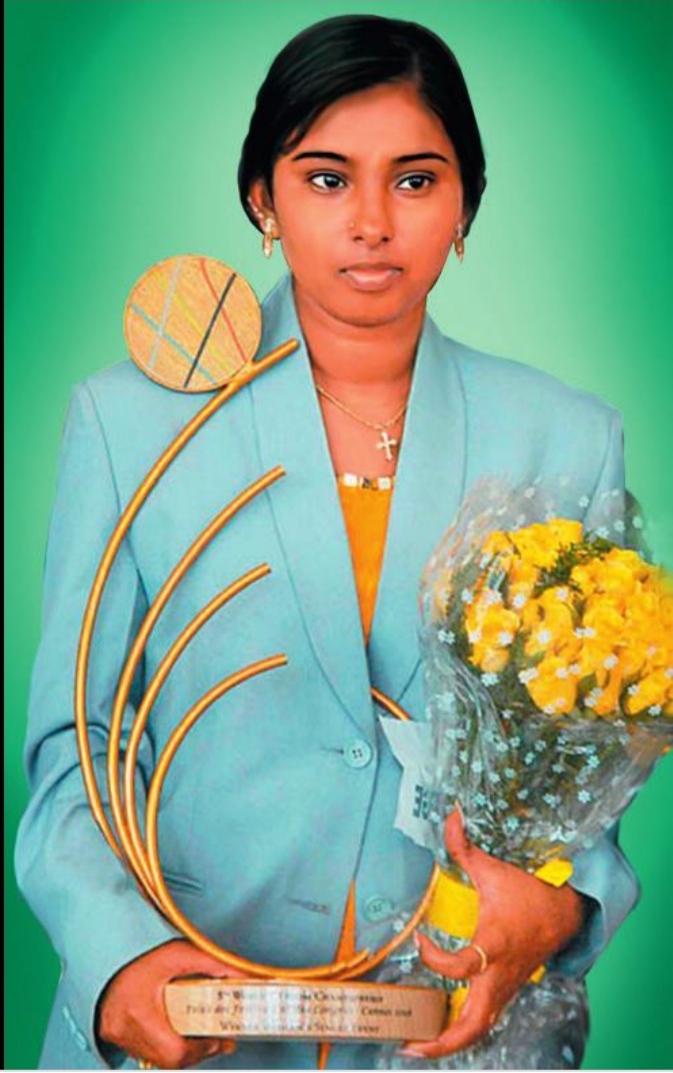
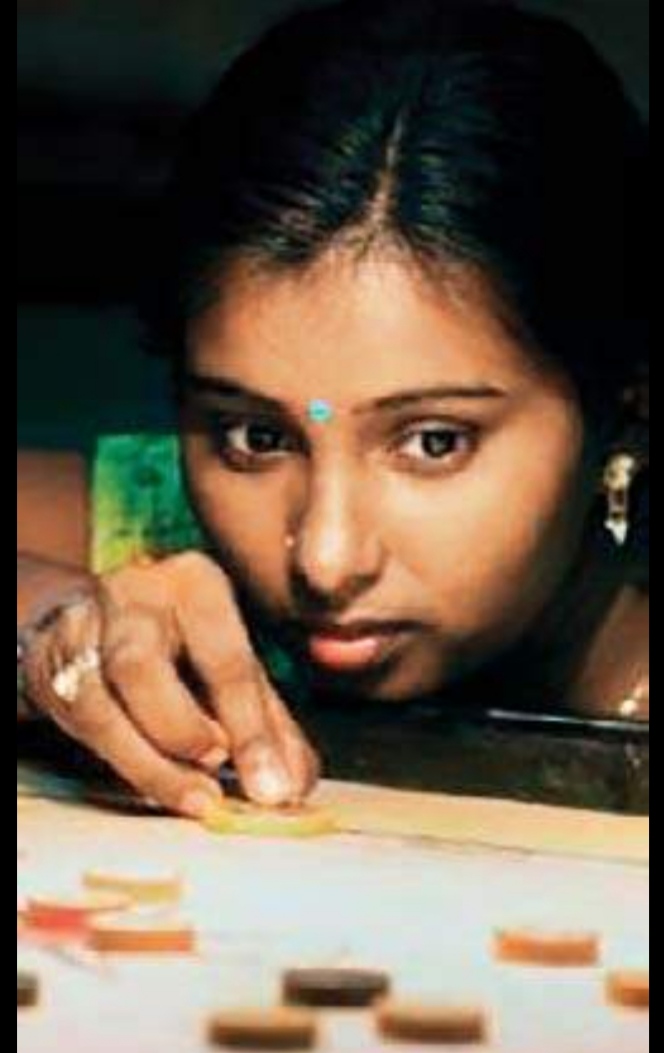
The hard working and the passionate people, always chase their dream and live it. Ilavazhagi is one among the many to achieve her dreams amidst all odds. Mr. A. Irudayaraj, her father, was a district level champion in carrom. His dream shattered, since his family did not encourage and support him. He was determined to achieve his dream through his daughter. He used to put his daughter on the carrom board, while she listened to the sounds of striker and coins. When she was two years old, he would carry her with him to the tournaments ; he played with his friends at local clubs. Her father began coaching her when she was around five. One day her father called her for a match, and she won that match, which gave her confidence. The confidence led her to win. Her victories included the Asia Cup and ( South Asian Association for Regional Cooperation) cup and the world championship.

Irudayaraj, a fish- cart driver who transports materials like pipes to make a living for his family – a wife and three daughters. They lived in a small one – room apartment in Vyasarpadi, Chennai, is not enough to accommodate the family. The trophies, she has won over the years are too many, and her home is just not big enough to keep them. The trophies left over after filling the space under the bed, were given to the neighbours and relatives. Financing the trips has always been a big trouble, though she has been playing for the state for almost 14 years. Still she says “Victories follow me”. Ilavazhagi is a member of the Thiruvallur District Carrom Association and also represented India at the Carrom World Championship, Asian Championships.

LGBT COMMUNITY

BY: VAIBHAVI MENON

LGBT or GLBT is an initialism that stands for lesbian, gay, bisexual, and transgender. In use since the 1990s, the term is an adaptation of the initialism LGB, which began to replace the term gay in reference to the broader LGBT community beginning in the mid-to-late 1980s. The first widely used term, homosexual, now carries negative connotations in the United States. It was replaced by homophile in the 1950s and 1960s, and subsequently gay in the 1970s; the latter term was adopted first by the homosexual community. As lesbians forged more public identities, the phrase “gay and lesbian” became more common. A dispute as to whether the primary focus of their political aims should be feminism or gay rights led to the dissolution of some lesbian organizations, including the Daughters of Bilitis, which disbanded in 1970 following disputes over which goal should take precedence.

As equality was a priority for lesbian feminists, disparity of roles between men and women or butch and femme were viewed as patriarchal. Lesbian feminists eschewed gender role play that had been pervasive in bars as well as the perceived chauvinism of gay men; many lesbian feminists refused to work with gay men, or take up their causes. Lesbians who held the essentialist view, that they had been born homosexual and used the descriptor “lesbian” to define sexual attraction, often considered the separatist opinions of lesbian-feminists to be detrimental to the cause of gay rights. Bisexual and transgender people also sought recognition as legitimate categories within the larger minority community. After the elation of change following group action in the 1969 Stonewall riots in New York City, in the late 1970s and the early 1980s, some gays and lesbians became less accepting of bisexual or transgender people. Critics said that transgender people were acting out stereotypes and bisexuals were simply gay men or lesbian women who were afraid to come out and be honest about their identity. Each community has struggled to develop its own identity including whether, and how, to align with other gender and sexuality-based communities, at times excluding other subgroups; these conflicts continue to this day. LGBTQ activists and artists have created posters to raise consciousness about the issue since the movement began.

From about 1988, activists began to use the initialism LGBT in the United States. Not until the 1990s within the movement did gay, lesbian, bisexual, and transgender people gain equal respect. This spurred some organizations to adopt new names, as the GLBT Historical Society did in 1999. Although the LGBT community has seen much controversy regarding universal acceptance of different member groups (bisexual and transgender individuals, in particular, have sometimes been marginalized by the larger LGBT community), the term LGBT has been a positive symbol of inclusion. Despite the fact that LGBT does not nominally encompass all individuals in smaller communities (see Variants below), the term is generally accepted to include those not specifically identified in the four-letter initialism. Overall, the use of the term LGBT has, over time, largely aided in bringing otherwise marginalized individuals into the general community. Transgender actress Candis Cayne in 2009 described the LGBT community as “the last great minority”, noting that “We can still be harassed openly” and be “called out on television”.

WHAT REALLY ARE VACCINES?

BY: VAIBHAVI MENON

A vaccine is a biological preparation that provides active acquired immunity to a particular infectious disease. A vaccine typically contains an agent that resembles a disease-causing microorganism and is often made from weakened or killed forms of the microbe, its toxins, or one of its surface proteins. The agent stimulates the body’s immune system to recognize the agent as a threat, destroy it, and to further recognize and destroy any of the microorganisms associated with that agent that it may encounter in the future. Vaccines can be prophylactic (to prevent or ameliorate the effects of a future infection by a natural or “wild” pathogen), or therapeutic (to fight a disease that has already occurred, such as cancer).

The administration of vaccines is called vaccination. Vaccination is the most effective method of preventing infectious diseases; widespread immunity due to vaccination is largely responsible for the worldwide eradication of smallpox and the restriction of diseases such as polio, measles, and tetanus from much of the world. The effectiveness of vaccination has been widely studied and verified; for example, vaccines that have proven effective include the influenza vaccine, the HPV vaccine, and the chicken pox vaccine. The World Health Organization (WHO) reports that licensed vaccines are currently available for twenty-five different preventable infections. The terms vaccine and vaccination are derived from Variolae vaccinae (smallpox of the cow), the term devised by Edward Jenner (who both developed the concept of vaccines and created the first vaccine) to denote cowpox. He used the phrase in 1798 for the long title of his Inquiry into the Variolae vaccinae Known as the Cow Pox, in which he described the protective effect of cowpox against smallpox. In 1881, to honor Jenner, Louis Pasteur proposed that the terms should be extended to cover the new protective inoculations then being developed. The science of vaccine development and production is termed vaccinology. There is overwhelming scientific consensus that vaccines are a very safe and effective way to fight and eradicate infectious diseases. The immune system recognizes vaccine agents as foreign, destroys them, and “remembers” them. When the virulent version of an agent is encountered, the body recognizes the protein coat on the virus, and thus is prepared to respond, by first neutralizing the target agent before it can enter cells, and secondly by recognizing and destroying infected cells before that agent can multiply to vast numbers. Limitations to their effectiveness, nevertheless, exist. Sometimes, protection fails because of vaccine-related failure such as failures in vaccine attenuation, vaccination regimes or administration or host-related failure due to host’s immune system simply does not respond adequately or at all. Lack of response commonly results from genetics, immune status, age, health or nutritional status. It also might fail for genetic reasons if the host’s immune system includes no strains of B cells that can generate antibodies suited to reacting effectively and binding to the antigens associated with the pathogen.

Even if the host does develop antibodies, protection might not be adequate; immunity might develop too slowly to be effective in time, the antibodies might not disable the pathogen completely, or there might be multiple strains of the pathogen, not all of which are equally susceptible to the immune reaction. However, even a partial, late, or weak immunity, such as a one resulting from cross-immunity to a strain other than the target strain, may mitigate an infection, resulting in a lower mortality rate, lower morbidity, and faster recovery. Adjuvants commonly are used to boost immune response, particularly for older people whose immune response to a simple vaccine may have weakened.

Management of hazardous and non-hazardous wastes

Management of hazardous wastes

Hazardous wastes may remain dangerous for thousands of years.Tye hazardous waste include radioactive refuse, metallic compounds, organic solvents, acid asbestos, organic cyanide’s, hospital wastes, disposable medical equipments and tools.

The hazardous methods are adopted for the disposal of hazardous wastes.

⭐Landfills:There are permanent storage facilities for military related liquid and radioactive waste materials in secured lands.High level radio active wastes are stored in deep underground storage.

⭐Deep well injection:It involves drilling a well into dry,porous material below ground water.Hazardous waste liquids are pumped into the well.They are soaked into the porous material and made to remain isolated indefinitely.However fractures in the impermeable layer may permit the injected wastes to escape and contaminate ground water.

⭐ Surface impoundments:This method is used to dispose large amounts of water carrying relatively small amounts of chemical wastes.Surface impoundments are simple excavated depressions(ponds)into which liquid wastes are drained.Solid wastes settle and accumulate which water evaporates.If the pond bottom is well sealed and if evaporation equals input,wastes may be stored in the impoundment indefinitely.

⭐Incineration:The hazardous biomedical wastes are usually disposed off by means of Incineration.Human anatomical wastes,discarded medicines,toxic drugs,blood,pus, animal wastes,microbiological and biotechnological wastes etc are called Bio medical wastes.

⭐ Bioremediation:This is another rapidly developing clean up technology.Cleaning environment with biological options such as microbes and plants is called Bioremediation.Some naturally occurring bacteria and other microorganisms have the capability to degrade or absorb or detoxify the wastes such as heavy metals.

Management of non hazardous wastes

⭐ Sanitary land fills:The refuse is spread in a hollow land or in a trench and compacted with a layer of clear sand fill.The sanitary land fills are far more desirable than open dumps but the ground water contaminated is always a potential problem.Once a land fill operation has been completed the site must be inspected periodically.This land fill is suitable for recreational activities such as parks and play ground.

⭐Incineration:Municipal incinerators burn combustible solid waste and melt certain non combustible materials.Since the high temperature destroys pathogens and their vectors,it is a good method of disposal from health point of view.

⭐Reuse and recycling techniques: Resource recovery is a broad term that is used for the retrieval of valuable materials or energy from a waste.The separating out of materials such as rubber,glass,paper and scrap metal from refuse and reprocessing them for reuse is named as reclamation of waste or recycling.

Paper(54% recovery) can be repulped and reprocessed into recycled paper, cardboard,and other paper products.

Glass(20% recovery)can be crushed, remelted and made into new containers or crushes used as a substitute for gravel or sand in construction materials such as concrete and asphalt.

Some forms of plastics(2.2% recovery) can be remelted and fabricated into carpet fibre,fill for insulated apparel, irrigation drainage,tiles and sheet plastics.

Metals can be melted and fabricated (39% recovery).

Food wastes and yard wastes(leaves,grass etc.) can be composted to produce humus soil conditioner.

Textiles can be shredded and used to strengthen recycled paper products.

ARRANGED MARRIAGES

BY: VAIBHAVI MENON

Arranged marriage is a type of marital union where the bride and groom are primarily selected by individuals other than the couple themselves, particularly by family members such as the parents. In some cultures a professional matchmaker may be used to find a spouse for a young person. Arranged marriages have historically been prominent in many cultures. The practice remains common in many regions, notably South Asia, though in many other parts of the world, the practice has declined substantially during the 19th and 20th centuries. Forced marriages, practiced in some families, are condemned by the United Nations, and is not an arranged marriage. The specific sub-category of forced child marriage is especially condemned. In other cultures people mostly choose their own partner.

Arranged marriages were very common throughout the world until the 18th century. Typically, marriages were arranged by parents, grandparents or other relatives. Some historical exceptions are known, such as courtship and betrothal rituals during the Renaissance period of Italy and Gandharva Vivah in the Vedic period of India. In China, arranged marriages sometimes called blind marriages were the norm before the mid-20th century. A marriage was a negotiation and decision between parents and other older members of two families. The boy and girl were typically told to get married, without a right to demur, even if they had never met each other until the wedding day. Arranged marriages were the norm in Russia before the early 20th century, most of which were endogamous. Until the first half of the 20th century, arranged marriages were common in migrant families in the United States. They were sometimes called “picture-bride marriages” among Japanese-American immigrants because the bride and groom knew each other only through the exchange of photographs before the day of their marriage. These marriages among immigrants were typically arranged by parents, or relatives from the country of their origin. As immigrants settled in and melded into a new culture, arranged marriages shifted first to quasi-arranged marriages where parents or friends made introductions and the couple met before the marriage; over time, the marriages among the descendants of these immigrants shifted to autonomous marriages driven by individual’s choice, dating and courtship preferences, along with an increase in interracial marriages. Similar historical dynamics are claimed in other parts of the world. Arranged marriages have declined in prosperous countries with social mobility and increasing individualism; nevertheless, arranged marriages are still seen in countries of Europe and North America, among royal families, aristocrats and minority religious groups such as in placement marriage among Fundamentalist Mormon groups of the United States. In most other parts of the world, arranged marriages continue to varying degrees and increasingly in quasi-arranged form, along with autonomous marriages.

A woman who refuses to go through with an arranged marriage, tries to leave an arranged marriage via divorce or is suspected of any kind of immoral behaviour, may be considered to have dishonored her entire family. This being the case, her male relatives may be ridiculed or harassed and any of her siblings may find it impossible to enter into a marriage. In these cases, killing the woman is a way for the family to enforce the institution of arranged marriages. Unlike cases of domestic violence, honor killings are often done publicly for all to see and there are frequently family members involved in the act.

BIG ENDIAN AND LITTLE ENDIAN

– There are two ways that byte addresses can be assigned across words.

→ computer store data in Memory 

→Formating at the byte level of the data which is called endianness which refer to ordering of bytes.

→The name big-endian is used when lower byte addresses are used for the more Significant bytes (Left most)

→The little-endian is used for the opposite ordering where lower byte address are used for the less significant bytes (Right most)

Endianness refers to the way bytes are ordered when a data item with a site bigger than 1 Byte is placed in memory / transferred over a communication interface.

Two type of endianness:-

  1. Little endian- The bytes are ordered with the LSB placed at the low and address. 
  2. Big endian- The bytes are ordered with the MSB placed at the lowest address.