Individuals that fall into this generation known as “millennials” are particularly interesting to look into the effects of increased media presence, because they are the generation that is constantly surrounded with updated technology. These individuals are the group of people that are regularly online, taking full advantage of these resources; it has become not just a part of their life but their life in its entirety. Everything this generation does is centered on the Internet, whereas someone from an older generation grew up in a different kind of life, so the effects aren’t nearly as drastic or as meaningful. Millenials are the ones that have grown up with the presence of mass digital media in their lives and were the ones constantly subjected to the consequences of this presence while also adapting to new and improved technologies every day.
The existence of the smartphone has completely altered how this group of individuals interacts and participates in society, because they are the ones who stay constant with the progressions in technology and getting the new “iPhone” every time it is released. “The arrival of the smartphone has radically changed every aspect of teenagers’ lives, from the nature of their social interactions to their mental health. These changes have affected young people in every corner of the nation and in every type of household. The trends appear among teens poor and rich; of every ethnic background; in cities, suburbs, and small towns. Where there are cell towers, there are teens living their lives on their smartphone.” (Twenge). This age group is subjected to a life filled with mass media and technology every day, which results in different circumstances and different lives in comparison to older generations. There is a fundamental difference in how this generation and older generations process, analyze and understand information while they function in society. Comparing those who weren’t raised on the power of a smartphone and in the age of media constantly in your face to those who were, the contrast becomes quite clear.
Media messages can have a negative or unhealthy influence on teenage behavior and attitudes in certain areas, including body image, health and citizenship. Body image:- Your child’s body image is influenced by social media, other media and advertising. If teenagers see unrealistic ‘thin’ or ‘muscly’ body types often enough in the media they follow, it can have an impact on their body image and dieting behavior. This is especially true when there’s no-one to disagree with messages like ‘thin is beautiful’. Health and lifestyle :- Social media and other media can influence the decisions that teenagers make about their health and lifestyle. For example, media messages and content can make it look ‘normal’, cool or grown-up to eat junk food, smoke, drink alcohol and take other drugs. Citizenship:-To be responsible citizens, teenagers need reliable and good-quality information. But social media and other media are sometimes used in negative ways during elections and at other times. For example, ‘fake news’ might influence teenagers to believe false information about a politician, public figure or celebrity. Or sometimes online forums promote biased or hateful attitudes towards groups of people.
One of the shaktipeethas (places of worship where the body parts of the goddess Sati fell), is the Chintpurni Temple located about 50 miles [80 km] from Dharamsala. The supreme deity is Goddess Chintpurni, who is said to remove troubles, and is represented by the pindi (circular goddess). Legend has it that when Lord Vishnu cut the body of Maa Sati in 51 parts to end King Shiva’s dance of the destruction of the earth, the pieces were scattered in different parts of India. Considered one of the most important of the 51 shaktipeethas, it is believed that the head of the goddess Shakti fell to Chintpurni.
The Chintpurni Devi Temple is visited by devotees from all over India, who come to pray at the Lotus feet of Mata Chhinnamastika Devi. Puranic traditions say that Chinnamnamastika Devi is protected by Rudra Mahadev or Lord Shiva on all four sides. At the same distance from Chintpurni stands four Shiva temples, Muchkund Mahadev in the north, Shiva Bari in the south, Kaleshwar Mahadev in the east and Narayna Mahadev in the west. The temple remains open between 4 a.m. and 11 p.m.
A phobia is a type of anxiety disorder defined by a persistent and excessive fear of an object or situation. Phobias typically, result in a rapid onset of fear and are present for more than six months. Those affected will go to great lengths to avoid the situation or object, to a degree greater than the actual danger posed. If the object or situation cannot be avoided, they experience significant distress. Other symptoms can include fainting, which may occur in blood or injury phobia, and panic attacks, which are often found in agoraphobia. Around 75% of those with phobias have multiple phobias.
Phobias can be divided into specific phobias, social phobia, and agoraphobia. Specific phobias include those to certain animals, natural environment situations, blood or injury, and specific situations. The most common are fear of spiders, fear of snakes, and fear of heights. Specific phobias may be caused by a negative experience with the object or situation in early childhood. Social phobia is when a person fears a situation due to worries about others judging them. Agoraphobia is a fear of a situation due to a difficulty or inability to escape. It is recommended that specific phobias be treated with exposure therapy, in which the person is introduced to the situation or object in question until the fear resolves. Medications are not useful for specific phobias. Social phobia and agoraphobia are often treated with some combination of counselling and medication. Medications used include antidepressants, benzodiazepines, or beta-blockers. Specific phobias affect about 6–8% of people in the Western world and 2–4% of people in Asia, Africa, and Latin America in a given year. Social phobia affects about 7% of people in the United States and 0.5–2.5% of people in the rest of the world. Agoraphobia affects about 1.7% of people. Women are affected by phobias about twice as often as men. Typically, the onset of a phobia is around the ages of 10–17, and rates are lower with increasing age. Those with phobias are at a higher risk of suicide. There are various methods used to treat phobias. These methods include systematic desensitization, progressive relaxation, virtual reality, modeling, medication and hypnotherapy. The good news is that over the past several decades, psychologists and other researchers have developed some effective behavioral and pharmacological treatments for phobia, as well as technological interventions.
Cognitive behavioral therapy (CBT) can be beneficial by allowing the person to challenge dysfunctional thoughts or beliefs by being mindful of their own feelings, with the aim that the person will realize that his or her fear is irrational. CBT may be conducted in a group setting. Gradual desensitization treatment and CBT are often successful, provided the person is willing to endure some discomfort. In one clinical trial, 90% of people were observed to no longer have a phobic reaction after successful CBT treatment. There is evidence that supports that eye movement desensitization and reprocessing (EMDR) is effective in treating some phobias. Its effectiveness in treating complex or trauma-related phobias has not been empirically established yet. Mainly used to treat post-traumatic stress disorder, EMDR has been demonstrated as effective in easing phobia symptoms following a specific trauma, such as a fear of dogs following a dog bite
Samsung just released the Galaxy A series, which includes its first 5G smartphone. In India, the Samsung Galaxy A22 5G was launched with the MediaTek Dimensity 700 processor. The Galaxy A22 5G has a 5,000mAh battery, a 90Hz display, and a 5G capability for around 20,000 rupees.
Poco M3 Pro 5G is another phone with the same chipset and 5G capability. It even costs ₹4,000 less than the Samsung Galaxy A22 5G and has been on the market for a few months.
Here’s how the two low-cost 5G smartphones with the same chipset match up against one another:
Performance
The MediaTek Dimensity 700 Processor is included in both the Samsung Galaxy A22 5G and the Poco M3 Pro 5G. The SoC has an octa-core arrangement and is built on a 7nm architecture.
The Dimensity 700 has been modified to operate the two high-speed cores at 2.2GHz and the remaining six cores at 2GHz on both phones.
Both phones are powered by a 5,000mAh battery, however, the Poco M3 Pro 5G’s battery may last longer due to the lack of a high refresh rate screen. The Samsung Galaxy A22 5G receives 15W charging, while the Poco phone supports 22.5W fast charging and comes with an 18W charger.
Memory and storage
The Samsung Galaxy A22 5G comes with 8GB of RAM and 128GB of internal storage in a single memory configuration. Poco M3 Pro 5G, on the other hand, comes in two versions: one with 4GB RAM and 64GB storage, and another with 6GB RAM and 128GB storage. The 4GB model of the Poco M3 Pro was released later.
Camera
Both phones feature a triple camera setup on the back and a single selfie camera on the front. A 48MP main camera, as well as 5MP and 2MP sensors, manage photography on the Samsung Galaxy A22 5G. The Poco M3 Pro, on the other hand, has a 48MP sensor and two 2MP sensors. Both phones have an 8-megapixel front camera.
Display
The Samsung Galaxy A22 5G has a 6.6-inch display with a resolution of 1080 x 2408. The screen has a refresh rate of 90Hz.
The screen of the Poco M3 Pro 5G is a 6.5-inch panel with a resolution of 2400×1080 pixels. It has an adaptive sync display with 30Hz, 50Hz, 60Hz, and 90Hz refresh rates.
Price
The Samsung Galaxy A22 5G has a single version that costs ₹19,999. The Poco M3 Pro 5G in 4GB trim costs ₹13,999, while the 6GB model costs ₹15,999.
The concept of toxic masculinity is used in academic and media discussions of masculinity to refer to certain cultural norms that are associated with harm to society and men themselves. Traditional stereotypes of men as socially dominant, along with related traits such as misogyny and homophobia, can be considered “toxic” due in part to their promotion of violence, including sexual assault and domestic violence. The socialization of boys in patriarchal societies often normalizes violence, such as in the saying “boys will be boys” about bullying and aggression. Self-reliance and emotional repression are correlated with increased psychological problems in men such as depression, increased stress, and substance use disorders. Toxic masculine traits are characteristic of the unspoken code of behavior among men in prisons, where they exist in part as a response to the harsh conditions of prison life.
Other traditionally masculine traits such as devotion to work, pride in excelling at sports, and providing for one’s family, are not considered to be “toxic”. The concept was originally used by authors associated with the mythopoetic men’s movement such as Shepherd Bliss to contrast stereotypical notions of masculinity with a “real” or “deep” masculinity that they say men have lost touch within modern society. Critics of the term argue that its meaning incorrectly implies that gender-related issues are caused by inherent male traits. The concept of toxic masculinity, or certain formulations of it, has been criticized by some conservatives as an undue condemnation of traditional masculinity, and by some feminists as an essentialist concept that ignores the role of choice and context in causing harmful behaviors and attitudes related to masculinity. toxic masculine norms are a feature of life for men in American prisons, where they are reflected in the behavior of both staff and inmates. The qualities of extreme self-reliance, domination of other men through violence, and avoiding the appearance of either femininity or weakness, comprise an unspoken code among prisoners. Suppressing vulnerable emotions is often adopted to successfully cope with the harsh conditions of prison life, defined by punishment, social isolation, and aggression. These factors likely play a role in suicide among male prisoners. Toxic masculinity can also take the form of bullying of boys by their peers and domestic violence directed toward boys at home. The often violent socialization of boys produces psychological trauma through the promotion of aggression and lack of interpersonal connection. Such trauma is often disregarded, such as in the saying “boys will be boys” about bullying. The promotion of idealized masculine roles emphasizing toughness, dominance, self-reliance, and the restriction of emotion can begin as early as infancy. Such norms are transmitted by parents, other male relatives, and members of the community. Media representations of masculinity on websites such as YouTube often promote similar stereotypical gender roles.
The concept of toxic masculinity has also been criticized from a feminist perspective. Andrea Waling and Michael Salter have argued that the concept of “toxic masculinity” in contradistinction to “healthy masculinity” emerged from a misunderstanding of Raewyn Connell’s 1987 work on hegemonic masculinity. To Waling, “toxic masculinity” is problematic because it presents men as victims of an unavoidable pathology, an essentialist approach that ignores the surrounding social and material context and the personal responsibility of men. Instructing men to practice “healthy masculinity” dismisses androgyny and adopting aspects of femininity as valid options for men, thereby perpetuating gender binaries and privileging masculinity over femininity.
A toxic relationship as “any relationship [between people who] don’t support each other, where there’s conflict and one seeks to undermine the other, where there’s competition, where there’s disrespect and a lack of cohesiveness.” While every relationship goes through ups and downs, a toxic relationship is consistently unpleasant and draining for the people in it, to the point that negative moments outweigh and outnumber the positive ones. Toxic relationships are mentally, emotionally and possibly even physically damaging to one or both participants. And these relationships don’t have to be romantic, friendly, familial and professional relationships can all be toxic as well. people who consistently undermine or cause harm to a partner — whether intentionally or not — often have a reason for their behavior, even if it’s subconscious. “Maybe they were in a toxic relationship, either romantically or as a child. Maybe they didn’t have the most supportive, loving upbringing.” “They could have been bullied in school. They could be suffering from an undiagnosed mental health disorder, such as depression or anxiety or bipolar disorder, an eating disorder, any form of trauma.”
Even good relationships take work. After all, our significant other, our close friends, and even our parents aren’t perfect (and, oddly enough, they may not see us as perfect either). We have to learn how to accommodate and adapt to their idiosyncrasies, their faults, their moods, etc., just as they must learn how to do the same with us. And it’s worth it. Some relationships, however, are more difficult and require proportionately more work. We are not clones but individuals, and some individuals in relationships are going to have more difficulties, more disagreements. But because we value these relationships we’re willing to make the effort it takes to keep them. And then there are toxic relationships. These relationships have mutated themselves into something that has the potential, if not corrected, to be extremely harmful to our well being. These relationships are not necessarily hopeless, but they require substantial and difficult work if they are to be changed into something healthy. The paradox is that in order to have a reasonable chance to turn a toxic relationship into a healthy relationship, we have to be prepared to leave it (more about this later). The importance of understanding what defines a toxic relationship is elevated in a global pandemic.
Pandemic precautions have us spending more time at home. Many of us have lost the outlets that bring balance to our social, physical, and mental health–work, friends, the gym, school. Isolation at home can shed new light on the indicators that a relationship is toxic, meaning recent months have been key in identifying unhealthy patterns in our relationships. In April 2020, the Journal of Clinical Nursing reported that “home can be a place where dynamics of power can be distorted and subverted. Often without scrutiny from anyone ‘outside’ the couple or the family unit. In the COVID‐19 crisis, the exhortation to ‘stay at home’ therefore has major implications for those adults and children already living with someone who is abusive or controlling.”
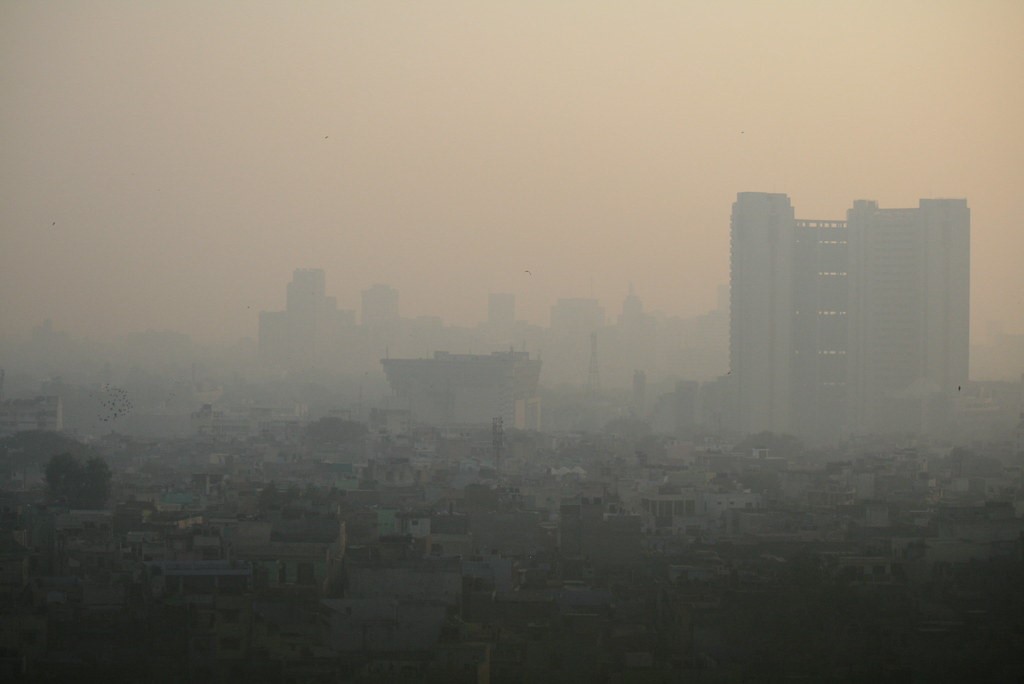
The Air (Prevention and Control of Pollution) Act was passed in the early 1980s, but due to lax regulation, it has failed to make an impact. India ranks third in the world in terms of greenhouse gas emissions, trailing only China and the United States.
India was marked the fifth most polluted country by WHO (2019) based on PM2.5 emission concentrations, with 21 of the top 30 contaminated cities being in India.
According to WHO (2016), air pollution was responsible for one out of every nine deaths in 2012, with roughly 30 lakh deaths entirely attributable to outdoor air pollution.
In India alone, air pollution was estimated to have caused approximately 11 lakh premature deaths in 2017 (HEI 2019), with 56 percent of those deaths linked to exposure to outdoor PM2.5 concentrations and 44 percent to domestic air pollution. Indians are susceptible to an average of 83.2 g/cubic meter of PM2.5 pollutants, opposed to a much lower level of merely 8 g/cubic meter in cleaner countries.
SOURCES OF POLLUTION
Over time, India’s air quality has deteriorated due to large expansions in industries, population density, human activities, and the increased usage of automobiles. Transportation, factories, agriculture, power, waste management, biomass burning, household, construction, and demolition waste are the seven key sectors that contribute to air pollution.
Industry accounts for 50% of the pollution, with cars accounting for 27%, agricultural burning for 17%, and household cooking accounting for 7%. Air pollution-related diseases claim the lives of about 2 million Indians.
In practically every city, the transportation sector is the primary source of air pollution, although this situation is exacerbated in metropolitan areas.
In recent decades, the country has undergone considerable industrialization. As a corollary, the air quality in most metropolitan areas has plummeted. Polluting firms were divided into 17 categories by the Central Pollution Control Board (CPCB), all of which were small and medium-sized businesses. Seven among those industries designated as “essential,” namely iron and steel, sugar, paper, cement, fertilizers, copper, and aluminum. SPM, SOX, NOX, and CO2 emissions being the principal pollutants.
The main pollutants emitted by farming activities are ammonia (NH3) and nitrous oxide (N2O). Farming methods such as ‘slash and burn’ are major contributors to photochemical smog.
Power plants constitute a substantial amount of air pollution in India. The biggest source of SO2 and TSP emissions are thermal power plants. Between 1947 and 1997, emissions of SO2, NOX, and PM grew by more than 50 times, according to The Energy and Resources Institute (TERI).
Households are a prime source of pollution in India. Although most metropolitan areas use liquefied petroleum gas (LPG) as a cooking fuel, the bulk of rural Indians rely on cow dung cakes, biomass, charcoal, or wood for cooking and other needs. These emissions have dire impacts on air quality, especially indoor air quality, and may significantly impact health.
People living in polluted cities are prone to a myriad of health concerns, ranging from mild respiratory issues to life-threatening illnesses. PM, O3, SOX, and NOX emissions have the power to damage people’s cardiovascular and pulmonary systems.
More than 100,000 new-borns died as a result of indoor and outdoor harmful pollutants during their first month of life. The usage of charcoal, wood, and dried dung cakes for cooking and heating homes was associated with a substantial number of these deaths.
According to a study, over 30% of Delhi’s population experienced respiratory illnesses in 2016 as a result of air pollution. Another study indicated that between 1990 and 2010, the fatality rate in Delhi due to air pollution doubled. In 1995, 2800 individuals died prematurely in Mumbai as a result of air pollution; which climbed exponentially to 10,800 in 2010. In 2010, the number of premature deaths in Kolkata was projected to be around 13,500 whereas, Delhi recorded 18,600 annual fatalities.
MEASURES IMPLEMENTED TO CUT EMISSIONS
The Central and State governments have taken several steps to reduce pollution and enhance air quality. The use of compressed natural gas (CNG) as an alternative fuel, the odd-even measures enforced in Delhi, the introduction of Bharat Stage VI vehicle and fuel standards,the Pradhan Mantri Ujjwala Yojana (PMUY), and the National Clean Air Programme (NCAP)are all examples of initiatives in this direction.
Adoption of zig-zag technology for stack emissions from brick kilns, online surveillance of emissions via the Online Continuous Emission Monitoring Systems (OCEMS), and the installation of webcams in environmentally damaging factories are some of the steps taken to combat Air pollution in the industry sector.
Initiation of door-to-door collection of separated waste and various compost pits have been installed in metro areas to mitigate the issue of open burning of garbage and domestic wastes. Furthermore, varied steps have been taken over the years to limit the particulate matter (PM) and dust particle densities, such as green buffer around cities, the maintenance of a 33 % green cover around city environments, and the installation of water fountains throughout cities. On city streets, any car that is more than 15 years old or does not satisfy the BS6 emission regulations will be banned.
But it will take a lot more than this; to control pollution, all citizens of the country must work together.
The reputation of a person is of utmost importance to him. It can be said to be his property, in some cases, more valuable than his property. It is not a very appreciable idea to injure the reputation of a person ( some exceptions).
Defamation is an injury to the reputation of a person. Defamation can be oral or written. For example, a person may defame another orally, in front of a large crowd, or through written ways using newspapers, magazines, or social media.
Defamation is a concept treated differently under English Law and Indian Law, with some similarities.
In English Law, the oral form or the form of words and gestures is called slander, and representations made in the written form are termed libel. In English Criminal Law, only libel has been recognized as an offense. But in Indian law, both, libel and slander are criminal offenses under section 499 I.P.C.
But can any statement made concerning a person be termed as defamation?
No, that is not the case. Some prerequisites exist and they must be fulfilled for a statement to come under the ambit of defamation. Let us look into them
The statement should be defamatory– As described earlier, a defamatory statement tends to injure the reputation of an individual. Whether a statement is defamatory or not depends on how the right-thinking members of society are likely to take it. The standard to be applied is that of a right-minded citizen, a man of fair intelligence.
Statement in question must refer to the individual concerned – The statement must refer to the individual. I must be understood by right-thinking or reasonable-minded persons, as referring to the individual.
The statement must be published– Published here does not refer to a newspaper or a book. It conveys that the statement must be communicated to some other person other than the individual himself.
What happens if someone files a case of defamation in a court of law against you or some family member of yours? Will you be liable and will you pay the damages for the same? Do you have some defenses at your hand that you can produce before the hon’ble court to set yourself free? Yes, sure some defenses can be used. Some of them are discussed below.
Justification or truth – If it is somehow proved that the statement made is true, it serves as a good defense. But even ‘ truth’ is not a complete defense. It needs to be proved that the statement was made for the public good ( for example an article of a newspaper under inspection).
Fair comment- Making fair comments on matters of public interest is a defense to an act of defamation. But the following essentials are required for this defense to be used.
Firstly, it must be a comment; an assertion of opinion rather than fact. Secondly, the comment must be fair and thirdly, it must be made in the public interest.
3. Privileges- Absolute or Qualified- Some exceptions to cases of defamation exist. For example, absolute privilege is recognized in the Parliamentary Proceedings or Judicial Proceedings. That implies statements made here need no justification even though written or spoken maliciously. Qualified proceedings include matters like the publication of parliamentary proceedings or reports of parliamentary, judicial, or other public proceedings.
Defamation may seem an intricate topic, but it is not so. The phrase ‘choose your words wisely’ seems to apply very well in the case of defamation!
We have observed many times that at tea shops there are some children are serving tea to the customer or at different shops attending the customers. Some of you may have been served by these “workers”. This is how child labor looks like. The concern is not that children should not work at dangerous places like mines or factories but the concern is that children should not work at any places. The Covid-19 pandemic led the world to economic and social crises. The most affected by these crises in society are vulnerable. As in the situation of the economic crisis in poor communities, children are at particular risk. The pandemic is forcing the children out of school and into the farms and factories to work. Child labor has always been a matter of concern globally and the Covid-19 pandemic has worsened the situation. According to a report released by UNICEF and ILO, the progress to end the child labor has stalled for the first time in 20 years, reversing the previous downward trend that saw child labor fall by 94 million between 2000 and 2016. According to a new report by ILO and UNICEF, the number of children in child labor has risen to 160 million worldwide- an increase of 8.4 million children in the last four years- with millions more at risk due to the impacts of Covid-19. Consequently, two waves of Covid-19 are affecting each stratum of society. The pandemic led to lockdown because of the risk to the life of people, they had to restrict their movement. Due to this many people lost their jobs especially daily wagers and laborers and this led to the economic crisis in their families. They fell into deep poverty. In a situation like this question arises to their survival and as a solution for themselves some family unwillingly sent their children to work which helps them to survive. The risk of child labor also increased during Covid-19 because schools are closed for an indefinite period of time and it is not sure that when the schools will run offline. Due to the closing of schools children from poor communities are not able to continue their education. Lack of access to the internet and technology many children are unable to participate in self-guided learning during school closures. In India over three-fourths of children did not have access to online learning and over one-third of children did not have access to any learning material. Due to loss of learning some students may have decided to drop out of school permanently. It is always seen that children and youth not enrolled in schools are at a much bigger risk of child labor. After the reopening of schools, parents without jobs may not be able to pay for school fees, supplies, and uniforms. According to UNICEF, more than 1.5 billion children missed their schooling due to Covid-19 restrictions, which has compelled the children to work to support their families. In countries like India, it is very crucial to deal with child labor because “children belong to classes not workplaces”. The government needs to come with more effective programs to eradicate child labor. Coming from families with no financial resources, in this pandemic the children and their families are not left with choices. It is to be ensured that at least the affected families are provided with basic needs which will prevent their children from working. NGOs like CRY is providing children with learning material. According to the CEO of CRY in 2020, close to 4000 cases of child labor were prevented or referred to rescue and support. Organizations like these are coming forward but how many can they help? There is a need for large action to protect children from child labor. One most important thing is that mindset of people should be changed as there is a saying that “Garib ka baccha kamaega nahin to khaayega kya”. These kinds of things demotivate children and their families to stand against wrongs and accept things as their fate. Also, the UN is planning to eradicate child labor by 2025, but the pandemic is impacting every positive step towards change.
Islands conjure dreams of paradise: an escape from the rat race and a perfect patch of sand where you can relax under rustling palms and gaze at a serene blue sea.
But not all islands are created the same. The beauty of some is defined more by the sea that surrounds them, which can captivate connoisseurs with its crystalline clarity and thriving coral kingdoms.
Other islands feature luxuriant jungles and velvety peaks, and some enchant travelers with their cultural jewels. Whether it’s sublime beaches, stunning topography, or exotic cultures you seek, these islands lie far from the workaday clamor but close to creature comforts.
From the Seychelles to Santorini and the Caribbean to Capri, find your very own Shangri-la in this list of the most beautiful islands in the world.
1.Maldives:
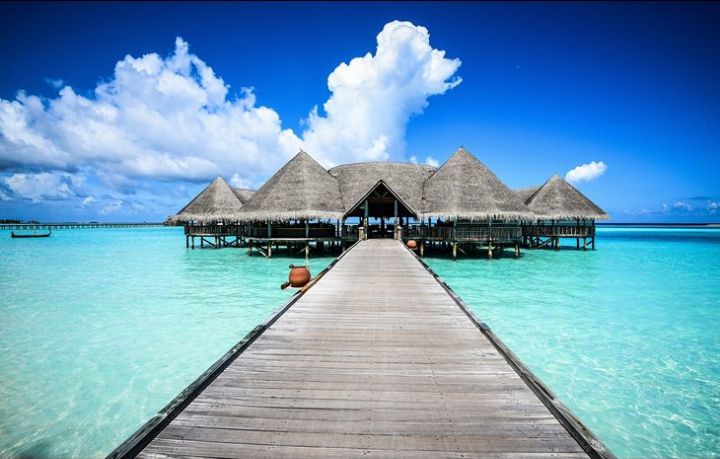
The Maldives are home to some of the world’s most ravishing islands, but it’s the sea, which truly makes these islands shine. Luminous aquamarine waters with a crystal clarity lap upon these dazzling white shores, which barely peek above the Indian Ocean.
Consisting of 26 natural atolls, the Maldives archipelago is the planet’s lowest lying nation, rising no more than three meters above the sea at its highest point, a measurement that shrinks every year.
Beneath the mesmerizing waters, coral reefs flourish, luring divers and snorkelers from around the world. Surfers also flock here to ride the uncrowded breaks.
Back on land, luxury resorts provide the perfect launching points for adventures focused upon the sea, the archipelago’s greatest asset, but also, as the planet’s climate changes, its single greatest threat.
2.Bora Bora, French Polynesia:
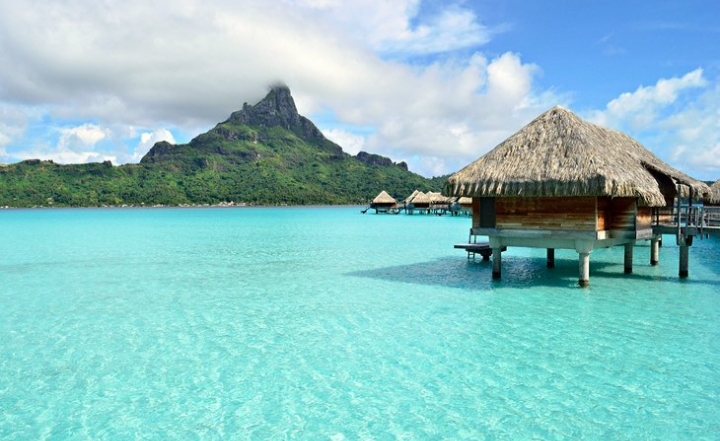
Shaped like a giant sombrero, this lush volcanic island stars in countless South Pacific fantasies. The focal point and best asset of this tropical beauty is its ravishing lagoon in technicolor turquoise. Fish, turtles, sharks, and rays swim in the clear waters, and tiny islets or motus dot the lagoon.
The island, of course, is distinctly French, with mouthwatering cuisine to match. Diving and snorkeling are excellent in the surrounding reefs, and hiking trails weave through the palm-studded forests.
If you can afford it, hide out here in a luxurious over-the-water bungalow and bask in your good fortune as you fall asleep to the gentle slosh of the sea.
3. Palawan, Philippines:
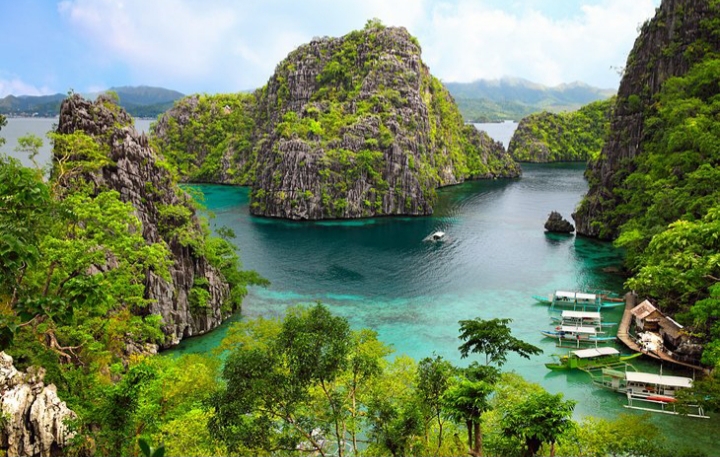
Palawan is the Philippine’s answer to paradise. This island province stretches southwest to Borneo, with lush limestone peaks rising from a jewel-like sea so clear, that you can almost see the expressions on the fish from above the surface.
Slivers of gleaming white-sand beaches fringed with rustling palms rim many of these jungle-clad islands, while under the water, coral reefs teem with an impressive diversity of tropical fish, offering some of the best diving in the world.
Other attractions include the islands’ unique wildlife, emerald lakes, and quaint fishing villages. Coron is home to plush resorts, and El Nido drips with natural beauty and is one of the most alluring islands in the chain. From here, you can island hop around the spectacular Bacuit archipelago.
One of Palawan’s top attractions is the World Heritage-listed Puerto Princesa Subterranean River National Park, an impressive limestone cave system with a long underground river.
4. Seychelles:
Pristine and picture-perfect, the Seychelles are worth traveling for. East of Kenya, this relatively unspoiled archipelago of 115 coral and granite islands is packed with attractions, from UNESCO-listed jungles and thriving coral reefs to palm-lined, powdery beaches flanked by giant boulders.
Almost half the total land area of these equatorial isles is protected, and many of the islands lie within fish-rich marine sanctuaries with excellent diving and snorkeling.
The Seychelles also feature some of the planet’s richest fishing grounds, making this a top destination for anglers. Add some spicy Créole cuisine into the mix, as well as the plush resorts of Mahé, Praslin, and La Digue, and it’s easy to understand the Seychelles’ allure.
5. Santorini, Greece:
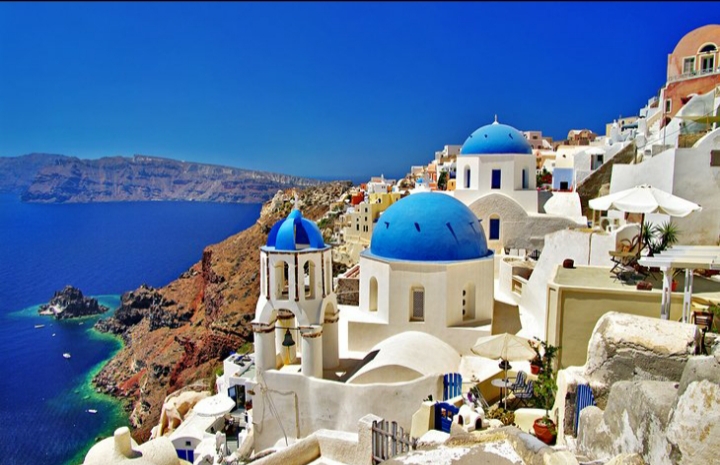
Encircling a sea-filled caldera, spectacular Santorini scores top points for its dramatic beauty. Bleached white villas tumble down volcanic cliffs. Blue-domed churches rise against the sparkling sea, and bright sprays of bougainvillea add to the eye-popping palette of color.
Perched atop the black lava cliffs, the settlements of Firá and Oia are the island’s most picturesque — and pricey, destinations — and Oia ranks among the most photographed locations in the world.
Other highlights of Santorini include Akrotíri Archaeological Site, Ancient Thira, the black sand beach of Perissa, and of course, the sublime sunsets. Sailing into this stunning caldera surrounded by soaring sea cliffs makes an unforgettable first impression.
6.The Cook Islands:
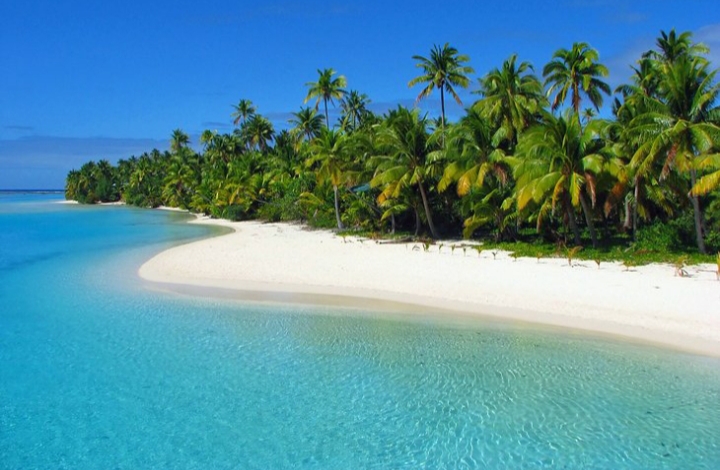
If you’ve ever dreamed of being a castaway in the South Pacific, the Cook Islands are for you. Strung between French Polynesia and Samoa but with strong ties to New Zealand, the archipelago’s 15 islands are among the most beautiful islands in the South Pacific.
Among the islands’ top attractions are enticing aquamarine lagoons, palm-fringed beaches, and volcanic peaks. Best of all, the locals are among the friendliest in the South Pacific.
Rarotonga is the main tourist hub, with its many resorts, lush peaks, and plentiful beaches. Aitutaki is one of the most beautiful islands in the South Pacific. Hibiscus-laced villages snuggle on the hillsides, and 21 motus or small islets lie along its heavenly lagoon, many within kayak distance of the resorts.
Ensconce yourself here in an over-the-water bungalow or hole up in a rustic beach shack on a remote out island and live your Robinson Crusoe fantasies.
7. Bali, Indonesia:
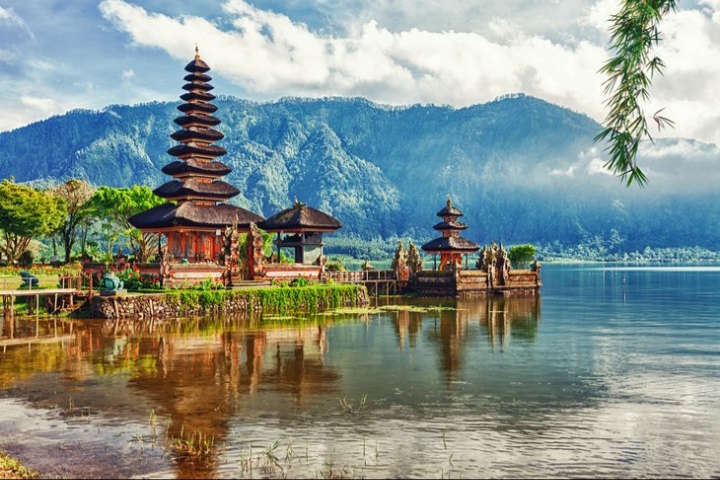
Bali’s intoxicating culture is a feast for the senses. Incense wafts from Hindu temples, rice paddies glow in electric greens, and the food jolts the taste buds. Surfing, swimming, and sunbathing are popular activities at the island’s beautiful beaches, and tourists will find so many other things to do on this exotic isle, from temple hopping and sightseeing in the lush countryside to spa treatments, shopping, and hiking.
Soak up the spiritual side of Bali in Ubud, see Seminyak, and family-friendly Sanur, feel the pumping pulse of touristy Kuta, or explore the attractions on the neighboring volcanic island of Lombok.
Looking for somewhere chic to stay? Choose from beautiful beach resorts, and if you’re bringing the kids, you’ll find plenty of good-value places to stay with the family.
One thing’s for sure: Bali’s enchanting spirit will wash over you like a warm, tropical wave.
Cultural diversity is the exsistance of a variety of cultural groups within a society. Cultural groups can share many different characteristics. …… Culture, religion, ethnicity, language, nationality, sexual orientation, class, gender, age, disability , health differences, geographic location and lots of other things.
It is about appreciating that society is made up of many different groups with different interests, skills, talents and needs. It also means that you recognise that people in society can have differing religious beliefs and sexual orientations to you.
Cultural diversity is the quality of diverse or different cultures, as oppesed to monoculture, the global monoculture, or a homogenization of cultures, akin to culture evolution.
The term cultural diversity can also refer to having different cultures respect each other’s differences. Moreover, it is often used to mention the variety of human societies or cultures in a specific region, or in the world as a whole.
Cultural diversity
• Cultural diversity supports the idea that every individual has a unique and positive contribution to make in society.
• Valuing cultural diversity comes from learning and understanding others who are not the same.
• Discrimination between people hinders the bloom of cultural diversity.
• Contributions from different cultures make society rich.
Pneumonia, according to me is a disease that is taken very lightly but the actual disease is very lethal and kills a lot of people around the world. Infact when people are infected with COVID they get pneumonia and die. Pneumonia is an infection that inflames your lungs’ air sacs (alveoli). The air sacs may fill up with fluid or pus, causing symptoms such as a cough, fever, chills and trouble breathing.
Symptoms
Cough, which may produce greenish, yellow or even bloody mucus
Fever, sweating and shaking chills
Shortness Of breath
Rapid, shallow breathing
Sharp or stabbing chest pain that gets worse when you breathe deeply or cough
Loss of appetite, low energy, and fatigue
Nausea and vomiting, especially in small children
Confusion, especially in older people
Bacterial pneumonia, which is the most common form, tends to be more serious than other types of pneumonia with symptoms that require medical care. The symptoms of bacterial pneumonia can develop gradually or suddenly. Fever may rise as high as a dangerous 105 degrees F, with profuse sweating and rapidly increased breathing and pulse rate. Lips and nailbeds may have a bluish color due to lack of oxygen in the blood. A patient’s mental state may be confused or delirious.
The symptoms of viral pneumonia usually develop over a period of several days. Early symptoms are similar to influenza symptoms- fever, a dry cough, headache, muscle pain, and weakness. Within a day or two, the symptoms typically get worse, with increasing cough, shortness of breath and muscle pain. There may be a high fever and there may be blueness of the lips.
Healthy food refers to food that contains the right amount of nutrients to keep our body fit. We need healthy food to keep ourselves fit.
Furthermore, healthy food is also very delicious as opposed to popular thinking. Nowadays, kids need to eat healthy food more than ever. We must encourage good eating habits so that our future generations will be healthy and fit.
Most importantly, the harmful effects of junk food and the positive impact of healthy food must be stressed upon. People should teach kids from an early age about the same.
Healthy food does not have merely one but numerous benefits. It helps us in various spheres of life. Healthy food does not only impact our physical health but mental health too.When we intake healthy fruits and vegetables that are full of nutrients, we reduce the chances of diseases. For instance, green vegetables help us to maintain strength and vigor. In addition, certain healthy food items keep away long-term illnesses like diabetes and blood pressure.Similarly, obesity is the biggest problems our country is facing now. People are falling prey to obesity faster than expected. However, this can still be controlled. Obese people usually indulge in a lot of junk food. The junk food contains sugar, salt fats and more which contribute to obesity. Healthy food can help you get rid of all this as it does not contain harmful things.In addition, healthy food also helps you save money. It is much cheaper in comparison to junk food. Plus all that goes into the preparation of healthy food is also of low cost. Thus, you will be saving a great amount when you only consume healthy food.
Junk food vs Healthy Food
If we look at the scenario today, we see how the fast-food market is increasing at a rapid rate. With the onset of food delivery apps and more, people now like having junk food more. In addition, junk food is also tastier and easier to prepare.
However, just to satisfy our taste buds we are risking our health. You may feel more satisfied after having junk food but that is just the feeling of fullness and nothing else. Consumption of junk food leads to poor concentration. Moreover, you may also get digestive problems as junk food does not have fiber which helps indigestion.
Similarly, irregularity of blood sugar levels happens because of junk food. It is so because it contains fewer carbohydrates and protein. Also, junk food increases levels of cholesterol and triglyceride.
On the other hand, healthy food contains a plethora of nutrients. It not only keeps your body healthy but also your mind and soul. It increases our brain’s functionality. Plus, it enhances our immunity system. Intake of whole foods with minimum or no processing is the finest for one’s health.
In short, we must recognize that though junk food may seem more tempting and appealing, it comes with a great cost. A cost which is very hard to pay. Therefore, we all must have healthy foods and strive for a longer and healthier life.
One of the biggest and most important science stories of the past few years will probably also be one of the biggest science stories of the next few years. This is the powerful new gene editing technology known as CRISPR.
If you haven’t heard of CRISPER yet, the short explanation goes like this: In the past nine years, scientists have figured out how to exploit a quirk in the immune systems of bacteria to edit genes in otherorganisms — plants, mice, even humans. With CRISPR, they can now make these edits quickly and cheaply, in days rather than weeks or months. (The technology is often known as CRISPR/Cas9 also)
This is a powerful new tool to control which genes get expressed in plants, animals, and even humans; the ability to delete undesirable traits and, potentially, add desirable traits with more precision than ever before.
So far scientists have used it to reduce the severity of deafness in mice, suggesting it could one day be used to treat the same type of hearing loss in people. They’ve created mushrooms that don’t brown easily and edited bone marrow cells in mice to treat sickle- cell anemia. Down the road, CRISPR might help us develop drought-tolerant crops and create powerful new antibiotics. CRISPR could one day even allow us to wipe out entire population of malaria- spreading mosquitoes and ressurect once extinct species like the passenger pigeon.
The founder of Bhramo samaj and the person behind the abolition if Sati Pratha
Raja Ram Mohan Roy was born on May 22, 1772, in Bengal. Raja Ram Mohan Roy influenced fields of politics, education, religion and public administration. Raja Ram Mohan Roy was also ranked number 10 in BBC’s poll of greatest Bengali of all time in 2004. He had learnt as many as ten languages – Persian, Arabic, Sanskrit, English, Urdu, Hindi, Hebrew, Greek, Latin and French.
A cosmopolitan thinker as well as a nationalist reformer who believed in rationalist thinking. Through his memoranda, books, public activities for religious, social, educational, economic and political reforms he inaugurated liberal reformist modernisation in India.
His Social Reforms
Raja Ram Mohan Roy conceived reformist religious associations as instruments of social and political transformation.
He founded the Atmiya Sabha in 1815, the Calcutta Unitarian Association in 1821, and the Brahmo Sabha in 1828 which later became the Brahmo Samaj.
He was well known for his pioneering thought and action on the emancipation of women and especially on the abolition of sati and widow remarriage.
He attacked child marriage, illiteracy of women and the degraded state of widows and demanded the right of inheritance and property for women.
He campaigned against the caste system, untouchability, superstitions and use of intoxicants.
His Educational Reforms
Raja Ram Mohan Roy did much to disseminate the benefits of modern education to his countrymen. He supported David Hare’s efforts to find the Hindu College in 1817, while Roy’s English school taught mechanics and Voltaire’s philosophy.
In 1825, he established Vedanta college where courses in both Indian learning and Western social and physical sciences were offered.
He advocated the study of English, Science, Western Medicine and Technology.
He established a number of schools to popularise a modern education system in India
He was instrumental in setting up several institutions including the Hindu College in Calcutta in 1817, in collaboration with David Hare; the Anglo-Hindu School in 1822; and the Vedanta College to spread his teachings of Hindu monotheism.
He also helped establish the Scottish Church College in 1830.
His Political Reforms
Civil liberties: Roy was impressed and admired the British system of constitutional government for the civil liberties it gave to the people. He wanted to extend the benefits of that system of government to Indian people.
Press freedom: Through his writings and activities, he supported the movement for free press in India. When press censorship was relaxed by Lord Hastings in 1819, Ram Mohan found three journals- The Brahmanical Magazine (1821); The Bengali weekly, Samvad Kaumudi (1821); and the Persian weekly, Mirat-ul-Akbar.
Administrative reforms: He demanded the Indianisation of superior services and separation of the executive from judiciary. He demanded equality between Indians and Europeans.
His Economic Reforms
Taxation reforms: Roy condemned oppressive practices of Bengali zamindars and demanded fixation of minimum rents. He also demanded the abolition of taxes on tax-free lands.
He called for a reduction of export duties on Indian goods abroad and the abolition of the East India Company’s trading rights.
Conclusion:
Raja Ram Mohan Roy was one of the few people in his time to realise completely the significance of modern age. He knew that the ideal of human civilisation does not lie in isolation of independence, but in the brotherhood of inter-dependence of individuals as well as nations. His attempt was to establish Indian people in the full consciousness of their own cultural personality, to make them comprehend the reality that was unique in their civilisations in the spirit of sympathetic cooperation.














 Eduindex
You must be logged in to post a comment.