Cultural Pluralism

N kavya

Cultural pluralism is defined as the societal condition in which minority groups within a society can maintain their distinctive cultural identities, values, and practices if they are consistent with the laws and values of the wider society. Institutions and values that support cultural pluralism include political democracy, tolerance for uncertainty, prioritization of secular rational values, and openness to foreign cultures. societies with a demanding climate and high innovation performance, their citizens tend to support democracy, are more tolerant of uncertainty, prioritize secular-rational values, and take more leisure trips outside of their home country.

Significance of cultural pluralism -:

The late nineteenth and early twentieth centuries, which saw the largest surge of immigrant arrivals in American history, an anti-immigrant backlash took the forms of nativism, xenophobia, and other expressions of prejudice. Criticism of the unfamiliar appearances and behaviours of the newly arrived people prompted discriminatory treatment of the new immigrants in education, employment, government programs, housing, and public accommodations. As a result, the advance of industrious and talented immigrants whose efforts could enhance American progress was held back. The concept of cultural pluralism is an alternative to the “melting pot” view that immigrants should assimilate to American culture by abandoning their own cultures, languages, and other traditions. Cultural pluralists insist that different ethnic groups have enriched the American way of life as immigrants and native-born citizens have learned from one another, thereby broadening their views on art, cuisine, education, history, music, and other aspects of life.

Positive Aspects of Cultural Pluralism -:

1. The cultural plurality system is that it is easily understood by voters, provides a quick decision, and is more convenient and less costly to operate than other methods.
2. The plurality method operates best under a two-party system.

Critique of cultural pluralism –:

1. Cultural pluralism has been attacked for justifying cultural separatism—that is, a transformation to a “nation of nations” like what is found in Switzerland or a segregated America of ethnically pure residential enclaves.
2. The cultural pluralists assume that because ethnic traditions are static, they suppress individuality.
3. Cultural pluralists are attacked for a belief that ethnic identity is primary and thus more powerful than other identities. Some critics even see Kallen’s concept of cultural pluralism as rooted in Jewish ideology.

Cultural pluralism is distinct from multiculturalism, which lacks the requirement of a dominant culture. If the dominant culture is weakened, societies can easily pass from cultural pluralism into multiculturalism without any intentional steps being taken by that society. If communities function separately from each other or compete with one another, they are not considered culturally pluralistic. Pluralism is valuable because it provides individuals with alternative ways to live, promotes critical reflection on the culture within which one currently lives, and thus promotes change and growth within cultures generally.

Canada is a country that is often cited as an example of cultural pluralism. This is due in large part to the fact that Canada is home to a diverse range of cultures and ethnic groups.

Cultural pluralism brings diversity as explained by, Cultural pluralists who insist that different ethnic groups have enriched the American way of life as immigrants and native-born citizens have learned from one another, thereby broadening their views on art, cuisine, education, history, music, and other aspects of life.
The problem of poverty in India

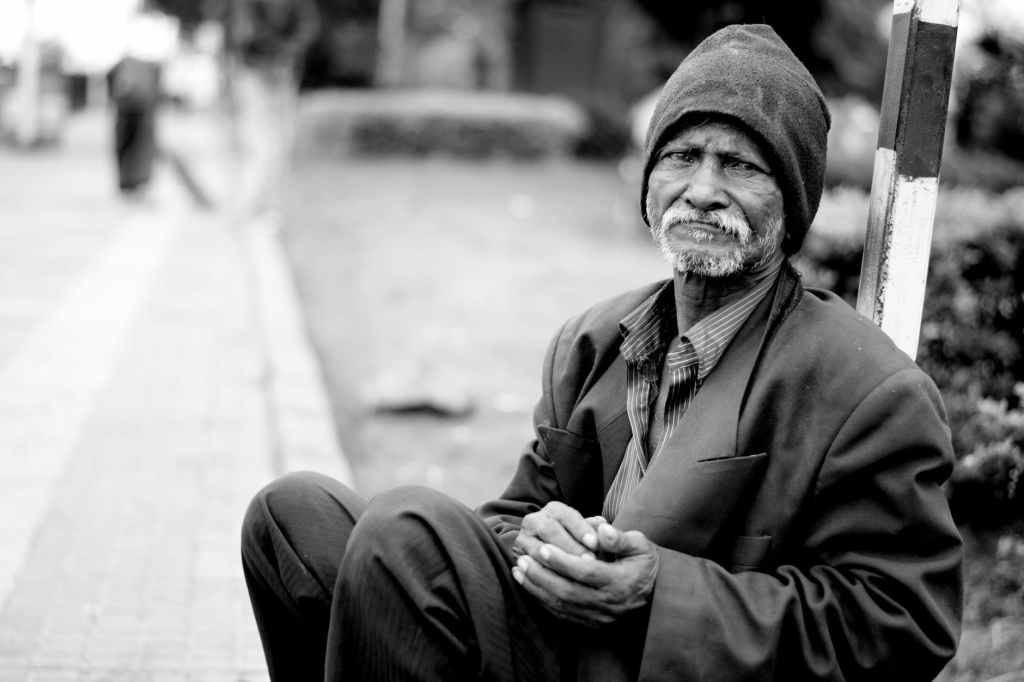
In India, poverty is presently estimated by fixing a poverty line based on a differentiated calorie-norm. This means that the level of poverty depends upon the capacity of a person to purchase food and a person who can buy specific amount of food to cross the poverty line margin for nutrients and calorie intake is above the poverty line. Whereas, the person who cannot buy enough food to meet the required nutrition value of calories and carbohydrates is below the poverty line. This level is not the correct parameter to check the level of poverty.

A task force of the Planning Commission in 1979 defined the poverty line as that per capita expenditure at which the average per capita per day calorie intake was 2400 calories in rural areas and 2100 calories in urban areas. Average per capita expenditures incurred by that population group in each State which consumed these quantities of calories, as per the 1973-74 survey of NSSO, were used as the poverty lines.

The debate on the extent of poverty in India has been a matter of global interest in the recent years. The primary reason for the global interest in the debate is that the levels of poverty in India and China have come to exert significant influence over the trends in world poverty itself.

Within India too, there has been growing contestation around poverty estimates, particularly in the period of economic reforms. First, there are persistent disagreements among economists on whether the rate of poverty decline after economic reforms was slower than in the preceding period. Secondly, the shift to targeted, rather than universal, welfare schemes has witnessed the use of poverty estimates to decide on the number of households eligible to access these schemes. The report of the Expert Group on the estimation of poverty, chaired by Suresh Tendulkar, is the latest input to the “Great Indian Poverty Debate.”

It is to be noted here that many subsidies and programs are launched by the government but these additional increments do not reach the actual people that are in need of them. Instead it is sent back to the businessman and thus a lot of profit is earned on these subsidized goods. Thus, to lower the level of poverty in India, schemes have to be launched in order to directly benefit the people in need.

The Hindu states that, “A final issue with the report, of much long-term consequence, relates to the wisdom of abandoning the calorie norm. It is indeed true that the levels of calorie intakes are not well correlated with nutritional outcomes. However, abandoning the calorie norm altogether and taking solace from the fortuitous fact that calorie intakes appear adequate at the new poverty lines is an arbitrary proposition. It is unclear whether there is any basis, theoretical or empirical, for this relationship to hold true across time.”

the Tendulkar Committee has pitched for a policy position that is stranded between the harsh realities of poverty in India and the fiscal conservativeness of a neo-liberal framework. The real challenge lies in preserving the positives from the report, and strongly persisting with the demand for a universal social security system.

– Ananya Kaushal

GANDHI’S GOAL-SHANTI SENA

SHANTI SENA

              *    SHANTI SENA is a word derived from Sanskrit.

               *  SHANTI means peace and SENA Means army.

                *  SHANTI SENA is also called as peace army.


MAIN GOALS OF SHANTI SENA:

*.   Service to peoples as a volunteer at any time.

*.    Give to a cause close to your heart.

*.     Most important goal is to bring the non-violence.

*.       No religion diverse all religions must       get equal rights and respect.

All are equal

QUOTES BY PEACE ARMY:-

“THE GREAT GOOD IS WHAT WE DO FOR ONE ANOTHER”.

” TREES NEED FOR SEED PEOPLE NEED FOR SHANTI SENA”.

  NON – VIOLENT LIFE :-

                        *  Non violent is a personal practice to not make harm to others.

                        *  Gandhi introduced the concept of ahimsa ( Non-violence).

                         *. Non violence is powerful tool for the social protest.

                          *. To create non violent children.It is crucial to maintain the peaceful environment.

                          *. It is the active out pouring of one’s whole being of another.

                          *. Non violence love is active not passive.


IMPORTANT OF NON VIOLENT COMMUNICATION IN Society:-

* Non violent will bring peace among the people.

* Non violent communication help us to express our feelings.

* Non violent communication means complete lack of violence in the way we communicate with others.

* To respect our people.

MAIN COMPONENTS OF NON VIOLENT COMMUNICATION:-

* Observation.

* Feelings.

* Needs.

* Requests.

SHANTI SENA:-

* SHANTI SENA makes love and peace to the people.

* SHANTI SENA brings non violence to the people.

* SHANTI SENA is not only to maintain peace also good relationship.

* SHANTI SENA is the non weapon war of peace.

* If one should have shanti sena he should ignore annoyance.

* SHANTI SENA avoid us from the jealous and competition with the people.

* SHANTI SENA is one of the fundamental peace policy of people.

” soldiers army save country

Peace army save courtesy”.

Gandhism – An Ideology

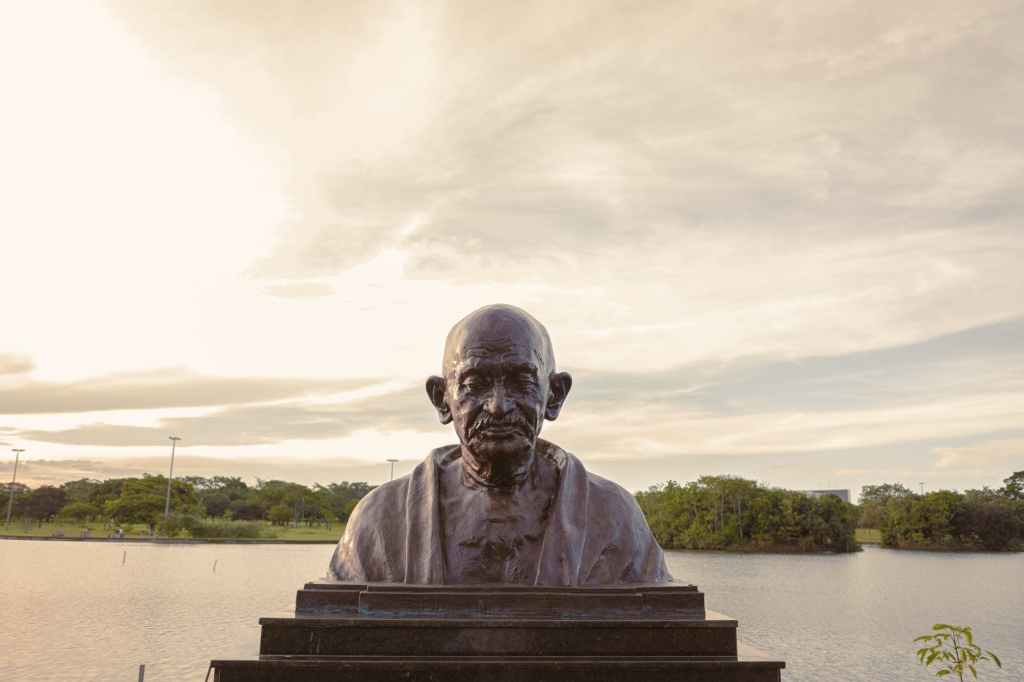
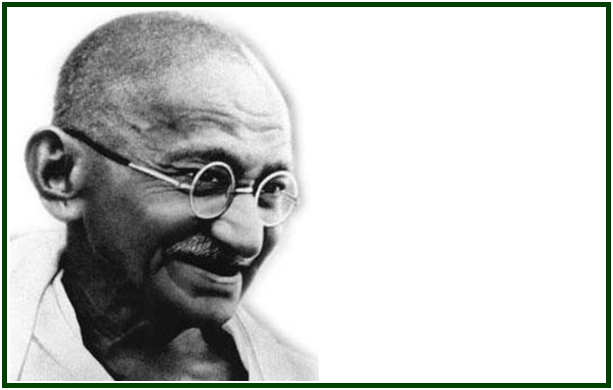
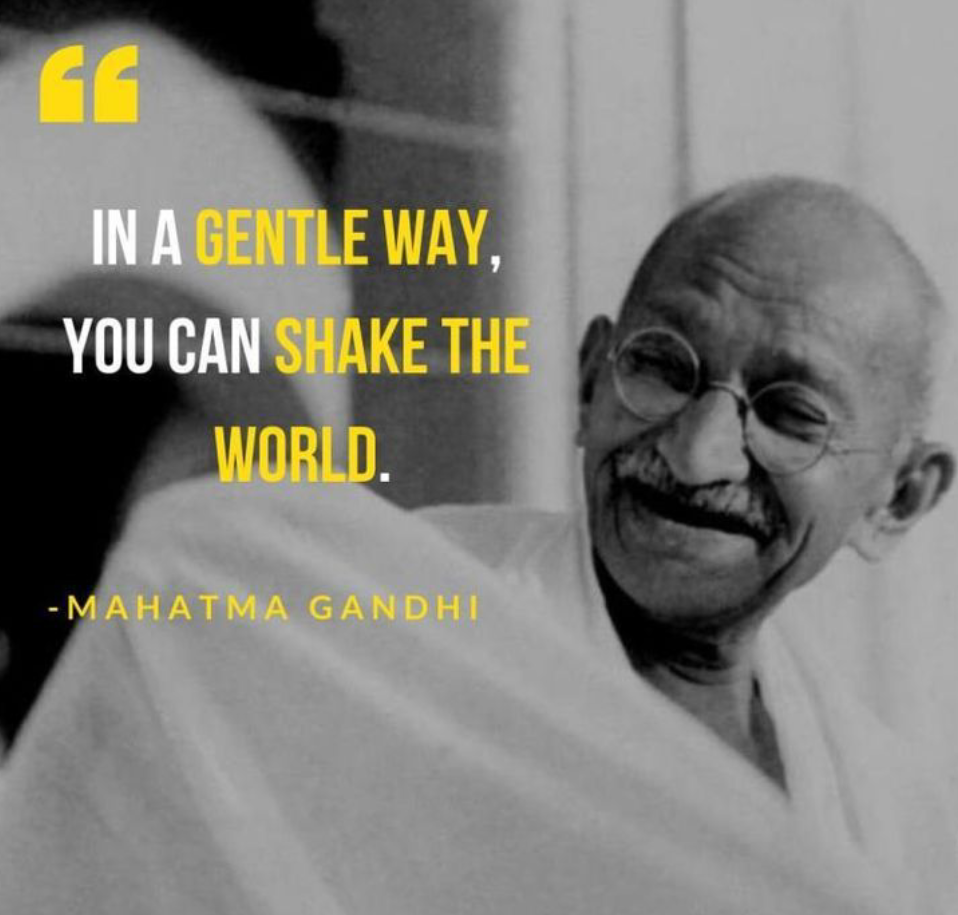
Gandhism derives its name from most prominent leader of India’s freedom movement Mohandas Karamchand Gandhi, commonly referred to as Mahatma Gandhi. He was a lawyer by profession. He was also a social and moral philosopher. His social and political thoughts are collectively known as Gandhism. His thoughts are not in a single book it is scattered in many notes, his autobiography “My Experiments with Truth”. He himself rejected the existence of anything such as Gandhism but with due course of time it is seen that Gandhian thoughts have worldwide application. The features of Gandhian ideology are as follows: –

Politics and Ethics

Gandhi thinks that ethics and morality should be the guiding principles of politics. He emphasizes the use of spiritualization in politics. He believed in purity of means to achieve pure ends. He lifelong criticise the use of unfair means even if gives the best possible result. His morals were based on all religions, but he paid special attention to Sanatana Dharma. In his views the essence of all religion is same. No religion is superior or inferior to any other religion. He thinks that politics without religion is nothing short of a death trap, which kills the soul. He sat for hunger strike to force Indian Government to pay ₹ 55 crore to newly formed to Pakistan.

Truth and Non-violence

One of the major philosophies of Gandhism is the search for truth. Finding truth is as tough as to find God itself. He believed that truth can be found through devotion to its creations specially the oppressed. Non-violence is also a part to pursue truth. It means preventing the use of violence in one’s behaviour towards other living beings which include both physically and mentally. He says, “It is non-violence only when we love someone those that hates us.” He holds that harming nature is also a form of violence. His firm belief in non-violence can be seen in his ways of struggle against the British. He uses non-violence ways such as Satyagraha, Dandi March etc. It is not the way of weak but the power of strong. Non-violence has the power to defeat physical force by the use of spiritual force.

Vision of Classless Society

Gandhi was the flag bearer of a classless society. People have a mindset that physical labour is inferior to another type of labour such as mental labour. He made ‘bread labour’ compulsory for all.  The concept of ‘bread labour’ expected everyone to do physical labour to compensate or produce his/her consumption. Here bread is symbolical for various items of one’s consumption. This will create a sense of dignity of labour among societies. He rejected discrimination on the basis of race, caste, religion etc. He strived to create a classless society by transforming the attitude of peoples towards discrimination.


Are Gandhian principles relevant today?

Gandhiji was a national leader of India who forced the Britishers to leave India without resorting to violence. He is regarded both as a transformational leader and a leader of the masses. Every year on 2nd October, we celebrate Mahatma Gandhi’s birth anniversary and recall his principles and philosophies. It is a fact that Gandhiji adhered to his principles of non violence, truth and satyagraha with utmost sincerity to achieve his goals. Many people argue that all his principles hold good in today’s world. We all have moved years ahead with lots of changes in lives, innovations in science and technology, vivid variety of lifestyles. Here the point is if the principles and ideologies of Gandhi are still relevant or practical in modern world or not.

YES

•Gandhiji’s principle are valid and everlasting His principles are based on truth and non-violence are the base of civilized human society. He practically proved to the whole world that a war can be fought without indulging in violence. In modern world violence is increasing rapidly. Nuclear weapons and terrorism are becoming common these days. More and more People are resorting to violence and divided into religious and ethnic compartments. We need guidance and the direction to save the world from this desperate situation.

• Gandhiji is an inspiration to international leaders also.

Gandhian principles are followed not only by national leaders but also by some eminent foreign leaders like Dalai Lama, Barack Obama, Martin Luther King Jr, Nelson Mandela etc.

• Gandhi’s principles of economic independence valid even today

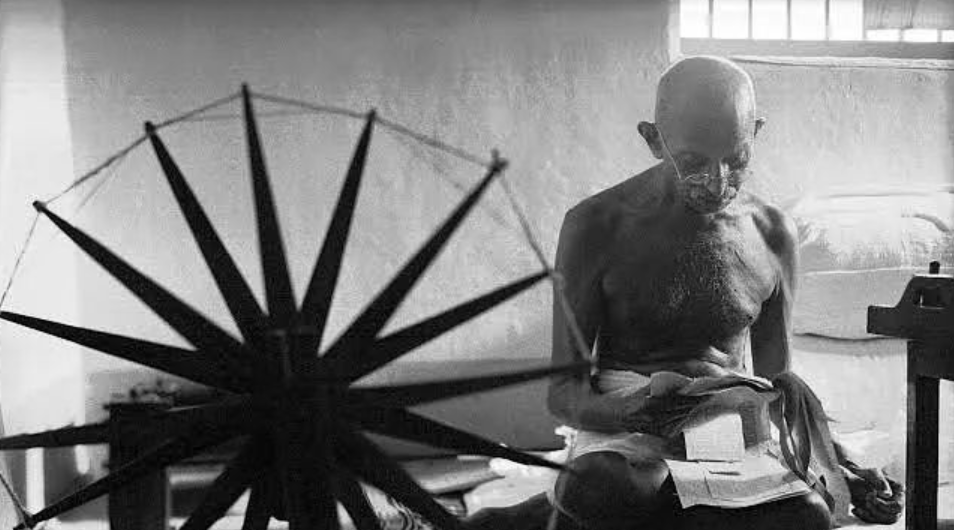
Even today, our Prime minister has launched a programme ‘Make in India’ which very much reflects Gandhiji’s principles of spinning Khadi and giving employment to thousands of poor people.

NO

• Violence multiplies on being non-violent

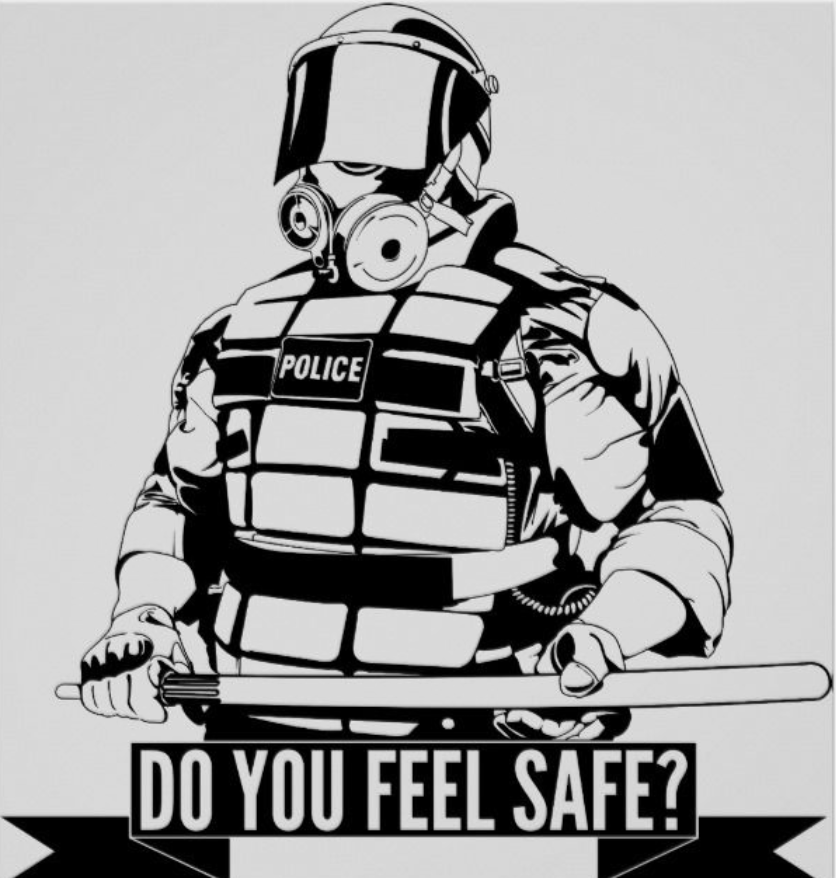
In today’s era, violence can best be answered by violence. Those who remain silent when treated with violence suffer even worse if they do not fire back in the same way.

• Modern culture outplays Gandhian swawlambi philosophy

In today’s modern world, trends and fashion have taken a new shape and so people wear trendy outfits and by no means they are restricted to use self made khadi clothes as part of ‘Swawlambi’ philosophy of Gandhiji.

• Principle of truth not valid today

In a world where money is the most important part of life, big business houses and capitalists thrive on lies to make huge profits. Advertising agencies most of the time try to cheat people by projecting false claims. Today values and meaning of the success are far more different from the values of Gandhiji.

To conclude we can say that some of Gandhian principles are relevant even today, though some of them have become outdated and irrelevant. The principle of non violence cannot be ignored. Gandhiji’s vision cannot be ignored as they form the very base on which a new generation of decision makers must adapt in order to compete on the global level. If the energy of the youth can receive honest and selfless motivation and direction from the experienced then India can surely progress. Gandhi’s vision should not be lost in religious, political and emotional fervours. It must be reorganized and reconstructed for a brighter and logical future.

Thank you for reading. Have a nice day! 🌼

Racism a common Practice

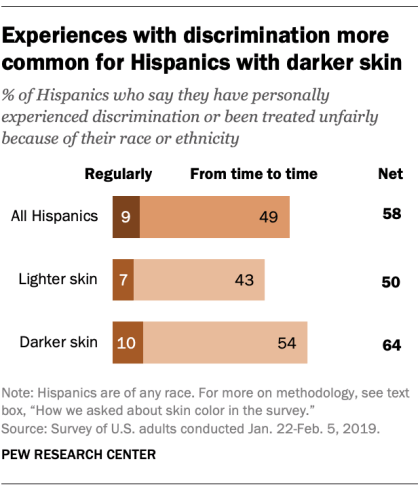
Racism is a term that is being used only when there is a need but, everyone in every walk of life does use this term to discriminate every person they meet and this discrimination does not have any religion or region but by their skin color as Martin Luther King Jr. rightly said: ” The ultimate measure of a man is not where he stands in moments of comfort and convenience, but where he stands at times of challenge and controversy”. When the civil rights moment was won in 1968 it bought a sense of relief to a black person thinking that Racism is the end but history has its play but in 2014 a black 18-year-old student, Micheal Brown was shoot down by a White Police officer and currently this is the time where the man has to measure himself as the United States is Gripping itself to its laws and the protests are erupting across the districts of the United States and all across the globe and the reason behind this simply a term that has a deep meaning ” Racism” and this term led to the death of a man named of George Floyd who was killed by a White Policeman by strangling George’s neck with his knees for about 9 minutes. This act of the white policeman has condemned by many citizens across the globe and demonstrations and protests and clashes with the police in the United States very saddening. Due to this crisis, there have been curfews in several districts in the United States and with the COVID-19 cases escalating past 6 million all over the globe and the United States being in the epicenter of this pandemic and many experts feel that due large gathering there may a large hike in the COVID-19. This is a disaster for mankind as this has violent eruptions during this pandemic crisis as there is spread of violence, clashes with police, looting and burning the stores and currently, the actions of the Civil rights movement is trending all over the internet and all the facts and related to racism is true as it is proven by everyone and by Statistics, in 2019 around 58% of people have been or felt discriminated by fellow mates or by society, but the real question here is “Whether the real heroes of the Civil rights movement would have wanted this clashes or the activities that are taking place”?

ACCORDING TO PEW RESEARCH CENTRE

A LOOK BACK TO PAST

Oppression of the black people and colored have been in the history of human civilization a long time ago and as the civilization was becoming modernized the idea of this oppression was expected to be dropped but it gained momentum and made the oppressed people fight for equal rights and this fights have been in many countries like South Africa, United States, India, Britain and in other many countries as well and in the United States it gained momentum when Rosa parks refused to give her seat to the white that resulted in starting the Civil rights movement by Martin Luther King. Jr and this became a mass movement until the Civil rights bill was passed and this idea inspired to banish the Apartheid idea in South Africa by Nelson Mandela. Martin Luther King always stood by the side of Non-Violence and this was his Philosophy until death and his inspiration behind this is Mahatma Gandhi who used the same Non-Violence for the freedom.

Martin Luther King considered the triple evil of the society like poverty, Militarism, and racism and always stood against it and proved to be true. Martin Luther King has leaven behind a legacy to win a battle using Non-Violence as a tool but is his idea is being heard and those who use violence in this situation needs to rethink about their actions as it cause good in any way, of course not it just causes spreading of hatred among all the people and this has to be stopped and if anyone wants to prove that the reason for this protests and demonstrations is equal rights then bring back the Civil rights Movement as 2.0 and recreate the Civil Rights Movement again to win this battle with Non-Violence.