Electric two-wheelers are getting the push for support

The electric two-wheeler market is one of the fastest-growing markets in our country. This segment is also gaining popularity among the public in a rapid manner. The large number of companies that are currently providing options in this segment are trying their level best to attract more customers to his segment.

But due to some glitches, the segment has been under the scanner for some time now. There have been cases recently that involved some two-wheelers burning up right after coming out of the showroom. So, to make the segment better in terms of quality, the government has released some new rules which need to be followed by the manufacturers. The new features can improve the user experience and can also ensure that the vehicles are safer for general users.

There have been rising concerns regarding the environmental damage that general vehicles are causing. This has caused the general public to steer away from fossil fuels. As a result, electric vehicles are getting more attention. The other reason has been the fewer emissions that electric two-wheelers have. They do not pollute the environment with smoke and keep the environment clean. 

As a plus point, there has been also an increase in the number of charging stations all over the country. There were 1000 charging stations all over the country. Currently, there are around 2000 charging stations. There have also been incentives from the government for EVs and all the other equipment related to it. The equipment includes chargers/ charging stations and the parts that are used in the manufacturing of an electric two-wheeler. 

https://unsplash.com/photos/LN8IwrFW_Ow

But some hurdles need some treatment. The hurdles are like involving the real-estate tycoons to enable the charging options in their skyscrapers. There is also a requirement for charging stations in the residential complexes as well as in the commercial complexes in the parking areas. This will enable more people to adopt electric vehicles in the future.

Now, after looking at all of the above points it is evident that electric vehicles are the future. But the hurdles are still there. There still needs to be some changes in the system that is controlling the entire electric vehicle field. For example, we will be able to see electric two-wheelers that will be fireproof.

There are also some recent efforts from the governments in different states and even the central government. The efforts have resulted in more use of electric public transport vehicles in different cities. The vehicles like electric buses and even the Indian Railways are now trying to promote more use of electric vehicles for transport. This will in turn help in improving the quality f the air that we breathe in. 

In the end, there are several other campaigns like Switch Delhi that are trying to attract people towards electric vehicles. This will ensure that the capital of our country remains clean and safe for living in the future.  So, the various efforts will surely help in reducing global warming which is creating several problems like untimely natural calamities and even the disruption of the natural season cycle in nature. Also, people need to support such initiatives and help the government in making more such efforts to allow electric vehicles to rule our roads. 
Start-up to Success: Ola Cabs

Gone are the days when commuting without a personal vehicle, used to be an issue for city dwellers. Either they had to resort to public transport which is not always the safest option, or book rental car services way before the trip for enormous amounts. Now with the coming up of app based cab riding services, voyaging has become easier for city dwellers.

And Ola is one of the key players in the market in regard to cab services. It is the first Indian cab aggregator company. Ola has made it much easier for the public to book cab at their own convenience. The company started in 2010 by Bhavish Aggarwal and Ankit Bhatia, and since then it has been bridging the gap between cabs and commuters.

Ola partners with a number of taxi drivers and owners, and with the help of their app they allows people to book cabs by entering their pick up location and destination. Ola has users in over 250 Indian cities and employs more than 2.5 million driver-partners.

How did it start ?

It all started when Bhavish Aggarwal while journeying from Bandipur to Bangalore, was left abandoned in his journey by his driver. This was because the driver was renegotiating the already decided payment. This unfortunate incident lead him to come up with a economical and satisfying cab service. And thus, Ola cabs was born.

The founders of Ola, Bhavish Aggarwal and Ankit Bhatia are both IIT Mumbai graduates, and launched Ola in December 2010. Both of them became the youngest billionaires of India, at the age of 25 and 26.

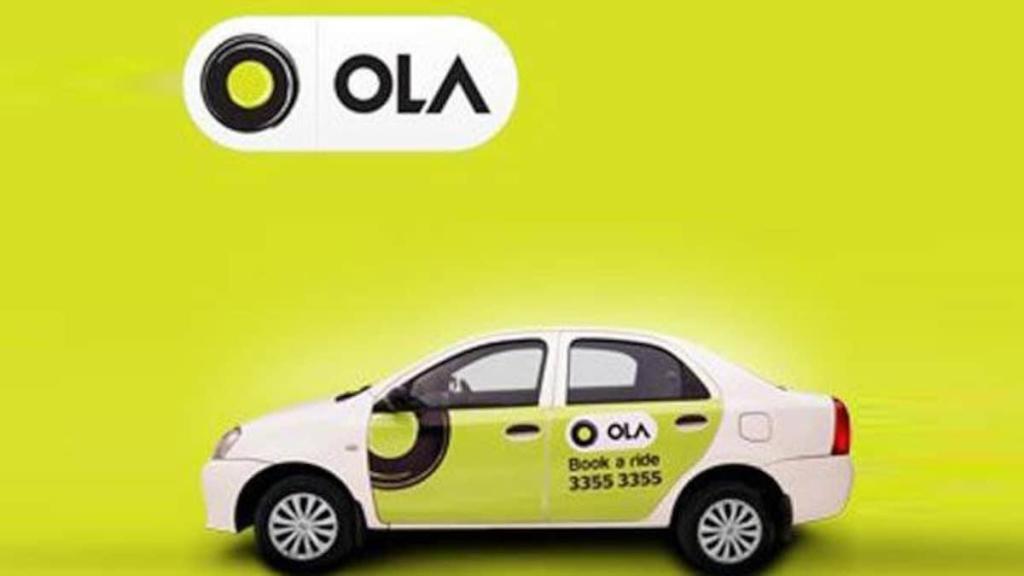
The name of the company is driven from the Spanish word ‘Hola’ that translates to ‘Hello’. The name ‘Ola’ probably indicates their services as easy and simple to use. Their logo is simple yet elegant and has the ‘O’ in the shape of a tyre.

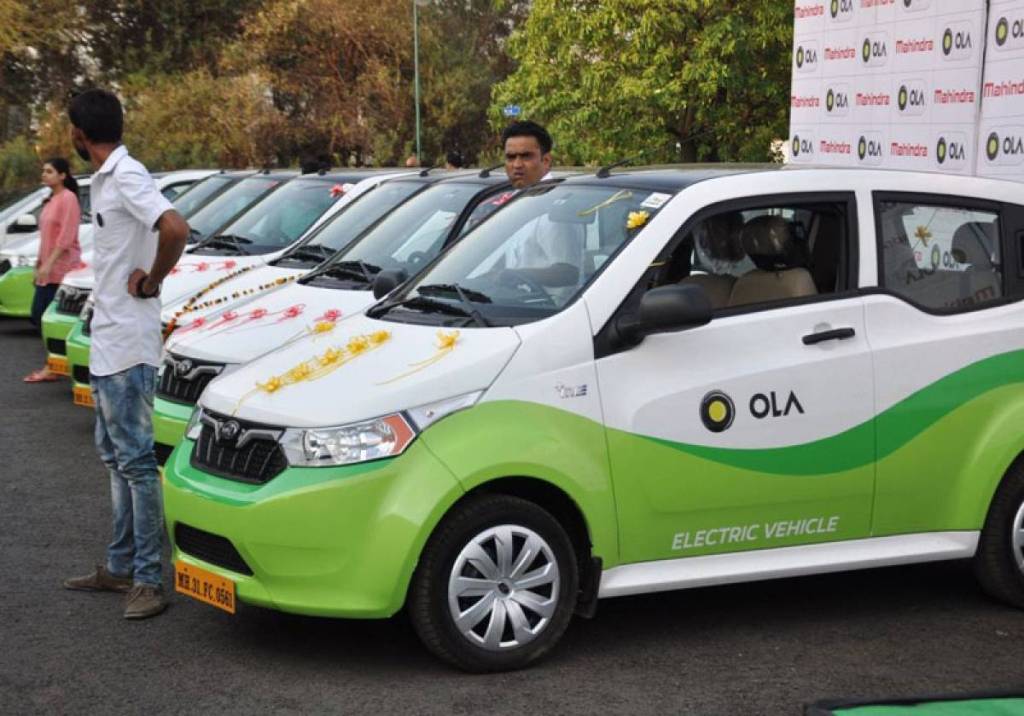
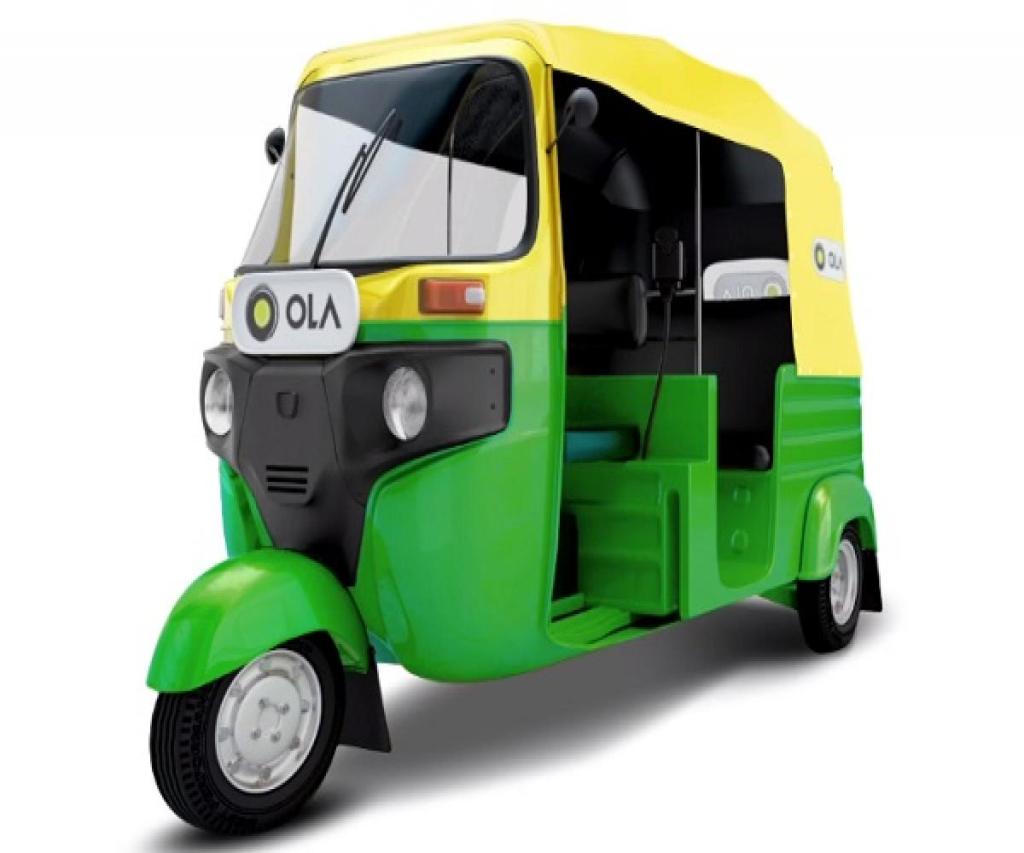
Ola has a wide range of car categories to choose from, such as hatchback, sedan, SUV and more. Travellers choose them depending on their budget and number of people travelling. For travelling within the city, people can hire cabs, bikes, autos and even e-rickshaws through Ola.

Challenges and Competitors

In the initial day of the start up they had to code for long hours and sometimes 48 hours straight. They even had to drive customers to their desired locations at times because the drivers did not show up. As much as Ola wanted to spread their services across India, they faced the issue of internet connectivity in smaller town. Thus, they designed the app so that I could accommodate network connectivity in smaller towns. However, after bagging an investment worth 2 crores, things were finally in track and there was no looking back.  

Every business has its fair share of competitors and so does Ola. Uber is Ola’s biggest competitor. There are other players in the Indian market such as, Meru Cabs, Zoomcars, PeIndia Cabs, Carzonerent and more. Rapido is increasing taking over the bike taxi segment as well, which is the competitor to Ola’s bike services.

Needless to say, just like most businesses, Ola too had to bear the burnt of the COVID-19 pandemic. The travel and transport sector was hit severely with the pandemic as there were repeated lockdowns and curfews affecting its revenue generation. However, with the upliftment of lockdowns and curfews, it is believed that Ola will regain its revenue generation soon.  

Addition and Expansions

In spite of facing ups and downs through out the years Ola manages to sail through smoothly. Over the years Ola introduced new services in ‘Ola pedal’, which is a huge success in IIT Kanpur and IIT Madras campuses. They have also introduced the option to book cabs on an hourly basis to travel out of the city and have named the segment ‘Ola outstation’.

‘Ola money’ was also introduced and the product includes Ola money credit card, Ola money post-paid, Ola money mobile wallet and Ola money hospicash. Ola launched ‘Ola corporates’ in 2016, where employees book their rides through Ola, and the fare is deducted from the company’s Ola corporate prepaid account.

In March 2015 Ola acquired ‘TaxiForSure’, another taxi aggregator for $200 million, and maintained its stand in the country’s cab hailing market. Another impressive deal was when Ola acquired Foodpanda-India, an food delivery aggregator in 2017 at a valuation of $40-$50 million. In 2018 onwards, Ola expanded its services overseas in countries of New Zealand, Australia and United Kingdom.

                     Clocking more than 150,000 bookings per day, Ola holds a little less than half of the Indian market (as of the Uber’s 2020 report). The CEO of Ola Bhavish Aggarwal has disclosed that the company is planning on initiating an IPO in the coming years. Ola plans on further expanding their services in remote areas, making India travel luxuriously on a budget.  

Ola electric scooter receives record 1 lakh bookings in 24 hours

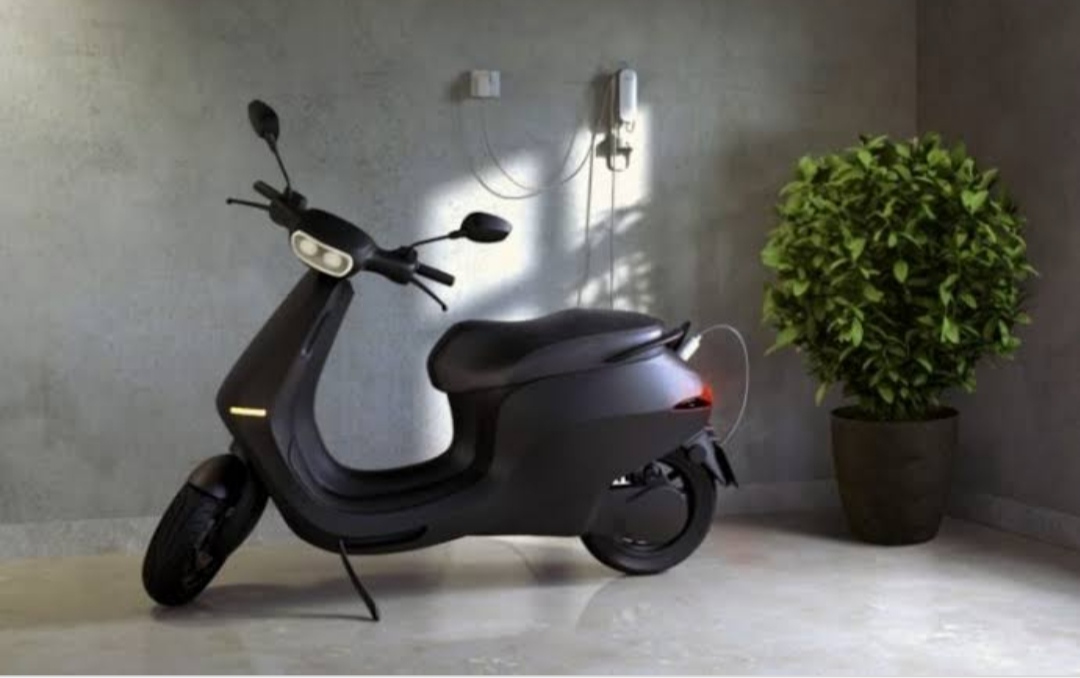
Ola Electric CEO Bhavish Aggarwal announced recently that the much-anticipated Ola e-scooter has achieved 1 lakh bookings in just 24 hours of opening of pre-launch bookings, making it the ‘most pre-booked scooter’ in the world.

Ola Electric had announced the opening of bookings on July 15th at a token amount of ₹499 on its official website.

“India’s EV revolution is off to an explosive start. Huge thanks to the 100,000+ revolutionaries who’ve joined us and reserved their scooter,” Bhavish Aggarwal said on Twitter.

“I am thrilled by the tremendous response from customers across India for our first electric vehicle. The unprecedented demand is a clear indicator of shifting consumer preferences to EVs,” Bhavish Aggarwal said in a statement.

The new Ola electric scooter is likely to go on sale in the country later this month.

Ola Electric has claimed that the scooter will get best-in-class boot space as well. Additionally, the new scooter will get an app-based key for a keyless experience.

Ola has claimed that electric scooter will come with ergonomic seating. The company also claims the scooter will come with “superior cornering” ability as well as “class-leading acceleration.”

Ola gets 1 lakh bookings for its e-scooter

Ola’s electric scooter has got over 1 lakh reservations within the first 24 hours of bookings opening in India making it the most pre-booked scooter in the world, the company said in a statement. 

Ola had opened reservations for its electric scooter on July 15 and had set a price of Rs 499 for booking the scooter on its website. Ola claims its e-scooter would be class-leading in terms of range, speed, boot space, and technology.
 
“I am thrilled by the tremendous response from customers across India for our first electric vehicle. The unprecedented demand is a clear indicator of shifting consumer preferences to EVs. This is a huge step forward in our mission to transition the world to sustainable mobility,” Ola Chairman and Group CEO Bhavish Aggarwal said in the statement.

Ola has stated that their scooters would be priced aggressively to make it widely accessible. 
 
The company plans to reveal the features and price of the scooter in the coming days.

The scooter will be manufactured at the company’s two-wheeler factory, being built in Tamil Nadu, the statement said, and the first phase of the Ola Futurefactory is nearing completion and will be operationalised soon, while the full capacity of 10 million vehicles per annum will be built by next year.