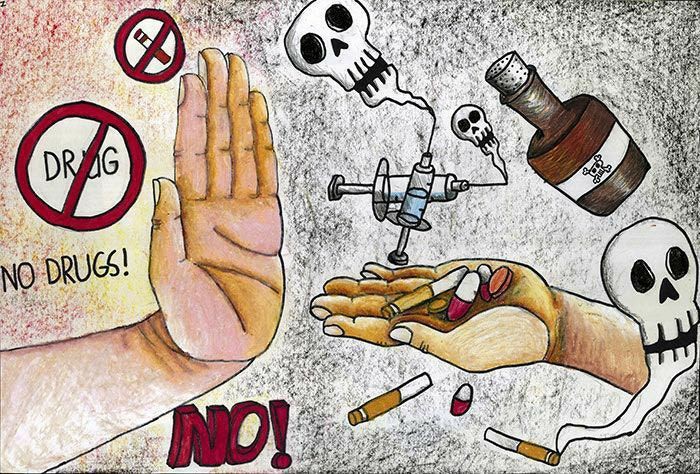
Drugs : you choose , you loose .

Addiction is just a way of trying to get at something else. Something bigger. Call it transcendence if you want, but it’s a rat in a maze. We all want the same thing. We all have this hole. The thing you want offers relief, but it’s a trap.
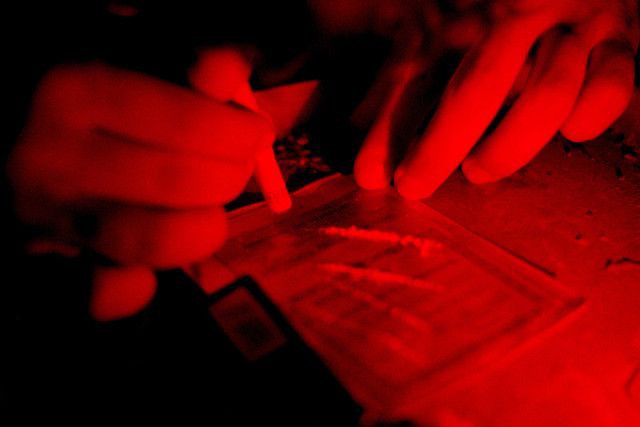
DRUGS ” A five letter word that is destroying human race. A word that could get you to the cloud nine and than kick you from the top.

What do you think it is ?

Is it a pleasure or a pain ?

Some says ‘it gives you wings ‘, others says ‘it makes you insane ‘ . What would you do , if someone is taking drugs ? Well , I would fly (its a joke ).

Ok , Let’s just get over with the topic .

Introduction
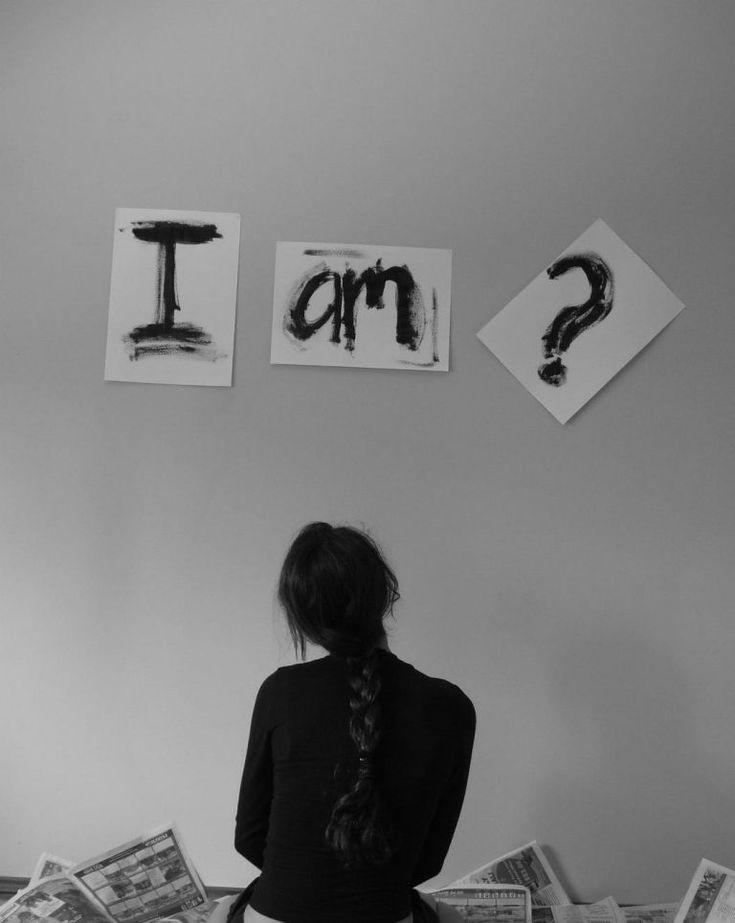
All the suffering, stress, and addiction comes from not realizing you already are what you are looking for.

– Jon Kabat-Zinn

Drugs are substances that change a person’s mental or physical state. They can affect the way your brain works, how you feel and behave, your understanding and your senses. This makes them unpredictable and dangerous, especially for young people.

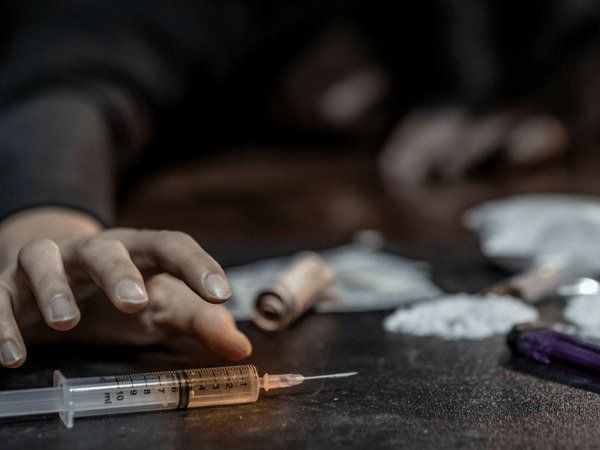
Drug addiction is a chronic brain disease. It causes a person to take drugs repeatedly, despite the harm they cause. Repeated drug use can change the brain and lead to addiction. That can destroy one’s life .

Signs that shows someone has a drug problem
  • Changing friends a lot .
  • Spending a lot of time alone.
  • Losing interest in favorite things.
  • Not taking care of themselves – for example, not taking showers, changing clothes, or brushing their teeth.
  • Being really tired and sad.
  • Eating more or eating less than usual.
  • Being very energetic, talking fast, or saying things that don’t make sense.
  • Being in a bad mood.
  • Quickly changing between feeling bad and feeling good.
  • Sleeping at strange hours.
  • Missing important appointments.
  • Having problems at work or at school.
  • Having problems in personal or family relationships.

If a person shows these signs than he / she is using drugs . But it’s not , it’s a probability . The person may or may not be using drugs . For the assurance you have to ask the person (well they can lie ) . Take them for the blood test . It will show if the person is taking drugs or not . It’s a simple procedure .

Why can’t people stop using drugs on their own?
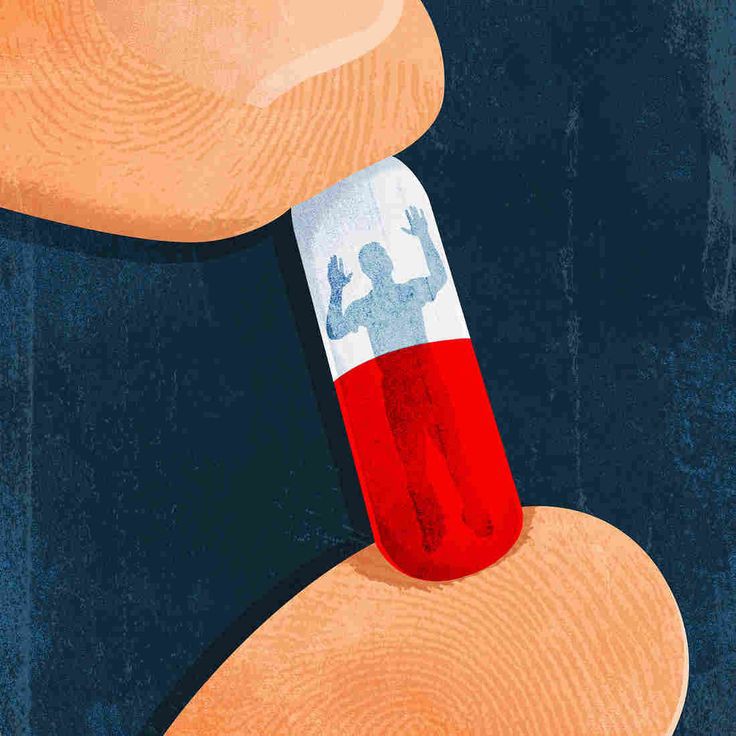

Repeated drug use changes the brain, including parts of the brain that give a person self-control. These and other changes can be seen clearly in brain imaging studies of people with a drug addiction. These brain changes explain why quitting is so difficult, even when an addicted person feels ready.

Many people are compelled to enter treatment by the pressure of their family, friends, or a court system. People of all ages with substance use disorders live in fear of what will happen if their drugs are taken away.

Due to the addiction , they experience a variety of physical and emotional withdrawal symptoms, including depression, anxiety, and other mood disorders; restlessness, and sleeplessness . It may lead you to the death bed .

Treatment :

Counseling and other behavioral therapies are the most commonly used forms of treatment. Medications are often an important part of treatment, especially when combined with behavioral therapies. Treatment plans must be reviewed often and modified to fit the patient’s changing needs.

  • Rational Emotive Behavior Therapy.
  • Cognitive Behavioral Therapy.
  • Detoxification.
  • Treatment with Medication.
  • 12-Step Facilitation.

One of the hardest things was learning that I was worth recovery.

Link
The Orphans of Romania

The standard of living for Romanian orphans is still problematic despite vast improvements since their conditions were leaked to the west after the fall of communist government 1899.

Under Nicholae Ceausescu, both abortion and contraception were forbidden. Ceausescu believed that population growth would lead to economic growth. Birth rates especially rose during the years of 1967,1968, and 1969.

This increase in the number of births resulted in many children being abandoned in orphanages which were also occupied by people with disabilities and mental illness. Together, these vulnerable groups were subjected to institutionalised neglect, physical and sexual abuse , and drug use to control behaviour.

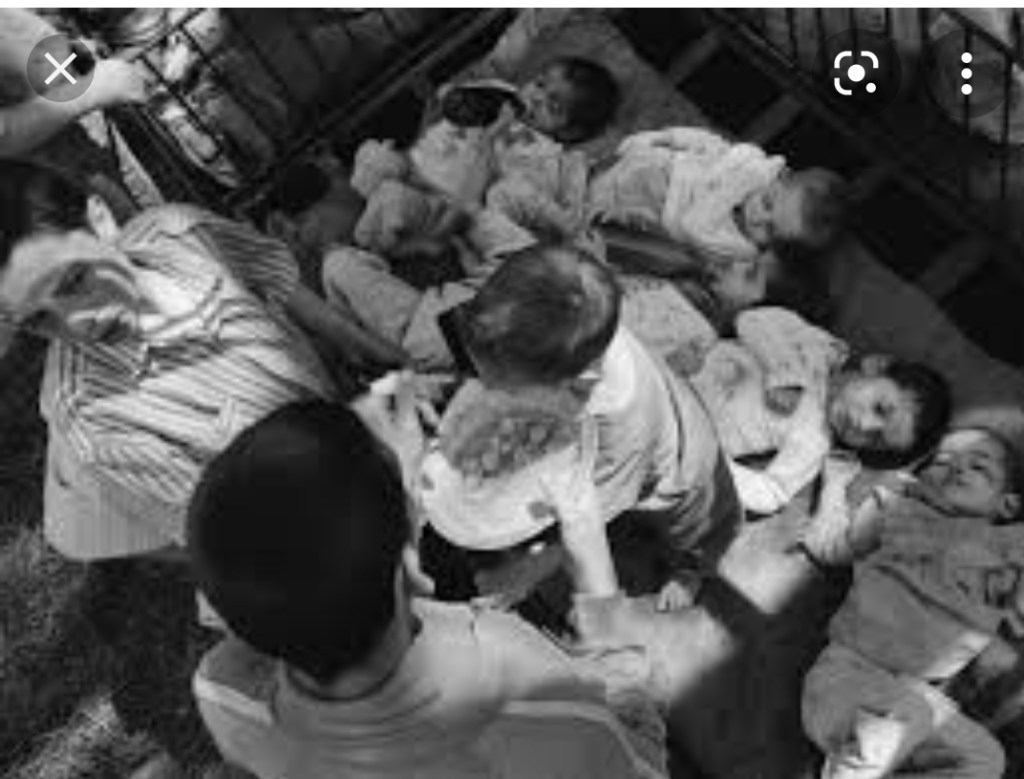
“A disabled and orphaned Romanian child lies in his bed on November 24, 2009, at the Targu Jiu orphanage, southwestern Romania, after being transfered from Bilteni’s orphanage, which was considered to be the worst place for children under the dictatorship of former Romanian President Nicolae Ceausescu.”

The U.S. consul in Bucharest at the time, Virginia Carson Young, noted that many of the children were not actually orphans, but were infact children who had parents unable to afford such large families, with such a situation being created by the mandated natalist requirements.

The parents had placed them in orphanages,often with the intention of picking them up at a older age. There were a high percentage of Roma (Gypsy) children in the orphanages who were often left in an institution until they were old enough t help earn a living, and then parents would claim them again.

“At three weeks old, Izidor was abandoned at a state-run hospital for “unsalvageables” in Nicolae Ceaușescu’s Romania — left behind by his family because one of his legs was deformed. “

The orphanages which were for the disabled children, treated the children very badly in there. Those orphanages lacked both medicines and washing facilities and physical and sexual abuse if children was reported to be common.

Sometimes, the children were often tied to their own beds or dangerously restrained in their own clothing,because the staff had failed to put clothes on them,the children would spend their day naked and be left sitting in their own feces and urine.

They were abused by the nurses and the older children used to beat the younger ones. All children, including girls, had their heads shaved, with made it difficult to differentiate one another.

Physical needs were not met, as many children died of minor illness or injuries such as cataracts or anemia. Many would starve to death. Some children in the orphanages were infected with HIV/AIDS due to the practice of using unsterilised instruments. Also they have to shift themselves from one orphanage to another. It is estimated that about 500,000 children were raised in orphanages.

“Estimates say that under Ceaușescu’s regime, 170,000 babies, children, and teens lived in “child gulags” subsisting on thin gruel, often in filthy, horrific conditions.”

“Deprived of loving care of any kind, those that lived were often under-developed physically and mentally, and found it difficult to form attachments with other people.”

After the Romanian Revolution, the number of street children was very high. Some ran away or were thrown out of orphanages or abusive homes and were often seen begging, inhaling “aurolac” from sniffing bags and roaming around.

Along with fund-raisers, westerners and Europeans adopted many Romanian children after the exploitation of their conditions. However strict led prevented many adoptions and the process of adoption became complex. Because of the neglect the children suffered, many grew up with physical and mental delays.

Even after being adopted, children had problems forming attachments to their new parents. Additionally to physical effects , the legal attributes of being disowned include a loss of legal surname, in addition to first names being assigned as numbers. Young children brought to orphanages typically cannot remember their names and because of this are named by their caretakers.

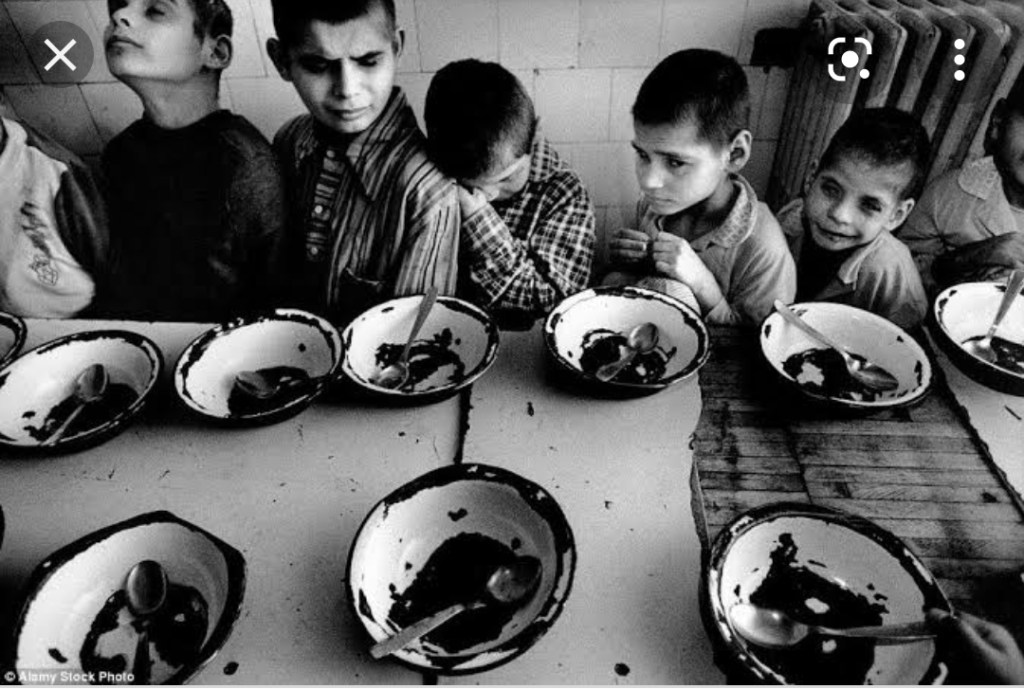
“Like all the boys and girls who lived in the hospital for “irrecoverables,” Izidor was served nearly inedible, watered-down food at long tables where naked children on benches banged their tin bowls. He grew up in overcrowded rooms where his fellow orphans endlessly rocked, or punched themselves in the face, or shrieked. “

“Out-of-control children were dosed with adult tranquilizers, administered through unsterilized needles, while many who fell ill received transfusions of unscreened blood. Hepatitis B and HIV/AIDS ravaged the Romanian orphanages.”