Floor Leaders of Political Parties ahead of Winter Session of Parliament

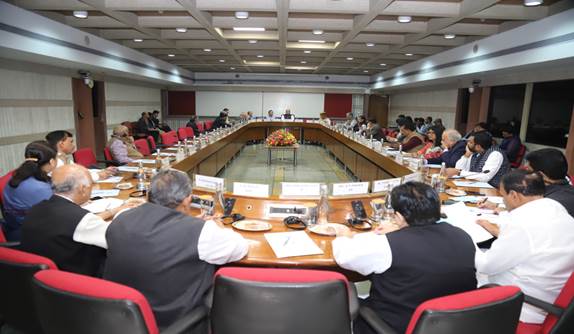
 A meeting of the Government with Floor Leaders of all Political Parties was held under the Chairmanship of Defence Minister, Shri Rajnath Singh, here today, before the start of the Winter Session of Parliament, 2023. In his opening address, Union Minister for Parliamentary Affairs, Shri Pralhad Joshi informed that the Winter Session of Parliament will commence on Monday, the 4th December, 2023 and subject to exigencies of Government Business, the session may conclude on Friday, the 22nd December, 2023. The Session will provide 15 sittings spread over a period of 19 days. He also informed that tentatively 19 items of Legislative Business and 2 items of Financial Business have been identified for being taken up during this session.
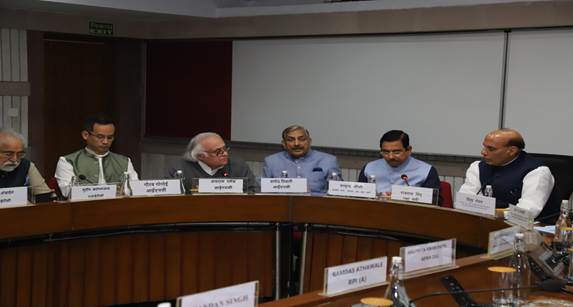
 

Union Minister for Parliamentary Affairs further stated that the Government is always ready to discuss on the floor of the House, any issue as permitted under Rules of Procedure by respective Presiding Officers. He also requested all party leaders for active cooperation and support for the smooth functioning of the two Houses of Parliament. The meeting was also attended by Minister of State (Independent Charge) of the Ministry of Law and Justice; Minister of State in the Ministry of Parliamentary Affairs and Minister of State in the Ministry of Culture,  Shri Arjun Ram Meghwal.

Concluding the meeting, after listening to the points raised by the leaders of various political parties in both Houses of Parliament, Defence Minister, Shri Rajnath Singh thanked leaders for raising important issues in the meeting and stated that Government is ready for discussion on all these issues as per the rules of the respective Houses of Parliament and with the permission of the concerned Presiding Officers.

In total, meeting was attended by Thirty(30) Leaders from Twenty Three political parties.
LIST OF BILLS LIKELY TO BE TAKEN UP DURING THE 14TH SESSON OF 17TH LOK SABHA AND 262nd SESSION OF RAJYA SABHA

I – LEGISLATIVE BUSINESS:-

  1. The Repealing and Amending Bill, 2023, as passed by Lok Sabha.
  2. The Advocates (Amendment) Bill, 2023, as passed by Rajya Sabha.
  3. The Press and Registration of Periodicals Bill, 2023, as passed by Rajya Sabha.
  4. The Constitution (Jammu and Kashmir) Scheduled Castes Order (Amendment) Bill, 2023
  5. The Constitution (Jammu and Kashmir) Scheduled Tribes Order (Amendment) Bill, 2023
  6. The Jammu and Kashmir Reservation (Amendment) Bill, 2023
  7. The Jammu and Kashmir Reorganisation (Amendment) Bill, 2023
  8. The Bharatiya Nyaya Sanhita, 2023
  9. The Bharatiya Nagarik Suraksha Sanhita, 2023
  10. The Bhartiya Sakshya Adhiniyam, 2023
  11. The Post Office Bill, 2023
  12. The Chief Election Commissioner and other Election Commissioners (Appointment, Conditions of Service and Term of Office) Bill, 2023
  13. The Boilers Bill, 2023
  14. The Provisional Collection of Taxes Bill, 2023
  15. The Central Goods and Services Tax (Second Amendment) Bill 2023
  16. The Jammu and Kashmir Reorganization (Amendment) Bill, 2023
  17. The Government of Union Territories (Amendment) Bill, 2023
  18. The National Capital Territory of Delhi Laws (Special Provisions) Second (Amendment) Bill, 2023
  19. The Central Universities (Amendment) Bill, 2023


II – FINANCIAL BUSINESS:-

  1. Presentation, Discussion and Voting on First Batch of Supplementary Demands for Grants for the year 2023-24 and introduction, consideration and passing of the related Appropriation Bill.
  1. Presentation, Discussion and Voting on Demands for Excess Grants for the year 2020-21 and introduction, consideration and passing of the related Appropriation Bill.

***

Youth Parliament Program

 The Youth Parliament Program is run with a view to strengthen the roots of democracy, inculcate health habits of discipline, develop tolerance of divergent views and to familiarize the student community about the working and functioning of Parliament. The Youth Parliament Program is organized in 2 modes:-

    1. Youth Parliament Competition (YPC):

   The following YPCs were organized this year: –

  1. Group Level Competition of the 16th National Youth Parliament Competition (NYPC), 2019-20 for Universities / Colleges wherein 35 institutions participated
  2. 33rd NYPC, 2022-23 for Kendriya Vidyalayas wherein 150 institutions participated
  3. Regional Level Competition of 24th NYPC, 2022-23 for Jawahar Navodaya Vidyalayas wherein 80 institutions participated
  4. 55th YPC for schools under Directorate of Education, Govt. of NCT of Delhi and NDMC wherein 39 institutions participated

2) Web-portal of National Youth Parliament Scheme (NYPS):

The web-portal of the NYPS was launched on 26th November, 2019 to increase the outreach of the youth parliament program to every nook and corner of the country. The registration on the first edition of NYPS was closed on 31st July, 2022. 8317 registrations and 373 event completion reports were received on the portal. The registration for the second edition of NYPS was opened on 1st August, 2022. Till 30th November 2022, 1702 successful registrations and 367 event completion reports have been received on the portal. The last date for registering for the second edition is 31st December, 2022.

Consultative Committees:

The Ministry constitutes Consultative Committees of Members of Parliament and makes arrangements for holding their meetings during session and inter session periods. After the constitution of 17th Lok Sabha, 37 Consultative Committees had been constituted for various Ministries/Departments. 38th Consultative Committee in respect of the Ministry of Labour and Empowerment was constituted on 28th July, 2020. The following activities were undertaken during the year 2022: –

  • One Consultative Committee for the Ministry of Law and Justice (39th) was constituted on 20th April, 2022.
  • 60 meetings of the Consultative Committees were held till November, 2022.
  • 73 Members of Parliament (Lok Sabha & Rajya Sabha) were nominated on various Committees/Councils/boards etc. set up by the Government of India.
  • Deletion of membership of 69 MPs were done from the various Consultative Committees due to their resignation/ retirement/ demise etc.

नितिन अग्रवाल को राहत, बने रहेंगे विधायक

हरदोई।

सदर विधायक नितिन अग्रवाल को बड़ी राहत मिली है. विधानसभा सदस्यता रद्द करने के लिए सपा नेता द्धारा दाखिल की गई याचिका को विधानसभा अध्यक्ष हृदय नारायण दीक्षित ने खारिज कर दिया है। इसकी जानकारी मिलते ही सदर विधायक के समर्थकों में खुशी की लहर दौड़ गई।


विधानसभा में नेता प्रतिपक्ष रामगोविंद चौधरी ने 11 नवंबर 2019 को विधानसभा अध्यक्ष के सामने याचिका दाखिल की थी। इसमें कहा था कि सदर विधायक नितिन अग्रवाल 2017 में हुए विधानसभा चुनाव में सपा के टिकट पर निर्वाचित हुए थे। 2019 में गांधी जयंती के मौके पर हुए मैराथन विधानसभा सत्र के दौरान सपा ने विह्प जारी की थी कि सपा का कोई भी विधायक उक्त सत्र में शामिल नहीं होगा।

इसके बावजूद नितिन अग्रवाल सत्र में शामिल हुए। विह्प का उल्लंघन किए जाने का आरोप लगा उनकी सदस्यता रद्द करने की मांग की गई थी। पूरे मामले पर चली सुनवाई के बाद विधानसभा अध्यक्ष हृदय नारायण दीक्षित ने रामगोविंद चौधरी की याचिका खारिज कर दी है। सदर विधायक नितिन अग्रवाल ने इसकी पुष्टि करते हुए बताया कि गुरुवार को ही इस संबंध में विधानसभा अध्यक्ष ने आदेश पारित कर दिया था

बता दें कि हरदोई सदर विधानसभा पर कई पंचवर्षीय से नितिन अग्रवाल के पिता नरेश अग्रवाल का दवदवा रहा है. इस सीट पर हमेशा से ही नरेश ही जीतते आये हैं. 2017 के विधानसभा चुनाव में बेटे नितिन अग्रवाल सपा की टिकट पर विधानसभा पहुंचे थे. बाद में वे सत्ताधारी पार्टी भाजपा में शामिल हो गए थे।

अनन्या कौशल द्वारा संपादित।

One nation, One election

                                                                       (Photo: Think India)

“One nation, one election”, might sound good as well as appealing, but it will have a number of anti-democratic consequences. It’s true saying that simultaneous elections for Lok Sabha and State Assembly could save time, energy and money of our country, but on the other side it can prove to be harmful for our country as well as democracy.

Apart from logical considerations, which cannot be a serious reason for a major change to the basic structure of the Indian polity, the most seductive argument in favor of simultaneous elections is the allure of Modi’s phrase, “One nation, one election.” This matches the “one nation, one tax” rationale for the goods and services tax (GST), which, of course, came into force via its own constitutional amendment on 1 July, 2017.

While one can debate the economic costs and benefits of GST, the analogy with elections is logically flawed. Indeed, the concept of simultaneous elections fundamentally runs against the grin of our Westminster-style federal political union. “One nation, one election” would make sense if India were a unitary state. But we are a union of states, which is philosophically and politically an essentially different conception of the Indian nation-state. With this, let us discuss the disadvantages of holding simultaneous elections in India:

  • Rule by the majority is the cardinal principle of Indian democracy. The concept of simultaneous elections goes against this principle since if elections are held simultaneously then the Lok Sabha and the state legislative assemblies cannot be dissolved before completing their full period of 5 years even if the ruling party is reduced to a minority hence it will go against the federal principles.
  •  It will disown today’s reality of fragmented quality at the state level where coalitions are the order of the day. So, simultaneous elections try to bring in the presidential type of governance where the state assembly is no longer can decide their own path and have to be in existence for 5 years with a minority party in power.
  • Even if elections were to take place simultaneously, parties contesting in only one state would anyway be similarly burdened. So, it probably takes care of only national parties. And the logistic requirement of movement of the requisite security forces. This constant would remain even if simultaneous elections were held.

So, it can be said that holding simultaneous elections is certainly desirable but not feasible. The question which arises is, “Why should the states suffer from the electoral decisions taken at the centre?” It has been said that simultaneous elections would curtail government expenditure but the election commission has updated that for this it would require the procurement of 24 lakh EVMs and an equal number of VVPAT units which is double the number required to hold only parliamentary polls. So, the first objective is not met.

Therefore, notwithstanding the benefits of simultaneous elections highlighted above, the cost to the Indian democracy in terms of playing havoc with the cardinal principle of rule by the majority will be far more than any savings to be realized to the public exchequer. Rather other alternatives should be explored to reduce election-related expenses like state funding of elections, decriminalization of politics, bringing in transparency in political funding by linking Aadhaar card to the election Identity card which has still not been done, etc.


Central Vista Project

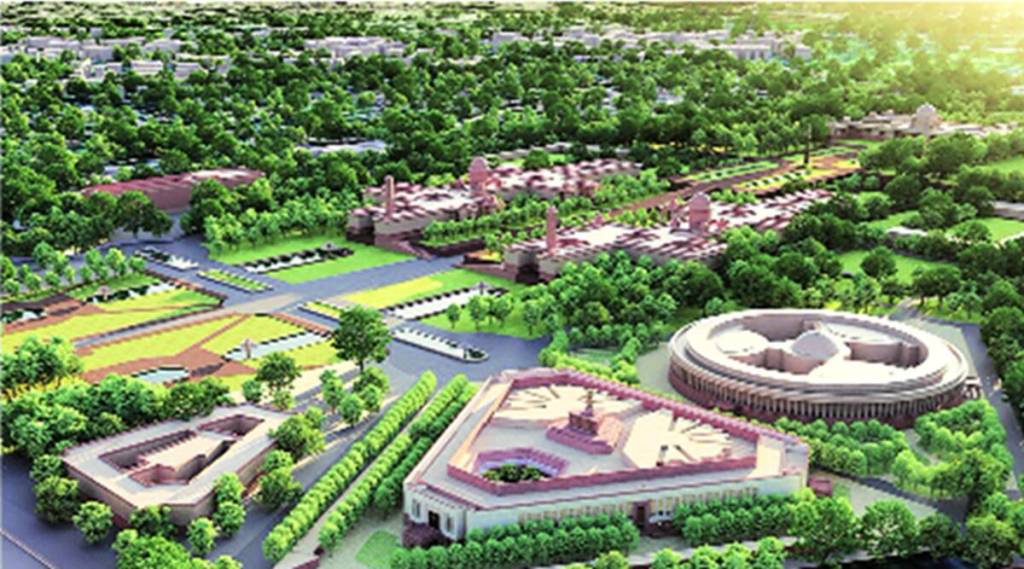
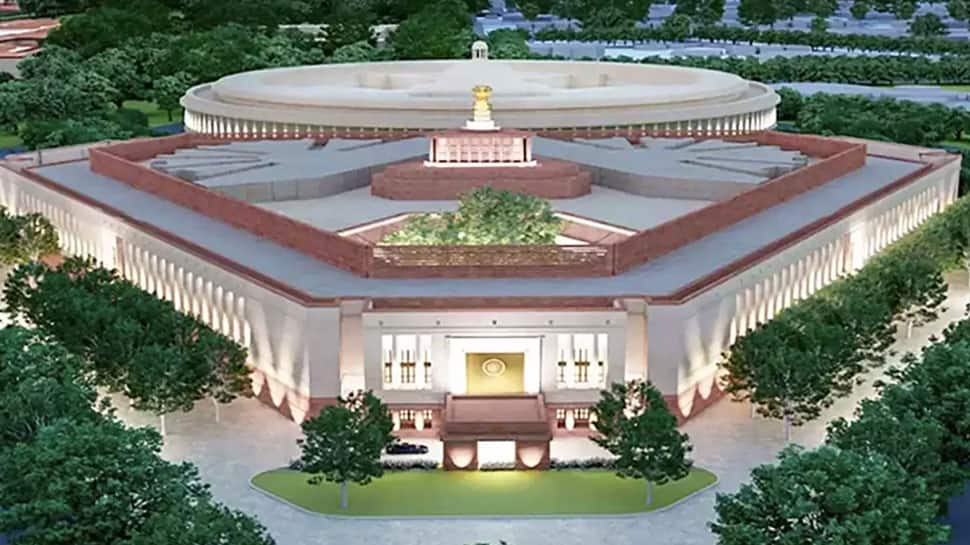
Central vista project is an ambitious initiative by the Narendra Modi-led NDA government at the Centre to reconstruct a 3.2-kilometer stretch known as the Central Vista in the heart of Lutyens Delhi, which was erected by the British in the 1930s. In 2019, The national government proposed this renovation project to give India’s “power corridor” a new identity. The Union Ministry of Housing and Urban Affairs is in charge of the project, which is expected to be finished by 2024 and its estimated cost is more than Rs. 20,000 crore. The main vision of this project is to symbolize India’s commitment to confront the tough challenges that have afflicted it for decades and it is relentlessly focused on modernizing in order to satisfy the needs and ambitions of its inhabitants. Tradition is respected, but it is not held captive by it. The project is environmentally conscious yet not paralyzed by it. 

This project which intends to renovate and enlarge India’s Parliament, Prime Minister’s home, and numerous other official buildings at a cost of Rs 20,000 crore, has been dubbed a sign of indifference and highlighted as an example of the administration’s misdirected priorities during the Covid-19 epidemic. The criticism to central vista project can be seen in various instances as follows:-

On July 12, a Maharashtra-based organization held a public gathering in the capital to protest the project, claiming that the country “needs hospitals, not a new Prime Minister’s home.” The Central Public Works Department restricted photography and video recording at the building site in May, when the project was attracting criticism for continuing despite the devastating second wave of Covid-19, allowing for even more severe criticism. 

Due to many criticisms and reacting to opposition’s objections the central government released a document busting all the myths related to this ongoing project to bring a reality amongst citizens of India.

According to the report and defining the current activity at the project site, the central ministry stated that suspending it at this point would result in the government incurring responsibilities under existing contracts and jeopardizing the interests of the employees. Inflation is also a major concern if the project is delayed. The government also stated that environmental sustainability is at the heart of the Central Vista project, dispelling the misconception that it will harm the environment. No heritage structures, including India Gate, Parliament, the North and South Blocks, the National Archives, and others, would be demolished, according to the administration. The center has also   rejected claims that the Prime Minister’s new home will cost Rs 13,450 crore. The estimate covers a number of projects, including ten structures, according to the ministry, which also stated that the construction work for the Prime Minister’s house has yet to be bid and that the government has given no approval. The major criticism of continuing the work amid covid 19 was also dismissed by the government by citing that the work comes under  Essential Services Act.  On May 31, the Delhi High Court also dismissed a petition challenging the Central Vista Redevelopment project’s ongoing construction operations, calling the Public Interest Litigation (PIL) a “illegal motivation” to halt the work.