Mr. Paper’s Advice To Writers!

“Fiction reveals truths that reality obscures.”

  • Ralph Waldo Emerson

Bonjour! Today’s article deals with Mr. Paper who wishes to address the writers! A fictional concept of Mr. Paper is covered who shares his grievances with you all!

Hello writers! I know you must have smartly deciphered till now that I am a piece of paper speaking to you. Through this article, I wish to convey my emotions. So, let me begin.

I Really Appreciate Each And Every Writer.”

I may not be able to say this to you, but yes, every writer is precious to me. The hard work and special efforts that you put in in order to make your book a success aren’t unnoticed because I am the one who actually notices! 😉

“Let Alone Writers, I Love It When Any Person Whatsoever Chooses To Scribble Almost Anything On Me.”

Yes! Anyone who writes is someone who preserves my rights 😉 When you write, you provide me my most important right which is to never be a blank sheet! Thank you for taking some efforts to inscribe something on me because that keeps me alive.

“I Hate It When Writers Waste Paper By Throwing Most Of The Half Empty Sheets In The Trash.”

Some writers tend to create their rooms a mess by writing a short paragraph which maybe later doesn’t seem appropriate to them, which makes them curl the paper into a ball and then bury it into the trash. Please stop killing us!

How I Wish Writers Would Make More Use Of Paper Than Their Laptops!”

Writers today, in this digital era, no longer make use of paper which makes me feel overwhelmingly sad because I feel ignored and left out. Please spend some time with me as well!

“Please Don’t Resort To Dog Earring When Reading Books!”

This is a gentle request to all the readers as well as writers to not practice dog earring because that stretches my body, leaving me in pain. Please use bookmarks for the same!

“Please Don’t Tear A Page Unnecessarily.”

This is my earnest request to all of the humans out there to not tear or lacerate us without any reason. By doing this, you plot our demise unintentionally which is not something you want to do, right?
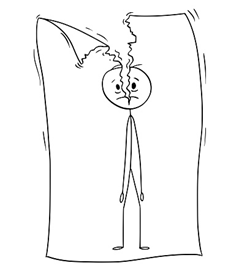
“Please Don’t Curse Us When You Are Unable To Come Up With Content.”

Some writers tend to curse the page for not receiving relevant ideas. I totally understand that writing can be a stressful task at times but then blaming a blank sheet of paper isn’t fair, right? So, please don’t curse and manhandle us because we didn’t hurt you a pinch!

Lastly, I would like to wish each and every writer by giving them my best regards. We await the time when you would get a sheet out and begin engraving something on us. We may seem inanimate to you, but we aren’t. We can feel the essence of your hard work as you prepare your manuscript and try getting it published. We value and respect you! Writing is a fun task and requires some love while we (papers) love you back! So, wait no more! Publish your book and make the utmost use of us (papers).

“Happy Writing”

Thank You For Reading!

Misogyny vs Feminism in Osborne’s ‘Look Back in Anger’

“Why don’t we have a little game? Let’s pretend that we’re human beings, and that we’re actually alive.”

John Osborne

Look Back in Anger is a realist play written by John Osborne and Published in the year 1956. Set in an economy that has been diminished by the war, it follows the story of a young couple Jimmy and Alison Porter. Being from two different social classes, Jimmy being a working- class man and Alison being an upper-class, the two have trouble navigating through the class conflict present between themselves. The play focuses largely on Jimmy’s anger against the upper-class and particularly the upper-class women.

During the time of the play’s production, The Women’s Movement had already started taking shape in Britain and hence can be read as a reaction against the growing feminist movement of the time. It is evident from the play that Jimmy hates women and has strong misogynistic views. He blames women for his lack of power and impotence even though there is no coherent logic behind that argument. His wife Alison is the main victim of his hatred. Through her, he takes out all his anger against the establishments, the upper-class, Alison’s family and all women in general. His marriage to her was in itself a statement of rebellion against the bourgeoise and he himself states that ‘he took her hostage’. His motive for the marriage was never love and it was simply his need to assert his working-class masculinity over her.

“A refined sort of butcher, a woman is.”

-John Osborne

Where Alison is an aristocrat in terms of her class status, Jimmy is an aristocrat in terms of his gender identity and the only way he can get his anger and frustration against the bourgeoise out is by sexually mastering the upper-class women. He exploits his aristocracy as a male to compensate for his lack of status in terms of class, and he translates his class hatred into a sexual hatred. Here, Femininity is associated with the upper class and masculinity to that of the lower class and this act of attributing characteristics of gender to the classes is seen throughout the play. Despite being immensely flawed himself, Jimmy’s standards for women are highly unrealistic and he needs women only for his own selfish reasons. While Alison suffers to make their relationship work, Jimmy simply complains and puts a strain on them. He contradicts himself when he lashes out against Alison for being too silent but at the same time, he complains that she is like a python that is out to devour him whole with reference to her sexual aggression. The only two women that Jimmy seems to respect are Madeline (His ex-lover) and Mrs. Tanner (A working-class woman who helped him set up his sweet shop). He holds her as an ideal working-class woman as opposed to his own and Alison’s mother who are upper-class.

Although the driving force of the story is Jimmy’s anger, both Helena and Alison have made choices of their own to leave him. Even Alison who acts like a passive pushover has had her own choices and decisions in life. It was her choice to rebel against her parents and to marry Jimmy and leave her upper-class status, it was her choice to leave him and it was also her choice to come back to him in the final scene. Even when Jimmy calls her ‘Lady Pusillanimous’, she chooses to be silent so as to not give him the satisfaction of eliciting a reaction from her. Being silent is actually her way of retaliating against his dominance. On the other hand, Helena is one of the characters who is more expressively strong and feministic. She is unfazed by his threats and slaps him which shatters his façade and brings out his vulnerability. •            Even when Alison chose to come back to Jimmy, Helena is unwilling to confirm to his demanding views on what a woman should be and boldly walks out on him because she is determined that she doesn’t want to go through pain and suffering just to be with him.

Look Back in Anger is thus riddled with undaunting and scathing misogyny and sexism. Although Osborne denied any anti-feministic overtones, we see that there’s an erasure of women I the male dominated dynamic in the play.

Tennessee Williams as a Southern Writer

Tennessee Williams

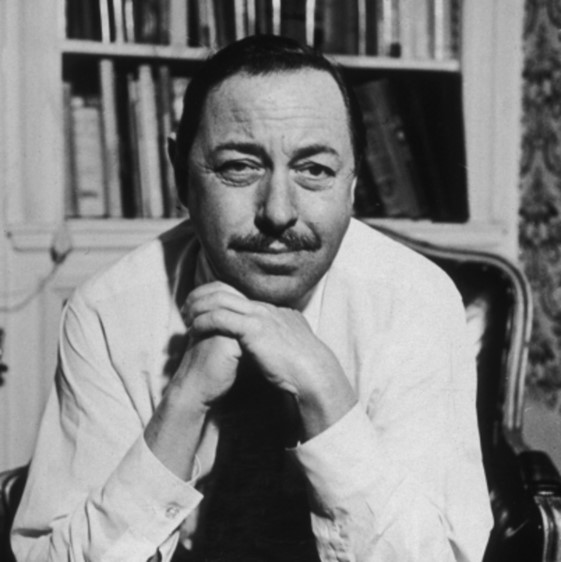
Tennessee Williams is an American playwright hailing from the southern state of Mississippi. For him, writing was an outlet through which he explored the mores of Southern life and the eccentricities and complexities of his own family. His most notable works include The Glass Menagerie (1944) which was considered to be a turning point in his career, A Streetcar Named Desire (1947) and Cat on a Hot Tin Roof (1955) both of which received Pulitzers, Summer and Smoke (1948), Orpheus Descending (1957) etc. Although he wrote throughout his life, his subsequent works never achieved the high acclaim of his earlier works.

Williams as a Southern writer shared a love-hate relationship with the south which provided for dramatic conflicts and excitements. Most of his work reflected traditional topics like agrarianism vs urbanism, New South vs antebellum South, chevalier vs the upstart and so on. For example, his play The Streetcar Named Desire represents the fallen aristocracy with the ethnic denizens a new industrial order, and his play Cat on a Hot Tin Roof represents the different family dynamics of the neo-rich. He drew upon the full resources of language to convey their pictures of culture based on moral absolutes. His characters are portrayed in a way in which they are unable to escape the burdens of their regional histories. Most often, the weight of the southern history the power of racial and social divisions, his rituals and taboos often make self-determination and moral choice unachievable for the characters. In his world, any defiance of this code results in personal destruction.

One of Williams’ most prominent southern trait is the very theatrical display of emotions, dysfunctional characters and unalterable sociological circumstances. He deconstructs the magical appeal of the southern culture and portrays the tension between their dream of an idyllic life and the reality of living it. He also provides constant allusions to plantations like Belle Reve in The Streetcar Named Desire. He also adheres to certain stereotypes of small-town life like gossipy neighbours, fear of scandal, aristocratic families who are deferentially treated by the rest of the community etc.

The usual southern hero is usually almost like an epic figure who embodies the ideals of the society and performs chivalric behaviour which is distinctly different from northern protagonists. A typical southern hero is the leader of men, honest, compassionate, a defender of the faith. They are usually heterosexual, while being protective of the women. But no such southern character exists in Williams’ work. But instead of abandoning the concept of a hero, he has adapted it to the world which has been hopelessly corrupted. He questions the paternalistic order of old South, the enslavement of the black men, the subjugation of the female, the corrupting power of wealth, and the obsession with keeping up appearances. He instead shows guilt caused by the acknowledgement of one sexuality, and the guilt of black subjugation in an antebellum society. Williams attributes perversion and distortions of human behavior to the rigid gender stereotypes that he uncovers in the southern landscape. Certain characters like Brick, who is Blanche’s husband, are unable to cope with the extreme need for masculinity in men. He also questions hypocrisy of a society that denies a woman’s sexuality. Although he does cling to prevailing and romantic point of view past offered luxury and that the present forces the individual to accept barest realities.

“Williams understands human needs and aspirations and is supremely aware of the artist’s role in illuminating urgent personal and social issues; yet his consistent exposure of hypocrisy and his off-beat is reverent sense of humor never hides his deep compassion for those who fear the truth.”

-Kimball King

On one hand, he appreciates the elegance of the past, while on the other, he considers its denial of plurality sufficient cause for its demise. This reflects the love-hate relation that he shares with the South. He does not set out to explain the South and its effects on his characters, but he understands the South and presents characters as real people. He’s a regional writer who does not exploit the peculiarities of his region, and his exploration of the southern value system and conflicts has influenced several later dramatists. To quote Kimball King, “Williams understands human needs and aspirations and is supremely aware of the artist’s role in illuminating urgent personal and social issues; yet his consistent exposure of hypocrisy and his off-beat is reverent sense of humor never hides his deep compassion for those who fear the truth.”

Reference Links: