The Anticipation Builds: 2024 General Elections in India

 As the calendar inches closer to the year 2024, all eyes are fixed on the horizon of Indian politics, eagerly awaiting the next General Elections. India, the world’s largest democracy, conducts these elections every five years to determine the fate of the nation and its people. With its diverse population, myriad challenges, and evolving political landscape, the 2024 General Elections promise to be a defining moment in India’s history.

  1. Political Dynamics

The political landscape in India is ever-changing, marked by the dynamic nature of its political parties. The 2024 elections will be a litmus test for the ruling party, which will seek to secure another term, while the opposition parties will strive to make inroads. The BJP, led by Prime Minister Narendra Modi, has been in power since 2014 and is expected to present a formidable challenge to its opponents. However, the Indian political arena is known for its unpredictability, and alliances and realignments can alter the equations significantly.

  1. Key Issues

The 2024 General Elections are expected to revolve around a range of critical issues that resonate with the Indian populace. Some of these issues include:

a. Economic Recovery: In the wake of the COVID-19 pandemic, India, like the rest of the world, faces economic challenges. The electorate will scrutinize the government’s performance in reviving the economy, generating employment, and alleviating poverty.

b. Healthcare Infrastructure: The pandemic exposed weaknesses in India’s healthcare system. Voters will be interested in the government’s efforts to bolster healthcare infrastructure and ensure better access to quality medical care.

c. Agricultural Reforms: The contentious agricultural reforms implemented by the government will likely remain a focal point. The stance taken by various parties on these reforms will be closely observed by voters, particularly in agrarian states.

d. National Security: Security concerns, especially in border areas, will feature prominently in the election discourse. The government’s handling of national security issues will be closely scrutinized.

e. Environment and Climate Change: Climate change and environmental degradation have become global concerns. Voters may press for more comprehensive policies to address these issues.

  1. Electoral Technology

India is known for its mammoth electoral process, with millions of voters spread across diverse geographical regions. Technology is expected to play a crucial role in making the election process more efficient and transparent. The Election Commission of India has been at the forefront of implementing technology-driven solutions to facilitate voter registration, booth management, and result dissemination.

  1. Youth and Women’s Participation

The youth vote is expected to be a significant factor in the 2024 elections. India has a large and young population, and their concerns and aspirations will shape the election narrative. Moreover, the participation of women in Indian politics has been steadily increasing, and their role in deciding the outcome of elections cannot be underestimated.

  1. Conclusion

The 2024 General Elections in India are poised to be a watershed moment in the country’s political history. The electorate will have the responsibility of choosing leaders and policies that will shape India’s future. As the nation awaits this crucial event, it is imperative that the elections are conducted smoothly, fairly, and in a manner that upholds the principles of democracy. The world will be watching as India takes another step forward in its democratic journey.

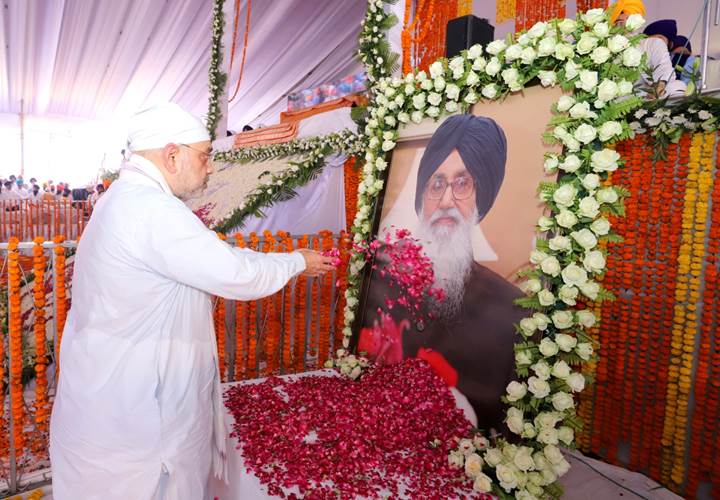
Chief Minister of the Punjab Late Shri Parkash Singh Badal

 Union Home Minister and Minister of Cooperation, Shri Amit Shah took part in the ‘Antim Ardas’ of former Chief Minister of the Punjab Late Shri Parkash Singh Badal and paid his last respects at Shri Muktsar Sahib in Punjab.

https://static.pib.gov.in/WriteReadData/userfiles/image/image001U30J.jpg

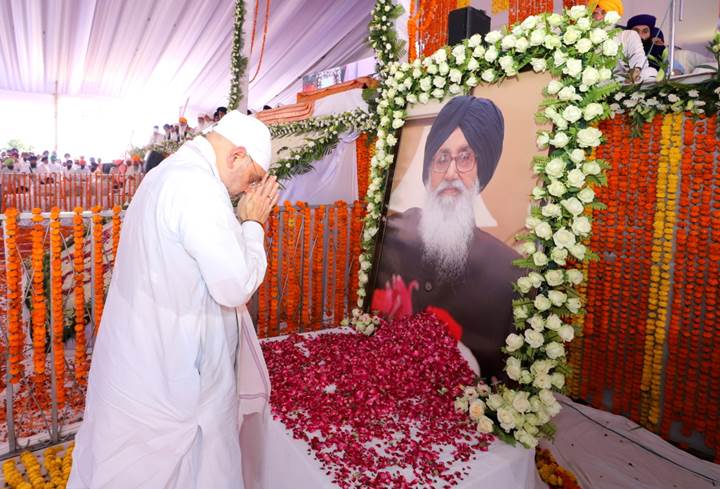
Shri Amit Shah said that due to passing away of Shri Parkash Singh Badal, the political and social leadership of not only Punjab but the entire country has suffered an irreparable loss. He said that it would be very difficult to fill the vacuum created by the demise of Shri Badal. Shri Shah said that with the passing away of Shri Badal, the Sikh community has lost a true soldier, the country has lost a patriot, the farmers have lost a true sympathizer and politics has lost a great man who set high standards.

https://static.pib.gov.in/WriteReadData/userfiles/image/image002D723.jpg

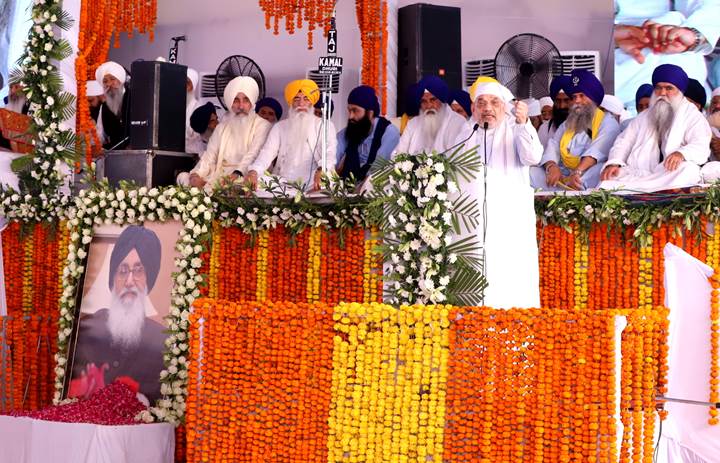
The Union Home Minister said that Shri Parkash Singh Badal had a long public life of 70 years, no person except Badal Sahab could live such a life without making any opponent. Shri Shah said that he always learnt from his meeting with Shri Badal and he always tried to show the true path. No one except great man like Shri Badal can give advice in political life with such transparency.

https://static.pib.gov.in/WriteReadData/userfiles/image/image003HB3V.jpg

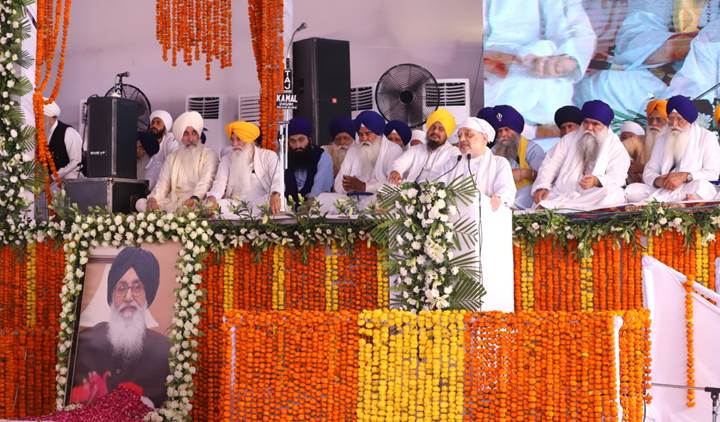
Shri Amit Shah said that Shri Parkash Singh Badal was the longest serving member of the Punjab Legislative Assembly and Shri Badalserved as the Chief Minister of Punjab for 5 times and laid the foundation of New Punjab. With his demise, the Sardar of brotherhood has also left us. Shri Parkash Singh Badal devoted his whole life to Hindu-Sikh unity and despite facing many oppositions in politics, Badal Sahab always tried to keep everyone united. Shri Shah said that it is impossible to find such a person in public and political life.

https://static.pib.gov.in/WriteReadData/userfiles/image/image004L62O.jpg

The Union Home Minister and Minister of Cooperation said that from 1970 till today, whenever there was an opportunity to stand for the country, Badal Sahab never backed down. He said that Sardar Parkash Singh Badal fought for principles and creedand spent longest time of his public life on jail. During the Emergency, Shri Parkash SinghBadal firmly stood to protect democracy, whether it was the Kargil war or the fight against terror, on every front, Badal Sahab, always stood like a shield for the national interest. Shri Shah said that the passing away of Badal Sahab is a huge loss for the entire country. Shri Amit Shah said that we all should take inspiration from the life of Shri Parkash Singh Badaland may Waheguru give us all the strength to walk on his path.

*****

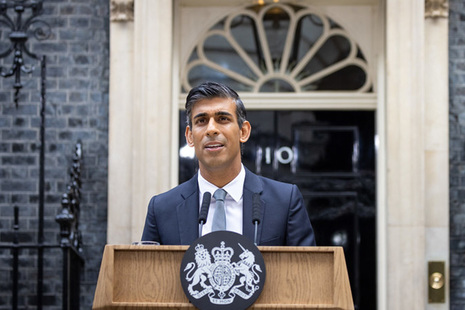
Rishi Sunak – Prime Minister of United Kingdom

Prime Minister, First Lord of the Treasury, Minister for the Union, and Minister for the Civil Service

The Rt Hon Rishi Sunak MP

Biography

Rishi Sunak became Prime Minister on 25 October 2022.

He was previously appointed Chancellor of the Exchequer from 13 February 2020 to 5 July 2022.

He was Chief Secretary to the Treasury from 24 July 2019 to 13 February 2020, and Parliamentary Under Secretary of State at the Ministry of Housing, Communities and Local Government from 9 January 2018 to 24 July 2019.

Education

Rishi went to Winchester College and studied Politics, Philosophy and Economics at Oxford University. He was also a Fulbright Scholar at Stanford University (USA) where he studied for his MBA.

Political career

Rishi was elected Conservative MP for Richmond (Yorks) in May 2015 and served as a Parliamentary Private Secretary at the Department for Business, Energy and Industrial Strategy from June 2017 until his ministerial appointment.

Career before politics

Rishi spent his professional career before politics in business and finance, working internationally. He co-founded an investment firm working with companies in multiple geographies. He then used that experience to help small and entrepreneurial British companies grow.

Personal life

Rishi is married with two young daughters.

Prime Minister

The Prime Minister is the leader of His Majesty’s Government and is ultimately responsible for the policy and decisions of the government.

As leader of the UK government the Prime Minister also:

  • oversees the operation of the Civil Service and government agencies
  • chooses members of the government
  • is the principal government figure in the House of Commons

As Minister for the Union, the Prime Minister works to ensure that all of government is acting on behalf of the entire United Kingdom: England, Northern Ireland, Scotland, and Wales.

First Lord of the Treasury

The First Lord of the Treasury is one of the Lords Commissioners of the Treasury. This role is usually held by the Prime Minister.

Since the 17th century, the Lords Commissioners of the Treasury have collectively carried out duties that were previously held by the Lord High Treasurer (head of His Majesty’s Treasury).

The Lords Commissioners of the Treasury also include:

  • the Second Lord of the Treasury – the Chancellor of the Exchequer, who has most of the functional financial responsibilities
  • Junior Lords Commissioners of the Treasury – other members of the government, usually government whips in the House of Commons

10 Downing Street is the official residence of the First Lord of the Treasury, and not of the Prime Minister.

Minister for the Union

As Minister for the Union, the Prime Minister works to ensure that all of government is acting on behalf of the entire United Kingdom: England, Northern Ireland, Scotland, and Wales.

Minister for the Civil Service

The Minister for the Civil Service is responsible for regulating the Civil Service.

The Civil Service (Management Functions) Act of 1992, allows the Minister for the Civil Service to delegate power to other ministers and devolved administrations.

This role was created in 1968 and is always held by the Prime Minister.

Biography of Mulayam Singh Yadav

Mulayam Singh Yadav (22 November 1939 – 10 October 2022) was
an Indian politician and the founder-patron of the Samajwadi Party. He served
for three non-consecutive terms as the Chief Minister of Uttar Pradesh, and
also served as the Minister of Defence, Government of India. A long-time
parliamentarian, he was the Member of Parliament, representing the constituency
of Mainpuri in the Lok Sabha, and has also earlier served as the Member of
Parliament from Azamgarh and Sambhal constituencies. He was often referred to
as Netaji (meaning respected leader in Hindi) by party leaders and workers.

Early life and education

Mulayam Singh Yadav was born to Murti Devi and Sughar Singh
Yadav on 22 November 1939 in Saifai village, Etawah district, Uttar Pradesh,
India.


Yadav had three degrees in political science — a B.A. from
Karm Kshetra Post Graduate College in Etawah, a B.T. from A. K. College in
Shikohabad, and an M.A. from B. R. College, Agra University.


Personal life

Yadav has married twice. His first wife, Malti Devi, was in
a vegetative state from 1974 until her death in May 2003 following
complications while giving birth to their only child, Akhilesh Yadav. Akhilesh
was Chief Minister of Uttar Pradesh from 2012 to 2017.


Mulayam had a relationship with Sadhana Gupta while still
married to Malti Devi in the 1990s. Gupta was not well known until February
2007, when the relationship was admitted in India’s Supreme Court. Sadhana
Gupta has a son named Prateek Yadav (born 1988), from her first marriage.


Prateek’s wife Aparna Bisht Yadav (born 1990) joined BJP in
2022. Sadhana Gupta died in July 2022 after a brief illness.


Early political career

Groomed by leaders such as Ram Manohar Lohia and Raj Narain,
Yadav was first elected as a Member of the Legislative Assembly in Legislative
Assembly of Uttar Pradesh in 1967. Yadav served eight terms there In 1975,
during Indira Gandhi’s imposition of the Emergency, Yadav was arrested and kept
in custody for 19 months. He first became a state minister in 1977. Later, in
1980, he became the president of the Lok Dal (People’s Party) in Uttar Pradesh
which became a part of the Janata Dal (People’s Party) afterwards. In 1982, he
was elected leader of the opposition in the Uttar Pradesh Legislative Council
and held that post until 1985. When the Lok Dal party split, Yadav launched the
Krantikari Morcha party.


Chief Minister

First term

Yadav first became Chief Minister of Uttar Pradesh in 1989.


After the collapse of the V. P. Singh national government in
November 1990, Yadav joined Chandra Shekhar’s Janata Dal (Socialist) party and
continued in office as chief minister with the support of the Indian National
Congress (INC). His government fell when the INC withdrew their support in
April 1991 in the aftermath of developments at the national level where it has
earlier withdrawn its support for Chandra Shekhar’s government. Mid-term
elections to Uttar Pradesh assembly were held in mid-1991, in which Mulayam
Singh’s party lost power to the BJP.


Second term

In 1992, Yadav founded his own Samajwadi Party (Socialist
Party). In 1993, he allied with the Bahujan Samaj Party for the elections to
Uttar Pradesh assembly due to be held in November 1993. The alliance between
Samajwadi Party and Bahujan Samaj Party prevented the return of BJP to power in
the state. Yadav became chief minister of Uttar Pradesh with the support of
Congress and Janata Dal. His stand on movement for demanding separate statehood
for Uttarakhand was as much controversial as his stand on Ayodhya movement in
1990 was. There was a firing on Uttarakhand activists at Muzaffarnagar on 2
October 1994, something for which Uttarakhand activists held him responsible.
He continued holding that post until his ally opted into another alliance in
June 1995.


Third term

In 2002, following a fluid post-election situation in Uttar
Pradesh, the Bharatiya Janata Party and Bahujan Samaj Party joined to form a
government under Dalit leader Mayawati, who was considered to be Yadav’s
greatest political rival in the state. The BJP pulled out of the government on
25 August 2003, and enough rebel legislators of the Bahujan Samaj Party left to
allow Yadav to become the Chief Minister, with the support of independents and
small parties. He was sworn in as chief minister of Uttar Pradesh for the third
time in September 2003.


Yadav was still a member of the Lok Sabha when he was sworn
in as chief minister. In order to meet the constitutional requirement of
becoming the member of state legislature within six months of being sworn in,
he contested the assembly by-election from Gunnaur assembly seat in January
2004. Yadav won by a record margin, polling almost 94 per cent of the votes.


With the hope of playing a major role at the centre, Yadav
contested the 2004 Lok Sabha elections from Mainpuri while still Chief Minister
of Uttar Pradesh. He won the seat and his Samajwadi Party won more seats in
Uttar Pradesh than all other parties. However the Congress party, which formed
the coalition government at the centre after the elections, had majority in the
Lok Sabha with the support of the Communist parties. As a result, Yadav could
not play any significant role at the centre, Yadav resigned from the Lok Sabha
and chose to continue as chief minister of Uttar Pradesh until the 2007
elections, when he lost to the BSP.


Cabinet minister

In 1996, Yadav was elected to the eleventh Lok Sabha from
Mainpuri constituency. In the United Front coalition government formed that
year, his party joined and he was named India’s Defence Minister. That
government fell in 1998 as India went in for fresh elections, but he returned
to the Lok Sabha that yearfrom Sambhal parliamentary constituency. After the
fall of Atal Bihari Vajpayee government at the centre in April 1999, he did not
support the Congress party in the formation of the government at the centre. He
contested Lok Sabha elections of 1999 from two seats, Sambhal and Kannauj, and
won from both. He resigned from Kannauj seat for his son Akhilesh in the
by-elections.


Positions held

Mulayam Singh Yadav has been elected 10 times as MLA and 7
times as Lok Sabha MP.

Criticism over comment on rape

The crime of rape became a capital offence in India
following the 2012 Delhi gang rape incident. Yadav has opposed this change in
the law, saying that “Boys will be boys. Boys commit mistakes”. In
response to 2014 Badaun gang rape and Yadav’s comments, UN Secretary-General
Ban Ki-moon said “We say no to the dismissive, destructive attitude of,
‘Boys will be boys'”. On 19 August 2015, Yadav remarked that gang-rapes
are impractical and rape-victims in those cases tend to lie. He was summoned by
the Judicial Magistrate of Mahoba district court in Uttar Pradesh for that
remark.


Support for a sovereign independent Tibet

Yadav has said it is necessary for India to support a
sovereign and independent Tibet. He said that a past government had made a
“big mistake” on the issue and noted that he had spoken against it at
the time.He believed that Tibet was a traditional buffer between China and
India and that India should support the Dalai Lama and Tibetan independence. Claiming
that China had secreted nuclear weapons in Pakistan, he cautioned that
“China is our enemy, not Pakistan. Pakistan can do us no damage”.


Family feud

Since the young Akhilesh Yadav became Chief Minister of
Uttar Pradesh in 2012, surpassing Mulayam’s brother Shivpal Singh Yadav, the
Yadav family was divided into two feuding groups. One of the groups, led by
Akhilesh, enjoyed the support of his father’s cousin and National General
Secretary Ram Gopal Yadav. The rival group was led by Mulayam Singh and
supported by his brother and State Chief of Party, Shivpal Yadav, and a friend,
former MP Amar Singh. Akhilesh had fired his uncle twice from his cabinet as it
was seen by many as a direct challenge to his father, who has steadily
supported Shivpal over Akhilesh. On 30 December 2016, Mulayam Yadav expelled
his son Akhilesh and his cousin Ram Gopal from the party for six years on the
grounds of indiscipline, only to revoke the decision 24 hours later. Akhilesh,
in response, stripped his father off the party presidency and instead named him
the chief patron of the party following the national convention of the party on
1 January 2017. Mulayam termed the national convention as illegal and directly
expelled his cousin, Ram Gopal Yadav, who had convened the national executive
convention. But the Election commission of India ruled that Ram Gopal Yadav had
the right to convene that executive convention, and reversed Mulayam’s order.
Hence Akhilesh Yadav officially became the new national leader of the party.

Political Parties Should Be Prohibited From Giving Election Promises Which Are Capable Of Adding Burden On The Public Exchequer

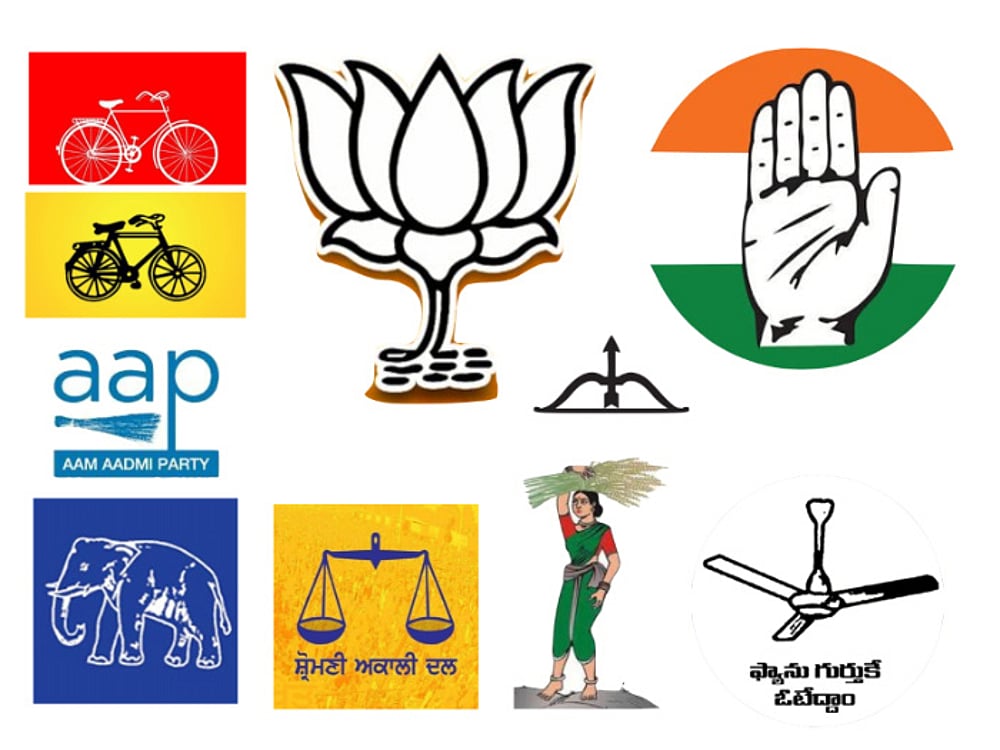
In a hugely significant development with far reaching consequences, the Madras High Court has just recently on March 31, 2021 in a brief, brilliant, bold and balanced judgment titled M Chandramohan (M/48/2020) vs The Secretary, Ministry of Parliamentary Affairs and 4 Others in W.P.(MD).No.18733 of 2020 and W.M.P.No.15646 of 2020 has sought to make it absolutely clear without mincing any words that political parties should be prohibited or prevented from giving election promises, which are capable of adding burden on the public exchequer. This was the crying need of the hour also as such tall poll promises are a huge burden on the public exchequer and most of them are practically impossible to implement and even if implemented, it does our economy in the longer run no good! We all see in different states how competitive rat race breaks out among different political parties just before elections making tall promises which if viewed practically are just not feasible to implement. Even political parties themselves making such tall promises know it fully well but they also do it just to garner votes as they fully know that once elected to power they cannot be bound by their poll promises and it is at their own sweet will that what poll promises they want to fulfill and what they don’t want to fulfill! 
It has to be mentioned right at the outset that the prayer made in the petition states that, “Petition under Article 226 of Constitution of India praying for issuance of Writ of Mandamus directing the 1st and 2nd respondents to consider the Petitioner’s representation dated 13.07.2020 and further direct the respondents to convert Vasudevanallur Assembly Constituency in Tamil Nadu as General Constituency by enabling all the communities of the Society to be candidate in the upcoming election to uphold the spirit of the Constitution of India.”
Justice N Kirubakaran who has authored this notable judgment for himself and Justice B Pugalendhi of Madras High Court sets the ball rolling in the most brilliant manner in para 1 wherein he puts forth forthrightly that, “[“We will cook food for you in your residence” – Party “We will not only cook, but also feed you” – Opposite party] Time is not too far away to hear the aforesaid promises from competing political parties. It is raining freebies for Tamil Nadu Assembly elections. Each party tries to undo each other in terms of populist promises. If one party promises monthly assistance of Rs.1,000/- to women households heads, there is a counter freebies of Rs.1,500/-. It goes on. The result is people started having a mind set that they could make a living out of freebies. A trend has been created that whoever avails loan from banks, does not repay the loan, expecting waiver of loans during election. In this way, people themselves get corrupted by political parties. The way in which the political parties throw their promises, which are unreasonable and unworkable are really unwanted. Unfortunately, freebies are not connected with job creation, development, or agriculture. Voters are lured to cast votes in their favour by these magical promises. Once in 5 years, this tamasha is being continued for decades together. Promises have always remained as promises. Most of them except freebies are not implemented.”
While stating the true purpose of making tall promises, the Bench then reveals in para 2 that, “Every political party is bound to make promises to voters giving their social policies and plans for improving the standard of living of the people by providing clean governance, infrastructure, especially, providing basic amenities like, water, transportation and health, which are expected in every democracy. However, the election promises made by the political parties are aimed at clinching power.”
While elaborating further, it is then stated in para 3 that, “If the basic amenities are promised and provided, there cannot be any objection and in fact, it has to be welcomed and appreciated. In the name of social security all the basic needs of the people have been provided by giving colour televisions, laptops, mixers, fans and grinders etc. Moreover, in Tamil Nadu every family card holder is given free rice of 20 kilograms every month. That apart, during festival seasons, like, Pongal and Diwali, public money is drained by way of providing expenses for celebrations of festivals. In fact, the celebrations are being taken care by the Government by providing free dhoties, sarees and items necessary for cooking and making pongal and expenses for celebrations. These kinds of freebies and money given during festivals, though it would be justified that the Government is taking care of the peoples’ needs, in fact are making the people lazy and dampens the working culture of the people. In the process, the honest tax payer is made a mute spectator of these expenditure by the Government. Consequently, even for any normal work no force is available in Tamil Nadu and Tamil Nadu has to depend on the migrant workers from northeast and northern states, like, Manipur, Meghalaya, Assam, Bihar, Uttra Pradesh and West Bengal and Odisha. Most of the North Indian workers are doing agriculture work and working in hotels, industries, shops, saloons, etc. in Tamil Nadu.” 
While continuing further in a similar vein, it is then envisaged in para 4 that, “It is not as if everyone in Tamil Nadu have become an entrepreneur or persons with resources and if we go into details, most of the persons including wealthy are expecting freebies. Engineering Graduates, M.Phil, M.B.A. Degreeholders are applying for sweeper posts and O.A. posts. Nobody wants to do manual job. It is reported in media that people who go for 100 days work, (MNREGA), which has been brought by the Government to give work for people, simply chit chatting under trees without doing the work. The way in which things are happening today, one would not be surprised to see that migrant workers would be owners of the properties in due course and the sons of the soil will become workers working under them and it may be the only achievement, probably, the political parties have attained through election promises by providing freebies for the past 20 years.”
On a practical note, it is then observed in para 5 that, “This Court is aware that the judgment of the Hon’ble Supreme Court of India in the case of of S.Subramaniam Balaji v. State of Tamil Nadu and Others reported in (2013) 9 SCC 659 held that promises in the election manifesto cannot be construed as “corrupt practice” and these measures relate to implementation of Directive Principles of State Policy. However, the Hon’ble Supreme Court directed the Election Commission to verify election manifestos of all political parties. If there is an external agency, which examines all manifestos to weed out the unreasonable and unexecutable ones. Definitely, that will go a long way to curtail the political parties from making promises of moon or star. Unless some mechanism is put into place, the political party would try to buy out the voters by hook or crook as their aim is only to ascend to power. Normally, the political parties are expected to make election promises providing basic amenities, like, education, health care facilities, transportation and generation of employment and not necessarily Government employment.”
Alarmingly, it is then laid bare in para 6 that, “Though political parties cry for rights, they never bother educating about the corresponding duties and it is also one of the dangerous trends to be addressed. All the political parties, are expected to behave reasonably or offer political promises, which are helpful for overall development of the society instead of having an adverse effect on the people.”
In context of Tamil Nadu, it is then stated in para 7 that, “The aforesaid observations became necessary in view of the state of affairs in Tamil Nadu. In that scenario only, the present Writ Petition has come up before this Court, seeking writ of mandamus directing the first and second respondent to consider the Petitioner’s representation dated 13.07.2020 and further direct the Respondents to convert “Vasudevanallur Assembly Constituency” in Tamil Nadu as general Constituency by enabling all the communities of the society to be candidate in the upcoming election to uphold the spirit of the Constitution of India.”
More to the point with regard to petitioner’s petition, it is then laid bare in para 8 that, “The Petitioner has stated that he filed this Public Interest Litigation to convert “Vasudevanallur Legislative Assembly constituency”, which is a reserved constituency, as a general constituency to enable all the sections of people to contest the election. Vasudevanallur Legislative Assembly constituency remains as reserved constituency, since 1976, for the past 44 years and because of that, the representation is restricted to the Scheduled Castes and Scheduled Tribes people only and other sections of people are deprived of their right to contest and get elected as Member of Legislative Assembly.”
Needless to say, the Bench then concedes in para 24 that, “.This Court is aware that the issue of freebies has been raised before the Hon’ble Apex Court in the case of S.Subramaniam Balaji v. State of Tamil Nadu and Others reported in (2013) 9 Supreme Court Cases 659, after the Public Interest Litigation filed by S. Subramaniam Balaji before the Madurai Bench of Madras High Court came to be dismissed. The Hon’ble Apex Court held that the promises in the election manifesto cannot be construed as “corrupt practice” as described under Section 123 of the Representation of the People Act, 1951. However, the Hon’ble Apex Court further opined that the reality cannot be ruled out that the distribution of freebies of any kind, undoubtedly influences all the people. Further, the Hon’ble Apex Court directed the Election Commission to frame guidelines with regard to the contents of the election manifesto in consultation with all the recognized political parties.”
It cannot be glossed over that it is then disclosed in para 25 that, “As per the direction of the Hon’ble Apex Court, the Election Commission called a meeting of all recognized political parties and discussed the issue of framing guidelines for election manifesto of political parties. Since majority of the political parties opposed the idea of framing any guidelines for manifestos, the Election Commission issued guidelines dated 19.02.2014 to be adhered by the political parties and candidates while releasing their election manifestos for election to Parliament or State legislatures. The said guidelines have been incorporated as Part VIII of the Model Code of Conduct and the same reads as follows:
“(i) The election manifesto shall not contain anything repugnant to the ideals and principles enshrined in the Constitution and further that it shall be consistent with the letter and spirit of other provisions of Model Code.
(ii) The Directive Principles of State Policy enshrined in the Constitution enjoin upon the State to frame various welfare measures for the citizens and therefore there can be no objection to the promise of such welfare in election manifesto. However, political parties should avoid making those promises which are likely to vitiate the purity of the election process or exert undue influence on the voters in exercising their franchise. 
(iii) In the interest of transparency, level playing field and credibility of promises, it is expected that manifesto also reflect the rationale for the promises and broadly indicate the ways and means to meet the financial requirement for it. Trust of voters should be sought only on those promises which are possible to be fulfilled.””
Be it noted, it is then stated in para 29 that, “Once the Hon’ble Supreme Court opined that freebies vitiates the purity of election process and influence the voters, it should be deemed to be a corrupt practice. It is not as if offers of money or kind to influence the voters by candidates, alone can become corrupt practice and the political parties which in whole sale manner offer or lure by promising freebies to the people to vote for their respective party to power, cannot be construed as corrupt practice. Whether it is done by an individual or by a party, it is definitely a bribery or corrupt practice. Our democracy has stooped down to such a level that time has come to bring the political parties which offer freebies to influence the voters for picking up votes also, within the scope of Section 123 of the Representation of the People Act.”
Frankly speaking, it is then pointed out in para 30 that, “The election manifestos were not that much popular about 30 years ago and only for the past two decades they have became very popular among the masses, as the political parties compete with each other offering free gifts and freebies in various forms and kinds, promising them better development, social upliftment and comfortable life during their regime if they are voted to power. Whether the development is achieved or not, the freebies only achieved in creating/inculcating laziness among the people, shattering the work culture of the State. Consequently, no labour or sufficient labour is available and no work is done in the State, without the imported migrant labourers from other States. As observed by the Hon’ble Supreme Court, the Election Manifesto is the road map to the policies of the political parties to show as to how they intend to govern the State or Country and what are all the infrastructures to be developed and other incidental ideas. Indeed, it is a welcome one. However, unfortunately the political parties are at best concentrating only on freebies to get the voters by hook or crook in their craving for winning the elections. This has to be stopped as otherwise, there shall be no distinction between the enthusiastic work force and those who sit back and enjoy the freebies without doing anything.”
It is worth noting that it is then stated in para 31 that, “The object of the Representation of the People Act, 1951 is extracted as follows:
“An Act to provide for the conduct of elections to the Houses of Parliament and to the House or Houses of the Legislature of each State, the qualifications and disqualifications for membership of those Houses, the corrupt practices and other offences at or in connection with such elections and the decision of doubts and disputes arising out of or in connection with such elections.”
From the above it is clear that the Act is also to rule out corrupt practice and other offences in connection with the elections. Though many amendments have been brought and the last one is in the year 2009, only when the freebies are wiped out from the election manifesto by making them as “corrupt practices” by political parties under Section 123 of Representation of People Act 1952 , the election process can be free and fair and there can be a level playing field for all the political parties equally. Whenever the Court observes and indicates the necessity for bringing out a separate legislation or amendment in the existing Act, the Parliamentary or State Legislature has to take it very seriously and pursue the issue properly by bringing a new legislation or amendment, as suggested by the Court. However, even after eight years of judgment of the Hon’ble Apex Court in the case of S.Subramaniam Balaji v. State of Tamil Nadu and Others reported in (2013) 9 SCC 659, nothing has been done to bring a new legislation or amendment governing political parties and election manifestos and only the election commission alone came forward and issued guidelines to the political parties.”
More significantly, it is then disclosed in para 32 that, “In view of that, the above queries are raised. Mrs.Victoria Gouri, Learned Counsel takes notice on behalf of the First and Second Respondents. Mr.Niranjan Rajagopal, learned Counsel takes notice on behalf of the Third Respondent. Mr.Muthu Geetheiyan, learned Special Government Pleader for the Fourth Respondent, Mr.Chella Pandian, learned Additional Advocate General takes notice on behalf of the Fifth Respondent. The respondents shall answer to the following queries raised by 24.04.2021. 
(1) Whether the Central Government has taken any steps to bring legislation covering the issue of political manifestos, especially freebies promised in the election manifestos and governing the political parties as per the Judgment of the Hon’ble Supreme Court in the case of S.Subramaniam Balaji v. State of Tamil Nadu and Others reported in (2013) 9 Supreme Court Cases 659?
(2) In how many elections the Election Commission has vetted the election manifestos of the political parties as per the dictum of the Hon’ble Supreme Court of India in the case of S. Subramaniam Balaji v. State of Tamil Nadu and Others reported in (2013) 9 Supreme Court Cases 659?
(3) If so, which are all the political parties which have submitted their election manifestos for vetting during elections, after 2014?
(4) What are the actions taken against those political parties, which have not followed the dictum of the Hon’ble Supreme Court to tender the manifestos for vetting before the Election Commission?
(5) In how many manifestos of the political parties, the Election Commission has made objections regarding the statements or promises made? 
(6) Whether based on the objections such disputed or controversial promises have been deleted by political parties? 
(7) If so which party’s manifestos have been objected and have been deleted?
(8) Why not political parties be liable to pay at least 10% of the money involved for implementation of election promises made by them while implementing the same after they come to power to infuse a sense of responsibility to the political parties?
(9) Why not the Respondents sensitize the political parties not to make any unreasonable and unfair promises, which, if implemented would drain the public exchequer unnecessarily /unreasonably?
(10) Why not the Respondents prohibit the political parties from giving social security schemes which are capable of shattering work culture and making people lazy? 
(11) Whether the political parties give in the manifestos itself about the political promises and provision for resources available, in case if they come to power along with experts opinion?
(12) Why not the Respondents direct the political parties to make the political promise, especially, with regard to the freebies in accordance with the resources of the State?
(13) Why not the Respondents monitor and verify as to whether the election promises are complied with during the tenure of the political party, which is elected to form the Government? 
(14) Why not the Respondents prohibit the political parties from making any promises, which cannot be implemented by the State Government, as they are beyond the powers of state Governments. i.e., waiver of loans given by the nationalized bank, etc.,? 
(15) Whether the Respondents have got details about the political promises, which have been implemented by the political parties, when they came to power at least in the past 4 elections to Legislative Assemblies and Parliament elections?
(16) How much was spent by the respective Government, especially, Tamil Nadu to translate the election promises into reality by giving the details thereof (from 2001 election onwards)? 
(17) Why not Election Commission of India de-recognize those election parties, who fail to implement their political promises based on which the voters are lured and the parties are elected to form the Government? 
(18) When the political parties ascend the throne by promises which were believed by the voters and voted, and the promises are foundation of the Government, why not the respondents make election promises as enforceable?
(19) When will the Union Government bring an amendment of Section 123 of Representation of People’s Act 1952, to include “political parties” which could be charged for “corrupt practices”?
(20) Why not the constituency with next highest population of Scheduled Caste (SC) population be made as reserved constituency by rotation without decreasing the constituency meant for Scheduled Castes (SC) and Scheduled Tribes?”
Most significantly, what forms the bottom-line of this notable and extremely laudable judgment is then stated elegantly, eloquently and effectively in para 33 that, “Though this Court is aware that the political promises cannot be implemented as per the judgment of the Hon’ble Supreme Court of India, much water has flown under the bridge. Practically, people are floated with attractive promises and they are convinced by these promises to vote a particular party to form Government and many of the promises make big dent on the public exchequer. If money spent for freebies are utilized constructively by creating job opportunities, by building infrastructure, like, dams, lakes, providing better facilities and incentives to the agriculture, which has become an orphan in our country as most of the people have quit agriculture as cultivation does not provide a secured income, definitely, there will be social upliftment and progress of the State. The political parties should be prohibited or prevented from giving election promises, which are capable of adding burden on the public exchequer, especially, the State is facing financial crunch. Otherwise, for the sake of finance, the State has to increase the number of liquor shops.”
Finally and no less significantly, it is then held in the concluding para 34 that, “It is stated that every candidate has to shell out about Rs.20 crores in the election to an assembly constituency, as many of the people have become corrupt by selling their votes for one or a few thousands, Briyani and Quarter bottle. It is the stark reality. If that is so, how could the people expect good leaders? 
Do people who sell their votes, have any moral right to question their leaders? 
This Court could only recall the words of Joseph de Maistre, “In a democracy, people get the leaders they deserve”.”
To conclude, there is just no need to add more. If our country truly abide by what is held in this extremely straightforward judgment then it will do our nation a world of good in all senses! No country in world can stop India from progressing, prospering and becoming the most powerful country in the world if our political parties strictly abide by what is held in this most brilliant judgment by a two Judge Bench of the Madras High Court which is also one of the oldest High Courts of India and similarly people also adhere to what has been laid down in this notable judgment! No denying it!
Sanjeev Sirohi


Twitter will have to obey the Indian government's law, Government encourages people to switch to Koo

Clash between Twitter and the central government is increasing due to the order to close 1178 accounts related to Khalistan-Pakistan . The central government has clearly told the American company that it has to follow Indian law. Also, many politicians and others are switching to Koo app against Twitter.

In a virtual meeting with Twitter Vice President Monique Meshe and Jim Baker, the secretary of Ministry of Electronics and Information Technology said,”despite government instructions, fake accounts related to the peasant movement were not closed. This is very unfortunate”. Earlier, Twitter replied it cannot fully oblige to the center’s order citing violation of the right to freedom of expression and said the Indian government’s demand was not in line with the country’s laws. Twitter believes in protecting the Freedom of Expression of its users and hence it did not take an action against the accounts of media companies, journalists, social workers and politicians.

25+ lakhs downloads of the KOO app in last 48 hours-

Amidst the trending #ban_twitter and #Koo_app on twitter in India, many politicians and spokespersons are switching to Koo to express their anger and requesting their followers to do the same. Koo app
was launched only last year under self-sufficient India. About 3 million people downloaded it in 48 hours.

Twitter will have to obey the Indian government's law, Government encourages people to switch to Koo

Clash between Twitter and the central government is increasing due to the order to close 1178 accounts related to Khalistan-Pakistan . The central government has clearly told the American company that it has to follow Indian law. Also, many politicians and others are switching to Koo app against Twitter.

In a virtual meeting with Twitter Vice President Monique Meshe and Jim Baker, the secretary of Ministry of Electronics and Information Technology said,”despite government instructions, fake accounts related to the peasant movement were not closed. This is very unfortunate”. Earlier, Twitter replied it cannot fully oblige to the center’s order citing violation of the right to freedom of expression and said the Indian government’s demand was not in line with the country’s laws. Twitter believes in protecting the Freedom of Expression of its users and hence it did not take an action against the accounts of media companies, journalists, social workers and politicians.

25+ lakhs downloads of the KOO app in last 48 hours-

Amidst the trending #ban_twitter and #Koo_app on twitter in India, many politicians and spokespersons are switching to Koo to express their anger and requesting their followers to do the same. Koo app
was launched only last year under self-sufficient India. About 3 million people downloaded it in 48 hours.

Ramani Wiped 50 Years Of My Hard Work With One Stroke: MJ Akbar

Let me begin with a disclaimer: I have no affiliation with eminent and senior journalist MJ Akbar of any kind and I have never met him in person nor am I affiliated in any way with his political party BJP of which he is a member and earlier was Union Minister of State also for External Affairs. But ever since I gained senses I have been a regular reader of his scholarly articles in most prestigious magazines like “India Today” among others and so also in many eminent newspapers. I used to enjoy reading his learned articles most when I was in school and in college even though later also I made it a point to always read his articles! I was most shocked to learn when his name figured in a controversy and when his name was dragged in it. To be brutally honest, it was the worst shock that I could ever have imagined in my life!

Needless to say, MJ Akbar has always enjoyed an impeccable reputation and even his worst critic could never have questioned his unimpeachable conduct, his impeccable reputation until Priya Ramani raised serious questions marks on his conduct. MJ Akbar through his counsel argued that it was journalist Priya Ramani who “targeted him” for which he was prompted to file the defamation complaint.
It may be recalled that MJ Akbar was left with no option but to resign as Union Minister of State for External Affairs even before the charges have been proved against him in any court and he too became a victim of “MeToo Media Trial”! Hang him if he is guilty but condemning him even before charges have been framed against him in any court and tarnishing his “impeccable reputation” which he has earned in his entire life in just few seconds cannot be justified under any circumstances! MJ Akbar could have easily continued as a Minister but he preferred to resign and first challenge those who tarnished his impeccable reputation in court.
Bluntly put: Is MJ Akbar not entitled to the benefit of the due process of law and legal defence? Should he not be given a chance to prove his innocence? There are many senior eminent women journalists like Tavleen Singh who have always appreciated him and have said that they have never experienced any such “alleged misconduct” from him but this is never highlighted in the media! Tavleen Singh is most famous for calling a spade a spade and she never fears anyone! How can all this be ignored?
Most recently, a woman journalist deposed in court in his favour and admired his upright approach in always dealing with her. Only the numbers are highlighted that 16 or 17 women have levelled most serious charges against him but I want to ask: Why they never dared to lodge FIR against him in any police station of India till now? Why they kept quiet for so many years? Why inspite of being professional they chose to keep quiet? Were they not aware of their legal rights?
Going forward: Why did they not immediately complaint? Why they didn’t spill the beans earlier? Why was there a consensual conspiracy of silence? Why were they lured to keep quiet? Why they compromised themselves just for getting some material benefit? Are they not guilty just like an adulterous women? 
It also cannot be ignored that Union Minister Pon Radhakrishnan asked: “If someone makes an allegation that such a thing happened when the incident happened we were playing together while in class 5. Would it be fair? The ‘MeToo’ movement had sullied the image of the country. Will it be right for men to start making similar accusations like them.” Even Union Minister for Tourism K Alphons had cautioned against frivolous complaints by “insincere” people with an agenda. He said that, “People should be extremely careful when they raise an allegation. Yes, if something inappropriate has taken place, it should be in public domain. There should not be any doubt about it, but I hope frivolous complaints are not raised by insincere people to fix people whom they do not like.”
We heard earlier how KWAN founder Anirban Das attempted suicide after sexual misconduct allegations but was saved by an alert police team patrolling the Navi Mumbai bridge! MJ Akbar has vowed to fight for sake of his reputation till the end! There are very few who care for what “mental trauma” a man undergoes when false allegations are levelled against him and he is defamed by “media trial” to the fullest even before charges are framed against him in any court! This must stop once and for all as it mutilates and maims to pieces a men’s integral right to reputation and right not to be defamed and denounced even before any court takes cognizance of the charges levelled against him! 
“You do me favors, I do you favors 30 years later
lets call it “me too”
A strong woman does not wait 30, 20, 10 years to speak up, she slaps him on the first “bad touch” and knocks him out
Don’t hide your weakness, the favors in returns that you enjoyed and the work you got by “I was too scared” cry now
You were scared to say NO then because its hard to stand up for what is right and you were scared to loose your status and position in the work place, so YOU CHOOSE to accept the molestation and went back for more …Its very easy to play the abla nari card later and gain sympathy
The Shakti does not wait later to speak up, she silences the evil on spot…
My thoughts on this nonsense of me too
I don’t have me too stories …anyone who tried got a tight slap then and there and I was never afraid to walk out with my head held high ..be it a Job or relationship!
“strong women don’t have me too sob
Stories, they have I gave him thappad
(slap) back short essays”.”
– Geetanjali Arora in Sunday Times of India dated October 21, 2018
Every person must applaud, admire and appreciate Geetanjali Arora for what she has written so courageously on 9 October at 5.35 pm which got published on October 21 in one of the most reputed newspapers of India – The Times Of India! Why should women be treated always as victims? Why should women keep quiet for many decades and then speak up if she herself has nothing to hide from the world?
Does men have no right? Should only women have all the right to speak up whenever she likes? Very few know that a woman had levelled serious allegations against eminent film actor Jitender about an act allegedly done by him 47 years ago when she was very young but the Himachal Pradesh High Court didn’t accept it and rejected the petition as it said that the time limit of lodging the complaint within the limitation period of 3 years was not complied with! 
Anyway, coming to the case at hand, while appearing before Additional Chief Metropolitan Magistrate Ravindra Kumar Pandey, senior women advocate Geeta Luthra further argued that Ramani didn’t feel the need to check with the Ministry, department or PRO to confirm if he had resigned before tweeting that he did. “You wiped out 50 years of his hard work with one stroke,” submitted Luthra while rebutting the submissions of Ramani’s lawyer, senior counsel Rebecca John. John had on a previous occasion submitted that, “It is not defamation to impute anything which is true concerning any person if it for the public good… If the imputation of sexual harassment is in good faith and for public it is not defamation. It is not defamation if the imputation relates to something that touches a public question.”
While contesting this submission, Geeta Luthra quipped: “Good faith would have been if you had any evidence. It can’t be for public good. Public good doesn’t mean you will malign someone’s image. Public good is when you’re making a statement then you have to do it with responsibility.”
Most significantly, Geeta Luthra very rightly pointed out while referring to a sexual harassment incident that, “Just by calling it my truth, doesn’t make it a truth… you haven’t proved whether you have made a call to the complainant, you haven’t proved that you met (Akbar).” Luthra also further pointed out that, “This version is a figment of imagination and not truth..After 30 years you are trying to bring something without any evidence. It is all in the air.”
While stating that “whether you make a whisper that a person is a thief or a cheat” it has to be backed with evidence. Luthra told the court that, “You have to have empirical evidence which can stand scrutiny in the court of law. There is no such evidence in this case. There is no investigation.” 
As it turned out, Luthra then read out the statement of a witness, Joyeeta Basu who had testified from Akbar’s side. Basu, Luthra claimed, was called a tutored witness. Calling Basu a respected journalist, the counsel said she was a natural witness unlike Ramani’s witness. Luthra also added that, “Her witness is her friend who doesn’t know anything about the alleged incident.” 
Needless to say, for Akbar, the defamation complaint was filed as the “malicious tweets by Ramani” had “destroyed my reputation in the eyes of the society”. Luthra also read out another testimony of one Akbar’s witnesses, Sunil Gujral to assert that his reputation was “impeccable”. Gujral was stated to have known Akbar for a long time personally and professionally.
MJ Akbar through his counsel Luthra rightly submitted that, “Harm is done by the man who instigates and ignites the first flame.” The submissions were made by Luthra before Additional Chief Metropolitan Magistrate Ravindra Kumar Pandey. While reading Ramani’s testimony, Luthra told the court that, “She wrote an article without naming anyone because it was a piece of fiction..You said you didn’t name him because he didn’t do anything. The tweet doesn’t say that I’m saying all this because so many women are speaking up.” 
Moreover, it cannot be lightly dismissed that MJ Akbar also told the court that Priya Ramani “deliberately, intentionally and maliciously” destroyed evidence by deleting the Twitter account. Akbar’s lawyer Geeta Luthra told the court that, “This strange argument that this Twitter account, the court didn’t tell me to save so I didn’t. How can one take a defence like this?” Luthra also told the court that Ramani knew there was a criminal complaint pending against her. 
More to the point, Geeta Luthra also pertinently told the court that, “These are all tweets. They were all primary evidence. Can she destroy evidence…another criminal case can be made out. I would have wanted to cross examine her. This whole thing is destruction of evidence which is not something which is not viewed very seriously…suppose the court wanted to see it. Fact is that everything has been deliberately destroyed to subvert the cause of justice.
Furthermore, Luthra also told the court that, “All evidence which was part of the trial..deliberately, intentionally, maliciously has been destroyed by deleting the Twitter account. These lies have left me defending my reputation in the last few years. It is unpardonable. I wonder at what kind of cost has it come to you. You have damaged a person’s 50 years of reputation.” Luthra also said that, “There was no overt physical attack.”
Adding further more, Luthra said that, “Here also she is self contradictory. She said it was sarcasm then takes alternate defence. Sarcasm is also defamation. Did he do anything or not do anything..same can’t have a non-sarcastic meaning and still be sarcastic…First she says first fourt para are about her. But then talks about ‘shared experience’. Whom did she interview? This has to be before the cause of action. She says it’s my story..what is she trying? Every sentence when examined is contradictory to the next.” 
     <div style="text-align: justify"><br /></div><div style="text-align: justify"><br /></div><div style="text-align: justify">Truth be told, Akbar had filed a defamation case in 2018 stating that Ramani’s allegations were viewed and read by several people online and he received numerous calls from friends and colleagues from the media and political sphere. For having reportedly suffered “great humiliation” and his reputation being “severely tarnished” he had sought court’s intervention. Luthra reiterated that Ramani had some other motive and “there is no public interest. There is no good faith.”</div><div style="text-align: justify"><br /></div><div style="text-align: justify">Without mincing any words, Luthra said that, “What she (Ramani) said does not mean predator. Many people in positions of hierarchy are more powerful but you can’t call them a predator. There are many words to describe a junior-senior relationship.” Luthra also told the court that, “You cannot turn around and say that you are calling a person the media’s biggest predator…You are a journalist. You have to be responsible ..You can’t write as if without any sense of responsibility or accountability..It doesn’t matter what people say post facto. Harm is done by the man who instigates and ignites the first flame. She is not an eye witness. It is fabricated. She is an interested witness.” Luthra told the court that the meaning of the word predator is a person who has propensity for violent sexual behaviour. </div><div style="text-align: justify"><br /></div><div style="text-align: justify">What has really shaken me most is the enlightening editorial written by Ramesh Thakur who is Professor of Public Policy, Australian National University in ‘The Times Of India’ dated November 9, 2018 titled “Believe Evidence Over Gender” which begins by coming straight to the point saying that, “The #MeToo campaign began as a long overdue effort to call out men abusing positions of power and authority to exploit vulnerable women sexually, but then morphed into some settling of scores for dates gone wrong. In the age of social media, #MeToo swarms of screaming mobs, and bird-dogging, the wildest accusations are amplified instantaneously across the whole world. This makes the charge themselves a powerful political weapon.” He rightly suggests the following to check mud slinging matches: “First, ensure anonymity for both or neither. Name only the guilty party after the trial. If the verdict is inconclusive, keep all names confidential. Second, treat both accuser and accused with sympathy, respect and courtesy. Evaluate the testimony of both with equal skepticism, ask questions accordingly, and weigh their statements against the facts. Everyone deserves a fair hearing: no one deserves to be believed in the absence of evidence; and shifting evidence and timeline to suit the narrative warrants over suspicion. Third, match the prosecution and penalty for false accusations to those of conviction. This will put in place a powerful deterrent. Without consequences, the political weaponisation of false charges will continue. Above all, believe evidence over gender. Senator Susan Collins was branded a rape apologist for doing so.”</div><div style="text-align: justify"><br /></div><div style="text-align: justify">It was in 2018 that we saw how in a landmark judgment titled ‘Joseph Shine v Union of India’, the Supreme Court led by Justice Dr DY Chandrachud very rightly decriminalized adultery as it felt that sex with consent cannot be crime and he overruled his father’s decision rendered earlier in Sowmithri Vishnu in 1985! Law has to change with time. Even the definition of rape needs change and sex with consent should not be termed rape. A woman after having consensual sex with a men for many years cannot and should not be allowed suddenly to scream rape and play the victim card by weeping!  The moot question that arises here is: Why the women promptly didn’t lodge complaint if she was forced to enter into sexual relationship? Also, why always men alone be condemned? What if it was women who lured men into sex? Why always women version is to be believed? Why should women not be punished and sent to jail for at least an year if she levels false allegations against a men solely for denigrating, damaging and destroying his untarnished reputation in front of the world? Why should she not be made to pay compensation to him for tarnishing his reputation in front of the world? Why can’t the laws be suitably amended in this regard? Why should only women have right to reputation and right not to be defamed and denounced? Why do we ignore that our laws and Constitution treats men and women as alike? Why should men be deprived of the basic fundamental tenet of law that everyone is innocent until proven guilty? </div><div style="text-align: justify"><br /></div><div style="text-align: justify">It cannot be lightly dismissed that in a criminal case, where the accused will forfeit his liberty if convicted, the standard of proof required to convict him not just is higher but also needs to be proved “beyond all reasonable doubt”. It is high time and all news channels and media groups should refrain from just glamourising “#MeToo” movement and should instead always convince so called “female victims” to approach the court at the earliest and not after 10 or 20 or 30 or 40 or 50 years and fight the legal battle which would seek evidence for both prosecution and proving innocence instead of just levelling the most damning allegations after many decades which only exposes her to “defamation suits” to get real justice for herself! Also, it must be ensured that the identity of both the women levelling the allegations and the men against whom allegations are levelled are not revealed in public until the case is decided at least in the lower court! Such cases too must be decided at the earliest and not after many years as the reputation of both the women and the men suffers enormously which only robs them of their right to privacy which just recently in KS Puttaswamy case has been declared to be a fundamental right!</div><div style="text-align: justify"><br /></div><div style="text-align: justify">It is high time and now women too must be jailed and punished for levelling false allegations. Section 498A of IPC and so also Domestic Violence Act is many times misused and so there must be strict provision for punishing women if her allegations turn out to be false. Women is now no less inferior to men in any field. Then why should she be given blank cheque of exemption if she levels false charge against any men? Even men has the right to reputation and dignity just like women which gets severely compromised when women levels false and wild allegations against men and so should never go unpunished under any circumstances!</div><div style="text-align: justify"><br /></div><div style="text-align: justify">I am certainly not against women getting justice who have suffered at the hands of men but I also simultaneously favour the reasoned and logical stand that, “Men too have right not to be defamed and denounced without facing strictest legal scrutiny in accordance with due procedure of law”. Every Indian women must always abide by what Geetanjali Arora who is herself a female has said which I have quoted right at the beginning! Women are beating men in studies and outsmarting them in every field then why should they take things lying down when it comes to sexual offences?</div><div style="text-align: justify"><br /></div><div style="text-align: justify">Why not lodge complaint at the first place instead of just indulging in character assassination after many years as part of “#MeToo” campaign and getting defamed yourself also and making a huge public spectacle of yourself? Now it is for women to decide for themselves which course of action they would like to adopt but now they must stop laying the victim card and abide in totality by what Geetanjali Arora has said so rightly and never tolerate any sort of any misconduct from any men under any circumstances whatsoever! It is high time and now women must be actually treated at par with men by not always allowing women to play always the “victim card” and encouraging her to always take men head on whenever any men dares to violate her physical or mental integrity in any manner instead of waking up after decades! There can be certainly no denying it!</div><div style="text-align: justify"><br /></div><div style="text-align: justify">Needless to say, MJ Akbar’s case is still pending in court and we have to keep our fingers crossed till the case is finally decided. But certainly the immeasurable pain, anguish and heart bleed that MJ Akbar faced is clearly apparent and one only hopes that justice is done with him and I am sure that judiciary will vindicate the unflinching faith that he has posed in it! </div><div style="text-align: justify"><br /></div><div style="text-align: justify">Sanjeev Sirohi, Advocate,</div><div style="text-align: justify"><br /></div><div style="text-align: justify">s/o Col BPS Sirohi,</div><div style="text-align: justify"><br /></div><div style="text-align: justify">A 82, Defence Enclave,</div><div style="text-align: justify"><br /></div><div style="text-align: justify">Sardhana Road, Kankerkhera,</div><div style="text-align: justify"><br /></div><div style="text-align: justify">Meerut – 250001, Uttar Pradesh</div>