

Who is John Titor?
John Titor described how he was an American historian with a specialism in the 20th century. His academic funding had been provided by the army, whilst he was as an enlisted soldier.

By the year 2036, he claimed, time travel had been developed by the government and had been used for several years by the time of his expedition. Titor said that he had been chosen to be sent to the year 1975, with the mission of retrieving an IBM 5100, a portable computer, which contained an outdated piece of coding that was needed in the future. The army had chosen Titor because of his historical knowledge, and because his grandfather had been one of the people who had worked on the very computer needed.
Why Did He Travel Back In Time?
According to Titor, he was sent back in time to pick up an IBM 5100, which his grandfather had helped design. Supposedly, he needed this model – one of the first portable personal computers – to correct predicted issues with Unix in his timeline. After acquiring the computer, he stopped in the year 2000 for “personal reasons” – and to warn people about the threat of Creutzfeldt-Jakob disease (which would be spread through beef products).
How Does The IBM 5100 Play Into This?
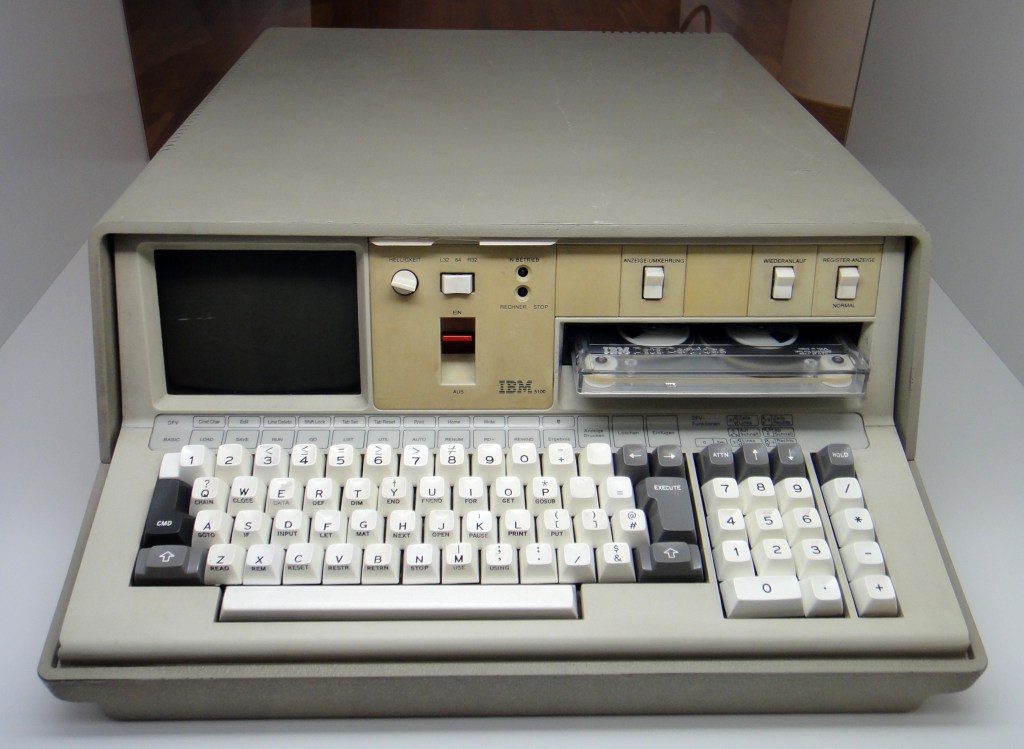
One of the oddest parts about the John Titor story is the part played by the IBM 5100. Why would someone from the future need such an old computer? In 1975, IBM released the 5100 as one of the world’s first personal computers, and it came with one feature that set it apart from other computers of the time: It could debug and emulate code written in other programming languages, such as BASIC and APL.
According to Titor, this feature would allow people of the future to keep their technological architecture running after a Unix timeout error in 2038. He said he wanted to snag a 5100 and help debug the code that would keep the world’s computers from having a meltdown.
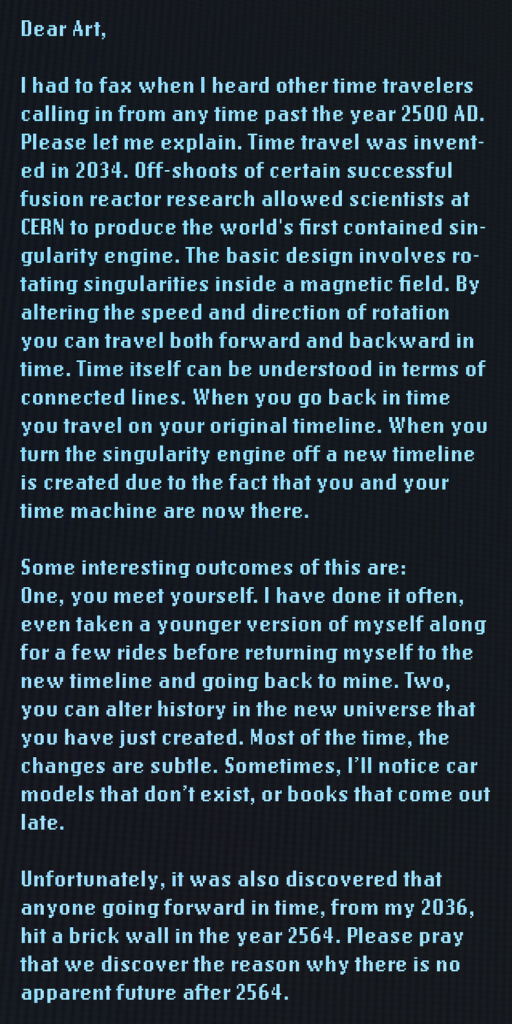
The future according to John Titor
As well as describing his personal history, John Titor also revealed information about a future marred by warfare. A common theme in all of his posts is the detail he provides in describing alleged future events.
Titor Warns Of World War III
In his short time on the Internet, Titor made a series of interesting predictions that have seen mixed accuracy. One of his early messages warned of a Y2K disaster that would leave the US in a state of martial law.
His most dire warning was of a second American civil war that would begin in 2004. That turned out to be untrue, but his claim about the occurrence of a “Waco type event every month” – referring to the 1993 siege in Waco, TX – was not entirely inaccurate if you add up worldwide incidents of violence. He went on to say that by 2008, the world as we knew it will have disappeared, and that the US would split into multiple sovereign nations. He also predicted a short but intense World War III.
The invention of time travel
With peace reinstated, time travel was invented by the year 2034. However, Titor pointed out that – in his future – it has not yet been made available for public use.
Although it is reserved solely for official purposes, the general public are aware of its existence. In his forum posts, Titor is happy to discuss time travel at length, including its moral implications which he said are discussed in his own time. Titor claimed that the state, for example, had considered using time travel as a sort of punishment. 11
Is John Titor a Hoax?
The tenacity with which John Titor stated that he does not expect, or want to be, believed is an element of this story which – perhaps ironically – serves only to increase people’s general willingness to believe him. Unless, that was his intention all along. If an elaborate hoax, it stands to reason why someone would state this as an act of reverse psychology: a lack of motive makes the persona of John Titor inherently more enigmatic, and more importantly, more believable.
The debate surrounding the reality of John Titor is not an easy one to unpick. Both sides make genuine and sympathetic points. On the one hand, it all seems rather fantastical, and, as we already live in this future, redundant. Yet, the 2.5% divergency effect neatly explains away any inconsistencies, thus redeeming the argument.


 Eduindex
You must be logged in to post a comment.